Home Blog Page 734

US government shutdown drags on as senators fail to find path out

A US flag is draped at Union Station with the US Capitol dome in the background in Washington, DC, US, June 28. — REUTERS/KEN CEDENO

WASHINGTON — US Senate Democrats continued to hold out on agreeing to end the record-long federal government shutdown on Thursday, despite Republican overtures to reverse federal employee layoffs as part of a bid to reopen shuttered agencies.

Democrats spent nearly two hours in their second closed-door caucus meeting in as many days on the 37th day of the longest government shutdown in US history, which has furloughed about 750,000 federal employees, forced thousands more to work without pay and shut off food assistance and Head Start subsidies for millions of Americans, including children. A new pressure point was expected to open in the days ahead as major US airports braced for a 10% cut in airline flights due to a lack of pay for air-traffic controllers.

Republicans hold a 53-47 majority but need 60 votes to reopen the government. With one Republican opposed to short-term funding, Senate Majority Leader John Thune of South Dakota would need at least eight Democrats to break with their party. Up until now, only two Democrats and an independent who caucuses with them have been willing to do so.

Senate Democratic leader Chuck Schumer of New York described the session as “a very good, productive meeting.” Others struck similarly upbeat tones.

But some Democrats were less sanguine. “I don’t know how productive it was in there,” said Senator John Fetterman, of Pennsylvania, one of only three members of the Senate Democratic conference to support a short-term bill to reopen the government.

Republicans said they offered Democrats a path to reopening the government that included a short-term stopgap funding measure and a package of full-year appropriations bills to pay for agriculture programs including food assistance, military construction, veterans affairs, and the legislative branch.

POSSIBLE REVERSAL OF LAYOFFS
In bipartisan talks, Republicans have also shown an openness to reversing some of the mass federal workforce layoffs ordered by President Donald Trump’s White House and protecting federal jobs from future cuts.

“The discussion was a healthcare discussion, and in the last few days, it’s also become a discussion about what I’ve been calling the moratorium on mischief,” Democratic Senator Tim Kaine of Virginia told reporters.

A short-term bill to fund federal agencies through November 21 has failed 14 times in the Senate, with opposition from Democrats who demand that Republicans first agree to negotiate an extension of federal healthcare subsidies. Republicans say the government must reopen first. A 15th vote on the bill was expected on Friday.

“We have to make sure we have a deal that we can get broad support for,” said Democratic Senator Gary Peters of Michigan, who has been involved in bipartisan talks. “There are a lot of things that have been kicked around as part of the deal. Nothing’s really crystallized.”

HOUSE MOVES UNCERTAIN
As an incentive to reopening the government, Mr. Thune has offered to give Democrats a Senate floor vote to extend expiring federal tax credits that help lower-income Americans pay for private health insurance. There was no such guarantee in the Republican-controlled House of Representatives .

“I’m not part of the negotiation,” House Speaker Mike Johnson of Louisiana told reporters. “I’m not promising anybody anything.”

Asked about that remark, Mr. Peters replied: “That’s a significant problem.”

Democrats have repeatedly called on Mr. Trump to begin negotiations on healthcare, a prospect that Republicans say should come only after the government reopens.

But Republican Senator Thom Tillis said the White House could intervene with House Republican leaders to guarantee a House vote on ACA tax credits, should legislation pass the Senate.

“That’s a legitimate task for the White House to take on,” said Mr. Tillis, of North Carolina. “They can at least signal that if you all get out of this, then we will allow a vote.”

If Senate Democrats and Republicans managed to reach a deal to reopen the government this week, agencies would still likely remain shuttered for days. Such a measure would require approval from the House before Mr. Trump could sign it into law.

House Republican leaders, who have kept the chamber out of session since before the shutdown began, have pledged to give members 48 hours’ notice before calling them back to Washington and 72 hours to review legislation before holding any votes.— Reuters

Philippine farm output jumps 2.8% in Q3

Farmers are seen working on a field in Bustos, Bulacan, Aug. 13. — PHILIPPINE STAR/MIGUEL DE GUZMAN

By Vonn Andrei E. Villamiel

THE PHILIPPINES’ agricultural production grew by 2.8% in the third quarter, as strong crops and poultry output offset the decline in livestock and fisheries, the Philippine Statistics Authority (PSA) said.

Data from the PSA showed the value of agriculture and fisheries production rose by 2.8% to P408.94 billion in the July-to-September period, a turnaround from the 3.6% contraction in the same period last year.

Quarter on quarter, farm output growth slowed from the eight-year high of 5.7%.

Agricultural output grows by 2.8% in Q3

“This growth was driven by the increase in the value of crop and poultry production. However, the value of livestock and fisheries production contracted during the period,” the PSA said, citing constant 2018 prices.

At current prices, the value of production in agriculture and fisheries rose to P533.16 billion, lower than the previous quarter’s output of P606.86 billion.

In the first nine months, agricultural output averaged 3.5%, a turnaround from the -2.2% in the same period last year.

Agriculture Secretary Francisco P. Tiu Laurel, Jr. told reporters that the agriculture sector is “heading in the right direction.” He expressed confidence the sector will recover from last year’s 2.2% decline, which reflected the impact of El Niño and several typhoons.

Crops output, which accounted for 53.3% of the total value of agricultural production, jumped by 3% to P218 billion in the third quarter. This was a turnaround from the 5.2% decline in the same period last year.

In the first nine months, crop production growth averaged 5%, improving from the 4.7% decline in the same period last year.

Former Agriculture Secretary William D. Dar told BusinessWorld via Viber that crop production rose in the third quarter despite inclement weather due to an “increase in hectarage of rice, ability to bounce back to production, and distribution of agricultural inputs and machineries.”

Palay (unmilled rice) production rose 12.6%, rebounding from the 12.3% contraction a year ago. This increase in output was aided by a 15.7% increase in the land planted to rice.

Palay output rose by an average of 8.3% in the January-to-September period, a turnaround from the 7.7% decline last year.

PSA data showed corn production declined 2.9%, worse than last year’s decline of 0.6% in the same period.

Coconut registered a 2.1% drop, an improvement from a decrease of 3.5% last year.

Crops that saw a double-digit increase in the value of output include onion (77.3%), potato (47.8%), sugarcane (42.0%), coffee (25.9%), mongo (16.9%), tobacco (15.7%), and cabbage (13.3%).

On the other hand, the value of production contracted for abaca (15.4%) and sweet potato (11.4%).

Meanwhile, the poultry sector grew by an annual 10.6% to P75.96 billion in the third quarter, despite the threat of avian influenza. It accounted for 18.6% of total farm production during the period.

In the first nine months, the growth of poultry production averaged 9.1%, an improvement from the 6.8% growth recorded in the same period last year.

Chicken production recorded an annual gain of 12.4% by value, while chicken eggs and duck posted 7.7% and 0.6% growth, respectively.

Duck eggs, on the other hand, declined by 4.3% this quarter, slightly better than a 5.7% drop in the same period last year.

“Poultry is expected to continue to grow due to the presence of multinational companies engaged in poultry production who have the financial capital to address the biosecurity issues,” Danilo V. Fausto, president of the Philippine Chamber of Agriculture and Food, Inc. (PCAFI), told BusinessWorld via Viber.

LIVESTOCK, FISHERIES SLIP
Meanwhile, the value of livestock production declined by 1.9% in the third quarter, a slight improvement from the 6.7% contraction a year ago. It contributed P60.51 billion, accounting for 14.8% of the total value of agricultural production.

From January to September, livestock production contracted by 3.5%, unchanged from last year.

Dairy was the lone bright spot in the livestock sector, recording a significant 34.7% increase in output from 13.2% a year ago.

The hog sector declined by 1.4%, improving from the 8% contraction a year ago.

Carabao recorded the biggest decrease in production value at 9%, followed by goat at 7.7%. Cattle also slumped by 2.7%.

Mr. Dar also said that there is a need for interventions to address the spread of African Swine Fever (ASF), which continues to affect the hog sector.

“We need an all-society approach to put in place sustained and systematic measures to prevent the spread of ASF. There is a need to use a well-studied and developed vaccine against ASF undergoing biosafety regulations,” Mr. Dar said.

On the other hand, fisheries production fell by 2.7% to P54.47 billion in the third quarter, accounting for 13.3% of the total output. This was a slight improvement from the 4.7% decline in the third quarter of 2024.

For the first nine months, fisheries output dipped by 1.9%, worse than last year’s 0.8% drop.

Double-digit decline was seen for cavalla (talakitok, 20.3%), Bali sardinella (tamban, 13.3%), tiger prawn (sugpo, 11.6%), and P. Vannamei (10.8%).

The value of seaweed production also dropped by 15.7% in the third quarter.

Significant declines were also recorded for milkfish (bangus, 9.7%), mudcrab (alimango, 9.1%), slipmouth (sapsap, 7.4%), threadfin bream (bisugo, 6.7%), and roundscad (galunggong, 5.6%).

Double-digit growth was seen for bigeye tuna (tambakol/bariles, 52.8%), squid (22.6%), and skipjack (gulyasan, 15.9%).

More modest gains were recorded for grouper (lapu-lapu, 4.9%), tilapia (3.1%), yellowfin tuna (tambakol/bariles, 2.4%), frigate tuna (tulingan, 1.2%), and blue crab (alimasag, 1.2%).

Aside from extreme weather events, the closure of fishing season in some areas due to the degradation of fishery ecosystems and habitat likely contributed to the decline, according to Mr. Dar.

“We are a nation of islands where fisheries are perceived to be the competitive advantage of the country. More attention should be given to the fisheries sector to include intervention in the hatchery and fingerlings production, cold chain and storage, ice plants and supply logistics,” PCAFI’s Mr. Fausto said.

September jobless rate inches up amid natural disasters

People attend a job fair at SMX Convention Center in Pasay City, Sept. 19, 2024. — PHILIPPINE STAR/EDD GUMBAN

By Chloe Mari A. Hufana, Reporter

THE PHILIPPINES’ unemployment rate rose to 3.8% in September from a year earlier, signaling a fragile labor recovery as natural disasters disrupted hiring ahead of the holiday season, data from the Philippine Statistics Authority (PSA) showed on Thursday.

About 1.96 million Filipinos were jobless during the month, up from 1.89 million a year earlier, when the jobless rate was 3.7%, National Statistician Claire Dennis S. Mapa told a news briefing, citing the impact of typhoons and earthquakes on employment.

Despite this, Labor Secretary Bienvenido E. Laguesma told BusinessWorld that he is “hopeful” the upcoming holiday period will spur hiring activity.

Jobless rate at 3.8% in September

The latest jobless rate was an improvement from August’s 3.9%, when 2.03 million were out of work.

Employment stood at 49.6 million in September, slightly below September 2024’s 49.87 million.

“[Holiday hiring] usually starts in the month of September, but the pickup typically happens in the fourth quarter,” Mr. Mapa said in Filipino, noting the October results will show if hiring activity indeed picked up.

“There’s a substantial seasonality component during the fourth quarter,” he added.

For the first nine months, joblessness stood at 4.1%, a tad higher compared to the same period last year of 4%.

The other service activities industry posted the largest drop in employment annually, shedding 493,000 workers, followed by administrative and support service activities (-356,000), manufacturing (-302,000), transportation and storage (-233,000), and public administration and defense and compulsory social security (-220,000).

On a monthly basis, the other service activity industries lost 498,000 workers, followed by construction (-308,000), transportation and storage (-247,000), and financial and insurance activities (-105,000).

Explaining the almost half-a-million month-on-month drop in the other service activities sector, Mr. Mapa said this might be tied to household income.

“I can surmise that this is possibly related to household income,” he said in Filipino, noting that during the first and second quarters of the year, there was a substantial increase in domestic services. “Usually, when the income is a bit higher, this number also tends to be higher.”

For the job losses in the manufacturing industry, Mr. Mapa said this may be due to global trade uncertainty.

Job losses were seen in the areas of ready-made embroidered garments manufacturing, manufacture of electronic walls and tubes, and manufacturing of parts and accessories for motor vehicles.

Mr. Mapa noted that the manufacturing sector saw jobs decline by around 208,000 workers in the first nine months of the year.

“It’s possible that this is linked to our exports, since most of our manufacturing companies export their products — and we’re currently facing problems in global trade,” he said.

In August, the US began imposing a 19% tariff on most Philippine-made goods.

Meanwhile, employment rate stood at 96.2% in September, a tad lower than 96.3% in the same period last year.

This means 49.6 million Filipinos had jobs in September, which was lower compared to 49.87 million last year.

For the first nine months of 2025, the employment rate averaged at 95.9%, slightly lower than last year’s 96%.

The construction industry had the most job gains in September, adding 514,000 employees, followed by fishing and aquaculture (+313,000), accommodation and food service activities (+307,000), human health and social work activities (+183,000), and agriculture and forestry (+126,000).

Craft and related trades workers added 280,000 workers annually, while elementary occupations added 119,000 jobs.

Compared to August 2025, 280,000 managerial jobs were added in September, followed by clerical support workers (+138,000) and technicians and associate professionals (+104,000).

UNDEREMPLOYMENT
Job quality strengthened year on year as the underemployment rate — the share of workers seeking more hours or jobs — eased to 11.1% from 11.9% a year ago. However, it worsened from 10.7% in August due to slower activity in construction.

The labor force participation rate slipped to 64.5% in September from 65.7% a year earlier, translating to 208,000 fewer people in the workforce, the PSA reported.

Roughly 572,000 workers also left the labor force month on month.

Employment in the Philippines’ construction industry increased in September, but many workers were unable to work full-time as underemployment rose, according to Mr. Mapa.

Mr. Mapa said the impact of ongoing investigations into anomalous flood control projects is not yet fully reflected in labor force data. He noted government spending and project disbursements are captured in the gross domestic product report, which will be released on Friday.

“What we’re seeing in the labor force data is an increase in workers in the construction industry. Year-on-year — from January to September — there was a slight increase. However, we also observed a rise in underemployment,” Mr. Mapa told reporters after the briefing in mixed English and Filipino.

“When underemployment increases, it means that not all workers in that industry were able to work full-time, say 40 hours a week; some may have only worked on specific days or for fewer hours.”

OUTLOOK
In a note, Chinabank Research said September jobs data suggest the labor market remains “robust.”

“This fourth quarter, we could see better employment numbers, driven by an expected increase in demand as the holidays approach, though weather-related disruptions and external challenges could temper these gains,” it said.

Chinabank said there may be a seasonal boost in employment during the holidays, particularly in retail and tourism-related sectors like accommodation and food services.

“Potentially softer external demand amid steep US tariffs remains a risk to manufacturing activity and jobs. Additionally, weather disturbances and calamities could lead to job losses in affected areas,” it said.

University of the Philippines Diliman School of Labor and Industrial Relations Assistant Professor Benjamin B. Velasco warned that the Philippine labor market is suffering from a “double whammy” of climate impact and corruption.

“More Filipinos out of work due to natural disasters and the flood control ban, not just year on year but also month on month. If we add the half million who left the work force to the 1.96 million who are technically unemployed, that is much more than the 2.03 officially jobless in August,” he said via Messenger.

Mr. Velasco warned that the ongoing political and environmental crises will prolong the labor slump unless the government takes deliberate action.

“If the private sector is not providing enough jobs, then the government must take up the slack.”

DBM says P1.3-trillion spending to lift economy

Department of Budget and Management (DBM) Secretary Amenah F. Pangandaman — PHILIPPINE STAR/RYAN BALDEMOR

THE GOVERNMENT is betting that its P1.31-trillion programmed spending for the fourth quarter will lift full-year economic growth this year, Budget Secretary Amenah F. Pangandaman said on Thursday.

The Department of Budget and Management (DBM) has programmed P1.31 trillion for disbursement during the October-to-December period.

“Our programmed spending for the fourth quarter will boost year-end economic growth and thus impact overall economic growth for the year,” Ms. Pangandaman, who also serves as the Development Budget Coordination Committee chairperson said.

In the first six months of 2025, the gross domestic product grew by 5.4%, slightly below the government’s 5.5% to 6.5% growth goal. 

The third-quarter data will be released on Nov. 7.

However, the economy faces a possible slowdown as government spending is affected by a widening corruption scandal.

Ms. Pangandaman has said the slowdown in public infrastructure spending is temporary, with spending expected to “catch up” in the remaining months of the year.

The bulk of the amount allocated for social services, following President Ferdinand R. Marcos, Jr.’s directive “to ensure that spending for the final stretch of 2025 directly benefits the Filipino people,” the DBM said.

The DBM said P2.74 billion was allotted for the National Disaster Risk Reduction and Management Fund (NDRRMF), which will go to the Quick Response Fund (QRF), as well as emergency cash transfers.

QRFs are built-in budgetary allocations that represent pre-disaster or standby funds for agencies in order to immediately assist areas stricken by catastrophes and crises.

In addition, the DBM released P9.52 billion to the Department of Social Welfare and Development to fund key social protection programs, including the remaining balance for the Pantawid Pamilyang Pilipino Program (4Ps).

It also disbursed P7.03 billion for payouts under the Assistance to Individuals in Crisis Situation (AICS), P5.77 billion for social pensions for indigent senior citizens, and P4.83 billion for the social aid program Ayuda sa Kapos ang Kita (AKAP).

In addition, the Department of Agriculture has been allocated P7.33 billion for the National Rice Program, and P2.47 billion for the National Livestock Program.

“Another P2.29 billion is also available under the National Food Authority for the buffer stocking program and targeted rice distribution program to ensure the availability of rice, especially in case of unforeseen domestic and global headwinds,” it said. 

For the education sector, the DBM released P203.82 billion for the Department of Education for the fourth quarter, with P153.71 billion allocated for benefits and year-end bonus of teachers and personnel. An additional P11.4 billion has been disbursed for the Salary Standardization Law adjustments.

Meanwhile, P23.62 billion is released for the operations of schools, while P32.79 billion is earmarked for government assistance and subsidies.

State Universities and Colleges and the Commission on Higher Education received P31.78 billion, which will fund the implementation of key higher education programs and funding of personnel benefits and requirements.

For the labor sector, the DBM disbursed P4.89 billion for the Department of Labor and Employment’s livelihood and emergency employment programs.

Meanwhile, the healthcare sector received P4.3 billion for the support of operational expenses of hospitals in Metro Manila and P9.96 billion for regional hospitals.

The DBM also released P787.95 million worth of subsidies under the Medical Assistance to Indigent and Financially-Incapacitated Patients and another P179 million for the Cancer Assistance Fund.

In addition, P528.09 million has been earmarked for Department of Migrant Workers’ programs such as the Overseas Filipino Workers Hospital, the Agarang Kalinga at Saklolo para sa mga OFWs na Nangangailan Fund, and the National Reintegration Center for OFWS.

Out of this fund, P321 million has been allotted for the Emergency Repatriation Program of the Overseas Workers Welfare Association.

In a separate statement on Thursday, the Department of Finance said the government will disburse P63.69 billion in year-end bonuses and P9.24 billion in cash gifts to over 1.85 million state employees nationwide.

As of Oct. 27, the DBM has already disbursed P1.133 trillion of Notices of Cash Allocations out of the P1.307-trillion program for the fourth quarter. — Aubrey Rose A. Inosante

Bank lending grows by 10.5%, slowest pace in 14 months

BW FILE PHOTO

PHILIPPINE BANKS’ lending in September grew to its slowest pace in 14 months amid fewer loans to both residents and nonresidents, the Bangko Sentral ng Pilipinas (BSP) said.

Based on preliminary BSP data released late on Wednesday, universal and commercial banks’ outstanding loans, net of reverse repurchase agreements, stood at P13.704 trillion in September, rising by 10.5% from P12.401 trillion a year earlier.

This eased from the 11.2% growth in August and was the slowest in 14 months or since the 10.4% seen in July 2024.

Month on month, big banks’ loans went up by 0.3% on a seasonally adjusted basis.

Outstanding loans to residents amounted to P13.389 trillion in September, up by 10.9% year on year from P12.076 trillion. This was slower than the 11.6% expansion recorded in August.

Meanwhile, loans to nonresidents, which accounted for loans by big banks’ foreign currency deposit units, fell by an annual 2.9% to P315.214 billion in September. This was an improvement from the 5.9% decline posted in August.

Bank lending for production activities rose by 9.1% to P11.568 trillion in September, slightly slower than the 9.9% growth in August. This comprised the bulk or 84.4% of the overall loans during the month.

Broken down, loans extended to the electricity, gas, steam, and air-conditioning supply sector climbed by 27.1% year on year, followed by transportation and storage (15.4%); real estate activities (9.2%); wholesale and retail trade, repair of motor vehicles and motorcycles (9.1%); financial and insurance activities (8.8%); and information and communication (8.6%).

On the other hand, consumer loans to residents jumped by 23.5% to P1.82 trillion in September, slightly slower than the 23.9% in August.

Credit card loans jumped by 29.5% to P1.094 trillion, easing from 29.7% growth in the previous month. Loans for motor vehicles rose by 18.5% to P516.317 billion, slightly weaker than the 19.4% growth in August.

“The BSP monitors bank loans because they are a key transmission channel of monetary policy,” the central bank said in a statement. “Looking ahead, the BSP will ensure that domestic liquidity and bank lending conditions remain aligned with its price and financial stability objectives.”

9-MONTH HIGH MONEY SUPPLY
Meanwhile, domestic liquidity (M3) rose by 7.3% in September, the highest in nine months or since the 7.7% seen in December last year. This was also faster than the 6.6% growth in August.

Separate BSP data showed that M3 — a measure of the amount of money in the economy that includes currencies in circulation, bank deposits, and other financial assets easily convertible to cash — stood at P18.874 trillion in September.

On a seasonally adjusted basis, M3 expanded by 1.2% month on month.

Domestic claims increased by 10.3% year on year to P21.421 trillion, faster than the 9.8% growth in August.

Claims on the private sector grew by 10.3% to P13.786 trillion, slowing from 11.1% in August, “driven by the continued expansion in bank lending to nonfinancial private corporations and households.”

Meanwhile, higher borrowings drove net claims on the central government 10% higher to P5.679 trillion in September, picking up from 6.1% in August.

Claims on a sector refer to that sector’s liabilities to depository corporations such as banks and the central bank.

BSP data also showed that net foreign assets (NFA) in peso terms went up by an annual 3.3% year on year in September, slowing from the 4.8% logged in August.

NFAs reflect the difference between depository corporations’ claims and liabilities to nonresidents.

Broken down, the central bank’s NFA inched down by 0.1%, a reversal from the 0.7% growth in August.

On the other hand, banks’ NFA climbed by 40.1% year on year in September as it held more foreign currency-denominated debt instruments. However, growth was slightly slower than 45.1% in August.

“The BSP will continue to ensure that domestic liquidity conditions remain consistent with its price and financial stability objectives,” the central bank said. — K. K. Chan

PSA keeps Philippine Q2 GDP growth at 5.5%  

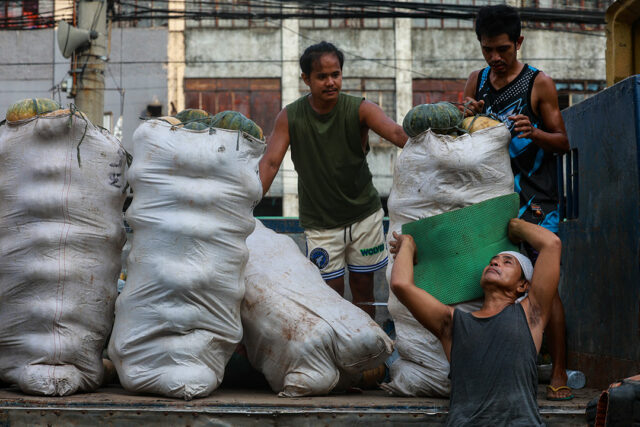
Workers unload packs of newly delivered vegetables at a market in Divisoria, Manila, Aug. 9. — PHILIPPINE STAR/NOEL B. PABALATE

THE PHILIPPINE Statistics Authority (PSA) on Thursday said it kept the country’s gross domestic product (GDP) growth rate at 5.5% for the second quarter.

In a report, the PSA said the growth in gross national income — the sum of the nation’s GDP and net primary income from the rest of the world — for the second quarter was revised downward to 8% from the 8.2% initially reported.

The growth in net primary income from the rest of the world for the second quarter was also lowered to 30.3% from 32.8%.

The local statistics authority said there were downward revisions in some components of the national accounts, mainly on the supply side.

“Downward revisions were recorded in manufacturing (2.5% from 2.7%), financial and insurance activities (5.4% from 5.6%), and real estate and ownership of dwellings, (5.9% from 6.1%),” the PSA said.

Meanwhile, the following sectors saw upward revisions: wholesale and retail trade, repair of motor vehicles and motorcycles (5.3% from 5.1%); transportation and storage (8.8% from 8.3%); mining and quarrying (-1.3% from -2.9%).

There were no revisions for demand-side components, which include household spending, government disbursement, investment, and net exports.

In the first six months of 2025, the economy grew by 5.4%, slightly below the government’s 5.5% to 6.5% growth goal.

Third-quarter GDP data will be released on Nov. 7.

A BusinessWorld poll of 18 economists and analysts earlier showed a median estimate of 5.3% growth in the July-to-September period.

If realized, this would be slower than the 5.5% expansion in the second quarter, and slightly faster than the 5.2% expansion in the third quarter of 2024.

Economy Secretary Arsenio M. Balisacan earlier warned of a slowdown in the July-to-September period amid a corruption probe, slow public disbursements, global uncertainties and adverse weather conditions. — Aubrey Rose A. Inosante

PHL conglomerates’ P1.65-T renewable push to test capital discipline — S&P

FREEPIK/TAWATCHAI07

PHILIPPINE CONGLOMERATES are expected to invest about $28 billion (P1.65 trillion) in renewable energy projects over the next decade as part of a broader $185-billion (P10.9-trillion) investment wave by leading business groups in the Philippines and Vietnam, according to S&P Global Ratings.

In a report released on Nov. 5, S&P said Philippine conglomerates are accelerating their shift toward renewable energy and other emerging sectors as their core businesses mature, positioning themselves for long-term growth.

S&P said the $185 billion combined investment is roughly 2.5 times the conglomerates’ total capital spending in the past decade, underscoring the scale of the upcoming investment cycle.

“We estimate that over the next decade [the Philippine conglomerates] will invest up to $28 billion on renewable energy, or about 20% of their total capital expenditure (capex) plans. The development of renewable energy sources in the Philippines is gaining momentum due to generally supportive policies, with private players leading the way,” S&P said.

By 2030, the country’s top business groups could account for 40-50% of the Philippines’ total renewable energy capacity, the report noted.

The study covered Aboitiz Equity Ventures, Inc., Ayala Corp., JG Summit Holdings, Inc., San Miguel Corp., and SM Investments Corp., which are among the country’s largest publicly listed conglomerates by market capitalization. S&P Global Ratings said it does not rate these companies.

S&P said Philippine firms have demonstrated stronger financial discipline than their regional peers, financing about 55% of capital expenditures in the past five years through operating cash flows and divestments rather than debt.

This helped keep their average gross debt-to-EBITDA (earnings before interest, taxes, depreciation, and amortization) ratio at less than one time in 2024, compared with about six times for major Vietnamese conglomerates.

“Conglomerates in the Philippines and Vietnam are not starting from a weak position. Mature core operations and access to deep funding pools give the firms a credible shot at high-barrier sectors,” S&P Global Ratings credit analyst Fiona Chen said in the report.

“Still, the scale and nature of these investments could push leverage beyond peer norms, raising questions about long-term capital structure and risk tolerance.”

About 20% of Philippine conglomerates’ capital spending is now allocated to renewable energy projects, S&P said, while another 13% goes to infrastructure and 12% to electric mobility. Investments in core businesses still account for more than half (54%) of total capital expenditure.

S&P said the Philippines’ well-developed banking and bond markets and a diversified investor base have provided conglomerates access to longer-tenor and more flexible funding.

“The Philippines’ more developed banking and bond markets, underpinned by a diversified investor base, allow for longer tenors and frequent issuances, which help spread out debt maturities,” the report said.

VIETNAM
In contrast, Vietnamese conglomerates rely more heavily on short-term domestic debt, with about two-thirds of bonds maturing within one to three years, leaving them vulnerable to refinancing and liquidity risks.

S&P estimated that the four Vietnamese conglomerates covered in its study — FPT Corp., Hoa Phat Group Joint Stock Co., Masan Group Corp., and Vingroup Joint Stock Co. — will likely invest $80 billion in infrastructure over the next decade, primarily in high-speed railways and fossil-fueled power plants.

The report said capex in new ventures reached 40% of total spending in Vietnam and 30% in the Philippines as conglomerates ramped up diversification into infrastructure, renewable energy, and electric mobility.

However, S&P noted that many of Vietnam’s new ventures remain loss-making, while Philippine firms still derive more than 80% of their net profit from core operations, highlighting stronger earnings resilience.

It added that governance and transparency remain crucial across both markets as conglomerates expand into multiple sectors. “Improving transparency is key to gaining a clearer view of obligations and cash flow, especially since large projects that span different parts of a group can create systemic risks because of crossholdings and guarantees,” S&P said.

The credit watcher said the next decade will test the capital discipline, funding flexibility, and governance strength of conglomerates in both countries.

“How conglomerates in the Philippines and Vietnam resolve today’s funding choices will not just shape their balance sheets but their capacity to invest in transformation, sustainability, and new markets,” it said.— A.G.C. Magno

ICTSI income climbs 26% on higher cargo handling and port revenues

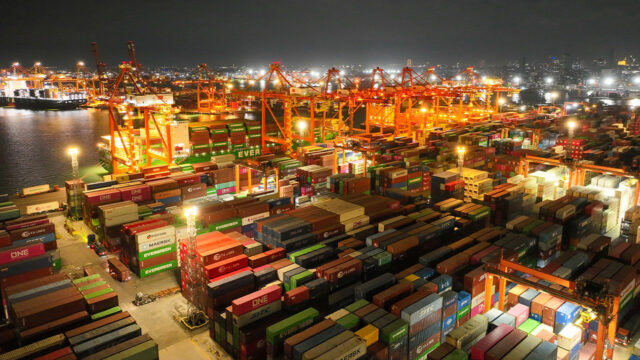
ICTSI.COM

RAZON-LED International Container Terminal Services, Inc. (ICTSI) posted a 26.27% rise in third-quarter attributable net income to $267.72 million, supported by higher cargo volumes and improved port revenues.

“ICTSI’s diversified portfolio has enabled us to capture opportunities in dynamic markets…,” ICTSI Chairman and President Enrique K. Razon, Jr. said in a stock exchange disclosure on Thursday.

“As we continue to invest in strategic expansions and pursue new opportunities across the Americas, Asia, and Europe, the Middle East, and Africa (EMEA), we remain committed to driving sustainable growth and innovation throughout our global network. Looking ahead, ICTSI is well-positioned to build on this momentum and deliver long-term value,” he added.

Revenues for the three months ending September climbed 19.67% to $827.74 million from $691.70 million in the same period last year, even as gross expenses rose 12.73% to $356.61 million from $316.35 million.

For the January-to-September period, ICTSI’s attributable net income increased 18.81% to $751.56 million from $632.58 million a year ago.

“ICTSI’s excellent performance in the first nine months of 2025 is a testament to the strength of our global operations and the disciplined execution of our strategy,” Mr. Razon said.

Consolidated revenues rose 16.42% to $2.34 billion from $2.01 billion in the same nine-month period last year.

Broken down by region, port operations in Asia accounted for the largest share with $985.63 million in revenues, followed by $919.70 million from the Americas and $432.46 million from EMEA.

ICTSI said its revenue growth was driven by tariff adjustments, increased volumes with a favorable container mix, and higher ancillary revenues from selected terminals.

In terms of volume, the company handled 10.69 million twenty-foot equivalent units (TEUs) in the first nine months, up 11.35% from 9.60 million TEUs in the same period last year.

Asian ports handled 5.64 million TEUs, while ports in the Americas processed 3.05 million TEUs, and those in EMEA handled 2 million TEUs.

ICTSI attributed the increase in throughput to improved trade activity across all regions. Excluding the impact of new operations in Iloilo and Indonesia, as well as discontinued operations in Indonesia, consolidated volume would still have been up by around 11%, it added.

Capital expenditure reached $449.61 million in the first nine months, mainly allocated for ongoing expansion at Contecon Manzanillo S.A. (CMSA) in Mexico, terminal upgrades in the Philippines, upfront payments for a container terminal in Indonesia, and equipment acquisitions.

The company has earmarked $580 million in capital spending for this year to fund its new project in Batangas and the third-phase expansions of its terminals in Mexico and Manila.

At the local bourse on Thursday, ICTSI shares gained P2, or 0.38%, to close at P525 apiece. — Ashley Erika O. Jose

Smart secures P2-B green loan for 5G network expansion

PHILSTAR FILE PHOTO

SMART COMMUNICATIONS, INC., the wireless arm of PLDT Inc., has obtained its first green loan worth P2 billion from Metropolitan Bank & Trust Co. (Metrobank) to support the expansion of its fifth-generation (5G) network nationwide.

“This green loan is more than a financial milestone — it demonstrates Smart’s participation in shaping a low-carbon digital future. By investing in energy-efficient technologies, we are pursuing business growth and efficiency, while being mindful of our impact on the environment,” PLDT and Smart Chief Finance and Risk Management Officer Danny Y. Yu said in a media release on Thursday.

Smart said the proceeds will be used to fund upgrades and expansion of its network infrastructure aimed at improving operational efficiency and enhancing customer experience.

A green loan is a type of financing instrument that allocates proceeds exclusively for eligible projects that promote environmental sustainability.

5G technology is designed to handle higher data traffic at faster speeds while consuming less energy per gigabyte. It can also shift to low-energy modes and optimize power use, thereby reducing greenhouse gas emissions.

“Financing plays a key role in enabling the achievement of our business and sustainability goals and in our pursuit of initiatives that contribute to our long-term growth and create value for the planet and the future generations,” PLDT and Smart Chief Sustainability Officer Melissa Vergel De Dios said.

The latest green facility follows PLDT’s P2-billion social loan secured last year to expand its fiber network and a P1-billion green loan for network upgrades and expansion.

Smart is the wireless unit of PLDT Inc. Hastings Holdings, Inc., a unit of the PLDT Beneficial Trust Fund subsidiary MediaQuest Holdings, Inc., has a majority stake in BusinessWorld through the Philippine Star Group, which it controls. — Ashley Erika O. Jose

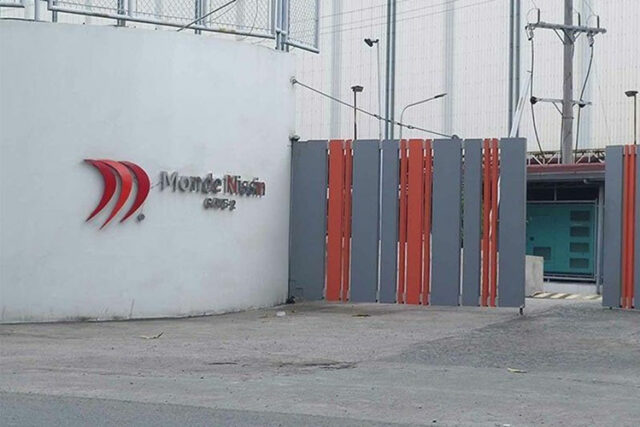
Monde Nissin targets growth in alternative meat segment

PHILSTAR FILE PHOTO

LISTED food manufacturer Monde Nissin Corp. is shifting its focus toward expanding its alternative meat business after reporting improved margins and launching a nutrition campaign.

“The campaign that’s underway in Q4 (fourth quarter) focuses on our frozen ingredients range with the biggest frozen campaign that we’ve seen in three or four years,” Quorn Foods Chief Financial Officer Nicholas Cooper said in a virtual briefing late Wednesday.

“It’s looking to bring new consumers back into the core part of our frozen ingredients range, which has been reformulated to be free from artificial ingredients and is running under the ‘Nothing to Hide’ banner.”

Earlier this year, Quorn unveiled its multi-million-pound campaign aimed at positioning its products as high-protein and additive-free, a move expected to lessen consumer skepticism over highly processed food.

“For meat alternative products, we aim to continue to slow down our sales decline through our ‘Nothing to Hide’ campaign for our frozen ingredients, which we have just launched,” Monde Nissin Chief Executive Officer Henry Soesanto said.

“Our Quorn frozen ingredient SKUs (stock keeping units) are our key volume SKUs, and therefore, are critical to finally arrest the volume decline.”

Quorn Foods’ third-quarter gross profit jumped by 29.3% to P904 million. It likewise grew by 15.2% to P2.5 billion in the first nine months.

Revenues of the meat alternative business declined by 1.1% in the third quarter and 3.9% as of end-September.

“While this compares very favorably with the high single-digit volume decline that we experienced in the past, we believe that we cannot cost save our way to glory,” Monde Nissin Chief Financial Officer Jesse C. Teo said.

“Eventually, we need to be able to address the volume decline to be able to continue the very favorable gross margin accretion path that we are already seeing.”

Quorn Foods’ core earnings before interest, taxes, depreciation, and amortization (EBITDA) stood at P255 million in the third quarter.

“While category conditions remain challenging, the improvement in EBITDA demonstrates that our initiatives are making steady progress,” Mr. Soesanto said in a stock exchange disclosure on Wednesday.

Monde Nissin Corp. acquired Quorn, a meat alternatives brand in the United Kingdom, in 2015.

The snack maker posted a 13% increase in its third-quarter net income to P2.3 billion amid foreign exchange gains and steady growth in its core branded food business.

Some of Monde Nissin’s brands include Lucky Me! noodles, SkyFlakes crackers, Fita crackers, Dutch Mill drinks, and Monde baked goods.

At the local bourse on Thursday, Monde Nissin shares fell by 2.54% or 16 centavos to close at P6.14 apiece. — Beatriz Marie D. Cruz

Moudifa the AI musical: I have seen the future and it is not AI

DIRECTOR JAG CRUZ (left), executive producer and writer Margarita Marquis (center), and the cast of Moudifa the Musical.

By Brontë H. Lacsamana, Reporter

AN UNFINISHED production titled Moudifa the Musical is serving as the proof of concept for artificial intelligence (AI)-generated music and lyrics, created by its executive producer, entrepreneur and budding writer-composer Margarita Marquis.

At a preview of the musical on Nov. 4, held at the RJ Bistro in Makati’s Dusit Thani Hotel, BusinessWorld saw some of the work-in-progress material, helmed by TV director Jag Cruz.

The title of the musical, Moudifa, refers to the Arabic word for servicewoman — in aviation, a flight attendant. The musical follows a Filipina working in the Middle East, a novel, Moudifa!: Culture Shock from the Top, which was inspired by Ms. Marquis’ real-life story, published in 2007.

Ms. Marquis told the press that they need producers for her vision to come to life — and that vision is to be “the next Miss Saigon.”

Aside from advocating for the empowerment of women and overseas Filipino workers, proceeds of the show will go to the Mother and Child Foundation, which she also heads.

“[To be like] Miss Saigon, we need a lot of money,” she explained. “There’s a purpose, there’s advocacy, so it should be done.”

One thing she was proud to say about the musical is that she wrote all the music and lyrics herself — with the aid of AI.

“At the beginning, a hundred songs I created with AI. I said, ‘Okay, I will use AI, no soul,’ kasi sabi nilang lahat walang soul daw, diba (because everyone says that it has no soul, right)? So I created [it] like this. And then, at 3 o’clock in the morning, pwede na (it was okay),” she said, when we asked what her creative process was.

“After 50 songs, AI was following my feelings, my soul! I said, ‘Okay, AI, can you cry?’ AI can cry!” Ms. Marquis explained at the press conference. “Did you hear the lyrics? It is not AI. It is from my soul.”

A REVIEW OF THE SONGS
While the musical is still in development, with the producers in the process of seeking funding for a full production to be staged in 2026, potential patrons and select members of the press got to see 14 musical numbers in total at RJ Bistro.

The songs were pre-recorded tracks sung, or at times lip-synched, by the production’s performers (the lead character of Moudifa is played by VIVA artist Jassy Calupitan and RJ & The New Riots vocalist Angie Bonnevie). They had only been rehearsing for a week at that point.

The ensemble performances were danced by the Next Us Dance Crew, who didn’t lack in passion and energy.

The first song, “Moudifa’s Flight,” began with oddly verbose lyrics set to a generic pop sound (think Lady Gaga if she stopped trying) — already a hint that it was created with the assistance of AI.

It starts off with “In a land where the sand meets the golden oil, Moudifa’s on a mission, through the sweat and toil.” The chorus goes, “Ooh, Moudifa, your spirit soars / In the land of petrol dollars, you open the doors / Stronger than the laws that try to control / In your wings of freedom, you’re finding your soul.”

The succeeding songs were surprisingly polished as well, blending genres with ease. A more upbeat pop track, “Boom Boom Boom,” has the younger Moudifa actress move with the dance crew, while the Tagalog-language “Lumipad ng Mataas” provides a cute anthem for her dreams.

The songs by the love interests in Moudifa’s story come off as particularly juvenile. “Dance Dance Dance” has the character of The Football Player hype up the crowd with a P-pop dance tune while “Prince of Dreams” has The Prince represent idealized affection in the form of a somewhat-Arabian-inspired Ed Sheeran-esque acoustic ballad.

(Strangely The Prince sings about himself from the perspective of Moudifa: “Oh, the young prince from the Arabian night / With the grace of the dawn and a charm that’s so bright / Never thought I’d see him, he slipped through my hands / But the girl in me dreams of faraway lands.”)

The fact that they had 14 songs ready for the preview — many of which the actors and actresses could barely sing with conviction because of how chunky the lyrics were — piqued this writer’s suspicion that AI was used. So I asked and Ms. Marquis answered in the affirmative.

ON USING AI IN MUSICAL THEATER
Ms. Marquis, as executive producer and writer, was open about using AI for her creative process.

“You know how I created the songs, how many? Hundreds. Hundreds of songs. Hundreds from my heart,” she said at the press conference.

The keyword here is created — even when BusinessWorld asked about how she wrote the songs, she corrected us by saying “created.”

She specified that her process was “modern, with AI, the future of music.”

The audience was stunned when she went on, in front of the very singers she hired for the showcase: “Mawawala lahat ng mga singers (All the singers will be gone), I’m sorry. AI will take over. That is for sure.”

The amalgamation of genres displayed was described by Ms. Marquis as a mixture of “Lady Gaga, Arabic, and pop.”

Asked to react to the idea of using AI in this way, playwright and librettist Luna Griño-Inocian (The Lion, the Witch, and the Wardrobe, The Horse and His Boy, and The Quest for the Adarna) said that AI ultimately “gets emotions and feelings from somebody else,” using original work by other artists as a template.

“When your ideas are posted online, they get eaten up and used. You may think it’s your feelings, but AI gets its ideas from human beings,” she explained. “You can spot if a song sounds a lot like something else because AI eats it up and throws it back at you. You can recognize it with certain repeat patterns.”

Aside from the uncanny verbosity, one noticeable pattern in Moudifa is the opening lyrics of many songs: “In the heart of Manila where the night comes alive / Ermita’s glow, where the dreamers strive,” then “In a world where the colors shine bright / I wear my uniform and I’m ready for flight,” and “In a desert palace under a mystic moon / A young prince sings a forgotten tune.” All display similar sentence structures.

Composer and scorer Vincent De Jesus (Care Divas, Himala: Isang Musikal, Kung Paano Ako Naging Leading Lady, Batang Rizal, Zsazsa Zaturnnah Ze Muzikal) told BusinessWorld in a video call that it really shows when something is “just pixels and stolen information all put together.

“Any composer or artist would agree that AI has no place in the arts, in musical theater, because why would you pay P2,000 for a ticket when you can just generate your own musical using prompts at home?” he said.

Composer and musical director Ejay Yatco (Pingkian: Isang Musikal) weighed in with a message sent on Facebook: “I personally am against the use of AI to write music. The most I can see it being used for is as a brainstorming tool.

“The point of art is to provide a human perspective on things, to tell stories as humans,” he said. “The AI being an algorithm is an impressive tool, but it will never be able to replicate a true human perspective.”

Not every artist approached by BusinessWorld was so negative about the use of AI. Musician and composer Myke Salomon (Bar Boys: A New Musical) told BusinessWorld in a Zoom call that the Moudifa production shouldn’t be crucified for their AI use.

“When I started out, I had the computer to help me read and write notes and compose,” he explained. “I understand her need for a tool, but it still boils down to whether you can use it to communicate your story and translate it into an immersive experience and a transformative show.”

He added that to Ms. Marquis’ claims of an AI future where performers will be obsolete, they can be protected by a musicians’ equity, such as when unions on Broadway protested over Here Lies Love using only a DJ and canned music, and no live musicians.

For Mr. De Jesus, the Filipino theater community can be just as vigilant, expressing confidence that if a company were to open and mount shows fueled by AI, “the industry and the audiences will not stay silent.”

“Coming from the pandemic, we’ve only just begun reaping the fruits of our labor,” he said. “Starting 2023, left and right we’ve had so many original plays, musicals, student productions. At the end of the day, the audience will be the judge.”

DigiPlus profit drops 51% on tighter gaming rules

DIGIPLUS.COM.PH

LISTED DigiPlus Interactive Corp. (PLUS) reported a 51.41% decline in its third-quarter net income to P1.71 billion, citing stricter regulations that prompted e-wallet providers to remove in-app access to licensed online gaming platforms.

“This temporarily disrupted player activity and transaction volumes across the industry during the period,” the company said in a statement on Thursday. “In response, DigiPlus took proactive measures to enhance player protection and customer service platforms.”

In September, DigiPlus partnered with Philippine First Insurance Co., Inc. (PhilFirst) to launch a surety bond program offering up to P1 million in financial protection for players using BingoPlus, ArenaPlus, and GameZone. The initiative allows users to secure coverage for their in-game wallets and balances without purchasing a separate policy. 

The following month, DigiPlus signed a partnership with CIS Bayad Center, Inc. to expand over-the-counter payment options nationwide, providing users of its gaming platforms with more secure and convenient transaction methods.

Despite the steep quarterly drop, DigiPlus said it sustained growth for the first nine months of 2025.

For the January-to-September period, the company’s net income rose by 15.59% to P10.11 billion from P8.75 billion a year earlier, driven by steady gains in its retail games segment and contributions from new product launches and operational improvements.

“This period demonstrates DigiPlus’ resilience amid temporary setbacks. Throughout this period, we continue to focus on digital innovation, player protection, and good governance,” DigiPlus Chairman Eusebio H. Tanco said.

“As we grow our business and expand responsibly into new markets, we remain focused on upholding global corporate governance and responsible gaming standards, while creating a positive impact on the Filipino nation.”

Revenues for the nine-month period increased by 29.61% to P66.83 billion from P51.56 billion in 2024. Gross revenues for the third quarter inched up by 0.26% to P19.05 billion from P19 billion a year earlier, supported by continued product development, improved user experience, and stronger corporate governance.

“In the first nine months of 2025, DigiPlus paid P25.59 billion in government taxes and regulatory fees, reflecting a 9% increase from P23.40 billion in the same period of 2024. On a quarter-on-quarter basis, DigiPlus paid P7.17 billion in government taxes and regulatory fees, down 26% due to the impact of the e-wallet delinking directive,” the company said.

On Thursday, shares in DigiPlus fell by 1.63% or 40 centavos to close at P24.20 apiece. — Alexandria Grace C. Magno