Home Blog Page 7337

Hong Kong’s No. 2 official says city has returned to stability from ‘chaos’

A GENERAL VIEW of skyline buildings in Hong Kong, China May 28, 2020. — REUTERS

HONG KONG  Hong Kong has returned to order from chaos since China imposed a sweeping national security law on the global financial hub last year, the city’s acting chief executive, John Lee, said on Thursday. 

Beijing imposed the security law just before midnight on June 30 last year to punish anything China deems as subversion, secession, terrorism and collusion with foreign forces with up to life in prison. 

The security law was Beijing’s first major step to put the global financial hub onto an authoritarian path, kick-starting a campaign dubbed “patriots rule Hong Kong,” which included moves to reduce democratic representation in the city’s legislature and various screening mechanisms for politicians. 

Mr. Lee was speaking for the first time as acting city leader at a flag-raising ceremony marking the 24th anniversary of the former British colony’s return to Chinese rule in 1997, which coincides with the centenary of the Chinese Communist Party. 

Chief Executive Carrie Lam and other senior officials were invited to Beijing for the party celebrations. Mr. Lee was appointed as her No.2 last week after playing a key role in the city’s crackdown over the past year as security secretary. 

“In the coming year, we will continue to take a steady stance to protect national security,” Mr. Lee said. “Hong Kong absolutely has the conditions to rebound from a trough.” 

Mr. Lee said the security legislation and electoral reforms had made “Hong Kong society change from chaos to order.” 

Critics of the government say it has used the security law to crush dissent in the former British colony, an assertion officials in Beijing and Hong Kong reject. 

Supporters of the legislation say it has restored order and plugged national security “loopholes” exposed by anti-government demonstrations in 2019. 

So far under the new law, described as a “birthday gift” by senior Chinese official Zhang Xiaoming when it was introduced last year, authorities have arrested 117 people, mostly democratic politicians, activists, journalists, and students. 

Beijing said it was necessary after mass pro-democracy and anti-China protests in 2019 that have been described as acts endangering national security. Many protesters, however, say they were demanding Beijing respect constitutionally guaranteed rights and freedoms. 

Usually on July 1, tens of thousands of people take to the streets in Hong Kong to protest against anything from Beijing’s maneuvers in the city to unaffordable housing. 

That tradition, which set the semi-autonomous city apart from tightly controlled mainland China, is unlikely to be followed by many people this year after police denied permission for a rally, citing coronavirus restrictions. 

“It is crystal clear that under the NSL (national security law), over a year, it does have a chilling effect on Hong Kong people … less people would have the confidence to go on the street to speak out,” said Raphael Wong, an activist with the League of Social Democrats who held a protest with three others that was hemmed in by dozens of police officers. 

In many other areas, there was a palpable security presence, with police vans, water cannon trucks, armored vehicles and units of police officers patrolling many areas. — Reuters 

Deaths surge in US and Canada from worst heat wave on record

Image via Windy.com
Image via Windy.com

VANCOUVER/PORTLAND  A heat wave that smashed all-time high temperature records in western Canada and the US Northwest has left a rising death toll in its wake as officials brace for more sizzling weather and the threat of wildfires. 

The worst of the heat had passed by Wednesday, but the state of Oregon reported 63 deaths linked to the heatwave. Multnomah County, which includes Portland, reported 45 of those deaths since Friday, with the county Medical Examiner citing hyperthermia as the preliminary cause. 

By comparison all of Oregon had only 12 deaths from hyperthermia from 2017 to 2019, the statement said. Across the state, hospitals reported a surge of hundreds of visits in recent days due to heat-related illness, the Oregon Health Authority said. 

In British Columbia, at least 486 sudden deaths were reported over five days, nearly three times the usual number that would occur in the province over that period, the B.C. Coroners Service said Wednesday. 

“This was a true health crisis that has underscored how deadly an extreme heat wave can be,” Multnomah County Health Officer Dr. Jennifer Vines said in the statement. “As our summers continue to get warmer, I suspect we will face this kind of event again.” 

The heat dome, a weather phenomenon trapping heat and blocking other weather systems from moving in, weakened as it moved east, but was still intense enough to set records from Alberta to Manitoba, said David Phillips, senior climatologist at Environment and Climate Change Canada, a government agency. 

“In some of these places, their (temperature) records are being annihilated,” Mr. Phillips said. “It really is spectacular, unprecedented for us.” 

It was unclear what triggered the dome, but climate change looks to be a contributor, given the heatwave’s duration and extremes, Mr. Phillips said. 

Canadian Prime Minister Justin Trudeau paused to remember the dead during remarks in Ottawa on Wednesday and expressed concern over the fire threat. 

“We’ve been seeing more and more of this type of extreme weather event in the past years,” Mr. Trudeau said. “So realistically, we know that this heatwave won’t be the last.” 

In Washington, US President Joseph R. Biden. Jr., said climate change was driving “a dangerous confluence of extreme heat and prolonged drought,” warning that the United States was behind in preparing for what could be a record number of forest fires this year. 

SMASHING RECORDS
Lytton, a town in central British Columbia, this week broke Canada’s all-time hottest temperature record three times. It stands at 49.6 degrees Celsius as of Tuesday. The previous high in Canada, known for brutally cold winters, was 45°C, set in Saskatchewan in 1937. 

In the US Northwest, temperatures in Washington and Oregon soared well above 38°C over the weekend. Portland set all-time highs several days in a row including 47°C on Sunday. 

In Washington state, where media also reported a surge in heat-related hospitalizations, Chelan County east of Seattle topped out at 48°C on Tuesday. 

Oregon Governor Kate Brown declared a state of emergency due to “imminent threat of wildfires” while the US National Weather Service in Portland issued a red-flag warning for parts of the state, saying wind conditions could spread fire quickly. 

The Portland Fire Department banned use of fireworks for the Fourth of July weekend, when Americans celebrate Independence Day. 

FIRE AND MELTING ICE POSE RISKS
Most of Alberta and large parts of British Columbia and Saskatchewan are at extreme risk of wildfires, according to Natural Resources Canada’s fire weather map. 

“All the ingredients are there. It’s a powder keg just looking for a spark,” said Mike Flannigan, professor of wildland fire at University of Alberta. 

But the Chilcotin region, roughly 600 km north of Vancouver, was on flood warning due to the “unprecedented” amount of snow melting at “extraordinary” rates, according to a government release. 

“These are the types of issues that are going to be confronted more and more over the next few years,” said Adam Rysanek, assistant professor of environmental systems at the University of British Columbia.  Moira Warburton and Sergio Olmos/Reuters 

To tap global market, MSMEs should digitalize, shift to indirect exports — study

PHILIPPINE STAR/EDD GUMBAN

As lockdown restrictions ease, micro, small, and medium enterprises (MSMEs) that possess niche specializations and technologies should consider supplying raw materials to larger enterprises, according to a study recommending a “shift to a value-chain approach from a firm-centric approach.” 

This approach does away with the challenges presented by direct exportation, said John Paolo R. Rivera, associate director of the Asian Institute of Management’s Dr. Andrew L. Tan Center for Tourism, who presented the findings of the study he co-authored with Brian C. Gozun, former Dean of the Ramon V. del Rosario College of Business at De La Salle University, at a recent symposium organized by the Philippine Institute of Development Studies and the Philippine APEC Study Center Network. 

Titled “Navigating the New Normal: Restarting and Rebuilding Global MSMEs,” the virtual event mapped a post-pandemic path for MSMEs. “I prefer to call it a better normal because we can’t call it a new normal, particularly for business models rendered obsolete by the pandemic,” said Mr. Rivera. 

“If direct exporting is too gargantuan for MSMEs, indirect exporting, outsourcing, or subcontracting can be an alternative where entrepreneurs provide inputs in the form of raw materials and work-in-progress to other larger domestic businesses who have exporting capabilities and who have access to the global value chain,” recommended the study co-authored by Mr. Rivera. 

At the symposium, he added that it is important for entrepreneurs to go digital to normalize peer-to-peer connections, and to take advantage of government-sponsored capacity-building and mentoring programs. 

“Capacity-building and mentoring programs should touch on both hard and soft skills, as well as micro- and macro- perspectives,” said Mr. Rivera. Micro-perspectives include crowdfunding, total quality management, and risk management, whereas macro-perspectives referred to familiarity and proficiency in regulatory and economic policies. 

“These will allow MSMEs to proficiently and confidently participate in a globalized business environment, not only because risks have been mitigated, but also because they are well-equipped to strengthen their value chain,” he said. “MSMEs are ready, but they need assistance.” 

The 2019 List of Establishments of the Philippine Statistics Authority recorded a total of 1,000,506 business enterprises operating in the country. Of these, 995,745 (99.5%) are MSMEs. The top five industry sectors according to the number of MSMEs that year were: wholesale and retail trade; repair of motor vehicles and motorcycles; accommodation and food service activities; manufacturing; other service activities; and financial and insurance activities. A majority of MSMEs can be found in the National Capital Region (NCR), followed by Region 4-A (CALABARZON), and Region 3 (Central Luzon). — Patricia B. Mirasol

Cisco’s Ilagan champions digital resilience to achieve PH digital transformation

Having gone through months of lockdown and a continuous struggle to adapt to changes brought by the pandemic, IT adoption in the Philippines was done rapidly. In a study of the global workforce done by Cisco, 77% of organizations are promoting workplace flexibility, making a hybrid workforce a reality, where people have the option to work from anywhere or at an office. This radical change in the workplace has prompted many discussions on the digital journey that the Philippines is bound to take.

However, digital transformation goes beyond remote work. Karrie Ilagan, Managing Director of Cisco Philippines, grounds the discussion on the country’s digital journey to a more foundational concept: digital resilience.

Karrie Ilagan

“Digital transformation is inevitable, yes, but there are many missing pieces before we even begin to consider ourselves digitally transformed. The COVID-19 pandemic will not be the last challenge that will turn the world upside down, and we see every day what happens to the Philippines when we’re not ready,” said Karrie Ilagan, Managing Director of Cisco Philippines. “At Cisco, we focus on an organization’s digital resilience –the organization’s capability to readily adapt to disruptions not only be able to restore operations but more importantly be able to find opportunities in these shifts in the environment.”

“The only way to do that is to have the right digital infrastructure in place that is flexible, agile, and innovative enough to keep our society running,” she emphasized.


While the sudden shift to digital brought rising technological complexity, organizations’ manpower and know-how are not always able to keep up with this rapid innovation. There is therefore a greater need for automation and simplicity in solutions that will help organizations be agile and secure despite uncertainty. While digital resilience is normally connected to crisis situations, the pace and frequency of disruption only increases over time. Early adopters of technology will always be best positioned to maintain and sustain operations during disruptions.

Due to learnings from the pandemic, research group IDC revealed that digital resilience became a priority investment in 2020, and is expected to accelerate in 2021. This was seen in significant investments in cloud, collaboration, and security solutions despite the notable decline in overall IT spending due to financial constraints of the COVID-19 outbreak.

“The world is evolving from a product-led motion to an outcome-based approach, consumed as-a-Service more than ever. As a result, networking and security solutions are increasingly being combined and delivered from the cloud to support the needs of organizations – solutions that are dynamic, secure, and accessible. These are all possible in a cloud-first world where apps can be distributed from anywhere to anywhere, from small to large scale, and with security never compromised,” Ilagan explained.

Powering an inclusive digital future

As a world leader in IT and networking, Cisco was quick to respond to the almost-overnight evolution of the landscape. Within a year, the IT giant has released a series of products and innovations to support businesses in future-proofing their organizations.

On the security front, Cisco unveiled innovations to further its journey to radically simplify and deliver end-to-end security, across users, devices, networks, applications and data. These new solutions improve Extended Detection and Response (XDR) with greater visibility across network, endpoint, and cloud. New innovations expand Cisco’s vision for Secure Access Service Edge (SASE) with enhanced threat detection in the cloud and redefine and simplify network security.

Most recently, as the hyper-connected, distributed world we live in now relies on cloud more than ever, Cisco unveiled the Cisco UCS® X-Series, powered by Cisco Intersight™, and a full suite of solutions on hybrid cloud operations, observability, and insights, and customer service experience services for the cloud. These solutions enable customers to be cloud smart to advance their digital operating models to securely deliver new types of apps that live across on-prem, multiple clouds, and the edge.

“There is no such thing as a one-size-fits-all solution, so technology has to be as flexible and agile as the businesses need them to be,” said Ilagan. “While the Philippines hasn’t fully realized its digital transformation, there are already signs and beginnings happening all around the country. If we continue to support and invest in the right technology that can deliver all this, there is a big chance that our country can stand head-to-head with our more advanced neighbors in the region.”

Unemployment, underemployment decline in May

PHILSTAR

THE COUNTRY’S jobs situation improved in May as the ranks of unemployed and underemployed Filipinos declined during the period, the government’s latest jobs data show.

Preliminary results of the Philippine Statistics Authority’s May 2021 round of the Labor Force Survey released earlier this morning put the country’s unemployment rate at 7.7%, down from the 8.7% recorded in April.

This was the second-lowest unemployment rate recorded since the start of the year, following the 7.1% posted in March.

This was equivalent to 3.730 million jobless Filipinos in May, down from 4.138 million in April.

Likewise, the underemployment rate — the proportion of those already working, but still looking for more work or longer working hours — improved to 12.3% in May from 17.2% in April. This was the lowest underemployment rate since the PSA started tracking jobs figures on a monthly basis this year.

In absolute terms, this equated to 5.492 million underemployed Filipinos in May, lower than the 7.453 million the previous month.

The size of the labor force was approximately 48.446 million in May, up from 47.407 million in April. This brought the labor force participation rate to 64.6% of the country’s working-age population in May from 63.2% the previous month.

The employment rate was recorded at 92.3% in May from 91.3% in April. This was equivalent to 44.716 million people in May from 43.269 million previously.

The service sector made up 57.8% of total employment in May, inching up from the 57.4% cited in April. The industry sector likewise saw its employment rate slightly improve to 18.4% during the period from 18.2%.

Meanwhile, agriculture had an employment rate of 23.8%, down from 24.4%. — Ana Olivia A. Tirona

Isla Lipana & Co./PwC Philippines announces new leadership team

Isla Lipana & Co., the Philippine member firm of the PwC global network, announced today its new executive leadership team from 1 July 2021.

Roderick Danao, the newly elected Chairman and Senior Partner, introduces his executive team leaders who represent the firm’s functional focus areas. “Our leaders bring to life our values and behaviors in PwC: they act with integrity, make a difference, care, work together and reimagine the possible. I am confident that they will ably steer the firm in line with PwC’s future-focused strategy called The New Equation which, in a nutshell, is about the need to build trust and the need to deliver sustained outcomes.”

With his broad experience in leading the firm as Chairman and Senior Partner for eight years and 23 years as a partner, Atty. Alexander Cabrera performs a senior role as Chairman Emeritus. He is also the firm’s ESG (Environmental, Social, and Governance) Leader while continuing to be a Tax Partner.

Supporting Danao is Atty. Maria Lourdes Lim, who has been designated as Vice Chairman. She continues to be the Tax Managing Partner as well. The ELT also includes the firm’s line of service leaders: Aldie Garcia, who succeeds Danao as Assurance Managing Partner; Mary Jade Divinagracia as Deals and Corporate Finance Managing Partner, and Markets Leader; and Roberto Bassig as Consulting Lead Partner.

Four leaders oversee the firm’s business operation units: John-John Patrick Lim for Risk Management and Independence, Ma. Fedna Parallag for Finance, Imelda Ronnie Castro for Human Capital, and Carlos Carado II for Digital Solutions Development.

“Our new executive leadership team is a combination of people with diverse backgrounds, years of experience, multi-faceted expertise, and admirable ingenuity. They greatly boost our strength as we go through challenges, celebrate our wins, and help our clients and stakeholders reinvent the future,” Danao states.


JCI Manila’s Ten Outstanding Guro Awards

JCI Manila has held numerous awarding ceremonies to recognize different sectors in society which play important roles in creating a comfortable, developed, and peaceful life for us. As these sectors help in creating positive change, it is only fitting to create an award just for them, specifically for Teachers. The latter plays a vital role in the nation’s growth and development. It takes only one great teacher to produce thousands of professionals. —For this reason, “Teachers change the world, one child, at a time.” JCI’s mission is to provide development opportunities to create positive change and the organization supports and acknowledges the hardworking teachers in the Philippines. It is a belief that the activated positive youth will truly make a difference in the world we live in.

JCI Manila’s Ten Outstanding Guro Awards, known as “TOGA” was conceptualized by past VP Mark Lester “Lec” David Toribio as he himself is a teacher, inspired by his mother, Jesusa David Toribio. In his aim to recognize the hard work done by teachers, working 24/7 to prepare the best for students, the future heroes of our land, it is just right to form an awarding ceremony for their exemplary service. This award was made a reality by JCI Manila’s 2021 president, Richard Antonio Tamayo, and his board of directors, together with the support of past presidents and members of this prestigious organization. Chair Jason Pilones is the overall chairman for this project.

TOGA is not just about recognizing the top 10 finalists; it’s also a program that offers training to interested schools by broadening the capacities of teachers in the fields of Financial Literacy and Motivation. These modules were chosen as it was deemed essential for teachers to be equipped with correct financial knowledge. As Department of Education (DepEd) Secretary Briones said, in order to teach students financial literacy, as mandated by law, it is a must that this be taught to the teachers first. It is a hard reality that one of the most vulnerable individuals in incurring debts are teachers. This can be attributed to low financial literacy. The hard-earned peso of teachers must be spent wisely with tips and techniques for a sustainable financial life. Indeed, being a teacher is a noble and highly respected profession. Maintaining the high motivation level of our teachers should also be a top priority to ensure that a positive learning experience is created for our students.

TOGA was first opened exclusively to public school teachers, but due to time constraints and restrictions on face-to-face interaction, it’s been difficult to mobilize the team. But through the help of DepEd units, and JCI chapters, it was easier to connect to public school coordinators to schedule training sessions with them and further explain what TOGA is all about. Moving forward, it will be opened to both public and private school teachers as they share one goal, one passion, one calling.

Despite the limited time since the program started, TOGA has reached 10 DepEd-recognized municipalities with over 1,000 teachers. TOGA has inspired numerous teachers to pursue their calling as educators and even go beyond what is expected from them. As Albert Einstein once said, “It is the supreme art of the teacher to awaken joy in creative expression and knowledge.” It is through our teachers that we are able to bend, to stretch, to tuck and more so, shine as bright as a star.

June 19, 2021, was the last day of entry submission, and the formal awarding ceremony will be held on July 3, 2021. The 10 awarded outstanding teachers will receive a cash price, plaque, certificate, and a personal computer all due to the generosity of our sponsors, Jaime V. Ongpin Foundation, City Savings Bank, Mondelez Philippines, Inc., Ramon Aboitiz Foundation, Mega Global Corporation, Dingdong Dantes and The Yes Pinoy Foundation, and Martin Xavier ‘Boss Martin’ Penaflor of Tangere Pinoy Survey with Prizes, an award-winning tech-based Market Research Company. Special awards and recognition will also be given such as the William Tiu Lim Lifetime Achievement Award, the Mondelez Philippines Joy Schools Holistic Teacher Award, the Jesusa David Toribio Service Teacher Award, and Dingdong Dantes Student Leadership Award.

As JCI Manila was able to successfully launch its first TOGA, this will continue as an annual awarding ceremony to recognize the extraordinary work of our teachers. Details will be posted on the JCI Manila Facebook page (https://www.facebook.com/events/169786365167134?ref=newsfeed) and will also be disseminated through the Department of Education. Our teachers play a crucial role in developing the minds and hearts of our children. We honor them through TOGA to recognize their unconditional service for the betterment of the nation.

Bank lending falls for 6th straight month

BW FILE PHOTO

BANK LENDING continued to decline but at a slower pace in May as banks and borrowers remained cautious amid the pandemic, while liquidity growth remained steady.

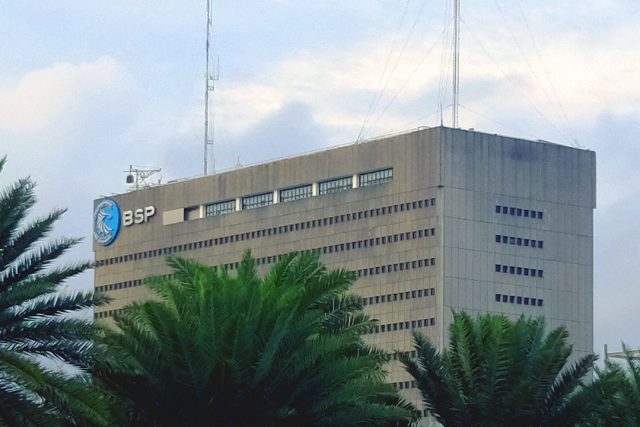
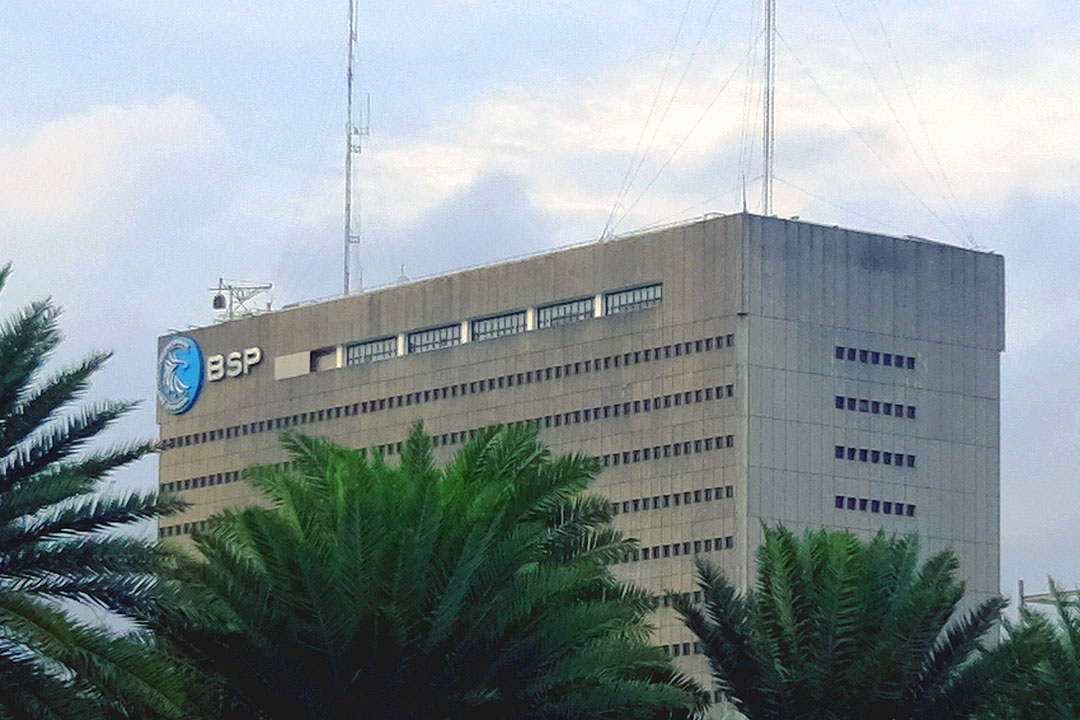
Citing preliminary data, the Bangko Sentral ng Pilipinas (BSP) said on Wednesday outstanding loans of big banks — excluding short-term deposits with the regulator — dropped by 4% year on year to P9.012 trillion in May.

This marked the sixth straight month of bank lending contraction, although it was slower than the 5% decline in April.

Inclusive of reverse repurchase agreement, outstanding loans fell 1.8% in May, but eased from the 2.9% contraction in the previous month.

Asian Institute of Management economist John Paolo R. Rivera said the softer decline in bank lending could point to gradual improvement.

“[This] is an indication of an eventual recovery in bank lending activities but still with some degree of caution because of the pandemic where income capacity of people and firms are still restricted or unstable,” he said in a Viber message.

Metro Manila and some nearby provinces were placed under lockdown from late March to mid-April as cases surged in the area. Restriction measures have since been gradually eased, allowing more businesses to reopen.

“The rate at which we are going will give confidence for banks that some normalcy in economic activities is happening sooner or later,” Mr. Rivera said.

He noted the continued imposition of the looser general community quarantine in the capital and the arrival of more vaccines will help to boost confidence of both banks and borrowers in terms of lending.

In May, credit line for production activities dropped 2.9%, easing from the -3.9% in April. Lending to key industries such as manufacturing (-7.9%), wholesale and retail trade (-7.1%), repair of motor vehicles and motorcycles (-7.1%), and professional, scientific and technical activities (-56.9%) continued to shrink during the month.

However, there was growth in loans for certain industries such as real estate (3.9%), information and communication (3.4%), human health and social work (13.7%), and construction (2.8%).

May also saw consumer loans decline by 9.2%, from -10.2% in April, due to the drop in vehicle loans (-13.8%), credit card (-5.7%), and salary-based loans (-3.2%).

“Looking ahead, the BSP shall sustain monetary policy support in order for the economic recovery to gain more traction,” BSP Governor Benjamin E. Diokno said in a statement.

MONEY SUPPLY
Meanwhile, the central bank said money supply, expressed as M3, grew by 4.7% year on year to P14.3 trillion in May. This was a slower pace than the 5.2% in April.

M3 refers to the increase in domestic liquidity or the amount of money circulating in the system.

Month on month, M3 inched up 0.3%.

Domestic claims in May rose by 2.6% from the 1.9% in April, “due mainly to the expansion in net claims on the central government while bank lending to the private sector remained tepid.”

“The BSP will ensure that domestic liquidity remains adequate in support of economic activity, consistent with the BSP’s price and financial stability objectives,” Mr. Diokno said.

Policy measures from the central bank have already infused P2.2 trillion in liquidity to the financial system, which is equivalent to 12.1% of gross domestic product, Mr. Diokno earlier said.

Last week, the central bank kept the key policy rate at a record low of 2% to support the economy’s recovery.

Mr. Diokno said keeping the policy accommodative is crucial given credit activity remains muted. — Luz Wendy T. Noble

June inflation likely settled within 3.9-4.7%

PHILIPPINE STAR/ MICHAEL VARCAS

HEADLINE INFLATION likely remained above the government’s annual target range for a sixth straight month in June, Bangko Sentral ng Pilipinas (BSP) Governor Benjamin E. Diokno said.

In a Viber message to reporters, Mr. Diokno said inflation likely settled within the 3.9% to 4.7% range in June, as electricity rates and oil prices remained elevated.

The central bank’s point inflation projection for the month is at 4.3%, he added.

If realized, June could mark the sixth straight month of inflation beyond the BSP’s 2-4% annual target.

The BSP’s point inflation projection is slower than the 4.5% in May, but much quicker than the 2.5% logged in June 2020.

“Higher prices of domestic petroleum products along with the upward adjustment in Meralco (Manila Electric Co.) electricity rates and a slightly weaker peso are the main sources of upward price pressures for the month,” Mr. Diokno said.

Latest data from the Department of Energy showed gasoline, diesel, and kerosene prices increased by P10.75, P9.25, and P7.70 per liter, respectively, year to date as of June 22.

Meanwhile, Meralco earlier said the overall rate rose by P0.0798 per kilowatt-hour (kWh) to P8.6718 per kWh in June from May’s rate of P8.5920 per kWh.

The peso closed at P48.50 a dollar on Thursday, based on data from the Bankers Association of the Philippines. It weakened by 80.5 centavos from its P47.695-per-dollar finish on May 31.

On the other hand, Mr. Diokno said lower prices of food staples such as rice, meat and fruits could have helped slow inflation in June.

In May, the government reduced the tariff rates for pork imports, as well as increased the minimum access volume, in an effort to bring down prices. A supply shortage of pork products due to the African Swine Fever outbreak has pushed prices higher, leading to faster inflation in previous months.

The Philippine Statistics Authority will report the June inflation data on July 6.

“Moving forward, the BSP will continue to monitor emerging price developments to ensure that its primary mandates of price stability conducive to balanced and sustainable economic growth is achieved,” Mr. Diokno said.

The central bank last week kept the key policy rate at a record low of 2%, citing the need for continued monetary policy support as the economy recovers.

During the policy review, the Monetary Board slightly raised its inflation forecast for the year to 4% from 3.9% previously. Average inflation for the first five months of the year stood at 4.4%. — Luz Wendy T. Noble

Weak public consumption seen to dampen economic recovery

PUBLIC CONSUMPTION — a major growth driver for the Philippine economy — likely remained sluggish in the second quarter due to the weakness in the jobs market and the strict lockdown enforced in April, First Metro Investment Corp. (FMIC) and University of Asia and the Pacific (UA&P) said in a joint report on Wednesday.

“While some economic indicators (e.g., manufacturing, exports, capital goods imports) point to a possible recovery, or at least an improvement from the Q1’s level, weak April employment data threaten Q2’s economic performance (through consumption-induced effects),” FMIC and UA&P said in the June issue of the Market Call.

Jobs data in April “failed to uplift spirits” after the number of unemployed Filipinos grew by 2.1 million to 4.1 million that month from 3.441 million in March, they said.

This partially reversed the 2.5 million jobs gained in March, when unemployment rate increased to 8.7% in April from 7.1% a month ago.

“We will continue to monitor the effects of the lockdown on the labor market for the succeeding months to help us gauge the economy’s performance in Q2 and for the rest of 2021, especially the extent and sustainability of consumption spending recovery,” the report said.

Metro Manila and its nearby provinces were placed under an enhanced community quarantine (ECQ) status from late March to May 15 to help mitigate the surge in coronavirus cases.

The stricter lockdown and higher unemployment rate likely dampened consumption, which accounts for more than 70% of gross domestic product (GDP).

“Second quarter GDP may dampen optimism,” FMIC and UA&P warned.

The Philippine Statistics Authority (PSA) will report on Aug. 10 the official GDP data for the second quarter.

Finance Secretary Carlos G. Dominguez III earlier said that they expect the economy to post year-on-year growth in the second quarter after reporting five straight annual contractions previously because of the pandemic.

The economy is expected to rebound strongly in the second quarter, coming from the 17% contraction during the same period a year ago.

With public consumption still weak, FMIC and UA&P are expecting government spending to do most of the heavy lifting, especially with its infrastructure program.

“Infrastructure spending should sustain its uptrend given adequate fiscal space,” they said.

State spending on infrastructure jumped by 45% from a year ago to P48.2 billion in April because of a low base in the same month in 2020. Infrastructure spending, however, slowed down by 34% from P87.8 billion in March.

FMIC and UA&P noted the government still has a lot of room to spend for the rest of the year after its four-month deficit only accounted for the 20% programmed deficit this year.

Latest data showed the fiscal gap inched up by less than one percentage point year on year to P566.2 billion from January to May after the 13% jump in revenues outpaced the 8.8% growth in spending.

The economic team capped this year’s budget deficit to P1.856 trillion or equivalent to 9.3% of GDP.

FMIC and UA&P’s report noted there is still room for optimism, as seen in better manufacturing activity and trade data.

The Philippine Manufacturing Purchasing Managers’ Index (PMI) stood at 49.9 in May, a slight improvement from April’s 49 but still below the 50 neutral mark that separates expansion from contraction.

The country’s total external trade in goods more than doubled to $14.16 billion in May, after exports surged by 72% to P5.71 billion year on year, and imports climbed by 141% to P8.45 billion.

Economic managers have set a 6-7% GDP growth target this year. — Beatrice M. Laforga

Private sector calls for more tech, infrastructure PPPs

PHILIPPINE STAR/ MICHAEL VARCAS

By Jenina P. Ibañez, Reporter

PRIVATE SECTOR groups are calling for more collaboration with the government to improve pandemic response and economic recovery projects.

Management Association of the Philippines Committee on National Issues Chair Rizalina G. Mantaring said that technology management, including that of Philippine Health Insurance Corp. (PhilHealth), can be outsourced to the private sector.

“It’s very difficult to attract very good IT people to the government because the salaries in the private sector are very high, so why don’t you just outsource the management of your technology to the private sector?” she said at a Stratbase ADR Institute event on Wednesday.

“Let the private sector do what it does best, and the government do what it does best.”

Calixto V. Chikiamco, president of the Foundation for Economic Freedom, said that there should be a fiscal policy shift towards solicited public private partnerships (PPPs) for infrastructure projects.

“I want to emphasize solicited PPP so that the infrastructure the government wants, that’s the one that gets built and not the one that just somebody’s pushing,” he said.

The government plans to finish 29 flagship infrastructure projects worth P238.48 billion before President Rodrigo R. Duterte’s term ends next year. Others are already completed or in the pipeline, while 51 will be finished after Mr. Duterte’s term.

Vivencio B. Dizon, presidential adviser for flagship infrastructure projects, previously said that the government had to scrap some projects to be fiscally prudent during the pandemic.

Mr. Chikiamco at the Stratbase event said that more PPPs should be rolled out for health projects.

“The government has been very poor, especially under the pandemic, in really managing our health needs. In fact, I would suggest even a PPP in which they will be judged on the basis of health outcomes.”

Health projects should focus on preventing illnesses and maintaining good health, Mr. Chikiamco added, to reduce costs for operations and procedures.

According to former Bangko Sentral ng Pilipinas Deputy Governor Diwa C. Guinigundo, providing infrastructure, education, and health services can be done through PPP.

“In general, I think the government should have that kind of principle that whatever the private sector can provide better or best, then it should be outsourced,” he said.

But he also noted how outsourcing the provision of basic services could lead to serving the interests of specific groups over a broader public interest.

“Of course, the problem here is regulatory capture,” he said.

Megawide eyes 2 contracts, P100-B order book

By Arjay L. Balinbin, Senior Reporter

MEGAWIDE Construction Corp. expects to secure one contract worth P20 billion by December of this year and another by early next year, bringing its order book to P100 billion.

“We expect one package to be around P20 billion. We expect a minimum of two packages. The best scenario is two in December, but most likely one [package] this year and one early next year like January or February,” Megawide Chairman and Chief Executive Officer Edgar B. Saavedra said at an online briefing on Wednesday.

If the second contract is secured, the company should be able to reach a total construction order book of P100 billion by early next year.

Mahi-hit ko na ‘yan (I will be able to hit that). It’s just a question of how long,” Mr. Saavedra noted.

To recall, Megawide’s order book was P68.4 billion by the end of last year after it secured new projects such as the Malolos-Clark Railway project, Carbon Market Redevelopment, Aglipay Sewage Treatment Plant, Westside City Resorts World, and the Newport Link.

“As of end-March 2021, the company added The Coral Village project in Cebu and the Westside City Site A, which involves the construction of a retail strip and theater mall to complement the hotel and casino complex,” Megawide said in an e-mailed statement on Wednesday.

“These resulted in the order book of P66.1 billion as of March 31, 2021, net of completions for the first quarter,” it added.

The company intends to participate in three to four contract packages of the Metro Manila Subway project and another three to four contract packages of the North-South Commuter Rail-South Line project, Mr. Saavedra said in his presentation at the company’s annual stockholders’ meeting on Wednesday.

“Megawide believes that infrastructure will be an emerging growth segment and a catalyst for economic recovery. As such, it has shifted gears and focused its build up on infrastructure, ending 2020 with a 15-percent share in the order book from a less than five percent in 2019,” the company explained.

The listed company suffered an attributable net loss of P389.02 million in 2020 versus the P859.49-million profit logged in 2019.

The company saw its total revenues decrease by 35% to P12.92 billion in 2020 from the previous year’s P19.88 billion.

Its first-quarter attributable net income stood at P2.85 million, down from P200.94 million in the same period in 2020. Total revenues fell 22.8% to P3.83 billion from P4.96 billion previously.

Megawide considers 2021 as the “year of recovery.”

“Our strategy has always been to create our own opportunities, when possible, as evidenced by our planning and execution even during the strictest community quarantine. We do, however, recognize that the business environment remains very unpredictable,” Mr. Saavedra said.

Megawide shares closed 1.18% lower at P6.70 apiece on Wednesday.