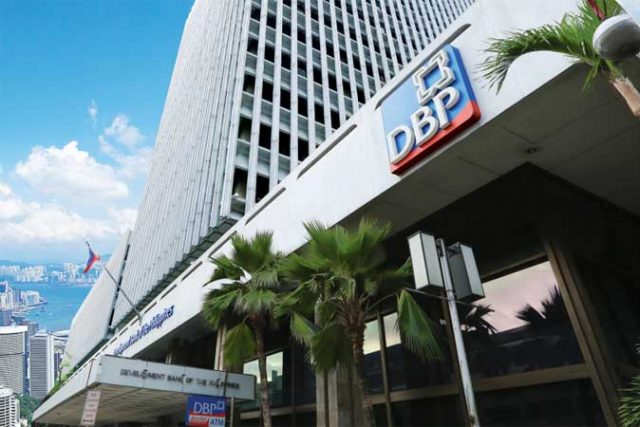
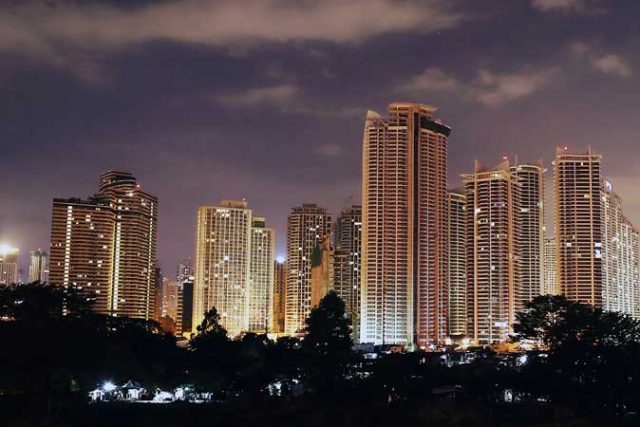
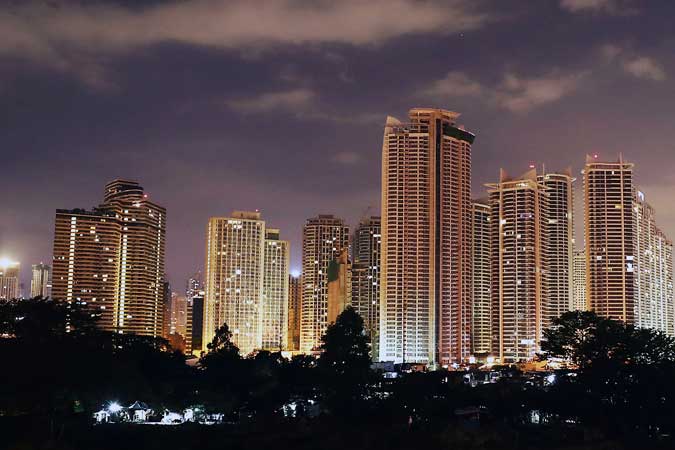
DEVELOPMENT Bank of the Philippines (DBP) extended a P730-million loan for a new seven-storey hospital in Quezon to boost healthcare capacity in the province.
The loan will be used for the construction and development of Allied Care Experts (ACE) Medical Center Sariaya, Inc. which will be the first Level 2 hospital in Quezon, the bank said in a statement.
Healthcare institutions are placed under this classification when they provide facilities such as an intensive care unit and have specialist doctors.
Once completed, the hospital will have a 104-bed capacity. It is projected to improve the bed-to-population ratio in Quezon to 1:1,134 from the current 1:1,175 ratio. Sariaya town currently has only two community hospitals with a total bed capacity of 30.
“DBP supports this latest ACE project as it will help address the pressing need for higher quality medical care in Sariaya and the entire Quezon. Financing infrastructure projects that will produce a ripple effect in communities remains a top priority for DBP, especially during these challenging times,” DBP President and Chief Executive Officer Emmanuel G. Herbosa said in a statement.
The Sariaya unit will be the ninth branch of ACE Medical Center nationwide.
DBP, which has been designated as the country’s infrastructure bank by the government, saw its net income fall by 30.4% to P3.9 billion in 2020 from P5.6 billion in 2019 due to higher loan loss provisions and operating expenses.
It is the sixth-largest bank in the country in terms of its assets with $1.042 trillion as of end-2020. — LWTN
FINANCE SECRETARY Carlos G. Dominguez III — PRESIDENTIAL PHOTO/ TOTO LOZANO
THE EFFORTS of the Bureau of Internal Revenue (BIR) and Bureau of Customs (BoC) to digitize their processes helped them improve tax administration, Finance Secretary Carlos G. Dominguez III said on Thursday.
“On the part of the Department of Finance, our revenue agencies have fully embraced digitalization. Through the help of the private sector, we have set up a number of e-payment and e-filing channels to improve tax collection and administration, curb corruption, and strengthen the business climate in the country,” he said in his speech at an online forum on Thursday.
The BIR collected P1.034 trillion in the first half, exceeding its target for the period by 1.61%. Meanwhile, Customs also exceeded its P291.833-billion goal for the first half by 3.7% after collecting P302.74 billion.
Mr. Dominguez said the improved electronic platforms of the BIR allowed almost 100% of taxpayers to file their annual income tax returns (ITRs) online. In 2015, only 10% of tax returns were filed electronically, he said.
BIR data showed 1.43 million ITRs were filed electronically this year to account for 99.5% of total returns, up from 89.99% in 2020 and 80.38% in 2019.
The surge in online filings started even before the pandemic, with the number of electronic filings growing from just 58.25% of total ITRs in 2018, 51% in 2017-2016, and 10% in 2015.
Aside from ITRs, the BIR also allows electronic filing for other major tax types like value added tax (VAT) and percentage tax. It also offers online payment channels via the Development Bank of the Philippines’ PayTax Online, Land Bank of the Philippines’ Link.Biz Portal, UnionBank of the Philippines, Inc.’s online web and Mobile Payment Facility, and via mobile wallets GCash and PayMaya.
“The Bureau of Customs, for its part, recently launched the Philippine Customs Modernization Project supported by the World Bank. This is a major step towards aligning our processes and standards with the best customs services in the world,” Mr. Dominguez said.
The BoC launched the P5-billion project in March aiming to automate its processes to improve its tax administration, boost collection, enhance trade facilitation, and lower trade costs.
Moving forward, the Finance chief said the government is still working on other programs to achieve its target to fully digitalize country’s tax system.
He said the United States Trade and Development Agency is helping the BIR roll out digital reforms, while South Korea is assisting in the bureau’s plan to set up an electronic invoicing system.
The government is also considering to replicate Russian Federal Tax Service’s VAT monitoring and collection scheme to help the BIR achieve “world-class tax administration.”
“In our digitalization efforts, we always encourage close collaboration with the private sector. We believe that the private sector’s expertise and initiative to adopt digital innovations will help us anticipate the changes in the digital economy. The private sector can help us provide a more nurturing policy environment for fintechs,” Mr. Dominguez said. — Beatrice M. Laforga
DEPARTMENT of Transportation (DoTr) Secretary Arthur P. Tugade — PRESIDENTIAL PHOTO
THE Department of Transportation (DOTr) via the Toll Regulatory Board (TRB) has inked a memorandum of agreement (MoA) for the construction of the Marilao East Service Road.
The department is working with NLEX Corp., the Department of Public Works and Highways (DPWH), and the Marilao municipal government for the project, which will span from Barcelona Academy, Inc. in Barangay Lias to the Mario Santiago Road in Marilao, Bulacan.
DOTr Secretary and TRB Chair Arthur P. Tugade signed the MoA along with DPWH Region 3 Director Roseller A. Tolentino, Bulacan Fourth District Representative Henry R. Villarica, NLEX President and General Manager J. Luigi L. Bautista, Marilao Mayor Ricardo M. Silvestre, and Meycauyan Mayor Linabelle Ruth R. Villarica.
The Marilao East Service Road Project will take up a portion of the North Luzon Expressway’s (NLEX) right of way. The MoA lets the project use the area temporarily as it waits for DPWH Region 3 to acquire its own right of way lots for the permanent Marilao East Service Road.
The areas covered by the project will still be part of NLEX and access will remain limited.
“Subject to the terms and conditions, access to the NLEX may be reasonably regulated, restricted, or prohibited by the DOTr-TRB. At all times during the effectivity of this agreement, DPWH Region 3 and the government of Marilao in Bulacan shall exert its utmost efforts to abide by NLEX Corp.’s reasonable regulations regarding ingress to NLEX,” the MoA said. — KCGV
GOLDEN RICE has received a biosafety permit for the planting of the genetically modified grain seeds for commercial production, the Philippine Rice Research Institute (PhilRice) said.
The permit, which attests that the Vitamin A-infused rice has passed the biosafety standards of five departments including the Department of Agriculture, was issued on July 21.
PhilRice Executive Director John C. De Leon was quoted as saying in the statement that the permit allows Golden Rice seeds to be “planted for commercial production.”
However, this will still be subject to the terms and conditions of the Department of Agriculture’s Bureau of Plant Industry, he said.
Mr. De Leon added that Golden Rice still needs to be registered under the National Seed Industry Council, which clears the registration of seed varieties based on consistent and good field performance. They will also have to complete other requirements such as increasing seed production.
Golden Rice is part of the “Healthier Rice Project” of the PhilRice and International Rice Research Institute (IRRI). Mr. De Leon said the variety was developed to curb vitamin A deficiency.
IRRI Director for Research Ajay Kohli said the modified grain underwent rigorous research and regulatory review, noting it is as “safe as ordinary rice” which contains beta-carotene, a source of Vitamin A.
PhilRice in November said it expects Golden Rice to begin commercial propagation by 2023 depending on the progress of its application. — A.Y. Yang
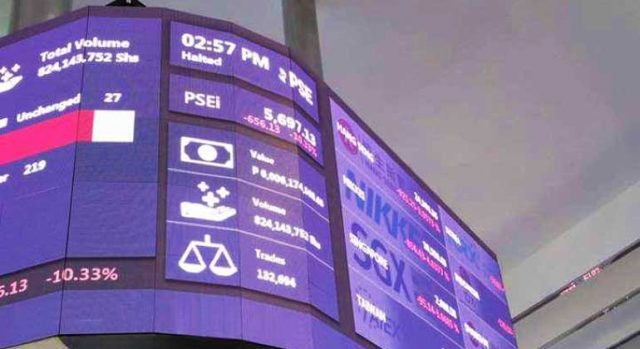
SHARES ended the week in the red as the government said it could close the country’s borders again to prevent a fresh surge in coronavirus disease 2019 (COVID-19) infections due to the Delta variant.
The 30-member Philippine Stock Exchange index (PSEi) lost 55.88 points or 0.85% to close at 6,520.74 on Friday, while the all shares index declined by 36.43 points or 0.89% to finish at 4,038.51.
“Philippine shares were sold once more as investors stayed on the sidelines to see how the Delta variant would spread and what would be the government’s response to this,” Regina Capital Development Corp. Head of Sales Luis A. Limlingan said in a Viber message.
“The market is pricing in the Delta variant’s spread and a lockdown’s impact on the economy. Nevertheless, [the PSEi’s] recovery from early morning loss shows some buying appetite,” First Metro Investment Corp. (FMIC) Head of Research Cristina S. Ulang said in a separate Viber message.
The Health department on Thursday confirmed the local transmission of the Delta variant in the country. The Philippines has 47 reported cases of the Delta variant of COVID-19.
President Rodrigo R. Duterte told CNN Philippines that the government is planning to close the country’s borders if another infection surge happens. He said he is set to meet with the national task force against the pandemic is scheduled on Saturday.
Metro Manila, Ilocos Norte, Ilocos Sur, Davao de Oro, and Davao del Norte were placed under general community quarantine “with heightened restrictions” starting Friday until the end of the month.
Most sectoral indices closed in the red on Friday except for services, which inched up by 1.27 points or 0.08% to 1,552.37.
Meanwhile, property shed 64.46 points or 2.07% to 3,042.54; financials went down by 17.76 points or 1.23% to 1,415.62; mining and oil dropped by 112.54 points or 1.17% to 9,486.53; industrials lost 93.78 points or 1.01% to close at 9,159.48; and holding firms declined by 33.42 points or 0.5% to end at 6,550.32.
Value turnover surged to P8.9 billion with 2.22 billion shares switching hands on Friday, from the P3.69 billion with 1.4 billion issues seen on Thursday.
Decliners outnumbered advancers, 172 against 41, while 24 names closed unchanged.
Foreigners turned buyers with P4.37 billion in net purchases on Friday from the P338.64 million in net outflows seen the previous day.
FMIC’s Ms. Ulang expects the market to remain weak and the PSEi to trade between 6,300 to 6,600 as investors await the government’s decision on travel restrictions and possible economic stimulus measures should a lockdown be implemented. — Keren Concepcion G. Valmonte
Filipino rower Cris Nievarez booked a spot in the quarterfinals of the men’s single sculls rowing competition at the Tokyo Olympics after finishing third in heat no. 5 of the qualification phase on Friday. -- Cris Nievarez Facebook page
Filipino rower Cris Nievarez booked a spot in the quarterfinals of the men’s single sculls rowing competition at the Tokyo Olympics after finishing third in heat no. 5 of the qualification phase on Friday. — Cris Nievarez Facebook page
Cris Nievarez kicked off the Philippine campaign in the Summer Olympic Games with a strong third-place performance Friday, just enough to advance to the quarterfinals of the Men’s Single Sculls Rowing Competition.
The plan was to finish in the top 3 of Heat no. 5 and Nievarez did just that when he submitted an impressive time of 7:22.97 in the 2000-meter courses to clinch a berth in Sunday’s quarterfinals.
“It feels great. It’s the first race and first action. I’m very happy. This is for the Philippines,” said Nievarez, who had two world-class rowers in front of him – Croatia’s Damir Martin (7:09.17), the 2016 Rio Olympics silver medalist, and Russian Alexander Vyazovkin (7:14.95), the world indoor champion.
The top three in all of the six heats in the men’s singles scull advanced to the quarterfinals.
Those who missed the top three will battle it out in Saturday’s repechage where the top two performers move on to the quarterfinals.
A native of Sariaya in Quezon, Nievarez is the only Southeast Asian qualifier in men’s singles sculls and one of only two Asians left after the preliminaries — the other one being Ryuta Arakawa, who placed second in the final heat.
Pfizer Inc.’s COVID-19 vaccine provided a strong shield against hospitalization and more severe disease in cases caused by the contagious delta variant in Israel in recent weeks, even though it was just 39% effective in preventing infections, according to the country’s health ministry.
The vaccine, developed with BioNTech SE, provided 88% protection against hospitalization and 91% against severe illness for an unspecified number of people studied between June 20 and July 17, according to a report Thursday from the health ministry.
The data could be skewed because of different ways of testing vaccinated groups of people versus those who hadn’t been inoculated, according to the report.
“The heavily skewed exposure patterns in the recent outbreak in Israel, which are limited to specific population sectors and localities,” means the analysis may not be able to take all factors into account, said Ran Balicer, chairman of Israel’s national expert advisory team on Covid-19 response. “We are trying to complement this research approach with additional ones, taking additional personal characteristics into account. But this takes time and larger case numbers.”
Still, the data are likely to fuel debate over whether booster shots should be given to people who’ve already been vaccinated — something Pfizer has said it plans to request in the U.S. Israeli authorities said earlier this month they’ll only give a third round of shots to people with weakened immune systems.
CONTRASTING STUDIES
The data out of Israel, which had earlier access to vaccines than most anywhere else in the world, contrast with a study out of the U.K. That paper, published this week in the New England Journal of Medicine, found that two doses of the Pfizer-BioNTech vaccine offer 88% protection against symptomatic disease caused by the delta variant and 94% against the alpha variant that was first discovered in Britain. Public Health England also previously found that the Pfizer and BioNTech shot was 96% effective against hospitalization.
Pfizer and BioNTech are confident in the protection and safety of the two-dose vaccine, Pfizer said in a statement on Friday. BioNTech is conducting a review of study data on the vaccine, a spokeswoman said.
Analysis of the companies’ more than 43,000-person clinical trial shows that effectiveness against symptomatic infection dips over time, from 95% in the first two months to the low- to mid-80% range four to six months after the second dose, Pfizer said.
The delta variant first emerged in India and is spreading around the globe, sometimes infecting those already fully vaccinated against Covid. The mutation has promted some countries to step up inoculation campaigns and rethink plans to loosen curbs on businesses, activity and travel.
Israel has had one of the world’s most effective immunization drives, with 57% of the population fully vaccinated, but has seen a recent surge in infections due to delta. Critical cases have also climbed, but remain a fraction of the peak earlier this year.
Prime Minister Naftali Bennett has urged vaccine holdouts — who number some 1.1 million people — to get inoculated, calling it the most effective way to defeat the delta strain. The government has also reinstated some restrictions for indoor events and plans to ban flights to several countries with rising infection rates, including the U.K. and Cyprus. — Bloomberg
PHNOM PENH – “Take what you need, donate what you can” is the slogan written on a glass fronted cabinet full of food, water and essential daily items carried by Cambodian cyclo taxi driver Chim Prich.
Hit hard by coronavirus movement restrictions, Cambodian cyclo drivers are flocking to the streets of the capital, Phnom Penh, with mobile food banks that allow residents crippled by the pandemic’s economic hardships to pick up free food and essentials.
“Thanks to the kindness of those more fortunate who provided these foods and necessities, I can deliver them to poor people like trash collectors, beggars, street sweepers and anyone else who is struggling to make enough money to buy food,” Chim Prich said.
Cyclos, three-wheeled pedal-powered rickshaws, have long been a popular choice for visitors keen to take in the sights and enjoy the buzz of Phnom Penh at a leisurely pace. But the coronavirus pandemic’s devastating impact on global travel has crushed tourist numbers, cutting driver’s incomes.
Hao Taing, a 21-year-old student in Phnom Penh, came up with the idea of the mobile food banks after seeing the cyclo drivers struggle.
“It brings me great joy to run this project, and I’ve received a lot of love and support from people both here and abroad,” Hao Taing said. A full-time student, Hao Taing spends his days working on the project and his nights studying.
“It’s not easy,” said Hao Taing, who added that he hoped the initiative would help Cambodia’s iconic cyclos survive the pandemic.
For their efforts, Hao Taing’s organisation Local4Local, which relies on donations, pays the cyclo drivers a small wage of around $17.50 a week to deliver food, water and other essentials to Phnom Penh’s most vulnerable people.
The initiative includes 10, colourful, hand-painted pantries placed atop the cyclos that are then stationed across various points in the city so those in need can take, and those who have the means can donate.
“I feel like I’ve been reborn,” said Ny Koy, a 63-year-old beneficiary of the project.
“No one has given food to me everyday like this. I’m so thankful. Now I can sleep well at night” – Reuters
TAIPEI – Taiwan will ease its COVID-19 restrictions from next week though some will remain in place, the government said on Friday, with rapidly falling case numbers giving authorities confidence to further lower the alert level.
Taiwan implemented restrictions on gatherings, including closing entertainment venues and limiting restaurants to take-out service, in mid-May following a spike in domestic cases after months of no or few cases apart from imported ones.
While some of those curbs were eased this month, the so-called level 3 alert has been in force and is due to end on July 26.
Premier Su Tseng-chang said the alert would be lowered to level 2 from Tuesday.
“The domestic epidemic has gradually stabilized and is heading towards a good direction,” Su said. “Citizens should still strictly follow all pandemic prevention guidance to guard this hard-earned achievement after restrictions are relaxed.”
The health ministry will announce details of the new guidance later on Friday, he said.
Taiwan’s decision stands in contrast to many of its regional neighbours, like Thailand and Indonesia, where infections, largely driven by the spread of the Delta variant, are spiralling, leading to ever tighter curbs.
Taiwan has never gone into a full lockdown, though its borders remain largely closed apart from to citizens and foreign residence card holders.
Taiwan, whose domestic outbreak was always comparatively small, has reported 15,511 infections since the pandemic began, and 782 deaths. – Reuters
SEOUL – The South Korean government on Friday warned the country’s main labour federation to cancel a planned rally in defiance of a ban on large public gatherings as it fought to contain a surge in COVID-19 cases and extended toughest restrictions across the country.
More than 800 members of the Korean Confederation of Trade Unions (KCTU) are expected to hold a rally in Wonju, a rural city about 100 km (62 miles) east of Seoul, calling for wage hikes and better welfare. The rally would be in violation of restrictions already in place in many parts of the country.
“The government will respond sternly according to the law and principle if a banned rally is carried out in violation of anti-epidemic rules,” Interior Minister Jeon Hae-cheol said at the start of a COVID task force meeting.
The warning comes amid criticism against the government for being lenient over a larger KCTU rally held in early July in Seoul in contrast to a harsh crackdown against a religious rally led last year by a critic of President Moon Jae-in.
The city of Wonju upgraded restrictions to the highest level effective midnight Thursday, banning public rallies. On Friday, the labour group rejected the restrictions as “baseless” and pledged to go ahead with the planned rally.
At least three people have tested positive from the union’s protest on July 3, which drew as many as 8,000 participants, demanding wage hikes and measures to prevent accidents at workplaces.
A large anti-government rally organised by a church in the summer last year was blamed by health officials for sparking a second wave of infections nationwide, and authorities cracked down on the organisers as violating public health regulations.
South Korea reported 1,630 coronavirus cases for Thursday, down from daily record of 1,842 the previous day, amid rising infections nationwide fuelled by the virulent Delta variant among the unvaccinated.
The government on Friday extended the semi-lockdown measures imposed last week in Seoul and neighbouring areas, which include a ban on gatherings of more than two people after 6 p.m.
In contrast to the earlier surge over the winter when infection was traced more to family members, transmission is now greater among social acquaintances and colleagues, Jeon said.
South Korea’s tally of infections stands at 185,733, with a death toll of 2,066, official data showed.
The vaccination rate remains low, with just over 13% of the 52 million population now fully vaccinated, while the government aims to reach herd immunity before November. – Reuters
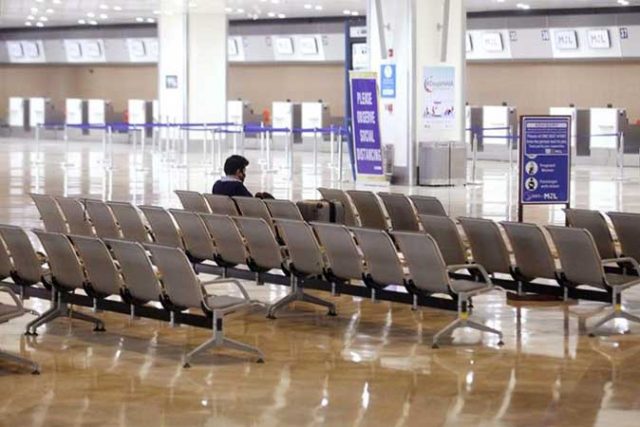
MANILA – The Philippines will ban travellers coming from Malaysia and Thailand, as well as tighten restrictions in the Manila area, in a bid to prevent the spread of the contagious Delta variant of the coronavirus, the presidential spokesperson said on Friday.
The travel restriction will take effect from Sunday and run to the end of July, presidential spokesman Harry Roque said in a national address.
“This action is undertaken to prevent the further spread and community transmission of COVID-19 variants in the Philippines,” Roque said.
The Philippines has previously banned travellers from eight countries including Indonesia and India.
To try and prevent further domestic transmission of the Delta variant, President Rodrigo Duterte has placed the capital region, an urban sprawl of 16 cities that is home to more than 13 million people, and four provinces under stricter coronavirus curbs until the end of July.
Indoor sports and conference venues, indoor tourist attractions and gyms are not allowed to do business, while the operating capacity of indoor and al fresco dining has been cut.
In addition, children between the ages of five and 17 will not be allowed to leave their homes.
The Philippines has recorded 47 cases of the Delta variant, eight of which are active, and three deaths.
With more than 1.53 million infections and nearly 27,000 deaths, the Philippines has the second-highest number of coronavirus cases and casualties in Southeast Asia, next to Indonesia. – Reuters
A SURVEY showed that 63% of CEOs are confident about their organization’s revenue growth for the next 12 months. —
By Jenina P. Ibañez, Reporter
MORE THAN THREE-FIFTHS of Philippine chief executive officers (CEOs) are confident about their revenue growth prospects over the next year, a slight improvement from last year’s business outlook that was clouded by the coronavirus pandemic, a survey conducted by PwC Philippines-Management Association of the Philippines (MAP) showed.
Results of the survey of 131 CEOs in April and May showed that 63% are confident about their organization’s revenue growth for the next 12 months, although only 23% are “very confident” and 40% are “somewhat confident.”
This year’s midyear survey was released on Thursday, instead of September as in previous years. Last year, 59% of 161 CEO respondents were confident that their company will see revenue growth in the next 12 months, but this was significantly lower than the 88% in 2019.
CEO confidence could be attributed to business adjustments towards the end of last year, PwC Philippines Deals and Corporate Finance Managing Partner Jade Roxas-Divinagracia said during the virtual launch.
“I think in the middle of last year, amidst all the uncertainties, CEOs took a more conservative position, providing for possible losses and really anticipating the worst. But towards the end of last year, businesses who were able to adjust their strategies and operations much quicker were actually realizing that things are not as bad as they initially thought,” she said.
But Ms. Roxas-Divinagracia also noted that most of the CEOs that responded to the survey represent well-capitalized large corporations that have longer cash runways.
Majority of Philippine firms are micro-, small-, and medium-sized enterprises.
More than 62% of survey respondents represent large firms, with respondents from the financial services, manufacturing, transport and logistics, real estate, professional services, and technology sectors.
CEOs are more positive about growth in the succeeding years, with 85% responding that they are confident about revenue growth over the next three years.
Around 70% said they are optimistic about the recovery of the Philippine economy within the next three years, with 28% saying that recovery will happen within two years.
Philippine gross domestic product contracted by a record 9.6% last year amid long lockdowns declared to arrest the spread of the coronavirus disease 2019 (COVID-19).
Around 42% of surveyed CEOs believe the economy will grow by at least 3% this year. This is well-below the government’s 6-7% GDP growth target for 2021.
Industry growth confidence varied across sectors. While 100% of food and beverage firm CEOs are “very confident” about the sector’s revenue growth over the next 12 months, just half of telecommunications CEOs are “somewhat confident” while the other half are not confident at all.
In the consumer and retail sector, 67% are “somewhat confident,” while 83% of CEOs in the financial services sector are confident.
Many firms said they saw losses due to the pandemic, with 73% saying that they still expect revenue losses in 2021. Less than 10% of the firms surveyed expect up to 10% in revenue losses, while 18% expect 10-20% in losses. A quarter expect more than 20% in revenue losses.
Major factors that contributed to losses in 2020 include lower sales as customers were badly affected by the pandemic, store closures, and supply chain concerns.
Up to 84% of the CEOs said their employees were infected with COVID-19. Almost 70% expect their workforce to be fully vaccinated against COVID-19 this year.
Looking forward, more than half of the business leaders plan to set up more sustainable practices and launch more products and services in the next 12 months. Almost half plan to explore new market channels.
Around 70% of the CEOs have no fundraising plans, while just 15% are considering bank loans or financing.
“This is despite the fact that many of the CEOs — more than 50% of them — say that their cash runway is only up to six months, and a few of them have cash runways of more than 12 months. But they are not looking at raising finance… what is really happening now is they are looking for partners, and there’s a lot of action now happening in the M&A (mergers and acquisitions) space,” PwC Philippines Chairman and Senior Partner Alexander B. Cabrera said.
After businesses shifted to work-from-home operations during the lockdown, 67% of CEOs said they will retain remote work policies even after the pandemic. Among them, 51% said that up to a quarter of their workforce can work from home permanently.
To assist industry recovery, 79% said that the government should have an effective and equitable vaccination program, while 45% said the government should introduce tax incentives.
CONSUMERS TURN OPTIMISTIC Meanwhile, a separate survey conducted by market research firm IPSOS last June showed a huge improvement in the economic outlook among Filipinos.
In the IPSOS survey, around 51% of Filipino respondents described the current economic situation to be either “somewhat good” or “very good.” This was 25 percentage points higher than the 26% recorded in a survey conducted in February, as well as the biggest increase among the six Southeast Asian economies included in the report.
The positive view among Filipinos on the current state of the economy outmatched those of citizens in Thailand (20%), Malaysia (30%), and Indonesia (41%). Only Singapore (63%) and Vietnam (62%) saw higher positive responses.
Moreover, the survey reported similar results among Filipino respondents when asked on their economic outlook. Of these, 62% said they expect the country’s economic situation to be “somewhat stronger” or “much stronger” in the next six months — up from the 49% recorded in the survey in February. Only Indonesia (68%) posted a higher level of optimism.
IPSOS noted the Philippines and Vietnam as being the most positive about the future of their economies, while others “remain cautiously optimistic.”
The market research firm also asked respondents to pick the three most important areas for businesses to address. The following areas tallied the highest responses among Filipinos: keeping employees/customers safe from the coronavirus pandemic (51%), paying fair wages to employees (44%), controlling prices of products and services (43%), contributing to local economy through creation of jobs (43%), and supporting local economy by buying from local sellers (30%).
IPSOS said the survey looks to understand “evolving consumer opinions and behaviors” in the six Southeast Asian markets amid the ongoing coronavirus pandemic. A tracking survey, it was first conducted in May 2020 and is currently on its fourth round in June.
“This study enables organizations and businesses to look ahead beyond the pandemic — anticipating future consumer behavior, patterns and opinions while each market in the region goes through various phases of crisis management, recovery, and vaccination rollouts,” IPSOS said.
The survey has 3,000 respondents aged 18 years and older with 500 representing each country. – with Bernadette Therese M. Gadon