Home Blog Page 7178

Powder kegs to pandemic-driven social unrest

It has been said that Nobel laureate Amartya Sen’s lifetime work involved the economics of life and death. It is all about hunger and starvation and food supply. What Sen found repulsive was that deathly famines had overtaken many poor countries even as food supply continued to expand. Food supply is about physical commodity, but poverty and hunger involve the issue of relationship of people with commodities, like ownership and access. 

In the Philippines, this concept of “entitlement relations” is presumed settled by the fundamental law of the land. The preamble affirms our aspiration to build a just and humane society, promote the common good and secure the blessings of independence — in so many words and in various provisions. 

But life is more complex, and such entitlement may be blocked by, for instance, high inflation, lower wages, natural calamity, and, in the last two years, the health pandemic and its economic consequences. What is worse from society’s standpoint is when the ultimate outcome is one of conflict. 

This interesting dimension was highlighted by one of the IMF’s blogs earlier this year. Philip Barrett, Sophia Chen, and Nan Li wrote a very interesting piece, “COVID’s Long Shadow: Social Repercussions of Pandemics” (Feb. 3, 2021) which connected the great cholera pandemic in Paris of 1832 with class tension, culminating in the Paris Uprising of 1832. 

The IMF staff narrated the pandemic’s record of killing 20,000 out of the city’s population at the time of 650,000. Where else but in squalid poor quarters of the city did the pandemic claim lives, the same poor people who flocked to the city during the Industrial Revolution. As the pandemic propagated itself throughout the city, class tensions escalated as the moneyed class blamed the poor for the spread of the disease. We are being poisoned, complained the poor. 

Paris was embroiled in a class war. 

The conflict heightened with the outbreak of anti-government mass demonstrations punctuated with barricades after barricades. The French government repressed the exploding public revolt. Yes, the ensuing conflict was immortalized by Victor Hugo in Les Misérables and the point is made that disease outbreaks cast “long shadows of social repercussions: shaping politics, subverting the social order, and some ultimately causing social unrest.” 

Pandemics can unmask underlying, potentially explosive tensions in society. They can appear in the historical divide between the rich and the poor. In recent times, tensions can derive from what the Fund staff described as “inadequate social safety nets, lack of trust in institutions, or a perception of government indifference, incompetence, or corruption.” Surges of disease can be accompanied with some ethnic, religious, or class backlashes. They generalized this observation from the Justinianic Plague in Europe and the Near East beginning 541AD; the Black Death in Afro-Eurasia between 1346 to 1353; and the 1918 Spanish Flu that devastated the world with estimated 500 million infections and about 50-100 million deaths. 

The Fund staff admitted that quantitative evidence on the link between epidemics and social unrest was at best tenuous and episodic. What the Fund staff research supplied was global evidence of the link between epidemics and social unrest. 

Faced with the usual research issues on data frequency, consistency of data coverage and precise dating of events, the staff developed a Reported Social Unrest Index which provides “consistent, monthly measure of social unrest data for 130 countries from 1985 to the present.” With upticks in the index closely corresponding to the narratives of unrest, the Fund concludes that the index is a good measure of real events rather than observed shifts in either media attention or sentiment. 

The Fund found that countries with more frequent and severe disease outbreak and pandemics were also subject to more unrest, on average. 

One should not expect immediate occurrence of social unrest during or right after the pandemic. There could be some countervailing forces at work like logistical issues, public sentiment favoring cohesion and unity in challenging times, or, in some jurisdictions, consolidation of power and suppression of dissent may be happening. Any of these could explain why the COVID-19 experience was not marked with major global unrest with the possible exception of the US and Lebanon. 

It may be difficult to simply dismiss that this viral pandemic in the Philippines would not lead to any mass unrest reminiscent of the Paris Uprising of 1832. A key message in the study is that “over time, the risk of riots and anti-government demonstrations rises.” What is grim is that the risk may involve the government itself, “an event that threatens to bring (it) down … and typically occurs in the two years following a severe epidemic.” 

Nobody wants riots or disorder on the streets. We have enough woes from our legacy problem of poverty and inequality, we continue to struggle against the economic dislocation, courtesy of COVID-19. Economic scars abound and they will be the agenda of both the outgoing and incoming leaderships. 

The risk sets in when the people discern that nothing is being done about them. One good example is when we continue to incur higher budget deficit and higher debt to finance it while public money is dissipated in bad governance and corruption, rather than used to mitigate the pandemic and provide social support. Pharmally and Malampaya should be pursued until all the guilty parties are charged in court. Otherwise, they are powder kegs. 

It is clear that the window is two years, and the threat of unrest magnifies when these pre-existing problems continue to haunt and abet lack of trust in institutions, poor governance, corruption, and, yes, poverty and inequality. 

What is the likelihood the world in general and the Philippines in particular could manage this socially explosive social situation? 

In last year’s World Economic Outlook, the IMF highlighted two facts about the pandemic and their link to these two social issues. First is the ability to work from home. Since low-income workers have limited opportunity to render remote work, job cutbacks applied mostly on them. Income distribution worked against them. One can recall that while some growth signs have emerged, unemployment remains elevated. 

Second is the computed bigger impact of the current pandemic compared to those of previous pandemics. All told, the Fund argued that the gains of both emerging and developing markets since the global financial crisis could be reversed by the economic effects of the pandemic. Welfare across the globe receded in terms of consumption and life expectancy. The Philippines continues to ascend from the depths of recession of 2020. 

While the Fund proposed investment in retooling, access to technology and cyberspace, financial inclusion, unemployment insurance, conditional cash transfer, and other forms of social support, their implementation is quite uneven, sometimes, too little and too late.  

It is not good to simply allow people to realize what Martin Luther King, Jr said one evening: “The only weapon that we have in our hands… is the weapon of protest.” 

Inflation is now global, but the traps are local

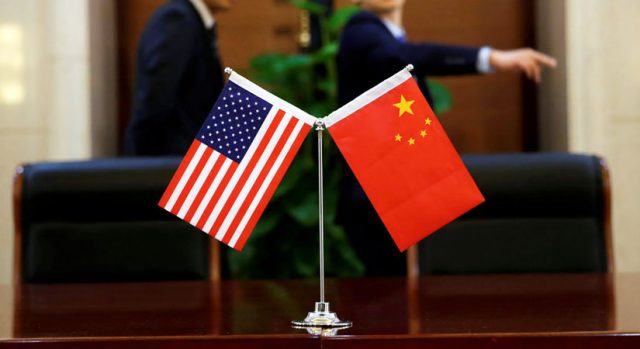
When it comes to inflation accelerating around the world, don’t count on a swift response from the two most important economies. The US and China are trapped by their own policy choices and domestic priorities. Neither has much appetite for an assault on price increases. Germany’s calls for a clampdown are too late.   

For anyone still wedded to the idea that elevated inflation is a short-term phenomenon, a welcome respite from years of too-low readings, the latest numbers are sobering. Producer prices in China jumped the most in 26 years and consumer inflation picked up, Beijing said Wednesday. Hours later, the US Department of Labor reported that consumer prices climbed at the fastest rate since 1990, outpacing economists’ expectations. Germany’s council of economic advisers demanded that the European Central Bank explain how it will rein in monetary policy. Inflation in the continent’s pivotal nation will be above the ECB’s target this year and next, the group projected. 

Most central banks know how to deal with this, right? They simply raise interest rates. Even critics of prolonged easy money say that when it comes down to it, officials have a tried and true formula. Central banks dare not chance truly runaway levels of inflation and risk a return to the bad old days of the 1970s, at least in the US and Europe. Or, in China’s case, squander a big part of the prosperity and economic stability engineered by Deng Xiaoping’s opening of the economy. For all the talk about cold war between Washington and Beijing, China’s inflation experience has largely tracked the West’s, according to a Reserve Bank of Australia paper published on the eve of the pandemic. 

The current hand-wringing isn’t happening in a vacuum, however. China is worried about growth, which is already slacker than the fourth quarter of 2019, before COVID-19 crashed over the world. What began in 2021 as a record-breaking recovery is at risk of fizzling out. Bank of America Corp. recently cut its estimate of China’s expansion next year to 4% from 5.3%. The country will likely ease policy despite escalating inflation, rather than respond to it. Further cuts in the reserve requirements for lenders are in the cards. Premier Li Keqiang has warned of downside pressure on the economy. 

For its part, the Federal Reserve will find it tough to accelerate tightening. Chair Jerome Powell has emphasized that quantitative easing should be finished before considering hikes in the benchmark rate. The tapering of QE has only just been announced and is scheduled to wrap up mid-2022. That makes a meaningful withdrawal of stimulus, as opposed to slowing the pace of easing, unlikely before the third quarter. Sure, the Fed can always hasten the taper, but the institution has bent over backwards to avoid a tantrum like the market gyrations of 2013. If it’s fast-tracked, the Fed probably fears, investors will panic that hikes are in the offing or that it sees a bigger inflation problem than has been let on. This is also an unfortunate time to have questions linger about who will helm the Fed for the next four years.  

ECB President Christine Lagarde is unlikely to find Germany’s broadside helpful. Since the euro’s inception, ECB bosses have grown used to German officials warning about the sins of loose money. In its early days, the ECB was heavily influenced by this view — the bank was located in Frankfurt and its first chief economist, Otmar Issing, was an alum of the legendarily tight-fisted Bundesbank. But hard money views have lost ground over the years. Dovishness now reigns in the euro area. Germany lost the battle, but remains averse to higher prices and is no less inclined to be noisy about it. The ECB ought to worry, at some level, about an erosion of political support in Europe’s economic powerhouse. 

China is fond of tweaking Western central banks by arguing that QE and super-loose settings do more harm than good. But Bundesbank-style rhetoric is ill-suited to the PBOC and needs calling out. If China’s central bank was truly a foe of inflation, it would be tightening, not contemplating easing. 

The market for monetary nostalgia is on a bull run. Inflation is globalized, but don’t look for a Plaza Accord-type global response echoing the 1985 pact inked in a swank New York hotel that re-aligned the trajectories of major currencies. Domestic conditions aren’t sufficiently sympathetic.

A vast wasteland

In 2018, the Duterte regime cancelled the registration of online news site Rappler for its supposedly being foreign-owned. 

Some of the regime flunkeys in the House of Representatives tried the same ploy in 2020 in justifying the shutdown of the free TV and radio services of ABS-CBN network and their denial of its franchise renewal application. But the same clique have, off-and-on, also proposed the lifting of the Constitutional provision limiting media ownership only to Filipinos. 

In favoring the repeal of that provision, they assume that in the age of the internet, satellite-transmitted video, audio, and film programs, and cable television, national boundaries and laws are still a hindrance to the capacity of international media corporations to reach and influence mass audiences anywhere on the planet. 

With hardly any basis have the proponents claimed that foreign media corporations would be encouraged to invest in the Philippines and would make more jobs in the media sector available not only to journalists but also to other workers in media. 

Absent in that claim is the neo-liberal thesis that doing so would provide the media audiences a wider range of choices of information and entertainment sources in the “free market of ideas.” The conviction that the market should decide what’s best is precisely what drives many free expression and press freedom groups to support foreign media ownership in the Philippines and elsewhere. 

Although unarticulated, the demand to “liberalize” media ownership assumes that, 1.) among the products of the mostly Western media organizations that some think would find it profitable to operate in the Philippines are informative, accurate, relevant and excellent news and entertainment programs, and that, 2.) those media conglomerates differ from each other in their interests, perspectives, and policies enough for them to offer media audiences a diverse variety of news and entertainment options. 

Whether that first assumption is accurate is at the very least problematic specially when it comes to television. 

US Federal Communications Commission (FCC) Chair Newton Minow described US television as “a vast wasteland” in 1961, or 60 years ago, shortly after his appointment as head of the FCC. But his observations on the state of that widely available medium are still as valid today as in the 1960s. 

Addressing the US National Association of Broadcasters then, Minow said that while television can be “good” and even better than newspapers and magazines, when it’s bad, “nothing is worse.” He invited his audience of broadcasters to watch TV for a day without a book, a newspaper, or a magazine, and “without a profit and loss sheet or a rating book to distract (them).” 

What they will see, he said, “is a procession of game shows, formula comedies about totally unbelievable families, blood and thunder, mayhem, violence, sadism, murder, western bad men, western good men, private eyes, gangsters, more violence, and cartoons. And endlessly, commercials — many screaming, cajoling and offending.” 

Minow granted that there were exceptions to this boring fare, but that they were “very, very few.” He insisted that as powerful a medium as it is, television has a responsibility to educate and enlighten its audiences on issues of relevance to the citizens of a democracy. 

Despite the six decades that have passed since then, Minow’s “vast wasteland” characterization of television is still as valid today as when it was first made. Forced to stay home and to watch more television than ever before because of the COVID-19 pandemic, millions of locked-down Filipinos have fallen victim to the boredom mentioned by Minow. 

The tedium is driven by the perpetually the same dullard’s fare. It mostly consists of mindless comedies, violence-ridden police and crime series, absurd “superhero” and fantasy films, sex-obsessed teenagers’ stories, insipid cooking shows, dreary “action” and spy flicks, and forgettable pseudo-dramas. As in Minow’s time, there is also the endless stream of buy-this-buy-that ads that are so mind-numbing and annoying viewers have developed the habit of “zapping” — jumping from channel to channel during commercial breaks. 

This is true of both supposedly “locally produced” news and entertainment commodities that in many cases are either franchised, copied, “localized,” or modified versions of their Western counterparts, and of the foreign-sourced programs that constitute much of the entertainment fare in Philippine cable television. 

If the first assumption of excellence in foreign-sourced news and entertainment is mistaken, so is the second. 

Both media critics and concerned practitioners have long challenged the assumption that there is a multiplicity of views and perspectives in the products of the huge media conglomerates that bombard the planet daily with trillions upon trillions of bytes of information and entertainment. 

The biggest of these giants are no more than seven, according to Ben Bagdikian, former Dean of the University of California at Berkeley’s Graduate School of Journalism, in his book The Media Monopoly. Some even have interlocking directorates. The result is a uniformity in their views on such urgent issues as war and peace, global warming, economic development, human rights, and world hunger. 

That homogeneity is reflected not only in what information they choose to air or print and how, but also in their entertainment programs which primarily provide distraction and deception rather than enlightenment. Those programs provide a surfeit of shows celebrating the ideology of violence, trivial pursuits, mindlessness and indifference, competition rather than cooperation, etc., etc. which the dominant countries advocate in furthering their political and economic interests and ambitions. 

Over and above the unstated assumption that foreign-owned and -controlled media offer a wide variety of viewpoints and that their products are so superior as to enhance the capacity of the media audiences to understand their social and natural environments, is the belief that it is necessary to lift the ban on foreign ownership of the media to open the airwaves and even newspaper and magazine publication to them. 

Anyone who has watched enough television in this country should by now have realized that it is not. In the age of media globalization and the new media and communication technologies, the “vast wasteland” created by, among other media corporations, the foreign television oligopolies do not need to have the ban on non-Filipino-owned media lifted. 

Ban or no ban, they are big enough and powerful enough to influence the public mind. They have a monopoly over news, and, even more tellingly, on entertainment. They already have a dominant place in Philippine television, which has no choice but to air their programs. 

That dominance is validated by, among other studies, the fact that when asked in one media studies class in the University of the Philippines (UP) to name the TV show or movie they value most because of its impact on the concerns, personal or otherwise, that matter to them, every communication student without exception named one from a foreign source. When asked in another study who their heroes are, high school students did not mention Rizal or Bonifacio, but Batman and Superman. 

The mindless programs manufactured by the Western media factories may bore the more critical and more demanding. But there are others glued to their television sets daily who implicitly think the global media to be the truth-tellers the times require. Their views on many issues are thus shaped, often without their being aware of it, by the giant media corporations that control most of the information and entertainment that reach billions of people all over the world daily. It helps explain why, in this Information Age, so many remain uninformed.

Mandatory vaccination and constitutional interpretation

The religious Right (or apparently a substantial number of them) were reportedly aggrieved because of a recent ruling by the US Supreme Court. The case was John Does 1-3 vs. Mills, which saw Justices Brett Kavanaugh and Amy Coney-Barrett joining Justice Stephen Breyer to vote against an application for injunctive relief. The main matter at issue was a Maine law requiring the vaccination of healthcare workers. 

As explained by Justice Coney-Barrett: “When this Court is asked to grant extraordinary relief, it considers, among other things, whether the applicant ‘is likely to succeed on the merits.’… I understand this factor to encompass not only an assessment of the underlying merits but also a discretionary judgment about whether the Court should grant review in the case. … Were the standard otherwise, applicants could use the emergency docket to force the Court to give a merit’s preview in cases that it would be unlikely to take — and to do so on a short fuse without benefit of full briefing and oral argument. In my view, this discretionary consideration counsels against a grant of extraordinary relief in this case, which is the first to address the questions presented.” 

Justice Neil Gorsuch (along with Justices Clarence Thomas and Samuel Alito) disagreed: “With Maine’s new rule coming into effect, one of the applicants has already lost her job for refusing to betray her faith; another risks the imminent loss of his medical practice. Maine does not dispute that its rule burdens the exercise of sincerely held religious beliefs. The applicants explain that receiving the COVID-19 vaccines violates their faith because of what they view as an impermissible connection between the vaccines and the cell lines of aborted fetuses. More specifically, they allege that the Johnson & Johnson vaccine required the use of abortion-related materials in its production, and that Moderna and Pfizer relied on aborted fetal cell lines to develop their vaccines. This much, the applicants say, violates foundational principles of their religious faith. For purposes of these proceedings, Maine has contested none of this.” 

Now the reason why the religious Right felt betrayed was because they previously vociferously supported Kavanaugh’s and Coney-Barrett’s nominations in the belief that they were conservatives that would rule automatically in favor of religion. Which was all, unfortunately, a huge misunderstanding of the two justices’ legal and judicial philosophy. 

The ruling, to clarify, did not involve the actual merits of the case but referred to the US Supreme Court’s “shadow docket,” an emergency relief, which do not involve oral arguments or extensive briefs. Such remedies always present the possibility of consequences that in no way could be justified by the overall facts of the case. Thus Coney-Barrett and Kavanaugh’s call for restraint, with the further implication that their vote on the merits phase of the case could be far different depending on the full arguments presented. 

Also, whether Coney-Barrett and Kavanaugh are conservatives or not, good religious individuals or not, are beside the point. They were nominated and appointed as justices of the US Supreme Court, whose job is to apply the US Constitution. That the two are avowed “originalists” or “textualists” precisely serves this point: they are there not to uphold an agenda, religion, or ideology (as “living constitutionalists” are wont to do) but rather to uphold their Constitution as written. This is the democratic and rule of law-oriented way of resolving legal issues. 

Of course, what complicates this understanding about constitutional interpretation is that the three justices that dissented are also avowed originalists or textualists (and good Catholics to boot). For his part, Gorsuch emphasized that the “case presents an important constitutional question, a serious error, and an irreparable injury. Where many other States have adopted religious exemptions, Maine has charted a different course. There, healthcare workers who have served on the frontline of a pandemic for the last 18 months are now being fired and their practices shuttered. All for adhering to their constitutionally protected religious beliefs. Their plight is worthy of our attention. I would grant relief.” 

Put another way, the “question confronting any injunction or stay request [is] whether the applicants are likely to succeed on the merits.” Yet, as Gorsuch posits, the “first Amendment protects the exercise of sincerely held religious beliefs. Masterpiece Cakeshop, Ltd. v. Colorado Civil Rights Comm’n, … [and that] laws that single out sincerely held religious beliefs or conduct based on them for sanction are “doubtless… unconstitutional.” 

In any event, despite the (current) differences in approach between Gorsuch/Thomas/Alito and Coney-Barrett/Kavanaugh, what is important is that the majority of the present US Supreme Court sees as starting point the actual words and meaning of the US Constitution, rather than as taught in many Philippine law schools that the words and meaning of the Philippine Constitution change with the times and can be reinvented by lawyers or judges to suit their own personal beliefs and ideologies.


Jemy Gatdula is a senior fellow of the Philippine Council for Foreign Relations and a Philippine Judicial Academy law lecturer for constitutional philosophy and jurisprudence.

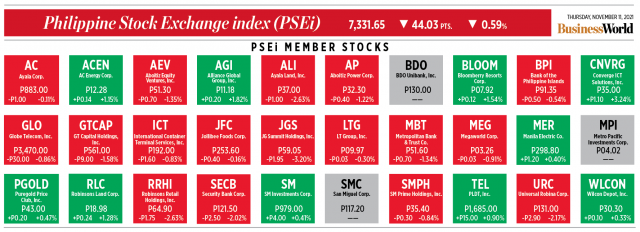
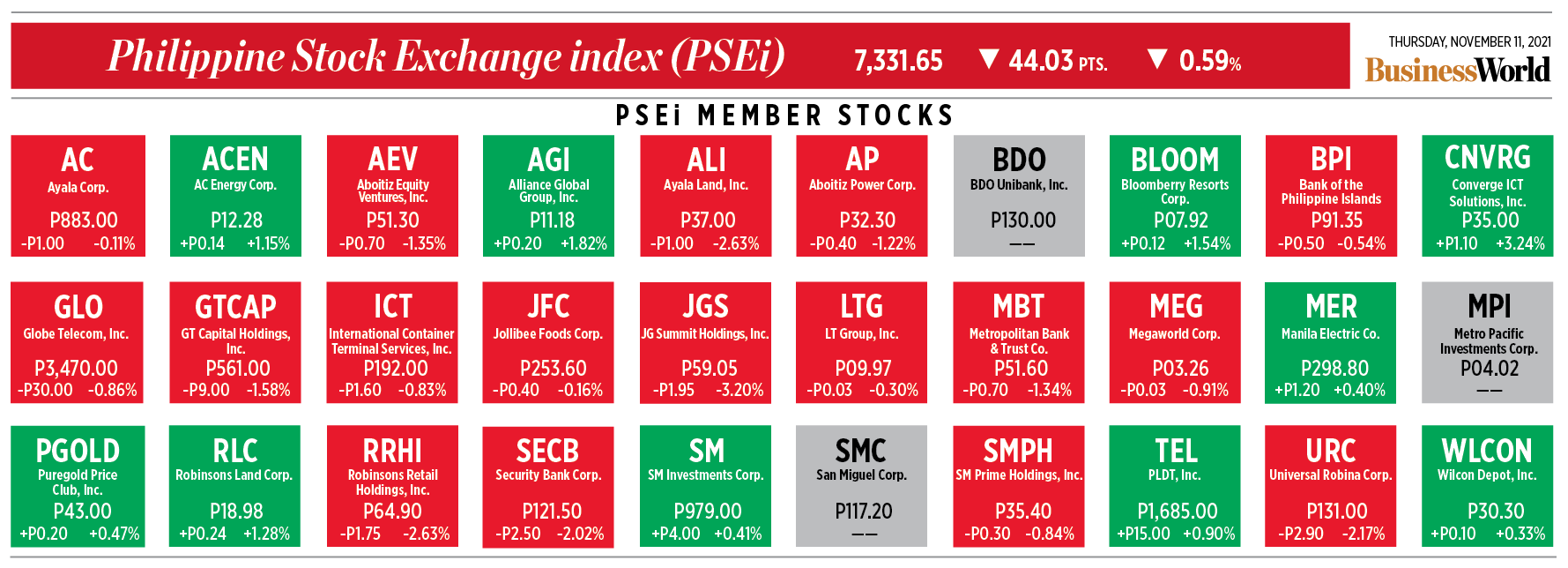
How PSEi member stocks performed — November 11, 2021

Here’s a quick glance at how PSEi stocks fared on Thursday, November 11, 2021.


Evergrande dodges default again but sector debt concerns remain

REUTERS

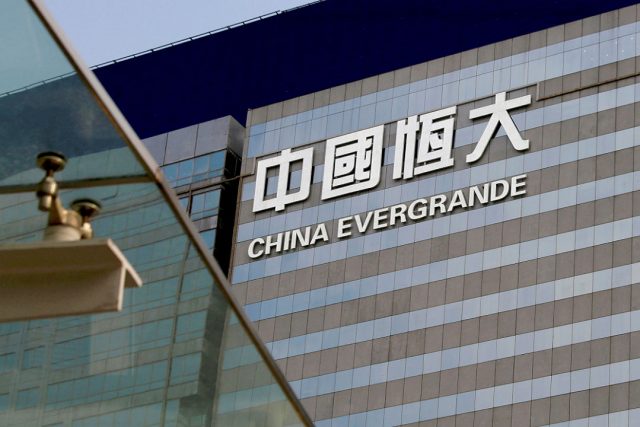
SINGAPORE/HONG KONG — Cash-strapped developer China Evergrande Group averted a destabilizing default at the last minute for the third time in the past month, with a source on Thursday saying several bondholders had received overdue coupon payments.  

Evergrande, the world’s most indebted developer, has been stumbling from deadline to deadline in recent weeks as it grapples with more than $300 billion in liabilities, $19 billion of which are international market bonds.  

Chinese media outlet Cailianshe reported several bondholders have received interest payments of the three bond tranches that had a total of more than $148 million due last month.  

The payments were made at the end of a 30-day grace period that ended Wednesday, as was the case with two separate offshore coupon payments that were due in late September and for which the grace periods ended late last month.  

A failure to pay would have resulted in a formal default by the company and triggered cross-default provisions for other Evergrande dollar bonds, exacerbating a debt crisis looming over the world’s second-largest economy that has rattled global markets.  

“The near-term fix seems to be happening but there’s a long way to go before this issue gets sorted out. These are early days,” said the source with knowledge of the matter, referring to Evergrande and declining to be named without authorization to talk to the media.  

Evergrande, which is at the center of a deepening liquidity squeeze in China’s $5 trillion property sector, did not respond to Reuters request for comment on its latest bond coupon payment.  

Although the developer managed to avoid a default again, woes in the property sector showed no signs of abating with a wall of debt coming due.  

Evergrande has coupon payments totaling more than $255 million due on Dec. 28. It has come under pressure from its other creditors at home and a stifling funding squeeze has cast a shadow over hundreds of its residential projects.  

Investor focus is now also shifting to other cash-strapped developers which have a string of offshore payments coming due in the short term, including Kaisa Group.  

Kaisa has the most offshore debt of any Chinese developer after Evergrande and pleaded for help from creditors this week. It has coupon payments totaling over $59 million due on Thursday and Friday.  

Kaisa, which became China’s first property company to default on an overseas bond in 2015, has already missed payments on some wealth management products at home.  

The developer did not immediately respond to Reuters request for comment.  

HARD LANDING  

While the US Federal Reserve this week warned China’s troubled property sector could pose global risks, there were no clear indications whether Beijing will step in with a broader, national plan to tackle the issue.  

Chinese regulators have in recent weeks, however, sought to reassure investors and homebuyers, saying risks were controllable and excessive credit tightening by banks was being corrected.  

Regulators and government think tanks have also held meetings with developers in the past few weeks, and the market is expecting some easing in credit and housing policies to prevent a hard landing of the sector.  

Those hopes and Evergrande’s payment sparked a relief rally across Chinese property shares, with an index of real estate A-shares surging nearly 8%, and Hong Kong’s Hang Seng Mainland Properties Index trading up more than 3%.  

Shares of Evergrande listed in Hong Kong rose 5.5% at noon.  

Chinese developers’ bond prices, which have been hit hard in recent weeks, soared even higher.  

Duration Finance data showed the price on China Aoyuan Group’s 5.88% March 2027 bond jumping more than 30% on the day, although it continued to trade at deeply distressed levels of around 36 cents in the dollar.  

Bonds issued by Times China Holdings Xinyuan Real Estate, Yuzhou Group Holdings and Sunac China Holdings also rose more than 10%.  

An index of dollar-denominated Asian high-yield bonds rose more than 1%, while Chinese high-yield corporate dollar spreads narrowed from record highs. — Anshuman Daga, Clare Jim and Andrew Galbraith/Reuters 

Fintech startup gives OFWs control over how remittances are spent

PIXABAY

Beam & Go, a local fintech startup, gives overseas Filipino workers (OFWs) control over their remittances by allowing them to specify how much money should go to a specific purpose, such as shopping for groceries.  

Its platform forwards a unique gift code to the chosen beneficiary, allowing them to spend the amount for the designated purpose. 

Over 4,000 OFWs and their families have managed household finances and purchased goods, medicines, and school supplies through the startup’s solution.  

“[Our] platform addresses the issue of remittance leakage and empowers their families to better manage their finances and make responsible spending decisions for the household,” said founder Jonathan E. Chua.  

Beam & Go’s online marketplace contains various categories, including supermarket e-vouchers; food padala (restaurant vouchers); mobile load; medicines; and livelihood packages, such as reselling refillable (liquefied petroleum gas) canisters and stoves from Gaz Lite.  

Among the vendors in its marketplace are Super8 in Luzon, Prince Hypermart in the Visayas, Gaisano Mall in Mindanao, and nationwide establishments such as Generika pharmacy and Mayani.ph fresh goods delivery.   

“Over the years, we heard tales of abusive employers and scam artists, broken marriages and truant children, and mounting debt that never goes away. It made us angry,” Mr. Chua added.  

It reaches its target users through referral programs, Facebook community groups among OFWs in different countries, and partnerships with foreign domestic worker agencies, non-profits, and other remittance services.  

The startup also created Project SEGUIDA, a financial and social management tool for OFW spouses, children, and other beneficiaries.  

 Beam & Go’s OFW clients are from Singapore, Hong Kong, Japan, Taiwan, Saudi Arabia, and the United Arab Emirates. Many of them are the sole breadwinners, and belong to families with four children.  

The fintech start-up received equity-free investment and technical and business mentorship under the 2020 Fintech for Impact program of Dutch multinational ING Bank and UNICEF (the United Nations Children’s Fund). — Patricia B. Mirasol

China’s Xi warns against return to Cold War tensions at APEC meeting

SCREENSHOT VIA APEC

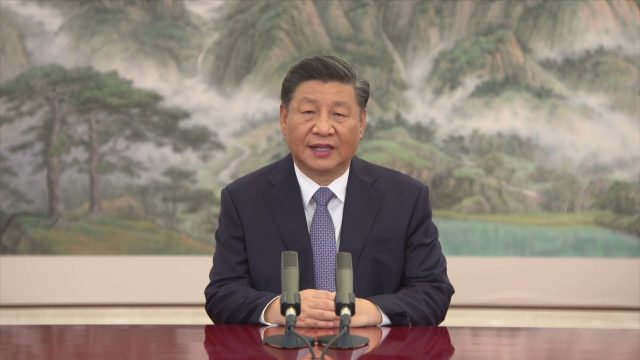
WELLINGTON — The Asia-Pacific region must not return to the tensions of the Cold War era, Chinese President Xi Jinping said on Thursday, ahead of a virtual meeting with US President Joseph R. Biden, Jr., expected as soon as next week.  

Mr. Xi, in a recorded video message to a CEO forum on the sidelines of the Asia-Pacific Economic Cooperation (APEC) summit hosted by New Zealand, said attempts to draw ideological lines or form small circles on geopolitical grounds were bound to fail.   

“The Asia-Pacific region cannot and should not relapse into the confrontation and division of the Cold War era,” Mr. Xi said.   

Mr. Xi’s remarks were an apparent reference to US efforts with regional allies and partners including the Quad grouping with India, Japan and Australia, to blunt what they see as China’s growing coercive economic and military influence.   

China’s military said on Tuesday it conducted a combat readiness patrol in the direction of the Taiwan Strait, after its Defense Ministry condemned a visit by a US congressional delegation to Taiwan, the democratically governed island claimed by Beijing.   

Combative US diplomatic exchanges with China early in the Biden administration unnerved allies, and US officials believe direct engagement with Mr. Xi is the best way to prevent the relationship between the world’s two biggest economies from spiraling toward conflict.   

A date has not been announced for the Xi-Biden meeting, but a person briefed on the matter said it was expected to be as soon as next week.   

The week-long annual forum, culminating in a meeting of leaders from all 21 APEC economies on Friday, is being conducted entirely online by hosts New Zealand, a country with hardline pandemic control measures that has kept its borders closed to almost all travelers for 18 months.   

Mr. Xi has only appeared by video, and has not left China in about 21 months as the country pursues a zero-tolerance policy towards COVID-19. The Chinese president is also participating this week in a meeting of the ruling Communist Party that is expected to further cement his authority.   

Mr. Xi said emerging from the shadow of the pandemic and achieving steady economic recovery was the most pressing task for the region, and that countries must close the COVID-19 immunization gap.   

“We should translate the consensus that vaccines are a global public good into concrete actions to ensure their fair and equitable distribution,” Mr. Xi said.   

APEC members pledged at a special meeting in June to expand sharing and manufacturing of COVID-19 vaccines and lift trade barriers for medicines.   

TRADE DEALS   

Taiwan’s bid to join a regional trade pact, the Comprehensive and Progressive Agreement for Trans-Pacific Partnership (CPTPP), is expected raise tensions at the APEC leaders’ meeting later in the week.   

China, which has also applied to join CPTPP, opposes Taiwan’s membership and has increased military activities near the island which Beijing claims.  

The United States pulled out of CPTPP under former President Donald Trump.  A 15-nation regional trade pact backed by China, the Regional Comprehensive Partnership Agreement (RCEP), will also take effect from Jan. 1.   

Mr. Xi said in the lead-up to RCEP implementation and CPTPP negotiations that China would “shorten the negative list on foreign investment, promote all-round opening up of its agricultural and manufacturing sectors, expand the opening of the service sector and treat domestic and foreign businesses as equals in accordance with law.”   

The United States has offered to host APEC in 2023 for the first time in over a decade as President Joe Biden turns resources and attention to the Asia-Pacific following the withdrawal of US forces from Afghanistan.   

However, no consensus has yet been reached among APEC members on the offer.   

CLIMATE CHANGE   

Climate change has been a key item on the agenda at the summit, which is taking place in parallel with the United Nations’ COP26 meeting in Glasgow.   

Mr. Xi said China would achieve its carbon neutrality targets within the time frame it has set and its carbon reduction action would require massive investment.   

New Zealand Prime Minister Jacinda Ardern said in her opening address that APEC had taken steps to wean the region’s industries off fossil-fuel subsidies. — Praveen Menon and Shashwat Awasthi/Reuters  

‘Thoughtless’ flaw on DFA website leaves thousands vulnerable to phishing attacks — cybersecurity expert

PHILSTAR

By Patricia B. Mirasol 

(On Nov. 12, Foreign Affairs Assistant Secretary Eduardo R. Meñez said via text message: “Contrary to allegations, DFA does not utilize a program such as Microsoft Excel to store passport applicants’ data. The public is assured that their data is encrypted and stored in a highly-secure and complex database.”)

***

Thousands of passport applicants are vulnerable to phishing attacks due to data privacy issues discovered on Nov. 9 in the online passport tracker of the Department of Foreign Affairs (DFA). 

“Identity theft may lead to social engineering attacks,” said Dax L. Labrador, founder of ROOTCON, the largest hacking conference in the Philippines. “To combat this, be vigilant for any suspicious call, SMS [text], and/or email as you are now a soft target of social engineering attacks.”  

He added that saving a massive amount of personal information, including mobile numbers and full names, on a flat spreadsheet was “a very thoughtless approach” on the DFA’s part. 

Flat files, which store a single record per line, are “less secure than their relational counterparts”  according to cybersecurity experts. 

Continued Mr. Labrador: “The best implementation would have been to record such data on a secure database server, giving access to queries only coming from legitimate sources.” 

In a Nov. 10 press statement, the DFA announced that it had taken down the Online Passport Tracker and all its data sources to avoid further data broadcasting.  

Its IT (information technology) unit, the agency said, is “currently investigating the circumstances surrounding this issue and is taking appropriate measures to secure the data that may have been exposed. An internal audit will also be conducted to prevent similar incidents from happening in the future.”  

According to Mr. Labrador, organizations should take a proactive approach to stress-testing their online facilities instead of being reactive.  

Proactive organizations hold preventive prelaunch risk exposure assessments, including a code review and VAPT (vulnerability assessment and penetration testing, which addresses cybersecurity vulnerabilities).  

Reactive organizations, meanwhile, are ticking time bombs waiting to blow up.  

‘INGAT MUNA’ 

The flaw in the DFA’s passport tracking system flaw was brought to the attention of BusinessWorld on Nov. 9 by a DevOps (or development and operations) specialist from a private firm who requested anonymity.  

Ingat muna [Take care]I already reported this to the DFA,” said the DevOps specialist on Tuesday. “Meron mas malala dyan [There’s something worse]; they can see your mobile numbers too.”  

The data, together with the full names of each passport applicant, were accessible through the said government agency’s online passport tracking system, which is still offline as of press time 

Using secure API (application programming interface) endpoints, according to the DevOps specialist, can help the DFA better manage its sensitive data. APIs are access points that allow applications to communicate with one another.   

“Make use of session locking. Make it hard for people to brute force the system on queries,” he told BusinessWorld in a LinkedIn message. Brute force involves guessing different password combinations until the right one is hit.   

This is not the first data privacy concern faced by the DFA.  

In 2019, the National Privacy Commission (NPC) conducted an investigation on the agency’s assertion that a former contractor made off with passport data after its contract was terminated.  

Rivian valued at over $100B in debut, after world’s biggest IPO of 2021

Image via Rivian

Shares of Rivian Automotive Inc. surged as much as 53% in its Nasdaq debut on Wednesday, giving the Amazon-backed electric vehicle (EV) maker a market valuation of more than $100 billion after the world’s biggest initial public offering this year.  

Rivian shares closed at $100.73, marking a nearly 30% jump from its offering price.  

That made Rivian the second most valuable US automaker after Tesla Inc, which is worth $1.06 trillion. Despite just having started selling vehicles and having little revenue to report, Rivian ranked ahead of General Motors Co. at $86.05 billion, Ford Motor Co. at $77.37 billion, and Lucid Group at $65.96 billion.  

Rivian also has trouble ramping up production in Illinois as supply-chain constraints have hit automakers globally. Last July, the EV maker said COVID-19 and its impact on suppliers had delayed the launch of vehicles out of Illinois.  

Since last year, EV companies have emerged as some of the hottest investments. Including securities such as options and restricted stock units, Rivian’s fully diluted valuation exceeded $106 billion at its debut price.  

The IPO allowed Rivian to raise about $12 billion to fund growth, and that figure could rise to $13.7 billion if the full over-allotment of shares is exercised. This makes it the biggest U.S. IPO since Alibaba Group Holding Ltd went public in September 2014.  

“The transition to a public company [and] the growth in our capital base” enables Rivian to develop “promising products and volume and growth in terms of new segments and new vehicles that we’ll be going into,” Rivian Chief Executive R.J. Scaringe said in an interview.  

Wall Street’s biggest institutional investors, including T. Rowe Price and BlackRock, are betting on Rivian to be the next big player in a sector dominated by Tesla Inc amid mounting pressure on automakers in China and Europe to eliminate vehicle emissions.  

Amazon.com Inc is Rivian’s largest shareholder with a 20% stake.  

Rivian’s IPO comes against the backdrop of the United Nations Climate Summit, where automakers, airlines and governments unveiled a raft of pledges to cut greenhouse gas emissions from global transport.  

GM CEO Mary Barra on Wednesday said Rivian’s IPO only showed how undervalued her company is.  

“What it highlights to me is the huge opportunity,” she said at a New York Times event. “General Motors is so undervalued.”  

EXPANSION PLANS  

Rivian has been investing heavily to boost production, doubling down on its upscale all-electric R1T pickup truck launched in September. It plans to follow that with an SUV and delivery van, hitting some of the hottest segments in the market.  

The Irvine, California-based company plans to build at least one million vehicles a year by the end of the decade, Scaringe said. It has a plant in Illinois, and has announced plans to open a second US factory and eventually setting up production in China and Europe.  

“Rivian is in the early stages of delivering its first vehicles to customers, which tells investors the company and vehicles are ‘real’ and not merely pictures in a slide deck,” D.A. Davidson & Co analyst Michael Shlisky said. “This has been an issue with other EV companies in recent months.”  

On Wednesday, 10 environmental and advocacy groups, including Sierra Club and Greenpeace, urged Rivian to engage with labor unions as the company grows. Workers at Rivian’s plant in Illinois are not unionized.  

Founded in 2009 as Mainstream Motors by Mr. Scaringe, the company was renamed in 2011 as Rivian, a name derived from “Indian River” in Florida, a place Mr. Scaringe frequented in a rowboat as a youth.  

Mr. Scaringe will hold all outstanding Class B common shares after the IPO and get 10 votes per share, Rivian said in a filing.  

Rivian, also backed by Ford, priced an upsized IPO of 153 million shares at $78 per share, raising nearly $12 billion, making it one of the biggest U.S. IPOs of all time. Ford declined to reveal plans for its Rivian stake of about 12%, which was worth about $10 billion on Wednesday.  

Amazon, T. Rowe Price, Franklin Templeton, Capital Research and Blackstone are among a group of “cornerstone investors” which are indicated to buy up to $5 billion worth of shares, according to the filing.  

Rivian’s shares were also offered to retail investors on Social Finance Inc (SoFi).  

Morgan Stanley, Goldman Sachs and J.P. Morgan were the lead underwriters for the offering. — Noor Zainab Hussain and Ben Klayman/Reuters  

US and China unveil emissions deal in bid to save UN climate talks

REUTERS

GLASGOW — The United States and China, the world’s two largest emitters of carbon dioxide, unveiled a deal to ramp up cooperation tackling climate change, including by cutting methane emissions, phasing out coal consumption, and protecting forests.  

US climate envoy John Kerry and his Chinese counterpart Xie Zhenhua announced the framework agreement at the United Nations (UN) climate conference in Scotland. Both billed it as a way to tip the summit toward success.  

Earlier, the head of the UN conference noted that climate commitments so far in the talks would do too little to tame global warming and urged countries to “get to work” over the remaining two days.  

“Together we set out our support for a successful COP26, including certain elements which will promote ambition,” Mr. Kerry told a news conference about the deal between Washington and Beijing. “Every step matters right now and we have a long journey ahead of us.”  

Speaking through an interpreter, Mr. Xie told reporters the deal would see China strengthen its emissions-cutting targets. “Both sides will work jointly and with other parties to ensure a successful COP26 and to facilitate an outcome that is both ambitious and balanced,” Mr. Xie said.  

The joint declaration said China would begin phasing out its coal consumption during the five years from 2026–30 and would cut emissions of the powerful greenhouse gas methane.  

Until the announcement, observers at the climate talks had worried that Chinese President Xi Jinping was not attending in person and Beijing had made no substantial new pledges beyond its previous target to achieve carbon neutrality before 2060. China’s climate plan also had not addressed its large methane emissions, linked largely to its sprawling coal industry.  

Securing the deal was a political victory for US President Joseph R. Biden, Jr., who sought to restore Washington’s leadership on climate after former President Donald Trump withdrew from a global pact to combat it.  

To land the agreement, Washington sidelined some disputes with Beijing, including humanitarian issues like treatment of China’s ethnic Uighurs.  

“We’re honest about the differences. We certainly know what they are and we’ve articulated them,” Mr. Kerry told reporters. “But that’s not my lane here. My job is to be the climate guy and stay focused on trying to move the climate agenda forward.”  

EU climate policy chief Frans Timmermans told Reuters the US-China agreement gave room for hope.  

“It’s really encouraging to see that those countries that were at odds in so many areas have found common ground on what is the biggest challenge humanity faces today,” he said. “And it certainly helps us here at COP to come to an agreement.”  

Durwood Zaelke, president of the Institute for Governance and Sustainable Development, agreed.  

“The US-China agreement is the breakthrough that should set the tone for wrapping an ambitious COP,” he said.  

AMBITION GAP  

A first draft of the COP26 deal, released earlier in the day, had received a mixed response from climate activists and experts. The draft implicitly acknowledged that current pledges were insufficient to avert climate catastrophe, asking countries to “revisit and strengthen” by the end of next year their targets to reduce greenhouse gas emissions up to 2030.  

The next two days of negotiations were still likely to be fierce. The goal is to keep alive hopes of capping global temperatures at 1.5 degrees Celsius (2.7 Fahrenheit) above pre-industrial levels, which remained far out of reach given current pledges to cut emissions.  

That aspirational target was set at the landmark 2015 Paris accord. Since then, scientific evidence has grown that crossing the 1.5C threshold would unleash significantly worse sea level rises, floods, droughts, wildfires and storms than those already occurring, with irreversible consequences.  

On Tuesday, the Climate Action Tracker research group said all national pledges submitted so far to cut greenhouse gases by 2030 would, if fulfilled, allow the Earth’s temperature to rise 2.4C by 2100.  

Greenpeace dismissed the draft as an inadequate response to the climate crisis, calling it “a polite request that countries maybe, possibly, do more next year.”  

Some developed countries pointed the finger at major polluters such as China, India and Russia. Most poorer nations accused the rich world of failing to keep promises of financial help for them to deal with the ravages of climate change.  

As delegations locked horns over wording of the final statement, another Glasgow pledge saw a group of countries, companies and cities committing to phase out fossil-fuel vehicles by 2040.  

On Wednesday, the conference also secured agreements from countries and companies to slash emissions from the transport sector, which accounts for nearly a quarter of global human-caused greenhouse gas emissions.  

The final text from the COP26 meeting will not be legally binding, but will carry the political weight of the nearly 200 countries that signed the Paris Agreement.  

WHO PAYS?  

At the moment, the draft dodges poorer countries’ demands for assurances that rich nations provide far more money to help them curb their emissions and cope with consequences of rising temperatures.  

It “urges” developed countries to “urgently scale up” aid to help poorer ones adapt to climate change, and calls for more funding through grants rather than loans, which burden poor nations with more debt.  

But it does not include a new plan for delivering that money, and climate-vulnerable island states said they would push in final negotiations for clearer commitments.  

“The level of ambition required to keep 1.5 within reach is not reflected yet in the finance texts,” Sonam Phuntsho Wangdi, who chairs the least developed countries group, told the conference.  

Poor countries are seeking tougher rules for future funding, after rich nations failed to meet a 2009 pledge to provide $100 billion a year in climate finance by 2020, and now expect to deliver it three years late. — Jake Spring and Valerie Volcovici/Reuters 

Lockdown love: dating during the pandemic

PIXABAY

Over the pandemic, the youth have taken to online dating platforms to look for what [or who] they need to make life bearable during lockdown. 

On these apps, users can put their best foot forward and operate outside traditional gender norms. 

“Anything that happens in one part of your life usually has a ripple effect in other parts of your life. We are not separate components. We are an integrated being,” said Dr. Margarita Go-Singco Holmes, a clinical psychologist specializing in sex therapy, in panel discussion organized by dating app Bumble. 

“If you are assertive in one aspect of your life, it will push you to be assertive in other aspects of your life,” she added.  

Bumble, launched in 2014 and brought to the Philippines in 2019, was created by Whitney Wolfe Herd, one of the co-founders of dating and social app Tinder.  

Heralded as a solution for the misogyny rampant in online dating, what set the new app apart were the settings that gave women the responsibility to make the first move.   

Since Bumble was founded, women have made the first move on the app over 2 billion times around the world, said Lucille McCart, communications director for Bumble in Asia Pacific.  

“We’re social creatures. We want to engage and connect. We want to meet people,” she said. “The video feature was luckily something we had before then [the pandemic]. We saw over 50% increase of video calls made in the app between March and May last year.”  

Independent journalist Ana P. Santos echoed this sentiment and shared from personal experience that Filipinos are now more accepting of the online dating scene.  

“The Philippines keeps topping the world’s list of top internet users, … that’s where we’re meeting people,” she said. “Another evolution is that women aren’t waiting to be chosen but making an active choice, taking charge of their own love life.”  

WHAT FILIPINO WOMEN WANT  

Bumble has added filters and information on a person’s bio such as height, work, gender identity, political stand, and interests to make the dating process more convenient.  

“The research has told us that Filipinos prioritize personality over any other aspect when looking for a partner,” shared Ms. McCart. “When creating your profile, show off your personality. Show off what’s important to you.”  

Dr. Holmes agreed, adding features in Bumble such as audio notes and video calls are essential in helping people get to know each other better on the app: “It’s backed up by research to go through these channels before actually meeting. Studies have shown that tone of voice matters and this is one way that people respond. Sometimes, just hearing the tone of voice makes you decide whether you want to meet or not.”  

Meanwhile, Ms. Santos reassured those who suffer from dating fatigue.  

“Dating fatigue is real,” she said. “If you want to go off the app for whatever reason, that’s normal, and if you want to go back to it again, it’s part of a cycle you’re going through in life.”  

As a tip for those struggling to pursue their matches and stay motivated to engage in conversations, the panelists encouraged setting aside time for the app instead of logging on impulsively and without intention. “Keep your self-concept intact,” they said. — Brontë H. Lacsamana