Home Blog Page 7169

House panel approves measure to scrap tax hike on private schools
REUTERS

By Russell Louis C. Ku

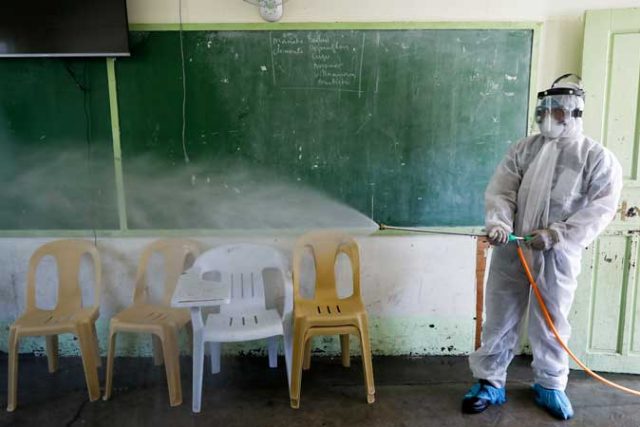
THE HOUSE Committee on Ways and Means on Monday approved a proposed law that scraps a 150% tax hike on private schools.

In a hearing, the panel approved the committee report and substitute House Bill 9913, which amends Section 27 (B) of the National Internal Revenue Code (NIRC) of 1997 to apply the 10% preferential tax rate to all proprietary educational institutions and nonprofit hospitals from Jan. 1, 2012 to June 30, 2020.

However, the bill states that no tax credit or refund can be granted due to this reduced tax rate during the period.

Under the bill, private schools will also be given a reduced tax rate of 1% from July 1, 2020 to June 30, 2023, as provided for under Republic Act 11534 or the Corporate Recovery and Tax Incentives for Enterprises (CREATE) law. After the relief under CREATE expires, the tax rate will revert to 10%.

“The income of nonstock, nonprofit educational institutions not used actually, directly and exclusively for educational purposes shall be subject to the rate of tax under this subsection,” according to the bill.

The Bureau of Internal Revenue (BIR) recently suspended certain provisions of Revenue Regulations (RR) No. 5-2021 that excluded nonprofit private schools from availing themselves of the preferential tax and effectively increased the rate to the 25% regular corporate income tax. 

“To ease the burden of taxation among proprietary educational institutions, especially during this time of COVID-19 pandemic, and taking into account the pending bills in Congress… to finally clarify the income taxation of schools, the implementation of the following provisions of RR 5-2021 dated 8 April 2021 are hereby suspended pending passage of such appropriate legislation,” the BIR said in RR No. 14-2021.

Albay Rep. Jose Ma. Clemente S. Salceda, chairman of the House Ways and Means committee, said via Viber that the tax hike would have forced private schools to lay off over 20,000 jobs, in addition to the 80,000 jobs already lost during the pandemic.

Mr. Salceda said in a separate statement the enactment of the bill along with the reduced tax rate under the CREATE law would allow schools to “save an equivalent of 3.43% of compensation expenses, which could help them rehire at least 12,996 teachers at the start of the next school year.”

He expects the bill to be passed with “very little” resistance on the House floor and hopes for the measure to be transmitted to Malacañang before the year ends.

“I do expect some amendments, particularly on the use of tax savings towards lower tuition. These are good amendments in principle, although the question of implementation is still there,” he added.

Coordinating Council of Private Educational Associations Managing Director Joseph Noel M. Estrada said the “overwhelming support” for the bill raises hopes it would be approved by Congress before the break in September.

“We hope for the enactment of the law before end of the third and last session of this 18th Congress,” he said via mobile message.

The counterpart measure, Senate Bill 2272, is pending in the Senate Ways and Means committee.

Growth prospects could dim if NCR lockdown is extended

PHILIPPINE STAR/ MICHAEL VARCAS

By Luz Wendy T. Noble and Kyle Aristophere T. Atienza, Reporters

THE PHILIPPINE economy’s recovery prospects could further deteriorate if the strict lockdown in the capital region goes beyond two weeks and extends to other regions, analysts said.

“The return of lockdowns is consistent with our view that the economic recovery will lag far behind ASEAN-5, as vaccination rates are among the lowest in the region, leaving the country susceptible to rolling COVID-19 (coronavirus disease 2019) waves and recurring lockdowns,” Nomura Global Research Chief ASEAN Economist Euben Paracuelles and analyst Rangga Cipta said in a note on Monday.

Nomura Global Research kept its gross domestic product (GDP) forecast for the Philippines at 5.4% this year, lower than the government’s 6-7% target.

However, Nomura’s analysts said “downside risks will rise if the enhanced community quarantine is prolonged beyond Aug. 6 to 20 and expanded to other areas,” noting Metro Manila accounts for 37.5% of GDP.

The government announced that the National Capital Region will be placed under an enhanced community quarantine, the most stringent level of lockdown, from Aug. 6 to 20 to curb a surge in coronavirus infections believed to be caused by the more contagious Delta variant.

Fitch Solutions Country Risk & Industry Research Senior Country Analyst Michael Langham warned that another lockdown could be “devastating” for the Philippines given its consumer-driven economy. For now, he said Fitch Solutions is keeping its 2021 growth forecast for the Philippines at 5.3%.

“The Philippine economy is so driven by domestic activity. When they do impose these lockdowns, it disrupts growth,” Mr. Langham said in an ANC interview on Monday.

Household spending, which accounts for 70% of the economy, shrank by 4.8% in the first quarter.

Mr. Langham said the impact of the lockdown would depend on its duration and the size of aid that will be distributed relative to economic loss.

He noted how the Philippine economy still suffered despite the passage of Republic Act 11469 or Bayanihan I, which realigned P275 billion from the 2020 budget for pandemic response.

Nomura’s Messrs. Paracuelles and Cipta do not expect significant aid despite the lockdown.

“Near-term fiscal support measures are also likely to be similarly small, with the government focusing on other priorities like infrastructure spending,” the analysts said.

BIGGER STIMULUS SOUGHT
Economic managers should consider a bigger stimulus measure to address potential lockdown-induced supply and demand shocks, economists said.

“It would be already pragmatic to institutionalize budget for stimulus/relief measures in case there would be hard lockdowns to respond to the current realities and always be ready for any contingencies,” said Rizal Banking Corp. Chief Economist Michael L. Ricafort.

“This would be part of increased readiness to have ready funds for social amelioration whenever there is a need to impose an enhanced community quarantine,” he said in a Viber message.

John Paolo R. Rivera, an economist at the Asian Institute of Management, said a bigger stimulus is needed to address a possible “consumption crunch” due to the lockdowns and tighter mobility restrictions.

“A bigger stimulus law, which will extend cash aid to the poorest, will allow households to augment consumption,” he said by telephone.

The Palace on Friday said it expects cash aid to be given to families affected by the lockdown of about P1,000 to P4,000 per family.

Sonny A. Africa, executive director of think tank Ibon Foundation, said a consumption-driven economy like the Philippines stands to benefit from a huge stimulus because it increases “aggregate demand and helps businesses to stay alive.”

“The national budget is the stimulus package,” Palace Spokesperson Herminio L. Roque, Jr. said at a televised news briefing when asked if the administration would push for a bigger stimulus as potential Delta-fueled lockdowns loom.

The government has a P4.506-trillion national budget for this year. Economic managers have approved a P5.024-trillion ceiling for next year’s national budget, which is set to be submitted to Congress before Aug. 25.

The proposed Bayanihan III, which allocates P400 billion for the pandemic response, including financial aid worth P2,000 for all Filipinos, has been approved by the House of Representatives but is pending at the Senate. However, economic managers have said they could only fund P173 billion for a stimulus response this year.

“Bayanihan III will draw the attention of legislators and highlight the important role of active government spending in the economic recovery,” Pamantasan ng Lungsod ng Maynila President Emmanuel A. Leyco in a Facebook Messenger chat.

He said economic managers must “re-examine their priorities and define their economic recovery strategies” before Congress tackles the 2022 national budget.

The pandemic should force the government to rethink its economic policy of managing the pace of economic growth by mainly adjusting the cost of private borrowing rather than increasing public spending, Ibon’s Mr. Africa said.

“Our economic managers still have this hangover from the 1980s era of fiscal austerity. They are still obsessed with fiscal austerity as something valid for its own sake,” he said by telephone.

“Frugality is counter-productive because it’s undermining our economic capacity. There’s nothing wrong with borrowing more money, especially now that they have been saying that we have a good credit rating,” Mr. Africa said. “Borrowing is not necessarily bad if it’s spent well.”

The Philippines has secured $18.4 billion in foreign loans as of June to fund its fight against the pandemic.

The National Government’s outstanding debt inched up to a new high of P11.166 trillion at the end of June. Economic managers expect the country’s debt stock to reach P11.98 trillion by the end of this year.

“We can still borrow more money for a stimulus, but under the assumption that it will be used properly,” Jefferson A. Arapoc, a behavioral economics professor at the University of the Philippines Los Baños, said. “Our external debt is still manageable.”

Private sector aims for strong fourth quarter

THE private sector is aiming for a stronger fourth quarter to prepare for an anticipated economic rebound next year through expanded vaccination, Presidential Adviser for Entrepreneurship Jose Ma. “Joey” Concepcion III said.

Businesses plan to achieve this through “micro-herd immunity” or the full vaccination of employees at workspaces like office buildings, malls, and factories, as well as inoculation for the transport sector and in homes, he said at a virtual event on Monday.

Mr. Concepcion has been calling for incentives for businesses that aim for full vaccination of their work force against the coronavirus disease 2019 (COVID-19).

He supported upcoming stricter restrictions in the capital region under the enhanced community quarantine (ECQ).

“To protect the fourth quarter, we said let’s focus the lockdown in this month,” he said, noting higher consumer sending during the December holidays.

“Our objective for this year is to save the fourth quarter. This is a quarter whereby businesses do extremely well. This is a quarter where our micro, small and medium enterprises (MSMEs) who are challenged in the first and second and third quarter can actually rebound.”

Trade Secretary Ramon M. Lopez said at the same event that the economy will again be affected by the ECQ, which he said could raise the number of small business closures.

“By imposing this ECQ, we can remove the possibility of an uncontrollable surge like what happened in our neighboring countries that claimed thousands of lives. But even as we do so, we assure businesses that we will allow the dominant portion of the production sector — from agriculture to industry and services — to continue to operate so that we can save jobs and income,” he said.

Various firms at the event expressed support for the Tatak Matatag na Negosyo movement, where government and the private sector assist micro-retailers improve their access to financing, automated wholesale links, and retailer business skills development. — Jenina P. Ibañez

SM Prime income surge to P5.2B as mall revenues improve

BW FILE PHOTO

SM Prime Holdings, Inc. reported a net income of P5.2 billion in the second quarter, growing by nearly 148% from P2.1 billion year on year as its malls business saw improved revenues despite the reimposition of quarantine classifications.

The company’s revenues from its Philippine malls segment grew by 55% to P4.8 billion in the second quarter from P3.1 billion last year.

“In these challenging times, we are committed more in providing a safe environment to all our stakeholders by strict observance of health and safety protocols across all our developments,” SM Prime President Jeffrey C. Lim said in a statement on Monday.

In the first semester, the company generated a consolidated net income of P11.6 billion, 12% more than the P10.4 billion logged in the same period in 2020. Its consolidated revenues declined by six percent to P41.1 billion from P43.7 billion.

SM Development Corp. (SMDC) leads SM Prime’s residential segment, which accounts for 60% of the company’s consolidated revenues. SMDC saw an eight percent improvement in its operating income to P10.4 billion in the first half from P9.7 billion year on year.

Revenues for SMDC went up by three percent to P24.55 billion from P23.7 billion year on year. Net reservation sales in the six-month period rose by 30% to P55.1 billion from P42.4 billion.

“Construction works on SM Prime’s new and latest residential projects remain ongoing while following safety protocols implemented by the national government,” the company said.

The company’s malls business made up for 26% of its consolidated revenues. Despite the segment’s improvement in the second quarter, its revenues for the first half declined by nearly 26% to P10.7 billion from last year’s P14.4 billion.

SM Prime said the re-implementation of enhanced community quarantine (ECQ) in the National Capital Region (NCR), Bulacan, Cavite, Laguna, and Rizal — the so-called NCR Plus bubble — from March to May 2021 had caused lower mall activities in these areas.

Meanwhile, revenues of SM Prime’s China malls rose by 50% to P3 billion in the first semester from P2 billion year on year.

“[Last year’s first-half] performance was affected by the pandemic lockdown in China during the first quarter of 2020 and the reported positive growth in the succeeding periods was due to the overall recovery of the economy,” said SM Prime.

Its other business segments such as offices, hotels, and convention centers contributed P3.1 billion to consolidated revenues.

SM Prime added 100 new rooms to its hotel portfolio upon the launch of the south wing of Park Inn by Radisson Clark in the first half.

Shares of SM Prime at the stock exchange went up by 2.7% or 85 centavos on Monday, closing at P32.30 each. — Keren Concepcion G. Valmonte

SPC Power’s board approves move into renewable energy

SPCPOWERGROUP.COM

SPC Power Corp. said on Monday that its management gave the green light for the firm to pursue the exploration and development of renewable energy (RE) resources for electricity production.

In a disclosure on Monday, the listed electricity retailer said its board of directors had approved its amended articles of incorporation last week, allowing the firm to embark on the development and use of natural resources, including solar, wind, biomass, hydro, geothermal, ocean, wave and other sources of RE, to produce power.

The board also allowed SPC to own, lease and develop real or personal properties, including land; and invest in the management of local corporations, partnerships and entities to achieve its primary purpose.

The firm also revised its articles of incorporation to change the location of its principal office, which will be located along Paseo de Roxas, Makati City. Previously, its head office was located at Cebu Business Park, Cebu City.

The venture into renewables comes around two months after SPC said that it was looking at developing solar and battery energy storage facilities, as it keeps RE projects “under its radar.”

It earlier reported that its first-quarter attributable net income to its parent firm equity holders slipped 3% to P462.49 million amid lower revenues.

According to its annual report, SPC owns a 40% share in KEPCO SPC Power Corp., which maintains a 200-megawatt circulation fluidized combustion coal-fired power plant in Naga, Cebu.

The company also holds a 40% interest in Mactan Electric Co., Inc.

SPC subsidiaries include SPC Island Power Corp., Cebu Naga Power Corp., SPC Malaya Power Corp., Bohol Light Co., Inc., SPC Light Co., Inc., and SPC Electric Co., Inc.

On Monday, shares in SPC were unchanged at P11.84 apiece at the stock exchange. — Angelica Y. Yang

Office space developers turn cautious amid rising vacancies

PHILIPPINE STAR/ MICHAEL VARCAS

By Jenina P. Ibañez, Reporter

NEW OFFICE supply this year could be lower than initially projected as developers avoid overbuilding while they await the recovery of the sector, Colliers Philippines said.

In a report, Colliers Philippines said that new office supply could reach 847,600 square meters (sq.m.) this year, down from the 878,200 sq.m. projection as developers try to prevent further increases in vacancies and rent corrections.

“Developers have become more prudent in their supply strategy to ensure that new supply matches actual demand as they await recovery,” the firm said.

The annual office space completion forecast from 2021-2025 was cut by three percent to 621,300 sq.m. Quezon City, Bay Area and Ortigas central business districts could account for almost half of the new supply during the period.   

“The supply pipeline is seen to be decreasing to the 500-600 (thousand) square meter level, which was the level of annual supply during the pre-POGO era,” Colliers Philippines Office Services and Tenant Representation Director Dom Fredrick Andaya said at a briefing on Friday.

Many Philippine Offshore Gaming Operators (POGOs), which had previously driven a surge in office space demand, have been vacating office spaces during the pandemic in response to travel restrictions and tax issues.

Office space transactions have recently improved, fueled by demand from outsourcing and traditional firms responding to lower base rents and higher quality spaces.

JLL Philippines in a briefing last week said lease volume levels are picking up in the office market compared to last year, although this remains low compared to pre-pandemic levels.

“There’s a lot more inquiries for Metro Manila requirements and also Metro Cebu,” JLL Philippines Head of Research and Consultancy Janlo de los Reyes said, noting improving corporate occupier sentiment as vaccination rates grow.

But vacancies still outpace transactions.

“In the first quarter of 2021, we shared that the level of vacant spaces was already decreasing, while the level of transactions significantly increased. But the surge in COVID-19 cases affected heavily the second quarter results,” Mr. Andaya said.

“That’s why we saw the level of vacated spaces climbing up again, which was caused mainly by significant lease cancellations by the POGOs and some other occupiers.”

Office space vacancies rose to 12.7% in the second quarter from 11% in the first three months of the year. Colliers revised its office vacancy projection to 15.6% by the end of the year from 12.5% amid weak pre-leasing and the completion of more spaces towards the end of 2021.

Net take-up for the year could reach only 85,800 sq.m., Colliers said, down from the earlier estimate of 351,000 sq.m.

Greenergy seals investment in ABS-CBN’s U-Pay

ABS-CBN Corp. announced on Monday that it executed a share purchase deal with Greenergy Holdings, Inc. for its acquisition of the media company’s 51 million shares of stock in e-money issuer and remittance firm U-Pay Digital Technologies, Inc.

“ABS-CBN… informs the investing public that the parties have executed the share purchase agreement today for (Greenergy Holdings’) acquisition of ABS-CBN’s 51 million shares of stock in U-Pay Digital Technologies with a par value of P1 per share, at a price of its total par value of P51 million,” the listed media company said in a disclosure to the stock exchange.

ABS-CBN added that there is also a payment of “additional consideration of P3 million for disbursement of fees and charges due on U-Pay’s governmental permits and licenses, reimbursement for the pre-operating expenses advanced by the media company to U-Pay, and assignment to U-Pay of ABS-CBN’s rights and interests to the marks and all other intellectual property rights [it] created and developed.”

The media company said the closing date of the transaction is subject to the completion of certain conditions precedent to closing, including the issuance by the Bangko Sentral ng Pilipinas (BSP) of a letter of no objection to the acquisition of the shares, which should not be later than Sept. 30.

In a separate disclosure, Greenergy Holdings said its board of directors approved the company’s move to enter into a share purchase agreement with ABS-CBN, “which would result in the company owning 51% of the outstanding capital stock of U-Pay.”

“U-Pay is a fintech company engaged in the business of customer and merchant e-wallet/e-money services and other related services, operating a platform therefore, as well as advertising, producing, distributing, and marketing products and services that are connected to the operations of said business,” Greenergy Holdings said.

The listed holding company also said U-Pay has an e-money issuer license issued by the BSP and is registered to operate as a remittance and transfer company.

On Monday, shares in ABS-CBN inched up by 0.54% or six centavos to P11.22 each, while those of Greenergy Holdings rose 2.99% or seven centavos to P2.41 apiece. — Arjay L. Balinbin

Cybergate Galleria Cebu targets IT-BPM firms

CYBERGATE Galleria Cebu is located within the Robinsons Galleria Cebu Destination Estate along General Maxilom Avenue, Cebu City.

ROBINSONS LAND Corp. (RLC) is targeting information technology-business process management (IT-BPM) firms with its new office building in Cebu City.

In a statement, RLC said Cybergate Galleria has been declared as a special economic zone by the Philippine Economic Zone Authority (PEZA) through a presidential proclamation issued in April.

The Gokongwei-led developer is hoping to take advantage of the preference of many outsourcing firms to take up spaces in PEZA-registered buildings.

“We anticipate that locating in PEZA ecozones will still be a top consideration for the IT-BPM sector due to the agency’s professionalism and one-stop shop nature,” RLC Senior Vice-President and Office Buildings General Manager Jericho Go said in a statement.

The Cybergate Galleria is now ready to be turned over to tenants looking to expand in Cebu.

“Locating in a new building like Cybergate Galleria in Cebu ensures that huge investments being made by tenants on fit-out and IT infrastructure may be recovered. Companies could sign-up long-term leases and/or have multiple lease renewals in newer buildings,” Mr. Go said.

Located within a 5-hectare mixed-use complex along General Maxilom Avenue, the 13-storey Cybergate Galleria Cebu has nine office floors, which are now ready for occupancy. It covers a total gross leasable area of 19,500 square meters (sq.m.).

The building has floor plates of about 2,100 sq.m., which give tenants more flexibility to design their workspaces. It is equipped with 100% back-up power and has multiple telecom providers.

“Cybergate Galleria Cebu has round-the-clock CCTV surveillance and security, supported by fire alarm detection system, fire sprinklers, and smoke detectors,” Mr. Go said.

The building is located next to the Robinsons Galleria Cebu, a Summit Hotel and the upcoming three-tower Galleria Residences Cebu.

DoubleDragon to buy back up to P500-M common shares

DOUBLEDRAGON Properties Corp. will be buying back up to P500-million worth of the company’s common shares through “internally generated funds.”

“The buyback program will commence on 30 July 2021 and end on 30 July 2022, and shall be effective until the amount allocated for the said program has been fully utilized or as may otherwise be determined by the company,” DoubleDragon Properties told the exchange on Monday.

Should the company use all of the budget for the share buyback program, it may repurchase up to 48.17 million shares for the P10.38 per share price as of July 29.

It is said to be 2.03% of the company’s total outstanding shares, which stands at nearly 2.37 billion.

Its board of directors approved of the share buyback program on Friday. The company expects the program to improve shareholder value.

The company also said the program aims “to manifest confidence in the company’s value and prospects through the repurchase of the common shares of the company and through the return of a portion of the company’s capital to its shareholders.”

DoubleDragon Properties said the program will be implemented through the open market using the trading facilities of the Philippine Stock Exchange.

“The share buyback program will not affect any of the company’s prospective and existing projects and investments,” the company clarified.

On Monday, shares of DoubleDragon Properties at the stock exchange went up by 1.98% or 20 centavos to close at P10.30 each. — Keren Concepcion G. Valmonte

Pinoy filmmakers participate in Locarno Film Festival

AFTER it was canceled last year because of the ongoing coronavirus pandemic, the Locarno Film Festival in Switzerland will be held this year, with live screenings to be held at the Piazza Grande, as well as online screenings from Aug. 4 to 14.

The Locarno Film Festival, which has been held annually in August since 1946, is celebrating its 74th year.

This year there will be one Filipino film in competition, and  three non-competition Filipino films.

Competing in the Concorso Cineasti del Presente (Filmmakers of the Present Competition), a section dedicated to emerging directors, is Carlo Francisco Manatad’s Kun Maupay Man It Panahon (Whether the Weather is Fine).

The film, starring Daniel Padilla, Rans Rifol, and Charo Santos-Concio, follows a mother and son struggling to survive Typhoon Yolanda that devastated Tacloban, Leyte in 2013.

“This is more focused on the journey of three people,” the film’s director said during an online press conference on July 29 held via Zoom, hosted by the Film Development Council of the Philippines (FDCP). “It’s more focused on the story of the mother and the son, not just trying to survive, but the journey of finding freedom,” said Mr. Manatad

OPEN DOORS PROGRAM
This year’s Locarno Open Doors program will showcase films from Mongolia and the Southeast Asian region for the third and final year. The program consists of the Open Doors Hub, Open Doors Lab, and Open Doors Screenings to be held simultaneously from Aug. 6 to 10.

Alyx Ayn Arumpac’s documentary Aswang and the short films Excuse Me, Miss, Miss, Miss by Sonny Calvento and Next Picture by Cris Bringas, will be part of the non-competitive section of the Open Doors Screenings. The Southeast Asian Open Doors short films entries will be available for viewing online  via https://play.locarnofestival.ch/page/open-doors-shorts/.

Sophie Bourdon, the Head of the Open Doors program, said that one of the challenges in this year’s edition was scouting for talents and filmmakers through correspondence online.

“Cinema is a human adventure. The digital tool is wonderful because it allows us to keep the connection,” she said.

Aside from previously mentioned movies, Filipino director E. Del Mundo and producer Pamela Reyes’ film Sam will be part of the Open Doors Hub, a six-day tailored program that will give filmmakers access to group discussions and networking activities. Meanwhile, producer Stelle Laguda will participate in the Open Doors Lab, a producer-centric six-day training program to hone their skills and awareness in the international marketplace.

“We are always very eager to discover new talent. The Philippines is among the countries where we may find distinctive voices [and] talents,” Ms. Bourdon said. “Locarno is a festival where we are really keen on showing how filmmaking is a never-ending process… We are always eager to show new ways of filmmaking

“I hope this experience can inspire you to enrich your filmmaking,” she added.

FDCP Chairperson and CEO Mary Liza Bautista Diño-Seguerra stressed the importance of representation of Filipinos and their stories on a global stage.

“When your films are in these festivals, it means that the kind of filmmaking that we do does not just resonate with the local audience but with the global audience. So, it’s very important for our cinemas to find audiences not just in the Philippines but all over the world,” Ms. Diño-Seguerra said. “This is exactly what cinema does — for us to speak and represent our stories — represent what the Philippines is, the many facets about us, through our filmmakers and their films.”

She added that for the Philippines to be chosen as part of the film festival “creates a reputation among the international stakeholders to look into the Philippines.”

For more information on the Locarno Film Festival 2021 and the participating films and projects, visit the official website at www.locarnofestival.ch. To view the Southeast Asian film entries for the Open Doors Shorts, visit https://play.locarnofestival.ch/page/open-doors-shorts/. — Michelle Anne P. Soliman

Treasury bills fetch mixed rates on bets of slower July inflation

BW FILE PHOTO
THE GOVERNMENT made a full award of the Treasury bills on Monday even as yield movements were mixed ahead of the release of inflation data. — BW FILE PHOTO

THE GOVERNMENT made a full award of the Treasury bills (T-bills) it offered on Monday after rates moved sideways on expectations of slower inflation in July.

The Bureau of the Treasury (BTr) raised P15 billion as planned via the T-bills it auctioned off on Monday, with total bids reaching P50.76 billion or almost thrice as much as the offer volume. This was also bigger than the P43.027 billion in tenders seen last week.

Broken down, the Treasury borrowed P5 billion as planned via the 91-day papers from P16.252 billion in tenders. The average rate of the three-month debt inched up by 0.3 basis point (bp) to 1.053% from 1.05% in the previous auction.

The government also raised P5 billion as programmed from the 182-day T-bills after total bids for the tenor reached P19.48 billion. The six-month debt fetched an average rate of 1.401%, down by 0.6 bp from 1.407% previously.

Lastly, the BTr made a full P5-billion award of the 364-day securities it offered on Monday after the papers attracted P15.032 billion in bids. The one-year debt was quoted at an average rate of 1.632%, 0.6 bp lower than last week’s 1.638%.

National Treasurer Rosalia V. de Leon said T-bill rates moved sideways on expectations that inflation in July fell within the central bank’s 2-4% target.

A BusinessWorld poll of 15 analysts last week yielded a median estimate of 4% for July headline inflation amid lower meat prices after the government eased import tariffs. This is expected to offset the higher costs of oil and other food items.

If realized, this would mark the first time inflation would fall within the 2-4% target of the central bank since the 3.5% headline print in December. This would also be slower than the 4.1% rise in June but still faster than the 2.7% logged a year ago.

The Philippine Statistics Authority will report official July inflation data on Aug. 5, Thursday.

Meanwhile, a bond trader said demand for the T-bills was muted, with no “new” investors coming in as the players seen during Monday’s auction were mostly the holders of papers maturing this Wednesday.

“Further downside is expected to be limited as investors would rather extend to the two- to five-year space,” the trader said in a Viber message.

On Tuesday, the BTr will auction off P35 billion in reissued 10-year Treasury bonds (T-bonds) with a remaining life of nine years and 11 months.

The Treasury is looking to raise P200 billion from the local market this month: P60 billion via weekly offers of T-bills and P140 billion from weekly auctions of T-bonds.

The government wants to borrow P3 trillion from domestic and external sources this year to help fund a budget deficit seen to hit 9.3% of gross domestic product. — Beatrice M. Laforga

SMDC rolls out vaccines to residents, employees

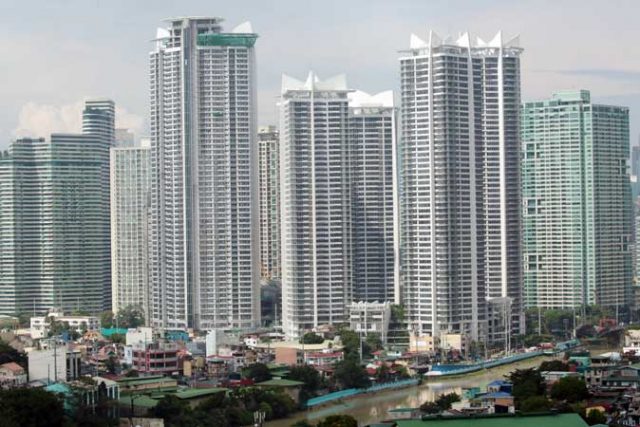
SM DEVELOPMENT Corp. (SMDC) said around 1,200 residents of its four condominiums in Quezon City have been inoculated against the coronavirus disease 2019 (COVID-19), as part of efforts to support the government’s vaccination program.

SMDC partnering with the Quezon City government and the Philippine Red Cross to bring COVID-19 vaccines to the residents of Mezza Residences, Mezza II Residences, Grass Residences, and Trees Residences, all in Quezon City.

In a statement, SMDC President Jose Mari Banzon said there was a need to join the vaccination campaign after an informal survey revealed majority of its condominium residents have not availed of the government’s inoculation program yet.

The amenity areas were turned into vaccination venues, while some medical doctors and nurses, who are also residents of SMDC properties, volunteered to help.

SMDC said it is planning to expand its vaccination drive to other projects by partnering with local government units and the Philippine Red Cross.