Home Blog Page 7164

Sinovac booster shot reverses drop in antibody activities against Delta — study

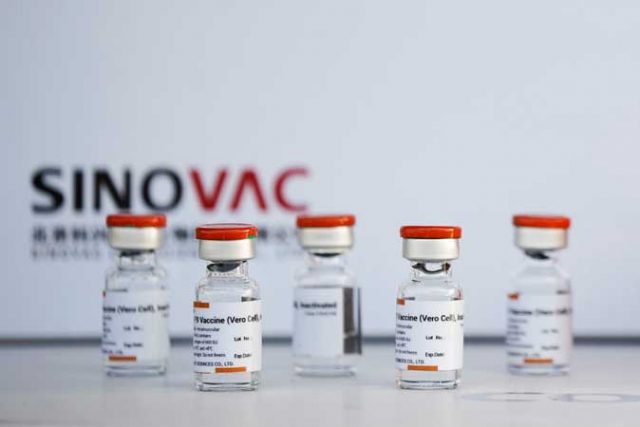
BEIJING — A booster dose of Sinovac Biotech’s coronavirus disease 2019 (COVID-19) vaccine reversed a decline in antibody activities against the Delta variant, a study showed, easing some concerns about its longer-term immune response to the highly contagious strain of the virus. 

The study comes amid concerns about the Chinese vaccine’s efficacy against Delta, which has become the dominant variant globally and is driving a surge in new infections even in the most vaccinated countries. 

Several countries which have relied heavily on the Sinovac vaccine have begun giving booster shots developed by Western manufacturers to people fully vaccinated with the Chinese shot. 

Neutralizing antibody activities against Delta were not detected in samples taken from vaccine recipients six months after they received the second dose of Sinovac’s CoronaVac vaccine, according to the study published on Sunday before a peer review. 

But recipients of booster shots showed over 2.5-fold higher neutralizing potency against Delta about four weeks after the third dose, compared with the level seen about four weeks after the second shot, researchers from Chinese Academy of Sciences, Furan University, Sinovac, and other Chinese institutions said in the paper. 

They did not discuss how specifically changes in antibody activity will affect Sinovac shot’s efficacy in preventing people from getting sick from the variant. 

The lab study involves samples from 66 participants, including 38 volunteers who received either two or three doses of the vaccine. 

The World Health Organization plans to ship around 100 million doses of the Sinovac and Sinopharm COVID-19 shots by the end of this month, mostly to Africa and Asia, in its first delivery of Chinese vaccines. 

But some countries rejected accepting the vaccines, citing lack of data on their effectiveness against Delta.  

Around 1.8 billion doses of the Sinovac vaccine have been supplied globally including China by the end of August, according to the company. — Reuters 

The story is in the clothing

A BOOK that tells the story of an era of Philippine culture through its clothing has won a major international scholarly prize.

The 550-page book, Clothing the Colony: Nineteenth Century Philippine Sartorial Culture, 1820-1896 by Stephanie Marie Coo, was awarded the IIAS-ICAS International Book Prize 2021 as the Best Book in Humanities-English Language Edition on Aug. 24.

The biennial ICAS Book Prize (IBP), which started in 2003, was established by International Convention of Asian Scholars (ICAS) which is a biennial meeting platform by the initiative International Institute for Asian Studies (IIAS) based in Leiden, the Netherlands. The IIAS is part of a global academic network that organizes a discussion among individuals and institutions on Asia and Asian Studies. With 600 books and 150 dissertations submitted for its 2019 edition, the IBP is the leading Book Prize in the field of Asian Studies.

Karina A. Bolasco, director of the Ateneo de Manila University Press, described the book as “ideal packaging of an academic and scholarly book” with “an interesting and popular subject as clothing, rigorous research given in readable language, a good number of archival but beautiful pictures.”

“The ICAS call for submissions was relayed to us by one of our authors, Nina Andersen, a Danish Philippine studies specialist (author of Labor Pioneers: Economy, Labor, and Migration in Filipino-Danish Relations, 1950-2015),” she said in an e-mail to BusinessWorld.

The university press submitted 10 Humanities and Social Sciences titles published after 2018. Out of 247 entries worldwide, Clothing the Colony was the only book entry from Asia that was nominated. It was longlisted, shortlisted, and finally awarded the book prize — besting books from the university presses of Yale, Columbia, Chicago University, and Oxford.

THE WINNING BOOK
Clothing the Colony is a function of the colonization of the mind and the heart,” Ms. Coo told BusinessWorld in an online interview. “Clothes are worn, and therefore, it’s about the story of the wearers who makes daily decision about how they want to show up into the world.”

Ms. Coo is a Marie Curie postdoctoral fellow at the Departamento de Historia del Arte at the Universidad de Granada in Spain and NOVA School of Law – Universidade NOVA de Lisboa, in Portugal. She earned her PhD in History from Universite Nice Sophia Antipolis in France where she was conferred the highest distinction in the French university system. She also holds a Master of Arts in History, and Bachelor of Science degrees from the Ateneo de Manila, where she serves as Assistant Professor. 

Prior to its publication as a book, the research for Clothing the Colony was originally done for Ms. Coo’s doctorate dissertation in France. Ms. Coo said that the original idea for the study was Philippine textiles, however she switched the focus to clothing. “The real narrative is in the clothes. I was more interested on the psychology behind clothes,” she said.

For the book, Ms. Coo gathered text and a mass of photographs from libraries and museum archives including the Museo del Traje and Museo Nacional de Antropologia in Spain, Museu Nacional do Traje in Portugal, and the National Library, Filipinas Heritage Library, and Ateneo’s Rizal Library in the Philippines.

“I was not just looking at one image. I need to verify if this image matches with the text,” Ms. Coo said.

THE WAY WE WORE
The book focuses the evolution of clothing between 1820 and 1896. Clothing pieces, Ms. Coo stressed, each had to be looked at separately. “Each piece has to be treated separately because it has its own tempo but also, the whole ensemble has to be analyzed for its totality,” she said.

While doing her research, one of the many interesting stories Ms. Coo gathered pertained to the sleeves design in women’s clothing.

She explained that embroidery was a leisure activity among women, and they began to wear their art aside from displaying it at home. “To accommodate these new skills and designs, the sleeves became bigger,” she said. Then, the method of starching was incorporated to create more structural designs.

Ms. Coo noted that men’s clothing “delivered more exciting narratives” because men engaged in more activities in business, held positions in government, and had different attire for leisure and events such as fiestas.

“Men had more activities. Women were excluded from the usual avenues of power,” Ms. Coo said. “Women were excluded from ecclesiastical work unlike priests, unless they become a nun.”

At a time when information is very accessible, and often not very accurate, Ateneo Press’ Ms. Bolasco noted how important and urgent it is today to produce informative books.

“Academic or scholarly books are not just informative books, offering much more than what is on Google or on the worldwide web…,” Ms. Bolasco told BusinessWorld, noting that books which cover aspects of the country’s history, culture, politics, and economics are crafted from rigorous research and based on doctoral dissertations. 

“By situating our clothing practices in such a multi-ethnic, multicultural 19th century colonial society, we learn to appreciate more deeply our cultural interactions, colonial lifestyles, human relations, and social behavior,” she added.

“Quality work takes time and deep research. Whatever I produce, I make sure it’s new knowledge. So, between consumption and production of knowledge, I wanted to produce knowledge,” Ms. Coo said.

For details and book orders, visit http://ateneo.edu/ateneopress/product/clothing-colony-nineteenth-century-philippine-sartorial-culture-1820-1896-0. The book is also available at the Ateneo University Press pages at Lazada and Shopee. — Michelle Anne P. Soliman


Converge ICT joining FTSE GEIS small cap index on Sept. 18

LISTED fiber broadband provider Converge ICT Solutions, Inc. said on Tuesday that it will join the Financial Times Stock Exchange (FTSE) Global Equity Index starting Sept. 18.

“Converge is the only Philippine company to be added to the Small Cap Index of the FTSE Global Equity Index Series (GEIS) in this most recent review. The index inclusion will take effect after the close of business on Sept. 17, 2021,” Converge said in an e-mailed statement.

Dennis Anthony H. Uy, chief executive officer and co-founder of Converge, said the company’s inclusion in the FTSE Global Equity Index “will lead to more exposure to passive and active investors.”

For Grace Y. Uy, Converge president and co-founder, the index inclusion is a testament of the company’s “growth and standing” in the country’s telecommunications industry.

“Securities are included in the Global Equity Index Series after passing the criteria on minimum voting rights, investability weight, liquidity, and trading history set by the FTSE,” Converge said.

“The GEIS was created by the FTSE to be used as benchmarks for investment funds, exchange traded funds, and other financial products. The indices, therefore, stand as proxy for the market they represent and the securities therein are considered as stable indicators for their respective industries. The GEIS – Global Small Cap Index, as of July, comprises more than 5,000 constituents worldwide,” it noted.

The company saw its attributable net income for the first half of the year surge 159% to P3.3 billion.

First-half total revenues increased 82% to P11.8 billion, as residential revenue jumped 105% to P10.2 billion and enterprise revenue slightly grew 4% to P1.6 billion.

Converge shares closed 1.59% higher at P32 apiece on Tuesday. — Arjay L. Balinbin

‘Infodemic’ still a public health concern  

PIXABAY

WHILE the Lambda and Mu coronavirus variants are not (as of now) a matter of concern among health experts, the ongoing infodemic is.  

“This is the first pandemic of its kind in the age of social media,” said former Health secretary Dr. Esperanza I. Cabral at a recent webinar organized by the Philippine Medical Association. “Misinformation can stem from our knowledge gaps. Disinformation is more insidious, with certain groups trying to sow seeds of distrust towards institutions.”  

An infodemic is a rapid and far-reaching spread of both accurate and inaccurate information about something, such as a disease.  

It’s very difficult to address disinformation nowadays, added Dr. Dominga “Minguita” B. Padilla, a co-convener of Doctors for Truth and Public Welfare. “Much disinformation is fallacy mixed with truth.”  

 To develop trust, Dr. Cabral suggested the following:  

  • Understand your audience — What are their ages? What is their communication style? Tailor your means of communication to accommodate these factors.  
  • Communicate uncertainty clearly — Stating that not all information is available is better than making claims.  
  • Watch social media — Monitoring social media is a way to understand what questions are being asked, as well as know what knowledge gaps are present, so these can be addressed.  

We need to identify where misinformation is coming from, so we can stop it at the source,” said Dr. Cabral. — Patricia B. Mirasol  

Gov’t fully awards reissued seven-year T-bonds

BW FILE PHOTO
THE TREASURY made a full award of the reissued bonds as its rate stayed within secondary market levels. — BW FILE PHOTO

THE GOVERNMENT made a full award of the reissued Treasury bonds (T-bonds) it offered on Tuesday as the offer was met with strong demand despite rising inflation.

The Bureau of the Treasury (BTr) raised P35 billion as planned via the reissued seven-year T-bonds, which have a remaining life of six years and 11 months.

The auction attracted P77.091 billion in bids, more than twice as much as the offer volume and higher than the P63.7 billion recorded when the seven-year papers were first auctioned off on Aug. 10.

This prompted the BTr to open the tap facility to raise an additional P5 billion from the debt papers.

The average rate of the reissued seven-year bonds stood at 3.789%. This was slightly higher than the 3.75% coupon fetched for the papers when they were first offered on Aug. 10. The Treasury also raised P35 billion as planned via the fresh seven-year T-bonds at that auction.

This was also 17.8 basis points higher than the 3.611% quoted for the tenor at the secondary market prior to the auction, based on the PHL Bloomberg Valuation Reference Rates.

National Treasurer Rosalia V. de Leon said Tuesday’s T-bond offer saw strong demand from investors, which kept its average rate within secondary market levels even after inflation surged to a 32-month high in August.

The Philippine Statistics Authority on Tuesday reported that headline inflation went up by 4.9% year on year last month, accelerating from the 4% logged in July, as food prices continued to spike.

This was the fastest print in 32 months or since the 5.1% recorded in December 2018. It was also higher than the 4.4% median estimate in a BusinessWorld poll conducted last week and was at the higher end of the 4.1-4.9% estimate of the central bank.

Inflation averaged at 4.4% in the first eight months, breaching the central bank’s 2-4% target and 4.1% forecast for the year.

Ms. De Leon added that the BTr’s borrowing program for the month includes two auctions of seven-year bonds, which would “naturally lead to higher yields.” The Treasury is set to offer seven-year bonds again on Sept. 21.

The Treasury is looking to raise P250 billion from the local market this month: P75 billion via weekly offers of T-bills and P175 billion from weekly auctions of T-bonds.

The government wants to borrow P3 trillion from domestic and external sources this year to help fund a budget deficit seen to hit 9.3% of gross domestic product. — BML

Venice prepares to charge tourists, require bookings

MARCO SECCHI-UNSPLASH

VENICE — From a control room inside the police headquarters in Venice, Big Brother is watching you.

To combat tourist overcrowding, officials are tracking every person who sets foot in the lagoon city.

Using 468 CCTV cameras, optical sensors and a mobile phone-tracing system, they can tell residents from visitors, Italians from foreigners, where people are coming from, where they are heading, and how fast they are moving.

Every 15 minutes, authorities get a snapshot of how crowded the city is — alongside how many gondolas are sliding on the Canal Grande, whether boats are speeding, and if the waters rise to dangerous levels. Now, a month after cruise ships were banned from the lagoon, city authorities are preparing to demand that tourists pre-book their visit on an app and charge day-trippers between three and 10 euros to enter, depending on the time of the year.

Airport-like turnstiles are being tested to control the flow of people and, should the numbers become overwhelming, stop new visitors from getting in.

Venice mayor Luigi Brugnaro says his aim is make tourism more sustainable in a city visited by 25 million people a year. But he acknowledges the new rules are likely to be a hard sell.

“I expect protests, lawsuits, everything… but I have a duty to make this city livable for those who inhabit it and also for those who want to visit,” he told foreign reporters on Sunday.

Potential visitors are skeptical.

“It brings the wrong tone in me when I hear that I have to pay entrance just to see the buildings in the streets of the city because who decides who can go in” said Marc Schieber, a German national in Venice for the current film festival.

“I think it is probably a new way to generate money.”

Mr. Brugnaro said authorities had yet to decide how many people was too many, and when the new rules would kick in, though they were expected to come into force between next summer and 2023.

The scheme, first mooted in 2019, was postponed because of coronavirus disease 2019 (COVID-19). During last year’s lockdown, Venetians marveled at their city’s narrow alleys for once without throngs of tourists, the lagoon waters made pristine by the absence of motorboats.

But as visitors returned to pack St. Mark’s Square this summer, officials say Venice cannot afford, for its own survival, to let the numbers go unchecked.

CONDITIONS ATTACHED
Some 193,000 people squeezed into the historic center in a single day during the 2019 Carnival, before the pandemic struck. On Aug. 4 this year, the city counted 148,000, with the difference explained by the fact many US and Asian travelers have still not returned to Europe.

“There is a physical limitation on the number of people that can be in the city at the same time,” said Marco Bettini, director general of Venis, the IT company that built the monitoring system in partnership with phone operator TIM.

“We don’t want to leave anyone behind or stop people from coming to Venice. We want people to book in advance, tell us where they want to go, what they want to visit, in order to provide a better quality of service.”

Residents, students, and commuters will be exempt from the tourist tax. So will those spending at least one night in a Venice hotel, given they will have already paid the overnight tariff of up to five euros a day levied by the city.

Brugnaro brushed aside concerns about privacy, saying the data collected was anonymous. But his message was clear: by controlling the number of tourists that come to Venice, he also wants travelers to behave.

“There’ll be conditions attached to obtain priority bookings and discounts,” he said. “You can’t come in your swimming suit. You can’t jump from a bridge or get drunk. Whoever comes must respect the city.”

In Venice, where the number of residents in the center has shrunk to just 55,000, from about 175,000 in the 1950s, Brugnaro’s plan is the subject of heated debate, with some worrying it will deter less well-heeled tourists and turn the city into a theme park.

Others, such as 50-year-old Stefano Verratti who sells Murano glass near the train station, backed the idea of discouraging day-trippers.

“I have been here for 30 years, and it used to be very different. Before Venice was really romantic,” he said. “Now it’s just people rushing to buy a kebab, take a quick selfie on the Rialto bridge, and then rushing to take a train. I don’t know if they really enjoy it.” — Reuters

Panasonic unveils COVID-fighting air conditioner

PANASONIC Manufacturing Philippines Corporation (PMPC) recently launched a window-type inverter air conditioner equipped with its proprietary nanoe X technology, which, according to the company, protects against coronavirus disease 2019 (COVID-19), viruses, and indoor pollutants.  

“We’ve found that the effectiveness of nanoe X technology against COVID-19 with mutated RNA or spike proteins remains unchanged,” said Francis Serrato, communications and product planning manager of Panasonic Air-Conditioning Philippines, at the virtual product launch. “It’s still effective.”  

The new model is suitable for home use, such as in the bedroom or the living room.   

Verified as having an inhibitory effect on the novel coronavirus, nanoe X technology was tested in research institutes such as Texcell in Paris, France. In Osaka Prefecture University in Osaka, Japan, nanoe X inhibited 99.7% of novel coronavirus activity in small, 45-liter test spaces, said Masaru Toyota, chief executive officer and president of Panasonic Air-Conditioning Philippines. 

The nanoe X air conditioner collects moisture in the air and applies voltage to it to produce hydroxyl radicals, which are natural oxidizing agents, said Mr. Serrato.  

“Hydroxyl radicals are actually good, and they occur naturally in the environment. They purify the air,” said Dr. Rontgene M. Solante, chief of adult infectious diseases and tropical medicine at San Lazaro Hospital, which is equipped with nanoe X air conditioners. 

However, this doesn’t mean that the appliance guarantees safety from infection. Dr. Camilo C. Roa, Jr., a pulmonologist at the Manila Doctors Hospital who also uses a Panasonic air conditioner in his office, said: “Vaccination is really a must. This nanoe X is simply environmental control — it will add a layer of protection, but we cannot rely on just one layer of protection.” — B. H. Lacsamana

BoJ needs ‘realistic’ price goal to avoid endless stimulus

THE BANK of Japan (BoJ) should set a more achievable inflation target to avoid getting stuck with endless stimulus, according to a former deputy governor.

“It’s about time the BoJ set a realistic price goal rather than rigidly targeting 2%,” said Hirohide Yamaguchi, who left the bank in 2013, just before Governor Haruhiko Kuroda took the helm. “We can’t see the prospect of inflation reaching it, even after more than eight years.”

Mr. Yamaguchi, the right-hand man under Mr. Kuroda’s predecessor Masaaki Shirakawa, said the central bank can instead accept a lower inflation goal and could start winding down stimulus even if the yen strengthened thanks to improved resilience among firms, he said.

The remarks from Mr. Yamaguchi, who is also chairman of the Government Pension Investment Fund board, come ahead of a ruling party leadership contest later this month that will effectively determine Japan’s next prime minister. So far the likely candidates to replace Yoshihide Suga haven’t called for any major change to monetary policy or the inflation target.

Still, with other central banks around the world, including the Federal Reserve, mulling the timing of when to scale back their support for the economy, the topic of the BoJ’s long-running stimulus could become a talking point ahead of the Sept. 29 vote count.

“The BoJ shouldn’t continue with ultra easing just for the sake of the price target no matter how long it takes,” said Yamaguchi, who is also chairman of the advisory board at Nikko Research Center. “The bank must retain policy flexibility by reviewing the target at some point.”

The central bank should also put more emphasis on excessive liquidity and other negative side effects of its stimulus, so it can better justify a need to pare it back, he added.

Under Mr. Kuroda, the BoJ has stuck firmly to the 2% target, often citing it is a global standard while flagging the need to secure room for policy action and the need to keep foreign exchange rates stable. Current Deputy Governor Masazumi Wakatabe spent a good chunk of his speech last week explaining the currency aspect.

The strength of the yen was a key reason why then Prime Minister Shinzo Abe called for aggressive monetary easing and installed Kuroda at the bank in 2013. During the Shirakawa-Yamaguchi years, the bank faced criticism of doing too little, too late. The currency at one point soared beyond 76 yen against the dollar.

Exporters say their break-even point is 99.8 yen per dollar, according to a Cabinet Office survey released in March. The yen was around 109.9 late Tuesday afternoon in Tokyo.

It’s doubtful that a strong yen would deal a big blow to Japanese businesses as it did in the wake of the global financial crisis, Mr. Yamaguchi said.

“Fears over a strong yen aren’t as strong as they used to be,” he said. “There’s no way capable Japanese firms haven’t addressed this problem after such a long time.” — Bloomberg

NEA to electric co-ops: Adopt RE development plan

PHILSTAR FILE PHOTO

THE National Electrification Administration (NEA) ordered electric cooperatives (ECs) to follow the guidelines stated in its Renewable Energy Development Plan (REDP) to help the Energy department reach its goal of securing a 35% share of renewables in the power mix by 2030.

In a memorandum issued by NEA OIC-Administrator Sonia B. San Diego on Sept. 1, the agency told ECs to follow the REDP so they can “properly” schedule the sourcing of renewable energy (RE) to prevent the over-contracting of power supply while complying with regulations.

The general instructions of the plan read: “To avoid over contracting of PSA (power supply agreements), RECs (renewable energy certificates) shall only be purchased from RE Market and/or sourced from eligible RE plants including EC-Owned embedded Generation Facilities; (the) Green Energy Option Program (GEOP); and RE Facilities for own use.” 

The plan provides a template that guides ECs in sourcing and scheduling renewables for their power requirements.

NEA will be holding a virtual Zoom workshop on Sept. 10 at 10:00 a.m. on using the REDP’s template.

BusinessWorld reached out to NEA through its public affairs office for details of the development plan, but the agency has not replied as of deadline time.

A circular issued by the Department of Energy in 2017 said the department aspires to attain a 35% share of RE in the country’s generation mix by 2030. This is the same goal it has laid out in the current version of the National Renewable Energy Program (NREP), which covers the years 2011 to 2030.

In February, Senator Sherwin T. Gatchalian said that the latest draft of the NREP proposes higher RE targets of 37.3% by 2030 and 55.8% by 2040. — Angelica Y. Yang

Arts & Culture (09/08/21)

PETA offers new cycle online workshops

THE PHILIPPINE Educational Theater Association (PETA), will hold a new cycle of online theater workshops from September to October. Aimed at providing an avenue for learning and creative expression for starters and professionals, PETA’s exclusive online workshops are tailored to meet the demands of adults who are looking for personal artistic development in between their busy work-from-home schedules. Teachers for the upcoming workshop cycles include Meann Espinosa and Kiks Baento for Acting for Beginners (Batch 1 on Sept. 17, 19, 24, 26, Oct 1; Batch 2 on Oct. 8, 10, 15, 17, 22); Jeff Hernandez and Zoe Damag for Creative Musical Theater (Batch 1 on Sept. 17, 19, 24, 26, Oct 1; Batch 2 on Oct. 8, 10, 15, 17, 22); Phil Noble and Ian Segarra for Acting for Screen (Batch 1 on Sept. 17, 19, 24, 26, Oct 1; Batch 2 on Oct. 8, 10, 15, 17, 22); and J-Mee Katanyag for Writing for Performance (Oct. 8, 10, 15, 17, 22). For more information, visit bit.ly/PETAWorkshopOnline or contact Betita Sarmiento via cellphone at 0929-891-9538, or e-mail at betitasarmiento@petatheater.com.

Rep’s The Great Christmas Cookie Bake-off!

REPERTORY Philippines (Rep) will be bringing holiday cheer to every home with the musical The Great Christmas Cookie Bake-off! which marks many firsts. It is the first Rep Theater for Young Audiences (RTYA) offering in over a year. It is also the first-ever Filipino production to be available on streaming platform Broadway On Demand. The musical is also the first in the country that is purposely filmed for an international online streaming service. To be shown from Nov. 12 to Dec. 12, The Great Christmas Cookie Bake-off! combines the time-honored tradition of Christmas cookies with the ever-popular phenomenon of reality baking competitions. It features eight young cookie chefs from all over the country who will battle it out for first prize at the Cookie Coliseum. As the chefs are eliminated one by one by three celebrity judges, feelings of intense rivalry give way to virtues of charity, family, and forgiveness. The show is directed by RTYA Creative Director Joy Virata. The musical’s cast consists of Becca Coates, Tim Pavino, Jep Go, Jillian Itaas, Luigi Quesada, Rachel Coates, Justine Narciso, Steven Hotchkiss, Carla Guevara Laforteza, Jamie Wilson, Arnel Carrion, and Hans Eckstein. Treb Monteras helms the video production. Ticket prices are P700 (Regular) and P1,000 (Family/Household). Each ticket gives 24-hour access to the musical, which can be accessed via computer or mobile device through a web browser or via tablet or smartphone through the Broadway On Demand app on the App Store and Google Play. Broadway On Demand is also available on AppleTV and Roku.  For updates, visit www.repertoryphilippines.ph, like and follow Repertory Philippines on Facebook and Instagram. Educators and school representatives who are interested in the show can e-mail sales@repphil.org.

Fundacion Sansó raises funds for Museo Pambata

FUNDACION Sansó, in partnership with Museo Pambata, launched a fundraising event in aid of Manila’s temporarily closed museum — sold two limited-edition giclees by Sansó entitled Golden Bloom and Wandering Dream. Because of the limitations imposed by the ongoing coronavirus disease 2019 (COVID-19) pandemic, Museo Pambata, a top destination for field trips and school tours, became unable to accommodate visitors, resulting in its losing a large portion of its earnings. The fundraiser, Flowers for the Children, started in Nov. 2020. In June this year, Fundacion Sansó officially turned the proceeds over to Museo Pambata via streaming live on their Facebook page.

The Well-Appointed Life auction

SALCEDO Auctions’ annual The Well-Appointed Life auction highlights “Important Philippine Art” and a “Connoisseur Collection.” With the theme “The Worlds We Create,” the sale will take place simultaneously live and online on Sept. 18, 2 p.m., at the NEX Tower sale room. Up for bid are works by some of the country’s old masters and master artisans and rising contemporary artists and international designers. One highlight of the auction is a recently discovered 1900 seascape in oil by Félix Resurrección Hidalgo titled Marina. There is also a 1975 oil painting by National Artist H.R. Ocampo titled Excursion to Pinaglabanan — a tribute to Andres Bonifacio, Emilio Jacinto, and the Katipunan militia’s successful capture of a Spanish military base. Also in the auction is a 1966 oil on wood piece by National Artist Jose Joya titled Blue Harbor. The online catalogue as well as the bid registration and venue of the online auction can be accessed on salcedoauctions.com. For inquiries, e-mail info@salcedoauctions.com, call 8823-0956 or text 0917-107-5581.

Silverlens Art Basel show presents Pacita Abad

SILVERLENS will participate in Art Basel with a show called “Endless Blues” featuring works by the late Filipino-American artist Pacita Abad. There will be a VIP showing on Sept. 21 to 23, followed by a public viewing on Sept. 24 to 26. The presentation will focus on her Endless Blues series from the early 2000s. Produced towards the end of the artist’ s life, these works bring together Abad’s fascination with batik fabric, her love for blues music, and embed the color, energy, and vibrancy of a life on the road in diverse forms of abstraction. Three contemporary artists will be featured alongside the late artist through the Art Basel OVR, all of whom are connected to Abad: Pio Abad, Patricia Perez Eustaquio, and Nicole Coson. London-based Pio Abad, who is Pacita Abad’s nephew, will hold a walk-through of the exhibit Endless Blues on Sept. 23, at 11 a.m. in Basel, and 5 p.m. in Manila and Hong Kong. He will talk about his aunt’s life and share insights on her abstract pieces featured in the Art Basel exhibition. For details, visit www.silverlensgalleries.com, or call 8816-0044, or e-mail info@silverlensgalleries.com.

Alicdan exhibit at Shangri-La mall gallery

AN EXHIBIT of works by Wilfredo Alicdan called “Geometric Mode” is ongoing until Sept. 15 at The Artologist Gallery in Shangri-La Plaza.

Art workshop relieves pandemic stress

HEALTHCARE workers utilized the arts to break away from stress related to the pandemic, as the Tagum City Historical and Cultural Center organized its first Art in the Park, aimed at championing the arts to help deal with mental health concerns in these trying times. An ancillary event of the Center’s National Heroes Day celebration, Art in the Park gathered five nurses who had previously enlisted in the Center’s Art as a Tool for Therapy lecture by its resident artist Victor Augustus Dumaguing. Held at the Tagumpay Nature’s Park on Aug. 27, the one-day event featured a brief lecture and demo by Mr. Dumaguing on the many ways how to create art, specifically self-portraits. Healthcare workers were asked to paint their projection of themselves on the canvas, resulting in a colorful mixture of hues in one grand painting. Prior to the event, all of the participants had little or no background in painting, and their collective output surprised them. Their output will be one of the artworks included in the Center’s participation in the Mindanao Art Fair in October, the annual gathering of the best artists on the island.

PHL-Korea festival goes online

THE PHILIPPINES-KOREA Cultural Exchange Festival for 2021 will be an online event. A highlight of the festival is the We Stand Together Online Concert, which will be held on Sept. 25, 3 p.m. Organized by the Korean embassy and the Korean Cultural Center in the Philippines together with the United Korean Community Association (UKCA) and the National Commission for Culture and the Arts (NCCA), the concert will feature performances by Filipino and Korean artists and can be streamed for free via the Korean Cultural Center (KCC) in the Philippines Facebook and YouTube pages. The concert will also be streamed on the UKCA and NCCA Facebook pages. The festival’s Online Talent Competition is divided into Voice and Dance categories. Filipino participants (solo or group) may enter the voice competition by performing a Korean song, while Korean participants (solo and group) may join the voice category by singing a Filipino song. For the dance category, Filipino and Korean participants (solo or group) may perform any Korean pop, traditional, or cultural song. Submission of entries is until Sept. 11, after which a voting period shall commence from Sept. 13 to 17. The Grand Winner in the Online Talent Competition will take home P50,000, while the Vocal Category and Dance Category winners will get P30,000 each. Winners will be announced at the Online Concert. There will also be a special screening featuring Modern and Contemporary Art all Sundays of September via KCC social media.  Follow the KCC on Facebook (https://www.facebook.com/KoreanCulturalCenterPH/) and @kccphil on Instagram and Twitter for more updates about the Embassy and KCC’s events and activities.

Defense vs Delta, other variants  

Alexey Solodovnikov, Valeria Arkhipova/CC BY-SA 4.0/Wikimedia Commons

The Department of Health on Monday reported that five Delta cases were detected in the Bangsamoro Autonomous Region in Muslim Mindanao (BARMM) — meaning that the Delta variant is now all over the Philippines. 

On Aug. 31, a day before the Philippines’ coronavirus disease 2019 (COVID-19) cases total topped two million, the World Health Organization (WHO) confirmed that the highly transmissible Delta variant was the dominant SARS-CoV-2 variant in the country. SARS-CoV-2 is the virus that causes COVID-19.  

“The Delta variant is rapidly overtaking the Alpha variant as the dominant variant of concern globally,” said Dr. Cynthia P. Saloma, executive director of the Philippine Genome Center and professor at the National Institute of Molecular Biology and Biotechnology of the University of the Philippines-Diliman, in a health forum on Sept. 2.  

The earliest Delta variant sample was reported on Sept. 22, 2020, in India. As of this August, 146 countries have reported Delta variant cases, according to Dr. Saloma. 

Aside from Alpha (first reported in the UK) and Delta, the other variants of concern are Beta (first reported in South Africa) and Gamma (first reported in Japan and Brazil).  

She noted that since this April, there has been a rapid increase in the number of sequenced Delta variant cases worldwide. In all regions of the world except South America, the level of spread of the Delta variant is well over 90% — 98% in Africa, 92% in Asia and Europe, 99.9% in Oceania, and 98% in North America.  

The first Delta variant sample in the country was reported on April 24, with the first local Delta variant case reported the next month in Antique province.  

According to the US Centers for Disease Control and Prevention (CDC), the Delta variant causes more infections and spreads faster than earlier forms of SARS-CoV-2, and might cause more severe illness than previous strains in unvaccinated people. Experts believe that the Delta variant’s numerous spike protein mutations are responsible for its increased transmissibility and tendency to cause severe disease.  

“The Alpha variant is more transmissible than the original reference strain from Wuhan, China, but the Delta variant is 60% more transmissible than the Alpha variant. The Delta variant is associated with a different set of symptoms, and people infected with it are more likely to be hospitalized. Data from different countries, particularly the UK and Israel, indicate that one vaccine dose is less effective but two doses still provide strong protection,” Dr. Saloma said.  

She added that the proportion of variants of concern in the set of samples sequenced by the Philippine Genome Center since April has reached over 90%.  

June to July saw a steep 42% increase in the proportion of sequenced Delta variant cases in the country. The increase is even more pronounced in the National Capital Region: In June, sequenced Delta variants represented 10% of cases in NCR. By July, this had increased to 78% — a seven-fold increase.  

“We saw a much higher number of cases in August,” said Dr. Saloma, who also briefly discussed the Lambda variant, a variant of interest first detected in Peru in Dec. 2020.  

As of August, 33 countries reported Lambda variant cases, with the number of cases worldwide progressively declining. “Vaccines prevent severe disease and hospitalization among those infected with the Lambda variant,” said Dr. Saloma.  

She added that only one Lambda variant case has been detected in the country in July involving a 35-year-old female with no travel history. “Local transmission of the Lambda variant is not likely; this variant is not a concern at the moment.”  

Dr. Saloma warned that viral mutations and the emergence of new variants will likely continue. “Vaccination and the practice of minimum public health standards are our best defense against SARS-CoV-2 variants,” she said.  


Teodoro B. Padilla is the executive director of Pharmaceutical and Healthcare Association of the Philippines (PHAP), which represents the biopharmaceutical medicines and vaccines industry in the country. Its members are at the forefront of research and development efforts for COVID-19 and other diseases that affect Filipinos.  

Sun Life launches new fund

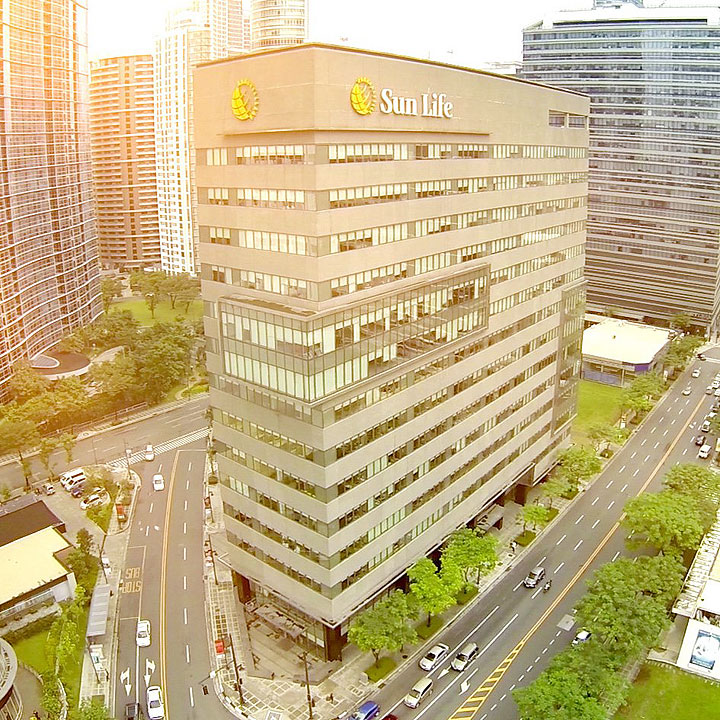
SUN LIFE of Canada (Philippines), Inc. launched a new offshore fund for its investment-linked life insurance products.

SUN LIFE of Canada (Philippines), Inc. launched a new offshore fund for its investment-linked life insurance products, tapping global financial markets for portfolio diversification and to generate long-term gains.

Sun Life Philippines said in a press release late Monday that the Global Opportunity Payout Fund will operate as a fund-of-funds and will invest mainly in a mix of foreign currency-denominated, income-generating, and capital-appreciating financial assets.

The fund can be availed for the following Sun Life investment-linked insurance products: Sun MaxiLink Dollar One, Sun FlexiDollar1, and Sun FlexiDollar, the insurer said.

“This new fund is suitable for clients with medium to long-term wealth accumulation goals such as preparing for retirement. They can stay financially secured with insurance and enjoy potential capital appreciation of their funds over time,” Sun Life Chief Marketing and Client Experience Officer Gilbert Simpao was quoted as saying in the statement. “The fund aims to provide regular cash payouts to our clients which will be given as long as the assets in the fund are able to support it.”

The cash payouts come from the gains generated via the income-paying assets of the fund.

Target assets of the fund include mutual funds and exchange-traded funds, as well as the bonds and other securities issued by the Philippines, the United States and other foreign governments and companies. It also targets investments in equity-linked securities.

“The Global Opportunity Payout Fund is a perfect complement to our existing roster of fund options for our investment-linked insurance products since it aims to provide an annual stream of cash flows and offers global diversification for clients,” Sun Life Philippines Investments Head Ivan Corcuera said.