Home Blog Page 710

Please pay attention

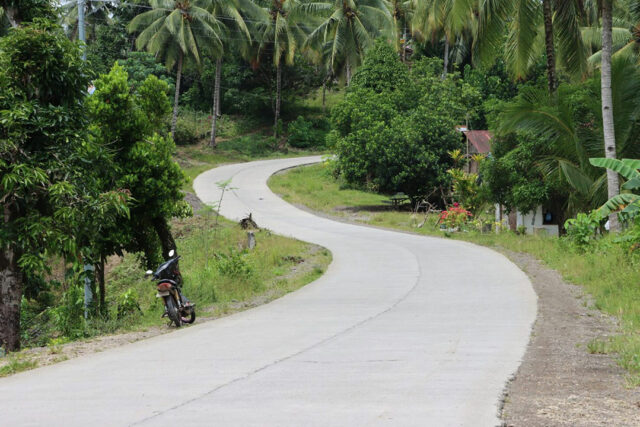
STOCK PHOTO | Image by SMKN 1 Gantar from Unsplash

ONE MEMORY from our younger years in school is that of the teacher’s admonition for us to “please pay attention.” The observed restlessness and inattention of children in the classroom show that they are distracted. They need to be brought back to the lessons at hand and stay focused.

It is seen as a sign of intelligence, or maybe just perseverance, both attributes helpful in his adult life, when a child exhibits a sustained attention span demonstrated by a quiet demeanor and even the taking down of notes. (How do you pronounce that, Sir?)

The opposite of this virtue of paying attention is deemed a learning disability, known as “attention deficit.” This is displayed in a child never completing an activity, whether it is reading or engaging in a video game. Getting easily distracted and moving restlessly from one unfinished task to another characterizes this condition.

A child’s ability to pay attention is seen as the key to discipline and getting good grades in school. Never mind if the subject and its delivery is boring. Attentive listening and quiet analysis of cause and effect are part of becoming a responsible person and a dependable colleague. Even later as an adult, the individual is bombarded by the plea to pay attention.

Putting the burden of paying attention on the listener, or “consumer,” can no longer be presumed.

Attention now needs to be earned. The challenge of the provider of information or seller of goods and ideas is how to deserve the attention of the consumer. The attention span is short and getting even shorter in the digital age.

The challenge to the supplier (or seller) of an opinion or a service is to keep the consumer’s attention engaged, and to establish this quickly.

Is it observation based on experiments that has established that the attention span of the most attractive market segment (age 18-25) is a mere six seconds? The compulsion to stay glued to some content offering must be immediately earned. The smartphone or tablet, the gadgets of choice nowadays, are equipped to zap out boredom with a swipe of the screen. (Time’s up. Next.)

Maybe this impatience with long-winded presentations has extended to higher age groups. The highest age segment is even prone to sleep even before a presentation starts. The oldies are asked to snore quietly.

Traditional media used to time the attention span of the target market of viewers and news readers on a crisis being covered. A maximum of seven days for a subject or personality staying on the front page above the fold for newspapers (Remember those?) had been established. After that some other topic shoves the previous one off to the inner pages then off the newspaper and TV altogether.

Has social media shortened the public’s attention span when it comes to a recurring topic like corruption and patronage politics? Are there new topics that now rattle the cage of attention seekers? The numbers in recent scandals are bigger. And there are more suitcases of cash involved.

There is some advantage in slowing things down and going back to the demand side of the “attention economy.” We need to stretch our attention span and keep the pressure going on some issues that continue to pop up on the radar screen of our social media.

In conversations over dinner, there is no pressure to keep anyone’s attention from drifting. (Please put down your phones and listen to me.) There are no slides or visuals to depend on for maximum attention, only hand gestures and expletives, maybe with some table-pounding. There may be some interruptions (get to the point) to move the table conversation along. No touch screen can switch this channel. Repetition is allowed. And leaving the dining table before dessert is impolite — I must make a call.

Normal conversation is not obliged to keep attention from straying. There is no six-second timer to change the subject.

What about public engagement and keeping track of social issues? Paying attention in this case requires giving up complacency and getting engaged in some advocacy to improve the social milieu and the economy.

When corruption scandals break out, there is always the question of how the crooks got away with their crimes for so many years. When they were amassing real estate and buying airplanes, was anybody paying attention?


Tony Samson is chairman and CEO of TOUCH xda

ar.samson@yahoo.com

CargoBoss Philippines aims to simplify imports for businesses

CARGOBOSS PHILIPPINES

CARGOBOSS PHILIPPINES said it aims to provide businesses with easier access to international imports through a system that simplifies logistics and reduces hidden costs.

“We want to make importing hassle-free and transparent,” the company said in a statement on Wednesday.

Entrepreneurs can avoid unexpected fees or lost shipments and focus on running their business, it added.

The company provides sea and air freight services with real-time SMS and e-mail tracking, serving thousands of Filipino entrepreneurs.

It operates five major warehouses across China and Hong Kong to move goods from suppliers to customers in the Philippines.

CargoBoss also runs “Importing 101” tutorials and shares free business tips to support small businesses. Its social media community of more than 500,000 followers features stories of entrepreneurs who have expanded from a single shipment.

“Each box represents someone’s dream,” CargoBoss said. “We see ourselves as partners in that journey.”

Recently, the company added door-to-door trucking services, providing a full-service logistics option for brands and online sellers. — Ashley Erika O. Jose

SC rejects appeal in fraud case vs RCBC officials

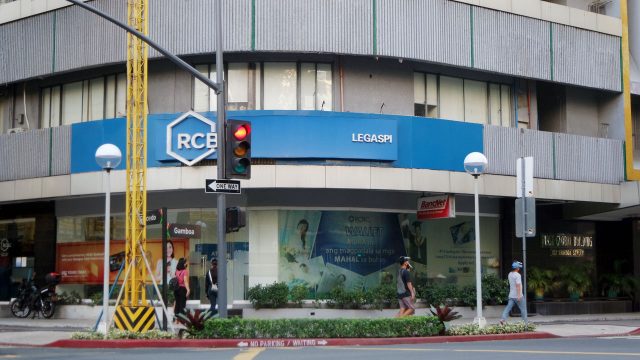
THE SUPREME COURT (SC) has denied the motion for reconsideration filed by a local foundation seeking to revive fraud accusations against current and former officials of Rizal Commercial Banking Corp. (RCBC).

RCBC told the stock exchange on Wednesday that on Nov. 18, it received a notice dated July 28, 2025, in which the high court dismissed the appeal of Inang Nag-Aaruga sa Anak Foundation.

The ruling upheld a 2023 Court of Appeals decision that rejected the group’s motion for partial reconsideration, finding no liability on the part of the RCBC officials.

The foundation had accused the respondents of unsafe or unsound banking practices after a dismissed RCBC branch manager allegedly ran away with millions of the group’s funds.

In 2020, the group named several incumbent and former RCBC personnel in a complaint filed before the BSP’s Office of the General Counsel and Legal Services-Investigation and Prosecution Group (OGLS-IPG).

The BSP’s OGLS-IPG dismissed the case in 2021 for lack of evidence. The foundation then sought reconsideration, which was also denied.

RCBC shares closed at P25, up 1.21% or 30 centavos. — A.M.C. Sy

Philippines falls in English proficiency ranking but still the second best among its peers in the region

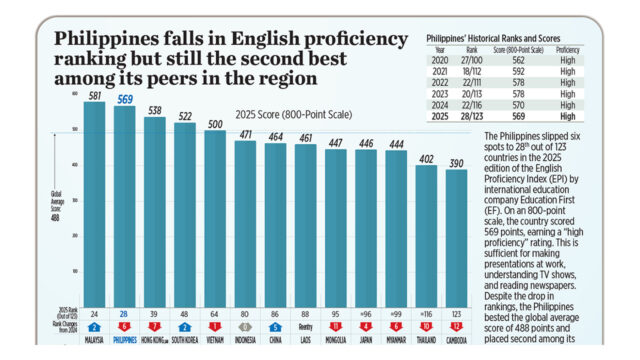
The Philippines slipped six spots to 28th out of 123 countries in the 2025 edition of the English Proficiency Index (EPI) by international education company Education First (EF). On an 800-point scale, the country scored 569 points, earning a “high proficiency” rating. This is sufficient for making presentations at work, understanding TV shows, and reading newspapers. Despite the drop in rankings, the Philippines bested the global average score of 488 points and placed second among its peers in the region, only behind Malaysia.

Philippines falls in English proficiency ranking but still the second best among its peers in the region

How PSEi member stocks performed — November 19, 2025

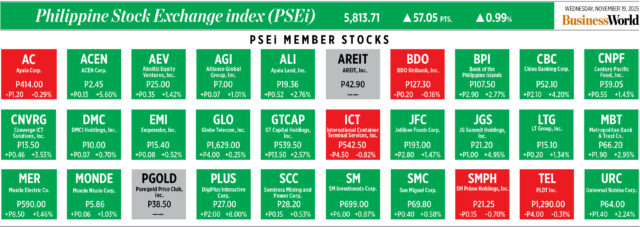
Here’s a quick glance at how PSEi stocks fared on Wednesday, November 19, 2025.


PSEi climbs as BSP signals possible rate cut

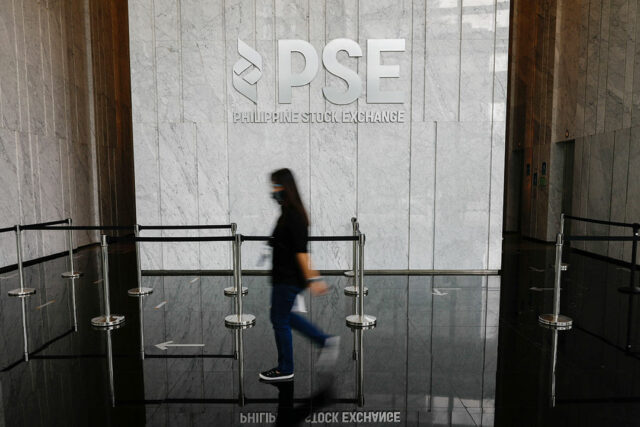
The lobby of the Philippine Stock Exchange in Taguig City, Sept. 30, 2020. — REUTERS

By Alexandria Grace C. Magno

PHILIPPINE STOCKS rose on Wednesday, bolstered by bargain-hunting and optimism that the Bangko Sentral ng Pilipinas (BSP) could cut policy rates in December, a move investors hope will support growth amid slowing domestic demand.

The Philippine Stock Exchange index (PSEi) added 0.99% or 57.05 points to close at 5,813.71, while the broader all-share index gained 0.62% or 20.29 points to 3,251.84.

“The local bourse ended higher, still driven by bargain-hunting,” Luis A. Limlingan, head of sales at Regina Capital Development Corp., said in a Viber message. “Moreover, investor sentiment improved after the BSP signaled the possibility of another rate cut by the end of the year. This expectation continued to support buying activity in today’s session.”

BSP Governor Eli M. Remolona, Jr. on Tuesday said a reduction at the Monetary Board’s Dec. 11 meeting is possible, likely in a modest 25-basis-point (bp) step.

The central bank has lowered borrowing costs by 175 bps since August 2024, bringing the benchmark rate to 4.75%, its lowest in over three years.

Cuts have been prompted by slowing economic growth, subdued inflation and weaker investor confidence following the flood control corruption scandal that dented business sentiment and domestic consumption.

“The market continued its slow climb, now at its short-term resistance as investors supported local equities, while waiting for Nvidia Corp. earnings, which could offer a glimpse of US equities’ future,” AP Securities, Inc. said in a market note.

US stocks fell, with major indexes dipping below a key technical level for the first time since April, amid caution ahead of retail and semiconductor earnings and a delayed job report.

Back home, most domestic sectoral indexes advanced. Financials rose 1.77% to 1,932.09; industrials jumped 1.55% to 8,517.88; holding firms gained 1.13% to 4,534.39; property added 0.43% to 2,118.71; and services edged up 0.07% to 2,362.88. Mining and oil fell 0.47% to 12,765.5.

Market breadth was positive with 112 advancers versus 61 decliners, while 67 stocks were unchanged.

Value turnover dipped slightly to P6.23 billion on 886.24 million shares, down from P6.67 billion on 1.15 billion shares on Tuesday. Net foreign selling eased to P915.4 million from P1.31 billion.

The PSEi’s modest rebound reflects growing investor optimism that further monetary easing could lower borrowing costs, support domestic consumption and stabilize business sentiment, even as uncertainties linger over global markets and domestic corruption issues continue to weigh on confidence.

Retailers still positive about sales during holidays

PHILIPPINE STAR/RYAN BALDEMOR

By Justine Irish D. Tabile, Reporter

THE Philippine Retailers Association (PRA) said it remains optimistic about its members’ sales prospects during the year-end holidays, even in the face of fears spending will be dampened by the corruption crisis.

PRA Chairman Roberto S. Claudio told BusinessWorld that retailers continue to expect sales growth of 10-15% over the full year.

“As the country navigates ongoing economic challenges, the PRA remains optimistic about the upcoming Christmas season — traditionally the busiest and most vibrant period for Philippine retail,” the group said in a statement.

“Despite headwinds, the resiliency and resourcefulness of Filipino consumers continue to anchor industry confidence,” it added.

It said the industry is counting on overseas Filipino worker remittances, which could have an outsized impact this year because of the peso’s weakness.

“We anticipate the influx of remittances, which historically boosts spending on value-for-money gifts, household needs, and personal purchases during the holidays,” PRA said.

“We encourage retailers nationwide to gear up with their strongest value offerings and prepare their teams, stores, and online channels for increased activity,” it added.

John Paolo R. Rivera, a senior research fellow at the Philippine Institute for Development Studies, said that he expects retailers “to see a moderate but positive Christmas season driven by strong remittances, holiday traditions, mall traffic, and demand for affordable gifts.”

“However, growth will be more cautious than robust as households deal with income losses from recent typhoons, high food prices, weaker confidence, and tighter credit conditions,” he said via Viber.

“Retailers offering discounts, value packs, and flexible payment options will benefit most, as consumers prioritize essentials while still finding room to celebrate,” he added.

Toby Allan C. Arce, head of sales trading at Globalinks Securities and Stocks, Inc., said his retail outlook for the end of the year is cautiously optimistic.

“Sales should receive a solid lift from traditional drivers like festive promotions, mall events, year-end bonuses and payouts, increased remittances from overseas Filipino workers, and heavy marketing pushback by brands that want to recoup lost ground after a weaker year,” he said via Viber.

“E-commerce and omnichannel tactics will likely capture a growing share of incremental demand, while experiential draws — pop-up stores, holiday activations, and partnership tie-ins — can drive foot traffic back into malls,” he added.

However, he said elevated inflation, declining consumer confidence, and logistical snags could dampen demand.

“Other risk factors include sharper income inequality that shifts spending toward value and discount channels, any abrupt policy or tax changes that affect retail margins, adverse weather events that limit mall access, and competitive discounting that erodes profitability even if volumes rise,” he added.

Yellow alert raised over Visayas grid

PHILIPPINE STAR/ANTHONY ABAD

THE VISAYAS was placed under yellow alert for five hours on Tuesday following outages at a number of power plants, according to the National Grid Corp. of the Philippines (NGCP).

In an advisory, the NGCP said it raised the yellow alert over the Visayas grid between 3 p.m. and 8 p.m.

Peak demand hit 2,351 megawatts (MW) while available capacity was 2,694 MW.

A total of 898.6 MW was unavailable to the grid as 16 power plants went on forced outage while 14 were running on derated capacity.

Contributing to the declaration of yellow alert was the unavailability of the 340-MW Toledo coal-fired power plant in Cebu.

The alert was also partly triggered by the emergency shutdown of Leyte Geothermal Power Plant Unit 3, bringing down the capacity of the facility from 79.5 MW to 39.3 MW.

The Luzon and Mindanao grids are normal, the NGCP said.

A yellow alert is issued when the operating margin is insufficient to meet the transmission grid’s contingency requirement. — Sheldeen Joy Talavera

PHL among regional leaders in fraudulent job offers — report

PHILIPPINE JOBSEEKERS are among the most vulnerable to fraudulent job offers in the Asia-Pacific, according to online employment company Jobstreet by SEEK.

SEEK’s fraud detection systems ranked jobseekers in the Philippines as the second-largest target of false job offers in the region, accounting for 20% of job fraud attempts in the Asia-Pacific.

Indonesia accounted for 38% of all job fraud attempts in the region, it said.

Around 1.96 million Filipinos were jobless in September, equivalent to a 3.8% unemployment rate, according to the Philippine Statistics Authority.

SEEK noted that scammers targeted job offers in the Philippines for jobs in accounting, sales, healthcare and medical, administration and office support, manufacturing, transportation, and logistics.

Across the region, false job ads were most common in administration and support roles, accounting for 22% of fraudulent offers, as these typically do not require specialized degrees or experience, according to Tom Rhind, head of trust & safety at SEEK.

“Combined, these entry-level categories create larger pools of potential victims and make it easier for scammers to cast wide nets with convincing-looking opportunities,” Mr. Rhind said.

Scammers have also been using artificial intelligence to create sophisticated job offers, it said.

Some also contact job candidates via messaging and social media platforms impersonating Jobstreet and SEEK personnel.

Jobstreet by SEEK said its measures against fraud focus on automated blocking, improved verification, and collaboration with government and industry partners.

The company added that it has been educating jobseekers on scams, unfair hiring practices, and online protection through its Security & Privacy Hub.

Job candidates in the region flagged 22,000 suspicious ads on Jobstreet by SEEK platforms, which have been reviewed by its Trust & Safety team.

“We encourage all hirers and job seekers to use legitimate job platforms to ensure that every connection leads to real opportunities,” Jobstreet by SEEK Managing Director in the Philippines Dannah Majaracon said.

Jobstreet by SEEK compiled its data from SEEK’s internal fraud-detection systems between July 2024 and June 2025 across its regional platforms, including Jobstreet and Jobsdb. — Beatriz Marie D. Cruz

Farm-to-market road costing to be overhauled, Senate told

DA.GOV.PH

THE Department of Agriculture (DA) is proposing to implement new cost benchmarks in budgeting for farm-to-market (FMR) roads, a Senator said during the DA’s budget deliberations.

“There’s going to be a recomputation of the cost,” Senator Francis Pancratius N. Pangilinan, said late Tuesday.

Mr. Pangilinan, who sponsored the DA’s budget in plenary, added that “there will be a menu and a range of costs per kilometer depending on terrain… elevation, location, and slope.”

Last month, the DA announced that it will take over the farm-to-market road program from the Department of Public Works and Highways, which is grappling with a broader corruption scandal in its infrastructure projects.

Transferring supervision of the FMR program to the DA expects to cut costs by at least 20% and accelerate construction. The DA hopes to construct about 131,000 kilometers of FMRs, with about 70,000 kilometers already built.

“Because of the flood control scandal, it was suggested and adopted by the DA, that the Farm-to-Market Road program will now be executed or implemented by the DA under the Bureau of Agriculture Fisheries Engineering (BAFE),” he added.

“Then this will be monitored more effectively,” he said.

The Senate Finance Committee has estimated that the government lost more than P10 billion due to the overpricing of FMRs in 2023 and 2024.

“The major considerations since coming up with the list of projects would be production area, number of farmers who will benefit, vulnerability of project site, current road condition, and connectivity linkages to the markets,” Mr. Pangilinan added.

The DA was allocated about P159.23 billion in the Senate’s version of the 2026 budget bill, against the P180.28 billion proposed in the House bill.

Trade deals boosting PHL imports more than exports, DEPDev says

ICTSI.COM

By Kenneth Christiane L. Basilio, Reporter

PHILIPPINE IMPORTS are outperforming exports after it signed a number of free trade agreements (FTAs), the Department of Economy, Planning, and Development (DEPDev) told the House of Representatives.

Richard Emerson D. Ballester, an assistant director with DEPDev’s Trade, Services and Industry office, said the Philippines is struggling to maximize its trade agreements as reflected in the low utilization rates for exports eligible for concessional trade terms.

As such, imports are likely benefitting more from improved market access than Philippine exports, he said.

“We want to increase our market access but the utilization is still low,” he said at a House of Representatives hearing.

In 2024, only 5% of Philippine exports benefited from the trade deal with Japan, compared to the 12.2% of Japanese goods entering the country, according to Mr. Ballester. Exports from the Philippines to the European Free Trade Association, bloc consisting of Iceland, Liechtenstein, Norway, and Switzerland, were similarly lopsided, with only 0.0005% utilization for Philippine products compared with 32.5% for goods going the other way.

Regional trade engagements also lagged, with 53.4% of imports benefitting from the ASEAN Trade in Goods Agreement compared with just 3.15% of exports. Under the ASEAN-Korea free trade agreement, import utilization was 10.51%, while exports accounted for only 0.29%.

The utilization rate for imports under the ASEAN-India Trade in Goods Agreement was 33.7% for imports and 0.17% for Philippine exports.

Around 47.21% of imports availed of benefits under the ASEAN-Australian-New Zealand FTA, with the corresponding rate at 0.21% for exports.

Under the ASEAN-Japan Comprehensive Economic Partnership Agreement, around 0.66% of imports enjoyed preferential access compared to 0.06% of exports.

Trade utilization data with the Philippines’ other trading partners were not available, Mr. Ballester said.

Also on Wednesday, a Trade official said the Department of Trade and Industry (DTI) received clearance to sign the free trade agreement with the United Arab Emirates (UAE) after the conclusion of negotiations.

“We are just waiting from the UAE side for this to be signed and then this will go into ratification,” Marie Sherylyn D. Aquia, a DTI director for international trade relations, said at the same hearing.

The UAE is the Philippines’ 18th largest trading partner and is its top export market in the Gulf Cooperation Council. The top Philippine exports to the UAE include electrical equipment, food products, iron and steel, mineral fuels and machinery.

Both countries began talks for their Comprehensive Economic Partnership Agreement in February 2022. Once signed, it would be the Philippines’ first FTA in the Middle East.

Philippines slips 12 spots in climate performance rank

PHILIPPINE STAR/KRIZ JOHN ROSALES/PPA POOL

By Vonn Andrei E. Villamiel

THE PHILIPPINES dropped 12 spots to 19th in the 2026 Climate Change Performance Index (CCPI) as weak renewable energy expansion and soft climate policies offset its strong record on greenhouse gas emissions and energy use.

The annual index, published by Germanwatch, NewClimate Institute, and Climate Action Network, ranks the climate mitigation performances of 63 countries and the European Union, which collectively account for 90% of global greenhouse gas emissions. The index looks at the progress in emissions, renewables, energy use, and climate policies.

The Philippines, which ranked 7th in the previous edition, slipped to a “medium” performance rating, overtaken by countries that advanced more rapidly in deploying clean energy and firming up climate policies. Despite the drop, the Philippines outperformed its peers in Southeast Asia with an overall score of 62.78, highest in the region.

The top three spots in the ranking remain empty as the authors noted that “no country is doing enough to prevent dangerous climate change.” Denmark again received the top ranking at fourth place, followed by the UK, Morocco, Chile and Luxembourg. Fossil fuel suppliers Saudi Arabia, Iran, the US and Russia were at the bottom of the table.

While the Philippines is often cited as a vocal advocate for climate-vulnerable nations, the CCPI gave the country a weak grade on national climate policy and a medium rating in international climate policy.

Jose Enrique A. Africa, executive director at think tank IBON Foundation, told BusinessWorld via Viber that while the Philippines is vocal about vulnerability, adaptation, and climate justice, there is “really not much real action to see.”

“The CCPI’s international-policy score presumably also assesses how the government translates international talk into domestic practice — and the Philippines isn’t really showing large-scale and consistent domestic reforms nor, actually, correspondingly credible international engagements,” Mr. Africa said.

He added that a major portion of the Philippines’ climate-mitigation budget under the Marcos administration is being poured into “corruption-ridden flood control projects.”

Climate advocacy organization Aksyon Klima Pilipinas (AKP) recently reported that the Philippines’ climate strategy is infrastructure-heavy, with the majority of its climate-mitigation budget over the past five years going to flood control and drainage projects.

“More public funds should go towards environmental protection and conservation, and genuine climate action, especially nature-based solutions. They are more cost-effective and even have co-benefits,” AKP National Coordinator John Leo Algo, who also contributed to the CCPI’s climate policy evaluation, said in a briefing last week.

According to the CCPI, only five of the 63 countries assessed earned a “high” overall rating for climate policy, while 41 countries received “low” or “very low” scores.

“Despite some visible achievements, current climate targets and their implementation are still not at a sufficient pace to keep global warming below 1.5°C. Most countries now have climate policies in place, though their effectiveness varies,” the report said.

Renewable energy also remains a major weak spot for the Philippines. According to the Department of Energy (DoE), renewables accounted for about 26% of the energy mix in 2023, with the government targeting a 35% share by 2030, based on the Philippine Energy Plan for 2023 to 2050.

While renewable energy capacity has increased in recent years, the index shows that the overall share of renewables in the Philippines is still low. The country’s 2030 targets also fall short of levels that will allow it to hit the Paris Agreement goal of limiting the rise in global temperatures to well below 2°C, preferably 1.5°C, above pre-industrial levels.

Meanwhile, the Philippines continues to perform well in terms of greenhouse gas emissions, with the index reporting relatively low per-capita levels.

The Philippines also scored well on energy use, with lower per-capita consumption than more industrialized economies. The report also found that the Philippines’ energy use trends and targets are in line with the pathways that will limit warming to well below 2°C.

Mr. Africa said the Philippines seems to do well in emissions and energy-use metrics “simply because of our economic backwardness.”

“Measured by GDP per capita, the country is still among the poorest one-third globally with correspondingly moderate per-capita emissions,“ he said.

To improve its climate change performance, Mr. Africa said the Philippines should scale up public investment in the green transition, especially in renewable energy, grid modernization, and energy storage.

“There has to be a stronger push to phase out fossil-fuel infrastructure with strengthened regulatory agencies resistant to corporate capture. Decentralized renewable generation, micro-grids, and community energy systems in remote islands to reduce vulnerability and accelerate deployment are long overdue,” Mr. Africa said.

He added that climate policy must be integrated with social development by linking climate action to labor policy, social protection, inclusive rural electrification, equitable energy access, and retraining displaced workers who depended on fossil fuel-heavy jobs.

The 30th United Nations Climate Change Conference (COP30) is entering its second week in Belém, Brazil, where countries are negotiating stronger climate action and mobilizing climate finance for vulnerable nations.

The Philippines, consistently ranked among the world’s most climate-vulnerable countries, hosts the board of the Fund for Responding to Loss and Damage, a newly established financing mechanism that provides grants to developing nations to address the impact of climate-related disasters.