Home Blog Page 705

SM Prime to open redeveloped Iloilo markets this month

SM Engineering Design and Development President Hans Sy, Jr. and Iloilo City Mayor Raisa Treñas-Chu speak with a vendor as guests look on. -- SM Prime Holdings, Inc.

SM Prime Holdings, Inc. is set to open the redeveloped SM Iloilo Terminal Market and SM Iloilo Central Market this November, following a P3-billion redevelopment project aimed at expanding capacity for local vendors and supporting micro, small, and medium enterprises (MSMEs).

“We soft opened a couple of weeks ago, and it will be fully operational by end of this month, November,” SM Supermalls President Stephen T. Tan said during a briefing on Monday.

Under a public-private partnership signed with the Iloilo City government in August 2022, SM Prime redeveloped the Central Market (also known as Tienda Mayor) and Terminal (or Super) Market, breaking ground in 2023. The combined redevelopment covers a total gross floor area of 62,000 square meters (sq.m.).

“This is not actually a business move or an expansion program. This is just a natural extension or progression because of our commitment to MSME development,” SM Prime President Jeffrey C. Lim said.

“This is really more to support Filipino entrepreneurs, which is part of how we do business and as we move towards the provincial areas, so we can create shared growth between us and the SMEs,” he added.

The SM Iloilo Terminal Market spans 20,000 sq.m., offering 58 long-term leasable spaces, while its expanded market section can accommodate 1,160 vendors, up from 911 previously. The 17,000-sq.m. SM Iloilo Central Market has 61 long-term leasable spaces and dining areas for local dishes, with capacity for 859 vendors, up from 529.

“If you look at the tenant mix of the public market, it’s completely different from that of the mall. It’s really to encourage small businesses to do business,” Mr. Tan said.

About 99.63% of all businesses in the Philippines are MSMEs, with 4.26% located in the Western Visayas region. The redevelopment was completed at no cost to the city, and the markets will be managed by the city’s Local Economic Enterprise Office to maintain their public character.

SM Prime noted that the modernization is also expected to boost local cuisine offerings.

The company posted an 8% year-on-year increase in its third-quarter net income to P12.8 billion from P11.8 billion, driven by higher contributions from its malls, hotel, and convention center businesses.

On Thursday, SM Prime closed at P19.42, down 0.04 or 0.21%. — Beatriz Marie D. Cruz

Experts say Filipino youth struggle with financial inclusion, literacy

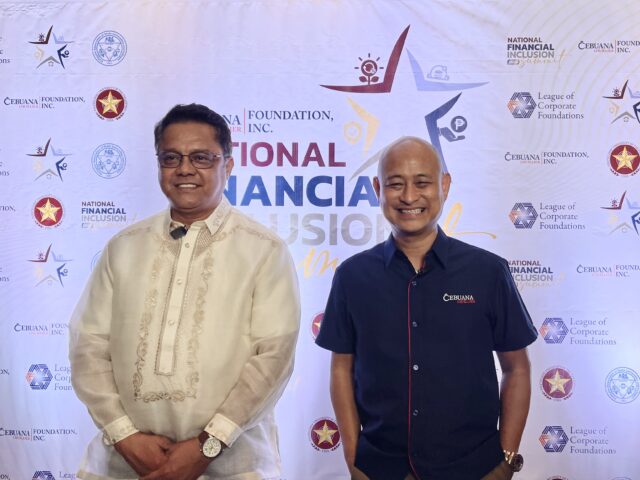
Polytechnic University of the Philippines (PUP) President Manuel M. Muhi and Cebuana Lhuillier Foundation, Inc. Executive Director Jonathan D. Batangan at the National Financial Inclusion Summit 2025.—ALMIRA S. MARTINEZ

Cebuana Lhuillier Foundation, Inc. (CLFI) on Thursday raised concerns over the lack of financial inclusion among Filipino youth, stemming from poor financial literacy.

“BSP’s (Bangko Sentral ng Pilipinas) record is showing that only 27% of the youth aged from 15 to 19 are financially included,” CLFI Executive Director Jonathan D. Batangan told reporters at the sidelines of an event.

“It should not be 27% only. In a matter of one or two years, we hope to increase the number of financially included youth,” he added.

Polytechnic University of the Philippines (PUP) President Manuel M. Muhi echoed the same concern, underscoring the “millions” of Filipino youth excluded from the formal financial system.

“Many still do not have access to basic financial services such as savings accounts, insurance, or digital payment platforms,” he said in his speech. “Without financial access, opportunities are delayed, dreams are deferred, and progress becomes uneven.”

“We believe that financial literacy and access are just as transformative as a diploma,” he added.

In 2024, CLFI first launched the financial literacy module for Grade 12 students at the University of Makati (UMak). The self-paced five modules, which take about five days to finish, cover topics such as personal finance, microinsurance, microinvestment, microloans, cash transfers, and green and digital finance.

“It’s a self-paced, downloadable program which is actually at the own pace of the students and they can, at the end of the day, get a certification,” Mr. Batangan said.

“They will have a certificate for being financially literate. It adds to the prestigious reputation of the graduating student,” he added.

In partnership with PUP and the Philippine Association of State Universities and Colleges (PASUC), the CLFI aims to expand its financial literacy program to SUC students to help produce approximately two million financially literate graduates.

“We hope the members of the Philippine Association of State Colleges and Universities, of course, PUP being also a member, can be able to trickle this down to almost 120 SUCs (state universities and colleges),” Mr. Batangan said.

“We’re starting with SUCs (state universities and colleges) because these are the students who came from the marginalized sector; they’re the ones we need to teach financial literacy,” he added.

A 2024 report by consumer insights company Inquiro found that the Philippines’ financial literacy rates remain low, with about 25% of Filipinos understanding basic financial concepts.

The report added that although the country’s literacy has increased by around 5% since 2020, it still lags behind other Southeast Asian countries, such as Malaysia and Singapore, where literacy rates exceed 50%.— Almira Louise S. Martinez

BBC apologizes to Trump over speech edit but rejects defamation claim

The BBC logo on The Forum, Norwich. — WIKIMEDIA COMMONS/SEBASTIAN DOE, VIA CC BY-SA 4.0

LONDON — The British Broadcasting Corporation sent a personal apology to US President Donald Trump on Thursday but said there was no legal basis for him to sue the public broadcaster over a documentary his lawyers called defamatory.

The documentary, which aired on the BBC’s “Panorama” news program just before the US presidential election in 2024, spliced together three parts of Mr. Trump’s speech on January 6, 2021, when his supporters stormed the Capitol. The edit created the impression he had called for violence.

“While the BBC sincerely regrets the manner in which the video clip was edited, we strongly disagree there is a basis for a defamation claim,” the broadcaster said in a statement.

Lawyers for the US president threatened on Sunday to sue the BBC for damages of up to $1 billion unless it withdrew the documentary, apologized to the president, and compensated him for “financial and reputational harm.”

By asserting that Mr. Trump’s defamation case lacks merit, the BBC effectively signaled that it believes his claim for financial damages is equally untenable. But the broadcaster did not directly address Mr. Trump’s financial demand.

In its statement, the BBC said Chair Samir Shah on Thursday “sent a personal letter to the White House making clear that he and the corporation were sorry for the edit.” Mr. Shah earlier in the week apologized to a British parliamentary oversight committee and said the edit was “an error of judgement.”

In the Thursday statement, the BBC added that it has no plans to rebroadcast the documentary on any of its platforms.

Earlier on Thursday, the BBC said it was looking into fresh allegations, published in The Telegraph newspaper, over the editing by another of its programs, “Newsnight,” of the same speech.

The BBC has been thrown into its biggest crisis in decades after two senior executives resigned amid allegations of bias, including about the edit of Mr. Trump’s speech. The claims came to light because of a leaked report by a BBC standards official.

Founded in 1922 and funded largely by a license fee paid by TV-watching Britons, the BBC is without a permanent leader as the government weighs how it should be funded in the future.

It is a vital instrument of Britain’s “soft power” globally, and Prime Minister Keir Starmer said he believed in a “strong and independent” BBC on Wednesday. — Reuters

Deadly heat worldwide prompts $300 million for climate health research at COP30

PHILSTAR FILE PHOTO

BELEM — With more than a half-million people worldwide dying from heat-related causes every year, a group of philanthropies is putting $300 million into developing life-saving solutions as global temperatures continue to rise.

The money, announced this week at the COP30 climate negotiations in Brazil, is aimed at developing data and figuring out the best investments for tackling rising risks from extreme heat, air pollution, and infectious disease.

“We are a philanthropy. We can’t just keep plugging holes and resuscitating a dying model of development,” said Estelle Willie, the director of health policy and communications at The Rockefeller Foundation, one of the funders.

“So what we are trying to do is through our philanthropy capital, we can start testing and validating new solutions through this work and coming together,” she said.

Separately, COP30 host Brazil launched an initiative called the Belem Health Action Plan to encourage countries to monitor and coordinate climate-related health policy across their various ministries and departments.

That effort is part of Brazil’s broader focus at the UN climate talks on bolstering countries’ ability to prepare for – and adapt to – worsening climate impacts including floods, fires, drought, storms, and hurricanes.

The newly pledged $300 million adds to the $1 billion-$2 billion being spent in public money toward researching climate-related health impacts, according to a 2023 study in PLOS journal.

Experts said far more is still needed.

“Progress on health is declining,” Ms. Willie said in an interview with Reuters. “We’ve had hard-fought wins in health through technology, through the global health system. But climate change is literally making every single problem and global health worse right now.”

An October report in The Lancet scientific journal estimates the yearly number of deaths from heat-related causes worsened by climate change at nearly 550,000.

Another 150,000 annual deaths can be linked to air pollution, often from the burning of fossil fuels but also from worsening wildfires, the report said, while some infectious diseases are also rising. Reported cases of dengue fever are also up 49% since the 1950s, it said.

UN agencies in August estimated about half the world’s population, or more than 3.3 billion people, are already struggling with the rising heat.

“The warnings from scientists on climate change have become reality. And it is clear that not all people are affected equally,” said John-Arne Røttingen, chief executive of the Wellcome Trust, another funder.

The most vulnerable are children, pregnant women, older people, and outdoor workers, along with “those communities with the least resources to respond,” he said.

Other funders in the newly announced Climate and Health Funders Coalition include the Gates Foundation, Bloomberg Philanthropies, and IKEA Foundation. Another 27 philanthropies have signed on but have yet to commit funds. — Reuters

Marcos vows to ramp up spending

President Ferdinand R. Marcos, Jr. speaks during a press conference held at the Presidential Broadcast Studio, Kalayaan Building, Malacañan Palace on Nov. 13. -- Noel B. Pabalate, The Philippine Star

PHILIPPINE President Ferdinand R. Marcos, Jr. on Thursday pledged to ramp up government spending in the fourth quarter, as a corruption scandal contributed to weaker-than-expected growth in the third quarter.

“We have implemented many measures because public spending will now be increased to make sure that by the end of the year, the spending levels are aligned with our original plan — so we can recover what was lost in the third quarter,” Mr. Marcos said in mixed English and Filipino during a press briefing in Malacañang.

The Department of Budget and Management (DBM) earlier said it has programmed P1.31 trillion for disbursement during the October-to-December period to boost economic growth.

In the third quarter, the Philippine gross domestic product (GDP) growth slowed to a four-year low of 4% from the 5.5% expansion in the second quarter and 5.2% a year ago.

The sharp economic slowdown was mainly attributed to the corruption mess that dampened government spending and affected consumer and investor confidence.

For the first nine months of the year, GDP growth averaged 5%, slower than 5.9% in the same period last year, and below the government’s 5.5-6.5% full-year target.

The government is probing a multibillion-peso corruption scandal involving public works projects, where government officials allegedly colluded with private contractors to inflate costs and approve ghost infrastructure. It has affected investor confidence in the Philippines, weighing on the stock market and the Philippine peso.

Mr. Marcos vowed to put the culprits behind bars before Christmastime.

“They won’t have a Merry Christmas. Before Christmas, they will be jailed,” he said.

Mr. Marcos said the slowdown in economic activity in the third quarter can be partly blamed on the string of typhoons.

“There really was a downturn in economic activity. You have to remember that it’s not only because of these problems. Because of the typhoons, we lost working days in the economy,” he said.

Mr. Marcos also attributed the slower growth to the trade uncertainties, which are also affecting the global economy.

“We are not the only ones suffering the shocks that come from the new trade structure that has been imposed on the rest of the world. And so, we are all adjusting to that,” he added.

Since Aug. 7, the US has imposed a 19% duty on many goods from the Philippines, Cambodia, Malaysia, Thailand and Indonesia.

DBCC TO REVIEW TARGETS

Meanwhile, the Development Budget Coordination Committee (DBCC) is set to review its macroeconomic assumptions and targets next week, Senate Committee on Finance Chairman Sherwin T. Gatchalian said.

During the plenary debates for the 2026 national budget, Mr. Gatchalian said he is certain there will be revision in the growth targets.

“Next week the DBCC will once again meet and talk about this, possibly a revision in terms of our 2025 economic growth, and also the succeeding years 2025-2028,” Mr. Gatchalian said.

This was in response to Senator Risa N. Hontiveros-Baraquel’s question if the weak third-quarter growth will prompt a revision of the DBCC targets.

“We will also have a slightly lower economic growth forecast for the end of the year, about… 4.7-5%, Mr. President. And then our debt to GDP will still be at 63%,” Mr. Gatchalian said.

In June, the DBCC tempered its growth forecast to 5.5-6.5% for 2025 and 6-7% for 2026, mainly due to “heightened global uncertainties” arising from the Middle East conflict and US tariffs.

Mr. Gatchalian said there are a lot of factors that have affected the growth outlook, such as the series of typhoons and recent earthquakes.

Last week, Economy Secretary Arsenio M. Balisacan warned that hitting the low end of the 5.5-6.5% growth target would be “very challenging,” with more storms expected this quarter.

For next year, Mr. Gatchalian flagged external headwinds such as US trade policies that will have a negative impact on growth.

At the same time, Mr. Gatchalian said restoring public trust requires accountability, stressing that those involved in the flood control corruption scandal must face charges and be jailed before yearend.

“That’s why all of this flood control issue is giving us a lot of headache in terms of outgrowing debt. But still, that’s why the administration is really bent on holding people to account by putting them to jail, and that will bring back confidence and in turn revive our economic growth in the next quarter,” he said.

Filomeno S. Sta. Ana III, coordinator of Action for Economic Reforms, said the slowdown in economic growth is also due to the government’s lack of a “coherent” growth strategy.

“The main reason why our GDP growth is below target is that the current administration does not have a coherent growth strategy, and worse has allowed or enabled policies and activities that undermine growth (diversion of pub-lic funds to Maharlika, revenue-eroding measures, transfer of PDIC (Philippine Deposit Insurance Corp.) and PhilHealth (Philippine Health Insurance Corp.) funds to National Government, ‘most corrupt budget,’ massive corruption, etc,” he said in a Viber message. — Chloe Mari A. Hufana and Aubrey Rose A. Inosante


Approved investment pledges plunge 49% in Q3

US one-dollar banknotes are seen in this illustration taken on Feb. 8, 2021. -- REUTERS/Dado Ruvic/Illustration/File Photo

APPROVED foreign investment pledges plunged nearly 50% in the third quarter as investor sentiment soured due to the corruption scandal involving government infrastructure projects, the local statistics agency said.

Preliminary data from the Philippine Statistics Authority (PSA) showed the value of foreign commitments approved by investment promotion agencies (IPAs) fell by 48.7% to P73.68 billion in the July-to-September period from P143.74 billion in same period last year.

However, this was the highest amount of investment pledges since the third quarter of 2024.

Ser Percival K. Peña-Reyes, director of the Ateneo Center for Economic Research and Development, said the decline in approved investments can be attributed to the weaker investor sentiment.

“Tingin ko. Wala pang nakukulong eh (I think so. No one has been imprisoned yet),” he said in a Viber message, when asked if this sharp slump in approved investments will likely persist in the fourth quarter until 2026.

Quarter on quarter, the approved pledges rose by 9.34% from P67.38 billion in the second quarter.

Singapore was the top source of foreign investment pledges in the third quarter with P20.26 billion (27.5%), followed by Japan with P13.59 billion (18.4%) and Cayman Islands with P13.14 billion (17.8%).

Investment commitments from South Korea stood at P5.57 billion (7.6%), while those from China stood at P4.51 billion (6.1%)

PSA data showed the investment pledges were approved by seven IPAs — the Authority of the Freeport Area of Bataan, Bases Conversion and Development Authority (BCDA), Board of Investments (BoI), Clark Development Corp., Clark International Airport Corp., Philippine Economic Zone Authority (PEZA), and Subic Bay Metropolitan Authority.

The PEZA approved foreign investment pledges worth P47.29 billion, accounting for the bulk or 64.2% of the total in the third quarter.

Meanwhile, BoI approved P20.22 billion worth of pledges (27.4% share), followed by BCDA with P5.1 billion (6.9% share).

In the July-to-September period, the Bangsamoro Board of Investments, Cagayan Economic Zone Authority, John Hay Management Corp., the Poro Point Management Corp., Tourism Infrastructure and Enterprise Zone Authority, and Zamboanga City Special Economic Zone Authority did not approve any investment pledges.

In addition, the PSA said about 49% or P36.12 billion of the approved foreign investments will go to the manufacturing industry, while 24.4% or P17.98 billion will be invested in the electricity, gas, steam and air-conditioning supply sector.

The real estate sector cornered P11.86 billion or about 16.1% of the total pledges.

By region, Calabarzon received P28.23 billion or 38.3% of investment pledges, followed by Central Luzon with P16.42 billion (22.3% share) and Bicol Region with P13.03 billion (17.7% share).

Meanwhile, the PSA said investment pledges from both foreign and Filipino nationals in the third quarter fell by 36.1% to P343.77 billion from the P538.36 billion a year earlier.

Of the total, Filipino nationals contributed P270.1 billion or 78.6% of investment pledges.

This brought total approved investments to P343.77 billion, down 36.1% year on year.

If these materialize, around 27,605 jobs are expected to be created from these investments.

The PSA data on foreign investment commitments, which may materialize in the near future, differ from actual foreign direct investments tracked by the Bangko Sentral ng Pilipinas for the balance of payments. The central bank’s monitoring goes beyond the projects and includes other items such as reinvested earnings and lending to Philippine units via their debt instruments. — Aubrey Rose A. Inosante

Finance Usec. Mendoza takes over BIR

New Bureau of Internal Revenue Commissioner Charlito Martin “Charlie” R. Mendoza took his oath of office before President Ferdinand R. Marcos, Jr. at the study room of Malacañan Palace, Nov. 13. -- Presidential Communica-tion Office

By Chloe Mari A. Hufana, Reporter

PRESIDENT Ferdinand R. Marcos, Jr. has appointed Finance Undersecretary Charlito Martin R. Mendoza as the new commissioner of the Bureau of Internal Revenue (BIR), replacing Romeo D. Lumagui, Jr., as the agency struggles to meet its 2025 revenue collection target.

In a Viber chat to reporters on Wednesday evening, acting Press Secretary Dave M. Gomez confirmed the change within the agency but did not elaborate further.

Mr. Mendoza took his oath of office before Mr. Marcos at Malacañan Palace on Thursday morning.

Finance Secretary Ralph G. Recto on Thursday expressed confidence the BIR will exceed its revenue targets under Mr. Mendoza, who was undersecretary of the Department of Finance (DoF).

“I trust that under (Mendoza’s) leadership, the BIR will meet and even exceed our revenue targets. Above all, I trust that he will always keep the well-being of our taxpayers at the heart of all your efforts,” Mr. Recto said in a statement on Thursday.

Mr. Recto called the new BIR chief a “steady hand and reform-driven leader,” citing his prior roles as Finance undersecretary since April 2024.

As undersecretary, Mr. Mendoza headed the Finance department’s Revenue Operations Group, working closely with the BIR and the Bureau of Customs (BoC).

He previously served as district collector of the BoC Port of Cebu from July 2019 to October 2022. Under his leadership, the port achieved record-breaking revenue collections and notable milestones in border protection, according to an April 2024 statement from the DoF.

He also steered the Port of Cebu to become the first Customs collection district in the country to have its main port and all subports ISO 9001:2015 certified.

Prior to joining the government, Mr. Mendoza built a legal career as a founding partner of the Palafox Patriarca Romero and Mendoza Law Firm.

He previously worked as an associate lawyer at the Angara Abello Concepcion Regala and Cruz Law Offices and the Suarez and Narvasa Law Firm.

Mr. Mendoza placed third in the 2004 Philippine Bar Examinations after earning his Bachelor of Laws degree from San Beda University. He also holds a degree in Geodetic Engineering from the University of the Philippines and is a licensed Geodetic Engineer.

The new BIR chief’s appointment comes as Mr. Lumagui earlier this week said the agency may fall short of its P3.219-trillion collection target for 2025.

“The overall performance is low… so there’s a need to recalibrate or recalculate the entire goal,” Mr. Lumagui told BusinessWorld in an interview in mixed English and Filipino on Nov. 11. “As things stand, it’s going to be quite difficult.”

The latest Treasury data showed that BIR collections jumped by 10.88% to P2.32 trillion in the first nine months of the year. However, this was 2.63% lower than the programmed P2.38 trillion for the January-to-September period.

The BIR, the main revenue collection agency, needs to collect around P897 billion to reach the P3.219-trillion full-year program.

Mr. Lumagui was a BIR deputy commissioner when the President’s term started in 2022, but was promoted as BIR chief in November 2022.

Mr. Recto said Mr. Lumagui was a “great partner” and a “fearless leader” that made a stronger and more credible BIR.

Rizal Commercial Banking Corp. Chief Economist Michael L. Ricafort said the leadership change highlighted the need for the government to boost tax collections to fund its budget deficit and key programs that promote inclusive growth and poverty reduction.

“This is also part of the fiscal reform measures to further improve overall fiscal and debt management over the long-term and for the coming generations,” Mr. Ricafort said. — with Aubrey Rose A. Inosante

SEIPI urges gov’t to help sector as it loses competitiveness

Semiconductor chips are seen on a circuit board of a computer in this illustration picture. — REUTERS/FLORENCE LO/ILLUSTRATION

By Justine Irish D. Tabile, Reporter

THE Semiconductor and Electronics Industries in the Philippines Foundation, Inc. (SEIPI) is seeking government support for the sector as it loses its competitiveness amid new US trade deals with Southeast Asian neighbors.

SEIPI President Danilo C. Lachica said the Philippines lost its edge when the US reciprocal tariff rates on other electronics exporter-countries were lowered.

“What you’re up against is the power cost, the logistics cost, the water cost, and the aggressiveness of the government,” he told BusinessWorld on the sidelines of the PASIAWORLD 2025 Annual Supply Chain Conference on Thursday.

“Our edge was the reciprocal tariff. But now, it’s a level playing field in terms of the tariff,” he added.

In August, the US began imposing a 19% tariff on most goods from the Philippines, Malaysia and Thailand, while a 20% tariff is charged on Vietnam.

Asked if the final agreements between the US and other members of the Association of Southeast Asian Nations (ASEAN) could further impact the competitiveness of the country, he said that it will remain “business as usual” until new rates are announced for the Philippines.

“Well, what we tell our (SEIPI) members for now is to take that as gospel truth. For now, that’s our reciprocal tariff. If that changes because of the US Supreme Court decision that challenges its legality, or Trump announces a new tariff, then we respond,” he said.

“You can’t afford to have analysis paralysis, and you will not do anything. So, just do your normal business,” he added.

For now, semiconductors and some electronics manufacturing services products are exempt from the reciprocal tariff.

“Am I secure with our 0% tariff for now? Yes, but I’m not going to hold my breath. Like I said, it just depends on how the wind blows in Washington, DC, but we’ll see,” he said.

“I think by the first or second quarter we should have some resolution there, and hopefully it’s favorable for the Philippines,” he added.

However, he said that there is a need for the Philippines to find new markets for its exports amid the US reciprocal tariff.

“We really need to look at new markets… whether it is ASEAN, African, or European. Especially in Europe, not many have heard of the capabilities of the Philippines,” he said.

“The interesting thing is, Latin American countries like Panama are inquiring, and Canada is also inquiring, so we really have to diversify our markets,” he added.

Mr. Lachica said that the Philippines must already establish its own wafer fabrication facility to remain competitive.

“If we don’t do this, we are probably just going to compete with Timor-Leste or Laos, while our more advanced neighbors are still going to grow their semiconductor and electronics industry,” he said.

Despite the challenges faced by the sector, he said recent trade numbers show the possibility that the exports of semiconductors and electronics will have modest growth.

“It’s becoming clearer that we will exceed flat growth. You would be pleasantly surprised. It is doing better than we expected,” he said. “What is driving it is artificial intelligence and the internet of things, so it is really advanced technology.”

In the first nine months, the country exported $33.52 billion worth of electronic products, up 9.5% from $30.6 billion a year prior.

Meanwhile, Mr. Lachica said that the corruption scandal has been sending a bad signal to multinational companies.

“As you know, multinationals don’t tolerate that kind of problem. If ever there’s anything uncovered, they fire the executive,” he said.

In particular, Mr. Lachica said some companies are seeking assurance from local partners on how they can be shielded from the effects of corruption.

“There is interest. Continuous? I hope. Significant? I hope. But there are also major concerns,” he added.

Mr. Lachica said businesses want to see the results of the Independent Commission for Infrastructure’s (ICI) probe on the alleged graft and corruption in government projects.

“The problem is, the ICI investigation has been going on for months, but no one is convicted. The credibility and sense of urgency, I don’t see it. I hope we get some conviction soon because it sends a bad message,” he said.

MPIC, Villar group in initial talks for PrimeWater deal

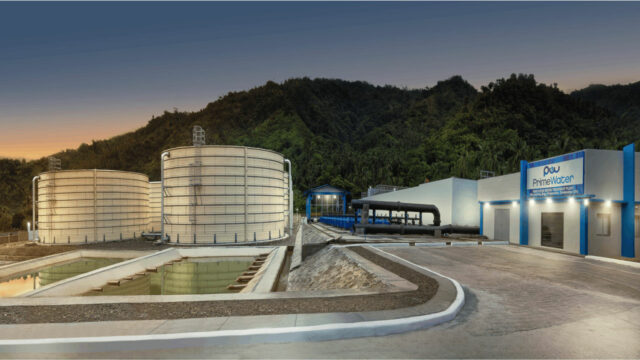
PRIMEWATERCORP.COM

HONG KONG — Metro Pacific Investments Corp. (MPIC) has started evaluating the potential acquisition of Villar-led PrimeWater Infrastructure Corp., as it reviews the company’s operations and financials.

“We signed the NDA (non-disclosure agreement) with them. They have opened up the data room to us. We are getting initial feedback from the preliminary analysis on the numbers they have provided us,” MPIC Chairman, President, and Chief Executive Officer Manuel V. Pangilinan said during the company’s briefing in Hong Kong on Thursday.

Mr. Pangilinan said the company is still conducting first-stage analysis and will likely need another week to frame an offer.

“Nothing is finalized yet. We are at the beginning of the process,” he added.

MPIC is taking a cautious approach, considering how to structure a potential acquisition, he noted. “I think they have about 70 to 80 properties all over the Philippines, and some are small, some are big. We do not know the approach yet, whether we will bid for only certain of the properties that are large enough to give us profitability, or whether they will insist that we acquire the entire thing.”

MPIC already has a significant presence in the water sector through Metro Pacific Water (MPW), its water infrastructure investment arm, and Maynilad Water Services, Inc., which serves the West Zone of Metro Manila under a government concession.

PrimeWater, a subsidiary of Prime Asset Ventures, Inc., serves over 1.7 million households and supplies about 500 million liters of water per day across more than 100 partnered water districts nationwide. Its operations span multiple provinces, including Bulacan, Batangas, and Laguna. The company is owned by Manuel Paolo A. Villar, the eldest of the Villar siblings.

On PrimeWater’s debt level, Mr. Pangilinan said no valuations have been discussed yet. “We haven’t discussed how to deal with those debts, so no valuations have been indicated by us to them. We are looking, and I think if it works for us, if it’s commercially feasible, then obviously we will take a look at it more seriously,” he said.

Sought for comment, China Bank Capital Corp. Managing Director Juan Paolo E. Colet said the acquisition could turn out to be a profitable water services business for MPIC. “Depending on the final numbers and terms… just like what they did for Maynilad, they could turn this into a successful investment,” he said.

President Ferdinand R. Marcos, Jr. earlier directed the Local Water Utilities Administration, which supervises more than 500 water districts nationwide, to investigate consumer complaints against PrimeWater. The probe covers the company’s 73 joint venture agreements with local water districts.

MPIC is one of the three key Philippine units of Hong Kong-based First Pacific Co. Ltd., along with Philex Mining Corp. and PLDT Inc. Hastings Holdings, Inc., a unit of PLDT Beneficial Trust Fund subsidiary Medi-aQuest Holdings, Inc., holds a majority stake in BusinessWorld through the Philippine Star Group, which it controls. — Ashley Erika O. Jose

ACEN Corp. plans over P80-billion capex for 2026

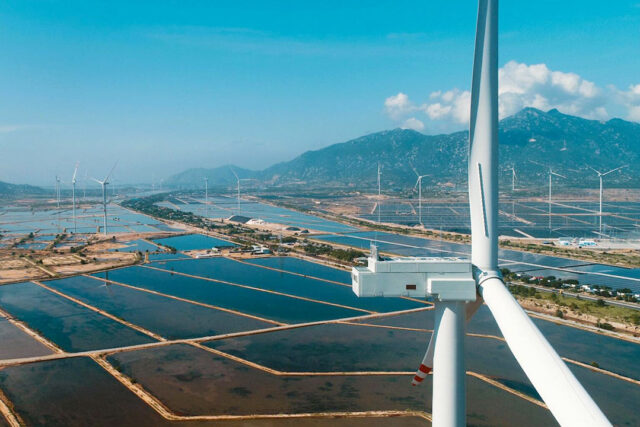
ACEN Corp., the energy platform of the conglomerate Ayala group, operates across a diverse range of markets, including the Philippines, Australia, Vietnam, India, Indonesia, Laos, and the US. — ACENRENEWABLES.COM

ACEN CORP., the listed energy platform of the Ayala group, plans to allocate more than P80 billion in capital expenditures (capex) next year to fund large-scale projects both in the Philippines and abroad, as the company continues its expansion in the renewable energy sector.

“Our best estimates at the moment is that next year will be north of P70 billion and could even be over P80 billion depending on the timing of projects,” Jonathan Back, ACEN’s group chief finance officer and chief strategy officer, said at the PSE STAR: Investor Day organized by the Philippine Stock Exchange on Thursday.

For the remainder of 2025, ACEN may spend over P50 billion, he added.

“As a company, we are largely focused on very large projects. But while these numbers sound very big and they are very big, most of the capex is funded through project finance,” Mr. Back said, noting that the company aims to cover asset funding primarily via project finance arrangements.

ACEN currently manages a renewable energy portfolio of 7.1 gigawatts (GW) across the Philippines, Australia, Vietnam, India, Indonesia, Laos, and the United States, with projects totaling 2,215 megawatts under construction as of Nov. 7.

While the company maintains an aspirational goal of expanding its portfolio to 20 GW by 2030, Mr. Back emphasized a cautious approach to growth.

“Given the amount of renewable capacity that needs to be built in all of the various markets that we operate in, by global standards, it’s not as big a number as you might think,” he said.

“But nevertheless, given the amount of time that it does take to get especially these large projects built, and given the desire for us not to have to keep coming to the equity market for funding, we’ve moderated that target,” he added.

ACEN’s consolidated net income for the first nine months of 2025 fell 78% to P1.8 billion, largely due to non-recurring items, while revenues dropped 18% to P23 billion, affected by lower spot market prices and reduced output in the Philippines and Australia.

Despite the subdued performance, ACEN President and Chief Executive Officer Eric T. Francia expressed confidence in the company’s forward momentum.

“We remain focused on scaling our renewables portfolio and accelerating investments in energy storage in particular, with a long-term strategy anchored on disciplined expansion, strong partnerships, and delivering sustainable value,” he said. — Sheldeen Joy Talavera

Villar Land sets final property fair value at P52.74B, down from P1.33T

BW FILE PHOTO

VILLAR LAND Holdings Corp. has set the final audited fair value of its newly acquired properties at P52.74 billion, according to its 2024 annual report filed with the Securities and Exchange Commission (SEC), sharply lower than an earlier estimate of P1.33 trillion that drew regulatory scrutiny.

The valuation covers 366 hectares of prime land within Villar City, a 3,500-hectare master-planned development spanning Metro Manila and Cavite. Villar Land acquired the properties through its purchase of Althorp Land Holdings, Inc., Chalgrove Properties, Inc., and Los Valores Corp. for P5.2 billion on Sept. 30 last year.

In its filing on Thursday, the company said the properties were initially appraised using the income approach, yielding an estimated value of about P1.3 trillion. After discussions with its external auditor, Punongbayan & Araullo (P&A), Vil-lar Land adopted the market approach for its audited financial statements.

“Appraisal reports were obtained from SEC-accredited property appraisers to support the fair value measurement… The company agreed to use the valuation based on market approach,” the report said.

According to Note 28 of the audited financial statements, the fair value of investment properties was disclosed at P52.74 billion, while the properties were recorded at P8,759,321,390 cost, in compliance with Philippine Financial Reporting Standards (PFRS).

P&A identified the valuation as a key audit matter, citing “significant judgments and high estimation uncertainty” in determining fair values. The audit report noted that the market approach relies on subjective inputs such as comparable sale prices, bargaining allowances, location, topography, and amenities, making valuations highly sensitive to assumption changes.

The auditors said they performed extensive procedures, including reviewing appraisal reports, testing assumptions against market data, and engaging independent valuation specialists to validate the figures.

The adjustment follows a SEC show-cause order issued to E-Value Phils., the original appraiser, to explain its P1.33-trillion valuation. The regulator also imposed P12 million in fines on Villar Land and 11 of its officials in August for delayed submission of audited financial statements, citing violations of the Securities Regulation Code.

The company reported a net income of P1.423 billion for 2024, slightly higher than P1.416 billion for 2023, marking a 0.5% increase year on year. The improvement was driven by higher interment and chapel service revenues, which grew 23% and 43%, respectively, offsetting a 26% decline in real estate sales.

Total assets surged 28% to P35.75 billion from P27.98 billion in 2023, largely due to the Villar City land acquisition and reclassification of investment properties. Investment properties at cost jumped from P76 million to P8.76 billion, an increase of P8.68 billion or 11,462%, while fair value disclosure rose to P52.74 billion.

Equity declined slightly by 3% to P13.67 billion, while liabilities rose 59% to P22.08 billion, reflecting higher payables and related-party obligations linked to the acquisition.

EARLIER UNAUDITED DISCLOSURE

On March 31, Villar Land reported a net income of P999.72 billion for 2024, up from P1.46 billion the previous year, attributing the spike to fair value gains on investment properties that ballooned to P1.33 trillion from P59 million in 2023.

Revenue fell by 25% to P3.58 billion as real estate sales declined by 26% to P3.31 billion due to lower residential unit sales.

Villar Land, formerly Golden MV Holdings, Inc., changed its name in November 2024 following an amendment to its articles of incorporation. It is among the country’s largest developers of memorial parks under the Golden Haven brand and mass housing projects through Bria Homes.

At the local bourse on Thursday, shares of Villar Land were down by 29.97% or P688 to close at P1,608 apiece. — Beatriz Marie D. Cruz and Arjay L. Balinbin

Maynilad posts P3.9-B Q3 net income, up 16% on higher revenues

MAYNILAD

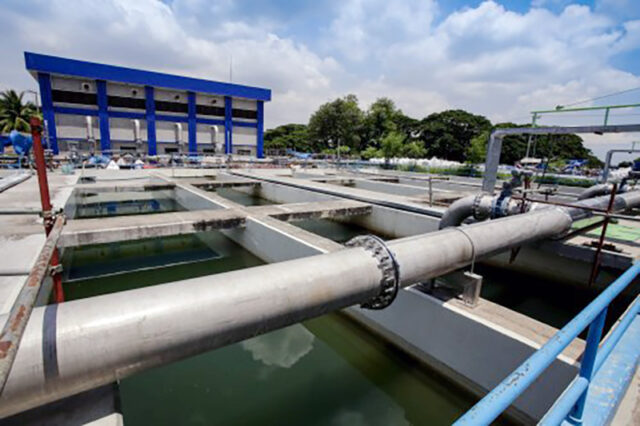
FOLLOWING its stock market debut, Maynilad Water Services, Inc. reported a 16% increase in third-quarter (Q3) net income to P3.9 billion, driven by higher revenues.

Revenues for the quarter rose 8.4% year on year to P9.30 billion, reflecting a tariff increase, according to the company’s financial report released on Thursday.

For the nine months ending September, net income rose 18% to P11.41 billion, driven by higher topline growth and a modest 2% increase in cash operating expenses, Maynilad said.

Total revenues improved 9.5% to P27.65 billion, primarily reflecting the 8% tariff adjustment implemented at the start of the year and an upward revision in the environmental charge.

“This was partly offset by a 1.1% decline in billed volume, following government restrictions on Philippine offshore gaming operators (POGO) and the transfer or closure of several large commercial accounts in the West Zone,” the company added.

As of end-September, Maynilad’s non-revenue water — water lost through leaks or illegal connections — dropped to 32.8% from 39.3% last year, due to intensified pipe replacement and leak-repair initiatives.

The utility continues to invest heavily in system upgrades and new water-treatment facilities under its 2023-2025 capital expenditure program, Maynilad said.

Key projects on the water-supply side include the 150-million-liter-per-day (MLD) Poblacion Water Treatment Plant in Muntinlupa and modular treatment plants in Cavite. Wastewater undertakings include the 20-MLD Tunasan and 46-MLD Cupang Water Reclamation Facilities in Muntinlupa, and the larger 205-MLD CAMANA and 180-MLD Manila North wastewater-treatment projects.

“We continue to meet our service commitments while investing in the infrastructure that will sustain long-term growth,” said Maynilad President and CEO Ramoncito S. Fernandez. “Our operational gains and disciplined execution show that our fundamentals remain sound, and that we are on track with our 2025 operational and financial objectives,” he added.

Maynilad raised P34.34 billion from its initial public offering, the second-largest in the Philippine Stock Exchange’s history, last week.

The company is an integrated primary provider of sustainable water and wastewater services for the West Zone, covering 11 cities in Metro Manila, three of which have partial coverage, as well as portions of Cavite province.

Metro Pacific Investments Corp., which holds a majority stake in Maynilad, is one of three Philippine units of Hong Kong-based First Pacific Co. Ltd., the others being Philex Mining Corp. and PLDT Inc.

Hastings Holdings, Inc., a unit of PLDT Beneficial Trust Fund subsidiary MediaQuest Holdings, Inc., has an interest in BusinessWorld through the Philippine Star Group, which it controls.

Maynilad shares shed 2.16% to close at P14.50. — Sheldeen Joy Talavera

ADVERTISEMENT
ADVERTISEMENT