Home Blog Page 7

PSEi ends flat amid hopes for Mideast peace talks
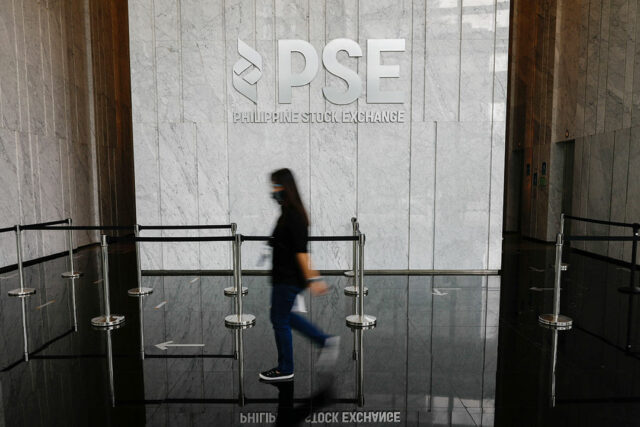
The lobby of the Philippine Stock Exchange in Taguig City, Sept. 30, 2020. — REUTERS

PHILIPPINE STOCKS ended flat on Thursday as the market stayed on the sidelines while awaiting developments in the Middle East conflict.

The Philippine Stock Exchange index (PSEi) edged up by 0.34 point to end at 6,063.69, while the broader all shares index went up by 0.05% or 1.93 points to end at 3,398.81.

“The Philippine market ended relatively flat as investors remained cautious. Sentiment held steady as the market waits for developments in possible peace talks in the Middle East, keeping risk appetite in check. Despite this, selective buying in key stocks helped keep the market afloat,” Regina Capital Development Corp. Head of Sales Luis A. Limlingan said in a Viber message.

“The local market moved sideways, reflective of investors’ indecisiveness and cautious trading amid the uncertainties over the Middle East conflict and its impact on the local economy. Hopes of a second round of talks between the US and Iran gave the market support in Thursday’s session,” Philstocks Financial, Inc. Research Manager Japhet Louis O. Tantiangco said in a Viber message. “However, economic effects brought by the war from rising inflation to the possibility of the BSP (Bangko Sentral ng Pilipinas) tightening their policy stance weighed on sentiment.”

BSP Governor Eli M. Remolona, Jr. told BusinessWorld on the sidelines of the International Monetary Fund and World Bank’s 2026 Spring Meetings in Washington, DC that the central bank has room to raise rates to quell rising inflation amid the Middle East conflict as they expect government spending to support growth.

Mr. Remolona said that second-round effects may emerge sooner than expected as the global oil price shock is expected to spill over into domestic food and transport prices.

In March, elevated oil prices amid the conflict drove inflation to a near two-year high of 4.1%, faster than the BSP’s 3.1%-3.9% forecast and 2%-4% target for the year.

In an off-cycle meeting last month, the Monetary Board left benchmark interest rates unchanged. It last raised borrowing costs in October 2023.

Sectoral indices were split on Thursday. Industrials rose by 0.99% or 87.61 points to 8,919.86; financials increased by 0.67% or 12.86 points to 1,915.02; and holding firms went up by 0.65% or 30.20 points to 4,678.74.

Meanwhile, services declined by 1.79% or 50.61 points to 2,776.75; mining and oil retreated by 0.36% or 65.22 points to 18,017.78; and property went down by 0.04% or 0.90 point to 2,017.08.

Decliners outnumbered advancers, 100 to 91, while 64 names closed unchanged.

Value turnover decreased to P7.80 billion on Thursday with 2.14 billion shares traded from the P8.16 billion with 1.45 billion issues that changed hands on Wednesday.

Net foreign selling went down to P1.01 billion from P1.37 billion in the previous session. — Alexandria Grace C. Magno
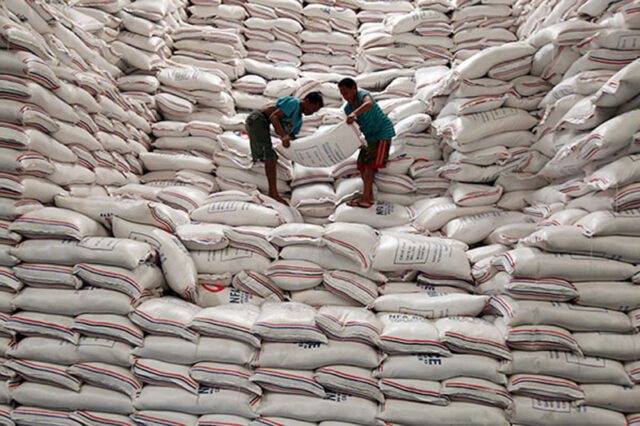

Marcos to roll out nationwide program on subsidized rice amid inflation risks

PHILSTAR FILE PHOTO

PRESIDENT Ferdinand R. Marcos, Jr. said his administration plans to expand a subsidized rice distribution program nationwide, positioning it as a buffer against rising food prices and external shocks linked to volatile global oil markets.

Speaking at the launch of “Biyayang Bigas para sa Maynila” in Manila on Thursday, Mr. Marcos said the initiative would be scaled up across the country, with local government units (LGUs) leading the identification of beneficiaries and the distribution of assistance.

“We will do this nationwide,” he said in Filipino, adding that the goal is to ensure “that all our countrymen have at least something to eat.”

The program rollout comes as the Philippines remains under a year-long state of national energy emergency triggered by the US-Israel war on Iran, which has disrupted global fuel supply chains and pushed up oil prices.

The surge in fuel costs has raised concerns about broader inflationary pressures particularly on food, as higher transport and production expenses are passed on to consumers.

Mr. Marcos acknowledged that the government has limited control over global oil prices but said it could intervene to ease the burden on households through food access programs.

“We know that when oil prices rise, everything follows, especially food,” he said. “That is why we are closely monitoring this so that the impact on the public will not be too heavy.”

The government has so far allocated about P15 billion for the program through the Local Government Support Fund, which allows faster release of resources directly to local governments.

Mr. Marcos said decentralizing the implementation would help avoid delays tied to national procurement and distribution systems, noting that LGUs are better positioned to identify vulnerable households and maintain updated beneficiary lists.

Under the program, eligible households will receive 10 kilos of rice up to six times a year. In its initial phase, about 80,000 households in Manila are expected to benefit before the program is expanded nationwide.

The initiative forms part of the government’s broader response to rising costs driven by the global energy crisis.

Earlier this week, Mr. Marcos approved the suspension of excise taxes on liquefied petroleum gas and kerosene, which are commonly used by households, to help temper price increases.

However, he has yet to decide on whether to extend similar tax relief to diesel and gasoline, which have a wider impact on transportation and overall inflation.

Inflation rose to 4.1% in March, nearing a two-year high, largely due to higher fuel prices.

Some lawmakers have proposed suspending the 12% value-added tax on petroleum products to further ease costs, but the administration has cautioned that such a move could significantly reduce government revenues needed to fund social programs.

Mr. Marcos said the rice subsidy initiative reflects the government’s effort to provide immediate relief to vulnerable sectors while managing the broader economic impact of global supply disruptions.

OIL SUBSIDIES
Meanwhile, Executive Secretary Ralph G. Recto has ordered local governments to closely coordinate with transport and energy agencies to accelerate the rollout of fuel subsidies and fare discounts.

In a statement, Mr. Recto said LGUs, in coordination with the Department of the Interior and Local Government (DILG), should align with the Department of Energy (DoE), Department of Transportation (DoTr) and the Land Transportation Franchising and Regulatory Board (LTFRB) to ensure the “seamless implementation” of the transport assistance package.

The directive followed a meeting on April 15 with agencies handling the service contracting program, where officials finalized key implementation details ahead of a broader rollout.

“In keeping with the whole-of-government approach, the DoTr and LTFRB need to work closely with the DILG, LGUs and DoE to make sure that all target beneficiaries are able to avail themselves of the financial support under the program and that these recipients provide the 20% fare discount to all of their passengers,” Mr. Recto said.

Under the program, public utility vehicle operators and drivers will get subsidies ranging from P40 to P100 per kilometer. In exchange, they must grant passengers a 20% fare discount on top of existing privileges for students, senior citizens and persons with disabilities.

The LTFRB is expected to release a standardized fare matrix this week to guide implementation.

Once fully implemented, the program is projected to benefit about 50,000 drivers and as many as 15 million commuters, while helping curb second-round inflation effects driven by higher transport and logistics costs.

The order comes as the government moves to expand the initiative beyond its initial rollout in Metro Manila, with a phased nationwide implementation planned for key urban centers and provincial routes.

Officials said the program forms part of the administration’s broader effort to cushion the impact of global oil market disruptions triggered by the Middle East war.

Although global crude prices have eased after a temporary ceasefire, authorities have warned that pump prices remain vulnerable to renewed spikes after the US and Iran failed to reach a longer-term agreement. — Chloe Mari A. Hufana

Jobs, wage hikes are top concerns among Pinoys

A wide variety of fish at the Marikina Public Market. — PHILIPPINE STAR/ WALTER BOLLOZOS

RISING oil prices driven by the Iran conflict are reshaping public priorities, with most adult Filipinos now calling for job creation and wage increases as the government’s top concerns, according to a nationwide survey by WR Numero Research.

Results of its March Philippine Public Opinion Monitor showed that 63% of Filipinos cited the need for more jobs and livelihood opportunities — almost triple from the 23% recorded in November 2025.

The sharp increase reflects mounting pressure on households as higher fuel costs push up transport and food prices, contributing to faster inflation.

The research firm said the 40-percentage-point surge in job concerns was the biggest shift among all issues tracked in the survey, signaling growing anxiety over income stability.

The poll also found that financial strain remains widespread, with only a small minority of Filipinos reporting no difficulty meeting basic needs.

Food, rent and transportation were identified as the most difficult expenses to afford, highlighting how oil-driven cost increases are feeding into daily living costs.

About 22% of the respondents said they struggle daily, while 30% reported experiencing such difficulty often or at least once or twice a week.

Another 29% said they encounter these challenges occasionally, while 14% experience them only rarely. Just 5% said they never struggle to meet basic needs.

Aside from employment, 49% of the respondents said wage increases should be prioritized, reflecting concerns that incomes are failing to keep pace with rising prices.

Other key issues cited include curbing illegal drug use (40%), eliminating corruption in government (32%) and lowering the cost of food and basic commodities (26%).

Public sentiment also turned more pessimistic, with 58% saying the Philippines is headed in the “wrong direction,” compared with 32% who think it is on the right track.

WR Numero Research said the findings underscore the need for policies that address both employment and inflation as external shocks continue to weigh on household finances.

The survey was conducted from March 10 to 17 through face-to-face interviews with 1,455 respondents nationwide, with a margin of error of ±2.57 percentage points at a 95% confidence level. — Erika Mae P. Sinaking

Bill cutting VAT to 10% amid oil-driven price surge filed

A customer buys fresh produce at the public market in Marikina. — PHILIPPINE STAR/ WALTER BOLLOZOS

SENATOR Paolo Benigno A. Aquino IV has filed a bill seeking to cut the value-added tax (VAT) to 10% from 12% to ease the burden on households as surging oil prices linked to the Middle East war push up the cost of living.

Filed on Thursday, Senate Bill No. 2047 proposes changes to key provisions of the National Internal Revenue Code of 1997 to lower VAT on goods and services.

Mr. Aquino said the measure could support economic recovery while making prices more manageable for consumers, particularly lower-income households.

“While VAT has been an important source of government revenue, its uniform application means that it takes up a larger share of the income of poorer households,” he said in the bill’s explanatory note. “In times of crisis, this regressive impact becomes even more pronounced.”

The proposal comes as fuel-driven inflation continues to ripple through the economy following the US-Israel war on Iran that began on Feb. 28 and disrupted global oil markets.

Since March, the government has rolled out subsidies for the transport and agriculture sectors to cushion the impact of higher fuel costs, which have driven up prices of food and other basic goods.

Mr. Aquino said a VAT reduction would complement these targeted support measures by providing broader relief to consumers.

Other lawmakers have also pushed tax relief on fuel, with some proposing to suspend VAT specifically on petroleum products.

Senator Lorna Regina B. Legarda earlier filed Senate Bill No. 2043, which seeks to suspend or reduce VAT on fuel, while calling on the administration to clarify its policy direction.

Senator Maria Imelda R. Marcos has likewise backed a suspension of fuel VAT to ease costs for municipal fisherfolk and commercial fishers registered with the Bureau of Fisheries and Aquatic Resources.

However, Senator Panfilo M. Lacson warned of the potential fiscal impact of such measures, estimating that the government could lose about P320 billion in revenues, including about P119.3 billion from VAT removal on fuel products alone.

The Marcos administration has so far opted for more targeted interventions.

In March, President Ferdinand R. Marcos, Jr. was granted emergency powers allowing him to suspend excise taxes on petroleum products if global oil prices breach certain thresholds.

On April 13, the President approved the suspension of excise taxes on liquefied petroleum gas and kerosene, both commonly used by households, to help temper rising costs.

He has yet to decide whether similar tax relief will be extended to diesel and gasoline, which have a wider impact on transport and inflation.

The proposed VAT cut adds to a growing list of policy options being considered as the government balances the need to provide immediate relief with concerns over revenue losses and fiscal sustainability. — Kaela Patricia B. Gabriel

Davao opposition to US oil depot ‘misplaced’

DAVAO CITY HALL — DAVAOCITY.GOV.PH

DAVAO CITY’S opposition to a proposed US military fuel facility in the city is “misplaced,” an analyst said, arguing that decisions involving national security and defense cooperation fall under the authority of the National Government.

Political analyst Edmund S. Tayao, president and chief executive officer of Political Economic Elemental Researchers and Strategists, said local government units do not have the full strategic view needed to assess defense arrangements tied to broader security concerns.

“The National Government is the one that is capable of understanding the overall security requirements of the whole country,” he said in a Facebook Messenger call.

The statement comes after the Davao City government rejected a reported US plan to establish a Defense Fuel Support Point in southern Philippines, citing concerns over foreign military presence and its relevance to fuel price pressures linked to the Middle East war.

The US Naval Institute, an independent forum, on April 7 said the Pentagon is considering a refueling depot in Mindanao as part of a wider network of maritime logistics hubs in the Indo-Pacific region.

Davao City on April 13 said it would not allow foreign military facilities within its jurisdiction, stressing that such projects would only be acceptable if they directly address the country’s fuel shock triggered by the Middle East crisis that began on Feb. 28.

The proposed depot reportedly involves storage capacity of as many as 41 million gallons of fuel and is expected to be operational by 2028, forming part of a broader US logistics network with similar facilities in Australia and Papua New Guinea.

Mr. Tayao said the local opposition might also reflect longstanding political leanings in the city, noting that past leadership had been critical of US military presence.

He added that concerns over foreign partnerships should be weighed against broader security risks, including alleged espionage activities in some provinces.

“In the past months, many provinces reported the arrest of sleeper agents of China,” he said. “That should be the more pressing concern compared with the presence of partners who are helping in defense preparation.” — Kaela Patricia B. Gabriel

Luzon grid sees first yellow alert

BW FILE PHOTO

THE Luzon grid has recorded its first yellow alert this year following the outage of a major gas-fired power plant and some hydropower plants, according to the National Grid Corp. of the Philippines (NGCP).

In an advisory on Thursday, NGCP said it has placed the Luzon grid under yellow alert from 4 p.m. to 10 p.m.

Peak demand hit 11,966 megawatts (MW) while the available capacity was at 12,223 MW.

A total of 5,137.2 MW was unavailable to the grid after 35 plants went on forced outage while 14 were running on derated capacities.

A yellow alert is issued when the operating margin is insufficient to meet the transmission grid’s contingency requirement.

NGCP attributed the raising of yellow alert to the tripping of two major gas plants in Batangas, as well as the unavailability of hydroelectric power plants in Magat, Isabela.

The outage has triggered Manila Electric Co. to implement automatic load dropping that lasted for 10-15 minutes within its franchise areas.

Power supply was restored in all affected areas at 3:01 p.m.

A yellow alert was also raised over the Visayas grid from 6 p.m. to 7 p.m. due to the lack of power imported from Luzon.

The grid’s available capacity was at 2,597 MW, nearly outpacing the demand of 2,368 MW. — Sheldeen Joy Talavera

Sugar over-importation probe urged

PHILIPPINE STAR/ERNIE PENAREDONDO

A SENATOR on Thursday filed a resolution seeking to investigate alleged mismanagement in sugar regulation resulting in its over-importation.

In Senate Resolution No. 369, Senator Joseph Victor G. Ejercito asked the Senate Committee on Agriculture, Food, and Agrarian Reform to conduct an inquiry on a possible sugar over-importation.

“Excessive or poorly timed importation resulted in oversupply in the domestic market, depressed farmgate prices, and reduced income for local farmers and mill workers,” the resolution read.

Data from the Sugar Regulation Authority, an attached agency of the Department of Agriculture (DA) has shown that the Philippines has 668,405 metric tons of sugar stock as of March 22 which is 99,534 metric tons higher compared to the previous year’s supply.

Mr. Ejercito, in the resolution, said this marks a “significant increase” in domestic supply which may lead to the decline of farmgate prices.

“There is a need to review existing policies and the basis for determining the timing and volume of sugar importation to ensure that such policies remain responsive to present challenges and promote long-term sustainability,” the resolution stated.

In 2025, the DA put sugar imports on hold until December this year to prioritize domestic raw sugar and raise the product’s farmgate prices. — Kaela Patricia B. Gabriel

Ride-hailing platforms defend fees

BW FILE PHOTO

MAJOR ride-hailing and delivery platforms operating in the Philippines defended their current commission rates and driver incentive programs before the House of Representatives, following reports that promised fee reductions have yet to materialize for many partner-drivers.

At the Legislative Energy Action Development Council hearing on Wednesday, Party-list Rep. Brian Poe Llamanzares raised concerns from riders indicating that several platforms are still deducting commissions as high as 20% to 23%, despite earlier commitments to lower ceilings to assist workers during the current economic crisis.

inDrive Philippines, represented by its country and policy advisor Vicente Jaime M. Topacio, maintained that its platform remains the most competitive with a maximum commission of 10%.

“It’s a proven formula for us based on the 48 countries that we operate… we can confidently say that we can stick to our 10% promise,” Mr. Topacio told lawmakers, noting the platform’s commitment to a low-commission model.

Other platforms cited existing incentive schemes to offset costs. Grab Philippines Chief Corporate Affairs Officer Sherielysse R. Bonifacio, said fuel rebates of P3 to P5 per liter are provided for top drivers and a “turbo program” triggers incentives after 30 minutes of driving.

Lalamove Philippines Public Affairs Lead Adrian Y. Asoy said their commission remains at 20% in Luzon and 15% in Cebu, adding it can drop to 5% for stickered and long-distance vehicles.

Mr. Poe requested all platforms to submit detailed reports on subsidies and tier systems to the technical working group, noting profitability at a 10% commission would warrant reviewing platform fees, while the committee directed firms to present firm commitments on driver “cushioning” or fee rollbacks in succeeding hearings.

House leaders, including Rep. Franz S. Pumaren and Rep. Romero Federico “Miro” S. Quimbo, also vowed to pass the Motorcycle (MC) Taxi Law within the 20th Congress, a measure seen to provide a permanent framework for over 200,000 riders under MC taxis and TNVS. — Erika Mae P. Sinaking

BoC to hasten valuation requests

PHILSTAR FILE PHOTO

THE Bureau of Customs (BoC) has committed to faster processing of import assessment service (IAS) valuation requests to enhance trade facilitation.

In a statement on Thursday, Customs Commissioner Ariel F. Nepomuceno said that he has directed all ports to strictly observe the prescribed turnaround time for valuation requests under IAS.

Mr. Nepomuceno signed a memorandum on Tuesday that mandates the IAS to reduce the processing time to three days upon receipt of complete documentary requirements from five days currently.

According to the BoC, the memorandum aims to ensure a more predictable and streamlined valuation process for stakeholders.

In the case that the IAS will not be able to follow the prescribed period, the BoC said that concerned ports may proceed with the processing and releasing of shipments as long as they are fully compliant and have complete documentary requirements.

Apart from faster processing, the IAS also reduced the required signatories for IAS clearance from four to three, in compliance with the Anti-Red Tape Authority guidelines.

“We must ensure that valuation concerns are acted upon within the prescribed period,” said Mr. Nepomuceno.

“Delays in processing must be minimized, and all units are expected to exercise diligence and urgency in the submission and evaluation of complete requirements to ensure that trade flows without unnecessary interruption,” he added. — Justine Irish D. Tabile

BSP shortens onsite work hours

BW FILE PHOTO

THE Bangko Sentral ng Pilipinas (BSP) has adjusted the onsite operating hours for select offices in support of the government’s push to reduce energy consumption.

“Critical BSP offices will continue onsite public services from Monday to Friday, while non-frontline offices will adopt work-from-home arrangements on Mondays and Fridays,” the central bank said in a statement on Thursday.

BSP Manila will process check-clearing transactions from 9 a.m. to 2 p.m., Monday to Friday.

Onsite transactions involving BSP-acquired real properties and receipt of physical mail and documents from the public will continue at the BSP Hub in Manila from 8 a.m. to 5 p.m., Monday to Friday.

Tellering services, or payments to the BSP, cash exchange, redemption of mutilated and doubtful currency, check payments and encashments, and disbursement of cash to the general public, will be available at BSP Manila, Security Plant Complex in Quezon City, and BSP regional offices and branches nationwide from 9 a.m. to 2 p.m., Monday to Thursday.

The BSP Online Buddy chatbot, accessible via the BSP website, BSP Facebook Messenger, and BSP mobile app, will continue to receive financial consumer complaints, 24/7. Complaints may also be sent to consumeraffairs@bsp.gov.ph.

BSP-supervised financial institutions and nonbank financial institutions (such as pawnshops, nonstock savings and loan associations, money changers, and remittance agents) will be able to continue submitting documents electronically via fssmail@bsp.gov.ph.

The BSP Store will service purchases of commemorative coins and other merchandise through https://bspstore.bsp.gov.ph/Aaron Michael C. Sy

BCDA signs lease deal for new café in Camp John Hay

STATE-RUN Bases Conversion and Development Authority (BCDA) has signed a 15-year lease deal with Sophia Real Estate Executives and Development Corp. to build a themed café within Camp John Hay (CJH) in Baguio City.

The café will rise on a 500-square-meter site within CJH, the agency said in a statement on Thursday.

The lease agreement was signed on March 30, but the BCDA has yet to provide further details on the development.

The upcoming café is expected to boost local economic activity while creating jobs in the construction and hospitality sectors, the agency said.

BCDA President and Chief Executive Officer Joshua M. Bingcang said the deal aligns with the CJH’s Master Development Plan (MDP), which seeks to transform the former US military base into an eco-tourism, leisure, and economic hub.

“By aligning with our MDP, this project brings a fresh dimension to the camp, further establishing it as a world-class tourism hub where nature and leisure meet,” he said.

The development is expected to diversify the John Hay Special Economic Zone’s portfolio of commercial and hospitality establishments, the agency added.

The BCDA formally took control of CJH in January last year.

It aims to hit P10 billion worth of investments from the takeover and is looking to offer 70 hectares of land for private sector development. — Beatriz Marie D. Cruz

Meralco sues individuals over illegal electric meter removal

PHILSTAR FILE PHOTO

POWER distributor Manila Electric Co. (Meralco) on Thursday said it has filed a criminal complaint against individuals involved in the unauthorized removal of an electric meter in a subdivision in Rodriguez, Rizal.

In a statement, Meralco said it formally filed a criminal complaint for malicious mischief before the Rizal Provincial Prosecution Office against two individuals, citing deliberate damage to the company’s property.

The incident involved a man forcibly removing a resident’s electric meter despite the homeowner’s objections and without presenting any proof of identity or authorization.

Meralco said it immediately responded to the incident and found out that the individual was acting on orders of the property owner.

Joe R. Zaldarriaga, Meralco vice-president and head of corporate communications, said the company immediately acted to restore the electricity service of the customer and conducted an investigation upon learning the incident.

“We would like to emphasize once again that electric meters are property of Meralco and any unauthorized removal or damage is illegal and subject to legal action,” Mr. Zaldarriaga said.

He enjoined the public to remain cautious of individuals falsely posing as Meralco personnel.

“We once again remind the public that all legitimate Meralco employees and contractors are in uniform with company ID, carry official field orders, and use clearly marked vehicles,” Mr. Zaldarriaga said.

“We also urge the public to immediately report these illegal activities to us and to the proper authorities. We will continue to work closely with authorities to address illegal acts and protect the welfare of our customers,” he added. — Sheldeen Joy Talavera