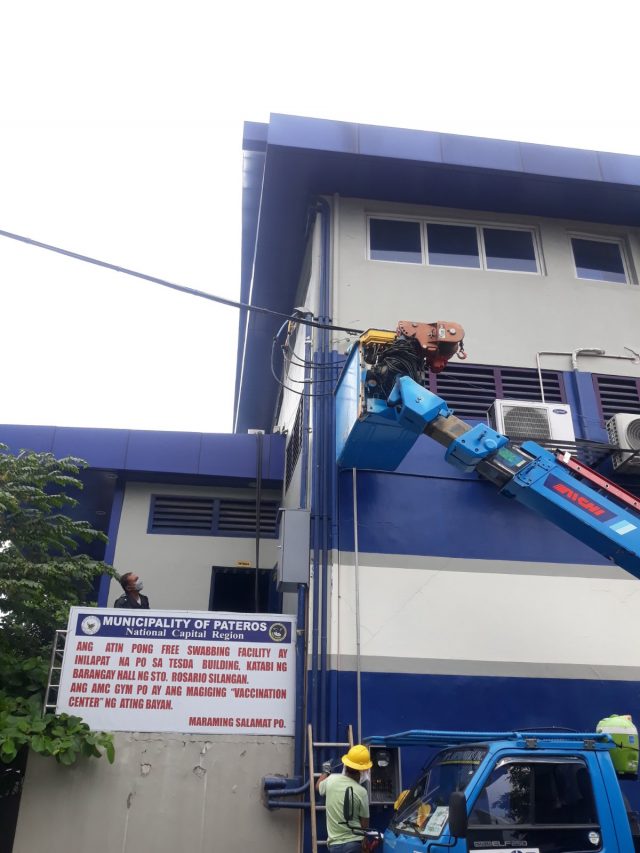
In its continuing support to the Government and Private Sector’s fight against COVID-19, Meralco energizes a new vaccination center at the AMC Gym, Barangay San Roque, Pateros.
The project involves the installation of six (6) 15-meter concrete poles, two (2) 50-kVA distribution transformers, ten (10) spans of insulated primary wires, service drop wires and metering facility.
This new vaccination center is one of the many vital COVID-19 facilities in the Meralco franchise area that are given the highest priority in terms of providing safe, adequate, and reliable supply of electricity, in line with the company’s thrust to assist the government during the pandemic. To date, more than 140 vital COVID-19 facilities have already been energized by Meralco which include government offices, hospitals, testing laboratories, quarantine and vaccination centers, and vaccine storage facilities.
Spotlight is BusinessWorld’s sponsored section that allows advertisers to amplify their brand and connect with BusinessWorld’s audience by enabling them to publish their stories directly on the BusinessWorld Web site. For more information, send an email to online@bworldonline.com.
WASHINGTON — A massive leak of financial documents was published by several major news organizations on Sunday that allegedly tie world leaders to secret stores of wealth, including King Abdullah of Jordan, Czech Prime Minister Andrej Babis and associates of Russian President Vladimir Putin.
The dump of more than 11.9 million records, amounting to about 2.94 terabytes of data, came five years after the leak known as the “Panama Papers” exposed how money was hidden by the wealthy in ways that law enforcement agencies could not detect.
The International Consortium of Investigative Journalists, a Washington, D.C.-based network of reporters and media organizations, said the files are linked to about 35 current and former national leaders, and more than 330 politicians and public officials in 91 countries and territories. It did not say how the files were obtained, and Reuters could not independently verify the allegations or documents detailed by the consortium.
Jordan’s King Abdullah, a close ally of the United States, was alleged to have used offshore accounts to spend more than $100 million on luxury homes in the United Kingdom and the United States.
DLA Piper, a London law office representing Abdullah, told the consortium of media outlets that he had “not at any point misused public monies or made any use whatsoever of the proceeds of aid or assistance intended for public use.”
The Washington Post, which is part of the consortium, also reported on the case of Svetlana Krivonogikh, a Russian woman who it said became the owner of a Monaco apartment through an offshore company incorporated on the Caribbean island of Tortola in April 2003 just weeks after she gave birth to a girl. At the time, she was in a secret, years-long relationship with Putin, the newspaper said, citing Russian investigative outlet Proekt.
The Post said Ms. Krivonogikh, her daughter, who is now 18, and the Kremlin did not respond to requests for comment. Days ahead of the Czech Republic’s Oct. 8–9 parliamentary election, the documents allegedly tied the country’s prime minister, Babis, to a secret $22 million estate in a hilltop village near Cannes, France. Speaking during a television debate on Sunday, Mr. Babis denied any wrongdoing.
“The money left a Czech bank, was taxed, it was my money, and returned to a Czech bank,” Mr. Babis said. — Reuters
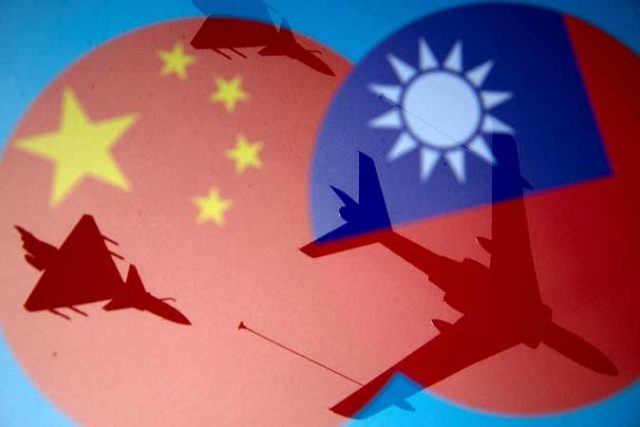
TAIPEI — The United States urged China on Sunday to stop its “provocative” military activities near Taiwan, after the island scrambled jets to warn away close to 100 Chinese military aircraft entering its air defense zone over a three-day period.
Taiwan, a democratically governed island that is claimed by China, has complained for more than a year of repeated missions near it by China’s air force, often in the southwestern part of its air defense zone close to the Taiwan-controlled Pratas Islands.
On Friday, Saturday and again on Sunday, Taiwan’s defense ministry reported that China’s air force had sent aircraft into the zone, with 39 on Saturday alone, the highest reported number to date.
“The United States is very concerned by the People’s Republic of China’s provocative military activity near Taiwan, which is destabilizing, risks miscalculations, and undermines regional peace and stability,” State Department spokesperson Ned Price said in a statement.
“We urge Beijing to cease its military, diplomatic, and economic pressure and coercion against Taiwan.”
The United States has an abiding interest in peace and stability across the Taiwan Strait, and will continue to assist Taiwan in maintaining a “sufficient self-defense capability,” Mr. Price added.
“The US commitment to Taiwan is rock solid and contributes to the maintenance of peace and stability across the Taiwan Strait and within the region.”
Taiwan’s Foreign Ministry thanked the United States for its concern, and said China was increasing tension in the Indo-Pacific region.
“In the face of China’s challenges, our country’s government has always committed itself to improving our self-defense capabilities and resolutely safeguarding Taiwan’s democracy, freedom, peace and prosperity,” it said.
China has yet to comment on its activities, and it is not clear what may have caused Beijing to decide to mount the missions, though Friday was the country’s National Day, a patriotic holiday that marks the founding of the People’s Republic.
It has previously said such flights were to protect the country’s sovereignty and aimed against “collusion” between Taiwan and the United States, the island’s most important international backer.
Taiwan’s defense ministry said it sent combat aircraft to warn away the Chinese aircraft, while missile systems were deployed to monitor them.
It said the aircraft were a mixture of J-16 and Su-30 fighters as well as anti-submarine and early warning aircraft. Friday’s flights included nuclear-capable H-6 bombers.
Taiwan Premier Su Tseng-chang condemned China for its actions on Saturday, saying the country was engaging in military aggression and damaging regional peace.
Taiwan marks its national day next Sunday, with a major speech by President Tsai Ing-wen and military parade in central Taipei, which will include a fly-by of fighter jets.
China has stepped up military and political pressure to try to force Taiwan to accept Chinese sovereignty.
Taiwan says it is an independent country and will defend its freedom and democracy. — Ben Blanchard/Reuters
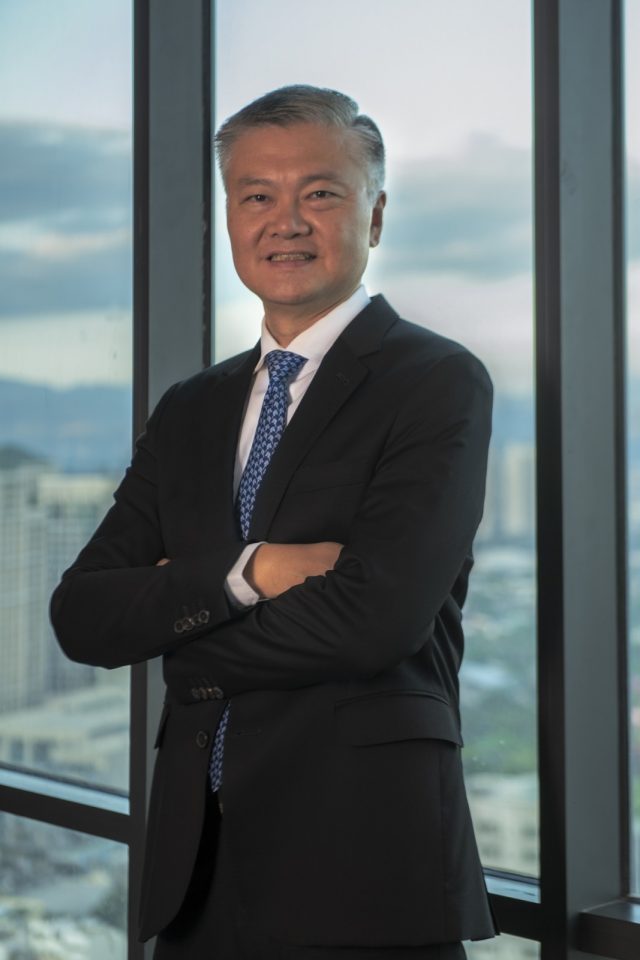
Jeffrey Ng, president of Cathay Land Inc., is leading the country’s biggest business conference in November, the Philippine Chamber of Commerce and Industry (PCCI) announced today.
Jeffrey, as he is called by colleagues in business, was unanimously appointed the Chairman of the 47th Philippine Business Conference & Expo (PBC&E) by the PCCI Board of Trustees headed by its President Benedicto V. Yujuico.
The PBC&E is an annual summit of the country’s business and industry captains from all over the country. It is a venue for business-to-business, business-to-customers, business-to-government networking. It provides the platform for business leaders, policy makers, and development partners to share and exchange ideas on potentials and challenges facing business and its ecosystem.
Each year, the PCCI selects a theme based on trends shaping the development and evolving needs of business and the economy. The theme of this year’s PBC&E is “innovation.ph: Economic Recovery for All.” Discussions will focus on policies and programs to build a strong foundation for a more sustainable and resilient future.
Explaining the selection of Mr. Ng, PCCI President Amb. Benedicto Yujuico said, “Jeffrey’s economics background and pioneering business ventures spanning over three decades were the primary consideration in selecting him as Chair of the 47th PBC&E.”
Mr. Ng is an Economics Cum Laude graduate of University of the Philippines Diliman with a Master’s Degree in Business Economics at the University of Asia and the Pacific. He is currently President of UP School of Economics Alumni Association (UPSEAA). He is a Board member of Philippine Chamber of Commerce and Industry (PCCI) and Foundation for Economic Freedom (FEF). He is also the President of Cathay Land, Inc., (developer of South Forbes Golf City), the Astoria Hotels and Resorts, and Cathay Metal Corp. (steel manufacturing).
“Jeffrey is visionary in real estate and property development. For instance, he knew early on that the urban sprawl of Metro Manila would extend outside the metropolis, so he ventured in land-banking in the South and developed new thriving townships in Cavite,” Mr. Yujuico added.
“I am extremely honored with the appointment and I thank (President) Dickie and the entire PCCI Board for the trust. I am excited to lead the staging of the conference despite and because of the challenging situation we are in. The PBC has always strived to be relevant in raising the concerns of the business sector and bringing about resolutions that would help address these concerns. I am glad we are now seeing a whole of society and whole of government approach as we recover from the pandemic. Hopefully, through the PBC, I can contribute to the putting together of innovative solutions as we recover and build better and smarter,” Mr. Ng said.
This year’s conference will be held on Nov. 17-18, 2021. It will present and discuss how Innovation has become a catalyst to reboot the economy and accelerate growth to recover lost grounds and catch up with Ambisyon 2040’s goal for the country to become a middle-income economy in 20 years.
Among the highly anticipated segments of the conference is a session with pioneers and global leaders in innovation and technology, and one with the 2022 Presidentiables. The conference will conclude with the presentation of the business sector’s wish list to government.
PARIS — The French Catholic Church has had an estimated 3,000 pedophiles in its ranks over the past 70 years, the head of an independent commission investigating the sex abuse scandal said in an interview published on Sunday.
The scandal in the French Church is the latest to hit the Roman Catholic Church, which has been rocked by sexual abuse scandals around the world, often involving children, over the past 20 years.
The French commission is due to publish its findings on Tuesday, marking the culmination of 2-1/2 years of work, probing allegations of abuse going back to the 1950s.
“We have estimated the number [of pedophiles] as standing at 3,000, out of 115,000 priests and religious officials, going back to the 1950s,” commission head Jean-Marc Sauve told the Journal du Dimanche paper.
A spokesperson representing the French Catholic Bishops’ Conference declined to comment on Mr. Sauve’s remarks.
A Vatican spokesperson said it would wait for the full report to be published before deciding on whether to comment.
In June, Pope Francis said the Catholic Church’s sexual abuse crisis was a worldwide “catastrophe.”
The French Catholic Church posted a prayer on its official Twitter account on Sunday, on behalf of victims, and added it would also hold a prayer on Oct. 5 — the day of the publication of the report.
“Dear Lord — we entrust to you all those who have been victims of violence and sexual attacks in the Church. We pray that we will always be able to count on your support and help during these ordeals,” it wrote on its Twitter account.
STEPS TO WIPE OUT ABUSE
Since his election in 2013, Pope Francis has taken a series of steps aimed at wiping out sexual abuse of minors by clerics.
In 2019, the pope issued a landmark decree making bishops directly accountable for sexual abuse or covering it up, requiring clerics to report any cases to Church superiors and allowing anyone to complain directly to the Vatican if needed.
This year, he issued the most extensive revision to Catholic Church law in four decades, insisting that bishops take action against clerics who abuse minors and vulnerable adults. Critics have said he has not done enough.
The French Church, which has seen dwindling numbers of faithful in recent years, said in March it would propose financial compensation to those who were victims of abuse.
Last month, the Roman Catholic Archbishop of Cologne decided to take a “spiritual time-out” from his duties after committing grave errors in a crisis over clerical sexual abuse.
A report published last year in Britain said the Catholic Church received more than 900 complaints involving over 3,000 instances of child sex abuse in England and Wales between 1970 and 2015, and that there have been more than 100 reported allegations a year since 2016. — Reuters
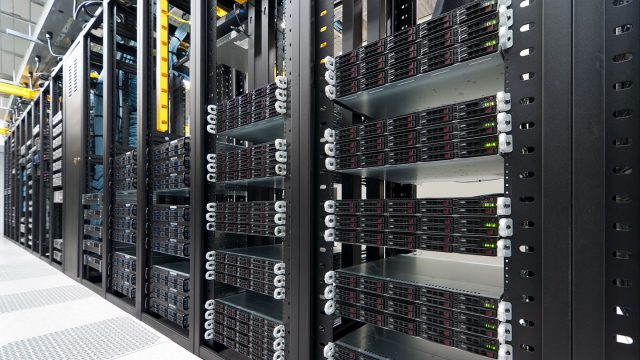
The country’s largest telco-neutral data center to provide telco-grade and tailored data center services, Beeinfotech PH (Bee Information Technology PH Inc.), is confident that the Philippine data center market is ready to cater to the needs of global hyperscale companies. This is due to a variety of factors, including the growth of enterprise cloud and data center adoption in the market, rising Internet use, and the recent improvements in the nation’s Information and Communications Technology (ICT) capabilities.
Recent forecasts have revealed that developments in the Asia Pacific make the region a prime destination for hyperscalers. According to Frost & Sullivan, APAC will lead all the other regions as the top data center market in the world by 2025. The firm also noted that the Philippines is expected to boom in data center growth, with an average increase of 24% in data center supply within the next three to five years. This was highlighted by the Philippines’ Department of Trade and Industry in a recent online event announcing the arrival of hyperscale companies in the country.
Reynaldo Huergas, Beeinfotech PH President and CEO
“These projections show how the country’s ICT abilities have vastly improved throughout the years. It’s a testament that the Philippines is ready to take on a pivotal role in ensuring that the online services people around the world use daily and enjoy keep running through hosting the infrastructure of hyperscale companies within shores,” said Reynaldo Huergas, Beeinfotech PH President and CEO.
Hyperscale refers to the expansion of significant resources in a data center to quickly adapt to customer demand. The companies that have this ability are mostly IT enterprises that deal with a lot of real-time data through their online services, such as Google, Microsoft, and Amazon.
Huergas notes that despite these companies having their own data centers, certain logistical considerations make it much more feasible for them to colocate or host infrastructure within data center partners that already have the facilities. Beeinfotech PH’s own multi-million peso “The HIVE” facility launched in August, for example, has a 3,000-plus rack space well-suited for scaling resources quickly.
“It will take companies years to build their data center, not just because of the construction itself, but due to several hurdles such as the paperwork and permits that need to be complied with first. By colocating resources to a local data center partner, hyperscale companies can deploy immediately to answer customer demand at once,” adds Huergas.
Philippines as the next premier data center hub for hyperscalers
Beeinfotech PH notes that several hyperscale companies have been eyeing the Philippines for a while now. The country’s positive connections with the East and West make it a gateway for both to expand to the fast-rising APAC market, while allowing companies within the region to make their mark on the rest of the world. Beeinfotech PH also cites that the surrounding data center hubs in other ASEAN countries have become too congested to support the critical compute zones needed by hyperscale companies.
The rising number of undersea cables strengthening the country’s connectivity is also attracting global companies. Currently, there are 10 international submarine cable systems providing connectivity to the Philippines, and by 2024, there will be five more trans-pacific subsea cables connecting the market to the rest of the world.
Beeinfotech PH also contends that the high-ranking Internet use of Filipinos makes expansion into the Philippines as lucrative as ever due to the possibility of tapping a digital-savvy customer base of nearly a hundred million online users.
“The high Internet usage of Filipinos translates to a profitable market for hyperscalers. But to reach them first, hyperscalers have to bring their resources closer by either expanding or colocating. The closer their presence is, the faster the delivery of their content will be, thus enabling them to attract and retain a significant audience,” said Maricar Nepomuceno, Beeinfotech PH Senior Vice President, Strategic Planning & Business Development.
The rising data center market in the Philippines is another reason for hyperscalers to show up. Beeinfotech PH is among the few data center service providers in the Philippines with the facilities to host hyperscale companies. In addition to extending truly telco-neutral and bespoke colocation services, its The HIVE facility offers an open canvas within its premises to meet all stringent requirements and allow hyperscale companies more freedom in their colocation methods.
For more information on Beeinfotech’s hyperscale-ready services, visit beeinfotech.ph.
Spotlight is BusinessWorld’s sponsored section that allows advertisers to amplify their brand and connect with BusinessWorld’s audience by enabling them to publish their stories directly on the BusinessWorld Web site. For more information, send an email to online@bworldonline.com.
Digital spending went up 60% for every person in the past year, according to the third iteration of SYNC Southeast Asia, an annual report by Facebook and management consulting firm Bain & Company.
Titled Southeast Asia, the home for digital transformation, the report takes a look at emerging digital lifestyle trends in the region.
In this B-Side episode, Facebook Philippines country director John Rubio shares the stories behind the statistics. He tells BusinessWorld reporter H. Lacsamana how retailers can take their business offline-to-online with the help of 6 Rs.
TAKEAWAYS
The consumer journey is mostly digital.
Filipinos, who spend as much as 10 to 11 hours online, are able to translate their time to e-commerce activity, whether it’s discovering brands and products, considering whether to buy them based on research, or actually making purchases, according to Mr. Rubio.
This entire consumer journey now happens online — the study shows that the discovery and consideration phases now occur 80% and 83% online respectively.
“Before, for example, you’d be walking in the mall and maybe you’d hit a makeup stand and you’d say ‘yeah, I like that’ and try it out,” he explained. “What’s happened is a massive shift where that now happens online.”
To win the battle for brand loyalty, have a robust online presence.
A major concern for brands is that consumers are now more likely to switch, with 51% more Filipinos saying they switched their most-purchased brand in the last 3 months.
“What that really means for brands is they need to understand the customer journey we talked about and say, if discovery is now happening on digital, it’s happening on my Facebook or Instagram feed. It’s happening on Facebook Live. It’s happening on YouTube. It’s happening on TikTok,” said Mr. Rubio. “How do they leverage that?”
He recommended brands think about whether their website or social media pages provide enough details for potential customers.
Another factor is sustainability, for which around 80% of Filipinos said they would pay up to 10% more: “A lot of people now are very attuned to purpose. They want to buy some brands that are, for example, sustainable [and] adhere to the same social principles as they do, especially as we go to the younger segments.”
The convenience of e-wallets helped spur e-commerce.
With Filipinos purchasing 8.2 product categories in 2021 compared to just 4.7 in 2020, the convenience of payment modes has become important as well.
“People find the utmost convenience of being able to have a digital e-wallet and being able to pay online, whether to pay for Grab, Lazada, Shopee, Zalora, and so forth,” said Mr. Rubio. “It’s much more convenient to do that. You can even shop at midnight.”
Outside of the pandemic, the massive adoption of e-wallets drove e-commerce — the report found that 1 in 3 people now prefer to pay with an e-wallet.
Six Rs can help brands go from offline to online.
Majority of respondents (65-80% across markets) said their digital purchasing behavior may stick even after the pandemic.
In order for businesses to evolve with their consumers, Mr. Rubio suggested building a good offline-to-online (O2O) strategy with the help of 6 Rs:
Rewrite a digital first agenda.
Rewire your business model.
Reimagine your consumer engagement.
Refresh your product offers.
Re-envision your view of sustainability.
Realign a post-pandemic lifestyle.
“We need to make sure we’re experimenting so that we’re not one of those that are left out in a post-COVID world,” he said.
Nearly two years into the pandemic, it is clear that digitalization is crucial to modern businesses and their ability to navigate the unpredictable business climate. Digitalization is paving the way for organizations to utilize and engage with innovations and R&D activities as they explore new market opportunities. And, business leaders agree.
“Technology, such as cloud enterprise resource planning (ERP), has become an insightful conduit of knowledge for businesses, enabling them to manage through volatility,” Mickey North Rizza, Program Vice President of Enterprise Applications and Digital Commerce at the International Data Corporation (IDC), said.
She added that with the right combination of technologies such as cloud, mobile, intelligent processes, and real-time insights, businesses can utilize data to ensure that customer needs are met, no matter the circumstances.
Shari Lava, Research Director of Small and Medium Business at IDC explained, “Cloud ERP systems are where data come together to provide a snapshot of the health of the business. Cloud ERP systems can now connect, in real time, critical customer data to operational data such as outstanding customer invoices, payroll, and other business expenses such as outstanding supplier purchases. These insights provide a holistic financial view as well as a complete picture of the business, allowing a company to take the necessary action.”
SAP Business One is an end-to-end solution designed for the digital transformation needs of every business. It can support organizations to reach their goal of becoming an intelligent enterprise, augmenting business operations from accounting and financials, purchasing, inventory, sales, and customer relationships to reporting and analytics.
SAP Business One also allows companies of all sizes to have greater control over their key processes and gain deeper insight into their businesses’ performance — allowing for informed decisions based on real-time information that can drive profitable growth.
In the Philippines, SAP Business One is available through Integrated Computer Systems, Inc. (ICS), a leading IT solutions provider in the country for over 40 years. An official partner of SAP, as well as a number of global IT organizations, ICS is committed to see its clients through from end to end. The company’s pool of professionals are adept in delivering installation, support, maintenance, and consultancy services, ensuring that clients have everything they need to make the most of their IT investments.
“Our local partners help put SAP solutions to work to improve speed and stability across an entire business. Intelligent automation creates consistent, connected, end-to-end processes, while intelligent insights help customers overcome the hurdles that slow down growth and guide the decisions that can accelerate it,” SAP said.
SAP business management software lets organizations confidently stay ahead of change as they navigate the digital landscape, enabling them to grow their business into the future.
For more information on SAP BusinessOne and ICS, interested parties may visit www.ics.com.ph or inquire here.
Spotlight is BusinessWorld’s sponsored section that allows advertisers to amplify their brand and connect with BusinessWorld’s audience by enabling them to publish their stories directly on the BusinessWorld Web site. For more information, send an email to online@bworldonline.com.
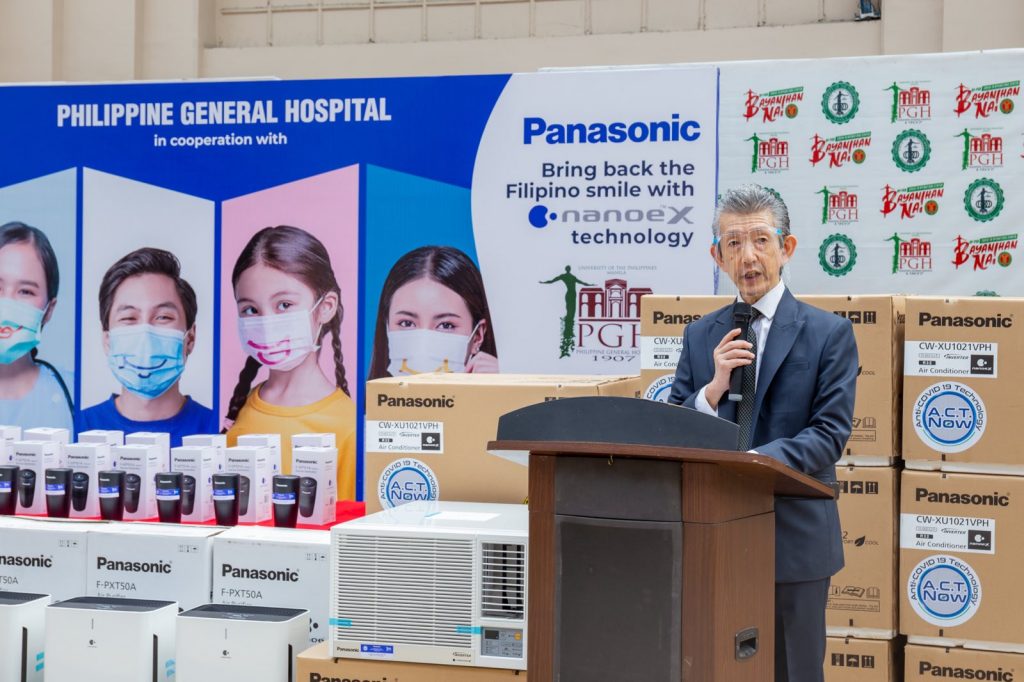
(From left to right) Dr. Jonas del Rosario, PGH Spokesperson, Dr. Regina Berba, Hospital Infection Control Unit Head, Dr. Stella Manalo, PGH Deputy Director for Hospital Operations Dr. Gerardo D. Legaspi, PGH Director, Mr. Masaru Toyota, Panasonic Air-Conditioning Philippines President and CEO, Yosuke Tanaka, Life Solutions Group Country Head Manager
Technology offers solutions that provide cleaner and fresher air for quality air for life
Panasonic, as part of its global campaign to spread advocacy for cleaner and fresher air for life, recently donated to the Philippine General Hospital – nanoeTM air purifiers, nanoeTM X generators, and air conditioners equipped with nanoeTM X that have been verified to have inhibitory effects on the novel coronavirus*0.
The turn-over was attended by Panasonic Air-Conditioning Philippines CEO Masaru Toyota, Life Solutions Group Country Head Yosuke Tanaka, PGH Director Dr. Gerardo Legaspi, PGH Spokesperson Dr. Jonas del Rosario, Deputy Director for Hospital Operations Dr. Stella Manalo, and the Hospital Infection Control Unit Head Dr. Regina Berba.
In his statement, the Panasonic Air-Conditioning Philippines CEO Masaru Toyota explained that it has always been the intention of Panasonic, with the introduction of the nanoeTM in 1997 and nanoeTM X in 2016, to provide cleaner and fresher air to improve the quality of life for everyone.
Mr. Toyota further explained, “In 2009, with the help of an independent testing organization, Panasonic verified the effect of hydroxyl radicals contained in water against bird flu and new strains of influenza, and in 2012, in collaboration with an independent testing organization in Germany, we conducted virus clearance testing that showed effectiveness of the technology against highly-resistant viruses and unknown viruses.” *1
Mr. Masaru Toyota, Panasonic Air-Conditioning Philippines President and CEO
“Just last year, again using an independent testing organization, Texcell*2 – France, we have further verified the inhibitory effect of Panasonic’s patented nanoeTM X technology on the novel coronavirus that causes Covid-19,” he added.
The PGH activity is part of a bigger program of Panasonic in the Philippines to provide air purifying and anti-covid technology of nanoeTM X in selected sites in the National Capital Region to protect medical front liners and Filipinos in vaccination areas and to make them and the public feel safer with the theme “Bring Back the Filipino Smile” in partnership with selected local governments.
The Panasonic Philippines CEO said, “It is our aim for our medical front liners to feel they are in safer environment, and for patients to also have a sense of additional protection apart from current mandated hygiene practices like the wearing of masks, the use of face shields, and the use of hand sanitizers.”
The PGH Director Dr. Legaspi expressed his appreciation for the Panasonic efforts, “It’s turning out to be a very auspicious morning for the Philippine General Hospital, being granted this support, which improves our ability to give comfort to our healthcare workers as well as improve protection from aerosolized transmission of the virus.”
Dr. Gerardo D. Legaspi, PGH Director
He added “As a research and training hospital, we in PGH welcome technologies such as these, that we will be able to test and validate as far as their effectiveness in helping us control the transmission of this virus and other infections as well.”
Masaru Toyota of Panasonic ended by lauding the efforts of everyone who have tirelessly worked hard and have been affected in the time of the pandemic, “We in Panasonic wish to begin to bring back the smiles of our heroes of the pandemic, those in the front lines against COVID-19 — all of you here at the Philippine General Hospital have been at the forefront against the pandemic since 2019. We appreciate your gallant efforts! Again, it is not just you, our front liners who will benefit from this, but also your patients who are recovering from this disease. You all deserve to feel safer and more secure to smile again.”
For more information on Panasonic and its patented technologies, please visit https://www.panasonic.com/ph/nanoe
*0: based on the Texcell, global contract research organization, verified the inhibitory effect of the nanoe™ X technology with the benefits of hydroxyl radicals on adhered novel coronavirus (SARS-CoV-2) placed in 45L box. Over 99.99% of adhered novel coronavirus (SARS-CoV-2) activity was inhibited within 2 hours.
Note: This verification was designed to generate basic research data on the effects of nanoe™ X on the novel coronavirus in laboratory conditions different from those found in living spaces. It was not designed to evaluate product performance.
*1: Main releases on verification cases
– May 12, 2009:Positive effects of charged water particles on viruses, bacteria, and agricultural chemicals have been verified.
– October 20, 2009: The new influenza virus inhibition effect of charged water particles has been verified.
– February 20, 2012:Suppression effect of charged water particles on pet-related allergens, bacteria, fungi, and viruses have been verified.
– January 16, 2014:Nano-sized electrostatic atomized water particles effectively break down PM2.5 components and inhibits growth of fungi attached to Yellow Sand.
*2: Texcell is a global contract research organization that specializes in viral testings, viral clearance, immunoprofiling and R&D or GMP cell banking, for your R&D, GClP, GLP and GMP projects.
With more than 30 years of experience and roots within the Pasteur Institute in Paris, Texcell has a long-recognized expertise in viral testing with a broad range of protocols for the detection of adventitious agents.
Texcell is the first spin-off of the Pasteur institute of Paris created in 1997.
Spotlight is BusinessWorld’s sponsored section that allows advertisers to amplify their brand and connect with BusinessWorld’s audience by enabling them to publish their stories directly on the BusinessWorld Web site. For more information, send an email to online@bworldonline.com.
THE GOVERNMENT raised $1.593 billion (P80.91 billion) from its first-ever onshore retail dollar bond (RDB) sale last week, as it sought to support the widening budget deficit, the Bureau of the Treasury (BTr) said.
Finance Secretary Carlos G. Dominguez III told reporters over the weekend that the BTr closed its two-week offering of five-year and 10-year RDBs on Friday, awarding nearly four times as much as the initial $400-million target amid strong investor participation via electronic channels.
“Strong outcome could be attributed to platform channels used to disseminate far and wide information on RDB including access with our BTr mobile app and convenient and user-friendly investing apps like Bonds.ph, OF Bank app, First Metro Securities app and BTr ordering platform,” National Treasurer Rosalia V. de Leon said in a Viber message on Sunday.
More than half or $809.2 million worth of RDBs were sold through the digital channels in 520 transactions, according to Mr. Dominguez, which meant there was $1,500 worth of placements per online transaction.
“Of this volume of digital placements, roughly 40% or $329,400 are PesoClear placements. We were also able to reach Filipinos from more than 30 countries for the RDBs, including the Cayman Islands, Papua New Guinea, and Cyprus to name some,” the Finance chief said, citing a report from the Treasury.
Ms. De Leon said the higher-than-market rates offered by RDBs also helped attract small investors, lifting the overall amount raised during its maiden sale. No other details were available.
Proceeds of the fundraising activity will be used to fund the government’s recovery and resilience programs, as well as big-ticket infrastructure projects.
During the price-setting auction on Sept. 15, the Treasury raised an initial $866.2 million, broken down into $551.8 million in five-year RDBs and $314.4 million via the 10-year dollar-denominated notes.
The five-year bonds, which will mature in October 2026, had a coupon rate of 1.375%, while the 10-year bonds due in October 2031 fetched a 2.25% coupon.
The offer ran from Sept. 15 to Oct. 1. The RDBs were sold at a minimum investment of $300 (P15,000), with increments of $100 thereafter.
The bonds will be settled on Oct. 8 and will be listed and traded on the Philippine Dealing and Exchange Corp.
The state-run Land Bank of the Philippines (LANDBANK) and Development Bank of the Philippines served as the joint lead issue managers for the issuance, along with BDO Capital & Investment Corp., BPI Capital Corp., China Bank Capital Corp., First Metro Investment Corp., RCBC Capital Corp., SB Capital Investment Corp., Standard Chartered Bank and UnionBank of the Philippines.
The last time the BTr offered onshore dollar-denominated bonds was in December 2012, when it offered the papers to institutional investors only, raising $500 million in 10.5-year bonds from $1.7 billion in total bids.
The government aims to raise P3 trillion this year from local and foreign sources to plug its budget deficit seen to hit 9.3% of overall economic output. — Beatrice M. Laforga
Oil companies have raised pump prices, as crude oil prices continue to surge in global markets. — PHILIPPINE STAR/ MICHAEL VARCAS
By Luz Wendy T. Noble, Reporter
INFLATION likely quickened beyond the central bank’s target in September, as prices of food and utilities continued to surge, according to analysts.
A BusinessWorld poll of 17 analysts yielded a median estimate of 5% for the consumer price index, near the low end of the 4.8%-5.6% estimate given by the Bangko Sentral ng Pilipinas (BSP).
If realized, headline inflation will breach the BSP’s 2-4% target range for the second straight month.
This will also be faster than the 4.9% print in August and the 2.3% a year earlier. It will also mark the quickest rise since the 5.1% in December 2018.
The Philippine Statistics Authority will report September inflation data on Oct. 5.
ING Bank N.V. Manila Senior Economist Nicholas Antonio T. Mapa said this can be attributed to the faster rate of increase in the prices of food staples, and the “unfavorable base effect” as inflation was relatively slow in the same month a year ago.
“The heavy-weight food sub-sector will remain the key driver for the recent inflation breach with fish, meat and vegetables all likely posting double-digit inflation. Adverse weather conditions and the ongoing African Swine Fever affected supply of the important food items for the month,” Mr. Mapa said.
BSP Deputy Governor Francisco G. Dakila, Jr. said they expect quicker inflation this year partly due to slower-than-expected arrival of pork imports.
Latest data from the Department of Agriculture showed agricultural losses from last month’s typhoons reached P1.26 billion and P19.21 million, respectively.
Adding to the upside risk is the increase in prices of production inputs, including feeds for livestock, Ateneo de Manila University economist Ser Percival K. Peña-Reyes said.
Security Bank Corp. Chief Economist Robert Dan J. Roces cited the hike in electricity and pump prices as a factor that could have driven the spike in inflation last month.
He noted that Manila Electric Co. has been raising power rates for the past six months. The utility firm increased the power rates for typical households by P0.1055 to P9.1091 per kilowatt-hour in September, citing higher generation charges.
“Oil firms have been adjusting their pump prices every week to reflect the upward movements in the world oil market. These may have caused the utilities and transport baskets to accelerate by 0.8% and 0.1% month on month, respectively,” Mr. Roces added.
Data from the Energy department showed that prices of gasoline, diesel, and kerosene increased year to date by P15.10, P12.95, and P10.65 per liter, respectively, as of Sept. 28.
Another factor for the likely faster inflation in September was the continued weakness of the peso, which probably caused pricier imports, Bank of the Philippine Islands Lead Economist Emilio S. Neri, Jr. said.
“Higher inflation from a weaker peso could further boost inflationary expectations and lead to more cautious spending behavior,” he said.
The peso was trading at around P50 to P51 per dollar last month. It closed at P51 on Sept. 30, which was its weakest trading finish since it ended at P51.07 on March 26, 2020.
Mr. Dakila has earlier said the BSP expects inflation to breach 5% in September before returning the target range by November this year.
The Monetary Board in their Sept. 23 policy review has raised the inflation forecast to 4.4% from 4.1% previously.
Despite this, the BSP has kept interest rates unchanged as it keeps an accommodative policy to support economic recovery.
“We think the central bank maintains its accommodative stance for now, looking through the supply-driven spikes as non-monetary measures are more suited to deal with these spikes,” Standard Chartered Bank economist Jonathan Koh said.
“The country’s economic recovery is uncertain. We keep our baseline view that the reverse repurchase rate will stay at 2% until a 25-basis-point rate hike at the end of the third quarter of 2022,” said Alvin Joseph A. Arogo, vice-president and head of equity research division at Philippine National Bank.
The government has downwardly revised its full-year gross domestic product (GDP) growth target to 4-5% from 6-7% previously.
BSP Governor Benjamin E. Diokno has said the economy may return to its pre-pandemic level by the fourth quarter of 2022 or the first quarter of 2023.
For her part, Moody’s Analytics Senior Asia-Pacific Economist Katrina Ell said the BSP might opt for a rate hike sooner if inflation remains elevated.
“Ideally, monetary policy would remain on hold and firmly accommodative until late next year to support the recovery, but the BSP may be forced to act earlier if inflation does not cool,” Ms. Ell said, noting their baseline expectation is for the first rate hike to happen by the second half of 2022.
The BSP has two more policy reviews scheduled this year set on Nov. 18 and Dec. 16.
GROSS BORROWINGS by the National Government reached P2.387 trillion in the first eight months of the year as it continued to raise funds for the pandemic response, data from the Bureau of the Treasury (BTr) showed.
Based on preliminary data from the BTr, the eight-month borrowings were 3.52% smaller compared with the P2.47 trillion logged in the January-August period last year. The government sold retail Treasury bonds (RTBs) in August 2020.
In August alone, the BTr incurred P117.74 billion in new debts, down by 81% from the P612.913 billion in the same month last year, following the P516-billion RTB issuance in the same month a year ago. This was also 65% smaller when compared with P337.15 billion recorded in July.
Local borrowings accounted for 85.75% of the total.
Domestic borrowings stood at P100.967 billion in August, slumping by 82.7% from P584.4 billion a year ago. Month on month, new local debts also declined by 44% from P180.36 billion in July.
During the month, the government raised P132 billion via the weekly offering of Treasury bonds (T-bonds). This was partly offset by the P31 billion in net issuance of Treasury bills (T-bills).
Excluding the P171-million amortization, net domestic borrowings hit P100.796 billion in August.
Meanwhile, gross external borrowings stood at P16.77 billion in August, dropping 41.2% from P28.54 billion recorded a year ago and much smaller than the P156.79 billion in July.
The government obtained P12.17 billion in new foreign project loans in August, and another P4.6 billion via program loans.
It also made P50.98 billion in amortization payments. This resulted in a net redemption worth P34.21 billion in August.
Year to date, the government’s new debt accounted for 80% of the P3-trillion borrowing plan for the entire year. This consisted of 81% in domestic debt and 19% in foreign loans as the state prefers sourcing the majority of its debt from the local market to minimize external risks and foreign-currency fluctuations.
Gross domestic borrowings dipped 1.6% to P1.929 trillion during the January to August period. This was made up of P911.86 billion in T-bonds, P463.3 billion in RTBs, P540 billion in short-term borrowings from the central bank, and P14 billion in T-bills.
Net borrowings for the period reached P1.876 trillion, after the BTr repaid P405.4 billion of its maturing obligations.
Gross external borrowings for the eight-month period fell by 10% to P458.51 billion from P509.7 billion a year ago.
The Treasury raised P146.17 billion from global bonds, P121.97 billion from euro-denominated notes, and P24.19 billion in Japanese yen-denominated securities. It also incurred P99.69 billion in program loans, and P66.5 billion in project loans.
The government repaid P212.52 billion of its outstanding foreign debt so far, resulting in P245.99 billion in net external borrowings for the period.
The government borrows from local and foreign sources to plug a budget deficit seen to hit 9.3% of gross domestic product (GDP) this year.
The state’s outstanding debt surged 21% to P11.64 trillion at the end of August.
Economic managers are planning to scale down borrowings starting next year as part of its debt consolidation plan.
The debt stock is projected to hit 59.1% of GDP by yearend and peak at 60.8% in 2022, before easing to 60.7% in 2023 and to 59.7% in 2024. — Beatrice M. Laforga