Home Blog Page 6971

Cusi proposes suspension of excise tax on fuel products

PHILIPPINE STAR/ MICHAEL VARCAS

THE DEPARTMENT of Energy (DoE) is looking at suspending the excise tax on fuel products amid a steady rise in pump prices.

Energy Secretary Alfonso G. Cusi said Congress will have to pass legislation to suspend excise taxes on fuel products, since it could not be done through an executive order.

“We [raised] the possibility of suspending the excise tax,” he said in an interview aired on the ABS-CBN News Channel on Wednesday.

If implemented, Mr. Cusi said removing excise taxes might reduce pump prices by P8 to P10 per liter.

“What we would like is if it can already be part of the law — the authority to suspend — (when there are) certain abnormal conditions,” he said.

“When the Bayanihan Law was implemented, there was a provision stating that if the price of oil reaches $80 per barrel, the excise tax is suspended, but the period has already lapsed.”

Reuters reported that oil prices continued to climb close to multi-year highs amid an energy supply crunch around the world. On Tuesday, Brent crude rose by 75 cents to settle at $85.08 a barrel. 

Mr. Cusi earlier urged Congress to amend the oil deregulation law, after noting that the country is facing a “prolonged oil price spike” driven by high global demand and tight supply.

The Tax Reform for Acceleration and Inclusion (TRAIN) raised excise tax on fuel in three tranches.

Excise tax on gasoline currently stands at P10 per liter, P6 per liter for diesel, and P5 per liter for kerosene. — Angelica Y. Yang with Reuters

Century Pacific Food enters pet food segment

CENTURY Pacific Food, Inc. (CNPF) launched its own pet food range under a new brand called “Goodest,” taking note that “more Filipino households are now caring for pets and treating them as family.”

“With long-term trends such as rising incomes as well as demographic trends of people staying single longer or having children later, as well as people spending more time at home due to the pandemic, we see pet ownership on the rise,” Christopher T. Po, executive chairman of CNPF, said in a statement on Wednesday.

CNPF is entering the segment with an affordable cat food range, which was developed to meet the standard set by the Association of American Feed Control Officials.

Goodest’s cat food is said to be “formulated with essential nutrients and minerals” that cats need for their daily meals. CNPF said Goodest products are now available in supermarkets nationwide as well as on online retail platforms.

The company said it sees the pet food category to be promising as pet owners “have evolved to fur parents.”

“These are newly married couples who are delaying having children, singles living alone in their condos especially during this pandemic, or young families cultivating in their kids the values of care and responsibility,” said Alexander Lim, head of innovations and general manager for pet food at CNPF.

CNPF, the listed company known for its tuna and canned food products, sees the pet food category “as a strongly synergistic and accretive business unit” that can benefit from its manufacturing and brand-building expertise.

The company “has been aggressively beefing up” its presence in new categories like the dairy and coconut segments in the past five years. It also entered the plant-based meat alternatives market last year via its “unMEAT” brand.

“Our entry into the pet category is another output of the company’s innovation thrust that led to recent new product launches,” said Mr. Po. “We are hopeful that this and other innovations will become future growth drivers for the company.”

On Wednesday, shares of CNPF at the stock market went up by 2.20% or 55 centavos to close at P25.50 apiece. — Keren Concepcion G. Valmonte

AC Energy to take control of three Ilocos wind farms

ACENERGY.COM.PH

AC ENERGY Corp. plans to increase its stake in three wind farm operators based in Ilocos Norte.

In a statement sent to reporters on Wednesday, the listed power firm said it is set to fully acquire ownership of Northwind Power Development Corp., from its 68% stake previously. Northwind Power operates a 52-megawatt (MW) wind farm in Bangui.

The Bangui wind farm is the company’s first renewable energy project.

AC Energy said it will increase its stake in Northwind Power by acquiring the interest of its partners for P1.09 billion.

The sellers, Northwind Power and all the Philippine operating and development assets of UPC Philippines Wind Investment Co. B.V. will subscribe to up to 90 million shares in AC Energy at P11.32 apiece.

On Wednesday, the Ayala-led firm said it will also be raising its ownership in Bayog Wind Power Corp. to 100% from the previous 85%. Bayog Wind operates the 160-MW Pagudpud wind farm, which is under development.

The company added that it is raising its interest to 78% from 67% in North Luzon Renewables, which operates the 81-MW Caparispisan wind farm.

It will be acquiring the shares in the Pagudpud and Caparispisan wind farms for P4.5 billion from UPC Philippines and a certain “Stella Marie L. Sutton.”

UPC Philippines will, in turn, subscribe to up to 390 million shares of AC Energy at a subscription price of up to P11.32 per share.

By purchasing UPC Philippines’ shares in the two wind farms, AC Energy also stands to acquire the former’s “renewable development pipeline of around 1,300 MW.”

“We have had excellent relationship and outcomes with our partners from Northwind and UPC Philippines, and would like to thank our partners for the trust and collaboration all these years,” AC Energy President and Chief Executive Officer Eric T. Francia said.

“These transactions enable us to leverage synergies across the AC Energy portfolio and allow our partners to benefit from AC Energy in the long, long term,” he added.

Meanwhile, AC Energy’s Chief Development Officer Jose Maria P. Zabaleta said the additional 1,300 MW of pipeline renewables projects will expedite the firm’s development of high-value RE projects.

The company said the acquisitions are contingent on compliance with agreed conditions, consents and regulatory approvals.

The listed energy platform of the Ayala group aspires to become the largest listed RE platform in Southeast Asia as it targets to reach 5,000 MW of renewables capacity by 2025.

Shares in AC Energy on Wednesday were unchanged at P11.88 apiece. — Angelica Y. Yang

Precision project: Timed tests, new branches, and equipment overhauls done to fulfill 31-minute delivery promise

SHAKEYS.COM

A 31-MINUTE “if it’s late, it’s free” program by Shakey’s launched on Oct. 1 was set up with precision akin to clockwork.

In a press conference on Oct. 14, Shakey’s Philippines executives laid out the planning that went into making sure that orders would arrive at one’s doorstep in 31 minutes or less. With a few exceptions, the customer would get it for free if the pizza arrived after 31 minutes.

These exceptions, according to Shakey’s Philippines Head of Delivery Kellda Centeno, include the following: the 31-minute promise is applicable only within Metro Manila (from Quezon City to the “outskirts of Alabang,” according to Shakey’s Philippines General Manager Jorge Concepcion), and orders must be placed through the Shakey’s Super App, Shakey’s Philippines Facebook Messenger, the official Shakey’s website (shakeyspizza.ph) or its hotline 7777-7777 (so this excludes orders placed through third-party delivery apps, like Grab or Food Panda).

The program applies to all regular orders, barring bulk orders (which include orders above P3,000, at least six party-sized pizzas, or at least three 18” Pizza Americanas).

The clock starts ticking as soon as the order has been placed, and stops at the village gate, the building’s entrance, or the customer’s doorstep itself: whichever comes first. For the safety of their delivery riders, they are ordered to drive at a maximum speed of 40 kph, and the delivery time would be curtailed by such factors as storms, floods, typhoons, lockdowns, fires, or other such “fortuitous events.” Otherwise, it’s all free if the order is late; holidays included (yes, even on Christmas).

According to Ms. Centeno, they opened 13 new stores during the pandemic in order to fill in gaps within serviceable areas. This increases their store count around Metro Manila to 130.

According to Mr. Concepcion, they’ve also done an overhaul to existing stores to accommodate this new program: this included upgrading their equipment, improving their internet connections, ensuring an adequate power supply, and adding more delivery riders. They also conducted rider tests around the city in order to make sure that routes are optimized for delivery.

“The 13 stores are located in various cities,” said Ms. Centeno. These included new locations in areas such as Parañaque, Las Piñas, Caloocan, Valenzuela, Makati, and Taguig. “Those are areas that, when we did our rider drive test,… we noticed would be difficult to get to in 31 minutes,” she said.

In a Zoom message, Mr. Concepcion said, “Eventually, this will be expanded to other urban metro areas around the country.”

Vicente Gregorio, Shakey’s Philippines President and CEO gave a reason for this bolstering of their delivery service. “Even before COVID, as much as 30% of our business comes from delivery.” Off-premise services certainly increased during the pandemic due to dining restrictions on health grounds but, “once dine-in comes back, the ratio will be balanced, but it will be forever changed.” — Joseph L. Garcia

ABS-CBN now a content company

BW FILE PHOTO

Former broadcast giant says shows get up to 15M views online

ABS-CBN Corp. on Wednesday said it continues to expand its digital footprint worldwide as a “content company,” with its shows getting up to 15 million views a day on Facebook and YouTube.

“[The] Kapamilya Online Live, which offers ABS-CBN programming from morning to evening on Facebook and YouTube,… averages 10 million to 15 million views every day,” the former broadcast giant said in a statement e-mailed to reporters.

ABS-CBN has become “primarily a content company after the nonrenewal of its broadcast franchise in 2020,” the listed media company noted.

Eugenio Manuel “Jamie” G. Lopez IV, ABS-CBN head of digital, said: “In the Philippines, 40 million people visit YouTube daily, and we account for 10 million of those daily active users who consistently deliver over a billion impressions a month, 1.34 billion in August.”

Mr. Lopez added that ABS-CBN’s entertainment channel is the largest in Southeast Asia with 36.4 million subscribers.

“We have 112 million followers in Facebook, 13.5 million monthly actives across our websites, and we continuously see growth month on month for iWantTFC, which as of last month was four million.”

The media company has also partnered with WeTV iFlix, Netflix, Kumu, Spotify, and PDN to reach more content consumers.

The National Telecommunications Commission issued a cease-and-desist order against ABS-CBN’s broadcast operations on May 5, 2020.

On July 10 of the same year, the House Committee on Legislative Franchises adopted a resolution denying the media company’s franchise application.

Voting 70 to 11, the House committee rejected the application for a franchise renewal of ABS-CBN, which is critical of President Rodrigo R. Duterte, saying the broadcaster was “undeserving” of the privilege. — Arjay L. Balinbin

Cinemas allowed to reopen in NCR

AFTER being closed for 19 months due to coronavirus disease 2019 (COVID-19) quarantines, cinemas in are now reopening in the National Capital Region (NCR), with the movie houses following a number of safety protocols.

“We have devoted the past 19 months of cinema closure identifying solutions and precautions based on science.  We will implement these measures to confidently welcome back movie fans to cinemas and send them home safe,” Charmaine Bauzon, president of The Cinema Exhibitors Association of the Philippines (CEAP) said in a statement.

On Oct. 13, the Inter-Agency Task Force (IATF) for the Management of Emerging Infectious Diseases, placed the NCR under Alert Level 3, and allowed the reopening of cinemas at 30% capacity for fully vaccinated moviegoers.

“The date of reopening is still subject to confirmation — the public is advised to wait for further announcement,” the press release said.

“We would like to assure the public that cinema is a safe place,” Ms. Bauzon said. “In fact, LGUs have converted some theaters into vaccination centers, and no super-spreading were ever reported, even though people waited inside for hours.”

CINEMAS’ SAFETY PROTOCOLS
Aside from adhering to IATF-mandated health standards, CEAP has also developed the “Sa Sine Safe Ka” protocols patterned after the CinemaSafe measures set by America’s National Association of Theatre Owners (NATO) and endorsed by epidemiologists.

The following protocols are:

  • Monitoring of moviegoers’ body temperature as they enter the cinema;
  • Moviegoers to present an authentic vaccination card;
  • Implement regulations set by the IATF and LGUs on facial coverings;
  • No eating inside the cinema;
  • Enforce socially distanced seating;
  • Encourage contact-less transaction in ticket-purchasing;
  • Improved air ventilation;
  • Availability of hand sanitizers at the cinema entrance;
  • Mandatory hand-washing every 30 minutes for cinema employees; and
  • Deep cleaning between screenings.

CEAP would like to stress that only healthy, fully vaccinated people will be allowed back into the cinemas.

“If you are experiencing a fever, cough, or other symptoms that could be related to COVID-19 — or think that you may have been exposed to COVID-19, please stay home and we welcome you to join us again in the future,” Ms. Bauzon said.

The 19-month closure of cinemas lead to the loss of an estimated 336,000 jobs in the movie industry the statement said.

Appreciating the Grenache varietal wine

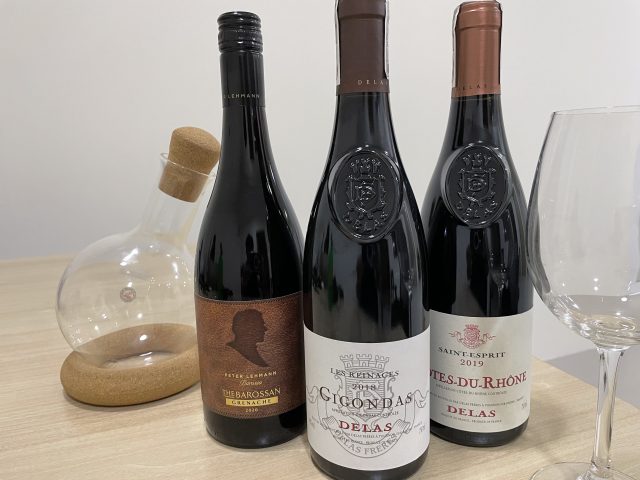
(Left to Right): PETER Lehmann Barossan Grenache, Delas Gigondas and Delas Cotes du Rhone

OUTSIDE of Nebbiolo, Tempranillo and Cabernet Sauvignon, my next favorite red varietal is probably Grenache, or Garnacha as it is known in Spain.

Not really known as a mono-varietal wine, even though 100% Grenache can be found in parts of Spain, France, and in the New World countries of Australia and the US, primarily California.

In Spain, a good selection of 100% Garnacha wines can be found in: 1.) the Southern Aregon wine regions of Carinena and Campo de Borja — Bodegas Barsao’s Tres Picos from this DO is quite good; 2.) Priorat, the home of the oldest Grenache vines in the world — Cartoixa d’Scala Dei from this region is absolutely delectable; and, 3.) Rioja, even if Tempranillo is still the undisputed star of this DOCa region — Conde de Valdemar Garnacha is a great example.

In Australia, Grenache is grown mostly in South Australia, where it headlines the GSM or Grenache-Shiraz-Mataro (Mataro is Mourvedre in France) blend, with Barossa Valley churning out really good, aromatic, fuller bodied 100% Grenache versions. The Yalumba Barossa Bush Vine Grenache found in Ralph Wine Shop is an easy wine to love. I like Grenache, even if it does not have that aesthetically appealing deep dark red to purple wine hue we find in Cabernet Sauvignon, Syrah, Malbec, or Zinfandel.

Grenache just appeals to me because it can make real complex wines with its unique floral and violets aromas, red fruits from raspberries to strawberries, gamey and earthy notes, not overly acidic nor tannic. This varietal also improves with oak aging and has that extra alcohol kick too ranging in the 15% strength when fermented dry.

FRENCH GRENACHE
Southern Rhone is the French wine region most known for Grenache wines. Some top-of-mind AOC regions from Southern Rhone include Chateauneuf-du-Pape, Gigondas and Cotes du Rhone. In these three regions, it is hard to find, though it is possible, 100% Grenache wines mainly because of respective AOC rules on blending varietals. But Gigondas would probably come closest to 100% Grenache as most producers are using up to 80% of Grenache in their blend which includes prominent Rhone staples Syrah and Mourvedre. Chateauneuf-du-Pape also uses majority of Grenache in their blend, probably in the 70-75% range, and aside from Syrah and Mourvedre, there are 10 other authorized varietals used in a Chateauneuf-du-Pape rouge wine blend.

Other Southern Rhone AOCs known for using Grenache includes Cotes du Rhone, Vacqueyras, Ventoux (formerly known as Cotes du Ventoux), and the Rosé-only Tavel.

THE GARNACHA FROM PRIORAT
Priorat is one of only two DOCs or Denominación de Origen Calificada in Spain (though it is labeled in Catalan as Denominació d’Origen Qualificada) — the highest classification for a wine region. This is roughly equivalent to Italy’s DOCG or Denominazione di Origine Controllata e Garantita. Priorat got promoted to DOCa from DO Denominació d’Origen in 2001, while the only other DOCa is none other than Spain’s most renowned wine region of Rioja, which got the first DOCa classification in 1991.

What is remarkable is Priorat has only around 2,000 hectares of vineyards and has also one of the lowest yields per hectare in wine production. This has a lot to do with the less productive older vines, very warm climate with little rainfall, and the terrain of the vineyards which are found in steep slopes requiring labor-intensive hand harvesting. But Priorat does have the advantage of a unique soil known as Llicorella — a red soil that is made of black slate with particles of mica and seems perfect for this unforgiving hot climate as Llicorella can absorb heat and is good at retaining water for the long-haul. Llicorella also has inherent minerality that shows up nicely in Priorat wines.

Garnacha vines are the best fines in this region, with the first five pioneers of the Priorat movement in the late 1980s all believing in the potential of the Garnacha varietal. For three years, from 1989 to 1991, this group of five winemakers collaborated to pool the grapes from their respective vineyards, their resources, winemaking skills and shared a winery in Gratallops to make one common wine (though sold under their respective labels). This collaboration triggered the quality evolution in Priorat.

These five pioneering winemakers are still very much visible now with their respective wineries. The most famous, and with the most expensive showcase Priorat wine, the L’Ermita (easily over $1,000/bottle) is Alvaro Palacios under his eponymous winery name. Other Priorat movement members include René Barbier, the leader of the pack, under his Clos Mogador winery; Daphne Glorian of Clos Erasmus; Charles Pastrana of Clos de l’Obac; and Josep Luís Pérez of Mas Martinet. All these five wineries still represent some of the best, if not the best wines in Priorat, which now has over 100 wineries and a growing international reputation for its amazing red wines.

Quantities of their wines are not huge, and they are not cheap too, so some effort may be needed to track these wines down, but they are absolutely worth the money and effort.

Garnacha is still Priorat’s most important varietal and is around 40% of total vineyard plantings in the region.

PRIORAT WINES VS OTHER REGIONS’ GRENACHE WINES
Personally, I feel that the Priorat’s Grenache-dominant wines are really at a different level vis-a-vis their counterparts, including those from Chateauneuf-du-Pape, from Barossa and even from California. Sadly, I never had the chance to taste California’s most acclaimed Grenache wine, Sine Qua Non. I, however, have tasted a few also highly touted Grenache wines, like the Bonny Doon La Cigare Volant. La Cigare Volant is Bonny Doon’s Southern Rhone blend which still contains majority Grenache, and I thoroughly enjoyed this wine, which is a great taste bud changer from our usual fixation with Californian Cabernet Sauvignons, in particular those from Napa Valley.

The author is the only Filipino member of the UK-based Circle of Wine Writers (CWW). For comments, inquiries, wine event coverage, wine consultancy and other wine related concerns, e-mail the author at wineprotege@gmail.com, or check his wine training website https://thewinetrainingcamp.wordpress.com/services


While I have very small sample size of tasting Californian Grenache, I had a more sizeable experience tasting Grenache or Garnacha from Priorat, Barossa, and Rhone. Priorat Garnacha somehow just has a different feel to it. For one, there is a minerality that is more pronounced, which I enjoyed so much, when pleasantly integrated with the luscious fruits, tart, and viscosity of the wine. The Rhone Grenache wines have more floral notes and are a bit more feminine compared to their Spanish counterparts. The Barossa Grenache wines, on the other hand, are more straight-forward, somehow simpler, and have a candied ripeness.

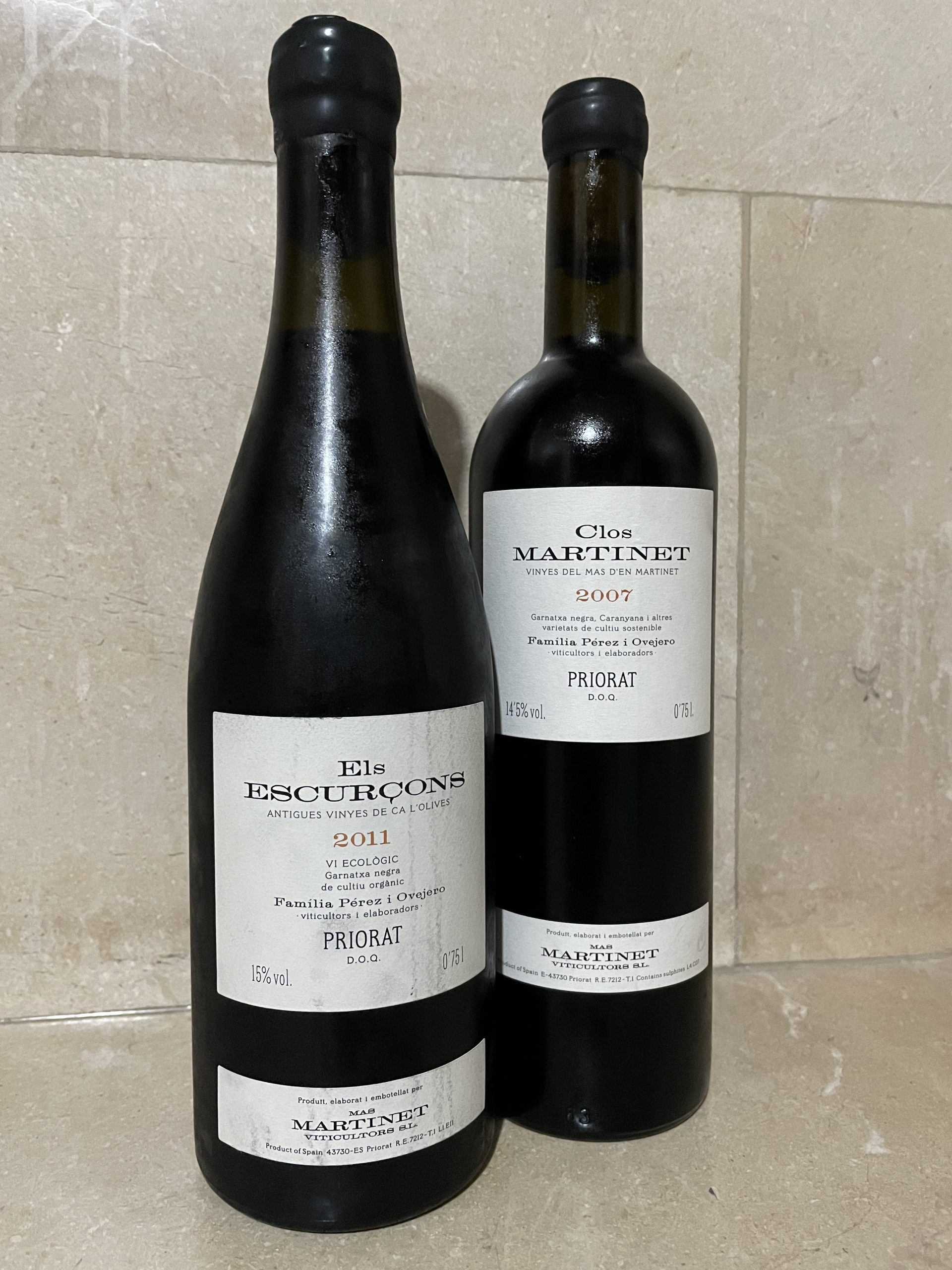
Very recently, I had two very nice Priorat wines back-to-back: the Clos Martinet 2007 and Els Escurcons 2011 — both from one of the five pioneers, Mas Martinet. Both these wines were amazing, and despite being 14- and 10-years-old respectively, both wines were still vivacious and vibrant, full bodied. But the Els Escurcons, which I know to be 100% Garnacha, had more tar characteristics with tobacco leaves, raisins, and longer, lingering finish at the end.

My normal go-to Priorat wine is Mas d’en Gil, which I imported into the country for many years already, but sadly had to discontinue because top Priorat wines are just too expensive and are not saleable to the Filipino wine buyers. Mas d’en Gil has two incredible wines: the Coma Vella and the Clos Fonta. If you see them available in your travels, you will not regret buying them.

If you are not familiar with Grenache, it is time to take a closer look at this varietal. Search for Grenache and its wine regions in your favorite wine store or online wine shop, and let me know your thoughts on these wines when you taste them.

The author is the only Filipino member of the UK-based Circle of Wine Writers (CWW). For comments, inquiries, wine event coverage, wine consultancy and other wine related concerns, e-mail the author at wineprotege@gmail.com, or check his wine training website https://thewinetrainingcamp.wordpress.com/services

Del Monte Foods gets ‘B’ credit rating from S&P

Del-Monte

DEL MONTE Pacific Ltd.’s (DMPL) US unit Del Monte Foods, Inc. received a “B” credit rating from S&P Global Rating for its “continued deleveraging,” parent DMPL shared the document with the exchange on Wednesday.

The company’s “B” credit rating is an improvement over its previous “B-” rating, while its issue-level rating on its debt also went up to “B” from “B-.” The ratings came with a “stable outlook.”

“The upgrade reflects continued deleveraging, driven by revenue growth, productivity improvements, and lower debt balances,” S&P Global Ratings said in its report.

The company reported an 11% growth in sales for its first quarter ending August, on the back of high demand for its branded packaged fruits, vegetables, and beverages that was “partially offset by the company’s planned exit of lower-margin private label business.”

S&P Global Ratings said its new products such as riced vegetables, pocket pies, bone broths, and bubble tea will help the company diversify its product offerings as well as counteract category declines when consumers begin dining out again.

Its pricing actions, such as price increases and reduction of overhead spending, is expected to offset the anticipated inflation for the year.

“The stable outlook reflects our forecast for strong revenue growth and our expectation that the company will be able to offset inflation headwinds with productivity and pricing actions such that leverage will be in the low-3x area in fiscals 2022 and 2023,” S&P Global Ratings said.

“We also expect at least break-even free cash flow generation in 2022 and above $50 million in 2023,” it added.

S&P Global Ratings noted the influence of Del Monte Pacific, adding that the parent firm “will likely provide” assistance to Del Monte Foods if needed through additional liquidity, capital, or risk transfer.

“Del Monte Foods represents more than half of the group’s EBITDA (earnings before interest, taxes, depreciation, and amortization). The group credit profile has continued to improve due to Del Monte Foods’ better profitability and cash flow, as well as sustained growth in Asian operations,” it said.

Shares of parent Del Monte Pacific at the stock exchange improved by 1.40% or 20 centavos on Wednesday, closing at P14.48 each. — Keren Concepcion G. Valmonte

Imported car sales down 12% in September

REUTERS

TOTAL imported car sales in September declined 12% year on year to 4,946 units led by weaker passenger car sales, the Association of Vehicle Importers and Distributors, Inc. (AVID) said.

AVID said in a statement on Wednesday that passenger car sales for September fell 28% year on year to 1,432 units from 1,992 units sold in the same month last year.

Further, the group said sales of light commercial vehicles (LCV) and commercial vehicles (CV) for September posted a decline of 3% and 13% to 3,488 units and 26 units, respectively.

Month on month, total imported car sales increased 26% compared with 3,919 units sold in August.

Year-to-date figures disclosed by AVID showed that total vehicle sales for the three quarters to September rose 26% to 43,957 units.

“We have weathered the volatile market conditions of the third quarter. With improving health conditions and a more stable outlook, AVID is optimistic and driven to wind up this last quarter on a strong note,” AVID President Ma. Fe Perez-Agudo said.

The group added that year-to-date CV sales rose 311% year on year to 917 units.

“Hyundai Asia Resources, Inc. (HARI) trucks and buses have been on a roll, capturing 98% of total AVID CV sales. The Korean brand sold 906 units year to date, which is a significant improvement from the 223 units sold in the same period last year,” the group said.

Meanwhile, AVID said year-to-date LCV sales increased 37% year on year to 31,444 units.

It disclosed that Ford Group Philippines, Inc. (FGPI) led the segment with 13,258 units sold, followed by Suzuki Philippines, Inc. (SPI) with 8,677 units, and Sojitz G Auto Philippines (SGAP) with 3,818 units sold.

On the other hand, AVID said year-to-date sales of passenger cars dropped 1% year on year to 11,596 units.

SPI had the highest sales at 5,768 units followed by HARI at 3,829 units, and FGPI at 1,446 units.

In March, Ms. Perez-Agudo said imported car sales growth in 2021 is expected to reach between zero and 20%.

Recently, a joint report of the Chamber of Automotive Manufacturers of the Philippines, Inc. (CAMPI) and Truck Manufacturers Association (TMA) also showed that their vehicle sales in September declined 12.4% year on year to 21,493 units. — Revin Mikhael D. Ochave

Pinoy ingredients shine in Irish pork, beef recipe tilt

LABANOS, Ilocano vinegar, and pahimis coffee were just some of the local ingredients paired with Irish pork and beef by the top 10 semi-finalists in the East Meets West Culinary Competition by Bord Bia (the Irish Government Food Board). And it is this kind of mix of Filipino ingredients and Irish proteins that has the judges excited.

Out of a pool of 200 recipes, 10 semi-finalists have been selected, to be cut down further to the top five finalists by Nov. 8, after which the finalists will showcase their culinary talents by cooking their winning recipes at a cook-off. The winners will then be announced by rank highlighting the overall winner.

The champion is set to win P325,000 in prize vouchers, a hotel staycation with Irish breakfast, high-quality chef’s kit supplies, and a cooking class with the judges: chefs Philip John Golding (Founding Chairman & President of Disciples de Escoffier International Asia – Philippines) and Mark Hagan (Executive Chef of Grand Hyatt Manila – Bonifacio Global City). The judging panel is completed by last year’s winner, Donie Bigcas, and Bord Bia representatives.

The top 10 semi-finalists are:

  • Bianca Abola (a student at De La Salle, College of Saint Benilde, for the recipe Bulcachong Smoked Curry),
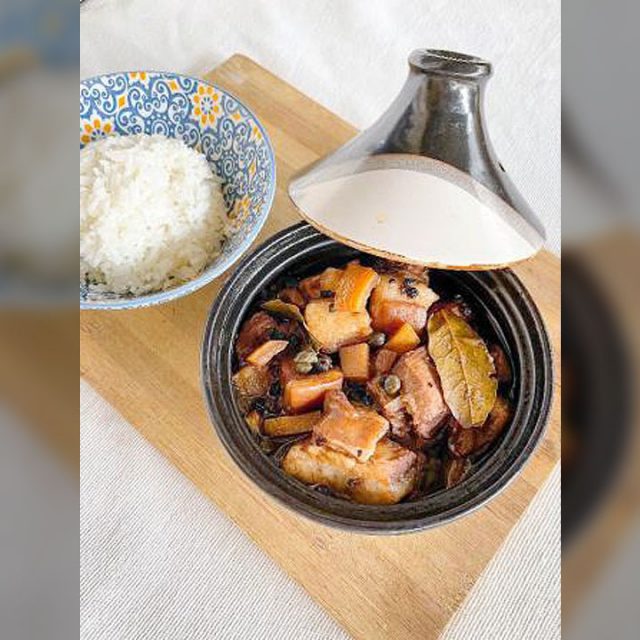
  • Mae Romelin Almirante (a student at La Flamme Bleue Center for Culinary Arts, Iloilo City, for the recipe Preserved Lemon and Capers Pork Adobo Tagine),
  • Joaquin Carsi Cruz (a student at the Center for Culinary Arts – Manila, for the recipe Charred Onion Adobo with Sweet Garlic Puree and Ensaladang Mangga),
  • Marc Rensus H. Espinosa (a student at the University of Santo Tomas, for the recipe Striploin Bistek),
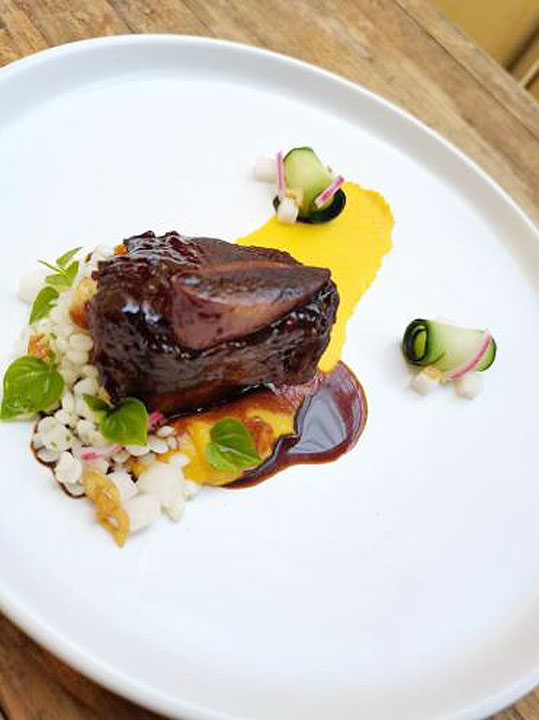
  • Mae Loren Guerrero (a student at Apicius Culinary Arts, Laoag, for Sticky Pork Belly with Sukang Ilocos),
  • Ibrahim Hawari (a student at Apicius Culinary Arts, Parañaque, for the recipe Bilbilunak – Bilbil Belly and Bilunak Spinach),
  • Miguel Antonio S. Lorino (Chef Instructor at the Center for Culinary Arts – Manila, for the recipe Kabisera: European Pork Belly Braised in Pahimis Coffee),
  • Charmanie Pua (a student at the Center for Culinary Arts – Manila, for the recipe Bistek Asado with Garlic, and Tausi Suman, Ensaladang Labanos, Pinya at Kamatis, and Pork Crackling Crumbs),
  • Louise Orlane R. Reyes (a student at the University of Santo Tomas, for Short Rib Beer Pares), and
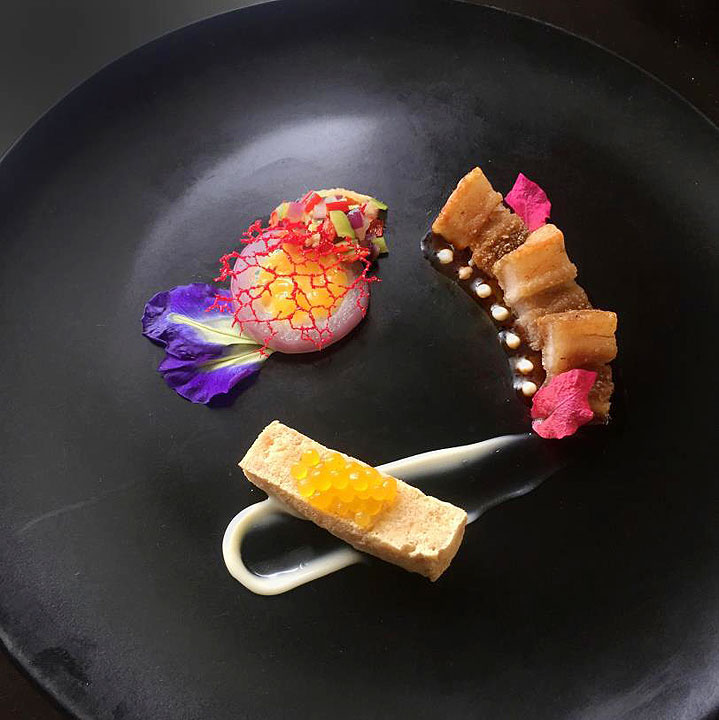
  • Kenneth M. Villanueva (a student at the University of Batangas for the recipe Deconstructed Pork Belly Sisig with Lime caviar, Chicken Liver Pate and Homemade Mayonnaise).
  • From Oct. 15-30, the semi-finalists are tasked to submit and present their pork and beef recipes in their own creative way in a short video describing the positive aspects of the dish, such as aroma, taste, and texture. The judges will evaluate their recipes according to the following judging criteria: creativity (40%), presentation (30%) and video introduction (30%) for selection of the top five finalists.

“The panel of judges was thrilled by the imaginative recipes that featured endemic, regional and indigenous Filipino ingredients like labanos (radish), sukang Ilocos (vinegar), and pahimis coffee (an exclusive blend of roasted Robusta, Arabica, Excelsa, and Liberica),” said a statement from Bord Bia. It pointed to specific recipes as being the kind of that the judges found interesting: “Charmaine Pua, a student of Center for Culinary Arts Manila, won her place in the semi-finals with her entry called Bistek Asado with Garlic and Tausi Suman, with Ensaladang Labanos, Pinya at Kamatis and Pork Crackling Crumbs. This recipe was inspired by the traditional Chinese dish called Machang. Another interesting recipe was Bulcachong Smoked Curry by Bianca Abola of De La Salle University – College of Saint Benilde. Bulcachong is typically a Filipino soup cooked with carabao meat. It is unique as well as comforting and traditional.”

In an e-mail interview with BusinessWorld, Mr. Golding described what exactly the judges are looking for. “A great story! Real passion and creativity. Above all, a real tasty thought-out dish oozing with flavor,” he said.

“This is to be determined in the top 10 selection when they submit their recipe videos and I’m really looking forward to the stories behind the dishes.”

Mr. Golding said he is already looking forward to “the adobo tagine, a smoked curry, and some clever elevated regional local dishes.”

Commenting on the use of relatively obscure regional ingredients, he said, “I would say more than ever that there’s a real focus on creativity and respect for heirloom local regional recipes with sincerity and honesty.”

This marriage of ingredients, the whole point of the contest, highlights the compatibility of Irish pork and beef with what the Philippines has to offer. “Farming in the Philippines is a hot topic, while regional side dishes are going through a culinary revolution, which makes it even more relevant and exciting to pair with the Irish proteins that are grass-fed, healthy, meaty, and tasty!,” said Mr. Golding.

Mr. Bigcas, last year’s winner, said that now that he’s on the other side of the fence, he will be looking for “a dish that not only tastes good and is presented well, but (one where) we can taste the story in every bite: a dish that would tell a story from its spice to its sourness or sweetness; a balance of history, culture and personal experience. The taste and texture would also tell the story of (how) the products were cultivated and produced.” His entry last year, Bisperas ng Pista (Eve of the Festival) —  braised Hamonado Pork Jowl, Sweet Potato Puree, and Pineapple Atchara —  had been inspired by fiestas in his Capiz hometown.

For more details of the European Pork and Beef Campaign in the Philippines, a campaign financed with aid from the European Union, visit the website https://europeanporkbeef.com/ph, their Facebook page: http://www.facebook.com/EUPorkandBeefPH/, and Instagram page: http://www.instagram.com/euporkbeef_ph/. — Joseph L. Garcia

Converge entices businesses with cloud connectivity solutions

CONVERGE ICT Solutions, Inc. introduced its “cloud connectivity solutions” on Wednesday, capitalizing on the growing demand for high-speed and private data connectivity among businesses.

“These solutions are proven valuable in optimizing operations and promoting work efficiencies to help businesses and enterprises thrive in their respective industries,” Gilbert T. Virtucio, head of product management and network solutions at Converge, said at a virtual media event.

The company’s cloud connectivity solutions for businesses offer three products: Cloud Upload Booth, Cloud Direct Connect, and Dedicated Internet Access (DIA) Upload.

Converge’s Cloud Upload Booth is an on-premise service that offers access to premium LAN (local area network)-based 10 Gbps (gigabits per second) internet connectivity. This service allows businesses to upload large files to cloud platforms, the company said.

“The working space is in an exclusive and secure upload booth located in Reliance IT Center, Pasig City,” it noted.

The Cloud Direct Connect is for businesses that want to connect their local information technology infrastructure to their public cloud resources “but want lower latency and consistent, predictable performance.”

As for the DIA Upload, Converge said this service offers “asymmetric upload and download, with the upload speed being two times higher than the download speed, unique in the industry.”

“The higher upload speed makes DIA upload suitable for applications that are heavy on outbound traffic,” Converge noted. — Arjay L. Balinbin

Datu Puti gets plastic neutral certification

CONDIMENTS manufacturer and distributor NutriAsia partnered with Plastic Credit Exchange (PCX) in its efforts to promote sustainability, and now its Datu Puti brand has been given a plastic neutrality certification from PCX.

The move to make the entire Datu Puti product line plastic neutral is not just meant to reduce the impact plastic has on the environment, but to inspire Filipinos to make more sustainable lifestyle choices through the products they support.

“Datu Puti has been a part of many Filipinos’ lives for decades, which is why it was best to start with it as a pioneer brand in sustainability. This puts Datu Puti in a prime position of being a catalyst and a leader of positive change toward a more sustainable world, helping fellow Filipinos adopt a more environment-friendly lifestyle through the products we offer,” said Mario Mendoza, NutriAsia’s Broad Culinary Marketing Group head, in a statement.

Achieving plastic neutrality entails calculating the plastic usage in Datu Puti’s bottles, bottle caps, cap seals, and stand-up pouches, then, through PCX, diverting an equivalent amount of post-consumer plastic from nature. The collected plastic is transformed into an alternative source of energy for creating cement and other products. This provides a more sustainable way of managing plastic waste.

“The problem of plastic waste is a concern that we simply cannot take on alone. We congratulate NutriAsia on their important decision and milestone of achieving plastic neutrality with Datu Puti, and we at PCX are happy that the company has chosen to partner with us and take up this noble advocacy,” said Nanette Medved-Po, founder of PCX.

Since 2014, NutriAsia has been active in sustainability projects like Datu Puti’s Jumbohalang Tambalan, Refill Revolution in partnership with the Department of the Environment and Natural Resources, BYOB (Bring Your Own Bote), the  NutriAsia EcoStation, and Select & Collect. — MAPS