Home Blog Page 6967

It’s 100 days ‘til Christmas, and it’s all about caring and giving at SM Supermalls


The past years have always had us counting down to the most wonderful time of the year when the ‘ber’ months roll in; Christmas carols fill the air, dazzling tree lights dot the streets, shopping for gifts becomes a sport, and everyone else goes on a diet to make way for Christmas feasts.

This year may not be as festive as previous years, but it will most certainly be more meaningful. SM showed us the most uplifting way to best celebrate the season with “100 Days of Caring”; featuring 100 days of spreading love, thoughtfulness, and care for one another and for the communities surrounding our favorite SM malls. The virtual event showcasing the pledges happened Thursday, Sept 16, 2021 over FB Live and WatchSM on YouTube.

“100 days of Caring”

To kickstart the Christmas countdown, SM pledged to donate to over 10,000 beneficiaries, namely communities in need, hardworking SM employees, medical frontliners and dedicated delivery partners, among others. Some of the beneficiaries and their partner malls are as follows:

  • SM North EDSA is giving 100 pairs of World Balance rubber shoes to seniors from Graces Home for the Elderly in Quezon City.
  • SM Megamall, The Podium, and SM Center Pasig chose delivery partners who will be recipients of 100 raincoats and rain boots.
  • From SM Mall of Asia, 100 sets of care packages like face masks, face shields, Ensure milk, vitamins, supplements, and more, will be handed over to senior citizens within the community.
  • SM Southmall chose SOS Children’s Villages as to receive various story and educational books.
  • Metro Manila and Rizal malls chose several orphanages, namely: Associacion De Damas Filipinas, Bahay Aruga, White Cross Orphanage, and The Little Children’s Home to receive 100 toys and essential goods each, especially prepared by SM City Manila, SM City San Lazaro, SM City Sta. Mesa, SM City Taytay and SM Center Angono.
  • In North Luzon, 100 Aeta families from Zambales and Tarlac will be given grocery packs by SM City Olongapo Downtown, SM City Olongapo Central, and SM City Tarlac; fishermen in Pangasinan will be handed with fishing supplies by SM City Rosales, SM City Urdaneta Central, and SM Center Dagupan; while select tricycle and jeepney drivers in Bulacan will be given 100 pairs of shoes by SM City Marilao, SM City Baliwag, and SM Center Pulilan.
  • SM City Bacoor will give 100 brail books to the Deaf & Blind Foundation Philippines.
  • In the Visayas, SM City Cebu will bring smiles to kids of Kythe Foundation with 100 toys; while SM City Iloilo will give 100 25kg sacks of rice to healthcare and peace & order frontliners. SM City Puerto Princesa on the other hand, will have 100 grocery bags to displaced tourism personnel.
  • SM City Davao and SM Lanang Premier will be handing out 100 farming tools to local farmers; while SM City Butuan will be giving 100 Fiesta Food Packs to Por Cristo Foundation, Inc.

‘Gift’ for your mental health

Aside from our physical health being at risk during a pandemic, our mental health is also affected due to the stress and anxiety these times bring. And since SM believes in the value of taking care of our mental health, Dr Gia Sison, MD DPCOM gave a ‘Call to Share’ talk during the virtual launch. Dr Gia Sison is a mental health advocate and co-founder of PH Leader Livestrong Foundation. Her talk centered on how to cope during this stressful time and still find hope in a better tomorrow.

100 voices that care

If there’s one thing that binds us all Filipinos together, it’s our passion and love for music. While we may not be allowed to have big gatherings this year, SM entertained the audience with the performance of the 3 Divas – Rahda, Frenchie and Bituin Escalante; later on joined by 100 artists, singers, and SM employees and stakeholders who came together to sing during the virtual launch on Sept 16.

We may be in the middle of a pandemic, times may be tough, and many of us may be physically apart, but let’s not forget what this season truly means. To view the event, go to WatchSM on YouTube.

For more information, visit www.smsupermalls.com and follow @smsupermalls on all social media accounts.


Spotlight is BusinessWorld’s sponsored section that allows advertisers to amplify their brand and connect with BusinessWorld’s audience by enabling them to publish their stories directly on the BusinessWorld Web site. For more information, send an email to online@bworldonline.com.
Aboitiz Group wins Gold Stevie Award for Employer of the Year

The Aboitiz Group bagged several awards recognizing the company as a great employer by exemplifying exceptional employee engagement programs. The prestigious honours were conferred by global award-giving body Stevie® Awards.

The Group took home the Gold Stevie® for Employer of the Year in the Conglomerates category and a Silver Stevie® for Achievement in Employee Engagement for its entry ‘Aboitiz Group: Leaders as Primary Drivers of A Positive Culture of Engagement’ at the 2021 Stevie® Awards for Great Employers.

“At the core of our business are our people and it will always be about our people. Their dedication and innovation enable us to stay focused on ensuring that our vital services remain available for all our stakeholders, especially through challenging times,” said Aboitiz Group President and CEO, Sabin M. Aboitiz. “These awards affirm the unwavering commitment of our A-People as we create for ourselves the kind of environment that allows individuals to thrive both in their careers and in their personal lives.”

Susan V. Valdez, Chief Human Resources Officer and Chief Corporate Services Officer for Aboitiz Equity Ventures, Inc. (AEV), also highlighted the company’s early pivot to the digitalization of different employee activities, which kept them engaged and productive even in a virtual set-up.

“With the ongoing pandemic, we had to quickly shift all our learning and development to the virtual space and the results showed that uptake on our e-learning surpassed even the physical classes from pre-COVID. Early digital transformation had a lot to do with it but, more than that, it’s because we have an agile and engaged workforce that can adapt quickly to unexpected challenges and opportunities,” Valdez said.

She also believes that caring for team members’ mental and psychosocial health is critical to continued success in business outcomes. “We believe the key is assuring team members that their well-being is top priority for the Aboitiz Group, no matter what. All of these are strong drivers to achieving our overall environmental, social, and corporate governance (ESG) goals.”

Meanwhile, the Aboitiz Group’s banking and financial subsidiary, Union Bank of the Philippines (UnionBank), was awarded a Silver Stevie® for Employer of the Year in the Banking category and a Bronze Stevie® for UnionBank’s Michelle Rubio as Chief Human Resource Officer of the Year.

Conceived as a means to enhance public confidence and investor trust, the Stevie® Awards for Great Employers is an international business awards competition that is open to all organizations worldwide. The awards recognize the world’s best companies to work for, and the HR teams, professionals, achievements, new products, and suppliers that help create and drive great places to work.

Stevie judges were composed of over a hundred esteemed professionals from around the world. The judges assigned to evaluate said categories expressed admiration for the century-old conglomerate’s tenacity, resilience, and ability to rollout new initiatives, as well as the leadership’s proactive approach to employee engagement. “The engagement of your CEO is admirable and impactful,” said one of the judges.

Another judge commended the company saying, “Great initiatives with the CEO like the SuperDuperCon town hall meetings, Welcome A-board, up close sessions to give opportunities to increase awareness, comfort, and psychological safety across the company. Very well done!”

(File photo) Sabin Aboitiz and a team member during one of the early episodes of SuperDuperCon

“SuperDuperCon” sessions are regular Group-wide virtual discussions hosted by the Group CEO himself. During the sessions, he shares updates on Group directions and topics relevant to employees. Apart from updates, the core of every SuperDuperCon is a live Q&A session where all team members can participate by asking questions or providing feedback in real time.

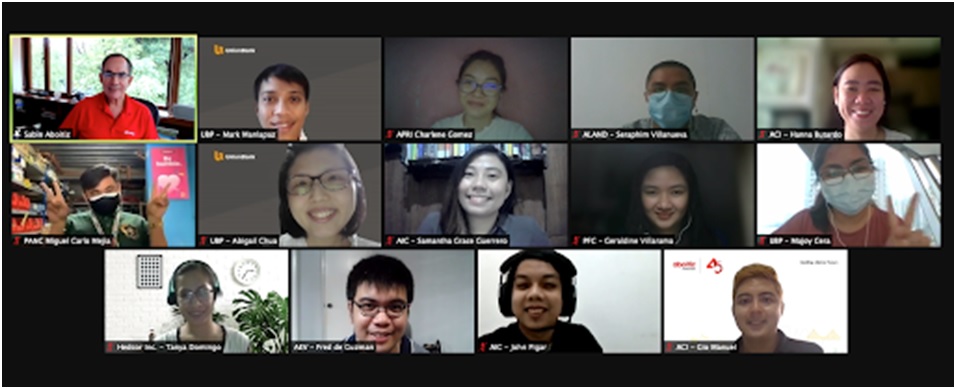
Aboitiz Group CEO Sabin M. Aboitiz welcomes a new batch of team members during a Welcome A-board session

Also, to cultivate a culture of open communication and courageous authenticity early into an Aboitiz employee’s journey, newly-hired team members are invited to “Welcome A-board,” a personal meet-and-discuss session with the Group CEO. Through this session, they are introduced to the Aboitiz Way, a summation of the Group’s culture and values.

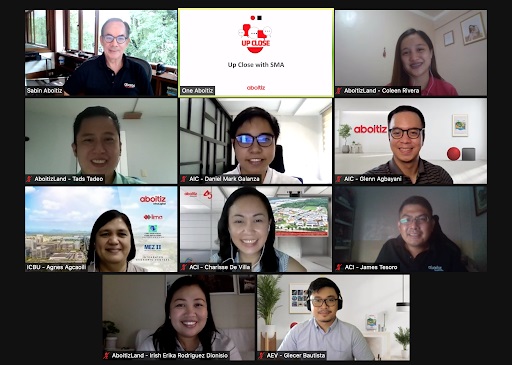
Team members from various departments join an UpClose session with Group CEO  Sabin M. Aboitiz

“UpClose with SMA” are small group sessions that provide opportunities for other team members and executives across different business units to get up close and personal with Group CEO Sabin Aboitiz. In these sessions, everyone has the opportunity to learn with and from each other by giving feedback and sharing ideas.

Among the Aboitiz Group’s many initiatives to support its A-people personally and professionally include the vaccination rollout for all its team members, an expansion of healthcare coverage to include LGBTQ+ and common law partners of employees, and a multitude of learning and development opportunities offered through LinkedIn Learning and other similar programs.


Spotlight is BusinessWorld’s sponsored section that allows advertisers to amplify their brand and connect with BusinessWorld’s audience by enabling them to publish their stories directly on the BusinessWorld Web site. For more information, send an email to online@bworldonline.com.

Top-earning influencers face BIR audit

Figures are seen in front of displayed social media logos in this illustration taken on May 25, 2021. — REUTERS
Figures are seen in front of displayed social media logos in this illustration taken on May 25. — REUTERS/DADO RUVIC/ILLUSTRATION

By Beatrice M. Laforga, Reporter

THE Bureau of Internal Revenue (BIR) is set to investigate 250 top-earning social media influencers for tax compliance, as the government tries to address revenue leakage. 

The Department of Finance (DoF) on Thursday said the BIR had issued letters of authority to 250 influencers that are considered as the “top earners” in the industry, following the release of Revenue Memorandum Circular (RMC) No. 97-2021 on Aug. 16. that compelled them to register and pay taxes.

Once the letter of authority is issued, a revenue officer can begin its audit of the taxpayer’s accounts.

“We encourage them to register, and then we have the profiling of over 250 personalities. We will do the investigation so that they would pay the necessary corresponding tax on their earnings,” BIR Deputy Commissioner Arnel SD. Guballa said in the statement.

Mr. Guballa said in a separate Viber message the agency could not disclose the names of the influencers to be investigated due to privacy issues.

Influencers are those who generate income, whether in cash or kind, from their posts on various digital media platforms like YouTube, Facebook, Instagram and Tiktok. The BIR considers them as self-employed individuals or persons engaged in business as sole proprietors.

In RMC 97-2021, the BIR said influencers should pay income and business taxes, whether in the form of percentage tax or value-added tax, depending on the nature of their earnings.

Influencers should declare their earnings from YouTube’s Partner Program, sponsored social and blog posts, advertising, brand sponsorships, affiliate marketing, co-creation of products, photo and video sales, digital subscriptions, e-books, podcasts and webinars.

The BIR said influencers should also declare as income the fair market value of free goods they receive in exchange for promotions.

Earnings generated via royalties from foreign countries, like payments under the YouTube Partner Program, should also be included in the gross income of influencers and are subject to tax.

Given the existing tax treaties the Philippines has with other nations, the BIR said it has a “special power” of obtaining the needed information from foreign tax authorities and verify the income of influencers.

The BIR warned that those who deliberately evade taxes face criminal charges under the Tax Code.

To avoid double taxation, influencers should also inform the countries where they generate their income, that they are residents of the Philippines to avail themselves of the tax treaty benefits, if applicable.

“The BIR may safely rely on the data provided by its treaty partners to establish the influencer’s tax liability,” according to the circular.

“The social media influencers are, therefore, advised to voluntary and truthfully declare their income and pay their corresponding taxes without waiting for a formal investigation to be conducted by the BIR to avoid being liable for tax evasion and for the civil penalty of 50% of the tax or of the deficiency tax,” it added.

BIR Deputy Commissioner Marissa O. Cabreros said in a Viber message claiming treaty benefits could lower the taxes to be paid by influencers. This means influencers should obtain a tax residency certificate.

The Creator and Influencer Council of the Philippines (CICP) said they have reminded members to comply with their tax obligations.

“We have also reached out to BIR to request for a dialogue on opportunities and initiatives that can simplify compliance. We are hopeful that our dialogue will take place soon for the benefit of all concerned stakeholders,” the group said.

The move of the BIR to audit influencers has been widely expected since it is part of its mandate, Maria Lourdes P. Lim, a managing partner at Isla Lipana & Co., PwC Philippines said in a mobile phone message.

“There is an audit process and in line with the due process requirement, the taxpayer is given the opportunity to present its side to refute the deficiency tax findings of the BIR. So the timing will depend on how quickly the BIR can complete its investigation and the response of the taxpayer — whether to agree or contest the findings,” Ms. Lim said.

The audit of influencers would also help the BIR raise more revenues, Raymond “Mon” A. Abrea, founding chairman and a senior tax advisor of the Asian Consulting Group, said in an e-mail.

“Definitely, there’s still lack of awareness among social media influencers and the public in general when it comes to tax compliance despite the efforts of the BIR to educate the public and improve the ease of paying taxes,” he said.

“The investigation will probably continue until BIR sees a significant increase of registration and tax compliance among social media influencers. However, given the amount of revenues generated from these digital platforms, they may be included in the annual priority program of BIR in their audit and investigation,” he added.

Moody’s downgrades PHL growth forecast

PHILIPPINE STAR/ MICHAEL VARCAS

By Luz Wendy T. Noble, Reporter

MOODY’S Investors Service once again cut its economic growth forecast for the Philippines to 4.8% this year, citing the impact of stricter lockdowns and the sluggish vaccine rollout on recovery.

“Another resurgence in cases led to the reimposition of the enhanced community quarantine (ECQ) in August, weighing on the outlook for growth in the third quarter of 2021 and delaying the normalization of economic activity further,” Moody’s said in a credit opinion sent in response to queries on Thursday.

Moody’s latest estimate is slower than the 5.8% it gave in July, which was also downgraded from the original 6.3% target. It falls within the government’s 4-5% full-year growth target.

Meanwhile, the credit rater slightly raised its 2022 gross domestic product (GDP) growth forecast to 6.8% from 6.5%.

The Philippines continues to battle a surge in coronavirus cases. The Health department reported that active coronavirus infections rose by 21,261 to 177,946 on Thursday.

Aside from the surge in cases, Moody’s said the Philippines’ relatively low vaccination rate has underscored the risks related to the near-term growth outlook.

Latest data from the Johns Hopkins University showed the Philippines has fully vaccinated 16.35% of the population against the coronavirus. However, it is still among the region’s laggards and is faring only better than Indonesia, Vietnam, Taiwan and Myanmar.

The Philippine government hopes to inoculate 70% of its population by end-2021, although this may be affected by delays in the delivery of vaccine supplies.

Meanwhile, Moody’s said the fiscal deficit would likely remain wide and could peak this year.

“The comparatively rapid increase in expenditure is unlikely to rise further given constraints to budget execution and the Duterte administration’s reluctance to consider another fiscal stimulus package following the expiration of the previous package,” it said.

The government projects budget deficit to drop to 7.5% of GDP in 2022 and to 6.3% in 2023.

Moody’s last affirmed its “Baa2” credit rating with a stable outlook for the Philippines in July 2020.

“The stable outlook reflects the view that the recovery from the acute shock posed by the coronavirus pandemic will restore rapid economic growth relative to peers, complemented by the stabilization and eventual reversal of the deterioration in fiscal and debt metrics,” Moody’s said.

In July, Moody’s said the Philippines and other emerging economies such as India and Peru may face “deep scarring” or long-lasting economic losses from the pandemic that will be seen in lower income levels, worsening inequality, and higher poverty incidence.

Revival of EU-PHL free trade talks sought

REUTERS

By Jenina P. Ibañez, Reporter

A EUROPEAN investors’ group wants a revival of free trade talks between the Philippines and the European Union (EU) to expand local exports to the 27-nation union.

“I think that we need seriously to move forward with a free trade (deal) between Europe and the Philippines,” European Chamber of Commerce of the Philippines (ECCP) President Lars Wittig said in a virtual interview last week.

“The time is right to move forward and get that trade agreement in place. We just have too much to gain not to do it.”

The first round of free trade agreement (FTA) negotiations between the Philippines and the EU was held in May 2016. Talks have since stalled, and an EU-ASEAN business sentiment survey in 2019 found that the business sector’s enthusiasm on the potential trade deal had waned.

Mr. Wittig said smaller domestic manufacturers in the provinces would benefit from reduced trade barriers, especially companies that are not in export development zones.

“Also, when you look at where the shortages are in Europe — skills, people, human capital and so on — there are many things where we could benefit and vice versa,” he said.

“In order to actually avail ourselves of free trade, we need to adapt to certain practices in order to do so. There has to be this exchange of know-how and technology. And we want to get as much of that out here impressed upon the businesses and the employees.”

In the meantime, Mr. Wittig said he finds trade perks under the EU’s Generalized Scheme of Preferences Plus (GSP+) to be comprehensive. Under the GSP+, many Philippine products enjoy duty-free access to the EU market.

The EU has free trade deals with two Association of Southeast Asian Nations (ASEAN) countries, Singapore and Vietnam.

The ECCP represents companies that are mostly in the outsourcing, food and beverage, manpower, and pharmaceutical sectors. Mr. Wittig said there is still growing interest in the Philippines from the transport, telecommunications and green energy industries.

The ECCP is one of several business groups in the Philippines that have been backing several bills that will open up the country to more foreign investment.

“(In ASEAN) we are all competing about the same investments. I’m sure we will continue to get a good share of the investments, but we should not settle for a good share in the Philippines. We want to have a giant share,” Mr. Wittig said.

Water sector needs P1-T investment until 2030

PHILIPPINE STAR/EDD GUMBAN

THE government on Thursday unveiled a master plan to improve the country’s water supply and sanitation that would require P1 trillion in new investments until 2030.

Based on the Philippine Water Supply and Sanitation Master Plan, P734.32-billion in investments was needed between 2020 and 2023, while another P335 billion is needed for the succeeding seven years to achieve universal access to water supply and sanitation for all Filipinos and meet development goals.

The National Economic and Development Authority (NEDA) said the master plan would be funded mainly by the national budget, and the unrealized spending targets should be carried over to meet water-related development goals.

Considering an average of P100 billion in yearly budget requirement, NEDA Assistant Secretary Roderick M. Planta said the government only spent an average of P5 billion in the past two years, which translated to a staggering P95-billion annual investment gap that needs to be addressed in the next nine years.

“That’s why [there is also a] need to have proper regulatory institution for the sector because inconsistent regulation across different regulators could sort of stifle investment from the private sector,” Mr. Planta said.

Socioeconomic and Planning Secretary Karl Kendrick T. Chua cited the need to provide 57 million Filipinos with water connections and avoid a repeat of the 2019 water crisis in Metro Manila.

“Gaps in our sanitation service subsector also pose other health risks. Only 18% of Filipinos have access to septage management services, while merely 13% have access to a sewerage system. Worst of all, more than four million Filipinos are still constrained to practice open defecation. These conditions expose Filipinos to higher risks of acute bloody diarrhea, cholera, typhoid fever, and other waterborne diseases,” Mr. Chua said on Thursday.

The NEDA Board Committee on Infrastructure approved the master plan on April 6, creating a singular framework for planning, program implementation and funding in the water sector.

Mr. Planta said establishing a single water regulatory body that will consolidate the fragmented agencies would not only contribute to the sector’s growth but also help boost resources and attract investments.

“Institutional reforms for the sector is the linchpin of the master plan because countless studies have shown that fragmentation of the sector needs to be addressed to ensure that investments would come our way,” he said.

The NEDA backed the creation of a Department of Water Resources as the apex body to implement the master plan, and an independent economic regulatory board.

“The idea is to get all the water sector-related functions from different agencies and amalgamate these into one institution. If the legislation did not push through over the short term, the alternative option is to strengthen the National Water Resource Board, which can be done through an EO (executive order),” he said. — Beatrice M. Laforga

Banks told to find new reference rates ahead of LIBOR’s phaseout

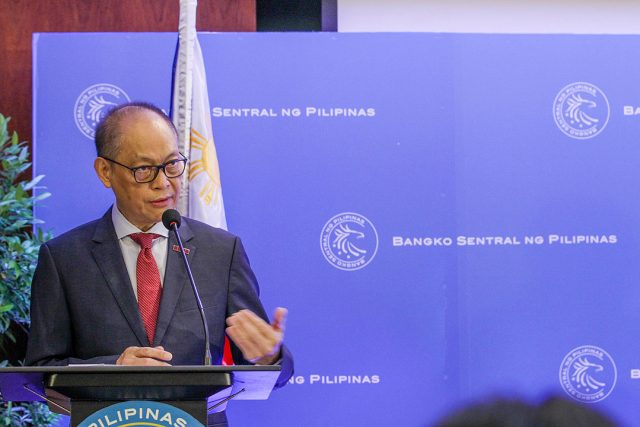
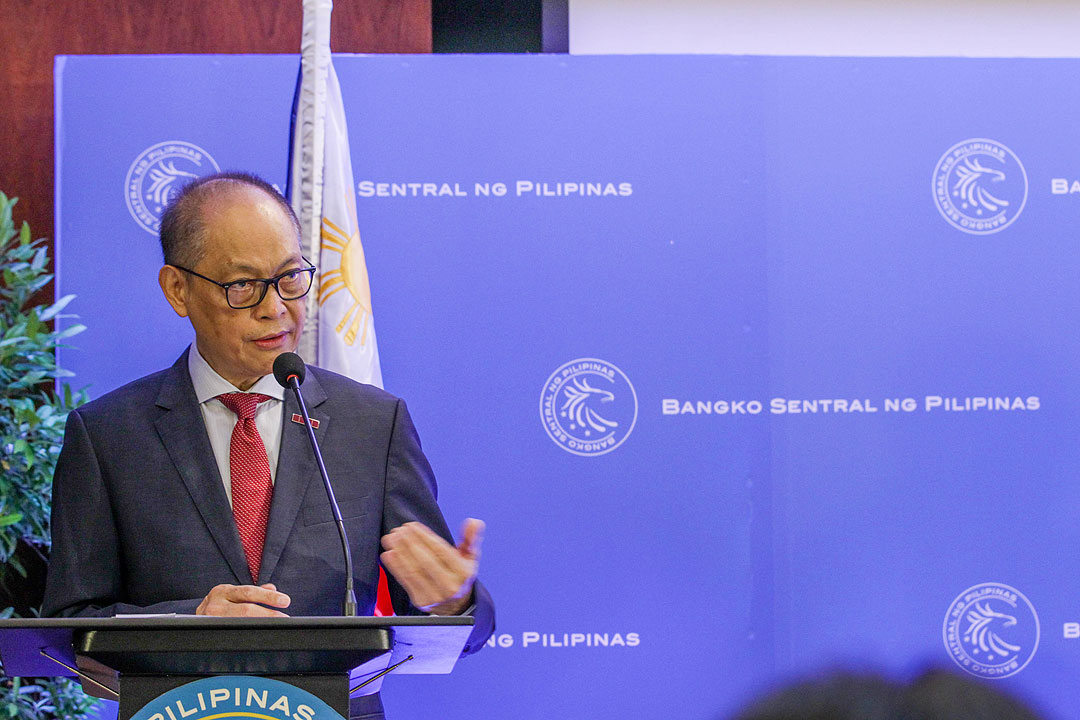
BANGKO SENTRAL NG PILIPINAS GOVERNOR BENJAMIN E. DIOKNO — PHILIPPINE STAR/ GEREMY PINTOLO
BANGKO SENTRAL ng Pilipinas Governor Benjamin E. Diokno said banks should find new benchmark rates. — PHILIPPINE STAR/ GEREMY PINTOLO

THE BANGKO SENTRAL ng Pilipinas (BSP) told financial institutions to shift from using the London Interbank Offered Rate (LIBOR) as a benchmark as it is due to be phased out soon.

“The inability to establish replacement rates for outstanding LIBOR-referencing contracts when LIBOR ceases will render financial institutions and their counter-parties or clients incapable of repricing and valuing their financial exposures,” BSP Governor Benjamin E. Diokno said at an online briefing on Thursday.

“Banks must ensure that necessary systems and infrastructure and implement appropriate contractual arrangements prior to the cessation of LIBOR are in place,” Mr. Diokno said.

The central bank chief said the BSP is not looking to impose alternative reference rates for the LIBOR, saying these choices are market-driven.

He added that the LIBOR’s phaseout will not have an impact on peso-dollar trading.

“The peso will continue to be market-determined and based on actual done trades in the dollar-peso spot market,” he said.

On March 5, the United Kingdom’s Financial Conduct Authority and the International Exchange Benchmark Administration, the administrator of LIBOR, said it will stop publishing rates for one-week and two-month tenors by Dec. 31 and for overnight, one-month, three-month, six-month and 12-month tenors by June 30, 2023.

The LIBOR is being phased out as a benchmark as rates submitted to set it are mostly based on estimates and not on actual transactions, making it vulnerable to manipulation. Reports said the change will affect more than $200 trillion in transactions and loans.

In the Philippines, the LIBOR is still used for some fixed-income securities available in the market, as well as interest rate and cross-currency swaps. The Philippine Interbank Reference Rate (PHIREF), which is used for interest rate swaps, cross-currency swaps and some peso corporate loans, is also computed using dollar LIBOR.

The central bank last year issued BSP Memorandum No. M-2020-083, which required financial institutions to report their LIBOR-related exposures.

The Alternative Reference Rates Committee convened by the US Federal Reserve Board and the New York Fed has been promoting the Secured Overnight Financing Rate (SOFR) as an alternative to the LIBOR. The SOFR is based on US Treasury repurchase market transactions, where banks can obtain overnight loans collateralized by Treasury holdings. — L.W.T. Noble

2021 viewership declined, but organizers remain hopeful

THE 2021 CINEMALAYA Independent Film Festival sold 3,800 online tickets (worth P800,000) during its four-week run from Aug. 6 to Sept. 5 — a considerable decline from the 8,000 online tickets (worth P2 million) sold during last year’s festival which ran for just two weeks.   

“I must admit that this year’s edition was faced with a lot of challenges. And these challenges have weighed heavily on our viewership. It has also greatly affected the production schedules of our filmmakers,” Cinemalaya festival director Chris B. Millado said during the film festival’s online closing ceremony on Sept. 5 via Facebook Live.

Cinemalaya 17: Navigating Currents featured 37 full-length and short feature films, including the 13 titles in the main competition of short films.

The film festival streamed for four weeks through ktx.ph this year while in 2020 it was done through Vimeo package bundles. It was during the film festival’s final two week’s that all main competition films were also made available to stream via Vimeo.

“The partnership with KTX aimed to address ease of access and payment portal related issues that would make it easier for the Cinemalaya viewer. KTX also mobilized its marketing arm to broaden the online presence of Cinemalaya especially among the mainstream audiences,” Mr. Millado told BusinessWorld in an e-mail.   

“It is important for the festival to develop its own ‘one-stop-shop’ online distribution platform where cineastes could experience and access all the Cinemalaya offerings including exhibition films, workshops, exhibits without juggling numerous links and registration procedures,” Mr. Millado added.

“The characteristic of multi-activities experienced at the various venues of the CCP (Cultural Center of the Philippines) in its ‘live’ version before the pandemic should find a suitable online and customized platform that allows Cinemalaya followers to easily navigate between the various aspects of the festival,” he said.

To address the audience’s yearning to view films on the big screen, the CCP was set to launch Cinema Under the Stars — a drive in, walk in, outdoor screening space at Liwasang Ulalim. However, the screenings were postponed due to the surges in coronavirus disease 2019 (COVID-19) cases and the sporadic lockdowns. Outdoor screenings may yet push through once protocols are relaxed.

“As we always say to each other during these turbulent times, kapit lang (hold on),” said Mr. Millado as he ended his remarks at the online closing ceremony.

WHAT TO EXPECT FOR 2022?
So, what is in store for the film festival in 2022? An extensive entry of full-length films.

“We have decided that the [full-length] films meant for the years 2020 and 2021 will be the ones to be shown in 2022,” said Jose Javier Reyes, film director and Cinemalaya Main Competition and Monitoring Chairperson, during the online closing ceremony. 

The film festival in August 2022 is expected to showcase 17 full-length feature films in the main competition.

These films are:

Ang Halimaw by Emmanuel Quindo Palo   

Angkas by Rainerio Cervantes Yamson II

Bakit ‘Di Mo Sabihin by Real Florido   

Bula sa Langit by Sheenly Gener

Kaluskos by Roman Perez, Jr.   

Kargo by TM Manoles

Kathoey by Joris Fernandez and Paolo Martin Valconcha

Parole by Brilliant Juan   

Separate/Separate by David R. Corpuz

The Baseball Player by Carlo Obispo

12 Weeks by Anna Isabelle Matutina

Batsoy by Ronald Espinosa Batallones

Blue Room by Ma-an L. Asuncion Dagñalan   

Ginhawa by Christian Lat   

Guerra by Derick Cabrido

L&B Forever by John Carlo Pacala

Retirado by Milo Alto Paz and Cynthia Cruz-Paz

For the first Cinemalaya Film Lab, 20 entries have been narrowed down from 230 submissions. The 10 finalists for the 2023 film festival will be announced at a later date.

Mr. Millado, who is the Vice-President and Artistic Director of the CCP, said that the cultural center will celebrate its 52nd anniversary this month and is preparing for an early holiday program. Upcoming projects include new music, theater, and dance videos produced for online distribution, a binaural recording of the Philippine Madrigal Singers, as well as new 360 virtual reality tours of the CCP venues.  Michelle Anne P. Soliman

Converge targets up to P26-B revenue this year

By Arjay L. Balinbin, Senior Reporter

LISTED fiber broadband provider Converge ICT Solutions, Inc. is expecting to hit P25 billion to P26 billion in gross revenue by the end of the year, up from P15.7 billion last year, as high demand continues.

“[In terms of] gross revenue, I think we might hit close to P25 to P26 billion,” Dennis Anthony H. Uy, chief executive officer and co-founder of Converge, told BusinessWorld at the fourth episode of its Crisis Insights from Philippine Tycoons series.

Mr. Uy said Converge has a “very strong” third quarter.

“Even this month, we are shocked that… individual homes need a minimum of 500 GB (gigabytes),” he noted.


“I think, other technologies can’t deliver that except for fiber at this moment… This month and even last month, we’ve encountered the biggest demand in terms of installations and applications.”

Converge saw its net income after tax for the first half of the year grow 78.6% to P2.25 billion from P1.26 billion, according to the company’s quarterly report.

“If you double that, easily we can get P6.5 to P7 billion this year,” Mr. Uy noted.

Converge recorded 32% nationwide household coverage as of June this year. Homes passed reached 8.3 million, more than double from June 2020.

The company is targeting 55% nationwide household coverage, or 15 million homes passed, by 2025.

“We have reached 400 areas (cities and municipalities) throughout the country,” Mr. Uy said.

“In the coming six months, we will partially open up little by little in the major cities of Visayas and Mindanao. But we will go deep in the next coming years, because you cannot do this overnight,” he noted.

“We are operating already in Cebu, and we are happy with the high [demand], which is a sign that people are really hungry for better [connectivity],” he continued.

“We already have some in Mindanao…, [especially] Davao.”

Converge had 1.4 million subscribers as of June this year. Mr. Uy expects this number to reach 1.7 million by the end of the year.

“In fact, you can see our customer base is not really big. But we are a high-growth company, with our customer base doubling every year,” Mr. Uy noted.

Converge does not expect its growth rate to normalize soon, as connectivity in the country still has so much room for improvement.

“The Philippines is still lagging behind its Asian neighbors such as Thailand and Vietnam. Thailand is close to 55% in terms of home penetration while Vietnam is close to 60%,” Mr. Uy said.

“We are not hitting 20% yet in terms of household penetration, so imagine it’s a very big market,” he added.

The company is preparing to serve remote communities through low-orbit satellites. 

“We are hoping that by… 2022, we could deliver this satellite platform to [areas] not reachable by the infrastructure,” Mr. Uy said.

Emperador files Singapore listing papers

EMPERADOR, Inc. said it submitted on Wednesday the requirements for its secondary listing at the main board of the Singapore Exchange (SGX), a move that the Philippine Stock Exchange (PSE) described as “timely” as it pursues a trading initiative with the bourse.

“This is a significant momentous event for Emperador. Singapore, one of the world’s major financial hubs, will provide a broader audience and greater access to international investors,” Emperador Chief Executive Officer Winston S. Co said in a statement on Thursday. 

“The eventual listing in Asia’s leading exchange will also provide a platform to showcase Emperador as a global spirits company,” he added.

Emperador’s application is now subject to the review and approval of the SGX.

When the company sought comment from PSE Chairman Jose T. Pardo on Thursday, he said its dual listing is “timely” as the PSE is pursuing an initiative with the SGX.

“This dual listing bodes well, and is in fact timely since SGX and PSE have started to work on a joint initiative to establish a PSE-SGX Connect whereby index stocks of PSE can be traded in SGX and vice versa,” Mr. Pardo said.

In a disclosure made on Aug. 18, Emperador said it hopes its secondary listing “will serve as a catalyst to enhance the strategic collaboration” between the PSE and the SGX.

Emperador Chairman and Founder Andrew L. Tan also expressed excitement over “the prospect of becoming the first-ever” company with a primary listing at the local bourse to pursue a secondary listing at the SGX.

Emperador’s brandy and whiskey products are available in over 100 countries.

For the first half of the year, it generated a 53% growth in net profit to owners to P5.1 billion from last year’s P3.33 billion driven by the gradual easing of lockdown restrictions across the world. Its topline, meanwhile, went up by 18% to P25.3 billion from P21.54 billion.

On Thursday, shares of Emperador at the stock exchange went up by 6.13% or P1.04 to close at P18 each. — Keren Concepcion G. Valmonte

How 9/11 changed cinema

THE DARK KNIGHT (2008)

ONE of the most common responses to the events of Sept. 11, 2001, both among witnesses on the scene and more distant commentators, was that the destruction of the World Trade Center was like something only seen in the movies. This famously prompted veteran director Robert Altman to declare that 9/11 was an instance of life imitating art: “The movies set the pattern, and these people have copied the movies.”

If the terrorist attacks had appeared like a movie, then the immediate response of Hollywood was that films released in the aftermath of the event should not be too much like 9/11. Representations of the World Trade Center became taboo. The original teaser trailer for Spider-Man (2001) showing the Twin Towers was withdrawn, while the climactic final scene of Men in Black II (2002) had to be reshot. For various other releases, the Twin Towers were erased in post-production.

Later on, the towers would be digitally restored for the 2006 US docudrama disaster film, World Trade Center, directed by Oliver Stone. The film reconstructs events from the point of view of policemen getting caught in the North Tower when the South Tower collapses. Like Paul Greengrass’s United 93, released the same year, Stone’s film celebrates resilience in the face of terrorism while giving viewers access to events previously unseen.

Other cinematic forms offered more oblique evocations of the terrorist attacks. Steven Spielberg’s 2005 adaptation of War of the Worlds transplants H.G. Wells’s late-Victorian story to post-9/11 New Jersey and Boston. The tagline of the film, “they’re already here,” echoes fears of sleeper cells, suggesting that the enemy is already in the US — undetectable and waiting to be activated. After the alien tripods have emerged from below the ground to wreak havoc on innocent bystanders, the protagonist’s daughter asks her ash-covered father: “Is it the terrorists?”

Imagery reminiscent of 9/11 also abounds in The Dark Knight (2008), the second installment of Christopher Nolan’s celebrated Batman trilogy. Casting Joker as a terrorist, the film sheds an ambivalent light on Batman’s pursuit of counter-terrorist justice.

The Dark Knight played a crucial part in the boom of superhero films that continues to dominate mainstream cinema. It’s perhaps no coincidence that this ongoing boom roughly coincides with the so-called “war on terror,” and particularly the ill-fated invasion of Iraq.

In a time of increasingly complex geopolitical entanglements and moral failings, these films articulate a yearning for unsullied heroism, effective leadership and appropriate responses to crises.

The invasions of Afghanistan in 2001 and Iraq in 2003 initially found widespread support in the US. In October 2001, a poll found that 88% of those in the US backed a military response to the terrorist attacks. Yet as the wars continued, support declined significantly. The realist dramas of Kathryn Bigelow, in both The Hurt Locker (2008) and Zero Dark Thirty (2012), reflect the moral ambiguity of the US position in the Middle East.

Films like Eye in the Sky (2015), meanwhile, capture the impersonal nature of long-range drone warfare. On TV, the hugely popular series Homeland (2011-2020) tracks the entanglements of Americans and Iraqis in the sphere of counter-terrorism and radicalization.

Many of these narratives center on the figure of the white Western woman, perhaps as a way to “soften” the US image abroad. This movement away from blockbuster thrillers to more personal dramas is in line with Mr. Obama’s stated shift towards a form of “humane warfare,” a move some have called “the humanization of interminable conflict.”

The figure of the terrorist has also evolved in post-9/11 cinema. In the 1980s and 1990s, terrorists that were coded as Muslim or Arabic in films like True Lies existed alongside the Germanic villains of Die Hard or the IRA man found in films like The Devil’s Own and The Crying Game. Yet after 9/11, terrorism is mainly equated with jihadism in Hollywood films, where terrorists are often denied any deep characterization and contrasted with US heroes.

Clint Eastwood’s American Sniper (2014) is a prime example of this. Telling the story of Chris Kyle, one of the most lethal snipers in US military history, the film split critics, with the left-wing press describing it as Republican propaganda, while the right-leaning National Review praising the movie for capturing “the true nature of the enemy” — the Iraqis that the central character calls “savages.”

But filmmakers from around the world have also sought to capture the ongoing ramifications of the event and the subsequent “war on terror.” Indian-American director Mira Nair’s film The Reluctant Fundamentalist (2012), based on Mohsin Hamid’s Booker-nominated novel of the same title, takes on the racial and ethnic stereotyping found in films like American Sniper. Riz Ahmed plays Changez, a young Pakistani in the US who goes from ruthless corporate climber to disillusioned and excluded immigrant throughout the film.

The attack on the World Trade Center is one of the most significant events of the 21st century. So much so that it is used as a generational marker, distinguishing millennials from Generation Z in terms of whether or not one remembers the event directly.

Perhaps it’s appropriate, then, that even the Marvel Cinematic Universe, with its predominantly youthful viewership, has allegorically hinted at the failures of the “war on terror.” Its most recent television spin-off, Loki (2021), appears to question the validity of some of the language that surrounded 9/11 and what started out as “Operation Enduring Freedom.” On the afternoon of 9/11, George W. Bush stated that “freedom itself was attacked this morning” — Loki challenges the very notion of liberation, saying “the first and most oppressive lie ever uttered was the song of freedom.”

And now as the world witnesses the takeover of Afghanistan by the Taliban within days of the US and British troop withdrawal, it remains to be seen how Hollywood will treat not only 9/11, but its ongoing ramifications — which even the Hollywood dream machine may struggle to spin into a spectacle of freedom and victory.


Maria Flood is a Lecturer in Film Studies at the University of Liverpool while Michael C. Frank is a Professor of English-Language Literatures of the 19th and 20th centuries at the University of Zurich.

A Brown unit secures perks for E-Beam

A BROWN Co., Inc.’s wholly owned unit Irradiation Solutions, Inc. (ISI) is now registered by the Board of Investments (BoI) as a new operator of essential services in relation to its Tanay Multipurpose Irradiation Facility project, A Brown said in a disclosure to the exchange on Thursday.

ISI is developing what is said to be the first commercial E-Beam (electron beam) irradiation facility in the country to serve the medical and food industries.

“The E-Beam technology is used in more than 60 countries and is considered the most economical alternative among available commercial sterilization methods,” A Brown said.

Now BoI-registered, ISI will be eligible to avail certain incentives under the Corporate Recovery and Tax Enterprises Act and the Omnibus Investments Code of 1987 as long as it will observe by the provisions of both laws.

A Brown told BusinessWorld last month that the Tanay Commercial E-Beam Facility is expected to be completed by 2023. It may accommodate a volume of up to 20,000 tons yearly.

The P600-million facility will be used to sterilize medical masks, dressings, syringes, surgical staplers, and other single-use medical devices. It will also provide commercial irradiation services to agricultural and fishery products to improve their quality.

“This will enable local products, fruits, and seafood to be of export quality and gain wider access to international markets,” the company said.

A Brown said some 10 agricultural and medical companies have already expressed interest in the facility.

On Thursday, A Brown shares at the stock exchange went up by 2.41% or two centavos to close at 85 centavos apiece. — Keren Concepcion G. Valmonte