Home Blog Page 6884

Opinion vs Marcos revealed before division ruling

PHILSTAR

AN ELECTION commissioner on Monday released her separate opinion where she voted to disqualify the son and namesake of the late dictator Ferdinand E. Marcos from the presidential race this year, days after alleging that a politician was trying to meddle in the lawsuit.

In a 24-page opinion, election commissioner Ma. Rowena Amelia V. Guanzon said Ferdinand “Bongbong” R. Marcos, Jr.’s conviction by a trial court for tax evasion in the 1990s disqualified him from seeking public office.

“After an assiduous analysis of the arguments of the parties and the evidence on record, I find that the respondent’s repeated and persistent non-filing of income tax returns in 1982, 1983, 1984 and 1985, which resulted in his conviction, constitutes an offense involving moral turpitude,” she said.

“In a very real sense, the respondent’s failure to file his tax returns, which in turn led to the belated discovery of deficiency taxes, had a deleterious effect on public interest,” she added.

Ms. Guanzon, who is retiring on Feb. 3 last week dropped a bombshell and revealed her vote to disqualify Mr. Marcos pending the release of the main decision by the election body’s First Division.

Ms. Guanzon’s vote hangs in the balance pending the release of the ruling that will be written by Commissioner Aimee Ferolino.

Ms. Guanzon has accused her fellow commissioner of delaying the decision so her unfavorable vote would not be counted. She said division members had agreed to rule on the lawsuit by Jan. 17.

Ms. Ferolino has cited case volume for the delay.

The Comelec Second Division on Jan. 17 rejected a similar lawsuit seeking to bar the presidential run of Mr. Marcos, who is leading several opinion polls. The case is on appeal before the Comelec en banc.

In her opinion, Ms. Guanzon said the facts surrounding Mr. Marcos’s tax evasion “are markedly telling of the character or nature of the acts or omissions committed by the respondent.”

She added that by failing to submit his annual income tax returns for four straight occasions, the former senator showed a deliberate intent to violate the law.

Mr. Marcos did not submit certified receipts that showed he had paid for the tax deficiencies as ordered the Court of Appeals (CA), the commissioner said, citing the preliminary conference on Jan. 7.

Civic groups earlier asked the election body to disqualify the former senator, saying he was unfit to run for public office after he was convicted of tax evasion.

“The separate opinion would be on the record but as far but as far as disposing of the case, we wait for the main decision written by the assigned writer,” Comelec spokesman James B. Jimenez told reporters in a video streamed live on the ABS CBN News Channel.

“My duty is to protect the people from disqualified people,” Ms. Guanzon said in a separate video streamed live on her Facebook page on Monday.

Political analysts have said Comelec should investigate allegations of interference at the agency to keep its independence and avoid public distrust.

The integrity of the presidential elections this year are at stake, said Maria Ela L. Atienza, a political science professor from the University of the Philippines.

Partido Federal ng Pilipinas, Mr. Marcos’s political party, on Friday asked Comelec to probe Ms. Guanzon for divulging her unfavorable vote in his disqualification case.

She should be disbarred and forfeit her retirement benefits and lifetime pension for destroying the reputation of the institution with the leak of her unpromulgated dissenting opinion, party lawyer George Briones said in a statement.

“The Marcos camp appears to be trying to affect public perception because they labeled Guanzon’s decision as ‘dissenting opinion’ when there is officially no majority decision yet,” Ms. Atienza said. “Or it appears that they are confident that their client will get a favorable verdict.”

The Bagong Alyansang Makabayan last week expressed alarm over Ms. Guanzon’s revelation and urged the Comelec to investigate it.

“Who is this politician trying to influence the Comelec?” the group said in a statement. “Shouldn’t there be an investigation by the en banc and shouldn’t this politician be cited in contempt?” — John Victor D. Ordoñez
Philippines to use six Metro Manila areas to vaccinate kids 5-11

TAYLOR BRANDON-UNSPLASH

By Kyle Aristophere T. Atienza, Reporter

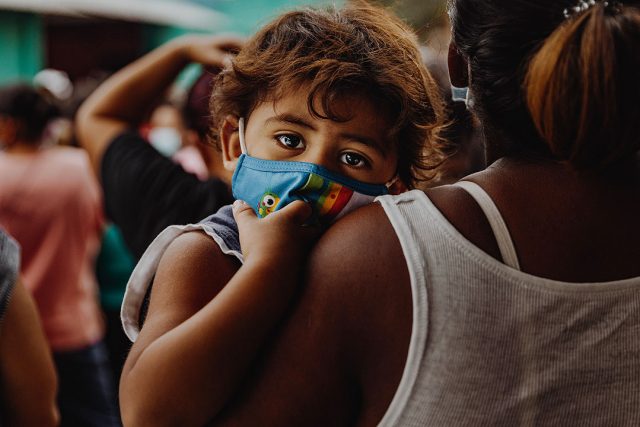
THE PHILIPPINES will use six commercial and public sites in Metro Manila to vaccinate children aged five to 11 starting Feb. 4., according to the presidential palace.

The vaccination will be done in several areas in the capital region, including the Philippine Heart Center, Philippine Children’s Medical Center and National Children’s Hospital, Cabinet Secretary Karlo Alexei B. Nograles told a televised news briefing on Monday.

It will also be held at the Manila Zoo, SM North EDSA and San Juan Gym, he added. “This is important in our preparation for the return to face-to-face classes.”

The first batch of Pfizer, Inc.’s COVID-19 vaccines for Filipino kids will arrive this week, Mr. Nograles said.

Philippine health authorities earlier said 168,355 children aged five to 11 have registered for vaccination.

The government earlier said 780,000 doses of coronavirus vaccine for children were set to arrive on Jan. 31.

Mr. Nograles said about 7.5 million children aged 12 to 17 years had been fully vaccinated against the coronavirus as of Jan. 29.

The Philippines had fully vaccinated 58.79 million people as of Jan. 30, while 60.34 million have received their first dose, the palace official said. Almost 7.34 million booster shots have been given out.

Meanwhile the tourism industry has been ready to safely reopen even before an inter-agency task force decided to resume international travel on Feb. 10, Tourism Secretary Bernadette Romulo-Puyat told the same briefing.

She said 100% of tourism workers in the country have been fully vaccinated against the coronavirus.

Ms. Puyat said only fully vaccinated leisure travelers from visa-free countries would be allowed to enter the country.

The Philippines aims to fully vaccinate 77 million Filipinos by the end of the quarter.

The Department of Health (DoH) posted 14,546 coronavirus infections on Monday, bringing the total to 3.56 million.

The death toll hit 54,003 after 112 more patients died, while recoveries rose by 26,500 to 3.32 million, it said in a bulletin.

It said 28.4% of 52,013 samples on Jan. 29 tested positive for COVID-19, still above the 5% threshold set by the World Health Organization (WHO).

There were 190,818 active cases, 8,239 of which did not show symptoms, 177,584 were mild, 3,126 were moderate, 1,540 were severe and 329 were critical.

DoH said 70% of the latest cases occurred from Jan. 18 to Jan. 31. The top regions with new cases in the past two weeks were the Davao region with 1,381, Metro Manila with 1,053 and Central Visayas 973 infections. It added that 96% of deaths occurred in January.

DoH said 24 duplicates had been removed from the tally, 11 of which were recoveries, while recoveries were relisted as deaths. Three laboratories did not submit data on Jan. 29.

The agency said 46% of intensive care unit beds in the country had been used, while the rate for Metro Manila was 38%.

The government has lowered the virus alert in the Philippine capital and nearby cities to level 2 starting Feb. 1.

OCTA Research fellow Fredegusto P. David said the government should have kept Metro Manila under Alert Level 3.

“I might have taken a slightly more cautious approach and maybe waited one or two weeks,” he told an online forum. “One to two weeks in the scheme of things will not be a long wait.”

Mr. David said the transition to a more relaxed alert level should be done gradually.

The OCTA fellow, meanwhile, said the country’s pandemic task force might have based its decision on different metrics.

He noted that during infection surges spurred by the Delta, Alpha and Beta variants last year, the government had to wait for cases to go down below 2,000 daily before easing the lockdown. “We calculated that number to be the threshold based on the number of people getting hospitalized.”

Mr. David said the country’s health system is not facing the same threats as before “because of the predominantly mild cases.”

“The surge capacity is probably much higher,” he said. “What that means is 3,000 cases a day in the National Capital Region, even if we’re going to have that level for a while, that will be a level of cases that will not really threaten our hospital care system.”

Meanwhile, Mr. Nograles said Bacolod, Cebu and Iloilo in central Philippines are expected to use pharmacies as vaccination cites starting this week. Baguio City was the first local government unit outside Metro Manila to use drug stores as vaccination sites.

The pandemic task force earlier said only booster shots would be given at participating pharmacies during the initial rollout. — with Revin Mikhael D. Ochave

House OK’s 3 health bills on final reading

PHILSTAR

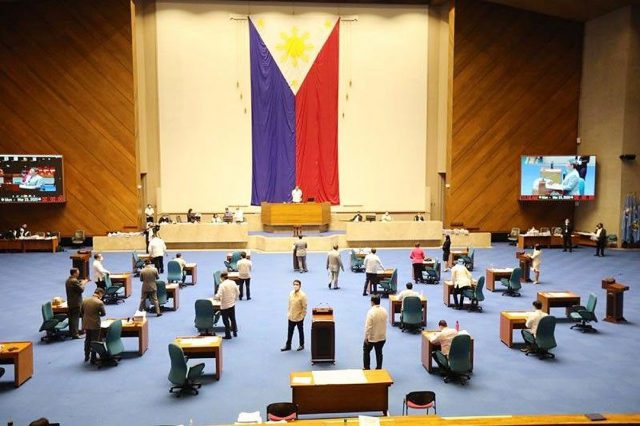
THE HOUSE of Representatives on Monday approved three health-related bills and an economic waste measure on third reading.

House bill 10697 or the proposed Geriatric Health Act got 201 votes, while House bill 10650 or the proposed Apex Hospital Act got 197 votes.

House bill 10701, which grants community health workers additional benefits, was also passed on final reading. The Senate approved a counterpart measure on Monday.

The Apex Hospital bill seeks to establish state-run medical institutions that offer specialized services in all regions of the country. The Geriatric Health bill will create a National Health and Research Center for elderly care.

Meanwhile, congressmen approved on third reading House bill 10696 or the proposed Economic Producer Responsibility Act, which aims to hold companies more accountable for their plastic products, with 194 votes.

Businesses that violate the measure will be fined as much as P20 million and lose their permits. 

Also on Monday, congressmen ratified three bicameral council reports, including one that amends the law on the renewal of building contractors’ licenses. 

The House also ratified the bicameral report on a bill that will establish a Philippine Military Judiciary Marshals Service and another bill that will strengthen the Teacher Education Council. — Jaspearl Emerald G. Tan 

House panel recommends charges vs Pharmally executives, abolish procurement agency

SCREEN GRAB HOUSE OF REPRESENTATIVES FB PAGE

A HOUSE of Representatives committee has recommended the filing of charges against six Pharmally Pharmaceuticals Corp. officials over pandemic supply contracts and closing down the government procurement agency that made the purchases. 

The recommendations were made by the House Committee on Good Governance and Public Accountability based on an investigation into the alleged anomalous contracts for various medical supplies.

The officials of Pharmallymay be held liable for Syndicated Estafa under Section1 of PD No. 1689 in relation to Article 315 of the Revised Penal Code,”  

DIWA Party-list Rep Edgar Y. Aglipay, the committee chair, said in a statement on Monday.

Syndicated estafa, as defined by the Justice department, is committed when five or more persons group together with the intention of carrying out the unlawful or illegal act, transaction, enterprise or scheme.

The panel also said while it found no overpricingin the purchase by the Procurement Service-Department of Budget and Management (PS-DBM) on behalf of the Department of Health, it deems the requirements imposed on suppliers during a national emergency are extrement deficient.

The committee called for the abolition of the PS-DBM in order to streamline government functions and services.It said the agency has outlived its purposeas all government agencies already have their own procurement departments and bids committee.

It also recommended the filing of charges against two PS-DBM officials for alleged falsification of public documents when they signed papers without the required inspection of delivered supplies.

The panel also said there is a need to review and establish standard requirements for assessing the capacity of suppliers. 

A committee report will be sent to the Commission on Audit, Department of Justice, and the office of the Ombudsman for appropriate action. Jaspearl Emerald G. Tan

Manila Mayor vows protection of local produce if elected president

PHILIPPINE STAR/EDD GUMBAN

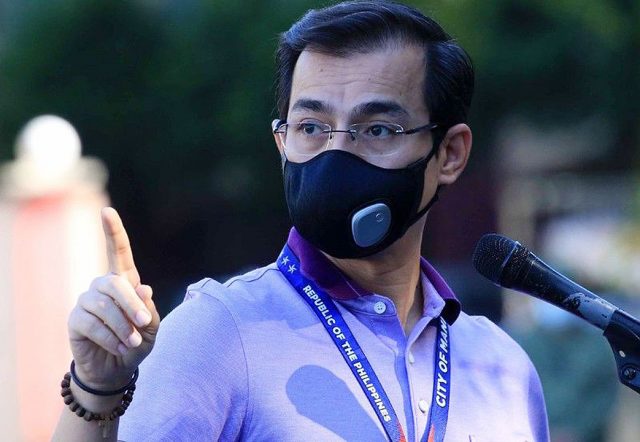
PRESIDENTIAL candidate Francisco IskoM. Domagoso, currently mayor of the capital city Manila, vowed protection of local farmers and fisherfolks produce as part of his 10-point economic agenda presented on Monday. 

If Im lucky (to be elected as president), I will make sure that (farmerscrops and fishermens catch) will be bought because I will look into it personally during harvest time that no importation permit will be signed,Mr. Domagoso said in a mix of English and Filipino at a press conference. 

The Manila mayor also said he will strengthen measures to prevent the entry of illegal or low-quality food products into the country.

The standard-bearer of Aksyon Demokratiko also said he will reduce taxes imposed on electricity supply and crude oil by half.

The tax on the use of electricity and crude oil will be cut in half to cushion the socio-economic impact on our lives and on farmers when it comes to agricultural products so that we wont be affected by the high inflation rates.

His economic platform covers mass housing, more accessible basic education, job creation, enhanced healthcare, boosting the tourism and creative industries, expanding water and power infrastructure, digital transformation, agriculture, good governance, and smart governance. Jaspearl Emerald G. Tan 

Comelec, central bank ink deal for safekeeping of election source codes

COMELEC FB PAGE

THE COMMISSION on Elections (Comelec) and the Philippine central bank signed an agreement on Monday for the safekeeping of the source codes that will be used in the May 9 elections. 

“One of the measures to ensure the credibility of the election results is ensuring that the source code used for the Automated Election System is certified and secured with the highest possible level of security,” Comelec Commissioner Marlon S. Casquejo said during the signing ceremony live-streamed on Facebook.

The automated election law mandates that the source codes, or the instructions used by software programs, be held in escrow by the Bangko Sentral ng Pilipinas (BSP).

The source codes will be deposited in a special vault secured by a series of metal locks and combination codes under the sole custody of the poll body’s officials, said BSP Governor Benjamin E. Diokno. John Victor D. Ordoñez 

American senators seek sanctions on 5 PHL security officials for rights violations

PHILIPPINE STAR/ MICHAEL VARCAS

MORE than 20 United States legislators asked top White House officials to impose sanctions on five Philippine security officials who allegedly abetted human rights violations under the administration of President Rodrigo R. Duterte, according to human rights group Karapatan.

In a statement on Monday, Karapatan said Pennsylvania 7th District Rep. Susan Wild and 23 other American lawmakers sent a letter to US State Secretary Anthony Blinken and Treasury Secretary Janet Yellen on Jan. 24 asking the US government to penalize the Philippine officials through the US Global Magnitsky Act for widespread harassment, arbitrary imprisonment, torture, and assassination of journalists, dissidents, opposition leaders, members of the clergy, and labor organizers and leaders.

The legislators cited reports from the International Coalition for Human Rights in the Philippines, Amnesty International, Human Rights Watch and other rights groups, it said. 

The Magnitsky Act, enacted during the administration of former US President Barrack Obama, authorizes the American government to sanction human rights violators by banning entry into the US and freezing their assets.

The law was named after Russian tax lawyer Sergei Magnitsky who, based on reports of international agencies, experienced reprisal for uncovering corruption and a tax fraud scheme involving Russian officials. He was jailed in Russia in 2008 and later died. 

According to Karapatan, the US legislators said in their letter that Philippine state forces continue to use red-tagging,a practice in which activists and human rights groups are demonized and characterized as terrorists, as a pre-emptive move leading up to targeted assassinations, arrest without cause or other human rights abuses.

The United States cannot overlook the crisis in the Philippines, and we must take tangible action if we are to truly stand for human rights and the flourishing of freedom around the world,the legislators were quoted as saying.

Kaparatan Secretary General Cristina “Tinay” E. Palabay said the targeted sanctions would help highlight the need to look into the acts and policies implemented by the Duterte administration that allegedly resulted in extrajudicial killings, arbitrary or illegal arrests and detention, enforced disappearances and other grave human rights violations.Kyle Aristophere T. Atienza 

House probe sought on passport service outsourcing in 3 countries 

DFA.GOV.PH

A PARTY-LIST group has filed a resolution seeking an investigation on the Department of Foreign Affairs(DFA) outsourcing of passport services to a third party in three countries, citing it is against the law and costs more for applicants. 

Bayan Muna filed House Resolution 2475 last Friday, which calls on the House of Representatives to probe DFAs contract with BLS International Services for passport processing in Italy, Malaysia and Qatar. 

The contract is under the departments e-Passport Renewal Center (e-PaRC) project. 

The resolution, introduced by Bayan Muna Representatives Ferdinand R. Gaite, Carlos Isagani T. Zarate and Eufemia C. Cullamat, cites objections raised by overseas Filipino workers (OFWs) in November last year when embassies announced the outsourcing plan. 

(T)he outsourcing of consular services clearly puts an additional burden on our OFWs, as well as other Filipino migrants in Italy, who are now suffering from pandemic-induced economic hardships,the resolution read.

The solons also said that outsourcing consular services violate parts of the Philippine Passport Act of 1996 or Republic Act 8239, which does not allow any private company or person to be authorized to issue passports. 

The Bayan Muna representatives suggested that the government should instead hire more workers for the embassy and to improve office systems.

Instead of privatizing a government service like passport renewal, the OFWs sought additional employees and a more efficient system in consular offices to expedite and improve the services for Filipino compatriots abroad,the resolution said. Jaspearl Emerald G. Tan

South Korean wanted for telephone fraud nabbed

AGENTS of the Bureau of Immigration (BI) have arrested a South Korean national wanted for telephone fraud operations since 2017.

The BI said the fugitive, who was caught in his residence in Cavite last week, engaged in voice phishing schemes, victimizing clients of banks in his home country. 

The scam was reported to have swindled bank depositors of nearly $100,000, according to Interpol’s National Central Bureau in Manila.

Immigration Chief Jamie H. Morente issued a deportation warrant against the fugitive in 2019 for living in the country as an “undesirable alien.  

Mr. Morente also ordered the bureau’s legal division to expedite the South Korean’s deportation to stand trial for his crimes. John Victor D. Ordoñez 

BIR officer penalized for info omission, travels without authorization

THE OFFICE of the Ombudsman has directed a Bureau of Internal Revenue (BIR) tax officer to pay a fine for failing to declare in his personal data sheet that he has a child as well for traveling overseas five times between June 1996 and March 2001 without authorization. 

The BIR officer was ordered to pay six months’ worth of salary, the Department of Finance (DoF) said in a press release Monday.

The DoF said the tax officer was held liable for “less serious dishonesty” instead of the falsification of an official document because there was not enough evidence that he intentionally omitted the name of his child.

The Department of Finance’s revenue integrity protections service had filed a complaint against the tax officer in 2018 due to alleged false declarations and omissions in his statements of assets liabilities and net worth (SALN) and personal data sheets. He also allegedly failed to file his 2006 and 2007 SALNs.

According to the Office of the Ombudsman’s decision received by the DoF in December, the tax officer could not be held liable for not filing SALNs because there is no proof that the agency’s head issued a show cause order for submission of the documents.

“This case should serve as a stern reminder for all employees of the DoF and its attached agencies to always be truthful in accomplishing their personal data sheet and other official documents, and to strictly comply with civil service rules,DoF Undersecretary for Legal Affairs Bayani H. Agabin said. Jenina P. Ibañez 

What kind of leader are you?

8PHOTO-FREEPIK

If you have watched Designated Survivor on Netflix you may understand what governance means. And it simply means transparency and accountability expressed in leadership and in decision-making.

Tom Kirkman (Kiefer Sutherland) is what every leader should be in the free world: honest, sincere, and accountable. But that is what movies and TV series are made of. They are fantasy, unreal, and seemingly impossible to do or happen in the real world.

This is a lesson in good governance. Or the lack of it. What do we do when the leader of a company, organization, or entity is not forthright or honest? Do we simply quit and choose not to have anything to do with the company or try to make things right?

This also involves choosing a leader for a country, a league, even a nonprofit. And what options there are when it is an elective position. Do we know who is honest and trustworthy? Or is it a case of “better luck next time” if we make a wrong or bad choice?

These are questions to reflect on as we all try to be productive while in isolation. Due to the recent surges in COVID cases, we are left with a lot of time to reflect on where we are and where we want to be. How do we deal with leadership we cannot accept? Do we compromise our principles for the sake of peace and unity? Or do we stress ourselves sick thinking of ways to get around the situation?

Every employee, member, citizen has a responsibility to check on the leadership of whatever group they belong to. It is our right to question and do a “check and balance” whenever we find a need to do so. The last thing we must do is turn away and keep quiet.

On the other side, leaders must check their constituencies periodically. They must get an honest assessment of how they are governing their group or company. Something like a temperature check every so often, even if members or employees seem to be happy. It may just seem that way when it is not. Instead of sweeping complaints or questions under the rug, a responsible leader must ask for feedback from everyone. The majority may carry a vote, but one must listen to the small voice, too.

How do you know you are a good leader?

1. Designated Survivor’s Tom Kirkman wanted a Chief of Staff who questioned him. Not a yes man or a yes woman. Someone who even takes the other side, even as an exercise and testing the idea.

2. Listen to the feedback and questions. Sometimes we lead with a blind spot and it is helpful to find a critic every so often.

3. Loyal team members are loyal for a reason. It is because they believe in your leadership. The more loyal team members there are, the better you are as a leader.

4. You must be open to change. People change, styles change, and the times are always a-changing.

So, give yourself the Tom Kirkman test. Can you stay as an independent, not blind to partisan decisions or your own selfish choices?

Every leader must think that there is always another way of doing things. It is not always our way or the highway. Sometimes good ideas come from unlikely suggestions. And if you are a mature leader, you do not need the credit. Give credit to your team.

And finally, do not promote yourself. Your good deeds will be talked about and you may even be an urban legend without self-promotion. That’s what Tom Kirkman realized. Some staffers stayed because they got to know how honest he was. How sincere he was. Not because he made them stay.

Talk to your opposition or opposing forces. They may have an idea you both can actually agree on. Pull the rug from under them by acknowledging their suggestions and improving on them. Soon, they cannot oppose you anymore.

Think of the greater good. Collaborate with like-minded individuals as well as other groups who seem to have a different tone or tune. They may give you good ideas to build on.

And finally, make sure you are in the right, legally and politically. A good leader works smart and is rewarded by a growing mandate. Listen to what people say about your leadership.

On the last two episodes of the show though, there is a plot twist which I had to watch before finishing this article. So, after over 40 episodes of 40+ minutes each, you then face the reality that Tom is, after all, just human.

But if you want an entertaining lesson in leadership, watch the show. It’s on Netflix and is a good respite from just reading books or social media. Or admiring popular and successful leaders. And this may be good thinking for the coming elections, too. I will not preempt your viewing pleasure. But believe me, I rarely watch series, but I got glued to this one. It may be worth some time to be entertained while helping you reflect on your leadership style.

And ask yourself: what kind of leader am I? Every Management Association of the Philippines member is a leader in his or her own right. So, this series is relevant for everyone. And a good show to watch while we are in isolation either because we are already infected or avoiding being a statistic. Isolation is good for everyone, once in a very long while

This article reflects the personal opinion of the author and does not reflect the official stand of the Management Association of the Philippines or MAP.


Pacita “Chit” U. Juan is a member of the MAP Diversity and Inclusion Committee, chair of the Philippine Coffee Board,councilor of Slow Food (www.slowfood.com) for Southeast Asia, and is an advocate for organic agriculture.

map@map.org.ph

pujuan29@gmail.com

map.org.ph

PhilHealth needs a new team of top officers

PHILSTAR FILE PHOTO

In the Jessica Soho Presidential Interviews of Jan. 22, Jessica asked Vice-President Leni Robredo, Senator Panfilo Lacson, Senator Manny Pacquiao, and Manila Mayor Isko Moreno how they would solve the problems hounding PhilHealth if they are elected president. According to estimates PhilHealth’s actuarial life may only last until 2027.

Moreno was first to answer. He said the position is not for doctors or anyone that they want to appoint. “We have to put a financial guy or group of people who understand finances and how to grow the money of PhilHealth,” he elaborated. Lacson asked rhetorically, “First of all, what’s a lawyer and a former NBI director doing to lead PhilHealth? I think PhilHealth is a health insurance (company), right? It should be someone who knows how to handle finances. In that sense, the skills do not match the position,” the senator said.

Robredo stressed that someone who is well-versed on health economics and an actuarial scientist should lead the agency. “PhilHealth is in this kind of mess because of the failure of leadership to manage the office. Why are there less contributions? There’s not enough confidence for PhilHealth. There’s less confidence because they haven’t paid more hospitals.”

Pacquiao said there is too much corruption in PhilHealth, there is need for change of leadership. This is the very reason President Duterte appointed NBI Director Dante Gierran president of PhilHealth, to put an end to the corruption in the agency.

But Lacson is right in saying that it is wrong for a detective to head an insurance company. But neither should a health economist or an actuary head it, as Robredo suggests. They are specialists, not generalists. They are not suited for general management.

Moreno puts forward that a group of people who understand finances should head PhilHealth. More than that, the group should include people well-versed in the other functions of an insurance company, like underwriting or evaluation of potential healthcare cost of a prospective client, and processing of claims for compensation or reimbursement.

As I have written here before, mandating PhilHealth to administer the National Health Insurance Program was a colossal mistake. Even if you rid PhilHealth of corrupt officers and staff, it would still be incapable of formulating and promulgating policies for the sound administration of the program as it lacks the people with formal training and substantial experience in health insurance.

Health insurance is a contract that requires an insurer to pay some or all of a person’s healthcare costs in exchange for a premium. To operate profitably, a health insurance company has to have certain people with formal education and special training to be able to perform the basic functions of a health insurance company. These people are an actuary, a fund manager, claims adjusters, and an underwriter.

The health insurance actuary is responsible for assessing future financial risk in healthcare. Using a blend of mathematics, statistics, and financial theory, he estimates financial uncertainty and calculates the cost of health insurance premiums based on reported health data like the Department of Health morbidity rates. He makes financial predictions of expected costs and profits using patient health data, geographical location, occupational risk factors, and age.

The health insurance actuary is typically a master in actuarial science. Academic disciplines combining courses such as mathematics, statistics, probability, economics, finance, computer science, and business administration are ideal in preparing a person for an actuarial position in a health insurance company.

The fund or investment manager is responsible for making the funds — the enrollees’ aggregate fees or the total premiums paid by the people insured — grow by implementing investment strategies. The typical fund manager possesses a minimum of a bachelor’s degree in economics, finance, and business. He may have gone through advanced studies in financial management or hold a master’s degree in economics and have significant experience as a trader in a bank. He may even carry the title Chartered Financial Analyst.

PhilHealth’s advancing payment of millions of pesos to a number of healthcare facilities is a reflection of the lack of competence in fund management and knowledge of the concept of insurance. An insurance company generates additional funds by the judicious placement of the enrollees’ aggregate fees in the money market. What PhilHealth has done is divert a large portion of the investable funds to non-interest earning placements.

Advance payment also goes against the cardinal principle of insurance — to compensate the insured for his loss. The insured person is paid only after he had incurred an expense. That the estimated actuarial life of PhilHealth is only until 2027 means that there is no competent actuary and fund manager in the company.

The claims adjuster is responsible for processing and authorizing the payment of medical claims, negotiating bills on an as-needed basis, and monitoring medical bills to make sure there are no errors in billing or items which aren’t covered by insurance.

A medical claims adjuster generally holds a bachelor’s degree in some sort of medical field. Along with this, he has high level of healthcare experience. A registered nurse with at least one year experience in a tertiary hospital would be ideal.

Regarding skills, a medical claims adjuster needs to have excellent written and verbal communication skills as he often deals with stressed claimants. It is also important that he has strong analytical skills since a big part of a claim adjuster’s job is scrutinizing medical bills. He must have a knack for spotting cost items not covered by the insurance policy.

A health insurance company needs more than just one adjuster, depending on the number of enrollees or people insured. PhilHealth needs an army of adjusters. According to PhilHealth, it took on average 44 days to process a hospital claim in 2020 and 2021. That, I think, accounts for PhilHealth’s failure to pay the billions due hospitals. It is just swamped with claims. It does not have an army of competent claims adjusters to process the tsunami of claims.

An insurance underwriter evaluates insurance applications in order to decide whether to provide the insurance and, if so, the coverage amounts and premiums. Underwriters act as go-betweens for insurance agents who are eager to insure people to earn a commission and the insurance company which wants to minimize risk. As RA 11223 enrolled every Filipino citizen in PhilHealth in 2019, PhilHealth has no need for an underwriter.

As the actuary, fund manager, claims adjusters would be busy attending to the demands of their positions, PhilHealth needs someone else to oversee its overall operations. He must be a business leader with superior management skills.

Because of PhilHealth’s tremendous responsibility — 111 million Filipinos spread all over the archipelago are insured by it — someone who has been president or chief operating officer of a consumer goods company with regional sales offices and warehouses would be ideal to head PhilHealth. Someone like the chairman of Social Security System, Johnny Santos, who was chief executive officer of Nestlé Philippines, would be a suitable CEO for PhilHealth.

A retired chief-of-staff of the Armed Forces of the Philippines who rose from the Army service branch and who has an MBA and some business experience would also make a good CEO of PhilHealth. So, would a retired chief-of-staff of the Army who has an MBA and business experience.


Oscar P. Lagman, Jr. was country manager for the Philippine operations of a multinational health insurance company in the 1980s. As a consultant in 1988, he set up the health insurance line of the local partner of a London-based non-life insurance company. In 1999, he set up the health insurance line of the Philippine operations of yet another London-based insurance company. He was program director of the Executive Development Program the De La Salle Graduate School of Business conducted in 2007 for 50 officers of PhilHealth.