Home Blog Page 6836

Sony’s new AI beats humans in Gran Turismo racing game

AI.SONY

Sony said on Wednesday it has created an artificial intelligence (AI) agent called Gran Turismo Sophy (GT Sophy) that was able to beat the world’s best drivers of the PlayStation racing simulation game Gran Turismo

To get GT Sophy ready for the game, different units of Sony brought in fundamental AI research, a hyperrealistic real-world racing simulator, and infrastructure for massive-scale AI training, the company said in a statement. 

The AI first raced against four best Gran Turismo drivers in July, learned from the race, and outperformed the human drivers in another race in October. 

“It took about 20 PlayStations running simultaneously for about 10 to 12 days to train GT Sophy to race from scratch to superhuman level,” said Peter Wurman, director of Sony AI America and the leader of the team who designed the AI. 

While AI had been used to defeat humans in the games of chess, Mahjong and Go, Sony said the difficulty in mastering race car driving was the many decisions that need to be made in real time. 

Sony’s rival, Microsoft, which recently bought Activision for $69 billion, has been using games to improve AI by offering up new challenges for AI models to solve. 

Gran Turismo, a racing simulation video game, made its debut in 1997 and has sold over 80 million units. 

Sony wants to apply the learnings to other PlayStation games. 

“There are a lot of games that pose different challenges for AI and we’re looking forward to starting to work on those problems,” he said.  — Supantha Mukherjee/Reuters

EU wants pandemic treaty to ban wildlife markets, reward virus detection — source

Wildlife market in Myanmar. Image by Dan Bennett/CC BY 2.0/Wikimedia Commons

BRUSSELS — The European Union (EU) is pushing for a global deal aimed at preventing new pandemics that could include a ban on wildlife markets and incentives for countries to report new viruses or variants, an EU official told Reuters. 

International negotiators will meet for the first time on Wednesday to prepare talks for a potential treaty, said the official, who is not authorized to speak to media and so declined to be named. 

The aim is to reach a preliminary agreement by August. 

However, Brussels has so far struggled to get full backing for a new treaty from the United States and other major countries, some of which want any agreement to be non-binding. 

A spokesperson for Charles Michel, the president of the European Council who in November 2020 proposed a new treaty on pandemics, said he had no fresh comment on the matter. 

The White House did not immediately respond to a request for comment. 

According to the most widely accepted theory, the coronavirus disease 2019 (COVID-19) pandemic began with the transmission of the SARS-CoV-2 virus from an animal to humans in a wildlife market in China. 

Although Beijing was initially praised by the World Health Organization (WHO) for notifying it quickly of the new virus, the United States in particular has accused China of holding back information about the likely origins of the outbreak. 

Among measures the EU wants to be included in the treaty is a gradual shutdown of wildlife markets, the EU official said. 

The European Commission, which is expected to negotiate on behalf of EU states, said that its mandate had not been agreed yet by EU governments and concrete proposals to other international negotiators will be made at a later stage. 

The EU wants to introduce legally binding obligations to prevent and report new virus outbreaks, the EU’s draft negotiating mandate seen by Reuters says, without spelling out precise proposals. 

Incentives for countries to report new viruses are also seen as crucial to help with speedy detection and avoid cover-ups, the official said. 

Last year, southern African nations were hit with punishing flight restrictions after they identified the Omicron coronavirus variant, which some fear could deter reporting of future outbreaks if incentives are not attractive enough. 

VACCINES FOR VIRUS ALERTS 

The official said incentives could include guaranteed access to medicines and vaccines developed against new viruses, which poorer nations have struggled to obtain quickly during the COVID-19 pandemic as wealthier states rushed to secure supplies. 

States that detect and report a new virus could also receive immediate support, which might involve shipments of medical equipment from a global stockpile. 

Talks will be chaired by delegates from six countries, representing the world’s main regions — Japan, the Netherlands, Brazil, South Africa, Egypt, and Thailand, officials said. 

Brazil, which will represent northern and southern American countries, favors a non-binding treaty. 

If an agreement is reached, the treaty is expected to be signed in May 2024. 

As part of an overhaul of global health rules, countries are also negotiating tweaks to the International Health Regulations, a set of global rules to prevent the spread of infectious diseases. 

The United States wants to strengthen rules to boost transparency and grant the WHO quick access to outbreak sites, two sources following the discussions told Reuters. — Francesco Guarascio/Reuters

Pandemic propels workers closer to four-day week

UNSPLASH

LONDON — British photographer Paul David Smith had long toyed with the idea of switching all his staff to a four-day week, but it was the flexibility and reliability they showed in the pandemic that gave him the confidence to take the plunge. 

Almost a year later and his trust has been rewarded. 

He says staff at his eponymous studio have kept on top of the workload despite their reduced hours. 

And they are far happier, too. 

Mr. Smith is part of a revolution underway in the world of work — staff do shorter hours for the same pay — which has been gathering pace as economies look to bounce back from coronavirus disease 2019 (COVID-19)

From Iceland to Australia, governments and businesses are testing shorter work weeks, be it in fashion or fast food. 

With dozens of companies set to take part in Britain’s biggest ever trial of a four-day week, joining similar pilots in five other countries, Mr. Smith is at the vanguard of a movement that some believe could reshape workplace norms. 

“The big game-changer has obviously been the pandemic,” said Joe O’Connor of 4 Day Week Global, the New Zealand-based organization co-running the British trial. 

“Companies have not been able to monitor presenteeism in the way they previously did,” he said. “As a result, that’s opened the door to consider something like the four-day working week.” 

ALL CHANGE 

The pandemic forced mass change in office culture, as lockdowns that closed schools and offices resulted in a sudden shift to remote working and flexible hours as many people struggled to balance jobs with care responsibilities. 

Many firms now offer increased flexibility in response to demand from workers, as the “great resignation” and tightening labor markets in countries such as the United States and Britain fuel competition for new staff. 

Spain has offered its financial backing to a four-day week trial, Japan has urged companies to let staff drop a day, and New Zealand premier Jacinda Ardern is also a keen supporter. 

Dozens of firms are already on board. Spanish fashion house Desigual switched to a four-day week last year, and consumer giant Unilever is trialing the shorter week across New Zealand. 

Mr. O’Connor said there was huge British interest in the six-month trial, co-organized by think-tank Autonomy and researchers at Cambridge University, Boston College, and Oxford University. 

The organization is also running three other mass pilots in the United States, Canada, Ireland, Australia, and New Zealand. 

“Everyone’s super excited — including myself,” said Nathan Hanslip, chief executive of Yo Telecom, among those planning to take part when the British trial begins in June. 

The extra day off will give workers extra “wellness, happiness, and more family time,” he added. 

REMOTE CHALLENGES 

The big question for employers — can workers sustain the same level of work but do it in fewer hours? 

Early signs are largely positive, with research by Autonomy think-tank on two large-scale trials of shorter work weeks in Iceland finding that productivity did not dip in most workplaces and worker well being “dramatically” improved. 

Encouraging large-scale switches to shorter hours can also benefit entire economies and help reduce unemployment, said Arthur Donner, a Toronto-based economic consultant who produced a 1994 report to the Canadian government on working hours. 

“It’s a form of work sharing,” he said, spreading the total workload between a larger pool of people. 

But even as the pandemic built the case for flexible working and shorter hours, numerous reports have found that home workers put in longer hours as their habits changed. 

Just take the ubiquity of online meetings in the pandemic. 

“Discussions that were quick emails or a call have now turned into zoom routine meetings for 30 minutes to an hour,” said Jalie Cohen of the HR services firm, The Adecco Group. 

“We are working longer hours. But the outcomes and the productivity should be the focus.” 

Almost six in 10 workers said they could do their job in fewer than 40 hours a week, found surveys of some 15,000 people in 25 countries by The Adecco Group last year, even as the proportion working overtime rose by 14% in a year. 

However, others wonder whether the shift to remote working, an increase in freelancing, and a digital “always on” mentality, have all made the prospect of shorter hours even more remote. 

“Think of all these people who are working from home now. How are you going to measure their working hours?” said Mr. Donner. 

“When you answer an e-mail at midnight from your boss, is that work? Of course it’s work.” 

‘NEW STANDARD’ 

Research from employers suggests many see the need to embrace greater flexibility but are cautious on major shifts. 

It is “getting harder to align” the priorities of employers and employees over work/life balance expectations, said Scott Gutz, chief executive of global recruitment firm Monster. 

Which might mean many firms may be too cautious to act. 

In Britain, a January poll by the Chartered Management Institute (CMI) found more than half of managers said their workplaces were considering or would consider a four-day week — but 73% thought it would not happen in the end. 

Many managers still “believe it’s too big a change for business leaders to make,” said CMI chief executive Ann Francke — though she added the same might once have been said of remote and hybrid working. 

“The five-day working week model isn’t set in stone — once some firms start to adopt it, there is every chance it could snowball to be more mainstream,” she said. 

Mr. O’Connor at 4 Day Week Global agreed, saying he previously expected it would take 10 years to make the shorter week a “new standard” in workplaces — now he thinks it could be five. 

“In a lot of sectors, this is going to go from being the ambition to being the norm very, very rapidly,” he said. — Sonia Elks/Thomson Reuters Foundation

Unemployment picks up in December

The ranks of unemployed Filipinos rose month-on-month in December despite ease of movement restrictions, the Philippine Statistics Authority reported this morning.

The preliminary estimates of the agency’s latest round of the Labor Force Survey (LFS) showed about 113,000 Filipinos became jobless from November to December last year.

This brought the total tally of unemployed Filipinos to 3.272 million that month. It pushed the unemployment rate to 6.6% in December from 6.5% in November.

Meanwhile, around 910,000 Filipinos entered the labor force month-on-month in December, bringing the total labor force size to 49.546 million.

This translated to a participation rate to 65.1% from 64.2% in November. It was the highest labor force participation rate since the monthly LFS in 2021 and the 64.2% in April 2014 using the quarterly survey.

The quality of available jobs slightly improved as underemployment rate — the share of people with jobs but still looking for more work or longer working hours — eased to 14.7% in December from the four-month high of 16.7% in November.

In absolute figures, this was equivalent to 6.811 million underemployed Filipinos, down by around 806,000 from 7.617 million in November.

Around 797,000 Filipinos got jobs in December from the previous month, bring the total employed individuals to 46.274 million. However, this represented an employment rate of 93.4%, a tad lower than November’s 93.5%.

More than half (56.6%) were employed in the services sector that month, while the rest went to agriculture (25.6%), and industry (17.8%). — M. I. U. Catilogo

Average monthly wages decline by 9%

PHILIPPINE STAR/ MICHAEL VARCAS

By Bernadette Therese M. Gadon, Researcher

AVERAGE MONTHLY WAGE rate of selected occupations decreased by almost a tenth in 2020, reflecting the economy’s record contraction due to the coronavirus pandemic.

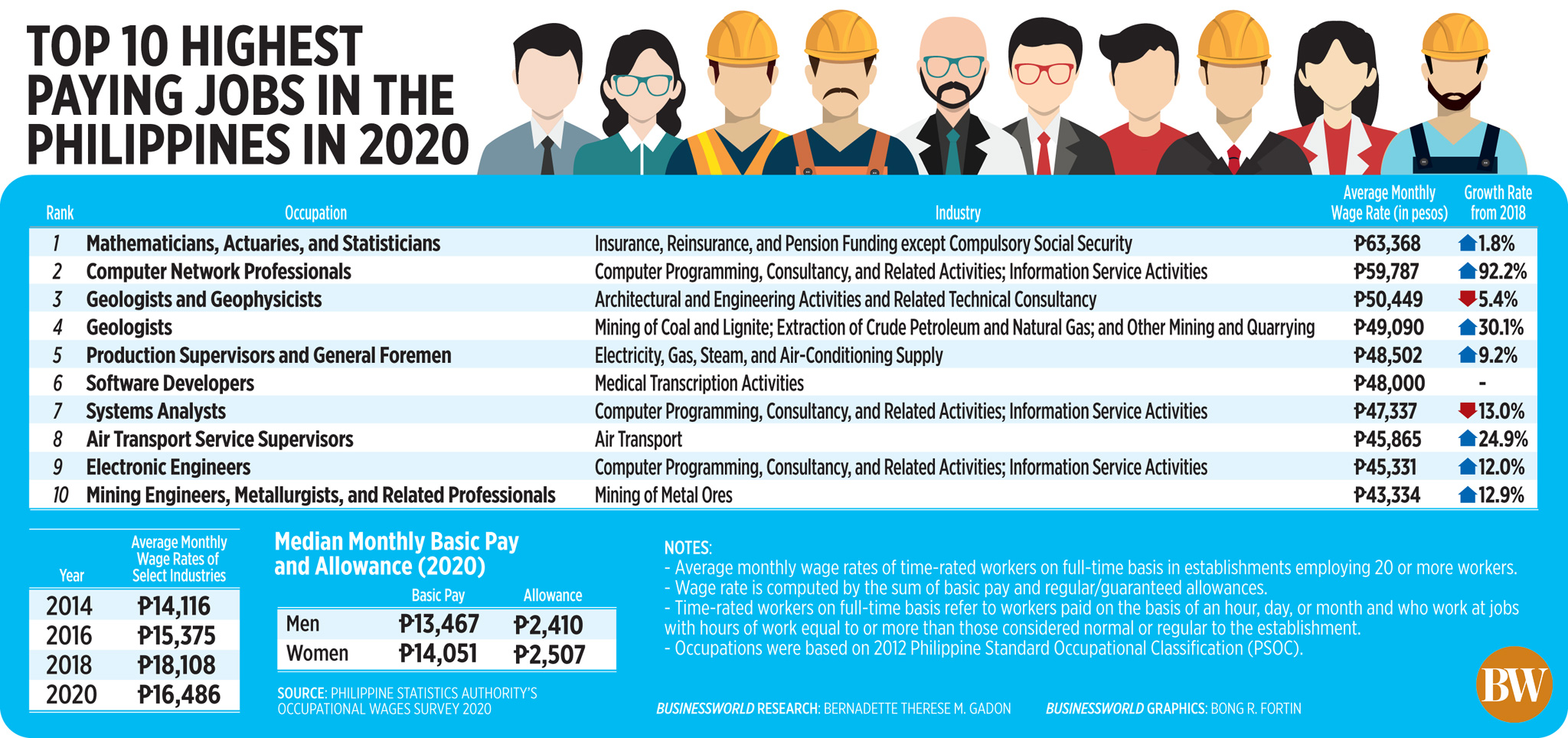
The Philippine Statistics Authority (PSA) on Wednesday said the average monthly wages of time-rated workers across 190 monitored jobs in the country declined by 9% to P16,486 in 2020 from P18,108 in 2018, citing the Occupational Wages Survey (OWS).

On the other hand, the median monthly basic pay inched up by 0.6% to P13,646 in 2020 from P13,559 in 2018.

Top 10 highest paying jobs in the Philippines in 2020

Conducted every two years, OWS is a nationwide survey of establishments employing 20 or more workers. It monitors the wage rates of two benchmark occupations — accounting and bookkeeping clerks and unskilled workers — and at most 11 occupations in each of the predetermined 55 out of 71 industries.

“The main objective of the 2020 OWS is to generate wage statistics as critical inputs to policies on wage and salary administration and wage determination particularly in wage-fixing, price policies and collective bargaining negotiations,” the PSA said.

For the 2020 OWS, a total of 190 industry-specific jobs were monitored. The reference period covers the pay period that includes Aug. 31, 2020.

Among the 18 industries covered in the survey, mining and quarrying workers saw an increase in their median monthly basic pay by 14.5% to P13,272 in 2020 from P11,590 in 2018. Workers in the electricity, gas, steam, and air-conditioning supply sector saw a 10.7% rise in pay to P27,253 from P24,627, while those in human health and social work activities saw wages increase by 9.8% to P14,721 from P13,411.

Meanwhile, workers in the following industries saw a decline in their median basic pay in 2020: financial and insurance activities by 13.5% (to P15,986 in 2020 from P18,486 in 2018); real estate activities by 9.7% (P16,238 from P17,989); and wholesale and retail trade, repair of motor vehicles and motorcycles by 5.3% (P12,592 from P13,299).

In terms of allowances, the PSA reported a 43.1% rise in median monthly allowances across all industries amounting to P2,456 in 2020 from P1,716 in 2018.

The survey also identified the top 10 highest-paying occupations in the country, with mathematicians, actuaries, and statisticians leading with P63,368 per month, followed by computer network professionals (P59,787 per month), and geologists and geophysicists (P50,449 per month).

Economists largely blamed the decline in monthly average pay to the fallout brought by the coronavirus disease 2019 (COVID-19) pandemic.

Since March 2020, the Philippines has implemented quarantine restrictions to contain the spread of COVID-19, resulting in reduced mobility for workers.

The strict lockdowns battered the economy, which posted a record 9.6% contraction in 2020. Philippine economy rebounded last year with a gross domestic product growth of 5.6%.

Some companies have since then implemented remote or hybrid work setups.

“The decline in productivity due to work stoppages associated with lockdowns and mobility restrictions contributed to the decline in the average monthly wage rate,” University of Asia and the Pacific Senior Economist Cid L. Terosa said in an e-mail. “Also, the average monthly wage rate fell because the supply of workers far exceeded the demand for them.”

UnionBank of the Philippines, Inc. Chief Economist Ruben Carlo O. Asuncion said that the results of the OWS survey showed how other occupations decreased in the ranks, specifically on jobs that were heavily affected by the pandemic such as airline-related occupations.

“I noticed that one specific highest paid job missing on the list is the airline pilot and it is not hard to figure out why. The pandemic has practically obliterated the job and related jobs and would definitely take more time for the job to come back,” he said in an e-mail exchange.

Despite the improvement in the median basic pay and allowances in 2020, this did not lead to the creation of more jobs, Mr. Terosa said.

“Clearly, occupations requiring higher level skills sets received the highest pay. The pandemic did not affect occupations that can easily take advantage of the shift towards different working arrangements and technology-based tasks,” he said.

Likewise, Mr. Asuncion noted that the increase is only “temporary.” “It is fitting to note that full-time jobs have declined and part-time jobs grew during the height of the pandemic. There was job creation, but they are more temporary and time-bound,” he said.

Both economists expect a rebound both in the average and median monthly basic pay of the Filipino workers in the next round of the OWS as the economy gradually picks up. They also see an increase in the technology-related jobs going forward.

“In the new normal, occupations involving remote work, e-commerce, automation and related technology will be paid more highly than the rest,” Mr. Terosa said. “Demand for high-wage jobs that require greater education, intensive training, and flexible skills will continue to grow.”

“Overall, technology and data science jobs will lead the way,” Mr. Asuncion said.

ADB working with PHL to develop blue bond

PHILIPPINE STAR/EDD GUMBAN

By Jenina P. Ibañez, Senior Reporter

THE ASIAN Development Bank (ADB) is helping the Philippine government develop a sustainability bond that supports fisheries investments.

The multilateral lender helps governments issue green and sustainable bonds, ADB Principal Financial Sector Analyst Arup Chatterjee said.

“We are working with the Philippine government to develop a blue bond. Feasibility study is underway, and we will assess the funding needs of a blue bond to develop a sustainable fisheries value chain,” he said at a BusinessWorld Insights event on Wednesday.

A blue bond is a sustainability bond used for ocean conservation projects. In September last year, ADB issued its first dual-tranche blue bonds denominated in Australian and New Zealand dollars, which would fund ocean conservation projects in Asia-Pacific.
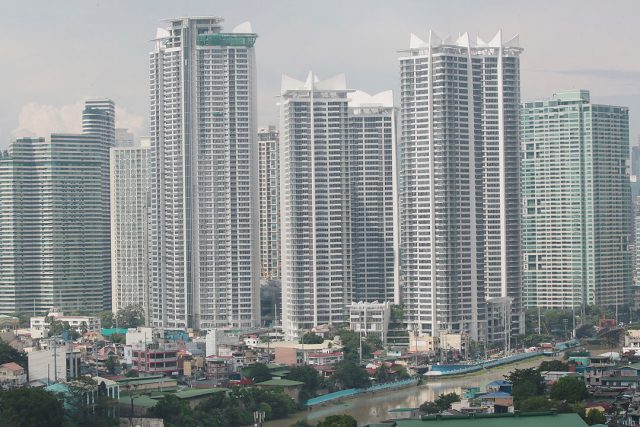
The Philippines has a strong marine economy, with coastline tourism activities generating revenue and jobs within municipalities, an Asian Development Bank Institute (ADBI) report released in December said.

But due to the poor enforcement of laws, tourism destinations are still experiencing uncontrolled development despite marine ecosystem protection policies, the report prepared by Strategia Development Research Institute Executive Director Maria Angela G. Zafra said.

Mr. Chatterjee is optimistic about sustainability bonds in the Philippines.

“The active and primary role of the private sector green bond issuers distinguishes the Philippines from other nascent green markets,” he said.

“Sovereign borrowers have played a more prominent first-mover role. There is potential of tapping green bonds to finance green infrastructure projects.”

At the same event, Finance Assistant Secretary Paola A. Alvarez said the Philippine market must support sustainability initiatives to attract foreign direct investments.

“If (overseas businesses) want to relocate here, now that you have your sustainability bond issuances, these types of bonds necessarily have to report the climate exposure, the climate risks and disaster risks in terms of where the utilization of the fund went.”

“Since the demand for capital investments abroad is more — the appetite is more on sustainability and green (issuances), then for the capital markets or the businesses, if they want to attract foreign direct investments, then they necessarily have to green their issuances and their businesses.”

The Philippines is eyeing a $500-million green bond offer this year, Finance Secretary Carlos G. Dominguez III said last week. He had earlier said that the Philippines is preparing to offer its first sovereign green bonds to fund climate change mitigation projects.

Fifteen Philippine banks, electric and water utilities, energy and property companies have issued 29% or $4.8 billion of ASEAN-labeled green bonds as of end-September 2021, the Bangko Sentral ng Pilipinas said.

Seven local banks have issued more than $1.15 billion and P85.4 billion of green bonds since 2017.

Office vacancy rate seen to climb to 19% this year

A VIEW of buildings in Makati City. — PHILIPPINE STAR/MICHAEL VARCAS

THE VACANCY RATE in Metro Manila’s office buildings is likely to climb to 19% this year, as pre-leasing activities remain tepid and more supply is expected, Colliers Philippines said.

“We expect [office vacancy] to increase this year and that is because of a supply-driven scenario wherein we are expecting 900,000 square meters (sq.m.),” Colliers Philippines Office Services and Tenant Representation Senior Director Dom Fredrick Andaya said at a briefing on Wednesday.   

The real estate services firm said 60% of the new office supply is located in the Bay Area, Fort Bonifacio, and Ortigas.

Vacancy rates are seen to stabilize if the coronavirus disease 2019 (COVID-19) situation improves.

“If (what) many of the studies are saying is true that we’re about to enter the endemic phase already of the COVID-19 pandemic then we expect the 19% (vacancy rate) to plateau already, then start falling by 2023,” Mr. Andaya said.

As of end-2021, the total Metro Manila office stock stood at 12.94 million sq.m., of which 2.03 million sq.m. were vacant.

The vacancy rate spiked during the pandemic, reaching 15.7% in 2021 and 9.1% in 2020, as strict lockdowns forced many employees to work from home. Office rental rates fell by 17% in 2020, and additional 12% in 2021.

In 2019, the vacancy rate stood at 4.2% due to the record growth in business process outsourcing firms and Philippine Offshore Gaming Operators (POGO).

However, Colliers noted an 18% improvement in office transactions last year, with companies taking up 422,000 sq.m. of space, higher than the 357,000 sq.m. in 2020. Transactions more than doubled by the fourth quarter to 134,000 sq.m. from 62,000 sq.m. in the same period in 2020.

Metro Manila accounted for 81% of last year’s office transactions, while the rest included transactions in Cebu, Iloilo, Pampanga, Laguna, Davao, Batangas, Rizal, and Misamis Oriental.

“While the health concerns brought about by the COVID-19 [pandemic] are already being addressed, we’re more confident. That means there’s more focus now in terms of reviving the economy and the businesses,” Mr. Andaya said.

Traditional occupiers and outsourcing firms took up the bulk of office spaces last year and are expected to continue to drive growth this year.

RETURN OF THE POGOS?
Should POGOs return to the market, Colliers Philippines said the office vacancy rate is seen to decline “significantly from 19% to just 12% until 2025.” 

POGOs, which operate online casinos for the China market, occupied at least 1.3 million sq.m. in office spaces before the pandemic.

POGOs now only occupy 677,000 sq.m., taking up only 5% of Metro Manila’s office stock as of end-2021 versus its 11% market share in 2019.

Many POGOs, which employ mostly Chinese nationals, closed up shop in the Philippines due to the higher taxes and travel restrictions.

Beginning 2022, licensed offshore gaming firms are taxed 5% of their gross gaming revenues, while foreigners employed by offline gaming companies or their service providers need to pay 25% withholding tax on their gross income.

However, Mr. Andaya noted that the “most important” factor that affected POGO operations is the “Philippine-China relations with respect to the level of tolerance in allowing this industry to prosper.” Many POGOs are waiting for clarity on the next administration’s policy regarding the industry.

“The result of the Philippine elections can tell us what’s going to happen with this one,” Mr. Andaya said.   

At the same time, Colliers said the economic recovery will be key to driving more office transactions.   

“I think the pressure to revive the economy and the pressure to revive the businesses is greater than the impact of the national elections, the uncertainty that comes with it and that is because some of the important legislation required to stimulate the economy were already passed or are being finalized,” Mr. Andaya said. — Keren Concepcion G. Valmonte

POGO service providers, jewelry dealers face ‘medium risk’ exposure to money laundering

REUTERS

JEWELRY DEALERS, service providers of Philippine Offshore Gaming Operators (POGOs), as well as lawyers and accountants have a “medium risk” exposure to money laundering and terrorist financing, the Anti-Money Laundering Council (AMLC) said.

“Financial criminals found ways to divert and continue laundering their illicit funds through the use nonfinancial businesses and professions,” the AMLC said in its 2021 risk review of designated nonfinancial businesses and professions (DNFBPs).

“The wide array of legitimate services is very attractive to financial criminals. This makes the sector vulnerable to money laundering and terrorism financing,” it added.

The AMLC noted sellers of gold and jewelry are vulnerable as these high-value items can be used for money laundering activities “since illegal cash can easily be converted into transferable assets.”

“Among all predicate crimes that are identified in the country, funds coming from fraud, tax crimes and corruption are identified by the industry players as “high risk” and that may be coursed through the DNFBP sector. Funds from smuggling are also identified particularly for the jewelry sector,” it said.

AMLC also noted criminals are using accounting and legal professionals to find ways to hide the illegal source of “dirty money.”

“The threat that these nonfinancial businesses and professions to be misused is high in a jurisdiction that lacks sufficient anti-money laundering laws and regulations,” it said.

The data was gathered from registered nonfinancial covered persons and entities as of May 25 2021.

Around 4,000 covered transaction reports with a value of P20.61 billion were filed by accountants, company service providers, and jewelry dealers from 2019 to 2021.

The bulk or P19.77 billion were filed by company service providers that serve as agents or provide a registered office or partnership with a legal entity.

From 2019 to 2021, only the jewelry sector filed suspicious transaction reports to the AMLC. In 2021, 18 suspicious transaction reports were reported.

“It may be noted that there is still an evident lack of understanding of the sector with regard to filing of covered and suspicious transactions. Nevertheless, with the available data and the responses provided, the threat assessment is still set at the medium level,” AMLC said.

Among the covered sectors, the service providers of POGOs indicated high level of vulnerability, as they did not identify money laundering and terrorist financing risks.

The AMLC noted risk assessment it made on POGOs had stated that “service providers of offshore gaming operators are prone to abuse and exploitation for money laundering and other crimes.”

“The results of the vulnerability assessment on the sector clearly shows that the weak oversight coupled with the low understanding of AML/CTF (anti-money laundering/counter-terrorist financing) obligations and lack of established AML/CTF policies and procedures greatly expose the sector to abuse and misuse,” it said.

The AMLC also flagged the low registration of accounting and auditing professionals, as well as lawyers with the council.

“The low rate of registration with the AMLC still increases its risk exposure since compliance with AML regulations may not be assessed for entities who are not registered or under the supervision of the AMLC. To maintain a high level of professional responsibility and integrity, AML/CTF safeguards must be implemented by the sector to avoid misuse,” it added.

Also, only 7% of jewelry dealers are registered with the AMLC, since most are family-run businesses.

“The size of the sector and its accessibility across the country makes it vulnerable especially for those not registered with the AMLC since AML/CTF awareness is lacking,” it added.

The AMLC said there is a need to boost registration of covered individuals in these sectors, as well as increase awareness campaigns.

The Philippines has been included among jurisdictions under increased monitoring by the Financial Action Task Force (FATF) in June 2021. It needs to prove it has implemented tighter measures against dirty money and terrorism financing to exit the FATF’s “gray list.”

The government is hoping to be removed from the gray list by January 2023. — L.W.T.Noble

DBM releases P2.8 trillion to agencies, LGUs

BW FILE PHOTO

THE Department of Budget and Management (DBM) has released P2.8 trillion to government agencies and local government units (LGUs) in the first month of the year, data released on Wednesday showed.

Releases so far accounted for 56.1% of the P5-trillion national budget for the year, leaving P2.2 trillion more to be released.

To compare, the DBM had released P2.6 trillion, or 58.3% of the P4.5-trillion 2021 budget in January last year.

Releases to government agencies reached P2.39 trillion last month, or 82.8% of the allotted amount.

Special purpose funds, or allocations for specific socioeconomic aims, amount to 19.7% of the allotted amount, or P90.2 billion in January.

Special purpose funds include the budget support to local government units, the Contingent Fund, the Miscellaneous Personnel Benefits Fund, and the National Disaster Risk Reduction and Management Fund.

Releases from automatic appropriations hit P337.3 billion, or 20% of the funding to be disbursed this year.

Automatic appropriations include retirement and life insurance premiums, internal revenue allotments, block grants, and interest payments.

The national budget for 2022 is aimed at supporting economic recovery from the pandemic. It represents 21.8% of the gross domestic product (GDP), with a fifth set aside for capital outlays, which includes infrastructure spending. — Jenina P. Ibañez

Globe sets P89-B capex, plans ‘aggressive’ expansion

GLOBE Telecom, Inc. has set its capital expenditure (capex) guidance for 2022 at P89 billion, a 17% increase from the P76 billion the company had set for 2021.

The company’s capex guidance for 2022, however, is lower than the P92.8 billion it spent last year.

“For 2022, the company is committing capex of P89 billion to continue its aggressive network expansion,” the company said in a disclosure to the stock exchange on Wednesday.

Globe’s expansion plans include the construction of new cell sites, upgrade of existing sites to 4G (fourth generation)/LTE (long-term evolution), accelerated rollout of 5G connectivity, and the rapid “fiberization” of homes nationwide.

“Total capex for 2021 represented 61% of gross service revenues and 124% of EBITDA (earnings before interest, tax, depreciation and amortization),” the company said.

“About 86% of the capex went to data-related requirements in order to serve the rising demands of Filipinos consumers who access the internet to carry on with their daily activities, maintain business operations and deliver critical services,” it added.

Globe saw its core net income for 2021 grow by 9% to P21.2 billion from P19.5 billion in 2020.

Its full-year consolidated service revenues grew by 4% to P151.5 billion from the P146.4 billion reported in 2020.

The company attributed its growth to the “sustained outstanding performance of home broadband as well as corporate data.”

Broken down, mobile revenue for the year slightly increased to P104.4 billion from P103.7 billion in 2020, while home broadband revenue grew by 10% to P29.4 billion from P26.8 billion previously.

Corporate data revenue increased by 12% to P14.2 billion in 2021 from P12.6 billion in 2020, while revenue from fixed-line voice fell by 13% to P2.3 billion from P2.6 billion a year earlier.

“The significant growth in data revenue, which accounts for 80% of total service revenues mainly fueled this year’s performance, given the growing demand for high-speed, reliable and affordable internet connectivity for work, business, education, entertainment, telehealth and other online services,” the company said.

Globe also said its total operating expenses and subsidy as of end-December 2021 amounted to P76.6 billion from P72.9 billion in 2020, or up by 5% “due mainly to the increases coming from several expense line items except for subsidy, lease and provisions.”

The company ended 2021 with total costs and expenses of P117.7 billion, or 9% higher than P108.3 billion in 2020.

“Higher expenses for the year were mainly to support management strategies, business, and data-network expansion and also the restoration efforts due to the Typhoon Odette’s onslaught,” it said.

The company also said it closed 2021 with a total subscriber base of 86.8 million, up 13% from 2020.

“Globe built 1,407 new cell sites nationwide in 2021 including both 4G LTE and 5G, upgraded over 22,300 mobile sites, and installed over 2,000 5G outdoor sites and in-building solutions as of end-December of 2021. While on the fixed line front, Globe installed over 1.4 million fiber-to-the-home lines.”

Globe Telecom shares closed 0.72% lower at P3,032 apiece on Wednesday. — Arjay L. Balinbin

Asia-Pacific CEOs optimistic of global economic growth in 2022

MORE THAN half of chief executive officers (CEOs) in the Asia-Pacific region are optimistic that the global economy will improve in 2022 amid the coronavirus disease 2019 (COVID-19) pandemic, according to a survey by PwC.

Roderick M. Danao, PwC Philippines chairman and senior partner, said during a virtual briefing on Wednesday that 76% of CEOs in the region showed increasing levels of optimism in 2022 based on PwC’s Annual Global CEO Survey – Asia-Pacific.

“This year’s optimism is an uptick of three percentage points than the 73% optimism level from a year ago and a full 41 points higher than 2020, when almost half (48%) of Asia-Pacific CEOs predicted a declining economy,” PwC said.

According to Mr. Danao, 50% of CEOs in the Asia-Pacific region are either “very confident” or “extremely confident” in their revenue growth prospects for 2022.

He added that CEOs in Asia-Pacific are keen to expand in major economies led by the United States, China, Australia, and the United Kingdom.

Meanwhile, the PwC survey showed that the top threats considered by CEOs in the Asia-Pacific region include health risks, cyberrisks, and macroeconomic volatility.

It added that Asia-Pacific CEOs are most concerned about near-term effect to revenue regardless of the threat.

Further, the survey showed that CEOs in the region have made or are progressing a net-zero and carbon neutral commitment.

PwC said 60% of Asia-Pacific CEOs have either made or are progressing a net-zero commitment while 69% have either made or are heading towards a carbon neutrality commitment.

“Despite rising interest in climate change, nonfinancial outcomes as well as environmental, social, and governance (ESG), strategy is still primarily driven by business metrics such as customer/staff satisfaction and automation/digitization goals,” the survey said.

“Much less well-represented, in strategies and compensation, are targets related to greenhouse gas (GHG) emissions and gender representation or racial and ethnic diversity. 19% or fewer of Asia-Pacific CEOs have such targets in their annual bonus or long-term incentive plan,” it added.

Raymund Chao, PwC Asia-Pacific and China chairman, said the survey showed that translating global and regional economic fundamentals into revenue growth remains the priority among CEOs.

“What we are seeing is a diversification of those growth pathways with an increasing regional focus: goods and services produced and delivered in Asia for Asia, leveraging the very best of technology capabilities and local talent. In accessing and growing local talent pools, prioritizing their health and well-being is key,” Mr. Chao said.

“Our findings also reveal a growing interest in embedding ESG practices into business resilience and transformation initiatives. This presents a real opportunity for business leaders to build trust and drive sustained outcomes for all,” he added.

The PwC survey, which was conducted in October and November last year, interviewed 1,618 CEOs in Asia-Pacific countries, namely: Australia, Bangladesh, Cambodia, China, Hong Kong, India, Indonesia, Japan, Malaysia, New Zealand, Philippines, South Korea, Singapore, Sri Lanka, Taiwan, Thailand, and Vietnam. — Revin Mikhael D. Ochave

Pryce income climbs 12% on higher LPG sales, prices

PRYCE Corp. on Wednesday reported a 12.1% increase in its 2021 unaudited comprehensive net income to P1.82 billion from P1.62 billion a year earlier after it recorded higher sales of liquefied petroleum gas (LPG) products and the higher LPG contract prices.

In its disclosure to the exchange, Pryce said that its consolidated revenues last year climbed by 31.2% to P15.37 billion from P11.71 billion previously.

The company has yet to submit a financial report for the fourth quarter alone.

It attributed the annual revenue growth mainly to the 11.9% jump in sales volume of cooking gas and higher contract prices at $635.08 per metric ton (MT), up 58.1% from $401.74/MT a year earlier.

Pryce’s LPG business, through its subsidiary Pryce Gases, Inc., accounted for 96.7% or P14.25 billion of its consolidated revenues, while its industrial gas products had a share of 5.7% or P874.04 million.

Meanwhile, the company’s real estate and pharmaceutical businesses generated P250 million or 1.62% of the consolidated revenues. Pryce, which was established as a property holding and real estate development company, owns and operates 13 memorial parks in Mindanao.

The company said its operating expenses also went up by 38.9% to P1.80 billion in 2021 due to the on-going expansions of its LPG home delivery fleet and LPG infrastructure, including import marine terminals, refilling plants, and sales centers.

“These expansions are already making contributions to the growth of retail sales in 2021,” the company said in a statement.

Last December, Pryce completed the construction of a new import marine terminal with a 4,000-MT capacity in Misamis Oriental’s Lugait town. The company expects to finish another marine terminal in Lila, Bohol by the fourth quarter this year.

Pryce will have a total of 10 import marine terminals all over the country by the fourth quarter to bring its storage capacity to 38,840 MT.

Last year, the company said it built three refilling plants and 178 new sales centers nationwide.

“A deeper penetration of the LPG retail market is expected from such expansions and, correspondingly, more sales revenues in the next 2 or 3 years,” Pryce said.

At the local bourse, Pryce shares were unchanged on Wednesday, closing at P6.00 apiece. — Marielle C. Lucenio