Home Blog Page 6781

Addressing stranded cost risks on the road to Net Zero

The energy transition is changing the rules of capital markets and capital planning for energy companies.

UNTIL fairly recently, energy companies and their investors could assume that their fossil-fuel assets — such as power plants, refineries, oil wells, and pipelines — would operate for as long as possible, serving steadily rising demand.

No more. The energy transition is bringing broad changes in the amounts and types of energy that homes and businesses use. As energy companies make commitments to reach net zero in the years ahead, power generation will shift from fossil fuels to more electrification and energy from renewables, some existing energy infrastructure may have to shut down sooner than expected, leaving companies and investors to manage the risks and costs of stranded assets.

This is no small change, but rather a major disruption in the way that energy companies have allocated capital. It comes in the midst of a larger conversation about the role of fossil fuels: whether they’re vital to prosperity or unacceptable given climate change.

While that debate continues, energy executives need to keep making decisions about when and how to invest in the energy assets that are keeping economies running. And while the uncertainty around the long-term future of fossil fuels is only likely to increase, there are things that energy executives can begin to do today to make investment decisions more confidently.

Build shorter-term projects that are more convertible and modular. Deploy capital in chunks rather than everything up front, and adopt shorter depreciation schedules. Where possible, companies should design assets in ways that anticipate their conversion to lower carbon use, such as gas-powered generating stations that can be converted to run on hydrogen. Companies should also look for ways to accelerate returns on investments — for example, selling electricity or natural gas in a mix of long-term guaranteed contracts and some spot sales based on market movements.

Quantify the “uninvestable” moment. Determine how much value the asset will create, how long it needs to operate to deliver the required returns, and what its real option value might be in stranding scenarios. This helps executives decide when it makes sense to continue investing. For example, a natural gas power plant designed to run for 30 years would probably not be worth building if it seemed likely to strand after only 15 years. The owners would have to write off too much of its value. However, it could be a promising investment if the plant can be converted to a low-carbon use and the life could be extended to 25 years, since it would be more likely to deliver the return on equity that investors expected.

Consider the project as a part of an evolving portfolio. For most companies, managing the risk of any individual asset is part of a broader strategy to evolve the business through the energy transition, while maintaining a compelling proposition for investors. Executives will need a clear strategy for navigating their transformation, and will need to allocate capital in ways that support the strategy, including consideration of carbon and environmental, social, and corporate governance (ESG) project risks, shorter payback periods, lower cost-of-capital assumptions, and ongoing reviews of performance. 

In addition, energy companies will need to pay particular attention to two groups of investors: “green capital” and “gray capital.”

Green capital investors look to management for signals that the company is serious about the energy transition, even if as they continue to make some investments in fossil-fuel assets that may become stranded.

Gray capital investors are more comfortable taking risks on fossil-fuel assets. Gray capital could become an important source of potential value when considering the value of fossil-fuel infrastructure, since they’re purchasing some fossil-fuel assets that public companies want to shed.

All investors, whether gray, green, or somewhere in between, will pay more attention to ESG metrics and rely on data to identify companies that are best situated to generate returns from the energy transition. Scrutiny on management teams is sure to increase, particularly on their decisions about investing in assets with a risk of stranding.

This is a relatively new issue, but one that management teams at energy companies will have to contend with for the rest of their careers. Developing the skills to make these assessments and the flexibility to adapt based on shifts in policy, investor sentiment, or other conditions will be critical for success.


Dale Hardcastle is an expert partner at Bain & Company based in Singapore. Emily Wu is an associate partner based in Jakarta and Grant Dougans is a partner based in Washington, DC.


Zuckerberg still has too much control of Facebook

FACEBOOK has always been good at telling a story. After a whistle-blower revealed astonishing harm caused by the company’s products to the mental health of teens and others across the world, the company changed its name and got everyone talking about the metaverse instead. Now Mark Zuckerberg has announced that his top policy executive, Nick Clegg, is being promoted and taking over the tough job of navigating an upcoming legal and regulatory minefield. The new story: Zuckerberg is relinquishing control and allowing Meta Platforms, Inc. (Facebook) to be steered by a sophisticated public-policy savant.

But this announcement is actually doing two things. Yes, it is handing off much of Zuckerberg’s responsibility around policy, relieving him of uncomfortable duties like answering to lawmakers and allowing him to focus on building and monetizing the immersive world he wants us all to one day inhabit. Zuckerberg has grown noticeably tired of apologizing for Facebook’s noxious side effects and has spent much of the past year in his Hawaii compound. He publicly ignored the whistle-blower’s disclosures for weeks, permitting Clegg to take those slings and arrows.   

It also creates an illusion that someone else might take a different line on policy. Why else give them more sway? “We need a senior leader at the level of myself,” Zuckerberg wrote of Clegg in a Facebook post on Wednesday night.

But Clegg was already the most senior policy official at Facebook. He will go from reporting to Sheryl Sandberg, Facebook’s chief operating officer, to reporting to both Sandberg and Zuckerberg — and he was already in the room with both. This isn’t so much a step up as shifting an inch closer to the person who is really in the driver’s seat.

While the founders of other successful technology companies like Microsoft Corp., Alphabet, Inc., and Uber Technologies, Inc. have stepped aside, the person who founded Facebook 18 years ago still controls 58% of voting shares and remains chairman. Shareholder attempts to curb that tight grip have failed, thanks to a loyal board of directors. Zuckerberg’s top lieutenants, including Clegg, display that same kind of loyalty.   

Although Clegg did play a key part in setting up Facebook’s Oversight Board, whose effectiveness is still being proven out, it’s hard to see him using his newfound position to take the company in a healthier direction with regulators by hashing it out with Zuckerberg. That is certainly not how many political historians remember Clegg’s relationship with Prime Minister David Cameron, for whom he arguably acted more like a sidekick than a coalition partner.

What’s really troubling for Meta is that in order to make a success of the metaverse, Zuckerberg will need to roll up his sleeves and dive deeply into the public policy work that he loathes. Already one of the most pressing, new issues he’s facing revolves around policy and human behavior: There have been several incidents of harassment of women on Meta’s social metaverse platform Horizon Venues, including an incident of virtual groping and one of virtual gang rape.

Microsoft Corp. has already given a masterclass on how to respond: on Wednesday it announced a series of measures to address harassment on its own metaverse platforms, completely shutting down three of its main social VR apps, including a polished, popular zone for meeting up and playing games with strangers called Campfire. It’s also turning on safety bubbles for all its virtual reality visitors by default, boosting moderators and automatically muting anyone who attends an event.

Facebook’s efforts to address metaverse safety look tepid in comparison. Following the reports of harassment, it introduced an option to block avatars from coming within a two-foot radius of a user’s own avatar. Blocking tools certainly have some promise, but they have been trialed in gaming and can be misused as a blockade against others. A more serious attempt at establishing safety as a norm would be to shut down Meta’s social VR platforms — as Microsoft did — and re-design them with safety in mind.

But there is a scant possibility that Nick Clegg will push for big reforms like that. So long as Zuckerberg maintains his current level of control, expect the status quo to continue.

BLOOMBERG OPINION

Biden, Putin agree in principle to Ukraine summit

People walk past the Central Bank headquarters in Moscow, Russia Feb. 11, 2019. — REUTERS/MAXIM SHEMETOV

US PRESIDENT Joseph R. Biden and Russian President Vladimir Putin have agreed in principle to a summit over Ukraine, the French leader said on Monday, offering a possible path out of one of the most dangerous European crises in decades.

The office of French President Emmanuel Macron said in a statement he had pitched to both leaders a summit on “security and strategic stability in Europe.” The White House said in a statement that Mr. Biden had accepted the meeting “in principle” but only “if an invasion hasn’t happened.”

“We are always ready for diplomacy,” White House Press Secretary Jen Psaki said. “We are also ready to impose swift and severe consequences should Russia instead choose war.”

Messages seeking comment from the Kremlin and from the office of Ukrainian President Volodymyr Zelenskiy were not immediately returned early on Monday.

Many details about the proposed summit — which was announced after a volley of phone calls between Mr. Macron, Mr. Biden, Mr. Putin, Mr. Zelenskiy, and British Prime Minister Boris Johnson — are not clear.

Mr. Macron’s office and the White House said the substance of the summit would be worked out by US Secretary of State Antony Blinken and Russian Foreign Minister Sergei Lavrov during their meeting planned for Feb. 24. What role Ukraine would play in the summit, if any, was also uncertain.

A Biden administration official said in an email that the summit was “completely notional” as the timing and format had yet to be determined.

Michael McFaul, a former US ambassador to Russia, said he was skeptical the summit would happen.

“But if Biden and Putin did meet, they should invite (Zelenskiy) to join,” he said in a message posted to Twitter.

News of Mr. Macron’s proposal comes after a week of heightened tension spurred by Russia’s military buildup on Ukraine’s borders. Russian forces have been amassing around its neighbor since late last year, something Western countries say is a prelude to an invasion that could come at any moment.

Russia denies any intention to invade, but nerves were further frayed when the Belarusian defense ministry announced that Russia would extend military drills in Belarus that were due to end on Sunday.

US-based satellite imagery company Maxar reported multiple new deployments of Russian military units in forests, farms, and industrial areas as little as 15 km (9 miles) from the border with Ukraine.

Mr. Blinken said on Sunday that the extension of the exercises in Belarus, bordering Ukraine to the north, made him more worried that Russia was on the brink of an attack.

“Until the tanks are actually rolling, and the planes are flying, we will use every opportunity and every minute we have to see if diplomacy can still dissuade President Putin from carrying this forward,” he told CNN. In a letter to U.N. human rights chief Michelle Bachelet, seen by Reuters on Sunday, the United States raised concern that “further Russian invasion of Ukraine may create a human rights catastrophe.”

“Specifically, we have credible information that indicates Russian forces are creating lists of identified Ukrainians to be killed or sent to camps following a military occupation,” wrote US Ambassador to the U.N. in Geneva, Bathsheba Nell Crocker.

She also said Washington has credible information that Russian forces would likely use lethal measures to disperse protests or to counter “peaceful exercises of perceived resistance from civilian populations.”

SPORADIC SHELLING
Sporadic shelling across the line dividing Ukrainian government forces and pro-Russian separatists in eastern Ukraine has intensified since Thursday. Sounds of fighting continued into Monday, when a blast was heard in the centre of the separatist-held city of Donetsk. The cause was not known.

The rebels said on Monday that two civilians were killed in shelling by Kyiv government forces, Russia’s RIA news agency reported.

Kyiv has accused pro-Russian forces of shelling their own compatriots in the breakaway region to blame the attacks on Ukrainian government forces.

Western countries are preparing sanctions they say would be wide-reaching against Russian companies and individuals in case of an invasion. British Prime Minister Boris Johnson told the BBC such measures could include restrictions on Russian businesses’ access to the dollar and the pound.

European Commission President Ursula von der Leyen told German broadcaster ARD that Russia “would in principle be cut off from the international financial markets” and be cut off from major European exports.

Ukrainian Foreign Minister Dmytro Kuleba said it was time for the West to implement at least part of the sanctions it has prepared.

The Biden administration has refused to do so, saying their deterrent effect would be lost if they were used too soon. — Reuters

Credit Suisse had clients tied to corruption — reports

CREDIT SUISSE

CREDIT SUISSE GROUP AG managed accounts for clients involved in human rights abuses, corruption and drug trafficking, according to newspaper reports based on leaked data on more than 18,000 accounts that together held more than $100 billion.

An anonymous whistle-blower gave the information to German newspaper Sueddeutsche Zeitung, which shared the data with a nonprofit journalism group and dozens of other news organizations worldwide. The data covers accounts opened from the 1940s until well into the last decade, the New York Times said Sunday. The Guardian said some of the accounts remain open.

Credit Suisse issued a statement soon after the stories were published, saying it “strongly rejects the allegations and insinuations about the bank’s purposed business practices.” It said the information is “based on partial, inaccurate, or selective information taken out of context, resulting in tendentious interpretations of the bank’s business conduct.”

It said it reviewed the accounts involved after receiving inquiries from the consortium working on the stories. About 90% are closed or were already in the process of being shut, of which more than 60% were closed before 2015, the bank said.

“Of the remaining active accounts, we are comfortable that appropriate due diligence, reviews and other control related steps,” the Zurich-based lender said.

Among the issues highlighted in the Times:

• There were 25 accounts holding about $270 million that belonged to people accused of involvement in a conspiracy surrounding Venezuela’s state-owned oil company, Petroleos de Venezuela SA.

• Another account belonged to a Zimbabwean businessman under sanction by US and European authorities for his connections to the government of former President Robert Mugabe.

According to the Guardian, account holders included:

• A human trafficker in the Philippines

• A Hong Kong stock exchange official jailed for bribery

• Corrupt officials in countries including Egypt and Ukraine

“These media allegations appear to be a concerted effort to discredit not only the bank but the Swiss financial market-place as a whole, which has undergone significant changes over the last several years,” Credit Suisse said in Sunday’s statement. “In line with financial market reforms across the sector and in Switzerland, Credit Suisse has taken a series of significant additional measures over the last decade, including considerable further investments in combating financial crime.”  Bloomberg

Beijing sanctions Lockheed, Raytheon for a third time over arms sales to Taiwan

PIXABAY

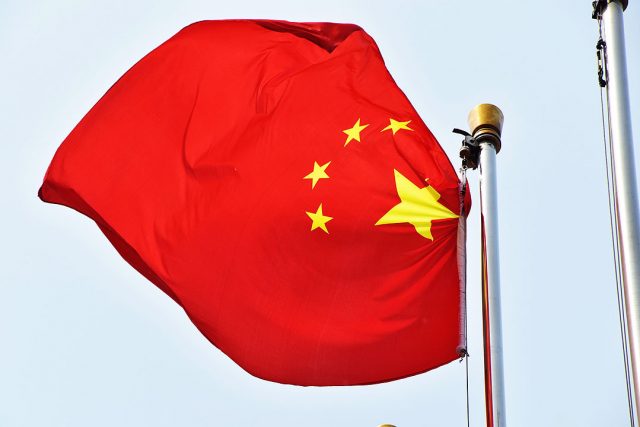
BEIJING — China has placed Lockheed Martin Corp. and Raytheon Technologies Corp. under sanctions over arms sales to Taiwan, the government said on Monday, at least the third time it has announced punishments against the US companies.

The sanctions are countermeasures against the two companies over a $100-million Feb. 7 arms sale that “undermined China’s security interests, seriously undermined China-US relations and peace and stability in the Taiwan Strait”, foreign ministry spokesman Wang Wenbin said at a regular news briefing.

Beijing views the self-ruled island of Taiwan as a breakaway province that must accept Chinese sovereignty and has never renounced the use of force to achieve that goal.

“In accordance with the relevant stipulations in China’s anti-foreign sanctions law, the Chinese government has decided to take countermeasures on the infringing acts of Raytheon Technologies and Lockheed Martin,” Wang said.

“Both are military enterprises that have long participated in US arm sales to China’s Taiwan region.”

No further details were given on the nature of the sanctions.

This is the first time the companies have faced sanctions under China’s new anti-foreign sanctions law drawn up last year in response to US sanctions against Chinese companies.

On at least two previous occasions China has announced sanctions against Lockheed and Raytheon, in 2019 and 2020, though Beijing has not explained what those sanctions entailed or how they were enforced.

The United States does not sell weapons to China.

However, the United States is bound by the 1979 Taiwan Relations Act to provide Taiwan with the means to defend itself, and US weapons sales always attract China’s anger.

China has over the past two years stepped up its military and diplomatic pressure against Taiwan, whose government says it wants peace but will defend the island if attacked.

China regularly says Taiwan is the most important and sensitive issue in its ties with Washington, which are also strained over trade and human rights disputes. — Reuters

Loman keeps close eye on Fernandes-Lineker fight

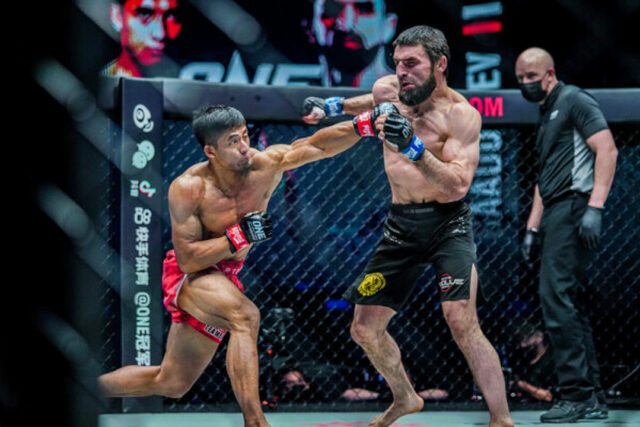
STEPHEN “The Sniper” Loman has made a giant leap in ONE Championship’s rankings after his successful ONE: WINTER WARRIORS II debut. Mr. Loman knocked out Russian contender Yusup “Maestro” Saadulaev in the first round, giving fans a taste of what they can expect as he continues to climb the ranks. — ONE CHAMPIONSHIP

TO SAY that Stephen “The Sniper” Loman is paying close attention to the fight between reigning ONE Bantamweight World Champion Bibiano “The Flash” Fernandes and John “Hands of Stone” Lineker is an understatement.

“For sure, Mr. Bibiano knows that Lineker packs power in those punches. I expect him to come up with a gameplan to take the match to the ground. I think there’s a huge possibility that he can submit Lineker,” Mr. Loman said.

“On the flipside, the key to Mr. Lineker is finding his distance and striking at the right time. If he can find his range, and pick his shots from a distance, there’s also a chance that he knocks out Mr. Bibiano. He’s a veteran in the game as well. I guess we’ll see what gives.”

Mr. Loman, after making that leap in the contender’s list, should no longer be considered as a newcomer in ONE Championship, and instead, should be treated with more respect as he primes himself for a potential future title shot.

The 30-year-old certainly proved that he belongs inside the Circle with his impressive promotional debut at “ONE: WINTER WARRIORS II” last December, clobbering and eventually knocking Yusup “Maestro” Saadulaev out in the first round to not just emphatically announce his arrival but also take the Russian’s spot in the division rankings.

It’s a humbling achievement on his part, but it also gave a glimpse to the fans that the Igorot warrior was indeed for real. And Mr. Loman understands with that memorable win, he has set the standard for himself to continue knocking down the hurdles thrown his way.

“I feel happy and proud that I was able to crack the rankings and join the elite names in the division,” Mr. Loman said.

“But more than that, it motivated me to work even harder cause I know that I’m close to the top, I could be fighting for the title soon, so I have to maintain my focus even more and be ready.”

Nevertheless, Mr. Loman is confident that the fans have seen nothing yet and he’s driven to sharpen his toolset for that next fight.

“I was happy to be able to bring that confidence, having that champion’s mentality in my debut in ONE Championship. I have won championships in other organizations, and that’s one thing that I bring here. I’m also happy that all of the hard work in training showed off,” Mr. Loman said.

Who knows, that title shot may come sooner rather than later. That’s why Mr. Loman will certainly be a curious observer once Messrs. Fernandes and Lineker finally lock horns.

And in his book? He’s audacious enough to give his fearless forecast and favor the longtime champion to still find a way to have his hands raised at the end of the night.

“If I have to pick between them, I’ll stick with Mr. Bibiano,” Mr. Loman said.

“I think his grappling will be superior. We also saw in his past fights that he has a complete skillset. He can strike, and we all know how good he is at jiu jitsu. If Mr. Bibiano gets his rhythm early in the match, he’ll submit Mr. Lineker.”

Suns’ Chris Paul named inaugural Kobe & Gigi Bryant award recipient

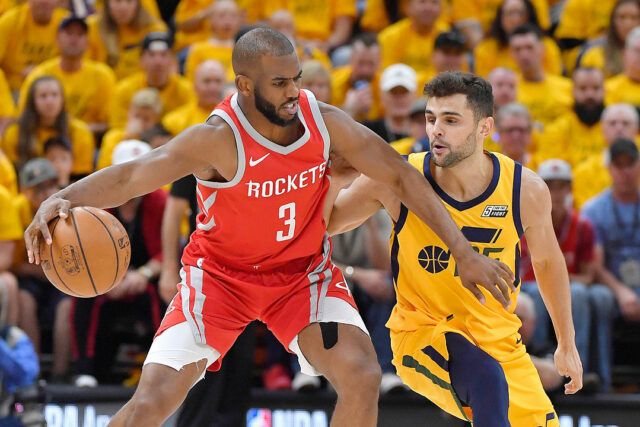
CHRIS PAUL (3) — REUTERS

PHOENIX Suns guard Chris Paul was named the first recipient of the Kobe & Gigi Bryant WNBA Advocacy Award for his contributions to the advancement of girls’ and women’s basketball, the league said on Sunday.

The Women’s National Basketball Association (WNBA) and Vanessa Bryant will present Paul with the award later on Sunday during the National Basketball Association’s All-Star Game in Cleveland.

“I have seen first-hand Chris’ appreciation of the WNBA and the game at every level for women and girls, especially in Phoenix and North Carolina, and his ardent support of our game strongly reflects the legacy of Kobe and Gigi,” WNBA Commissioner Cathy Engelbert said in a news release.

Bryant, five-time NBA champion during his 20 seasons with the Los Angeles Lakers, died in 2020 at the age of 41 in a helicopter crash, along with his 13-year-old daughter Gianna and all seven others on board. — Reuters

Khan considering retirement after crushing defeat against Brook

BRITISH boxer Amir Khan suggested that he is considering retirement from the sport after suffering a comprehensive defeat with a sixth-round TKO at the hands of Kell Brook on Saturday.

The 35-year-old Khan was outclassed by compatriot Brook from start to finish, and looked to be in dire straits before the referee stepped in to save him from any more punishment.

Khan, who won silver as a lightweight at the Athens Olympics in 2004 and is a former unified light-welterweight champion, said he was hoping to spend more time with his family.

“It’s something to think about, definitely,” Khan told reporters when he was asked about a potential retirement. “I’ve always said I never want boxing to retire me, I want to retire from boxing.

“Punishment like that sometimes in boxing, I know I showed a big heart and took some big shots today, but sometimes too much of that can be harmful in the future.

“I’ve done more than I ever expected. Maybe I peaked too early, I was at the Olympics at 17, I won the world title at 22. I’m 35 now, I’ve been in the game a very long time, I’m an old man. I want to spend time with my kids and my family.” — Reuters

Joaquin Niemann takes fast lane to win Genesis Invitational

JOAQUIN Niemann figured out the best way to avoid Los Angeles-area traffic, staying ahead of the pace while going wire-to-wire to win the Genesis Invitational at Riviera Country Club in Pacific Palisades, CA.

Niemann, a native of Chile, fired a closing round of even-par 71 on Sunday to finish at 19-under 265, two shots ahead of Cameron Young (70) and local fan favorite Collin Morikawa (65), who hails from nearby La Canada Flintridge.

Australia’s Adam Scott (66) and Norway’s Viktor Hovland (70) finished tied for fourth place at 14 under.

“Obviously it’s the toughest tournament, I think, during the year,” Niemann said. “It’s got the best field, the best players are here and that proves (to) myself that I can be competing with the top guys, I can be up there in the world ranking. I think it’s going to give me a lot of confidence for what is coming next.”

Niemann, 23, became the first wire-to-wire of the event since Charlie Sifford in 1969. It was also his second career victory after winning at the A Military Tribute at The Greenbrier in White Sulphur Springs, WV, in 2019.

After blistering the historic Riviera course to the tune of 16-under par through the first two rounds, Niemann backed off the throttle to shoot 3 under on Saturday before Sunday’s controlled final round.

Niemann had a bogey and a birdie on the front nine for an even-par 35, then took control with an eagle 3 at the par-5 11th hole to move to 21 under. Bogeys at Nos. 14 and 15 brought him back to 19 under and he closed with a trio of pars, including a two putt from 27 feet at 18.

“This weekend took me forever; it felt like a month,” Niemann said on the CBS broadcast. “I am so happy it’s finally done. I’m really proud of the way we battled with my caddie Gary (Matthews). All of the hard work, there is nothing like this. This is amazing.”

Morikawa, in just his third tournament on United States soil since the Ryder Cup in September, made a late charge on Sunday after he was as far back as eight shots at one point. He was 2-under through the first nine holes before he chipped in for an eagle 2 at No. 10.

Morikawa had birdies at Nos. 16 and 17 but missed a birdie putt at 18 that would have pulled him to within one of the lead.

“You know, I just had to put together a few better rounds and make a few less mistakes, but overall, I’m happy with the way things kind of played out,” Morikawa said. “Wish I had that putt on 18 again, but it is what it is.”

After shooting even par on the front nine, Young had a wild ride on the back. He had a bogey at No. 10 before a birdie at 11. His roller coaster continued with a birdie at No. 15, a bogey at 16 and a birdie at 17. Young, who started the day alone in second place, had the round of the tournament with a 62 on Friday.

“Overall, you finish tied for second at Riviera, I can’t complain,” Young said. “I mean, I’m lucky just to be here and I know it does some good things for me going forward, so I am happy with the week, for sure.”

Hovland started the day alone in third place but was six shots off the lead. All hope for getting into contention late was lost when he went 2-over par on a five-hole stretch from Nos. 12 to 16.

Justin Thomas shot 70 and finished alone in sixth place at 13 under, while Maverick McNealy and Scottie Scheffler were tied for seventh at 12 under after carding 69s. — Reuters

Peso weakens on rising Russia-Ukraine tensions

BW FILE PHOTO
THE PESO weakened against the dollar on Monday as tensions between Russia and Ukraine grew. — BW FILE PHOTO

THE PESO depreciated versus the greenback on Monday amid growing tensions between Russia and Ukraine, which escalated further amid some pro-Russian separatist movements.

The local unit closed at P51.38 per dollar on Monday, shedding three centavos from its P51.35 finish on Friday, based on data from the Bankers Association of the Philippines.

The peso opened weaker at P51.40 versus the dollar on Monday. Its worst showing was at P51.42, while its intraday best was at P51.36 against the greenback.

Dollars exchanged increased to $713.5 million on Monday from $546.2 million on Friday.

The peso weakened amid safe- haven dollar demand as tensions between Ukraine and Russia continued to grow, Rizal Commercial Banking Corp. Chief Economist Michael L. Ricafort said in a Viber message.

Reuters reported that sounds of fighting were heard on the east side of Ukraine amid a clash between government forces and pro-Russian separatists. There were also satellite imagery showing Russian deployments closer to the Ukraine border.

The office of French President Emmanuel Macron reported that US President Joseph R. Biden has accepted an invitation to meet Russian President Vladimir Putin only if invasion has not happened.

Meanwhile, a trader in an e-mail said the peso depreciated after the Chinese central bank kept its policy loan prime rate unchanged.

The People’s Bank of China in a widely expected move kept the loan prime rate at 3.7% after trimming it for two consecutive months.

For Tuesday, the Mr. Ricafort expects the local unit to move within P51.30 to P51.45, while the trader gave a forecast range of P51.30 to P51.50 per dollar. —LWTN with Reuters

PSEi dips after Fitch outlook, Ukraine crisis worries

BW FILE PHOTO

SHARES dropped on Monday after Fitch Ratings maintained its negative outlook for the Philippines and amid worsening tensions between Russia and Ukraine.

The benchmark Philippine Stock Exchange index (PSEi) fell by 46.54 points or 0.62% to close at 7,372.25 on Monday, while the broader all shares index declined 7.03 points or 0.17% to 3,916.66.

Philstocks Financial, Inc. Senior Research Analyst Japhet Louis O. Tantiangco said in a Viber message that sentiment took a hit from Fitch’s decision to maintain its negative outlook for the Philippines’ credit rating.

Fitch last week affirmed the Philippines’ investment grade rating but also maintained the negative outlook, as it flagged uncertainties to the country’s medium-term growth trajectory and hurdles to bringing down debt.

A negative outlook means Fitch could downgrade the Philippines’ credit rating in the next 12 to 18 months. The outlook was revised to negative from stable in July 2021 due to the impact of the pandemic on the economy.

“Philippine stocks opened the week lower dragged by news of deletion of index powerhouse SM Investments Corp. from the FTSE indices effective March 18,” Papa Securities Corp. Equities Strategist Manny P. Cruz said in a text message.

Mr. Cruz said concerns over a potential Russian invasion of Ukraine also weighed on investor sentiment.

US President Joseph R. Biden, Jr. and Russian President Vladimir Putin have agreed in principle to a summit over Ukraine, the French leader said on Monday, offering a possible path out of one of the most dangerous European crises in decades, Reuters reported.

Russian forces have been amassing around its neighbor since late last year, something Western countries say is a prelude to an invasion that could come at any moment.

Russia denies any intention to invade, but nerves were further frayed when the Belarusian defense ministry announced that Russia would extend military drills in Belarus that were due to end on Sunday.

Back home, sectoral indices were split. Property jumped 74.99 points or 2.14% to 3,578.44; mining and oil climbed 143.47 points or 1.24% to 11,656.32; and financials went up 0.36 point or 0.02% to 1,732.26.

Meanwhile, holding firms dropped 167.98 points or 2.38% to 6,882.45; services went down 20.88 points or 1.07% to 1,925.63; and industrials fell 101.83 points or 0.95% to 10,423.37.

Value turnover increased to P9.11 billion with 1.40 billion shares switching hands on Monday from the P7.42 billion with 1.18 billion issues traded on Friday.

Decliners outnumbered advancers, 129 against 72, while 46 names closed unchanged.

Foreigners turned buyers with P320.17 million in net purchases seen on Monday versus the P88.57 million in net outflows seen on the previous trading day. — L.M.J.C. Jocson with Reuters

Google introduces voluntary privacy initiative for Android

Google’s Privacy Sandbox, a project that reduces cross-site and cross-app tracking, announced on Feb. 16 a multi-year initiative to build more private advertising solutions on Android.

Among the proposed solutions are SDK (Software Development Kit) Runtime, which limits user data collection by isolating a third-party’s advertising code from an app’s code; and Topics API (Application Programming Interface), which infers ads based on a user’s interest without having to track individual users across apps.

Developers can review and share feedback on the initial design proposals at developer.android.com/design-for-safety/ads.

A beta release of the developer previews is scheduled at the end of the year. In its announcement, Google also said it plans to support its existing ads platform features for “at least two years.”

Anthony Chavez, Google vice president for product management, android security, and privacy, ensured that Google doesn’t give preferential treatment to its own ads, products, or sites.

“We’ll apply these principles to our Android work… and continue working with the UK Competition and Markets Authority, and others,” Mr. Chavez said in a press statement. He further noted in a blog that restricting the technologies used by advertisers — as in the case of Apple’s App Tracking Transparency (ATT) — is ineffective.

Tech website Ars Technica raised the concern that Privacy Sandbox on Android is voluntary, and called the privacy improvements “toothless” since advertisers can choose to opt out.

Ad revenue accounted for 80% of Google’s revenues in 2021, according to financial website Investopedia. — Patricia B. Mirasol