LIVERPOOL, England — Liverpool stuttered into the quarterfinals of the Champions League with a 2-1 aggregate win over Inter Milan after suffering a 1-0 loss to the Italian side, who was reduced to 10 men, at Anfield on Tuesday.
After a cagey first half, a superb drive into the top corner from Lautaro Martinez in the 62nd minute put Inter ahead on the night.
But just when they looked capable of springing a surprise, the visitors found themselves down a man after Alexis Sanchez was dismissed for a second yellow card after catching Liverpool midfielder Fabinho.
It was a harsh decision against Sanchez, who had won the ball but caught the Brazilian with his follow through and Inter’s bench furiously protested.
The dismissal killed Inter’s momentum with Liverpool never looking in danger of conceding again.
“Lautaro’s goal had hit Liverpool, but Sanchez’s expulsion influenced the last half hour of play,” said Inter coach Simone Inzaghi ruefully.
“A victory at Anfield it’s nice, but it’s useless for the qualification,” he added.
After their 2-0 loss at the San Siro, Inzaghi’s Inter came to Anfield knowing that they needed to find the perfect balance of defensive security and clinical finishing and they began in confident fashion.
Inter’s shape was compact and their movement clever while Liverpool struggled to get into their normal rhythm, perhaps wary of over-committing.
Still, it was the home side who came nearest to taking a first-half lead with Joel Matip heading against the bar and then Virgil van Dijk heading wide from a Trent Alexander Arnold corner.
Hakan Calhanoglu forced Liverpool keeper Alisson Becker into action in the 42nd minute and on the stroke of half time Trent Alexander-Arnold, finding space on the right, flashed a shot just wide. — Reuters
MUNICH, Germany — Bayern Munich’s Robert Lewandowski grabbed the earliest hat trick in Champions League history with three goals by the 23rd minute as the Germans steamrollered Salzburg 7-1 on Tuesday to book a place in the quarterfinals with an 8-2 aggregate score.
The 33-year-old Poland striker scored three times in an 11-minute spell as he opened his account with two almost identical penalties in the 12th and 21st before netting on the break two minutes later for his fifth hat trick ever in the competition.
The last-16 tie was all but over by the half-hour mark when Serge Gnabry beat beleaguered Salzburg goalkeeper Philipp Koehn with a low shot to make it 4-0 before a Thomas Mueller double and Leroy Sane strike in the second half wrapped up the win.
“This was a statement, an exclamation mark,” said Bayern keeper Manuel Neuer.
Bayern, who has been unpredictable in the Bundesliga this year, have now scored seven or more goals in a Champions League game for a record seventh time.
“We started well and presented ourselves differently from recent weeks. That gives you hope that this will go on. You could see from the start that we had a good attitude,” said Neuer.
The Bayern goalkeeper also set a record with his 104th appearance in the competition, overtaking current German club CEO Oliver Kahn as the Bayern goalkeeper with the most games in the Champions League.
Salzburg had two golden chances early in the game and came agonisingly close to an equalizer in the 15th minute when Neuer, back from a knee injury, pulled off the save of the game to tip Nicolas Seiwald’s missile over the bar.
But even though Salzburg had not conceded more than two goals in a competitive match this season, they could do nothing to stop in-form Lewandowski.
The Pole twice forced defender Maximilian Woeber to fell him for a penalty before beating him again on the rebound for his third goal.
Worse was to come after the break when Mueller turned beautifully in the box to drill in the fifth goal in the 54th.
“The game was of huge importance for us,” Mueller said. “Had we been eliminated today, we would have faced three sad months and people would be rightly questioning things.”
“We had some chances but if you don’t make them count, it’s difficult. It had nothing to do with attitude, focus or the match plan. They simply were better in all aspects — that’s it.” — Reuters
FIVE different golfers have a chance to sit on the proverbial throne as world No. 1 at the conclusion of The Players Championship this weekend in Ponte Vedra Beach, FL.
Collin Morikawa, Viktor Hovland of Norway, Patrick Cantlay and Scottie Scheffler are all within striking distance. Or Spaniard Jon Rahm could retain the title for the 42nd week of his career.
When Scheffler moved into fifth in the Official World Golf Ranking following Sunday’s victory at the Arnold Palmer Invitational, it made this the first week in the history of the ranking system that each of the top five players are all younger than 30 years old.
The Players champion earns 80 OWGR points, whereas standard tournaments dole out a much smaller number of points that varies by the strength of field. That big prize creates scenarios where Morikawa, Hovland, Cantlay or Scheffler could overtake Rahm, who’s held onto No. 1 since the 2021 Open Championship.
Morikawa and Hovland became Tour rookies at the same time in 2019 and have not needed much time to make their mark, particularly Morikawa, who has won two majors.
“We just truly believed in ourselves, and that’s the number one thing is that you absolutely have to trust yourself that you can do it,” Morikawa said on Tuesday. “Not just make it to the PGA Tour, not just make it to the top 100, top 50 in the world but to be No. 1.”
It would be a particularly unparalleled rise for Scheffler, who has contended on tour and helped the victorious US Ryder Cup team last fall but finally broke through with his first two PGA Tour wins over his past three starts.
“I wouldn’t say I really pay too much close attention to stuff like that,” Scheffler said. “For me, I’m just really focused on this event and this tournament and kind of getting ready.”
For his part, Rahm said he had no idea so many players were on his tail.
“You should ask if I want to know those things or not,” Rahm joked. “No. No. Even if you’re No. 1, you’ve still got to perform every week. I’m chasing people myself, as well, so no, I don’t feel like I’m being chased.” — Reuters
INDIAN Wells organizers said on Tuesday that world number two Novak Djokovic had been placed in the tournament’s draw but it was unclear if the Serbian would be permitted to enter the United States.
The 20-time Grand Slam winner has refused to obtain a coronavirus disease 2019 (COVID-19) vaccine and previously said he was prepared to miss tournaments as a consequence.
“Novak Djokovic is on the tournament entry list, and therefore is placed into the draw today. We are currently in communication with his team,” Indian Wells organisers wrote on Twitter.
“However, it has not been determined if he will participate in the event by getting CDC (US Centers for Disease Control and Prevention) approval to enter the country.”
The Indian Wells men’s draw on Tuesday showed he had a first-round bye.
The CDC website as of March 3 indicated non-US citizens who are not immigrants must show proof of vaccination against COVID-19 in order to travel by air to the United States.
Djokovic was unable to compete at the Australian Open after immigration authorities detained him on Jan. 6, prompting a legal rollercoaster ride over the country’s COVID-19 entry rules that led to the cancellation of his visa later that month.
The California tournament, often referred to as tennis’ “fifth major,” is expected to welcome a full house after it was canceled in 2020 and moved to October last year due to the COVID-19 pandemic.
The women’s first round begins on Wednesday while the men’s starts on Thursday.
With former world number one Roger Federer out of the tournament as he recovers from knee surgery and Djokovic previously presumed absent, Spaniard Rafa Nadal was widely favoured to pick up his fourth Indian Wells title and a men’s record-extending 22nd Grand Slam title at the French Open after winning the Australian Open in January.
Djokovic most recently competed in Dubai in February, where Czech Jiri Vesely stunned him in the quarterfinals.
The loss meant that he would lose his world number one ranking to Russian Daniil Medvedev, who claimed his maiden major title in Flushing Meadows in September and is the top seed at Indian Wells.
France loosened COVID-19 restrictions earlier this month, with vaccine passports no longer mandatory as of March 14, opening the door for the 34-year-old to mount a title defense at Roland Garros beginning in May. — Reuters
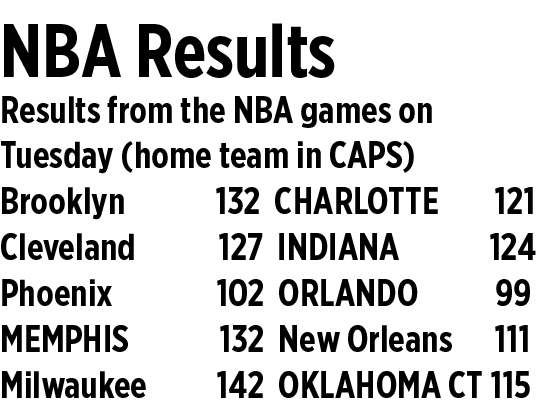
DEANDRE Ayton posted his 20th double-double of the season and Cameron Payne had 18 points and 12 assists as the Phoenix Suns rallied late for a 102-99 win over the host Orlando Magic on Tuesday night.
Phoenix led 73-58 with 3:30 left in the third quarter. But the Magic went ahead for the first time since the opening period when Wendell Carter, Jr. made two free throws for a 97-96 advantage with 1:51 remaining.
Ayton’s basket in the lane off a feed from Payne gave the Suns a 100-97 lead with 12.7 seconds to go and Payne added two free throws with 6.9 seconds left, making it 102-99. Mikal Bridges sealed the outcome by blocking Franz Wagner’s 3-point try near the top of the key.
Three of Phoenix’s top six scorers — All-Stars Devin Booker (health and safety protocol) and Chris Paul (thumb) as well as Cam Johnson (quad) — were out of the lineup for the second consecutive game.
Ayton had a double-double by half time as the Suns took a 53-43 lead. The 6-foot-11 center finished with 21 points and 19 rebounds to help Phoenix sweep a season series with the Magic for the first time since 2015-16.
Payne notched his second points-assists double-double in three games and Landry Shamet also played a big role offensively for Phoenix, scoring 21 points on the strength of 6-for-10 shooting from beyond the arc.
Bridges added 13 points and three steals, Aaron Holiday came off the bench to score 11 points and Jae Crowder had seven points and 11 rebounds.
Orlando, which entered the game tied with the Houston Rockets for the NBA’s worst record, missed 32 3-point attempts (7-for-39) and committed 12 total turnovers. The Magic also played without Jalen Suggs, who missed his second straight game with a sprained right ankle.
In his return from a two-game absence due to illness, Carter collected 20 points and 12 rebounds for his seventh consecutive double-double. Moe Wagner added 12 points and seven rebounds off the bench, Markelle Fultz tied his season-high with 11 points and Mo Bamba had nine points and 15 rebounds.
Orlando’s Cole Anthony played the fourth quarter with the bridge of his nose bandaged, after he was inadvertently hit in the face by Bamba early in the second half. Anthony (five assists) scored nine of his 11 points in the final period. — Reuters
As early as July 2021, with COVID-19 in full force, Philip Morris International announced that it was quitting the cigarette business in the United Kingdom in 10 years. This shouldn’t come as a surprise to anybody, considering the general decline in cigarette smoking worldwide in the last 50 years.
Cigarette smoking’s heydays were in the 1960s and 1970s. In a report by Hannah Ritchie and Max Roser titled, “Smoking,” published online at OurWorldInData.org., they noted that sales data from 1875 to 2015 indicated worldwide sales of cigarettes to adult smokers in wealthy countries peaked from around 1962 to 1974. Since then, sales have been falling.
And this decline in sales is the result of several factors: bans on tobacco advertising; increasing taxes on cigarette or tobacco sales; more smoking-related cancer deaths, etc. “The rise, peak then decline of smoking in rich countries took around a century. A long trajectory with severe health impacts,” wrote Ritchie and Roser.
“The positive news is that… smoking is already falling in most countries today… the share of adults who smoke has declined in most countries in the world over the past decade. This is a surprising fact to many, since it means smoking prevalence is not only falling in high-income countries, but also at low-to-middle incomes,” they wrote.
They noted that “low-to-middle income countries have effectively ‘leapfrogged’ the century-long rise-peak-decline pathway of rich countries. Almost everywhere, smoking is on the decline.” As a result, “in poor countries, where fewer people were smoking in the past, tobacco is responsible for a much smaller fraction of cancer deaths… Globally more than one in five cancer deaths (22% in 2016) are attributed to smoking… In most richer countries the share is higher — the average in high-income countries is 28% in 2016.”
This, in a way, partly explains why “the iconic Marlboro cigarette brand will disappear from UK shelves within 10 years,” as reported the Financial Times (FT) in July 2021 through Jonathan Eley, quoting Philip Morris International tobacco group CEO Jacek Olczak. The tobacco executive was also quoted by FT as saying that “the ‘problem of smoking’ could be solved in the UK within ‘10 years maximum’… as part of a broader effort supported by regulation.”
He was also quoted as telling the UK-based news website the Daily Mail that the company strategy “absolutely means stopping selling traditional cigarettes in the UK,” and that the Marlboro brand of cigarettes would “disappear” from that market. Company revenues from the UK were estimated at about £800 million a year.
To date, Philip Morris is already invested heavily in nicotine alternatives, including electronic cigarettes that heat rather than burn tobacco. “Globally, the company derives almost a quarter of its revenue from alternative products, a much higher proportion than rivals such as Altria and Imperial Tobacco,” FT reported. The company has also “committed itself to earning half its revenue from non-smoking products.”
Quoting Philip Morris Chief Financial Officer Emmanuel Babeau, “We believe in, and we are going to contribute to, cigarettes being phased out.” FT noted that the “commitment to phase out traditional cigarettes in the UK is also partly driven by consumer and investor behavior, and government policy. Smoking rates in the country are already comparatively low while cigarettes are heavily taxed and, since 2016, are sold in plain packaging.”
Hannah Ritchie’s and Max Roser’s “Smoking” report in OurWorldInData.org. noted that “tobacco smoking has already been one of the world’s largest health problems for many decades. Over the course of the 20th century, it killed around 100 million people, most of them in today’s rich countries. The health burdens of smoking are now moving from high-income to low-to-middle income countries; some estimates have suggested that one billion people could die from tobacco over the 21st century.”
This finding is particularly important to Asian countries like the Philippines as the authors also noted that “there are a number of countries where at least 40% of population smoke, if not more. The places where many people smoke are clustered in two regions. South-East Asia and the Pacific islands and Europe — particularly the Balkan region — but also France, Germany, and Austria.”
But based on historical precedents, and available data, the way to fight the tobacco plague is not rocket science. The authors noted that “taxing cigarettes, bans on advertising, and support to help quit smoking are all critical to accelerate the decline of smoking.” In this line, local regulatory effort should be focused on these three main areas, while at the same time making it more difficult to access cigarettes and tobacco products and alternatives, particularly the youth’s access.
I hope our policymakers, legislators, and regulators are taking note of worldwide trends and developments in the tobacco industry and global tobacco consumption, as well as the obvious growth in the sale of tobacco alternatives. Philip Morris decision to end Marlboro sales in the UK in 10 years should be viewed positively, and be seen as indicative of the industry’s shift.
As such, policies and regulation of tobacco and its alternatives like electronic cigarettes deserve further study and scrutiny, especially in the areas of taxation, advertising or marketing, support for smoking cessation, and shouldering healthcare costs for smoking-related illnesses and diseases.
Regulation of tobacco and tobacco alternatives should not just adjust to the times. For once, maybe regulation can be ahead of the curve rather than always playing catch-up. Instead of calibrating to industry trends, perhaps regulators can actually set the path and thus make the industry follow its lead to a smoke-free environment and a healthier population.
Marvin Tort is a former managing editor of BusinessWorld, and a former chairman of the Philippine Press Council
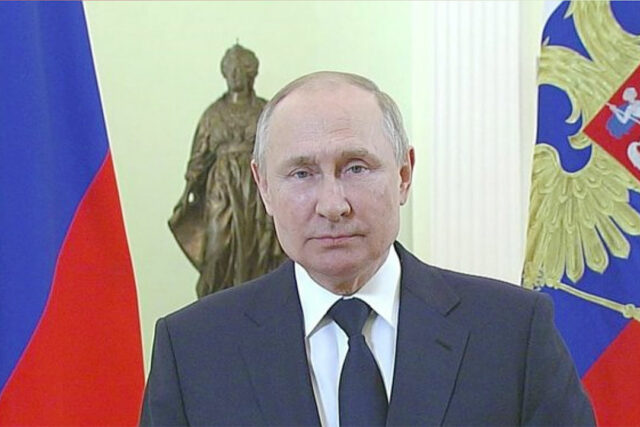
Putin has been accused of committing war crimes in Ukraine. Adam Durbin of BBC News wrote a few days after Russian President Vladimir Putin ordered the invasion of Ukraine that British Prime Minister Boris Johnson had accused Putin of committing war crimes.
BBC News noted that at the Prime Minister’s Question Time, Johnson said bombing innocent civilians “already fully qualifies as a war crime.” Johnson was responding to the Scottish National Party’s Ian Blackford, who called for Putin to be prosecuted.
In a television interview and also reported by Durbin, International Criminal Court (ICC) prosecutor Karim Khan said “he was now investigating possible war crimes and crimes against humanity in Ukraine.”
Some 39 countries acted to refer the situation to the ICC prosecutor which reacted by saying that “collection of evidence has started.” Durbin states that “the UK government described the referral as the largest in the history of the court which relies on cooperation with countries worldwide for support, particularly for making arrests.”
Putin is accused of giving the orders to conduct indiscriminate bombing of schools, hospitals, civilian infrastructure, and Ukraine’s nuclear power plant, and for targeting civilians traveling in civilian corridors who want to flee to other countries. Russian troops are heavily bombarding thickly populated cities like Kharkiv. Russia has accused Ukraine of using civilian infrastructure to shield weapons of war. Russia has been charged with bombing the same corridors for escape which were identified as part of a so-called ceasefire but Russian bombing resumed after a lull of two hours and 45 minutes when it was supposed to be part of a 12-hour ceasefire.
The Economist says that Russia does not recognize the authority of the ICC. But the court, Mr. Khan argues, has jurisdiction over war crimes committed on Ukrainian soil because the government of Ukraine had twice accepted — once in 2014 after Russia’s annexation of Crimea, and again in 2015, when it recognized the court’s jurisdiction for “an indefinite duration.”
As things now stand, Putin now has the dubious and dangerous distinction of being the world’s biggest pariah.
Being a pariah and isolating Russia from the rest of the world will certainly create economic difficulties for the porous Russian economy and could lessen the effectivity of Putin as a leader. How long will it be before the ordinary Russian starts to feel the effects of worldwide sanctions (which Putin says is equivalent to a declaration of war)? How long can security forces quell unrest and discontent brought about by economic and political difficulties? How long can Putin’s military and his KGB, the Committee for State Security, Foreign Intelligence and Domestic Security, prop up Putin before the military establishment itself feels the economic pinch?
And being a pariah has extended beyond Putin’s person but has extended to Russian businesses, citizens, and recently to athletes and performing artists like sopranos, ballerinas, and conductors. It is not only countries taking action and putting together economic sanctions against Russia and, most likely, Belarus, for providing access to Russian troops to facilitate the invasion. The United States, the United Kingdom and other countries have announced that they will go after the “ill begotten wealth” of Russian oligarchs and Putin cronies who have dishonestly profited from Russian government projects or projects dependent on government permits and regulations.
In sports, which is important to Putin, World Athletics, the international governing body of the sport of Athletics, the centerpiece event of any Olympic-type sports competition, has banned the participation of athletes and support personnel of Russia and Belarus in international competitions such as the world indoor championship to be held in Belgrade, Serbia from March 18 to 20, 2022 and the world outdoor championship at Eugene, Oregon in August this year. Both countries have also been banned from international gymnastics and figure skating.
The ban and actions taken against Russian citizens involved in non-political endeavors — and who therefore claim not to have anything to do with Putin’s decision to invade Ukraine and harm its population — has spawned the familiar debate on the propriety of mixing sports with politics and holding accountable citizens of a country for the aggression committed by its government.
Artists and athletes claim their purpose is to perform before the public and to avoid commenting on political and social issues and to help create peace. The question is: Should influential parties use their fame and platform to comment on the toughest and thorniest social and political issues? Tennis star Naomi Ossaka won the US Open title in New York in September 2021, using black masks to honor Black victims of violence. Each mask she wore each day bore the name of a different victim over the years. Osaka justified her activism by saying that the “point is to get people talking about it (these issues).” Basketball superstar LeBron James has no problem with expressing his views on social and political issues, making public his preference for then candidate Joe Biden as president of the US, to the chagrin of eventual loser Donald Trump.
Years earlier, the US boycotted the 1980 Moscow Olympics in protest over the then USSR’s invasion of Afghanistan. The Soviets returned the favor by boycotting the 1984 Los Angeles Olympics. And much earlier, South Africa was banned from international tournaments because of its racist apartheid policy.
In the Philippines, then street parliamentarian Nikki Coseteng (subsequently elected Congresswoman and Senator), then owner of PBA team Mariwasa, and later, Galerie Dominique, pleaded with PBA management and the competition director to hold a minute of silent prayer before the tip-off of her team’s game at Araneta Coliseum with another squad, for former Senator Ninoy Aquino who had been executed a few days earlier, on Aug. 21, 1983, at the Manila International Airport Ninoy was killed in broad daylight and despite a security cordon thrown around the tarmac, the terminal, and in the airport premises. The PBA rejected the request on the grounds that it did not want to get sucked into politics, especially mindful of the brutality of the Marcos regime.
Certainly, sport is an opportunity provided to the public to unwind and spend time with friends and family away from all daily concerns — including politics. The reality however is that people are confronted with the horrors of war daily in living color, seeing corpses of elderly men and women, children and babies. People are horrified by the brutality and indiscriminate bombing by an invader of a neighbor which is militarily inferior but is ready to defend every inch of its territory.
As the invasion enters its second week, casualties mount. As worldwide condemnation of Russia grows (with the exception of dictatorial regimes in Nicaragua, China, and former members of the USSR, among others), the Ukrainians and international volunteers vow to continue the fight for freedom. In the meantime, millions of Ukrainians find it difficult to imagine Russian troops out in Ukrainian streets. Everything is surreal.
There are concerns about how much more is NATO willing to do as millions of Ukrainian refugees stream into neighboring countries. But Ukraine, which Putin calls a manufactured country, vows to fight for as long as it will take, raising the specter of a guerrilla war which Russia might not be able to justify to its citizens as body bags and coffins come back from Ukraine.
Ukrainians ask, “What does Putin want? To bring us down to our knees?” Ukrainian President Zelenskyy, now the newest face of freedom, defiantly says that “Ukrainians should fight at every opportunity.” In the meantime, the humanitarian crisis worsens despite the world’s generosity.
Philip Ella Juico’s areas of interest include the protection and promotion of democracy, free markets, sustainable development, social responsibility and sports as a tool for social development. He obtained his doctorate in business at De La Salle University. Dr. Juico served as secretary of Agrarian Reform during the Corazon C. Aquino administration.
MISTAKES HAPPEN. Sometimes these are what are called “unforced errors” in basketball, like stepping on the line or double dribbling. In public life, miscalculations are first dismissed as glitches.
The admission of fault, especially arising from a wrong sense of priorities or thoughtlessness, is not the automatic reaction to mistakes made. The default response is a process of cover-up, which PR practitioners call “damage control.” Often, the damage being controlled involves the possible derailment of a career.
Media that receive letters to their editors (or now more frequently blogs) pointing to mistakes like misidentifying a person in a photo or attaching a wrong (often lower) title like a corporate Vice-President for a newly promoted Senior Vice-President routinely print a section called “erratum” or errata, for plural mistakes — wrong name and wrong title. That such a correction section is buried in the inside pages of the obituary section (missing the irony in this placement), or maybe in the classifieds beside an advertisement for cough drops or promo motel rates in Cebu, does little to promote the sincerity of this act of contrition.
In digital media, however, fake news or “intentional errors” promoted by those hired for this specific purpose are just too routine. There is no effort to correct such planted land mines to reputations as their object is to blow these up to smithereens. The effort of the wounded party is almost futile as the troll attacks come fast and furious — start Phase 2 of the attack.
Readily admitting mistakes is not the automatic human reaction. Apologies are issued after other options like denials and blame-passing fail. The first thoughts that come to mind before an admission of guilt or incompetence involve deferring action or making a definitive statement.
Dilatory tactics are employed.
Let’s form a task force to see what really happened. Sure, you saw me on video clips making the rounds and seeming to bat away a fan trying to shake my hand too vigorously. Those video clips are misleading — I was trying to do a fist bump and hit the fan’s head instead. Also, I had a stigmata on my right hand and it’s still healing. I apologize that it looks like a contemptuous gesture on my part. It wasn’t meant to be. (Too much information?)
A spokesperson is appointed, preferably one who is not involved in the controversy. This allows the frontliner (reputation nurse) to start his briefing with a disclaimer — I was in Sydney when this thing broke out. I’m still gathering the facts and people have been so cooperative in putting the puzzle together for me. As soon as I have something, you’ll be the first to know. Please don’t tiptoe too long.
All these strategies are variations of postponing an inevitable admission of wrongdoing. The hope is that the public will forget about the whole matter and move on to a new crisis. There’s always one around the corner waiting to distract everybody from the current preoccupation.
As the entanglements multiply and the story falls apart, a confession becomes inevitable. It is curiously devoid of any admission of guilt. Phrases like “inappropriate conduct” and “subordinates eager to help but unaware of the consequences” and “it’s the fault of the computer that exercised its delete functions on the footnotes” are invoked.
So, there is a school of thought that adheres to the belief that the best way to avoid mistakes like misstatements and ineffective apologies for past regimes to which one is inevitably linked (as if to an umbilical cord) is to simply avoid public discussions altogether.
Damage control can also refer to future mistakes. Isn’t it better to avoid the possibility of error rather than defending it afterwards? The likelihood of being confronted and blubbering in reply to a pointed accusation or question is best evaded.
Does steering away from conflict rather than meeting this head on work? Brand managers of political personalities are willing to stake their reputations on conflict avoidance as a strategy for avoiding errors and having to apologize for them later.
The call for unity and the careful avoidance of conflict can be beguiling as a political strategy. (We don’t want to make enemies.) But isn’t engaging in discourse and resolving conflicts part of the job description? Clearly, one of the job applicants doesn’t agree… to disagree.
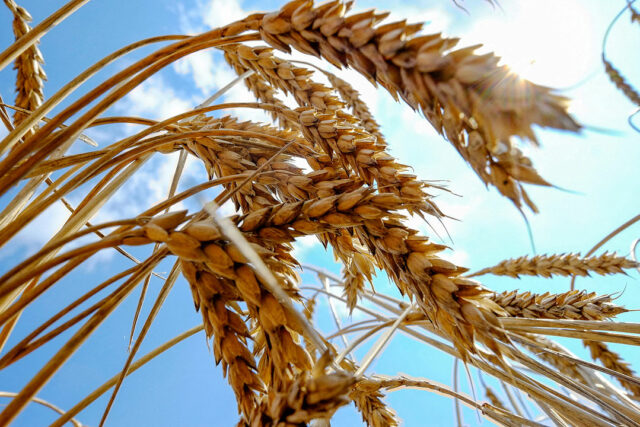
WHEAT is seen in a field near the southern Ukranian city of Nikolaev, July 8, 2013. — REUTERS
RUSSIA’s invasion of Ukraine means the food inflation that’s been plaguing global consumers is now tipping into a full-blown crisis, potentially outstripping even the pandemic’s blow and pushing millions more into hunger.
Together, Russia and Ukraine account for a whopping portion of the world’s agricultural supplies, exporting so much wheat, corn, sunflower oil and other foods that it adds up to more than a tenth of all calories traded globally. Now, shipments from both countries have virtually dried up.
Commodity markets are soaring — wheat is up about 50% in two weeks and corn just touched a decade high. The surging costs could end up weighing on currencies in emerging markets, where food represents a bigger share of consumer-price baskets. And analysts are predicting export flows will continue to be disrupted for months even if the war were to end tomorrow.
The crisis extends beyond just the impact of grain exports (critical as they are). Russia is also a key supplier for fertilizers. Virtually every major crop in the world depends on inputs like potash and nitrogen, and without a steady stream, farmers will have a harder time growing everything from coffee to rice and soybeans.
Plainly speaking, there are few other places on the planet where a conflict like this could create such a devastating blow to ensuring that food supplies stay plentiful and affordable. It’s why Russia and Ukraine are known as the breadbaskets to the world.
“It’s an amazing food shock,” said Abdolreza Abbassian, an independent market analyst and a former senior economist at the United Nations’ Food and Agriculture Organization. “I don’t know of a situation like this in the 30 years I was involved in this sector.”
BUYERS AT RISK The shock is already reverberating across the world.
In Brazil, another agricultural powerhouse, farmers can’t get the fertilizers they need because retailers are reluctant to provide price quotes. In China, one of the world’s biggest food importers, buyers are snapping up purchases of US corn and soybean supplies amid concerns that fewer crop shipments from Russia and Ukraine could set off a global scramble for grains. In Egypt, people are worried that prices for the subsidized loaves of bread they depend on could rise for the first time in four decades, while footage of citizens in Turkey trying to grab tins of cheaper oil went viral. And within Ukraine itself, food is running short in some major cities.
“The damage is done,” Abbassian said. “We’ll have months before we return to anything called normality.”
The timing couldn’t be worse. When the pandemic first hit in 2020, images of lines snaking around food banks and empty grocery shelves shocked the world as nearly a tenth of the global population went hungry. But at the time, food inventories were still abundant.
That’s no longer the case. Grains are the staples that keep the world fed, with wheat, corn and rice accounting for more than 40% of all calories consumed. But grain stockpiles are poised for a fifth straight annual decline. A combination of higher shipping costs, energy inflation, extreme weather and labor shortages have made it harder to produce food.
As a result, global food prices are already at record highs, with the benchmark U.N. index increasing more than 40% over the past two years. The surge has had crushing consequences. Food insecurity has doubled in the past two years, and the World Food Programme estimates 45 million people are on the brink of famine.
The current crisis is going to make things worse, likely sending hunger to unprecedented levels as the conflict turns millions of people into refugees and sends food prices even higher.
“The bullets and bombs in Ukraine could take the global hunger crisis to levels beyond anything we’ve seen before,” David Beasley, executive director of the U.N. agency, said in a statement.
The world has grown hugely dependent on Ukraine and Russia for their wheat, a crop used in everything from bread to couscous and noodles. The nations account for a quarter of global trade. They are also cheap suppliers, which makes their exports favorites for importers in the Middle East and North Africa, including in Egypt, the world’s biggest wheat buyer.
Benchmark wheat futures traded in Chicago reached a record-high price Tuesday.
“You’re going to see a spike of starvation around the world,” Eurasia Group President Ian Bremmer told Bloomberg TV’s Surveillance.
Wheat is a key commodity to watch because bread prices have a long history of kickstarting unrest. Going back to the days of the French Revolution, food insecurity has sent people into the streets demanding better conditions. Supplies from Russia have been part of this bigger picture before. In 2010, the country experienced a record heat wave that devastated crops, and the government banned exports. Wheat prices in international markets doubled in a matter of months, raising the cost of bread for millions of people. The price run-up simmered as part of the mix of factors that sparked uprisings in the Arab Spring.
BREADBASKET TO THE WORLD While Russia’s wheat hasn’t come directly under sanction, trade from the country has been severely disrupted. Some Russian grain is flowing by land, while vessel transit is near a standstill due to the military action in the Black Sea.
Meanwhile in Ukraine, where farming is so core to the national identity that its flag depicts blue skies blanketing yellow fields, growers are finding fieldwork perilous, while some have joined the military just weeks before spring planting begins. Analysts are warning that lots of acres could go bare this year.
“The potential is here for a serious hole in world grain supplies in 2022,” said Scott Irwin, an agricultural economist at the University of Illinois.
Food moves through the world in a complex web of imports and exports.
Many countries have positioned agricultural production toward exporting a few key products, rather than for food sufficiency. So nations like Ghana and Cameroon can be big global players in the cocoa market, but are still hugely dependent on shipments for wheat.
Meanwhile, grain-exporting nations can see what’s happening in Russia and Ukraine and decide that the world won’t have enough wheat or barley, so instead of shipping, they move to keep supplies at home. That can lead to a dangerous domino effect of increasing protectionism that hurts the world’s poorest and the countries most dependent on imports.
There are some early signs of protectionism brewing. Hungary is banning grain exports, and Serbia’s president said Monday the country will soon curb wheat shipments. Argentina and Turkey made moves last week to increase their control over local products.
Other players could see an opening with what’s happening in Russia and Ukraine and decide to fill the hole. India, for example, has increased wheat shipments in recent years. Vijay Iyengar, chairman and managing director of Singapore-based Agrocorp International Pte., predicts the South Asian country will see exports exceed a record 7 million tons in the current season if the conflict drags on.
But many of the nations that could typically help fill supply deficits are themselves seeing production problems. In Brazil, a major supplier of corn and soybeans, a crippling drought is ruining crops. Dry weather also wilted fields in Canada and parts of the US last year.
“It’s a global commodity squeeze at the moment,” said Andy Soo, commodities broker at Advanced Research Commodities in Singapore.
HUNGER’S TOLL Nate Mook has been on the ground in western Ukraine, serving meals to families who are waiting as many as 30 to 40 hours in line to cross the border in Poland. It’s becoming hard to source some kinds of food where he’s been working in Lviv, while he hears from his World Central Kitchen colleagues in Kyiv that they’re running into shortages. Supply chains are crumbling — as just one example, truck drivers that would be deployed for mass distribution of things like rice or potatoes are afraid to go out for fear of being mistaken for a military vehicle and getting attacked.
In Russia, too, hunger will likely be on the rise as sanctions hurt the nation’s economy. In the 1990s, economic sanctions against Iraq were linked to the death of half a million children as malnutrition rose.
Since the start of the pandemic, hunger has been increasing in almost every corner of the world, with the biggest toll coming in parts of Africa and Asia.
“The last thing the world needed at this point was another conflict, because conflict is driving hunger in the world,” said Deepmala Mahla, vice president for humanitarian affairs at CARE. “I just find it unacceptable to a level of disbelief that in this day and age, people are sleeping hungry when the world has the ability and is producing more than the food required to feed everyone.” — Bloomberg
SYDNEY — A “troubling new strategic convergence” between Beijing and Moscow has developed and the risk of “major power conflict” had grown since Russia invaded Ukraine, Australia’s intelligence chief said on Wednesday.
Andrew Shearer, director general of the Office of National Intelligence, said China’s President Xi Jinping appears to be planning to dominate the Indo-Pacific region and use it as a base to overtake the United States as the world’s leading power.
The comments reinforce warnings that the Russian invasion of Ukraine, which has met near-universal condemnation by the West, may spread into a regional or global conflict. This week Australian Prime Minister called on liberal democracies to stop an “arc of autocracy” reshaping the world. Read full story
“We’re going to have to work much harder to maintain the liberal quality of the rules-based order in Europe and here in the Indo-Pacific region,” director-general of the Office of National Intelligence Andrew Shearer said at a conference hosted by the Australian Financial Review.
“We see a leader who’s really battening down and hardening his country for this struggle to overtake the United States as the world’s leading power,” he added, referring to Mr. Xi. “The base camp … is to establish primacy in the Indo-Pacific region.”
Mr. Shearer said the geopolitical threat would center around technology, including use of cyber-attacks, so Australia must bolster its cyber defenses without closing itself to trade and information-sharing.
“We need a growing, open economy so we can fund the increases in defense spending that the government’s committed to, but this can’t be a zero-sum trade-off between economics and security,” he said.
Since Russia’s invasion of Ukraine, which it has called a “special operation,” Australian intelligence professionals considered that “a major power conflict unfortunately is becoming a less remote prospect than it was previously”, Mr. Shearer said.
He echoed many Western commentators by saying he was surprised by the effectiveness of Ukraine’s resistance to Russian forces. But he foreshadowed a “brutal, bloody couple of weeks” since Russian leader Vladimir Putin had “everything at stake now (and) it’s hard to see an elegant, or inelegant, dismount”.
The Kremlin describes its actions as a “special operation” to disarm Ukraine and unseat leaders it calls neo-Nazis. Ukraine and Western allies call this a baseless pretext for a war of choice that has raised fears of wider conflict in Europe. — Reuters
Southeast Asia hasn’t quite caught up with the body positivity wave experienced in other cultures, according to panelists in a discussion on beauty biases. Even in multiracial societies, said Malaysian fashion model Nalisa Alia Amin, slim, fair skin, and straight hair is still the standard.
“[Malaysia is] a multiracial country. Why is there only one skin tone?” she asked the audience of the March 8 event by Hong Kong-based news channel South China Morning Post (SCMP). Ms. Amin is the first plus-size model to open Kuala Lumpur’s Fashion Week in 2018.
“I think we have to do our own protest and [voice out that] we no longer support this kind of beauty standard,” she added.
The skin whitening industry targets women of color. Its most lucrative markets are in Asia, the Middle East, and Africa, where growth is expected to reach $11.8 billion by 2026, per a January 2022 CNN report.
In Southeast Asian countries like the Philippines, a lighter complexion is associated with wealth, power, and authority. Even babies have not been spared criticism for their morena (brown) skin.
This notion is a result of the country’s Spanish colonialism, which demarcated Filipino society’s upper echelons from everyone else, according to sociologist Ricardo G. Abad in a previous BusinessWorld article.
“It also happened, however, that those with power and authority were largely white-skinned…,” Mr. Abad said. “Since that social stratification lasted for centuries without much challenge, it was fairly easy to ingrain in people’s mind that skin color (and maybe texture as well) is associated with success, or being on top of the social heap.”
People also tie beauty to thinness in Asian culture, said Stephanie Teng, a Hong Kong-based artist and photographer, in the March 8 event. She related how, growing up, relatives she seldom saw would comment on her weight.
“At a young age, it wasn’t a choice to separate ourselves and see beauty that isn’t tied to the idea of thinness. Skinny means you’ll have a more successful life, a better life,” she said.
The many stories that have been emerging of late, however, reflect the welcome development that women are now empowered to speak up on the challenges they face, according to Michelline Espiritu Suarez.
“Growing up, we didn’t have that,” the Filipina author and Philippine Star columnist noted at the November 2021 book launch of an all-female anthology.
“We were just taught to be patient with our elders who would make comments about our appearance,” said Ms. Suarez, who added she is raising her two daughters to find their identity outside of their physical appearance.
Beauty biases can be broken if a more dynamic definition of beauty is embraced, said Stephanie Ng, founder and executive director of Body Banter, a non-profit that works with young people come to terms with their body image and mental health.
“We can see beauty as something that is an experience rather than an achievement,” Ms. Ng said at the SCMP discussion. — Patricia Mirasol
SINGAPORE-BASED fintech start-up Volopay said it will use its recently secured $29 million from a Series A round to drive continued expansion and technology innovation.
“We’ll put the money we raised toward developing and creating new technologies to complement our current offering,” the company told BusinessWorld in an e-mailed reply to questions on Monday.
Some technologies they’re working to improve are ERP (enterprise source planning), HRM (human resources management), and CRM (customer relationship management) software, as well as top project management tools.
“In the Philippines, we are also rapidly hiring for important positions such as operations, sales, administration, and others,” it added. Expansion in the country is slated for the 2nd quarter of 2022.
Investors that participated in the round were JAM Fund, Winklevoss Capital Management, Accial Capital, Rapyd Ventures, Acorns CEO Jeffrey Cruttenden, Access Ventures, Antler Global, and VentureSouq.
Volopay was launched in 2019 as a business spending management platform that makes expense reports digital, fast, inclusive, and safe through the use of corporate cards and automated payables based on its own AI infrastructure.
The company said that it has grown exponentially since its seed funding in 2021, and now has a team of over 150 members spread across the Asia Pacific region, including Singapore, Australia, India, Indonesia, and the Philippines.
“The strategic investment from leading blue-chip investors will fuelVolopay’s foray into the Philippine market to tackle two of the most pressing problems that SMEs (small and medium enterprises) and startups face – high FX (foreign exchange) charges incurred for international payments and the lack of a uniform platform to access all spend data,” it said.
It added that the platform provides companies with multi-currency wallets to hold money in Philippine Peso and any major currency and subsequently use it for payouts, eliminating “exorbitant amounts of FX charges levied on international payments.”
Volopay co-founder and chief executive officer Rajith Shaji said in an official statement: “Volopay is an ambitious project. To build an alternative toVolopay, you would have to launch five different startups. We are building the control center for modern companies for all their financial management needs.” — Bronte H. Lacsamana