Home Blog Page 67

Entertainment News (12/09/25)


Filipino animated shorts to be screened for free

A COLLECTION of Filipino animated shorts will be shown for free this Dec. 13 at the Atrium at De La Salle-College of Saint Benilde. The screening is part of MCADxMoving Image, a program of the college’s Museum of Contemporary Art and Design (MCAD). The selection is curated by comics writer and illustrator Melvin Sumangil Calingo, and the titles are: Creative Fuel by Camille Valencia, Closets by Pat Garvida, DOTS by Daphne Almencion, Rigel by CJ Reynaldo, Saling Pusa by Edouard Guazon and Janela Mendoza, In the Brood by Vanessa Exconde, Pangat Panglaw by Lester Isip, Soul Searching by Hera Soliven, and A Walk Through the Woods by Kayla de los Angeles. The screening is free and open to the public. It is scheduled on Dec. 13, 10 a.m. Interested participants may e-mail mcad@benilde.edu.ph.


Date night for pets returns this December

BOEHRINGER INGELHEIM is hosting the 5th edition of “Pets Date Night,” an annual celebration designed to bring fur parents and their pets closer while highlighting the importance of year-round parasite protection.

Happening on Dec. 13 at the Garden Ring, Ayala Malls Manila Bay, Parañaque City, this year’s event will feature live performances by Justin Vasquez and local bands, carnival-style games, prizes, and immersive activities tailored for families and their pets. A key highlight is the return of “Holitails Pawchella,” a Coachella-inspired pet costume show. Guests will also have access to free veterinary check-ups, practical pet-care guidance, and information on protecting pets from parasites.


P-pop girl group FINIX releases new track

GIRL group FINIX has released their new song “Hand in Hand,” an empowering anthem created to uplift Filipinos navigating ambition, responsibility, and the pursuit of their dreams. It blends Taglish rap, energetic pop, and FINIX’s signature attitude. The song is also a collaboration with financial app JuanHand, so it will serve as the company’s official theme song, produced under GKD Records.


Vice Ganda films showcased on Cinema One

VICE GANDA takes the spotlight at Cinema One as her biggest comedy box-office hits will make up Blockbuster Sundays this December. First up is her team-up with Anne Curtis in The Mall, the Merrier, showing on Dec. 14. Next is The Super Parental Guardians, where Vice plays a godparent raising his late best friend’s two children alongside their uncle played by Coco Martin. It airs on Dec. 21. Finally, there’s Vice’s joint project with Daniel Padilla and Pia Wurtzbach in Gandarrapiddo: The Revenger Squad, where they set on a heroic adventure as superheroes. It airs on Dec. 28. Cinema One is available on SKYcable ch. 56, Cignal ch. 45, GSat Direct TV ch. 14, and other local cable service providers.


Young Cocoa releases new EP

RISING Filipino alt hip-hop artist Young Cocoa has dropped his new EP, STILL COCOA, under Sony Music Entertainment. The six-track project incorporates chill, hypnotic grooves with off-kilter production choices. Produced by Brido, Jayson Franz, Joseph Gregory, Luke April, and up-and-comer chocolateman, the EP aims to push the boundaries of alternative music, rap, hip-hop, and bedroom indie. STILL COCOA is out now on all digital music platforms via Sony Music Entertainment.


HBO Max & Viu Bundle launches in Southeast Asia

THE HBO MAX & Viu Bundle is now available in Southeast Asia. The bundle aims to offer the best of Hollywood and premium Asian entertainment. Subscribers who avail of this can stream content from Warner Bros. Discovery’s iconic brands like HBO, The Big Bang Theory, Game of Thrones and Harry Potter on HBO Max as well as access a collection of Asian entertainment on Viu, including Viu Originals like Taxi Driver 3 and Korean variety shows such as Running Man (2025) and GBRB: Joy Pops Laugh Pops (2025). Consumers can subscribe to the HBO Max & Viu Bundle as a direct-billed purchase through either www.hbomax.com or www.viu.com.


Joji, Yeat join forces for remix

JOJI has unveiled “PIXELATED KISSES (with Yeat),” a remix of one of his tracks released earlier in October, new and improved with a verse from Yeat. Written and produced by Joji, it contains his pared-down vocals atop a gritty trap beat. The remix is accompanied by a James Mao-directed music video with a candy-colored pixelated video treatment and appearance from Yeat. The track is now out on all digital music streaming platforms.


Solaire to mount star-studded New Year concerts

BOTH Solaire Resort North and Solaire Resort Entertainment City are setting up New Year’s Eve celebrations. In the south, Solaire Resort Entertainment City has “Symphony of the Stars,” featuring world-renowned Broadway legend Lea Salonga and OPM icon Raymond Lauchengco, under the musical direction of Maestro Gerard Salonga. The evening begins with handcrafted cocktails at 7:30 p.m., followed by a dinner buffet at 8 p.m. The celebration continues at 10 p.m. in the Grand Ballroom. In the north, Solaire Resort North presents “A Night of Icons,” featuring International Theater Diva Rachelle Ann Go, Concert King Martin Nievera, and Megastar Sharon Cuneta, with Maestro Louie Ocampo and Marvin Querido at the helm. The dinner buffet opens at 8 p.m., and the countdown takes place later on inside the Grand Ballroom. Both events will feature unlimited food choices and free-flowing drinks, including sparkling, red, and white wines, beers, chilled juices and more. Tickets are available at TicketWorld.com.ph, the Solaire Resort Entertainment City Box Office, and the Solaire Resort North TicketWorld counter.


Erik Matti announces BuyBust collab with Netflix

THE film project BuyBust: The Undesirables was unveiled recently at a creators’ session in Yogyakarta, Indonesia. Filipino director Erik Matti, together with Indonesian director Joko Anwar, discussed Netflix’s continued commitment to investing in original content for the region’s library. There, Mr. Matti announces Netflix’s first collaboration with him in BuyBust: The Undesirables, which will have returning characters from the 2018 film, including Anne Curtis. It also has the addition of Gerald Anderson, alongside a slate of new characters. It is set to premiere on Netflix in 2026.


Catholic bishops should be more visibly politically active

STOCK PHOTO | Image by Jomarc Nicolai Cala from Unsplash

Stirred by the Catholic Bishops Conference of the Philippines (CBCP) pastoral letter titled “Beyond Survival: Rising Above the Floods of Corruption” dated Sept. 8, parish-based and civil society Catholic groups organized an anti-corruption march along EDSA between the EDSA Shrine and the People Power Monument on Nov. 30, Andres Bonifacio Day, a holiday. Because of that and the CBCP encouraging the public to join the march, expectations of a huge turnout were high.

While the organizers claim that the assembly on EDSA on Nov. 30 was of significant size, the general assessment was that it fell way short of the high expectations. The Philippine National Police estimated the gathering to be around 5,000 participants.

In contrast, when Manila Archbishop Jaime Cardinal Sin called on the Filipino people in the late evening of Friday, Feb. 22, 1986 to protect Defense Minister Juan Ponce Enrile and Armed Forces Vice Chief of Staff Fidel Ramos, who had bunkered down in Camp Aguinaldo and Camp Crame, respectively, after declaring their withdrawal of support for the Marcos dictatorship, hundreds heeded the cardinal’s call initially.

Cardinal Sin at that time was the most influential and visible voice of the opposition within the Catholic hierarchy. He was the symbol of courageous leadership in the fight for democracy and justice in the Philippines.

The crowd swelled into a massive throng of 2 million over the weekend, forcing the late President Ferdinand Marcos, Sr. and his family to flee the country on the evening of Monday, Feb. 25, 1986. That event is the very reason that the EDSA Shrine and the People Power Monument are on EDSA.

Maybe pastoral letters urging the flock to join movements for good governance or initiatives that demand justice, accountability and retribution have lost their “bite” or influence. As the CBCP pastoral letter of Sept. 8 said, “We too have often failed, whether by silence, by tolerating corruption in our own ranks, or by not setting a consistent example of integrity.”

The bishops were silent on the transfer of PhilHealth’ P89.9 billion to the national Treasury to finance the National Government’s unprogrammed appropriations; the Office of Vice-President Sara Duterte spending P125 million in confidential funds in just 11 days in 2022; and the Pharmally grand scam in 2021.

The bishops tolerated corruption in their own ranks. Some of them accepted money from President Gloria Arroyo, not for their charity missions but for their personal use. One bishop had the temerity to ask for a car as her birthday gift to him. He got it.

Maybe it is also a matter of issues. The CBCP pastoral letter of Sept. 8 called on the faithful to denounce graft and corruption, while Cardinal Sin asked his flock to protect and support those who would overthrow a dictatorship.

Perhaps, it is a matter of setting examples. During the brutal martial law rule of the dictator, many bishops not only denounced the abuses of the military, but they also took action against military operations.

In 1973, just one year after the imposition of martial law, a group of seven bishops issued one of the strongest open letters against the atrocities of martial law. They were dubbed the Magnificent Seven. They were Bishop Julio Xavier Labayen of Infanta, Bishop Antonio Fortich of Bacolod, Bishop Felix Perez of Imus, Bishop Orlando Quevedo of Kidapawan, Bishop Jesus Varela of Sorsogon, Bishop Federico Escaler of Kidapawan and Bishop Miguel Gatan Purugganan of Ilagan.

Bishop Labayen was a vocal advocate for human rights, supporting Church and grassroots groups working against abuses like torture and illegal detention. He also provided legal assistance and training to victims of human rights abuses and injustices.

Bishop Fortich supported victims and activists as well as families of victims of enforced disappearances. He attended almost all court sessions for the “Negros Nine” case, where a group including a foreign priest from his diocese was falsely accused of murder by the military.

He provided sanctuary to hundreds of villagers displaced by military offensives to take shelter in church facilities. He gained international awareness on the plight of the poor in Negros. Pope John Paul II even visited Bacolod in 1981 and spoke out against the oppressive conditions, an event widely seen as a diplomatic blow to the Marcos regime.

Bishop Perez worked to mitigate the harshness of the regime by using church mechanisms to document abuses and assist victims.

Archbishop Quevedo spoke out forcefully against human rights violations, including illegal arrests, torture and killings that occurred in his diocese. He worked against land-grabbing by Marcos’ cronies and the eviction of communities due to government projects. He publicly condemned specific acts of violence associated with pro-government paramilitary groups, such as the 1985 murder of Italian priest Tullio Favali by a paramilitary band.

Bishop Varela, as president of the Philippine Federation of Catholic Broadcasters, used this position to openly criticize President Marcos at a time when most media outlets were censored or under direct government control. He was among a group of petitioners who filed a case in the Supreme Court in 1975 to challenge the legality of Marcos’ decrees and his authority to hold office under either the 1935 or 1973 Constitution.

Bishop Escaler, as the prelate of Kidapawan and Ipil, was known for his progressive, pro-poor stance and for advancing the cause of human rights. He served as an adviser to the Task Force Detainees, an organization that documented cases of abuse. He was a vocal critic who issued statements that Marcos’ policies were providing aid to rebel groups by fueling social unrest and injustice.

Bishop Purugganan provided support for some 20,0000 peasants who were farming an 11,000-hectare tract of land spanning the Haciendas San Antonio and Santa Isabel in Ilagan that was being claimed for large-scale commercial agribusiness purposes by Marcos’ cronies. The bishop placed the entire social action network under his office to help the farmers’ struggles. In December 1981, he led over 50 priests, nuns and journalists to visit the haciendas in defiance of soldiers and private guards who tried to keep them out.

There were bishops other than The Magnificent Seven who were also known for their open criticism of the Marcos dictatorship and for providing sanctuary to the targets of martial law agents.

Bishop Francisco Claver of Malaybalay used the pulpit, the print media and the radio to condemn the violations of martial law enforcers, and admonished the abusers, including Bukidnon Governor Carlos Fortich, whose family-owned huge landholdings in the province. He was involved with the Association of Major Religious Superiors composed of 2,500 Catholic priests and 7,000 nuns, most of them teachers who have led prayer rallies and symposiums at leading women’s colleges.

Archbishop Oscar Cruz, a close friend of the family and archbishop of Dagupan-Lingayen, was also a staunch critic of Marcos. After the fall of the Marcos dictatorship, he described a destroyed bust of Ferdinand Marcos as a “monument to evil,” warning politicians never to become what Marcos was.

He was also known as one of the most vocal critics of President Arroyo, often speaking out against corruption scandals and election fraud issues, such as the “Hello Garci” controversy, the P728-million fertilizer scam and the NBN-ZTE deal.

In a 2015 interview, the archbishop predicted that then-presidential candidate Rodrigo Duterte would be “worse than a dictator” if elected. “Such a creature is dangerous, much more if he is chosen as the country’s head of state,” he said.

These religious leaders and the broader CBCP of that dark era had set an example of political activism. While the CBCP had issued pastoral letters condemning President Duterte’s war on drugs and reign of terror, only Bishop Pablo Virgilio David of the diocese of Caloocan and Archbishop Socrates Villegas, immediate successor of Archbishop Cruz, had set the example of political activism.

Bishop David provided sanctuary and legal assistance to drug users and the families of victims of the war on drugs, advocating for a rehabilitative approach instead of the extrajudicial killings espoused by the government.

Archbishop Villegas issued strong statements condemning the “reign of terror” and the “culture of death” that the war on drugs had created. He called on churches to ring their bells every evening as a “wake-up call” for the nation to condemn the violence.

For the CBCP pastoral letters to recover their bite or influence, more bishops should be more visibly politically active like Cardinal Sin, Bishops Labayen, Fortich, Varela, Purugganan, Escaler, Cardinal David, and Archbishop Villegas.


Oscar P. Lagman, Jr. has been a keen observer of Philippine politics since the 1950s.

SEC targets stronger investor appeal with reforms — Lim

FRANCISCO ED. LIM — THE SECURITIES AND EXCHANGE COMMISSION/BW FILE PHOTO

THE SECURITIES and Exchange Commission (SEC) is ramping up reforms to address long-standing liquidity constraints in the Philippine capital market as it seeks to close the gap with regional peers, Chairman Francisco Ed. Lim said.

Speaking at the European Chamber of Commerce of the Philippines’ Philippine Economic Outlook conference on Thursday last week, Mr. Lim said the Philippine capital market continues to lag behind many ASEAN (Association of Southeast Asian Nations) countries in terms of size, liquidity, and the breadth of investment products.

“We view this challenge as a chance to demonstrate that integrity and decisiveness can turn adversity into strength. Our goal is nothing less than to make the SEC a beacon of certainty and trust, one of the brightest forces powering our economy in the new world, based on ease of doing business and regulatory efficiency,” he said.

To help narrow the gap, Mr. Lim said the commission is pursuing reforms that strengthen regulatory certainty and accelerate decision-making.

This year, the SEC rolled out stricter service standards, faster decision-making timelines, and an automatic approval mechanism that activates when submissions remain unaddressed beyond prescribed periods. The commission’s standard 45-day review period for public offerings and the application of “deemed-approved” policies are expected to support this shift, he said.

“For foreign companies, this means less paperwork, less downtime, and far greater flexibility to align your corporate structures with global group standards. It is a modern regulation for modern business. All these reforms are guided by a simple principle: regulation should enable, not obstruct foreign investments,” Mr. Lim said.

Other reforms include clarifying exempt transactions, extending shelf registration validity to five years, and proposing updates to the real estate investment trust framework to accommodate more infrastructure-related assets. The SEC said these initiatives are intended to help more Philippine companies qualify for inclusion in global indexes.

Efforts to address liquidity constraints also include increasing securities supply, enhancing market-making programs, refining pricing mechanisms, and reviewing securities lending, short-selling, and repo market participation.

“The reforms we are implementing today — deeper liquidity mechanisms, more flexible capital-raising frameworks, stronger sustainability standards, and broader investor participation — are all designed precisely to narrow that gap and position the Philippines as a more competitive and investment-ready market in the region,” he added. — A.G.C. Magno

Modernization key as tenants raise standards — analysts

STOCK PHOTO | Image by Rey Melvin Caraan from Unsplash

TENANT DEMAND for resilient, green-certified buildings is pushing Philippine developers to modernize projects and tighten compliance, analysts said.

Property developers must ensure that their projects are updated with current building codes and leverage the expertise of third-party evaluators as more tenants prioritize safety and sustainability in their choice of office and residential spaces.

“Global occupiers increasingly prioritize buildings that are disaster-resilient, energy-efficient, and structurally sound, as this supports business continuity, employee safety, and talent retention,” Erika Recomite-Manasan, senior manager for commercial leasing at Leechiu Property Consultants, said in an e-mail.

She said developers that consistently modernize and upgrade their buildings are more likely to attract and retain occupiers compared to outdated properties.

The need for compliance was underscored last month when the Department of Environment and Natural Resources (DENR) flagged the Monterrazas de Cebu residential project for multiple violations of environmental standards.

Developers must secure all required permits and clearances before construction, Ms. Manasan said. These include zoning and building permits from local governments, an environmental compliance certificate from the DENR, utility clearances, an occupancy permit and a fire safety certificate.

Developers must likewise comply with geotechnical and soil testing, structural analysis under the Department of Public Works and Highways and occupational safety and health requirements from the Department of Labor and Employment.

“We advise occupiers to seek the expertise of independent third-party organizations (architectural and engineering firms) to vet the structural integrity of the building, its resilience to fire, earthquake, and flood,” she said.

Ms. Manasan also noted that more tenants are favoring developments with green building certifications amid the looming climate crisis.

These include the US Green Building Council’s LEED (leadership in energy and environmental design) certification; the International WELL Building Institute’s WELL certification; and the International Finance Corp.’s EDGE (excellence in design for greater efficiencies) certification.

Nigel Paul C. Villarete, senior adviser at technical advisory group Libra Konsult, cited the need for local governments to regularly review their comprehensive land use plans  to ensure that real estate developments comply with environmental, social and economic goals.

“It has to be revisited as frequently as possible, because development is constant, especially in urban areas like Metro Manila, Metro Cebu and other metropolitan areas,” he said in a telephone interview. — Beatriz Marie D. Cruz

Robinhood to enter Indonesia with brokerage, crypto trader acquisition

ROBINHOOD MARKETS will acquire Indonesian brokerage firm Buana Capital Sekuritas and licensed digital asset trader Pedagang Aset Kripto, marking the retail trading platform’s entry into one of Southeast Asia’s major crypto hubs, the company said in a blog post on Sunday.

Indonesia is among the world’s leading adopters of cryptocurrency, backed by supportive regulation and a tech-savvy young population, making it a prime target for US firms seeking growth in Asia.

The country has more than 19 million capital market investors and 17 million cryptocurrency traders, underscoring its appeal for both stock and digital asset trading.

“Indonesia represents a fast-growing market for trading, making it an exciting place to further Robinhood’s mission to democratize finance for all,” said Patrick Chan, head of Asia at Robinhood.

Acquiring a brokerage eases a company’s entry into new markets by helping meet regulatory requirements and build presence, while buying a licensed digital asset trader speeds access to crypto products.

Robinhood did not disclose financial terms of the deal, which is expected to close in the first half of 2026. Pieter Tanuri, majority owner of both Indonesian firms, will stay on as a strategic adviser to Robinhood, the company said.

Robinhood’s commission‑free, app‑based platform is widely credited with disrupting US retail trading by drawing in a new generation of investors and changing how Americans engage with stock markets.

The deal signals a new phase for the retail trading platform, which has gained broader market recognition this year after joining the benchmark S&P 500 index.

The company also announced its entry into prediction markets in March.

Shares of the company, which went public in New York in 2021, have gained nearly 268% so far in 2025 as of Dec. 4 close. — Reuters

10 myths about the PhilHealth fund transfer

The Supreme Court (SC) has ruled that the PhilHealth fund transfer of P60 billion back to the National Treasury in 2024 was unconstitutional and hence, void. The SC then ordered the Treasury to return to PhilHealth the P60 billion. Here are the 10 myths that surrounded the fund transfer.

First, it was former Finance Secretary Ralph G. Recto who orchestrated the fund transfer. Wrong. It was Congress via Special Provision 1(d), Chapter XLIII of the General Appropriations Act (GAA) 2024. In the process, Congress tried to amend existing laws via rider provisions in the GAA.

Second, the Department of Finance (DoF) order was arbitrary. Wrong. DoF Circular No. 003-2024, which implemented the fund transfer, has a legal basis through GAA 2024, and it was backed by five agencies — the Office of the Solicitor General, Office of the Government Corporate Counsel, Governance Commission for Government-Owned and -Controlled Corporations, Commission on Audit and the PhilHealth Board itself. The target amount was P89.9 billion of idle PhilHealth funds; the P60 billion has been returned to the Treasury while the P29.9 billion was kept by PhilHealth.

Third, former Congressman Joey Salceda made the insertion to sweep some excess funds of GOCCs for unprogrammed appropriation projects. Wrong. This claim was made by former SC Justice Tony Carpio, and Mr. Salceda made a letter denying he did it because he was not a member of the House appropriations committee, the small committee or the bicameral conference committee during the 19th Congress.

Fourth, the P60 billion was used to finance the pork barrels of legislators. Wrong. The amount funded the following: P27.5 billion for the public health emergency benefits and allowances for health and nonhealth workers during the coronavirus lockdown; P10 billion for medical assistance to indigent and financially incapacitated patients; P4.1 billion for the procurement of various medical equipment for DoH and LGU hospitals; P3.4 billion for the construction of three DoH health facilities; and P1.7 billion for the health facilities enhancement program. A total of P46.7 billion funded health-related spending. The other P13-billion funded government counterpart financing for foreign-assisted infrastructure and social development projects.

Fifth, the fund transfer worsened government finance. Wrong. By transferring the P60 billion in 2024, Mr. Recto avoided new borrowings and the additional rise in public debt stock by P60 billion, as well as interest payments of about P3.8 billion a year, derived as: P60 billion multiplied by 6.3% — the average interest rate in 2024.

Sixth, the P60 billion came from members’ contributions. Wrong. That money came from taxes paid by smokers, vapers, drinkers of alcohol and sugar beverage, from gamblers and bettors of PAGCOR and PCSO. Many health activists who are angry at tobacco and alcohol are hungry for the billions of pesos of taxes from tobacco and alcohol, and this shows double talk.

Seventh, the PhilHealth subsidy is eroded. Wrong. From a pre-lockdown subsidy of P67.7 billion in 2019, it rose to P100 billion in 2023, and will further rise to P113 billion in 2026 (P53 billion allocated plus P60 billion in returned funding).

Eighth, public finance is fine if unnecessary transfer of funds is avoided. Wrong. The spend-spend-spend mentality in our society, both by government and nongovernment groups, will cause a big fiscal problem in the coming years. The rising public debt and interest payments are of little concern to many people; their main concern is how many billions they can secure for their sectors — public works, health, education, social work, etc.

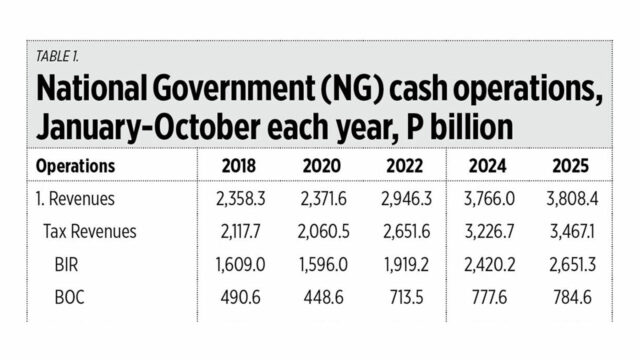
For the first 10 months of the year, our interest payments alone hit P295 billion in 2018 or an average of P1 billion a day, rising to P433 billion in 2022 or P1.4 billion a day, P2.1 billion a day in 2024 and P2.4 billion a day in 2025. This year, expenditures by the National Government (NG) are flat, and subsidies to GOCCs have declined, but transfers to LGUs and interest payments are rising, leading to a P1-trillion-plus budget deficit (see Table 1).

Ninth, expanding the return of funds to Philippine Deposit Insurance Corp. (PDIC) will help stabilize public finance. Wrong. The P107-billion PDIC funds transferred to the National Treasury actually helped the country save money from high interest payments. I made this estimate of savings from interest payments in 2024 and 2025, then an additional burden in 2026 and 2027, assuming a P27-billion amortization a year after.

Tenth, Secretary Recto is liable for all the mess in fund transfer. Wrong. As asserted by four SC Justices, Mr. Recto simply implemented the law, GAA 2024’s rider provision. Associate Justice Raul Villanueva in particular argued that to hold Mr. Recto liable in any way “is like punishing him for simply doing his job.”

As shown in my estimates above, Mr. Recto saved the country around P20 billion in interest payments last year and this year. The man did public service while people who go after him only do malice.


Bienvenido S. Oplas, Jr. is the president of Bienvenido S. Oplas, Jr. Research Consultancy Services, and Minimal Government Thinkers. He is an international fellow of the Tholos Foundation.

minimalgovernment@gmail.com

What defines the future of work?

DC Studio | Freepik

Latest research reports give hints, both in the local and global contexts

By Jomarc Angelo M. Corpuz, Special Features and Content Writer

Adult Filipinos spend most of their days either at their workplace or stuck in the country’s horrid transport system. While people do not really have control of and are indifferent to transportation woes, they are growing far more aware and less tolerant of the various experiences happening in their work environments.

To understand this trend and know the reasons behind it, major consulting companies and work platforms have begun assessing what work should feel like and how employers should adapt not only to the demands and needs of the modern employee but also to the rapid technological change, the Philippines’ economic volatility, labor shortages, and shifting social values.

Demands for better support

Global workplace research by the business employee engagement platform WorkL shows just how dramatically employee expectations and experiences are changing. The Global Workplace Report 2025, which draws on insights from more than 120,000 organizations worldwide, shows that employees across regions, industries, and age groups are now demanding the same few things from their employers: fair pay, flexibility, support for well-being, meaningful development, and managers who communicate clearly.

Globally, employee engagement sits at an average of 75%, with countries like India (81%) and the Philippines (80%) leading in workplace satisfaction. But beneath this overall optimism lies a widening divide between tenured and new employees. Young workers, starters, and non-managers face the highest flight risk, indicating a strong likelihood of switching jobs due to poor support, unclear expectations, or low pay, while long-tenured employees and managers report greater stability and satisfaction.

The report also highlights the powerful role of flexibility. Hybrid workers consistently show the highest engagement levels (77%), suggesting that the employee’s ability to manage their own time and location has become a non-negotiable expectation. This trend is especially pronounced among men, who increasingly prioritise work-life balance and structured hybrid policies.

At the same time, artificial intelligence (AI) and automation are, just as expected, changing jobs and the market itself. Early-career roles are becoming more vulnerable, with younger employees in AI-exposed fields experiencing a notable drop in employment opportunities. While many employees hope that automation will ease workloads and reduce bureaucracy, they also express anxiety about job security and a desire for greater transparency around how AI affects their roles.

Industry differences are just as noticeable and eye-popping. The technology sector continues to be one of the happiest and most stable; while the retail and hospitality sectors, crucial industries in the Philippines, struggle with lower engagement and higher turnover. Retail, in particular, posts the highest global flight risk, driven by job stress, safety concerns, and limited career mobility.

Despite these challenges, the report offers a clear path forward. Organizations that focus on leadership quality, fairness, recognition, and career development outperform those that maintain traditional, rigid structures. This is because employees want to feel valued, respected, and supported as they build a future they can see themselves in.

A labor market in transition

The World Economic Forum’s (WEF) Future of Jobs Report 2025 vividly shows the ongoing, quick evolution of workforces in almost every industry. While it may be the case seemingly every year, companies project that technology and its adoption will impact massive parts of what is known as work. For instance, the report ranks AI, big data, robotics, and cloud computing among the most influential drivers of business change in the next five years.

This shift brings both promise and disruption. As businesses expect to create new roles in data, cybersecurity, sustainability, and AI management, they also anticipate significant displacement in routine, administrative, and manual jobs. Globally, employers estimate that 23% of roles will change by 2029, predicting a labor market in transition.

Skills requirements are shifting just as fast as employers struggle to catch up. The report highlights that the fastest-growing skills are no longer purely technical but hybrid in nature, with analytical thinking, resilience, creativity, and AI literacy topping the list.

At the same time, companies cite skills gaps as the biggest barrier to transformation, with 60% saying workers are not trained fast enough to keep up with new technologies. As a result, the report says organizations plan to invest heavily in reskilling and upskilling, particularly in digital and cognitive capabilities.

Another major theme is the evolving nature of work. Remote and hybrid arrangements remain widespread, with employers acknowledging their role in improving productivity and talent attraction. However, the rise of gig work, automation, and platform-based jobs is also changing job security and benefits structures. Many companies expect more fluid workforce models that provide a mix of full-time employees with contractors, and AI-assisted roles.

Overall, the Future of Jobs Report spotlights two decisive global shifts: one on technology, which forces jobs and workplaces to change faster than ever, and the other on the workers’ ability to adapt through continuous learning and flexible skills.

Surfacing priorities

P&A Grant Thornton, the local presence of professional services firm Grant Thornton, notes that workplaces around the globe are on the brink of monumental change due to the emergence of industry-changing innovations, increased prioritization of wellness and sustainability, and the continued preference of employees towards flexible work setups.

According to P&A Grant Thornton, hybrid work has gone from a nice-to-have option to intentional design, with companies restructuring offices for collaboration and investing in technology that supports seamless and online teamwork. The focus is now on outcomes rather than location, giving employees greater autonomy as long as they deliver results based on their descriptions. Success is now fully dependent on continuously gathering and integrating employee feedback.

The company also dubs AI as becoming an everyday workplace partner, automating routine tasks and enabling employees to focus on strategy, creativity, and problem-solving. It says organizations must balance AI adoption with ethical use, strong cybersecurity, and human oversight.

Employers are also shifting from credential-based hiring to prioritizing adaptable, tech-savvy, and growth-oriented workers instead of those with degrees. Upskilling and reskilling, even through online courses, micro-credentials, and practical training, are now essential for staying competitive. Organizations must support this transformation by offering continuous learning opportunities that help employees evolve alongside rapid industry changes.

Another point by the firm is that employee wellness has become a strategic priority, with workplaces investing in mental health support, financial wellness initiatives, and programs that promote work-life balance. The report notes that while holistic well-being improves satisfaction and retention, leadership must drive this culture by openly addressing health, modeling good habits, and reinforcing respectful, positive work behavior.

Workers increasingly want to contribute to organizations that prioritize ethical practices, sustainability, and social responsibility as well. To be an attractive destination, companies must demonstrate genuine commitment through eco-friendly operations, community involvement, and inclusive cultures. When employees feel their work supports a meaningful purpose, engagement rises, and organizations build stronger, values-driven identities.

With four generations sharing the workplace, collaboration across age groups is a must. Companies that promote mentorship, reverse mentoring, and open communication unlock innovation and mutual learning. Employees benefit from diverse perspectives, while organizations gain a more cohesive, adaptable, and future-ready workforce capable of navigating rapid change together.

Tech-driven yet people-centered

Across global studies, it is evident that employees are demanding healthier, more meaningful, and more flexible work experiences. WorkL’s findings show that Filipinos, like workers worldwide, now expect fair pay, mental health support, and work-life balance, with flexibility at the top of the list as long commutes and rising costs strain daily life. This aligns with the World Economic Forum’s projection that rapid technological change will continue reshaping jobs, requiring organizations and workers alike to embrace continuous learning, digital skills, and adaptability. Meanwhile, insights from P&A Grant Thornton show that hybrid work, AI integration, wellness, purpose, and multigenerational collaboration are becoming essential pillars of the modern workplace.

As companies redesign systems around autonomy, ethical technology use, and employee development, success increasingly depends on listening to workers and responding to their wants and needs. The future of work is already here, centered on people, powered by technology, and shaped by organizations willing to grow alongside their workforce.

Learn more about the BusinessWorld Best Places to Work 2025 results and explore the 2026 cycle at https://www.bworldonline.com/bwbestplacestowork/.

UK’s Princess Kate celebrates community work at annual Christmas service

KATE, Britain’s Princess of Wales, hosted an annual Christmas carol concert at Westminster Abbey on Friday to honor guests who had mostly been invited for service to the community, joined by her husband and heir to the throne Prince William.

The event, which the princess launched, is now in its fifth year, offering the royal family a chance to thank people across Britain for volunteering, raising funds for charity and supporting the vulnerable.

Kate, 43, last year completed a course of preventative chemotherapy to address an unspecified form of cancer. She gave each guest a note highlighting how a “moment of listening” and “word of comfort” can make a difference to people’s lives.

She and William were pictured arriving at the service with their three children, George, 12, Charlotte, 10, and Louis, 7.

William was due to deliver a reading before 1,600 guests along with actors Kate Winslet, Chiwetel Ejiofor and Joe Locke, as well as actor and comedian Babatunde Aléshé.

“At a time when life can sometimes feel fragmented or uncertain, the Christmas season invites us to remember the power of reaching out to one another with generosity of heart, understanding and hope,” Kate wrote in her note.

The service was aimed at people of all faiths and those without faith, her Kensington Palace office said.

Westminster Abbey’s choir was due to sing traditional Christmas carols, alongside performances of more contemporary music by Hannah Waddingham and Katie Melua.

The “Together at Christmas” service will be broadcast on Britain’s ITV television on Christmas Eve, while 15 community carol services supported by the couple’s Royal Foundation charitable arm will be held across Britain during December. — Reuters

Strengthening the present workforce

Photo from Freepik

WorkL’s latest Global Workplace Report recommends practices for enhancing employee well-being

By Krystal Anjela H. Gamboa

Employee well-being has become a decisive factor in organizational success. As the workforce continues to evolve Southeast Asia and worldwide, WorkL’s Global Workplace Report highlights profound shifts in workplace expectations — from the rise of flexible work, increased focus on fair pay, leadership trust, inclusivity, and psychological safety.

The report organizes workplace experience into six well-being pillars: fair pay and fair pay conversations, flexible working, inclusion and belonging, leadership, learning and development, and health and well-being.

For Philippine employers, these insights matter more than ever. With a young workforce, a thriving services sector, and heightened employee mobility, organizations must deliberately invest in well-being if they wish to retain top talent, drive engagement, and build resilient workplaces.

The report’s narrative analysis reveals consistent themes across regions. Employees emphasize the importance of inclusion, empathetic leadership, fair treatment, and authenticity. Stress and burnout remain universal concerns, underscoring the need for holistic well-being strategies.

Filipino employees, meanwhile, increasingly seek workplaces that offer psychological safety, meaningful relationships, professional growth, and flexible structures that support their lives outside work. Employees who align with these expectations gain competitive advantage in building strong organizational cultures.

Additionally, the six pillars form the foundation of the 2025 workplace scorecard, creating a holistic framework for measuring how employees feel about their environment. These pillars emphasize that well-being cannot be achieved through isolated initiatives or perks alone. It must be an ecosystem structured around fairness, trust, empowerment, and psychological safety.

Fair pay and compensation

The report underscores that fair pay remains one of the strongest determinants of whether employees feel valued in the workplace. However, compensation fairness extends beyond the actual amount received — employees also prioritize transparency around salary and clarity around salary practices.

In the Philippine context, where financial pressures and rising costs of living are persistent concerns, regular benchmarking and transparent pay practices contribute significantly to employee trust. Employers, then, should focus on constructive pay dialogues, equip managers to communicate compensation decisions clearly, and ensure that reward systems reflect both market standard and individual contributions.

When employees believe their compensation is fair and well-explained, they are more likely to remain engaged and committed.

Flexible working

Flexibility in working is positioned in the report as an essential and permanent feature of modern work rather than a temporary response to global disruptions.

Flexibility encompasses remote or hybrid setups, adjustable work hours, and autonomy over how and when tasks are completed. For Philippine employees, flexibility has a direct impact on well-being due to challenges such as long commutes, urban congestion, and caregiving responsibilities.

Providing flexible work options reduces stress, improves energy levels, and enhances productivity. Employers can implement hybrid arrangements for applicable roles, introduce flexi-time policies, and shift toward output-based performance measurements.

Leadership support is crucial for ensuring that flexible working enhances both well-being and business results. When implemented properly, flexibility becomes one of the strongest attractors for talent retention and higher workplace satisfaction.

Inclusivity and belonging

Employees thrive when they feel respected, accepted, and connected to their organization. Workplaces with cultures of belonging experience higher psychological safety and reduced turnover.

While the Philippines is known for its warm and community-oriented culture, local workplaces can still struggle with hierarchical dynamics, generational differences, or unconscious biases. Employers can strengthen belonging by implementing genuine inclusion initiatives, supporting employee resource groups, ensuring safe and confidential reporting channels for discrimination, and building team rituals that foster connection.

Genuine inclusion strengthens engagement, improves morale, and helps employees feel that they belong, not just in work, but also in the organization.

Photo from Freepik

Leadership as contributor

Leadership remains as the most powerful determinant of workplace well-being, according to WorkL’s report. Employees’ daily experiences are shaped significantly by how leaders communicate, make decisions, and demonstrate care.

Leadership challenges appear across regions and are consistently reflected in narrative data: employees want leaders they can trust, who listen, who communicate openly, and who prioritize well-being alongside performance.

In the Philippines, leadership challenges often stem from hierarchical traditions, discomfort with feedback, and persistent output-first mentality. Employers should invest in leadership development that emphasizes emotional intelligence, psychological safety, and coaching. Embedding well-being into the leadership key performance indicators (KPIs) and establishing feedback loops where employees can evaluate leadership behaviors help create accountability.

When leaders model empathy, trust-building, and openness, overall well-being improves exponentially across teams.

Investing in learning and development

Learning and development are presented in the report as a central well-being element, not just a professional benefit. Growth directly influences motivation, engagement, and retention. Employees who feel stagnant are more likely to disengage or leave. 

The report highlightsthe importance of accessible development pathways, upskilling opportunities, and career mobility. Philippine organizations can support well-being by offering structured career progression, regular skills training, mentorship programs, and internal mobility options. These efforts demonstrate commitment to employees’ futures and strengthen the psychological contract between employer and employee.

When employees see a clear path forward, their sense of purpose and fulfilment grows.

Health and overall wellness

Health and well-being are the most direct pillars of workplace wellness. Philippine employers can significantly improve well-being by establishing mental health programs, offering counseling services, creating policies that discourage after-hours work, and providing wellness benefits such as telemedicine and metal health days.

Ensuring ergonomic and safe working conditions (both on-site and remote) is just as essential. As burnout and stress remain global issues, organizations must create and design work environments where health is protected proactively.

Strong health and well-being support systems create resilient, energized, and motivated teams.

Strategies for Philippine employers

The report’s six pillars and narrative insights can be highly beneficial to Philippine organizations to build effective building strategies.

First employers should adopt well-being monitoring tools to track leadership quality, stress levels, inclusion, and engagement. The tools must be supported by data-based decision making that ensures accountability.

Second, employers must utilize a “well-being by design” philosophy that integrates well-being into policies, practices, and culture.

Third, managers should be expected to or should be trained as wellbeing stewards who promote psychological safety and support their teams proactively.

Fourth, organizations must invest in inclusivity efforts that are authentic, consistent, and supported by leadership.

Fifth, developing employees through structured learning programs and career pathways strengthens motivation and loyalty.

Finally, integrating health and well-being programs into everyday workflows ensures long-term impact rather than treating them as add-ons or optional.

What it means for PHL’s economic growth

The report underscores that improving employee well-being is not only a human capital priority, but also an economic imperative for the Philippines.

A workforce that feels supported, fairly compensated, healthy, and connected to meaningful career growth becomes more productive, innovative, and resilient.

This directly strengthens national competitiveness in key sectors such as business process outsourcing, technology, manufacturing, retail, and services industries that heavily rely on high employe engagement and low turnover.

WorkL’s Global Workplace Report 2025 makes one message clear: well-being is no longer optional, it is strategic. For Filipino employers embracing the report’s well-being pillars will shape the future of work in the country. By investing in fair pay, flexibility, inclusivity, leadership, development, and health, organizations can create environments where employees feel valued and supported.

As the Filipino workforce evolve with new expectations, employers who prioritize well-being will not only strengthen business performance but also contribute to a healthier, more empowered workforce.

Ultimately, well-being is not merely a perk. It is the foundation of modern, purpose-driven, and competitive workplaces.

Learn more about the BusinessWorld Best Places to Work 2025 results and explore the 2026 cycle at https://www.bworldonline.com/bwbestplacestowork/.

PICPA names SMIC Chairman Emeritus Jose Sio an honorary life member

JOSE T. SIO — SMIC

THE Philippine Institute of Certified Public Accountants (PICPA), the accredited professional organization of certified public accountants (CPAs), has conferred Honorary Life Member status on SM Investments Corp. (SMIC) Chairman Emeritus Jose T. Sio for his contributions to the accountancy profession.

In a press release on Monday, SM Investments said PICPA cited Mr. Sio’s “outstanding accomplishments and significant contributions to the advancement of the profession” as well as his active involvement in various accounting and professional organizations.

Mr. Sio received the Accountancy Centenary Award of Excellence in 2023 and the Parangal San Mateo in 2022, the highest honor given to an accounting professional.

“Accountancy plays a significant role in the growth and integrity of many Philippine businesses, helping build the trust and confidence of company stockholders,” Mr. Sio said. “I am privileged to be part of organizations, like the SM group, that view the field as a crucial part of the company’s growth journey.”

Mr. Sio served as SMIC’s chief executive officer in 1990 and became chairman of the board in 2017. Beyond his role at SMIC, he also sits as a director at China Banking Corp., Atlas Consolidated Mining and Development Corp., and NLEX Corp. He is a board adviser at BDO Unibank, Inc. and chairman and president of SM Foundation, Inc.

He is also a trustee at Far Eastern University, Inc. and Asia Pacific College. — Beatriz Marie D. Cruz

Ayala’s Artico Cold Chain eyes more EDGE-certified facilities

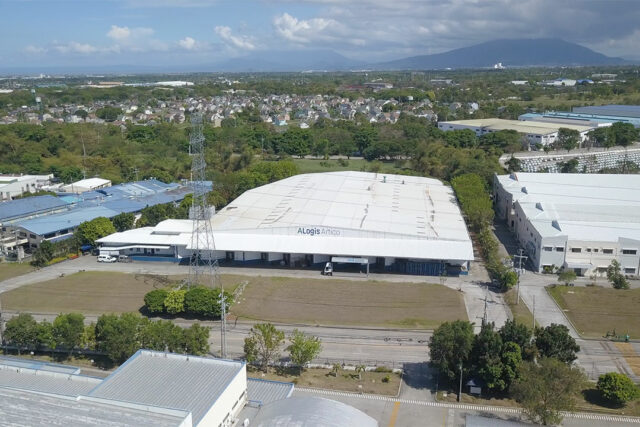
BIÑAN 1 FACILITY — ARTICO.COM.PH

ARTICO COLD CHAIN, the cold storage arm of AyalaLand Logistics Holdings Corp. (ALLHC), is looking to expand the number of green-certified facilities in its portfolio as climate risks heighten pressure on the provincial logistics sector.

The company said it is aiming to have up to four cold storage facilities eligible for an EDGE (excellence in design for greater efficiencies) certification by 2027.

“Artico Cold Chain has a strong commitment to sustainability and will continue its initiatives next year on the accreditation of more cold storage facilities with EDGE,” it said in an e-mailed reply to questions.

EDGE, a green building standard developed by the International Finance Corp., requires at least 40% reductions in energy and water use, as well as in embodied carbon in materials, to qualify for advanced certification.

Artico said its Biñan 1 facility in Laguna recently attained EDGE advanced certification.

“Core efforts, including the transition to 100% renewable energy and exploring the installation of rooftop solar panels, will likewise be continued across the facilities,” it added.

These initiatives align with parent firm Ayala Corp.’s target to achieve net-zero emissions by 2050.

The growing demand for sustainable industrial facilities is being driven by multinational companies’ global environmental, social, and governance  frameworks, which require firms to locate in certified green facilities to meet decarbonization goals, Artico said.

It added that sustainability features also provide a competitive advantage through reduced utility consumption and more efficient resource use.

“Given the heightened and visible impacts of climate change, customers are increasingly prioritizing locations that offer enhanced resilience and robust infrastructure to mitigate climate-related operational disruptions,” the company said.

Artico also cited climate change as a key risk to the provincial logistics sector, prompting many cold chain operators to focus on short-term resilience at the expense of longer-term sustainability targets.

The company said it is also transitioning its facilities to the green energy option program (GEOP).

Under Republic Act No. 9513 or the Renewable Energy Act of 2008, the GEOP allows power end-users with an average peak demand of at least 100 kilowatts to source their supply from renewable energy providers.

Artico’s cold storage facilities cater to meat, poultry, seafood, dairy products, beverages, fruits, vegetables, and pharmaceuticals. The company operates facilities in Biñan, Laguna; Mabalacat, Pampanga; Urdaneta, Pangasinan; Sto. Tomas, Batangas; Mandaue, Cebu; and Iloilo.

ALLHC posted an 87% decline in its nine-month net income to P81 million due to slower industrial lot take-up.

On Friday, ALLHC shares closed unchanged at P1.33 apiece. — Beatriz Marie D. Cruz

Duchess Meghan tries to contact estranged father after amputation reports

MEGHAN MARKLE has sought to make contact with her estranged father Thomas Markle after he was reported to have had a leg amputated in the Philippines, a spokesperson for Meghan said on Friday.

“I can confirm she has reached out to her father,” the spokesperson said.

Meghan — whose royal title is the Duchess of Sussex — and her father have been estranged since the run-up to her marriage in 2018 to Prince Harry, the younger brother of heir to the throne Prince William.

Days before the wedding, Thomas Markle said he would not attend due to ill health and after he admitted posing for paparazzi pictures.

British media said Thomas Markle moved from Mexico to the Philippines earlier this year. — Reuters