Home Blog Page 6666

SMC income more than doubles as businesses rebound

SAN MIGUEL Corp. (SMC) on Thursday said its consolidated net income for 2021 soared 120% to P48.2 billion and bounced back to pre-pandemic levels.

“[Our] group-wide revenues, driven by higher sales across major businesses, rose 30% to P941.2 billion,” the listed conglomerate said in a media release.

The company also reported its consolidated operating income increased by 64% to P117.2 billion on the back of effective cost management initiatives and enhanced operational efficiencies.

SMC President and Chief Operating Officer Ramon S. Ang said effective strategies adopted by the company helped overcome the pandemic challenges.

“We are confident we can accelerate growth while equally responding to the needs of the environment and the communities we serve,” he said.

Last week, the company reported that it is working on reducing its group-wide water consumption by half by 2025. Since 2017, it reported saving 27.4 billion liters of water under its “Water For All” water stewardship initiative.

San Miguel Food and Beverage, Inc. logged P309.8 billion in consolidated revenues last year, 11% more than its registered revenues in 2021, as the food, beer and spirits divisions “all turned in solid results, supported by consistent volume recovery throughout the year.”

Meanwhile, SMC Global Power Holdings Corp. (SMCGP) saw its net income decline by 15% to P16 billion last from P18.9 billion previously after the company paid a contractor compensation for unfulfilled obligations.

If not for the said obligation, SMCGP’s net income would have climbed 5%.

Its revenues, meanwhile, went up by 16% to 133.7 billion, which was largely because of cheaper average spot prices and average bilateral rates, as well as increased nominations from customers.

Its operating income, on the other hand, decreased by 14% to P31.9 billion “due to higher power purchases and fuel costs.”

Petron Corp. swung to profitability in 2021 with a reported net income of P6.14 billion from an P11.4-billion loss in 2020 due to higher sales volume driven by more relaxed quarantine restrictions.

“Petron’s consolidated sales volumes grew 5% to 82.2 million barrels, as a result of the easing of restrictions and the gradual restarting of economic activities which improved demand throughout the year,” SMC said.

Meanwhile, revenues of SMC’s infrastructure business reached P19.7 billion, 35% higher than in the previous year, as more cars are now allowed on the road, helping toll roads gradually recover.

“Operating income rose 164% to P6.8 billion as costs and expenses were contained,” SMC said.

The company did not release its financial report for the fourth quarter alone.

At the stock exchange, SMC shares slid 20 centavos or 0.20% to close at P101.80 apiece on Thursday. — Marielle C. Lucenio

February vehicle sales increase 17% to 24,304 units

PHILIPPINE STAR/ MICHAEL VARCAS

VEHICLE sales in February increased by 17% to 24,304 units from the earlier month, although a year-on-year comparison showed a decline of 7.3%, latest industry data show.

In their joint report on Thursday, Chamber of Automotive Manufacturers of the Philippines, Inc. (CAMPI) and Truck Manufacturers Association (TMA) recorded nearly all vehicle categories showing a year-on-year sales decrease, with the exception of light commercial vehicles, which posted an 11.1% increase to 14,974 units. Commercial vehicles posted a 0.3% uptick to 18,390 units sold.

Month on month, sales growth was strong for most vehicle types. Six of the seven categories showed double-digit growth, with trucks and buses (category 4) registering the biggest increase of 31.3% to 285 units. Commercial vehicles, which had the biggest number of units sold, closed the month with sales of 18,390, up 22.8%.

CAMPI President Rommel R. Gutierrez said sales in February “have regained a double-digit growth amid the improved consumer confidence as the country has shifted to ‘low-risk’ for COVID-19 (coronavirus dissease 2019) classification, according to the government report — a welcome development for the industry.”

“The industry is anticipating to see a continued recovery this month as the economy further reopens, downgrading to the least restrictive Alert Level 1 in major areas including the National Capital Region starting this month,” he said, referring to the most lenient mobility classification that was set on March 1.

In February, commercial vehicles led in market share with 75.67% of total sales; followed by light commercial vehicles with 14,974 units sold or a 61.61% share; and passenger cars with 5,914 or a 24.33% share.

Meanwhile, Asian utility vehicles recorded sales of 2,660 units or 14.46% of the total; light trucks with 391 or a 2.13% share; and category 4 and category 5 trucks and busses with 285 units or a 1.55% share and 80 units or a 0.44% share, respectively.

On a cumulative basis, sales for the first two months of the year reached 45,069 units, down by 9.2% from 49,610 in the same period last year.

Asian utility vehicles recorded the biggest sales decline at 28.6% to 5,112 units. Only light commercial vehicles posted growth at 4.1% to 26,867 units.

Toyota Motors Philippines Corp. maintained its sales lead, accounting for 50.37% or 12,243 units sold in February. Mitsubishi Motors Philippines Corp. tailed with a 14.42% market share, followed by Nissan Philippines, Inc. with 7.23%, and Suzuki Phils., Inc. with 6.03%.

The industry targets to sell 336,000 units by the end of the year, 17% higher than the sales volume in 2021.

“As the economy reopens, the safety and health of the public is paramount to prevent another wave of virus infections and cause disruption anew to the recovery of the industry,” Mr. Gutierrez said. — Marielle C. Lucenio

The rocket science behind Dune’s blend of the virtual and the real

COURTESY OF WARNER BROS. PICTURES AND WYLIECO/HANDOUT

LONDON — You don’t have to have to be a technical wizard to make it in Hollywood, but it helps — especially since the pandemic.

Oscar-nominated blockbuster Dune is an outstanding example of the skills that can provide a route into the film industry for a wider range of people, when streaming has increased the appetite for content and production has become highly technical.

The film is a collaboration between French-Canadian director Denis Villeneuve and British-born Visual Effects Supervisor Paul Lambert, who previously worked together on the 2017 film Blade Runner, which won an Oscar for best visual effects.

Mr. Lambert, who has around 25 years of experience in visual effects, learnt on the job.

He had a degree in aeronautical engineering, otherwise known as rocket science, but until he became a courier making regular deliveries to Pinewood Studios, he told Reuters he “never in a million years” thought he could work in film.

One thing led to another and he realized the “very, very creative and very technical” area of visual effects was his vocation.

“I live, breathe, dream what I do,” he said.

Increasingly universities and the industry, often working together, are providing training and say streaming and the backlog caused by lockdown have created a surge in demand for technical talent.

This need “allows young people across a broader spectrum of classes to get their foot in the door,” said Assistant Arts Professor Sang-Jin Bae at New York University, where the Tisch School of the Arts teaches virtual production, as well as animation and visual effects.

German-headquartered Maxon is one of the companies that provide the software. It says it seeks to mentor artists and create diverse role models in its tutorials to improve inclusivity in a mostly white, male film production sector, and to address the talent crisis.

“The more people that come in, the more artists there are,” Paul Babb, chief marketing officer at Maxon, said.

Mr. Lambert used Maxon’s technology for a scene in Dune in which the protagonist hides in a hologram bush.

The secret to making it believable is natural light, which means you must “always reference something real,” Mr. Lambert said. In this case, it was the actor.

The obvious approach would have been to create a computer-generated version of Dune’s protagonist played by Timothee Chalamet. Instead, Mr. Lambert projected “a series of slices” of a computer-generated hologram bush onto him.

“You get a beautiful sub-surface look on skin, which is really hard to produce in computer graphics,” Mr. Lambert said.

The reward for Mr. Lambert and his team could be an Oscar later this month. — Reuters

PLDT to boost Mindanao internet services via subsea cable project

PLDT, Inc. announced on Thursday that it has started cable-laying operations in Dipolog City to beef up its internet services in Mindanao.

“We are highly confident that expanding PLDT’s fiber network through this project in Dipolog City will allow us to provide better services for our customers in Mindanao,” PLDT Mindanao Head of Corporate Relationship Management Benbrackie Melasa said in a statement.

The project is expected to loop in more than 700 kilometers to the company’s fiber network.

This is seen to improve “resiliency and service quality” for both fixed and wireless services in Mindanao, according to the company.

“With this, we hope to further support the growing connectivity requirements of more enterprises and businesses who are central to the economic recovery of the region,” Mr. Melasa said.

PLDT noted that as of end-December 2021, its fiber footprint has expanded to 743,700 kilometers.

“This fiber infrastructure also supports Smart’s mobile network, which covers 96% of the population from Batanes to Tawi-Tawi. Network-related initiatives made up the bulk of the P89-billion spend for 2021,” it added.

PLDT anticipates capital expenditures of between P76 billion and P80 billon this year.

Its net income for 2021, which factored in exceptional costs, grew by P2.1 billion or 9% to P26.4 billion.

The company’s total service revenues went up 6% to P182.1 billion last year from P171.5 billion in 2020.

Meanwhile, its telco core income rose 8% to P30.2 billion in 2021 from P28.1 billion in 2020.

Hastings Holdings, Inc., a unit of PLDT Beneficial Trust Fund subsidiary MediaQuest Holdings, Inc., has a majority stake in BusinessWorld through the Philippine Star Group, which it controls. — Arjay L. Balinbin

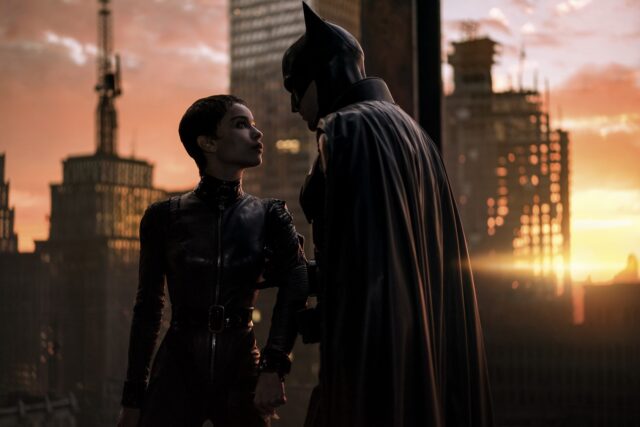
Batman returns

A SCENE from the film The Batman — WARNER BROS. PICTURES

DEAR diary,

6:10 P.M.

Fear is a tool. When light hits the screen it’s not just the movie’s start, it’s a warning. Only who’s being warned — the bad guys on the big screen or us sitting here? Maybe you, reading this? Confused now.

Sat down to watch Matt Reeves’ The Batman. A hundred and seventy-six minutes to go.

Need I remind you? NARRATIVE AND PLOT TWISTS TO BE DISCUSSED IN EXPLICIT DETAIL.

Moving on.

6:20 P.M.

Thieves break windows, vandals spraypaint, band of whitefaced thugs menace hapless Asian. All pause to gaze up at bat signal, peer nervously into city’s darker corners. “They think I’m hiding in the shadows,” Batman (Robert Pattinson) intones. “But I am the shadows.” He steps out as if from behind curtains; thug demands: “who the hell are you supposed to be?” Bat beats down thug, replies: “I’m vengeance.”

Huh? Not what we’re expecting. Sounds pretentious, even possibly outside thug’s vocabulary (“Ven huh?”). Worse, doesn’t have the matter-of-fact cadence of Michael Keaton’s “I’m Batman.” Sequence lands with a thud.

I get it — two years in and young man still feeling his way through his crimefighting career, though for the record, in Frank Miller’s Batman: Year One (which this movie borrows from), he pulled it together in the eponymous time span.

Also: street violence on the rise; Asians being targeted; paramilitary group employing terror tactics. Playing with recent headlines — got it, not very clever ’bout it.

Around 7:00 p.m. or so

So far: The Riddler (Paul Dano) doing a Se7en serial killer gig. Not a big fan of the Fincher movie, but I remember the best parts being the imaginatively staged and shot tableau of corpses posed as one of Seven Deadly Sins (this movie manages, at most, a single severed thumb — mustn’t lose that all-important PG-13 rating). Video messages diminish killer’s mystique unlike in Fincher’s movie, where the police walk through the crime scene as if through an art installation, trying to suss out the meaning. Riddler’s howls more goofy than menacing.

Also, drug-dealing subplot alludes to a number of films: biggest drug bust in history (The French Connection); secret meetings and corruption in high places (All The President’s Men); circles within circles within circles, evil upper class, creepy father-daughter relationship (Chinatown). I’m always of the opinion that if you’re calling back to great classic films you better introduce a fresh detail or memorable twist to justify your theft, otherwise the audience is left remembering how much better the classic was; adding a mask and cape is not the answer.

This Batman boasts of the Caped Crusader doing actual detective work. Well — more surveillance and the occasional sweating of suspects than actual detecting. Doesn’t try for Steve Moffat-style on-the-spot crime scene reading a la Sherlock Holmes (my personal vote for Greatest Fictional Detective), probably smart not to try: if Pattinson and Benedict Cumberbatch ever had a face-off, Pattinson would likely soil his diapers from the stress.

Not just a question of talent: what sells Holmes’ deductive abilities in Moffat’s series is the conceit that Holmes pays a high price for his near-autistic abilities: he’s socially inept, emotionally unstable, an insufferable prima donna who loves standing in the spotlight. Pattinson’s WGFD doesn’t sell his case much beyond endless moping and greasy hair over sleepy brow. Pretty, not very persuasive.

7:30? I’M ONLY HALFWAY THROUGH?

Reeves does well enough with noirish imagery, makes inky shadows and deep unlit spaces especially menacing; when people come to blows, he stays at medium distance and cuts sparingly, unlike some directors (I’m looking at you Christopher Nolan). Chase is disastrous, though — we see the car’s nose bouncing up and down and roaring, not much else; we’re not sure of the spatial relationship between fleeing and pursuing vehicle, or if they’re still racing down the wrong-way lane or not. Chase ends with a big explosion, quelle surprise. According to production notes, explosion and concluding stunt were done for real; might as well have done it digitally, it’s so poorly framed and prepared for that it zips past without much impact.

7:45. I THINK.

Burton in Batman had designing genius Anton Furst create Gothic nightmare ’scapes recalling Fritz Lang, in Batman Returns had Bo Welch present Christmas Gotham as a vast Dickensian charnel house. Nolan brought it all crashing down to earth with actual locations in Chicago and Pittsburgh; Reeves shoots in Chicago, digitally adding buildings that recall the Art Deco ’20s. There’s warmth to the retro details (the wood furnishings, the rotary phones, the souped-up ’70s Dodge Charger with bright yellow rocket exhaust) unlike Nolan’s granite-and-steel Gotham, but little else lingers in memory.

7:50ISH

Don’t rich superheroes have security protocols with regards to letter bombs?

Cute how Batman likes to meet all his contacts on the same corner of that abandoned building — like Woodward and Deep Throat faithfully keeping their appointments behind the same pillar in the parking garage while trying to bring down the President of the United States. Even Selina Kyle (Zoe Kravitz) gets a chance to neck with Bruce here — it gets so crowded you feel you need a guestbook for folks to sign. Did Alfred ever get to visit?

8:00

Oh plot twist, of sorts. Something to do with Selina. I’m not invested in the characters so the revelation flits past me like a — you know. Out of hell.

Character is no small issue; in Batman Returns when cat meets bat they’re exchanging kicks and blows like old lovers; unlike in Returns five minutes have passed and you realize that the comic banter barely generates enough sexual heat to defrost pizza. What, Daniel Waters wasn’t available for a rewrite?

Oh yeah, PG-13. An R rating means millions less in the box office, not to mention losing the lucrative Chinese market.

Incidentally, on subplot: Bruce’s daddy isn’t corrupt, he made “a mistake” for the sake of a beloved. Nope we’re pulling our punches here, we don’t cross the clearly delineated line separating “the good” from “the bad” and “the ugly,” we just pretend we do.

8:15

Finally The Confrontation. Nice evocation of Edward Hopper’s Nighthawks, that most noir of artworks that inspired more filmmakers than you can list in one breath. Hopper’s 24-hour diner is shot from a fresh angle, with a sinister figure sitting inside sipping frothy cappuccino, but you recognize the dim lighting and grimy color palette.

Paul Dano does good work with his deceptively doughy I’m No Serial Killer cheeks and bug-eyed intensity. When he starts shrieking however, you think back to Kevin Spacey’s John Doe, who almost never raised his voice (the one time he does is to catch your attention and, once caught, never let go): his Doe had the habit of staring past you at something wonderful and terrible at the same time, and the suggested details of what he’s seeing with such fervor and terror and awe sends chills down your spine.

Riddler’s ciphers also recall another Fincher film, Zodiac. That serial-killer procedural, however (Fincher’s hands-down masterpiece), had a real sense of everyday life rolling inexorably forward, grinding down killer and cops alike and lending an air of pointlessness to it all.

The steel shutters rising between Dano and Pattinson also remind one of the shutters rising and falling between Toshiro Mifune and Tsotomu Yamazaki in Akira Kurosawa’s High and Low — there as here the takeaway message is of two men of vastly differing financial circumstances, drawn together to become two sides of the same coin, but where Dano spells out their equivalence in painstakingly obvious words Kurosawa only suggests it, through an eerie superimposition of Mifune’s reflection on Yamazaki’s face.

As for Chinatown — John Turturro’s Carmine Falcone against John Huston’s Noah Cross? Oh please.

8:20

Wait this isn’t over yet?

8:25

Big explosions. Always with the big explosions. “We haven’t used up our pyro budget yet! Go back and write 30 more minutes into your movie!”

8:30

See, Riddler has the smarts to use explosives but to finish off Gotham’s political elite has to resort to snipers? Where did they come from? How is he paying them? Did he at least teach them how to shoot?

He was so focused — directing Batman here and there, skillfully selecting his targets, pulling puppet strings like a master. Suddenly he goes bonkers and decides to wipe out everyone in charge? Desperate attempt at epic finish, anyone?

8:35

At last the movie’s moral scheme fully unveiled, along with the reason why Pattinson whispers “I’m vengeance.” Final crisis forces hero to rise above himself, from avenger to true crusader, note of hope in sea of despair, etc., etc., with emergency flare literally leading the rich and powerful to safety (not sure that last detail makes for appropriate optics, not that anyone will care). Cute symbolic imagery, spelled out slowly and carefully so the audience can understand.

8:40

A word on realism — people sing hosannahs over the movie’s grittiness and realism, noting how much “darker” this is over what Tim Burton created back in 1989 (and perfected in 1992). I don’t see improved I see reductive, from a sophisticated mix of horror and comedy (add Dickensian pathos thanks to Danny DeVito’s Oswald Cobblepot, and erotic byplay thanks to Michelle Peiffer’s Selina Kyle) down to Christopher Nolan’s thud and blunder (not to mention longwinded pretentiousness), down to this incarnation’s near-indecipherable gloom. Comedy doesn’t always soften horror; sometimes it intensifies it, sharpening the flavor the way salt sharpens caramel, or lemon sharpens broth. If one’s idea of “better” only means darker and grittier and more realistic — well, golly gee, I guess this one’s for you.

8:45

Again with the long monologues. Nolan ended The Dark Knight with a monologue too, adding the insult of obviousness to the injury of boredom. I like Burton’s approach: he has someone read Batman’s speech to the general public and it turns out to be a hilarious snore that the crowd listens to with glassy eyes. Burton’s camera glides restlessly away, buoyed up by Danny Elfman’s doomy romantic score, till it discovers Batman standing atop the high roofs of Gotham, a (newly repaired?) church bell tolling in the distance.

8:50

Bat and cat part ways. Pizza fully defrosted, crust soggy as overcooked spaghetti.

9:00 P.M.

Finally. Now to go home and watch something entertaining, like Lav Diaz’ Historya ni Ha.

Converge ICT reports data breach

LISTED fiber internet provider Converge ICT Solutions, Inc. announced on Thursday that it recently notified the National Privacy Commission (NPC) of a data breach involving its customers’ personal information.

“Unauthorized third parties attempted to view certain account details of other subscribers,” Converge Data Protection Officer Laurice Esteban-Tuason said in an e-mailed statement.

Notifications were also sent to the affected customers, she also noted.

“Ongoing data analysis is being conducted and our investigation shows that this is an isolated incident and a small portion of our customer base was affected.”

At the same time, the company said that apart from the potential unauthorized viewing of personal information, there is “no evidence to date that any personally identifiable information has been misused.”

The company assured the users of its GoFiber app that “only they can access their personal information linked to their own accounts.”

“We sincerely apologize to our customers who were affected by this incident and the concern that this may have caused the public,” it added.

In a separate statement, the NPC said: “Converge submitted their initial report on March 4.”

“It’s currently under evaluation by NPC’s compliance and monitoring team. Further details will be disclosed once the NPC has verified their reports.” — Arjay L. Balinbin

Ace Banzuelo releases Women’s Month anthem

FILIPINO singer-songwriter Ace Banzuelo

FILIPINO singer-songwriter Ace Banzuelo’s new single “Babae” is the flagship song for Sony Music Philippines International Women’s Month campaign.

With the release of the single, the 21-year-old musician is using his platform as an ally in women empowerment causes among creatives.

“‘Babae’ was already finished months ahead and it was set to be released earlier than the target date,” he said. “When the team approached me about the possibility of using my song as part of a women-focused campaign, I immediately said ‘yes.’ I’ve worked with many talented women all my life, and it’s about time that we recognize their legacy and how they have contributed significantly in pushing the culture forward. They are as great or even better than their counterparts if truth be told.”

Mr. Banzuelo began singing and performing at the young age of four, and began joining local and television talent shows as a child. Growing up, he taught himself to produce music — mixing beats, remixes, mashups, and dances. At 17, he won a local songwriting competition in Laguna which reinforced his passion for making and sharing music. In 2019, Mr. Banzuelo signed with Sony Music Philippines after representatives from the label saw his performance at show in Manila. To date, Mr. Banzuelo has racked up more than 12 million streams on Spotify and is slated to release his full-length debut album this year.

GETTING TO KNOW ‘BABAE
The 1980s pop-inspired track “Babae” combines retro textures with a combination of modern recording techniques that, according to the artist, “makes it sound new and it gives you nostalgia.”

Babae” talks about the genesis of a relationship with a woman, getting to know them, and gaining their trust.

“The song is about introducing to yourself a girl and there’s this shared experience and emotion that everyone knows when you’re introducing yourself to someone. You don’t really trust them yet because both of you don’t know each other yet,” Mr. Banzuelo said of the song during an online press launch on March 9.

“I have all these retro textures and combining them with modern recording techniques to make it sound new and fresh. It’s a new song [but] better it gives you this nostalgia,” he said of the music production.

The predominantly English song also has parts written in Filipino, Cebuano, Spanish, and Japanese. “I always felt that adding those little language twists would add an interesting layer to the track,” he said.

The song’s music video is directed by Katrina Arciaga and tells a story of a person earning someone’s trust.

Mr. Banzuelo said that the visual concept of the music video is a “dark metaphoric explanation of meeting someone new.”

“I tried to come up with a concept that actually highlights girls and personifies them instead of objectifying them and making them appear as just faces,” he said.

WOMEN’S MONTH CAMPAIGN
According to a press release, the record label’s campaign “aims to put a spotlight on women and female artists under the label’s roster.” In line with the campaign are several online and promotional activities this month.

“We put together a content-rich campaign which celebrates not just women in general, but highlights the wonderful women in music, especially from the Sony Music artist roster,” said Andrew De Castro, Marketing and Business Development Director at Sony Music Philippines.

“It’s obviously a month-long campaign full of exciting content shared the drive interest and engagement from music fans,” he added.

Babae” is the flagship song for the Philippine campaign, while Emmy Meli’s “I AM WOMAN” is the international flagship song counterpart. The campaign kicks off with the Tambay Tuesday curated playlist which is updated bi-weekly. The playlist highlights Sony Music’s local and international female artists. A series of online performances on TikTok and on Instagram called Instajams, as well as conversation spaces on Twitter (#BabaeAko, #IAmWoman) from the label’s roster of acts will run from March 17 to 29.

Babae” is available on all digital music platforms worldwide. Watch the music video at Ace Banzuelo – Babae | Official Music Video – YouTube. For more details about the campaign, visit Sony Music Philippines’ Facebook, Instagram, and Twitter. — Michelle Anne P. Soliman

MRC sells entire mining assets

MRC ALLIED INC. FACEBOOK PAGE

LISTED holding firm MRC Allied, Inc. has entered into a memorandum of agreement to sell its entire copper and gold exploration projects to mining industry veteran Salvador B. Zamora II.

In a disclosure to the stock exchange on Thursday, MRC said upon signing of the agreement Mr. Zamora is to pay P1.5 billion for the mining rights of the projects. Of the amount, P750 million is payable upon the agreement signing while the balance will be from 50% of the operating revenues up to P750 million.

MRC’s mining assets are: the Kibalawan copper-gold project with an area of 7,559.1 hectares located in Davao del Sur and Columbio, Sultan Kudarat; the Marihatag copper-gold project with an area of 3,759.3 hectares located in Surigao del Sur; the Paquibato copper-gold project with an area of 593.2 hectares located in Davao City; and the Boston-Cateel copper-gold project with an area of 4,860 hectares located in Davao Oriental.

Under the agreement, if the buyer decides to sell the mining assets, the seller will get 50% of the proceeds up to P750 million.

MRC said the sale of the mining rights will serve as additional income for the company. It will also allow the company to “acquire other business entities to continue its aspirational goal of transforming from property business to a holding company.”

“The effect on the operations and financial condition of the company will be subject to the success of the sale of the mining rights of the company,” it added.

MRC also said the sale of the mining rights would “solidify” the holding firm while it diversifies its portfolio to include “renewable energy and other potentially viable projects” that will add value to the company and its stockholders.

In the disclosure, MRC described Mr. Zamora as being in the mining industry since 1970 by establishing Nickel Asia Corp., where he was president and chief executive officer from 2006 to 2009.

He also headed Nickel Asia’s operational sites, namely: Hinatuan Mining Corp., Taganito Mining Corp., and Cagdianao Mining Corp.

On Thursday, shares in MRC at the stock exchange surged by 7.69% or P0.02 to close at P0.28 apiece.

Ukraine museum scrambles to save Russian art from the Russians

PHOTO FROM DISCOVER-UKRAINE.INFO

KHARKIV, Ukraine —  As Russian forces pound the city with artillery and air strikes, staff at the main museum in Kharkiv raced to get priceless artworks to safety, many of them by Russian artists.

The ornate, imposing building is still standing, unlike some others in Kharkiv, but the windows have been blown in by the blasts, plaster and dust cover the floors and the surrounding streets are covered in debris.

“There are over 25,000 items in our collection,” said Maryna Filatova, head of the foreign art department at the Kharkiv Art Museum, adding that it was one of the biggest and most valuable in the country.

“It is simply irony of fate that we should be saving Russian artists, paintings by Russian artists from their own nation. This is simply barbarism,” she told Reuters on Wednesday.

Across Ukraine, millions of people have fled the fighting while many more are staying to repel the advancing Russian forces. As well as lives and infrastructure, some are trying to save Ukraine’s culture and history.

In Odessa on the southern coast, a monument to Duc de Richelieu, a governor of the city in the early 19th century, has been protected by sandbags piled around the plinth and statue up to its shoulders.

Moscow launched what it calls a “special military operation” in Ukraine on Feb. 24 to destroy its neighbor’s military capabilities and remove what it says are dangerous nationalists in Kyiv. It denies targeting civilians.

Ukraine and its allies call Russia’s actions a brutal invasion that has killed hundreds of civilians and forced millions to flee abroad.

One of the most prized works at the Kharkiv museum is a version of the imposing work by renowned Russian painter Ilya Repin called Reply of the Zaporozhian Cossacks, which has been taken down from the wall ready to be stored away.

“Basically, it should not be moved,” said Ms. Filatova of the painting. “Any movement should be avoided. We treat it with great care.”

She spoke among the empty, cold galleries where some pictures still hung and others were propped against walls, waiting to be stowed away.

Ms. Filatova and her colleagues were relieved that the collection, which includes works by German painter and printmaker Albrecht Duerer and Dutch masters, remained intact.

But with the windows shattered, it was impossible to control the temperature and humidity inside the gallery.

“The real damage we will only be able to assess in peaceful times, when it is calm.

“Workers, women that are still in town, we will work and do our best to save it all. We are taking the paintings down and will hide them,” Ms. Filatova said, without specifying where. “We are doing our best to preserve them.” — Reuters

Ovialand targets market debut in June

OVIALAND, Inc. said it is targeting to have its stock market debut in June, with an offer size of P1.5 billion or 30% equity for its initial public offering (IPO).

“We intend to submit all our filings by March, and hopefully we see a June listing,” Ovialand President and Chief Executive Officer Pammy O. Vital said in a virtual round table.

“We’re going to be offering majority primary shares,” she added.

Around 40% to 50% of the capital raised will be used for the acquisition of new land, while 10% will be for general corporate use.

The lead underwriter and book runner for the IPO will be China Bank Capital Corp.

“We were able to segment our market position with P2 [million] to P4 million house and lot packages in a mass housing lot model, which is not very visible in the industry right now,” Ms. Vital said.

“We want to contribute to closing the gap in the housing backlog to help Filipinos achieve their dreams of home ownership,” she added.

Ovialand has four ongoing developments in Southern Luzon, including those in San Pablo, Laguna and Candelaria, Quezon.

The three developments in Laguna are Savana, Sannera, and Santevi; while Quezon has Caliya, with packages ranging from P1.8 million to P3.2 million. — Luisa Maria Jacinta C. Jocson

An expanded experience

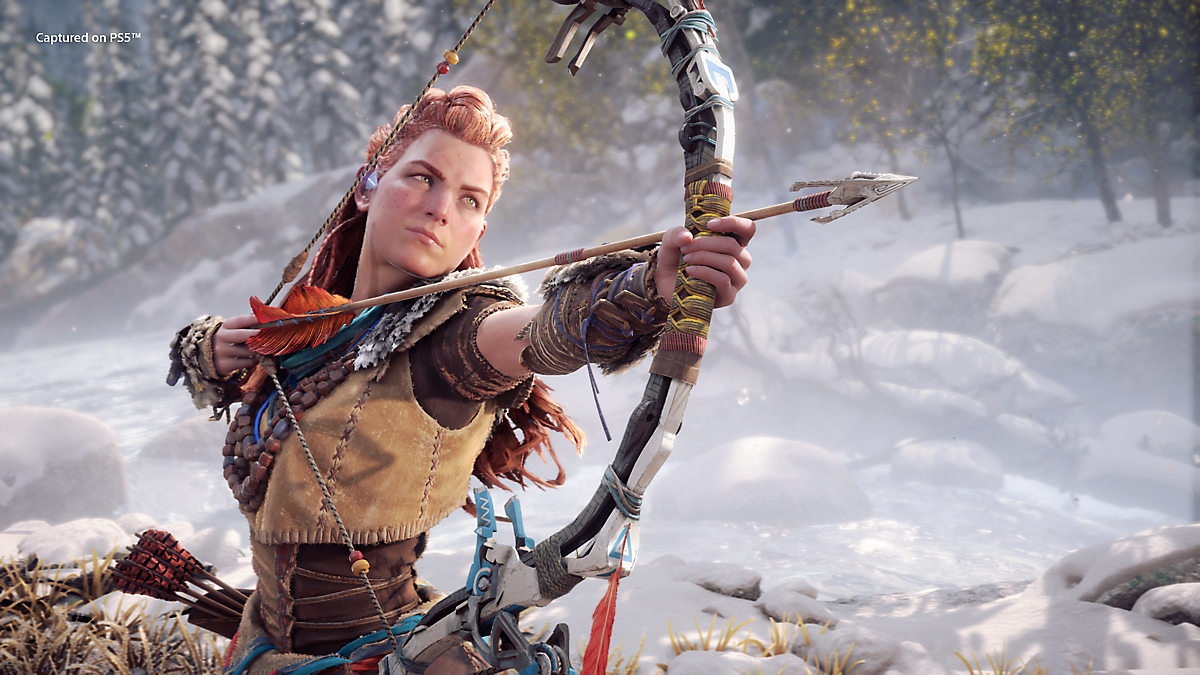
Horizon Forbidden West — PLAYSTATION.COM

Videogame Review
Horizon Forbidden West
Sony PlayStation 5

Elden Ring
PS5

Tom Clancy’s Rainbow Six Extraction
PS5

THE sense of freedom that Horizon Zero Dawn was able to provide kept gamers glued to their seats when it was released four years ago. With a fun main character, interesting enemies and concepts to explore, and a vast open world to traverse, Horizon Zero Dawn wasn’t just about exposition; apart from the Guerilla Games title progressively offering details about Aloy, the principal protagonist, it likewise dealt with her coming to learn more about the machine-dominated world. It was about finding her place in a setting that was both beautiful and harsh, that was filled with majesty and danger from wildlife and technology.

Horizon Forbidden West, continues this line of thought, having Aloy take a perilous journey west despite the many troubles it brings. Facing old and new foes alike, Aloy must now uncover forgotten secrets, and risk life and limb to preserve everything she cares about. These are the concepts the latest release in the series wrestles with. For the most part, they seem like logical extensions of the overarching narrative. Picking up months after the original game’s ending, it seeks to redefine and expand the experience. A new threat has emerged, one that only she can answer, and the farther she goes, the more dangerous it gets.

Aloy’s journey in Horizon Forbidden West means frequent skirmishes, which proves to be even more entertaining given the improvements in the interface. In a lot of ways, it’s a much more fluid and dynamic experience, with a clear focus on action set pieces. New combat mechanics and skills are in play, expanding upon Horizon Zero Dawn’s offerings, and allowing for more dangerous foes to emerge. While old enemy types still remain, it’s the new ones that take center stage. And these enemies pose even greater challenges. Ranging from great animal-like machine beasts with gears for teeth to large, titan-like foes that throw projectiles, there is certainly no lack of variety. Even weaker enemy types can still prove to be challenging if they’re not taken seriously, with the capacity to overwhelm through sheer numbers and seemingly incessant quick hits.

Thankfully, Horizon Forbidden West’s greater arsenal and much more defined focus on combat makes triumphing over enemies far more satisfying to do. With new damage types, new weapons, and new skills to use, there are a ton of options available, to the point where first-time players may actually find it overwhelming. Past the initial shock comes sense, however. After all, no longer is Aloy grasping at straws. At the end of Horizon Zero Dawn, she has become a full-fledged warrior. In the sequel, this shows in how she can stealthily take down opponents and exploit their weak points. She’ll be bouncing and dodging across the grass, hitting enemies at key points to weaken them, and then overcoming them just as a huntress would any dangerous prey. Gamers will flip through various weapons, control her sprinting and dodging and diving into cover, and facing mechanical monstrosities that the less-prepared would be hard-pressed to face.

And that’s only half the game.

While Horizon Forbidden West shines best during sequences in combat or in stealth, its exploration segments are no slouches. Gamers are free to climb, dodge, run, and grapple their way to pretty much wherever they want in search of loot and goodies. The environments they travel around in are often breathtaking, and there’s good use of the Sony PlayStation 5’s hardware to make things look great. To say it’s visually impressive is an understatement, as there’s a lot of love put into the environments on tap — barren deserts, lush forests and jungles, and so much more to discover in a map that feels larger and more expansive than anything Horizon Zero Dawn had to offer. It really tries to live up to expectations as a superior sequel, and it does so fantastically.

Horizon Forbidden West’s story is similarly in a great spot. The main quest is sufficient, if nothing else, with a pretty decent mix of story beats to keep gamers on their toes. Where the writing really shines though, is in its side content. There’s a plethora of side quests for the willing and able, and each having memorable characters to talk to, and having a clear sense of identity and purpose. Doing them not only gives gamers unique gear to use; they also have the added benefit of providing memorable story arcs and characters to fall in love with. While other open world games often populate these side quests with forgettable characters, Horizon Forbidden West gives these quest givers a clear focus. These aren’t just nameless wanderers who ask gamers to get something for them for some other cryptic purpose. These are characters in the world, living and breathing like anything else in its setting, and while gamers may not have much influence over how their arcs turn out, the amount of attention and writing they get cements the idea of the world being bigger and more alive.

To be sure, Horizon Forbidden West does exhibit some blemishes. As with every other game, it does have limitations symptomatic of titles in its genre. While it is stunning and visually impressive, it does fall into the Open World loop of map markers and objectives to complete. The climbing also does feel off at times, as it’s not in the style of The Legend of Zelda: Breath of the Wild or of Genshin Impact that gamers tend to gravitate to. For all the seeming restrictions in interface design, however, it’s not a deal breaker.

Minor annoyances notwithstanding, Horizon Forbidden West manages to make up for it with its interesting set pieces, lovable characters, and brilliant combat. If you enjoyed Horizon Zero Dawn or simply want an exciting open-world game with a deep, interesting combat system and story, Horizon Forbidden West is pretty much a no brainer. It has taken the best parts of the first game, made it feel bigger and grander, and expanded upon the ideas its predecessor had laid the groundwork for. It’s fun and interesting through and through, and certainly well worth the tens of hours gamers will spend on it.

THE GOOD:

• Enjoyable combat mechanics, with a focus on good aim, good positioning, and good pre-planning

• Large, expansive open world to explore, with lots of interesting sites to find and areas to discover

• Outstanding writing and quest design, making characters feel interesting to talk to and empathize with

THE BAD:

• Can feel bloated at times due to the sheer volume of map markers, content, and side quests

• Might feel overwhelming to new players unused to the fast-paced style of combat

RATING: 9.5/10

POSTSCRIPT: Games from Software’s Dark Souls series are frustrating and fun in equal measure. With intimidating enemies, mazelike designs, and an emphasis on slow but decisive combat, titles from the franchise have invariably provided an experience that can leave gamers pulling their hair out one moment, and then marveling at their triumph over a hard section the next. It’s a tightrope of curated levels, equal parts annoying and workable, and always pushing gamers to learn, understand, and adapt to the situation so they won’t be caught off guard in the next. This kind of design however, only really works in games with tight corridors and linear paths. The more paths there are, the harder it is to account for how players will enter or exit each area, and the easier it is for an encounter to break, or for sequences to get ruined by unintended exploration.

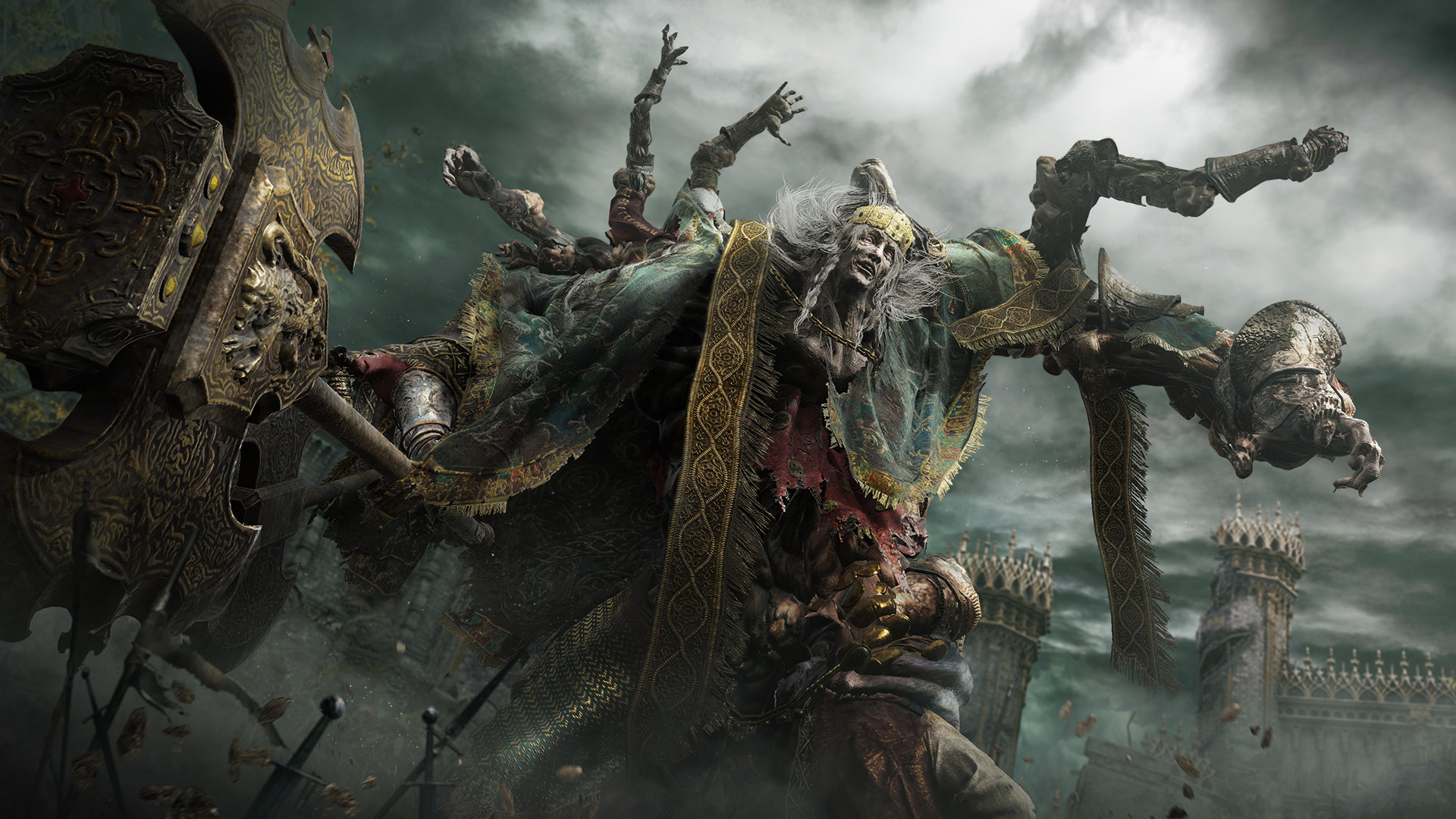
This is what most gamers expected as they tried out Elden Ring. No small measure of skepticism greeted the prospect of combing through a hybrid Souls-like open-world design. It had the potential to be full of bloat, and to make the same mistakes that other open-world games tend to do: to be bogged down by grinding and repetition.

Fortunately, it doesn’t take long for Elden Ring to allay the fears of doubting Thomases. From the outset, it manages to nail the difficulty of the earlier titles while still giving off the feel of an expansive world ready to be explored. In many ways, it feels like a natural extension of what the earlier Souls games sought to do. Exploration remains a primordial concern, albeit on a much more expanded level. That said, it retains the near-Sisyphean characteristic of its predecessors in requiring players to approach each encounter carefully, and with caution  — and still be prepared for death. Over and over.

The duality is what makes the Elden Ring experience really shine, as it manages to capture the careful thought that goes into underscoring the uniqueness of each location, while still making the world feel expansive. Each area gamers can traverse feels memorable, filled with human-like knights and creatures mingling with more obscure and fantastical eldritch beasts. It’s this grand experience of going from more normal, tame encounters, to intense climactic boss fights. In between, it’s punctuated by the unsteady calm that riding across the Lands Between brings, occasionally broken by a hidden secret, or a chance encounter against unlikely foes. In short, it’s the Souls experience, elevated as it never was before, and it succeeds in meeting its lofty ambitions.

In Elden Ring, gamers still start off with the standard Souls character creator. They can still customize their chosen character’s looks and starting class and equipment. The rest is a question mark, a blank page they can fill as they desire. New equipment, new abilities, and newfound powers are all waiting to be discovered, but most of them lie in dangerous places, or tucked away in hidden caches that require exploration to discover. It’s all standard open-world design, but what makes it flourish is how neatly this type of exploration feels at home in the genre.

Previous Souls-like experiences did have exploration built in, but the open world in Elden Ring is a standout. Gamers are allowed more freedom to explore their environments and to approach each area as they please. With the Lands Between rife with secrets waiting to be discovered, each area they uncover feels mystical and alien. The rewards they find not only widen their character’s arsenal; they also provide opportunities for testing against any new foes along the way. This may seem trivial in any other game, but not in Elden Ring, where every enemy can be a life-ending threat if approached with caution thrown to the wind. Even basic enemies can be hard to overcome if taken lightly, making these optional side areas all the more engaging when they’re tense and effectively life-and-death struggles for new equipment. This treasure on tap and the experience gained can be vital to progress, but they always feel earned when tough enemies lurk around every corner.

The monster design and level layout in Elden Ring is much more complex than in previous entries in the Souls series. Bosses are grander in their characteristics, and are much tougher because of the open world. While it’s still possible to take them on with subpar equipment, Elden Ring expects gamers to veer off into other pathways first, and makes sure that enemies are still sufficiently challenging regardless of upgrades.

Elden Ring is difficult through and through, even during its open, sandbox-like parts. Where other games would be content to let the player engage in more relaxed side activities, it does the opposite. Each area to be traversed is laden with danger, and because of this, at no point does the content ever feel like filler. The opponents lying in wait and the bosses en route ensure that no matter the area, there will always be meaningful challenges, there will always be new enemy types, and there will always be monsters that cannot be overpowered with brute force, but with cunning and caution.

Elden Ring fully embraces its identity from start to finish. The level of detail put into every encounter always feels like it has a purpose, and the options gamers have provide them with better control over their environment. Elden Ring features the ability to play with summons, to be able to power stance and use weapon arts, to even use a horse to get around. All of these add to making the game feel deeper, especially when combined with the game’s difficulty.

The game does have a handful of hitches. The open world expands the options that players can have, but it’s unrelenting in its challenges. It’s very easy to miss things if gamers aren’t careful and tend to breeze through the dialogue and the surroundings. And the game doesn’t just reward exploration; it expects its players to engage in some experimentation as well. Without the latter, it’s easy to get stuck in certain boss fights, or to get lost and miss certain areas that might hold goodies that could help players progress. In a lot of ways, the best parts of Elden Ring’s open world can also be its worst for the unwary, especially those who come into it thinking that it’s a game designed for everyone. For the unprepared, frustration is inevitable.

On the whole, Elden Ring is a brilliant title, with an astounding amount of care and attention put into every encounter. It presents a wider world to discover and a bigger map to explore, even as it retains (and at times even heightens) the challenge expected from a title in the Souls series. It’s a game that will frustrate and entertain in equal measure. Highly recommended.

THE GOOD:

• Excellent game design, striking a good balance between optional side content and difficult, story-integral missions

• Lots of options on how to play and progress through the game, all valuable and equally viable

• Rewards patience and careful exploration, with player skill and ingenuity being the most important factors

THE BAD:

• Closer to the original Dark Souls games rather than its faster-paced cousins like Sekiro or Bloodborne

• Can be frustrating until the new open-world design “clicks”

• Tends to not let up on the difficulty, with bosses proving to be much tougher than can be initially expected

RATING: 9/10

Those on the outside looking in would be hard-pressed to find a gamer who hasn’t heard of the Rainbow Six series. Even if they’re not familiar with Tom Clancy’s books as the source material, the many titles spewed out by the franchise have more than lived up to their inspirations, thrusting players into situations which require both a cool head and a steady aim. Unlike other shooters, Rainbow Six emphasized a more tactical approach to combat, necessitating good positioning and situational awareness to win the day.

Where most of the original Rainbow Six series games had been focused on its single-player options, Rainbow Six Siege took a multiplayer approach, pitting two teams of players against each other in a Counter-Strike style match of planting a bomb in a specific site. With breakable walls, the prevalence of wall bangs, and the different weapons and skills each Operator has, Siege was able to stand out and establish itself among its brethren as a title worthy of playing.

This is where Rainbow Six Extraction comes in. Rainbow Six Siege originally released a limited-time event featuring players against aliens, forcing them to work together against an inhuman menace. This mode, called Outbreak, was so popular that it inspired the creation of the standalone Rainbow Six Extraction. With much of its concept inspired by an event well loved by its community, what could possibly go wrong in marketing it as its own PvE title?

In Rainbow Six Extraction, players combat an alien presence that has taken over the area. They need to shoot down all sorts of monsters, team up with friends to rescue friendly civilians, and stay alive to earn experience to better equip their chosen character for the next run.

Indeed, the operative word is experience. Rainbow Six Extraction plays with a sort of Rogue-lite system, with the operators being a vital part in each run on the slate. By completing objectives and successfully extracting out of the map, gamers will earn experience points, level up their operators, and slowly gain access to maps presenting harder obstacles. Lose the operators at any point inside the mission, though, and gamers will not be able to tap them for the entire run and until they are rescued in a future operation. This forces a pretty interesting cost-benefit scenario, often having gamers rotate between operators depending on the level of risk involved.

The operators and maps are lifted directly from Rainbow Six Siege. Any hardcore player of the game will most likely feel at home in Rainbow Six Extraction, with a few new additions here and there to really sell the aliens theme. Slime covers the walls, alien goo and rubble litter once-clean areas. In theory, this is a pretty decent way to change up the gameplay, especially for those who loved the initial Outbreak event. Add some new objectives to do, insert some familiar characters that people love, touch up the surroundings to sell the atmosphere, and, voila: new game. In practice, however, this is so very different, and not necessary for the better.

While Rainbow Six Extraction might have some good ideas, it’s not able to perform them as well as it should. The game on its easier difficulties is a breeze, and is a boring slog at that. It’s really only in the harder modes that gamers need some caution, and even then, maps and objectives get repetitive fast. With only a handful of maps to really play through, they’ll start to see the same ones loop the more they play, and with the higher difficulties locked away, they’re going to be playing through the same scenarios over and over just to get to the more challenging modes.

This wouldn’t be a problem if Rainbow Six Extraction was structured and linear. Something akin to Left for Dead, for instance, would have big maps, but with dynamic events to really make each run feel different. The objectives gamers will do might be the same, but the experience they’ll have in each map will be different, punctuated by new enemy placements, memorable set pieces to run through, and different enemy encounters to really sell the idea that the mission is unique.

Rainbow Six Extraction however, relies more on randomly generated objectives. It’s not necessarily bad, but some objectives feel way too easy to accomplish. Given how the maps are designed as well, gamers will soon find that nothing much sticks out. Gone are the intriguing moments that Rainbow Six Siege had; no more rappelling down roofs or breaking walls for vision. Instead, gamers will be skulking through narrow corridors and peeking through hallways, unsure of what lurks around the next corner. Maybe it’ll be an exciting encounter, or a tough new enemy type; more than likely, it’s just going to be the same old, same old; the most unique parts of Rainbow Six Extraction are never really leveraged to make it stand out.

True, Rainbow Six Extraction remains fun. Figuring out these missions the first time around is actually pretty exciting. While maps are mostly carbon copies of their Rainbow Six Siege equivalent, the designers did well in making the areas feel a little more menacing. Moreover, the tactical element is still present, as harder difficulties force gamers to play quietly and slowly. The different enemy types they encounter necessitate different ways to deal with them, and that initial challenge, paired with the new objectives, can bring some enjoyment.

However, Rainbow Six Extraction doesn’t feel like a game to be played for long. It just doesn’t have that robustness that other games do. Randomized objectives can be fun, but only if they’re designed well. In any case, thoughts on the Outbreak event from Rainbow Six Siege should serve as an accurate gauge. Gamers who liked it will feel at home. Gamers who didn’t will not. Enough said.

THE GOOD:

• Enjoyable little side attractions with a lot of tension

• Surprising amount of depth for what was essentially a side mode for Rainbow Six Siege

• Familiar enough gameplay combined with some new gimmicks to spice things up

THE BAD:

• Feels and plays like a side mode, relying on repetition and routine to get the most out of the playtime

• Gets monotonous after a while

RATING: 7/10

THE LAST WORD: In line with the global launch of Gran Turismo 7 last week, Sony released a video of Hong Kong-based superstar actor/singer Aaron Kwok (https://www.youtube.com/watch?v=FcXHNGTcP1Q) that has him explaining how the Gran Turismo series has helped him improve his racing skills.

Also released is the Gran Turismo Café livestream video (https://www.youtube.com/watch?v=mugHSTpnVgU&t=4s) featuring automotive and motorsport personalities in Southeast Asia: Bobby Tonelli (Singapore), Claire Jedrek (Singapore), Jazeman Jacuaycongafar (Malaysia), IP Chin (Malaysia), Marlon Stockinger (Philippines) and Pete Thongchua (Thailand).

The Southeast Asia Gran Turismo Café video was filmed on location at the ABM Ten Square building in Singapore (https://www.youtube.com/watch?v=2_9CBJDXE9o). The Supercar Vending Machine (yes, it’s exactly what it sounds) has 15 classic cars playable in Gran Turismo 7 stacked inside the building’s 20 floors – to be selected and then brought down via a special lift for test driving.


Century Pacific releases new plant-based line

CENTURY Pacific Food, Inc. (CNPF) announced the release of its latest range of plant-based products, which will soon enter major retail chains in the country.

“The plant-based alternatives category here in the Philippines is still quite nascent. Plant-based food choices are scant in variety, making it difficult for consumers to consistently embrace a healthier and more sustainable lifestyle. That’s what we want to address with the launch of our breakfast line,” CNPF General Manager Nikki Dizon said.

The company launched the ‘unMEAT Filipino Breakfast Range’, which includes plant-based tocino (pork cutlets), tapa (beef), and corned beef.

The line is currently available on e-commerce platforms, but will soon expand to retail chains nationwide, CNPF said.

Early in the year, it launched unMEAT Luncheon Meat, which is now available in Singapore and the United Arab Emirates.

“Demand remains robust for the brand both locally and in export markets,” Ms. Dizon said. “We have kickstarted our activation in key markets with awareness-generating and trial-inducing programs, which are working in our favor.”

She said consumer response had been “very positive thus far, but we need to continue educating consumers and making the shift to plant-based eating more seamless. This entails a play in both retail and food service.”

In 2021, CNPF launched affordable plant-based meals in over 1,900 7-Eleven outlets.

Through affiliate company Shakey’s Pizza Asia Ventures, Inc., CNPF expanded to plant-based dairy alternatives with a plant-based pizza product.

“[We] launched ‘unMEAT’ in 2020 in response to the fast-emerging consumer preference for healthier, better-for-you, and better-for-the-planet food choices,” CNPF said.

“Production of plant-based alternatives requires lower consumption of natural resources, including water, land, and energy, and generates less greenhouse gas emissions compared to that of animal-based meat,” it added.

In the third quarter of 2021, CNPF attributable net income was up 22.3% to P1.3 billion from P1.03 billion the year before.

From January to September, attributable net income grew 21.4% to P3.98 billion from P3.3 billion in the same period in 2020.

At the stock exchange, CNPF shares went up 5.36% or P1.07 toP21.05 apiece. — Luisa Maria Jacinta C. Jocson