Home Blog Page 6635

Wuhan aims to become China’s ‘valley of satellites’ in space initiative

ZhengZhou/CC BY-SA 4.0/Wikimedia Commons

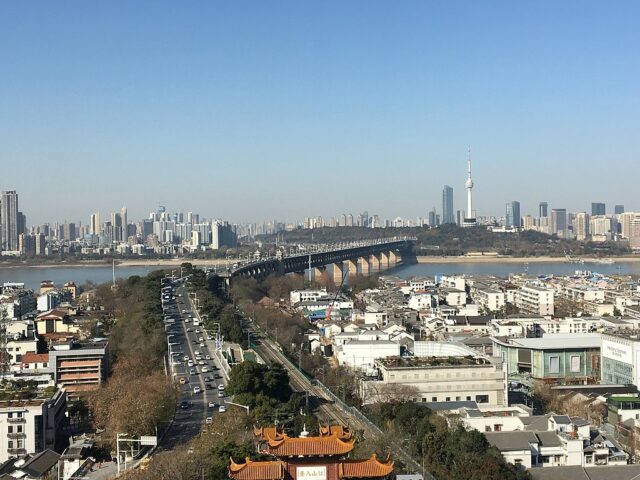
BEIJING — The central Chinese city of Wuhan has vowed to create a 100 billion yuan ($15.7 billion) space industry by 2025 and become China’s “valley of satellites,” joining other cities tasked with developing the sector.

Wuhan is offering firms up to 50 million yuan ($7.88 million) in financial incentives each in projects related to the manufacturing of satellites, rockets and spacecraft, according to a notice from the city government on Wednesday.

The amounts for the inland city are modest compared with ambitious plans outlined by other prosperous coastal cities, but the effort suggests a deepening push by China to become a major space power by 2030.

China envisions massive constellations of commercial satellites that can offer services ranging from high-speed internet for aircraft to tracking coal shipments.

The Wuhan city government will encourage companies to use locally sourced equipment, software and services.

If a firm uses local products in more than 10% of the production of high-orbiting and low-orbiting satellites as well as spacecraft, it will get financial incentives of up to 15 million yuan.

If local products account for more than 30%, the firm will get up to 50 million yuan.

Last year, the tech city of Shenzhen in southern Guangdong province offered up to 300 million yuan in incentives for every project related to the development of satellites and related industry applications.

China is also planning a new commercial space port in the southern island province of Hainan.

In the eastern port city of Ningbo in Zhejiang province, China is separately constructing its fifth rocket launch site. — Reuters

Australian watchdog sues Facebook-owner Meta over scam advertisements

STOCK PHOTO | Image by terimakasih0 from Pixabay

Australia’s competition watchdog filed a lawsuit against Facebook owner Meta Platforms on Friday, alleging the social media giant failed to prevent scammers using its platform to promote fake ads featuring well-known people. 

The advertisements, which endorsed investment in cryptocurrency or money-making schemes, could have misled Facebook users into believing they were promoted by famous Australians, the Australian Competition & Consumer Commission (ACCC) said. 

The lawsuit filed in the Federal Court also alleges Facebook “aided and abetted or was knowingly concerned in false or misleading conduct and representations by the advertisers,” the ACCC said in a statement. 

“The essence of our case is that Meta is responsible for these ads that it publishes on its platform,” ACCC Chair Rod Sims said. “It is alleged that Meta was aware … scam ads were being displayed on Facebook but did not take sufficient steps to address the issue.” 

Meta said any ads that scammed people out of money or misled users violated its policies and the company uses technology to detect and block such posts, adding it had “cooperated with the ACCC’s investigation into this matter to date.” 

“We will review the recent filing by the ACCC and intend to defend the proceedings,” a Meta spokesperson said in an emailed statement, declining to comment further as the case was before court. 

The ACCC said the ads used images of several Australian business leaders, TV hosts and politicians and contained links to fake media articles that included quotes attributed to the personalities. 

Users who signed up were contacted by scammers to convince them to deposit funds into the fake schemes, the regulator said. 

“We are aware of a consumer who lost more than A$650,000 ($480,000) due to one of these scams … this is disgraceful,” Mr. Sims said. 

Australian iron ore magnate Andrew Forrest, chairman of Fortescue Metals Group, launched criminal proceedings against Facebook last month over scam ads, including ones using his image to promote cryptocurrency schemes. 

The corporate regulator, the Australian Securities and Investments Commission (ASIC), usually handles financial fraud complaints against companies. The ACCC, which is seeking financial penalties, said it was given temporary powers to file the lawsuit. 

Facebook earlier this week announced a program to help train Australian political candidates and influencers on cyber security to stop the spread of potential misinformation during campaigning for the country’s upcoming federal election. — Renju Jose/Reuters

Facebook’s ‘double standard’ on hate speech against Russians

REUTERS

BANGKOK/BEIRUT — Facebook’s decision to allow hate speech against Russians due to the war in Ukraine breaks its own rules on incitement, and shows a “double standard” that could hurt users caught in other conflicts, digital rights experts and activists said. 

Facebook owner Meta Platforms will temporarily allow Facebook and Instagram users in some countries to call for violence against Russians and Russian soldiers in the context of the Ukraine invasion, Reuters reported last week. 

It will also allow praise for a right-wing battalion “strictly in the context of defending Ukraine,” in a decision that experts say demonstrates the platform’s bias. 

The move represents a “glaring” double standard when set against Meta’s failure to curb hate speech in other war zones, said Marwa Fatafta at digital rights group Access Now. 

“The disparity in measures in comparison to Palestine, Syria, or any other non-Western conflict reinforces that inequality and discrimination of tech platforms is a feature, not a bug,” said Ms. Fatafta, policy manager for the Middle East and North Africa. 

“Tech platforms have a responsibility to protect their users’ safety, uphold free speech, and respect human rights. But this begs the question: whose safety and whose speech? Why were such measures not extended to other users?” she added. 

Last year, hundreds of posts by Palestinians protesting evictions from East Jerusalem were removed by Instagram and Twitter, who later blamed technical errors. 

Digital rights groups slammed the censorship, urging greater transparency on how moderation policies are set and ultimately enforced. 

ONE POLICY FOR ALL? 

Facebook has come under fire for failing to curb incitement in conflicts from Ethiopia to Myanmar, where United Nations investigators say it played a key role in spreading hate speech that fuelled violence against Rohingya Muslims. 

“Under no circumstance is promoting violence and hate speech on social media platforms acceptable, as it could hurt innocent people,” said Nay San Lwin, co-founder of advocacy group Free Rohingya Coalition, who has faced abuse on Facebook. 

“Meta must have a strict policy on hate speech regardless of the country and situation — I don’t think deciding whether to allow promoting hate or calls for violence on a case-by-case basis is acceptable,” he told the Thomson Reuters Foundation. 

Scrutiny over how it tackles abuse on its platforms intensified after whistleblower Frances Haugen leaked documents showing the problems Facebook encounters in policing content in countries that pose the greatest risk to users. 

In December, Rohingya refugees filed a $150 billion class-action complaint in California, arguing that Facebook’s failure to police content and its platform’s design contributed to violence against the minority group in 2017. 

Meta recently said it would “assess the feasibility” of commissioning an independent human rights assessment into its work in Ethiopia, after its oversight board recommended a review. 

UKRAINE EXCEPTION 

In a report on Wednesday, Human Rights Watch said tech firms must show that their actions in Ukraine are “procedurally fair,” and avoid any “arbitrary, biased, or selective decisions” by basing them on clear, established, and transparent processes

In the case of Ukraine, Meta said that native Russian and Ukrainian speakers were monitoring the platform round the clock, and that the temporary change in policy was to allow for forms of political expression that would “normally violate” its rules. 

“This is a temporary decision taken in extraordinary and unprecedented circumstances,” Nick Clegg, president of global affairs at Meta, said in a tweet, adding that the company was focused on “protecting people’s rights to speech” in Ukraine. 

Russia has blocked Facebook, Instagram, and Twitter. 

And Meta’s new tack underlines how hard it is to write rules that work universally, said Michael Caster, Asia digital program manager at Article 19, a human rights organization. 

“While the policies of a global corporation should be expected to change slightly from country to country, based on ongoing human rights impact assessments, there also needs to be a degree of transparency, consistency and accountability,” he said. 

“Ultimately, Meta’s decisions should be shaped by its expectations under the UN Guiding Principles on Business and Human Rights, and not what is most economical or logistically sound for the company,” he said in emailed comments. 

UNILATERAL DECISION 

For Wahhab Hassoo, a Yazidi activist who has campaigned to hold social media firms accountable for failing to act against Islamic State (ISIS) members using their platforms to trade Yazidi women and girls, Facebook’s moves are deeply troubling. 

Mr. Hassoo’s family had to pay $80,000 to buy the release of his niece from the jihadists, who abducted her in 2014 then offered her “for sale” in a WhatsApp group. 

“I am shocked,” said Mr. Hassoo, 26, of Meta’s decision to allow hate speech against Russians. 

“When they can make certain decisions unilaterally, they can basically promote propaganda, hate speech, sexual violence, human trafficking, slavery and other forms of human abuse related content — or prevent it,” he said. 

“The last part is still missing.” 

Mr. Hassoo and fellow Yazidi activists compiled a report that urged the United States and other nations to probe the role social media platforms including Facebook and YouTube played in crimes against their minority Yazidi community. 

Meta’s actions on Ukraine confirm what their research showed, said Mr. Hassoo, who resettled in the Netherlands in 2012. 

“They can promote or ban what fits in their interests and what they find important,” Mr. Hassoo said. “It is not fair that a company can decide on what’s good and what’s not.” — Rina Chandran and Maya Gebeily/Thomson Reuters Foundation

Clear roadmap needed for Hong Kong’s revival as COVID sweeps through city — experts

UNSPLASH

HONG KONG — In just under two months, Hong Kong went from being one of the best places in the world at controlling coronavirus disease 2019 (COVID-19) to one of the worst.

Deaths have skyrocketed, the health system is swamped, morgues are overflowing and public confidence in the city government is at an all-time low.

While the government sticks to a “zero-COVID” policy similar to that of mainland China, city leader Carrie Lam hinted on Thursday she could ease restrictions amid concerns over the city’s status as a global financial hub.

But with infections spilling over on to the mainland and local cases hovering around 30,000 per day among a population of just 7.4 million, there needs to be a clear exit strategy, in line with learning to live with the virus, like other major cities, rather than trying to eradicate it, health experts say.

Densely populated Hong Kong has registered the most deaths per million people globally in recent weeks — more than 24 times that of rival Singapore — due to a large proportion of elderly who were unvaccinated as the highly transmissible Omicron variant ripped through care homes since February.

The tragedy could have been avoided had, experts say, authorities offered incentives for vaccinations and used medical resources more effectively to prepare for COVID-19, which was first identified in late 2019 in the central Chinese city of Wuhan.

“The disaster unfolding within our hospital system is predictable, preventable, and political,” said Dr. David Owens, a founder of OT&P clinics and an honorary clinical assistant professor in family medicine at the University of Hong Kong.

Ms. Lam’s administration has been lambasted repeatedly by politicians, pro-Beijing media and on Chinese social media, just weeks before the city is due to hold an election on May 8 to choose who will lead the territory for the next five years.

Businesses and residents are frustrated at what they see as constant mixed messaging from the government and measures which have heavily disrupted business and damaged the economy for much of the past two years.

Tens of thousands have left, with net outflows showing an exodus of more than 45,000 people so far in March, compared with nearly 17,000 in December before the fifth wave of the pandemic hit, prompting fears for Hong Kong’s longer-term competitiveness.

LIVING WITH COVID

Ms. Lam has yet to give guidance for how Hong Kong can resume some semblance of normality, despite daily press briefings where she discusses details from sewage testing to thanking mainland authorities for their support. The former British colony returned to Chinese rule in 1997.

“Hong Kong was certainly not ready when we entered into the fifth wave as evidently shown, but let’s see whether we can get better prepared for that eventuality of that transition towards normality,” said Gabriel Leung, University of Hong Kong’s dean of medicine and a government adviser on the pandemic.

Mr. Leung said Hong Kong needed to decide whether it was going to stick with its “zero-COVID” policy, or try to live with it as an endemic.

“We need to be doing all that heavy thinking process now. Because you have to make plans accordingly.”

Even if the government were to stick with zero-COVID by mass testing and extensive contact tracing, Hong Kong would still need to transition to living with the virus eventually, the experts said.

About half of the city’s residents have likely already been infected, according to a study from the University of Hong Kong this week.

Increasing vaccinations to over 90% from about 80% currently is key, while protecting the most vulnerable, like those in nursing homes, the experts said. Currently only 56% of those over 80 have been vaccinated.

With residents developing immunity from vaccinations and infections, it’s likely that future outbreaks will be less severe, said Dr. Siddharth Sridhar, clinical assistant professor of Microbiology at the University of Hong Kong.

“So that gives us a certain degree of freedom in terms of opening up more and having more reasonable travel restrictions that what we have seen before.”

Hong Kong has implemented its most draconian measures since the pandemic began in 2020.

Flights from nine countries, including the United States and Britain, are banned. Inbound travelers who test negative on arrival must stay in a hotel for 14 days, a harsher rule than for an infected resident who needs to isolate for seven days until testing negative.

Both rules have no scientific basis and should be lifted immediately, some experts said.

Social distancing measures, such as a ban on public gatherings of more than two people, the closure of most venues and a curfew on restaurant dining past 6 p.m., could also be progressively relaxed, said epidemiologist Ben Cowling.

Hong Kong could aim to do what Singapore has done so that after “three to six months, where all those measures have been relaxed, it is simply up to individuals to manage their own risks and there is no need for community-wide policies.” — Farah Master/Reuters

Be ready to lose all your money in crypto, EU regulators warn

PIXABAY

LONDON — Consumers risk losing all their money invested in cryptoassets and could fall prey to scams, the European Union’s securities, banking and insurance watchdogs said in a joint statement on Thursday.

“Consumers face the very real possibility of losing all their invested money if they buy these assets,” the three EU authorities said in a statement.

It marks a ratcheting up of direct warnings to consumers about cryptoassets by EU authorities, spelling out that consumers have no protections or recourse to compensation under existing EU financial services law.

Regulators are increasingly worried that more consumers are buying 17,000 different cryptoassets, including bitcoin and ether, which account for 60% of the market, without being fully aware of the risks, the regulators said.

“Consumers should be alert to the risks of misleading advertisements, including via social media and influencers. Consumers should be particularly wary of promised fast or high returns, especially those that look too good to be true,” the statement said.

Consumers should also be aware of that energy consumption for producing some cryptoassets is high and the environmental impact this has, the statement said. — Reuters

A Renewed Commitment to Living Well

The Lattice at Parklinks (C5-Pasig)

Alveo Land celebrates 20 years of shaping spaces in the Philippines

The past few years have shown the value of living well right at one’s home. Now more than before, individuals and families have further recognized the need to nurture themselves holistically and adapt to the demands of their multi-faceted lives.

As it celebrates 20 years of serving the upscale real estate market this year, Alveo continues to meet the evolving demands for homes and communities that enable prime living experiences. Grounded on Ayala Land’s excellence in well-planned and integrated mixed-use developments, Alveo Land remains committed to innovating vibrant communities that pave the way for living and working well.

Alveo Land’s remarkable two decades in Philippine real estate can be traced back to its beginnings as Community Innovations, Inc. (CII) in 2002. Its first project, Two Serendra, in Bonifacio Global City (BGC), Taguig City back in 2004, transformed the city condominium offering with its greenery and open spaces covering 65% of the project. At that time, such a feature was rare in the local property market, and has since remained to be one of Alveo’s signature developments until this day.


The then-CII further pioneered sustainable developments when it unveiled in 2007 the Treveia subdivision within Ayala Land’s NUVALI green estate in Laguna. Having embraced eco-friendly lifestyles fused with a technology-ready environment, Treveia finely fits in the country’s first large-scale development, which is primarily built on the principles of sustainable design.

A year later, the company sharpened its commitment to building communities for living well as CII changed its name to Alveo — taking from the Latin word “salveo,” which means “to be well.” Carrying this name, the company further strengthened its commitment towards improving the overall quality of life with groundbreaking living solutions all across the country.

Alveo Land then continued developing prime projects within the residential market, while also expanding to commercial and leisure developments built with well-being in mind. Its extensive line of properties is driven by a principle of “shaping buildings that shape the people within them.”


Foremost of these projects in the years that followed include Escala Salcedo, an iconic parkfront address in Salcedo Village in Makati City, and High Street South Corporate Plaza, Alveo Land’s first office-for-sale development located in BGC.

Alveo Land has since been showing significant growth, and retained its status as a leading innovative developer in the Philippines. Today, it is present in at least 14 of Ayala Land’s townships and estates across the country. Its portfolio of over 64 projects to date is located within strategic areas of Metro Manila, as well as Pampanga, Cavite, Laguna, Cebu City, Davao City, and Cagayan de Oro, among others.

It has also since won over 79 recognitions from both local and international award-giving bodies. Among these include multiple accolades from the Titan Property Awards for its key residential properties such as Viento at Cerca across Ayala Alabang, The Lattice at Parklinks in C5-Pasig City, and Orean Place at Vertis North, Quezon City.

Alveo now marks 20 years in the industry with a stronger commitment to developing vibrant living and working solutions, especially as this gain new relevance and meaning in the present.

The company looks forward to taking the lead in redefining what it means to live well and work well. This trend towards the importance of wellness physically, mentally, emotionally, socially, and even financially has increasingly been seen as a primary consideration for today, as well as the direction that residential and business spaces are headed to in the future.

Alveo continues on with shaping and building its various residential spaces, with more recent projects such as Parkford Suites Legazpi in Makati, The Residences at Evo City in Cavite, and Sentrove in Cloverleaf Quezon City; and distinct workspaces including Alveo Financial Tower in Ayala Avenue, Makati, Tryne Enterprise Plaza in Arca South Taguig, and The Stiles Enterprise Plaza in Circuit Makati. It is also present within vibrant city districts like Broadfield in Biñan, Laguna, and Portico in Ortigas, Pasig.

With years of real estate expertise built on a solid foundation, Alveo Land continues to offer choice residential properties and flexible workspaces. These communities allow people all across the country to live and work meaningfully well.

Know more about Alveo Land’s latest properties at www.alveoland.com.ph.


Spotlight is BusinessWorld’s sponsored section that allows advertisers to amplify their brand and connect with BusinessWorld’s audience by enabling them to publish their stories directly on the BusinessWorld Web site. For more information, send an email to online@bworldonline.com.

Join us on Viber to get more updates from BusinessWorld: https://bit.ly/3hv6bLA

Budget deficit widens in January

Work continues on the Marikina River rehabilitation project in this photo taken on March 16. — PHILIPPINE STAR/ WALTER BOLLOZOS

THE National Government’s budget deficit widened to P23.4 billion in January, as spending increased due to the release of tax allotments to local government units (LGUs).

Data from the Bureau of the Treasury released on Thursday showed the January fiscal gap jumped by 66.3% from the P14.1-billion deficit a year earlier. Month on month, the fiscal gap sharply narrowed from the record P338 billion in December.

“That is still the narrowest budget deficit in a year, as the economy reopened further,” Rizal Commercial Banking Corp. (RCBC) Chief Economist Michael L. Ricafort said in a text message.

Expenditures grew by 9.7%, outpacing the 6.65% increase in revenues during the month.

The BTr said total disbursements rose to P301.5 billion in January, “partly due to higher national tax allocation releases” to LGUs. The allocation replaced the internal revenue allotment, following the Supreme Court’s Mandanas ruling.

The ruling is named after Batangas Governor Hermilando I. Mandanas, who successfully challenged the government’s previous position that LGUs were entitled to a smaller share of National Government funds.

Starting this year, LGUs will get a bigger share in tax collections, alongside the transfer of basic services.

Accounting for 78% of the total, primary expenditures stood at P235.9 billion in January, up by 3.57% year on year. Interest payments rose by 39.4% to P65.6 billion in January.

“Interest payments accounted for 23.57% of revenue and 21.74% of expenditures, up from last year’s 18.04% and 17.11%, respectively,” the BTr said.

Meanwhile, total revenues increased by 6.65% year on year to P278.1 billion in January.

Accounting for 92% of the total, tax collections rose by 10.5% to P255.3 billion.

The Bureau of Internal Revenue (BIR) collected P195.8 billion in January, up by 7.48% from P182.2 billion a year earlier.

Collections by the Bureau of Customs (BoC) went up by 23.43% to P58.3 billion, which was attributed to higher valuation, stricter enforcement against illegal imports, traders’ better compliance with Customs laws and a slight improvement in import volume.

Nontax revenues fell by 23.28% to P22.8 billion, as BTr income plunged by 41.75% to P10.9 billion during the month. This was due to the high base effect of dividend remittances a year ago.

Mr. Ricafort said the deficit widened due to tighter restrictions caused by the Omicron surge in January. A further reopening of the economy would eventually lead to higher tax revenue, he added.

“This could help narrow the country’s budget deficit and lower the country’s debt-to-GDP (gross domestic product) ratio amid faster economic growth, thereby making debt management more sustainable over the long term and for the coming generations,” he said.

Metro Manila and most parts of the country are under the most relaxed Alert Level 1 as coronavirus infections decline.

ING Bank N.V. Manila Senior Economist Nicholas Antonio T. Mapa said actual spending was muted as the bulk of expenditures were due to higher interest payments.

“This reflects the reluctance of officials to spend as they remain wary of the fiscal position which is now at a relatively vulnerable position given the high debt and deficit ratios,” he said in an e-mail.

Mr. Mapa said revenue collection showed an improvement but has not fully recovered.

“This indicates that the reopening has not resulted in the type of inflows that the government may have hoped for… These developments become increasingly important as authorities struggle to deal with the fallout from the ongoing geopolitical conflict while limiting the impact on an already tenuous fiscal position,” he added.

The government has set a budget deficit ceiling of P1.65 trillion for 2022, which is equivalent to 7.7% of GDP.

The government runs on a budget deficit when it spends more than it makes to fund programs that support economic growth. It borrows from foreign and local sources to plug the gap. — Tobias Jared Tomas

National government fiscal performance

BSP unlikely to move in lockstep with Fed

PHILIPPINE STAR/ RUSSEL PALMA
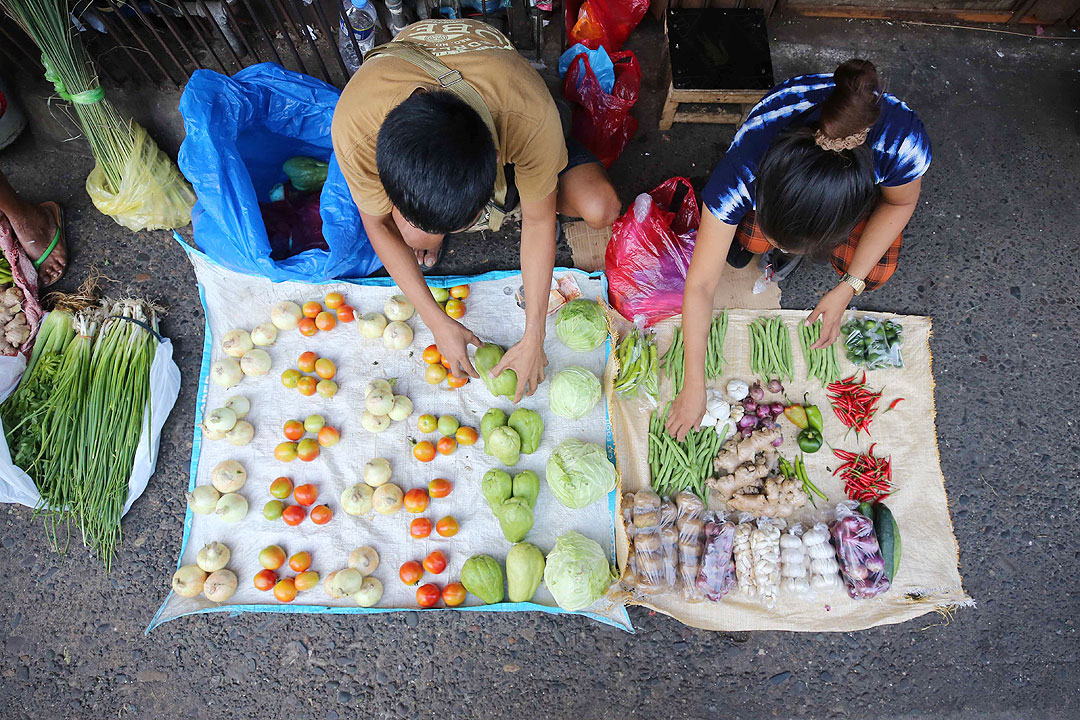
Vendors arrange their goods at a public market in Manila, March 19. — PHILIPPINE STAR/ RUSSEL PALMA

By Luz Wendy T. Noble, Reporter

THE Bangko Sentral ng Pilipinas (BSP) does not have to follow the US Federal Reserve’s rate hike, but is keeping a close eye on inflation risks, BSP Governor Benjamin E. Diokno said.

“We do not necessarily have to move in pace with the monetary policy adjustments of the US Fed,” Mr. Diokno said at a virtual briefing on Thursday.

“I would like to reiterate that the BSP calibrates its monetary policy settings in response to external developments only to the extent that they influence the outlook on growth and inflation,” he added.

However, a former central bank official and analysts warned that monetary policy tightening by the world’s most powerful central bank while the BSP remains accommodative could mean further peso depreciation and result in a flight to safe-haven assets from emerging markets.

The Fed on Wednesday increased interest rates by a quarter percentage point for the first time since 2018, as it responds to four-decade high inflation in the US. Fed officials also hinted at more hikes coming this year until 2023.

Before the Fed announcement, Mr. Diokno on Wednesday said the BSP would remain patient and was still looking to start adjusting interest rates only by the second half to ensure sustained economic recovery. The first policy review in the second semester is scheduled for June 23.

The BSP has kept policy rates unchanged at a record low of 2% since November 2020.

Former BSP Deputy Governor Diwa C. Guinigundo said the Fed’s move came with officials’ full recognition that US inflation was already too high and labor market was already tight.

He noted the BSP has also assessed a scenario where inflation could reach 4-4.7% if oil prices remain above $120 per barrel on a sustained basis.

“The BSP’s baseline forecast of 3.7% [for 2022] is actually already nearing the upper end of the 2-4% inflation target. That should warrant a monetary policy response especially since economic growth has been alleged to be robust and resilient,” Mr. Guinigundo said in a Viber message.

“Keeping a negative real policy rate has its own financial stability risks that could lead to de-anchored inflation expectations, capital reversal and peso depreciation,” he added.

At its close of P52.14 a dollar on March 17, the peso has weakened by 2.24% from its P50.999 finish at end-2021. It, however, appreciated by 17 centavos from its P52.31 finish on March 16.

Analysts have attributed the peso’s weakness to global developments, including Russia’s invasion of Ukraine, that have pushed investors toward safe-haven currencies.

“Based on the latest Fed dot plot, if BSP opts to delay rate hikes to the second half, the Fed would have hiked three times, with the sound of policy dissonance likely forcing the peso to depreciation levels last seen in 2018,” ING Bank N.V. Manila Senior Economist Nicholas Antonio T. Mapa said in an e-mail.

In 2018, the Fed tightened monetary policy, while local inflation reached multi-year highs due to low rice supply. In the same year, the BSP raised interest rates by 175 basis points.

The wider gap between rates in the US and in emerging markets could convince some investors to swap their investments in countries like the Philippines to holdings of safer-haven assets, he said.

“The end result in most cases is that the emerging market currency takes a hit as do the bond or equity markets that enjoyed the support of these investors,” Mr. Mapa added.

While investors may have already likely priced in the Fed’s policy tightening, Mitsubishi UFJ Group Global Markets Research analyst Sophia Ng said geopolitical tensions in Eastern Europe could cause more volatility in emerging markets like the Philippines.

“Ongoing developments in the Ukraine conflict is likely to continue to lead to a pickup in volatility, with risks tilted towards the downside for the peso against the dollar in view of reduced risk appetite and further deterioration of the Philippines’ terms of trade on elevated oil prices,” she said in an e-mail.

Mr. Diokno said the Philippines has various tools to deal with market volatility arising from risks related to potential tightening, such as the flexible exchange rate system and strong external buffers.

Meanwhile, Bank of the Philippine Islands Lead Economist Emilio S. Neri, Jr. said a gradual policy normalization might be necessary to avoid the risks caused by faster inflation on the poorest citizens.

“Nonmonetary measures clearly have their limitations too. We can only do so much to delay transport fare rates and average wage (not minimum wage) increases when inflationary expectations have already been de-anchored by the combination of ultra-accommodative global monetary policy and conflict-driven surge in commodity prices,” he said in a Viber message.

There are petitions to increase the minimum wage and fares as fuel prices continued to surge. Both are signs of possible second-round effects of inflation that the BSP said it would continue to monitor.

Mr. Diokno said other factors that could cause faster inflation include higher global food prices, continued shortage in domestic pork supply and higher fish prices.

On the other hand, factors that could slow inflation include the delays in easing of restriction measures and a weaker-than-expected recovery due to emerging coronavirus variants, he added.

The Monetary Board will have its next policy review on March 24.

Ride-hailing firms seek P15 base fare hike from LTFRB

PHILIPPINE STAR/ MICHAEL VARCAS

By Arjay L. Balinbin, Senior Reporter

DRIVERS of ride-hailing services have urged the Land Transportation Franchising and Regulatory Board (LTFRB) to immediately act on their petition to increase base fares by P15 as pump prices continue to soar.

The LTFRB has yet to act on the petition filed by the transportation network vehicle service community for a P15 increase in their base fares in November, community spokesperson and co-founder Saturnino F. Mopas told BusinessWorld in a phone interview. 

The community is a coalition of drivers for ride-hailing apps and services with 25,000 members nationwide, Mr. Mopas said.

Rates vary depending on the vehicle type. The flag down rate is as much as P40 for car sedans and as much as P50 for premium Asian and sport utility vehicles. For hatchback or sub-compact cars, the flag down rate is as much as P30.

Mr. Mopas said there is a need for a fare hike to allow drivers to cope with the “spiraling increases” in the prices of fuel and basic goods.

“Even spare parts and the cost of car services are really increasing, so we decided to ask for a fare increase,” he said.

He said the LTFRB heard their petition last week, but negotiations continue. Grab Philippines, a transport network company, is directly negotiating with the LTFRB.

A transport network company “provides pre-arranged transportation services for compensation using an internet-based technology application or digital platform technology to connect passengers with drivers using their personal vehicles.”

Transportation network vehicle service companies are accredited vehicle owners who offer door-to-door services. 

Mr. Mopas said the LTFRB should decide expeditiously on the petition because fuel prices continue to rise, affecting their profitability.

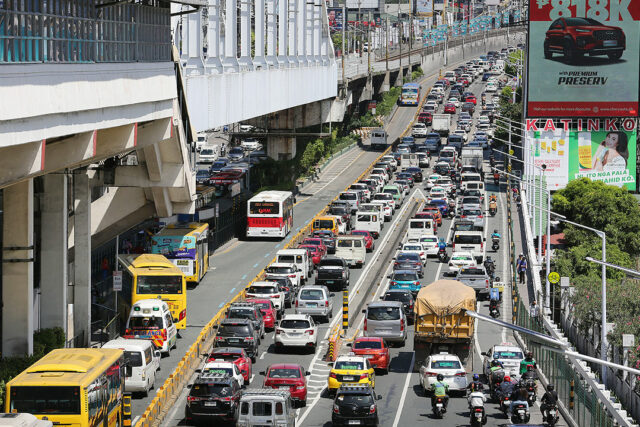
Pump prices went up for an 11th straight week on Tuesday. Fuel retailers raised gasoline and diesel prices by P7.10 and P13.15 per liter, respectively.   

Mr. Mopas  said the P15 increase in the base fares should be enough to cover the higher fuel costs as long as drivers can take more rides.

The 25,000 active transportation network vehicle service drivers currently are only “around 40%” of the total before the pandemic, according to Mr. Mopas. Many drivers were affected by the strict lockdowns implemented during the pandemic.

Grab Philippines announced last week that it has allotted P25 million for its “Partner Assistance Fund” this year.

The LTFRB has yet to respond to a request for comment as of press time.

Several transport groups have also filed petitions to raise the minimum jeepney fare to P14-P15, from the current P9 in the National Capital Region.

Socioeconomic Planning Secretary Karl Kendrick T. Chua earlier said raising jeepney fares by P1.25 will already add 0.4 percentage point to inflation.

US Fed kicks off fight against inflation

REUTERS
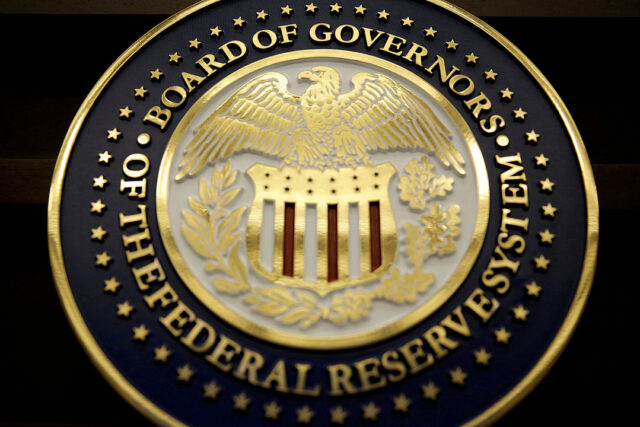
The seal for the Board of Governors of the Federal Reserve System is on display in Washington, DC, U.S. on June 14, 2017. — REUTERS

THE US Federal Reserve kicked off a campaign of interest rate hikes that’s set to be the most aggressive since the mid-2000s, as Fed Chairman Jerome H. Powell assured Americans that the fight against inflation would not tip the US economy into recession.

After raising rates by a quarter point for the first time since 2018 and signaling six more increases this year, Mr. Powell told reporters that inflation is too high, the labor market is over-heated and price stability is a “pre-condition” for the central bank as it tackles the hottest price pressures in 40 years.

“As I looked around the table at today’s meeting, I saw a committee that’s acutely aware of the need to return the economy to price stability and determined to use our tools to do exactly that,” Mr. Powell told reporters on Wednesday after a two-day meeting of the Federal Open Market Committee. “The American economy is very strong and well positioned to handle tighter monetary policy.”

Policy makers voted 8-1 to lift their key rate to 0.25% to 0.5% after two years of holding borrowing costs near zero to insulate the economy from the pandemic.

They forecast a sequence of rate hikes, finishing this year at 1.9% and then to about 2.8% by the end of 2023, which would be considered restrictive to growth. From June 2004 to June 2006, the Fed moved its benchmark up from 1% to 5.25%, tightening at 17 straight meetings.

Seven policy makers want even faster increases this year, which raise the prospect of a half-point move in future. St. Louis Fed President James Bullard dissented at this meeting in favor of such a step.

“The Fed has now waged a war on inflation,” said Diane Swonk, chief economist at Grant Thornton. “They want to bring inflation down with the most aggressive surge in rates in decades.”

The Fed said Russia’s invasion of Ukraine posed “highly uncertain” implications for the economy that create a near-term upward pressure on inflation while weighing on economic activity.

Still, Mr. Powell played down the risk of recession and repeatedly stressed that the economy is “very strong” while emphasizing the need for price stability.

In their economic projections, officials laid out a path of slowing inflation and sustained expansion.

Notwithstanding the projected rate increases the forecasts showed very little increase in joblessness, which stays at about 3.5% for the next three years.

Economists said that sort of happy outcome rarely happens in real life.

“The history of being able to guide inflation down from 40-year highs with maximum employment suggests a smooth landing is very difficult to achieve,” said Matthew Luzzetti, chief US economist at Deutsche Bank Securities, Inc. “At some point they will face the trade-off between pushing unemployment higher or accepting higher inflation.”

Bond traders indicated some skepticism that the Fed could pull off a soft landing. A portion of the bond curve — the gap between five- and 10-year yields — inverted for the first time since March 2020. For some, that highlights a threat that the efforts to rein in inflation could trigger an economic downturn.

The economy roared into the first quarter with employers adding more than one million jobs in the first two months and job openings near a record high.

Strong demand sustained price increases and consumer inflation rose by 7.9% for the 12 months through February. The Fed’s 2% inflation target is based on a separate gauge, the personal consumption expenditures price index, which rose by 6.1% in January.

Mr. Powell and his colleagues have pivoted rapidly from the gradualism of just three quarter-point hikes they penciled in for 2022 when they met in December to seven now, including Wednesday’s increase.

“They saw the light,” said Stephen Stanley, chief economist at Amherst Pierpont Securities LLC. “They have been underestimating the persistence and intensity of inflation pressures for at least a year. They have finally realized they have a serious problem on their hands and have to act. There is a whatever-it-takes kind of mentality” now.

The aggressive swerve is punctuated by the risk of losing a grip on price increases now, which would require higher costs to the economy later to get it back under control.

For more than two decades, Fed officials have locked down inflation to around 2%, cementing public expectations that price volatility was no longer an issue for economic decisions.

Achieving that required a punishing recession engineered by former Chairman Paul Volcker who pushed borrowing costs into the double digits.

This year, Fed officials forecast that pandemic supply-chain problems would subside, and they still do, but Wednesday’s statement noted that price pressures are spreading beyond the logistics knots at a time of wage increases.

Now they are betting a policy tilt toward a series of steady increases will keep inflation expectations anchored although the war makes the outlook murkier.

Mr. Powell was clear that if inflation doesn’t calm down, the policy committee will hammer it even harder.

Despite the rosy outlook for the labor market in the forecasts, Mr. Powell made clear that it is running too hot in his view.

“There is misalignment of demand and supply, particularly in the labor market, and that is leading to wages that are moving up that are not consistent with 2% inflation over time,” Mr. Powell said.  He said job openings near record highs point to a labor market that is “tight to an unhealthy level.”

“That is a pretty extreme thing to say,” said Derek Tang, an economist at LH Meyer/Monetary Policy Analytics. “That is saying too many people have jobs and people are getting wages that are too frequent. He is really putting his thumb down on the scale now.” — Bloomberg

Duolingo creates English course for native Tagalog speakers

TO MAKE learning the English language more accessible — and free — language learning app Duolingo has launched an English course for Tagalog speakers.

The English for the Tagalog Speakers Course is designed with the beginner English speaking Filipino in mind. It aims to make learning basic English fun through its gamification approach of arranging the English words to fit the translation of the Tagalog sentence.

The course is also aimed at providing free and accessible education to learn the English language.

“We are aware that Filipinos English proficiency is already high. But we’re also aware that not everyone in the Philippines has equal access to learn English, so we wanted to develop this course and offer it for free,” Haina Xiang, Marketing Director of Duolingo, said in an online press launch on March 15.

According to the English Proficiency Index (EPI) published in Nov. 2021, the Philippines ranked 18th out of 112 countries whose population are non-native English speakers. The EPI score is “high proficiency” which is considered adequate for tasks such as managing work presentations, understanding TV, and reading newspapers.

Founded in 2012, Duolingo offers over 100 language courses across 41 distinct languages, from Spanish, French, German, and Japanese to Navajo and Yiddish. It also offers courses for endangered languages such as Zulu, Xhosa, Maori, and Haitian Creole; and fictional languages such as Valyrian (the ancient language spoken by the characters in Game of Thrones). In 2013, the app was awarded the “iPhone App of the Year.” Duolingo has been downloaded over 500 million times and counting.

According to data released by the app, the monthly active user (MAU) growth of Duolingo in the Philippines is 32% year-on-year. The peak studying time for Filipino learners is 9-10 p.m., with an average studying time of 15 minutes a day. Currently, 20% of Filipinos on Duolingo are learning Japanese, 19% are learning Korean, and 16% are learning Spanish.

Ms. Xiang added that the English for the Tagalog Speakers Course focuses more on conversational topics relating to family, food, and hobbies.

“All of our course developers are native Tagalog speakers, so they are very familiar with local insights,” she said.

The Duolingo courses are developed based on the Common European Framework of Reference for languages (CEFR), the international standard for language learning. The course is divided into different levels — A1, A2, B1, and B2. A is for beginners, and B is for intermediate learners.

“Based on those different levels, we divided the complexity and difficulties of the language learning,” Ms. Xiang said.

“When you come into Duolingo, we have placement test to access your level. Based on that result, they match you to the right level of where you are right now, and you can start from there,” she said. “This framework helps us make sure of what the users need in the content.”

Plans to create courses for Philippine native languages have yet to be considered.

“We are starting with the English course first and we will see the impact of that. We have other course development plans, once we confirm, we will announce it,” Ms. Xiang said. — Michelle Anne P. Soliman