Home Blog Page 6627

Hong Kong to loosen strict COVID measures in April

REUTERS

HONG KONG — Hong Kong plans to relax some anti-COVID-19 (coronavirus disease 2019) measures next month, lifting a ban on flights from nine countries, reducing quarantine time for arrivals from abroad and reopening schools.

The moves, announced on Monday by Chief Executive Carrie Lam, could dampen some criticism from residents who have become increasingly frustrated with the city’s stringent measures, some of which have been in place for over two years.

The flight ban would be lifted from April 1, while hotel quarantine for arrivals could be cut to seven days from 14 if residents tested negative, Lam told a news briefing. She had previously said measures would be in place until April 20.

Schools would resume face to face classes from April 19, after the Easter holidays while public venues including sports facilities would also reopen from April 21, she said. Hong Kong’s border has effectively been shut since 2020 with very few flights able to land and hardly any passengers allowed to transit, effectively isolating a city that had built a reputation as a global financial hub.

The ban had made it very difficult for residents to return to the Chinese ruled territory, with many spending time known as “washing out” in other countries for two weeks before being allowed to return.

The rules, together with constant mixed messaging from the government including whether a citywide lockdown and mass testing would take place, have triggered an exodus of residents in the past two months.

Net outflows show more than 54,000 people have left Hong Kong so far in March, against more than 71,000 in February and nearly 17,000 in December before the fifth wave of the pandemic hit, prompting fears for the city’s longer-term competitiveness.

Businesses and the city’s economy are reeling from widespread closures, while doctors say many of the city’s 7.4 million residents are grappling with rising mental health issues, particularly among low-income families.

A plan to carry out mass coronavirus testing would be put on hold, Ms. Lam said, citing experts who said it was not a suitable time.

While the former British colony has officially stuck to the “dynamic zero” coronavirus policy, similar to mainland China, which seeks to curb all outbreaks, it has been shifting to mitigation strategies as deaths skyrocketed.

Hong Kong has registered the most deaths per million people globally in recent weeks — more than 24 times that of rival Singapore — due to a large proportion of elderly who were unvaccinated as the highly transmissible Omicron variant ripped through care homes since February.

The densely packed city has recorded more than 1 million infections since the pandemic started and about 5,000 deaths — most of them in the past month.

As many as 4 million people could be infected according to estimates from health experts as many residents have contracted the virus and isolated at home without notifying authorities. — Reuters

Shanghai’s Disney resort shut amid virus surge

WOMEN wearing Mickey Mouse ears watch the opening ceremony at Shanghai Disney Resort in Shanghai, China, June 16, 2016. — REUTERS

SHANGHAI — China’s financial hub of Shanghai reported on Monday a record daily surge in local COVID-19 infections as authorities scrambled to test residents and rein in the Omicron variant, while closing its Disney resort until further notice.

Until recent weeks relatively unscathed by coronavirus, Shanghai reported 24 new domestically transmitted COVID cases with confirmed symptoms for Sunday and 734 local asymptomatic infections, official data showed on Monday.

It is the fourth consecutive day that Shanghai’s local asymptomatic infections have increased.

Although the tally of infections is tiny by global standards, Shanghai has quickly followed China’s “dynamic clearance” policies, shutting schools and testing residential compounds in the effort to limit the spread of the virus.

“When it comes to the entire situation of epidemic control and prevention that we are facing, it is very complex and serious, and it is also a very big test for us,” city health official Wu Jinglei told a news briefing.

Shanghai will stick with “dynamic clearance”, Mr. Wu added, saying he hoped for continued public support for the policy.

The city also shut the Shanghai Disney Resort from Monday until further notice.

But there were signs of frustration with the city’s ad hoc, district-by-district approach.

“Hong Kong, Shanghai and Shenzhen have had three different epidemic response models,” said a user of China’s Twitter-like Weibo network.

“Hong Kong is the worst but will be the first to open up,” the writer, going by the name zangyn, said in a widely shared post. “Shenzhen is the most effective, and Shanghai may be the most tiring, and even the most miserable.”

The severity of outbreak responses by Shanghai’s compounds and residential districts varied, with some opting for lockdowns as long as two weeks. Some people in other sealed-off districts said they were not told how long they would have to stay home.

Residents’ committees helping to organize testing programs also encountered challenges. One compound distributed tokens to foil outsiders’ attempts to take free tests.

Including Shanghai infections, mainland China reported a total of 1,947 new locally transmitted cases with confirmed symptoms on Sunday, data from the National Health Commission (NHC) showed, up from 1,656 a day earlier.

The top steelmaking city of Tangshan, with just 12 local infections since March. 19, is allowing only essential vehicles on roads smaller than expressways, while people with special needs who must use vehicles have to seek approval.

The southern manufacturing hub of Shenzhen has allowed work and production activities, as well as bus and subway services in most areas, to resume after daily local case numbers dropped following three rounds of city-wide testing.

Tight curbs remain in some places, however.

Shenzhen residents still need to show negative tests in order to use public transport from Monday until March 27, a period in which non-essential indoor services will stay closed, the city government has said.

Vaccine candidates to target Omicron specifically, or among variants of concern, are in studies prior to clinical trials, a national health official said on Saturday, without identifying the companies involved.

China’s new local asymptomatic cases, which it does not classify as confirmed cases, was 2,384, up from 2,177 a day earlier. The death toll was unchanged at 4,638, with no new deaths.

By Sunday, mainland China had reported 132,226 cases with confirmed symptoms, both among locals and arrivals from outside. — Reuters

China Eastern Airlines Boeing with 132 on board crashes

BEIJING —  A China Eastern Airlines aircraft with 132 people on board crashed in the mountains in south China on Monday while on a flight from the city of Kunming to Guangzhou, China’s Civil Aviation Administration of China (CAAC) said.

The jet involved in the accident was a Boeing 737 aircraft and the number of casualties was not immediately known, state broadcaster CCTV said. Rescue was on its way, it said.

There was no word on the cause of the crash of the plane, a 6-year-old 737-800 aircraft, according to Flightradar24.

The CAAC said the aircraft lost contact over the city of Wuzhou. It had 123 passengers and nine crew on board. State media said earlier there were 133 people on board.

“The CAAC has activated the emergency mechanism and sent a working group to the scene,” it said in a statement.

The flight departed the southwestern city of Kunming at 1:11 p.m. (0511 GMT), FlightRadar24 data showed. The flight tracking ended at 2:22 p.m. (0622 GMT) at an altitude of 3225 feet with a speed of 376 knots.

It had been due to land in Guangzhou, on the east coast, at 3:05 p.m. (0705 GMT).

The website of China Eastern Airlines was later presented in black and white, which airlines do in response to a crash as a sign of respect for the assumed victims.

The safety record of China’s airline industry has been among the best in the world over the past decade.

According to Aviation Safety Network, China’s last fatal jet accident was in 2010, when 44 of 96 people on board were killed when an Embraer E-190 regional jet flown by Henan Airlines crashed on approach to Yichun airport in low visibility.

In 1992, a China Southern 737-300 jet flying from Guangzhou to Guilin crashed on descent, killing all 141 people on board, according to Aviation Safety Network. — Reuters

TUCP seeks P430 wage hike in Central Visayas

PHILSTAR FILE PHOTO

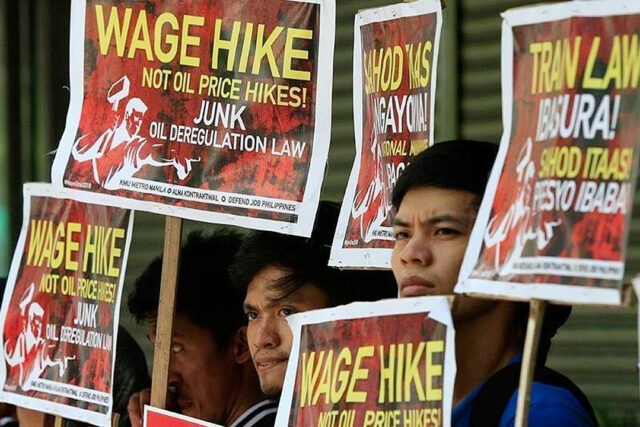
THE Philippines’ largest labor federation filed a petition on Monday seeking a P430 increase in the minimum wage in the Central Visayas, which would bring daily pay to workers there to P808.

In its petition filed before the Tripartite Wages and Productivity Board in the Central Visayas, the Trade Union Congress of the Philippines (TUCP) cited price hikes, malnutrition, hunger, and poverty in the region.

“Minimum wage earners and their families in Cebu, Bohol, Siquijor and other islands are barely surviving with their meager income,” it said in a statement, noting that the prices of basic goods and services in the region have risen substantially since 2018.

The TUCP said that the P18 increase in the daily minimum wage that the regional wage board granted in January 2020 has long been offset by rising prices.

“We are deeply concerned that with the looming price hikes in the basic commodities, including electricity and transport fares, our workers and their families could really go hungry this time and that is unacceptable to us,” it said. “We are filing our wage petition today to help our workers and their families in Cebu and in the entire Region VII to at least survive.”

TUCP said the current P15 allocated for the daily food expenses of every worker in the region is much lower than the P61.17/meal/person estimated by the Ateneo Policy Center using a state-designed food model.

“What kind of food can be bought for P15.00? Do our workers deserve just to eat nutritionally deficient foods while they continue breaking their backs to sustain and expand the economy?”

The labor group said the workers’ sacrifices must be recognized in helping the region achieve vibrant pre-pandemic growth. The region’s share of the national economy was estimated at 9.35% between 2016 and 2019.

“Central Visayas has been the consistent fourth-biggest contributor to the GDP, averaging 6.44% for the period 2016-2020,” it said. “And what do they get? Malnutrition, hunger, and poverty.”

The TUCP said that the current monthly minimum wage of P9,663.94 is far below the P16,295.00 a month poverty threshold for a family of five in the Central Visayas.

Citing rising fuel prices, the TUCP last week sought a P470 increase in the daily minimum wage of workers in the National Capital Region, which accounted for 32.3% of the Philippines’ economic output.

At the height of calls for a minimum wage increase, the government’s chief economic planner proposed a four-day workweek to help businesses cut costs and insulate workers from rising fuel prices.

President Rodrigo R. Duterte is set to announce his decision on the proposal soon.

Labor Undersecretary Benjo Santos M. Benavidez said the government “can only encourage, not obligate the private sector to adopt four-day workweeks.” — Kyle Aristophere T. Atienza

BSP expected to keep rates steady in March

BW FILE PHOTO

THE Bangko Sentral ng Pilipinas (BSP) is likely to retain its policy rate at its March meeting after inflation eased, although strong economic performance could lead to policy normalization sooner rather than later, Moody’s Analytics said.

In a note on Monday, Moody’s said the BSP still has leeway to keep rates on hold after inflation eased to 3% in February.

“The central bank is keeping a close watch on inflation expectations,” Moody’s said.

“Russia’s invasion of Ukraine has heightened upside risks from high global energy and food prices. Monetary policy is expected to start normalizing in the September quarter.”

The BSP is likely to keep rates steady at its March 24 meeting, according to 15 out of 17 analysts polled by BusinessWorld. The central bank is expected to maintain its support for the economic recovery despite inflationary pressures caused by the war.

Oil prices have been volatile since Russia, a top exporter of crude oil, invaded Ukraine in February.

Although the Asia-Pacific is not experiencing the same rate of price growth seen in North America and Europe due to the war, Moody’s Analytics in a separate note said the region can expect rising producer and consumer prices in the second quarter.

Noting strong economic performance in parts of the Asia-Pacific, Moody’s said central banks in the region could start policy normalization soon.

“Taiwan joins South Korea, Singapore and New Zealand on the road toward policy normalization,” the research firm said.

“The next may be the Philippines, where recent economic performance has been very strong.”

The BSP’s next policy review after Thursday is on May 19. — Jenina P. Ibañez

PCC orders Grab to disburse refund balance of P19.3M to users by April 22

THE Philippine Competition Commission (PCC) has ordered Grab Holdings, Inc. and MyTaxi.PH, Inc. to distribute the balance of P19.3 million in refunds to eligible users by April 22.

The refunds were ordered as part of the penalty for violating a price monitoring commitment.

In a statement on Monday, the competition regulator said that only P6.15 million of the P25.45 million penalty earmarked for return to Grab passengers has been claimed.

“After reviewing the compliance reports for previous penalties, the PCC found that only 24.1% of the total refund has been claimed from Grab by eligible passengers as of June 15, 2021, or P6.15 million out of the total P25.45 million penalty required by the PCC to be returned to Grab users. The ride-hailing app required additional steps for passengers to claim the refund, contributing to the low uptake,” the commission said.  

According to the PCC, Grab has until April 22 to distribute the full refund to users, adding that the money should be credited via GrabPay wallet without any action required to claim the refund.

“The penalties are in the form of a refund to remind Grab that every pricing or booking violation committed against passengers shall be paid back to passengers. Grab should immediately release the refunds and continue to adhere to its commitments,” PCC Chairman Arsenio M. Balisacan said.

Grab has incurred penalties from the PCC worth P63.7 million since 2018 due to violations of the company’s price and service quality commitments. In late 2019, the PCC penalized Grab and told the company to return a portion of its commissions to the passengers after violating the price monitoring commitment.  

“The PCC has since ordered Grab to issue refunds in the amounts of P5.05 million in November 2019, P14.15 million in December 2019, and P6.25 million in October 2020,” the commission said.

The PCC said Grab’s takeover of Uber’s Philippine operations in 2018 raised competition concerns, with Grab subsequently compelled to behave as if it had a rival in the market. Some of Grab’s voluntary commitments included an undertaking not to deviate substantially from its pricing practices before the acquisition.  

However, the PCC found during the monitoring period that Grab’s pricing had breached its commitments, resulting in penalties.

“Following its acquisition of Uber, Grab’s commitments were first issued in 2018, subject to a one-year monitoring period. The commitments were updated and monitoring was extended until 2023 due to the remaining competition concerns. PCC underscores that the penalty shall be paid by Grab and shall not be passed on to its drivers or passengers,” the commission said.  

Asked to comment, Grab Philippines said in a statement that it remains fully committed to adhering to the undertaking, adding that it is working with the PCC to ensure that the remaining fee is redeemed by all eligible passengers.

“Grab Philippines has complied with the disbursement order of the PCC, and has disbursed the full administrative fee in a manner consistent with the agreed mechanics with the PCC. Eligible passengers must redeem their portion of the fine through the GrabRewards Catalog within the Grab App,” the company said.  

“Since the first order directing Grab Philippines to disburse the administrative fees to eligible passengers last Nov. 14, 2019, Grab Philippines has been proactively monitoring the redemption. Immediately upon its receipt of the PCC Order, Grab Philippines has outlined to the PCC its suggested measures to address this situation and has been eagerly awaiting the PCC’s response,” it added.

Grab contends that customers need to complete the basic know-your-customer (KYC) process required by the Bangko Sentral ng Pilipinas (BSP) before getting the refund.

“Eligible passengers who have not yet completed their basic KYC are required to complete this BSP-mandated process prior to redemption. Grab cannot credit their GrabPay Wallet without completion of basic KYC as this is a regulatory requirement of the BSP,” Grab said.  

“Grab Philippines has yet to receive the final decision of the PCC on the recommendations for those eligible passengers lacking the mandatory KYC, but we would like to reassure our kababayans that we will continue to work with the competition commission to ensure that the remaining administrative fee amount is fully-redeemed — and focus our efforts in helping the Philippine economy recover,” it added.

The PCC’s Mr. Balisacan said the measures are in place to stop Grab from “exercising monopolistic behavior due to its unchallenged market power.”

“Through the years, the commitment measures are meant to be temporary in disciplining Grab while waiting for the market to mature with new major players. A more permanent pro-competition solution here is to open the market to more transport network companies that can truly rival Grab on the same level,” Mr. Balisacan said. — Revin Mikhael D. Ochave

New Bulacan service road enters service; Skyway reopens to public buses

NLEX

NLEX Corp. on Monday said the new Meycauayan-Marilao East Service Road, which is intended to serve as an alternative route going in and out of Meycauayan and Marilao, Bulacan, is now open to motorists.

The new two-lane road was constructed by the Department of Public Works and Highways.

“This new service road occupies a portion of the NLEX right of way (ROW) covering Barangay Lias in Marilao, Bulacan,” NLEX Corp. said in a statement.

“It is one of the government’s traffic decongestion projects aimed at improving the Bulacan road network, boosting the economic activities in the province, and enabling the public to experience travel convenience,” it added.

The opening of the road is expected to help ease the growing traffic volume at the Meycauayan-Marilao corridor as it bypasses the MacArthur Highway and other congested streets.

Motorists coming from Paso de Blas, Valenzuela City can access Lias, Marilao, Bulacan through the service road.

“Another benefit of this project is it will improve traffic flow at Meycauayan Interchange during peak hours and provide an alternate route for motorists especially those traveling between Iba, Libtong, Malhacan, and Pandayan in Meycauayan and Lias, Ibayo, Saog, and Lambakin in Marilao,” NLEX Corp. said.

Separately, San Miguel Corp. (SMC) announced that starting April 1, public utility buses and closed van delivery trucks will again be allowed to use the elevated Skyway system.

“All Class 2 vehicles, primarily buses and closed vans exceeding 7 feet in height and with valid Autosweep RFID (radio frequency identification) stickers, will be allowed on the entire elevated Skyway system, comprising Skyway 1, 2, and 3,” SMC said in a statement on Monday.

This means that buses can now enter and pass through the Skyway elevated sections spanning Alabang to Bicutan (Stage 2), Bicutan to Buendia (Stage 1), and Buendia to Balintawak (Stage 3).

“They can also access the new SLEX elevated extension, and NAIA Expressway,” SMC said.

This will “pave the way for faster, more efficient commutes and transport of goods between northern and southern Metro Manila,” it added.

Previously, Class 2 vehicles were temporarily restricted from using the Skyway system “for safety reasons.”

The construction of the South Luzon Expressway elevated extension in Muntinlupa “necessitated the use of a temporary steel access ramp at the Alabang viaduct,” the company noted. “The steel ramp, which was in use for around two years, was only intended for light vehicles.”

NLEX Corp. is an arm of MPTC, the tollways unit of Metro Pacific Investments Corp., one of three key Philippine units of Hong Kong-based First Pacific Co. Ltd., the others being Philex Mining Corp. and PLDT, Inc.

Hastings Holdings, Inc., a unit of PLDT Beneficial Trust Fund subsidiary MediaQuest Holdings, Inc., has a majority stake in BusinessWorld through the Philippine Star Group, which it controls. — Arjay L. Balinbin

Pharma industry see adequate medicine supply, stable prices

THE Pharmaceutical and Healthcare Association of the Philippines (PHAP) said the supply of medicine is adequate, with prices remaining stable in the face of rising oil prices.

“Despite skyrocketing oil prices, PHAP members are again exerting all efforts to keep medicine and vaccine prices stable, as we implement longer yet safer alternative logistical routes for medicines coming from the affected region,” the group said in a statement on Monday, referring to the need to bypass the war zone in Ukraine.

“Aside from the war, we continue to monitor any sudden spikes in coronavirus disease 2019 (COVID-19) cases and their potential impact,” it added.

“PHAP members are closely monitoring developments in the region with the uncertainties brought by the war. As we have done throughout the COVID-19 pandemic, PHAP again commits to work with the government to ensure the continued supply of medicines and vaccines in the Philippines,” it said.

“We will also continue to provide recommendations to the government on ways to make medicines and vaccines available to Filipino patients as the country faces the pandemic and the consequences of the war in Ukraine,” it added.

According to the PHAP, its members implemented measures to address supply risks at the start of the pandemic. These measures included chartering flights and finding alternative sources of medicine, which increased operating costs. However, the group said the additional costs were absorbed and not passed down to patients.

Meanwhile, the PHAP expressed its support for the European Federation of Pharmaceutical Industries and Associations (EFPIA), which is calling for the safe delivery of medicine and vaccines for humanitarian efforts in Ukraine.

“Among the EFPIA members that are offering humanitarian support for Ukraine and neighboring countries are Astellas, Bayer, Boehringer Ingelheim, Johnson & Johnson, AstraZeneca, GlaxoSmithKline, MSD, Roche, Merck, Novartis, Pfizer, Sanofi and Takeda. These companies also have local presence, and are likewise members of PHAP,” the group said.  — Revin Mikhael D. Ochave

PHL snack food industry to promote products in Australia

THE Department of Trade and Industry (DTI) said Philippine food manufacturers have agreed to a partnership with the department to promote snack foods in Australia.

In a statement on Monday, the DTI said the participants in the campaign are manufacturers, the Export Marketing Bureau (EMB), and the Philippine Trade and Investment Center (PTIC) in Sydney.

The so-called “Cookie Jar Project” is a four-month campaign that will include a series of business-to-business (B2B) activities, in-store promotion, and a social media campaign, the DTI said.

“The first batch of B2B activities started on March 15-17, 2022, to be followed by a series of business matching events within the next three months. An in-store promotion of Philippine snack food products is also being eyed in selected Filipino-Asian supermarkets and mainstream retailers,” it added.

The snack food cluster includes Monde Nissin Corp., Universal Robina Corp., Monde M.Y. San Corp., Liwayway Marketing Corp., Leslie Corp., Brand Exports Philippines, See’s International Food Manufacturing Corp., Grand Alphatech International Corp., Magicmelt Foods, Inc., and Weambard International Technology, Inc.

Other manufacturers participating in the project are Aretei Foods Corp., B&C Healthy Snack Foods, Inc., C.O.P. Pili Sweets and Pastries, Dealo Koffee Klatch, Golden Arrow Food Enterprises, J. Emmanuel Pastries, Jocker’s Foods Industries, la Carlota, M. Lhuillier Food Products, Inc., RPO Fine Foods Corp., Innovative Packaging Industry Corp., Ritz Food Product Corp., Sweetworld, Inc., and Villa Socorro Farm.

“Australia is an important and preferred market for Filipino exporters of snack food products. The Philippines is ready to offer healthier snack options that are favored by Australians especially younger consumers due to our products’ unique taste, flavor and color,” DTI-EMB Director Christopher Lawrence S. Arnuco said.

According to the DTI, Australia is a net importer of biscuits, adding that the market posted 5.6% import growth from 2021 to 2022 to 391.5 million Australian dollars.

“In 2021, Philippine exports of biscuits and confectionery products were valued at $140.4 million, of which $5.39 million was exported to Australia. Imports of healthy snack food products into Australia are expected to increase at an annualized rate of 2.4% over the next five years, amounting to $182.2 million or 10% of domestic demand,” the DTI said.  — Revin Mikhael D. Ochave 

Are Registered Business Enterprise transactions VAT zero-rated or not?

Last year, new value-added tax (VAT) rules were introduced by Republic Act (RA) No. 11534 or the CREATE Act. The CREATE Implementing Rules and Regulations (IRR), and Revenue Regulations (RR) No. 21-2021 soon followed, which did not put a stop to the questions surrounding the law. Not least among them are: What is the proper VAT treatment of transactions with registered business enterprises (RBEs)? What type of BIR documentation is required in addition to the endorsement of the Investment Promotion Agencies (IPAs)? What does endorsement from IPAs mean? What rules apply when availing of VAT incentives?

To clarify issues regarding VAT zero-rating, the Bureau of Internal Revenue (BIR) issued Revenue Memorandum Circular (RMC) No. 24-2022.

Summarized below are some of the highlights of the RMC, particularly on the VAT treatment of transactions with RBEs under CREATE.

SALES TO REGISTERED EXPORT ENTERPRISES
RMC No. 24-2022 reiterated that sales are to be classified as VAT zero-rated provided that (a) the buyer is a registered export enterprise, (b) the seller is a VAT taxpayer, and (c) the purchased goods and services will be used directly and exclusively in the registered project or activity of the enterprise.

The RMC defined a registered export enterprise as any individual, partnership, corporation, Philippine branch or any entity organized and existing under Philippine laws and registered with an IPA to engage in manufacturing, assembling, or processing activity, and services such as information technology (IT) activities and business process outsourcing (BPO), resulting in the direct export and/or sale of its manufactured, assembled, or processed product or IT/BPO services to another registered export enterprise that will form part of the final export product or service of the latter, for at least 70% of its total production output. However, the export enterprise is also a registered business enterprise as defined in Section 4(W) of the CREATE IRR.

The RMC stressed that only the portion of expense directly and exclusively used in the registered project or activity qualifies as a registered export enterprise for VAT zero-rating. Hence, those used for administrative purposes do not qualify such enterprise for zero-rating. Taxpayers are now advised to adopt an allocation method (e.g., use of separate water and power meters for utilities or use of financial ratios) to determine the purchases relating to the registered project or activity and administration purposes. In case the proper allocation cannot be determined, the purchase is subject to 12% VAT.

The RMC explicitly states that services for administrative expenses, such as legal, accounting, and other similar services, are not considered directly and exclusively used in the registered project or activity.

In case the sale to the registered export enterprise is made by another RBE under the 5% Gross Income Tax (GIT) or Special Corporate Income Tax (SCIT) regime, the sale is VAT exempt. The VAT passed on to the seller by its VAT-registered local suppliers forms part of its costs or expenses.

SALES TO REGISTERED DOMESTIC MARKET ENTERPRISES (DMEs) AND OTHER SERVICE ENTERPRISES
As provided in the RMC, DMEs or registered non-export enterprises are not entitled to VAT zero-rating on local purchases. Rather, these are subject to 12% VAT.

Similarly, service enterprises such as those engaged in customs brokerage, trucking or forwarding services, janitorial services, security services, insurance, banking, and other financial services, consumers’ cooperatives, credit unions, consultancy services, retail enterprises, restaurants, or such other similar services, as may be determined by the Fiscal Incentives Review Board (FIRB), though duly accredited or licensed by any of the IPAs, are subject to 12% VAT on their local purchases.

SALES MADE BY RBEs
The applicable VAT rules for the sales transactions by RBEs may vary depending on the tax regime of the RBE and on the taxability of the purchaser.

Sales by RBEs, whether an export enterprise or a DME, under the 5% GIT are VAT exempt, in general. Meanwhile, sales of VAT-registered RBE-sellers enjoying Income Tax Holiday (ITH) to registered export enterprises are treated as VAT zero-rated, subject to the condition that the sold goods and services are directly and exclusively used in the latter’s registered project or activity.

In addition, the RMC also provided clarification on the RBE’s sale, transfer, or disposition of previously VAT-exempt imported capital equipment, raw materials, spare parts, or accessories. Such subsequent sales may be VAT zero-rated if the purchaser is a registered export enterprise and if the “direct and exclusive use” rule is applied.

If the subsequent sale is made by a DME, the transaction may either be VAT-exempt (if the DME is under 5% GIT), or VATable. The VAT shall be imposed on the net book value of the item/s sold. If the buyer is a registered export enterprise, then the rules on zero-rating apply.

For registered export enterprises having multiple incentives regimes (i.e., the enterprise has registered activities under ITH and GIT), the sales under the 5% GIT regime must be reported as VAT-exempt while sales under ITH are VAT zero-rated.

APPLICATION FOR VAT ZERO-RATING
The CREATE IRR emphasized that VAT zero-rating on qualified purchases only applies upon the endorsement of the IPA concerned, in addition to the documentary requirements of the BIR. Many taxpayers were earlier confused as to what “endorsement of the concerned IPAs” means. Under the RMC, IPAs may now provide VAT Certification only to qualified registered export enterprises. The Certification specifies: (a) the registered export activity, (b) the tax incentives and validity period, and (c) the applicable goods and services, e.g., raw materials, equipment, etc.

Taxpayers must take note that prior approval from the BIR must be secured by the local VAT-registered suppliers following the guidelines of Revenue Memorandum Order (RMO) No. 7-2006. Relative hereto, registered export enterprises must provide their suppliers a photocopy of their BIR – Certificate of Registration (BIR Form No. 2303), Certificate of Registration and VAT Certification issued by the IPA concerned, and a Sworn Affidavit stating that the goods and/or services being purchased are for use directly and exclusively in the registered project.

Additionally, supporting documents such as but not limited to purchase orders, job orders, service agreements, sales invoices and/or official receipts, or other similar documents may also be attached to the application to prove the existence and legitimacy of transactions.

Since the application may take a while, processing this ahead of time is necessary as the absence of prior approval from the BIR may result in the disallowance of the VAT zero-rated sale of the supplier.

Certainly, unanswered questions often result in confusion and disparities, especially at times when there are no clear-cut rules. For businesses, a prolonged period of uncertainty may paralyze decision-making and deprive them of better opportunities. With the guidance provided by RMC No. 24-2022, taxpayers are now relieved of the stress and time spent debating what rules apply to them. Needless to say, better compliance from taxpayers is now also anticipated.

Let’s Talk Tax is a weekly newspaper column of P&A Grant Thornton that aims to keep the public informed of various developments in taxation. This article is not intended to be a substitute for competent professional advice.


Iris Mae P. Uri is a senior in charge from the Tax Advisory & Compliance division of P&A Grant Thornton, the Philippine member firm of Grant Thornton International Ltd.

pagrantthornton@ph.gt.com

Oil’s not at $200. But it’s pricey enough for Asia

MACROVECTOR-FREEPIK

THE SELLOFF in the global oil market might bring a sense of relief to Asia’s policy makers: So this isn’t 1973, after all.

Back then, prices almost quadrupled in three months and then just kept rising. This time around, Brent crude zoomed to about $128 a barrel, but fell equally dramatically. Speculative bets on a renewed surge are unwinding — as prices bob around the $100-a-barrel range. Yet, policy makers and investors shouldn’t be too complacent. Even if the benchmark this year doesn’t hit the $200 mark that commodities trader Pierre Andurand sees as possible, oil can be a potent instrument of stagflation.

For starters, as economists at Australia & New Zealand Banking Group Ltd. (ANZ) point out, government budgets in Southeast Asia and India have assumed an average oil price of between $65 to $75 a barrel for the year, a lot lower than where the market is now. Malaysia and Indonesia, which are net energy exporters, will find it relatively easier to subsidize pump prices. Net importers, however, may struggle to be as generous, for they may need to cut back on developmental spending.

It makes sense to protect household consumption because domestic demand is still short of pre-pandemic levels. It is particularly weak in tourism-dependent Thailand. But then, the virus has also pushed up public debt: Consumers can’t be spared entirely. At their recent highs, passing through a $40-a-barrel increase in crude prices to the local economy would have meant a pickup in inflation: from 1.75 percentage points in Thailand to about 1.25 percentage points in the Philippines and India, according to ANZ.

However, somewhat cooler global energy prices may not necessarily take away the inflationary pressure. The reason is China.

Traders are worried about global oil demand because of the recent omicron outbreak in the People’s Republic. But the lockdown in the cities of Shenzhen and Dongguan in Guangdong province, which accounts for a quarter of the country’s outbound trade, could also mean broader supply-side snarls. For Asia, which has a high dependence on Chinese-made parts and components, “Any prolonged or broader lockdowns in China would add further headaches, potentially resulting in reduced production pipeline for factories elsewhere,” says a report by Singapore’s Oversea-Chinese Banking Corp. Thus, instead of containing the inflation threat, oil at $100 might yet end up compounding it.

Then again, oil isn’t the only commodity to worry about; food, too, has a high weight in Asia’s inflation equation. Russia and Ukraine together command a share of 15%-plus of global exports of wheat, corn, fertilizers and seed oil. The longer the war stretches on, the higher the risks of a squeeze. While a food exporter like Thailand might realize some benefit from higher prices, trade deficits across the region may widen because of the combined shock from energy and agricultural commodities.

India appears particularly vulnerable to what Observatory Group analyst Ananth Narayan calls the “policy maker’s nightmare.” If current trends sustain, the current account deficit for the fiscal year that starts in April could exceed 3% of GDP, he says, adding that the Reserve Bank of India may need to sell a record amount of foreign currency to keep the rupee stable.

The saving grace is that at 22% of gross domestic product, India’s foreign-exchange war chest is robust. Still, “consumer-price inflation could exceed 6%, and India’s already weak fiscal balance, growth, and job creation could be hit further,” Narayan says.

At the same time, oil could have an impact on Asia’s growth prospects by crimping demand for the region’s exports. “History suggests that higher oil prices and the associated rise in transportation costs do not bode well for trade flows,” write ANZ economists Sanjay Mathur and Krystal Tan. “A slowdown in global growth will hurt the non-energy exports of Indonesia and Malaysia as well.” The Paris-based Organization for Economic Cooperation and Development expects the war in Ukraine to shave off one percentage point from global growth this year, but because it also anticipates a 2.5 percentage point pickup in inflation, the OECD is advising central banks to focus on fighting price pressures.   

In Asia, though, such clear-cut institutional boundaries — governments enabling growth, monetary authorities dealing with inflation — got blurred with the onset of the pandemic; the task of re-establishing them will probably now get postponed until after the end of the war. That means that central banks will prioritize output by keeping interest rates lower, while governments try to manage inflation with energy subsidies. The outcomes could get messy for investors, especially with the US Federal Reserve’s monetary tightening campaign already under way.

The 1970s stagflation in the West coincided with the rise of Asia. With the oil shock worsening their terms of trade, South Korea and Thailand pumped up exports to overcome their handicap. Indonesia took advantage of higher commodity prices. Investment boomed. Tiny Sri Lanka saw an 18 percentage point jump in the ratio of its capital formation to GDP between 1977 and 1982. Conditions are very different now because of, among other things, the scarring from the pandemic. The Thai bond market is getting no love from global investors, while Sri Lanka is seeking a rescue by the International Monetary Fund. Brent crude sustained at $128 a barrel would have dealt a big blow to Asia, but even $100 oil won’t bring it much cheer.

BLOOMBERG OPINION

SEC’s power to investigate criminal offenses

One of the issues that arises from the criminal penalty provisions of the Revised Corporation Code (RCC) is whether private complainants, especially those within the intra-corporate relations, may, on the basis of their criminal complaint, commence a preliminary investigation with the prosecutor’s office without going through the Security and Exchange Commission (SEC).

Unlike the Philippine Competition Act which provides expressly that the Philippine Competition Commission (PCC) has “sole and exclusive authority to initiate and conduct a fact-finding or preliminary inquiry for the enforcement of this Act,” and, if the evidence so warrants, to “file before the DoJ (Department of Justice) criminal complaints for violations of this Act or relevant laws for preliminary investigation and prosecution before the proper court,” no such “sole and exclusive authority to prosecute” is expressly granted to the SEC under the terms of the RCC.

Prior to the passage of the Securities Regulation Code that transferred the original and exclusive jurisdiction over the corporate cases under Section 5 of P.D. 902-A to the RTC Special Commercial Courts, the SEC, through its Prosecution and Enforcement Department (PED), was granted under Section 8 of the decree “the exclusive authority to investigate, on complaint or motu proprio any act or omission of the Board of Directors/Trustees … of their stockholders, officer … including any fraudulent devices, schemes or representations in violation of any law or rules and regulations administered and enforced by the SEC, to file and prosecute in accordance with law and rules and regulations issued by the [SEC] and in appropriate cases, the corresponding criminal or civil case before the SEC or the property court or body upon prima facie finding of violation of any laws or rules and regulations administered and enforced by the SEC.”

Mobilia Products, Inc. v. Umezawa, interpreted Section 8 of P.D. 902-A to the effect that “the filing of the civil/intra-corporate case before the SEC does not preclude the simultaneous and concomitant filing of a criminal action before the regular courts; such that a fraudulent act may give rise to liability for violation of the rules and regulations of the SEC cognizable by the SEC itself, as well as criminal liability for violation of the Revised Penal Code cognizable by the regular courts, both charges to be filed and proceeded independently, and may be simultaneously with the other.”

Section 8 of P.D. 902-A has been expressly repealed by Section 76 of the Securities Regulation Code, so that Morato v. Court of Appeals, ruled that “Thus, under the new law, the PED ceased to exist,” but that nonetheless the investigative proceedings of the SEC could continue on the ground that the SEC had not lost its prosecutorial or criminal investigative powers under the laws that its administers, pursuant to paragraphs (d) and (l) of Section 5 of the Securities Regulation Code, thus:

(d) Regulate, investigate or supervise the activities of persons to ensure compliance;

x x x

(l) Issue subpoena duces tecum and summon witnesses to appear in any proceedings of the Commission and in appropriate cases, order the examination, search and seizure of all documents, papers, files and records, tax returns, and books of accounts of any entity or person under investigation as may be necessary for the proper disposition of the cases before it, subject to the provisions of existing laws.

In addition, Morato held that SEC’s power to investigate securities fraud cases has been re-enacted in Section 53 of the Securities Regulation Code.

SEC v. Interport Resources Corp., confirmed that “Section 53 of the Securities Regulations Code clearly provides that criminal complaints for violations of rules and regulations enforced or administered by the SEC shall be referred to the Department of Justice (DoJ) for preliminary investigation, while the SEC nevertheless retains limited investigatory powers.” The Court affirmed that the prevailing rule is that a criminal complaint for violation of the Securities Regulation Code, or any of its implementing rules and regulations, must first be filed with the SEC, which determines the existence of probable cause, before a preliminary investigation can be commenced by the Department of Justice (DoJ). It is only when the SEC finds that there is probable cause, that the case is referred to the DoJ, under the following doctrine enunciated in Interport Resources Corp., thus: “A criminal charge for violation of the Securities Regulation Code is a specialized dispute. Hence, it must first be referred to an administrative agency of special competence, i.e., the SEC. Under the doctrine of primary jurisdiction, courts will not determine a controversy involving a question within the jurisdiction of the administrative tribunal, where the question demands the exercise of sound administrative discretion requiring the specialized knowledge and expertise of said administrative tribunal to determine technical and intricate matters of fact.”

The RCC retains the same administrative set-up to allow the application of Interport Resources Corp. ruling, and come to the reasonable conclusion that the SEC has sole investigative powers for violations of the Code to find probable cause before a criminal complaint can proceed to preliminary investigation stage with either the DoJ or the public prosecutors, thus:

(a) SECTION 154: The SEC “may investigate an alleged violation of this Code, or of a rule, regulation, or order of the SEC”;

(b) SECTION 155: The SEC “may administer oaths and affirmations, issue subpoena and subpoena duces tecum, take testimony in any inquiry or investigation, and may perform other acts necessary to the proceedings or to the investigation”;

(c) SECTION 156: The SEC “may issue a cease and desist order ex parte to enjoin an act or practice which is fraudulent or can be reasonably expected to cause significant, imminent, and irreparable danger or injury to public safety or welfare,” and thereafter, the SEC “may proceed administratively against such person in accordance with Section 158 of this Code, and/or transmit evidence to the Department of Justice for preliminary investigation or criminal prosecution and/or initiate criminal prosecution for any violation of this Code, rule, or regulation”;

(d) SECTION 179: SEC shall have the power and authority to:

(i) “Issue cease and desist orders ex parte to prevent imminent fraud or injury to the public”;

(ii) “Issue subpoena duces tecum and summon witnesses to appear in proceedings before the SEC”; and,

(iii) “In appropriate cases, order the examination, search and seizure of documents, papers, files and records, and books of accounts of any entity or person under investigation as may be necessary for the proper disposition of the cases, subject to the provisions of existing laws.”

VETTING SECTION 170 OF THE REVISED CORPORATION CODE
Although Section 170 of the RCC is a reproduction of Section 144 of the old Corporation Code, nonetheless it has the following features that may lead to a different treatment, thus:

(a) Section 170 appears after several new provisions in the RCC providing for criminal penalties for specific violations of the Code; and that its title has been changed from “Violations of this Code” to “Other Violations of the Code; Separate Liability”;

(b) Section 170 has deleted the penalty of imprisonment found in the old Section 144 and increased the range of fines that can be imposed for violations of any other provisions of the RCC which are not specifically penalized: a fine of not less than P10,000 but not more than P1 million;

(c) Section 170 provides for a new paragraph: “Liability for any of the foregoing offenses shall be separate from any other administrative, civil, or criminal liability under this Code and other laws.”

It is also significant to note that the RCC has expressly granted to the SEC the power to investigate and prosecute offenses for alleged violation of the Code under Section 154; contempt power to impose a fine in Section 157 against any person who, without justifiable cause, fails or refuses to comply with any lawful order or decision by the SEC; and power to impose administrative sanctions in Section 158 in the form of specified ranges of fines when it “finds that any provision of this Code, rules or regulations, or any of the SEC’s order has been violated.”

The milieu of “criminalization of corporate practice” in which Section 170 of the RCC finds itself may arguably give rise to the need for the Supreme Court to revisit the legislative purpose of the still all-encompassing provision that seeks to impose the criminal penalty of fine for “Violations of any of the other provisions of this Code … not otherwise specifically penalized therein.”

For the reasons discussed below, we posit that even when it is clear that the intent of Congress under Section 170 is to provide a basis for penalizing violations of any other provisions of the RCC which are not specifically punished therein, it will be difficult for the SEC, or for complaining shareholders or members, to obtain criminal conviction under Section 170 for violations of the RCC which are not specifically punished therein.

SECTION 170 VERSUS SECTION 158 ON ADMINISTRATIVE SANCTIONS
Section 170 retains the first proviso of the old Section 144 covering instances when violations of the RCC are committed by a corporation, providing for the penalty of dissolution, thus:

SEC. 170. Other Violations of the Code; Separate Liability. — … If the violation is committed by a corporation, the same may, after notice and hearing, be dissolved in appropriate proceedings before the Commission: Provided, That such dissolution shall not preclude the institution of appropriate action against the director, trustee, or officer of the corporation responsible for said violation: Provided, further, That nothing in this section shall be construed to repeal the other causes for dissolution of a corporation provided in this Code.

When Section 170 refers to a situation “If the violation is committed by a corporation,” it can only refer to the offenses defined under Sections 165 to 167 of the RCC that are the only sections that expressly make a corporation criminally liable. Ironically though, Section 170 covers only criminal offenses that are committed by a corporation for violation of any other provision of the RCC “not otherwise specifically penalized therein.” This would have the rather ridiculous effect that the dissolution provision of Section 170 cannot be effected against a corporation that has committed an offense specifically penalized under the RCC, namely under Sections 165 to 167 thereof.

In contrast, Section 158 of the RCC empowers the SEC to impose the administrative sanction of “suspension or revocation of the certificate of incorporation,” or “dissolution of the corporation and forfeiture of its assets” in instances where the SEC, after due notice and hearing, finds that “any provision of this Code, rules or regulations, or any of the [SEC’s] orders has been violated.”

Section 170 as it seeks to define criminal offenses for “Other Violations of the RCC,” should be clearly distinguished from Section 158 which grants to the SEC the power to impose administrative sanctions when it “finds that any provision of this Code, rules or regulations, or any of the [SEC’s] orders has been violated.” Section 170 imposes the penalties pursuant to a criminal case, where the evidence of guilt must be beyond reasonable doubt; whereas, Section 158 imposes penalties pursuant to an administrative proceeding where the evidence of violation need only be based on substantial evidence. It seems clear that with the grant under Section 158 of the power to impose the administrative sanction of dissolution against erring corporations, the first proviso under Section 170 (which was taken from Section 144 of the old Code) should have been entirely deleted.

The immediately foregoing discussions demonstrate how the language used under Section 170 of the RCC is rather confusing as failing to indicate the true intent of Congress in the matter covered therein.

This article reflects the personal opinion of the author and does not reflect the official stand of the Management Association of the Philippines or MAP.


Atty. Cesar L. Villanueva is Co-Chair for Governance in the MAP Committee on ESG, Chair of Institute of Corporate Directors, the first Chair of Governance Commission for GOCCs, a former Dean of the Ateneo Law School, and Founding Partner of Villanueva Gabionza & Dy Law Offices.

map@map.org.ph

cvillanueva@vgslaw.com

http://map.org.ph