Home Blog Page 6617

DBP OK’s P200-million loan for Batangas town

COURTESY OF DBP FACEBOOK PAGE

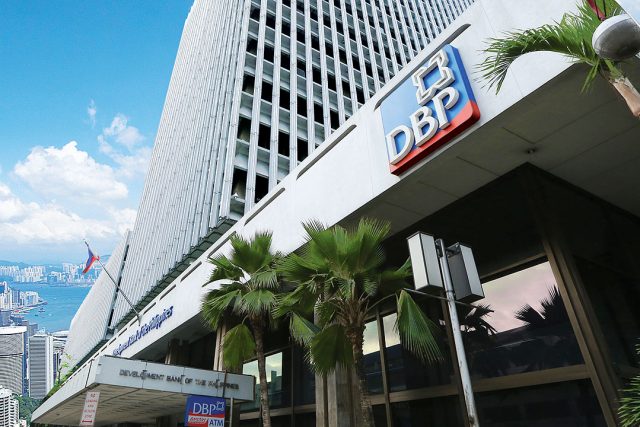
THE Development Bank of the Philippines (DBP) granted a P200-million financing for the local government of Balayan, Batangas to fund the municipality’s development projects.

The loan was extended under the bank’s Assistance for Economic and Social Development for Local Government Units (LGUs).

DBP President and Chief Executive Officer Emmanuel G. Herbosa said the financing will be utilized to furnish the Balayan New Government Center. Part of the proceeds will also be used to buy a lot for a sanitary landfill, construction of an eco-hub building, among others.

Mr. Herbosa said DBP will continue supporting Balayan’s initiatives to comply with Republic Act 9003, or the Ecological Solid Waste Management Act of 2000. Part of the loan agreement involves the establishment of an integrated solid waste management facility.

“DBP will continue to empower and capacitate our LGUs, through viable financing, in order that they can implement projects that are both crucial for community advancement and are environmentally sound,” Mr. Herbosa said.

Balayan, a first-class municipality in Batangas, is an agri-based industrial center that has sugar as its main agricultural product. It has 48 barangays and a population of 95,000 based on latest government data.

DBP has approved P38.28 billion in credit for more than 100 LGUs for the first six months of 2021.

The state lender’s net income decreased by 62% year on year to P547.83 million as its operating expenses climbed.

Its total assets stood at P1.137 trillion as of end-June, making it the country’s fifth-biggest bank. — Luz Wendy T. Noble

Fil-Am Asa Miller qualifies for 2022 Beijing Winter Games

ASA Miller, a Filipino-American skier, will be the country’s representative to the 2022 Winter Olympics set on Feb. 4-20 in Beijing, China.

Mr. Miller, 21, took to Instagram to officially announce his qualification to the quadrennial event.

Mr. Miller, born in Oregon but has roots in Sta. Cruz, Manila, took the country’s lone quota in alpine skiing where he will see action in the slalom and giant slalom events.

“Hi everyone! I’m extremely excited to announce that I will be making my second Olympic appearance in Beijing 2022! Big thank you to everyone who’s helped me on my skiing journey so far,” said Miller, who also raced in the 2018 edition in Pyeongchang, South Korea and placed 70th of 110 giant slalom participants.

Mr. Miller will also carry the responsibility as the country’s flag bearer in the opening ceremony for the second straight edition.

He got enough points from the International Ski Federation (ISF) to be quota eligible.

There is also hope Brandon Leitner, a 17-year-old skier, would also make the cut should the Philippine Olympic Committee (POC) earn another slot. — Joey Villar

Fitbit Luxe

AFTER two years of working from home and living with restrictions caused by the pandemic, the lack of physical mobility has led to a shift to indoor workouts for those who make or have time. Staying isolated also resulted in increased stress from juggling personal and professional life at home. Navigating these uncertain times has reinforced the value of health and well-being. 

In April, Fitbit launched Fitbit Luxe designed “to help you take a more holistic approach to your health and wellness,” it said in a press release.

BusinessWorld had the opportunity to try out the wellness tracker from mid-October to mid-December.

This was my first time to use a Fitbit watch. The tracker I received came with an orchid platinum silicon band. My first impression was it looks sleeker compared to regular watches and their wristbands. The Luxe also is also available in gorjana bands, which transform its style to look like jewelry.

THE FEATURES
To monitor your activity, you have to create an account on the Fitbit app and sync your device with your tracker.

The Luxe gives insights into your daily activities and well-being through its Health Metrics dashboard in the Fitbit app. The dashboard shows daily steps taken, miles covered, calories burned, exercise, resting heart rate, water intake, food calories, menstrual cycle, and sleep activity.

Personally, my favorite features of the Luxe are the sleep tracker and Relax.

The Sleep feature allows the user to set their target duration of slumber. It is advised that the user wears the tracker on the non-dominant hand while sleeping.

Once the user taps “Sleep” on the Fitbit app, the sleep timer is activated and prohibits the user to navigate the app. Upon waking up, the user needs to tap “I’m Awake” which then records the duration (hours and minutes) of sleep. The tracker is also able to monitor the user’s sleep quality by monitoring the duration and at which hour when the user was awake, restless, in light or deep sleep; as well as their rapid eye movement. 

I wore the Luxe to three morning walks that I managed to squeeze in on weekends. Those three separate morning walks lasted for an hour. The Exercise feature on the tracker allows the user to set a goal of distance covered with a maximum option until 5 miles or 8 kilometers and its maximum duration is three hours. During the user’s exercise, the tracker vibrates to alert the distance and time covered, and occasionally flashes of motivation. While wearing it during the day but not exercising, the tracker will also vibrate to alert that you have been idle for too long. 

Meanwhile, the Relax feature on the tracker has a breathing exercise. The user chooses the duration of the exercise between one and 10 minutes, which requires the user to inhale-exhale following the expansion of a blue circle on-screen. I enjoyed it as it’s similar the breathing practice when doing yoga. It also helped me calm down when needed.

I also appreciated how every weekend, a summary of your “Weekly Stats” is sent via e-mail. It shows your total steps, miles covered, average daily calorie burn, average restful sleep, average resting heart rate, number of exercises, and weight change.

The Luxe also offers a six-month Fitbit Premium trial which allows access to more wellness features, but only if you pay P3,114.

THE DESIGN
The 0.76-inch AMOLED display is convenient to read in a well-lit room. However, reading text under the sun was a challenge, also due to the watch’s small screen.

One good point is that the watch’s features are easy to navigate through the touchscreen by swiping and tapping.

As for its battery life, the product claims its power lasts for five days. For me, it ran out of juice after four days if I used it for an hour of exercising or if I forgot to turn off Bluetooth when sleeping.

As for its P8,490 base price point, with its wellness features, this is a reasonable amount to spend for an active person with an established fitness routine, but might be too much for the average person who can’t maximize its features.

The Fitbit Luxe is available at Fitbit.com and major retailers, such as Digital Walker, Lazada, and Shopee. Luxe retails for P8,490 with a six-month Fitbit Premium trial at P3,114. Premium is available for P519 per month or P4,190 per year in 18 languages and in more than 40 countries. Luxe’s accessory colors and styles range from P1,690 to P5,990. The gorjana for Fitbit Luxe Special Edition is also available for P12,990. — Michelle Anne P. Soliman

EEI completes follow-on offering, raises P6 billion

EEI CORP. raised P6 billion from its follow-on offering as listed construction firm exercised its oversubscription option following strong demand from investors.

In a statement on Wednesday, the company said its preferred shares offering saw an oversubscription of 4.85 times its P4-billion base offer. Its sole issue manager, RCBC Capital Corp., said the offer attracted both institutional and retail investors

“We’re grateful for the public’s faith and trust in our company despite the challenges that we face. This fund-raising exercise positions the company to more actively participate in projects that contribute to nation-building,” EEI Chief Financial Officer Cris Noel E. Torres said in a statement on Wednesday.

The company issued 40 million preferred shares for P100 apiece, with an oversubscription option of 20 million preferred shares.

Series A preferred shares have an initial dividend rate per annum (p.a.) of 5.7641%, while Series B shares have an initial dividend rate of 6.9394% p.a. EEI’s preferred shares will be listed on the Philippine Stock Exchange on Dec. 23 under ticker symbols “EEIPA” and “EEIPB.”

The company said proceeds from the issuance of its preferred shares will be used to finance its existing and future projects as well as fund its capital expenditures for new equipment.

It also plans to use funds raised for the repayment of existing short-term loans and for general and working capital requirements.

RCBC Capital and SB Capital Investment Corp. were assigned joint leader underwriters and bookrunners for the issuance.

Meanwhile, EEI shares at the stock exchange closed 0.31% or two centavos higher to finish at P6.42 apiece. — Keren Concepcion G. Valmonte

Dining In/Out (12/23/21)

Holiday celebrations at Diamond Hotel

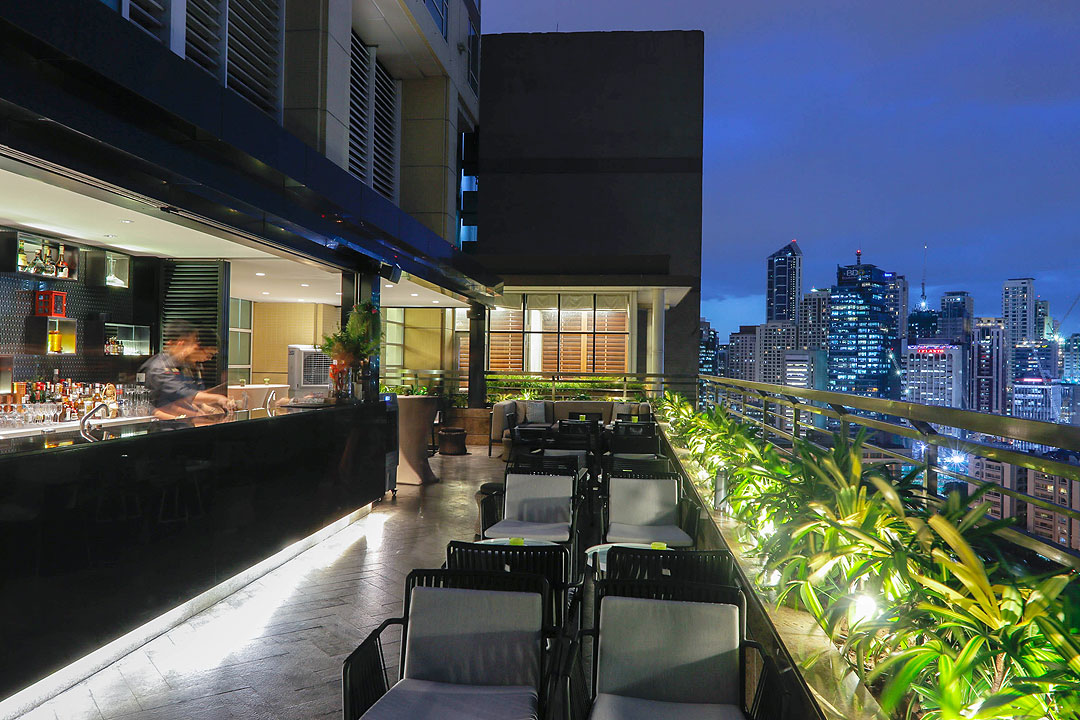
DIAMOND Hotel Philippines helps guests be merry this holiday season with dining specials. Dishes from around the world are offered at Corniche with Christmas Eve and Christmas Day lunch and dinner buffets, made more special with a complimentary glass of wine. On both days, tunes from a solo pianist will regale the guests. The Christmas Eve Lunch and Christmas Day Dinner Buffets are at P3,180 net per person, while the Christmas Eve Dinner and Christmas Day Lunch Buffets are at P3,380 net per person. Meanwhile, the Yurakuen Japanese Restaurant has an authentic spread of Japanese specialties with the Christmas Set Menu available during lunch and dinner on Dec. 24 and 25 for P1,980 net per person. The set menu includes a glass of wine. A solo violinist will perform. On Dec. 24, 25 and Jan. 1, the Lobby Lounge will offer a Christmas Set Lunch and Dinner for P1,980 net per person complemented with a glass of wine with a solo violinist serenading the diners. After all the yule feasts on Dec. 24 and 25, enjoy cocktails at Bar 27, for P1,280 net per person consumable. For queries and reservations, call Diamond Hotel at (632) 8528-3000 ext. 1121.

Tim Hortons partners with Nestlé for plant-based menu

TIM Hortons Philippines has partnered with Nestlé Professional Philippines to develop dishes featuring the newly launched Harvest Gourmet plant-based products. The restaurant’s menu now carries meat-free Classic Barbecue Sensational Burger, and meat-free Grilled Quesadilla with Barbecue Sauce. Launched in all 31 Tim Hortons Philippines stores on Dec. 8,  these offerings provide consumers more options and access to plant-based products. The meat-free Classic Barbecue Sensational Burger contains a Harvest Gourmet patty, barbecue dressing, fresh tomato, onion, lettuce, and cheese, sandwiched in a brioche bun, and is priced at P230. The Grilled Quesadilla with Barbecue Sauce uses Harvest Gourmet Schnitzel pieces, enveloped in a grilled tortilla with barbecue dressing, onion, green peppers, and cheese, priced at P190. Harvest Gourmet products are available through Nestlé Professional Philippines and e-commerce partners: Rare Food Shop, Lazada, Shopee, and Wholemart PH. For more information on Harvest Gourmet products, visit the official Nestlé Professional Philippines Facebook page.

Mang Inasal for holiday feasts

SINCE no Filipino celebration is complete without great food, Mang Inasal is offering its  ihaw-sarap favorites (and more) this Christmas in family-sized pans good for four to six people. These bulk orders allow people to spend more time with the people they love and bond over a meal without all the fuss that comes with preparing a feast. Get the classic favorite Chicken Inasal Large Paa (or Pecho). As a Filipino spread requires a noodle dish, there is Mang Inasal’s Family-sized Palabok with its flavor-packed palabok sauce, pork chunks, smoky tinapa, crunchy chicharron, boiled egg, and green onion. Get the Family-sized Liempo or Sisig for more variety. Mang Inasal has also introduced its new Pork BBQ with the addition of peanut sauce and java rice. And then there is the Chicken Empanada which comes in a box of six. Each of these Mang Inasal family-sized favorites are available via take-out and delivery through the Mang Inasal website, Grab Food, and foodpanda. For more information, visit the Mang Inasal Facebook page and order by visiting www.manginasaldelivery.com.ph or the Mang Inasal app.

Red Ribbon for Christmas

TO CELEBRATE the Holiday cheer, Red Ribbon’s Chocolate Dedication Cake can come with a personalized Christmas message. Instead of the usual Christmas card, why not write “Season’s Greetings’’ right on Red Ribbon’s Chocolate Dedication Cake, an affordable option at P535 for the 8×12 variant. Other celebratory favorites include Red Ribbon’s Black Forest (P600), Tiramisu Meltdown (P590), and Mango Sunrise (P720), among many others. Send loved ones a Triple Chocolate Full Roll (P300), a light dessert choice after a hefty holiday dinner or gift a five-piece pack of Assorted Ensaimada (P155). Red Ribbon’s sweet, shareable treats are available in all stores nationwide or available via delivery through the new Red Ribbon delivery website, Red Ribbon app, RIA FB Messenger, Hotline #8-7777, and the GrabFood and foodpanda apps. There are also ReGALO eGift cards.

El Real suggests holiday dishes

NOCHE Buena is easily everyone’s favorite tradition, with family joining and enjoying their favorite festive dishes. Pasta purveyor El Real is helping people plan their Noche Buena menu with the recipes it has uploaded on the Real Pastabilities website. Discover recipes like Pork Belly Pasta, Pasta Valenciana, Pizza Pasta, Sushi Bake, and more on the site. For more information, visit www.realpastabilities.com.

McDonald’s opens biggest store   

QUICK service restaurant giant McDonald’s Philippines has opened its newest and biggest branch in Cavite, McDonald’s Maple Grove in General Trias, in its bid to provide more dining options for Caviteños to enjoy their favorites safely. Owned and operated by real estate businessman Kyle Lao, McDonald’s Maple Grove is now open and ready to serve customers 24/7 via Dine-in, Take-out, Delivery and Dual Lane Drive-Thru. The two Ride-Thru lanes mean faster queuing for customers and more time for them to enjoy their food. The branch also includes a Bike and Dine zone for cyclists where they can easily mount their bikes while they enjoy their food. The area is also equipped with a Bike Repair Station. Under the store’s M Safe program, stringent health and safety protocols are set in place. Customers who will visit the store will also be subjected to contact-tracing and temperature checks, and are required to wear a face mask. Social distancing will be followed, from queueing for orders and while dining in. Cashless payment options are also available in stores to minimize physical contact. The new branch in General Trias, Cavite is easily accessible via the Manila–Cavite Expressway (CAVITEX, also known as Coastal Road).

Noche Buena at RWM 

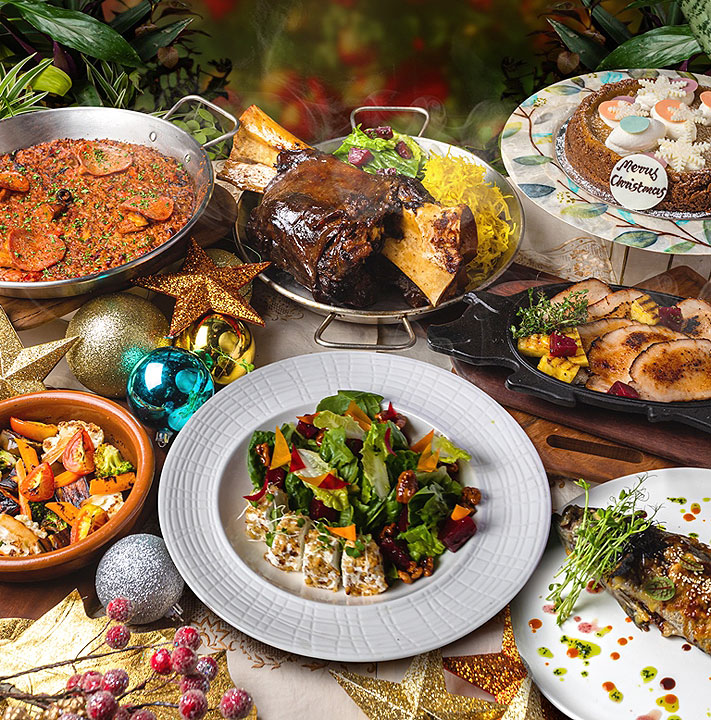
Resorts World Manila (RWM) is setting its Christmas tables with sumptuous festive feasts for Noche Buena. The integrated resort’s premier signature restaurant, Casa Buenas, has a menu of braised beef shank with tomato salsa and vegetables, roasted whole fish with garlic butter, house smoked ham with balsamic glaze, paella con carnes mixtas, baked goat cheese and mixed green salad with beets and walnut, and pumpkin pie for P8,500 net. Casa Buenas is also roasting a Cochinillo de Buenas to spruce up holiday gatherings for P9,500 net ala carte or make it a set with paella mixtas, sticky rice suman with sweet chorizo, and mixed vegetables and adlai with garlic butter for P10,000 net. These special offers are available for a limited period until Dec. 31 at Casa Buenas, Ground Floor Newport Grand Wing, available for dine-in and delivery. For reservations, allow at least two days lead time. For delivery, contact: +63 (2) 7908-8885 or 0917-878-8856. RWM partner hotels are also setting their dining rooms for Noche Buena celebrations. Marriott Hotel Manila’s Marriott Cafe is serving up a special Noche Buena Buffet complete with roast suckling pig, available from Christmas eve, 11:30 p.m. to 1 a.m., for P2,462 net per person. There’s also a Christmas day buffet the next day for lunch and dinner highlighted by lechon, pan-seared goose liver and waffles for P3,200 net per person. Over at the Cru Steakhouse, a Christmas Day Shortened Menu of Australian Mulwarra Wagyu, Grilled Australian lamb rack, and seared goose liver is available on Dec. 24-25. Hilton Manila is celebrating with a true “Surf & Turf” feast at Kusina Sea Kitchens. Fill up on a selection of grilled lobsters, prime rib, and Christmas classics like turkey, ham, lechon, and favorite Filipino desserts for P3,200 net per person on Christmas Eve and P2,900 net per person on Christmas day. Gather with the family at Sheraton Manila for Christmas and try S Kitchen’s Christmas Eve dinner buffet that boasts of a roasted ribeye, honey glazed leg of ham, and fresh seafood. The Christmas Day lunch and dinner buffet, on the other hand, is highlighted by lechon. Enjoy the special Christmas buffet menus for P3,888 net per person. For an authentic Japanese fine dining experience, Hotel Okura Manila serves Yamazato Christmas meals. Try the Christmas Kaiseki Dinner for P8,800++ per person until Dec. 25. Festive Teppanyaki Kaiseki dinners Suisen (P6,800++ per person) and Botan (P8,500++ per person) are also available until Jan. 7, 2022. For more information on Noche Buena offerings and Grand Fiesta Manila visit www.rwmanila.com and follow @rwmanila on Facebook and Twitter, and @resortsworldmanila Instagram.  

Festive celebrations by Discovery Primea  

From at-home kits offering multicourse spreads, to al fresco dining under the stars, Discovery Primea has delicious options for guests to celebrate the holidays and the New Year. Make the holiday season even more magical with festive dining experiences at Flame Al Fresco. Celebrate Christmas Eve or wait for the New Year with a carefully curated, five-course menu. For Christmas Eve, Dec. 24, there is a tasting menu highlighting modern Asian cuisine including tuna carpaccio, miso brulée, Josper-grilled prawns, soy-braised US beef short ribs, and frosted chocolate sphere for dessert. Meanwhile, for New Year’s Eve, Dec. 31, feast on a sophisticated menu featuring Flame Al Fresco’s bestselling dishes: lobster tartare, seared foie gras, pan-seared Chilean sea bass, Josper-grilled Wagyu beef rib-eye, and a decadent chocolate tart. Available at P2,888++ per person. Interested guests may choose between the first seating at 6 to 8 p.m. or second seating at 9 to 11 p.m. Advance reservations are highly recommended. For table reservations, call 7955-8888 or e-mail primea.restaurants@discovery.com.ph. Make intimate celebrations at home delicious and convenient with Primea At Home: Holiday Edition Kits. Each kit features a multicourse feast good for four to five persons at P5,000 nett. For Noche Buena, savor a Spanish-inspired, multicourse feast, with a medley of appetizers, as well as highlights such as Paella de Mar y Montaña with chicken, chorizo, shrimp, and more, or cochinillo asado with braised peaches. Welcome the New Year with the Media Noche Kit with highlights such as roasted pork loin with garlic, thyme and apple sauce, and grilled black bass with anchovy tapenade, harissa, pine nuts, and oranges. Dessert comes in the form of a tiramisu cheesecake with coffee sponge and mascarpone. Holiday platters are also available, with bestsellers such as Wagyu beef paella, sugar-crusted ham, and Lengua Sevillana, to name a few. To view the complete menu and for more information on the hotel’s holiday offers, visit https://bit.ly/PrimeaHolidayBrochure2021 or follow Discovery Primea on Facebook and Instagram. 

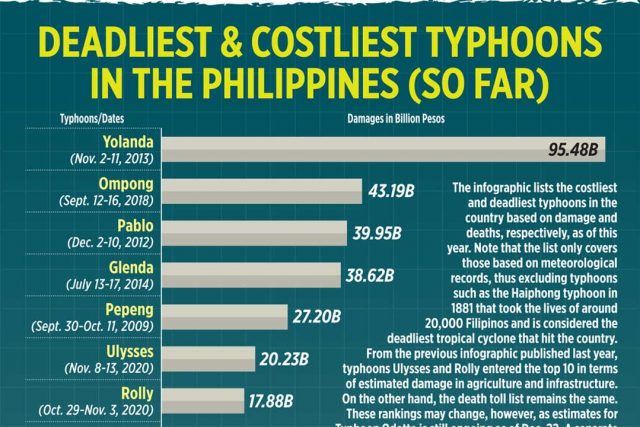
Deadliest & costliest typhoons in the Philippines (so far)

PHILIPPINE President Rodrigo R. Duterte placed six regions devastated by Typhoon Rai under a state of calamity, in order to expedite aid to the affected areas. Read the full story.

Deadliest & costliest typhoons in the Philippines (so far)

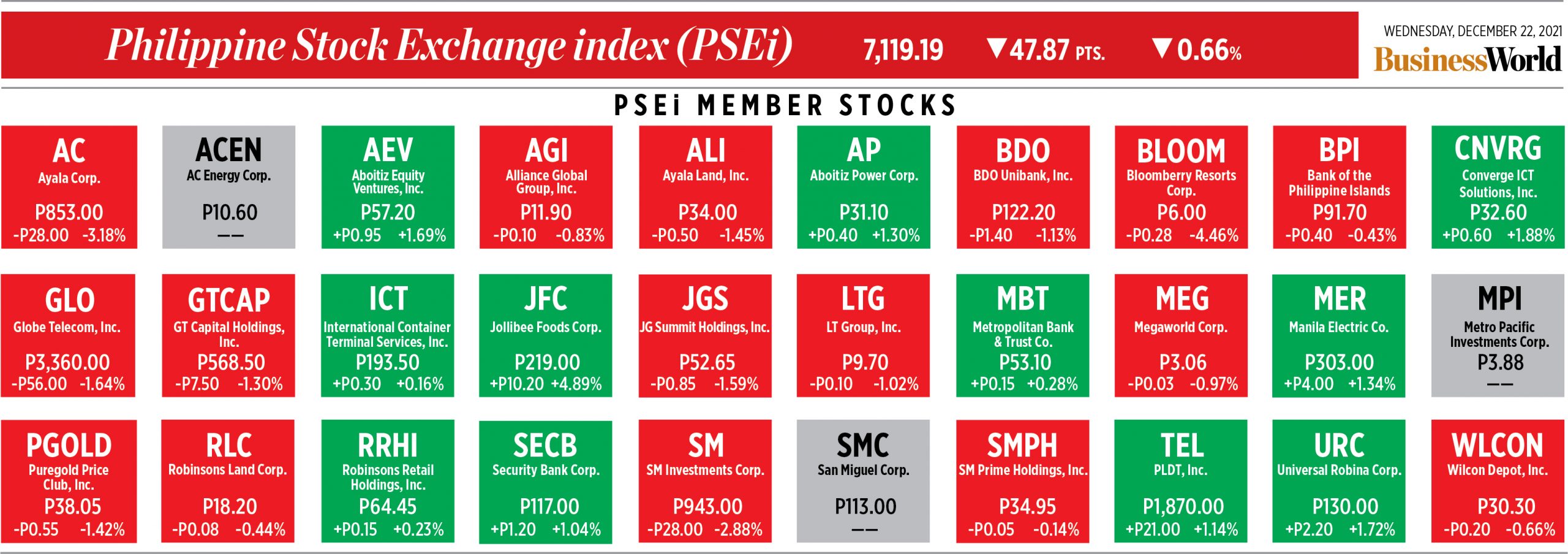
How PSEi member stocks performed — December 22, 2021

Here’s a quick glance at how PSEi stocks fared on Wednesday, December 22, 2021.


Duterte expected to sign 2022 budget after Dec. 25

BW FILE PHOTO

By Kyle Aristophere T. Atienza, Reporter

THE BUDGET department said on Wednesday that it expects President Rodrigo R. Duterte to sign the proposed P5.024-trillion budget for 2022 after Christmas.

“We expect the 2022 budget measure will be signed before the year ends, so it’s between, perhaps, after Christmas until the 29th,” Budget Undersecretary Tina Rose Marie L. Canda said in a televised Palace briefing. 

Mr. Duterte late Tuesday said he plans to raise P10 billion for the recovery effort in the wake of Typhoon Odette (international name: Rai).

About P6 billion is expected to come from the 2022 national budget, Ms. Canda said. “It will be available in a couple of days once the GAA or the General Appropriations Act is signed for 2022.”

At the briefing, Cabinet Secretary Karlo Alexei B. Nograles said the Palace has yet to receive a copy of the spending plan, which was ratified by the House of Representatives and the Senate last week.

“It will go through a vetting process; only then can we say when it will be signed,” he said.

Senate President Vicente C. Sotto III and Senate Finance Committee Chairman Juan Edgardo M. Angara told BusinessWorld that the President is set to sign the spending plan on Dec. 28.

Mr. Sotto said in a text message that he will sign the budget bill on Thursday. “I was informed he is scheduled to sign on the 28th.”

Mr. Angara, meanwhile, said the devastation from Typhoon Odette, the strongest storm to hit the country this year, is one of the reasons for the budget bill’s early approval.

“I’m sure that’s one reason,” he said in a Viber message. “But even in normal times, governments want to have a budget in the new year in order to function properly.”

Typhoon Odette is estimated to have taken about 150 lives, according to government reports.

The storm tracked through northeast Mindanao, the Visayas, and Palawan last week, adding to the burden of dealing with the coronavirus pandemic.

 On Dec. 15, health authorities confirmed the detection of the country’s first cases of the highly mutated Omicron variant.

PHL recovery could lag Asia’s because of election spending ban

ELECTION-RELATED government spending restrictions could prove to be a drag on economic expansion next year, bucking the trend in emerging Asia, Pantheon Macroeconomics said in a report.

Pantheon Senior Asia Economist Miguel Chanco said the Philippines is the only economy in which it expects growth to slow down next year, which would force the central bank to remain accommodative.

“History shows indisputably that government spending hits a brick wall when Presidential elections take place, shaving 40% off quarterly trend growth, on average, in the same quarter of the last three elections,” he said.

“Fiscal policy is likely to impose a persistent drag beyond the ballot, given that the country is the only one left in the region which has yet to engineer a nominal consolidation of its COVID-era budget blowout.”

The Commission on Elections said the public works ban for the May national elections will run from March 25 to May 8, 2022.

Aimed at preventing politicians from using public resources for their election campaigns, the ban covers disbursement and spending as well as construction activity.

Pantheon estimates gross domestic product (GDP) growth of 5.5% this year, and 4.5% next year.

The 2021 forecast is at the high end of the government’s projection of 5-5.5%, but Pantheon’s 2022 projection is lower than the government’s 7-9%.

In contrast, Pantheon expects more rapid GDP growth in other emerging Asia economies next year. It expects the Indian economy to grow 7.2% this year and 9.2% in 2022, while Indonesian GDP is seen expanding 3.8% this year and 5% next year.

Mr. Chanco said that investment in the Philippines will likely “remain on the sidelines” until after the May elections.

“Elections in the Philippines are rarely fought on economic policy. But they still carry significant event risk, particularly if Ferdinand R. Marcos, Jr., the current frontrunner and the son of an ex-dictator, wins,” he said.

Consumption will likely be tepid, he added, in response to household savings that were drawn down during the economic downturn.

Rizal Commercial Banking Corp. Chief Economist Michael L. Ricafort said 2022 growth could be slowed down by mobility restrictions imposed in response to any Omicron outbreak, as well as elevated inflation caused by global supply chain disruptions.

He said election-related spending could also be cut down due to the impact of the pandemic on business activities, which would reduce campaign contributions.

“The greater shift to social media amid social distancing and the observance of minimum health protocols/standards (could also) reduce the election year’s contribution to GDP, compared to previous Presidential elections,” he said in a Viber message.

“Increased government spending, especially on infrastructure, could still be a growth driver/major pillar for economic recovery program for 2022, as it may be accelerated before the election ban.” — Jenina P. Ibañez

Fintech industry seen requiring gov’t support in funding, talent development

REUTERS

THE GOVERNMENT needs to support the financial technology (fintech) industry in meeting its needs for funding and talent development if the segment is to grow, the Philippine Institute for Development Studies (PIDS) said.

In a discussion paper, Analysis of the FinTech Landscape in the Philippines, released on Tuesday, PIDS said few educational institutions offer degree programs directly related to fintech.

It noted weak growth in the availability of venture capital between 2010 and 2017, with the Philippines continuing to lag other major Southeast Asian economies.

PIDS also flagged the absence of data on the sector, which means its progress cannot be assessed with accuracy.

“While the sector benefits well from a coordinated and forward-looking group of regulators, there needs to be some review of policies and laws,” it said.

“In particular, there needs to be a policy related to fintech that would define and monitor the progress of the sector.”

Fintech business activities increased during the pandemic after lockdown restrictions limited to face-to-face transactions.

“The increasing trend in payments and adoption of digital technology was driven by the restrictions imposed to curb the spread of the virus. Companies have also adopted digital payments and fintech in order to reduce cost and improve efficiency,” the report said.

But the fintech ecosystem has not yet caught up with this growth.

Written by Francis Mark A. Quimba, Mark Anthony A. Barral, and Jean Clarisse T. Carlos, the report recommended that the government help update university curricula to prepare graduates for fintech careers.

“Skills should not be the only focus but also the availability of venture capital to support the growth of startups,” they said. — Jenina P. Ibañez

Well-milled rice consumption among rich over six times that of poorest tier’s — PSA

PHILSTAR

THE AVERAGE consumption of well-milled rice in the top income tier in 2018 was more than six times the total of the poorest consumers, the Philippine Statistics Authority (PSA) said in a report.

Per capita consumption of well-milled rice for the year was estimated 10.46 kilograms (kg) for the first decile, or the lowest-income group and 65.53 kg for the 10th decile, or the highest-income group, according to the Family Income and Expenditure Survey by the PSA.

The national average for consuming well-milled rice was 32.60 kg, with residents of Calabarzon (Cavite, Laguna, Batangas, Rizal, Quezon) posting the highest tally of 53.80 kg per capita. The National Capital Region (NCR) came in at 46.25 kg, and the Cordillera Administrative Region 41.05 kg. Bicol and Eastern Visayas were the lowest on the scale with 8.67 kg and 11.77 kg, respectively.

Per capita consumption of corn was higher in the lower-income deciles, with the first and third deciles consuming 24.34 kg and 12.84 kg respectively. On the other end of the scale, the ninth decile averaged 2.72 kg.

Per capita consumption of corn was 9.14 kg, with Zamboanga Peninsula leading at 48.16 kg, followed by Northern Mindanao at 36.64 kg, and Central Visayas 35.18 kg. Ilocos Region was bottom of the table with 0.20 kg per person.

For regular-milled rice, average per capita consumption in 2018 was 66.52 kg, with Eastern Visayas coming in at 104.03 kg per person. Consumption of regular-milled rice was highest in the third income decile at 74.57 kg.

Consumption of subsidized rice sold via the National Food Authority (NFA) averaged 4.13 kg per capita for the year, with Bicol Region the most dependent on the NFA at 7.65 kg per person. The first income decile posted a per-capita average of 7.21 kg.

The average per capita consumption of pork was 6.35 kg. Residents of the NCR averaged 8.83 kg, followed by Calabarzon with 8.62 kg and Central Luzon 7.66 kg.

The national average for chicken was 6.89 kg, with the NCR posting a per capita tally of 12.94 kg. Mimaropa (Mindoro, Marinduque, Romblon, Palawan) came in at 9.85 kg, and Calabarzon 9.18 kg.

On average, per capita consumption of galunggong (round scad) was 3.90 kg, with Zamboanga Peninsula and the NCR the top consumers at 6.22 kg and 4.74 kg, respectively. — Luisa Maria Jacinta C. Jocson

Tax compliance for year-end expenses

With Christmas just around the corner, company Christmas parties, family reunions, and other gatherings fill our calendars left and right. Even though this year many of these celebrations will be virtual due to the pandemic, we always find a way to make them memorable. The upcoming holiday season also brings the highly anticipated year-end break that every employee looks forward to for much-needed R&R before welcoming the new year.

For accountants, however, the end of the year signals the upcoming busy season, including keeping tabs on the things to be done before the year ends. For instance, they must ensure that expenses up to the last day of the year are well-documented and recognized in the companies’ books in preparation for the finalization of the audited financial statements and the income tax return in the next year. These procedures may involve calling the company’s suppliers to inquire about the amount that would be payable on its year-end purchases even before they receive the actual billing, which normally happens only in the following year.

Why is it so important for businesses to account for expenses at year-end? Is it not more efficient to claim the expenses in the following year when these are paid? If you claim expenses only when they are paid, would such treatment give rise to any potential tax issues in future tax audits by the BIR?

WHAT DOES THE TAX CODE SAY?
Under Section 34 of the National Internal Revenue Code, otherwise known as the Tax Code, to be considered deductible, a business expense must be ordinary and necessary, and must have been paid or incurred during the taxable year in carrying on the trade or business of the taxpayer; and must be substantiated with sufficient evidence. Additionally, taxes required to be withheld from expenses should have been remitted to the BIR in accordance with the current withholding tax rules.

As mentioned, one of the requirements for deductibility of an expense is its having been paid or incurred during a specific taxable year.

Do bear in mind that during a tax investigation, it is standard procedure for the BIR to request supporting documents for expenses claimed for the year. If such documents indicate that the taxpayer claimed a deduction for goods and services purchased in the prior year, the BIR may potentially disallow such prior period expenses claimed in the current audited year.

WITHHOLDING TAX COMPLIANCE
Another area with potential tax implications is year-end expenses, the issue being whether withholding taxes on accrued expenses were withheld and remitted during the period. This situation often happens when the taxpayer’s withholding tax policy is based on actual payment rather than when it is recorded in its books as an accrued expense.

Under Revenue Regulations No. 2-98, otherwise known as the Withholding Tax Regulations, the obligation to deduct and withhold the tax arises at the time an income is paid or becomes payable, or when it is accrued or recorded as an expense or asset in the payor’s books, whichever comes first.

Notably, the proper timing for withholding taxes on expenses arises not only upon actual payment of such expense. The inclusion of the line, “whichever comes first,” triggers the taxpayer’s obligation to remit withholding taxes to the BIR even upon recording such transactions as an expense or asset (e.g., prepaid expenses) in the books.

While withholding taxes are remitted, albeit belatedly by taxpayers who only withhold upon payment, the imposition of administrative penalties (i.e., 25% surcharge, 12% interest, and compromise penalties) for failure to withhold taxes on time is unavoidable if the late withholding is raised as an issue during a tax audit.

WHAT IF THESE WERE MERE ESTIMATES?
One contention that taxpayers may have against the requirement of withholding upon booking the expense is that, at year-end, they merely estimated the amount for recording purposes. The amounts recorded are still subject to change once billed by the supplier or paid the following year.

This contention may be raised during a tax audit, provided the books reflect the expenses as such. For the book-entry of expenses, taxpayers have the option of recording them as accruals or provisions. But what’s the difference?

Under the accrual method of accounting, the determinative question is, when do the facts present themselves in such a manner that the taxpayer must recognize income or expense? As held in a Supreme Court case (G.R. No. 172231), the accrual of income and expense is permitted when the “all-events test” has been met. This test requires (1) fixing of a right to income or liability to pay; and (2) the availability of reasonably accurate determination of such income or liability.

The all-events test requires that the right to income or liability be fixed and determined with reasonable accuracy. However, the test does not demand that the amount be known absolutely, only that it must be determined with “reasonable accuracy,” which implies something less than an exact or completely accurate amount. Thus, estimates not supported by bills, contracts, or facts to establish the amount of liability with reasonable accuracy may not be deductible yet. They can instead be considered provisions.

A provision is an existing liability of uncertain timing or amount. It is not yet an incurred expense, hence, not deductible for income tax purposes, and the company has no obligation yet to withhold taxes in the year the provision was recognized.

Thus, recording a provision properly may help avoid withholding tax and deduction issues during tax audits. Be that as it may, given the thin line between an accrual and a provision, companies still often record accrued expenses in their books instead of provision accounts. It may be also due to the limitation of adding new accounts into the system or other factors.

I hope the above reminders and explanations will help suppliers empathize and support accountants/finance personnel who request for the amount of their payables at year-end. This will probably help grant their accountant’s wish to spend the holidays with a clear and relaxed mind, optimistically ending 2021 on a high note.

The views or opinions expressed in this article are solely those of the author and do not necessarily represent those of Isla Lipana & Co. The content is for general information purposes only, and should not be used as a substitute for specific advice.


Steven Lloyd Co is an assistant manager at the Tax Services Department of Isla Lipana & Co., the Philippine member firm of the PwC network.

steven.lloyd.co@pwc.com