
Headline inflation rates in the Philippines
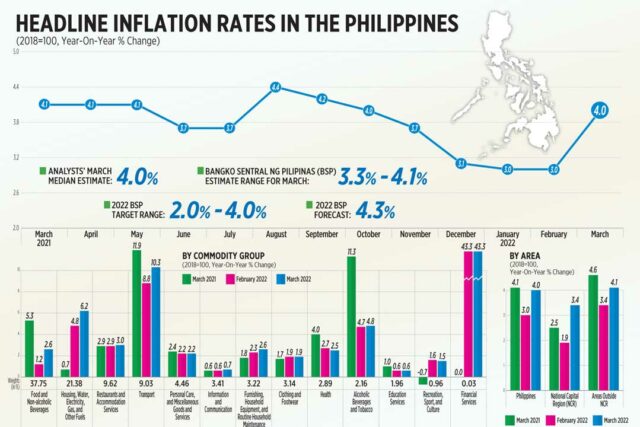
PHILIPPINE INFLATION climbed to a six-month high in March as food, utilities, and transport costs rose due to the spike in global oil prices after Russia’s invasion of Ukraine. Read the full story.

PHILIPPINE INFLATION climbed to a six-month high in March as food, utilities, and transport costs rose due to the spike in global oil prices after Russia’s invasion of Ukraine. Read the full story.
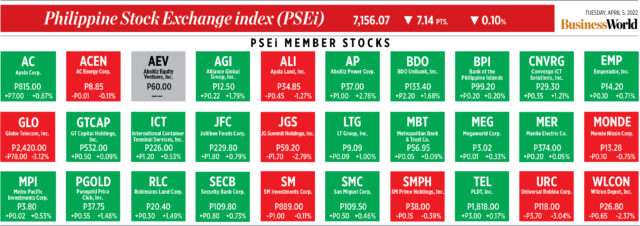
Here’s a quick glance at how PSEi stocks fared on Tuesday, April 5, 2022.


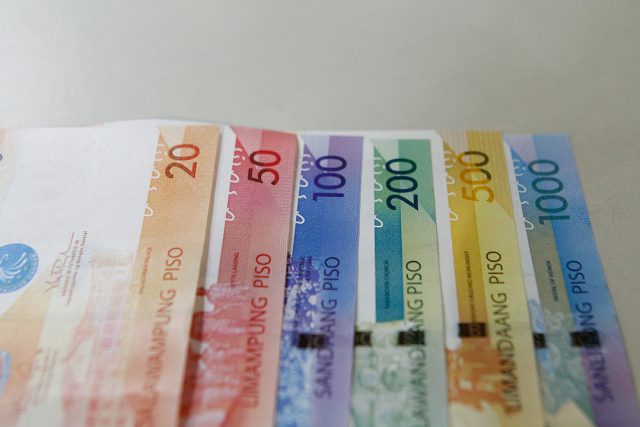
THE PESO strengthened versus the dollar on Tuesday as the central bank said it is ready to act preemptively to anchor inflation expectations.
The local unit closed at P51.19 per dollar on Tuesday, gaining 19 centavos from its P51.38 finish on Monday, based on Bankers Association of the Philippines data.
The peso opened Tuesday’s session at P51.32 per dollar. Its weakest showing was at P51.355, while its intraday best was at P51.14 against the greenback.
Dollars exchanged rose to $1.303 billion on Tuesday from $1.208 billion on Monday.
A trader said the peso appreciated after the central bank chief said the Bangko Sentral ng Pilipinas (BSP) is ready to act to combat rising inflation expectations.
“We are prepared to take preemptive action as needed if inflation expectations become at risk or disanchored,” Mr. Diokno said at the Philippine Economic Briefing held in Pasay City on Tuesday.
For now, the BSP chief said their stance remains appropriate and they are eyeing a rate adjustment in the second half.
Mr. Diokno’s remarks came following the release of inflation data, which showed it quickened to 4% from 3% in February.
He said they will remain vigilant against possible second-round effects from supply-side pressures or shifts in inflation expectations.
The central bank kept rates steady for the 11th straight meeting last month, even as it raised its inflation forecast for the year to 4.3% which is already above the 2-4% target.
Meanwhile, Rizal Commercial Banking Corp. Chief Economist Michael L. Ricafort in a Viber message said the peso strengthened amid an increase in infections in China that has caused lockdowns, as this could help temper fuel demand, with Beijing being the world’s biggest oil importer.
For Wednesday, both Mr. Ricafort and the trader gave a forecast range of P51.10 to P51.30 versus the dollar. — LWTN

SHARES went down on Tuesday as inflation quickened last month due to the spike in commodity prices due to the crisis in Ukraine.
The benchmark Philippine Stock Exchange index (PSEi) went down by 7.14 points or 0.10% to close at 7,156.07 on Tuesday, while the broader all shares lost 0.11 point to close at 3,797.43.
“The local bourse pulled back this Tuesday as the surge in our inflation rate from February’s 3% to March’s 4% dampened investors sentiment. This shows that many investors are still on the sidelines due to the lingering uncertainties, from the Russia-Ukraine War, to the US’ inverting yield curve, to the nearing national elections,” Philstocks Financial, Inc. Senior Research Analyst Japhet Louis O. Tantiangco said in a Viber message.
“Philippine stocks ended lower on Tuesday, trading in the red throughout the session amid fears of higher inflation in the months ahead after March inflation hit 4%. Inflationary pressures caused by the Russian invasion of Ukraine are likely to drag on the county’s growth outlook,” Papa Securities Corp. Equities Strategist Manny P. Cruz said in a Viber message.
Inflation rose to a six-month high in March as food, utilities, and transport costs increased amid a spike in global oil prices due to Russia’s invasion of Ukraine.
Preliminary data released by the Philippine Statistics Authority on Tuesday showed headline inflation hit 4% last month, faster than the 3% in February’s 3% but slightly slower than the 4.1% print in March last year.
This matched the 4% print in October last year and is the fastest since the 4.2% inflation in September 2021. It also matched the 4% median in a BusinessWorld poll conducted last week and was near the upper end of the 3.3-4.1% forecast of Bangko Sentral ng Pilipinas (BSP) for the month.
For the first quarter, inflation settled at 3.4%, within the BSP’s 2-4% target for the year.
The majority of sectoral indices ended in the red except for financials, which climbed by 14.39 points or 0.85% to 1,699.15, and mining and oil, which rose by 12.93 points or 0.10% to 12,570.41.
Meanwhile, property declined by 19.70 points or 0.59% to 3,313.88; industrials fell by 23.92 points or 0.24% to 9,800.41; holding firms lost 11.17 points or 0.16% to 6,798.98; and services dropped 1.59 points or 0.08% to end at 1,939.81.
The MidCap index improved by 0.99 point or 0.08% to close at 1,205.24 while the Dividend Yield advanced by 0.47 point or 0.03% to close at 1,708.30.
Value turnover increased to P4.17 billion with 1.12 billion shares changing hands from the P3.87 billion with 1.33 billion issues seen on Monday.
Advancers narrowly beat decliners, 88 versus 82, while 57 names closed unchanged.
Foreigners turned sellers with P181.09 million in net outflows versus the P202.58 million in net purchases seen the previous trading day.
For the remainder of the week, Timson Securities, Inc. Trader Darren Blaine T. Pangan placed the PSEi’s support at 6,800 and resistance at 7,510. — Luisa Maria Jacinta C. Jocson
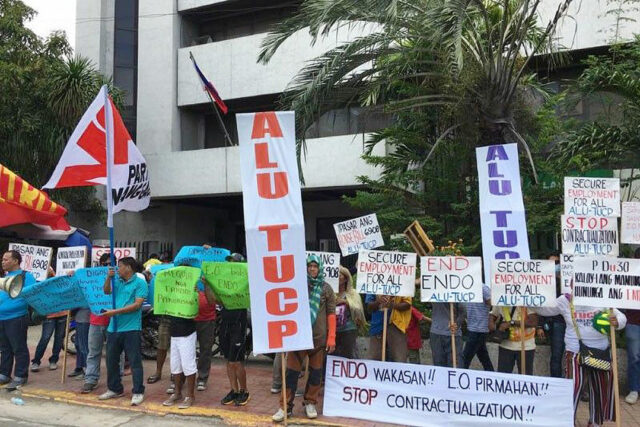
THE Philippines’ largest labor federation refiled its petition for a P470 increase in the daily wage for the National Capital Region (NCR), after the wage board dismissed an earlier filing, citing jurisdiction issues.
In its new wage hike petition, the Trade Union Congress of the Philippines (TUCP) removed the term “across-the-board” from its new filing.
The NCR Regional Tripartite Wages and Productivity Board had ruled that it has no authority to impose an across-the-board wage increase.
“In our new petition filed on April 4, we reiterated the same reasons we used in our previous petition. We only removed the term ‘across-the-board,’” TUCP spokesman Alan Tanjusay said by telephone.
The wage board said in its resolution that “an across-the-board wage increase is not within the jurisdiction of the Regional Tripartite Wages and Productivity Board nor authorized” by the wage rationalization law.
The resolution also stated that “the across-the-board wage petition filed [by the TUCP] cannot be given due course.”
The TUCP said in a statement that if the wage board dismisses its petition again, it will keep refiling “as all the computations and arguments in the petition are about an increase in minimum wage.”
“It is grossly unfair for the wage board just to dismiss our petition and choose to ignore the arguments and computations… While it is true that the RTWPB cannot grant an across-the-board wage increase, it has jurisdiction insofar as providing an increase in minimum wage,” TUCP President Raymond Democrito Mendoza said.
The TUCP cited the rising costs of fuel products and other basic commodities as the reason for its previous wage hike petition.
The TUCP has also filed wage hike petitions for the Central Visayas and the Davao region.
Separately, the Department of Labor and Employment’s NCR Regional Director Sarah Buena Mirasol said the regional tripartite wages and productivity board has resolved to consolidate three wage hike petitions seeking between P213 and P250 minimum wage increases for Metro Manila.
Ms. Mirasol, who chairs the wage board, said the three petitions have been consolidated “to expedite the process of wage hike determination.”
“The board received three wage hike petitions and upon review, we have issued a resolution to consolidate all petitions and proceed to public hearings,” she said in a statement.
Ms. Mirasol said the board will seek balance the interests of workers and employers in light of the fallout from the Ukraine crisis, which includes higher prices of oil and other prime commodities. — Kyle Aristophere T. Atienza

THE Federation of Free Farmers (FFF) said the conversion of the Philippine Crop Insurance Corp. (PCIC) into a reinsurance company will leave a gap in the market that will leave crops uninsured.
“If PCIC shifts to reinsurance, who will now insure farmers’ crops? Unlike PCIC, private entities will venture into this business only if they can pay all the claims and still make money. Most probably, premiums will be so high that even farmers will decide not to have their crops insured. Or, the companies will insure only… cover areas that are not susceptible to damage,” FFF National Manager Raul Q. Montemayor said in a statement.
In September, the Department of Finance (DoF) was handed control over the PCIC, formerly led by the Department of Agriculture.
The DoF recently proposed the conversion to improve the PCIC’s financial health and expand available coverage.
The FFF said crop insurance is an “inherently risky business” as the Philippines is frequently hit by typhoons and other natural calamities.
“Climate change has also increased the frequency and severity of pest and disease outbreaks. Further, underwriting of policies and validation of claims are costly because of the large number and the remote location of farmers, and inherent moral hazards that lead to fictitious or overstated claims,” it said.
The FFF said the typical crop insurance premium for rice and corn was between 10%-12% of the amount insured, with total costs for the insured of up to 20% if administrative costs are considered.
“The government could end up spending more for subsidies if it wants to encourage the private sector to venture into crop insurance while making the policies still affordable to farmers. If not, the government will have to subsidize the operations of PCIC as a reinsurer that can absorb most of the risks faced by private insurers… the PCIC itself has opted not to have its policies reinsured because reinsurance companies were playing safe and setting very high thresholds for damage rates before the PCIC could file claims,” the FFF said.
“The risks and costs of crop insurance will remain essentially the same, and it will be just a question of who foots the bill — the farmers, or the private insurers, or the PCIC as the reinsurer, or the government as the subsidizer. If the government backs out (by reducing) its subsidies, then the whole system will collapse because either PCIC will end up absorbing most of the losses, or the private companies will just refuse to insure farmers’ crops,” Mr. Montemayor added. — Luisa Maria Jacinta C. Jocson
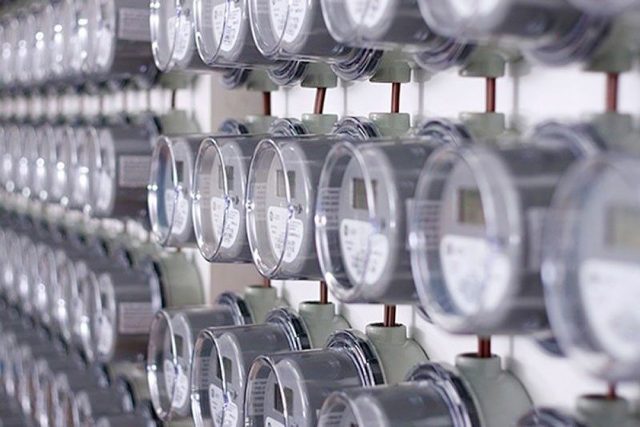
THE Department of Energy (DoE) said the broader adoption of energy-efficient practices needs to come before any major shift to renewable energy.
“We’ve seen countries, provided that the natural resources are there, (that) can go 100% renewable,” Director of the Energy Utilization Management Bureau Patrick T. Aquino said at the Renewable Energy and Energy Efficiency Summit, organized by Meralco Power Academy.
“For us to be at a 100% renewable energy, we also have to be more energy-efficient in how we use our energy. Renewable energy addresses the supply considerations but if we are inefficient in how we use our energy resources, then we’ll never reach 100% renewable energy,” he said.
His keynote address was meant as an update on developments in the implementation of Republic Act No. 11285, or the Energy Efficiency and Conservation (EEC) Act.
On March 2, Energy Secretary Alfonso G. Cusi said energy security and independence for the Philippines will ultimately depend on a successful campaign to promote energy efficiency and conservation.
Mr. Aquino noted that households have yet to fully embrace the use of light-emitting diode (LED)-based lighting because of the cost, or inverter cooling systems that have the potential to “cut down on costs and consumption by as much as 30% to 40%.”
Asked to comment on Mr. Aquino’s remarks, Philippine Energy Efficiency Alliance President Alexander D. Ablaza said energy efficiency should be a major pillar for end-users’ clean energy transition.
“Implementing energy efficiency delivers the same, if not more cost-effective and more immediate, decarbonization and energy security impacts as the economy moves toward a net-zero energy pathway,” he said in a Viber message.
Separately, Senator Sherwin T. Gatchalian called for stricter adherence to energy efficiency and conservation measures by government agencies on account of the projected tight power supply seen in the Luzon and Visayas grids during the dry season.
Mr. Gatchalian chairs the Senate’s energy committee.
In a resolution issued this year by the Inter-Agency Energy Efficiency and Conservation Committee (IAEECC), all government entities, including local government units, have been directed to comply with the Government Energy Management Program (GEMP) guidelines.
GEMP aims to reduce monthly GE electricity and fuel consumption by at least 10%, starting with efficiencies in air-conditioning thermostat settings and carpooling.
“We want to institutionalize energy efficiency and conservation as a national way of life to secure sufficiency and stability of energy supply in the country and to help cushion the impact of high prices of imported fuels. It will also be beneficial to the environment and our finances,” Mr. Gatchalian said.
Mr. Gatchalian added that the government “should take the lead” in the pursuit of greater energy conservation to encourage the public to follow suit.
A resolution by the IAEECC issued in 2020 required the designation of an energy efficiency and conservation officer (EEC officer) in 7,441 government offices. To date, only 24% have complied. — Ram Christian S. Agustin
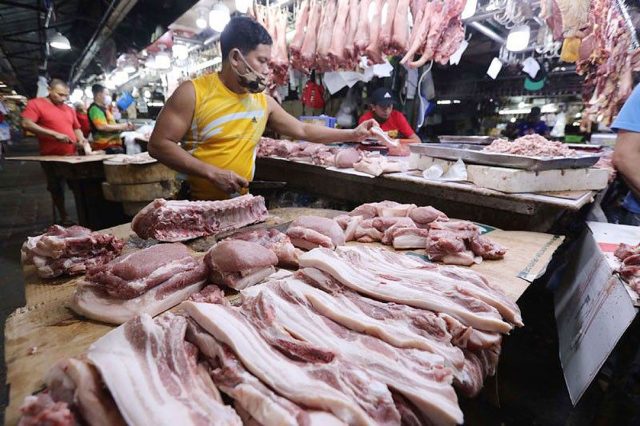
AGRICULTURE Secretary William D. Dar said that there were no problems with the availability of food during the pandemic, but acknowledged that affordability was an issue for the poor and other Filipinos whose livelihoods were disrupted by the public health crisis.
“There was notably no food shortage, despite the pandemic. There were no food lines, like what is happening now in Sri Lanka,” Mr. Dar said during the Philippine Economic Briefing on Tuesday.
“We then realized that hunger was caused more by poverty and inability to buy food than food supply deficiency,” he added.
Sri Lanka is facing currently protests over food and fuel shortages, the government of Sri Lanka has responded with a curfew and restrictions on social media.
Mr. Dar said that the succeeding administration must pursue its own projects with an eye towards improving productivity and achieving sustainability.
“Philippine agriculture has a lot to make up for in significantly increasing productivity and achieving food security. We do this through a food systems approach, or making all aspects of governance and the economy work to assure food security,” Mr. Dar said.
“The task now is to cultivate continuity in our services. The next President will have a tough road ahead,” he added.
Mr. Dar said he recommended increasing the funding devoted to agriculture to a level at par with the region.
“Our ASEAN neighbors allot 4% to 5% of their national budgets to agriculture. Based on our annual national budget, we are only at 1.7%,” he said.
“We continue the call for significant budgetary support, about triple the current budget, to realize gains over and beyond,” he added.
Apart from increasing the budget, Mr. Dar said that the next leadership team should invest in technology, as well as the completion of key agricultural infrastructure projects such as farm to market roads and agri-industrial business corridors.
“We strongly recommend fast-tracking farm consolidation, an inevitable, modernizing pillar in our reform agenda. We badly need economies of scale denied by the fragmentation of agricultural land,” he said.
“A food sovereign status puts the Philippines on track to becoming a competitive player in world trade. We are professionalizing the sector because we really need competent and technically trained human resource managing increasingly scarce agricultural resources. We hope the next leadership will be generous with training programs, scholarships, funding for youth engagement, and tailored credit programs with friendly terms to encourage additional sectoral participation in agribusiness,” he added. — Luisa Maria Jacinta C. Jocson

THE Trade department said it is following up on about 250 leads from companies considering investing in the Philippines as the economy reopens.
Trade Secretary Ramon M. Lopez said during the Philippine Economic Briefing news conference at the Philippine International Convention Center on Tuesday that many of the potential investments had been postponed due to the coronavirus disease 2019 (COVID-19) outbreak and the surge in cases due to the Delta and Omicron variants.
“We have a list of about 250 investment leads… Many of these investments (were) actually just postponed during the pandemic,” Mr. Lopez said.
Asked to elaborate, Mr. Lopez told reporters via Viber that some of the leads can generate expected investment of about P450 billion.
He said in a subsequent message that some of the strongest leads involve electronics projects from MinebeaMitsumi, Inc., Brother Industries Co. Ltd., US automotive electronics supplier Amphenol Corp., data center equipment supplier Positronic, contract electronics manufacturer Foxconn Technology Group; as well as an expansion by Toyota Motor Corp. and the previously-reported entry of Space Exploration Technologies Corp. (SpaceX).
Mr. Lopez added that some of the investments will be finalized before the end of the Duterte administration.
“Some are (coming in) before end June. Usually within 18 months,” Mr. Lopez said.
According to Mr. Lopez, the rest of the investments involve, renewable energy, healthcare information technology and business process management, integrated agriculture production and processing, logistics, and garments and textiles.
The government is expecting more foreign investment following the passage of key economic reform measures, such as the amendments to the Foreign Investments Act, the Public Service Act, and the Retail Trade Liberalization Act.
These measures seek to attract more foreign investment that will drive the economic recovery following the COVID-19 pandemic.
The Trade department recently reported that investment pledges recorded by the Philippine Economic Zone Authority (PEZA) and Board of Investments (BoI) fell 90% year on year to P12.82 billion in the first two months of 2022.
PEZA took in P7.55 billion worth of pledges during the period while the BoI registered P5.27 billion.
In 2022, PEZA hopes to post growth of 7-8% in approved investments, while the BoI is targeting P1 trillion worth of investment approvals. — Revin Mikhael D. Ochave

FITCH SOLUTIONS Country Risk and Industry Research said it left unchanged its Philippine economic growth forecast for this year at 6.5%, as the economy gains “further traction” with easing quarantine restrictions.
The decision to maintain the Philippines’ growth outlook was accompanied by a downgraded forecast for the Asia-Pacific overall.
In a webinar on Tuesday, Fitch Solutions cited the loosening of the quarantine and the impetus provided by government spending.
The Fitch view is lower than Development Budget Coordination Committee’s target of 7-9% for this year.
The growth forecast for the Asia-Pacific was cut to 4.7% from 4.9% previously as fallout from the Russia-Ukraine war widens.
The easing of quarantine rules in the Philippines “should offset the drag caused by tighter monetary conditions as well as higher commodity prices,” according to Raphael Mok, Fitch Solutions head of Asia Country Risk.
“Improving vaccination coverage will also allow the economy to normalize at a more sustained pace and reduce the likelihood of another destructive lockdown,” he added.
Mobility levels in March have matched their pre-pandemic baseline levels, Mr. Mok noted.
As of April 3, the Department of Health reported 66.13 million fully vaccinated individuals, for a coverage rate of 73.5% of the target population.
Metro Manila and nearby areas are to remain under Alert Level 1, the least restrictive quarantine setting, until April 15.
“On the fiscal side, the government needs to put off any plans for fiscal consolidation (if it) aims to achieve its growth target of 7%-9% for 2022,” Mr. Mok said.
“As a result, the BSP (Bangko Sentral ng Pilipinas) is trying to stay as accommodative as it can for as long as possible although we expect the central bank to hike its rates by 75 basis points over the course of 2022,” he said.
The central bank kept its key rate untouched for an 11th straight meeting in March.
Last week, the central bank governor said the BSP is looking to end its accommodative policy by the second half. Governor Benjamin E. Diokno also signaled that policy rates could rise to 2.75% by 2023.
“Rising commodity prices will have a significant impact on the Philippines, given that the Philippines is a consumption-driven economy, which informs our below-consensus view,” Mr. Mok said.
The Philippine Statistics Authority reported on Tuesday that inflation picked up to a six-month high of 4% last month due to soaring fuel and food prices.
The statistics agency will report first-quarter gross domestic product data on May 12. — Ana Olivia A. Tirona

THE healthcare information management services (HIMS) industry is seeking a larger share of the Australian market, having proven during the pandemic of being capable of taking on higher-value work.
Juanloz Botor, Pointwest Innovations Corp. business development manager for healthcare, said the healthcare business process outsourcing (BPO) sector has expanded the scope of services it can now offer.
“From the early start of the industry doing medical transcription, the sector has now evolved into higher work functions such as remote care and patient engagement. These are now available in the Philippines since we have the capability to conduct transactions without compromising the patients’ integrity and data security,” Mr. Botor said.
Vincent Remo, Health Information Management Association of the Philippines (HIMAP) president, said in a recent webinar that the industry’s growth was driven by increased demand for healthcare services during the coronavirus disease 2019 (COVID-19) pandemic.
“The Philippines has the capability to (service) the demand with companies that are able to adapt quickly to the changes, a robust IT infrastructure to support HIMS (information technology-business process management) businesses, as well as government and private sector initiatives on upskilling of workers particularly on future trends and opportunities such as the Internet of Things, analytics, and artificial intelligence,” Mr. Remo said.
“One of the reasons for the growth of the industry is the demand for healthcare services triggered by the pandemic. From 2020 to 2022… revenue (increased) 4.8% to 5.3%, exceeding the headcount growth rate of 4.01% to 4.5%, respectively. This indicates that the Philippines is now offering higher value-added services as compared to the previous years,” he added.
Maria Lourdes M. Salcedo, Philippine consul general to Melbourne, said that the Philippines is competing with other countries in IT services.
“For many decades, I have witnessed how Filipino nurses and caregivers have given the Philippines a reputation of delivering high quality healthcare services. In recent times, the country has also contended alongside countries such as India… particularly in voice and business processing,” Ms. Salcedo said.
Medgate Philippines Country Manager Ron Estrella said telemedicine will be sticking around after the pandemic.
“Telemedicine is here to stay and, in the Philippines, where we just don’t have enough doctors, this is where (artificial intelligence) will come in to reduce time spent with patients because the process has been streamlined,” Mr. Estrella said. — Revin Mikhael D. Ochave

ACROSS Ukraine’s farm belt, silos are bursting with 15 million tons of corn from the autumn harvest, most of which should have been hitting world markets.
The stockpiles — about half the corn Ukraine had been expected to export for the season — have become increasingly difficult to get to buyers, providing a glimpse into the turmoil Russia’s war has wrought in the approximately $120-billion global grains trade. Already gummed up by supply-chain bottlenecks, skyrocketing freight rates and weather events, markets are bracing for more upheavals as deliveries from Ukraine and Russia — which together account for about a quarter of the world’s grains trade — turn increasingly complicated and raise the specter of food shortages.
Before Russia’s attack, Ukraine’s corn would have made its way to Black Sea ports like Odesa and Mykolaiv by rail and loaded on to ships bound for Asia and Europe. But with the ports shuttered, small amounts of corn are creakily winding their way westward by rail through Romania and Poland before being shipped out. An added aggravation: wheels on the wagons have to be changed at the border because unlike European rails, Ukrainian train-cars run on wider, Soviet-era tracks.
“Railways are not supposed to go that way with the grain,” Kateryna Rybachenko, deputy chair of the Ukrainian Agribusiness Club, said in an interview. “This makes the whole logistics very expensive and inefficient, and also very slow. Logistically, it’s a big problem.”
Ukraine is one of the world’s biggest exporters of corn, wheat and sunflower oil, flows of which are largely stalled. Grains exports are currently limited to 500,000 tons a month, down from as much as 5 million tons before the war, a loss of $1.5 billion, the country’s agriculture ministry says. Crops from Russia — the world’s biggest exporter of wheat — are still flowing, but questions persist over delivery and payment for future cargoes.
Disruptions in the flows of grains and oilseeds — staples for billions of people and animals across the world — are sending prices soaring. Countries fearing potential food shortages are scrambling to find alternative suppliers and new trades are emerging.
India, which historically kept its huge wheat harvests at home — thanks to a government-set price — is jumping into the export market, hawking record amounts across Asia. Brazil’s exports of wheat in the first three months have far surpassed those in all of last year. US corn cargoes are heading to Spain for the first time in about four years. And Egypt is considering swapping fertilizer for Romanian grain and holding wheat talks with Argentina.
Even those efforts may not be good enough, said Dan Basse, president of AgResource, an agriculture markets research firm.
“We can move the deck-chairs around today,” he said. But if the conflict stretches into the summer, when wheat exports from the Black Sea usually accelerate, “then you start running into problems. That’s when the world starts to see shortfalls,” Basse said.
Alternative suppliers come with pricier freight, longer transits or differing quality, further accelerating food inflation. World supplies were already reeling from droughts in Canada and Brazil and transportation blockages in parts of the world, from rail logjams in the US to trucker strikes across Spain. The added shock from the war sent a gauge of prices to a record, with corn and wheat futures in Chicago up more than 20% since the beginning of this year.
The United Nations has warned food prices — already at an all-time high — could rise as much as 22% more. A severe drop in Black Sea exports could leave as many as 13.1 million additional people undernourished, it said, deepening the rise in global hunger in a world still recovering from the effects of the pandemic.
For now, other suppliers are stepping in. Drawn by the higher prices, India, the second-largest wheat grower after China, has boosted exports, which may have reached a record 8.5 million tons in the season ended last month. “I don’t remember the last time when open-market prices were higher than the government’s minimum support price,” said Nilesh Shivaji Shedge, 46, who grows wheat on a fifth of his family’s 15 acres.
India’s Kandla and Mundra ports in the western state of Gujarat, the main gateways for wheat exports, have been abuzz with activity as sales have surged. The government is making more railway capacity available to transport the wheat, while port authorities have been asked to increase the number of terminals and containers dedicated to the grain. Some ports on the Indian east coast and the Jawaharlal Nehru Port in Mumbai are also preparing to handle wheat cargoes.
“We will continue to export wheat in a big way to meet needs in countries who are not getting supplies from conflict areas,” Piyush Goyal, India’s food and commerce minister, said on Sunday. “Our farmers are focused on increasing production.”
India is negotiating access to markets in Egypt, Turkey and China, three of the four largest importers, and other potential buyers, including Bosnia, Nigeria and Iran, according to the commerce ministry. Exports from the country could “easily” touch 12 million tons in the 2022-23 season that started this month, said Fauzan Alavi, a director with Allana Group, which has traded agricultural commodities since 1865.
Brazil — a net wheat importer — is also expecting its highest exports of the grain in a decade. Low river levels in neighboring Argentina pushed sales toward Brazil’s Rio Grande do Sul state. A bumper harvest, a weak currency and a delayed soybean crop that allowed extra time for wheat flows have buoyed sales, according to Walter Von Muhlen Filho, a trader with Serra Morena Commodities. Total wheat exports from the country are set to reach 2.1 million tons for the first three months of the year, almost double those in all of 2021. Destinations include Turkey, South Africa and Sudan, all for the first time in at least four years, according to data from the Secretaria de Comercio Exterior.
Sales for Australia, a large wheat exporter, are running at full tilt, with shipping slots booked for months and buyers purchasing the grain further out than usual.
Some governments are limiting trade to counter higher food prices. Serbia, the ninth-largest corn shipper, temporarily barred exports. Argentina and Indonesia increased taxes on vegetable oil exports, and Kazakhstan will limit wheat shipments. The global grains trade, not including rice, could shrink by 12 million tons this season, the most in at least a decade, the International Grains Council estimates.
“High prices more often than not, rather than just having more exporters, will result in protectionism,” said Michael Magdovitz, senior analyst at Rabobank.
Importers are meanwhile rolling back restrictions to get grain from more origins. Spain — Ukraine’s No. 2 corn buyer — relaxed rules on pesticides to allow for feed from Argentina and Brazil. It also got 145,000 tons from the US in March, its first cargoes since 2018, and China, another major Ukraine corn customer, ramped up American purchases.
While that’s helping narrow the gap, there’s little room for error. The main Brazilian corn harvest is a few months off and any bad weather in the northern hemisphere could mean curtailed supplies for farmers who feed the grain to hogs and chickens, said Nathan Cordier, an analyst at Agritel in Paris.
Some feed mills in southern Italy have closed from a lack of grain, said Alexander Doring, secretary general at European feed-industry group FEFAC. Supply is being booked from the US and Argentina, which needs 10 days of extra shipping time versus the Black Sea, he said. Italian industry group Assalzoo said some livestock farmers are culling their herds, starting with milk-producing cows.
The country gets more than 5 million tons of corn annually from abroad, and producers are struggling to pay their bills as the cost of the grain has skyrocketed, Giulio Usai, an executive at Assalzoo, said in an interview. Livestock farmers are getting almost no supplies now from either Russia or Ukraine due to the naval blockade in the Black Sea, Usai said. Efforts are being made to source from the Americas, but the process will “take time,” he said. Pig farmers could be next at risk, he said.
“These are the things we are trying to manage — how we can change the origin of our product in order to get what we need,” said Miguel Angel Higuera Pascual, director of Spanish pig-farming group Anprogapor. “This is the situation we have right now, to try to readjust.”
North African and Middle Eastern importers are particularly dependent on Russian and Ukrainian supplies and are grappling with finding alternatives. Algeria — which opened to Black Sea wheat just last year — is already reverting to French cargoes. Egypt, the world’s biggest wheat importer — with more than 80% of its imports coming from Russia and Ukraine over the past five years — is having to cut back purchases as prices soar. It scrapped two straight import tenders as offers dried up and prices shot up by about $100 per ton, including freight. It is holding off on further tenders until at least mid-May, according to its supply minister. The country is struggling to maintain a bread subsidy program used by about 70 million of its citizens.
With no signs the supply crunch will ease anytime soon, Rabobank forecast in March that wheat futures would average $11 or more per bushel through the end of the year, and corn about $7.75 a bushel or higher. That’s an increase of 30% or more than at the end of 2021.
Ukrainian President Volodymyr Zelenskiy told Dutch lawmakers last week that the Russians are “doing everything to ruin our agriculture potential and to provoke a food crisis not only in Ukraine but in the world,” saying troops have placed land-mines in fields and that farm equipment has been destroyed.
On the ground, farmers are struggling to get fertilizers to wheat crops sown in the autumn as they emerge from winter dormancy. Plantings of key spring crops like corn and sunflowers are set to drop as producers deal with diesel shortages and stolen tractors.
“We all hope this war will end soon and ports will open,” said Rybachenko of the Ukraine club. “We’re feeling responsible — not only for the food safety inside of Ukraine, but also the food safety of the world.” — Bloomberg
