Home Blog Page 6450

Manufacturing growth climbs to 7-month high in March

Factory growth output in March jumped to its highest pace in seven months, preliminary results from the Philippine Statistics Authority (PSA) showed this morning.

A report from the PSA of the Monthly Integrated Survey of Selected Industries (MISSI) showed manufacturing, as measured by the volume of production index (VoPI), grew more than four times or 336.3% year-on-year in March.

This was faster than February’s revised 75.5% growth and a turnaround from the 73.3% contraction recorded in March 2021.

March marked the 12th straight month that the manufacturing output was in the positive territory. It was also the highest year-on-year growth in seven months or since the 521% surge in August last year.

Manufacturing growth averaged 80.9% in the three months to March.

Fifteen of 22 industry divisions posted VoPI growth in March, led by manufacture of coke and refined petroleum products, which grew almost 23x annually, still faster than the revised 482.1% growth in February. This was followed by manufacture of machinery and equipment except electrical, which grew by 43.2%; and manufacture of textiles, which was up by 24.2%.

Meanwhile, declines were recorded for the manufacture of electrical equipment (-36.5% in March from -27.4% in February), printing and reproduction of recorded media (-10.9% from -10.7%), manufacture of leather and related products, including footwear (-5.9% from 31.4%), manufacture of other non-metallic mineral products (-5.4% from 22.6%), manufacture of transport equipment (-4.6% from 6.2%), manufacture of basic pharmaceutical products and pharmaceutical preparations (-0.6% from 7.2%) and manufacture of food products (-0.1% from 20.3%).

In comparison, S&P Global’s Philippines Manufacturing Purchasing Managers’ Index improved to its second month to an over three-year high of 53.2 in March, signifying an expansion in manufacturing condition the previous month.

The 50-mark separates manufacturing expansion and contraction.

The capacity utilization — the extent to which industry resources are used in producing goods — averaged 70.4% in March, faster from the revised 69.7% the previous month. Of the 22 sectors, 21 reached an average capacity utilization rate of at least 50%. — Ana Olivia A. Tirona

Investors await Marcos Cabinet picks

Supporters celebrate in front of former Senator Ferdinand R. Marcos Jr.’s campaign headquarters along EDSA in Mandaluyong City, May 9. — PHILIPPINE STAR/ MIGUEL DE GUZMAN

By Tobias Jared Tomas

ALL EYES are now on Ferdinand R. Marcos, Jr.’s Cabinet picks, particularly his economic team, after the former senator appeared to secure a landslide victory in Monday’s presidential election.

Mr. Marcos, the son and namesake of the former dictator, garnered over 30 million votes, according to an unofficial tally by the poll body. He is poised to return to Malacañan Palace 36 years after his father was ousted during the People Power Revolution in 1986. (Related story)

Investors are awaiting Mr. Marcos’s announcement of his economic team that will oversee the Philippines’ recovery from the pandemic.

Uncertainty over the lack of details of the incoming president’s economic policies may have spilled over to the stock market, where the Philippine Stock Exchange index (PSEi) dropped by as much as 3.1% on Tuesday morning. It closed 0.57% lower at 6,720.93.

“It’s too early to tell, because unfortunately, Mr. Marcos Jr. did not present much of a platform during the campaign,” BPI Lead Economist Emilio S. Neri, Jr. said in a Viber message. “Hopefully he appoints the best economic managers to guide him in a more market-friendly direction and allows them to run their respective offices effectively.”

Rizal Commercial Banking Corp. Chief Economist Michael L. Ricafort said in an e-mail that the next administration would need a “credible” and “competent” economic team that will implement policies promoting environment, social, and governance (ESG) to attract investments.

In an interview with Bloomberg TV, PSE President and Chief Executive Officer Ramon S. Monzon said foreign investors are waiting to see who the members of Mr. Marcos’s economic team will be.

“The new economic team has a lot of things, a lot of hard work in front of them. Basically, I think they really need to look at finding a new revenue stream. We can’t be sustaining this economy with what we have now,” he said, noting the increase in foreign debt during the pandemic.

National Government debt stood at a record P12.68 trillion as of end-March, with external debt rising 25.8% year on year to P3.81 trillion.

“I think for the foreign investors, there will be a short wait-and-see (period) to see who the economic team will be,” he said. “I think the ingredients are there, it’s a question if the new team will have the dynamism the country needs,” Mr. Monzon added.

The government is targeting 7-9% gross domestic product (GDP) growth this year, although the ongoing pandemic, Russia-Ukraine war and high inflation has clouded the outlook.

‘POWERFUL POSITION’
In a note on Tuesday, Capital Economics Emerging Asia economist Alex Holmes said Mr. Marcos’s landslide win put him in a “powerful position.”

“Given his family background and his checkered political career to date, there are concerns among investors that his election will fuel corruption, nepotism and poor governance,” Mr. Holmes said. 

“Similar worries also greeted Duterte’s election victory in 2016 and corruption does appear to have worsened — the Philippines has fallen 16 places in the Transparency International Corruption Perceptions Index since the last election. Despite this, there was no major drop in the performance of the economy.”

He noted Mr. Marcos gave few policy details on the campaign trail, but is widely expected to follow outgoing President Rodrigo R. Duterte’s lead, particularly the “Build, Build, Build” infrastructure program and closer ties with China.

“Extra spending on infrastructure would probably increase government debt… A bigger concern is the impact of the policy on the current account and the peso,” Mr. Holmes said.

Mr. Holmes noted that closer ties with China may involve a trade-off in the Philippines’ relationship with its traditional ally, the United States.

“There seems little economic rationale for turning away from a country that accounts for a greater share of export demand than China, has invested heavily in the large business process outsourcing sector and is a huge source of remittances,” he said.

Victor A. Abola, an economist at the University of Asia and the Pacific (UA&P), said some degree of economic continuity is likely under the Marcos administration.

“I think there is going to be very little change in the policies… For one, infrastructure spending will continue. Because that’s a really urgent need, but that’s the one that has created jobs,” he said in an ANC interview.

However, Mr. Abola said Mr. Marcos will not inherit an economy with a healthy fiscal position this time, unlike the Duterte administration in 2016.

“Then you have high inflation and then you have debt, fiscal space is getting a bit narrower, but I don’t think that these are big enough to undo the gains that we have achieved in the past decade… As long as interest rates are relatively low, we should be okay. There is still a lot of room, because the budget is quite huge,” he added. 

Headline inflation soared to 4.9% in April, the highest in over three years, fueled by the spike in oil and commodity prices due to the Russia-Ukraine war.

Business groups outline priorities for Marcos

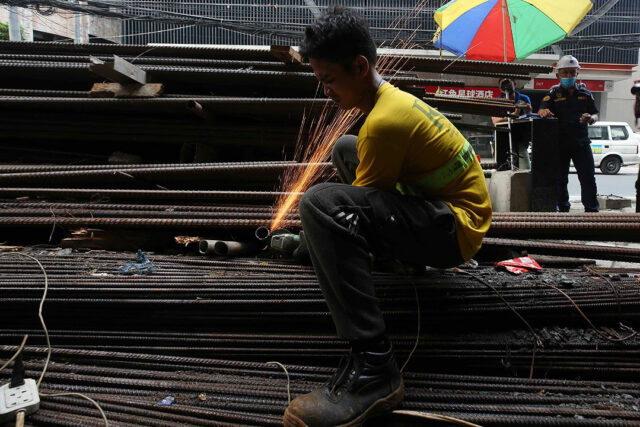
A WORKER cuts metal in a construction area in Binondo, Manila, March 24, 2022. — PHILIPPINE STAR/ RUSSELL PALMA

By Revin Mikhael D. Ochave, Reporter

BUSINESS GROUPS and foreign chambers would like to see the incoming Marcos administration prioritize reforms to attract more foreign investments, assist pandemic-hit small businesses and create much-needed jobs.

Former Senator Ferdinand “Bongbong” R. Marcos, Jr. had a commanding lead in the presidential race with more than 30 million votes, based on the latest unofficial tally by the Commission on Elections. (Related story) 

“We urge the incoming government leaders to build on the momentum and successes of the previous administrations. We look forward to further improvements in economic openness to increase trade, foreign direct investment (FDI) inflows and job creation,” Lars Wittig, European Chamber of Commerce of the Philippines (ECCP) president, said in a Viber message.

Mr. Wittig said he would like to see the new president focus on sustainability-related reforms, investments in education and nutrition, and institutional reforms on good governance and transparency.

Philippine Chamber of Commerce and Industry (PCCI) President George T. Barcelon said in a Viber message that the incoming administration should provide more assistance to micro, small and medium enterprises (MSMEs) that were badly affected by the pandemic. MSMEs comprise 99% of business establishments and 63% of the workforce in the Philippines.

“(The next administration should) give attention to MSMEs with financial assistance and lighten their compliance requirements. Many (had) closed down and jobs lost. Hopefully they can be revived,” he said.   

Mr. Barcelon said the Duterte administration has given a “sound take-off point” for the Marcos administration with the passage of key economic legislation and “intact macroeconomic fundamentals.”

However, Mr. Barcelon noted Mr. Marcos will face several challenges due to the prolonged pandemic and ongoing Russia-Ukraine war, such as high debt and accelerating inflation.

In a separate television interview on Tuesday, British Chamber of Commerce Philippines (BCCP) Executive Director Chris Nelson said that the incoming Marcos administration should focus on further improving ease of doing business to attract more investments.   

Mr. Nelson said British investors are looking for continuity in terms of policy direction for the next administration.   

“There’s a lot still that can be done. There is the ease of doing business. That can still be further streamlined. When we talk about infrastructure spending, what we are looking here for is investment, particularly in the digital sector and also continuing the investment in education and expand the talent bases in the Philippines,” Mr. Nelson said.   

The Joint Foreign Chambers (JFC) said it hopes to work closely with the government to ensure the economy’s recovery, maintain high GDP growth, continue infrastructure projects, and create more jobs.

“(This is) best achieved by continuing the governance and policies of the current and previous administrations,” the JFC said in a statement that was approved by the ECCP, American Chamber of Commerce of the Philippines, Australian-New Zealand Commerce of the Philippines, Canadian Chamber of Commerce of the Philippines, Japanese Chamber of Commerce and Industry of the Philippines, Korean Chamber of Commerce of the Philippines, and Philippine Association of Multinational Companies Regional Headquarters, Inc.   

Sergio R. Ortiz-Luis, Jr., Employers Confederation of the Philippines (ECoP) president, said in a mobile phone interview that the Marcos administration should continue the infrastructure push started by outgoing President Rodrigo R. Duterte.

“The Marcos administration should continue the projects under the ‘Build, Build, Build’ program. I hope that the next government can come up with a good economic team,” Mr. Ortiz-Luis said. “The next administration can also look at a policy for our SMEs. They should pass the Magna Carta for SMEs.”

Meanwhile, Alliance of Call Center Workers Co-Convenor Emman D. David said that the next administration should prioritize legislation measures to allow Philippine Economic Zone Authority (PEZA)-registered companies to implement work-from-home arrangements without losing tax incentives.

“(They should) pass a Magna Carta of business process outsourcing (BPO) workers that guarantees the labor rights of employees in the BPO industry,” he added.

TRB approves higher toll rates for CAVITEX, NLEX

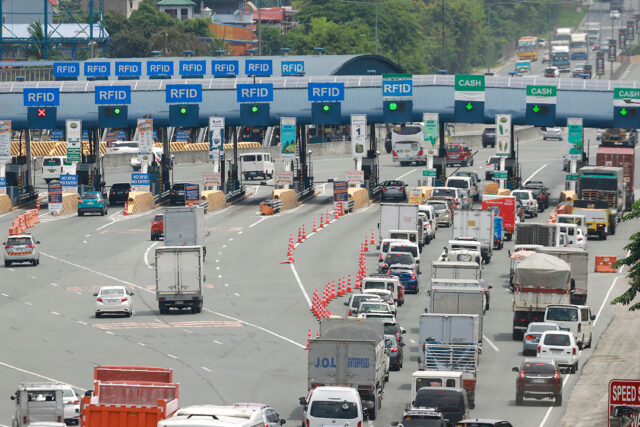
VEHICLES approach the NLEX Balintawak toll plaza, May 18, 2021. — PHILIPPINE STAR/ MICHAEL VARCAS

MOTORISTS will start paying higher toll fees at the Manila-Cavite Toll Expressway (CAVITEX) and the North Luzon Expressway (NLEX) starting May 12.

The Toll Regulatory Board (TRB) has given the go signal for Cavitex Infrastructure Corp. (CIC) and joint venture partner Philippine Reclamation Authority’s (PRA) application to adjust rates at the CAVITEX Parañaque Toll Plaza.

Toll rates for Class 1 vehicles (cars and SUVs) will be increased to P33 from the current P25, while those for Class 2 vehicles (minivans and buses) will be raised to P67 from the current P50.

Toll fees for Class 3 vehicles (large trucks and trailers) will be hiked to P100 from the current P75.

“(The TRB approved) the 2011 and 2014 contractual tariff adjustments toll petitions of CIC and PRA, as well as its add-on toll petition for Phases 1 and 2 enhancement works done in CAVITEX R-1 Expressway that was completed in 2020,” the company said in a statement.

These enhancements included the completion of asphalt overlay along CAVITEX, provision of the Pacific flyover and left turn facility, bridge widening, and maintenance work. CIC said around an average of 160,000 motorists use CAVITEX every day.

“To help public utility vehicle (PUV) operators and drivers cope with the change, CIC and PRA will be providing them toll rate reprieve through a rebate program that will allow them to continue enjoying the old rates for the next three months,” the company said.

Meanwhile, NLEX Corp. said the TRB greenlit its application to raise toll rates by P2 in the open system and P0.34 per kilometer in the closed system.

There is a flat rate for the NLEX open system (Balintawak to Marilao), while the closed system (Bocaue to Mabalacat) applies per-kilometer rates.

Starting May 12, motorists on NLEX’s open system will pay an additional P2 for Class 1 vehicles, P6 for Class 2 vehicles, and P8 for Class 3 vehicles. Existing rates are P60, P149, and P179 for Classes 1, 2, and 3 vehicles, respectively.

Motorists traveling the expressway’s closed system between Metro Manila and Mabalacat will pay an additional P27 for Class 1, P69 for Class 2, and P82 for Class 3 vehicles.

“To help cushion the impact of the toll increase, public utility jeepneys (PUJs) under the NLEX Passada and Tsuper Card discount and rebate program will continue to enjoy the old rates. Provincial buses will also be covered by a graduated rebate scheme for a period of three months,” NLEX Corp. said.

CIC and NLEX Corp. are under Metro Pacific Tollways Corp., the tollway unit of Metro Pacific Investments Corp. (MPIC).

MPIC is one of three key Philippine units of Hong Kong-based First Pacific Co. Ltd., the others being Philex Mining Corp. and PLDT, Inc. Hastings Holdings, Inc., a unit of PLDT Beneficial Trust Fund subsidiary MediaQuest Holdings, Inc., has a majority stake in BusinessWorld through the Philippine Star Group, which it controls. — Arjay L. Balinbin

AyalaLand Logistics, partner to build data centers

AYALALAND Logistics Holdings Corp. (ALLHC) announced on Tuesday that it signed a framework agreement with FLOW Holdings I Philippines Pte. Ltd. to develop carrier-neutral data centers across the country.

“The Philippines is rapidly emerging as one of the preferred locations in the [Asia-Pacific] region to host data centers due to its strategic location as a gateway from the Pacific to Asia, superior connectivity, and rich natural resources for renewable energy,” AyalaLand Logistics said in a disclosure.

“The Philippines data center market is expected to experience double-digit annual growth, driven by a significant increase in data consumption, digitization, 5G connectivity, and data localization trends,” it added.

The project will deliver a 4.5-megawatt (MW) capacity facility expected to be ready for service by the fourth quarter in 2023.

FLOW’s modular product deployment approach, combined with a strong focus on connectivity and sustainability, will help maximize design flexibility and accelerate time-to-market, according to AyalaLand Logistics.

The joint venture is part of FLOW’s ongoing regional expansion, which provides customized solutions to meet the growing demand for digital infrastructure in Asia-Pacific.

“We are pleased to partner with ALLHC as they prepare to make this significant contribution to developing digital infrastructure capabilities in the Philippines. The decades of design and operational experience of the FLOW team, combined with ALLHC’s established record in industrial real estate development, makes this an ideal partnership to meet the rising demand for digital infrastructure in the country,” FLOW Digital Infrastructure Chief Executive Amandine Wang said in a statement.

“This investment will contribute to the Philippines’ transition to a digital economy. Furthermore, we believe this partnership with FLOW enhances the value of ALLHC’s industrial land bank,” AyalaLand Logistics Chief Executive Jose Emmanuel H. Jalandoni said.

The company said that discussions on the data center projects are ongoing.

FLOW invests and operates in the key physical assets of the digital infrastructure ecosystem, including cloud, hyperscale, and enterprise data centers, as well as network and fiber assets, across the Asia-Pacific region. It was launched in 2021 with $50 billion in assets under management, including $2 billion in data center assets.

AyalaLand Logistics, a subsidiary of Ayala Land, Inc., owns industrial parks, warehouses, cold storage facilities, and commercial leasing across the country.

Among its developments are industrial estates including Laguna Technopark, Pampanga Technopark, Cavite Technopark, Laguindingan Technopark in Misamis Oriental. Its ALogis standard factory buildings are located in Biñan and Calamba, Laguna; Naic in Cavite; Porac, Pampanga; Sto. Tomas, Batangas, and Manila, complemented by the ALogis Artico cold storage facilities in Biñan, Laguna. Its commercial leasing portfolio comprises Tutuban Center in Manila and South Park Center in Muntinlupa City.

At the stock exchange, AyalaLand Logistics shares ended lower by 3.79% or 16 centavos to P4.06 each on Tuesday. — Luisa Maria Jacinta C. Jocson

PHL cue masters and tracksters brace for tough Hanoi SEA Games

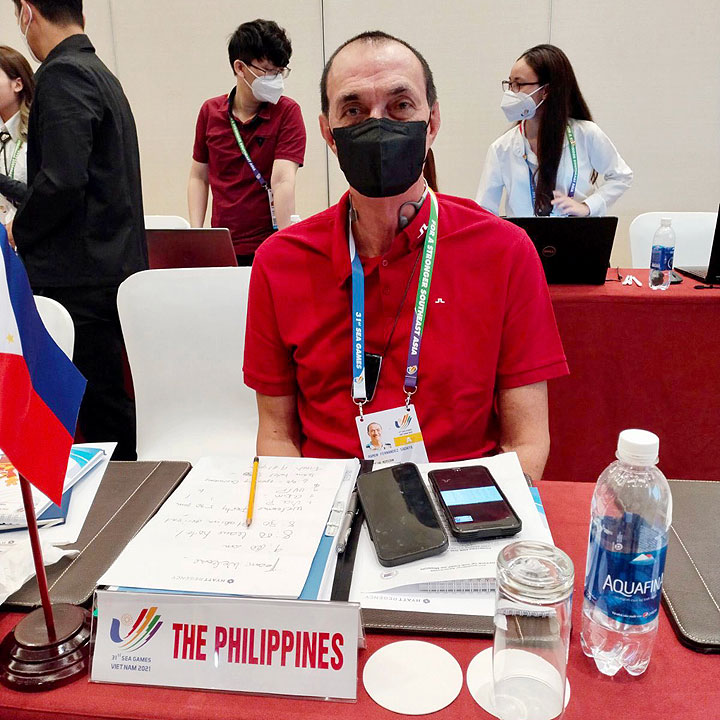
PSC Commissioner Ramon Fernandez — PSC

HANOI — World champion Carlo Biado of billiards and an assembly of potential gold medalists from various sports will arrive on Wednesday and could join the parade of nations in the opening ceremony of the 31st Southeast Asian Games (SEAG).

Cue masters and perennial SEA Games gold contenders Chezka Centeno and Rubilen Amit are likewise checking in as well as Filipino billiards icon Efren “Bata” Reyes prior to the opening rites on Thursday.

Joining them are potential medalists from athletics, bowling, cycling MTB, esports, and jiujitsu led by world-renowned grapplers Margarita “Meggie” Ochoa and Annie Ramirez.

The Philippine Sports Commission (PSC) was tasked to facilitate the trouble-free departure of the athletes and will be on hand to welcome them to Hanoi.

“So far, so good. The arrivals have been going on smoothly. We are preparing for the opening ceremony and have been continuously providing assistance to our athletes,’’ said PSC Commissioner Ramon Fernandez, the country’s chef de mission to the Games.

Mr. Biado is the reigning US Open 8-ball champion and last year’s US Open 9-ball champion after striking gold in the 2017 World Games in Poland. Men’s football, beach handball, kickboxing, and diving events are already in full swing.

Filipino rowers and athletes from pencak silat and chess are warming up to kick off their respective medal campaigns.

The nation’s participation in the 11-nation multi-sports meet has been funded by the PSC, the government arm in sports, to fuel the title-retention bid of the 980-strong delegation, including 641 athletes from 38 sports.

Team Philippines captured the overall title when it hosted the Games in 2019 where Filipino athletes collected 149 gold, 117 silver, and 121 bronze medals from 56 sports.

Hurdler Clinton Bautista, javelin thrower Melvin Calano, decathlete Aries Toledo, marathoner Christine Hallasgo and heptathlete Sarah Dequinan are all upbeat about their chances to retain their SEAG gold medals before leaving Manila.

Joining the 50-man athletics team bound for the Vietnamese capital are medalists Mark Harry Diones, Janry Ubas, Francis Medina, Edgardo Alejan, Jr., Anfernee Lopena, Eloiza Luzon, and Marestella Sunang.

Cyclists Ariana Dormitorio, John Derrick Farr and Eleazar Barba, Jr. will also begin their hunt for medals as well as bowlers Merwin Tan, Lara Posadas, and Alexis Sy.

A total of 120 athletes, coaches, and officials are due to be billeted on Wednesday before athletes from archery, beach volleyball, dancesport, esports, sepak takraw settle on Thursday in time for the opening ceremony.

The Philippine men’s basketball team, made up of PBA stars Junemar Fajardo, Robert Bolick, and siblings Kiefer and Thirdy Ravena, is scheduled to arrive on Friday along with the women’s basketball squad and teams from boxing, muay, taekwondo, wrestling, and shooting.

Novartis launches breast cancer testing program

PIXABAY

NOVARTIS Healthcare Philippines, Inc., launched on April 30 a breast cancer testing program that enables doctors to predict which medications will work better for specific patients.

Called PIK3CA, the test is named after the most commonly mutated gene in hormone receptor positive breast cancer.

“[Patients’] outcomes may improve if they are treated with targeted therapy. I, together with other medical oncologists, will continue to educate and guide our patients so that they can make the informed decision that is best for them,” said Dr. Josephine Tolentino, oncology head of The Medical City (TMC) in Ortigas.

TMC is implementing the program along with Hi-Precision Diagnostics, and the Philippine Society of Medical Oncology (PSMO).

She added that around 40% of those who have this type of cancer, also known as epidermal growth factor receptor-2 negative (HR+/HER2-) breast cancer, have the PIK3CA mutation.

This mutation is often associated with “tumor growth, resistance to endocrine treatment, and a poor overall prognosis,” according to a 2019 study by Novartis.

In a statement, Novartis cited the lack of awareness of the effects of PIK3CA mutation on breast cancer patients as its motivation to roll out the testing program, which is done via tissue samples.

The Philippines has cancer as its third leading cause of death in the first half of 2021, as per the Philippine Statistics Authority. Breast cancer itself is also the third leading cause among cancer-related deaths.

“There is a new target in breast cancer, the PIK3CA mutation. Advanced laboratory testing enables doctors to predict which medicines work better and which do not for specific patients. As such, doctors and patients are able to make educated decisions,” explained Joel Chong, oncology general manager at Novartis Philippines.

“Patients can save money by not taking a drug that may not work for them,” he added.

The cost to the patient is approximately P12,000, with an additional fee for handling outside of the National Capital Region.

For more information, e-mail Hi-Precision Diagnostics at sales.endorsement@hi-precision.com.ph or The Medical City at moleculardx@themedicalcity.com. — Brontë H. Lacsamana

SM Prime income, revenues up 15% as economy reopens

PROPERTY developer SM Prime Holdings, Inc. reported on Tuesday that its consolidated net income grew 15% to P7.4 billion in the first quarter due to higher revenues.

“The significant improvement in mobility restrictions and the continuous reopening of the local economy in the first three months of 2022 have provided SM Prime further boost to expand its businesses and reach more customers through its integrated property developments,” SM Prime President Jeffrey C. Lim said.

First-quarter consolidated revenues likewise increased by 15% to P23.9 billion, while operating income grew by 17% to P10.1 billion.

SM Prime’s mall business reported a 40% growth in revenues to P8.2 billion. Rental income was also up by 34% to P7.6 billion.

“The easing of community quarantine levels in key areas in the country, which allowed more shops to operate,” SM Prime said.

The company’s cinema, event ticket sales, and other revenues increased by 172% to P600 million in the first quarter from P200 million.

Meanwhile, SM Prime’s residential business group, led by SM Development Corp., reported P12 billion in revenues, almost the same as the previous year.

Sales reached P31.1 billion, with no comparative figure given, mostly coming from vertical residential developments in Mandaluyong, Parañaque and Makati.

“Despite the sudden COVID-19 (coronavirus disease 2019) cases surge in January 2022, we were able to maintain our growth momentum in the succeeding months while prioritizing the health and safety of all our stakeholders. We remain optimistic this year as the government continues its efforts in containing the spread of COVID-19,” Mr. Lim added.

The firm’s other key businesses, which include offices, hotels, and convention centers, reported a 30% growth in revenues to P2 billion.

SM Prime has 76 malls in the Philippines and seven shopping malls in China. It also has 53 residential projects, 19 commercial projects, eight hotels, five convention centers and three trade halls.

The company owns Sky Ranch, an amusement park in Tagaytay City and within SM City Pampanga and SM City Baguio.

SM Prime shares were down by 1.99% or 70 centavos to close at P34.50 apiece on Tuesday. — Luisa Maria Jacinta C. Jocson

Political fire at the CCP lawn

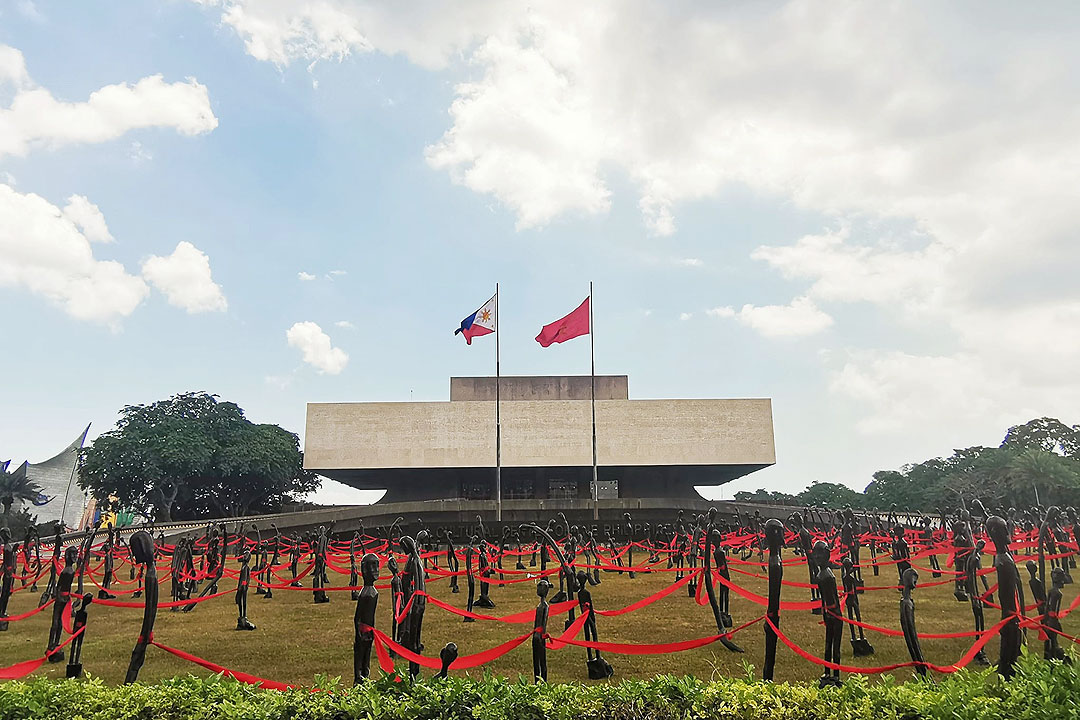
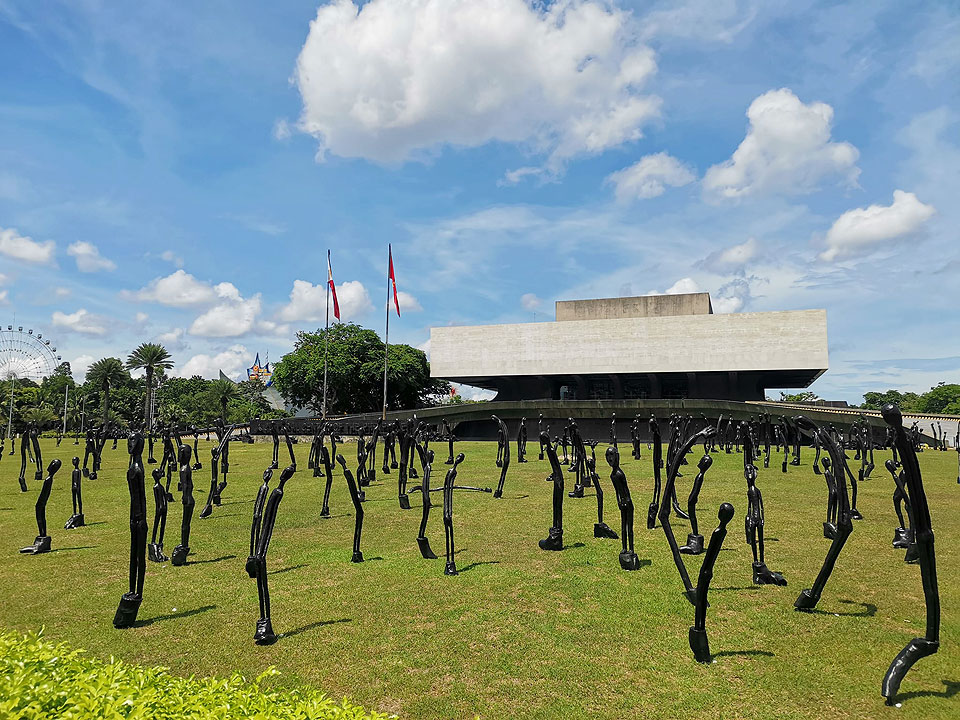
RIBBONS form part of an installation at the CCP’s Front Lawn called Kaingin by artist Jinggoy Buensuceso. When the installation was launched on April 30 the ribbons were red (Photo 1), on May 7 the artist changed them to pink ribbons (Photo 2), then removed them completely at midnight (Photo 3). — PHOTO FROM FACEBOOK.COM/CCPVAMD/

While everyone was focused on campaigning and the elections, there was a tempest going on in the CCP

DEPARTMENT heads of the Cultural Center of the Philippines (CCP) have said they uphold the artistic intent of the art installation that is currently located on its front lawn. This after a post on the CCP Facebook page disavowed changes made to the work that it said were “a blatant and brazen violation of election rules.”

On April 30, the CCP launched an installation by artist Jinggoy L. Buensuceso, KAINGIN: An Earth Month Art Installation, at the CCP Front Lawn as part of the Earth Day celebration.

According to the description of the art installation, it involves “transforming the CCP Front Lawn into a burnt forest with over a thousand contemporary bululs.” The figures of the granary gods are made of molded fiberglass infused with burnt debris, soil, and dust that was collected from areas in the Philippines that have the most environmental struggles. Red ribbons were used to connect the sculptures which were scattered across the front lawn.

The exhibit description further states that the figures serve “as a symbol of nature’s destruction by the fire of people’s desires —  logging, mining, and misinformed, self-serving acts.”

On May 7, the last day of a particularly contentious election season, the red ribbons connecting the sculptures were changed to pink.

PINK FOREST
An updated press release on the installation stated: “Manila wakes up to a Kaingin forest blooming in pink at the CCP Front Lawn.”

The statement, accompanied by a new photo of the installation, was published in a now-deleted post on the Facebook page of the CCP Visual Arts and Museum Division (CCP VAMD).

That same day, Mr. Buensuceso wrote on his social media outlets: “Tao Tao Kasama Ka Ba sa Isang Libo? KAINGIN Forest Bloomed Pink.” (People People Are You Among the One Thousand?) The post also contained tags in support of presidential candidate Vice-President Leni Robredo and vice-presidential candidate Francisco “Kiko” Pangilinan. Pink is associated with Ms. Robredo’s presidential campaign.

The installation’s updated press release further stated that “the once fiery red embers of the ravaged Kaingin forest… have been revived by a different kind of flame, the flame of renewal, hope, and love for Motherland.”

According to the press release, “For Buensuceso, fire is a power bestowed upon us to either destroy or to give life that ushers a rebirth (of the land). We have a choice to make, and we can use that choice for a better future for all.”

SWIFT REACTION
However, on the evening of the same day, the CCP Office of the President, through the CCP’s official Facebook page, posted the following statement: “This is to inform the Filipino public that the CCP disavows any responsibility for the unauthorized action taken by a few personnel to deck the front lawn of the CCP with ribbons donning the color associated with one of the presidential candidates. This is a blatant and brazen violation of election rules.”

The CCP VAMD’s Facebook post regarding the changes to the installation was deleted.

As a response, the CCP Visual Arts and Museum Department clarified the intention of the artwork in a post on May 9 via Facebook. The statement was signed by CCP Vice-President and Artistic Director Chris Millado with Associate Artistic Director Production and Exhibition Department Ariel Yonzon, and Visual Arts and Museum Division Officer-in-Charge Rica Estrada.

It stated that Mr. Buensuceso had “submitted a proposal to modify the installation by using pink ribbons to signify the ‘…flame of renewal, hope, and love for Motherland.’”

The artist’s proposal, submitted to the Office of the Artistic Director, was “approved cognizant of artistic processes that usually accompany such interactive installations and without prejudice to any election-related activity. It is within the artist’s right to freedom of expression to create, present and evolve his/her artistic work,” the statement said.

BusinessWorld sought Mr. Buensuceso’s reaction but received no feedback as of press time.

Mr. Buensuceso is a UP Fine Arts graduate, has been featured in Maison & Objet Paris, Wallpaper Magazine, The Artling, Design Anthology, and Manila FAME, and has had several solo exhibits in Manila, Singapore, and New York.

POLITICS AND ART
Multi-media visual artist and teacher Abdulmari “Toym” de Leon Imao, Jr. describes the role of art in politics and social issues with the quote: “When the truth is under siege, and the press is pinned down by the state, the arts become our second line of defense.”

Discussing the issue with BusinessWorld through Messenger, Mr. Imao said, “In this age of rampant and often state-sponsored fake news, propaganda, and historical revisionism, the arts become one of the most powerful tools for truth saying, specially when it is a commentary that challenges societal issues and concerns in relation to the state and its constituents.

“Art has and always has been political once it is situated within the context of civilized society. Therefore, creating works of art is a political act,” Mr. Imao said, citing that art can either cater to the powerful or “serve as the creative mouthpiece of the lower strata of a society.”

“Whether an artist enables the status quo or disrupts it, they are all valid acts within a democratic space of free expression,” he added.

“For those who want to appreciate art for what it is, some would gaze upon it as if it existed in a vacuum, devoid of any explanation or background studies. Art for art’s sake —  which again is totally valid,” Mr. Imao explained.

“But to fully appreciate the work and position it within the history of visual expressions within particular societies, one has to retrieve more information beyond the visual display in front of them and delve into the artist’s intention and the context of the artform in relation to the zeitgeist of the time,” he said.

In a now expired Instagram story, Mr. Buensuceso wrote that the pink fabric connecting the figures in KAINGIN was removed before midnight (May 8) “in keeping with the Comelec rules.”

KAINGIN is currently on view — without ribbons —  until May 30 at the Front Lawn and three related installations, Huling Hapunan, Entierro, and Ritwal, can be seen at the fourth-floor Atrium of the Cultural Center of the Philippines. — Michelle Anne P. Soliman


UP Fighting Maroons go for the jugular in UAAP finals

UP Figthing Maroons’ Ricci Rivero — THE UAAP

With its long-coveted destiny already within reach, University of the Philippines (UP) goes for the jugular in finally realizing it after three decades when it takes on reigning champion Ateneo in Game 2 of the University Athletic Association of the Philippines (UAAP) Season 84 men’s basketball finals at the Mall of Asia Arena.

For a team that has never been this close to the UAAP throne since last winning a title in 1986, it’s now or never as the Fighting Maroons eye to finish off the Blue Eagles in a sweep after a huge stunner in Game 1 via overtime, 81-74.

And that elusive goal starts at 6 p.m. with the Fighting Maroons also sporting a golden chance to trample the Blue Eagles’ dynasty as the three-time defending UAAP king.


Coach Goldwin Monteverde, whose wards notched back-to-back come-from-behind wins to move on cusp of ending their long championship drought.

After squandering its twice-to-beat edge in the Final Four against No. 3 La Salle, the second-seeded UP erased a 14-point deficit in the do-or-die semifinal, 78-74, to barge into the Last Dance — where it fashioned out another stellar resolve.

Ranged against the mighty Ateneo that made short of FEU in the other semis pairing, UP embraced the challenge and put on a defensive clinic in the fourth quarter and overtime with a 21-6 finishing kick for a stunning Game 1 victory.

Now, they’re on verge of a destiny.

But the defiant Ateneo will not hand it over on a silver platter without a fight, brimming with confidence that it can drag the “Battle of Katipunan” to a winner-take-all Game 3 to keep its four-peat alive.

“We believe that we can turn this result around. It’s a three-game series for a reason so we intend to work our tails off and get this thing in a third game and do the very best we can to win the championship,” said mentor Tab Baldwin after Ateneo tasted its first finals loss in four years.

The Blue Eagles last lost in the finals against La Salle in Season 80, which they still won to ignite a UAAP dynasty.

They have been lording it over the league since then with three straight titles including 39 consecutive wins and a 13-0 start this season before the Fighting Maroons played spoiler anew and ended it in the last game of the elims. — John Bryan Ulanday

Value of region’s private equity deals reach $25B

THE private equity market deal value in Southeast Asia more than doubled to $25 billion in 2021, signaling strong investment growth in the region, according to consulting firm Bain & Co.

“The previous year had seen a significant slowdown, with the market recording the largest fall across all Asia-Pacific (APAC) region markets due to travel restrictions hampering deal-making and diligence processes, but the progressive ‘opening-up’ of countries in the second half of 2021 helped drive a rebound in deal value,” Bain & Co. said in a statement on Tuesday.

In its 2022 annual Southeast Asia Private Equity report, it placed the 2020 comparative figure at $10 billion.

Usman Akhtar, Bain & Co. partner and head of Southeast Asia private equity practice, said that the region as a whole in 2021.

“Southeast Asia as a region has bounced back strongly from the COVID-19 (coronavirus disease 2019) impacted year in 2020, with the 2021 activity level showing that investors were keen to make up for lost time,” Mr. Akhtar said.

“While private equity (PE) investors continue to believe they can get strong returns in the region over the next 3-5 years, we also see them putting more emphasis on topline growth and operational improvements as expectations of multiple expansion become relatively muted,” he added.

According to Bain & Co., the APAC consists of over a quarter of the global PE market in 2021 following the increased deal volume in the Southeast Asia region.

It added that growth and early-stage investments surged in 2021, while growth deals remained the dominant deal type and contributed 77% of Southeast Asia’s deal value.

“Five megadeals accounted for 33% of total deal value, which grew 143% compared with 2020. The influx of capital from e-commerce, logistics and technology deals meant that Singapore, Indonesia and Vietnam saw a strong jump in their share of deal value and count, with further potential to climb moving forward, given the presence of sought-after tech companies and vibrant startup economy in these markets,” Bain & Co. said.

“Exit value in Southeast Asia more than doubled what it was in 2020, though it still is not at full potential [as] it remains below the average from 2016-2020. Much of the growth was driven by Singapore, particularly as maturing tech companies such as Grab debuted in the public markets,” it added.

Bain & Co. said the internet and technology sectors continued to contribute the lion’s share of deal volume and value across the Asia-Pacific PE landscape.

However, it mentioned that healthcare and financial services are starting to get bigger shares as investment targets after contributing 18% and 9% of overall deal count, respectively.

“Investors globally and especially in Southeast Asia are rightly concerned about finding the right opportunities to invest in amid the increased competition from global and local funds,” said Suvir Varma, senior advisor to Bain & Co. global private equity practice. 

“Given the competitive intensity, funds would do well to have defined themes around which they wish to deploy capital, a clear investment thesis for each asset, and a prepared action plan to intervene should the macro conditions turn against them,” he added.

Meanwhile, Bain & Co. said the key themes to observe in 2022 include strong interest in digital assets and consumer products, surge in digital healthcare, shift to environmental, social, and corporate governance (ESG), calibrated valuation expectations, and continued appeal of young and digitizing population.

“While firms are understandably eager to capture these next waves of growth, long-term success will be achieved by those who pay more attention to their core investment themes and diligence, particularly in ESG integration as increasing pressures for businesses to take steps in climate action, diversity, equity and inclusion has caused a definite and enduring shift in the industry’s investment approach,” said Tom Kidd, partner in Bain & Co.’s Southeast Asia private equity practice.

“The economic growth that could be added to Southeast Asia from a number of exciting sectors is still substantial,” he added. — Revin Mikhael D. Ochave

Test, test, test? Scientists question costly mass COVID checks

BLOOMBERG

COPENHAGEN/LONDON — For many people worldwide, having cotton swabs thrust up their nose or down their throat to test for coronavirus disease 2019 (COVID-19) has become a routine and familiar annoyance.

But two years into the pandemic, health officials in some countries are questioning the merits of repeated, mass testing when it comes to containing infections, particularly considering the billions it costs.

Chief among them is Denmark, which championed one of the world’s most prolific COVID testing regimes early on. Lawmakers are now demanding a close study of whether that policy was effective.

“We’ve tested so much more than other countries that we might have overdone it,” said Jens Lundgren, professor of infectious diseases at Rigshospitalet, University of Copenhagen, and member of the government’s COVID advisory group.

Japan avoided large-scale testing and yet weathered the pandemic relatively well, based on infection and death rates. Other countries, including Britain and Spain, have scaled back testing.

Yet repeated testing of entire cities remains a central part of the “zero-COVID” plan in China, where leaders have threatened action against critics.

“We need to learn, and no one did it perfectly,” said Dale Fisher, chair of the Global Outbreak Alert and Response Network of the World Health Organization (WHO).

The WHO urged countries to “test, test, test” all suspected cases after the coronavirus was first identified. Global surveillance helped scientists understand the risk of severe illness or death, as well as the risk of transmission.

Now, with the dominance of the relatively milder Omicron variant and the availability of vaccines and more effective treatments, governments should consider more strategic policies, such as population sampling, experts said.

Pulling back too drastically, however, could leave the world blind to a still-changing virus, some officials said.

SIGNIFICANT COSTS
WHO guidelines have never recommended mass screening of asymptomatic individuals — as is currently happening in China — because of the costs involved and the lack of data on its effectiveness.

Denmark ultimately recorded similar case numbers and death rates as other countries with less widespread testing. This has prompted a majority of parties in parliament to call for an investigation into the strategy.

In the last two years, Denmark’s population of 5.8 million logged more than 127 million rapid and PCR tests, all provided free. In total, Denmark spent more than 16 billion crowns ($2.36 billion) on testing, according to the Danish Critical Supply Agency.

Neighboring Norway, with a similar population size, only performed 11 million PCR tests, while Sweden, home to nearly twice as many people, completed around 18 million, according to Our World in Data.

Christine Stabell Benn, professor of global health at University of Southern Denmark, said Denmark’s strategy was expensive and results “undocumented.”

“The mass testing approach took away the focus from testing where it really matters: among the vulnerable.”

Other experts — and the Danish government — said widespread testing reduced the transmission rate and helped people re-enter society, boosting the economy and their own mental health. The economy took a relatively milder hit than other European countries, according to a government report released in September.

“There is no doubt that the human and economic costs of, for example, an extensive lockdown, as we have seen in many other countries, would be greater,” Justice Minister Nick Haekkerup told Reuters in an e-mail.

EVIDENCE
One Danish study published last year concluded that the testing program and subsequent isolation of confirmed cases helped reduce transmission by up to 25%.

Other disease experts question such estimates. A review published in Medical Virology in late March on the use of rapid tests for people without symptoms in mass screening initiatives found “uncertainty” over their impact.

“The claim was that (mass testing) would stop the pandemic in its tracks, and that it would cut transmission by 90%. And it hasn’t,” said Angela Raffle, a senior lecturer at Bristol University Medical School, who has worked with the UK’s National Screening Committee.

There are several possible explanations why testing did not yield a bigger benefit, including an over-ambitious target and the fact that the tests were imperfect. Plus many people either did not or could not isolate after testing positive: a review in the British Medical Journal, pre-Omicron, found that only 42.5% of such cases stayed home for the entire isolation period.

In England, free COVID tests are now only available for government healthcare workers, those with certain health conditions and people entering hospital. Others, even with symptoms, have to pay for tests or are simply advised to stay at home until they feel better.

Some global health experts say such a pullback goes too far.

“In some settings, because politicians have decided to ‘move on’ and dismantle all public health, testing has been deliberately reduced or made harder to access,” said Madhu Pai, a global health professor at McGill University in Canada.

“This will be disastrous, because we will be completely caught off guard if a more dangerous variant emerges.” — Reuters

ADVERTISEMENT
ADVERTISEMENT