Home Blog Page 6356

Infections fewer than 5,000 for 4th day

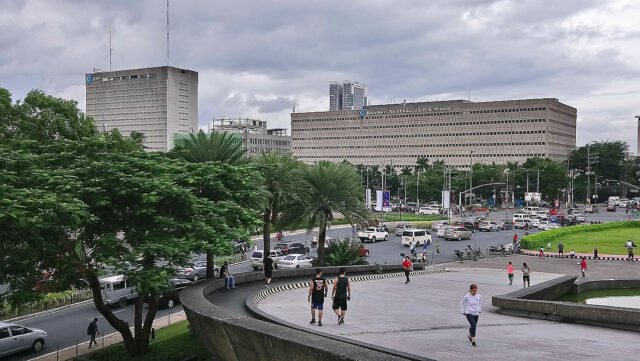
PHILIPPINE STAR/ MICHAEL VARCAS

By Kyle Aristophere T. Atienza, Reporter 

The Philippines posted 3,788 coronavirus infections on Friday, the fourth straight day the tally fell below 5,000. 

This brought the total to 3.63 million, the Department of Health (DoH) said in a bulletin. The death toll hit 54,854 after 72 more patients died, while recoveries rose by 5,652 to 3.48 million.  

The agency said 14.7% of 32,795 samples on Feb. 9 tested positive for COVID-19, still above the 5% threshold set by the World Health Organization (WHO). 

Of 91,147 active cases, 3,261 did not show symptoms, 83,145 were mild, 2,986 were moderate, 1,443 were severe and 312 were critical. 

DoH said 97% of the latest cases occurred on Jan. 29 to Feb. 11. The top regions with new cases in the past two weeks were Metro Manila with 470, Western Visayas with 455, and Davao with 453. It added that 44% of new deaths occurred in February and 32% in January. 

The agency said 726 duplicates had been removed from the tally, 449 of which were reclassified as recoveries and one was tagged as a death, while 52 recoveries were relisted as deaths. One laboratory failed to submit data on Feb. 9. 

It said 34% of intensive care unit beds in the country had been used, while the rate for Metro Manila was 24%. 

Earlier in the day, Health Undersecretary Maria Rosario S. Vergeire refuted a claim by researchers from the University of the Philippines that Manila, the capital and nearby cities were now at low risk from the coronavirus. 

“Although cases in the National Capital Region are falling, our metrics shows that it is still under moderate risk, not low risk,” she told an online news briefing in mixed English and Filipino. 

Metro Manila’s daily attack rate was 12.53, with a seven-day moving average of 886 per day, she said. 

OCTA Research Group fellow Fredegusto P. David on Wednesday said the capital region was at low risk from the coronavirus.  

 “I don’t understand why our metrics don’t align,” Ms. Vergeire said. “It’s confusing people. DoH is the official source and we are using metrics that show NCR is still classified as moderate risk.” 

OCTA uses data from DoH and the website of The Act Now Coalition, a nonprofit group founded by volunteers in March 2020. 

Edsel T. Salvana, director of the Institute of Molecular Biology and Biotechnology at the National Institutes of Health-University of the Philippines Manila, said they consider the level of community transmission and vaccination rate, among other things, before classifying the risk level. 

Meanwhile, Ms. Vergeire said the coronavirus is not yet endemic because infections have yet to stabilize. 

She also said the government is preparing for an eventual shift to Alert Level 1, which will become the so-called new normal.  

The Philippines is scrambling to vaccinate more people as it reopens the economy.  

On Thursday, it took delivery of 3.4 million doses of Pfizer, Inc.’s coronavirus vaccines donated by the United States under a global initiative for equal access. 

“As the largest contributor to COVAX, the United States has facilitated the delivery of more than 69 million vaccine doses [to the Philippines, including more than 28.5 million doses donated by the American people,” the US Embassy said in a statement on Friday. 

Ms. Vergeire said the government’s two-day vaccination campaign on Feb. 10 to 11 would be extended until Feb. 18. 

She said 662,318 vaccine doses were injected on the first day of the immunization drive, 442,236 of which were first doses and 219,972 were boosters. The government seeks to fully vaccinate 77 million people by end-March. The country has fully vaccinated 60 million people. 

She said only four of 52,262 children aged 5 to 11 who were vaccinated against COVID-19 in 56 sites nationwide experienced minor adverse reactions. 

Rajendra Prasad, the World Health Organization’s acting representative to the Philippines, said 2.5 million seniors have yet to be vaccinated. 

“Vaccinating older people is one of the most impactful ways to save lives during this pandemic,” he separately told a televised news briefing. “We know that senior citizens are at high risk of developing severe disease, getting hospitalized and dying from COVID-19.”  

Comelec ruling favoring Marcos assailed

By John Victor D. Ordoñez and Kyle Aristophere T. Atienza, Reporter 

A FORMER election commissioner on Friday cited inconsistencies in a division’s ruling allowing the son and namesake of the late dictator Ferdinand E. Marcos to run for president this year. 

The decision written by Commissioner Aimee P. Ferolino was full of contradictions, retired Commissioner Maria Rowena V. Guanzon, who used to preside over the First Division of the Commission on Elections (Comelec), said in a Facebook post on Friday.  

“If there is no law punishing the nonfiling of the income tax returns, how was the regional trial court able to convict Marcos, Jr.?” she asked, referring to former Senator Ferdinand “Bongbong” R. Marcos, Jr. 

The division on Thursday said Mr. Marcos’s failure to file tax returns in the 1980s, for which he was convicted a decade later for tax evasion, did not involve wicked, deviant behavior. 

“In ruling out moral turpitude, Ferolino relied exclusively on the elements of the offense,” said Ms. Guanzon, who earlier accused her fellow commissioner of delaying the case so her vote would not be counted. “This is wrong.” 

“Determination of whether an offense involves moral turpitude is a question of fact and depends on all the surrounding circumstances,” she added. 

Ms. Guanzon earlier alleged that a senator from Davao was meddling in the lawsuit filed by survivors of the dictator’s martial law regime.  

“If Ferolino has any shame left, she should inhibit herself from voting on the motion for reconsideration,” she tweeted separately. 

The petitioners would seek reconsideration of the ruling next week, Howard M. Calleja, their lawyer, told a news briefing. 

“We will continue to exhaust all remedies available to bring out the truth, to attain justice and to bring the issue to the proper legal conclusion it deserves,” he said. 

Bonifacio P. Ilagan, a martial law victim and one of the petitioners, said the ruling has strengthened their doubts about Comelec’s integrity. 

Marcos lawyer and spokesman Victor D. Rodriguez applauded the Comelec ruling on Tuesday night, calling the lawsuits “nuisance.” 

“Enough of the quarrel, enough of the conflict,” he said in a statement in Filipino. 

The Marcos family was forced to flee the country in 1986 after a popular street uprising supported by military generals toppled the dictator’s regime. Marcos, Jr. was among the first members of the family to return to the Philippines from exile in the United States in 1991. 

5 ex-NEDA chiefs back Robredo for president

PHILSTAR

More than 160 economists, including five former socioeconomic planning secretaries, on Friday endorsed Vice-President Maria Leonor “Leni” G. Robredo for president, saying she is best positioned to lead the country’s economic recovery amid a coronavirus pandemic. 

In a statement, they also said the Philippines needs a better pandemic response — “one that is sound, prompt, informed by science and evidence-based.” “This should be the centerpiece of any program for the complete resumption of economic activity.” 

“Vice-President Leni Robredo is our best hope to turn the tide and bring back the people’s trust in government in order to restore and sustain vigor to people’s lives and livelihoods at the soonest possible time,” they added. 

Among those who signed the statement were Ernesto M. Pernia, President Rodrigo R. Duterte’s former socioeconomic planning chief and his predecessors Solita G. Collas-Monsod who served under the late President Corazon C. Aquino, Cielito F. Habito under ex-President Fidel V. Ramos, Dante B. Canlas under Gloria Macapagal Arroyo and Emmanuel F. Esguerra under the late President Benigno S.C. Aquino III. 

The former chiefs of the National Economic and Development Authority (NEDA) said Ms. Robredo has a solid economics and legal background needed to craft policies to quicken economic recovery. 

She has also shown genuine concern for the poor as a human rights lawyer before she entered politics, they said. “This will be crucial not just in bringing back people’s trust in government, but also in making sure that economic recovery improves the lives of Filipinos from all walks of life.” 

Former central bank Deputy Governor Diwa C Guinigundo and economist-lawmaker Stella Luz A. Quimbo also signed the statement. — Kyle Aristophere T. Atienza

Campaign permit rule excessive — group

The Commission on Elections (Comelec) should do away with campaign permits, a lawmaker said in a statement on Friday.  

Party-list Rep. Arlene D. Brosas urged the election body to reconsider its campaign system, noting that an inter-agency task force guidelines are enough to enforce health protocols amid a coronavirus pandemic.  

“IATF guidelines are already in place to ensure mobility restrictions and health protocols,” she said in mixed English and Filipino. “We think this is enough. We do not need a campaign permit system.” 

Under a Comelec order, election candidates holding motorcades and face-to-face campaigns must get a permit from the agency and local government units. — Jaspearl Emerald G. Tan

Chief Justice: Lawyers should be service-oriented

PHILSTAR FILE PHOTO

The country’s chief justice on Friday urged the Philippine Association of Law Schools to modernize their role.  

In a statement dated Feb. 10, Chief Justice Alexander G. Gesmundo said the group should manage the expectations of aspiring lawyers by ensuring that social responsibility rather than financial gain and recognition becomes their goal. 

“If we want lawyers who would put justice above professional success, without regard for glamor or recognition, and if we want competent and proficient lawyers, we initially look to legal education to inculcate the correct values and give the proper and adequate training and preparation,” he said. 

Mr. Gesmundo on Thursday led the oath to newly appointed board of trustees and officers of the legal association.  

The chief justice said the Supreme Court and legal education institutions are working closely to help develop a new generation of highly proficient and service-oriented lawyers.  

“We are relying on you, our legal educators, to support and give impetus to our reforms in the other areas of law practice and in the judicial system as a whole,” he added. — John Victor D. Ordoñez

Ex-Customs official convicted for hiding wealth

DOF.GOV.PH

A Manila trial court has convicted a former Customs official of falsification after she tried to hide her husband’s business interests, according to the Finance department. 

The official faces jail time for failing to state in her net worth statement that her husband was an incorporator and stockholder of a property company, it said in a statement on Friday. 

The Office of the Ombudsman filed several criminal cases against the ex-Customs official in 2017 based on a complaint from the Revenue Integrity Protection Service of the Finance department. 

She was sentenced to an indeterminate jail term of two to eight years and was fined P5,000 for the crime, it added. — Luz Wendy T. Noble

PAL swings to profit with P1.7B in December

Philippine Airlines, Inc. (PAL) made a profit of $32.97 million (P1.7 billion) in December, four months after filing for Chapter 11 bankruptcy protection, reversing a loss of $11.67 million incurred in November.

According to PAL Chief Financial Officer Nilo Thaddeus P. Rodriguez’s end-December report to the United States Bankruptcy Court for the Southern District of New York, the airline had a gross income of $183.82 million for the month, up 28.1% from $143.48 million earned in November.

PAL filed its December operating report on Jan. 18, according to a copy of the document from the airline’s claims agent Kurtzman Carson Consultants LLC.

Broken down, PAL’s passenger revenue grew 37.7% to $132.27 million in December from $96.09 million in November, while cargo revenue declined by 4% to $42.27 million from $44.04 million previously. Ancillary revenue increased 57.5% to $6.74 million from $4.28 million in November.

Its total comprehensive loss since the Chapter 11 filing on Sept. 3 until Dec. 31 reached $36.12 million.

On Dec. 31 last year, the airline announced that it had “emerged” from its voluntary Chapter 11 proceedings “as a more efficient airline with a strengthened balance sheet.”

PAL said it successfully completed its financial restructuring within four months, in contrast to other airlines that remain in the Chapter 11 process more than a year after filing in 2020.

“The company’s plan of reorganization, which was approved by the US restructuring court on December 17, 2021, provides for over $2 billion in permanent balance sheet reductions from existing creditors, improvements in PAL’s critical operational agreements and additional liquidity including a $505 million investment in long-term equity and debt financing from PAL’s majority shareholder,” the airline said in a statement.

“The airline’s consensual restructuring plan was accepted by 100% of the votes cast by its primary aircraft lessors and lenders, original equipment manufacturers and maintenance, repair, and overhaul service providers, and certain funded debt lenders,” it added.

In January, PAL announced that its senior vice-president for operations, Capt. Stanley K. Ng, was appointed as its new president and chief operating officer, in an acting or officer-in-charge capacity, replacing Gilbert F. Santa Maria.

The airline has said that it aims to restore more routes and increase flight frequencies as travel restrictions ease and borders reopen, including the resumption of regular flights to multiple cities in mainland China, full regularization of flights to Australia and the commencement of new services to Israel.

The company anticipates to generate an operating income of $220 million this year and $364 million in 2023. — Arjay L. Balinbin

SPC, affiliate buy STEAG’s 51% stake in power firm

SPC Power Corp. on Friday said it had executed along with an affiliate an agreement to buy the 51% stake of German power firm STEAG GmbH in a company that owns a 210-megawatt coal-fired power plant in Misamis Oriental.

“This acquisition is in line with the objective of SPC to support growth and address the country’s need for reliable, affordable and sustainable power supply,” SPC said.

The deal prompted the Philippine Stock Exchange to suspend the trading of SPC shares ahead of the company’s submission of a comprehensive disclosure report as called for by disclosure rules.

Before the suspension, SPC disclosed that it had agreed to buy 40.5% of STEAG State Power Inc.’s outstanding capital stock held by STEAG GmbH’s, while the remaining 10.5% will be bought by its affiliate Intrepid Holdings, Inc.

Their share sale and purchase agreement was executed on Feb. 10, the listed Cebu-based power company said.

STEAG State Power’s plant was built through a build-operate-transfer scheme with the National Power Corp. as the other party to a 25-year power purchase agreement.

The deal will be closed subject to the following considerations for the transfer of ownership rights over the shares: around $33.89 million for the common shares; around $18.11 million for the redeemable shares; and accrued interest on the said common shares and redeemable shares at the locked box interest rate.

The locked box interest rate, the company said, is an amount equal to the interest accrued on a daily basis, at 4% yearly from Jan. 1, 2021 until and including sale completion or March 31, 2022, whichever is earlier.

“The closing of the sale shall be subject to conditions precedent,” SPC said.

The trading suspension on SPC took effect at 11:11 a.m. on Friday until further notice. The PSE said after a review of SPC’s disclosure, it deemed the deal as covered by the exchange’s “Substantial Acquisition Rule.”

STEAG GmbH operates 11 hard coal-fired power plants, of which eight are located in Germany, and one each in Turkey, Colombia, and the Philippines.

SPC has five subsidiaries: SPC Island Power Corp., Cebu Naga Power Corp., SPC Malaya Power Corp., Bohol Light Co., Inc., and SPC Light Co., Inc.

It also has two associates: KEPCO SPC Power Corp., and Mactan Electric Co., Inc. SPC Power holds 40% ownership in each company. — Marielle C. Lucenio

Cemex unit starts building $235-M facility in Rizal

Cemex Holdings Philippines, Inc. on Friday said that its subsidiary Solid Cement Corp. is building a new integrated cement production line in Rizal worth at least $235 million.

In a disclosure to the exchange, Cemex said Solid Cement is working with Atlantic Gulf & Pacific Company of Manila, Inc. and Betonbau Phil, Inc. as the principal constructors and installers of the project.

Once completed, the project is expected to produce 1.5 metric tons of cement yearly. It will stand on Solid’s cement plant in Antipolo City,

The new production line is projected to be completed by March 2024, and start operating in April 2024.

“The estimated total project cost is revised from $235 million to $323 million, while the estimated total interest capitalization for the project is adjusted to $33 million,” the company said.

Cemex said that the additional fund requirement may be sourced from the following: free cash flow, debt from any subsidiary of CEMEX, S.A.B. de C.V., the Philippine company’s ultimate parent firm, and/or debt from one or more financial institutions.

In a press release on Friday, Cemex reported a P276-million income in 2021, around 26% lower than the P985 million reported in 2020.

The parent company’s consolidated net sales increased by 6% in 2021 to P20.9 billion due to higher sales volume.

The company has yet to disclose its detailed financial statements for the period.

At the local bourse, Cemex shares fell five centavos or 4.59% to end at P1.04 apiece on Friday. — Marielle C. Lucenio

SEC clears registration of Century Properties’ P6-B debt

https://www.sec.gov.ph/

The Securities and Exchange Commission (SEC) approved Century Properties Group, Inc.’s shelf registration of its P6-billion debt securities, the property developer said in a disclosure on Friday.

The first tranche of the fixed rate retail bonds will be P2 billion with an oversubscription option of up to P1 billion five-year fixed rate retail bonds. The bonds will be due 2027 and will be listed and traded through the Philippine Dealing & Exchange Corp.

The debt securities are planned to be offered within three years, or a period allowed by the SEC, at an issue price of 100% of face value.

Century Properties is primarily engaged in the development, marketing, and sale of mid- and high-rise condominiums and single detached homes, leasing of retail and office space, and property management.

In the third quarter of 2021, the company’s net income attributable to parent went down 30.6% to P259.20 million from P373.36 million year on year.

From January to September 2021, attributable net income grew to P845.08 million or 1.6% from P831.49 million in the similar period in 2020.

On Friday, Century Properties shares dropped 1.18% or P0.005 to close at P0.42 each at the stock exchange. — Luisa Maria Jacinta C. Jocson

Smart says 5G roaming now in 45 countries

PLDT Inc.’s wireless arm Smart Communications, Inc. announced on Friday that its fifth-generation (5G) roaming service now covers 45 countries.

“Customers in Malta, Croatia, Indonesia, Greece, Czech Republic, Slovenia, Cyprus, Portugal, Poland, Guam, and France can now enjoy live 5G roaming services with their 5G-capable SIMs and devices through Smart’s partnerships with global telco operators in these countries,” Smart said in an e-mailed statement.

Smart also said that it expanded its 5G roaming coverage with 68 partners across five continents.

It has new partners in Canada, Turkey, South Korea, Singapore, Hong Kong, and Bulgaria.

The service is also available in Taiwan, Bahrain, United Arab Emirates, Saudi Arabia, Kuwait, Israel, China, Australia, Switzerland, Japan, Thailand, Denmark, Vietnam, Qatar, Ireland, Oman, Germany, Luxembourg, Italy, Austria, Romania, Finland, Norway, Sweden, Belgium, South Africa, the United Kingdom, and the United States.

According to the telco, as of the end of December 2021, it already has 75,500 base stations nationwide supporting the growing mobile data traffic.

“This includes around 7,200 5G base stations. Supporting Smart’s mobile network is PLDT’s extensive fiber footprint, which was at 743,700 kilometers as of end-2021,” it added.

Hastings Holdings, Inc., a unit of PLDT Beneficial Trust Fund subsidiary MediaQuest Holdings, Inc., has a majority stake in BusinessWorld through the Philippine Star Group, which it controls. — Arjay L. Balinbin

Tax court denies P12-M refund of Regus

The Court of Tax Appeals (CTA) has denied the P12.3-million refund of input value-added tax of the regional operating headquarters of Regus Service Centre, Philippines B.V. due to lack of merit.

In its decision promulgated Feb. 9, the CTA reiterated that “an applicant for a claim for tax refund or tax credit must not only prove entitlement to the claim but also compliance with all the documentary and evidentiary requirements.”

The tax court said in its statement that the management enterprise failed to present evidence for its claim to a tax refund.

The company is the regional office of a corporation based in the Netherlands. It is primarily engaged in the general administration and management of affiliate companies and is licensed by the Securities and Exchange Commission.

The claim for refund of P12,295,005.64 attributable to the company’s export sales for 2017 was not supported by proper documents, the court added.

The respondent, Commissioner of Internal Revenue, has the authority to decide on applications for a tax credit of excess payments.

“Petitioner failed to demonstrate that the tax, which is the subject of this case, was erroneously or illegally collected,” the CTA said in its decision. “

The case is a Petition For Review as an official of the Bureau of Internal Revenue had previously denied the company’s application for the VAT refund.

Testimonial and documentary evidence was presented by the petitioners, but the tax court found that the testimonies failed to corroborate with the documents presented.

The tax court added that regional operating headquarters are required to establish proof that they are seeking a refund of input VAT only to the extent of sales of services to foreign clients doing business outside the Philippines. — John Victor D. Ordoñez