Home Blog Page 635

DMAP hosts 10th DigiCon to tackle personalization, customer engagement in ‘The Age of ‘i’’

The event is set to gather 2,000+ marketers, digital professionals to future-proof the industry

Celebrating a decade of digital marketing innovation, the Digital Marketing Association of the Philippines (DMAP), the leading organization known for its excellence and innovation in digital marketing, will set the stage for unlocking the next evolution of customer engagement at the 10th edition of the annual Digital Congress (DigiCon), with the theme, “The Age of ‘i’: The Power of Personalization,” to be held on Oct. 16 to 17, 2025, at the Manila Marriott Hotel, Pasay City, Metro Manila.

Now in its 10th year, the major digital convention will gather global and local industry experts, thought leaders, and technology pioneers to explore the complexities of personalization in an AI-driven world, unlocking strategies for scalable and impactful connections.

DigiCon ‘The Age of ‘i” 2025 will offer attendees opportunities to learn, interact, and collaborate through five focused tracks:

  • Innovation (AI)
  • Intelligence (Data Science)
  • Immersive (Retail and Activations)
  • Impact (Brand Building)
  • Integration (Business Transformation)

These tracks, along with various practical and immersive activities, aim to enable attendees to explore the latest trends and emerging technologies in personalized marketing, fostering a culture of innovation and collaboration among industry professionals.

“We are entering an era where personalization is paramount. This year’s theme, ‘The Age of ‘i,’ celebrates the transformative power of technology to create unique, meaningful connections with customers. In this rapidly evolving digital landscape, brands must navigate how to cultivate personal experiences in a connected world, driving stronger brand loyalty and effective customer experience. DMAP DigiCon 2025 will be the destination to empower digital marketers to navigate this era and explore the future of personalized experiences,” DigiCon 2025 Chair Alan Fontanilla said.

Delegates of this year’s event will also get the opportunity to obtain program certifications in partnership with the Certified Digital Marketer (CDM). This initiative aligns with DMAP’s mission to future-proof the industry by providing crucial insights and skills, empowering marketers to stay ahead of the curve in the digital age amid evolving consumer behaviors and rapid technological shifts.

“Filipinos are even more connected and are changing their habits digitally, so digital marketers must possess new levels of expertise and adaptability. DMAP is committed to leading the industry in navigating this complex landscape, providing the critical insights and skills necessary to thrive in an era of hyper-personalization. We continue to strive towards fostering an ecosystem where innovation thrives, and where professionals are equipped to shape the future of digital engagement,” DMAP President Miko David said.

Building on past successes, DigiCon ‘The Age of ‘i” 2025 expects to attract over 2,000 attendees from various sectors, including marketing, advertising, business, academia, media, and innovation.

To secure your spot and learn more about DMAP DigiCon ‘The Age of ‘i” 2025, you may visit https://www.digicon.com.ph or email conference@dmap.com.ph.


Spotlight is BusinessWorld’s sponsored section that allows advertisers to amplify their brand and connect with BusinessWorld’s audience by publishing their stories on the BusinessWorld Web site. For more information, send an email to online@bworldonline.com.

Join us on Viber at https://bit.ly/3hv6bLA to get more updates and subscribe to BusinessWorld’s titles and get exclusive content through www.bworld-x.com.

Alagang GCash: Strengthening commitment to employee health with comprehensive cancer care benefits

Chief People Officer of Mynt, parent company of GCash, Robert Gonzales, at the launch of the Cancer Care Benefit for GCash employees

True to its mission of championing the well-being of its people, Mynt, the parent company of GCash, the Philippines’ leading finance super app, is enhancing its medical and financial support for its employees—reflecting a deep commitment to compassion and holistic care. 

As part of its Alagang GCash program and to further strengthen its health and wellness campaign, this partnership with AC Health aims to ensure that GCash Kabarkadas receive comprehensive cancer care, supporting them throughout their entire treatment journey. The Healthway Medical Network will also provide essential support for the program by offering a range of preventive care and treatment services to employees, including vaccinations and health screenings at their facilities.

Developed to redefine employee support, the Alagang GCash program provides holistic care to its workforce. This comprehensive initiative addresses every aspect of well-being—financial, physical, mental, emotional, and familial—and sets a new benchmark for employee benefits in the Philippine digital finance sector.

Paolo Borromeo, President and CEO of AC Health, and Martha Sazon, President and CEO of Mynt, the parent company of GCash, demonstrate their commitment to the Working with Cancer Pledge during the launch of new comprehensive cancer care benefit packages for GCash employees. Those who are diagnosed with cancer will receive a holistic healthcare package and financial support to aid their treatment and recovery.

“What we’re doing is we’re making our benefits better, especially for cancer care, so that we’re more worry-free. It’s our attempt to tell you that you’re not alone when these things happen,” said Martha Sazon, president and CEO of Mynt, the parent company of GCash. 

“At Mynt, we believe that caring for our people means supporting every part of their well-being — from health to financial security, and even emotional resilience. Through Alagang GCash and our partnership with AC Health, we want our employees to feel that they are never alone in their journey, especially during life’s most difficult battles,” Mynt Chief People Officer Robert Gonzales added.

The event brought together the Mynt leadership team and its partners to solidify its commitment through the Working with Cancer Pledge — from the cancer care standee to the ribbon pins worn proudly by its employees. The Working with Cancer Pledge rallies companies and organizations around the world to erase the stigma of cancer and create an environment where employees impacted by cancer feel supported in the workplace.

The new comprehensive cancer care benefit of Mynt includes a reimbursable allowance for cancer prevention and screening, building on the existing coverage for annual medical check-ups, vaccines, and wellness. In addition, the company will now cover any remaining cancer-related treatment and hospitalization expenses for employees that exceed their current HMO and critical illness benefits.

Employees diagnosed with cancer will also be granted an additional 60 paid leaves, while those with dependents who are battling this serious illness will be entitled to an additional 30 paid leaves so they can take care of them. These are in addition to their annual vacation leaves, sick leaves, and paid time off.

As part of its holistic approach to care, Mynt will provide access to a psychologist specialized in supporting cancer patients and employees with loved ones facing a cancer diagnosis, helping them navigate the emotional challenges and strengthen their mental well-being.

Mynt will also assign a case manager who can conduct home visits, as needed, to help patients with their recovery. Additionally, employees will have access to a pool of caregivers, if needed.

Employees diagnosed with terminal cancer may claim up to 100% of their life insurance benefit during their treatment journey. 

Through Alagang GCash, the company underscores its commitment to holistic employee wellness, ensuring that every Kabarkada is supported not just at work but in their overall health and well-being.


Spotlight is BusinessWorld’s sponsored section that allows advertisers to amplify their brand and connect with BusinessWorld’s audience by publishing their stories on the BusinessWorld Web site. For more information, send an email to online@bworldonline.com.

Join us on Viber at https://bit.ly/3hv6bLA to get more updates and subscribe to BusinessWorld’s titles and get exclusive content through www.bworld-x.com.

Classes suspended in some areas due to Mirasol, transport strike

Classes in parts of Luzon and several Metro Manila schools were suspended on Thursday because of Tropical Depression Mirasol and a nationwide transport strike.

In Cagayan, Isabela, Albay, and Nueva Ecija, local governments called off in-person classes at all levels, while several towns in Pangasinan also suspended classes, based on separate announcements by their local governments.

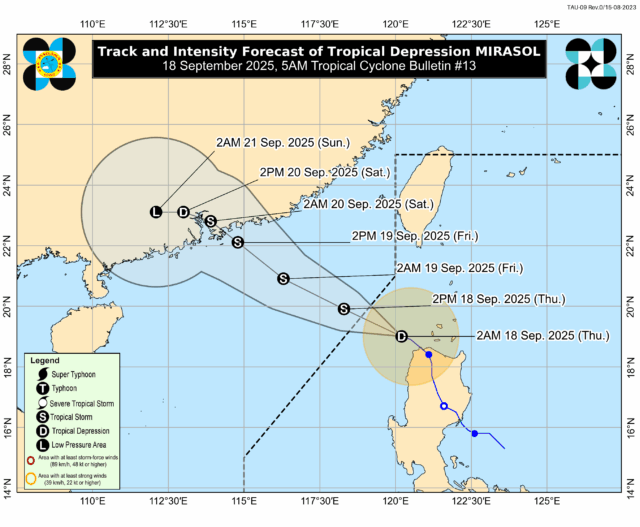
The state weather bureau said in its 5 a.m. advisory that Mirasol was spotted 165 kilometers west of Calayan, Cagayan, packing winds of 55 kilometers per hour (kph) and gusts of up to 70 kph.

Tropical Wind Signal No. 1 was hoisted over Batanes, Babuyan Islands, the western portion of mainland Cagayan, Apayao, the northern portion of Abra, Ilocos Norte, and the northern portion of Ilocos Sur.

It said the cyclone was “less likely” to bring heavy rainfall over Cagayan, Isabela, Kalinga, Apayao, Abra, Ilocos Norte and Ilocos Sur. But scattered rains and thunderstorms were still expected over the Ilocos Region, Cordillera Administrative Region, Cagayan Valley, Mimaropa, Western Visayas, Zambales and Bataan in the next 24 hours.

In Metro Manila, schools cited the transport strike as the reason for shifting to online classes. These included De La Salle Araneta University, Far Eastern University’s selected colleges, the National Teachers College and the University of Santo Tomas.

The University of the East and some schools in Manila and Caloocan likewise announced online classes for basic education. — Edg Adrian A. Eva

New Zealand economy contracts sharply, fuelling bets of steeper rate cuts

STOCK PHOTO | Image by Kerin Gedge from Unsplash

WELLINGTON – New Zealand’s economy shrank more than expected in the second quarter as construction remained in decline and global uncertainty weighed, increasing expectations of a steeper rate cut in October.

Official data out on Thursday showed gross domestic product (GDP) fell 0.9% in the second quarter from the prior quarter, worse than analysts’ and the Reserve Bank of New Zealand’s forecasts of a 0.3% fall.

New Zealand’s economy has contracted in three of the last five quarters.

Annual GDP decreased 0.6%, Statistics New Zealand data showed. The market had expected it to remain unchanged.

Following the weaker-than-expected data, two-year swap rates slid 10 basis points to 2.7290%, their lowest since early 2022. The kiwi dollar fell 0.5% to $0.5932 NZD=D3, well off an overnight peak of $0.6007.

The market is now pricing in a further 58 basis points of cuts to the official cash rate (OCR), up from 48 basis points before the GDP data was released and a 20% chance that the central bank will cut by 50 basis points in October.

In August, the central bank flagged two more rate cuts this year as it noted spending by households and businesses has been constrained by uncertainty, falling employment, higher prices for some essentials and declining house prices.

“The weaker than expected GDP outcome will no doubt encourage the RBNZ in its intentions to cut the OCR further this year,” Westpac senior economist Michael Gordon said in a note.

Westpac is now expecting the central bank to cut by 50 basis points in October and by a further 25 basis points in November.

Weakness in the economy was across the board with the construction sector remaining in decline, manufacturing hurt by slowing goods exports and the service sector remaining weak as tourism stagnates.

The economy has been further hurt by a decision by the United States in April to levy import tariffs on products from a range of countries including New Zealand. The tariff has since been set at 15%, above the 10% rate for goods from neighboring Australia.

IMPROVEMENT EXPECTED IN THIRD QUARTER
New Zealand’s Finance Minister Nicola Willis said international turmoil and uncertainty relating to tariffs clearly had an impact on firms’ and households’ willingness to make investment decisions.

But there are indications the economy has begun to turn the corner in the third quarter, with manufacturing and services indexes along with monthly employment and card spending data improving slightly.

ANZ Senior Economist Matthew Galt said in a note that signs that growth has returned in the third quarter, albeit in a muted manner, suggest the country will avoid another technical recession.

But Galt added that while the bar was higher at the end of a monetary policy cycle for outsized moves if data remained lackluster over coming weeks, a 50 basis point cut was absolutely a possibility. — Reuters

Globe Business calls industry to co-create PH’s digital backbone

L-R: Raymond Policarpio - VP and Head, Globe Business Strategy Management and Business Investments; Wong Kian Soon - Regional Sales Engineering Director, Ciena; Es Ortega - Director for NTG Common Infra Planning & Engineering, Globe Business; Carlo Malana - President and CEO, ST Telemedia Global Data Centres; and Cocoy Claravall - VP and Head for Globe Business Wholesale SAM

The Philippines is at a pivotal moment in its digital journey. Demand for speed, reliability, and reach is more urgent than ever. It’s clear that traditional infrastructure models can no longer carry the weight of what the country aspires to become: a regional hub for connectivity, cloud, and content. The problem isn’t ambition; it’s coordination. The very networks meant to connect people and ideas are often built in silos, but solo runs won’t win the future. It will be shaped by ecosystems that share, scale, and build together.

This vision of shared infrastructure sat at the heart of a breakout session during the 2025 Globe Business G Summit. The session, “Unlocking Powerful Connections to Fuel the Future of Philippine Infrastructure,” convened industry leaders to challenge the status quo. The objective was to co-envision a country where fiber grids, data centers, and cable systems no longer compete for territory. They issued a call for the industry to work in sync to serve the nation at scale.

Globe Business’ Wholesale Division, through Vice-President Cocoy Claravall, outlined this strategy in motion. From new Festoon loops in Luzon to expanded subsea capacity via the Philippine Domestic Submarine Cable Network (PDSCN) and Asia Link Cable, Globe presented a roadmap that places reach and transparency at the core. Central to this strategy is the Managed Optical Fiber Network (MOFN), a model that allows hyperscalers and carriers to tailor their connections without losing the benefits of a managed service. ProAssure, a proactive platform designed to preempt issues before they affect customers, was also discussed as part of this shift toward more intelligent and accountable infrastructure.

“Our role has expanded. We’re no longer just connecting endpoints anymore,” said Claravall. “We’re enabling ecosystems from subsea to cloud, from enterprise to end user. And that means building infrastructure that’s flexible and future-ready.”

Ciena’s Head of Sales Engineering in ASEAN, Kian Soon Wong, brought a technical lens to the discussion, demonstrating how MOFN and Managed Spectrum enable customers to move beyond fixed contracts and build networks to scale as needed around real needs. The model empowers clients to choose their own equipment, monitor network health in real time, and scale on demand, all while the operator handles the heavy lifting of deployment and maintenance.

“MOFN is about balance,” Wong explained. “It gives customers control without the operational burden, and gives operators like Globe a way to deliver more agile services. It’s a collaboration model — not just a tech solution.”

From the data center side, STT GDC Philippines CEO Carlo Malana spoke of how the country is gaining traction as a hyperscale destination. He pointed to STT GDC’s Cavite and Fairview campuses as proof points for hyperscalers looking to deploy AI and cloud workloads in-country.

“The runway is long and the momentum is building,” Malana said. “Philippine infrastructure is no longer aspirational, it’s operational. The question now is how we scale that responsibly and fast enough to meet demand.”

For Globe, the role of a telco is no longer just to connect, it’s to co-create. KD Dizon, Head of Globe Business, emphasized that this is not just a commercial opportunity but a national one.

“Infrastructure is more than physical assets, it’s about trust, alignment, and the will to build beyond our individual interests,” Dizon said. “If we want real digital progress in the Philippines, we need to co-create the grid that will carry it.”

The session closed with a Disruptor Dialogue featuring Claravall, Wong, Malana, and Globe’s Janice Ortega. The conversation dug deeper into what it would take for the Philippines to compete in a world shaped by AI and real-time applications: seamless interconnection, policy alignment, and joint investments across multiple players.

The message was clear: this is no longer a one-player game. Infrastructure must now be approached as a shared national grid. And the Philippines, with the proper coordination, is ready to lead it.


Spotlight is BusinessWorld’s sponsored section that allows advertisers to amplify their brand and connect with BusinessWorld’s audience by publishing their stories on the BusinessWorld Web site. For more information, send an email to online@bworldonline.com.

Join us on Viber at https://bit.ly/3hv6bLA to get more updates and subscribe to BusinessWorld’s titles and get exclusive content through www.bworld-x.com.
Watsons teams up with Novo Nordisk for preventive healthcare

Executives from Watsons Philippines and Novo Nordisk seal their partnership to advance diabetes awareness and expand nationwide access to healthcare. From left: Geraldine Perez, Market Access and Business Development Director, and Wei Sun, General Manager, both from Novo Nordisk; Joweeh Liao, Director for Health Business Unit, Finance, Property & Store Development, and Sharon Decapia, Senior AVP for Marketing, PR & Sustainability, both from Watsons Philippines

Obesity is a growing health challenge in the Philippines. According to the Food and Nutrition Research Institute, 39% of Filipino adults — or nearly 4 out of 10 aged 20 to 59 — are obese. This condition is closely linked to serious illnesses such as heart disease and diabetes, both of which continue to place a heavy burden on Filipino families and the healthcare system.

In response to this urgent health issue, Watsons Philippines, the country’s leading health, wellness, and beauty retailer, has partnered with global healthcare company Novo Nordisk to offer free obesity screenings in select Watsons stores. The initiative aims to promote early detection, raise awareness, and provide guidance on managing obesity and its related health risks.

The in-store activation will run for three months across 18 Watsons branches, offering free clinics every Saturday from 11 a.m. to 6 p.m. Screenings will be conducted by trained healthcare providers who will be on-site to conduct assessments and provide expert advice to customers. For the complete list of participating outlets and the detailed schedule, customers are encouraged to follow Watsons Philippines’ official social media pages.

“At Watsons, we believe good health should be within reach for every Filipino. Partnering with Novo Nordisk strengthens our commitment to making preventive care more accessible and affordable. By offering free obesity screenings in our stores, we empower families with the knowledge and tools to take control of their health and live healthier lives,” said Joweeh B. Liao, Watsons Philippines director for Health Business Unit, Finance, and Property Development.

Joeweeh Liao, director for Health Business Unit, Finance, and Property Development of Watsons Philippines

Beyond this initiative, Watsons continues to strengthen its role as a health partner for the community. With over 1,200 stores nationwide, many with extended hours and an expanding number of 24/7 outlets, Watsons ensures access to care anytime, anywhere. Customers can also order through the Watsons online app, opt to pick up in-store, or avail of the 2-3 hour medicine delivery for added convenience. Alongside these services, Watsons offers a wide range of medicines and tools for ght management, obesity, and diabetes care, supporting busy individuals and families in managing their health on a daily basis.

For Novo Nordisk, the collaboration is aligned with its global ‘Truth About Weight’ campaign, which promotes awareness, combats stigma, and supports science-based approaches to obesity care. “Obesity can greatly affect a person’s quality of life, which is why we at Novo Nordisk, in partnership with Watsons Philippines, are committed to raising the awareness and understanding of the public about obesity. Through the screening initiative, we aim to make screening for obesity more accessible, provide a more comprehensive assessment of a person’s obesity risk, and guide them in taking control of their well-being,” said Wei Sun, Novo Nordisk Philippines general manager.

Watsons Philippines and Novo Nordisk representatives affirm their shared commitment to empower more Filipinos with free screenings, expert guidance, and accessible health services through their newly launched partnership.

This partnership reinforces Watsons’ goal of being a trusted health partner and the go-to destination for the wellness needs of Filipinos. More than just a retailer, Watsons provides education, support, and services that uplift communities. Guided by its brand promise — Look Good, Do Good, Feel Great — Watsons remains committed to empowering every Filipino to live a healthier life.

Download the Watsons App today on the App Store or Google Play and enjoy amazing health and wellness deals, offers, and discounts. From health essentials and pharmacy services to expert advice, Watsons, your trusted health and wellness partner, has everything you need to stay on top of your health, beauty, and wellness goals.

Make every purchase count with a Watsons Club membership! Sign up today and gain access to exclusive perks, member-only promos, and special privileges that bring even more value to your wellness journey. It’s the most innovative way to shop for products and services that help you look good, feel great, and live a healthy life every day.


Spotlight is BusinessWorld’s sponsored section that allows advertisers to amplify their brand and connect with BusinessWorld’s audience by publishing their stories on the BusinessWorld Web site. For more information, send an email to online@bworldonline.com.

Join us on Viber at https://bit.ly/3hv6bLA to get more updates and subscribe to BusinessWorld’s titles and get exclusive content through www.bworld-x.com.

Fed lowers interest rates, signals more cuts ahead; Miran dissents

A sign for the Federal Reserve Board of Governors is seen at the entrance to the William McChesney Martin Jr. building in Washington, D.C. — REUTERS

WASHINGTON – The Federal Reserve, goaded by the risk of rising unemployment, reduced interest rates on Wednesday for the first time since December and indicated more cuts would follow to halt any slide in a labor market already experiencing higher joblessness among Blacks, a declining workweek, and other signs of weakness.

The decision moves in a direction called for by President Donald Trump, but falls far short of the steep cuts in borrowing costs that he has demanded – and which were apparently penciled into projections submitted by new Fed Governor Stephen Miran, who cast the only dissenting vote.

Fed Chair Jerome Powell, speaking in a press conference after the US central bank lowered its benchmark interest rate by a quarter of a percentage point to the 4.00%-4.25% range and indicated more cuts would follow at meetings in October and December, said the softening job market was now top of the mind for him and his fellow policymakers.

“There are no risk-free paths … It’s not incredibly obvious what to do,” Powell told reporters at the end of a two-day policy meeting. “We have to keep our eye on inflation at the same time, we cannot ignore … maximum employment.”

Powell said he believes the recent pace of job creation is running below the break-even rate needed to hold the unemployment rate constant, and that with businesses doing very little hiring overall, any increase in layoffs could quickly feed into higher unemployment.

“You see minority unemployment going up. You see younger people … more susceptible to economic cycles … in addition to just overall lower payroll job creation that shows you that at the margin, the labor market is weakening. … We don’t need it to soften anymore,” he said.

Powell’s comments cap a steady shift in tone that began over the summer as Fed officials concluded that the higher import tariffs imposed by the Trump administration would not lead to persistent inflation, with faster price increases expected through the end of the year but price pressures also expected to fade after that time even as monetary policy becomes looser.

At the same time, signs of job market weakness began to accumulate, with payroll growth nearing stall speed.

MEETING MARKED BY POLITICAL DRAMA
The decision to cut rates came with no shortage of political drama, with Trump trying to fire Governor Lisa Cook in a so-far unsuccessful effort to open another seat on the Fed’s Board of Governors for him to fill, and appointing Miran, who is on leave from his job as head of the White House’s Council of Economic Advisers, to an open position that may only last until the end of January.

Miran was sworn in on Tuesday before the meeting started, and dissented against the policy decision in favor of a larger half-percentage-point rate cut. He also seems to have submitted a year-end rate projection implying he supports further half-percentage-point cuts in the meetings ahead, with the policy rate dropping below 3%. The interest rate “dots” are not associated with policymakers by name, but new projections showed one forecast far below the others that analysts promptly attributed to Miran.

Concerns that Trump’s interference with the Fed – through constant criticism over its rate policy, the appointment of a White House insider to the Fed board and the president’s effort to fire Cook – would yield signs of outsized political influence appear to have been overblown for now.

Two other Trump appointees to the central bank’s board – Fed Vice Chair of Supervision Michelle Bowman and Governor Christopher Waller – joined the wider consensus after dissenting just one meeting earlier.

Waller in particular has been arguing for greater focus on the job market since the summer, a concern that others on the Fed’s policy-setting committee have come to share as data indicated weaker hiring and which is now reflected in the policy statement.

“It’s deeply in our culture to do our work based on the incoming data and never consider anything else,” Powell said in response to questions about the Fed’s ability to maintain its independence in setting interest rates. “There wasn’t widespread support at all for a 50-basis-point cut today.”

‘WEIGHTING THE LABOR MARKET MORE’
Even with inflation expected to end the year at 3%, well above the central bank’s official 2% target, Fed policymakers “deemed that the downside risk to employment has increased, and therefore it would seem that they are weighting the labor market more than the higher inflation that they noted in their projections,” said Ellen Hazen, chief market strategist at F.L. Putnam Investment Management.

Powell said it was not so much the initial cut that will matter to the economy, but the broader sense of a rate path that moves slightly faster to a stopping point about a quarter of a percentage point lower than officials communicated in their projections in June.

The rate-path views are not commitments, Powell said, with higher inflation still a risk and the central bank now in a “meeting-by-meeting situation” when it comes to further rate reductions.

But “I do think the Fed will ultimately keep moving towards neutral,” even at the expense of slightly higher inflation through 2026, said Christopher Hodge, chief US economist at Natixis.

New economic projections released by the Fed showed policymakers at the median still see inflation ending this year at 3%, well above the central bank’s 2% target, a projection unchanged from the forecasts in June. The projection for unemployment was also unchanged at 4.5% and the one for economic growth slightly higher at 1.6% versus 1.4%.

Stocks briefly rose after the release of the policy decision and projections before turning lower and closing mixed, while the dollar was modestly higher against a basket of major trading partners’ currencies. Treasury yields were little changed and rate futures markets saw more than a 90% probability of another rate cut at the Fed’s next meeting in late October.

Among those voting in favor of the policy decision was Cook, who attended the meeting despite Trump’s effort to fire her and after two courts supported her challenge of his attempted dismissal. — Reuters

DPWH cuts 2026 budget by P255B

DEPARTMENT of Public Works and Highways (DPWH) Secretary Vivencio “Vince” B. Dizon — PHILIPPINE STAR/RYAN BALDEMOR

THE Department of Public Works and Highways (DPWH) slashed around P255 billion worth of locally funded flood control projects from its proposed 2026 budget.

We are revising the agency’s budget for 2026. We have removed complicated projects, overlapping projects that are still receiving funding or that have been allocated funding for 2026,” Public Works and Highways Secretary Vivencio “Vince” B. Dizon told the House Appropriations Committee on Wednesday

He said the DPWH had reviewed the initial proposal and removed P255.53 billion worth of duplicate or completed projects in next year’s budget.

The DPWH’s proposed budget for 2026 has now been reduced to P625.78 billion, 28.9% lower than the original proposal of P881.31 billion.

Mr. Dizon said the allocation for 2026 is the DPWH’s lowest since 2023 when it had a budget of P718.35 billion.

“We have exerted our best efforts, within the very limited period allotted, to ensure that the issues raised in the previously submitted budget, such as the funding of completed and duplicate projects, are adequately addressed,” he said, adding that P15.77 billion worth of foreign-assisted flood control projects were retained for next year.

Of the P625.78-billion proposed budget for next year, P482.32 billion was allocated for road projects, while P15.77 billion was allotted for foreign-assisted flood control projects such as payments to multilateral agencies like Asian Development Bank and Japan International Cooperation Agency. It allocated P94.16 billion for other items.

The reduction of DPWH’s budget is in line with President Ferdinand R. Marcos, Jr.’s directive last week that the agency must conduct a “sweeping review” of its 2026 proposed budget following alleged anomalies in flood control projects.

“We would also like to convey the President’s recommendations to Congress that the fiscal space made available by the reduction of P255 billion, be instead allocated to programs and projects in agriculture, education, healthcare, housing, labor, social welfare and information technology,” Mr. Dizon said.

The DPWH chief said the agency is still reviewing flood control projects and reports. He said three more cases related to these anomalous projects will be filed soon.

The DPWH has submitted a list of over 9,000 projects completed between July 2022 and May 2025. Of these, 160 projects have undergone validation, with 15 reported as missing or unlocated.

On Tuesday, the DPWH also lifted the two-week suspension of auctions for locally funded projects, citing the need to fast-track the rollout of key infrastructure.

‘SMALL AMOUNT’
Meanwhile, Budget Secretary Amenah F. Pangandaman said the proposed P255-billion cut in locally funded flood control projects in the DPWH’s 2026 budget is unlikely to dampen economic growth and infrastructure spending next year.

“The P200 billion? That’s just a small amount. Our infrastructure budget is more than a trillion, right? It’ll just be reduced a bit,” she told reporters on Wednesday.

“What’s important is that we still get to implement key projects like school buildings, hospitals, and infrastructure that supports our agriculture sector. Hopefully, everything continues smoothly.”

The Budget department had submitted to Congress a proposed P6.793-trillion National Expenditure Plan for 2026, which is 7.4% higher than this year’s national budget and equivalent to 22% of the country’s gross domestic product (GDP).

The government has set a target for public infrastructure spending of 5%-6% of GDP annually.

Ms. Pangandaman said all legitimate obligations to government contractors will not be affected.

“I think (Mr. Dizon) is reviewing all existing contracts. Some were halted, but it’s part of the cleansing and review process,” she said. “For those that are clean and properly implemented, they should continue.”

Nigel Paul C. Villarete, senior adviser on PPP (public-private partnership) at the technical advisory group Libra Konsult, Inc. said that there should also be a thorough review of the DPWH’s budget cut to really ensure that the rollout of the needed infrastructure projects will not be affected.

“I believe there has to be a deeper move on this issue. Flooding is real and is disastrous to many places and many communities of our country. True, the acts of corruption in these flood-control projects are real and detrimental to our country and people, but we can’t solve the problem simply by just eliminating flood control,” Mr. Villarete said. — Ashley Erika O. Jose and Aubrey Rose A. Inosante

Infrastructure spending unlikely to be affected by budget cuts, probe — DBM

Men are working on a construction project in Manila. — PHILIPPINE STAR/RYAN BALDEMOR

By Aubrey Rose A. Inosante, Reporter

GOVERNMENT infrastructure spending is unlikely to be significantly affected by the ongoing probe on anomalous flood control projects, the Department of Budget and Management (DBM) said.

“There could be some effect if irregularities are detected in specific projects, since it would not be prudent to continue while those projects remain under investigation,” Budget Secretary Amenah F. Pangandaman told BusinessWorld in a Viber message on Tuesday.

The Marcos administration has intensified its investigation on public works projects, particularly in flood mitigation projects that were nonexistent or uncompleted despite billions in funding.

Ms. Pangandaman said there should be minimal or no disruption in ongoing and compliant projects even with the creation of the Independent Commission on Infrastructure (ICI). The ICI was tasked to investigate anomalies in flood control and other infrastructure projects, with authority to recommend criminal, civil and administrative charges.

“In fact, the ICI mechanism is designed to reinforce transparency and accountability in the system, which ultimately supports more efficient and credible public expenditure,” she said.

Data from the DBM showed expenditure on infrastructure and other capital outlays rose by 6.5% year on year to P148.8 billion in June, following the lifting of the election spending ban in early May.

This brought first-half infrastructure spending to P620.2 billion. The full-year infrastructure program is set at P1.51 trillion, or 5.3% of gross domestic product.

Department of Economy, Planning, and Development (DEPDev) Undersecretary Rosemarie G. Edillon said infrastructure rollout will proceed unless suspension orders are issued.

“Unless there’s an actual suspension, otherwise the utilization will drop. I’m not sure how they’ll manage that,” Ms. Edillon said on the sidelines of a House briefing.

Nigel Paul C. Villarete, senior adviser on public-private partnerships at Libra Konsult, Inc., said the ICI’s creation may momentarily slow down project execution, but will not dampen overall infrastructure spending.

“Improving transparency and resisting delays caused by mismanagement and/or corruption is beneficial to the overall infrastructure development of the country, both locally, and ODA (official development assistance)-funded,” Mr. Villarete said.

DEPDev earlier warned that the country’s ODA partners are closely watching how the government addresses corruption in flood control and other infrastructure projects.

Pantheon Macroeconomics Chief Emerging Asia Economist Miguel Chanco said the ICI’s mandate may cause hesitancy in new infrastructure spending in the short and medium term.

“(This is) due to the fact that these will soon be under the microscope for any potential allegations of corruption. While the ICI’s task is very much welcome and long overdue, it could stifle economic activity in the interim,” Mr. Chanco said in an e-mailed statement.

Aside from the ICI, separate investigations are being conducted by lawmakers, the Bureau of Internal Revenue and Anti-Money Laundering Council.

Telcos urged to boost digital infrastructure as new law opens PHL to more players

A teacher checks computers at a school in Manila in this file photo. — PHILIPPINE STAR/EDD GUMBAN

By Ashley Erika O. Jose, Reporter

INCUMBENT telecommunications companies are expected to ramp up their investments in digital infrastructure as competition is likely to heat up with the implementation of the Konektadong Pinoy law.

“Konektadong Pinoy Act will lower barriers for new entrants and encourage more players in the market. Incumbent telcos need to invest aggressively in infrastructure like 5G, fiber, and satellite. They need to focus on customers and improve services to be at par with Association of Southeast Asian Nations countries,” Samuel V. Jacoba, founding president of the National Association of Data Protection Officers of the Philippines (NADPOP), said in an interview on Wednesday.

The Konektadong Pinoy Act, or the Open Access in Data Transmission Act, lapsed into law last month. It streamlines the licensing process for new entrants, boosting competition in data transmission.

Ronald B. Gustilo, a national campaigner for the Digital Pinoys organization, said telcos must embrace consumer-centric innovation while also improving their network reach, particularly in underserved or geographically isolated and disadvantaged areas.

“Competition will no longer be won only on price but on quality of service. They must also prepare for stronger regulatory oversight on affordability and accessibility,” Mr. Gustilo said.

PLDT Inc. Chairman and Chief Executive Officer Manuel V. Pangilinan said the company is preparing for the entry of new players.

“It is a complicated subject. We have to be ready, I suppose,” Mr. Pangilinan said on the sidelines of an event last week.

Information and Communications Technology Secretary Henry Rhoel R. Aguda said the implementing rules and regulations (IRR) of the Konektadong Pinoy Act will be released by the first week of October.

“We are still doing the IRR consultation meetings. We are working to complete it before the end of the month,” Mr. Aguda said in a Viber message to BusinessWorld on Wednesday.

The Department of Information and Communications Technology has invited the country’s major telecommunications and internet providers for their inputs in the IRR, Mr. Aguda said previously. He has said that some foreign players like Elon Musk’s Starlink have also signified their interest in helping craft the IRR.

PLDT and Converge ICT Solutions, Inc. have previously indicated their readiness to take part in drafting the IRR of the Konektadong Pinoy Act, with Converge saying the company wants stronger regulatory authority in the IRR.

For its part, Globe Telecom, Inc. is preparing for new market players by ramping up its technology solutions and fiber offerings to stay competitive amid the growing demand for data and reliable internet connections.

For NADPOP’s Mr. Jacoba, incumbent players still have the leverage as they know how to navigate the market more than the new players.

“Incumbent telcos can introduce more customer-centric services and launch affordable plans to capture budget-conscious consumers. Over time, competition will likely push prices downward, but not drastically, unless new players bring disruptive business models or global economies of scale,” he said.

The threat to incumbent telcos will not be immediately felt despite the law explicitly opening the door for new internet service providers, Mr. Jacoba said.

“As new entrants challenge incumbents, telcos will likely introduce more diverse packages — from affordable data bundles to more flexible postpaid and prepaid options. While price reductions are possible, we think consumers should watch for value-added services,” Mr. Gustilo said.

Adel A. Tamano, chief revenue officer of DITO Telecommunity Corp., said security and data privacy should be the focus of the Konektadong Pinoy Act’s IRR.

The company said that the law should be lenient or open towards new entrants as the main goal of the Konektadong Pinoy law is to attract more players into the industry.

Earlier, the Philippine Chamber of Telecommunications Operators said some provisions of the law undermines regulatory oversight and threatens fair competition, as the law only requires entrants to secure cybersecurity certification after two years of operations.

For Digital Pinoys’ Mr. Gustilo, the lowering of barriers for players will reshape the market away from “near-duopoly” towards a multi-player competition.

“Incumbents should differentiate on quality by delivering faster, more reliable internet where it matters most such as urban centers and key growth corridors. In parallel, they should expand to underserved markets ahead of new players, leveraging their existing scale,” Mr. Jacoba added.

Hastings Holdings, Inc., a unit of the PLDT Beneficial Trust Fund subsidiary MediaQuest Holdings, Inc., holds a majority stake in BusinessWorld through the Philippine Star Group.

Marcos signs law amending RoW Act

A MAN WORKS at a construction site in Navotas City. — PHILIPPINE STAR/RYAN BALDEMOR

PHILIPPINE President Ferdinand R. Marcos, Jr. signed into law a measure that amended the Right-of-Way (RoW) Act, which would allow the government to acquire more land for big-ticket infrastructure projects.

Palace Press Officer Clarissa A. Castro confirmed the development on Wednesday through a Viber message to BusinessWorld.

“The President signed and approved the bill,” she said, without elaborating.

A copy of the signed law has yet to be released.

Right-of-way issues have hampered the rollout of government infrastructure projects, such as the Metro Manila Subway Project.

The Accelerated and Reformed Right-of-Way Act is one of the Marcos administration’s priority legislations, as it is expected to facilitate easier land acquisition for National Government infrastructure projects.

It amended Republic Act No. 10752 or the Right-of-Way Act, expanding its scope to cover all projects undertaken through public-private partnerships.

Michael L. Ricafort, chief economist of Rizal Commercial Banking Corp., said the new law would help address RoW issues more effectively and expeditiously as these have delayed the completion of infrastructure projects.

Nigel Paul C. Villarete, senior adviser on public-private partnerships at technical advisory group Libra Konsult, Inc., said he fully agrees with the new law.

“While we do uphold the sanctity of private property rights in the framework of our representative democracy, there remains the overarching principle that the good of all and for all must supersede individual rights,” he said.

“While a representative democracy underscores the inherent right of an individual, there has to be a tradeoff when such rights are weighed against the rights of the society or community in general.”

The law also applies to private firms engaged in public services that are granted the power of eminent domain under their franchise or other laws, covering sectors such as electricity, petroleum, water pipeline, ports, telecommunications, and irrigation.

It also amended the existing law on government access or expropriation of land for infrastructure projects by clarifying provisions on subterranean or underground rights-of-way.

It covers roads, bridges, power and water pipelines, telecommunications facilities, airports, seaports and irrigation projects, among others.

It also requires agencies to prepare a Right-of-Way Action Plan before acquiring property, which must include a census of affected persons, an inventory of assets, compensation estimates, an implementation schedule, and records of consultations with stakeholders.

Property valuation will be based on the system and market schedules under the Real Property Valuation and Assessment Reform Act, ensuring compensation for land, structures, crops, and other affected assets. — Chloe Mari A. Hufana

Aug. transmission rates up as cost of power reserves rises

PHILSTAR FILE PHOTO

POWER CONSUMERS will have to pay higher transmission charges in their electricity bills this month, due to increased cost of power reserves, the National Grid Corp. of the Philippines (NGCP) said.

“The reason for the increase is mainly due to the increase on the AS (ancillary services) rates, particularly from the reserve market,” Julius Ryan D. Datingaling, head of business and regulatory development at NGCP, said at a briefing on Wednesday.

The overall rate for August, which will appear in September electricity bills, climbed by 7.09% to P1.4171 per kilowatt-hour (kWh) from P1.3233 per kWh in July.

AS charges, or power reserves deployed by grid operators to support the transmission of power and to maintain reliable operations, rose by 13.4% to P0.6659 per kWh from P0.5872 per kWh a month earlier.

Mr. Datingaling said the increase in AS rates was due to spot quantity, or the amount of reserve capacity traded in the reserve market.

“That was due to market forces because it’s market-driven, so the rules on supply and demand will apply,” NGCP Spokesperson Cynthia P. Alabanza said.

Meanwhile, transmission wheeling rate — or what NGCP charges for its primary service of delivering electricity — inched up by 0.8% to P0.597 per kWh from P0.5923 per kWh.

Other charges included universal charge, feed-in tariff allowance, and value-added tax on transmission and AS charges.

“NGCP does earn from AS and does not benefit from changes in AS prices,” the company said.

Transmission charges reflect the cost of delivering electricity from power generators to the distribution system. These charges usually account for around 9% of a consumer’s electricity bill.

Meanwhile, the grid operator said it has implemented the necessary preparations and precautions to minimize the impact of Tropical Depression Mirasol on transmission operations and facilities.

“Preparations include ensuring the reliability of communications equipment, availability of hardware materials and supplies necessary for the repair of damage to facilities, as well as the positioning of line crews in strategic areas to facilitate immediate restoration work,” NGCP said.

Through its Integrated Disaster Action Plan, the company outlined procedures to ensure the readiness of all power transmission facilities expected to be affected by weather disturbance.

Ms. Alabanza said that the company upgraded its facilities to withstand 300 kilometers per hour (kph) of wind speed, from old facilities that were only able to withstand 180 kph winds.

Tropical Depression Mirasol is forecasted to move northwestward within the next 12 hours while traversing northern Luzon. It was set to exit the Philippine Area of Responsibility on Thursday morning or afternoon.

The NGCP officially started operations as a power transmission service provider in 2009. Under a congressionally granted 50-year franchise, the company has the right to operate and maintain the transmission system and related facilities. — Sheldeen Joy Talavera