


Hotels lobby for aid after losing mandatory quarantine business
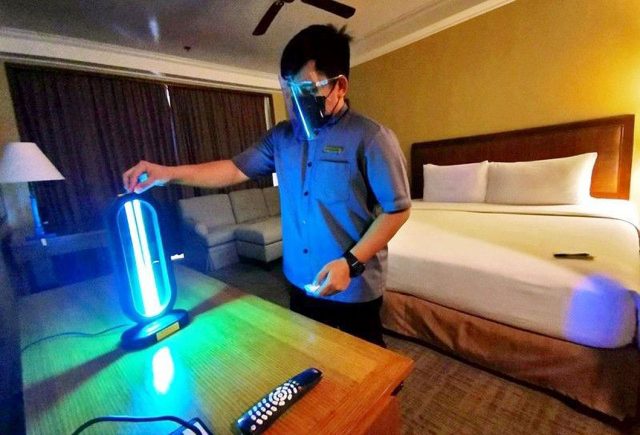

THE hotel industry is asking for government aid after the easing of quarantine requirements took away one of their more reliable sources of business during the pandemic — mandatory hotel stays while observing the quarantine period.
The government recently allowed fully vaccinated travelers from a list of countries not requiring a visa for entry to skip the requirement to stay in a recognized facility during their quarantine.
Benito C. Bengzon, Jr., Philippine Hotel Owners Association, Inc. (PHOA) executive director, said during the Kapihan sa Manila Bay virtual forum on Wednesday that hotels have experienced a drop in occupancy following the removal of mandatory quarantine.
“Right now, many of our hotels are recording single-digit occupancy… many of them were really banking on the quarantined guests for revenue,” Mr. Bengzon said.
“What we would like is some kind of financial assistance to help tide us over in the next six to 12 months. Perhaps this is something that we can discuss in greater detail with the relevant agencies, particularly with respect to the possibility of a stimulus program for hotels, whether they are members of PHOA or otherwise,” he added.
On Jan. 28, Malacañang announced that fully vaccinated travelers are allowed to enter the country without having to undergo mandatory quarantine. They are only required to present a negative reverse transcription polymerase chain reaction (RT-PCR) test taken at least 48 hours prior to their departure.
The new policy on returning Filipinos was in force on Feb. 1, while the removal of such restrictions on foreigners will begin on Feb. 10.
Mr. Bengzon said that “Moving forward, even as we open our borders to international travel, it is important to provide a lifeline to the hotels which have been suffering.”
Tourism Secretary Bernadette Romulo-Puyat said at the virtual forum that the Philippines is ready for the reopening of international travel.
Ms. Romulo-Puyat said fully vaccinated travelers are exempt from the limit of 5,000 arrivals limit set by the government.
“Allowing the entry of these international travelers is a welcome development that will lead to growth in the travel and tourism sector, the restoration of lost jobs, the generation of much-needed revenue for tourism-related enterprises, tourism communities and the government, plus many other benefits that will be felt by the entire tourism value chain,” Ms. Romulo-Puyat said. — Revin Mikhael D. Ochave
ADB considers RCEP beneficial to BPO sector; says not too late to join

THE outsourcing industry is poised to benefit from the Regional Comprehensive Economic Partnership (RCEP) trade deal, with opportunities still likely available even with a delayed start, the Asian Development Bank (ADB) said.
“RCEP includes two chapters that are very relevant for digitalization,” ADB Economic Research and Regional Cooperation Department Director for Regional Cooperation and Integration Cyn-Young Park said in a briefing on Wednesday.
The trade deal involving the Association of Southeast Asian Nations, Australia, China, Japan, South Korea, and New Zealand includes chapters on e-commerce and intellectual property rights.
Ms. Park said that this establishes a set of unified rules on trade in services through e-commerce, and supports investment by protecting intellectual property.
“Especially in the Philippines, this will help greatly the BPO (business process outsourcing) sector,” she said. “BPO sector has been the core business for creating jobs and incomes for many, many people in the Philippines.”
An outsourcing industry group, the Information Technology and Business Process Association of the Philippines, has said that the trade deal would boost investment in the sector due to the stable regulatory environment and adherence to common international standards.
The world’s largest trade deal started to come into force on Jan. 1, having been approved by Brunei, Cambodia, Laos, Singapore, Thailand, Vietnam, Australia, China, Japan, New Zealand, and South Korea.
RCEP was signed by President Rodrigo R. Duterte on Sept. 2, 2021, but the Senate last week adjourned for the election break without giving its concurrence to the trade deal.
Groups such as the Federation of Free Farmers have said that safeguards for the agriculture sector need to be in place before the Philippines enforces the deal.
ADB Chief Economist Albert Park said the delayed implementation is “unfortunate.”
“At the same time, the agreement just went into force on January 1st, and so I think its impacts are going to be quite gradual. They will unfold over time,” he said.
“I don’t think companies in the Philippines or workers should feel discouraged,” he added, as long as the country eventually implements the deal. “I’m sure as the years unfold those opportunities will also be made available.”
The ADB in its Asian Economic Integration Report 2022 launched on Wednesday said digital services trade in the Asia Pacific has grown faster in the last 15 years compared to other parts of the world.
Wealthier economies are more competitive in digital services, in which human capital, digital connectivity, communications technology investment, and the regulatory environment are key, the ADB said.
“The availability of human capital in scale, costs, or specific expertise has been identified as important for digital services competitiveness in many economies in Asia and the Pacific,” the bank said.
“Digital services exports in India and the Philippines have been largely driven by their large, young, English-speaking population, and competitive wages.” — Jenina P. Ibañez
Bill seeking competitive pay for aviation regulators touted as critical for recovery of airline industry

A BILL that proposes to exempt the Civil Aviation Authority of the Philippines (CAAP) from the government salary structure will, if passed, help attract executive talent to the regulator and pave the way for the recovery of the airline industry, a legislator said on Wednesday.
Samar Rep. Edgar Mary S. Sarmiento, author of House Bill (HB) 8700, said a CAAP run along more professional lines is needed to help the airline industry recover from the pandemic.
The bill proposes, among other things, to exempt CAAP from the Salary Standardization Law, the pay scale for civil servants, while also giving the regulator a measure of independence by being run as a government-owned and -controlled corporation.
“The negative impact of the COVID-19 pandemic on the financial viability of the aviation sector is staggering. We need a highly competent CAAP to assist the industry (in its recovery),” he said in a statement.
He said CAAP, as an independent monitoring agency that regulates airlines and has some judicial powers, should be given more financial freedom.
The measure also seeks to extend the term of the Director General to seven years to insulate appointees from partisan politics.
On Monday, the House Ways and Means Committee, chaired by Albay Rep. Jose Maria Clemente S. Salceda, approved the bill despite some opposition from the Department of Finance.
HB 8700 will be subject to second reading when the House of Representatives resumes session on May 23, after a three-month election recess.
“I’m really happy that the fiscal issues related to HB 8700 have been fully threshed out by the Salceda panel. I’m grateful for this positive action of the Ways and Means Committee. Now we can move to put (the bill before) the plenary for House approval,” Mr. Sarmiento said. — Jaspearl Emerald G. Tan
Competition, privacy regulators in enforcement collaboration deal

THE Philippine Competition Commission (PCC) said it entered into a partnership with the National Privacy Commission (NPC) to collaborate in competition cases involving data-privacy issues.
The PCC signed the memorandum of agreement (MoA) with the NPC on Wednesday.
“The MoA facilitates investigation and enforcement support between (the two commissions), including forming joint task forces and notification of matters of common concern. It also enables direct consultation between both regulators in the drafting and implementation of policies relating to one another’s expertise,” PCC said.
“To further promote coordination and cooperation, the agencies also agreed to conduct capacity-building activities, which may come in the form of training or temporary secondments of staff to one another,” it added.
According to PCC Chairman Arsenio M. Balisacan, a unified approach is needed to promote competition and data privacy in following the surge in digitalization.
“With the rise of the digital economy, data — including personal data — have become an important source of market power. It falls upon regulators to ensure that data-driven markets develop and mature in a manner that does not harm consumer welfare,” Mr. Balisacan said.
The PCC said the accumulation and use of data by dominant market players has been the subject of scrutiny in various jurisdictions.
It added that the emerging risk of abuse in data privacy and competition has increased, requiring collaboration between the two commissions.
“In today’s digital economy, data play a key role in the business model of many firms. The synergy we are forming through this agreement is a springboard for stronger enforcement of our competition and data privacy laws,” Mr. Balisacan said. — Revin Mikhael D. Ochave
ADB approves food aid grant for Typhoon Odette victims

THE Asian Development Bank (ADB) approved a $2-million grant to support Philippine recovery efforts from Typhoon Odette (international name: Rai).
The ADB’s Asia Pacific Disaster Response Fund will finance food vouchers for 15,000 households affected by the typhoon in the Visayas and Mindanao, the bank said in a statement on Wednesday.
Typhoon Odette struck Mindanao and the Visayas in December, causing P13.3 billion in agricultural damage and P17.19 billion in destroyed infrastructure.
“Typhoon Odette’s damage to housing, agriculture, and infrastructure amid the COVID-19 pandemic has made life more difficult for Filipinos in affected areas,” ADB Director General for Southeast Asia Ramesh Subramaniam said.
“This assistance will help finance the humanitarian needs of those residents, especially people living in remote areas.”
ADB partnered with the United Nations World Food Programme to distribute the food aid, along with the Department of Social Welfare and Development.
Separately, South Korea offered $300,000 in relief aid to help rebuild shelters in some areas affected by the typhoon, the United Nations Development Programme (UNDP) said.
Selected beneficiaries in the Dinagat Islands, off northeastern Mindanao, will be trained in home rebuilding using designs that can withstand strong winds and flood, the UNDP said in a statement on Wednesday.
The UNDP also invested $650,000 in recovery efforts for communities and local government units in areas hit by the typhoon, especially in Cebu, Siargao, and the Dinagat Islands.
The UNDP is also working with the Department of Information and Communications Technology to help restore information and communications technology in the affected areas.
“UNDP focuses (its) support (on) corrective measures that will reduce the existing level of risk. We are working hand-in-hand with key government agencies and local government units to enhance their capacities in risk management to reduce vulnerability and exposure to threats and hazards,” UNDP Philippines Resident Representative Selva Ramachandran said.
“We also want to strengthen the aspect of digital governance to make social services more accessible to people, especially in the event of natural calamity.”
The Budget department as of the end of last year released P7.68 billion from 2021 unprogrammed appropriations, the calamity fund, and President Rodrigo R. Duterte’s contingent fund to assist local governments and national agencies responding to the typhoon.
Adding to the international aid, the Japanese embassy in the Philippines also said that its government’s $13 million in grant aid will support the work of several international organizations doing humanitarian work in areas devastated by the typhoon.
“These organizations shall focus on different areas of assistance such as food, shelter, non-food items, health, and water and sanitation,” the embassy said.
Separately, the Japan International Cooperation Agency (JICA) approved a ¥329-million (about P146 million) grant funding Filipino government officials’ training in Japan.
JICA last week signed the agreement for the Project for Human Resources Development Scholarship with the National Economic and Development Authority.
The program aims to help “develop young leaders in government and boost efforts in socioeconomic development,” JICA said in a statement on Wednesday. — Jenina P. Ibañez
Local governments urged to step up in averting water crisis

LOCAL GOVERNMENT units (LGUs) have been urged to play a greater role in heading off the periodic water shortages during the dry season, industry representatives said at a virtual forum on Wednesday.
“We invite LGUs to help solve the water crisis. LGUs can be an instrumental convenor or linkage for us to solve the water and sanitation problems across the country,” Water.org Regional Director Griselda G. Santos said.
“Water and sanitation are forever relevant issues. Public-private sector partnerships can also increase scale and reach,” Ms. Santos said. “Placing water at the core of the city’s urban planning and investment creates a strong foundation for sustainable growth. Innovation makes water more accessible and affordable,” she added.
Ms. Santos put forward her organization’s WaterCredit program, in which financial institutions support technical and financial assistance for water and sanitation improvements.
“Water scarcity affects more than 40% of the world’s population. By 2050, at least one in four people will suffer recurring water shortages,” said Anna M. Lu, Aboitiz InfraCapital vice-president for Project Development.
“This must be a concerted effort of LGUs, communities and industries. We should explore the conjunctive use of ground and surface water. To manage resources, before drawing water, we must understand availability and sustainability,” she said.
She cited the need to conduct hydrology and hydrogeology studies, which determines surface water and groundwater availability and sustainability in the target area.
Adrien Marsden, associate director for London-based design and engineering company Arup, said: “Rain and storm water is something we have to learn to live with. If we design with water, we open up opportunities. If it’s not managed, it will have flooding and negative impacts,” Mr. Marsden said.
“Urban spaces need a different approach (than) rural spaces. All of these solutions need integrated thinking. The opportunities are not about designing flood management systems, but about managing uncertainty, placemaking and driving towards sustainable and net zero targets,” he said.
Meanwhile, Rezatec Vice-President Michel Trudelle said that geospatial data analytics the key to enhancing water systems in a manner that will prevent flooding.
“Geospatial artificial intelligence (AI) can help utilities in the face of increasingly extreme weather,” Mr. Trudelle said.
“It can accurately predict the top at-risk sections of your network, implement upgrade programs more effectively, and gain savings in capital and operating expenditures,” he added. — Luisa Maria Jacinta C. Jocson
Metro Manila job turnover dips in H1 2021

EMPLOYMENT turnover in large Metro Manila companies declined in the first two quarters of 2021, the Philippine Statistics Authority reported, as lockdowns to contain the spread of the coronavirus continued.
The Philippine Statistics Authority’s Labor Turnover Survey reported turnover rates of minus 3.1% and minus 1.2% in the first and second quarters of 2021, respectively.
The National Capital Region’s labor turnover rate — the difference between the rate of hiring (also known as accession) and the rate of job termination or resignation (separation) — has been in negative territory since the start of 2020, except for growth of 0.1% in the third quarter of that year.
The turnover rate in the first and second quarters of 2021 were the equivalent of reductions of 31 and 12 workers for every 1,000 employed by these establishments in Metro Manila.
The accession rate, which represents hiring to either replace former employees or expand the workforce, was 7.3% and 7% in the first and second quarter last year, from 8% and 4.8% in third and fourth quarter of 2020.
The separation rate, which covers termination and resignation, stood at 10.4% and 8.1% in the first and second quarters, higher than the 7.9% and 5.2% posted in the last two quarters of 2020.
Only the agriculture sector posted net employment gains of 8.4% and 1.4% during the first and second quarters last year, respectively.
Turnover rates for industry contracted to 2.9% and 1.9% during the first and second quarters.
Services turnover fell to 3.2% in the first quarter and 1% in the second quarters of 2021.
“Further measures to reopen the economy from lockdowns such as allowing essential industries and public transportation to continue operating (unlike a year earlier) partly led to the improvement in labor/employment data as of 2Q 2021,” Rizal Commercial Banking Corp. Chief Economist Michael L. Ricafort said in an e-mail interview.
Mr. Ricafort attributed the slowdown in the separation rate in the second quarter to the continued operation of essential industries and public transportation as well as increased business confidence.
“Agriculture has been one of the priority industries since the pandemic started in 2020 in terms of continuous production/operations/employment, in view of upholding the mandate of food security in the country, also in view of the fact that agricultural areas are away from urban areas where COVID cases are concentrated. Agricultural areas also have less population density and (are) less prone to new COVID cases due to large spacing/distancing in those areas,” Mr. Ricafort added.
Mr. Ricafort was optimistic that the employment rate will likely improve in the latter half of that year after the authorities shifted policy in favor of more targeted, granular lockdowns. — Mariedel Irish U. Catilogo
A sigh of relief over SSS loan penalty condonation

Last call for member-borrowers of the Social Security System (SSS)!
As a pandemic relief measure for SSS members, those with qualified loans were allowed to avail of the Short-Term Member Loan Penalty Condonation Program between Nov. 15, 2021 and Feb. 14, 2022. Member-borrowers therefore have just a few days to meet the condonation deadline.
Under the guidelines laid down in SSS Circular No. 2021-14, a short-term loan qualifies for the program if the loan has been delinquent for at least six months, as of the first day of the condonation period, Nov. 15. Short-term loans include salary loans, calamity loans, those under the Salary Loan Early Renewal Program, emergency loans, and restructured loans under the Loan Restructuring Program implemented in 2016 and 2019.
The condonation program allows member-borrowers to settle their delinquent loans on much lighter payment terms. All outstanding principal and interest components of the loans are consolidated into one new Consolidated “Restructured Loan 1” or “Restructured Loan 2.” The payment can be at one time or in installments.
One-time payment is due in full within 30 days from receipt of the approval of the penalty condonation application. For those choosing to pay by installment, a 50% down payment is required within 30 days upon receipt of the application approval, with the remaining 50% payable in six equal monthly installments.
Like any other loan, installment payments are subject to an interest rate of 3% per annum computed on a diminishing principal balance over the six months. Late payments are subject to a penalty of 1% per month.
The balance of the restructured loan should be zero at the end of the term; otherwise, any unpaid balance, including the proportionate condonable penalty, will become part of a new principal under “Restructured Loan 2.” The modified loan terms require the balance settlement immediately because the “Restructured Loan 2” is due and demandable. If unpaid, the loan will be charged an interest of 10% per annum until fully paid.
Under the program, penalties are condoned 100% under the one-time payment option. For installment terms, 50% of the consolidated penalty is condoned upon receipt of the 50% down payment, with the remaining 50% penalty to be fully condoned after full payment of the restructured loan.
Before member-borrowers can avail of other short-term member loan programs, they should note that “Restructured Loan 1” and/or “Restructured Loan 2” should be fully settled first. Therefore, their payment schedule should be planned accordingly to manage cash flow, balancing cash usage for essential needs, loan payments, and emergencies.
One benefit of the application process is the ease of filing online via the member’s SSS electronic account. Loan payment can be through any SSS Branch or online payment channels, such as GCash and PayMaya. While assisting a client, I found my experience of applying online to be convenient and safe, without exposure to health risks. On the downside, digital filing requires reliable internet connectivity and access to computers, which many Filipinos may not have.
It is always prudent for the member-borrower to keep a copy of the proof of payment for future reference. In case of lapses, such as system glitches or unposted entries, the burden is on the member-borrower to show proof of payment. Should the SSS assess the member-borrower for unpaid loans, the claim can be refuted by presenting proof of payment.
The condonation program is a welcome measure at a time when things have not yet returned to normal. Since the program’s objective is to provide relief to cash-strapped members, the SSS may want to consider giving member-borrowers more time to settle their loans. One such scheme could involve (a) making the full payment or the 50% down payment payable in 60 days instead of 30 days, and (b) make the installments payable in 12 equal monthly installments instead of just six months.
The SSS may also consider extending the program period up to May 14, or an additional six months from the start of the program, to give more time for the qualified member-borrower to avail of the relief on offer.
For now, a sigh of relief would be better than no relief at all. I hope that qualified members-borrowers will still take the opportunity to settle their loan obligations to avoid additional financial burdens in the form of penalties as a consequence of defaulting on loan payments. On the part of the SSS, the funds collected from the program will help the agency improve its services and provide much-needed benefits to SSS members.
The views or opinions expressed in this article are solely those of the author and do not necessarily represent those of Isla Lipana & Co. The content is for general information purposes only, and should not be used as a substitute for specific advice.
Bernadette R. Fama-Absolor is a manager at the Client Accounting Services group of Isla Lipana & Co., the Philippine member firm of the PwC network.
Virus cases fewer than 5,000 for 2nd straight day

THE PHILIPPINES reported 3,651 coronavirus infections on Wednesday, the second straight day the tally fell below 5,000.
The brought the total to 3.62 million, the Department of Health (DoH) said in a bulletin. The death toll hit 54,690 after 69 more patients died, while recoveries rose by 12,834 to 3.47 million.
It said 16.5% of 29,970 samples on Feb. 6 tested positive for coronavirus disease 2019 (COVID-19), still above the 5% threshold set by the World Health Organization (WHO).
There were 96,326 active cases, 4,150 of which did not show symptoms, 87,385 were mild, 3,029 were moderate, 1,447 were severe and 315 were critical.
DoH said 95% of the latest cases occurred on Jan. 27 to Feb. 9. The top regions with new cases in the past two weeks were Western Visayas with 523, Metro Manila with 484 and Calabarzon with 414 infections. It added that 36% of new deaths occurred in February and 52% in January.
The agency said 105 duplicates had been removed from the tally, 86 of which were recoveries, while three patients tested negative and were removed from. It added that 49 recoveries were relisted as deaths. Three laboratories failed to submit data on Feb. 7.
The Health department said 40% of intensive care unit beds in the country had been used, while the rate for Metro Manila was 32%.
Meanwhile, the government would focus on economic recovery during the fifth phase of its action plan against the coronavirus pandemic, Cabinet Secretary Karlo Alexei B. Nograles told state-run radio.
“The focus of the National Action Plan V would be on economic recovery, reviving the livelihood of our fellowmen in light of the Omicron variant, which is currently the predominant variant in our country,” he said in mixed English and Filipino.
The fifth phase would also focus on investment and job promotions to speed up economic recovery, he added. He said the government aims to boost vaccination efforts, promote telemedicine programs and increase the purchase of medicines against the virus.
Mr. Nograles said the government might announce the capital region’s virus alert level as early as Feb. 13. “We want our decision to be closer to Feb. 16 so that it would be based on the latest COVID-19 numbers.”
Metro Manila is under Alert Level 2, the second most relaxed status in a five-tier system.
Various countries have started easing virus restrictions amid hopes that the Omicron variant, which was first detected in South Africa, might have peaked.
Denmark became the first country in the European Union to scrap all COVID-19 restrictions, including wearing of face masks, the BBC reported.
The continent could soon enter a long period of tranquility amid the pandemic due to high vaccination rates, the end of winter and the less harmful nature of the highly mutated Omicron variant, BBC said, citing World Health Organization Europe Director Hans Kluge.
Mr. Nograles earlier said the virus alert system would be kept to serve as a warning system for future pandemics.
The Philippines is set to allow the entry of fully vaccinated foreign tourists starting Feb. 10.
The Southeast Asian nation had fully vaccinated 59.87 million people as of Feb. 4, while nearly 60.66 million have received their first dose, data from the Health department showed. More than eight million booster shots have been given out. — Kyle Aristophere T. Atienza
Marcos widens lead in Laylo Research’s January opinion poll

FORMER Senator Ferdinand “Bongbong” R. Marcos, Jr. continued to widen his lead in Laylo Research’s latest presidential opinion poll.
His voter preference rose by 6 points from November to 64% in the Jan. 17 to 23 poll, the son of the late dictator said in a statement, citing the poll, which had 3,000 respondents.
“Notwithstanding the seemingly endless barrage of mudslinging and negative campaigning against him, Filipino voters’ support for Partido Federal ng Pilipinas (PFP) standard-bearer Ferdinand ‘Bongbong’ Marcos, Jr. remains solid,” according to the statement.
At a very distant second was Vice-President Maria Lenor “Leni” G. Robredo with 16%. Tied for third place were Manila Mayor Francisco “Isko” M. Domagoso and boxing champion and Senator Emmanuel “Manny” D. Pacquiao with 7% each. Senator Panfilo “Ping” M. Lacson was in fourth place with 4%.
Meanwhile, Ms. Robredo visited the provinces of Camariñes Norte and Sorsogon in the Bicol region to woo voters on the second day of the campaign period on Wednesday.
“The results of the 2022 polls will determine the kind of politics and governance Filipinos want,” she said at an event, according to an emailed statement from her office.
Ms. Robredo also visited Camariñes Norte’s Labo town, where she asked voters to support her running mate Senator Francis “Kiko” N. Pangilinan and her Senate slate.
After Camariñes Norte, she went to Sorsogon’s Gubat town and Sorsogon City, where she was welcomed by senatorial bet Francis Joseph G. Escudero.
His father, Salvador Hatoc Escudero III, served as Agriculture Secretary under the administration of the late dictator Ferdinand E. Marcos.
Mr. Escudero is the main author of the law compensating martial law victims. He ran in the 2016 vice-presidential race but lost to Ms. Robredo.
Ms. Robredo held a proclamation rally in Naga City on Tuesday night, reiterating her plans to form an inclusive government.
During her stint as a representative of Camariñes Sur, she filed bills seeking to end political dynasties and mandating government offices to disclose financial transactions.
Also on Wednesday, Senator and presidential bet Panfilo “Ping” M. Lacson vowed to run a “very disciplined campaign,” citing the potential spread of the coronavirus at political sorties.
“That is precisely the reason why we intend to run a very disciplined campaign,” he said in a Viber message. “Senate President Vicente C. Sotto III and I have agreed to abide by the alert level protocols being imposed by local governments that we will visit like the kick-off campaign rally that we held in Imus, Cavite yesterday.”
The presidential palace has said the 2022 campaign would not spur a fresh surge in coronavirus disease 2019 (COVID-19) infections as long as health protocols are enforced.
“We are also confident that the Commission on Elections will enforce the guidelines, rules and regulations when it comes to the campaign to ensure that we will not have superspreader events,” Cabinet Secretary Karlo Alexei B. Nograles said.
The Lacson-Sotto tandem on Wednesday paid a courtesy call on Quezon City Mayor Maria Josefina “Joy” G. Belmonte. Mr. Sotto’s son, Vice Mayor Gian Carlo G. Sotto, is the vice mayor.
Mr. Lacson and Mr. Sotto later went to the Quezon City Memorial Circle where their senatorial bets relayed their platforms. — Kyle Aristophere T. Atienza and Alyssa Nicole O. Tan
SC tells recruitment agencies to comply with labor laws as it rules in favor of dismissed worker

THE SUPREME COURT (SC) “cautioned” accredited recruitment agencies on their role of safeguarding the welfare of overseas Filipino workers (OFWs), citing an Oct. 2021 ruling in favor of a dismissed employee in Taiwan.
In a Feb. 8 statement posted on the SC website, the High Court said recruitment agencies should serve as advocates of Filipino migrant workers by properly enforcing employment contracts and complying with labor laws.
The court said despite the enactment of the Migrant Workers and Overseas Filipinos Act of 1995, which imposes penalties against negligent agencies, numerous incidents of mishandling and “inhuman” treatment of OFWs continue to be reported.
In a 29-page decision dated Oct. 6, penned by Chief Justice Alexander G. Gesumundo, the court ordered a recruitment agency and its foreign party to pay the family of a former OFW in Taiwan who was unlawfully fired after he was found to have been suffering from a disease.
“Overseas Filipino workers who are contractually and legally entitled to receive health insurance benefits may not be denied of their rights and privileges under the law,” Mr. Gesumundo said in the ruling.
“DOLE (Department of Labor and Employment)-accredited recruitment agencies must ensure that their foreign principals comply with this obligation, consistent with their responsibility to protect the interests of distressed migrant workers,” the decision states.
The Taiwanese company and the recruitment agency were ordered by the court to pay the family of the respondent NT$ 102,528 worth of unpaid salaries, and an additional P1 million as financial assistance.
The former OFW, who has since passed away, contracted a terminal illness during the term of employment as a machine operator with the Taiwanese firm.
The respondent filed a case against the Taiwanese company before the Labor Arbiter under the National Labor Relations Commission seeking proper compensation for his illness as he was unlawfully sent back to his country.
The Taiwanese company did not issue a written notice on the termination of employment and simply repatriated the Filipino worker.
Taiwan was the fourth top destination for OFWs as of 2019 data from the Philippine Statistics Authority, accounting for 6.7% of the 2.2 million migrant workers.
The Manila Economic and Cultural Office (MECO) announced on Monday that OFWs will again be allowed entry to Taiwan starting Feb. 15 after several months of ban imposed on all countries due to the coronavirus pandemic.
There are at least 35,000 OFWs awaiting employment in Taiwan with about 11,000 new hires and 24,000 replacements, MECO said in a statement on Monday. — John Victor D. Ordoñez