Home Blog Page 6183

Marcos tests positive for COVID-19

Philippine President Ferdinand R. Marcos, Jr., met with members of the newly installed Private Sector Advisory Council at the presidential palace on Thursday night. Mr. Marcos tested positive for coronavirus on Friday. — Image via Bongbong Marcos/Facebook

Philippine President Ferdinand R. Marcos, Jr., has tested positive for the coronavirus, his press chief said on Friday.

Mr. Marcos tested positive for coronavirus disease 2019 (COVID-19) in an antigen test, Press Secretary Trixie Cruz-Angeles said in a news briefing.

“He has a slight fever but he is otherwise okay,” she said.

Ms. Cruz-Angeles and Executive Secretary Victor D. Rodriguez, both close contacts of Mr. Marcos, tested negative for the virus.

Mr. Marcos, 64, tested positive for COVID-19 in 2020.

On Thursday night, Mr. Marcos’ official Facebook page showed photos of his meeting at the presidential palace with members of the newly installed Private Sector Advisory Council, which was formed to consolidate public-private efforts to address the problems confronting the agriculture sector. Mr. Marcos and a few of his guests were unmasked in several photographs. — Kyle Aristophere T. Atienza

Macau adds more casino hotels for use as COVID medical facilities

STOCK PHOTO | Image by Kon Zografos from Pixabay

HONG KONG — Macau authorities have added two hotels in popular casino resorts to be used as coronavirus disease 2019 (COVID-19) medical facilities from Friday as they try to ramp up capacity to handle a surge of infections in the world’s biggest gambling hub. 

The east wing of Grand Lisboa Palace owned by SJM Holdings and the Grand Hyatt hotel owned by Melco Resorts will together provide close to 800 rooms, they said. 

Sands China’s Sheraton hotel and Londoner resort have already been used as quarantine facilities. 

The announcement comes as Macau reported 128 new cases on Thursday, taking the total to 1,215 cases since mid-June. More than 15,000 people are in quarantine, according to authorities. 

The former Portuguese colony only has one public hospital for its more than 600,000 residents, and its medical system was already stretched prior to the coronavirus outbreak. 

Authorities have set up a makeshift hospital in a sports dome near the city’s Las Vegas style Cotai strip and have around 600 medical workers from the mainland assisting them. 

Macau adheres to China’s “zero-COVID” policy that aims to curb all outbreaks at almost any price, running counter to a global trend of trying to co-exist with the virus. While the government has not imposed the type of citywide lockdown seen in mainland Chinese cities, Macau is effectively closed with most facilities shut. 

Residents have been asked to stay home and restaurants are only providing takeaway. Residents thronged to food markets and grocery stores on Thursday, spooked that the city would be fully locked down. The government denied the rumors and urged the public not to panic and hoard food, according to local broadcaster TDM. 

Neighboring global financial hub Hong Kong went through similar chaos after lockdown rumors repeatedly surfaced. Authorities there never imposed a full lockdown and have begun to ease COVID restrictions even as cases hit around 3,000 daily. — Reuters

Are serviced residences worth investing in in the new normal?

By Adam Laurena

Serviced residences’ occupancy rate in Metro Manila rose to about 80 percent even at the height of the global health crisis.

With that in mind, people are getting curious. Why do serviced residences continue to thrive amid the COVID-19 pandemic? And are they worth investing in?

These questions were answered last June 30 in a webinar titled, “At Your Service: Investing in Serviced Residences in a Post-COVID Era” by some of the top names in the residential and lodging industry.

Tomas Lorenzo, president & CEO of Torre Lorenzo Development Corporation, Philip Barnes, country general manager of The Ascott Limited Philippines; and Joey Bondoc, associate director and head of research of Colliers Philippines; gave their takes on serviced residences and their impact on the real estate industry.

YOUR OWN SPACE

Lorenzo defines a serviced residence as “a hybrid of a hotel and an apartment.”

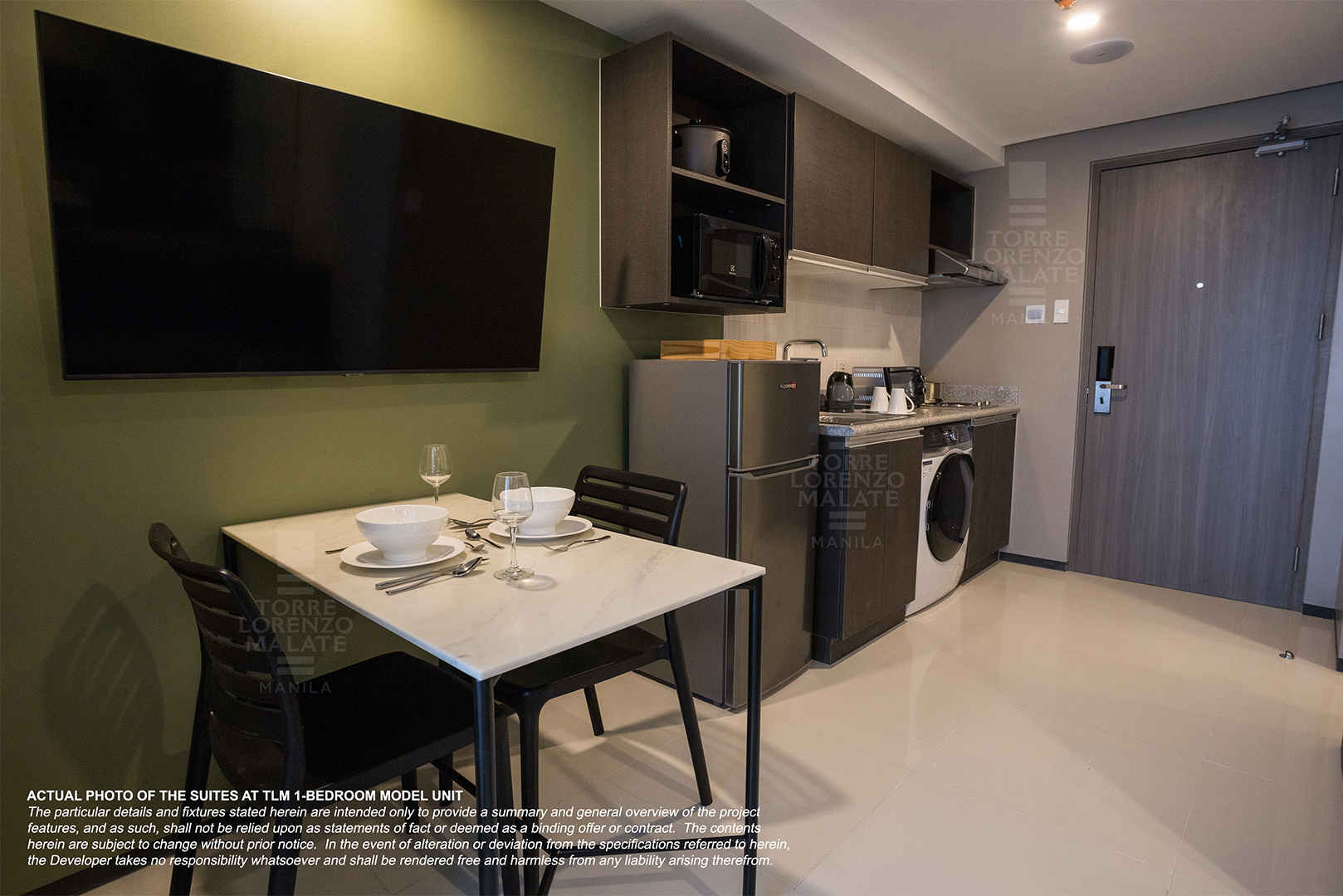
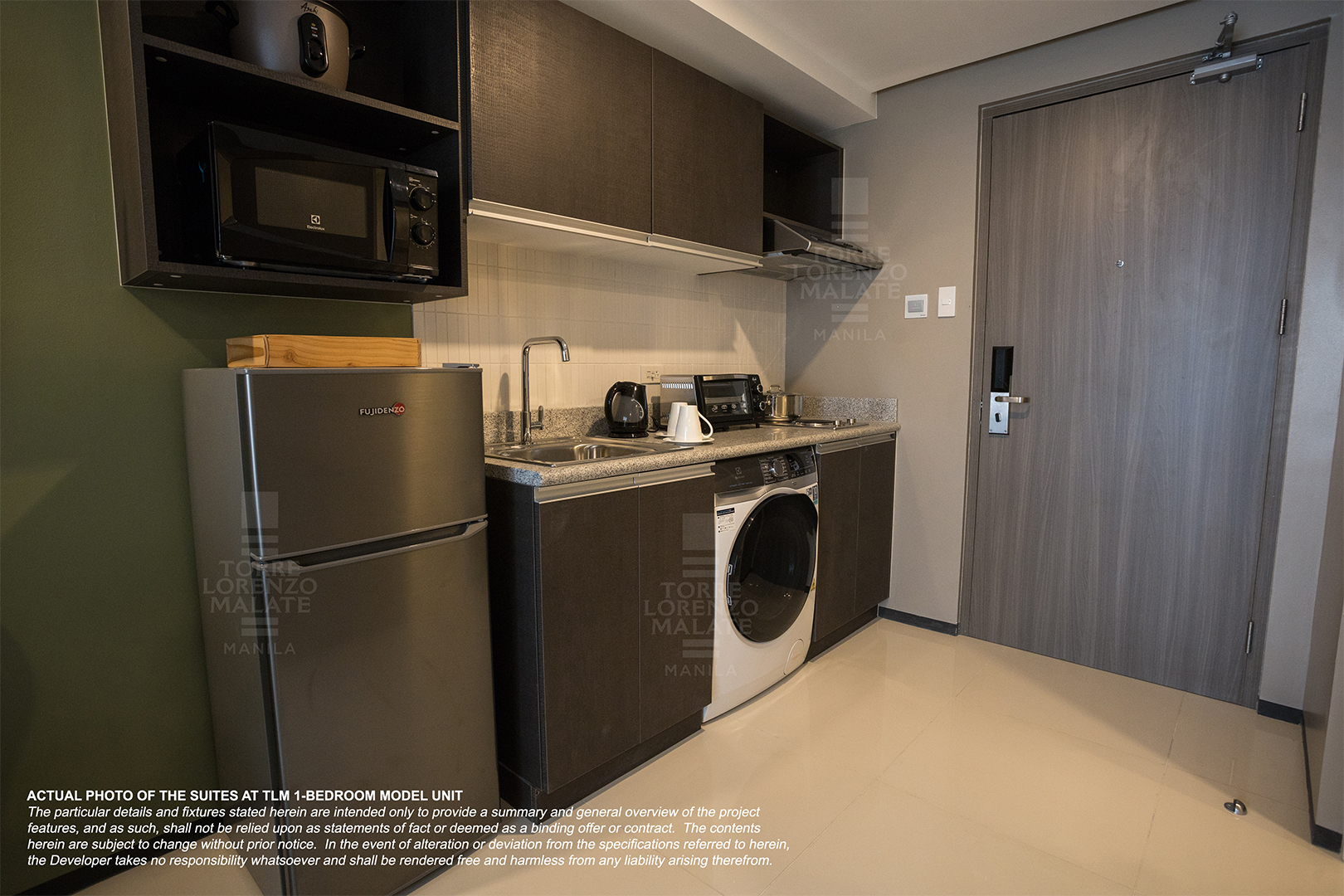
“It’s really for people who want to stay longer in a place,” he said. “They want that flexibility, so people who need a place to stay for two weeks to a month or more would choose a serviced residence. It is completely furnished, it usually has a kitchenette, you can cook. Some, like ours, have laundry so that you can wash your clothes in the unit. It’s really the best of both worlds.”

Moreover, Barnes described a serviced residence as a “home away from home,” adding it has all the services of a hotel available for potential residents.

“In terms of a serviced residence, you have the space. So you have the kitchen, you have the laundrette. Your average-sized units are bigger than the hotel rooms. And so, you have those comfort levels,” he explained. “One of the bigger aspects is you can actually work from home in your serviced residence. Whereas in a hotel, it might feel more compact.”

When it comes to The Ascott Limited Philippines’ markets, Barnes saw that it is predominantly corporate, seeing both long-term and short-term stays from guests.

“Guests would rather stay in serviced residences as the pandemic made them more ‘self-guided’ when it comes to doing their own chores,” Barnes added. “They want to stay in a bigger property where they can prepare their own food, do their own laundry.”

A LARGER MARKET

Torre Lorenzo Development Corporation focused mostly on premium university residences to cater to the student market, but driven by the demand for serviced residences, it has started to build one in the Malate area.

“It really depends on the market. If we’re near a school, we’ll consider university residences, but I see so much corporate and embassy business in the area that’s really the target market of serviced residences,” Lorenzo shared.

He added that he saw Filipinos from the provinces, who come to Manila, and stay in serviced residences temporarily.

“Many of them stay in the Manila area because it’s near the airport, there are a lot of tourist spots to visit like Intramuros, and lots of restaurants,” he said. “It really goes back to location, location.”

Bondoc, on the other hand, said that Colliers Philippines sees a lot of international companies wanting to expand in the country, surveying some places that can be the next BPO hubs outside of Metro Manila.

With that in mind, instead of staying in hotels and condominiums for a long time, they see serviced residences as the perfect accommodation.

“This is a very good market for these serviced apartment segments. Also, you have to note domestic tourism and foreign travels in general. These two segments are also improving. If you are to look at EATA’s projection, they are projecting foreign travel to recover by 2023 or early 2024,” Bondoc explained.

“So, in a macro-economic perspective, there really is a great potential for the rebound of a serviced apartment. You also see consular officials now returning to the Philippines, so that is another segment that we should capture and that we should really focus on,” he added.

The serviced residences occupancy rate saw a rise towards 80 percent at the height of the global pandemic. Barnes credits the BPO employees who opted to work-from-home at the start of the pandemic.

“Since call centers and BPOs were no longer able to be in the offices, the first market was to move off-site where they can work from home,” he recalled. “Majority of the (employees in) BPO and call centers were in our properties using our serviced residencies as a work-from-home proponent, as well.”

Barnes also noted how families and solo travelers opted to quarantine in their property rather than a small apartment.

“They would like to do it in a 50-meter studio or a 75-meter one-bedroom or even a 225-square meter two-bedroom and three-bedroom,” he explained. “So, those home comforts allowed us to continue within the pandemic.”

Lorenzo believes that the 80-percent occupancy rate would continue in Metro Manila, as well as rise in different provinces, as many tourists prefer to have their long-term stay in serviced residences.

“Many tourists choose to stay in our serviced apartment because they like the design. It is really very high-end, it’s a five-star plus experience for them,” he enthused. “Just because it’s a serviced apartment doesn’t mean it’s very bare and has no service. You can actually have a serviced apartment that’s very luxurious.”

Lorenzo is happy to note that foreign tourists are coming back. And most of them opt to stay in serviced residences.

“That market is coming back, even in Davao, because international flights have re-opened. We’re getting many foreign visitors who are tourists. They’re actually coming to the Philippines because of the low COVID numbers. It’s already a market that has developed since the pandemic,” he said.

AN ALTERNATIVE INVESTMENT

Just like condos, houses, lots, investing in serviced residences can also be a good investment.

“There are people who are not thinking of living in an apartment, they just want to earn from it,” noted Lorenzo. “And your chances of getting a good rental income is very high when you invest on a serviced apartment managed by an international, well-known brand like Ascott or Dusit. So, people who buy from us, can earn anywhere from 4.4 to six-percent per annum better than the bank,” said Lorenzo.

Barnes discussed how The Ascott Limited Philippines looks after its buildings and units as an owner and operator.

“We also want to engage and look after the units and the buildings so we can continue that life cycle for a longer period,” Barnes said. “Say, the unit owners do actually reinvest in terms of refurbishment and renovations, which usually takes five to seven years, we try to maintain it well so that can be stretched for 10 to 12 years.”

With that, a lot of individuals are considering to invest in serviced residences.

“They are looking for a source of recurring income. Basically, these are seasoned investors, they’re experts already who are looking to diversify their investments, especially in the property market,” he explained.

He also added that investing in serviced residences can be a great opportunity for overseas Filipino workers (OFWs).

“There are OFWs who have invested in a serviced apartment, although I think this is a largely underserved, unpacked market and there should be a greater effort to reach OFWs who mostly invest in a house and lot, or a condominium unit. I think they should be educated further in terms of the reliability of a serviced apartment,” Bondoc said.

Asked if serviced residences are a more luxury type of investment, Barnes agrees, saying there are many aspects to take into consideration before investing.

“I think we have to take into context the location, the developer and the operator,” he said. “When you have the product in place, you define what the market has to offer. That is when you look at your price points and what you can do. It really depends on the product, the location, and the clientele that you are operating.”

A RISING TREND

Torre Lorenzo Development Corporation builds its wide array of developments to markets where these are needed, including their serviced residences.

“For example, if you have many BPOs in the area, then a serviced apartment works. Anywhere where there are expatriates or a diplomatic community, a serviced apartment works. Anywhere where there is a lot of corporate movement, it needs a serviced apartment,” Lorenzo said. “Whether people move to Hong Kong, London, or New York, the serviced apartment has that niche which everybody appreciates as the place to stay for one month to six months.”

Bondoc believes the Philippines can follow in on the trend for serviced apartments, citing Davao City and Cebu as two rising hubs for such.

“Davao is one of the major BPO locations outside of Metro Manila. As Lorenzo mentioned, if you have BPO companies, if you have expats, then definitely this will be a very good market for serviced apartment segments,” he said. “I think for a lot of property players have diversified . They are not just developing hotels but also expanding through serviced apartments at this point. Again, we have key places like Cebu, Davao, which are viable locations.” 

Lorenzo also enumerated reasons why one should start investing in serviced apartments: “It’s worry-free, gives passive income, and has flexibility.”

“You can use it for two weeks of the year and, the rest of the time, you’re earning from it. It generates income on a quarterly basis and when you do decide to sell it, there is value appreciation,” he said, “For those, who are already looking at something different to invest in, a serviced residence is a good investment to get into.”

Barnes is enthusiastic about the trend for serviced residences in the Philippines.

“A really exciting couple of years coming up for us in the serviced residence industry. Between April and June 2023, we’re launching our fourth serviced residence brand: Live Your Freedom or LYF. We’re really excited for this brand to come into the market,” he said.

Bondoc, on the other hand, said the serviced residence industry is a sector to watch out for as the tourism, property, and leisure sector slowly recovers from the effects of the COVID-19 pandemic.

“There’s really revenge travel and we’re starting to see that. A lot of analysts are very optimistic and they’re looking at a faster recovery not just with the property market but also of the leisure sector,” he said. “We believe that developers should really seize opportunities in the market, like hotels, other accommodation facilities, and, of course, the serviced apartment segment is definitely one sector to watch out for as we see the recovery of the global and local travel sectors.”

Watch the webinar here:


Spotlight is BusinessWorld’s sponsored section that allows advertisers to amplify their brand and connect with BusinessWorld’s audience by enabling them to publish their stories directly on the BusinessWorld Web site. For more information, send an email to online@bworldonline.com.

Join us on Viber to get more updates from BusinessWorld: https://bit.ly/3hv6bLA.

China warns top US general off ‘arbitrary provocations’

REUTERS

WASHINGTON/BEIJING — A senior Chinese military officer warned his US counterpart on Thursday that any “arbitrary provocations” would be met with a “firm counterstrike” by China, but added that the two sides should strengthen dialogue and control risks. 

The world’s two largest economies are at loggerheads over a series of contentious issues, from the status of Chinese-claimed Taiwan and Russia’s invasion of Ukraine to a broader contest for influence in the Asia Pacific. 

The Pentagon said that US Army General Mark Milley, chairman of the Joint Chiefs of Staff, had spoken with China’s Chief of the Joint Staff Department, General Li Zuocheng. 

“Gen. Milley discussed the need to responsibly manage competition and maintain open lines of communication,” Milley’s spokesman said in a statement. 

“Gen. Milley underscored the importance of the People’s Liberation Army engaging in substantive dialogue on improving crisis communications and reducing strategic risk. The call also included a productive discussion of a number of regional and global security issues.” 

China’s Defense Ministry cited Mr. Li as saying the two militaries should uphold mutual respect and objectivity, further strengthen dialogue, control risks, and promote cooperation, “rather than deliberately creating confrontation and provoking incidents.” 

China has no room for compromise or concessions on issues related to its core interests, Mr. Li added. 

“If anyone provokes arbitrarily, it will inevitably be met with a firm counterstrike by the Chinese people.” 

Mr. Li also reiterated a call for the United States to stop military relations with Taiwan, and “avoid shocks to Sino-US relations and the stability of the Taiwan Strait.” 

China’s military will resolutely defend its sovereignty and territorial integrity, he added. 

China has been stepping up military activity around Taiwan seeking to pressure the democratically-elected government there to accept Chinese sovereignty. 

Taiwan’s government says only the island’s 23 million people can decide their future, and while it wants peace it will defend itself if attacked. — Reuters

France plans 20B euro inflation-relief package

REUTERS

PARIS — France’s minority government unveiled on Thursday a 20-billion-euro ($20.35 billion) inflation-relief package that will include fuel discounts, rent caps and a boost to pension benefits, but will need backing from at least some of the opposition to be adopted. 

The package includes a 4% increase to welfare and pension benefits, and proposals to raise civil servant pay by 3.5% and prolong a state-financed rebate on fuel prices at the pump. 

With households increasingly struggling in the face of record inflation, the government is under pressure to pass the bill quickly, while opposition parties are impatient to wield their new power to substantially rewrite proposed legislation. 

“We are adding 20 billion euros today in new measures to help protect our compatriots against the high cost of living,” Finance Minister Bruno Le Maire told journalists. 

The government’s bill also laid out a series of emergency measures in the energy sector to counter a looming crisis exacerbated by the war in Ukraine, allowing it to requisition power-generating plants and order operators to replenish gas stocks if needed. 

It is the first major piece of legislation that will go to parliament since President Emmanuel Macron’s centrist alliance lost its absolute majority in legislative elections last month. 

It is still the biggest group in the lower house of parliament but will need opposition lawmakers to back the bill — or abstain in numbers — for it to go through. 

Opposition parties all say they want to be constructive, but have also made clear there will be a political price to pay for any support and want some of their measures to be taken on board, many of which are unacceptable for the government. 

The far-right Rassemblement National (National Rally) is seeking a huge cut in value-added sales tax on car fuel. The conservative Les Republicains party, whose support Mr. Macron is most likely to count on to pass laws, is also demanding a huge cut in fuel tax. 

The Nupes coalition, whose biggest constituent is the radical left La France Insoumise (France Unbowed) party, is demanding that the minimum wage be hiked to 1,500 euros net from 1,300 currently. It also wants civil servants’ salaries increased 10% and tied in the future to inflation. 

The government expects the package’s 20-billion-euro cost, which comes on top of about 25 billion euros in existing inflation-relief measures, to be covered by better than expected tax revenues so far this year. 

However, both the public audit office and the central bank warned earlier on Thursday that the public finances could scarcely afford additional measures that add to France’s already considerable debt burden. — Leigh Thomas/Reuters

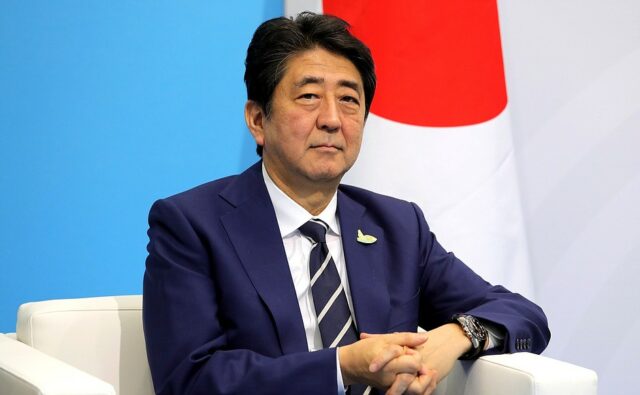
Japan ex-prime minister Abe taken to hospital after apparent shooting  — NHK

WIKIMEDIA COMMONS

TOKYO — Japanese former prime minister Shinzo Abe was taken to hospital on Friday after being shot from behind by what appeared to be a man with a shotgun while delivering a speech in the western city of Nara, public broadcaster NHK said. 

Abe, 67, appeared to be in a state of cardiac arrest, the network said and Kyodo news agency. Shots were heard and a white puff of smoke was seen as Abe made a campaign stump speech outside a train station, NHK said. 

An NHK reporter on the scene said they could hear two consecutive bangs during Abe’s speech. 

The chief cabinet secretary will brief media at 0400 GMT. 

Abe served two terms as prime minister to become Japan’s longest-serving premier before stepping down in 2020 citing ill health. 

But he has remained a dominant presence over the ruling Liberal Democratic party (LDP) party, controlling one of its major factions. 

His protege, Prime Minister Fumio Kishida, faces an upper house election on Sunday in which analysts say he hopes to emerge from Abe’s shadow and define his premiership. 

Abe has been best known for his signature “Abenomics” policy featured bold monetary easing and fiscal spending. 

He also bolstered defense spending after years of declines and expanded the military’s ability to project power abroad. 

In a historic shift in 2014, his government reinterpreted the postwar, pacifist constitution to allow troops to fight overseas for the first time since World War Two. 

The following year, legislation ended a ban on exercising the right of collective self-defense, or defending a friendly country under attack. 

Abe, however, did not achieve his long-held goal of revising the US-drafted constitution by writing the Self-Defense Forces, as Japan’s military is known, into the pacifist Article 9. 

He was instrumental in winning the 2020 Olympics for Tokyo, cherishing a wish to preside over the Games, which were postponed by a year to 2021 because of the coronavirus disease 2019 (COVID-19) pandemic. 

Abe first took office in 2006 as Japan’s youngest prime minister since World War Two. After a year plagued by political scandals, voter outrage at lost pension records, and an election drubbing for his ruling party, Abe quit citing ill health. 

He became prime minister again in 2012. 

Abe hails from a wealthy political family that included a foreign minister father and a great-uncle who served as premier. — Reuters

Euro’s 20-year low leaves ECB facing costly choices

Euro banknotes are displayed in this picture illustration taken Nov. 14, 2017. — REUTERS/BENOIT TESSIER/ILLUSTRATION

FRANKFURT — The euro’s tumble towards parity against the dollar has pushed the European Central Bank (ECB) back against a wall, leaving its policymakers with only painful and economically costly choices.

Letting the currency fall would push up already record high inflation, raising the risk of price growth becoming entrenched at a rate well above the ECB’s target of 2%.

But fighting back against 20-year lows for the euro would require more rapid interest rate hikes, which could add to the misery for an economy already facing a possible recession, looming gas shortages and sky-high energy costs that are depleting purchasing power.

The bank has so far played down the issue, arguing that it has no exchange rate target, even if the currency does matter. Even the accounts of its June policy meeting published on Thursday indicated no particular concern. But the market moves are now too big to play down.

“The euro’s weakness reinforces the notion that the ECB is behind the curve,” Dirk Schumacher, head of European macro research at Natixis CIB, said. “Given how high inflation is, a stronger euro would be quite helpful because it lowers inflation.”

The euro is now down 10% against the dollar this year, even if the trade-weighted currency has only dropped 3.3% so far.

This raises the cost of imports, especially for energy and other dollar-denominated commodities, making everything more expensive. Studies frequently cited by the ECB suggest that a 1% depreciation of the exchange rate raises inflation by 0.1% over one year and by up to 0.25% over three years.

MORE WEAKNESS?

The problem is that economic fundamentals point to even more euro weakness.

Firstly, the ECB and the US Federal Reserve are moving at vastly different speeds.

While Fed Chair Jerome Powell has made clear he was willing to risk a recession with oversized rate hikes to bring down inflation, the ECB continues to take baby steps in unwinding the exceptionally easy policy of the past decade, when inflation was too low.

It will raise rates for the first time this month but expects to lift the deposit rate out of negative territory only in September, with any further move clouded by recession risks.

The euro zone’s outlook has soured so much since mid-June that one rate hike has been priced out and markets now see just 135 basis points of tightening from the ECB.

The Fed, which has already raised rates several times, including by 75 basis points last month, is expected to increase them by another 180 basis points.

That gives investors higher profits on the other side of the Atlantic, so they are moving cash out of Europe and weakening the euro in the process.

Secondly, the euro zone’s huge energy dependence, primarily on Russian gas, also makes the economy more vulnerable to the fallout of the war in Ukraine, a natural drag on the currency.

“Faced with the looming risk of recession — and the euro being a pro-cyclical currency — the ECB’s hands may be tied in its ability to threaten more aggressive rate hikes in defense of the euro,” ING said in a note to clients.

Finally, the bloc’s energy bill has pushed up import costs, leaving it with a rare current account deficit. Such outflows also weaken the currency over time.

Since each of 19 euro zone countries are impacted differently, consensus on any push back is also likely to be difficult to achieve.

To prop up the euro, the ECB could signal more aggressive policy tightening, including a 50 basis-point hike in September, and further moves in October and December.

But since markets already expect these steps, the ECB must also at least in part match the Fed’s message that getting inflation down trumps all other priorities, even if that means reinforcing a recession.

Such a message, even if euro-positive, would likely fuel a selloff on the currency bloc’s periphery, setting off debt sustainability concerns.

So the ECB must also roll out its already flagged bond-buying scheme aimed at limiting the rise in borrowing costs for Italy, Spain, Portugal and Greece.

“Spoiler: yes, parity is in play,” Deutsche Bank’s Jim Reid said. — Balazs Koranyi and Francesco Canepa/Reuters

Boris Johnson quits as UK prime minister, dragged down by scandals

UK PRIME MINISTER Boris Johnson. — Reuters

LONDON — Scandal-ridden Boris Johnson announced on Thursday he would quit as British prime minister after he dramatically lost the support of his ministers and most Conservative lawmakers, but said he would stay on until his successor was chosen. 

Bowing to the inevitable as more than 50 government ministers and aides quit and lawmakers said he must go, an isolated and powerless Mr. Johnson said it was clear his party wanted someone else in charge, but that his forced departure was “eccentric” and the result of “herd instinct” in parliament. 

“Today I have appointed a cabinet to serve, as I will, until a new leader is in place,” Mr. Johnson said outside his Downing Street office where his speech was watched by close allies and his wife Carrie. 

“I know that there will be many people who are relieved and perhaps quite a few who will also be disappointed. And I want you to know how sad I am to be giving up the best job in the world. But them’s the breaks,” he added, making no apology for the events that forced his announcement. 

His term in office was ended by scandals that included breaches of coronavirus disease 2019 (COVID-19) pandemic lockdown rules, a luxury renovation of his official residence and the appointment of a minister who had been accused of sexual misconduct. 

There were cheers and applause as he began his speech, while boos rang out from some outside the gates of Downing Street. 

After days of battling for his job, Mr. Johnson had been deserted by all but a handful of his closest allies after the latest in a series of scandals sapped their willingness to support him. 

“It was a short and bizarre resignation speech which didn’t mention the word resign or resignation once. There was no apology, no contrition,” Conservative lawmaker Andrew Bridgen said. “There was no apology for the crisis his actions have put our government, our democracy, through.” 

The Conservatives will now have to elect a new leader, a process which could take weeks or months, with details to be announced next week. 

POTENTIAL SUCCESSORS 

A snap YouGov poll found that defense minister Ben Wallace was the favorite among Conservative Party members to replace Johnson, followed by junior trade minister Penny Mordaunt and former finance minister Rishi Sunak. 

Conservative lawmaker Tom Tugendhat, chairman of parliament’s Foreign Affairs Select Committee, said on Thursday he planned to run in the leadership contest. 

While Mr. Johnson said he would stay on, opponents and many in his own party said he should leave immediately and hand over to his deputy, Dominic Raab. Former Conservative Prime Minister John Major said it was “unwise and maybe unsustainable” for him to remain in office when he could still exert its powers. 

Mr. Johnson’s office said he made clear at a meeting of his new cabinet on Thursday that the government would not seek to implement new policies or make major changes of direction, and major fiscal decisions should be left for the next leader. 

The Financial Times, citing lawmakers with knowledge of the plans, said the party intended to have a new prime minister in place by the time parliament returns from its summer break in early September. 

Keir Starmer, leader of the main opposition Labour Party, said he would call a parliamentary confidence vote if the Conservatives did not remove Mr. Johnson at once. 

COST-OF-LIVING CRISIS 

Mr. Johnson is leaving behind an economy in crisis. Britons are facing the tightest squeeze on their finances in decades in the wake of the pandemic, with soaring inflation. The economy is forecast to be the weakest among major nations in 2023 apart from Russia. 

His departure also follows years of internal division sparked by the narrow 2016 vote to leave the European Union, and threats to the make-up of the United Kingdom itself with demands for another Scottish independence referendum, the second in a decade. 

Support for Mr. Johnson had evaporated during one of the most turbulent 24 hours in recent British political history, epitomized by finance minister, Nadhim Zahawi, who was only appointed to his post on Tuesday, calling on his boss to resign. 

Mr. Zahawi and other cabinet ministers went to Downing Street on Wednesday evening, along with a senior representative of those lawmakers not in government, to tell Mr. Johnson the game was up. 

Initially, Mr. Johnson refused to go and seemed set to dig in, sacking Michael Gove — a member of his top ministerial team who was one of the first to tell him he needed to resign — in a bid to reassert his authority. 

But by Thursday morning as a slew of resignations poured in — including that of Michelle Donelan who he’d only appointed education secretary on Tuesday night — it became clear his position was untenable. 

“You must do the right thing and go now,” Mr. Zahawi tweeted. 

Some of those that remained, including Mr. Wallace, had said they were only doing so because they had an obligation to keep the country safe. 

Once it was clear he was standing down, Mr. Johnson began appointing ministers to vacant posts. 

“It is our duty now to make sure the people of this country have a functioning government,” Michael Ellis, a minister in the Cabinet Office department which oversees the running of government, told parliament. 

FROM POPULAR TO DESERTED 

The ebullient Mr. Johnson came to power nearly three years ago, promising to deliver Brexit and rescue it from the bitter wrangling that followed the 2016 referendum. He shrugged off concerns from some that his narcissism, failure to deal with details, and a reputation for deceit meant he was unsuitable. 

Some Conservatives enthusiastically backed the former journalist and London mayor, while others, despite reservations, supported him because he was able to appeal to parts of the electorate that usually rejected their party. 

That was borne out in the December 2019 election. But his administration’s combative and often chaotic approach to governing and the scandals exhausted the goodwill of many of his lawmakers while opinion polls show he is no longer popular with the public at large. 

The most recent crisis erupted after lawmaker Chris Pincher, who held a government role involved in pastoral care, quit over accusations he groped men in a private club. 

Mr. Johnson had to apologize after it emerged that he was briefed that Pincher had been the subject of previous sexual misconduct complaints before he appointed him. The prime minister said he had forgotten. 

This followed months of missteps, including a damning report into boozy parties at his Downing Street residence and office that broke COVID-19 lockdown rules and saw him fined by police over a gathering for his 56th birthday. 

There have also been policy U-turns, an ill-fated defense of a lawmaker who broke lobbying rules, and criticism that he has not done enough to tackle the cost-of-living crisis. 

In his resignation speech, Mr. Johnson highlighted his successes — from completing Brexit to overseeing the fastest COVID-19 vaccine rollout in Europe. But he said his attempts to persuade colleagues that changing leaders while there was war in Ukraine and the government was delivering on its agenda had failed. 

“I regret not to have been successful in those arguments. And of course, it’s painful not to be able to see through so many ideas and projects myself,” he said. 

“But as we’ve seen at Westminster, the herd instinct is powerful — when the herd moves, it moves and, my friends, in politics no one is remotely indispensable.” — Kate Holton, Elizabeth Piper, and Alistair Smout/Reuters

Greek tourism bounces back, but high inflation rears its head

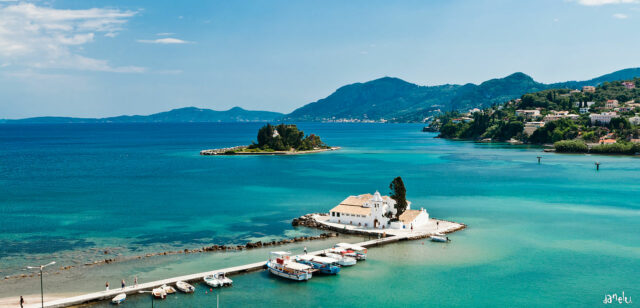
Vlacherna Monastery in Corfu, Greece. Danel Solabarrieta/CC BY-SA 2.0/Wikimedia Commons

ATHENS — Foreign visitors are flocking back to Greece’s islands and ancient monuments, raising hopes for its vital tourism industry after a turbulent two years, though the impact of high inflation means a return to normal may still be some way off. 

Greek tourism suffered its worst ever year in 2020, when the coronavirus disease 2019 (COVID-19) pandemic decimated global travel. 

This year, despite a deepening global cost-of-living crisis and the continued presence of the virus, officials expect the sector to bring in 80% of the record 18 billion euros ($18.4 billion) of revenues generated in 2019. 

“After two years of hard pandemic, we’re glad to have our guests back in a normal season,” said Babbis Voulgaris, a hotelier on the Ionian island of Corfu. “Occupancy is high for our hotels. For the rest of the summer, we’re optimistic.” 

Tourism accounts for a fifth of the economy and one in five jobs, percentages that are even higher on Corfu. 

The sector began to recover last year and is expected to keep growing for the next two years, according to the Greek central bank. 

“We’re very happy, satisfied,” said Tourism Minister Vassilis Kikilias, while cautioning that the pandemic, economic crisis and the war in Ukraine made for a “a very, very difficult” backdrop. 

Grappling with soaring energy prices and other inflation exacerbated by the war, as well as labor shortages, Mr. Voulgaris — who heads the Corfu hoteliers’ association and sits on the board of tourism confederation SETE — agreed that the sector still faced “a lot of problems.” 

Michalis Minadakis, general manager of the luxury Grecotel Cape Sounio resort outside Athens, said energy inflation was reaching “unbelievable” levels. 

“Electricity (prices) could be 100 percent up, the same for gas,” he said 

Nevertheless, demand for travel was high and bookings for this year had begun as early as last Christmas, Mr. Minadakis said, with the market from Britain — traditionally one of the biggest for Greece — tripling compared to 2019. 

Overall, “I believe 2022 will be even better than 2019,” he said. — Reuters

BSP ready to hike rates by 50 bps as peso nears record low against dollar

REUTERS

By Keisha B. Ta-asan

THE BANGKO SENTRAL ng Pilipinas (BSP) is prepared to raise its policy rate by 50 basis points (bps) in August as the Philippine peso on Thursday breached the P56 level against the US dollar to move closer to its record low.

BSP Governor Felipe M. Medalla on Thursday said the recent hawkish stance of the US Federal Reserve has placed “strong depreciation pressures” on global currencies such as the peso.

“If such pressures are left unchecked, these could add to the already high domestic inflationary pressures,” he told reporters via Viber.

The peso closed at P56.06 versus the dollar on Thursday, down by 39 centavos or 0.7% from the previous day, data from the Bankers Association of the Philippines showed.

This is the peso’s worst finish since Sept. 27, 2005’s P56.30 a dollar and just 39 centavos away from the record low of P56.45 on Oct. 14, 2004.

“The BSP is prepared to be more aggressive in raising its policy rate, compared to its initial gradualist stance. In particular, BSP is prepared to raise its policy rate by 50 bps by August,” Mr. Medalla said, referring to the Aug. 18 meeting.

The Monetary Board has raised benchmark interest rates by a total of 50 bps so far this year via 25-bp hikes at its May 19 and June 23 meetings, bringing the policy rate to 2.5%.

Mr. Medalla earlier this week said the BSP may hike rates by at least 100 bps more this year, after inflation rose 6.1% in June — the fastest in nearly four years.

“There are pros and cons to gradualism. Now, I would like to add that if the inflation is too high, even if the causes are impervious to BSP’s kit of policy instruments, a monetary policy response may be necessary,” Mr. Medalla said on Thursday.

“It’s not prudent to let factors that significantly affect the exchange rate add further to inflation that is already high.  More so, if we can’t rule out that we might miss our 2 to 4% (inflation) target, not just this year but next year as well,” he said.

The BSP chief said they are “ready to take further policy actions, if needed.”

“It will also continue to support and advocate for non-monetary actions by other government agencies to contain any further inflationary pressures that may spill over to 2023,” he added.

WEAK PESO
The peso opened Thursday’s session at P55.90 against the dollar. Its intraday best was at P55.78 while its weakest showing for the day was at P56.09 versus the greenback.

Dollars exchanged slipped to $1.11 billion on Thursday from $1.24 billion on Wednesday.

The peso has weakened by P5.06 or 9.92% from its P51-per-dollar close on Dec. 31, 2021.

The peso continued to weaken after hawkish signals from the US Federal Reserve minutes of its last meeting, Rizal Commercial Banking Corp. Chief Economist Michael L. Ricafort said.

The US Federal Reserve committed to keep raising interest rates for longer to curb soaring inflation, minutes of the June 14-15 policy meeting showed. Markets are pricing in another 75-bp hike at the Fed’s next meeting.

“Broad USD (US dollar) strength has dominated trading this week as investors seek safe haven on recession fears,” ING Bank N.V. Manila Senior Economist Nicholas Antonio T. Mapa said.

“As such, most EM (emerging market) currencies have weakened sharply against the USD. The dollar was also boosted as it looks like the Fed is determined to tighten policy in order to snuff out inflation in the US,” Mr. Mapa said.

The peso has fallen the most against the US dollar among emerging currencies, down by more than 5% since June 10.

Much of the investors’ anxiety has been attributed to the narrowing interest rate differentials with the US Fed.

“The dollar index (DXY) just reached an all-time high since the start of the year, i.e. across-the-board, the USD rose against major currencies. This contributed to today’s depreciation of the peso,” China Banking Corp. Chief Economist Domini S. Velasquez said in a Viber message.

“Moving forward, the peso is expected to trend downwards until Q3 due to a widening trade deficit and aggressive rate hikes of the Federal Reserve,” Ms. Velasquez added.

The peso exchange rate is also weaker following the release of data of the country’s dollar reserves in June, Mr. Ricafort said.

Preliminary data from the Bangko Sentral ng Pilipinas (BSP) showed the gross international reserves (GIR) stood at $101.983 billion as of end-June, 1.6% down from the $103.646 billion as of end-May and 3.5% from the record $105.762-billion level as of end-June 2021.

“Domestic developments have also contributed to the PHP’s weakness, in particular the stark widening of the country’s import bill, due to bloated dollar values for products and an actual increase in import volumes as the economy reopens,” Mr. Mapa said.

“With the peso on its heels, the BSP has a long and nerve wracking wait until 18 August, or when they have a chance to offload another round of rate increases.”

For Friday, Mr. Ricafort gave a forecast range of P55.85 to 56.15, while a trader said the peso could move from P55.95 to P56.15 against the dollar.

Unemployment rate jumps to three-month high in May

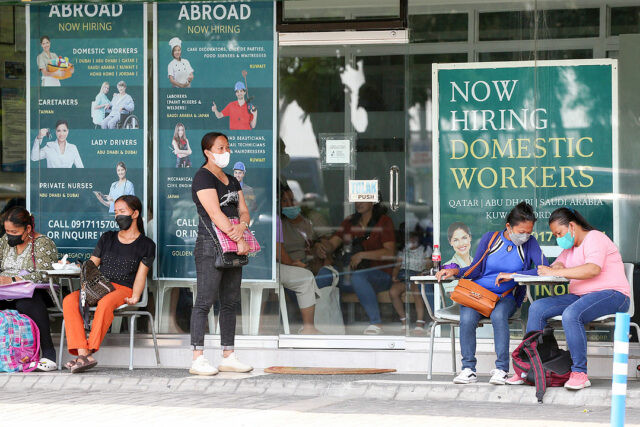
APPLICANTS wait outside an employment agency in Manila on June 08, 2022. — PHILIPPINE STAR/KRIZ JOHN ROSALES

By Ana Olivia A. Tirona, Researcher

THE UNEMPLOYMENT RATE in the Philippines jumped to a three-month high in May while job quality deteriorated despite increased economic activity, data from the Philippine Statistics Authority (PSA) showed.

Preliminary data from the statistics agency showed the jobless rate in May reached 6%, higher than 5.7% in April. However, this was still lower than 7.7% in May last year.

It was the highest unemployment rate recorded since 6.4% in February this year.

Philippine Labor Force Situation

In absolute figures, the ranks of the unemployed Filipinos rose month on month by 165,000 to 2.927 million in May. On an annual basis, the number declined by 812,000 from 3.739 million.

Job quality deteriorated as the underemployment rate — the proportion of those already working but still looking for more work or longer working hours to the total employed population — jumped to 14.5% in May from 14% in April. It was the highest underemployment rate in two months or since 15.8% in March.

In absolute terms, this translated to 6.668 million underemployed Filipinos in May, 269,000 more than the 6.399 million without work in April.

“Amidst external shocks, the government has sustained the economy’s growth momentum and steered it towards a higher growth path. Now, the immediate challenge is the full reopening of the economy,” Socioeconomic Planning Secretary Arsenio M. Balisacan said in a statement.

Trade Union Congress of the Philippines (TUCP) spokesperson Alan A. Tanjusay said the end of the election campaign period may have contributed to the increase in unemployed people.

“These are workers employed by candidates as staff in their campaign activities and gimmicks including those in the supply chain,” Mr. Tanjusay said in an e-mail interview.

National Statistician Claire Dennis S. Mapa said the jobs survey does not specifically cover election-related questions.

“We can tag specific occupations and industries that are possibly election-related. In May 2022 versus May 2021, we can see that there was an increase in employment. In particular, the development of web portals and those in other service activities — we have a specific occupation code which is for activities of political organizations,” Mr. Mapa said in Filipino, during a press briefing on Thursday.

He noted some activities such as catering and restaurant operations may be indirectly related to the election campaign period.

The national elections were held on May 9.

PSA data showed the size of the labor force in May was approximately 49.011 million, up by 618,000 from 48.393 million in April. This brought the labor force participation rate (LFPR) to 64% of the country’s working-age population in May improving from 63.4% the previous month.

Security Bank Corp. Chief Economist Robert Dan J. Roces said in an e-mail more people are entering the labor market as Metro Manila and most provinces are under the most lenient alert level.

“The industries which reported high month-on-month growth rates are correlated with looser mobility curbs, as such the gradual pace may continue in the months ahead to put the unemployment rate at or near the pre-pandemic unemployment rate average,” he said.

New entrants to the labor force reached 1.216 million in May, higher than 1.148 million in April.

The employment rate was recorded at 94% in May from 94.3% in April. This was equivalent to 46.084 million employed people in May from 45.631 million previously.

The National Economic and Development Authority (NEDA) said in a statement that significant employment gains were noted in the services sector as tourism and business activity picked up amid looser mobility curbs.

The services sector remained the top employer in May after recording an employment rate of 59%, a bit higher than 58% in April. Industry also improved and edged up to 19% from 18.4%.

However, the employment rate in agriculture eased to 22% in May from 23.6% in April.

Albay Rep. Jose Ma. Clemente S. Salceda said “job bleeding” was most noticeable in agriculture and forestry.

“We employ around a quarter of our labor force in agriculture, but the sector produces just a tenth of the economic output. Taken together, these mean that jobs in that sector are both very weak and very low-paying. Prevailing agricultural productivity programs such as mechanization will increase yields and perhaps even gross domestic product (GDP) contribution, but they will also mean fewer needed farmhands,” Mr. Salceda said in a statement.

On average, an employed Filipino worked 39.8 hours a week in May, decreasing from the 40.1 hours logged the previous month, but higher than the 39 hours in May last year.

“Over the medium term, the government will focus on creating more jobs, quality jobs, and green jobs through productivity-enhancing investments,” Mr. Balisacan said.

According to Mr. Balisacan, strategies to push up employment are to improve quality of education, provision of opportunities for life-long learning, in-demand skills development, options to obtain micro-credentials, enhanced job facilitation programs and strengthened linkages between industry, business and training institutions for a more efficient labor market.

INFLATION
However, analysts are wary of inflationary pressures on businesses.

“Downside risks of course remain to be inflation’s effect to businesses, where the cost of inputs may affect the hiring pace,” Mr. Roces said.

Inflation rose by 6.1% in June, the highest rate in nearly four years, mainly due to high food and transport costs. Year-to-date inflation averaged 4.4%, still above the central bank’s 2%-4% target but remained below the revised 5% forecast this year.

Mr. Tanjusay, the spokesperson of the country’s largest labor federation, said unemployment is likely to increase further in June.

“There will also be an increase in productivity and a little migration of workers to nearby regions where minimum wages are higher and or away from regions where rising cost of living is felt,” he said.

Wage increases ranging from P30 and P110 took effect in 14 regions last month.

The minimum wage in Metro Manila increased by P33 on June 4, bringing the daily minimum wage rate to P570 for workers in nonagricultural sectors, and P533 for those within the agricultural industry.