Home Blog Page 6175

Ayala Land’s El Nido subsidiary says it is cooperating with IP consent process 

LIO.PH

TEN KNOTS Philippines, Inc. (TKPI), which manages Ayala Land, Inc.s high-end tourism estate in El Nido, Palawan, said it has all the documentary requirements to operate, but the government agency for indigenous peoples (IP) asserts the company has yet to comply with the mandatory consent for using ancestral land.  

TKPI acknowledged that the process for the issuance of a Free and Prior Informed Consent (FPIC) from the indigenous community is ongoing and that it is cooperating.  

All operating properties of TKPI in El Nido have the necessary titles, permits and licenses. Nevertheless, TKPI has been cooperative with NCIP (National Commission on Indigenous Peoples) on the FPIC process,it said in a statement in response to a BusinessWorld request for comment.  

The NCIPs Palawan provincial office, headed by lawyer Jansen I. Jontila, said consent from indigenous communities can still be demanded for projects that are already operating. 

Under the law, any existing development can still be required to undergo FPIC process,the office said in an email from the NCIPs regional office.  

Republic Act 8371, the law on IP rights, provides indigenous communities the right to an informed and intelligent participation in the formulation and implementation of any project, government or private, that will affect or impact upon the ancestral domains and to receive just and fair compensation for any damages which they sustain as a result of the project.” 

The NCIP-Mimaropa regional office, which has jurisdiction over Palawan, issued on March 14 a cease and desist order against all TKPI-managed properties, citing the companys alleged refusal to undergo the process of the FPIC with the Tagbanuwa Tandulanen IP community.” 

NCIPs Palawan office also said no compensation paid to the Tagbanuas.” 

Any alleged TKPI community project as part of its image build up is not equivalent to the FPIC consent mandated by law,it said. 

In a statement released by the NCIP regional office on Wednesday, Tagbanuwa Tandulanen leader Maharani Apo Remedios Cabate-Cabral said the tourism development in El Nido has adverselyaffected their land, livelihood such as fishing, and overall way of life.  

We have been barred entry to our own ancestral lands. If we continue to allow this, then very soon our tribe would be squatters in their own ancestral lands,the IP community leader said. 

El Nido Mayor Edna G. Lim, meanwhile, has yet to reply to a request for comment on the issue. Marifi S. Jara 

5 ILO-Japan water projects in BARMM completed

JAPANESE EMBASSY PHOTOS

FIVE water stations that will supply 3,189 households in remote villages in the Bangsamoro region were recently completed under a joint program of the Japanese government and the International Labour Organization (ILO).

The facilities will benefit five barangays in Balabagan, Lanao del Sur; two in  Datu Piang, Maguindanao; and one in Kabacan, Cotabato.  

By ensuring better access to the basic necessities, we empower the people to realize their own potentials, and eventually, to contribute to the development of their own society, Japanese Ambassador to the Philippines Koshikawa Kazuhiko said in a press release from the Japanese Embassy on Wednesday.  

The ILO-Japan Water and Sanitation Project, signed on March 6, 2019, covers 11 water station sub-projects that will benefit almost 12,000 households. 

Meanwhile, a bill was filed on Tuesday in the Bangsamoro Autonomous Region in Muslim Mindanao (BARMM) Parliament for the creation of a Bangsamoro Water Resources Board and ensure water quality management in the region.  

The measure, authored by Parliament Members Amir S. and Baintan A. Ampatuan, mandates the board to develop an incentive scheme to encourage local governments, water districts, private entities, and individuals to participate in water quality management initiatives.

Energy dep’t sees fuel prices possibly retreating next week

ENERGY SECRETARY ALFONSO CUSI — PCOO

FUEL PRICES could start retreating starting next week after the Dubai benchmark for crude oil sold to Asia receded from its highs, Energy Secretary Alfredo G. Cusi said.

“The good news now is that in the past two trading days of oil… Dubai Crude (averaged) $104.79 per barrel,” Mr. Cusi said. “Last week it reached an average of $122.61.”

He was speaking at a meeting of the Cabinet with President Rodrigo R. Duterte, which was taped and released to the public early on Wednesday.

“If this trend continues and will reach ($100-$105), we may experience a drop in domestic fuel prices next week; at least P5 per liter for gasoline and at least P12 per liter for diesel,” he added.

Mr. Cusi said prices have been rising sharply since the start of the year due to fears over global supply, particularly since February with sanctions hanging over Russia threatening to take its oil and gas off the market. However, relief may be in sight if the US succeeds in bringing oil from sanctioned states like Venezuela or Iran back onstream, he added. The potential boost to global supply is 1 million barrels daily; if Russia and Ukraine conclude a ceasefire deal, the prospect of which caused crude benchmarks to drop this week, then fuel prices may continue to track lower.

Separately, Mr. Cusi added that power generation companies have appealed to loosen the 30-day minimum inventory requirement for their fuel stocks as coal prices are now double, and complying with the requirement will place greater demands on their capital.

However, the department is not open to easing the minimum inventory rule.

“I don’t want to risk running out of supply in case we will have a problem in the shipments,” he said in a text message.

The Manila Electric Co. (Meralco) has said that the impact of the Russia-Ukraine war on power rates will be felt in May as natural gas prices, which are affected by world crude oil prices, adjust quarterly for contract users like power plants.

Fuel prices increased for an eleventh consecutive week on Tuesday, rising P7.10 per liter for gasoline; P13.15 for diesel; and P10.50 for kerosene. This was the biggest price increase since the start of the year. 

Since the start of the year gasoline, diesel, and kerosene prices per liter have risen by P20.35, P30.65 and P24.90, respectively. — Marielle C. Lucenio 

DTI calls f-or fewer middlemen between supermarkets, suppliers

PHOTO BY BERNARD HERMANT

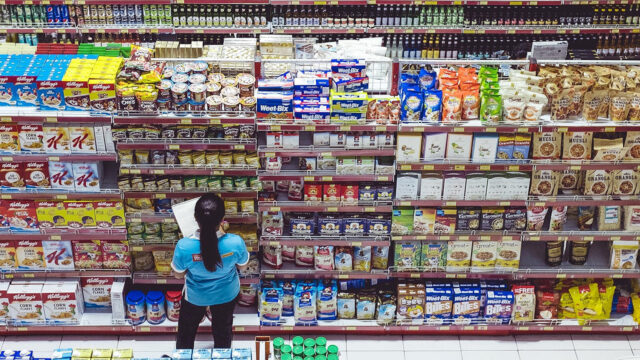
SUPERMARKETS and retailers need to eliminate intermediaries that come between them and their suppliers in the interest of keeping prices low, the Department of Trade and Industry (DTI) said.

Trade Secretary Ramon M. Lopez said during President Rodrigo R. Duterte’s Talk to the People briefing aired on Wednesday that the elimination of middlemen will help keep basic goods affordable.

“To consider… continuous supply at lower affordable price (and) increase access to lower priced basic goods to consumers, it is important to reduce middlemen. If possible, link the supermarkets to the suppliers and producers,” Mr. Lopez said at the briefing.

Mr. Lopez said the DTI’s initiatives to address the threat of inflation include the Presyong Risonable Dapat program, which connects producers of rice, frozen pork, and chicken to 83 Robinsons supermarkets in the National Capital Region (NCR), 25 Puregold supermarkets in the NCR and Bulacan, and 8 Metro supermarkets in the NCR.

Mr. Lopez said the DTI’s Diskwento Caravan and Bagsakan (wholesale) market initiatives allow manufacturers and producers to sell their products directly to consumers, in collaboration with barangays or local government units.

He added that the programs offer discounts ranging from 2% to 50% relative to prevailing market prices, with 189 manufacturers participating.

Philippine Amalgamated Supermarkets Association President Steven T. Cua has said that the prices of basic necessities have risen by around 3% to 6% while non-essential items have become 8% to 15% more expensive.

Mr. Cua attributed the increase to the surging fuel prices, which is affecting logistics and production costs.

Since the beginning of 2022, the prices of gasoline, diesel, and kerosene have increased by P20.35 per liter, P30.65 per liter, and P24.90 per liter, respectively.

Fuel prices increased for an 11th straight week on Tuesday, with gasoline rising P7.10 per liter, diesel P13.15 per liter, and kerosene P10.50 per liter. — Revin Mikhael D. Ochave

Pagadian port management deal bid out by PPA

THE Philippine Ports Authority (PPA) is inviting bids for the 15-year management contract for the Port of Pagadian, Zamboanga del Sur. 

Potential bidders were asked to submit letters of intent to bid for the management and operation of the cargo handling, roll-on/roll-off (RORO) services, and other port-related services of the Port of Pagadian, the PPA said in its invitation to bid.

The project will also require contracts for ancillary and other related services, stevedoring services, bagging services, storage management, waste and shore reception facility management, water distribution services, and the operation of a weighbridge facility, among others.

The PPA noted that the minimum concession fee for the project for 15 years is around P66.04 million, “​exclusive of all taxes.”

Meanwhile, the minimum concession fee for the first year of the port terminal management contract is around P3.06 million.

The PPA said interested bidders should have experience in cargo handling and RORO operations of at least two years.

A bidder “must not be engaged in any business activity, whether primarily or otherwise, which will prevent it from properly and sufficiently discharging its contractual obligations under any port terminal management contract to be awarded,” it added.

“This prohibition shall cover entities engaged in maritime transportation.”

The auction will be conducted using open competitive bidding procedures with non-discretionary pass/fail criterion, according to the PPA.

Bid documents will be made available on March 14. A pre-bid conference is scheduled for March 28 at the PPA Corporate Building in Manila. Bids must be submitted by April 11. — Arjay L. Balinbin

Fuel marking program generates P384.79 billion as of March 10

PHILSTAR

TAXES collected from marked fuel products totaled P384.79 billion as of March 10, counting back to the start of the program in late 2019, according to the Department of Finance.

The total included P354.98 billion from customs duties and P29.81 billion from excise taxes.

The volume of marked fuel was 38 billion liters since Sept. 4, 2019, according to data provided by Secretary of Finance Carlos G. Dominguez III via Viber on Wednesday.

Luzon accounted for nearly 28 billion liters of the total, or over 73%, with 8 and 2 billion liters marked in Mindanao and the Visayas, respectively.

Diesel accounted for 60.65% of all marked fuel, while gasoline had a 38.82% share. Kerosene took up the remainder with 0.52%.

Fuel marking is authorized under Republic Act 10963, or the Tax Reform for Acceleration and Inclusion (TRAIN) law, as a measure to curb smuggling.
It involves the addition of a chemical dye into petroleum products imported into the Philippines to signify tax compliance.

The Bureau of Customs (BoC) has marked 9.19 billion liters fuel this year, as of mid-March. Last year, 17 billion liters were marked.

Mr. Dominguez said government revenue agencies expect to collect 147.1 billion pesos in fuel excise tax and VAT in 2022.

In its 2021 Annual Report, the BoC said it seized P6.7 billion worth of smuggled fuel and oil. — Tobias Jared Tomas

Truckers win up to 30% rate increases as fuel prices rise

PHILSTAR

By Arjay L. Balinbin, Senior Reporter

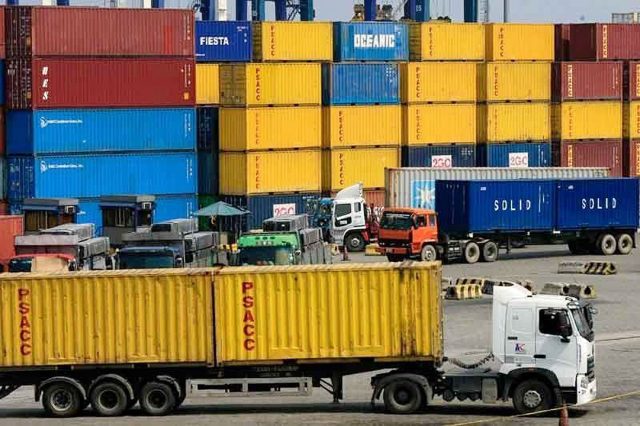
THE Confederation of Truckers Association of the Philippines (CTAP) said on Wednesday that some of its members’ clients have agreed to up to 30% increases in freight rates following the rise in fuel prices.

CTAP President Maria B. Zapata said individual members communicated a request for higher rates to their clients on March 7.

“There are reports from some of our members that some of their requests have been granted,” she told BusinessWorld by phone.

“For the record, the diesel price in January 2021 was P31 (more or less) compared with the current P70 (more or less) as of March 8, 2022 with P39,” according to a notice issued by Ms. Zapata earlier announcing the request for higher rates made to trucking clients.

“In line with this, CTAP member operators will negotiate and make the necessary and corresponding 30% adjustment or increase in their respective truck rates to enable them to continuously provide exceptional and quality service to their respective clients,” it added.

Ms. Zapata said by phone that the outcome of the negotiations will vary depending on each trucker’s history and bargaining power with the client, typically an importer or exporter.

“With the economic situation, we can’t be insistent on the 30%, so others accept less than 30%. It’s a matter of consideration.”

She said the negotiations are purely business-to-business, with no government agencies involved.

Pump prices rose for an 11th straight week on Tuesday. Fuel retailers raised gasoline and diesel prices by P7.10 and P13.15 per liter, respectively.

Ms. Zapata said CTAP will be standing by to determine whether its members will need to seek additional charges for the fuel cost.

Ngayon, meron na namang increase dito na P13 per liter of diesel (There has been a further P13 increase per liter of diesel), so we will be observing within two weeks to see if there will be a rollback or if it will increase further,” she said.

House to continue oil deregulation review with price rollback still uncertain

PHILSTAR

THE review of the oil deregulation law will continue because expectations that fuel prices will retreat soon cannot yet be counted on to provide relief to the public, legislators said on Wednesday.

“That is a BIG IF. Even (if fuel prices fall), there is no assurance that it will not spike again in the future,” Bayan Muna Representative Carlos Isagani T. Zarate said in a Viber message.

Calls to suspend the excise taxes on fuel could be canceled if prices drop, while fuel subsidies will only continue if sectors kept being impacted by the oil price hikes, Marikina Rep. Stella Luz A. Quimbo said.

“Deregulation review, yes. We need to ensure that if world prices fall, that domestic prices will fall commensurately. That’s the purpose of the unbundling of oil prices,” Ms. Quimbo said in a Viber message.

“The suspension of excise taxes has an automatic trigger, so if prices fall below the threshold, no need (to suspend). Fuel subsidies (will continue) only if sectors continue to be affected, especially if fuel subsidies were not sufficient and distribution delayed.”

The House of Representatives is currently considering a bill that would amend the Downstream Oil Deregulation Law to prevent oil companies from increasing prices of old stocks of fuel, which were acquired when prices were lower.

The government has urged Congress to review deregulation in response to price volatility resulting from the Russian invasion of Ukraine.

The Downstream Oil Deregulation Law, or Republic Act No. 8479, removed government control on the pricing, export, and import of petroleum products, allowing market forces to dictate oil prices. — Jaspearl Emerald G. Tan

ADB sees Russia-Ukraine war impact on ASEAN mainly in inflation, not growth

BW FILE PHOTO

THE main impact of the Ukraine war on Southeast Asian economies will not be on growth, though some of them may be particularly vulnerable to inflation, the Asian Development Bank (ADB) said.

“We do not see a growth impact… In Southeast Asia probably the impact will be manageable. There will be a decline (in growth) but it will be relatively small,” Ramesh Subramaniam, an ADB director general, said at the virtual Southeast Asia Development Symposium 2022 on Wednesday.

He said the bank will revisit its forecasts and release an update to the Asian Development Outlook in April.

In December, the ADB raised its 2022 growth forecast for the Philippines to 6% from 5.5%. This is below the 7-9% target set by the government.

An ADB report, “Southeast Asia Rising from the Pandemic,” concluded that the Omicron wave of the coronavirus could cut the region’s economic growth by 0.8 percentage points this year.

“The region’s economic output in 2022 is expected to remain more than 10% below the baseline no-COVID-19 (coronavirus disease 2019) scenario,” it said.

Mr. Subramaniam said the war in Ukraine and its impact should be assessed for any expected medium-term impact by policymakers in the region.

“Is this going to threaten the nascent recovery from the pandemic and all the fiscal challenges countries will face? And how can we make sure that any knock-on effects don’t become serious in the case of Southeast Asia?” Mr. Subramaniam said.

ADB Senior Economist James P. Villafuerte said the significant increase in oil prices will cause consumer goods prices to rise more rapidly.

“The multiplier (effect) of oil price inflation is about 0.4 (percentage points), which means that for every 10% increase in oil price, right, you will, you will have about a 0.4% increase in inflation,” Mr. Villafuerte said.

“So for example, in the Philippines, I think oil prices may have already increased 30% — if you use that multiplier, inflation could actually increase by 1.2 percentage point,” he added.

Moody’s Investors Service also warned that the Philippines, alongside India, Laos, Pakistan, Sri Lanka, and Vietnam will be the most affected by faster price increases.

“Inflationary pressures are likely to build faster in economies where fuel and electricity prices have a heavier weighting in consumption baskets, or where imported fuel is predominant,” Moody’s said in a report on Wednesday.

Headline inflation in the Philippines was at 3% for a second straight month in February. However, the central bank warned that inflation could exceed the 2-4% target band in the second quarter due to rising oil prices. — Luz Wendy T. Noble  

Streamlining the procedures for tax sparing and tax treaty relief applications

The mechanism of tax sparing allows a state to grant tax relief (hence, taxes are spared ) to nonresident foreign corporations (NRFC) to attract capital inflows that contribute to economic growth. Under our Tax Code, an NRFC may avail of the reduced 15% tax rate on dividend income coming from the Philippines if its country of domicile allows a credit against the 15% tax that was spared or fictionally paid at the source. On the other hand, various tax treaties entered into by the Philippines also grant reduced rates to foreign shareholders residing in those treaty countries.

In 2020, the Bureau of Internal Revenue (BIR) issued Revenue Memorandum Order (RMO) No. 46-2020, which lays down the guidelines and procedures for tax sparing applications (TSAs). A few months later, RMO No. 14-2021, on availing of treaty benefits, laid down updated procedures for tax treaty relief applications (TTRAs) and introduced requests for confirmation (RFC) for those who outright apply the exemption or preferential rate. Recently, the BIR issued Revenue Memorandum Circular (RMC) No. 77-2021, clarifying certain provisions of RMO 14-2021.

To be candid, while these issuances purport to streamline the process and documentary requirements, they have in fact made the documentary requirements more comprehensive, and have just reformatted the certification/ruling that the taxpayer would get in response to the application/ruling request. There are a couple of things that I think benefit taxpayers in the updated guidelines. For one, they have made the documentary requirements uniform and clear from the start, and this should make the processing more efficient since it helps avoid a lot of back and forth when case officers impose different requirements and much later on in the process. Further, the BIR has committed to process TTRAs within four months from submission of complete documents or as soon as practicable, provided the backlog is addressed at the International Tax Affairs Division (ITAD) where the applications (TSAs, TTRAs, and RFCs) are lodged. It is my hope that this comes true sooner rather than later.

Now comes RMC 20-2022, a collective guideline simplifying certain matters as regards the filing of RFCs/TTRAs, and TSAs. Perhaps to alleviate the volume of applications filed with ITAD, the BIR clarified that the need to file separate applications for subsequent or future income payments would depend on the tenor of the COE if one has already been issued.

For recurring transactions, the COE would indicate the requirements for compliance if continuous entitlement to reduced tax rates is warranted using the same COE. Thus, if no such requisites are stated in the COE, a separate RFC/TTRA, or TSA must be filed with ITAD for subsequent similar transactions.

RMC 20-2022 has also brought to light the importance of the COE if one is already issued. During tax audits by the BIR, the taxpayer should present the COE to shield the income payments from any tax issues that may arise and show proof that the requisites cited in the COE had been satisfied. On its part, the BIR examiner is duty-bound to ensure that the documents submitted are authentic, for which ITAD may assist in case there is doubt.

For  long-term contract of services where annual updating is required, RMC 20-2022 has provided the specific documents which must be submitted to the BIR as follows: (1) tax residency certificate of the nonresident income recipient for the relevant year; (2) sworn certification (a sample was annexed to the issuance) stating the services provided by the foreign enterprise, the place where the services are performed, individuals who rendered the services on behalf of the foreign enterprise, their positions or designations and professional background and duration of stay of such individuals in the Philippines; and, (3) certified true copy of the passports of such personnel or a certification duly issued by the Bureau of Immigration stating the dates of arrival in and departure from the Philippines.

The following documents must also be submitted, if applicable: (a) Certificate of Completion of the project duly executed by the income recipient and duly accepted by the domestic income payor; (b) invoice/s duly issued by the income recipient in accordance with the invoicing requirements of the country of its residence; and (c) evidence of payment or remittance of income such as bank documents or certificates of deposit or telegraphic transfer/telex/money transfer.

RMC 20-2022 puts both the BIR and the filers of RFCs, TTRAs, and TSAs in a win-win situation. On one end, the BIR may have realized that it is in the government’s interest to preclude repetitive applications for transactions involving the same parties and circumstances. In this way, the tax office can expedite TTRAs and TSAs which have been pending over the years. To me, this is where the streamlining has actually, finally, come in. Consequently, the BIR may be able to achieve the promise of RMO 14-2021 to dispose of RFCs and TTRAs within four months from the date of submission of complete requirements. On this note, I hope that the BIR would also commit to a specific processing period for TSAs.

And on the other end of the stick are the filers of RFCs, TTRAs, and TSAs who could very well consider that waiting time defeats cost efficiency. Issuances such as RMO 20-2022 with all its noble intentions are very attractive to those who believe that our country is worth investing in, but only if the mechanisms on which our government operates are practical, reasonable, and efficient.

The views or opinions expressed in this article are solely those of the author and do not necessarily represent those of Isla Lipana & Co.


Elizabeth K. Adaoag-Belarmino is a manager at the Tax Services Department of Isla Lipana & Co., the Philippine member firm of the PwC network.

elizabeth.k.adaoag@pwc.com

All systems go for Fed’s liftoff of interest rates

REUTERS

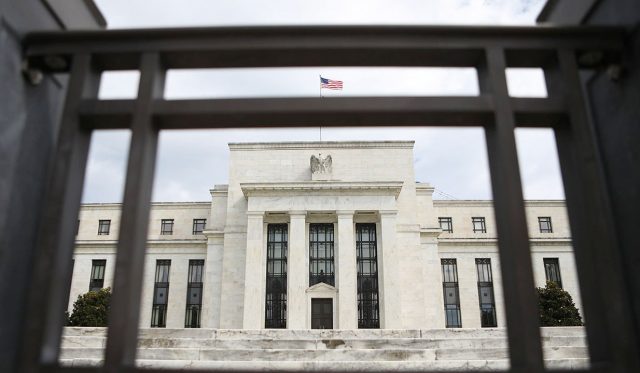
WASHINGTON — The Federal Reserve on Wednesday will close the door on its ultra-easy pandemic-era monetary policy and step up the fight against stubbornly high inflation with the first in what is likely to be a series of interest rate hikes this year.

The shift, beginning with an expected quarter-percentage-point increase in the US central bank’s benchmark overnight interest rate, has been in the works since last fall and has already driven up the cost of home mortgages and other key types of credit in anticipation of what the Fed will do to curb prices that are rising at their fastest pace in 40 years.

Yet the urgency surrounding the Fed’s policy meeting this week has intensified because inflation has shown no signs of easing and may even rise further on the back of Russia’s invasion of Ukraine, which fueled an oil price spike this month.

The precise language of the Fed’s new policy statement and the details of updated quarterly economic and interest rate projections will provide the first concrete guidance about how all that has influenced policymakers, and in particular whether it has rattled faith that the current economic expansion can stay on track even as inflation is driven lower.

Fed Chair Jerome Powell, speaking to lawmakers in Congress earlier this month, said he felt it was “more likely than not that we can achieve what we call a soft landing … which is get inflation back under control without a recession.”

But he also acknowledged the central bank was in uncertain terrain, perhaps more reminiscent of the high-inflation days of the 1970s than of the weak inflation environment that has conditioned monetary policy since the early 1990s.

“We haven’t faced this challenge in a long time,” Mr. Powell said in testimony before the US House of Representatives Financial Services Committee. “But we all know the history and we all know what we need to do.”

The new projections due to be issued alongside the policy statement at 2 p.m. EDT (1800 GMT) will show just how aggressive officials think they may need to be, and whether policymakers see the target federal funds rate rising to the sort of restrictive levels that could actually crimp the economy and increase unemployment.

Since the 2007-2009 financial crisis and recession, the Fed has penciled in those sorts of restrictive policies only once, in response to former President Donald Trump’s run-up of deficit spending in 2017 and 2018, but rates never rose that high before the economy started to buckle.

Inflation is now the motivation. The Fed’s preferred gauge of price pressures is currently increasing at an annual rate that is triple the central bank’s 2% target, and the environment of war, rising energy costs, and climbing wages has drawn parallels to the 1970s and early 1980s when the Fed pushed the economy into recession to break the cycle.

If the COVID-19 pandemic led to unpredictable economics, developments in Europe have made the situation almost Byzantine when it comes to forecasting.

The price of US West Texas Intermediate crude CLc1, for example, rose about 33% to $123 a barrel in the days following Russia’s Feb. 24 attack on Ukraine. On Tuesday, it had fallen back to about $95 a barrel, near where it was before the war.

But that decline was driven largely by new coronavirus-related lockdowns in China that could cause economic problems of their own — including more inflation.

The situation “couldn’t be worse for the Federal Reserve, which is already chasing inflation for the first time since the 1980s. The disruptions we are seeing are adding fuel to a well kindled inflation fire,” wrote Diane Swonk, chief economist at GrantThonton.

Mr. Powell “will be walking a tightrope, balancing the need to raise rates and rein in a more systemic rise in inflation with the need to avert a meltdown” if the central bank is seen raising rates so fast it might risk a recession, she added.

A ‘NIMBLE’ APPROACH
Mr. Powell is scheduled to hold a news conference half an hour after the release of the policy statement and projections. In addition to elaborating on the statement, he will likely provide an update on the discussions of when and how fast to reduce the Fed’s roughly $8.5 trillion portfolio of government bonds and mortgage-backed securities, a second tool for tightening monetary policy that will be deployed later in the year.

Mr. Powell has used words like “nimble” to describe his approach to a situation in which policymakers may have to adapt on the fly, and in which they have been repeatedly fooled by economic developments from a faster-than-expected recovery to the slow return of workers to jobs.

The language of the new policy statement and the details of the new projections will, however, put the Fed’s broader thinking on display.

As of December, most Fed officials felt they could get a grip on inflation with a relatively light touch that involved increasing the target federal funds rate, currently near zero, to just 2.1% by the end of 2024, a level still not considered restrictive by policymakers.

But policymakers at that point also felt inflation for 2022 would be just 2.6% and on its way down as the US and world economies worked through the supply chain issues and other problems created by the pandemic — an outlook that also is proving out of step.

Given the level of inflation, “the message has to be at least somewhat hawkish,” wrote Evercore ISI analysts Krishna Guha and Peter Williams, even if the volatile events of recent weeks mean officials will also want to stress “that now more than ever nothing is set in stone.” — Reuters


China lockdowns may delay orders from online platforms

CRANES and containers are seen at the Yantian port in Shenzhen, Guangdong province, China, May 17, 2020. — REUTERS

ORDERS placed with global e-commerce platforms like Amazon and Walmart may be delayed by virus lockdowns and restrictions in some of China’s key manufacturing hubs, according to an industry body.

Shenzhen, home to around half of all the online retail exporters in China, was locked down for at least a week on Sunday to try to contain a spreading coronavirus disease 2019 (COVID-19) outbreak. Its 17.5 million residents were told to work from home, with all non-essential businesses and public transport shut.

In nearby Dongguan, a key Chinese hub for the manufacture of shoes, toys and textiles, factories in areas where there are virus cases have been told to close, and schools and restaurants are effectively shuttered.

The moves are creating significant disruption to the production and delivery of goods sold on major online marketplaces, including those run by Amazon.com, Inc. and US retail giant Walmart Inc., said Wang Xin, head of the Shenzhen Cross-Border E-Commerce Association.

“Shenzhen now has pressed the pause key, with operations halted for almost all sectors, and we are no exception,” said Ms. Wang, whose organization represents some 3,000 exporters in the city, China’s main tech hub. The association’s members include purveyors of some of the biggest-selling online products in the West, including smartphone accessory maker Shenzhen Tomtop Technology Co Ltd., and Sailvan Times Co Ltd., maker of lounge-wear apparel brand Ekouaer.

Most production has been suspended in Shenzhen due to the lockdown and deliveries are snarled because logistics firms and warehouses aren’t operating or are doing so at a reduced capacity, Ms. Wang said in an interview Monday.

Chinese sellers have become ubiquitous on global shopping platforms, often specializing in cheaper versions of everyday goods such as phone chargers and sneakers. The country’s cross-border e-commerce industry grew by 25% to 1.4 trillion yuan ($220 billion) in 2021, building on a 40% surge in 2020 due to the pandemic.

Thanks to China’s integrated supply chains, some companies have become top sellers globally, with fast-fashion juggernaut Shein and Anker Innovations Technology Co., which retails $1.5 billion of smartphone accessories and other consumer electronics every year, now household names.

Amazon said it was diverting freight to warehouses in parts of southern China that aren’t subject to lockdowns or pandemic restrictions.

“We do not anticipate a significant disruption to our business,” Maria Boschetti, an Amazon spokeswoman, said by email.

Representatives from Walmart didn’t immediately respond to emails seeking comment about potential delivery delays. Chinese logistics firm 4PX said on its website Monday that it’s stopped picking up parcels from Shenzhen due to the COVID restrictions.

Wang said the association is “actively negotiating” with the Shenzhen authorities to try and at least get some parcel deliveries resumed soon. The disruption comes at a particularly tricky time, with Amazon cracking down on multiple top sellers in China last year over fake consumer reviews.

While authorities have said some factories in Shenzhen and Dongguan will be still be allowed to operate if they test workers daily and operate bubbles, Ms. Wang said her member companies have been required to halt all production, with one even fined earlier this week because they hadn’t complied.

“Even if you’re not in the areas with serious cases, you’re not allowed to do anything,” she said. — Bloomberg