Home Blog Page 6171

Shopee program aims to train young tech leaders

An upskilling program offered by e-commerce platform Shopee aims to prepare top university students for the Philippine digital economy, which is projected to generate up to P5 trillion in economic value by 2030, according to a 2022 AlphaBeta study commissioned by Google. 

The Shopee Apprentice Program, launched in 2021, develops critical skills such as problem solving, effective communication, and adapting to a fast-paced working environment.   

“The Shopee Apprentice Program is a testament to our commitment to developing leaders of tomorrow. We look forward to maximizing our platform to provide even more opportunities to hone the skills of young tech talents, even at the career preparation stage,” said Karen Ann L. Perez, Shopee Philippines’ head of people, in a July 5 press release. 

Apprentices are immersed in Shopee’s collaborative work culture and given the chance to experience working on e-commerce and digital finance projects. They also receive guidance and mentorship from Shopee’s top leaders. 

Upon completing the program, they can then join an accelerated track for Shopee’s Global Leaders Program, a two-year graduate program for young professionals.   

“This year’s batch of apprentices is a diverse mix of top students from prestigious local and international universities,” Shopee said.  

For more information, visit careers.shopee.ph/apprenticeprogram. — B. H. Lacsamana

Mitsui, Mitsubishi shares slide after Medvedev threat on gas, oil supplies

Shares in Japanese trading firms Mitsui & Co 8031.T and Mitsubishi Corp 8058.T tumbled on Wednesday after former Russian president Dmitry Medvedev made comments threatening the loss of oil and gas supply to Japan. Read full story

Mitsui shares had lost 5.7% while Mitsubishi shares were down 5.4% by the midday break.

Japan “would have neither oil nor gas from Russia, as well as no participation in the Sakhalin-2 LNG project,” Mr. Medvedev, now deputy chairman of Russia’s Security Council, wrote on social media on Tuesday.

His remarks came after Japanese Prime Minister Fumio Kishida said at the weekend that the Group of Seven (G7) countries had agreed to capping the price of Russian oil at around half its current level.

G7 leaders last week agreed to explore imposing a ban on transporting Russian oil that has been sold above a certain price in an effort to reduce Moscow’s revenues and deplete its war chest, but had not mentioned a specific figure for the cap.

Russia announced on Friday a decree that seizes full control of the Sakhalin-2 gas and oil project in the country’s far east, a move that could force out Shell SHEL.L and Japanese investors.

The Sakhalin-2 project is one of the world’s largest LNG projects and about 60% of the LNG it supplies under long-term contracts is shipped to Japan. Mitsui and Mitsubishi hold stakes of 12.5% and 10% in the project respectively. – Reuters

Rising heat drives crippling sandstorms across the Middle East

STOCK PHOTO | Image by Vicki Hamilton from Pixabay

Over the past two months, Iraqis have been living, working and breathing in thick clouds of dust, as at least nine sandstorms – lasting up to several days each – have hit the country, blanketing everything in grit.

Hospitals have reported a surge in admissions, with thousands of patients coming in with severe respiratory illnesses, while schools and offices have had to close and flights have been grounded for days at a time.

“I can’t walk outside without coughing or covering my mouth,” Azzam Alwash, founder of non-governmental green group Nature Iraq, told the Thomson Reuters Foundation from his home in Baghdad.

The latest storm “kept me in the house for two days. I have asthma, so I have to stay inside to protect my lungs,” he said.

Iraq, Iran, Syria and other Gulf states are no strangers to sand and dust storms (SDSs) which have historically occurred in the hot months from May to July when strong northwesterly winds carry large amounts of dust throughout parts of the region.

But these days the storms are coming earlier and more frequently, rising well above the once-normal once or twice a year, starting as early as March and spreading over a wider area.

As governments struggle to cope with the dusty onslaught, environmentalists and government officials say what’s driving the threat is a combination of climate change and poor water management practices that together are turning more of the region’s soil into sand.

They warn that rising temperatures and changing weather patterns suggest there’s worse to come, unless governments can work together to cut climate-changing emissions and reduce the health and financial impacts of the waves of sand sweeping through the region.

“The increase in droughts is a particular concern,” said Kaveh Zahedi, deputy executive secretary for sustainable development at the United Nations’ Economic and Social Commission for Asia and the Pacific.

He said affected countries should invest in early warning and forecasting systems, craft more efficient water and land management policies, and put in place insurance and social protection measures to help the most vulnerable communities recover from the storms.


A PERFECT STORM

Travelling thousands of kilometres, each sand and dust storm can wreak havoc through a dozen countries.

They damage buildings, powerlines and other vital infrastructure, kill crops, reduce visibility for drivers and interrupt air, rail and water transportation, according to a 2019 report from the World Bank.

The Middle East and North Africa (MENA) loses about $13 billion a year to the effects of sandstorms, from the costs of cleanup and recovery to treating health problems and a decline in productivity, the report says.

Kaveh Madani, a research scientist focused on environmental justice, security and diplomacy at City College of New York, said the dangers posed by sand and dust storms have been overlooked by local and international governments for too long.

“This transboundary and transgenerational issue … is only becoming more dangerous every year,” said Mr. Madani, who previously served as deputy head of Iran’s environment department.

“It’s really disappointing to see that one of the most debilitating environmental problems of the 21st century is not being properly recognized by major intergovernmental and scientific agencies,” he said in a telephone interview.

The Middle East has always been naturally burdened with strong winds, dry soil and hot weather, which combined provide the perfect conditions for sand and dust storms.

But climate experts say rising heat coupled with decades of poor water management and inefficient agricultural practices have degraded land across the region, making it easier for dust particles to be picked up and swept across vast areas.

A report released by the International Monetary Fund in March shows that, since the 1990s, the Middle East has been heating up twice as fast as the global average.

In many MENA countries, 85% of water goes to agricultural uses, according to the World Bank.

Climate experts say unsustainable agricultural practices such as overgrazing, excessive use of chemicals and machinery and excessive irrigation – often encouraged by heavily subsidized water tariffs – are helping drive desertification in the region.

Also to blame, said Mr. Madani, are the strings of dams being built on some of the region’s major rivers, which can block water flowing to wetlands. Conflicts also can force farmers to flee, leaving their land to become barren and dry.

“Add to this mix the problem of deforestation, land use changes, abandoned farmlands … and you have the recipe for more frequent and intense dust storms,” he said.


DUST DIPLOMACY

Tense political relations between some of the countries hardest hit by sandstorms hamper negotiations on how to tackle the problem, said Erik Solheim, who was executive director of the UN’s Environment Program between 2016 and 2018.

But some nations have made individual efforts to fight dust storms in the region.

Saudi Arabia has committed to planting 10 billion trees – an ambitious goal for a country with limited renewable water resources – within its own borders with the aim of reducing carbon emissions and reversing creeping land degradation.

Trees can revive parched land by trapping more rain in the ground and slowing the evaporation of water from the land, while their roots bind soil and prevent erosion.

In 2016, the Abu Dhabi-based Masdar Institute of Science and Technology launched a web-based modelling system that provides near-real-time maps of concentrations of atmospheric dust and other pollutants in the region.

But environmental experts who spoke with the Thomson Reuters Foundation said existing measures are not enough to prepare the region for the extreme dust storms that worsening climate change could bring.

“Unless immediate and serious action is taken in the Middle East to address the matter of dust storms, outcomes like forced migration of people can turn (storms) into a global problem rather than a regional one,” Mr. Madani said.

Mr. Solheim, currently a senior advisor to the World Resources Institute think tank, is among several experts and officials calling for UN climate talks this year in Egypt and next year in the United Arab Emirates to become a forum for governments to engage in diplomacy aimed at curbing the scourge of sandstorms.

“Many other environmental issues are higher on the agenda, but sand and dust storms have hardly been talked about in climate talks,” Mr. Solheim said. – Reuters

Heavy fighting, widespread shelling in battle for Donetsk, says Ukrainian officials

MAX KUKURUDZIAK-UNSPLASH

Russian troops are engaged in heavy fighting supported by widespread artillery fire as they launch a major offensive for Ukraine’s Donetsk region, Ukrainian officials said, a day after Moscow declared victory in the neighboring province of Luhansk.

Donetsk and Luhansk comprise the Donbas, the industrialized eastern part of Ukraine that has seen the biggest battle in Europe for generations. Russia says it wants to wrest control of the entire Donbas from Ukraine on behalf of Moscow-backed separatists in two self-proclaimed people’s republics.

After Russian forces on Sunday took control of Lysychansk, the last bastion of Ukrainian resistance in Luhansk, Ukrainian officials said they now expect Moscow to focus its efforts especially on the cities of Sloviansk and Kramatorsk in Donetsk.

There was heavy fighting at the edge of the Luhansk region, its governor Serhiy Gaidai told Ukrainian television, saying Russian regular army and reserve forces had been sent there in an apparent effort to cross the Siverskiy Donets River.

“They are sustaining quite heavy losses,” Mr. Gaidai said.

“Some battalions have been moved there to make up the numbers they need….They are not taking all their wounded with them. The hospitals are full to bursting as are the morgues.”

“There is still a great deal of shelling in both Luhansk and Donetsk regions. They are shelling everything in their path.”

Reuters could not independently verify his comments.

On Tuesday, Russian forces struck a market and a residential area in Sloviansk, killing at least two people and injuring seven, local officials said.

A Reuters reporter at the scene saw yellow smoke billowing from an auto supplies shop, and flames engulfing rows of market stalls as firefighters tried to extinguish the blaze.

Donetsk regional governor Pavlo Kyrylenko said Sloviansk and nearby Kramatorsk had suffered heavy shelling overnight. “There is no safe place without shelling in the Donetsk region.”

Russian President Vladimir Putin launched the invasion of Ukraine on Feb. 24, calling it a “special military operation” to de-militarize the country, root out nationalists and protect Russian speakers.

Kyiv and the West say Russia is waging an unprovoked, imperial-style land grab in its fellow ex-Soviet republic, and accuse Moscow of war crimes.


A RUINED CITY

Lysychansk, once a city of a 100,000 people, lies in ruins. Buildings are scorched and holed by shells, cars up-ended and streets strewn with rubble, testament to the ferocity of the battle it endured.

Tatiana Glushenko, a 45-year-old Lysychansk resident, told Reuters there were people still sheltering in basements and bomb shelters, including children and elderly.

Ms. Glushenko said she didn’t think she would be safe in other parts of Ukraine, so remained in Lysychansk with her family.

“All of Ukraine is being shelled: western Ukraine, central Ukraine, Dnipro, Kyiv, everywhere. So we decided not to risk our lives and stay here, at home at least,” she added.

Ms. Glushenko now hopes peace will return to her ruined city, but for elderly residents Sergei and Evgenia the prospect of rebuilding from the ruins is daunting.

“We have to get out of here somehow,” said Sergei, sitting in a dark shelter with a lone flash light

“The roof is broken. You have to fix it, but how and how do you pay for it?…Winter is coming soon too,” said Evgenia.

Luhansk governor Gaidai said Russian forces were pillaging Lysychansk and its twin city Sievierodonetsk.

“They are hunting down pro-Ukraine residents. They are making deals with collaborators, they are identifying apartments were servicemen lived, breaking in and taking clothing,” he said.

“Everything is being destroyed. Entire book collections in Ukrainian. This is deja vu – 1939 with Nazi Germany.”

Reuters could not immediately verify this report.

Russia says it does not target civilians.


‘LONG WAR’ AHEAD

Moscow ramped up its war rhetoric with Duma speaker Vyacheslav Volodin saying Ukraine had become a “terrorist state”.

The remarks by the chairman of the lower house of parliament suggested Russia may expand its stated war aims beyond the Donbas, having abandoned offensives on the capital Kyiv and second largest city Kharkiv in the face of fierce resistance early in the conflict.

In another sign Russia is bracing for a long war, the Duma passed two bills in their first reading that would allow the government to oblige firms to supply the military and make staff work overtime to support the invasion. Read full story

British Prime Minister Boris Johnson told President Volodymyr Zelenskiy during a phone call he believed Ukraine’s military could retake territory recently captured by Russia.

Mr. Johnson updated Mr. Zelenskiy on the latest deliveries of British military equipment, including 10 self-propelled artillery systems and loitering munitions, which would be arriving in the coming days and weeks, a spokesperson said.

Russia’s invasion has killed thousands, displaced millions and flattened cities, particularly in Russian-speaking areas in the east and southeast of Ukraine. It has also raised global energy and food prices and raised fears of famine in poorer countries as Ukraine and Russia are both major grain producers.

Ukraine has asked Turkey to help probe three Russian-flagged ships as part of Kyiv’s efforts to investigate what it says is the theft of grain from Russian-occupied territory, according to official documents. Russia denies stealing Ukrainian grain. Read full storyReuters

COVID and bust: China’s private health system hurt by tough coronavirus controls

COMPUTER-GENERATED representation of COVID-19 virions via Felipe Esquivel Reed / CC BY-SA

On March 24, a court in the central Chinese city of Fuyang announced that a $1.5 billion hospital built just four years earlier had filed for bankruptcy because it was unable to pay its debts.

For most of the last two years, the Fuyang Minsheng Hospital had been fully involved in mass coronavirus vaccination and testing programs in the city, training almost 100 staff to perform throat swabs and setting up mobile vaccination facilities to go to schools and workplaces, at the order of city officials.

The diversion of resources into what China calls its ‘zero-COVID‘ approach to contain and eliminate the virus forced the hospital to suspend many services it relied upon for revenue, sealing its financial failure.

A civil ruling from the Fuyang court handling Minsheng’s application for bankruptcy restructuring said the hospital’s “funding difficulties” were brought about by the “impact of the epidemic” as well as its failure to secure a bank loan.

According to Kanyijie, a specialist Chinese medical industry information service, the 1,000-bed, 16-hectare Minsheng Hospital took a downward turn soon after the first wave of infections spread through China.

“Since January 2020, in order to cooperate with the city’s epidemic prevention and control work, the hospital suspended some diagnostic and treatment activities and income fell noticeably,” said Kanyijie in April. “There was basically no medical income and the economic pressures were huge.”

Even after entering bankruptcy, as hospital administrators worked on a restructuring plan, local government officials publicly ordered medical staff at the hospital to put on protective gear and head to what they called the “front line” of the war on the coronavirus, where the doctors and nurses raced to complete 400,000 nucleic acid tests on local citizens in five days.

“We will go wherever we are needed,” hospital manager Li Wenfang said on the hospital’s website. “The epidemic does not retreat and we will not retreat.”

Minsheng is just one of dozens of private hospitals that have declared bankruptcy in China during the past two years, pushed over the edge by the cost of complying with the country’s zero-COVID policies. Minsheng and some other hospitals have continued operating to some degree through bankruptcy, but many have closed, evidence of the unintended consequences of the inflexible policy on the country’s efforts to modernize the patchwork health system that takes care of its 1.4 billion citizens.

The world’s second-largest economy remains behind the rest of the developed world by many healthcare measures and is in the middle of a ‘Healthy China’ program that aims to raise average life expectancy to 79 from 76 by 2030, while increasing survival rates for cancer and other chronic illnesses. Zero-COVID may actually make those goals harder to reach.

Health facilities at all levels and in all provinces have been affected,” said Hong Xiao, researcher at the Fred Hutchinson Cancer Research Center in Seattle, who has been studying the long-term impact of the pandemic on China’s hospitals. “Human and financial resources were diverted from routine outpatient and inpatient care for non-COVID-19 diseases to sustain mass testing and/or meet the surge in COVID-19 cases.”

China’s health administration did not reply to a request for comment for this story. The country’s leaders have steadfastly defended the zero-COVID approach as the country’s least costly option, necessary to prevent hospitals from being overwhelmed and to protect an ageing population which has low immunity to the virus.

Chinese President Xi Jinping, speaking during a visit to Wuhan last week, acknowledged the economic costs of zero-COVID, but said “it is better to temporarily affect economic development than to harm the lives and health of the people.” He said the consequences would be “unimaginable” if China accepted the coronavirus as endemic, as all other major countries of the world have.


BANKRUPTCIES MORE THAN DOUBLE

Private hospitals are an important part of China’s healthcare system, accounting for about 15% of total patient visits in 2020, according to the latest government data, with publicly owned hospitals taking the rest. The country had 35,394 hospitals, both public and private, at the end of 2020.

Forty-six large private hospitals declared bankruptcy in 2021, up from 26 in 2020 and 21 in 2019, according to corporate information database Tianyancha. Twenty-six private hospitals entered formal bankruptcy proceedings in the first five months of this year alone, including Minsheng.

As many as 685 hospitals – both public and private – closed in 2020 alone, nearly double the previous year, according to research based on Tianyancha data circulated by state media late last year.

To be sure, hospitals and health services across the world have been disrupted and weakened by the coronavirus, and some of those that closed in China were hurt by other factors, such as the government putting a cap on drug prices, a lucrative source of revenue for many hospitals.

But data shows that footfall has declined sharply in private hospitals, partly as a result of policies forcing them to send patients with COVID-like symptoms to public facilities. Because of widespread lockdowns, and a fear of being forcibly quarantined or hospitalized, many people have been either unable or unwilling to come to hospitals to receive treatment for other illnesses, depriving the hospitals of revenue.

The total number of visits to all healthcare institutions, both public and private, stood at 7.74 billion in 2020, down by nearly 1 billion from the previous year, according to the latest official data, the first annual dip since 2003.

Medical journal Lancet Regional Health published a study in 2021 that showed China’s coronavirus outbreak in early 2020 had a “devastating collateral effect” on patient numbers in all regions and all services, with numbers still not fully recovered by June 2020, even though the outbreak was largely brought under control by March.

It estimated that health facility visits fell some 24% from January to June of that year, with the biggest reductions in developed regions of the country, largely due to the virus preventing patients from getting to hospitals or hospitals being unable to treat them, because of the coronavirus disrupting operations.

“These reductions and stagnations in prevention and treatment will likely have significant collateral effects on population health that greatly exceed the direct health effects from the infection,” the Lancet study said. “Crippling losses in revenue … threaten the viability of a substantial number of healthcare facilities and providers.”


SHANGHAI DEATHS

The diversion of medical resources to enforce zero-COVID policies has led to deaths, critics say. On March 23, during the recent two-month lockdown of Shanghai, a woman named Zhou Shengni died of an asthma attack after she was refused treatment at the Shanghai East Hospital, which had closed its emergency department due to “epidemic prevention and control measures,” according to an official notice from the hospital.

China has sought to censor unflattering reports from what occurred during Shanghai’s lockdown. Citizens, however, compiled a list using the data collaboration website Airtable, collecting the records of 210 relatives that people said died because they could not get access to treatment, or their treatment was delayed. Some posted medical documents online as proof. Reuters was unable to independently verify the cases.

Wu Jinglei of the Shanghai Health Commission said at a briefing on March 25 that people had been struggling to get medical treatment for non-COVID illnesses.

“There has been a huge pile-up of demand over a short space of time for emergency services,” said Zhao Dandan, deputy director of the Shanghai Municipal Health Commission, during a briefing in late April. He said “there is still a big discrepancy with the actual needs of the public,” meaning that hospitals are still not able to provide people in the city the services they need.

China’s government spent at least 150 billion yuan ($22 billion) on coronavirus testing in the first five months of this year, and the total annual cost of building a permanent testing system could reach 410 billion yuan, according to Huachuang Securities, a Beijing-based brokerage.

A ruling by China’s Ministry of Finance in 2020 stated that all medical costs relating to COVID should be covered by public insurance funds or central government subsidies. The problem for many private hospitals, which provide some of the manpower and equipment for such testing, is that they are not necessarily reimbursed immediately by the government for such work, leaving them vulnerable financially.

A doctor at one public hospital in Shanghai told Reuters 300 members of staff had been engaged in COVID testing since the start of the lockdown in the city in early April, and continued even after restrictions were lifted in early June, and were still expected by hospital managers to volunteer on weekends to test residents.

A study of the Shanghai outbreak published last month by China’s Center for Disease Control and Prevention said fighting the more infectious but less lethal Omicron variant had “placed a huge burden” on China’s medical resources, overwhelming hospitals not with very sick patients, but with asymptomatic and mildly symptomatic cases.

“Regions that previously admitted all SARS-CoV-2-infected individuals may not have sufficient hospital resources to admit non-severe Omicron patients,” said the study, written by a team of local medical experts, including Zhang Wenhong, who has expressed scepticism about zero-COVID policies previously. The paper was subsequently removed from the CDC’s website.

“All these resources have gone into implementing the zero-COVID strategy, and less attention and less resources have gone into boosting public health capacity,” said Yanzhong Huang, public health expert with the Council on Foreign Relations, a U.S. think tank. – Reuters


Blinken to seek G20 pressure on Russia to open sea lanes, warn China on Ukraine

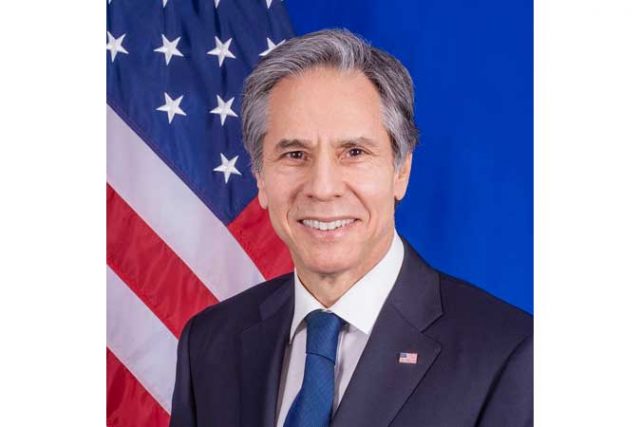
United States Secretary of State Antony Blinken — COURTESY OF FACEBOOK/ANTONY BLINKEN

US Secretary of State Antony Blinken will call on G20 nations this week to put pressure on Russia to support UN efforts to reopen sea lanes blocked by the Ukraine conflict and repeat warnings to China not to support Moscow’s war effort.

Mr. Blinken heads to Asia on Wednesday for a meeting of Group of 20 foreign ministers in Bali on Friday. His trip will include his first meeting with Chinese counterpart Wang Yi since October, but no meeting is expected with Russian Foreign Minister Sergei Lavrov. Read full story

Analysts foresee a contentious G20 ministerial in which Washington and its allies blame Moscow for global food shortages since its Feb. 24 invasion of Ukraine, a major grain exporter, while Russia, also a major exporter, blames U.S.-led sanctions.

Ramin Toloui, assistant secretary of state for economic and business affairs, told reporters Mr. Blinken would raise energy security and a U.N. initiative to try to get Ukrainian and Russian foodstuffs and fertilizer back to global markets.

G20 countries should hold Russia accountable and insist that it support ongoing UN efforts to reopen the sea lanes for grain delivery,” he said. “Whether that happens at the level of the G20, or the level of individual G20 countries, that’s an important point that Secretary Blinken will make,” he said.

Ukraine, which accuses Russia of blocking movement of its ships, said this week it is holding talks with Turkey and the United Nations to secure guarantees for grain exports. Read full story

Russia denies it is blocking any movement of grain and says Ukraine is to blame for the lack of movement, partly because of what it says are mining operations in its ports.

The top US diplomat for East Asia, Daniel Kritenbrink, said he expected a “candid” exchange on Ukraine in Mr. Blinken‘s talks with China‘s Wang, which are expected on Saturday.

“This will be another opportunity … to convey our expectations about what we would expect China to do and not to do in the context of Ukraine,” he said.

Shortly before Russia‘s invasion of Ukraine, Beijing and Moscow announced a “no limits” partnership. But US officials have said they have not seen China evade US-led sanctions on Moscow or provide military equipment to Russia. Read full story

China, however, has refused to condemn Russia‘s actions and has criticized the sweeping sanctions. US officials have warned of consequences, including sanctions, should China start offering material support for Russia‘s war effort.

Washington calls China its main strategic rival and is concerned it might one day attempt to take over by force the self-ruled democratic island of Taiwan, just as Russia attacked Ukraine.

Mr. Kritenbrink said it was “absolutely critical” to maintain open lines of communication with Chinese counterparts “to ensure that we prevent any miscalculation that could lead inadvertently to conflict and confrontation.”

The meeting with Wang will be the latest high-level contact between US and Chinese officials.

Despite the all-round strategic rivalry between Washington and Beijing, the world’s two largest economies remain major trading partners. President Joe Biden has been considering scrapping tariffs on a range of Chinese goods to curb surging U.S. inflation before the November midterm elections, with the control of Congress in focus. Read full story

US Treasury Secretary Janet Yellen spoke with Chinese Vice Premier Liu He on Monday and US national security adviser Jake Sullivan met last month with China‘s top diplomat, Yang Jiechi, in Luxembourg. Read full story Biden and Chinese President Xi Jinping are also expected to speak in coming weeks.Read full story

The White House said on Thursday it is still looking at options on whether to cut tariffs on Chinese imports, even as industry requests to keep the duties in place mounted. Read full story

Mr. Lavrov and Mr. Blinken have not met since before Moscow’s Ukraine invasion, and Washington and its allies have been backing Kyiv with weapons supplies.

US State Department spokesman Ned Price said now is not the right time for another meeting. “We would like to see the Russians be serious about diplomacy. We have not seen that yet,” he said.Reuters

An exemplar of meaningful CSR communications

Development Communication as part of its operations: SMFI ensures to strategically communicate its CSR programs which enabled it to bag a Silver Award in the ninth annual Asia-Pacific Stevie Awards.

SM Foundation, Inc. bags Stevie award for ‘Spreading Social Good’ campaign

By Adrian Paul B. Conoza

What does a meaningful fulfillment of corporate social responsibility (CSR) entail? One can say that effective implementation of an organization’s programs will suffice, but communicating those programs and the progress of each to stakeholders is likewise essential. In fact, such efforts would even be more meaningful if stakeholders get inspired to support or emulate what the organization has done.

One notable Filipino organization that highly values these is SM Foundation (SMFI), the CSR arm of the SM group, which was recognized in the globally-known Stevie Awards this year.

In particular, SMFI wins the Silver Stevie® Award in the Innovation in Community Relations or Public Service Communications category in the ninth annual Asia-Pacific Stevie Awards, the only business awards program to recognize innovation in the workplace in all 29 nations of the Asia-Pacific region.

SMFI celebrated this recognition with other winners on a virtual awards ceremony last June 29.

SMFI’s Stevie Award specifically recognized the “Spreading Social Good” campaign, through which the foundation communicates its “social good” programs in education, health and wellness, sustainable agriculture, and disaster relief for their stakeholders.

For the foundation, “Spreading Social Good” drives SMFI’s intention not just to create meaningful benefits on the communities and individuals it reaches, but also to inspire other people to bring positive impact, specially to the people and communities around them.

An active partner and supporter of Filipino farmers, SMFI provides farmers with modern farming skills and tools through its Kabalikat Sa Kabuhayan on Sustainable Agriculture. (Pre-pandemic photo)

“Now, that smartphones and social media are transforming how we communicate, it is now easier for us to bring communities together to do good. That’s the reason why it is important for us at SMFI to share our social good stories since we believe that if your development communication is well contextualized and authentic, your social good program can unite various institutions in spreading social good — which in turn multiplies impact,” said Debbie Sy, the Executive Director of SMFI.

The executive director finds that communicating digitally largely demonstrates how they have been innovating their reach to stakeholders.

Recognizing that communication continuously evolves, SMFI has been driven to keep at pace with a more digitalized landscape, highlighted by the younger generation becoming more tech-savvy.

For instance, for its scholarship awarding and presentation of scholar-graduates, SMFI transitioned from bringing scholars to SM Mall of Asia to holding such events virtually, which in fact has expanded the foundation’s imminent reach.

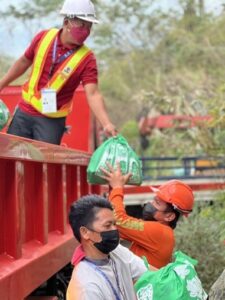
Bringing hope in times of need. SMFI ensures to be one of the first responders during calamities and crises.

Digitalization’s impact on SMFI can also be seen on how it has launched its health and wellness centers, schoolbuildings, and sustainable agri-trainings — where on-site and online components come together.

“Corporate Social Responsibility (CSR) is one area in which digitalization has helped companies to advance. Implementing new technologies not only adds business value — it can also enable non-profits to take their operations, management, and reporting for CSR online,” Ms. Sy explained.

“Taking your CSR online does not mean that changes in the very concept, values and principles are happening. It is an innovation in the implementation of socially responsible projects that involves organizations and their stakeholders using relevant tools, like social media, and the development of new models of collaboration through engagement and implementation of activities in the digital space,” Ms. Sy added.

With the latest prestigious award it received, SMFI is driven further to continue realizing social development in the communities and sectors it serves — and to bring communities together to do good through purposeful storytelling.

Highlighting the importance of health in nation-building, SMFI upgrades community health centers, complimented by its medical caravans across the country.

Follow SMFI on Facebook, Twitter, Instagram and YouTube: @SMFoundationInc to know more about its social good stories.


Spotlight is BusinessWorld’s sponsored section that allows advertisers to amplify their brand and connect with BusinessWorld’s audience by enabling them to publish their stories directly on the BusinessWorld Web site. For more information, send an email to online@bworldonline.com.

Join us on Viber to get more updates from BusinessWorld: https://bit.ly/3hv6bLA.

Join #EdenLevelUpChallenge on TikTok with the Creamy Taste and Smooth Texture of the NEW Eden Cream Cheese

Let your family taste the new Eden Cream Cheese! Made from high-quality farm-fresh milk, Eden Cream Cheese will add a creamy taste and smooth texture that is perfect for baking, cooking, and so much more – instantly leveling up your dishes!

Mealtimes with your family is both fun and challenging. Figuring out what to eat every day while you’re all at home and what your family will enjoy can become a routine.

It’s time to level up and make your meals more delicious and special by using the new Eden Cream Cheese in your dish preparations! Every meal is made better with the creamy taste and smooth texture of Eden Cream Cheese, making each bite more enjoyable and delicious. Made from high quality, farm fresh milk, this new product offering of Eden helps give the dishes you bake or cook that creamy texture your family will love.

Eden Cream Cheese is good for various uses, available in a 225g block at SRP PHP140, and a 140g spreadable tub at SRP PHP 95 – you can choose the variant that suits the dish you’re making. You can purchase from this link – bit.ly/ShopEdenCreamCheese.

Say hello to this new addition to your recipe creations and create more dishes that your family will love and look for every mealtime! No worries basta’t may Eden Cream Cheese, kayang #iLevelUpAngSarap ng bawa’t lutuin, at mas masaya pa ang bonding time with your family!

Ready to level up your kitchen creations? Join the #EdenLevelUpChallenge on TikTok and take your favorites to the next level! Many have joined the challenge via Tiktok stitch/duet with Heart Evangelista showing how they leveled up their dishes! Post your entries now and show how you level up your kitchen creations or everyday moments with Eden Cream Cheese! Use the hashtags #EdenLevelUpChallenge #EdenCreamCheese #iLevelUpAngSarap and showcase your dishes! Check out this Tiktok link for the hashtag challenge → https://vt.tiktok.com/ZSdKv9AhX/

Remember to follow and like Eden Cheese PH on Facebook for updates and more recipes.


Spotlight is BusinessWorld’s sponsored section that allows advertisers to amplify their brand and connect with BusinessWorld’s audience by enabling them to publish their stories directly on the BusinessWorld Web site. For more information, send an email to online@bworldonline.com.

Join us on Viber to get more updates from BusinessWorld: https://bit.ly/3hv6bLA.

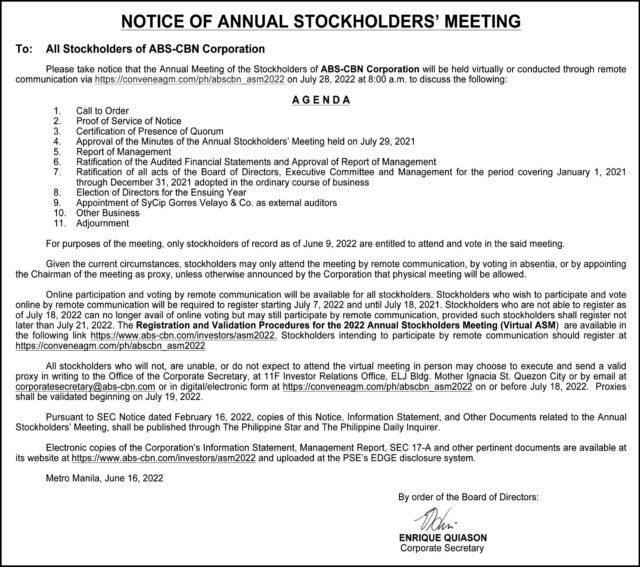
ABS-CBN Corp. to conduct annual stockholders’ meeting via remote communication on July 28


Spotlight is BusinessWorld’s sponsored section that allows advertisers to amplify their brand and connect with BusinessWorld’s audience by enabling them to publish their stories directly on the BusinessWorld Web site. For more information, send an email to online@bworldonline.com.

Join us on Viber to get more updates from BusinessWorld: https://bit.ly/3hv6bLA.

Inflation nears 4-year high in June

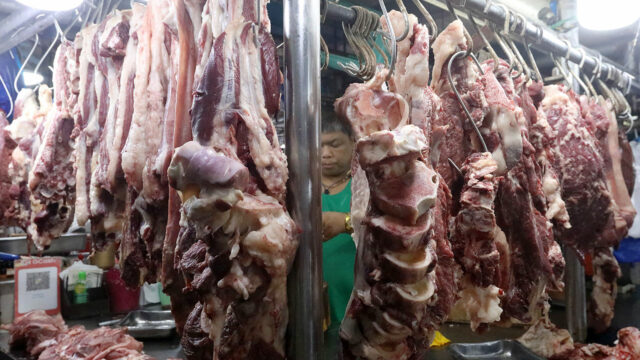
A vendor waits for customers at a public market. — PHILIPPINE STAR/EDD GUMBAN

INFLATION climbed to its highest level in nearly four years in June, further eroding the purchasing value of the peso to a record low, the Philippine Statistics Authority (PSA) said on Tuesday.

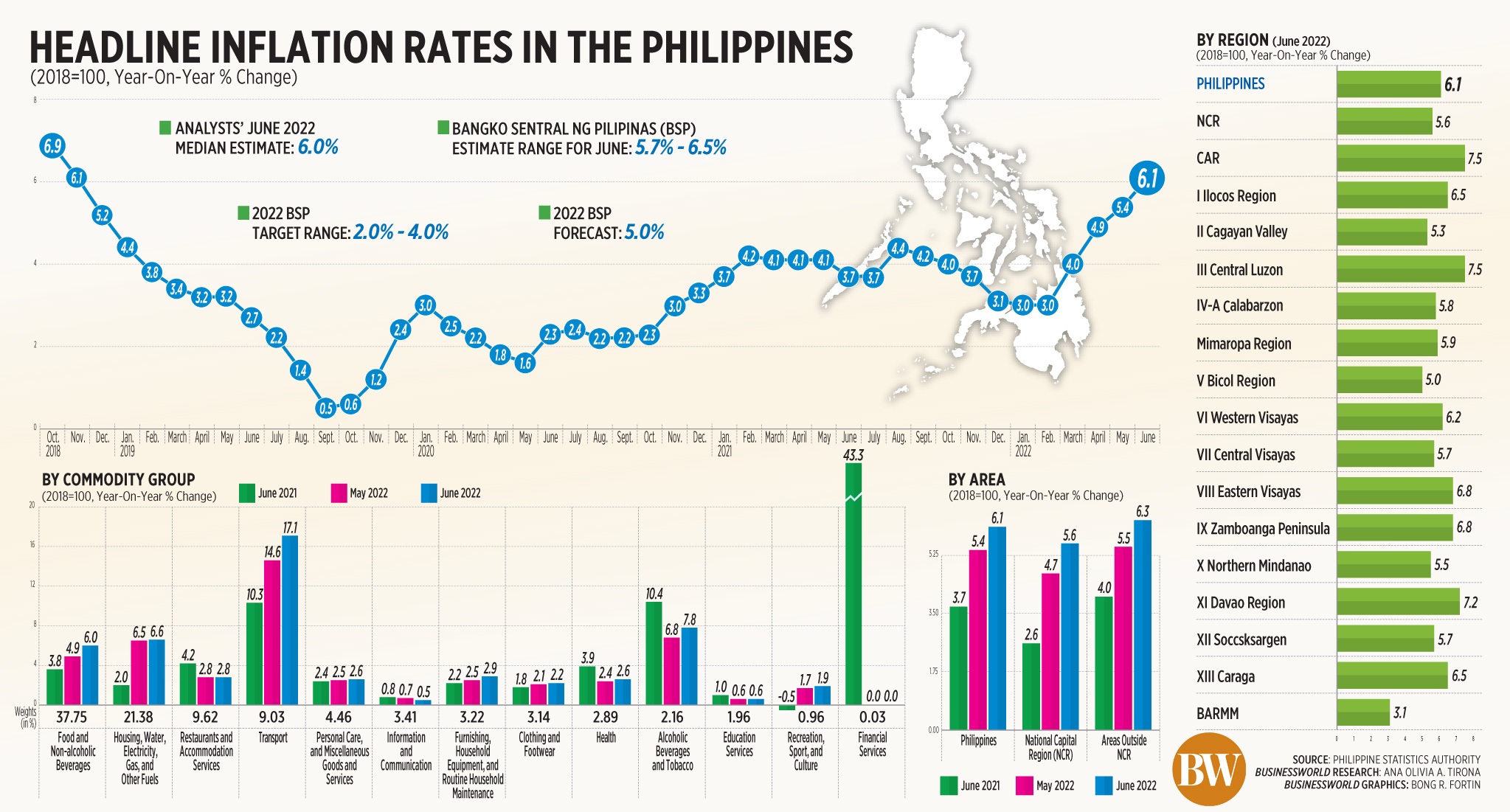
Preliminary data from the Philippine Statistics Authority (PSA) showed the consumer price index (CPI) accelerated to 6.1% year on year in June, exceeding the Bangko Sentral ng Pilipinas’ (BSP) 2-4% official target range for a third straight month. This was faster than the 5.4% in May and 3.7% a year ago.

The June headline figure was a tad higher than the 6% median estimate in a BusinessWorld poll conducted last week, and settled within the 5.7%-6.5% forecast range of the BSP for that month.

Headline inflation rates in the Philippines

It also matched the pace recorded in November 2018 and was the fastest growth in 44 months or since the 6.9% print in October 2018.   

Month on month, inflation picked up by 0.9%. On a seasonally adjusted basis, month-on-month inflation rose by 1% in June.

The June print brought year-to-date average inflation to 4.4%, higher than the 4% a year ago. This is still below the BSP’s revised 5% average inflation forecast for this year.

At a press briefing on Tuesday, National Statistician Claire Dennis S. Mapa said June inflation was driven by the uptick in food and transport prices.

“Out of the 13 commodity groups we track, nine of them increased in June and majority of them came from food,” Mr. Mapa said in Filipino.

Asked if this was the peak, Mr. Mapa said they are still seeing an increase in prices.

“If you will notice the slope in prices from January to June, it is very steep every month. So based on our monitoring there are expectations of these prices, particularly food prices which will move upward,” he said.

The heavily weighted index for food and non-alcoholic beverages, which account for nearly 38% of the theoretical consumer basket, grew by 6% year on year in June from 4.9% in May.

The food-alone index also jumped by 6.4% in June, faster than 5.2% in May.

Prices of meat and others surged by 8.1% year on year in June from 5.4% in May. Rice prices, likewise, inched up by 2% from 1.5% in the previous month.

The transport index, which accounts for 9% of the CPI, quickened by 17.1% in June from 14.6% in May. This was attributed to the faster increase in the prices of gasoline (53.9% in June from 47.2% in May); other passenger transport by road (2.7% from 1.1%); and diesel (92.5% from 86.2%).

Alcoholic beverages and tobacco rose by 7.8% in June from 6.8% in May, while utilities picked up by 6.6% from 6.5%.

Furnishings, household equipment and routine household maintenance grew by 2.9% in June from 2.5% in the previous month.

Higher annual hikes were seen in health (2.6% from 2.4%); personal care and miscellaneous goods and services (2.6% from 2.5%); clothing and footwear (2.2% from 2.1%), and recreation, sport, and culture (1.9% from 1.7%).

Meanwhile, restaurants and accommodation services and education services steadied at 2.8% and 0.6%, respectively.

Information and communication commodities, on the other hand, eased to 0.5% in June from 0.7% in the previous month.

In a statement, BSP Governor Felipe M. Medalla said inflation is expected to remain elevated in the next few months “due to the continued rise in global commodity prices and more pronounced second-round effects on domestic goods and services.”

“The BSP is prepared to undertake necessary policy actions to bring inflation back to a target-consistent path over the medium term and deliver on its primary mandate of price stability. The upward adjustment in monetary policy rates in May and June should help temper inflation expectations,” Mr. Medalla said.

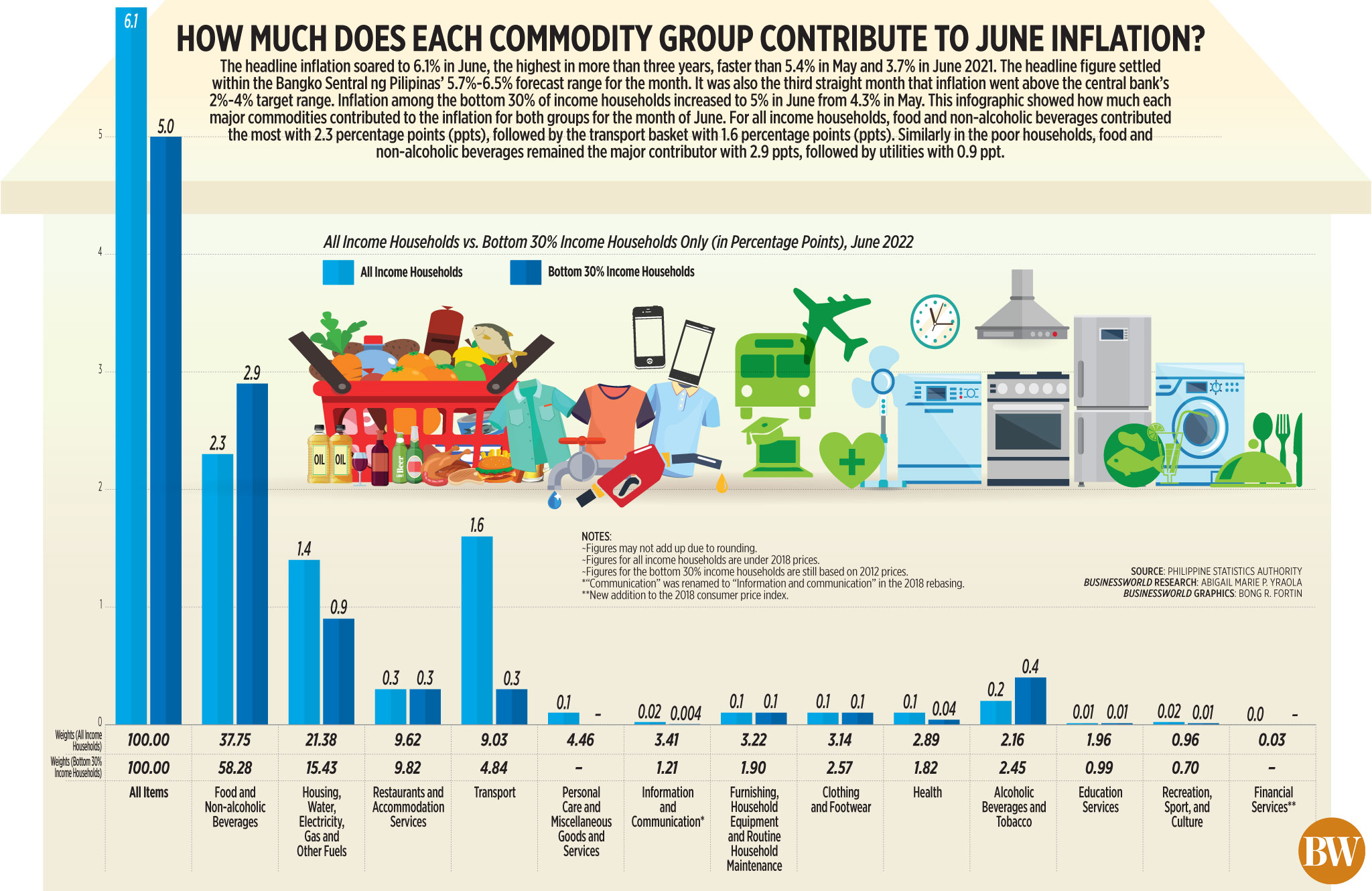
How much does each commodity group contribute to June inflation?

PURCHASING POWER
With the latest headline inflation print, the value of the P1 declined further to 87 centavos in June from 88 centavos in May. This was the lowest value of the local unit under the 2018 prices.

The purchasing power of the peso is computed by getting the reciprocal of the CPI then multiplied to 100.

“The purchasing power of the peso is a function of the CPI so if our CPI goes up, it erodes the purchasing power of our money to buy goods and services,” Mr. Mapa said.

Meanwhile, inflation as experienced by the poor households, under 2012-based prices, increased by 5% in June, higher than the 4.3% both in May and in June last year.

The PSA said the rebased 2018-based inflation for poor income households is scheduled to be released in December 2022.

“The main culprit driving inflation pressures remain the same since March: oil and food prices,” said Security Bank Corp. Chief Economist Robert Dan J. Roces.

“Hence the larger CPI contributions from the transportation, utilities, and food baskets brought on by the effectivity of transport and wage hikes, costlier operations, and supply challenges in wheat, sugar, meat, and poultry last month.”

Mr. Roces also noted the possible emergence of spillover effects on core prices (nonfood and non-energy), which grew by an average of 0.3% on a monthly basis in June.

“This underscore persistently higher operating costs for suppliers which are then shared to consumers through higher sticker prices, and push towards a disanchoring of inflation expectations. With higher domestic minimum wages and further price pressures from abroad, we expect an uptick in core inflation soon,” he said.

Global oil and commodity prices spiked after Russia invaded Ukraine in late February this year.

In June, minimum daily wages increased by P30 to P110, depending on the region.

For Bank of the Philippine Islands Lead Economist Emilio S. Neri, Jr., inflation has probably not peaked yet.

“The headline figure may continue to go up until October assuming oil prices will stay at current levels. In this scenario, average inflation is expected to settle between 5 to 5.5%,” he said on a research note.

UnionBank of the Philippines, Inc. Chief Economist Ruben Carlo O. Asuncion said inflation is expected to remain elevated, with his forecast now at 5% for this year.

“Easing may continue into 2023 with inflation hitting the 2-4% range by the government by at least by mid-2023,” he said. — Abigail Marie P. Yraola

BSP signals more rate hikes to curb inflation

Former Bangko Sentral ng Pilipinas (BSP) governor and now Finance Secretary Benjamin E. Diokno (left) formally hands over the leadership of the central bank to Governor Felipe M. Medalla during a ceremony held at the BSP head office in Manila, July 4. — COURTESY OF BANGKO SENTRAL NG PILIPINAS

THE BANGKO Sentral ng Pilipinas (BSP) may increase policy rates by “at least 100 basis points (bps)” this year to curb rising inflation, its governor said on Tuesday.

“We should be moving to a policy rate that is higher than the midpoint of our (inflation) target (of 2-4%), which is 3% at the very least. That means we have to do 100 (bps) more at least,” BSP Governor Felipe M. Medalla said in an interview with Bloomberg TV.

This will likely bring cumulative hikes to 150 bps, bringing the benchmark rate to 3.5% by end-2022. Interest rates on the overnight deposit and lending facilities would also end the year at 3% and 4%, respectively.

Mr. Medalla said an increase of at least 25 bps is guaranteed at the Monetary Board’s next meeting on Aug. 18, but he is also open to a bigger increase of up to 50 bps.

The Monetary Board has raised benchmark interest rates by a total of 50 bps so far this year, via 25-bp hikes at its May 19 and June 23 meetings, bringing the policy rate to 2.5%.

“The need to exit from our very unconventional monetary policy necessitated by the pandemic became more urgent because of what’s happening in the advanced countries and because of the supply shocks,” Mr. Medalla said.

This has made the BSP advance the implementation of its exit plan, which was originally planned to begin in the third or fourth quarter, he said.

Headline inflation climbed by 6.1% in June, from 5.4% in May and 3.7% a year ago, reflecting higher prices of food, transport and utilities. It matched the pace recorded in November 2018 and was the fastest since the 6.9% seen in October 2018.

Inflation inched up by 0.9% month on month. Adjusting for seasonality factors, month-on-month inflation climbed by 1% in June.

“If we get bad month-on-month numbers, we will have to respond because even though the basic cause of inflation is supply, it is likely to have effects on expectations and therefore we will have to act before the supply shocks are converted to higher future inflationary expectations,” Mr. Medalla said.   

The Monetary Board has four more meetings scheduled for the year to be held on Aug. 18, Sept. 22, Nov. 17 and Dec. 15.

PESO
“The recent large policy rate hikes of the Fed in reaction to, what most would consider to be, unanticipated, meaning wrongly forecasted, US inflation spike is causing nearly all currencies to significantly depreciate against the US dollar. This is certainly adding another layer of complication to our domestic inflation-targeting and expectations,” Mr. Medalla said during the BSP’s 29th anniversary and turnover ceremony on Monday.

The US Federal Reserve’s aggressive monetary policy tightening has put downward pressure on the peso.

The peso closed at P55.23 per dollar on Tuesday, down by 15 centavos from its P55.08 finish on Monday, Bankers Association of the Philippines data showed.  For the year so far, the peso has weakened by P4.23 or 8.29% from its Dec. 31, 2021 close of P51 per dollar.

This is the local unit’s weakest close in more than 16 years, or since Oct. 25, 2005 when it closed at P55.26 versus the greenback.   

“The translation of a 1% change in the exchange rate will be about .05 to 0.1% addition to the inflation rate… We are a lot more concerned about the inflation effects of a more depreciated peso given that we already have very high inflation,” Mr. Medalla said. — K.B.Ta-asan

AMRO raises PHL growth forecast for 2022

Buildings are seen along EDSA in Quezon City, July 3 — PHILIPPINE STAR/ MIGUEL DE GUZMAN

THE ASEAN+3 Macroeconomic Research Office (AMRO) raised its growth projection for the Philippines this year amid the further reopening of the economy and rising inflation.

In the AMRO Regional Economic Outlook Update released on Tuesday, the think tank said it upgraded the Philippines’ gross domestic product (GDP) growth projection to 6.9% this year, from the 6.5% forecast previously given in April.

“We’re very optimistic on the Philippines… 6.9% is among the highest growth rate in the [ASEAN +3] region,” AMRO Chief Economist Hoe Ee Khor said during a virtual press briefing.

AMRO'S ASEAN+3 GDP growth and inflation rate forecasts

The new AMRO forecast is just below the government’s 7-8% target for this year.

The Philippine economy expanded by 5.6% in 2021 and by 8.3% in the first quarter this year.

“The driver for this growth is really the reopening of the economy… Despite the spike in the infection rate, we expect the economy to remain relatively open because of the vaccination,” Mr. Khor said.

Metro Manila and most areas in the country are under the most lenient Alert Level 1 until July 15, although there is an uptick in coronavirus disease 2019 (COVID-19) infections.

He also noted the main growth drivers are domestic demand and investment. He mentioned the continuation of the “Build, Build, Build” program will help further improve the infrastructure in the country.

For 2023, AMRO retained its growth forecast at 6.5%, well within the government’s 6-7% target.

The think tank also raised its average inflation forecast for the Philippines to 4.4% from the 4.1% estimate made in April. This is above the Bangko Sentral ng Pilipinas’ (BSP) 2-4% inflation target, but consistent with the Development Budget Coordination Committee’s (DBCC) forecast of 3.7-4.7%.

The BSP last month revised its average inflation forecast for this year to 5%, from 4.6%, reflecting the impact of higher oil and food prices.

For 2023, AMRO also raised its inflation forecast to 3.8%, higher than the 3.5% projection given in April.

The BSP hiked its key interest rate by 25 basis points to 2.5% for a second straight meeting on June 23 to cool inflation.

“We don’t think that the increase in the interest rate or policy rate will have significant impact on growth this year or next year,” Mr. Khor said.

“Growth is self-sustaining [and] it’s prudent for the (BSP) to raise rates now in order to create more headroom for the economy in case there’s another shock and they need to lower rate[s].”

The Monetary Board will hold its next rate-setting meeting on Aug. 18.

REGIONAL OUTLOOK
Meanwhile, AMRO downgraded its growth projection for the ASEAN+3 region to 4.3%, from the 4.7% forecast given in April, which reflected the impact of the coronavirus outbreak in China, the prolonged Russia-Ukraine war and tighter global conditions.

The region is composed of the 10 Association of Southeast Asian Nations (ASEAN) members, China, Hong Kong, Japan, and South Korea.

For 2023, AMRO raised the region’s GDP forecast to 4.9% in 2023, from 4.4% previously, and inflation projection to 2.8%, from 2.3% previously.

“Just as the ASEAN+3 region is starting to emerge from the COVID-19 health crisis, the protracted war in Ukraine and persistent inflation in the United States have ushered in a new set of challenges for policy makers,” Mr. Khor said.

On its own, the ASEAN region is expected to grow by 5.1% this year, and by 5.2% in 2023.

“The Plus-3 economies — not just China, but also Hong Kong, Japan, and Korea — saw flare-ups of COVID-19 infections and attendant restrictions that weighed on growth in the first quarter of 2022. Growth was relatively stronger in ASEAN, as economic reopening gained further traction,” AMRO said.

AMRO also upgraded the region’s inflation forecast to 5.2% this year, from the 3.5% projection given in April.

“Much of it is coming from the supply shock because of the oil prices,” Mr. Khor said.

Risks to the growth outlook for the ASEAN+3 region have increased, including sustained rise in energy and food prices and supply chain disruptions.

Other risks cited by AMRO include the sharper-than-expected slowdown in China, aggressive monetary policy tightening in the United States, and the possible emergence of new COVID-19 variants. — Diego Gabriel C. Robles