Home Blog Page 5990

Reyes-less Tropang Giga shoots for 2-0 series lead

MIKEY WILLIAMS shoots for easy layout — PHILIPPINE STAR/ JUN MENDOZA

Game Today
(Smart Araneta Coliseum)
5:45 p.m. – TNT vs SMB
*TNT leads series, 1-0

TNT considers coach Chot Reyes’ absence as both a challenge and motivation to get the job done as it shoots for a 2-0 lead in the PBA Philippine Cup finals against San Miguel Beer (SMB) today at the Smart Araneta Coliseum.

Mr. Reyes left for Beirut Monday night for Gilas Pilipinas’ road assignment against Lebanon and handed the reins to assistants Sandy Arespochaga and Yuri Escueta for the 5:45 p.m. encounter.

The Tropang Giga players, themselves, are determined to step up to try to win this one for their chief strategist.

“It’s not really added pressure but added motivation,” said seasoned playmaker Jayson Castro, whose leadership has been time and again proven in high-pressure situations.

Mr. Reyes is actually going to miss a total of two games due to the Lebanon trip. But he expressed confidence his coaches and players are up to the task.

“I really spend a lot of effort and I’m very intentional in developing my coaching staff as well so in situations like these, they can step in,” said the multi-titled mentor, who also expects team manager Jojo Lastimosa and assistant coaches Ranidel de Ocampo, Bong Ravena and Mau Belen to contribute.

“They have to take the cudgels and let’s see how I prepared them,” he said.

The Tropang Giga going up against a Beermen squad is bent on picking itself up after squandering a 15-point spread and losing Game 1 on Castro’s big-time buzzer-beater, 86-84, last Sunday.

The exciting series opener, which was witnessed by a lively crowd that included Jordan Clarkson, featured a story of two halves for the protagonists. SMB controlled the initial skirmishes before TNT reversed the tide with a strong second half finishing kick.

“We need to start off better in Game 2,” said TNT gunner Mikey Williams, whose 12-point barrage in the third period sparked the Tropang Giga’s major fightback in the first match. — Olmin Leyba

Gilas U18 defeats Qatar, 77-61, gains quarter berth

GILAS Pilipinas U18 secured an outright quarterfinal berth after trampling Qatar, 77-61, in the FIBA U18 Asian Championship at the Azadi Basketball Hall in Tehran, Iran.

Mason Amos, the Filipino-Australian recruit of Ateneo, once again impressed with 19 points and seven rebounds after sizzling for 26 in Gilas’ easy 112-48 win over Syria the other day.

Jared Bahay, the U16 team leader before being promoted to join his seniors, chipped in 15 markers as all but one player scored for Gilas in a scattered attack.

Gilas thus improved to 2-0 in Group C for a tie with Chinese Taipei, which also drubbed Qatar, 96-62, and Syria, 81-60.

Both teams claimed the playoff tickets from their pool but were still to battle last night for the Group C leadership.

Gilas started slow and stared at a 34-35 deficit at the break before clamping down on defense by limiting Qatar to 13 points each in the last two quarters for the 16-point victory.

Under the tutelage of Josh Reyes, Gilas is eyeing to replicate or surpass the Final Four finish of the last Philippine U18 team in the 2018 Asian tilt led by now men’s team stalwart Kai Sotto. — John Bryan Ulanday

Marinerong Pilipino eyes Aspirants’ Cup crown against La Salle

MARINERONG Pilipino goes for the crown. — PBA MEDIA

Game Today
(Smart Araneta Coliseum)
12 p.m. — EcoOil-La Salle vs Marinerong Pilipino

MARINERONG Pilipino, after a long wait, aims to complete its unfinished business when it shoots for the coveted crown against EcoOil-La Salle in Game 2 of the PBA D-League Aspirants’ Cup best-of-three finals at the Smart-Araneta Coliseum.

Game time is at 12 p.m. with the Skippers eyeing a date with destiny after fumbling a golden chance back in 2019 prior to the pandemic and the D-League’s eventual two-year hiatus.

Marinero then swept the eliminations and barged straight into the finals only to bow against champion BRT Sumisip Basilan-St. Clare, making this time a perfect opportunity to finally realize the D-League title dream.

Marinero inched closer to that bid after a 72-67 Game 1 win over UAAP powerhouse La Salle with MVP derby frontrunner Juan Gomez de Liaño leading the way.

For the former University of the Philippines stalwart who also had a stint in the Japan B. League, there’s no better gift for Marinero than to help deliver that title promise.

“Ever since Marinero joined, they’ve never won the championship. I believe this is our perfect chance to finally give them one and we’ll start from there and build a history together,” said Mr. De Liaño.

Standing in the Skippers’ way are the defiant Green Archers, who are determined to keep their own title hopes alive.

“We understand the importance of this game and the challenge is already there for the players. We can’t let ourselves fall behind early and just play catch-up. We have to be at our A-game from the very start,” vowed mentor Derrick Pumaren. — John Bryan Ulanday

Zverev out of US Open following ankle surgery

Alexander Zverev — REUTERS

WORLD number two Alexander Zverev has withdrawn from the US Open as he continues his recovery following ankle surgery, tournament organizers said on Monday.

The 25-year-old underwent surgery in June after damaging ligaments in his right ankle during this year’s Roland Garros semi-final against Rafa Nadal.

“Alexander Zverev has withdrawn from the US Open. Get well soon, Alex!” organizers said in a brief statement.

The German earlier said that he expected to be back from injury to play for Germany in the Davis Cup in September but added there was a chance that he could return earlier and feature at Flushing Meadows, where he reached the final in 2020.

The year’s final Grand Slam gets under way next Monday. — Reuters

Cowboys reach $8 billion in value, highest in sports

DUKESTA22
DUKESTA22

THE DALLAS Cowboys are worth $8 billion, according to Forbes’ 25th Annual NFL Team Valuations released Monday.

This is the 14th straight year the team has topped the list, and it is worth more than any other sports franchise, Forbes said. The Cowboys’ value jumped 23 percent from last year.

The New England Patriots followed with a value of $6.4 billion, and the Super Bowl champion Los Angeles Rams reached $6.2 billion.

The Rams’ opponent in Super Bowl LVI in February, the Cincinnati Bengals, had the lowest value of the 32 NFL teams at $3 billion.

Dallas also was the first team to bring in more than $1 billion in annual revenues, thanks to a variety of high-earning sponsorship deals, Forbes reported.

Overall, the average NFL team is worth $4.47 billion, up 28 percent from the 2021 rankings.

“The sale of the Denver Broncos for a record $4.65 billion helped push up the value of all NFL teams,” said Mike Ozanian, assistant managing editor at Forbes in a news release.

Walmart heir Rob Walton and his partnership group completed the purchase of the Broncos earlier this month. — Reuters

Long season for Nets

If there’s anything that the Nets’ current situation shows, it’s that timing can make or break any potential deal. Back in June, they were all too ready to deal mercurial star Kyrie Irving, but at the right price — with the operative word “right” evidently not carrying a common meaning to them and to prospective partners. For instance, they appeared willing to get a deal done with the Lakers had the latter been willing to part with two first-round draft choices along with former Most Valuable Player awardee Russell Westbrook. Because the purple and gold balked at the second pick, however, any possible arrangement was scuttled. Now, it seems they’re bent on keeping him, and to the point of telling it to all and sundry.

No doubt, the Nets’ decision to keep things the way they are stems from their inability to move all-world Kevin Durant at their desired price. Regardless of the source of the news, they’re asking for the moon, the stars, and the sun in exchange for their franchise player — never mind that he’s an old 34 who already went under the knife due to an Achilles’ tendon injury. True, he has retained the capacity to put up big numbers. On the other hand, the question isn’t his skill set; it’s whether he will be able to take to the court with the consistency would-be employers require of him.

And therein lies the rub. Because Durant’s projected exit has hit a snag, Irving’s own takes a back seat. At this point, it’s clear that the Nets would rather keep them both rather than accept pennies to the dollar for them. That said, they’re taking an enormous risk in so doing. It’s bad enough that they’re latching on to two erstwhile vital cogs who want nothing more than to leave them. The message it sends is that they’re desperate. After all, there is also the danger of settling for the status quo — of accepting less-than-stellar effort from their supposed stalwarts.

Indeed, it’s hard to blame the Nets for trying to make the most out of a mess that was not of their own doing. Then again, they need to be cognizant of diminishing returns; with both Durant and Irving wanting out, the market is effectively depressed. Also, who would want disgruntled leaders? In other words, they’re in for a long season no matter what  they do; the only difference is how much faster they’ll be able to move on.


Anthony L. Cuaycong has been writing Courtside since BusinessWorld introduced a Sports section in 1994. He is a consultant on strategic planning, operations and Human Resources management, corporate communications, and business development.

Recession almost certain in Europe

A SHOPPER carries shopping bags as she walks on a street in Paris, France, June 10, 2022. — REUTERS/SARAH MEYSSONNIER/FILE PHOTO

FRANKFURT — It was meant to be Europe’s stellar year.

A post-pandemic spending euphoria, supported by copious government spending was set to drive the economy and help fatigued households regain a sense of normality after two dreadful years.

But all that changed on Feb. 24 with Russia’s invasion of Ukraine. Normality is gone and crisis has become permanent.

A recession is now almost certain, inflation is nearing double digits and a winter with looming energy shortages is fast approaching.

Though bleak, this outlook is still likely to get worse before any significant improvement well into 2023.

“Crisis is the new normal,” says the Alexandre Bompard, the Chief Executive of retailer Carrefour. “What we have been used to in the last decades — low inflation, international trade — it’s over,” he told investors.

The change is dramatic. A year ago, most forecasters predicted 2022 economic growth to be near 5%. Now a winter recession is becoming the base case.

Households and businesses are both suffering as the fallout of the war — high food and energy prices — is now exacerbated by a devastating drought and low river levels that constrain transport.

At 9%, inflation in the euro area is at levels not seen in a half a century and it is sapping purchasing power with spare cash used up on petrol, natural gas and staple food.

Retail sales are already plunging, months before the heating season starts and shoppers are scaling down their purchases. In June, retail sales volumes were down nearly 4% from a year earlier, led by a 9% drop recorded in Germany.

Consumers turn to discount chains and give up high end products, switching to discount brands. They have also started to skip certain purchases.

“Life is becoming more expensive and consumers are reluctant to consume,” Robert Gentz, the co-CEO of German retailer Zalando, told reporters.

Businesses have so far coped well thanks to superb pricing power due to persistent supply constraints. But energy intensive sectors are already suffering.

Close to half of Europe’s aluminum and zinc smelting capacity is already offline while much of fertilizer production, which relies on natural gas, has been shut.

Tourism has been the rare bright spot with people looking to spend some of accumulated savings and enjoy their first care-free summer since 2019.

But even the travel sector is hamstrung by capacity and labour shortages as workers laid off during the pandemic were reluctant to return.

Key airports, such as Frankfurt and London Heathrow were forced to cap flights simply because they lacked the staff to process passengers. At Amsterdam’s Schiphol, waiting times could stretch to four or five hours this summer.

Airlines also could not cope. Germany’s Lufthansa LHAG.DE had to publish an apology to customers for the chaos, admitting that it was unlikely to ease anytime soon.

RECESSION LOOMS
That pain is likely to intensify, especially if Russia cuts gas exports further.

“The gas shock today is much greater; it is almost double the shock that we had back in the 70s with oil,” Caroline Bain at Capital Economics said. “We’ve seen a 10 to 11 fold increase in the spot price of natural gas in Europe over the last two years.”

While the EU has unveiled plans to accelerate its transition to renewable energy and wean the bloc off Russian gas by 2027, making it more resilient in the long run, supply shortages are forcing it seek a 15% cut in gas consumption this year.

But energy independence comes at a cost.

For ordinary people it will mean colder homes and offices in the short run. Germany for instance wants public spaces heated only to 19 degrees Celsius this winter compared with around 22 degrees previously.

Further out, it will mean higher energy costs and thus inflation as the bloc must give up its biggest and cheapest energy supplies.

For businesses, it will mean lower production, which eats further into growth, particularly in industry.

Wholesale gas prices in Germany, the bloc’s biggest economy, are up five-fold in a year but consumers are protected by long term contracts, so the impact so far has been far smaller.

Still, they will have to pay a government mandated levy and once contracts roll over, prices will soar, suggesting the impact will just come with a delay, putting persistent upward pressure on inflation.

That is why many if not most economists see Germany and Italy, Europe’s no. 1 and no. 4 economies with heavy reliance on gas, entering a recession soon.

While a recession in the United States is also likely, its origin will be quite different.

SILVER LINING
Struggling with a red-hot labor market and rapid wage growth, the US Federal Reserve has been raising interest rates quickly and has made clear it is willing to risk even a recession to tame price growth.

By contrast, the European Central Bank (ECB) has only increased rates once, back to zero, and will move only cautiously, mindful that raising the borrowing cost of highly indebted euro zone nations, such as Italy, Spain and Greece could fuel worries about their ability to keep paying their debts.

But Europe will go into a recession with some strengths.

Employment is record high and firms have struggled with growing labor scarcity for years.

This suggests that companies will be keen to hang onto workers, especially since they head for the downturn with relatively healthy margins.

This could then sustain purchasing power, pointing to a relatively shallow recession with only a modest uptick in what is now a record low jobless rate.

“We see continued acute shortages of labor, historically low unemployment and a high number of vacancies,” ECB board member Isabel Schnabel told Reuters earlier. “This probably implies that even if we enter a downturn, firms may be quite reluctant to shed workers on a broad scale.” — Reuters


Russia accuses Ukraine of killing nationalist’s daughter

Russian President Vladimir Putin

RUSSIA’s Federal Security Service accused Ukraine’s secret services on Monday of killing Darya Dugina, the daughter of an ultra-nationalist, in a car bomb attack near Moscow that President Vladimir Putin called “evil”.

Ms. Dugina, whose father Alexander Dugin is a prominent ideologue, was killed on Saturday when a bomb blew up the Toyota Land Cruiser she was driving, Russian investigators said.

Ukraine, defending itself from what it says is an imperial-style war of conquest waged by Russia, denied involvement in the attack, with Ukrainian presidential adviser Mykhailo Podolyak calling the accusation “propaganda”.

Mr. Putin on Monday posthumously granted Ms. Dugina the Order of Courage, a prestigious state award, “for courage and selflessness shown in the performance of professional duty,” the Kremlin said.

Ms. Dugina, a regular commentator on state TV, strongly backed Russia’s actions in Ukraine, which Moscow calls a “special military operation”.

Alexander Dugin, 60, has long advocated violence to achieve the unification of Russian-speaking and other territories.

In his first public statement on the bombing, he said Darya had been savagely killed before his own eyes by Ukraine.

“Our hearts are not simply thirsting for revenge or retribution,” Mr. Dugin wrote. “We only need our victory (against Ukraine). My daughter has sacrificed her young life on the altar of victory. So please win!”

Russia’s FSB security service said the attack was carried out by a Ukrainian woman born in 1979, whom it named and whose picture and information appeared on Russian news websites.

They linked her to Ukraine’s security services and accused her of being a member of the Azov battalion, a unit of Ukraine’s army that Russia has designated a terrorist group.

In response, Azov said the woman had never been a member of the unit and accused Russia of concocting a lie.

The FSB said the woman had arrived in Russia in July and spent a month preparing the attack. She had fled to Estonia afterwards, it said.

Russian law enforcement agencies had placed the woman on the country’s wanted list, TASS news agency reported, with Moscow seeking her extradition.

Estonia’s interior ministry and police and border guard service said in separate statements they could share information on individuals entering and leaving Estonia “only in cases prescribed by law,” adding the FSB allegation did not meet that requirement.

Mr. Putin paid tribute to Ms. Dugina as a patriot, calling her murder “evil and cruel,” while Margarita Simonyan, editor-in-chief of the Kremlin-backed RT media organization, suggested agents could track the woman down.

“Estonia, of course will not hand them over,” Ms. Simonyan wrote on Telegram.

A memorial service for Dugina will be held on Tuesday at Moscow’s TV center, her father said.

On Monday, residents of Moscow laid flowers and lit candles at a makeshift memorial.

“She was a unique person, and this loss is absolutely irreplaceable,” said Sergei Sidorov.

Some Russian opposition figures were skeptical about the speed at which the FSB appeared to have solved the case and suggested alternative versions.

Ilya Ponomaryov, a former lawmaker turned Ukraine-based Kremlin critic, said a previously unknown group of Russian militants called the National Republican Army was responsible.

His assertion and the group’s existence could not be independently verified by Reuters.

Russia’s Investigative Committee did not respond to a request for comment.

Mr. Ponomaryov was the only member of the State Duma, the lower house of parliament, to vote against the annexation of Ukraine’s Crimea region in 2014 and later left Russia.

Mr. Ponomaryov, who runs an online TV station designed to challenge the Kremlin’s narrative of the war, read out a manifesto he said the group had sent him.

It said the group was committed to overthrowing Putin and building a new Russia. Such statements are illegal inside Russia and those who make them face long jail terms.

His assertion adds to a list of possible theories about who killed Ms. Dugina.

Some people believe her father was the target. — Reuters

Singaporean bargain hunters jam roads after currency boost

REUTERS

SINGAPORE’s surging currency is contributing to massive traffic jams on the road to Malaysia.

Keen to take advantage of a record high exchange rate, Singaporean bargain hunters are streaming into the neighboring nation to snap up goods and take advantage of more reasonably priced entertainment and services like health care.

The result is snarl-ups of up to four hours at border checkpoints between the city-state and Malaysia’s southern state of Johor. In normal circumstances, the journey takes only 20 minutes.

It’s gotten so bad that Singapore’s Immigration & Checkpoints Authority issues regular congestion updates on the radio and advised people to cancel travel plans during recent holidays. Frustrated travelers have taken to social media, recording road rage incidents — including a woman pulling off another car’s license plate — while others are making Tiktok videos about the wait at immigration.

Still, Susan Lim, a 68-year-old homemaker, was more than willing to put up with these inconveniences when she needed wisdom tooth surgery. She chose a dentist in Johor and paid 700 Malaysian ringgit ($157) rather than the more than S$400 ($290) it would have cost in Singapore.

“I treat it as a short getaway from the city-state, with great food and services like a haircut at a much affordable price,” she said.

Singapore is a 280 square mile (725 square kilometers) island trading hub located off the southern tip of Malaysia. Many residents in the heavily-urbanized city-state make frequent trips across the border to Johor, where attractions include laid-back cafes and reasonably-priced restaurants, Desaru’s beaches, village resorts and theme parks like Legoland.

Singaporeans are well versed at hopping over to Malaysia to take advantage of cheaper goods and services — in 2015 demand was so great that money changers at times ran out of ringgit. Fueling the current craze for all things Malaysian, is the strength of the Singapore dollar, which has risen more than 5% against the Malaysian ringgit this year, closing at a record 3.2473 ringgit on Aug. 11. The previous record was 3.1681 in March 2017.

The Singapore dollar is benefitting from the differing monetary policies the two nations are using to counter inflation. Singapore’s central bank, which uses foreign exchange as its main policy tool, has focused on efforts to strengthen its currency. In comparison, its palm-oil rich neighbor has kept its policy accommodative.

Malaysia is not alone in seeing its weak currency act as a draw for tourists — Buenos Aires in Argentina last year designed a campaign to lure visitors with its favorable exchange rates, while American travelers have this summer taken advantage of the dollar’s strength making trips abroad more affordable.

TRAFFIC JAM
Singapore’s strong exchange rate has coincided with a post-COVID travel boom — spending on foreign travel from residents in the city-state rose 240% in the second quarter year on year — and grinding infrastructure problems. The combination has caused one big traffic jam.

The Singapore-Malaysia border checkpoints are among the busiest land crossings in the world, with about 200,000 travelers departing daily before the pandemic. Since borders reopened in April, the traffic flow has been gradually increasing, with the number of travelers peaking at 290,000 per day over the last weekend in July.

The volume of people has put pressure on the two nations to alleviate the problems on the road. Currently, there is just one train service connecting Malaysia’s Johor Bahru Sentral station and Woodlands station in Singapore.

A high-speed rail project — the Johor Bahru-Singapore Rapid Transit System — is under construction and should absorb 35% of the congestion. But the train line, which was temporarily suspended in 2019 due to cost concerns, won’t be completed until 2026 at the earliest — two years later than planned.

Aggravating the traffic problems is lengthy upgrade work being carried out on arrival immigration car booths at the Malaysia border.

TIGHT CONTROL
The gridlock and chaos at the border are in stark contrast to the steely control Singapore’s government exerts over traffic in the city. In an attempt to stem congestion and pollution, the government restricts the number of cars with a limited quota of permits, making its autos among the most expensive in the world. Pent-up consumer demand and a growing appetite for electric vehicles pushed the price of permits for large cars to a record high in August.

This means, despite packing 5 million people onto an island half the size of London, Singapore ranked 96 out of 416 cities globally in the TomTom traffic congestion index in 2019. Last year, it was 88th out of 404.

The big winners from the increased traffic from Singapore are shops and businesses in Malaysia. The Johor Premium Outlet, one of the Malaysia’s most popular shopping destination due to its proximity to Singapore, has seen a steady flow of Singaporean visitors. And it’s not just shops — cross-border taxi services, bridal pre-wedding photo shoots, car washes, hotels, medical services and beauty and massage parlors are experiencing a boom.

“The number of Singaporeans seeking services has reached pre-Covid levels with a spike in the recent weeks,” a spokesperson from Regency Specialist Hospital said. — Bloomberg

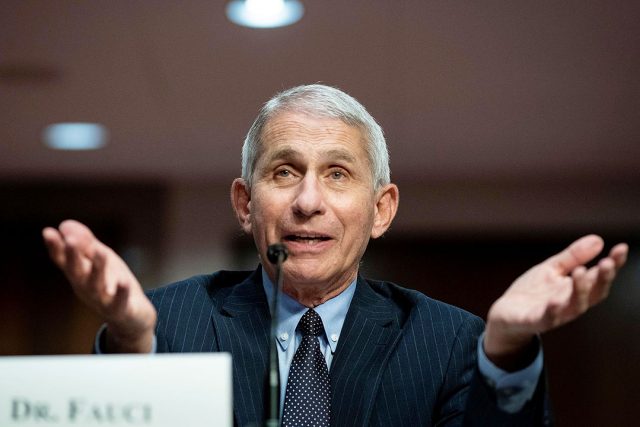
Fauci, face of US COVID response, to step down from government posts

REUTERS

DR. ANTHONY FAUCI, the top US infectious disease official who became the face of America’s COVID-19 pandemic response under Presidents Donald Trump and Joseph R. Biden, announced on Monday he is stepping down in December after 54 years of public service.

Mr. Fauci, whose efforts to fight the pandemic were applauded by many public health experts even as he was vilified by Mr. Trump and many Republicans, will leave his posts as chief medical adviser to Mr. Biden and director of the US National Institute of Allergy and Infectious Diseases (NIAID), part of the National Institutes of Health (NIH). Fauci, 81, has headed NIAID since 1984.

The veteran immunologist has served as an adviser to seven US presidents beginning with Republican Ronald Reagan, focusing on newly emerging and re-emerging infectious disease dangers including HIV/AIDS, Ebola, Zika, monkeypox and COVID-19.

Mr. Fauci endured criticism from Mr. Trump and various conservatives and even death threats against him and his family from people who objected to safeguards such as vaccination, social distancing and masking that he advocated to try to limit the lethality of the COVID-19 pandemic. After defeating Mr. Trump in the 2020 election, Mr. Biden made Mr. Fauci his chief medical adviser.

“I definitely feel it was worth staying as long as I have. It is unfortunate, but it is a fact of life that we are living in a very, very divisive society right now,” Mr. Fauci told Reuters on Monday.

Mr. Fauci said he never considered resigning due to the threats against him.

“I don’t like the idea that I have to have armed federal agents with me. That’s not a happy feeling. It’s reality. And you’ve got to deal with reality,” Mr. Fauci said.

Republican lawmakers including fierce critic Rand Paul, with whom Mr. Fauci tangled during Senate hearings, vowed on Monday to investigate him if they gain control of either the House of Representatives or Senate in November’s congressional elections.

“As he leaves his position in the US Government, I know the American people and the entire world will continue to benefit from Dr. Fauci’s expertise in whatever he does next,” Mr. Biden said in a statement. “The United States of America is stronger, more resilient and healthier because of him.”

Mr. Fauci signaled his impending departure last month, telling Reuters he would retire by the end of Mr. Biden’s first term, which runs to January 2025, and possibly earlier.

The United States leads the world in recorded COVID-19 deaths with more than one million. In the first months of the pandemic in 2020, Mr. Fauci helped lead scientific efforts to develop and test COVID-19 vaccines in record time and took part in regular televised White House briefings alongside Mr. Trump.

Mr. Fauci became a popular and trusted figure among many Americans as the United States faced lockdowns and rising numbers of COVID-19 deaths, even inspiring the sale of cookies and bobblehead dolls featuring his likeness.

However, Mr. Fauci drew the ire of Mr. Trump and many Republicans for cautioning against reopening the US economy too quickly and risking increased infections and for opposing the use of unproven treatments such as the malaria drug hydroxychloroquine.

‘A DISASTER’
Democrats accused Mr. Trump of presiding over a disjointed response to the pandemic and of disregarding advice from public health experts including Mr. Fauci. Mr. Trump in October 2020, weeks before his re-election loss, called Mr. Fauci “a disaster” and complained that Americans were tired of hearing about the pandemic. Mr. Trump even made fun of Mr. Fauci’s off-target ceremonial first pitch at a Washington Nationals baseball game.

Mr. Fauci sometimes publicly contradicted Mr. Trump’s statements about the pandemic. Mr. Fauci said on Monday that while he respects the office of the presidency, he felt he had to speak out “when things were said that were outright untrue and quite misleading.” “I didn’t take any great pleasure in that,” Mr. Fauci said.

Mr. Paul frequently attacked Mr. Fauci during Senate hearings on the pandemic.

Mr. Fauci has accused Mr. Paul of spreading misinformation. Mr. Paul on his website has accused Mr. Fauci of “lying about everything from masks to the contagiousness of the virus.” Mr. Fauci during one hearing noted that Mr. Paul placed fundraising appeals on his website next to a call to have him fired.

Fauci said staying on until December allows for a search for a new director of NIAID, an institute with an annual budget exceeding $6 billion, and the appointment of an acting chief. Fauci also said he wanted to remain to help address an expected autumn upswing in COVID-19 infections.

Fauci made clear that while he will be leaving government service, he will not be retiring. He said in the future he hopes to use his expertise to help inspire a new generation of doctors to pursue careers in public health, medicine and science. — Reuters

China says COVID has exacerbated decline in births, marriages

REUTERS

HONG KONG — China’s National Health Commission said COVID-19 has contributed to the decline in the country’s marriage and birth rates that has accelerated in recent years due to the high costs of education and child-rearing.

Many women are continuing to delay their plans to marry or have children, it said, adding that rapid economic and social developments have led to “profound changes”.

Young people relocating to urban areas, more time spent on education and high-pressure working environments have also played their part, it added.

Demographers have also said that China’s uncompromising “zero-COVID” policy of promptly stamping out any outbreaks with strict controls on people’s lives may have caused profound, lasting damage on their desire to have children.

“The coronavirus has also had a clear impact on the marriage and childbirth arrangements of some people,” the commission said.

The comments were sent to Reuters via fax late on Monday in response to questions on the topic.

New births in China are set to fall to record lows this year, demographers say, with forecasts calling for a drop below 10 million compared to last year’s 10.6 million babies — a level 11.5% lower than in 2020.

China had a fertility rate of 1.16 in 2021, one of the lowest rates in the world and below the 2.1 rate the OECD sees as necessary for a stable population. Having imposed a one-child policy from 1980 to 2015, China has acknowledged its population is on brink of shrinking — a potential crisis that will test its ability to pay and care for its elderly.

To counter the problem, authorities at national and provincial levels have over the past year introduced measures such as tax breaks, longer maternity leave, enhanced medical insurance, housing subsidies and extra money for a third child. — Reuters

Addressing the challenge of agricultural development

BRUCE WARRINGTON-UNSPLASH

(Part 1)

As if to dare President Ferdinand Marcos, Jr. to exert even greater effort in meeting his greatest challenge, which is that of improving the productivity of the agricultural sector, agricultural output contracted further during the quarter in which he was sworn in as President and in which he designated himself as the Secretary of Agriculture.

Data from the Philippine Statistics Authority (PSA) showed that the value of production in agriculture and fisheries at constant 2018 prices declined 0.6% in the April to June 2022 period, worsening from the 0.3% contraction in the first quarter. The President knows that increasing agricultural productivity is not going to be a walk in the park. That is why one of the very first advisory groups from the private sector that he convoked was in food security, composed of some of the most experienced entrepreneurs in the field of agribusiness gathered by his private sector adviser, Sabine Aboitiz.

The President is fortunate that the outgoing Secretary of Agriculture, William Dar, led a group of experts from his own Department and from outside experts (some of them former Secretaries of Agriculture) to come out with a Transition Report filled with recommendations and specific policy targets and solutions towards long-term visions of food security and food sovereignty, while at the same time emphasizing urgent action points, especially in the context of a looming food crisis worldwide brought about by the Russia-Ukraine war. This document should be closely studied, not only by the members of the Cabinet of the present Administration but also by all those in government, business, and civil society who want to make their contribution to solving the problem of agricultural underdevelopment. To do something about the low productivity of farmers and fisherfolks is to directly address the problem of mass poverty since three-fourths of those who fall below the poverty line in the Philippines (now estimated at 18.1% of the total population of about 112 million) are in the rural areas.

As every effort to address an economic problem should, the Report starts with a situational analysis. Over the period 2001 to 2021 (one generation), the average growth of the Agriculture, Fisheries and Forestry (AFF) sector was a measly 2.5%, compared to the Industry and Service sectors’ average growth rates of 4.5% and 5.5%, respectively. AFF’s contribution to the gross domestic product (GDP) at constant 2018 prices declined by 37.5%, or from 15.4% in 2001 to 9.5% in 2021—with an average share of 12.8% from 2001 to 2021. It follows then that of the three major sectors of the economy, AFF’s contribution to the country’s economic growth was the smallest. Out of the 4.8% average GDP annual growth within the generation studied, the AFF sector contributed only 0.3%. For the same period, the share of the Industry and Service sectors to GDP growth were 1.4 and 3.1 percentage points, respectively.

Reflecting the very low labor productivity in the agricultural sector is the fact that, while it contributes only 10% of GDP, its contribution to the labor force is 24% of the total. It used to be much higher at 37% in 2000. Labor in agriculture grew from 2000 to 2011 by 20.5%, which was equivalent to around 2 million workers. The number of agricultural workers, however, continuously decreased since 2011, during which approximately 2.3 million agricultural workers migrated to the other two sectors from 2011 to 2018. This translates to around 284,000 workers per year leaving the sector during that period, which coincided with the Philippine economy shedding its notoriety as the sick man of Asia. This period saw Philippine GDP growing at an average of 6% to 7%, one of the most rapid in East Asia. The contraction in agriculture’s employment share significantly accelerated starting 2011. From 2011 to 2018, the employment share of agriculture shrank by 10 percentage points in 2011, or from 33% in 2011 to 24% in 2018. This trend, if continued during the present Administration of President Marcos Jr., may actually favor the increased mechanization of farming, leading to an improvement of agricultural productivity. For this to happen, efforts in agrarian reform should shift from further fragmentation of land to consolidation of small farms into larger units through farmers’ cooperatives or the nucleus estate system perfected by the Malaysians in palm oil and rubber plantations.

Considering the slow growth of the AFF sector and its modest share in GDP, coupled with its relatively high contribution to total employment, its development significantly lagged behind the other sectors as measured by labor productivity. AFF’s output per work was consistently the lowest among the major sectors from 2000 to 2018, the real golden age of the Philippine economy shared by the two Presidents, i.e., Benigno Aquino III and Rodrigo Duterte. The highest productivity was seen in the manufacturing sector in which the industry’s output share was approximately 30%, despite accounting only for 16% of the total employment.

Two obvious means of increasing labor productivity in agriculture are the introduction of more capital investments and the upskilling and retooling of farmers, especially among the younger ones. The average age of a Filipino farmer is already close to 60 years. There must be a way of attracting the young, whether or not children of farmers themselves, to the vocation of a farmer and eventually the whole sector of agribusiness, which comprises not only farming but the whole value chain, from post-harvest, to storage and warehousing, processing, wholesale and retail.

It was not only in labor productivity that the Philippine AFF sector fared very poorly in comparison to its Southeast Asian peers. The sector was weak in terms of productivity, per capita volume, and high costs (low returns) compared to neighboring countries in the ASEAN. The Philippine total factor productivity growth in AFF, which is a measure of productive efficiency, was the lowest in 2010 to 2014. Subsequently, average farm yield in the Philippines was 9% and 67% lower than in Malaysia and Vietnam in 2014, respectively. This low productivity of the Philippine AFF sector in great contrast with Vietnam is one major explanation why Vietnam surpassed us in per capita income in 2020. What Vietnam has accomplished in reaching high levels of productivity in rice, coffee, and aquaculture should be emulated by the Administration of President Marcos Jr.

Philippine manufacturing, both for the domestic and foreign markets, can be given a big boost if we can improve the forward linkages of the AFF sector. Unfortunately, these linkages are weak in comparison also to our ASEAN neighbors, especially Thailand that is considered the agribusiness behemoth of Southeast Asia. The forward linkages of the Philippine AFF sector to manufacturing grew marginally by only 10% from 1994 to 2012. In contrast, the contribution of food and beverage (the likes of San Miguel Corp., Robina, Century Canning, Monde Nissin, etc.), which largely depend on agricultural or aquacultural products for inputs, to total gross value added (GVA) of manufacturing grew very rapidly during the 2000 to 2021 period. The share of food and beverage manufacturing to total GVA of the manufacturing sector (one of the major components of industry) rose from 36% in 2001 to a whopping 55% in 2021.

Given the meager forward linkage of the AFF sector, this implies that the food and beverage manufacturing subsector relies heavily on imports for its inputs. It stood to reason that agri-food exports of the Philippines were, on average, around three times and six times less than Vietnam and Thailand, respectively from 2001 to 2020. Philippine agricultural trade deficits were likewise widening. International trade economist Ramon Clarete estimated that the Philippines incurred large potential export income losses of approximately $230 million in 2018 alone.

Needless to say, the low productivity and the diminishing competitive advantage of the Philippine AFF sector have two primary negative impacts on sustainable and inclusive growth: low wages resulting in high poverty incidence among agricultural workers, and soaring domestic prices, which were exacerbated during the COVID-19 pandemic and the Russia-Ukraine war. Given the relatively low productivity of labor in agriculture, wages in the sector are expected to be lower than those in industry and services. True enough, the average daily basic pay in agriculture, at constant 2006 prices, was approximately 55% and 46% lower than in services and manufacturing, respectively, in 2016.

The most tragic consequence of the low productivity of the AFF sector is mass poverty in the rural areas, where three-fourths of Filipinos falling below the poverty line are. Agricultural households had poverty incidence approximately four times higher than non-agricultural households from 2003 to 2015. On the other hand, although visibly underemployed workers accounted only for 12% of total workers, the rate of poverty among visibly underemployed in workers in general was at 34.2% while poverty incidence of visibly underemployed agricultural workers was at 44% in 2015.

Finally, the backwardness of the AFF sector resulted in high domestic food prices, contributing to malnutrition and ultimately to lesser and/or slower human development of poor households.

The average share of food and non-alcoholic beverage to headline inflation was significant at 43% from 2000 to 2021, with 57% being accounted for by the other 10 major commodity groups. Given that the poorest of the poor households spend approximately 60% of their total income on food items, rising food prices inevitably lead to higher incidence of malnutrition. This was exacerbated during the pandemic. Malnutrition is significantly higher in the Philippines compared with its ASEAN peers. In 2018, malnutrition in the Philippines, especially among children, is nine times, 20 times, and a whopping 287 times compared with that of Thailand, Malaysia, and Vietnam, respectively. This state of affairs in the area of food security has very tragic consequences on the quality of our human resources.

(To be continued.)


Bernardo M. Villegas has a Ph.D. in Economics from Harvard, is professor emeritus at the University of Asia and the Pacific, and a visiting professor at the IESE Business School in Barcelona, Spain. He was a member of the 1986 Constitutional Commission.

bernardo.villegas@uap.asia

ADVERTISEMENT
ADVERTISEMENT