Home Blog Page 5988

Interested in having an Intramuros photoshoot in your Filipiñana-inspired outfit? There is a tour for that.

IN an effort to draw more visitors to the walled city, a special tour has been organized that mixes history, Filipiñana fashion, and photography.

The tour —  the Intramuros Filipiñana Tranviaganza —  involves visiting the scenic sites of the Walled City while dressed in Filipiñana attire and having your picture taken. To be held on Sept. 3, the tour is organized by WanderManila, Renacimiento Manila, The Heritage Collective, Don’t Skip Manila, and AKIM / Manila Girls.

“We’ve known for quite a bit that we need to introduce new elements and gimmicks to our Intramuros tour and staging a costume tour seemed like a fun experiment we were all excited to try. Simply put, if you can avail of costume service in other countries, why not Manila? Why not Intramuros? We really want to start (or restart) this trend,” Head Tour Guide of WanderManila Benjamin Canapi told BusinessWorld on Messenger.

“This tour is open to all demographics, as long as they’re game to do a bit of a dress-up. With that said, this would a great way to introduce Intramuros to kids,” he added.

While outfits will be made available for rent, guests can opt to come dressed in their own Filipiñana outfits.

They can choose from four tour schedules on Sept. 3 —  8 a.m., 10 a.m., 2 p.m., and 4 p.m. A maximum of 20 registered guests can ride the blue tranvia (streetcar) per schedule.

As of this writing, Mr. Canapi said that the 10 a.m. and 2 p.m. timeslots are still open.

The blue tranvia will stop at five major destinations: the Manila Cathedral, San Agustin Church, the Plaza San Luis Complex, Baluarte de San Diego, and Fort Santiago.

Heading the tour alongside Mr. Canapi are Renacimiento Manila president Diego Torres, and Don’t Skip Manila founders Andre Julian and Anne Uy-Julian.

“While we’ll have guides on hand to talk about the sites, more time will be dedicated to the actual photo sessions,” Mr. Canapi said.

Joining the exploration of the walled city are official photographers who will e-mail the photographs a week after the tour. Participation will also include a goodie bag.

“We want people to start appreciating our Filipiñana costumes. They’re very beautiful and filled with history. We also want people to start thinking of their own ways to make their Intramuros experience more memorable,” Mr. Canapi said.

To register, visit https://forms.gle/bzmoA4Jb1KKhnDZ78. Ticket are P1,000 per head. — Michelle Anne P. Soliman

New Ebola case confirmed in eastern Congo, linked to previous outbreak

EN.WIKIPEDIA.ORG/NIAID

DAKAR — A new case of Ebola virus has been confirmed in the city of Beni in eastern Democratic Republic of Congo, the country’s National Institute for Biomedical Research (INRB) said on Monday.  

Testing showed the case was genetically linked to the 2018–2020 outbreak in North Kivu and Ituri provinces, which killed nearly 2,300 people, said a statement from Placide Mbala, chief of the Pathogen Genomics Laboratory at INRB.  

Another flare-up from that outbreak killed six people last year. Congo’s most recent outbreak was in a different part of the country, and was declared over in July after five deaths.  

Ebola can sometimes linger in the eyes, central nervous system and bodily fluids of survivors and flare up years later.  

The case was confirmed in a woman who died on Aug. 15 after being admitted to a hospital in Beni on July 23, the statement said.  

“Our initial findings indicate that this case likely represents a new flare-up of the 2018–2020 Nord Kivu/Ituri outbreak, initiated by transmission of Ebola virus from a persistently infected survivor or a survivor who experienced a relapse,” it said.  

Investigations are ongoing to determine the source.  

At least 131 contacts of the woman have been identified including 60 frontline healthcare workers, 59 of whom are vaccinated against Ebola, said the statement.  

The World Health Organization said on Saturday that authorities were investigating a suspected Ebola case in Beni after a 46-year-old woman died.  

Congo’s dense tropical forests are a natural reservoir for the Ebola virus, which causes fever, body aches, and diarrhea.  

The country has recorded 14 outbreaks since 1976. The 2018-2020 outbreak in the east was Congo’s largest and the second largest ever recorded, with nearly 3,500 total cases. — Reuters 

Peso climbs vs dollar as RTB offer starts

BW FILE PHOTO
THE PESO rebounded versus the dollar on Tuesday on the back of the government’s ongoing retail bond offering. — BW FILE PHOTO

THE PESO rebounded against the greenback on Tuesday on preference for the local unit amid the government’s retail Treasury bond (RTB) sale and ahead of a likely weaker US durable goods report. 

The local unit closed at P56.07 per dollar on Tuesday, gaining 14 centavos from its P56.21 finish on Monday, data from the Bankers Association of the Philippines showed.

The peso opened Tuesday’s session weaker at P56.25 per dollar. Its worst showing was at P56.26, while its strongest was at P56.05 against the greenback.

Dollars traded climbed to $864.05 million on Tuesday from the $804.95 million seen on Monday.

The peso strengthened versus the dollar as investors preferred the local unit as the offer period for the government’s RTBs began on Tuesday, Rizal Commercial Banking Corp. Chief Economist Michael L. Ricafort said in a Viber message, as this “could entail some foreign buyers/investors and could siphon off hundreds of billions of excess liquidity from the financial system, thereby partly triggering some healthy profit taking in some parts of the local financial markets after hefty gains recently, as some investors shift some of their funds to RTB investments with relatively higher yields compared to recent years.”

The government on Tuesday raised an initial P162.72 billion from the price-setting auction for its offer of 5.5-year retail bonds as tenders reached P225.32 billion, or more than seven times the P30-billion plan.

The retail bonds fetched a coupon rate of 5.75%, higher than the 4.875% set for the five-year RTBs offered in March.

Mr. Ricafort said the peso rose despite a stronger US dollar, which is due to the possible continuation of aggressive US Federal Reserve rate hikes as inflation in the world’s largest economy remains elevated.

The dollar has regained strength “as markets anticipate the yearly Fed monetary policy symposium/Jackson Hole Forum in Wyoming (Aug. 25-27) on possible new leads on the pace of Fed rate hikes/hawkish Fed in view of the need to further bring down still elevated US inflation; as well as the recent increase in US Treasury yields, with the benchmark 10-year US Treasury yield at new 1-month highs recently, breaching above 3%, now at 3.01%, amid hawkish signals from some Fed officials recently,” he added.

Meanwhile, a trader said “the peso appreciated ahead of potentially weaker US durable goods report for July 2022.”

“The local currency might weaken anew ahead of the second release of the US second-quarter GDP (gross domestic product) report [on Wednesday],” the trader added. 

For Wednesday, Mr. Ricafort gave a forecast range of P55.95 to P56.15 per dollar, while the trader expects the local unit to move within P56 to P56.20.

Meralco launches sustainability scorecard

MANILA Electric Co. (Meralco) vowed to strengthen and operationalize its sustainability agenda with the adoption of a sustainability scorecard covering the company’s entire value chain.

“Our aim is to ingrain sustainability in all we do, placing it at the core of our strategy and operations as a company,” said Raymond B. Ravelo, first vice-president and chief sustainability officer of Meralco, in a media release on Tuesday.

He described the Meralco Supplier Sustainability Scorecard, or MS3, as “a breakthrough step in broadening the reach and impact of our sustainability efforts as we collaborate closely with our vendor partners in powering the good life for all.”

MS3 was created as a tool to assess suppliers and contractors on various environmental, social, and governance criteria, using the United Nations’ Sustainable Development Goals and the Global Reporting Initiative Standards as its guidelines.

Meralco said that MS3 will provide the company with a comprehensive view of its business partners’ ESG performance and is now incorporated into its accreditation process.

Through the company’s supply chain management (SCM) office, Meralco said that it maintains a network of active suppliers and contractors integral to its ability to deliver high-quality and reliable electric service to customers.

“With the implementation of MS3, Meralco is making headway in increasing awareness on the importance of sustainability among our external stakeholders. Working with different suppliers, we, at SCM, are in a distinctive position to influence and inspire other companies to also embed sustainability in their operations,” said Maria Luisa V. Alvendia, Meralco’s chief of staff to the president and chief executive officer and supply chain advisor.

MS3 will cover all of Meralco’s active suppliers as the company moves towards sustainability excellence throughout its supply chain.

Meralco’s controlling stakeholder, Beacon Electric Asset Holdings, Inc., is partly owned by PLDT, Inc.

Hastings Holdings, Inc., a unit of PLDT Beneficial Trust Fund subsidiary MediaQuest Holdings, Inc., has an interest in BusinessWorld through the Philippine Star Group, which it controls. — Ashley Erika O. Jose

National Museum receives donation of 4 Amorsolo paintings

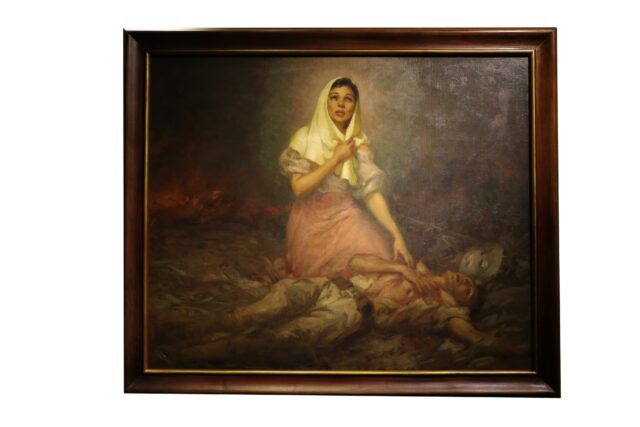
BATAAN by Fernando Amorsolo — FACEBOOK.COM/NATIONALMUSEUMOFTHEPHILIPPINES

FOUR works by National Artist for Visual Arts Fernando C. Amorsolo have been donated to the National Museum of the Philippines.

On Aug. 19, the National Museum formally accepted four noteworthy works by the National Artist from the Judge Guillermo B. Guevara Foundation, Inc. The museum’s Director-General Jeremy R. Barns accepted the paintings from Victor Guevara, chairman of the foundation.

The four paintings — which have been on loan to the National Museum since 2020 — are: Portrait of Judge Guillermo B. Guevara (1950), Bataan (1942), Assassination of Governor Bustamante (1965), and Wakas ni Magallanes (1963).

A deed of donation was signed by the representatives of the museum and the Judge Guillermo B. Guevara Foundation signifying the formal transfer of the oil paintings.

The Portrait of Judge Guillermo Guevara is the earliest work the sitter commissioned from Amorsolo, along with the portrait of his wife, Asuncion Palma Guevara. This is exhibited at the Early 20th Century Philippine Portrait Hall of the National Museum of Fine Arts (NMFA).

Bataan is currently exhibited in Gallery VIII — Silvina and Juan Laya Hall. Reminiscent of Michelangelo’s Pietà, where the Virgin Mary is depicted mourning over the dead body of her son, Jesus Christ, the center of the painting a woman looking up to the sky as she kneels next to the body of a fallen soldier.

According to one of Mr. Guevara’s family members, the artist feared the Japanese who were occupying the Philippines at that time and decided to erase the USAFFE (United States Army Forces in the Far East) buckle on the soldier’s uniform. The artist kept the painting for 14 years before Mr. Guevara acquired it in 1956.

Mr. Guevara also commissioned two works that reflect important historical events: The Assassination of Governor Bustamante and Ang Wakas ni Magallanes.

Completed in 1963, Ang Wakas ni Magallanes is Amorsolo’s artistic rendition and interpretation of the death of Ferdinand Magellan in Mactan, Cebu. It is currently exhibited as part of the exhibit The Longest Journey: The First Journey Around the World in Galleries XXV and XXVI.

Meanwhile, The Assassination of Governor Bustamante is the artist’s creative depiction of the assassination of Governor-General Fernando Bustamante and his son on Oct. 11, 1719, at the Palacio del Gobernador in Intramuros. A painting of the same subject made by Felix Resurreccion Hidalgo can be found at the National Museum of Fine Arts’ Spoliarium Hall.

For more information on the Judge Guillermo B. Guevara Foundation, Inc., visit https://judgeguillermobguevara.org/.

URC ventures into spiked spirit drink

UNIVERSAL Robina Corp. (URC) is expanding into the spiked spirit category with its new product, Chill Spiked Spirit, the firm said on Tuesday.

“Chill Spiked Spirit will offer a refreshing, laid back drinking experience, with just the right kick, minus the heavy feeling,” URC Chief Marketing Officer Anna Milagros D. David said in a press release.

Ms. David added that people are now looking for “the same relaxing, light, personal moments they experienced when drinking at home” during the pandemic, which URC tries to mimic through Chill.

“In URC, our purpose is to delight consumers with better food and beverage choices. Chill is an embodiment of that purpose. It’s a delightful drink that’s refreshing and delicious. It’s better than others because it contains real fruit juice and just the right level of alcohol plus zero added sugar,” she added.

Chill Spiked Spirit is said to have 5% double distilled alcohol, real fruit extract, and soda water, which the company said will give the drink the same alcohol strength with a more refreshing taste.

“It has no artificial sweetener and with zero trans fats, eliminating that heavy feeling in the gut that beer drinkers feel,” the company added.

URC said that spiked spirits, hard seltzers, and similar beverages “have been disrupting the global beer category,” which it said to account for a 6% share of the alcoholic beverages market in the United States and is projected to soar to $3 billion by 2023.

Chill will be available in 330-milliliter cans at a suggested retail price of P51 each and will come in three flavors: red apple, lemon lime and lychee.

“We are looking at young consumers of legal drinking age, who are authentic with their outlook and passionate with their calling, but who still know how to have fun. They like to let loose and unwind after a long day without going over the top,” Ms. David said.

On the stock market on Tuesday, shares in URC were unchanged at P124 apiece. — Justine Irish D. Tabile

Cholera tragedy in Indian village sheds light on power debts

PHILSTAR FILE PHOTO

MUMBAI — Clean water had just started sputtering from newly installed taps in Pachdongri village in western India last month when the power supply to the hilly hamlet was cut off for unpaid bills.

Residents link this power outage to a cholera outbreak that followed, claiming five lives.

Pachdongri’s outstanding power bill of 52,000 rupees ($657), pending for about five months, accounts for a tiny part of the huge strain on India’s stressed electricity supply chain, in which power distributors owe $12.52 billion to largely thermal generating companies.

The utilities must pay coal firms upfront to buy the fossil fuel to produce electricity, but are struggling to do so as their cash flow is squeezed due to consumers failing to pay for their power, threatening supply.

As India tries to cut its power sector’s losses with financial aid to utilities and promotion of solar energy in agriculture, the financial stress on the sector has tragically impacted Pachdongri, a village of fewer than 1,000 people. 

“If water supply had continued, the deaths could have been avoided as people consumed contaminated water from a well,” said Sanjay Bhuta Jamunkar, 32, the council head for five villages, including Pachdongri, in western Maharashtra state.

Following the cholera outbreak, the government issued orders to utilities not to disconnect the power supply to public water works, and the state is also now considering clearing the debts of village councils, utility officials said.

“This was our first power bill for operating the water pump. We weren’t sure we had to pay it, as work on the water connections was still underway,” said Mr. Jamunkar, noting that the council pays bills from the property and water taxes it levies on households.

“But collections are poor as this is a tribal area, people are either landless or small landowners. Many are unemployed. We try to manage,” he told the Thomson Reuters Foundation by phone.

DEMAND SPIKE
Extreme heat in India this year pushed up electricity use to unprecedented highs, causing widespread power cuts as utilities scrambled to meet demand amid dwindling coal supplies.

Officials at power distribution companies say they are walking a tightrope in their day-to-day dealings with generation firms as they clear just about enough debts to keep the power supply online.

Pachdongri gets its power from the state-run Maharashtra State Electricity Distribution Co. Ltd (MSEDCL), which warned its 30 million consumers last December it would disconnect supplies for those who did not pay their bills.

The utility cited “an unprecedented amount of arrears and increasing financial burden” as a threat to its very existence.

Vijay Singhal, MSEDCL chairman and managing director, said his company had to purchase power to provide it to consumers.

“I am asking people to pay up as I am not getting it for free,” he added.

Data from MSEDCL shows rural consumers owe it more than 600 billion rupees ($7.53 billion), ten times more than unpaid dues from urban consumers of 62 billion rupees.

Mr. Singhal said MSEDCL used hydro-power during this year’s heat waves and is adding wind and solar energy to overcome coal shortages and cut costs.

Local officials who turned off the power supply to Pachdongri in Maharashtra’s Amravati district said they had informed the village council about the impending cut if it failed to pay at least some of its dues.

The power was restored within a day, they added.

“If they have used power, they need to pay for it,” said Dilip Khanande, superintending engineer for MSEDCL in Amravati.

Officials at Jal Jeevan Mission, a pan-India project to ensure every rural household gets 55 liters of water per capita per day, estimated that about 40% of village councils’ power bills are linked to operating water pumps.

Mr. Khanande said he was able to recover only half of monthly bills of about 10 million rupees accrued for running about 2,000 rural water connections in his district.

RURAL REALITY
Power availability in rural areas has gone up to about 22.5 hours daily from about 12.5 hours in 2015, with all villages now electrified, the central government said this year.

But as long-awaited electricity and water connections reach more rural areas, the cost of consuming the resources has risen.

“We are looking at solar-based water pumps so they don’t require electricity connection to avoid these challenges,” said Hrishikesh Yashod, Maharashtra director for Jal Jeevan Mission.

With water pumps running more to supply household taps, power consumption has gone up and so have councils’ electricity bills, said Yusuf Kabir, a water and health specialist with the United Nations children’s agency, UNICEF, in Maharashtra.

Samit Mitra, program head for Smart Power India, a Rockefeller Foundation subsidiary that works to boost electricity access in rural India, said poor collection is often rooted in infrequent billing and billing amounts that do not reflect consumption, denting consumer trust.

“We see the intention to pay is there. All they need is a certain level of service,” Mr. Mitra said.

UNICEF’s Mr. Kabir suggested installing water meters so households pay taxes on their consumption, which would improve village councils’ revenue collection to help cover power bills.

CONTAMINATED WATER
Residents of Pachdongri village had hoped the completion of the tap water project in July would lead to a steady supply and end their dependence for drinking water on a well 2 kilometers away.

Farmer Akshay Amode, 24, saw clean water gush from his household tap the first time a day before power was cut.

The villagers then resorted to well water again — but it was contaminated with sewage due to runoff triggered by heavy rains, said health officials who tested the water.

About 200 people took ill after drinking it and five died, officials said.

Among them was Sahdev Ramaji Akhande’s wife, who had yet to see a running tap in her home.

The 32-year-old farmer, a father of two, recalled the night his wife writhed in pain as he struggled to organize a private car to rush her to hospital.

Three days after she died, Mr. Akhande’s home got a tap water connection. But the supply is still intermittent, so he drinks water from tankers serving the village since the cholera outbreak and buys water for his farm.

He knew nothing of another impending expense: the village council — yet to pay its outstanding power bill — is mulling a doubling of the monthly water tax from 100 rupees per household.

“Life has become difficult,” said the widower, now left to bring up his children alone. ($1 = 79.8810 Indian rupees) — Thomson Reuters Foundation


Safety concerns loom as writers show public support for Rushdie

SUPPORTERS of author Salman Rushdie attend a reading and rally to show solidarity for free expression at the New York Public Library in New York City, US, Aug. 19. — REUTERS/BRENDAN MCDERMID

NEW YORK — Under the watch of counterterrorism officers and police in tactical gear, hundreds of people gathered in front of the New York Public Library last Friday to show support for Salman Rushdie, the author stabbed multiple times at a literary event on Aug. 12.

Irish novelist Colum McCann, British writer Hari Kunzru and others read passages from Mr. Rushdie’s works from the top of the flagship library branch’s steps off Manhattan’s Fifth Avenue. Below, at a distance enforced by organizers, a crowd of about 400 people gathered to listen, breaking out into a chant of “Stand with Salman” when the event concluded.

Some held signs depicting Mr. Rushdie and quoting him saying, “If we are not confident of our freedom, then we are not free.”

Police say Mr. Rushdie was attacked by a 24-year-old New Jersey man who rushed a stage and stabbed the writer in the neck and torso at a literary festival in western New York. Mr. Rushdie, who was rushed to a hospital, survived.

There were no bag checks or metal detectors to screen for weapons ahead of the appearance by Mr. Rushdie, who had been living under a death sentence for 33 years.

The suspect has pleaded not guilty to second-degree attempted murder and assault charges.

“I hope this is a wake-up call that people like Salman, who are fearless, who write things as they see them, who are not afraid to speak the truth as they view it, really are in danger,” said PEN America Chief Executive Suzanne Nossel. The nonprofit free-expression and human rights group helped organize the event.

Attendees spoke of their worries for themselves and other writers following the attack.

“We’re all in danger. And some of us are more overtly in danger than the rest,” Iranian-American author Roya Hakakian said in an interview.

While the death sentence, or fatwa, ordered on Mr. Rushdie by Iran was among the most high-profile threats, many authors say harassment and calls for violence have become part of the experience of being a writer.

Love Is an Ex-Country author Randa Jarrar said in an e-mail interview last week that she had to learn how to “better aim a gun” and prepare physically in case of attack after a tweet about former first lady Barbara Bush prompted threats.

When Ms. Bush died in 2018, Ms. Jarrar described her as an “amazing racist” for a comment about the majority-Black communities displaced by Hurricane Katrina.

The Muslim author said she feared for her life when critics posted her home address and phone number online. She and her child began receiving death threats.

Every threat she received mentioned that she is Muslim and warned her to go back to where she came from, Ms. Jarrar said. She moved, and hired a company to scrub her private data from the internet.

Queer Chicana writer Myriam Gurba faced threats after she criticized author Jeanine Cummins in 2020 of cultural appropriation in writing the novel American Dirt, which focused on a Mexican woman who escaped a drug cartel to build a new life in the United States as an undocumented immigrant.

Ms. Gurba said many people supported her, but she also received threats of violence on her phone and the internet.

“The first death threat that I received stated that the police should execute me for my stupidity,” she said.

Last week, police in Scotland said they were investigating a threat against Harry Potter author J.K. Rowling following her tweet voicing concern for Mr. Rushdie.

At least one upcoming literary festival is tightening security. Organizers of September’s National Book Festival, hosted by the Library of Congress in Washington, had already planned to require bag searches.

Now, the festival is working with law enforcement to add extra measures, a spokesperson said.

At the New York Public Library, some writers said they did not fear gathering in public.

“The only time I got anxious was when they told us how much security there was going to be, thinking maybe there have been some threats, but I doubt it,” author Paul Auster said. — Reuters

Meager medicine cabinet leaves Sanofi unloved

FRANKFURT — Sanofi’s recent stock rout underscores the pressure on the French drugmaker to redouble its efforts in the hunt for new medicines.

Chief Executive Paul Hudson is entering his fourth year at the helm next month and has presided over a number of setbacks, most recently the failure of breast cancer pill amcenestrant, which Sanofi had touted as having strong commercial potential.

The ensuing drop in the share price compounded losses from an investor scare over litigation linked to alleged cancer risks of heartburn drug Zantac days earlier, resulting in a more than 14% slump over eight days.

“My belief is that (the stock price) recovery will come because of an incredible disconnect between the fundamentals of the company and its valuation,” Finance Chief Jean-Baptiste de Chatillon told Reuters on Wednesday.

He cited remaining drug candidates under development as well as strong financial performance thanks to fast-growing bestseller Dupixent, Sanofi’s star eczema and asthma treatment.

“The growth will be fueled again by very strong assets coming up,” said Mr. De Chatillon, pointing to a hemophilia drug project and potential new treatment for childhood respiratory infections.

For Markus Manns, portfolio manager at Germany-based Union Investment, which holds Sanofi stock, this is misplaced optimism following the failure of amcenestrant.

“This is a massive setback and there is a very thin pipeline left when compared with companies such as Roche or AstraZeneca. It’s unfortunate, if Sanofi does not accept that,” he said.

Sanofi has also encountered major setbacks in the coronavirus disease 2019 (COVID-19) vaccine race, losing the market to BioNTech-Pfizer and Moderna.

That is piling pressure on Mr. Hudson, a former Novartis executive, who was tasked with reviving the share price and simplifying the business centered on vaccines, immunology, rare diseases and oncology.

The shares have risen 5% since the start of his tenure, but have underperformed the European drug sector, amid worries about the increasingly bare cupboard of potential blockbuster drugs.

SETBACKS
Sanofi’s finances have been boosted by eczema and asthma drug Dupixent, growing at more than 40% in sales during the first half with projected annual sales of up to €13 billion ($13.1 billion). For now, Dupixent is buying Sanofi time. Its key patents will likely not expire before 2032, Mr. Manns said.

But the oncology flop was not a one-off setback.

Earlier this year, concerns over liver damage led to a halt in new patient enrolment in a trial of multiple sclerosis drug candidate tolebrutinib, part of a potential new drug class also contested by Merck KGaA, Novartis, and Roche.

After problems with two of the company’s most important development projects, Mr. Manns said he would have welcomed signals from management that efforts or deals to improve drug prospects would now be intensified.

“This is a bit of an added concern, if management does not acknowledge that,” said the fund manager.

SVB Securities analysts said the twin blow was “negative for sentiment for the company’s R&D productivity and topline growth prospects,” cutting their price target though maintaining the view that the beaten down stock could yet outperform.

Guggenheim analyst Seamus Fernandez thought the market reaction to the Zantac legal threat was overdone but said investors buying into the dip may need patience.

“These types of selloffs often present an opportunity for disciplined, long-term investors,” he wrote on Thursday.

Zantac, a once-popular antacid, has drawn a flurry of US lawsuits alleging it causes cancer. Sanofi, GSK and a number of generic drug makers are accused in the lawsuits of failing to properly warn users about health risks. The first court trials begin early next year.

Sanofi has said the Zantac claims are without merit. ($1 = €0.9944) — Reuters

BDO helps fund Bulacan, Wawa bulk water supply projects

BW FILE PHOTO

BDO UNIBANK, Inc. has helped fund the water infrastructure projects of San Miguel Corp.’s Luzon Clean Water Development Corp. (LCWDC) and the Razon Group through loan facilities, affirming its commitment to provide financial support for sustainability.

BDO funded the bulk of LCWDC’s Bulacan Bulk Water Supply Project (BBWSP) and helped extend the long-term loan facility that was used to finance the first and second construction stages of the project, the bank said in a statement on Monday. This covered the treatment and delivery of bulk water to 13 local government units in Bulacan.

BBWSP, a public-private partnership project, is a water treatment plant and pipeline conveyance facility with three stages meant to address the rising demand for clean water in Bulacan.

Through this, LCWDC has been supplying steady and clean water to water districts in Bulacan, and has been expanding its service area coverage.

It also seeks to address issues such as inadequate water supply, low water pressure due to limited distribution systems, and saline water intrusion with groundwater. 

“BDO has been very supportive to us in LCWDC especially in the financing requirements of the Bulacan Bulk Water Supply Project,” LCWDC Director Raoul C. Romulo was quoted as saying.

“Our business relationship with BDO has blossomed since we started banking with them in 2016 and today, it lends support to other projects pursued by the San Miguel group,” Mr. Romulo said.

BDO also supported the required financing of the Wawa Bulk Water Supply Project of Wawa JVCo, a subsidiary of the Razon Group’s Prime Infrastructure Capital, Inc. (Prime Infra).

The Wawa Bulk Water Supply Project is one of the government’s initiatives to help solve the water crisis in Metro Manila and in Rizal. It is meant to help address flooding problems in downstream communities due to typhoons and to protect the eastern part of Metro Manila and lower areas in Rizal, Marikina City, and Pasig City.

“The Razon Group has long-time dealings with BDO. We highly value our relationship with BDO and continue to accord the bank a significant portion of our business,” Prime Infra President and Chief Executive Officer Guillaume Lucci said.

BDO booked an attributable net income of P12.205 billion in the second quarter, up 10.64% from the P11.031 billion in the same period in 2021.

This brought its net profit for the first half to P23.943 billion, 12% higher than the P21.421 billion seen in the comparable year-ago period.

BDO’s shares went down by P1.50 or 1.19% to close at P125 apiece on Tuesday. — KBT

Nickel Asia forms mining sustainability committee

NICKEL Asia Corp. announced on Tuesday that it formed a sustainability committee for its mining operations, the first mining company in the country to do so.

“This month, Nickel Asia became the first mining operation in the country to create a board-level sustainability committee and designate a Chief Sustainability Officer (CSO) as it hammers down on its environment, social, and corporate governance (ESG) goals,” the firm said in a media release.

The sustainability committee is in charge of overseeing, identifying, and assessing the economic, environmental, ethical, and social impact of Nickel Asia’s operations.

“It has the immense responsibility of steering the company into becoming a better business operator and contributor to national development,” it added.

The firm said that this effort is in line with its vision to “become the premier ESG investment in the country and to be counted among the top 25 Philippine Stock Exchange-listed companies in terms of market capitalization by 2025.”

“More than just a simple revision of the old statement, this one heralds the changes that our company is today undergoing as we formalize our ESG process, changes that we believe will enable us to be at the forefront of truly sustainable development of our country’s natural resources result in an even more stable and successful company,” Nickel Asia President and Chief Executive Martin Antonio G. Zamora said.

“Ultimately, our aim is to help bring products that would move the world towards a progressive and sustainable future, always conscious of being stewards of the environment where we operate,” he added.

In 2014, Nickel Asia said it began incorporating ESG in its operations.

“Over the years, Nickel Asia has been recognized both locally and internationally for its exemplary efforts in promoting environmentally and socially responsible mining operations in the country,” the firm said.

Nickel Asia said that all of its operating mining subsidiaries in Palawan, Surigao, and the Dinagat Islands have been conferred the Presidential Mineral Industry Environmental Award.

“ESG is now a fundamental element of business, a higher-level evolution of the ‘triple bottom line’ that was all the rage in the 1990s. No company worth its salt, especially those who claim to or aspire for leadership in its industry, can avoid embracing ESG as part of the way it does business,” CSO Jose Bayani D. Baylon said.

He added that implementing ESG is “a lot of work” because industries like mining are by their nature already challenged.

“They start off on their ESG journey with a handicap, so to speak. But the global universe of companies in the metals and mining industry includes very good examples worth emulating,” he added.

“Moving forward, we at Nickel Asia will put a premium on the development of a sustainability culture within our company and across our subsidiaries, and ensure that we continue to operate with the utmost respect for the people and the environment,” Mr. Zamora said.

In the first half of the year, the company reported that its first-half attributable net income rose by 40.3% to P3.83 billion from P2.73 billion.

At the stock market on Monday, Nickel Asia shares ended lower by 3.64% or 22 centavos to close at P5.82. — Luisa Maria Jacinta C. Jocson

Chinese censors change ending of latest Minions film

A SCENE from the film Minions: The Rise of Gru

SHANGHAI — Censors have altered the ending of the recent animated film Minions: The Rise of Gru for its domestic release in China, social media users across the country noticed over the weekend.

The editing is yet another example of Chinese authorities editing a popular Hollywood film to make it more politically correct, leading some viewers to lament the changes.

According to posts and screenshots from the movie shared on Weibo, a platform similar to Twitter, censors tacked on an addendum in which Wild Knuckles, a main character in the heist film, was caught by police and served 20 years in jail.

Gru, a co-conspirator of Wild Knuckles “returned to his family” and “his biggest accomplishment is being the father to his three girls,” screenshots of the film showed.

In the international version, the film ends with Gru and Wild Knuckles, the story’s two thief anti-heroes, riding off together after Wild Knuckles faked his own death to evade capture from authorities.

Numerous online commentators mocked the addendum, saying it resembled a power-point presentation.

DuSir, an online movie review publisher with 14.4 million followers on Weibo, noted that the Chinese version of the film runs one minute longer than the international version and questioned why the extra minute was needed.

“It’s only us who need special guidance and care, for fear that a cartoon will ‘corrupt’ us,” DuSir wrote in a piece published Saturday.

Universal Pictures, the film’s US distributor, did not respond to a request for comment outside of normal business hours.

Huaxia Film Distribution Co. and China Film Co., the film’s distributors in China, did not respond to a request for comment.

China places a quota on the number of overseas movies that can be shown in domestic movie theaters. Many Hollywood films that screen in the country have certain scenes omitted or altered.

At times, some viewers note, alternate endings to films diverge far from the original.

Last year, Chinese viewers of the classic 1999 film Fight Club noticed that the original ending, in which the protagonist and his alter ego detonate a set of skyscrapers, was not on the version shown on domestic streaming site Tencent Video.

Instead, an on-screen script said police “rapidly figured out the whole plan and arrested all criminals, successfully preventing the bomb from exploding.”

The changes were widely mocked among Chinese fans of the original film, and even elicited responses from the film’s director and the author of the novel it was based on. Tencent later restored the original ending. — Reuters