Home Blog Page 5984

Dining In/Out (06/02/22)


QUORN Chicken Nuggets with Umami Dip

Hilton Clark Sun Valley Resort marks Father’s Day

HILTON Clark Sun Valley Resort honors all fathers with a memorable feast coupled with bespoke staycations this coming Father’s Day, June 19. The hotel’s all-day dining restaurant, Olive, pays tribute to the Man of the House with a selection of favorites, with buffet highlights that include sustainably sourced and fresh ingredients from the North with signature dishes such as Bourbon barbecue baby back ribs, Smoked beef short ribs, Pork rack with crispy crackling and slipper lobster, among others. The Dad’s Day Out buffet is priced at P2,400 per person, available for lunch and dinner. Patrons who opt for a Cantonese feast may dine at Xi and indulge in Father’s Day set menus, with highlights such as: Soy Chicken, Braised soup with fish maw and bean curd, Beef tenderloin with asparagus, Oven-baked salmon with mango sauce, and Hong Kong-style steamed grouper fillet, among other favorites. Prices start at P2,588 per person. For guests looking to enjoy a vacation, the resort offers well-appointed guest rooms and suites coupled by relaxing countryside views and a host of family-friendly activities by the pool and outdoor rubberized playground, Kids Club, and more. For inquiries and reservations, visit www.hiltonclarksunvalleyresort.com. For more information, visit clarksunvalleyresort.hilton.com or call +63 45 598-5400.

Grab Caravan visits Cavite

FILIPINOS love to gather over food for any occasion and also have a strong love for community. This is why this year, Grab Philippines will bring together Filipinos and their love for good food through the Grab Caravan, an on-ground celebration that invites everyone to grab a bite from their city’s best local food selections. After a successful leg in Rizal, Grab Caravan is set to visit Cavite on June 4, 10 a.m. to 8 p.m., at the Activity Center of Main Square Mall, Bacoor, bringing Cavite’s best dishes from homegrown restaurants. Meanwhile, GrabFood is extending Indie Eats, it’s latest merchant discoverability program, nationwide. All cities serviced by Grab, from Pampanga, to Cebu, to Davao, and many more areas can now have a better appreciation of local entrepreneurs and enjoy their offers. To mark this expansion, Indie Eats ambassadors Sassa Gurl and Erwan Heussaff reunited for a second vlog on Indie Eats, which includes an appearance by Nico Bolzico. Among the merchant-partners covered in the vlog are Pampanga’s Ollie’s Burger, Simple Morning by Station Cafe, and Kuya Jeck’s Tapsilogan; Cebu’s Martin’s Burger House, Wow Lugaw, and Mojo Milktea; and Davao’s Patel’s Food Hub, Gotokai, and Dabao Buns. GrabFood is also currently holding its #IndieEatsReview Challenge on TikTok, running until June 15. Upload a video of you trying any Indie Eats offering and tag @grabfoodph to get a chance to win a year’s worth of GrabFood vouchers.

Quorn promotes Meat-Free Monday

RESHAPING the current food consumption of Filipinos is not an easy journey. Meat-Free Mondays recognizes this challenge and attempts to break down this barrier by introducing the concept of taking it one day at a time in recalibrating one’s dietary demands. Starting the week with a meat-free alternative is a good step in slowly embracing the meat-free lifestyle, in the hopes of producing more demand for healthy and earth-friendly eating habits. That is where Monde Nissin’s Quorn comes in. Quorn meals are derived from a natural fungus called Fusarium venenatum that produces the company’s mycoprotein. Producing Quorn mycoprotein takes 95% less carbon dioxide (CO2) than a typical beef mince. This makes Quorn products a healthier and sustainable alternative to meat that can address the food demand of a growing global population. Quorn has also been recognized by a third-party carbon footprint certification for achieving the Carbon Trust Footprint of 60% of its products. The Meat-Free Mondays initiative encourages the public to take the first step towards living a more sustainable and eco-friendlier dietary lifestyle. Quorn’s variety of meat alternatives includes Vegan Fishless Fingers, Southern Fried Bites, Crispy Nuggets and many more. Supermarkets carrying Quorn products can be found here: https://tinyurl.com/Quorn-Availability.

Estancia Fab Sale returns

SHOP and dine at Estancia from June 3 to 5, and enjoy up to 70% off from participating stores and restaurants during the Estancia Fab Sale. The mall is open 10 a.m. to 10 p.m. during these dates. Register for the Ortigas Community Card through the Ortigas Malls app to enjoy free parking for every single or accumulated receipts worth P3,000. One can also shop online through Your Daily Store at dailystoreatortigasmalls.com. For details, visit the Estancia at Capitol Commons Facebook page.

Jacob’s Creek suggests food pairings

AUSTRALIAN wine company Jacob’s Creek is giving suggestions what to eat with their wine. Their Shiraz Cabernet makes a good balance between bolder cheeses, but also grilled steak, pizza, or tomato-based pasta dishes. Their merlot, meanwhile, is said to go well with mushrooms. As for the Cabernet Sauvignon, they suggest having it with either roast beef or lamb. For lighter fare, they have the Sauvignon Blanc, which goes well with a salad by complementing the herbaceous notes in each other. Meanwhile, their Moscato goes well with a fish, shellfish, and oysters. Finally, their Chardonnay is a welcome pairing for chicken.


Smartphone shipments fall due to tight supply, weak demand

By Arjay L. Balinbin, Senior Reporter

SMARTPHONE shipments in the Philippines registered a 7.1% decline in the first three months of the year, reflecting the impact of supply constraints and weak demand for mobile phones, the International Data Corp. (IDC) said.

Citing its quarterly mobile phone tracker, the IDC said in an e-mailed statement on Wednesday that the “ongoing supply constraints for low-end smartphones coupled with weakened consumer spending for mobile phones in the Philippines resulted in year on year and quarter on quarter declines of 7.1% and 21.6%, respectively.”

The top five smartphone brands in the country during the quarter based on market share were realme (20.2%), Transsion (19.8%), Samsung (16.8%), Xiaomi (14.2%), and OPPO (11.2%).

“While 5G (fifth-generation) smartphones have increased to almost 20% of total shipments in Q122 (first quarter of 2022), 4G (fourth-generation) Android smartphones fell 16.3% year on year and 24.4% quarter on quarter due to tight supplies, with smartphones priced less than $200 impacted the most,” IDC Philippines Market Analyst Angela Jenny V. Medez said.

“Supply disruptions are expected to challenge vendors in meeting their targets for 2022, but we may see some improvements towards the end of the year,” she added.

“The silver lining could be the acceleration of 5G smartphones in the Philippines as vendors focus on their 5G portfolio to drive growth.

The Philippine smartphone market contracted by 5.6% to 17.8 million units in 2021, as lockdowns dampened buying activity and global supply bottlenecks restricted supply, according to the IDC.

The market research company said sales in the fourth quarter of 2021 declined by 23.3% year on year, even as shipments increased by 18.4% quarter on quarter.

IDC initially expected “double-digit growth” in the smartphone market this year as global supply constraints ease.

The top five smartphone brands in terms shipments to the Philippines last year were realme (3.96 million), OPPO (2.62 million), Transsion (2.47 million), Samsung (2.40 million), and vivo (2.39 million).

Philippines 3×3 jumps in world ranking to no. 18

THE Philippines barged inside the Top 20 of the International Basketball Federation (FIBA) 3×3 World Rankings, thanks to a big lift from the Chooks-to-Go’s hosting of the prestigious FIBA 3×3 World Tour Manila Masters last week.

From No. 27, the country is now No. 18 in the world with 794,057 points and is second in Asia only behind No. 8 Mongolia (2,464,579), bolstering its bid to make it to the Olympic Qualifying Tournament (OQT) and the Paris Olympics in 2024.

Courtesy of FIBA 3×3 global partner Chooks-to-Go, the Philippines hosted the Manila Masters as part of the 13-city FIBA 3×3 World Tour that was won by world No. 1 3×3 team Ub from Serbia.

Local teams Cebu Chooks and Manila Chooks finished only in the Top 8, but the hosting alone delivered 247,158 points to the country.

Chooks-to-Go Pilipinas 3×3 teams also competed in Dubai, UAE and Ulaanbaatar, in Mongolia on top of winning the Asia Pacific Super Quest last April in Laguna to bring in over 150,000 more points.

“We already know the formula for us to reach the OQT having done so during the last Olympic cycle. Maintaining our rank will be relatively easy. The goal now is to turn our players into world-class athletes,” said Chooks-to-Go president Ronald Mascariñas.

“Hosting and participating bring in points, but winning FIBA 3×3 tournaments will bring maximum points,” he added.

Indeed, Chooks has produced more world-class players this year with Cebu Chooks ace and the country’s No. 1 3×3 cager Mac Tallo rising to No. 72 in the world with his 149,120 points.

Meanwhile, Serbia and its decorated club Ub remained as the No. 1 3×3 federation and team, respectively with Strahinja Stojacic, Dejan Majstorovic and Marko Brankovic as the top three players in the world. — John Bryan Ulanday

PHL banks’ operating environment stable as economy recovers

Philippine banks’ operating environment is seen to be stable due to receding virus risks, a better business outlook and the economy’s continued recovery, which could lead to stronger demand for loans, Fitch Ratings said on Wednesday.

Fitch said in a report that the Philippine banking system’s operating environment score is now stable, up from negative previously, as the economy continues to rebound from the coronavirus pandemic’s impact.

“The Philippines’ GDP (gross domestic product) expanded by 8.3% year-on-year in 1Q22, following a rise of 5.7% in 2021. We expect the recovery momentum to be sustained, with growth of 6.0% in 2022 and 6.2% in 2023. The rebound in the economy should support loan demand and temper asset-quality risks that may arise from sectors still reeling from the pandemic,” the debt watcher said.

“Rising commodity prices, exacerbated by global geopolitical developments, are likely to fan inflation and dampen near-term consumer sentiment. Prolonged inflationary pressure could derail the recovery momentum and hurt loan demand and our asset-quality outlook; however, this is not our base case.”

Fitch said inflation could dent banks’ near-term growth opportunities as higher prices affect consumers’ purchasing powers. Still, it said it believes the economy and the banking second have “adequate capacity” to absorb the impact of higher prices.

“We expect loan growth to continue to accelerate and settle at a high single-digit level by end-2022. Household consumption loans, particularly credit cards and auto loans, have weighed on loan growth for the past year. Nevertheless, recent consumer expectation surveys indicate rising optimism, which may herald a modest recovery in consumer loan demand, albeit this is likely to be tempered by higher commodity prices,” the debt watcher said.

Fitch has a negative outlook on the issuer default ratings (IDR) of BDO Unibank, Inc., Bank of the Philippine Islands (BPI), Metropolitan Bank & Trust Co. (Metrobank), Land Bank of the Philippines (LANDBANK), and Development Bank of the Philippines (DBP), mirroring its outlook on the sovereign. The report released Wednesday discussed prospects for these three large private banks and two state-owned lenders.

Fitch said the three private banks have better business profile scores than the state-owned lenders as the former have a wider reach and competitive advantage because of their “entrenched” domestic franchises, and this allows them to attract higher-quality customers, as seen in their healthy asset quality.

As for these banks’ risk profiles, the credit rater said risk management and credit underwriting standards at BDO, BPI and Metrobank are stronger than at LANDBANK and DBP, based on credit-risk acceptance parameters and limits, asset quality through credit cycles and credit provisioning policies.

“Our assessment of the banks’ risk profiles considers their penchant for high credit growth. The banks’ loan books expanded by an average of 13%-20% a year over 2015-2019 and, following two years of subdued credit growth amid the difficult operating environment, we expect the private banks to again boost lending as business and consumer confidence improves. We expect loan growth to settle at 8%-10% for the private banks in 2022, before reverting to near pre-pandemic levels,” it said.

Meanwhile, the risk profiles of the state-owned banks are seen to “remain weighed down by their expanding pandemic-relief lending programs over the next 12-18 months, since less than 10% of approved funds were disbursed by end-2021. This is notwithstanding improving economic conditions, which should alleviate some of the debt servicing burden of weaker borrowers.”

ASSET QUALITY
As for asset quality, Fitch said the three private banks’ indicators have been stabilizing and this is expected to continue if the economy remains on track to recovery.

“Nevertheless, it will take time for the banks’ regulatory non-performing loan ratios to return to pre-pandemic levels, as some hard-hit sectors continue to reel from the lingering effects of the pandemic.”

Meanwhile, Fitch said the five lenders are seen to benefit from higher benchmark rates as the central bank has begun its tightening cycle.

However, their capital levels may soften in the coming years as they continue ramping up lending and, for state-owned banks, as they help disburse pandemic relief.

Meanwhile, Philippine banks are largely deposit-funded and Fitch said this is a “rating strength”.

“Funding costs reached a record low in 2021, reflecting lower interest rates and excess system liquidity. We expect the cost of funds to rise in 2022 in tandem with rising interest rates,” the debt watcher said.

With these five banks being systematically important, government support in case of a crisis is “highly probable”, Fitch added.

Robinsons Land approves up to P15-B bond issuance

ROBINSONS Land Corp. on Wednesday announced that its board of directors approved the offer and issuance of peso-denominated fixed rate bonds in the aggregate principal amount of up to P10 billion, with an oversubscription option of up to P5 billion.

The issuance is part of the initial offer from a shelf registration of a debt securities program in the aggregate principal amount of P30 billion, subject to the remaining requirements.

The firm tapped the Philippine Depository and Trust Corp. as registrar and paying agent; and BDO Capital & Investment Corp., BPI Capital Corp., China Bank Capital Corp., First Metro Investment Corp., and SB Capital Investment Corp. as the joint lead underwriters and bookrunners.

The bonds have maturity periods ranging from three to five years or such other periods as may be determined, according to Robinsons Land.

In the first quarter, the company reported a net income of P1.4 billion attributable to its owners, down 52.5% from P2.95 billion a year earlier. Gross revenues reached P6.69 billion, or more than twice lower than P16.74 billion in the same quarter last year.

Its subsidiaries include Robinson’s Inn, Inc.; Robinsons Realty and Management Corp.; Robinsons Properties Marketing and Management Corp.; Robinsons (Cayman) Ltd.; Altus Angeles, Inc.; Altus Mall Ventures, Inc.; GoHotels Davao, Inc.; RLC Resources, Ltd.; Bonifacio Property Ventures, Inc.; Bacoor R and F Land Corp.; and RLGB Land Corp.

At the stock exchange on Wednesday, Robinsons Land went up by 0.31% or six centavos to P19.46 per share. — Luisa Maria Jacinta C. Jocson

Fashion industry needs to pick up pace on climate goals, says report

PHOTO FROM BUSINESSOFFASHION.COM

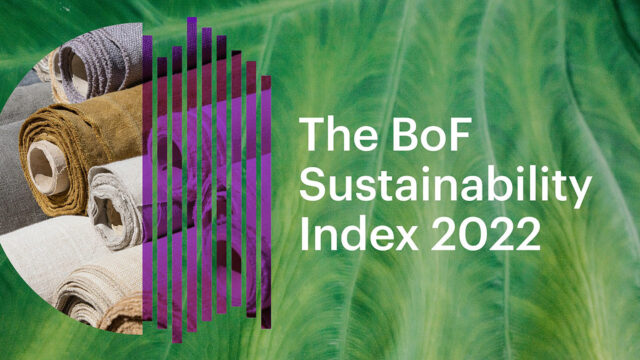
PARIS — The 30 largest listed fashion firms must do more to hit Paris climate accord targets and UN sustainable development goals, although some are improving their social and environmental credentials, The Business of Fashion said in a report on Tuesday.

Fashion brands face increasing pressure from consumers, particularly younger ones, and governments to show they are doing better on environmental issues.

“You’ve got some front runners making small steps of progress but fundamentally the big picture is that the industry is wildly underperforming,” Sarah Kent, chief sustainability correspondent for the trade industry publication The Business of Fashion told Reuters.

The Business of Fashion Sustainability Index 2022, in its second report, analyzed publicly disclosed information on environmental targets and policies, including workers’ rights, in three categories —  luxury, sportswear, and high street fashion.

Puma was ranked highest, scoring 49 points out of 100, followed Kering, last year’s leader, Levi Strauss, H&M Group, and Burberry.

Puma welcomed the recognition but Chief Executive Bjorn Gulden said “much remains to be done.” Kering’s chief sustainability officer, Marie-Claire Daveu, said her company was “fully aware of the challenges ahead.”

Levi Strauss, H&M. and Burberry did not immediately respond to requests for comment.

“There are signs of progress but it’s largely incremental,” Ms. Kent said, adding that “we’re not seeing the big transformational leaps that we really do need to see over the next eight years” to meet Paris targets.

The report said companies could lose their cultural relevance and destroy long-term value by failing to act.

The companies overall scored highest for progress in reducing emissions out of the areas assessed in the report, but they scored worst in reducing waste.

“This is a really gnarly challenge for big executives at any fashion company,” Ms. Kent said. “How do you figure out a way to satisfy your shareholders and demonstrate that you can continue to drive financial growth without driving growth in production, without continuing to make more and therefore extract more and therefore create more waste?” said Kent.

The report doubled the number of companies it covered to 15. “More companies meant worse outcomes, almost across the board,” said Ms. Kent. — Reuters

Razer launches new gaming headsets

RAZER on Wednesday announced new wireless gaming headsets, the Barracuda and Barracuda Pro, as well as an update of the Barracuda X.

The gaming company said in a statement that the new “street-styled” gaming headsets feature technologies to bring users the “purest sound, whether at home or out and about.”

The Barracuda Pro, priced at P15,495, features hybrid active noise cancellation technology to give gamers an uninterrupted audio experience in all kinds of settings. The company said this headset is ideal for “intense gaming sessions requiring maximum focus, as well as for anyone wanting to enjoy their music outdoors while muting any distractions from the outside world.”

The headset has Razer SmartSwitch Dual Wireless that allows it to be connected to two devices at the same time for easy switching when needed.

“This allows a user to game on their PC, and with a single button press, switch the Barracuda Pro to take a call without the need to unpair and pair between devices,” Razer said.

The Barracuda Pro also has dual integrated beamforming noise-canceling microphones finetuned for peak vocal pick-up, as well as three levels of active noise-suppression selectable through the Razer Audio App.

The wireless headset is powered by the new Razer TriForce Bio-Cellulose 50mm drivers and has its own built-in amplifier, the THX Achromatic Audio Amplifier. It also offers THX Spatial Audio. Its battery can support up to 40 hours of use.

“The Barracuda Pro is the hybrid headset that does it all,” said Chris Mitchell, head of the PC Gaming Division at Razer. “Whether it’s your main gaming setup at home or your favorite music playlists on the go, the Barracuda Pro combines the fuss-free convenience of lifestyle headphones along with the high-performance gaming features you’d expect in a Razer gaming headset, to create a no-compromise experience, packaged in a sleek, premium design.”

Meanwhile, the new Razer Barracuda, priced at P9,995, features the brand’s TriForce Titanium 50mm drivers and THX Spatial Audio. Its FlowKnit Memory Foam headband and earcup padding ensure comfort for long-term wear.

The Barracuda also has Razer’s SmartSwitch Dual Wireless connectivity and an integrated beamforming microphone with noise cancellation. It has a battery life of 40 hours use on a single charge and also supports 3.5mm analog inputs.

Lastly, the refreshed Barracuda X now has Bluetooth support through the inclusion of Razer SmartSwitch Dual Wireless, while battery life now delivers up to 50 hours of use on a single charge. The new headset costs P5,995.

The Barracuda X has a detachable HyperClear cardioid microphone, 40mm Razer Triforce Drivers and can support 7.1 Surround Sound.

All Barracuda models support both Razer HyperSpeed Wireless (2.4GHz) and Bluetooth 5.2 connectivity.

The new Razer headsets are available via www.razer.com, Shopee, Lazada, or through its authorized sellers. — BVR

Saso set to defend US Women’s Open title amid hype, pressure

FIL-JAPANESE YUKA SASO — REUTERS

FIL-JAPANESE Yuka Saso is keeping the same old mindset as she hits the golf course for the 77th US Women’s Open amid much hype and pressure as the major’s defending champion.

“I just want to enjoy and have fun,” Ms. Saso said in a presscon ahead of the prestigious tournament that starts on Thursday in Southern Pines, North Carolina.

Having a blast playing against the world’s best comes with her intense desire to be at her very best.

“Playing good golf (would be the key to victory),” said Ms. Saso, who beat Japanese Nasa Hataoka in the third playoff hole in her breakthrough triumph last year in San Francisco.

The 20-year-old Ms. Saso has the chance to become only the third player after greats Annika Sorenstam and Karrie Webb to win back to back US titles in the June 2-4 battle at the Pine Needles Lodge and Golf Club.

“I wouldn’t compare myself to Annika and Karrie. They’re awesome players, they’re legends. I would do my best; whatever the outcome is, I would be grateful,” she said.

As the titleholder, Ms. Saso’s image is all over the golf course and hotel — something that she said makes her “happy but a little bit shy.”

Some are giving her the tag of “favorite,” but Ms. Saso shrugged it off.

“Am I? Not really. I’m just here to do my best. Hopefully, everyone that watches us golfers enjoys it,” she said.

Ms. Saso starts her bid on Thursday (Friday in Manila) on Hole No. 1 in the company of amateur Jensen Castle and Sweden’s Anna Nordqvist.

Two more Filipino aces are vying in the $10-million event with Bianca Pagdanganan and Dottie Ardina kicking off their respective campaigns in separate flights on the backside. — Olmin Leyba

Insurtech seen to help improve insurance penetration in the Philippines

TOWFIQU BARBHUIYA/UNSPLASH

FINANCIAL TECHNOLOGY (fintech) firms target to help increase insurance penetration in the country through microinsurance products offered through online channels or insurtech.

Insurtech firm Igloo Country Manager Mario Berta said in a webinar on Wednesday that they primarily offer granular insurance coverage through its distribution platform partners, including GCash, Etiqa Life and General Assurance Philippines, Inc., Shopee, foodpanda, and Cashalo, among others.

“Igloo is not an insurance company. We partner with insurance companies,” Mr. Berta said. “In very simple terms, we get a product that they already have and designed, we digitalize it, we upload it into our system, and then we plug into e-commerce ecosystem, and distribute the insurance product through the internet.”

“For instance, anything you buy through Shopee will be insured by us. At the checkout counter, where you will be requested to pay, a pop will show up and says, ‘do you want to attach any insurance?’”

Mr. Berta said the insurtech market needs to be developed as this could help raise insurance penetration in the country.

“Interestingly enough, the Philippines scored very low on insurance penetration, but higher on microinsurance penetration. Our job is to really enhance and further penetrate the microinsurance level of the Philippines,” he said.

“There is the gap in financial inclusion, with 63% of Filipinos not having access to bank accounts, it is really the biggest challenge we see,” GCash Vice-President of Insurtech and Cryptocurrency Neil Trinidad said in the same webinar. “Of this 63%, 26% do not even have access to physical banks… Only 3% of Filipinos have insurance.”

Etiqa President Rico T. Bautista, who is also president of the Philippine Life Insurance Association, said insurtech is an effective means of introducing insurance products to consumers as most Filipinos have mobile phones and internet connections.

Insurtech has several advantages like being able to provide real-time information, having lower development costs that translate into lower costs for consumers, and a better time-to-market efficiency, Mr. Bautista said.

He added that the local insurance market has been slow to adopt insurtech because of established, traditional means that companies have invested heavily in.

Microinsurance for certain products like for mobile phones, which some Filipinos consider an “investment,” also appeal to the market.

“For as low as P21 per month, you can have a coverage of P30,000 for your cellphones. If we consider our cellphones as an investment, we want to make sure we are able to protect our investment. For a low pricing, you are able to insure your phones,” he said.

Mr. Bautista said Etiqa is also eyeing to bring insurtech to more markets. — T.J. Tomas

DMCI Mining earnings up 14% on higher shipments

DMCI Mining Corp. recorded a 14% growth in core net income to P543 million in the first quarter of this year from P477 million in the same period last year, its parent firm said on Wednesday.

In a disclosure, DMCI Holdings, Inc. said its unit’s core profit during the quarter was “its highest for any given quarter.” Revenues increased 25% to P1.4 billion, driven by higher nickel ore shipments and favorable foreign exchange rates.

DMCI Mining President Tulsi Das C. Reyes described the company’s performance as “a very good start to the year.”

“Unfortunately, without a second operating asset, it would be impossible to maintain our output. Our main challenge now is securing the necessary permits to expand our operations,” he said.

From January to March, total production plunged by 43% to 318,000 wet metric tons (WMT) from 555,000 WMT on the nil production of Berong Nickel Corp. (BNC). Meanwhile, the output from Zambales Diversified Metals Corp. (ZDMC) went up by 5% to 318,000 WMT from 313,000 WMT.

Average selling price slipped by 6% to $44 from $47 as BNC sold lower-grade nickel amid higher shipments from ZDMC.

The company said that despite the depletion of its Berong mine, it was able to boost its total shipments by 26% from 494,000 WMT to 620,000 WMT.

DMCI Mining said it is looking to expand its mining operations by another 3,500 hectares, which has a potential nickel resource of over 200 million WMT.

“Once fully permitted, these additional operating assets can sustain the company for at least 50 years,” it added.

Last month, DMCI Holdings Chairman and President Isidro A. Consunji told stockholders that the group was considering transferring DMCI Mining to another subsidiary Semirara Mining and Power Corp.

“We are currently studying whether it will be of great value for two sets of stockholders, whether we can transfer DMCI Mining to Semirara to create value for both stockholders,” Mr. Consunji told stockholders during their annual meeting.

He also said that the company has several properties in Palawan and Zambales that are awaiting mining permits and potential mineral production sharing agreements.

At the stock exchange on Wednesday, DMCI Holdings shares went down by 0.11% or one centavo to close at P8.99. — Luisa Maria Jacinta C. Jocson

Christie’s to offer rare first edition Harry Potter book in private sale

PHOTO FROM CHRISTIES.COM

LONDON — A first edition of Harry Potter and the Philosopher’s Stone, with some errors and signed by author J.K. Rowling, is going up for a private sale at Christie’s in London, with the auction house inviting offers starting from 200,000 pounds ($250,000).

The publication is one of 500 hardback copies of the book that were printed in an initial run in 1997. Three hundred of those were sent to libraries.

The one being sold by Christie’s, as part of its upcoming The Art of Literature: Loan and Selling Exhibition, is among the other 200.

“There were a few things that they seemed to get wrong in the book production,” Mark Wiltshire, a specialist in printed books and co-curator of The Art of Literature exhibition, told Reuters.

“On the back cover, for instance, philosophers, which of course is quite a key word… is misspelt ‘philosphers’, that ‘o’ that second ‘o’ is missing. Also on page 53, in the list of items which pupils are asked to take to Hogwarts with them, ‘one wand’ is repeated twice.”

While Ms. Rowling was unknown at the time, the book about the magical world of witches and wizards went on to become a massive hit around the world, spawning a whole series and a huge film franchise.

“In many ways, this book is the physical manifestation of a magic memory for so many people and that’s what makes it so desirable,” Mr. Wiltshire said.

Christie’s Art of Literature event is open to the public June 7-15. — Reuters

Low-code versus no-code

By Dinesh Varadharajan, Kissflow chief product officer

TECHNOLOGY has become an underlying catalyst for adaptability in business and growth. However, its advancement could be impeded by a talent deficit, as a recent survey by McKinsey reflected that 87% of executives across the globe said they are experiencing skills gap issues in the work force or expect them in the near future. This challenge is particularly apparent in the Asia-Pacific region where majority of companies, from SMEs to large enterprises, have accelerated digital transformation in the past couple of years as a response to the coronavirus disease 2019 (COVID-19) crisis. The outcome was an alarming shortage in tech talent.

To continue the momentum of digitalization, no-code and low-code have proven to be quite crucial in providing businesses with the platforms they require without the technical complexities that accompany it, but what is the difference between low-code and no-code?

Setting all the market ambiguities aside, at the outset, it might look seemingly hard to draw tangible differences between low-code and no-code. However, there’s a thin line of distinction between the two technologies. The capabilities that differentiate low-code platforms from no-code solutions aren’t apparent at the UI level, which is where much of the confusion between the two stems from. This difference stems from understanding the basic yet imperative details such as the target audience — who is going to use the platform, and the complexity of applications that need to be developed using the same.

NO-CODE
No-code is aimed entirely at business teams who might not have any coding knowledge. Non-technical teams that can chart out the underlying business logic to build an app visually can reap great benefits out of a no-code development platform. The action of just dragging and dropping lets anyone build apps.

By automating and bundling multiple workflows and processes together in a single console, even the non-technical folks can build custom apps for their everyday operations.

However, what’s important is to choose a platform that will also cover issues such as scalability, technical debt, shadow IT, etc.

While no-code can help organizations achieve shorter development cycles and lower the dependencies on IT, it still comes with its own limitations. For example, to add advanced components in a no-code application, just visual programming might not be enough. That’s when you would need a low-code platform.

LOW-CODE
Low-code is an app development technique that brings business and IT together to build custom applications with a minimal amount of coding. However, this doesn’t necessarily mean writing extensive lines of code. The true motive behind adopting a low-code approach is to shorten development cycles, accelerate time to market, and reduce developer dependencies as much as possible.

Enterprises that recognize the significance of a fast minimum viable product or MVP, require such technologies to expedite the development process that helps build responsive, varied, and powerful applications.

Generally, low-code platforms are open systems that allow bigger venues for custom code thus making themselves compatible for multiple use cases.

Consider an e-commerce application that entails feedback forms, chatbots, FAQs, shopping carts, store, and products pages, etc to be brought into a single application. This act of bundling them together under a single console requires you to write some amount of code, which is where low-code platforms come into the picture. Such technical customizations may not be possible with no-code platforms as they are meant to build only frontend applications.

Low-code platforms help extend the capabilities of your current core system through extensive integrations. The existing blocks of reusable components can be used to build off the core system just by adding small snippets of code. For example, you can build off your existing human resources management system (HRMS) by adding some of the missing modules such as employee onboarding and offboarding to it thus transforming it into a holistic HRMS stack. All of this is possible just by integrating multiple data sources.

But with such sophistication also comes the risk of technical debt as app-building is democratized to a great degree. Since the applications are not entirely pre-architected unlike the ones built on no-code platforms, it allows citizen developers to add new code thus, eventually leading you to deal with vulnerabilities or inefficiencies in your codebase.

BENEFITS OF LOW-CODE AND NO-CODE PLATFORMS
There are a plethora of benefits to adopting a no-code or a low-code platform. Let’s dive into the biggest perks of low-code development.

Speed of application development: With low-code, you can build multiple apps synchronously and show stakeholders working prototypes in days or even hours. The entire development process is so agile that any modifications to be made in the prototype can be done in a continuous manner thus avoiding unnecessary regressions.

Bringing business and IT together: You can involve business teams by empowering them to translate their ideas into apps with the help of low-code development platforms. Since the coding requirement is minimal, for the most part, they have to just drag and drop to build what they want to build. This also implies that you no longer have to wait for developers with specialized skills and hence be able to get things done more quickly and at a lower cost.

Low risk, high return on investment: Robust security processes complying with various data regulations, seamless data integration, and cross-platform support are some of the built-in capabilities of low-code development platforms. This means less risk and more time to focus on your other important aspects of application development without shelling out a lot of resources.

Unified interface. One-click deployment: With low-code development platforms, besides building and testing, a single click is all it takes to push your application to production. You can provide different environments to different users on a single platform so that your application development platform looks as organized as it can be.

WRAPPING UP
Ultimately, the agenda is to enable business and IT users to create practical applications faster and cheaper. Low-code and no-code platforms can help circumvent the skill shortage gap prevailing in the industry by enabling people with basic coding knowledge to build what they want to build.

Hence, it is safe to say that approaching app development in the low-code or no-code way can certainly let you lead the pack by enabling your organization to be digitally ready. This also puts you in a stance where you can take quick actions to outperform your competition.

While the primary features of both low-code and no-code development platforms are the same, it is important to delineate the factors such as the amount of coding knowledge required, the type of end-user who is going to develop the app, and the complexity of the app before choosing one technology over the other.


Dinesh Varadharajan is Kissflow’s chief product officer