Home Blog Page 5975

Dominguez wants ADB to take the lead on ASEAN-specific climate action program

FINANCE SECRETARY CARLOS G. DOMINGUEZ III

FINANCE Secretary Carlos G. Dominguez III urged the Asian Development Bank (ADB) to lead a climate action information and best-practices exchange program within the Association of Southeast Asian Nations (ASEAN).

“Climate change might be a global problem,” Mr. Dominguez said in a statement on Saturday. “The issue, however, exhibits itself most starkly in our smallest communities. I am sure that the ADB will be ready to help us promote the exchange of climate change action and adaptation practices among the ASEAN countries.”

Mr. Dominguez also said an ADB program would be a better alternative to relying on international entities, such as the United Nations Climate Change Conference of the Parties (COP), which he says leans heavily towards big-picture problem-solving and not solutions specific to local communities.

Mr. Dominguez brought up the prospect during the signing of two loan agreements on June 3. One was a $250-million policy-based loan intended to finance the Climate Change Action Program, Subprogram 1 (CCAP1), and the other the Capital Market-Generated Infrastructure Financing, Subprogram 2 (CMGIF2), a $400-million policy-based loan intended to help develop and boost the domestic capital market, infrastructure financing, and insurance and pension funds.

“The two programs (CCAP1 and CMGIF2) are not unrelated. An improved infrastructure backbone will increase the efficiency of our economy. It will enable us to improve our climate resiliency and spur sustainable growth,” Mr. Dominguez said.

CCAP1 is the ADB’s first climate change-based policy loan, making the Philippines a pioneer in climate policy development financing in the region.

“This initiative will hopefully encourage other countries to design and accelerate the implementation of their own climate programs,” Mr. Dominguez said. “This sends a very strong signal to the international community that the Philippines is fully committed to deliver on our climate ambitions.”

The Philippines has set a goal of cutting its greenhouse gases (GHG) emissions by 75% by 2030, particularly from agriculture, waste material, industry, transport, and energy, based on its Nationally Determined Contribution to the Paris Agreement, in which nearly 200 countries pledged to mitigate their respective GHG emissions.

The Philippines is considered one of the countries most at risk to climate change, with an average of 20 typhoons landing in its territory every year, causing flooding and damage to infrastructure.

On Thursday, the ADB greenlit a $4.3-billion loan for the South Commuter Railway Project, which is expected to halve travel time between Metro Manila and Calamba. It is expected to generate 35,000 jobs during construction and another 3,200 permanent jobs for its operation, including giving those along its line potential access to more than 300,000 jobs. — Tobias Jared Tomas

Xendit payment platform eyes clients of all sizes, even in remote areas

By Keisha B. Ta-Asan

INDONESIAN financial technology (fintech) company Xendit said it is positioning itself as a payment infrastructure platform supporting businesses of all sizes in Southeast Asia, to tap into demand for digitally transformative services in the region, even in areas with little broadband penetration.

Xendit said its target set takes in the whole range, from individual sellers, micro-, small-, and medium-sized enterprises (MSMEs), growth-stage startups, and large enterprises.

In the current climate, businesses need to digitize for them to grow faster, Xendit Philippines Managing Director Yang Yang Zhang said in an interview.

“I think that adopting emerging technologies, introducing these kind of new business processes, accepting online payments, is crucial for any business’s survival,” Ms. Zhang said.

“We really, really want to make sure that we are not just building out for the top 10% of companies. (The target is) 100% of the businesses that are out there,” she added.

The fintech industry in the Philippines has adopted emerging technologies to overcome the advantages held by incumbent financial institutions as well as the challenges posed by coronavirus disease 2019 (COVID-19).

According to the Philippines FinTech Report 2022, the number of fintech companies in the Philippines was 222, up 16.8% from the number recorded in 2020.

“I think that Filipino businesses were able to figure out how to thrive by transforming themselves,” Ms. Zhang said, “And so I think that, as we kind of emerge from the pandemic, (digital transformation) will continue.”

Ms. Zhang said the company, which entered the Philippine market in 2020 is seeking out partnerships to achieve an innovative digital payments offering that will differentiate itself from the rest of the field.

“We had this really lean team that had to figure out how we’re going to distinguish ourselves from people who’ve been in the market one year longer, five years, longer, 10 years longer than us,” Ms. Zhang said.

A recent partnership with DragonPay, one of the pioneers in providing alternative payments in the Philippines, gave Xendit room to expand, Ms. Zhang said. The eventual aim is to serve remote and underserved areas.

“The way that we want to reach these specific kind of far flung areas (where) there’s really been no penetration… (of) digital payments, is really by working with the… platforms that are working towards those sari-sari store enablers, or organizations that work primarily with farmers and fishermen,” Ms. Zhang said.

DATA SECURITY
When consumers entrust personal information to digital platforms, data security becomes mission-critical, Ms. Zhang said.

“Within Xendit, we actually have an entire team of hackers who hack us every single day. It’s their sole job is to come in, and to figure out where the vulnerabilities are, and so proactively they figure out where they are, so we can address them before anyone else can,” Ms. Zhang said.

She added that part of the journey to creating “a world-class payments experience… is making sure that the customer is very aware at each step of what is happening.”

“For example, there are many ways you can facilitate a bank transfer. When we facilitate that, we make it very clear to customers where the touch point with a bank is, and the touch point with the app, and also what they’re actually signing up for,” she added.

Fintech: Powering digital transformation in financial services

(Last of three parts)

Anyone who has transferred money to another person’s account without having to deal with a bank employee — by e-mail, text, call or physical visit to a bank branch — is no longer a total stranger to financial technology. But keeping up with developments in the market can be dizzying, as fintech has grown exponentially of late, helped in part by the global health crisis that provided the impetus to reexamine processes and put the customer at the core of solutions.

Fintech trends have been disruptive and will continue to be so especially now that the mobility restrictions since 2020 forced financial institutions to take a good look at what a digital economy is going to look like. Looking at the practical responses of banks to stay agile during the pandemic by examining processes that can be automated and making them more customer-centric, we can see that financial institutions have already set into motion what could be the beginnings of digital transformation.

In some countries, financial firms are proactively taking steps to understand how their organizations can benefit from the wide array of available and emerging technologies. The experience over the past two years points to an acceleration of technological innovation in the years to come. Making sense of all the buzzwords can be a task for the uninitiated in the fintech world. It would be wise to identify which tech trends to focus on in relation to how they can impact the industry and diverse organizations.

In the first part of this three-part series, we discussed the key themes anticipated within the next two years in the fintech market in Asia. In the second, we looked at tax considerations in the Philippines. In this last part of the series, we take a look at a few of the tech trends that are worth keeping an eye on as the industry continues to experience dramatic change.

WHITE LABEL FINTECH
White labeling allows firms to sell products without incurring significant development expense, time or navigating regulatory compliance. Also referred to as “Banking as a Service,” it is an authorization to brand and sell products or services developed by another company. This allows fintech firms to create a branded front-end offering layer over white label application programming interface or API-enabled platforms.

This solution leverages the innovation ecosystem without the need to reinvent, reinvest in and go through the entire technology development life cycle. It significantly reduces go-to market offerings to customers and seamlessly integrates technology innovation, creative product offerings and compliance requirements in a highly regulated industry to better serve customers.

White labeling is a great and attractive option for businesses to leapfrog into the modern digital world. It is a strategy for emerging companies to reduce risks and free up resources to focus on what they’re good at — develop products, build the brand, and grow their client base. For fintech startups, white label solutions allow them to meet the demands of customers, minus the learning curve. Companies availing of these solutions, however, will have limited control over product development, and the drawbacks can range from bugs and security weaknesses to failure to observe the law.

DATA AGGREGATORS
A customer’s financial footprint is distributed across various institutions, instruments, and platforms, making it difficult to have a full view of their transaction history. Data aggregators collate customers’ bank accounts, mortgages, brokerage accounts, and credit card data, among others, so they could provide one financial view of customers, irrespective of channel and the businesses the customers transact with. They accomplish this through APIs used by fintech firms through which customers log in to their platforms.

This aggregation of data at scale is also the backbone of open banking and a free-flowing financial ecosystem. Data aggregation powers a wide gamut of fintech applications to provide financial services on demand like advising, lending, quicker money transfers etc. The portability enabled by data aggregators cuts down paperwork and allows customers to improve eligibility and access to better products/services. With a free flow of data in the financial ecosystem, firms can have a better view to offer personalized products in real time.

Data aggregators’ connection with many institutions, however, can equate with multiple points for possible breaches and leaks. Security risks can also arise from web data scraping, a process that involves a computer program logging into a bank’s website using a client’s credentials and reading code to extract financial data. The industry though continues to look into superior ways of aggregating data without compromising the protection of customers. This, nevertheless, brings to the fore the question of greater regulations that establish guidelines on how financial data is accessed and stored safely. 

ROBOTIC PROCESS AUTOMATION OR RPA
Customer experience drives loyalty to brands. Financial institutions, in turn, grow revenue and margins based on customer loyalty. Hence businesses are increasingly automating core operations to focus on enhancing customer experience and loyalty.

Robotic process automation or RPA accomplishes mundane and repeatable backend processes better, faster, and more accurately. RPAs are easy, flexible, budget friendly, and quick to deploy, improving productivity while enhancing serviceability and incremental revenue. RPAs ensure mistake proofing, compliance, real-time reporting and insights in a highly regulated fintech sector.

Automation is a great boost to operational efficiency. RPA’s future popularity in the world of fintech will likely be borne out of its utility to compliance and regulatory needs. With automation, businesses are able to efficiently keep audit trails for every process, supporting high compliance.

VOICE-ENABLED PAYMENTS (VEP)
More and more people get recommendations, shop for the best deals, and perform tasks using rapidly evolving voice assistants (e.g., Alexa, Siri, Google) backed by sophisticated natural language processing and artificial intelligence. Digital voice assistant-enabled devices are estimated to double to 8.4 billion by 2024 providing a smarter and more connected ecosystem than ever before.

Many banking services are rapidly being integrated and are accessible through voice assistants. As voice encryption, voice-biometrics, multifactor authentication and voice tokenization advances, a secure voice assistant has the potential to disrupt how customers will pay in the future. The pandemic and millennials comfortable with voice over typing will accelerate adoption. VEP is projected to be used by 31% of the US adult population in 2022.

This technology allows seamless, end-to-end, integrated concierge-like experience, allowing customers to multi-task better. As digital payment is the largest segment within the global fintech sector, voice integration with digital touch points will separate fintech leaders from laggards. To drive new opportunities, growth and leadership, fintech players will need to continue to rapidly adopt disruptive VEP technology.

As we keep an eye on these and many other tech trends, we will continue to witness the evolving behavior of consumers, which in turn will feed into the appetite of organizations to embrace and capitalize on this wave of technological innovation. There is, however, an element of uncertainty in technologies that, although disruptive, have yet to pass regulatory scrutiny. Financial firms will have to look at how best to jump onto the bandwagon, so to speak — to work on their own projects or fire up their collaborative spirit and forge alliances with industry peers to push new technologies to wider adoption.

The potential of these tech trends to help make a world of difference in how processes are improved and productivity raised can be astounding. At the end of the day though, leaders will have to go back to what matters most when embracing innovation — enhanced customer experience, services transformation, and a proven track to successful business models.

This article is for general information only and is not a substitute for professional advice where the facts and circumstances warrant. The views and opinions expressed above are those of the author and do not necessarily represent the views of SGV & Co.


Anurag Mishra is a technology consulting principal of SGV & Co.

Breakaway LIV Golf tour signs 2018 Masters champion Reed

THE LIV Golf International Series on Saturday announced the signing of 2018 Masters winner Patrick Reed.

The 31-year-old American has won nine Professional Golfers’ Association (PGA) Tour titles and earned nearly $37 million during his career.

He is the ninth major winner to join the Saudi-backed rival golf circuit, a list that includes Phil Mickelson, Dustin Johnson, Sergio Garcia and Bryson DeChambeau.

“(Reed) has a proven track record as one of the most consistent competitors in pro golf and adds yet another big presence at our tournaments,” LIV Golf CEO and commissioner Greg Norman said in a statement.

“He’s a major champion who has had a significant impact playing international team competitions, and he’ll bring another impressive dynamic to our team-based format at LIV Golf.”

Reed has represented the US at three Ryder Cup competitions (2014, 2016, 2018) and three Presidents Cup events (2015, 2017, 2019). “It’s refreshing to see team golf again. It takes me back to college and Ryder Cup days,” Reed said.

“You’re not just playing for yourself — you’re playing for your team over there and that camaraderie. I’m excited about seeing more golf. You’re not just seeing coverage from featured groups — you’re seeing it from everywhere.”

LIV Golf is currently playing its inaugural event outside London. Reed is expected to participate in the series’ first US-based event at Pumpkin Ridge in Portland from June 30-July 2.

Reed, who was hospitalized with double pneumonia in August, finished tied for 53rd last week at the Memorial.

He tied for 35th at this year’s Masters and tied for 34th at the PGA Championship.

Reed can expect to receive a suspension notice from the PGA Tour, which announced the suspensions on Thursday of Mickelson and 16 other tour members who are participating in this week’s LIV Golf event in London. — Reuters

Zion Williamson making it clear he wants to play for Pelicans

ZION WILLIAMSON — REUTERS

ZION Williamson is putting last season behind him and focusing on remaining with the New Orleans Pelicans.

Williamson missed the entire 2021-22 season due to a broken right foot, and speculation persisted that he might prefer to play elsewhere.

But while speaking to reporters at a local YMCA basketball camp he was holding, Williamson was all-in on playing for the Pelicans.

“I do want to be here. That’s no secret. I feel like I’ve stood on that when I spoke,” Williamson said on Saturday. “Currently, this does not really have anything to do with that. This is just me wanting to be a pillar in my community.”

Williamson, who turns 22 in July, was fully cleared physically by the team on May 26 and has been working out in New Orleans with some of his teammates. 

“It was a long year for me on rehab and mental battles,” Williamson said. “I’m fine now. I’m ready to get to work.”

Since being the No. 1 pick of the 2019 NBA Draft, Williamson has played just 85 games (all starts) for the Pelicans. He missed the first three months of the 2019-20 season due to a knee injury.

Williamson was an All-Star in the 2020-21 season, when he averaged 27.0 points and 7.2 rebounds per game in 61 contests. He has career averages of 25.7 points, 7.0 rebounds and 3.2 assists.

Williamson could be in line for a five-year, $186-million extension from the Pelicans. Speculation has New Orleans seeking protections in the deal due to Williamson’s injury history.

As for getting an extension, Williamson smiled and said, “You have to ask the Pels, baby.” Williamson is slated to make $13.5 million in base salary next season.

Even with Williamson sidelined, New Orleans advanced through the play-in format to make the playoffs this season and lost in six games against the top-seeded Phoenix Suns in the first round of the Western Conference playoffs.

An in-season trade for CJ McCollum bolstered the club while star Brandon Ingram had another big season.

In addition, some of the team’s emerging role players excited Williamson as he ticked off the names of Jose Alvarado, Trey Murphy III, Herbert Jones and Jaxson Hayes. “That’s all I needed to see to really be excited to get back out there,” Williamson said. — Reuters

Everything starts and ends with Steph

It was clear from the outset that Stephen Curry resolved to play better in Game Four of the National Basketball Association Finals. For all the deficiencies of the Warriors in the previous match, he understood that everything started and ended with him. And while he started out well at TD Garden in Game Three, he ended badly; a basket and a dime to accompany three turnovers and four missed shots in most certainly explained why they scored just 11 in the fourth quarter and ultimately bowed by 16. In short, he knew that he could carve the outcome of the first championship series match hosted by the Celtics in 12 years with his performance: Anything less than a singular showing would further tilt the balance of the best-of-seven affair against them.

That Curry would come up with exactly what the Warriors needed was, perhaps, to be expected. He was due for a breakout on the sport’s grandest stage — not the kind of supposition you would expect of a two-time Most Valuable Player awardee in his sixth title series appearance in eight years. And, under the circumstances, it was fitting that his star was brightest precisely when just about everyone else didn’t exactly live up to billing. Defensive anchor Draymond Green was once again a bust, and splash brother Klay Thompson still didn’t have the legs to provide more than mere support alongside the likes of Andrew Wiggins, Jordan Poole, and, yes, Kevon Looney. 

True, the Warriors claimed Game Four on the strength of their stout defense in the crunch, during which they outscored the Celtics 17 to three. Then again, they would not have been able to generate as much offense against the equally stingy coverage of the competition had Curry not come up with 10 markers and required constant attention in the payoff period. Little wonder, then, that even fellow marquee names following the proceedings could not help but sing his praises on social media.

Indeed, the 43 (on 26 shots), 10, and four Curry put up stands as proof of his best Finals performance ever. He’s not done, though. If the Warriors want to bring home the Larry O’Brien Trophy, he can’t be done. He will welcome the myriad advantages that familiar Chase Center brings, and he needs to use them all in order to carry the rest of the blue and yellow on his shoulders. The Celtics have never lost back-to-back outings yet in the 2022 Playoffs for a reason, not least of which is superior play on the road. There’s one thing they don’t have, however. They don’t have him, and he’s bent on ensuring that it will make all the difference.


Anthony L. Cuaycong has been writing Courtside since BusinessWorld introduced a Sports section in 1994. He is a consultant on strategic planning, operations and Human Resources management, corporate communications, and business development.

Chinese defense minister says country’s nuclear arsenal ‘for self-defense’

PIXABAY

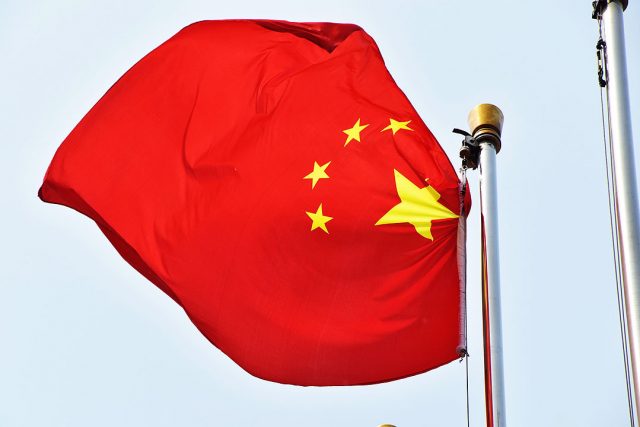
CHINA has made “impressive progress” in developing new nuclear weapons, but will only use them for self-defense, and never use them first, Chinese Defense Minister Wei Fenghe told delegates at the Shangri-La Dialogue on Sunday.

In response to a question about reports last year on construction of more than 100 new nuclear missile silos in China’s east, he said China “has always pursued an appropriate path to developing nuclear capabilities for protection of our country”.

He added nuclear weapons displayed in a 2019 military parade in Beijing — which included upgraded launchers for China’s DF-41 intercontinental ballistic missiles — were operational and deployed.

“China has developed its capabilities for over five decades. It’s fair to say there has been impressive progress,” he said. “China’s … policy is consistent. We use it for self-defense. We will not be the first to use nuclear (weapons).”

He said the ultimate goal of China’s nuclear arsenal was to prevent nuclear war.

“We developed nuclear capabilities to protect the hard work of the Chinese people and protect our people from the scourge of the nuclear warfare,” he said.

The US State Department last year called China’s nuclear buildup concerning and said it appeared Beijing was deviating from decades of nuclear strategy based around minimal deterrence. It called on China to engage with it “on practical measures to reduce the risks of destabilizing arms races.” — Reuters

S. Korea says it will boost defense capacity to counter N. Korean threat

A view from South Korea towards North Korea in the Joint Security Area at Panmunjom. North and South Korean military personnel, as well as a single US soldier, are shown. — WIKIPEDIA

SINGAPORE — South Korean Defense Minister Lee Jong-sup said on Sunday that his country would dramatically enhance its defense capabilities and work closely with the United States and Japan to counter North Korea’s nuclear and missile threat.

Mr. Lee, speaking at an Asian security meeting in Singapore, said the situation on the Korean peninsula posed a global threat and he urged North Korea to immediately end its nuclear weapon and missile programs.

The United States warned this month that North Korea is preparing to conduct a seventh nuclear test, and says it will again push for United Nations sanctions if that happens.

“Our government will strengthen capabilities to better implement the US extended deterrents and will dramatically enhance response capabilities,” Mr. Lee said in a speech at the Shangri-La Dialogue, a top regional security summit.

“Moreover, we seek to strengthen ROK (Republic of Korea), US, Japan trilateral security cooperation to respond to North Korea’s nuclear and missile threats.”

North Korea promoted its key nuclear negotiator to foreign minister, state media said on Saturday, as leader Kim Jong Un vowed to his ruling party that he would use “power for power” to fight threats to the country’s sovereignty.

North Korea has carried out at least 18 rounds of weapons tests this year, underscoring its evolving nuclear and missile arsenals. — Reuters

Spain swelters in country’s hottest pre-summer heatwave for 20 years

PEOPLE are silhouetted against the setting sun at “El Mirador de la Alemana (The viewpoint of the German)” in Malaga, southern Spain, July 24, 2019. — REUTERS

SEVILLE, Spain — Fan-sellers were doing good business in the southern city of Seville on Saturday as Spain sizzled in the hottest pre-summer heatwave for at least 20 years.

Carriage drivers dampened down horses who take tourists around the historic sights of Seville such as the Real Alcazar Palace and Plaza de Espana.

Temperatures reached 40 C degrees in the Guadalquivir valley in Seville and the nearby city of Cordoba on Saturday, the national meteorological office AEMET said.

Temperatures could rise to 42 C degrees in the Guadiana valley in Extremadura and other parts of southern Spain later on Saturday, forecasters said.

On Sunday, the heatwave could intensify as temperatures could soar to 43 C (110 Fahrenheit) degrees in parts of southern Spain.

A cloud of hot air from North Africa has sent temperatures soaring, AEMET forecasters said, and the suffocating heatwave could last in most of Spain until June 15, six days before summer officially starts on June 21.

Forecasters predicted high winds and storms in some parts of Spain. — Reuters

Tunisia military prosecutors investigate journalist for ‘harming public order’

TUNIS — Tunisian military prosecutors said on Saturday they had begun investigating a journalist on suspicion of “harming public order” for saying the president had asked the army to close a powerful labor union’s headquarters, and a witness said the reporter had been arrested.

The journalist, Salah Attia, told Al Jazeera on Saturday that President Kais Saied had asked the army to close the headquarters of the UGTT union and put political leaders under house arrest, but that the army had refused.

“Police in civilian clothes arrested Attia in a cafe in the suburb of Ibn Khaldoun in the capital,” the witness, who was with Attia, told Reuters by phone.

Authorities could not immediately be reached for comment.

Mr. Saied has been facing growing criticism that he seeks to consolidate one-man rule since seizing power last summer in a move his opponents called a coup. He subsequently set aside the 2014 constitution to rule by decree and dismissed the elected parliament.

The president last month called for a national dialogue to prepare a “new constitution for a new republic” and excluded main political parties. Other major players such as the UGTT refused to participate in what it said would be a dialogue with a predetermined outcome.

The leader of the UGTT, which has about 1 million members, said on Thursday it was being “targeted” by authorities after it refused to participate in the talks. — Reuters

Climate change: The missing agenda item

FREEPIK

Amid the noise and clutter of the just concluded election campaign, one urgent national — indeed global — issue went unnoticed: climate change.

Hardly surprising. Talking about climate change in a political rally is like delivering a speech with marbles in your mouth. The subject is complicated. It won’t win you votes.

Politicians prefer to talk about creating jobs, raising incomes, building homes, or providing free medical care. But unless we deal with climate change, those glitzy promises will soon lose their glitter.

The urgency of climate change action was highlighted by the latest report of the Intergovernmental Panel on Climate Change (IPCC), the international body for assessing the science related to climate change.

Released on April 4, the IPCC report warned that the world was running out of time. It said that unless countries acted quickly to cut greenhouse gas emissions, the goal of net zero emissions by 2050 will soon be beyond reach. Global temperatures will rise beyond the target range of 1.5° to 2° centigrade. This will result in severe changes in the climate.

Translation: Think of having more Typhoon Yolandas and Odettes every year. Or, the water level at Angat Dam regularly falling below critical levels. Or, more crops being devastated either by floods or droughts. Or, coral reefs being destroyed and fish stocks depleted. Or, coastal communities being flooded by rising sea levels.

SEA LEVEL RISE
The consequences of climate change can be so calamitous. Take sea level rise.

According to the IPCC, sea-level rise globally is speeding up. It rose from 1.4 millimeters per year in most of the 20th century to 3.6 millimeters per year from 2006 to 2015. It added that the population exposed to a 100-year coastal flood may rise to about 20% if the global sea level rises further.

This is bad news — particularly for the Philippines which has more than 7,640 islands. About 60% of Filipinos live at or near coastal areas. What’s more, the sea level is rising much faster in this country than elsewhere. According to a 2016 study, sea levels in the Philippines are rising at five times the global average due to regional variations in the impact of climate change on the oceans.

The Philippine government has been ringing alarm bells. At the United Nations (UN) meeting on Oceans and the Law of the Sea in June 2021, Director John Francis Herrera of the Department of Foreign Affairs warned that the future survival of the country is “at risk if sea level rise is allowed to go on unabated.”

The question is: What actions are being taken? This comes to mind when you hear about new reclamation projects being planned for in Manila, Cebu City, and Dumaguete. How can such plans fare given the rising sea levels?

What can be done to face such a problem? There are no easy answers. But some of our neighboring countries are already taking action.

In January 2022, Indonesia’s Parliament passed a law to relocate the nation’s capital from Jakarta to a jungled area of Kalimantan on Borneo island. The relocation program will cost $32 billion and will start sometime between 2022 and 2024. A megacity of 10 million people, Jakarta suffers from chronic congestion, air pollution, and floods due to the combined impact of sea level rise and land subsidence.

Can you imagine the Philippine Congress debating a law to transfer the capital from Manila to the elevated plateau of Bukidnon in Mindanao?

Well, what can the Philippines do to deal with climate change and still pursue development? There are many things. Let’s just take a look at two.

SHIFT TO GREEN ENERGY
First, shift from coal to renewable energy. In this way, the Philippines can help in implementing what experts consider a key action item in the climate agenda: cutting down the use of fossil fuels in power generation.

Right now, coal accounts for nearly 60% of the Philippines’ total energy mix. It has 28 operating coal-fired power plants and 22 more approved for construction by the Department of Energy. Coal is preferred because it is cheap. However, among fossil fuels, coal is the dirtiest. It is No. 1 in the global hit list for decommissioning.

At the UN Climate Change Conference in Glasgow, Scotland last year, the Philippines conditionally pledged to phase out coal in the coming decades. Conditionally, because it is asking for financial help to make that transition.

In line with this, the Philippines and Indonesia have signed a deal with the Asian Development Bank (ADB) under which existing coal power plants will be retired and replaced by renewable energy facilities. The ADB’s target is to retire half of Southeast Asia’s coal plants over the next 10 to 15 years to reduce carbon dioxide emissions by 200 million tons a year.

This transition to green energy will not be easy. Many of the country’s existing coal-fired plants are relatively new. This raises resistance to retiring them early. Moreover, the shift to renewables will also require redesigning and re-equipping the power grid to handle the variable power generated by renewable energy facilities like solar and wind.

Can the Philippines make this shift to renewables? The reward for this effort will be a new, efficient and sustainable power industry that will help reduce our climate change woes. The cost of failure: we will be left behind — again.

CLIMATE RESILIENT AGRICULTURE
Another urgent action agenda item is agriculture. To adapt to changing weather patterns, the Philippines must make its farmers not only more productive but also more climate resilient.

It may help that agriculture is sexy for our politicians. Many candidates in the last elections pledged to help the country’s farmers in various ways. Incoming President Ferdinand Marcos, Jr. said that giving agriculture a boost will be one of his top priorities to make the country food-secure and resilient.

For that to happen, farming advocates say the new President will have to reverse what they call the government’s decades-long bias against agriculture. For many years, they say, the government’s agriculture budget has been underfunded.

What complicates the situation is the food crisis that the world faces today. The global food system has been hit hard by COVID-19, the global energy shock, and the war in Ukraine. Price jumps and supply shortages of petroleum products have made fertilizers more scarce and expensive. In many countries, this forced farmers to cut back on fertilizers and feeds, which in turn is reducing their output and raising the cost of crops and livestock.

The Russian invasion of Ukraine has disrupted supplies of vital food items. Russia and Ukraine account for 28% of globally traded wheat, 29% of barley, and 15% of maize. The longer the war lasts, the larger the impact on global food supplies will be.

Meanwhile, bad weather is taking a heavy toll on farm output. China, the world’s largest wheat producer, has warned that its harvest this year will be its worst ever after major floods delayed planting last year. India, the world’s second largest wheat producer, has suspended wheat exports due to a severe drought. Dry weather has also hit other major wheat producing countries in North America, Europe, and Africa.

While supplies of rice and other key crops remain adequate, the overall food situation is volatile. Over 20 food producing countries have imposed restrictions on food exports. More than one-fifth of the world’s fertilizer exports have been constricted. UN officials warn that countries which rely on food imports may suffer shortages and high prices. The most vulnerable face possible famines.

For now, the Philippines has to play a balancing act of trying to keep local food crop and livestock production from falling while maintaining access to vital food imports. In the longer term, the country must invest heavily to make local agriculture not only more productive but also more climate resilient.

How can Philippine agriculture be made more climate resilient? The many ways this can be done have been spelled out in the “Compendium of Climate-Resilient Agriculture Technologies and Approaches in the Philippines” which was published in 2020.

This report provides a long checklist of action items. These range from using stress-tolerant varieties of rice, corn, and other major crops, to crop diversification and the use of agroforestry in rainfed lowlands, to multi-story cropping, livestock integration, and soil conservation in upland farms.

The Compendium also recommends the use of digital technologies such as mobile apps for remote, real-time pest and disease monitoring and reporting; and the deployment of automated weather stations and drone aircraft to provide farmers with real-time weather information.

All this will take time, money, and sustained effort. The cost of inaction will be much more painful. With climate change, development cannot be sustained if it is not climate resilient.


Ramon “Mon” Isberto is a former journalist and public affairs officer of PLDT and Smart, and upon retirement, is now associated with Action for Economic Reforms.


Fiscally challenged: Should we worry?

RAWPIXEL.COM-FREEPIK

In a two-part column last year, I listed the 10 Must Do’s for the next administration in its first 365 days in office (https://bit.ly/Bernardo365-01 and https://bit.ly/Bernardo365-02). A collective work with inputs from economists and subject matter experts from the Foundation for Economic Freedom (FEF), the Management Association of the Philippines (MAP), and Makati Business Club (MBC), we cast a wide net, covering health, education, energy security, public-private partnership (PPP) revival, labor policy, ease of doing business, and rule of law.

What was not elaborated in that list is the subject matter of this column: the fiscal/ financial component of the plan, “Develop and signal to financial markets a medium-term fiscal consolidation plan.”

The current economic team led by Finance Secretary Carlos “Sonny” Dominguez is bequeathing to their successors a fairly healthy fiscal position, especially robust if one considers the ravages the pandemic has wrought: required massive spending on one hand, and a decimated revenue base on the other. This led to our public debt-to-GDP to rise from the pre-pandemic 40%, to now in excess of 60% — the pre-pandemic norm before credit watchers flash yellow lights — and a current budget deficit to GDP that ballooned to 7%, twice the normal that is deemed sustainable.

The Philippines is far from being unique in this. Emerging market countries are confronted with the same pandemic history, plus new strong headwinds: potential COVID resurgence, the impact of the Russian invasion of Ukraine on energy and food prices, slowing global economic growth with the possibility of stagflation, the US Fed’s progressive tightening of monetary policy after a decade long expansion, the resulting financial shocks and end of cheap credit this will bring. Not to mention lingering and scarring effects of COVID on micro-, small- and medium-sized enterprises (MSMEs), certain sectors like tourism, labor mismatches, and the damage to education/training.

What potentially differentiates the Philippines is a strong starting position pre-COVID. Thanks to fiscal reforms done over successive administrations, especially the tax reforms done under TRAIN (Tax Reform for Acceleration and Inclusion Law), we have cushions that mitigate the risks. Buffers in the external accounts side, a robust international foreign exchange reserve position which at over twice what the IMF has assessed to be adequate, made credit rating agencies maintain our current investment grade rating, even as many EMCs have been downgraded.

Does this mean we can relax and behave like it’s “business as usual”? No, far from it.

These fearful headwinds will adversely impact us all, especially the poor and more vulnerable. It made the business community, and the larger public, loudly applaud President-elect Ferdinand Marcos, Jr.’s choice of his core economic team — Bangko Sentral ng Pilipinas (BSP) Governor Benjamin Diokno for Finance Secretary, Monetary Board Member Felipe Medalla for BSP Governor, Arsenio Balisacan for National Economic and Development Authority Secretary (NEDA), Alfredo Pascual for Department of Trade and Industry Secretary, and Bangko Sentral ng Pilipinas (BSP) Assistant Governor Amenah Pangandaman for Budget and Management Secretary— highly respected professionals who are knowledgeable, experienced, and who can hit the ground running. I dare say, anyone would be hard pressed to name a better team.

It’s also recognition of these challenges, and a noble intent to help the next team that may have prompted Mr. Dominguez, NEDA’s Karl Kendrick Chua and company to put forward recommendations for a well spelt out fiscal consolidation program for the next administration. (See the link on proposed program at https://bit.ly/FiscalPlan2022)

Among others it advocates some tweaking in the VAT to further plug leakages (like regressive and abused seniors and PWD discounts), deferment in the TRAIN personal income tax reduction, VAT on digital service providers, excise taxes on motorcycle, repeal of immediate expending of input VAT on capital goods.

The reaction of incoming Finance Secretary Diokno to these is also understandable: while appreciating the initiative, they would rather not comment on the specific measures being proposed at this time, especially the more painful and thus contentious ones. (Though they are rightly already trying to walk back some of the more extravagant promises like P20 per kilo rice and oil price re-regulation.)

Doubtless, the Marcos Jr. administration will in due course unveil a fully articulated program for the entire economy, not just on the fiscal front: one that balances the need for spending and investment to nurture the emergent recovery, protect the most vulnerable especially from the food inflation that is already upon us, and lay the foundations for future robust investment led growth, while taking the needed steps to bring down the debt ratios necessary for macro stability and continued access to financing at affordable terms.

An excellent paper co-authored by Philippines Institute for Development Studies’ Drs. Margarita Debuque-Gonzales, Charlotte Justine Diokno-Sicat et al, “The Fiscal Effects of the COVID Pandemic: Assessing Public Debt Sustainability in the Philippines” should help guide them. (https://bit.ly/PIDS_FiscalEffects)

This outstanding contribution covers all the aspects of the fiscal impact of COVID past and prospective, some of the looming risks from macro-financial shocks, and already visible “grey rhinos” like the Mandanas ruling and the snowballing unfunded pension debt of the uniformed personnel. I highly recommend it not just to policy makers in both the executive and legislative departments, but also to private sector analysts, and academics keen to understand debt sustainability dynamics, and what constraints face our collective quest for development.

The key conclusion of Gonzales, Sicat et al.: “Results suggest that the country’s debt position today is less worrisome than it had been during previous debt crises, and that the debt-to-GDP ratio will remain manageable despite peaking above 65% over the next couple of years. Given the need to spend to prevent possible scarring from the pandemic and give the economy time as well as room to recover from the pandemic crisis, it may not be feasible to immediately return to pre-COVID-19 debt ratios, based on fiscal gap computations. This underscores the need for a sound medium- to long-term fiscal consolidation plan to anchor sentiments… This presupposes however the absence of major fiscal policy reversals, especially of hard-won fiscal reforms since the mid-1980s.”

I highlight two key variables in the report that will define future debt sustainability: a.) the rate at which the economy grows, and, b.) the rate at which they can reduce the deficit to GDP. For example, if the aim is to bring it down back to 40% in 10 years, GDP will need to grow at 7% annually plus deficit reduction of two percentage points of GDP per year. Far from being an easy task given the global headwinds described earlier.

Our own Global Source forecast for the medium-term growth is that this will be scaled down to 5-6% (from 6-7% over the last decade pre-pandemic) because total factor productivity had been slowing even before the pandemic, the worrisome scarring effects in education, potential labor mismatches, and end of decade-long cheap capital globally.

A potential game changer that can raise our medium-term growth rate back to 6-7%: if the Marcos Jr. administration is able to build upon the reforms lately passed that opens up the economy to more foreign direct investments (Public Service Act Amendment Law, Retail Trade Law, and Foreign Investment Law). And is able to sustain the 5% infrastructure spending to GDP annually initiated by the current one under the Build, Build, Build program that was interrupted by the pandemic.

This time around, government will need to depend on more private sector investments under PPP (public-private partnerships) due to constrained fiscal space, a subject covered by my esteemed Introspective co-columnist Dr. Raul Fabella (“Rule of Law, Credible Commitment and Investment under President Marcos” (https://bit.ly/Fabella060622) and my earlier columns “PPP: partnerships towards a progressive Philippines” (a two-part column, https://bit.ly/Bernardo_PPP).

In this regard, allow me to end by quoting TINA: “There Is No Alternative.”


Romeo L. Bernardo was finance undersecretary from 1990-96. He is a trustee/director of the Foundation for Economic Freedom, Management Association of the Philippines, and FINEX Foundation. He is Philippines principal adviser to Globalsource Partners

globalsourcepartners.com

romeo.lopez.bernardo@gmail.com