Home Blog Page 5954

Customs bureau to donate smuggled fuel to coast guard, military 

THE BUREAU of Customs (BoC) will turn over 47,000 liters of unmarked fuel to the Philippine Coast Guard and to the Armed Forces of the Philippines, the Department of Finance said on Wednesday.   

The donation comes from enforcement activities under the Customs’ marking program, which is intended to curb smuggling by injecting a special dye into fuel products to indicate payment of duties and taxes.  

The seized supply comes from the premises of Joycel Bus Lines in Caloocan; facilities of Lemiz Fuel Station and Star Oil/Min Ley Gasoline Station in Meycauayan, Bulacan; Fuel Source Gas Station in Cabanatuan, Nueva Ecija; and a gas station in Pampanga.  

The coast guard will receive 41,356.8 liters, while another 6,000 liters will be given to the military.  

Section 1141 of the Customs Modernization and Tariff Act allows goods that are subject to forfeiture proceedings to be donated to another agency, upon the approval of the Finance secretary. Tobias Jared Tomas 

Maritime patrol ship

PHILIPPINE STAR/EDD GUMBAN

A 97-meter multi-role response vessel for the Philippine Coast Guard, commissioned as BRP Melchora Aquino, is welcomed in Manila on June 1. It is the second of two such ships modeled after the Japan Coast Guard’s Kunigami-class vessel which is capable of conducting sustained maritime patrols in the West Philippine Sea and Philippine Rise.

Rafa Nadal beats Djokovic in epic quarterfinal clash to reach French Open semis

PARIS — Talks of an end to Rafael Nadal’s reign proved premature once again as the claycourt king stayed on course for a record-extending men’s 22nd Grand Slam title by beating archrival Novak Djokovic 6-2, 4-6, 6-2, 7-6(4) in a vintage French Open quarterfinal clash on Tuesday.

The 13-time Roland Garros champion, beaten by the world number one in the semifinals here last year, arrived in Paris on the back of two injuries that had hampered his preparations.

Having already survived a five-set thriller against Felix Auger Aliassime in the previous round, the Spaniard, who has only lost three times at the French Open since his first campaign in 2005, knows every inch of the immense court Philippe Chatrier and Djokovic paid for the reminder.

The Serbian is still stuck at 20 Grand Slam titles after being barred from taking part in the Australian Open by local authorities over his refusal to get vaccinated against coronavirus disease 2019 (COVID-19) — a major that Nadal won.

On the day teenager Carlos Alcaraz, who has been widely tipped as his successor, was knocked out, Nadal threw the punches and had defending champion Djokovic on the ropes in a high octane start under the spotlights.

Djokovic fought back in an 88-minute second set but the 35-year-old Nadal, backed by a partisan crowd, found the resources to end it in four sets despite being a breakdown in the fourth and set up a meeting with German third seed Alexander Zverev for a place in Sunday’s final.

Zverev beat Alcaraz in four sets earlier.

MAGIC NIGHT
“It’s a very emotional moment for me. Thank you, everyone. It’s incredible, the support I get from you. Everyone knows how important it is for me to play here. It’s the most important tournament of my career,” Nadal said on court after the four-hour-12-minute tug of war.

“Very tough match. Djokovic is one of the best players in history. Playing against him is always a big challenge. Against him, there’s only one way to play — at your best level from the first point to the last.

“And today was a magic night for me. Unexpected level from me.”

A 10-minute opening game, won by Nadal on Djokovic’s serve, set the tone of the clash of the heavyweights.

“Rafa, Rafa!” the crowd chanted.

He broke a second time with a trademark forehand winner down the line before wrapping up the first set on serve when Djokovic made his ninth unforced error.

The Serbian fell 3-0 behind in the second, but a poorly-executed drop shot by Nadal allowed him to pull a break back.

A smile appeared on Djokovic’s face. In a key 18-minute sixth game, Djokovic broke again on his fifth attempt when Nadal’s backhand went wide.

He faced a break point in the following game but Nadal was playing too short and the Serbian bagged his fourth consecutive gale in a spectacular turnaround.

Nadal just managed to hold for 4-4 but cracked on serve at 5-4 as Djokovic leveled the match.

The Mallorcan, however, started the third set in similar fashion as the first, racing to a 4-1 lead and wrapping it up on yet another unforced error from Djokovic.

In a seesaw contest, Djokovic regained the upper hand to open a 3-0 lead in the fourth set but Nadal would not go into a fifth set, breaking back for 4-5 before forcing a tie-break in which he gave his opponent no chance. — Reuters

Liverpool chairman demands apology for French minister’s comments

LIVERPOOL Chairman Tom Werner has demanded an apology from the French sports minister after she said fans with fake tickets and the club’s handling of their supporters were responsible for the trouble that marred Saturday’s Champions League final.

The match at the Stade de France, which Real Madrid won 1-0, was delayed by more than half an hour after police tried to hold off people trying to force their way into the ground. Some fans, including children, were tear-gassed by French riot police.

On Monday, sports minister Amelie Oudea-Castera said that the initial problems were caused by Liverpool fans without valid tickets and accused the club of letting their supporters “out in the wild”.

French interior minister Gerald Darmanin added that there had been a “massive (ticket) fraud on an industrial scale.”

Werner hit back late on Monday in a letter to Oudea-Castera, describing her comments as “irresponsible, unprofessional, and wholly disrespectful” to the fans affected.

“The UEFA Champions League final should be one of the finest spectacles in world sport, and instead it devolved into one of the worst security collapses in recent memory,” Werner was quoted as saying by the Liverpool Echo newspaper.

“On behalf of all the fans who experienced this nightmare I demand an apology from you, and assurance that the French authorities and UEFA allow an independent and transparent investigation to proceed.”

UEFA has commissioned an independent inquiry into the incident while Oudea-Castera said they would produce a report within 10 days.

In an interview to the Liverpool website, CEO Billy Hogan said they were also reviewing legal options available to them on behalf of their supporters.

Hogan said later on Tuesday that the club had received over 5,000 responses after asking affected fans to fill out a form as they sought evidence.

“I’ve spent time over the course of today reviewing some of the information and, honestly, I’m horrified by the way some men, women, children — able bodied, less able bodied — have been indiscriminately treated over the course of Saturday,” Hogan said.

“It’s also important we don’t lose sight of what happened after the match.

“We’ve all seen videos, photos, I’ve read a number of stories of absolutely horrific experiences leaving the stadium as well — crimes being committed, muggings taking place.”

Hogan said he had also asked UEFA for their matchday log to take a look at medical incidents recorded so they can reach out to those respective supporters. — Reuters

Teenager Gauff books semifinal with straight sets win over Stephens

PARIS — American teenager Coco Gauff powered past compatriot Sloane Stephens 7-5, 6-2 on Tuesday to book a French Open semifinal spot in her biggest victory at a Grand Slam.

The 18-year-old, the youngest player left in the draw who was hit by a brief spell of nerves late in the game, will next play Italy’s Martina Trevisan for a place in Saturday’s final.

“I feel so happy right now. Words can’t explain it. Last year in the quarters was a tough loss and that made me stronger for moments like today,” 18th seed Gauff said after reaching her first semifinal at a major.

“Last time I played her (Stephens), I lost so I am happy it went differently today. I think it was a mental challenge today.”

Gauff, the youngest female player to reach multiple Grand Slam quarterfinals since 2007 after also reaching the French Open last eight in 2021, stormed to a 3-0 lead in a one-sided start to the all-American encounter.

With Gauff forcing the 29-year-old Stephens to the net with a string of well-executed drop shots and holding serve confidently, she cruised to a 5-2 lead.

Stephens, US Open champion in 2017 and finalist in Paris a year later, battled to get the breaks back and leveled at 5-5.

Gauff, who has not dropped a set in her run to last four, recovered just in time to win eight of the next nine points and bag the opening set.

Another break put her 3-1 up in the second, but the teenager showed nerves when she doubled-faulted twice in the next game to give Stephens three break chances.

However, she wasted them all, including an easy volley to allow her opponent to go 4-1 up.

While Stephens may rue her missed chances throughout the match, Gauff managed to return almost everything her opponent threw at her.

Another lengthy rally ended with Stephens sinking a forehand into the net and Gauff going 5-1 up.

Instead of serving out the match, she double faulted twice again to give her opponent a brief reprieve before winning it on Stephens’ serve in the very next game. — Reuters

Stamp Fairtex backs Jenelyn Olsim to win at ONE 158: Tawanchai vs Larsen

TEAM Lakay standout Jenelyn Olsim is quickly building up her fan base as she progresses in her budding mixed martial arts career. You can now count Thailand’s Stamp Fairtex among the many people who have shown support for the talented Filipina.

Ms. Olsim is set to take on Julie Mezabarba at ONE 158: Tawanchai vs. Larsen, which broadcasts live from the Singapore Indoor Stadium this Friday, June 3. Mr. Stamp believes Olsim’s more developed ground game will be the difference in this atomweight clash.

“I predict that (Ms.) Jenelyn (Olsim) will win. In my opinion, Julie’s strength is striking and of course, she’s got weaknesses on the ground game. While Jenelyn’s strengths are the same as Julie’s, Julie’s weakness is that she doesn’t have enough skill on the ground,” said Mr. Stamp.

“I think both of them are strikers so it’s equal, but Jenelyn will have the advantage because she also has the ground game.”

Ms. OIsim has gone 2-1 in ONE Championship since making her main roster debut. A ONE Warrior Series product, the Team Lakay star comes from a striking background, particularly the Baguio City-based faction’s specialty of Wushu. But the 25-year-old has also shown she is adept in the grappling arts.

At “ONE: FISTS OF FURY III” in March of 2021, Mr. Olsim surprised fans with her ability to pull out a spectacular submission from out of nowhere. She put forth a phenomenal performance in her ONE Championship debut against Maira Mazar, victorious via Power Guillotine.

No one expected Ms. Olsim to beat a Brazilian at her own game, but the Filipina showcased her grittiness and winning mentality.

Stamp, herself, has had her own run-in with Ms. Olsim’s upcoming opponent, after the former two-sport ONE World Champion scored a unanimous decision victory over Mezabarba in the semifinal round of the ONE Women’s Atomweight World Grand Prix late last year.

As such, the Thai superstar knows what Ms. Olsim needs to do to win, and that’s to utilize her southpaw stance to keep Mezabarba on her heels throughout the fight.

“Please do a lot of left kicks because Julie does not have a good defense against southpaws,” Mr. Stamp said.

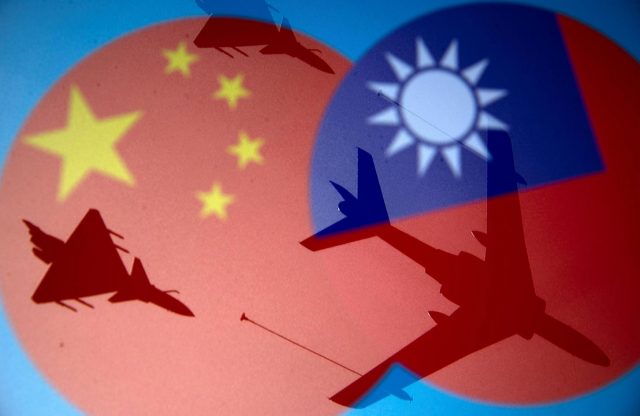
China conducted ‘readiness patrol’ around Taiwan

REUTERS

BEIJING — The Chinese military said on Wednesday it had conducted a combat “readiness patrol” in the seas and airspace around Taiwan in recent days, saying it was a necessary action to respond to “collusion” between Washington and Taipei.

China, which claims democratically governed Taiwan as its own territory, has stepped up its military maneuvers around the island over the past two years or so, as it seeks to pressure Taipei to accept its sovereignty claims.

China has been particularly unhappy with US support for Taiwan.

US President Joseph R. Biden angered China last week by appearing to signal a change in an American policy of “strategic ambiguity” on Taiwan by saying the United States would become involved militarily if China were to attack the island. US officials said there had been no change in policy.

In a statement, the People’s Liberation Army Eastern Theatre Command said the combat “readiness patrol” had happened around Taiwan in recent days and was “a necessary action against US-Taiwan collusion”.

“Recently, the United States has frequently made moves on the Taiwan issue, saying one thing and doing another, instigating support for Taiwan independence forces, which will push Taiwan into a dangerous situation,” the command added.

Taiwan is part of China and Chinese troops continue to strengthen military training and preparations to “thwart” interference from external forces and actions by those who support Taiwan independence, it said.

While the statement did not give an exact date for when the drill happened, Taiwan on Monday reported the largest incursion since January by China’s air force in its air defense zone. The island’s defense ministry said Taiwanese fighters scrambled to warn away 30 aircraft.

Taiwan has complained repeatedly of such missions in its Air Defense Identification Zone, or ADIZ.

No shots have been fired and the Chinese aircraft have not been flying in Taiwan’s air space, but in its ADIZ, a broader area Taiwan monitors and patrols that acts to give it more time to respond to any threats.

Taiwan says only its people have the right to decide the island’s future, rebuffing China’s sovereignty claims.

Taiwan’s government says that while it wants peace, it will defend itself if necessary. — Reuters

Shanghai’s post-lockdown ‘revenge spending’: beauty products, bubble tea, cake

UNSPLASH
UNSPLASH

SHANGHAI — Mother-of-two Yang Zengdong, 40, is ready to take her family for a long-awaited outing to mark Shanghai’s grand re-opening from coronavirus disease 2019 (COVID-19) lockdown on Wednesday.

Her ambitions — head to a mall, see what is open and maybe buy a drink or some small toys for her young daughters — are modest, but even those simple pleasures were impossible during the gruelling two-month lockdown.

Unfortunately for retailers desperate for a quick, “vengeful” return of shoppers of the sort seen in 2020 when China enjoyed a “V-shaped” recovery from its initial battle with COVID-19, the excitement that is palpable on newly bustling city streets is tempered by wariness about the future.

Shanghai’s lockdown may be over, but China is sticking to its zero-COVID elimination strategy, fuelling worry in the city of 25 million that it could all happen again.

“A lot of my friends, people with families and kids, their idea is to buy a bigger fridge, or food — they aren’t interested in buying unnecessary stuff right now,” said Ms. Yang, who works as a teacher.

The focus on necessities echoes e-commerce giant Alibaba Group CEO Daniel Zhang’s remarks last week.

“In all those different tiers of consumers, demand for essentials has gone up and there’s been less price sensitivity. Whereas with respect to non-essential purchases, there has been more price sensitivity,” Mr. Zhang told analysts, adding consumers were also stocking up to prepare for future uncertainty.

Though Shanghai will inevitably see retail bounce-back, it will be coming off a low baseline, with retail spending in April plummeting 48.3% year on year.

Shopping is unlikely to be boosted by stimulus payments to consumers, as seen in other countries. China prefers to target such spending towards infrastructure and businesses, rather than consumers who are prone to saving.

Jason Yu, Greater China managing director of market research firm Kantar Worldpanel, predicts an initial spending recovery at food and beverage outlets suited to pick-up and delivery, with coffee, bubble tea, cakes and other “categories related to pleasure” set to come back strongly.

Beauty is also poised to benefit from a return to public life, Mr. Yu said, adding that the upcoming “618” shopping festival — in which all major Chinese e-commerce platforms and many major brands participate — could provide a sales boost.

“There will be some pent-up demand for skin care and beauty categories, especially if premium brands are marketing themselves more aggressively with discounts,” he said.

LUXURY HUB
As China’s largest and wealthiest city, Shanghai has long been a magnet for luxury retail and is home to 12% of luxury brand stores on the mainland.

The re-opening of high-end mall Plaza 66 last weekend saw lines snaking outside a Hermes store — a heartening sight for luxury brand executives in Paris and Milan banking on a return to form from Chinese consumers.

“Many shops are offering incentives to bring shoppers back, including tripling the points they can earn in their loyalty programs,” said Amrita Banta, managing director of luxury consultancy Agility Research and Strategy.

Still, she isn’t betting on business-as-usual for Shanghai luxury spending.

“I would expect the initial few days of the opening up to see a lot of crowds, but this will also have the effect of keeping other people at home who do not want to risk being in busy areas,” she said.

Teacher Yang said life in Shanghai remains tinged with a sense of risk.

“I’m not afraid of getting the virus, but I am afraid of a positive test result and centralized quarantine,” she said.

“I think for most people, this is a time to enjoy being outside but also to protect yourself and protect your money. This is not the time to spend and be wasteful.” — Reuters

Latest cyberattack in Costa Rica targets hospital system

A broken ethernet cable is seen in front of binary code and words “cyber security” in this illustration taken on March 8, 2022. — REUTERS

SAN JOSE — A cyberattack struck Costa Rica’s hospitals and clinics early Tuesday morning, the Costa Rican Social Security Fund (CCSS) said, the latest in a string of hacks targeting the Central American country in recent weeks.

The cyberattack forced the CCSS to shut down its digital record-keeping system, affecting some 1,200 hospitals and clinics and potentially impacting care for thousands of patients, according to the public health agency.

“It was an exceptionally violent attack, but we have no evidence that a critical database or system was compromised,” said CCSS President Alvaro Ramos in a news conference, adding that 30 of the 1,500 servers owned by the CCSS were affected.

The national health platform is expected to be down for several days, Mr. Ramos said.

Costa Rica reported that it has been recently targeted in dozens of cyberattacks, which have frozen some foreign trade and tax collection operations, prompting President Rodrigo Chaves to declare a national emergency on May 8, the day of his inauguration.

In early May, the US State Department attributed other recent attacks on Costa Rica’s government agencies to the alleged Russian-based ransomware group, Conti. No person or group has taken credit for the recent hit to the healthcare system, Mr. Ramos said.

Officials said the United States, along with the governments of Israel and Spain, have offered assistance to repair damages and to repel future attacks. — Reuters

Crisis-hit Sri Lanka hikes tax rates to maximize revenues

SRI LANKAN military officer lowers the national flag at the flag square in Colombo, Sri Lanka, March 23, 2021. — REUTERS

COLOMBO — Sri Lanka’s cash-strapped government on Tuesday announced a taxation overhaul to boost revenue amid the country’s crippling economic crisis, hiking value added taxes and corporate income tax, and slashing the relief given to individual taxpayers.

Prime Minister Ranil Wickremesinghe, who took office this month and plans to present an interim budget within weeks, said measures were necessary as the current state of government finances was unsustainable.

“The implementation of a strong fiscal consolidation plan is imperative through revenue enhancement as well as expenditure rationalization measures in 2022,” Wickremesinghe’s office said in a statement.

Sri Lanka’s inflation rose to 39.1% in May, its statistics office said on Tuesday — a record level, compared to the previous high of 29.8% set in April.

An increase in Value Added Tax (VAT) to 12% from 8% with immediate effect is among the key tax increases announced on Tuesday, which is expected to boost government revenues by 65 billion Sri Lankan rupees ($180.56 million).

Other measures, including increasing corporate income tax to 30% from 24% from October, will earn an additional 52 billion rupees for the exchequer.

Withholding tax on employment income has been made mandatory and exemptions for individual taxpayers have been reduced, the statement said.

The island nation of 22 million people has been battered by its worst economic crisis since independence from Britain in 1948, with a severe shortage of foreign currency stalling imports of essentials, including food, fuel and medicines.

The roots of the crisis lie in tax cuts enacted by President Gotabaya Rajapaksa in late 2019, which came months before the COVID-19 pandemic that battered the country’s lucrative tourism industry and led to a drop in foreign workers remittances.

The tax cuts caused annual public revenue losses of about 800 billion rupees, the prime minister’s office said in its statement.

The new tax regime and COVID-19’s impact, together with the pandemic relief measures, widened the budget deficit significantly to 12.2% of GDP in 2021 from 9.6% of GDP two years earlier.

In an interview with Reuters this month, Mr. Wickremesinghe — who also holds the finance ministry portfolio — said he would cut expenditures down “to the bone” in the upcoming interim budget and re-route funds into a two-year relief program.

The tax hikes are aimed at putting public revenues back at pre-pandemic levels and focused on fiscal consolidation as the country seeks a loan package from the International Monetary Fund (IMF), said Lakshini Fernando, a macroeconomist at investment firm Asia Securities.

“The tax increases are definitely a very positive first step, especially for IMF talks and debt restructuring,” Ms. Fernando said.

“This was required to take forward discussions and will also help the government in talks with bilateral and multilateral partners to secure more funding,” Ms. Fernando said. — Reuters

Ukraine’s giant seed bank at risk of being lost as war rages

LONDON — In underground vaults near Ukraine’s battlefields, the genetic code for nearly 2,000 crops is in danger of being permanently destroyed.

The risk came into sharp focus earlier this month when a research facility near Ukraine’s national seed bank was damaged, according to Crop Trust, a nonprofit organization set up by the United Nations Food and Agriculture Organization.

The facility and Ukraine’s seed bank are both based in Kharkiv, northeastern Ukraine, which has come under intense bombing from Russia forces.

Reuters could not determine the cause of the damage and Crop Trust said only that the research facility had been hit, but declined to give further detail, citing security reasons.

It was a narrow escape. Only 4% of the seeds in Ukraine’s store, the 10th largest of its kind in the world, has been backed up.

“Seed banks are a kind of life insurance for mankind. They provide the raw materials for breeding new plant varieties resistant to drought, new pests, new diseases, and higher temperatures,” Stefan Schmitz, the executive director of Crop Trust, told Reuters.

“It would be a tragic loss if Ukraine’s seed bank were destroyed.”

The director of the seed bank could not be reached, Ukraine’s academy of science declined to comment and Russia’s defense ministry did not immediately reply to request for comment on the damage.

Researchers rely on the diverse genetic material that seed banks store to breed plants that can withstand climate change or disease.

They have become increasingly vital to ensuring enough food is produced each season to feed 7.9 billion people as the world’s weather becomes more extreme.

At the same time, the war between Russia and Ukraine, the world’s third and fourth largest grain exporters respectively, has added to food price inflation and the danger of food scarcity, with protests breaking out in developing countries that normally benefit from Ukraine’s grain.

SYRIA SAVED BY ARCTIC BACKUP
The war in Syria has provided a lesson in the importance of backing up seeds using the Svalbard Global Seed Vault in Norway, the world’s largest and most important seed backup or duplication facility.

In 2015, the Svalbard vault was able to send replacement samples of wheat, barley and grasses suited to dry regions to researchers in Lebanon after a seed bank near the Syrian city of Aleppo was destroyed.

In total, Svalbard preserves more than a million seed samples in a vault built in an Arctic mountainside.

These include 4% of Ukraine’s 150,000 seeds — representing more than 1,800 crops.

The German-based Crop Trust, which is the only international organization whose sole purpose is to safeguard crop diversity, has made funds available to Ukraine to copy seeds, but security and logistics issues linked to the war and natural cycles mean it is difficult to speed up the process.

Mr. Schmitz estimated that at best, about 10% of Ukraine’s seeds could be backed up within a year because they need to be planted, grown and harvested at the right time before the duplicates can be extracted and sent to Svalbard.

An emergency measure would be to forgo duplication and just ship the collection to Svalbard, but Mr. Schmitz said this might not be feasible in wartime.

The Syrian seeds were from the Fertile Crescent, the region where settled farming is believed to have emerged, and Ukraine also has a central place in agriculture.

“Agriculture in Ukraine has roots back in prehistoric times,” Grethe Helene Evjen, a senior adviser at the Norwegian Ministry of Agriculture and Food, said, adding many of the country’s seeds were unique.

Ms. Evjen said the ministry is ready to help Ukraine duplicate and store all its seeds at Svalbard, but has yet to receive a request from Ukrainian authorities. — Reuters

Prioritizing the Department of Health

BW FILE PHOTO

By July 1, it will be the Marcos II Administration’s responsibility to keep track of COVID-19 and other pandemics that may affect the country. This early, it should already be planning on ways, methods, approaches, and interventions to further improve and future-proof pandemic management locally. But, to date, a new Health secretary is still to be nominated.

Transition between administrations is a crucial period, and the remaining 28 days are barely enough to allow for effective turnover even during normal times. Fact is, despite the present lull, the Philippines is still enduring a public health crisis. The Department of Health (DoH) should have been given top priority in the Cabinet selection process.

At present, COVID is still manageable, although Metro Manila’s COVID positivity rate, reproduction number, and hospital care utilization rate have all been going up in the last few weeks. In Makati City, for instance, active COVID cases have gone up from a low of 13 on May 23 to a count of 35 as of May 31. This is a significant jump — the count almost tripled in over a week.

A DoH weekly bulletin stated that COVID-19 cases nationwide on May 23-29 were up by over 8% from the previous week. Cases totaled 1,317 as of May 30, with 22 cases with Omicron subvariant BA.2.12.1. Despite the uptick, however, Metro Manila remains in the low-risk category, and Alert Level 1 — the lowest level — is retained, for now.

A DoH official last week said it was up to the incoming Marcos administration if it would continue the National Task Force Against COVID-19 (NTF) and the National Vaccination Operations Center (NVOC). This matter would have been resolved already had a Heath Secretary-designate been named ahead, and transition meetings have been initiated.

DoH Undersecretary Myrna Cabotaje was quoted as saying, “We just await kung ano ’yung directions ng susunod na administration. Of course, we will also defer kung sino man ’yung bagong secretary.” She added, “So bahala na po ’yung susunod na administration kung ano po ’yung direksyon, kung magkakaron sila ng interagency, itutuloy ba ’yung parang structure ng NTF o gagawa sila ng panibagong structure.” (“We just await whatever directions come from the next administration.” She added, “So it is up to the next administration what the direction will be, if they will have an interagency, if they would continue the sort of structure of the NTF or if they will make a new structure.”)

And this, to me, is where the problem lies. Up until a new secretary is nominated, nothing will move at the DoH. Everybody will be waiting for direction and personnel changes before anything can get moving again. And this process can take days, to weeks, to months. An early transition would have allowed for the briefing of incoming officials and more planning with the transition team.

Meantime, so as not to be delayed, Cabotaje said DoH was already endorsing to concerned bureaus some of the tasks of the NVOC. The question is, will incoming officials opt to continue with the present administration’s initiatives or change them altogether? There are many ongoing activities related to monitoring, testing, and vaccination.

Add to the problem the emergence of Monkeypox, which is seemingly spreading globally. As far as I know, there are no known testing protocols and vaccines specifically for Monkeypox, and this situation severely limits the effectiveness of border control. Other than symptoms, the pox will have no outward manifestations that will allow for easier identification at the borders of those infected with it.

While it is far-fetched that Monkeypox will become another COVID-19, officials cannot be absolutely certain that it will not spread locally. Effective border control and bio-surveillance thus become more significant. Unlike with COVID, we cannot be just one step ahead of the virus at best. More viruses are sure to emerge, and more pandemics are sure to occur. We need to be two to three steps ahead.

In the case of COVID, we have always been just a step ahead of the next surge. In the near future, COVID mutations will continue to outpace medical advances intended to eliminate the virus. Medical science will continue to play catch-up at least until the end of 2022. We need to continuously study and innovate, as complacency was, is, and will always be the enemy.

Testing, contact tracing, localized lockdowns, physical distancing, and masks may be tried and tested interventions during COVID, but they will not always work in the future, particularly for non-airborne viruses. We should be preparing for future pandemics, after living through a very devastating one in the last two years. We need to review which ad hoc interventions will have to be made permanent, and what interventions may be required in similar events in the future.

More important, we should look into continuity and permanence of time-bound strategies and interventions that actually worked, and then perhaps improve on them. We also need permanent institutions devoted to dealing with pandemics and the like. Otherwise, as government restarts on July 1, so does our pandemic management. We cannot afford this.

The economy is not the priority but public health is. As the world saw in 2020 and 2021, a pandemic can drop humanity to its knees. A major resource required for economic development is human capital. But plagues, pandemics, and diseases all weaken human capital and impact people’s capacity and ability to be productive. Public health issues, depending on their scale, can quickly stunt economic growth and exacerbate poverty.

We are still to recover from the negative impact of COVID on the global economy since 2020. The pandemic is far from over locally and abroad. A new surge is ongoing in other parts of the world. A surge can reoccur here. Meantime, the war in Ukraine is exacerbating issues involving trade. Food and fuel inflation is now slowing down most economies, and making life more difficult for lots of people.

With many goods in short supply, and shortages driving up prices and thus inflation, people are already edgy. The least that the government can do for them is to make sure that another COVID surge — or problems with Monkeypox and other public health concerns — is effectively kept at bay. Early transition over at DoH is critical to ensuring this.


Marvin Tort is a former managing editor of BusinessWorld, and a former chairman of the Philippine Press Council

matort@yahoo.com