Home Blog Page 5935

Pressure mounts on telcos to combat text scams

UNSPLASH

Shared efforts among stakeholders sought

THE country’s major mobile operators, which are under greater pressure to address the worsening text scams, are seeking shared stakeholder efforts.

“At a time of aggressive cybercriminal activity amid growing digitalization, Globe Telecom, Inc. asserts that the public, government and industry players, including telcos, are all victims of these illegal acts,” Globe Chief Information Security Officer Anton Reynaldo M. Bonifacio said in an e-mailed statement on Tuesday.

“It is, thus, a shared fight among all of us to beat our common enemy, which is cybercrime,” he added.

Former Privacy Commissioner Raymund E. Liboro has said that the “privacy panic” should prompt regulators to look into the operations of mobile operators.

“This is very alarming,” he said in an appearance on One News PH’s Agenda program on Monday.

“These personalized messages are targeting individuals and they know these individuals. What is even worrisome is that they are targeting kids,” he added.

Various mobile phone users have reported receiving unsolicited or scam text messages that contain their names.

Globe said it has established “stringent measures” to ensure that customers’ data are protected against any breach.
“The company was able to block 784 million scam and spam messages from January to July this year,” Globe said, adding that it also blocked 610 domains or URLs.

“We work closely with the National Telecommunications Commission and the National Privacy Commission in pursuit of our common goal to crack down on cybercriminals and protect data privacy,” Mr. Bonifacio said.

“GCash also coordinated with law enforcement agencies such as the Philippine National Police–Anti-Cybercrime Group and the National Bureau of Investigation Cybercrime Division on reported scamming incidents, which have led to arrest and prosecution,” he added.

DATA SOLD
The culprits might have used a “popular e-wallet and an online messaging platform to harvest the names of subscribers,” Smart said separately, citing an investigation with the Philippine National Police (PNP) and the National Bureau of Investigation (NBI).

“Our initial investigation showed that criminals might have acquired or bought the data from different establishments. Then, they ran the mobile numbers on GCash and Viber to get the names of the subscribers and use them on their messages,” Christopher M. Paz, chief of the NBI Cybercrime Division, was quoted as saying.

PLDT, Inc. and Smart Communications, Inc. First Vice-President and Chief Information Security Officer Angel T. Redoble said: “To clarify, the infrastructure of GCash or any digital wallet has not been compromised.”

“The criminals simply checked the mobile numbers if they are subscribed to the platform. The scammers seem to have found a way to automate the harvesting of names from different sources. Another possible source also are some mobile loan applications that are designed to extract personal information from smartphones where they have been installed,” he added.

Mr. Redoble also noted that the recent smishing attacks could have been perpetrated by local cyber criminals.

“We continue to work with law enforcement agencies to track down the criminals.”

Smart said it continues to intensify its campaign against the attacks. The company managed to block “more than 11 billion attempts to open links associated with spam messages from January to August of this year.”

Senator Sherwin T. Gatchalian has filed a resolution seeking to investigate the “rampant” personalized text scams. 

“It is alarming that while major telecommunication providers claim to have already blocked a significant number of spam and phishing text messages, the problem continues to hound many telecommunication subscribers,” he said on Monday.

For his part, Senator Emmanuel Joel J. Villanueva said the data leak might not only lessen the trust in telcos, but also “our trust in every company or agency that we give personal data to.”

He has filed Senate Bill 366 or the Anti-Spam bill, which imposes a fine of as much as P100,000 for sending misleading links and collecting personal information without consent.

Hastings Holdings, Inc., a unit of PLDT Beneficial Trust Fund subsidiary MediaQuest Holdings, Inc., has a majority stake in BusinessWorld through the Philippine Star Group, which it controls. — Arjay L. Balinbin and Ashley Erika O. Jose


Chinese solar company keen on boosting presence in PHL

CHINESE company Trina Solar Co., Ltd. said it plans to expand its presence in the Philippines, which is expected to achieve its goal of increasing its solar energy capacity this year.

“We will help generate more electricity by pushing solar in the market,” Liu Zhen, Trina Solar’s regional marketing manager for Asia-Pacific and Middle East told BusinessWorld in a recent interview.

Trina Solar supplies modules for Aboitiz Power Corp.’s 94-megawatt (MW) solar project in Pangasinan. The project is expected to be completed by the fourth quarter of 2022.

“We are supplying around 142,000 Trina Solar’s Vertex DE21 modules for this project,” Todd Li, president of Trina Solar Asia Pacific, said in a statement.

Once completed, the power plant is expected to produce 147 kilowatt-hours  of clean energy yearly, or equivalent to the yearly power consumption of about 60,000 households, Mr. Todd said.

Meanwhile, Lim Cheong Boon, Trina Solar’s head of product and marketing for Asia-Pacific, said that the company sees the solar market industry thriving in the Philippines.

“Electricity from the grid is becoming more expensive… Installing rooftop solar allows companies to meet rising electricity needs while also providing an opportunity to significantly reduce their utility bills and reduce CO2 emissions,” Mr. Todd said further.

Coal-fired power plants are still the main source of power in the Philippines in terms of installed capacity, with 57.5% share at 11,684 megawatts (MW) in 2021. Oil-fired power facilities accounted for 16.1% or 4,417 MW and natural gas with 12.5% or 3,453 MW.

Renewable energy (RE) share in 2021 was at 7,965 MW, with solar accounting for the biggest share in RE.

The Department of Energy is initially targeting to increase RE share to 35% by 2030 and to 50% by 2040. — Ashley Erika O. Jose

Megawide targets more Manila subway contracts

MEGAWIDE Construction Corp. is looking to bid for more segments of the Japan-funded Metro Manila Subway Project, the company’s top official said.

“We are still aiming for one more project, which will be [offered by the government] by next year,” Megawide Chairman, Chief Executive Officer and President Edgar B. Saavedra told reporters at a recent gathering.

He was referring to the contract package that covers the Shaw Boulevard-Bonifacio Global City segment of the 36-kilometer underground railway that will run from Mindanao Avenue in Quezon City to the Ninoy Aquino International Airport Terminal 3 in Pasay.

The package involves building a station and a tunnel line, he added.

“We are considering around one or two [more packages after that],” Mr. Saavedra said.

The company and its joint venture partners from Japan, Tokyu Construction Co., Ltd. and Tobishima Corp., signed in May this year the contract package 104 of the subway project.

The package covers the construction of underground stations in Ortigas North and South as well as the tunnels connecting these two locations.

“The project has a contract value of P13.26 billion and JPY11.23 billion (approximately P4.49 billion), which together will have an aggregate estimated value of P17.75 billion,” the company said in a statement.

Tokyu Construction is engaged in commercial, institutional, and residential buildings as well as civil engineering works for dams, bridges, and transportation systems, while Tobishima is involved in large-scale civil engineering works for hydro-electric power plants, dams, and railroads, with onshore and offshore projects located in Brunei Darussalam, Indonesia, Pakistan, and Myanmar, among others.

Mr. Saavedra said Megawide hopes to work with its Japanese partners on other packages.

Megawide and its joint venture partners Dong Ah and Hyundai Engineering of South Korea also bagged the contract for package 1 of the Malolos Clark Railway Project in 2020.

Megawide and its partner India’s GMR Airports International BV are selling their stakes in the Mactan Cebu International Airport.

“In the medium-term, we are seriously looking at diversifying into other exciting and high-growth infrastructure platforms, where we can leverage our engineering and construction expertise,” Mr. Saavedra said.

“At the end of the day, we believe it is the further value creation, which the transaction unlocks, that makes it very rewarding and exciting, and something to look forward to,” he added. — Arjay L. Balinbin

SEC revokes Unity Premier’s registration

THE Securities and Exchange Commission (SEC) has revoked the registration of Unity Premier Business Group OPC for allegedly running an investment scheme.

The SEC said that Unity Premier, a one-person corporation, had violated Section 44 of the Revised Corporation Code or RCC.

Under the RCC, no corporation is permitted to exercise corporate powers beyond those specified in its articles of incorporation.

The company’s primary purpose upon incorporation was to directly sell beauty products “provided that the corporation shall not solicit, accept or take investments or placements from the  public  [nor]  shall  it  issue  investment contracts.”

An investigation showed, however, that Unity Premier “presents itself as a financial institution that provides its members the opportunity to  both  start  their  own  e-commerce  and  affiliate  platform  and  beauty  products  business.”

“Moreover, it entices the public to invest through guaranteed passive income without selling its business products,” the commission said in its order.

On Aug. 8, a show cause order was issued to Unity Premier and its single stockholder who also acts as its nominee and president.

The commission en banc also issued an order on Aug. 16, directing Unity Premier and its officers to immediately halt engaging  in  the  unauthorized  solicitation of  investment  contracts.

According to the commission, Unity Premier had required its members to purchase various investment packages with a guaranteed profit.

The investors expected a guaranteed return of investment ranging from 3.5% daily passive income to 200%.

“It is important to emphasize that Unity Premier, as a juridical person, is only allowed to exercise powers inherent to its corporate existence as provided in the Revised Corporation Code of the Philippines and those conferred in its Articles of Incorporation,” the commission said.

BusinessWorld tried to reach out to Unity Premier by e-mailing leomae24@yahoo.com, which the SEC identified as the company’s official e-mail address, but received no response. — Justine Irish D. Tabile

Poor air quality increases TB risk among the vulnerable

PHILIPPINE STAR/ MICHAEL VARCAS

By Patricia B. Mirasol, Reporter

AIR POLLUTION has an unequal impact on health, with the most vulnerable people bearing the brunt of its ill effects, according to Greenpeace.  

In a report released on Sept. 1, the independent global campaigning network said that socioeconomic deprivation increases an individual’s vulnerability to air pollution and chronic health conditions. 

Among them is tuberculosis (TB), a continuing problem in the Philippines, which has the third highest TB prevalence rate in the world  and where nearly 10 million people reside in urban slums.  

“We have [made] significant strides in TB control and improving the health of Filipinos nationwide. However, Filipinos would continue to suffer and [be] more susceptible to TB if we allow the continued deterioration of the quality of the air that we breathe,” said Michelle Lang-Alli, director of the Office of Health at USAID Philippines, at a webinar organized by non-profit human development organization FHI 360.   

An estimated 66,000 Filipinos die every year due to poor air quality. The economic cost of ambient air pollution is P4.5 trillion, roughly equivalent to $87 billion, said Climate Change Commissioner Rachel Anne S. Herrera at the same webinar.  

This cost is 23% of the country’s gross domestic product in 2019, she added, citing a November 2021 study by the Institute for Climate and Sustainable Cities and the Center for Research on Energy and Clean Air.  

According to the Greenpeace report, Benguet, Rizal, and Metro Manila have the worst air quality in the Philippines.  

BREAKING DOWN SILOS
There is a need to break down silos among agencies toward the development of green technologies needed for climate-resilient communities, said Ms. Herrera, adding that legislators are looking to update the Clean Air Act of 1999. 

“We recognize that we should look at long-term solutions,” she said in a Sept. 6 e-mail. “Our health sector must be resilient and must be strengthened — so it can protect the most vulnerable against climate change.”  

Integration between climate and health is possible through research and advocacy, said Dr. Rosalind G. Vianzon, head of the healthy settings and environment division of the Health Promotion Bureau of the Department of Health.  

“We will review healthy settings like homes, schools, and workplaces, and adopt a life-cycle approach, so we can understand how climate change affects the health of babies, children and adults,” she said. 

The National Government has earmarked P296.3 billion for the health sector in 2023, a 10.4% increase from its 2022 budget.  

The proposed National Expenditure Program for 2023 will include P453 billion for climate change adaptation and mitigation programs and projects, 56.4% higher than the P289.73 billion for 2022

Bank chiefs optimistic on economy’s prospects

BW FILE PHOTO

PHILIPPINE BANKS see double-digit growth in their assets, loans, deposits, and net income for the next two years as they expect the economy’s recovery to continue, the Bangko Sentral ng Pilipinas (BSP) said on Tuesday.

Results of the BSP’s Banking Sector Outlook Survey (BSOS) for the second semester of 2021 showed banking industry leaders are bullish on their operations as they are optimistic about the country’s economic outlook.

Respondents of the survey are presidents, chief executive officers, country managers of all universal and commercial and thrift banks, and 80 rural and cooperative lenders in the country that accounted for 94.4% of the total assets of the banking industry as of end-December 2021.

They were asked about their growth outlook, risk assessment, and business strategies within a two-year period. The survey is part of the BSP’s surveillance toolkit to help improve the banking system’s resilience.

Excluding the impact of the Russia-Ukraine war and inflation-related developments, banks expect Philippine gross domestic product (GDP) to grow above 6%, the survey results showed.

“More bank respondents (48.3% of respondents vis-à-vis 35.4% in end-December 2020) expect GDP to improve to above 6%. Of these respondents, 25.2% project GDP growth of between 6% and 6.3%, while 23.1% of the survey participants forecast GDP growth by more than 7%,” the BSP said.

“The banks’ level of optimism on the country’s economic prospects is also seen in their overall outlook for the Philippine banking system (PBS) with expectations of double-digit growth in assets, loans, deposits and net income,” it added.

The BSP said in terms of loan quality, a lower number of respondents or around 57.3% from 63.5% in the previous survey estimate a nonperforming loan (NPL) ratio of above 5% in the next two years.

The survey’s results showed universal and commercial banks (U/KBs) expect their NPLs to make up just 2-3% of their total loans from the 3-5% ratio they forecasted in the survey for the first semester of 2021.

However, most thrift banks (TBs) and rural and cooperative banks (RCBs) still expect elevated NPL ratios with only a marginal improvement in the latest survey.

Latest central bank data showed the gross NPL ratio of the Philippine banking industry dropped to 3.6% at end-June from 4.48% a year ago and 3.75% in May.

Meanwhile, 42.7% of respondents project an NPL coverage ratio of 51% to over 100%. The rest of the respondents see a ratio of 50% and below.

Banks also have mixed projections on restructured loans, the BSP said.

About 30.1% of respondents see a restructured loan ratio of more than 5% of their loan portfolio and up to 10% for small banks, while over 23% of respondents see a more conservative restructured loan ratio of between 1% and 2%. 

“This reflects continued efforts of banks to grant financial relief to their borrowers through modifications in their loan payment terms,” the BSP said.

“Philippine banks also intend to maintain risk-based capital, leverage, and liquidity ratios at levels higher than domestic and global standards to promote institutional stability,” it added.

Most leaders in the banking industry said corporate and retail banking will continue to be their main priorities, followed by payments and settlement services, cross-selling, and treasury operations.

Banks also said they expect wholesale and retail trade and consumer loans to recover in the next 12 months, while agriculture loans will take about two years to fully recover.

“Banks disclosed that digitalization of products and services will be prioritized in the next two years, as banks recognize the need to integrate technology in achieving their business objectives,” the BSP said.

According to the BSOS, banks are now looking to develop new capabilities, leverage on client relationships to maintain growth, and expand their market reach digitally or through the offering of new products or services in the new arrangement.

The survey results also showed there was increased organizational awareness among banks about sustainable financing following the BSP’s issuance of environmental, social and governance (ESG)-related guidelines.

“Majority of respondents indicated that they are planning to finance sustainable projects in the next two years,” the BSP said.

TOP RISKS

Meanwhile, banks said the top risks to their operations are asset quality and credit risks.

Respondents are also wary of macroeconomic and operational risks, the survey’s results showed.

To protect their respective banks against internal and external shocks, lenders said they are enhancing risk management systems, strengthening client relationships, and upgrading personnel capabilities, the BSP said.   

“Moving forward, the strength and positive outlook of the banking system is complemented by the prudential and strategic reforms undertaken by the BSP over the years, as well as its swift, time-bound and targeted relief measures, many of which remain in place,” the central bank said.

“The BSP will also adopt prudential standards that will strengthen corporate and risk governance, promote responsible innovation and sustainable finance, and uphold financial integrity and operational resilience in its supervised financial institutions. All these are intended to foster a resilient, dynamic, and inclusive financial system that is supportive of sustainable economic growth,” it added. — K.B. Ta-asan

CTA affirms dismissal of P172-M tax assessment vs. Red Ribbon

CTA.JUDICIARY.GOV.PH

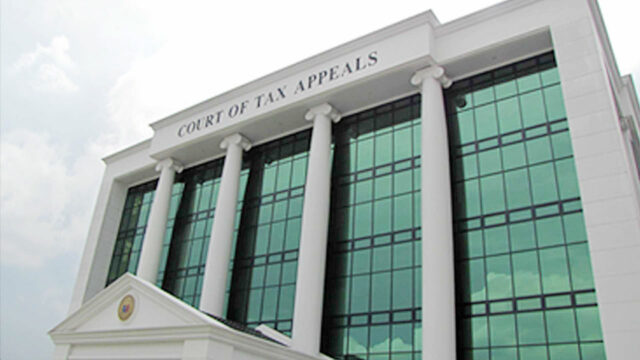
THE Court of Tax Appeals (CTA) has affirmed a 2021 ruling dismissing the P172.23-million 2009 tax assessment against Red Ribbon Bakeshop, Inc.

In a 23-page decision dated Sept. 2 and made public on Sept. 5, the CTA full court ruled that the officers who conducted the audit of the firm’s liabilities were not authorized through a letter of authority (LoA), as required by the revenue code.

“In line with the foregoing jurisprudential pronouncements, there must be a grant of authority in the form of an LoA, before any revenue officer can conduct an examination or assessment,” CTA Associate Justice Lanee S. Cui-David said in the ruling.

“Only the revenue officers actually named under the LoA are authorized to examine the taxpayer.”

An LoA is a document that grants authority to a revenue officer to examine a taxpayer’s books of accounting and tax liabilities.

The commissioner of internal revenue (CIR) argued that the officers were authorized through memoranda of assignment (MoAs) to continue the Red Ribbon’s assessment.

An LoA was initially issued to another set of revenue officers to audit the company, but the officers authorized through MoAs conducted the audit and recommended the issuance of the assessment.

The tribunal pointed out that a separate or amended LoA was not issued by a revenue regional director to authorize the newly assigned officers.

Under the Bureau of Internal Revenue’s (BIR) rules, any reassignment or transfer of cases to another revenue officer requires the issuance of a new LoA.

Red Ribbon was assessed for an alleged P172.2 million deficiency in income tax and value-added tax due to undeclared purchases.

The court said that the practice of reassigning new revenue officers without a separate or amended LoA to continue an audit or investigation of a taxpayer’s books of accounting violates the right to due process.

It added that the MoAs were signed by the chief of the BIR’s Regular Large Taxpayers Audit Division 1, who is not one of the authorized representatives of the CIR to issue an LoA.

“Simply put, none of the aforesaid MoAs can be regarded as a valid LoA within the context of the law and the prevailing jurisprudence,” said the CTA.

“We find it unnecessary to discuss and rule upon the other points in the instant petition.” — John Victor D. Ordoñez

Knowledge platform Docquity raises $44M to grow presence in SEA 

DOCQUITY.COM

DOCQUITY, a medical education and knowledge-sharing platform for doctors, announced that it raised a total of $44 million in its Series C financing round, led by existing investor Japan’s Itochu Corp. with $32 million.  

This latest infusion, announced on Sept. 5, will be used to strengthen Docquity’s presence in Southeast Asia (SEA), including the Philippines and Indonesia, and to expand in North Asia and the Middle East. 

Other investors supporting this round included iGlobe Partners, Alkemi, Global Brain, KDV, and Infocom. Docquity has raised $57.5 million to date.  

Based in Singapore, the healthtech company is building an ecosystem that helps doctors collaborate with colleagues and learn from each other’s real-world experiences, according to Indranil Roychowdhury, Docquity chief executive officer and co-founder. 

“We hope to help bridge the knowledge and learning inequalities many healthcare professionals face, especially those in geographically isolated and disadvantaged areas in an archipelago like the Philippines,” he told BusinessWorld in a Sept. 5 e-mail.  

Seven of 10 Filipino doctors across multiple medical specialties are already part of the more than 300,000-strong community, according to a statement. Verified members are able to access free, aggregated content that is downloadable and accessible offline.   

New initiatives include cohort-based learning for doctors in partnership with universities and senior medical practitioners; a doctor-owned virtual clinic; and data analytics to gain a better understanding of what doctors need.  

The company has partnered with more than 250 medical associations from more than six countries to develop the professional courses within its health tech platform, all of which can go towards fulfilling the compulsory continuing medical education credits of its doctor-members.   

“In the Philippines, we partnered with leading medical associations for modules that are aligned with the accreditation requirements of the country,” Mr. Roychowdhury said. “We put these programs directly on the doctors’ phones, so they can access courses and learn anytime, anywhere.”  

When the pandemic hit in 2020, Docquity was one of the first companies to bring in online lectures and symposia, he added. The platform conducts close to 500 lectures every month. — Patricia B. Mirasol

Treasury rejects all tenders for reissued 3.5-year bonds

BW FILE PHOTO
THE GOVERNMENT rejected all bids for its offer of reissued 3.5-year bonds as investors wanted higher yields. — BW FILE PHOTO

THE GOVERNMENT rejected all bids for reissued 3.5-year Treasury bonds (T-bonds) it offered on Tuesday as the market asked for higher yields amid expectations of more rate hikes here and abroad.

The Bureau of the Treasury (BTr) did not accept any tenders for the reissued 3.5-year securities that have a remaining life of three years and five months.

Total bids for the tenor reached P40.732 billion, lower than P106.32 billion when the bond series was first offered on Aug. 2. At that auction, the government made a full award of its P35-billion offer of fresh papers, even awarding another P10 billion via a tap facility offer, as the strong demand seen caused yields to come in below secondary market levels.

Had the Treasury fully awarded the bonds at its Tuesday auction, the tenor’s average rate would have jumped by 43.9 basis points (bps) to 5.592% from the 5.153% average quoted for the bond at the Aug. 2 offer and by 34.2 bps from its 5.25% coupon.

This would also be 13.67 bps above the 5.4553% quoted for the four-year bond at the secondary market before Tuesday’s auction, based on PHP Bloomberg Valuation Reference Rates data provided by the BTr.

National Treasurer Rosalia V. de Leon said in a Viber message to reporters that while demand for the T-bond offer on Tuesday was “still good,” investors wanted an “excessive buffer” as they anticipate the US Federal Reserve and the Bangko Sentral ng Pilipinas (BSP) to continue raising their respective benchmark interest rates.

Analysts said the market wanted higher rates as Philippine inflation remains elevated, which could prompt the BSP to hike borrowing costs further.

“It looks like the market has no appetite for this bond given the CPI (consumer price index) print,” a trader said.

The trader said the BTr can also afford to reject high bids following its recent offering of retail Treasury bonds. The Treasury raised P420.448 billion from the 5.5-year retail bonds it offered from Aug. 23 to Sept. 2. The RTBs carry a coupon of 5.75% and will be issued on Sept. 7.

Rizal Commercial Banking Corp. Chief Economist Michael L. Ricafort said T-bond yields climbed amid still high inflation and a weaker peso.

Fed Chair Jerome H. Powell said at the Jackson Hole symposium on Aug. 26 that the US central bank will hike interest rates as needed and keep them high for some time to bring inflation back within target. The US central bank has raised rates by 225 bps so far since March.

BSP Governor Felipe M. Medalla last week said the Fed’s next policy move will be a “big factor” to consider for the Monetary Board at their Sept. 22 meeting as the US central bank’s review will happen on Sept. 20-21.

The BSP has increased borrowing costs by 175 bps since May as it seeks to rein in rising prices.

Mr. Medalla said the central bank is concerned about the impact of the peso’s continued depreciation against the dollar on inflation. The US central bank chief’s hawkish Jackson Hole speech caused the dollar to close at multi-decade highs, causing other currencies to weaken, including the Philippine peso.

Headline inflation slowed to 6.3% in August from the near four-year high of 6.4% seen in July, the Philippine Statistics Authority reported on Tuesday.

While the result was within the BSP’s 5.9-6.7% forecast for the month, it was the fifth consecutive month inflation went beyond the central bank’s 2-4% target. It was also faster than the 4.4% headline print logged in August 2021.

For the first eight months, inflation averaged 4.9%, faster than 4% in the same period a year prior but below the BSP’s 5.4% forecast for 2022.

On Monday, the peso closed at a new record low of P56.999 per dollar after hitting P57 intraday. As of Sept. 5, the local unit has depreciated by 11.76% or P5.999 from its P51 close on Dec. 31, 2021.

The BTr wants to raise P200 billion from the domestic market this month, or P60 billion through Treasury bills and P140 billion via T-bonds.

The government borrows from local and external sources to help fund a budget deficit capped at 7.6% of gross domestic product this year. — D.G.C. Robles

A retelling of stories of Filipinas and histories of the motherland

JUAN’s Spolarium and Anna’s Lupang Tigang by Imelda Cajipe Endaya

THROUGHOUT her career, artist Imelda Cajipe Endaya focused on works about women and the history and socio-political climate of a nation. These themes can be seen in a new retrospective, “Imelda Cajipe Endaya: Pagtutol at Pag-asa” (Refusal and Hope), which showcases six decades of her work.

Ms. Cajipe Endaya (b. Manila, 1949) is an artist whose work is distinguished by artistic research and conversation across forms and materials. She has also gained recognition in the Asia-Pacific region for a singular Filipina visual language that is focused on the possibilities of feminist art. She is the founding president of Kababaihan sa Sining at Bagong Sibol na Kamalayan (Kasibulan), a feminist arts organization that has been active since 1987, and is also the founder of Pananaw, the first publication of its kind on Philippine art. Ms. Endaya is also a widely published writer, curator, and cultural worker.

Initially programmed for 2020 but halted with the arrival of COVID-19 that year, the exhibit at the Cultural Center of the Philippines’ (CCP) Main Gallery was two years in the making. It brings together over 200 artworks and archival materials of the artist’s extensive practice in printmaking, painting, collage, and installation art. With themes on women, history, and commitment to the truth, the exhibition adopts an attitude of active remembering.

To describe her art, Ms. Endaya uses the phrase “an art of refusal” — which she adopted from a text by American expatriate activist and professor Dolores Feria’s essay, “On the Literature of Refusal.”

“This sense of non-compliance is modulated today into one that remains resolute as women, and those with whom they link hands sustain an unwillingness to simply concede. It is refusal to relinquish individual including bodily and shared autonomies,” the exhibition’s description states.

The exhibit is curated by Lara Acuin and Con Cabrera.

FOCUSING ON THE FILIPINA
The exhibition begins at CCP’s third floor hallways where Ms. Endaya’s early works from the 1960s and 1970s are displayed. On the hallway facing the gallery are vermillion-accented paintings which, through windows painted in each canvas, represent woman as domesticated and only a witness to events. The prints shown beside the Main Gallery’s entrance are abstracts and images of women at different periods in history.

Ms. Endaya’s paintings also show her unique process of collaging — assembling sawali weave textures, embroidery, and painting.

“[Ms. Endaya] decenters herself from the limelight and in her art making. It’s not a particular voice or stand, but more of trying to depict the condition without drawing attention to her own message,” exhibit co-curator Lara Acuin said of the artist’s work during a walk-through of the exhibit on Aug. 31.

Upon entrance to the main gallery, the first works seen are the artist’s self-portraits done during the coronavirus pandemic.

The biggest work is a recreation of an installation from an exhibit in 1998 at the Metropolitan Museum. The installation, titled Kapatiran ng mga Lakambining may Bahay, shows an altar with the names of women in history who are often overlooked.

“I created an installation of prison windows, knotted and joined with long sheets of textile and made them like blankets people would normally tie together to escape and rescue others when in incarceration, or when a house is on fire. Yet I have arranged them like an altar as a tribute to how the Lakambini turns struggles into triumphs,” Ms. Endaya described of the installation.

The exhibit also showcased Ms. Endaya’s artworks dedicated to the Filipina migrant laborer.

The Wife is a D.H. (Domestic Helper) from 1995 shows parts of the original assemblage, with items such as a figure of the Virgin Mary, an electric iron, and a mop in an open suitcase.

TEXT, WAR, AND FEAR
Aside from art, scattered on the exhibit’s walls are text from the artists lectures and essays.

“A socially committed artist must be encouraged to portray the human condition with an open mind and a free spirit. And the only proper doctrines are truth and artistic integrity,” says one of the texts.

Ms. Endaya also tackles themes of war and imperialism, as seen in a portrait of a man during the Bataan Death March, old posters she made for a campaign in 1984, paintings of important public figures during the first and second EDSA Revolutions, and prints and collages based on the conflict in Kosovo which happened while she was finishing her artist residency in Switzerland in 1999.

During the exhibit launch on Sept. 3, which was livestreamed on social media, the 72-year-old artist recalled words from the founder and vice-president of the women’s chapter of the Katipunan, Gregoria de Jesus: “Matakot sa kasaysayan. Walang lihim na di mabubunyag. (Fear history for no secret goes uncovered).”

“…Iyun ang gusto kong maging tema nitong eksibisyon (That is the theme I want for this exhibition),” Ms. Endaya said.

LAST EXHIBIT
The retrospective is the final major exhibit to be held at the  CCP Main Gallery before the temporary closure of the cultural center’s main building. The building will undergo major renovations starting next January until December 2024.

“We are not going to stop our programs and projects. We will be moving physically somewhere else within the complex and maybe elsewhere beyond the complex,” said Ariel Yonzon, CCP Associate Artistic Director of the Production and Exhibition Department, at the exhibition preview on Aug. 31.

The CCP will be hosting monthly public programs until November, which will be held onsite and streamed online. An off-site exhibition,Imelda Cajipe Endaya: Windows To An Archive,” will also be presented at the Ateneo Library of Women’s Writings from Sept. 9 to Dec. 2, in partnership with the Ateneo Art Gallery.

For more information, visit https://pagtutolatpagasa.carrd.co/. For events related to the exhibition, visit https://www.facebook.com/ccpvamd/. — Michelle Anne P. Soliman

Local research seen as basis for pandemic prevention measures

UNSPLASH

VIRUS-RELATED research conducted in the country can serve as a basis for formulating preventive measures for future pandemics, said a member of the Balik Scientist program, which was established to counterbalance “brain drain.” 

“The pieces of new knowledge generated through careful scientific studies done by our own Philippine scientists could serve as the needed evidence for a sound policy that is focused only on our country,” said Thaddeus M. Carvajal, a specialist in vector biology whose research helps curb the incidence of dengue.  

Dengue, a disease spread by mosquitoes, is common in more than 100 countries around the world, including the Philippines. A person can be infected with a dengue virus as many as four times in his or her lifetime. 

Part of Mr. Carvajal’s work is determining the best approach to controlling Philippine mosquitoes. “There is still more to investigate in this area,” he said.  

Meanwhile, Dr. Homer D. Pantua, a 2021 Balik Scientist and infectious disease drug discovery expert, is developing diagnostic tools for the African Swine Fever virus and training researchers at the Virology and Vaccine Institute of the Philippines (VIP).  

These activities are “essential to prepare our country’s response to the current and future pandemics … and will guide us on generating potential solutions and science-based policies,” he said in a Sept. 2 e-mail.  

“Our hope is for the government to continue supporting the establishment of the VIP, which will help our country in its goal of self-reliance and sufficiency,” he added.  

Through the Balik Scientist Program, Filipino scientists, technologists, and experts are encouraged to return to the country and share their expertise in order to promote scientific, agro-industrial, and economic development, including the development of our human capital in science, technology, and innovation.  

While staying for good in the Philippines is highly encouraged, it is not required. Those who do decide to relocate, however, are given benefits such as housing allowance, health insurance for the Balik Scientist and his/her family, assistance in securing job opportunities for the spouse, and assistance in admission to education for dependents.   

As of this August, 25 individuals have been awarded as Balik Scientists for 2022. The country has had a total of 610 Balik Scientists since 1975, nearly three-quarters (or 74%) of whom are from North America. — Patricia B. Mirasol 

Razon bets on renewables in biggest 2022 Philippine IPO

PHILIPPINE billionaire Enrique K. Razon, Jr. made his fortune operating ports and running casinos. His next target is the country’s nascent renewables industry.

The nation’s second-richest man is focusing on solar farms, battery facilities and water projects in an effort to attract international investors. His green push through Prime Infrastructure Holdings, Inc., which will go public later this year, is aligned with broader plans by the government to increase the use of renewable energy to 50% by 2040.

The need for more energy of any sort is urgent in the Philippines, where growth in power demand has outpaced new capacity. The Southeast Asian nation, which imports almost all of its oil requirements, is looking to spend more on fuel subsidies as a cushion against higher prices. Developing domestic renewable sources will also help the nation reduce dependence on oil and coal.

Prime Infra’s projects will be the first of their kind for Philippines’ renewable market, giving investors an early entry point.

The country is “probably not where we should be in terms of power supply demand. We’re probably not where we should be in terms of water availability and sanitation, or probably not where we should be in terms of waste management and climate. If you take all that into consideration as an investor, it’s perfectly logical to invest into the Philippines and Prime Infra,” Chief Executive Officer Guillaume Lucci said in an interview.

It’s building a solar-and-battery facility that will displace annual consumption of about 1.4 million tons of coal, equivalent to nearly 6% of the nation’s annual needs. Also in the works are a 1,400-megawatt hydropower plant at Laguna de Bay just south of Manila, as well as two water projects that will provide 518 million liters of water to areas around the capital by 2025.

Getting these projects off the ground will depend on the firm’s planned P25.6-billion ($449.2 million) initial public offering (IPO) in November, which is poised to be the biggest IPO this year and among the largest ever in the Philippines. Only eight firms have listed in the nation this year, raising a total of P17.2 billion. That’s set to be the worst showing since 2018 amid a global market slump.

“It will be a major play on Philippine renewable energy, a narrative that’s still in the early stages of growth and a sector the government wants developed,” said Carlos Temporal, analyst at AP Securities. He said the IPO “could attract strong demand because of the industry it’s in and the company’s owner.”

Razon, who is also the chairman of International Container Terminal Services, Inc., which operates more than 30 port terminals in 20 countries, is estimated to be worth $4.8 billion, according to the Bloomberg Billionaires Index.

The Philippines is seeking to increase renewables’ share to the overall energy mix to 50% by 2040 from just a fifth in 2019. President Ferdinand R. Marcos, Jr., in a speech in July, said solar, wind, hydropower and geothermal energy sources are key to achieving his climate agenda.

Still, there are risk to Prime Infra’s renewable ambitions. Supply chain snarls are raising the price of solar panels for the first time in a decade, and strong competition as Europe and the US boost climate ambitions could mean prices stay higher than expected for the next few years. That would raise the cost of Razon’s big solar-battery project and potentially eat into its profitability.

At the moment, Prime Infra gets 80% of its revenue from Manila Water Co., Inc., which supplies half of the Philippine capital. In four to five years, revenue from electricity will account for 40% from below 20% currently, Mr. Lucci said.

While its first project was a 29-megawatt gas-fired power plant in Iraq, Razon’s infrastructure company plans to grow its power, water and waste-management portfolio in the Philippines before expanding overseas, the CEO said. — Bloomberg

ADVERTISEMENT
ADVERTISEMENT