Home Blog Page 5905

A reliable healthcare partner for SMEs

For most companies, especially SMEs, reliability is an important factor in choosing a partner. Particularly, in providing the employees’ healthcare benefit program, it is crucial to find a provider that can be relied on even in the most challenging situations.

Cocolife, the biggest Filipino-owned stock life insurance company and the first ISO-certified Filipino insurance company, has shown its reliability as a partner of businesses for their healthcare needs, especially during a crisis like the coronavirus pandemic.

Cocolife leads through the current crisis with a dedicated mission to serve. The efforts made by management during the COVID-19 pandemic, under the leadership of Cocolife’s President and CEO, Atty. Martin Loon, have propelled the business to become among the top companies in the insurance industry.

As shared by Franz Joie D. Araque, Executive Vice President and Chief of Healthcare, Cocolife was among the very first insurance providers who responded to the pandemic by explicitly defining its coverage for COVID-19 and related cases.

“Despite being part of the policy exclusions, the company took the initiative to cover these cases for humanitarian reasons, thus reassuring our partners and reaffirming our commitment,” Mr. Araque said.
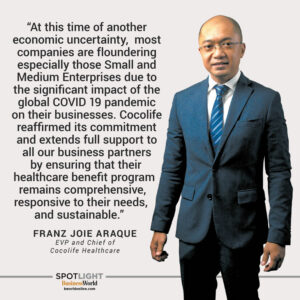
“At this time of another economic uncertainty and most companies floundering, especially those small and medium enterprises, due to the significant impact of the pandemic on their businesses, Cocolife extended full support to all our business partners in making sure that their healthcare benefit program will remain comprehensive, responsive to their needs, and sustainable,” Mr. Araque continued.

The head of Cocolife Healthcare also shared that they have beefed up their offsite capabilities and communication technologies during the pandemic. This has allowed the healthcare provider’s Medical Services and Helpline departments to assist members with all their healthcare needs 24/7 nationwide.

“We made sure that our Customer Care team is available and strategically deployed not only in Metro Manila facilities but also in the key cities nationwide,” Mr. Araque added.

To further provide quality service that its partners can depend on, Cocolife Healthcare has instituted measures and procedures to ensure that all its members receive prompt, suitable, and efficient medical attention from the company’s affiliated medical providers.

As it prioritizes providing personalized customer care, Cocolife Healthcare ensures it adequately complies with the set Service Level Agreements in order to improve customer satisfaction and loyalty.

“In ensuring access to healthcare services, Cocolife is continuously growing its network of affiliated providers. To date, we have more than 700 affiliated hospitals, more than 1,200 clinics nationwide including mall-based clinics, more than 50,000 specialized doctors, and more than 1,500 dental clinics,” Mr. Araque added.

Coupling the ease of availing services from Cocolife Healthcare are its products that are specifically intended to meet what employers look for in a healthcare program. “Cocolife offers highly customized program designs fitted to the needs and requirements of our partners,” Mr. Araque said.

Moreover, as Cocolife has worked towards digitalizing its business in the past two years, Cocolife Healthcare looks forward to serving its partners better with the launch of the Cocolife mobile app, which will have very useful self-help tools like the virtual card and provider locator, as well as the expansion of its telemedicine services.

Learn more about Cocolife Healthcare’s line of products by visiting cocolife.com/products/healthcare/ or by calling (02) 8396-9000/(02) 8812-9090 or emailing helpline@cocolife.com.


Spotlight is BusinessWorld’s sponsored section that allows advertisers to amplify their brand and connect with BusinessWorld’s audience by enabling them to publish their stories directly on the BusinessWorld Web site. For more information, send an email to online@bworldonline.com.

Join us on Viber to get more updates from BusinessWorld: https://bit.ly/3hv6bLA.

Heightened interest in cryptocurrencies, globally and locally

After more than 10 years since bitcoins were first transacted, the cryptocurrency market has been growing both globally, with Philippines actually considered one of the world’s fastest adopters of cryptocurrency.

As of 2021, Singapore-based cryptocurrency payments company Triple A estimated global crypto ownership rates at an average of 3.9%, with over 300 million crypto users worldwide, plus over 18,000 businesses already accepting cryptocurrency payments. Among continents, Asia gets the biggest share with 160 million, followed by Europe with 38 million and Africa with 32 million.

Year 2021 has even been considered a defining year for cryptocurrency, with all-time highs for the world’s top two cryptocurrencies by market value and heightened popularity of non-fungible tokens (NFTs).

The first quarter of 2021 witnessed bitcoin, the first and top cryptocurrency, hitting $1 trillion in market value, according to digital currency information platform Coindesk. Bitcoin reached its record high of $67,016.5 in October 2021. Ether, meanwhile, peaked its price to as high as $4,643 in November 2021. As of the same month, cryptocurrency data aggregator Coin Gecko estimates the cryptocurrency market’s worth at over $3 trillion.

The uptick in bitcoin’s market value, CNBC.com reported in February that year, has been fueled in part by increased adoption of bitcoin by companies like automotive and clean energy company Tesla, which announced a $1.5 billion investment in bitcoin under its changed policy as well as its acceptance of the currency as payment for cars.

The previous year also witnessed the increased attention over NFTs, or digital assets representing real-world objects like art, music, in-game items and videos which are bought and sold online, frequently with cryptocurrency. One notable proof of this hype was when Christie’s was the first auction house to sell a fully digital, NFT-based artwork. The artwork, a digital collage, was sold for over $69.3 million, which is considered record-breaking for a sale of an NFT.

Alongside these developments, cryptocurrency is gaining more interest in the Philippines. Triple A estimates that over 4.3 million people, or 4.0% of Philippines’ total population, currently own cryptocurrency.

As BusinessWorld reported last December, the Bangko Sentral ng Pilipinas (BSP) recorded that cryptocurrency transactions in the Philippines rose 362% as of the first half of 2021. According to BSP Governor Benjamin E. Diokno, these transactions were worth P105.93 billion in June that year, which is up 71% over the same period.

This rise follows a five-fold increase in the value of transactions processed by virtual currency exchanges (VCEs) to P76 billion in end-September 2020 from P14.9 billion in end-September 2019. The volume of transaction, meanwhile, went up by nearly 36% to 7.2 million from 5.3 million in 2019.

The country has ranked well in cryptocurrency adoption indices. In the Cryptocurrency Adoption Index of Australian global fintech platform Finder, the Philippines currently ranks 10th out of 27 countries. The country’s crypto ownership rate is at 16.6%, which is higher than the global average of 14.6%.

Moreover, the Philippines is also seen as a top adopter and owner of NFTs, largely attributable to play-to-earn (P2E) NFT games like Axie Infinity. Another survey by Finder showed that the country ranked first in NFT ownership out of 20 countries, with 32% of Filipino internet users saying that they own NFTs. In the platform’s NFT Gaming Adoption Report, meanwhile, the Philippines ranks the 4th highest out of 26 countries, with one in four Filipinos having played P2E NFT games.

Meanwhile, in the Global Crypto Adoption Index by blockchain data analytics firm Chainalysis, the Philippines ranked 15th out of 157 countries. On a scale of 0 to 1, with a number closer to 1 indicating a higher rank and higher adoption, the country scored 0.16.

Furthermore, the country’s cryptocurrency space has been expanding with the active participation of several local financial institutions and fintech companies.

As early as 2019, for instance, UnionBank has done its share when it set up the country’s first cryptocurrency automated teller machine that enables users to exchange digital units for cash. More recently, the Aboitiz-led lender has partnered with digital asset custodian Hex Trust to pilot its digital asset custody service. The pilot is set to run first as an internal service for UnionBank employees to prepare the bank to launch a fully commercialized service for customers.

Digital bank Paymaya Philippines, Inc., which recently relaunched its mobile app as Maya, has rolled out a cryptocurrency feature in its app which allows its users to buy and trade digital currencies, and so help make cryptocurrencies more accessible to the public.

GCash is also moving into the cryptocurrency space as the mobile wallet has allowed its users to buy crypto from their GCash wallets across VCEs such as Binance, Philippine Digital Asset Exchange (PDAX), and Paxful.

Last year, PDAX added seven new cryptocurrencies which for the first time are offered on a local exchange and available to trade directly with the Philippine peso. Then, earlier in February, the exchange added five more coins to its list, totaling the currencies available on its mobile app to 19.

Another interesting development within the local cryptocurrency space is the possibility of the Philippine Stock Exhange (PSE) to host crypto trading. In July last year, PSE President Ramon S. Monzon said that since crypto is an asset class that cannot be ignored, a structured trading of crypto in the country should be hosted by the local bourse so that it can engage in investor education and protection.

“We’re waiting for the rules from the Securities and Exchange Commission on how crypto or digital asset trading will be governed,” Mr. Monzon, was quoted as saying in a BusinessWorld report. — Adrian Paul B. Conoza

The value of healthcare and health insurance for SMEs

By Chelsey Keith P. Ignacio, Special Features Writer

Health insurance in the Philippines — whether through the government-run Philippine Health Insurance Corp. (PhilHealth), Health Maintenance Organizations (HMO), or private health insurance providers — exist to financially secure and support Filipino workers to get access to quality healthcare.

The coronavirus disease 2019 (COVID-19) pandemic has not only affected the physical health of employees but also their mental well-being. Hence, in this time under the global pandemic, the value of healthcare access and health insurance becomes more apparent.

Many companies are able to provide health insurance to their employees as part of their healthcare benefits. Health insurance could demand additional costs for companies and employees, as premiums are partly covered by the employer but are also often deducted from the salary of an employee. This makes it seem difficult to be offered by some small businesses.

Franz Joie Araque, executive vice-president and chief of Cocolife Healthcare, has also pointed out that finances for healthcare programs could be a challenge for small businesses.

FRANZ JOIE ARAQUE, EVP and chief of Cocolife Healthcare

“Healthcare expenditures were cited as one of the most expensive benefits that employers are providing to their employees. Budgetary constraints brought about by the pandemic posed challenges for most companies more so with SMEs (small and medium-sized enterprises) in allocating funds for their healthcare program,” Mr. Araque told BusinessWorld.

The COVID-19 crisis has evidently impacted MSMEs. Due to temporary business closures, there were MSMEs that recorded no sales and revenues in March 2020, the first month of lockdown, according to a rapid survey of MSMEs in the country conducted from the end of March to mid-April in 2020 by the Asian Development Bank (ADB). Meanwhile, some of those that continued operating during the lockdown saw a drop in sales and revenue. And even though the country’s economy has moved to the recovery stage six months after that March lockdown, ADB noted that MSMEs remained to face a sharp drop in demand and revenue.

MSMEs are considered as the backbone of the Philippine economy, as they accounted for 99.51% of the total 957,620 business enterprises and 62.66% of the total employment in the country, according to data presented by the Department of Trade and Industry (DTI) from the Philippine Statistics Authority (PSA). Therefore, protecting the health of those in the MSME sector is significant to maintain and boost the economy.

Fortunately, there are health insurance products offered in the Philippines that are specially made or customizable enough to cater to small businesses. So what can health insurance really bring to MSMEs?

The cost of several healthcare services can be quite expensive. Hence, the foremost purpose of health insurance is to help a person avoid going broke from dealing with healthcare matters. While getting health insurance might not give a person a large amount of money to spend on one’s health all the time, it could at least help them pay for different medical services they would need.

But before going through the business advantage of offering health insurance, what are some of the actual benefits or coverage that one can get from PhilHealth, HMOs, and private health insurance?

PhilHealth provides inpatient benefits, as long as the healthcare institution where one is admitted is a partner of PhilHealth. It also provides outpatient benefits, among which are for day surgery, radiotherapy, and hemodialysis. PhilHealth also provides Z benefits and Sustainable Goals Development-related benefits listed on its website.

HMOs, meanwhile, also cover inpatient or outpatient care services, basic surgeries, and other ancillary services like laboratory testing and medication. An HMO offers access to healthcare services to its subscribers through its network of healthcare providers.

While an individual is often the one who voluntarily buys private health insurance, there are also some companies that offer it to their employees as well. Cocolife’s Group Life, Accident and Health Insurance Plan, for instance, has a customizable and flexible coverage that helps provide access to services such as inpatient and outpatient care, preventive care, emergency services, and dental coverage, among others.

Some healthcare programs specifically made for SMEs are available even for those with a team as small as three or five employees.

Much of the business benefits that SMEs can get by providing health insurance deal with their employees.

Christopher Tan, VP – head of Sales and Marketing Department, Cocolife Healthcare

For Christopher Tan, vice-president and head of the Sales and Marketing Department of Cocolife Healthcare, among the advantages for SMEs through offering health insurance is better recruitment and retention rate.

“Increasingly, employees are perceiving healthcare insurance as a major consideration in either joining a company or staying with the company. Healthcare plans are considered as a security blanket, especially at this time of the pandemic,” Mr. Tan explained further.

He added that health insurance could benefit SMEs in terms of providing peace of mind for employees, promoting employee satisfaction and loyalty, and protecting them from potential financial losses due to unfortunate incidents requiring medical care and hospitalization.

Furthermore, Mr. Tan believes that SMEs offering health insurance could see improvement in employee morale and productivity.

“It should be a priority to ensure that employees are physically and mentally healthy so that they can be productive. A happy and healthy employee is a productive and fulfilled employee,” he added.

Mr. Araque and Mr. Tan assured companies that health insurance providers would help them by getting health insurance that could fit their business and needs.

“Companies have high expectations when getting quality health insurance. They normally prefer to work with an insurer that can provide the most comprehensive benefits and is capable of addressing all their employees’ health concerns at the most efficient cost. Most companies are looking for value for money,” shared Mr. Tan.

As the cliché goes, “You cannot put a price tag on your health.” “With this in mind, our intent is to assist SMEs by designing tailor-fitted programs based on industry and nature of work, capabilities and focusing on matters that can develop long-term customer loyalty,” he added.

Mr. Araque, meanwhile, told SMEs that in choosing which is the best health insurance for them, they should look for financial stability, a wide network of providers, as well as flexibility, and accessibility.

“Cocolife will assist and collaborate with companies on how we can design and provide a healthcare benefit program that is sustainable and effective, meeting the company’s requirements and capabilities,” he also assured.

Cocolife Healthcare is one of the preferred healthcare providers in the country. It has an access to over a thousand clinics and 700 hospitals, and more than 50,000 doctors and institutions. Cocolife is also a leading provider of group insurance.

Creating the right employee health plan for small businesses

As part of the recovery measures following a global health crisis, the economy continues to stir a hyper-competitive work environment where the workforce has become a critical asset to every business and the workplace constitutes a fundamental part of employees’ lives.

To better manage the cost of risks and thrive amidst pandemic-brought business implications, companies are considering employee premiums via optimizing health insurance arrangements.

The 2021 Benefits Trends Survey of Willis Towers Watson (WTW), a multinational risk management firm, revealed that 76% or seven out of 10 employers in the Philippines plan to differentiate and customize their benefit programs for employees over the next two years to attract top talent.

However, in the case of small businesses with limited operating budget, thriving in a liquid market highly depends on talent acquisition and retention.

As shown at the 2021 Small Business Trends survey spearheaded by Guidant and the Small Business Trends Alliance (SBTA), a group of companies supporting small businesses with data trends and insights, 19% of small business owners cited challenges in employee recruitment and retention.

The findings suggest that to make employees willingly stay in the company is to make sure that aside from salary, the health benefits are competitive within the industry for this evokes a sense of security in the workplace over the larger competition.

Health insurance for small business owners provides affordable access to medical assistance for employees. Typically, this is in the form of group policies which help all workers obtain tailored-fit health assistance for lower rates yet better coverage.

In choosing health insurance policies, experts encourage small business owners to consider the following factors to adhere on the allocated budget while ensuring that employees can extract the maximum benefits out of the plan.

Workforce feedback

In most companies, no matter how big or small, top-level managers in human resources and finance departments make major decisions, whereas the lower level in the hierarchy is not involved in such matters.

However, according to WTW, enhanced communication between employees and employers is pertinent to help both parties in understanding the cost and value of the insurance programs before selecting the group policy as a whole. In addition, by keeping this process transparent, employees will feel more valued.

Employee as co-owner of the policy

Experts noted that shouldering the entire cost of employee benefits is one of the expensive errors of companies. For small business owners who want to provide a comprehensive group policy but the premiums are way beyond the budget, making the employees co-owner of the policy is an option, according to SBTA.

At a nominal premium every month to be deducted from their salary, employees can enjoy premium benefits and better insurance coverage.

Insured on Day 1

Industry experts observed that many small business owners activate the employee health insurance plan after six to 12 months of on-boarding. While the absence of health insurance coverage to new employees save money for a short period of time, it will severely impact the chances of fostering great employee relationships in the long run.

They also found that by offering a competitive benefits package to attract and retain the best talents, small business can run smoothly to increase its growth rate instead of having to replace employees frequently which tends to be more costly than compensating the team with medical coverage.

Determine the cost

Running a small business entails similar challenges that large companies also have; from increasing sales and hiring maintenance staff, to innovating the brand — the only difference is the operating budget. For small businesses to offer group health insurance amidst the rising inflation and medical costs, experts advise small business owners to check their options and stay within budget.

According to them, the cost for group coverage depends on the demographics of employees. For instance, younger employees may not usually need to go to the doctor as often, while older employees, those with preexisting conditions, may need more coverage.

Look and communicate the plan

Aside from taking a careful look at what plans offer in deductibles and coverage costs, risk management firms reiterated to consider covering the employees’ dependents in their health insurance, if possible. They also recommend health insurance with a large network of hospitals since most small businesses run virtually today with employees residing in different areas locally and abroad.

As navigating the vast array of health benefits can be crucial for owners, creating an initial plan and communicating it to an insurance provider that offers competitive rates, flexible coverage options, access to a strong network of medical providers and availability will ease the challenge of finding the right policy for employees of small businesses. — Allyana A. Almonte

Exploring virtual currency in the Philippines

It has been made clear by the Bangko Sentral ng Pilipinas (BSP) multiple times in the past that the future of the Philippine economy will be digital. The central bank has committed to a target of digitizing at least 50% of all retail payments by 2023, and the country is close to meeting that goal.

In fact, according to Visa’s Consumer Payment Attitudes Study, 84% of Filipinos said they used cashless methods to carry out their transactions last year. Visa Country Manager for the Philippines and Guam Dan Wolbert said that in the Philippines, the preferred cashless channel was the mobile wallet (64%), followed by online card payments (52%), card payments at physical stores (44%), and QR-based payments (31%).

“It’s no longer just a card or an online credential, we’re seeing contactless, we’re seeing QR, we’re seeing other payment methods to become firmly established,” Mr. Wolbert said in a virtual briefing.

BSP Governor Benjamin E. Diokno said in a report about the status of digital payments in the country that he is optimistic that digital payments adoption will sustain the upward momentum during the post-pandemic years and that it is set to reach the 50% target by 2023, as the BSP has laid out regulatory reforms that served as strong foundations and is well positioned to take advantage of fintechs in boosting the adoption of digital payments toward a cash-lite economy.

“In keeping with our commitment to inclusive growth, we shall continue with our goal in providing universal access to safe, affordable and convenient digital payments and financial services to every Filipino,” the governor said.

The central bank is also testing the waters of wholesale central bank digital currencies (CBDC), or virtual currencies for public use. It has recently announced work on a pilot project that will test the use of CBDCs for large-value financial transactions among selected financial institutions.

“The pilot project covers the experimentation of the CBDC’s use to transfer large-value financial transactions on a 24 [hours] by 7 [days] basis, across a limited number of financial institutions but possibly covering both banks and nonbank institutions,” Mr. Diokno said in his speech at the Alliance for Financial Inclusion Policymakers’ Roundtable at the 2022 International Monetary Fund-World Bank Spring Meetings.

The program, dubbed Project CBDCPH, seeks to become the first major step for the country’s financial industry in understanding the opportunities and risks of wholesale CBDCs, he said. The BSP wishes to test CBDCs’ value in addressing pain points such as large cross-border foreign currency transfers done through the national payment system, as well as ease challenges related to intraday liquidity facility.

Project CBDCPH covers areas including policy and regulatory considerations, technological infrastructure, governance and organizational requirements, legal matters, payment and settlement models, reconciliation procedures, and risk management. According to the BSP, external advisers from multilateral institutions and international standard-setting bodies have also been tapped for the project.

“There is minimal value added of the use of retail CBDC in the Philippines in the short term given the progress in our widespread implementation of retail payment digitalization and financial inclusion reforms,” Mr. Diokno said. — Bjorn Biel M. Beltran

FFCCCII bullish on Philippine economic growth of 7% to 9%, praises new economic managers

Federation of Filipino Chinese Chambers of Commerce & Industry, Inc. (FFCCCII) President Dr. Henry Lim Bon Liong has expressed optimism that Philippine economic growth shall be strong and will accelerate, revising upwards its last year’s forecast of 6.5% to 7.5% for 2022 to a higher forecast on economic growth of 7% to 9% this year, despite global uncertainties such as the Ukraine Russia war, rising interest rates, inflationary pressures, etc.

The FFCCCII is the nationwide umbrella federation of 170 Filipino Chinese chambers, diverse trade and industry groups from Aparri to Tawi-Tawi led by industrialist Lucio C. Tan as chairman emeritus and Dr. Henry Lim Bon Liong as president. FFCCCII focuses on economic advocacies and socio-civic charities.

This is the statement of FFCCCII President Dr. Henry Lim Bon Liong:

“We, the diverse business chambers and industry groups under the Federation of Filipino Chinese Chambers of Commerce & Industry, Inc. (FFCCCII), are optimistic about the strong momentum of Philippine economic recovery, that we can achieve Philippine gross domestic product (GDP) growth of 7 to 9% this year 2022.

“Among the reasons for our bullish forecast include the following:

  1. We commend the next Marcos administration for upholding meritocracy in its appointments of exemplary leaders to take charge of the Philippine economy. The outstanding, highly-competent, richly experienced and respected technocrats recently appointed by President-elect Ferdinand “Bongbong” R. Marcos, Jr. as top economic managers shall boost domestic and foreign investor confidence: Sec. Benjamin Diokno for Department of Finance (DoF), Felipe Medalla of Bangko Sentral ng Pilipinas (BSP), Sec. Arsenio Balicasan of National Economic and Development Authority (NEDA), and Alfredo Pascual of Department of Trade and Industry (DTI);
  2. The continued steady reopening of the Philippine economy as our whole society has now adjusted, adapted and learned to live with the global pandemic;
  3. Political stability as a result of the smooth and orderly 2022 election, resulting in a strong electoral mandate for the next administration to be led by a president and vice-president who are allies and teammates;
  4. Sound monetary and fiscal policies of the Duterte administration;
  5. Education — The appointment of dynamic, action-oriented leader presumptive Vice-President Sara Duterte Carpio has signified the new Marcos administration’s giving top priority for education and investing in the Philippines’ most valuable and important natural resource — human resource or the people. This strong commitment to improving education quality and opportunities shall help unleash the great potentials of the Philippine economy, boosting and maximizing our demographic sweet spot or comparative economic advantage of having young people as majority of the Filipino national population;
  6. Build, Build, Build new infrastructure projects which have been completed and still under construction shall strengthen economic expansion, and the new Marcos administration has committed itself to continue this focus on infrastructure modernization;
  7. Plant, Plant, Plant — We welcome and support the new Bongbong Marcos administration’s commitment to help Philippine agriculture, most especially Filipino rice farmers and the goal to lower the price of rice. We support agriculture modernization through better technologies like hybrid rice seedlings and the “Masagana 300” project (inspired by the 1970s “Masagana 99” project to boost rice production), better farming methods and equipment, more irrigation, etc.;
  8. Fish, Fish, Fish — FFCCCII has approached the Department of Agriculture (DA) for a philanthropic project on how to modernize and uplift fishing capabilities of Filipino fishermen, so that the Philippines can lessen imports and boost incomes of fishing communities;
  9. Spend, Spend, Spend — One source of optimism about Philippine economic recovery and robust growth is rising domestic investment and consumption. We encourage continued spending by domestic consumers and by government to boost economic growth;
  10. MSMEs — We welcome the Marcos administration’s goal of assisting and nurturing our micro, small and medium-scale enterprises (MSMEs) to be catalysts of Philippine economic recovery;
  11. Regional Comprehensive Economic Partnership (RCEP) is expected to be ratified by the Philippine Senate soon, thus opening up more export, investments and economic cooperation opportunities for the Philippines in the world’s biggest ever free-trade agreement (FTA) which includes all 10 ASEAN countries, China, South Korea, Japan, New Zealand and Australia; and
  12. Diplomacy as a tool for economic engagement — The pragmatic independent foreign policy of the Duterte administration is expected to be continued and strengthened by the next Marcos administration, therefore ensuring increased robust export trade, growth in tourism, more foreign direct investments, foreign assistance from and other economic exchanges with all the world’s big powers.”

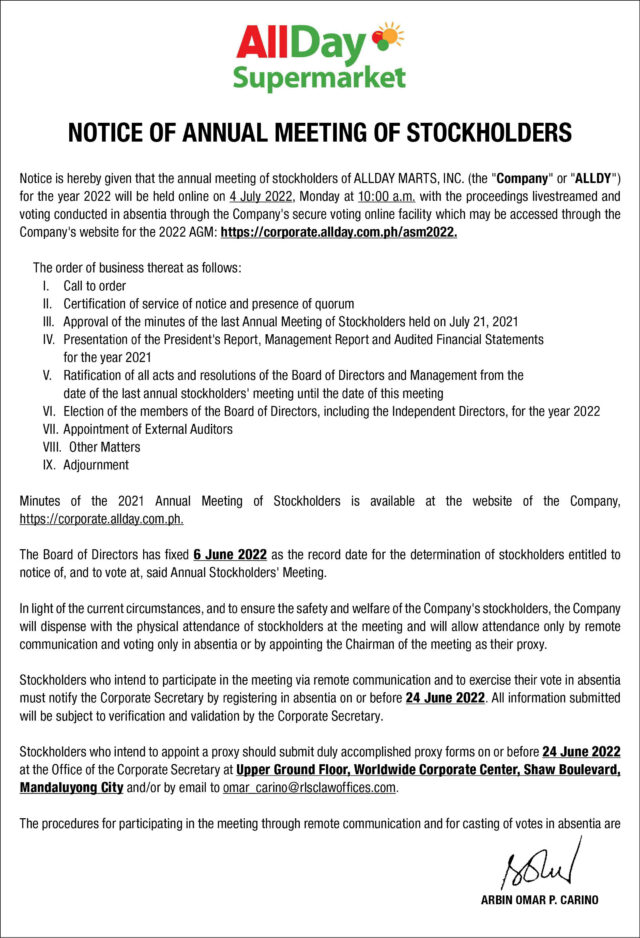
AllDay Marts, Inc. announces annual meeting of stockholders to be held online on July 4


Spotlight is BusinessWorld’s sponsored section that allows advertisers to amplify their brand and connect with BusinessWorld’s audience by enabling them to publish their stories directly on the BusinessWorld Web site. For more information, send an email to online@bworldonline.com.

Join us on Viber to get more updates from BusinessWorld: https://bit.ly/3hv6bLA.

Philippine Realty and Holdings Corp. to conduct annual stockholders’ meeting on June 30


Spotlight is BusinessWorld’s sponsored section that allows advertisers to amplify their brand and connect with BusinessWorld’s audience by enabling them to publish their stories directly on the BusinessWorld Web site. For more information, send an email to online@bworldonline.com.

Join us on Viber to get more updates from BusinessWorld: https://bit.ly/3hv6bLA.

Experience serene and exclusive living spaces in Metro Manila

The Signature Facade

Whether you are looking for serene living spaces, a home fit for elegant living, or a treasured property that you can hand over to your children, Prestige by Filinvest offers all these through its well thought out developments in the country’s primest of locations.

Prestige by Filinvest is made to complement sophisticated lifestyles through specially-crafted living spaces and leisure concepts. Its communities, built with world-class facilities and refined amenities, are legacies of enduring value meant to be cherished from one generation to the next. In Metro Manila, embodying such features are its prime condominium developments — The Signature in Quezon City, and Fortune Hill in San Juan.

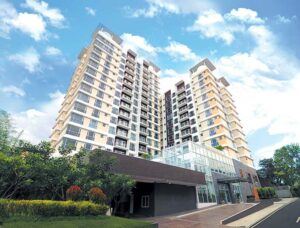
A more modern lobby awaits you at The Signature. *Actual photo of The Signature Lobby

Serving as your Private Courtyard, The Signature lets its residents experience tranquility inside and the bustling city outside. The three-tower condominium is located along A. Bonifacio Avenue, Balintawak, Quezon City, a neighborhood popular to the Filipino-Chinese community. 

Finding inspiration from the Beijing Summer Palace, The Signature’s design uses the basic principles of balance and harmony. Nature is the centerpiece of this urban oasis with the gardens and the pool at the heart of the property.

Living in The Signature is synonymous to having staycations everyday as it houses over 7,000 square meters (sq.m.) — almost a hectare — of amenities made for relaxation and play. Among the array of indoor and outdoor amenities at Tower 1 are the pools, sundeck, meditation garden, fully equipped fitness center, and multipurpose function rooms.

The Signature gives respite in the middle of a busy city with its spacious units ready for occupancy. You can move in hassle-free in a 139 sq.m. fully-furnished three-bedroom unit where you can find all the necessities that a home must contain. The unit includes a foyer, balcony, home office, powder room, master bedroom with en suite T&B, kids room, and more.

Exclusivity is also evident at The Signature, being a condo with only nine units to a floor. It offers three-bedroom and two-bedroom units only.

With such features, The Signature is revitalizing the A. Bonifacio area with an elevated city living that is in harmony with nature.

Fortune Hill fulfills the privacy requirements of its privileged residents with only 4 units
per floor. *Actual photo of Fortune Hill Facade

One key ingredient of Prestige developments is their highly accessible location. Fortune Hill, located in the most coveted local in San Juan, Metro Manila, an area where the Filipino-Chinese community has grown attached with, exhibits this desirability of address — where residents can get to enjoy the best of both worlds. It is tucked away in a quiet residential district surrounded by quaint townhouses, yet a stone’s throw away from life’s necessities.

Fortune Hill is a mid-rise residential enclave with architecture that blends Chinese tradition with modern aesthetics. This exclusive, low-density community with family-oriented amenities is in Addition Hills, and is a short drive away from shopping centers like Greenhills, Shangri-La Mall, Mandala Park; leisure destinations like Wack-Wack Country Club; and schools like Xavier School and Immaculate Conception Academy. Residents, especially families, will surely find an expansive and cozy home at Fortune Hill that captures the panoramic view of the city.

Allowing you to live comfortably, Fortune Hill puts safety and security as primary essentials. Like The Signature, exclusivity is imbued in the features of Fortune Hill, especially with its low-density floor plan with only four units to a floor. The elevator, which has key card access, opens to a foyer exclusive only to the unit owner.

Fortune Hill prides itself on the generosity of space with its expansive, move-in ready spaces that capture the panoramic view of the city. *Actual photo of 3BR Living Area

Fortune Hill also offers three-bedroom and two-bedroom units. Its three-bedroom unit at the Gold Tower measures 151 to 200 sq.m., while the three-bedroom unit at the Platinum Tower spans 151 to 179 sq.m.

Meanwhile, the various amenities at Fortune Hill are made for family time, entertainment, and wellness. Families can spend quality time in the function room, main lounge, family room, and game room. The kids can also enjoy the library, indoor and outdoor play area, kiddie pool, and music room. Residents can also mind their wellness at the infinity pool, sundeck, gym and yoga studio, meditation garden, and landscaped lobby courtyard.

Fortune Hill, being in San Juan, is arguably located in the most tranquil part of the metropolis. Furthermore, the condominium is accessible to major thoroughfares, hence the central business districts of Makati, Ortigas, and Quezon City are within reach. Fortune Hill, therefore, stands in a safe and serene environment and is comfortably close to urban conveniences.


Spotlight is BusinessWorld’s sponsored section that allows advertisers to amplify their brand and connect with BusinessWorld’s audience by enabling them to publish their stories directly on the BusinessWorld Web site. For more information, send an email to online@bworldonline.com.

Join us on Viber to get more updates from BusinessWorld: https://bit.ly/3hv6bLA.

Philippine April trade gap narrows

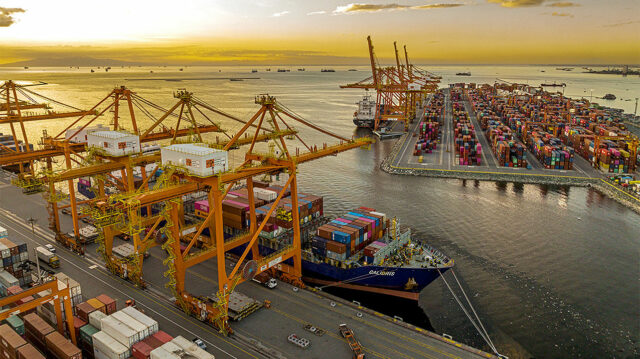
The Manila International Container Terminal — COURTESY OF INTERNATIONAL CONTAINER TERMINAL SERVICES, INC.

THE PHILIPPINES’ April trade deficit narrowed month on month to $4.8 billion, as exports slightly picked up and imports grew at their slowest pace in 13 months amid the Russia-Ukraine war and supply chain disruptions.

Preliminary Philippine Statistics Authority data showed the value of merchandise exports grew by 6% year on year to $6.129 billion in April, the fastest since 15.8% recorded in February.

The export expansion was slightly up from 5.9% in March, but slower than 74.1% a year ago.

Philippine trade year-on-year performance

“Based on the PSA’s preliminary data, April 2022 was estimated to be 14.5% higher than the pre-pandemic average from 2017 to 2019,” the Department of Trade and Industry (DTI) said in a separate statement.

The country’s merchandise imports rose by 22.8% to $10.902 billion in April, the slowest since 22.1% in March 2021.

Import growth eased from 153.2% in the same month last year and 27.7% in March.

The trade-in-goods deficit narrowed to $4.773 billion, from the record $5.007-billion gap in March. However, it was wider than the $3.098-billion shortfall a year ago.

For the first four months, exports jumped by 8.9% year on year to $25.551 billion, above the revised 7% growth projected by the Development Budget Coordination Committee (DBCC) for this year.

Imports climbed by 26.7% to $44.219 billion during the period, well above the government’s revised 15% goal for 2022.

Year to date, the trade balance has ballooned to a $18.668-billion deficit.

“The slight increase in exports in April is actually a continuation of the falling trend in exports after February 2022,” University of Asia and the Pacific Senior Economist Cid L. Terosa said in an e-mail.

This reflected global market jitters arising from the Russia-Ukraine war and weaker global demand because of the strict lockdowns in China.

“Without these external events, I believe exports would have grown faster,” Mr. Terosa said.

He also attributed the uptick in exports and slower import growth to base effects.

“Imports in April grew slower than March because production activities have been affected by the protracted geopolitical tension, oil price increases, and disruption in supply chains worldwide,” Mr. Terosa said.

Security Bank Corp. Chief Economist Robert Dan J. Roces said the Russia-Ukraine war, elevated inflation and coronavirus lockdowns were downside risks to the Philippine trade and manufacturing outlook.

“On the output side, headwinds are apparent as capacity utilization weakened while producer price inflation accelerates, so this affects the export side,” he said in an e-mail.

“Imports, on the other hand, are costlier with a depreciating peso, but this is expected to outpace exports with higher capital and consumption goods demand in the medium term,” Mr. Roces said.

Since the Russia-Ukraine conflict that started in February, global crude oil prices have climbed above $100 per barrel amid supply concerns. Russia is the world’s second-largest oil producer.

Outbound shipments of manufactured goods, which accounted for 76.1% of total exports in April, slipped by 1% year on year to $4.661 billion.

Electronic products, which made up 70% of manufactured goods and more than half of total exports that month, inched up by 0.8% to $3.250 billion. Three-fourths of electronic product sales came from semiconductors, which increased by 2% to $2.461 billion.

The DTI said coconut products contributed nearly half or $164 million of the $348-million additional exports in April.

“This was primarily driven by exports of coconut oil which grew 2.5 times its export level compared with last year. Since February 2021, exports of coconut oil have been increasing at double-digit growth rates,” it said.

Meanwhile, the country’s orders of raw materials and intermediate goods rose by 18.6% to $4.279 billion in April. These accounted for more than a third of the total April import bill.

Imports of capital and consumer goods were valued at $2.939 billion (up 3.4%) and $1.598 billion (up 7.1%), respectively.

Mineral fuels, lubricants and related materials more than doubled to $2.012 billion from $861.820 million last year.

China, which accounted for 15.9% ($971.743 million) of the total receipts, was the top destination of locally made products. It was followed by the United States (15.6% or $955.170 million) and Japan (13.4% or $820.962 million).

Likewise, China was the country’s main source of imports, with a 20.8% share ($2.269 billion) of the total bill, followed by South Korea (11.1% or $1.205 billion) and Indonesia (9.3% or $1.009 billion).

Mr. Terosa said as long as external headwinds persist, achieving the government targets for export and import growth this year would be challenging.

“Without these external events, the country would easily exceed both export and import targets for 2022,” he said. — Lourdes O. Pilar

Wage hikes, fare increases likely to push inflation beyond target

PHILIPPINE STAR/ WALTER BOLLOZOS
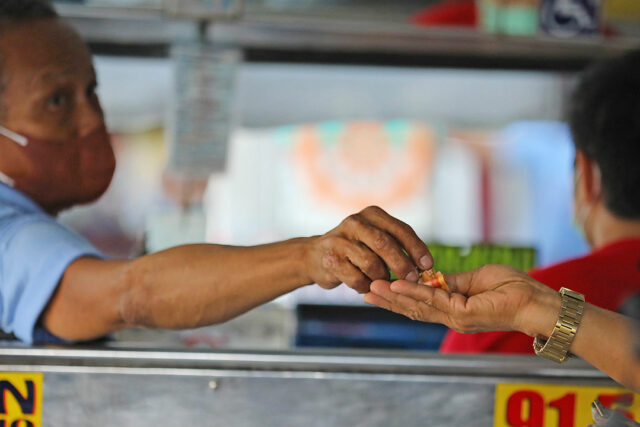
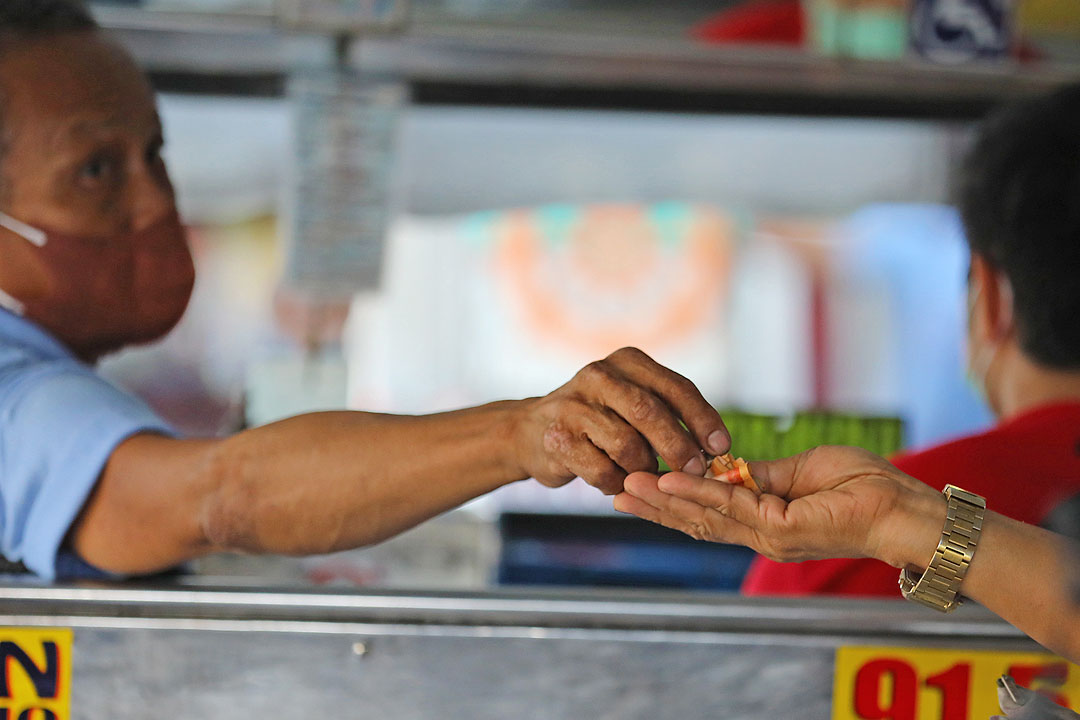
A jeepney driver collects payment from passengers. The Land Transportation Franchising and Regulatory Board (LTFRB) has approved a P1 fare hike for jeepneys in Metro Manila and Regions 3 and 4. — PHILIPPINE STAR/ WALTER BOLLOZOS

By Keisha B. Ta-asan

HIGHER daily minimum wages and jeepney fares will likely drive inflation beyond the central bank’s target this year, analysts said.

The Bangko Sentral ng Pilipinas (BSP) reiterated it is keeping a close eye on the inflation spike’s second-round effects such as wage and transport fare increases.

“The BSP is prepared to respond to a sustained buildup of inflation pressures and second-round effects that can disanchor inflation expectations,” BSP Governor Benjamin E. Diokno said at the launch of the World Bank Philippines Economic Update June 2022 report on Thursday.

Inflation jumped to 5.4% in May, faster than  4.9% in April and 4.1% a year ago, as food and fuel prices continued to climb amid the prolonged Russia-Ukraine war.

The BSP last month raised its average inflation forecast for 2022 to 4.6% from 4.3%, exceeding the 2%-4% target.

The implementation of a daily minimum wage hike in 14 regions and a P1 increase in fares for public utility jeepneys in Metro Manila, Central Luzon, Calabarzon and Mimaropa this month will likely add to inflationary pressures.

Starting June 4, the new minimum wage in Metro Manila increased by P33 to P570 for non-agricultural workers and P533 for agricultural workers.

These hikes will further accelerate inflation this month, UnionBank of the Philippines, Inc. Chief Economist Ruben Carlo O. Asuncion said in a Viber message

“I am pretty sure this contributes to headline inflation’s rise for this June and the coming months. We still expect average 2022 inflation at 4.7% and 4% in 2023… How June inflation looks like, I believe, will definitely make a re-think possible. At this point, we expect June inflation at 5.8%,” Mr. Asuncion said.

The National Economic and Development Authority (NEDA) in March estimated that a P1.25 increase in jeepney fares would increase inflation by 0.4 percentage point. A P39 increase in the daily wage in Metro Manila would lead to a one percentage point increase in inflation, it added.

“Given that the fare hike is limited to NCR (National Capital Region) and Regions 3 and 4 so far, the impact might currently be less than (the NEDA’s earlier estimates). However, we think that transport fare hikes in other regions might similarly be approved soon as pump prices remain elevated,” China Banking Corp. Chief Economist Domini S. Velasquez said.

Security Bank Corp. Chief Economist Robert Dan J. Roces said higher fares increase the risk of price hikes this year.

“The projection is that inflation is already poised to remain above target for the rest of the year. There may be shifts to consumption nonetheless, for instance less of selected foods in favor of higher transport costs as the Filipino’s budget shrinks,” he said.

Incoming BSP chief Felipe M. Medalla has signaled at least two more rate hikes to curb inflation.

The Monetary Board is set to review policy settings on June 23.

WAGE HIKE
Meanwhile, the Zamboanga Peninsula Regional Tripartite Wages and Productivity Board has approved a new daily minimum wage for the region.

In a statement, the Department of Labor and Employment (DoLE) said the Zamboanga wage board had ordered a P35 daily minimum wage increase for nonagricultural workers, and a P20 hike for agricultural workers.

If approved by the National Wages and Productivity Commission, the daily minimum wage for nonagricultural workers will rise to P351 from P316.

The daily pay of agricultural workers employed by an establishment with more than 10 workers will rise to P338 from P303. The daily wage for those who work in agricultural enterprises and establishments with fewer than 10 workers will rise to P323 from P303.

Domestic workers in the region will also get a P500 hike, bringing the monthly wage to P4,000 for first-class municipalities.

The DoLE said about 30,513 workers in private establishments and 18,984 domestic workers are expected to benefit from the minimum wage increases.

In a separate statement, DoLE said it had ratified the 1986 Instrument of Amendments to the Constitution of the International Labor Organization (ILO). The amendment calls for increasing the number of nonobserver countries in the global labor body.

“This is a step closer to its entry into force towards democratization in the organization with the end in view of realizing our shared vision of leaving no one behind in the world of work,” Labor chief Silvestre H. Bello III said at the ILO conference held in Geneva, Switzerland. — with John Victor D. Ordoñez

BSP plans to launch news sentiment index by 2023

FREEPIK

THE BANGKO Sentral ng Pilipinas (BSP) is targeting to launch a news sentiment index (NSI) by 2023, as it seeks to ramp up the use of big data in its monitoring activities.

BSP Governor Benjamin E. Diokno on Thursday said the NSI would “capture relevant views or sentiment on key macroeconomic events that may affect the current and emerging economic and financial environment.”

“The NSI will leverage on big data, machine learning and artificial intelligence to enhance the BSP’s monitoring activities for policy development and macro-financial surveillance,” he said.

The NSI project involves the development of software that will instantly gather information on consumer and business sentiment from online news sources.

The information will then be processed using algorithms to derive the general sentiment on the economic and financial fronts. This sentiment can either be positive, neutral or negative.

“As news covers a wide range of subjects, we further take advantage of the rich information available in the news data by categorizing news articles by topic. Through topic modeling techniques, we will be able to extract sentiment data on key themes relevant to our policy decisions,” Mr. Diokno said.

The BSP said the NSI would be a “cost-effective and efficient data-gathering solution” for monitoring economic developments.

“The sentiment index that we are developing is based on most recognized and reputable media outlets in the Philippines only. We define recognized and reputable media outlets as those that have garnered awards or citations and are recognized by other members of the press or organizations,” Mr. Diokno said.

To ensure that the index accurately captures the overall economic sentiment, only news from financial and business sections of media outlets will be included, the BSP chief said.

“The BSP ensures it only uses truthful and fact-checked data in its decisions and policies,” Mr. Diokno said.

The NSI will complement the respondent-based sentiment surveys, such as the business and consumer expectations surveys that the BSP releases every quarter.

The NSI is part of the central bank’s big data roadmap initiative. — Keisha B. Ta-asan