Home Blog Page 5889

Gov’t securities may fetch higher rates after policy hikes

BW FILE PHOTO

RATES of government securities (GS) on offer this week could rise amid continued monetary policy hikes from central banks in the past week and a weakened peso.

The Bureau of the Treasury (BTr) will offer P15 billion in Treasury bills (T-bills) on Monday, made up of P5 billion each in 91-, 182-, and 364-day debt papers.

On Tuesday, the BTr will auction off reissued 20-year Treasury bonds (T-bonds) with a remaining life of 16 years and four months.

Traders expect T-bill and T-bond yields to move higher at this week’s auction as central banks hiked their respective rates in the past week to combat elevated inflation.

“There was a slew of rate hikes from various central banks this week and it seems like there will be more to come; that’s why sentiment for bonds remains bearish,” a trader said.

The trader expects T-bill rates to rise by 15-20 basis points (bps) from last week’s awarded yields and sees the 20-year paper to be quoted at 7.25% to 7.50%.

A second trader said that T-bill rates should be higher by 25-50 bps on the back of the Bangko Sentral ng Pilipinas’ (BSP) latest policy move, while T-bonds might range between 7.25% and 7.50% “to test if the Bureau of the Treasury will award at those levels.”

Rizal Commercial Banking Corp. Chief Economist Michael L. Ricafort said that rates could still be higher in view of a depreciated peso.

“New record [low] for the peso exchange rate could lead to higher import prices and overall inflation, as well as increasing the odds of [a] further local policy rate hike,” said Mr. Ricafort. “A surprise [or] off-cycle local policy rate hike to help stabilize the peso cannot be ruled out.”

The Federal Reserve hiked its policy rates by another 75 bps last week while signaling larger increases to come as inflation is still way above its 2% target at 8.3% as of August. The central bank has raised key rates by 300 bps since March, including two other 75-bp moves in June and July.

At home, the BSP increased its benchmark interest rates by 50 bps to 4.25% on Thursday, as predicted by 11 of 15 analysts in a BusinessWorld poll last week. It has hiked borrowing costs by 225 bps since May to rein in rising prices.

The consumer price index climbed to 6.3% year on year in August from the nearly four-year high of 6.4% a month earlier and 4.4% a year ago. It was the fifth straight month that inflation exceeded the BSP’s 2-4% target this year.

BSP Governor Felipe M. Medalla said last month that the Fed’s aggressive tightening also poses an additional risk to domestic prices due to its effect on the peso.

The peso closed at an all-time low of P58.50 per dollar on Friday, losing one centavo from its P58.49 finish on Thursday, Bankers Association of the Philippines data showed.

The peso has weakened by 14.71% or P7.5 this year from its P51-a-dollar close last year.

“The intention is not to target a particular level for the exchange rate,” BSP Deputy Governor Francisco G. Dakila, Jr. told a news briefing after the rate hike decision. “That is not the policy objective. In deciding on the appropriate stance of monetary policy, the priority is to bring inflation back to within the target band over the medium term.”

At the secondary market on Friday, the 91-, 182-, and 364-day T-bills were quoted at 2.7762%, 3.7042%, and 3.9280%, respectively, based on the PHP Bloomberg Valuation Reference Rates published on the Philippine Dealing System’s website.

Meanwhile, the 20-year bond was quoted at 7.2329%.

Last week, the Treasury partially awarded its T-bill offer, only accepting bids for the six-month debt, even as total demand reached P16.288 billion, above its P15-billion offer.

The Treasury borrowed just P3.162 billion via the 182-day securities, even as bids reached P7.123 billion. The average rate of the tenor went up by 17.6 basis points (bps) to 3.810% and accepted rates ranged from 3.700% to 3.900%.

Meanwhile, the government rejected all bids for 91-day T-bills on Monday, even as tenders for the tenor hit P5.965 billion, above the P5-billion program. Had it been awarded, the average rate of the three-month paper would have gone up by 159.4 bps to 3.912% from the 2.318% fetched in its last successful awarding on Sept. 5.

The BTr also refused to award 364-day debt papers, with demand only reaching P3.2 billion versus the P5 billion on the auction block. Had the government accepted all bids, the debt paper’s average rate would have climbed by 110.8 bps to 4.890% from 3.782% fetched for the tenor on Aug. 22, which was the last successful award.

Meanwhile, the reissued 20-year bonds to be offered on Tuesday were last auctioned off on Nov. 26, 2019, where the BTr partially awarded the papers at P12.271 billion against a P20-billion offering.

The papers were awarded an average rate of 5.341% at that auction, lower by 140.9 bps versus the 6.75% coupon fetched for the bonds when they were offered for the first time on Jan. 22, 2019.

The BTr wants to raise P200 billion from the domestic market this month, or P60 billion through T-bills and P140 billion via T-bonds.

The government borrows from local and external sources to help fund a budget deficit capped at 7.6% of gross domestic product this year. — Diego Gabriel C. Robles
Agrarian reform beneficiaries to get aid in accessing markets

DAR.GOV.PH

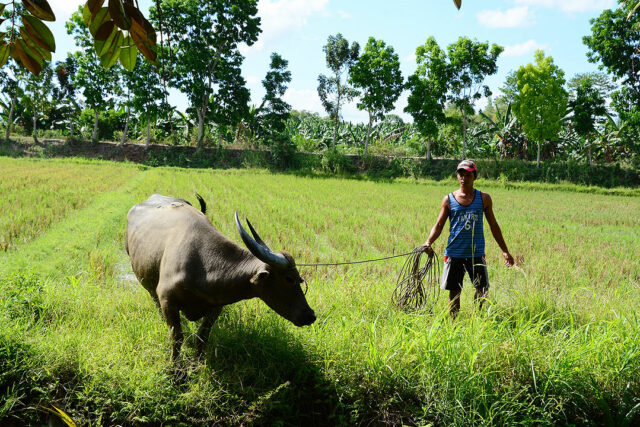
THE Department of Agrarian Reform (DAR) said it is planning to strengthen the links between agrarian reform beneficiaries (ARBs) and their markets, particularly for those growing rice, corn, coconut, and livestock.

In a statement, the DAR said it also plans to digitize its land database.

“It’s about time that we further strengthen market linkage for our ARBs through the value chain so that they will be fairly compensated for their investments in farming,” Agrarian Reform Secretary Conrado M. Estrella III said.

Mr. Estrella said that helping the members of ARB organizations sell their harvests directly to the market or institutional buyers will maximize their earning potential and keep food production sustainable.

The digitalization project will cover the ARB registry, land grants, the status of land being subject to conversion, data mapping, and the profiling of the farmers’ crops.

“The improved database will serve as the repository of various information pertaining to agrarian reform program implementation where stakeholders can access official data as a reference,” the department said.

It also hopes to offer product development and standards training for agrarian reform communities to make their produce more commercially viable. — Luisa Maria Jacinta C. Jocson

Betty White’s belongings being auctioned for the public to take home

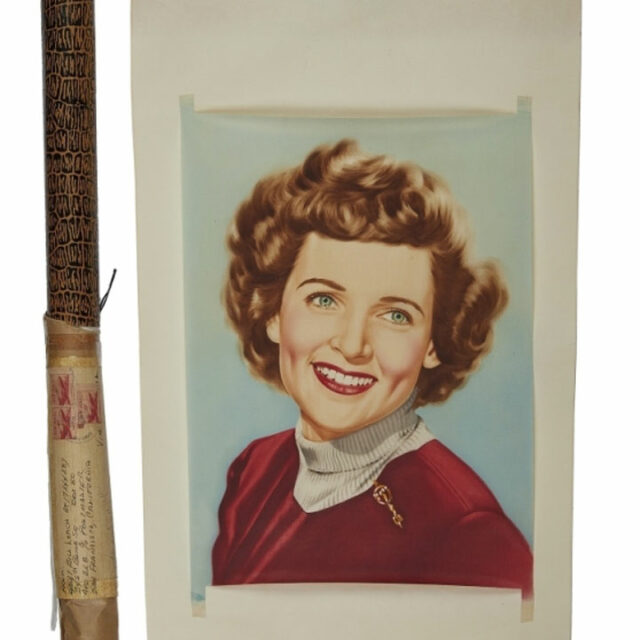
One of the items up for auction this week. — JULIENSLIVE.COM

OVER 1,600 belongings from the late American actress Betty White will be up for auction this week, from her old TV and Disney VHS collection to her Cadillac.

Taking place both online and in-person, the auction at Julien’s Auctions in Beverly Hills from Sept. 23 to Sept. 25 also includes her dining room table, a blue ceramic horse, and her leather baby shoes. The list goes on.

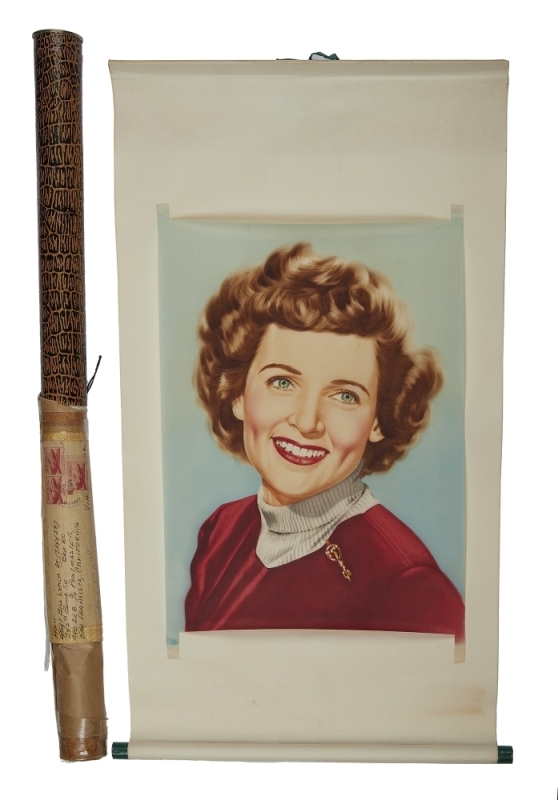
More personalized items include Ms. White’s oil painting of herself as a young woman, monogrammed towels, and some handwritten personal notes from famous names like Lily Tomlin and Alex Trebek.

Ms. White’s diamond wedding band and the wedding band her third and last husband, Allen Ludden, wore are standout items. Mr. Ludden was noted for having worn the band around his neck with a chain for three months to remind Ms. White about his many wedding proposals to her, and it worked. They were married until he died in 1981. Ms. White died in December 2021 at 99 after a remarkable television career that lasted over seven decades, with beloved roles on The Golden Girls, The Mary Tyler Moore Show and many more.

Not all her belongings will be sold. Many items were donated to the National Comedy Center in September and are on show at its museum in Jamestown, New York. Visiting fans can see Ms. White’s five Emmy statuettes, including one for The Golden Girls in 1986 and another for Saturday Night Live in 2010.

Visitors can also see on display her tracksuit from Hot in Cleveland, her sweater from The Golden Girls, and hand-annotated scripts. — Reuters

Lexus Philippines adds another hybrid variant to ES line

PHOTO FROM LEXUS PHILIPPINES

LEXUS PHILIPPINES is growing the number of its ES sedan offerings by one, as it introduces the hybrid electric ES 300h Luxury variant. Priced at P4.218 million, the trim takes its place in the middle of range between the ES 300h Executive (P3.838 million) and the ES 350 Premier (P4.828 million).

In a release, the company said, “Buyers will find that the current ES models are more spacious, (and are) quieter and safer than ever before, while a new generation of customers will find a saloon with sharp performance, class-leading safety technology, and a level of craftsmanship rarely found in this market segment.”

The ES banners the Lexus Driving Signature philosophy which gives it more balance while affording the driver more refined control and confidence — owing to linear steering, brake response, and optimized handling with exceptional ride quality. A rear suspension member brace further improves torsional rigidity, handling stability, and ride comfort.

Regenerative and hydraulic brake control characteristics of the electronically controlled brake system on the hybrid models enhance the pedal feeling when it is released.

On its exterior, the current ES has an updated front grille and headlamps, while the interior has adopted colors similar with the Premier variant. The ES 300h Luxury bears similarities to the range-topping ES 350 Premier, such as a 235/45R18 wheel-and-tire combination, rain-sensing wipers, smooth leather seats, 10-way power adjustment with memory for the driver’s seat, front passenger seat with eight-way power adjustment, kick sensor for the automatic trunk; and a 12.3-inch Electro Multi-Vision touch display.

The Lexus ES 300h Luxury also gets the Lexus Safety Sense (LSS) suite of advanced safety features. The list includes a pre-collision system, adaptive high beam system, automatic high beam system, lane tracing assist, lane departure alert, and dynamic radar cruise control. Aside from getting upgrades, the LSS features have also been tuned to operate in a way that feels more natural to the driver. Lexus maintained that, with this evolution, Lexus Safety System moves to the next level as a personal driving partner.

Powering the ES 300h Luxury is a 2.5-liter inline-four engine delivering 178hp and 221Nm. Together with an electric motor, the total system output is 218hp. The ICE gets laser-clad intake valve seats, which permit increased airflow into the cylinder and an intake port shape that increases the tumble-flow turbulence of incoming air and fuel for high-speed combustion. The engine also achieves superior thermal efficiency, combining robust power delivery with response to deliver heightened fuel efficiency.

The miserly fuel consumption is also due to a hybrid transaxle with improved efficient internal power flow and a higher-efficiency power control unit. The compact hybrid battery of the ES is located beneath the rear seats, contributing to ideal weight balance and low center of gravity, while enlarging cargo space.

Equipped with a fourth-generation hybrid battery, the new ES hybrid variants now come with an eight-year HEV battery warranty, along with a standard drivetrain warranty of three years or 100,000 kilometers.

IKEA considering more stores in the Philippines  

SWEDISH furniture retailer IKEA is looking to establish more stores in the Philippines to address growing local demand and as part of its expansion efforts.

Georg Platzer, IKEA Philippines store manager, said that the retailer is studying more stores in Metro Manila in addition to its first branch in the country. IKEA Philippines opened the doors to its Pasay City store on Nov. 25 last year.

“We need to have a second, and maybe even a third store in Metro Manila to cover the needs of the many consumers coming. No timing yet, no place yet but definitely on the expansion, it is on the drawing table,” Mr. Platzer said in an interview at the sidelines of a seminar in Pasay City last week.

“The Pasay City store is the beginning for IKEA in the Philippines and there’s a future of more stores to come. It is just a matter of time. Because it is a big market, it is a growing market and in one moment, this store will be even too small to host so many people,” he added.

In terms of IKEA’s expansion outside of Metro Manila, Mr. Platzer said that the idea is “far from the pipeline.”

“IKEA needs a certain amount of visitation. We live from visitation. We need a lot of visitors. Outside of Metro Manila, there [are] not enough people. And, if there [are] enough people, they need to travel a long way to come to IKEA. So, that would be a hindrance. We can think about cities like Cebu and maybe Davao, but I think that’s about it,” Mr. Platzer said.

However, Mr. Platzer said that IKEA Philippines plans to add more “fulfillment areas” to serve more consumers buying online. The areas are where customers can pick up the products they purchased online.

“We are about to stretch our fulfillment areas… In the future, we are going to serve more of the islands. Customers hopefully from Iloilo and Leyte can order online,” Mr. Platzer said.

Meanwhile, Mr. Platzer said that IKEA Philippines had raised the prices of some of its products due to the depreciation of the Philippine peso versus the US dollar. He did not provide specific figures or products that had price increases.

On Sept. 23, the peso dropped to a new all-time low of P58.50 versus the greenback.

“It’s a drama for us. The US dollar is too strong because we pay everything in dollars. We buy our goods in US dollars and that is not good,” Mr. Platzer said.

“We always try to keep the prices as low as possible, and we still do. We still believe we have the lowest possible price in the country for this quality. But the whole currency challenge globally, the war in Europe with Russia and Ukraine, all these challenges have an impact on the supply chain and the prices,” he added. — Revin Mikhael D. Ochave 

Digital banks seen to meet BSP standards

DIGITAL BANKS are likely to meet the reserve requirement ratio (RRR) of 8% and are expected to comply with the existing prudential requirements for big banks, the Bangko Sentral ng Pilipinas (BSP) said.

BSP Deputy Governor Chuchi G. Fonacier said in a Viber message that they considered digital banks’ scope of authority, capital requirement, and ability to rapidly expand operations in setting up the 8% RRR.

“The 8% reserve requirement rate (RRR) for digital banks was the result of discussions during the BSP’s consultation process taking into account RRR across banking categories,” Ms. Fonacier said.

“Moreover, the final RRR of digital banks is consistent with the BSP’s long-term goal of implementing graduated, single-digit RRRs across all banking institutions towards more market-oriented instruments for liquidity management,” she added.

BSP Circular No. 1154 set digital banks’ reserve ratio, or the percentage of deposits and deposit substitutes they must keep with the BSP, at 8%. The RRR for big banks is currently at 12%, one of the highest in the region. Reserve requirements for thrift and rural lenders are at 3% and 2%, respectively.

“Nonetheless, the BSP can adjust the RRRs of banks, including digital banks, as may be warranted, consistent with its price and financial stability objectives,” Ms. Fonacier said.

Under the same circular, digital banks must also meet the same Basel III capital, liquidity and leverage requirements covering universal and commercial banks.

The Basel III framework contains measures that aim to improve banks’ risk management so they can withstand excessive financial stress. These came in the aftermath of the 2008 Global Financial Crisis. 

“The guidelines provide, among others, that a digital bank shall be considered a ‘complex bank’ for purposes of compliance with corporate and risk governance standards in view of its wide reach and ability to rapidly expand operations,” Ms. Fonacier said.

“This policy approach ensures that digital banks operate in a safe and sound manner as they offer and promote access to innovative financial services,” she added.

In a conference hosted by The Asian Banker on Thursday, BSP Assistant Governor Lyn I. Javier said digital banks are more exposed to risks such as cybersecurity threats as well as issues about money laundering and consumer protection.

“We issued prudential regulation for digital banks just to level the playing field, recognizing digital banks as complex banks,” Ms. Javier said.

“Now, we have also issued the open finance framework and the institutionalized regulatory sandbox. I think that already provides an enabling environment for these players to continue to provide financial services and create partnerships within the industry,” she added.

Earlier this month, the BSP approved the regulatory sandbox rules formalizing the “test and learn” (T&L) approach for startups. Meanwhile, the Open Finance Framework, which was published in 2021, lays out the rules for enabling open finance in the country.

According to Ms. Fonacier, digital banks undertake a chartering process on the suitability of shareholders, adequacy of financial strength, technical expertise, and integrity of their board and senior management. They also conduct a detailed review and assessment of support information technology (IT) systems and infrastructure.

“Thus, these banks, once in operation, can meet the BSP’s prudential standards and perform in a safe and sound manner,” she said.

Ms. Fonacier said BSP Circular No. 1154 forms part of the BSP’s Digital Payments Transformation Roadmap aimed at advancing the central bank’s financial inclusion agenda while driving the adoption of digital services in the country.

When asked about the BSP’s initial observations on the operation of digital banks in the country, Ms. Fonacier said the positive response of the public is “very encouraging” based on the number of deposits recorded by these lenders.

“More than the attractive rates and ease in onboarding, the trust gained from the public knowing that these digital banks are regulated by the BSP is certainly a big factor,” Ms. Fonacier said.

“On the side of our digital banks, they have leaned towards a calculated strategy in the initial months of operations. Amid the clear public interest, most have opted to first offer their products to targeted customers just to ensure that any possible issues are readily resolved prior to fully launching to the public,” she added.

The central bank capped the number of digital banking licenses to six last year to monitor the development of the sector, ensure competition, and boost its capacity to regulate these kinds of lenders.

The six online lenders that secured licenses to operate in the country are Tonik Digital Bank, Inc.; GOtyme of the Gokongwei group and Singapore-based Tyme; Maya Bank of Voyager Innovations, Inc.; Overseas Filipino Bank, a subsidiary of Land Bank of the Philippines; UNObank of DigibankASIA Pte. Ltd.; and UnionDigital of UnionBank of the Philippines, Inc. — Keisha B. Ta-asan

India free food program for poor to cost $10 billion if extended

REUTERS

NEW DELHI — India is likely to extend its free food program for the poor by three to six months, CNBC TV18 reported, a move that could cost the government $10 billion more and make it challenging for it to meet its fiscal deficit target.

India has spent nearly $43 billion since April 2020 on its free food program known as ‘Pradhan Mantri Garib Kalyan Anna Yojana’ where it provides 5 kg of foodgrain to poor families.

A six-month increase could cost the government an additional 800 billion rupees ($10 billion), according to a government official, who did not want to be named.

A spokesperson for India’s finance ministry did not immediately reply to a message seeking comment.

Most economists expect the Indian government to miss its fiscal deficit target of 6.4% of GDP for the 2022/23 year that started on April 1 as it has taken a number of measures to fight inflation that could cost the government over $20 billion. — Reuters

Hilary Mantel, award-winning British author of Wolf Hall trilogy, 70

Bitish author Hilary Mantel — 4THESTATE.CO.UK

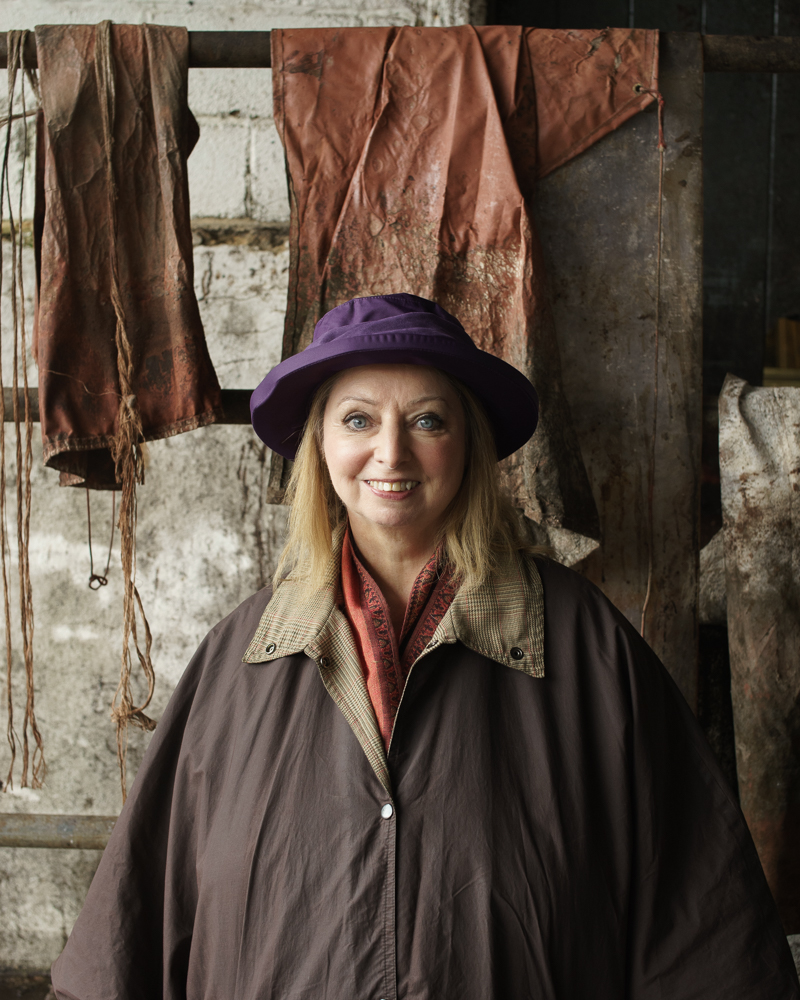
LONDON — Hilary Mantel, the best-selling British author of the award-winning Wolf Hall Tudor trilogy, died peacefully on Thursday at the age of 70, her publisher said on Friday.

Wolf Hall, published in 2009, and its sequel Bring Up the Bodies, released three years later, both won the Booker Prize, an unprecedented win for two books in the same trilogy and making Ms. Mantel the first woman to win the award twice.

The final in the series, The Mirror & the Light, was published in March 2020 and long-listed for the Booker Prize. It won the Walter Scott Prize for Historical Fiction in 2021, an award she also won for Wolf Hall.

“It is with great sadness that HarperCollins announces that bestselling author Dame Hilary Mantel DBE died peacefully, surrounded by close family and friends, yesterday,” a statement on the website of her publisher 4th Estate Books, which is owned by HarperCollins, said.

“Hilary Mantel will always be remembered as a truly original writer. She leaves behind a remarkable body of work which inspire readers around the world.”

The Wolf Hall trilogy, which has been serialized by the BBC and was also adapted for the stage, charted the fortunes of Thomas Cromwell, the blacksmith’s son who rose to be King Henry VIII’s most powerful adviser only to fall from grace and meet a gruesome end.

It has been translated into 41 languages and sold more than 5 million copies worldwide.

In a 2020 interview with the Guardian, Ms. Mantel described the books as being “about all the big important things that matter, about sex and power and high politics, statecraft and forgery and delusion and lies.”

Other best-selling authors took to Twitter to express their sadness at the news of her death, with Harry Potter author J.K. Rowling saying: “We’ve lost a genius.”

Fellow Booker Prize winning author Bernardine Evaristo said: “So very sorry to hear about Hilary Mantel’s passing. We were so lucky to have such a massive talent in our midst.”

HISTORICAL INSIGHT
Born in Derbyshire on July 6, 1952, Ms. Mantel studied Law at the London School of Economics and Sheffield University and first worked as a social worker. She turned to writing fiction while living in Botswana for five years.

Ms. Mantel also lived in Saudi Arabia, returning to Britain in the mid-1980s. Her first novel, Every Day is Mother’s Day, was published in 1985.

In total she authored 17 books, including non-fiction works, and was awarded a damehood in 2014 for services to literature.

“It is impossible to overstate the significance of the literary legacy Hilary Mantel leaves behind. Her brilliant Wolf Hall trilogy was the crowning achievement in an outstanding body of work,” Scottish First Minister Nicola Sturgeon said on Twitter.

Ms. Mantel drew criticism from many, including then Prime Minister David Cameron, in 2013 for comments in which she described Prince William’s then pregnant wife Kate as “a jointed doll on which certain rags are hung.”

“She was a shop-window mannequin, with no personality of her own, entirely defined by what she wore,” Ms. Mantel had said in a lecture at the British Museum in London.

Ms. Mantel suffered chronic health problems for much of her life, speaking of the debilitating pain and fatigue caused by severe endometriosis, a condition where tissue similar to the lining of the womb grows in other places.

She said her illness, and the infertility caused by treatment she received for it, had contributed to a temporary split from her geologist husband Gerald McEwen, whom she had wed at the age of 20. The pair divorced but soon remarried.

Her agent, Bill Hamilton at AM HEATH, said she had dealt with her health problems “courageously” and it had been a privilege to work with her.

“Her biting wit, stylistic daring, creative ambition and phenomenal historical insight mark her out as one of the greatest novelists of our time,” he said.

“There was always a slight aura of otherworldliness about her, as she saw and felt things us ordinary mortals missed, but when she perceived the need for confrontation she would fearlessly go into battle.” — Reuters

Geely PHL notches ‘Outstanding Distributor Award’

PHOTO FROM GEELY PHILIPPINES

SOJITZ G AUTO Philippines Corp. (SGAP), official distributor of Geely in the Philippines, announced that it was given the Outstanding Distributor Award at the recently concluded Geely Automotive Annual International Conference. The online gathering was attended by top executives from Geely Automotive International Corp. and representatives from 35 overseas distributors.

It was bestowed with the honor “based on annual overall sales, marketing efforts and strategies and after-sales service index which drove the expansion and upgrade of Geely business in the Southeast Asian region.” SGAP was one of only three distributors which received the recognition.

Aside from the recognition, Geely Philippines took home the Best Network Award, meant to “recognize the outstanding performance in sales, market share expansion, customer satisfaction and quality of services.” Its flagship, company-owned North EDSA dealership is able to sell more than 100 units a month on average. The distributor also received the Best Customer Service Award, “given based on overall satisfaction and experience provided to its customers.”

Geely Philippines, throughout its dealership network, showed an increase of 115% in service retention and a 300% increase in sales on top of a high 9.6/10 service satisfaction index score.

“We are very honored to receive all these distinguished awards among numerous Geely distributors across the globe. The credit goes to all of our customers who believe in the Geely brand, and to our dealer network for providing value-added customer experience. This trust is what continuously drives us to always provide the best possible customer experience, products and services that Geely can offer to the Filipino market. Together with all our 34 dealerships nationwide, business partners and associates, we always put forth that our customers are our inspiration and motivation to always do our best to exceed their expectations,” SGAP President and CEO Yugo Kiyofuji said.

In less than three years since the brand was relaunched here in 2019, Geely has marked its 10,000th vehicle sold. The 6,199-unit total sold this year has already surpassed last year’s total sales, representing 89% growth year-to-date.

“As the Philippine economy and automotive industry continue to recover and show indications of growth, Geely Philippines will maintain its best effort to provide global quality products that will surely satisfy the needs and requirements of the market. Going closer to where the customers are by expanding our network has been one of our priorities and so shall be our efforts to provide the best customer experience possible. This is our commitment to our clients and future customers who have believed in us and trusted us over the years,” Mr. Kiyofuji concluded.

Debt yields rise on rate hikes, weak peso

YIELDS on government securities (GS) rose as the market awaited the US Federal Reserve’s and the local central bank’s rate hikes and the peso depreciating to a new record low.

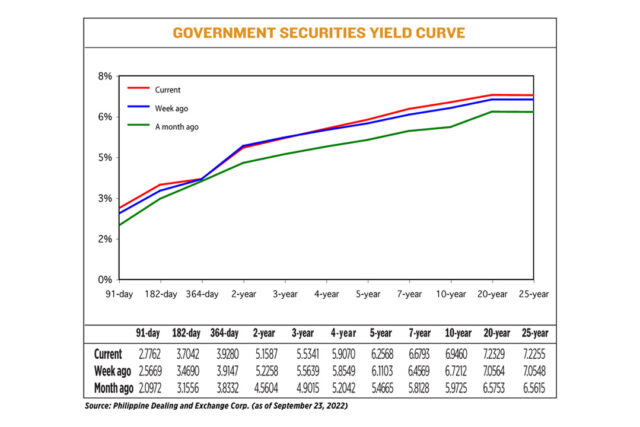
Debt yields, which move inversely to prices, jumped by an average of 12.31 basis points (bps) week on week, based on the PHP Bloomberg Valuation (BVAL) Service Reference Rates as of Sept. 23, published on the Philippine Dealing System’s website.

Yields on the short end of the curve climbed the most as the 182-day Treasury bills (T-bills) increased by 23.52 bps (to 3.7042%), followed by the 91-day and the 364-day T-bills, which went up by 20.93 bps (2.7762%) and 1.33 bps (3.9280%).

The belly of the curve ended mixed with the two- and three-year Treasury bonds (T-bonds) decreasing by 6.71 bps (5.1587%) and 2.98 bps (5.5341%), while the four-, five-, and seven-year T-bonds rose by 5.21 bps (5.9070%), 14.65 bps (6.2568%), and 22.24 bps (6.6793%), respectively.

At the long end of the curve, yields on the 10-, 20-, and 25-year papers rose by 22.48 bps (6.9460%), 17.65 bps (7.2329%), and 17.07 bps (7.2255%).

Total GS volume traded reached P11.839 billion on Friday, lower than the P6.563 billion recorded on Sept. 16.

In an e-mail, ATRAM Trust Corp. Head of Fixed Income Jose Miguel B. Liboro said that the market was affected earlier in the week by the US Fed and the Bangko Sentral ng Pilipinas’ (BSP) meetings as well as after it, which made the market defensive all week.

“Defensive bids and thin volumes in the market were directly related to risks of a more hawkish than expected Fed and the immediate implications on both the USD/PHP spot rate as well as policy actions from our own BSP,” Mr. Liboro said.

Last week, the US Fed announced its third consecutive rate hike, going up by 75 bps.

A bond trader said in a Viber message that the market expected the move as the Fed continues to aggressively lower inflation.

“The US Fed Funds Target rate is now expected to remain high through 2023, according to the official projections made by its members,” the trader added.

Locally, the BSP also had its monetary board meeting on Sept. 22, which resulted in another 50-bp rate hike to also address inflationary pressures in a move to bring down the country’s inflation within the 2% to 4% target range of the central bank by the end of 2022.

“Given elevated uncertainty and the predominance of upside risks to the inflation environment, the Monetary Board recognized the need for follow-through action to anchor inflation expectations and prevent price pressures from becoming further entrenched,” the central bank said in a press release.

Both analysts said that the market was expecting the rate hike by the BSP, which was welcomed by the market in hopes of lessening the risk of the further depreciation of the peso against the greenback.

Last week, the peso closed at P58.50 versus the dollar, a new record low as the currency continues to be affected by the US Fed’s aggressive move.

“Market players also can’t ignore the local currency navigating uncharted territory at the P58.00 to P58.50 levels this week, this may have dampened sentiment for local assets given its effect on our domestic inflation. Obviously, these developments did not bode well for local bonds which caused domestic yields to rise week on week,” the trader said.

BSP Governor Felipe M. Medalla said in an interview that the central bank looks at borrowing more through auctions and hiking rates in the coming months to address the depreciating peso.

“Immediate impact will be more sentiment-based with investors likely to remain defensive for the time being. With broad USD strength expected to continue until year-end, at the very least, investors will be looking keenly at the impact that further peso depreciation could have on inflation expectations as well as the risk of potentially negative outlooks towards the Philippines’ credit rating,” Mr. Liboro said.

“For the week ahead, bearish sentiment is expected to persist given the foreseen rise in policy rates in the coming months. This week’s 16-year FXTN auction is another catalyst that will also be looked at. Said auction may range from 7.250% to 7.500% levels,” the bond trader said.

“Front-end will be most affected by the recent (and potential subsequent) BSP rate hikes — but the long end will continue to remain defensive until market expectations of inflation begin to stabilize amid the current strong USD environment. That being said, with absolute levels already attractive and the prospect of yields north of 7% in play, we may see bargain hunters start to emerge on the long end of the curve,” Mr. Liboro said. — Bernadette Therese M. Gadon with Bloomberg

Share buyback plan moves Converge stocks

LISTED fiber internet provider Converge ICT Solutions, Inc. was the seventh most actively traded stock last week after investors opted to pocket gains following its approved buyback program and talk about the company’s removal from a global equity index.

Data from the Philippine Stock Exchange (PSE) showed Converge ranked first in value turnover with P855.31 million worth of 54.33 million shares traded from Sept. 19 to 23.

Shares in the Dennis Anthony H. Uy-led fiber internet provider closed at P15.14 apiece on Friday, down 12.5% from the P17.30-per-share close on Sept. 16. Converge’s share price decline more than doubled since the start of the year.

“Mainly, the share buyback plan of P1.50 billion shares has contributed to [Converge being] one of the most active stocks last week,” said Diversified Securities, Inc. Equity trader Aniceto K. Pangan in an e-mail.

Last week, the board of directors of Converge approved a plan to buy back common shares of the company worth up to P1.5 billion to increase shareholder value and to show confidence in its fundamental value, business, and prospects.

Converge said that acquired shares during the buyback period may be re-issued by the company for valid corporate purposes, such as for an employee stock plan.

The buyback transaction will not adversely affect the company’s ability to fund any of its prospective and existing projects and investments.

Mr. Pangan said that partnering with UnionBank of the Philippines to combat cybercrimes could boost Converge’s credibility and support the increase in its subscriber base.

In a press release on Sept. 15, Converge said it had signed a memorandum of understanding with UnionBank to join efforts in fighting financial cybercrimes.

So far in 2022, Converge blocked more than 4.1 million unique web addresses tied to illicit content. It said that banking is the second top industry affected by cybercrime.

Jeff Radley C. See, an analyst at Mercantile Securities Corp., said in a Viber message that rumors of the removal of Converge from the MSCI Global Standard index made the stock the most actively traded last week.

“Rumors are circulating that Converge will be removed in the MSCI this coming November 2022. The stock was sold down by foreign brokers even before the rumor went out pushing the price further down beyond its IPO (initial public offering) price of P16.80,” Mr. See said.

PSE market data showed that the net selling of Converge shares amounted to P88.25 million from Sept. 19 to Sept. 23.

To recall, Converge experienced heavy foreign selling driven by the expiration of Coherent Cloud Investments B.V.’s 365-day lockup in October 2021.

Coherent Cloud, owned by US private equity firm Warburg Pincus, had a 15.83% stake in Converge put under lockup for 365 days, which expired on Oct. 8 and became tradable on Oct. 11, 2021.

Mr. See also said that the only news that contributed to the bullish sentiment on the stock is the approved buyback program.

For the first half of the year, Converge saw its bottom line hit P3.95 billion, up 21.5% from the same period in 2021. Its revenues increased by 36.3% to P16.05 billion from P11.78 billion previously.

Mr. Pangan expects Converge’s revenues to reach P9 billion in the third quarter and P33 billion for the full-year 2022.

“Converge may recover due to its oversold state and buyback program as [the] company sees the price is at a bargain,” Mr. Pangan said.

He placed the company’s immediate resistance at P17.30 and its immediate support at P14.88.

Mr. See expects Converge to trade at oversold levels and might be poised for a bounce.

He pegged the stock’s support between P15.00 and P14.50 per share, while its resistance at between P16.00 and P18.00 per share. — Lourdes O. Pilar

Nearly 1 million people face starvation, UN says

REUTERS

LONDON — Nearly one million people in Afghanistan, Ethiopia, South Sudan, Somalia, and Yemen are starving or will face starvation this year in the absence of aid, as the global food crisis worsens, United Nations (UN) agencies warned.

Local conflict and weather extremes remain the primary drivers of acute hunger, aggravated this year by economic instability linked to the ripple effects of the COVID-19 pandemic and the Russia-Ukraine war.

“The severe drought in the Horn of Africa has pushed people to the brink of starvation. Acute food insecurity is rising fast and spreading across the world. Without a massively scaled up humanitarian response, the situation will likely worsen in the coming months,” said the head of the UN Food and Agriculture Organization (FAO).

Although global agricultural commodity prices have come off record highs in recent months, local food prices in several countries remain high and risk heading back up if a UN-brokered deal to boost Russian and Ukrainian grain and fertilizer shipments collapses.

Ukraine is the world’s fourth largest grain exporter, while Russia ranks third for grain and first for fertilizer exports.

According to the FAO’s quarterly “hunger hotspots” report, co-authored by the UN World Food Programme, high prices for food, fuel and fertilizer have forced advanced economies to tighten monetary policy.

This has increased the cost of credit for low-income countries, constraining their imports and forcing them to introduce austerity measures.

“These trends are expected to increase in coming months, with poverty and acute food insecurity rising further, as well as risks of civil unrest driven by increasing socio-economic grievances,” said the report. — Reuters