Home Blog Page 5875

Marcos seen having free hand to pursue Constitutional reforms

FACEBOOK.COM/BONGBONGMARCOS

LEADING presidential vote-getter Ferdinand R. Marcos, Jr. has no political debts that would tie his hands in pursuing Constitutional reforms, with a reversal of the current government’s policy direction seen as only the “worst-case scenario,” the Foundation for Economic Freedom (FEF) said.

“A BBM presidency is not invested in the 1987 Constitution and the CARP (Comprehensive Agrarian Reform Program) Law, and it has no leftists in its alliance,” FEF President Calixto V. Chikiamco said, referring to Mr. Marcos by the initials formed by his nickname “Bongbong.”

“It may be more open to amending them and continue the next stage of reforms. I am not saying it is inevitable, but based on politics and alliances, it may be possible for the BBM presidency to initiate (such) reforms,” he added.

Mr. Chikiamco was making a presentation at the Financial Executives Institute of the Philippines (FINEX) 5th General Membership Meeting.

“Of course, the worst-case scenario is that he will reverse all the reforms, or most of the reforms, that President Duterte did,” he added.

He said such a course of action would lead to “very low” growth, higher inflation and poverty levels, and more corruption.

Another “pessimistic” scenario is that Mr. Marcos Jr. neither rolls back nor introduces substantial reforms, with the current policies sufficient to keep growth momentum at 5% to 6% annually.

His optimistic scenario was robust growth of 8 to 10%, on the back of possible reforms to agriculture, labor markets, and the Constitution.

Mr. Calixto said in his presentation that Mr. Marcos inherits a “strong” economic foundation built around key economic reforms such as the Corporate Recovery and Tax Incentives for Enterprises (CREATE) law, the Rice Tariffication law, and the Build, Build, Build program.

He said the fundamentals remain solid due to the young workforce relative to the region’s ageing populations, as well as the potentially strong position held by the mining industry due to the growing importance of industrial metals which the Philippines has in abundance.

Overall, Mr. Calixto said he had a positive outlook for the next administration.

“Unlike most other economists, I am quite optimistic about the business environment for the next six years,” he said. “Especially with all these liberalization measures, and therefore would encourage you to invest in the Philippines.”

“An economy under a BBM presidency won’t be a disaster as some have predicted. The Philippines will become a good investment destination. Respond by investing, innovating, and competing,” Mr. Chikiamco said.

Rizal Commercial Banking Corp. Chief Economist Michael L. Ricafort in a Viber message said he concurs with the optimism over the economy being left to Mr. Marcos.

However, he cautioned that  “there are challenges now such as the increased debt incurred by the government, especially during the pandemic, that needs to be tackled by the incoming administration.”

Ruben Carlo O. Asuncion, UnionBank of the Philippines, Inc. chief economist, was more cautious in his outlook.

“It is true that important reforms are already in place, but there are still the pandemic effects that we have to deal with. Moreover, the Ukraine-Russia conflict impact has yet to be fully felt as inflation is still unfolding.”

Mr. Asuncion said he does not expect Mr. Marcos to reverse or alter the current policy direction and sees a 5-6% growth to be likely.

“Nevertheless, I think that the [Philippine] economy can do so much more and can work more efficiently,” he added. — Tobias Jared Tomas

BIR to inspect ecozone BPOs’ compliance with on-site work rules

BW FILE PHOTO

THE Bureau of Internal Revenue (BIR) said it formed a task force to inspect compliance with the government’s order to resume on-site work for economic zone locators in the Information Technology-Business Process Management (IT-BPM) industry.

In a statement on Wednesday, BIR Deputy Commissioner Arnel SD. Guballa said that mission orders have been issued authorizing inspections at the places of business of economic zone locators, known as Registered Business Enterprises (RBEs).

The IT-BPM sector, which is also known as the business process outsourcing (BPO) industry, is granted tax breaks on the condition that it performs all its work in economic zones. The on-site work rule was suspended during the pandemic, allowing most of the industry’s employees to work from home, but the government allowed this suspension to lapse at the end of March with the decline in the coronavirus case count.

“IT-BPM firms were temporarily allowed by the Fiscal Incentives Review Board (FIRB) to resort to ‘work-from-home’ (WFH) arrangements without losing incentives granted to them as economic zone (ecozone) locators so they could continue doing business offsite at the height of the pandemic. The WFH arrangements for RBEs were allowed up to March 31, 2022,” the BIR said.

“Under Section 309 of the National Internal Revenue Code (NIRC) of 1997, as amended by CREATE, RBEs and/or registered activities must be conducted within the geographical boundaries of the ecozone or freeport where they are located to be entitled to fiscal incentives,” it added.

The BIR was referring to Republic Act No. 11534, or the Corporate Recovery and Tax Incentives for Enterprises (CREATE) Act.

Finance Secretary Carlos G. Dominguez III has taken the position that such businesses are free to extend WFH arrangements, but must do so without benefit of incentives.

“No one is prohibiting them or impinging on their management prerogative to continue implementing their WFH setups. However, they must give up the tax incentives they currently enjoy because the law is clear on this,” Mr. Dominguez said.  

Finance Assistant Secretary Juvy C. Danofrata said that ecozones and freeports were designed to promote export activity and permit the free flow of goods and services within these areas.

As a result, Ms. Danofrata said tax incentives are given to priority projects or activities carried out in these zones.

“The government has exercised significant caution in balancing the economy’s needs and the health requirements to address concerns the pandemic caused. However, we believe that the current situation already allows us to direct our policies towards fully reopening the economy,” Ms. Danofrata said.  

“Given the increasing vaccination rate of Filipinos nationwide, we can now undertake safety measures for the physical reporting of employees. In fact, the President has ordered all government agencies and instrumentalities to adhere to the 100% on-site workforce under Alert Level 1,” she added. — Revin Mikhael D. Ochave

Coordinating panel proposed in draft IRR for Foreign Investment Act

PHILSTAR FILE PHOTO

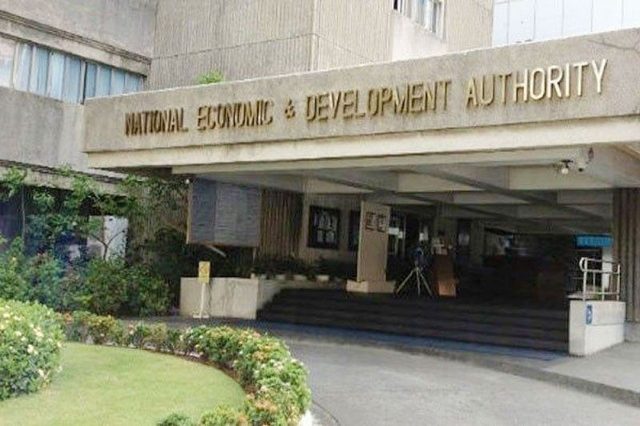
THE National Economic and Development Authority (NEDA) said its latest draft implementing rules and regulations (IRR) for amendments to the Foreign Investments Act of 1991 calls for the creation of a committee to coordinate efforts to attract foreign investment.

NEDA released the new draft at a public consultation on Wednesday.

The revised draft IRR, dated May 11, contains a new Section II dealing with the creation of an “Inter-agency Investment Promotion Coordination Committee” (IIPCC).

The committee is tasked, according to Rule III — Powers and Functions, with “establish(ing) both a medium-and-long-term foreign investment promotion and marketing plan (FIPMP),” which will coordinate all existing investment development plans under the Board of Investments, the Philippine Economic Zone Authority (PEZA), and other Investment Promotion Agencies (IPAs), for a common framework.

Sitting on the committee will be nine National Government officials and four private sector representatives.

Chairing the committee is the Trade Secretary, with the vice chair held by either the Finance Secretary or an undersecretary. Other members from government are the Director-General of PEZA, a foreign affairs undersecretary, the Economic Planning Secretary, the Secretary of Information and Communications Technology, the Technical Education Skills Development Authority chairperson, and the chairperson or commissioner of the Commission of Higher Education.

The four private sector members will each represent the National Capital Region, Luzon, the Visayas, and Mindanao.

The investment promotion and marketing plans are expected to guide foreign investors considering investment opportunities in the Philippines.

“As we understand right now, there are existing investment plans of various government agencies, the IPAs, even across local government units (LGUs),” NEDA Supervising Economic Development Specialist Esther O. Kinuta said. “Since these are fragmented, what we envision by institutionalizing the IIPCC and having them publish a FIPMP, is to harmonize them all into one plan, that would be investor friendly.”

She said the committee may consider setting up a single portal to gather all the foreign investment-related legislation currently deposited in various government websites to help potential investors better evaluate the regulatory landscape. — Tobias Jared Tomas

DENR to watch Tampakan closely after province lifts open-pit ban

PHILSTAR FILE PHOTO

THE Department of Environment and Natural Resources (DENR) said it will closely monitor the Tampakan open-pit copper-gold project in South Cotabato to ensure its compliance with rules protecting the environment.

“The environment will not be sacrificed. We will see to it that the soon-to-commence Tampakan copper-gold project will be strictly monitored in compliance with applicable mining and environmental laws, rules, and regulations,” DENR Acting Secretary Jim O. Sampulna said in a statement.

On Monday, the South Cotabato provincial government lifted its ban on open-pit mining, following the amendment of the province’s Environment Code.

The lifting of the ban clears the way for Tampakan, a project of Sagittarius Mines, Inc. (SMI), to proceed with operations.

Mr. Sampulna said the department “will also require SMI to invest in equipment and manpower to ensure mitigation in case of any adverse impacts from the mining operation.”

Mines and Geosciences Bureau Director Wilfredo G. Moncano said technology can address the potential environmental impact of open-pit mining.

“We also have the DENR policy that requires mining companies to (set aside) funds in all stages of the mining operation necessary for environmental protection and enhancement,” he said.

The bureau is set to convene the Mine Rehabilitation Fund Committee to oversee the use of the funds set aside for SMI’s environmental protection and enhancement program, progressive rehabilitation, and social development activities.

Mr. Moncano said SMI is compliant with all other major requirements to legally operate.

On Tuesday, Mr. Sampulna signed an administrative order setting guidelines for responsible practices to preserve terrestrial and marine biodiversity near mine sites.

“With this new order, we believe that mining companies will be more mindful of their practices in utilizing the country’s natural and mineral resources,” he said.

“We have repeatedly mentioned in the past that mineral extracting operations can be done responsibly, that the rich biodiversity within the mine site can be protected. Thus, this order is expected to support our responsible mining initiative,” he added.

The administrative order requires mining contractors and permit holders to include biodiversity measures in their respective environmental work programs, environmental protection and enhancement program, and final mine rehabilitation or decommissioning plan.

The order also requires mining companies to integrate biodiversity conservation and protection into their Social Development and Management Program (SDMP).

SDMPs are five-year plans required of mining contractors and permit holders, outlining their support for the development of host and neighboring communities. — Luisa Maria Jacinta C. Jocson

Refrigerant gas shipment from China seized in Cebu

PHILSTAR

THE Bureau of Customs (BoC) said environmental officers at the Port of Cebu blocked a shipment of refrigerant gas from China that is thought to be dangerous to the ozone layer.

The BoC said in a statement on Wednesday that 300 cylinders were found to contain Trifluoromethane, a greenhouse gas, which were shipped without benefit of an import clearance. The shipment arrived from China on May 11.

The Environmental Protection and Compliance Division (EPCD) of Cebu, acting on suspicion of probable violation, requested a pre-lodgment control order from the Environmental Management Bureau (EMB), which barred the shipment’s release.

The inspection was conducted by Customs Examiner Ronor N. Alinsug, alongside representatives from the EPCD, the Enforcement and Security Service, the Customs Intelligence and Investigation Service, the X-Ray Inspection Project Team, the Philippine Coast Guard, the Philippine Drug Enforcement Agency, and the EMB.

“Under (Department of Environment and Natural Resources)-EMB Memorandum Circular No. 2005-03, importation of alternatives to ozone-depleting substances such as Trifluoromethane must be covered with Pre-shipment Importation Clearance prior to its entry into the Philippine territory,” the BoC said.

District Collector Charlito Martin R. Mendoza subsequently ordered the shipment’s seizure, citing Section 117 of Republic Act 10863, or the Customs Modernization and Tariff Act. Section 117 states that goods may only be imported after fully securing the necessary clearances. Section 1113 (F) and (L-5) also calls for such goods to be subject to seizure. — Tobias Jared Tomas

British chamber backs extension of low-tariff pork policy

REUTERS

THE British Chamber of Commerce Philippines (BCCP) said it supports a proposal to extend the low-tariff regime on pork imports.

At the BCCP’s Philippine-British Meat Trade Mission event on Wednesday, BCCP Executive Director Chris Nelson told reporters that the chamber supports continuing with the current tariff arrangements.

“We would look for lowering of (the tariff). We think it benefits the consumer, we think it benefits the industries involved,” Mr. Nelson said.

“That has been a key factor in consideration of bringing down prices. We are hopeful that a new order will be implemented. And then of course, that will benefit the continuation of imports,” he added.

Executive Order (EO) No. 134, signed by President Rodrigo R. Duterte on May 15 last year, temporarily lowered pork tariffs until May 17, 2022.

The order reduced the tariff of pork imports within the minimum access volume quota to 10% in the first three months and 15% in the next nine months. It also set tariffs for out-of-quota pork imports to 20% in the first three months and 25% in the next nine months.

The Economic Development Cluster has lobbied for an extension of EO 134 to address rising commodity prices and to temper inflation.

Separately, Mr. Nelson said the BCCP is seeking to establish a long-term relationship for the meat trade between the UK and the Philippines.

The trade mission is a partnership with the UK’s Agriculture and Horticulture Development Board. The mission runs until May 19.

“The overall target is long-term relationships. So, what we are trying to achieve here is that instead of pork and beef being (subject to) opportunity trading, what we are trying to do now is build up long-term relations,” Mr. Nelson said.

The trade mission consisted of nine British meat suppliers looking to explore opportunities in the Philippines — Red Tractor, ABP Food Group, Buitelaar Group, Dingley Dell Pork, Dunbia, Foyle Food Group, GPS Food Group Ltd., Norwest Foods International Ltd., and Pilgrim’s Pride Ltd.

“There has been a significant growth in imports of British pork. The fact that you have nine companies here is a testament to the interest,” Mr. Nelson said.

“These people will have business-to-business meetings and meet new customers. The overall aim to be a consistent and growing exporter of meat to the Philippines,” he added.

According to the Bureau of Animal Industry, UK meat exports to the Philippines in 2021 amounted to 35.16 million kilograms, making up 3% of Philippine meat imports, which total 1.17 billion kilograms. — Revin Mikhael D. Ochave

CAVITEX operator defers toll increase to May 22

CAVITEX Infrastructure Corp. (CIC) said on Wednesday that it is deferring the collection of higher tolls at the Manila-Cavite Toll Expressway (CAVITEX) Parañaque Toll Plaza to May 22 to allow more public utility vehicle (PUV) drivers and operators to register for its toll reprieve program.

“Starting May 22, CIC, the concessionaire for CAVITEX, along with joint venture partner Philippine Reclamation Authority (PRA), is set to implement new toll rates in CAVITEX Parañaque Toll Plaza. The supposed implementation at Parañaque Toll Plaza last May 12 was deferred,” the company said in a statement.

The toll reprieve program allows road users to continue to enjoy the old toll rates of P25 for Class 1 (cars and SUVs) and P50 for Class 2 vehicles (minivans and buses) through a rebate system, it added.

The program will run for 90 days starting on the first day of the implementation of the higher toll rates.

“Target enrollees to the program are all drivers and operators of the 1,420 public utility vehicles that ply CAVITEX,” the CIC said.

It noted that the new rates are inclusive of the 2011 and 2014 periodic toll petitions, and add-on toll petition for enhancement works carried out on the expressway.

“Thus, starting May 22, motorists plying CAVITEX R-1 segment (Cavitex Longos Bacoor to MIA Exit v.v.) will be charged the following VAT-Inclusive amounts: P33.00 for Class 1 vehicles,  P67.00 for Class 2, and P100 for Class 3 (large trucks and trailers),” the company said.

NLEX Corp. also announced recently that the Toll Regulatory Board approved its application to raise tolls by P2 in the open system and P0.34 per kilometer in the closed system.

A flat rate is charged on users of the NLEX open system (Balintawak to Marilao), while the closed system (Bocaue to Mabalacat) applies per-kilometer rates.

Starting May 12, motorists on NLEX’s open system will pay an additional P2 for Class 1 vehicles, P6 for Class 2, and P8 for Class 3. Current rates are P60, P149, and P179 for the three classes, respectively.

Closed system users between Metro Manila and Mabalacat will pay an additional P27 for Class 1, P69 for Class 2, and P82 for Class 3 vehicles.

CIC and NLEX Corp. are controlled by Metro Pacific Tollways Corp., a unit of Metro Pacific Investments Corp. (MPIC).

MPIC is one of three Philippine units of Hong Kong’s First Pacific Co. Ltd., the others being Philex Mining Corp. and PLDT, Inc. Hastings Holdings, Inc., a unit of PLDT Beneficial Trust Fund subsidiary MediaQuest Holdings, Inc., has a majority stake in BusinessWorld through the Philippine Star Group, which it controls. — Arjay L. Balinbin

Corporate dissolution: Untangling the confusion over shortening the corporate term

If you’re familiar with the saying “The doors that once opened for you and brought light in your life can close anytime and put you in darkness,” you might be able to relate to the corporate dissolution process. The process can seem like a dark, one-way tunnel for the company legally settling its affairs, with the end view of being permanently laid to rest, also known as corporate death. The process is not only time-consuming; it is likewise expensive and tedious.

With the issuance by the Securities and Exchange Commission (SEC) of Memorandum Circular No. 5-Series of 2022 (MC 05-2022), a light has appeared at the end of the tunnel. The MC promulgates a new set of guidelines on corporate dissolution effective March 9, 2022. Its main aim is to standardize the dissolution procedure to comply with the amendments introduced by the Revised Corporation Code. A uniform regulation will, it is hoped, eliminate the complexities that come with dissolution.

MC 05-2022 updated the guidelines on the Voluntary Dissolution of Companies in which creditors are not affected and outlined the instances where the SEC can motu propio dissolve a corporation — Involuntary Dissolution. However, these rules are nowhere near as confusing as the rules for shortening the corporate term via the amendment of a corporation’s Articles of Incorporation (AoI), which is, by far, the most common closure route taken by companies. The latter contemplates two scenarios in Section 1, Part B of MC 05-2022. First, where the proposed expiration of the corporate term is at least one year from the SEC’s approval of the application for amendment; second, where the proposed expiration of the corporate term is less than one year from the approval of the application for amendment. 

Skimming through the documentary requirements for submission to the SEC, one glaring but relevant distinction between the two is the requirement to submit a Tax Clearance, which is applicable only in the second scenario.

In a nutshell, the entire closure process generally consists of a series of steps usually commencing at the local government where the company operates, followed by closure with the concerned Revenue District Office (RDO) and lastly, with the SEC. The filing of applications with the Social Institutions (SSS, Pag-IBIG and PhilHealth) may be processed concurrently with the local government and RDO applications.

Given the sequence of closures per government agency, the usual culprit for delaying the dissolution before the SEC is the requirement for a “Certificate of No Outstanding Tax Liability” (Tax Clearance) issued by the RDO as a supporting document. Based on experience, securing a tax clearance usually takes years, considering the mandatory audit of a company’s accounting records for the last three years of operation.

Under the old rules, companies commonly opted to close their business by shortening their corporate term, which required the submission of a tax clearance. But if the proposed date of closure is at least one year from the date of application for closure, the requirement for a tax clearance is waived by the SEC. While this rule is maintained under the new guidelines, a new option was introduced requiring a tax clearance if the proposed date of closure is less than a year from the date of approval of the application.

Notably, Section 2 of Part B of the MC also provides that “the proposed expiration of corporate term for all applications for amendmentshall contemplate a future date.”

Here lie the inconsistencies.

Procedurally, a tax clearance application with the BIR may only be filed once the proposed closure date has lapsed, as supported by a Corporate Board Resolution. Accordingly, a corporation seeking to close under the new option faces two dilemmas. One will be its inability to file its application for tax clearance with the BIR since the actual closure is still a future date. It will have to wait for the proposed date to lapse before applying for a tax clearance. Another dilemma is that by the time the tax clearance is available, the proposed date of closure will have probably lapsed, and thus the SEC will likely reject its application as it is no longer a future date as required by the new issuance.

Previously, the SEC accepted the application for shortening the period even if the proposed date of closure has lapsed or contemplates a past date. The dissolution merely retroacts to the said date. Thus, the BIR’s requirement of a past or lapsed date of closure to commence the tax clearance application appears to run counter to the SEC’s rule on a future date to process the amendment application.

As such, it would be close to impossible to comply with the tax clearance requirement of the SEC under the new option.

Furthermore, the new issuance’s reckoning date of “from approval of the application for amendment” and the requirement of “future date” may also cause issues in availing of the first option since they require corporations to predict the period of SEC processing. This begs the question, what will happen if the proposed date of closure, while at least one year from the filing of the application, is approved at a date which is already less than a year from proposed date? Does this mean that the application falls under the new option and thus requires a tax clearance?

Clearly, additional issuances clarifying the application of the new set of guidelines, particularly on the new option, may be needed to illuminate the seemingly incompatible and clashing requirements of the BIR and SEC.

After all, the last thing any dissolving corporation needs is a complication that will prolong its agony.

The views or opinions expressed in this article are solely those of the author and do not necessarily represent those of Isla Lipana & Co. The content is for general information purposes only, and should not be used as a substitute for specific advice.


Maxencio Jr. Rios is a senior associate at the Tax Services Department of Isla Lipana & Co., the Philippine member firm of the PwC network.

maxencio.jr.rios@pwc.com

Malixi leads PHL team to bronze medal in golf match play

VINH PHUC — Teener Rianne Malixi delivered in style, coming through with a spectacular chip-in birdie on the fourth playoff hole to beat Singapore’s Suanne Loh on Wednesday and power the Philippines to the bronze medal in women’s golf team match play at the Heron Lake Golf course.

Ms. Malixi’s heroics came after she muffed a five-foot downhill birdie putt on No. 1, the third playoff hole, giving Loh, whose own chip hit the cup but lipped out, and Team Singapore another crack at the hotly-disputed medal.

Both players overshot the par-5 No. 9, where they matched par twice in the playoff, but the ICTSI-backed Ms. Malixi, 15, hit a perfect chip shot, the ball landing before the green then rolling from left to right before dropping to the cup.

Undaunted, Ms. Loh also hit a solid chip-shot, the ball heading straight to the hole only to swerve to the left, sending Malixi and Team Philippines into frenzy and reducing the Singaporean lass to tears.

That chip saved the week for the Filipino golfers, who could finish no higher than fourth in women’s individual play courtesy of Lois Kaye Go, with Ms. Malixi ending up joint ninth behind eighth placer and ICTSI teammate Mafy Singson and 15th in the men’s side through Jed Dy.

The men’s squad, which included Jet Hernandez, Gab Manotoc and Kristoffer Arevalo, also absorbed a 0-3 beating from Indonesia in the men’s team quarterfinal match play.

Earlier, Ms. Malixi upstaged individual silver medalist Aloysa Mabutas 3 and 2 to force a playoff for the bronze after Ms. Go lost 4 and 3 to Loh.

Ms. Malixi took the first two holes against Ms. Mabutas, surrendered the next but held sway all throughout their tight duel, going 2-up again by taking No. 15.

A solid tee-shot on the par-3 16th set up another birdie chance from six feet and the rising Filipina star delivered, draining in a downhill putt to clinch the victory.

She pumped her fist then gave Ms. Mabutas, whose parents are Filipino migrants, the customary hug before celebrating with her team.

It was a big windup for Malixi, who groped for form in individual play and in the first round of team match play, dropping a 2 and 1 setback to Thai gold medalist Natthakritta Vongtaveelap in their semis duel but came into the bronze medal match brimming with confidence, winning the first two holes against Mabutas.

In contrast, Ms. Go struggled against Ms. Loh. The member of the bronze medal team in the 2019 SEA Games in Tarlac never recovered after trailing on No. 3, giving up another hole on the sixth. She took No. 8 but yielded the 10th and gave up three straight holes from No. 13.

Malaysia staked its claim as the new force in men’s amateur golf in the region, breaking the vaunted Thailand side with a 2 and 1 victory on Rhaasrikanesh Kanavathi’s equally stirring chip-in for birdie on the 18th for a 1-up triumph over Pongsapak Laopakdee and a 2-1 victory for the team gold.

Ervin Chang held off Weerawish Narkprachar 2 and 1, while fancied Ratchanon Chantananuwat earlier nipped Marcus Lim, 1-up, to split the first two matches with Kanavathi’s last-hole brilliance likewise preserving Chang’s gold medal sweep.

Indonesia beat Singapore 2 and 1 to claim the men’s bronze team medal.

The Thai women’s squad, however, swept the gold medals with Ms. Vongtaveelap running away with the individual honors and then teaming up with Eila Galitsky in their 1.5-0.5 victory over Malaysia in the gold medal match.

Ms. Galitsky provided the clincher with a 1-up victory over individual bronze medalist Jeneath Wong with Ms. Vongtaveelap settling for an all-square match with Mirabel Ting.

PHL women’s team blank Vietnam, 2-0, to keep gold medal hopes

QUANG NINH — The Philippine women’s team beat host Vietnam, 2-0, to keep its hopes of making the gold medal match rolling in the 31st Southeast Asian Games beach volleyball tournament on Wednesday at the Tuan Chau Beach.

Unlike in their 2019 showdown where the Vietnamese forced a golden match, the Filipinas got the job done via sweep to improve their win-loss record to 3-1.

Jovelyn Gonzaga and Dij Rodriguez remained undefeated in four matches as the first-time partners topped Truong Duong My Huyen and Nguyen Thi Thanh Tram, 21-13, 22-20.

Rebounding from the two defeats in the Philippines’ 1-2 setback to Indonesia Tuesday, Sisi Rondina and Bernadeth Pons made quick work of Vu Ngoc Lan Nguyen and Nguyen Le Thi Tuong Vy, 21-16, 21-12.

The Indonesians, also sporting a 3-1 record, hold the tie-breaker against the Filipinas in case both teams end up locked in second place. Indonesia, the 2019 silver medalist, bested Malaysia, 2-0.

The Philippines will wrap up its round-robin assignments against 2019 gold medalist Thailand at 3:45 p.m. (Manila time) on Thursday.

The Filipinas can advance to the gold medal match if they beat the Thais coupled with a loss by the Indonesians to the Vietnamese.

Fernandez gives thumbs-up to Vietnamese SEAG hosts

HANOI — Except for some minor hitches, national team chef de mission Ramon Fernandez on Wednesday gave the thumbs-up to the Vietnamese hosts for the organization of the 31st edition of the Southeast Asian Games (SEAG).

“The Vietnamese SEA Games hosts have been warm, hospitable and run a tight ship. The accommodations of our athletes, coaches and other staff of the Philippine team are comfortable. We have been treated well. There have been no major complaints,” Mr. Fernandez said.

He said that the one problem he has heard so far was the transport from the hotels of the participants to the training and competition venues, which was understandable since Vietnam, like the rest of the region, was still coping with the coronavirus disease 2019 (COVID-19) pandemic.

“The organizers have been apologetic about this issue and have addressed our concerns as soon as they can whenever the transport problems crop up,” Mr. Fernandez noted, also a commissioner of the Philippine Sports Commission.

“Overall, we are satisfied by the treatment of our Vietnamese hosts and give them the thumbs-up.”

Mr. Fernandez revealed that national team morale remains high after visiting most of the country’s campaigners in the Vietnamese capital and surrounding areas, a testament to their resiliency despite the many challenges they faced in gearing for the regional sports showcase.

“We have tried our best in visiting all of our athletes in the various sports and found most, if not all, of them in high spirits,” he said.

He cited the example of track and field athlete Clinton Kingsley Bautista, who bucked a serious shin injury barely a month before the regional meet to recover in time in retaining the men’s 400-meter hurdles title with a record-breaking run at the My Dinh National Stadium last Monday.

Sticking basically to the successful game plan in his breakthrough win in the 2019 30th SEA Games trackfest at the New Clark City in Capas, Tarlac, Bautista blasted away from the starting blocks to win the race in a new national mark of 13.78 seconds.

The 29-year-old pride of Camiling, Tarlac reset the five-year-old standard of 13.91 seconds set by Patrick Unso, the son of celebrated middle distance runner Renato Unso, in the 2017 Thailand Open.

“Clinton showed a heroic effort in overcoming adversity to retain his hurdles title. I hope the rest of our competing athletes can draw inspiration from his experience,” Mr. Fernandez said.

Jimmy Butler pours in 41 as Heat down Celtics in Game 1

JIMMY Butler scored 17 of his 41 points in an epic third-quarter uprising to help the host Miami Heat rally for a 118-107 victory over the Boston Celtics in Game 1 of the Eastern Conference finals on Tuesday night.

Butler also contributed nine rebounds, five assists, four steals and three blocked shots to help Miami overcome a 13-point, second-quarter deficit. The Heat outscored Boston 39-14 in the third quarter to seize a 93-76 lead entering the final stanza.

Tyler Herro registered 18 points and eight rebounds and Gabe Vincent scored 17 points for Miami.

Jayson Tatum recorded 29 points, eight rebounds, six assists and four steals for the Celtics. Jaylen Brown had 24 points and 10 rebounds, Robert Williams III added 18 points and nine rebounds and Payton Pritchard also scored 18 points for Boston.

Game 2 is Thursday night in Miami.

The Celtics played without NBA Defensive Player of the Year Marcus Smart (right foot) and Al Horford (COVID-19 protocol). Williams started in Horford’s place, returning from a four-game absence caused by a left knee injury.

The Heat were without Kyle Lowry (left hamstring) for the seventh time in the past nine games.

Max Strus scored 11 points and Bam Adebayo added 10 points and four blocked shots for Miami. The Heat shot 48.8% from the field, including 10 of 30 from 3-point range.

Boston made 45.6% from the field and was 11 of 34 from behind the arc.

Miami opened the third quarter with a 22-2 burst to turn an eight-point half time deficit into a 76-64 lead. Boston didn’t make a field goal for the first 7:07 of the period.

After the Celtics scored nine straight points to move within three, the Heat finished the quarter with a 17-3 surge to hold the 17-point edge. Boston shot just 13.3% (2 of 15) from the field in the period.

Herro was fouled while shooting a 3-pointer and made all three free throws to give Miami a 96-76 lead with 10:45 left in the contest. Boston answered with 10 straight points and pulled within 96-86 on two free throws by Grant Williams with 8:21 remaining.

The Heat led by 13 after a 3-pointer by Strus with 3:18 left, but the Celtics scored eight of the next 10 points, with Pritchard’s trey pulling Boston within 114-107 with 1:29 left.

Two free throws by Vincent and a layup by Butler clinched it for Miami.

Tatum scored 21 first-half points as Boston held a 62-54 lead at the break. The Celtics shot a torrid 59.1% from the field in the half. Miami shot 48.8%. — Reuters