Home Blog Page 5868

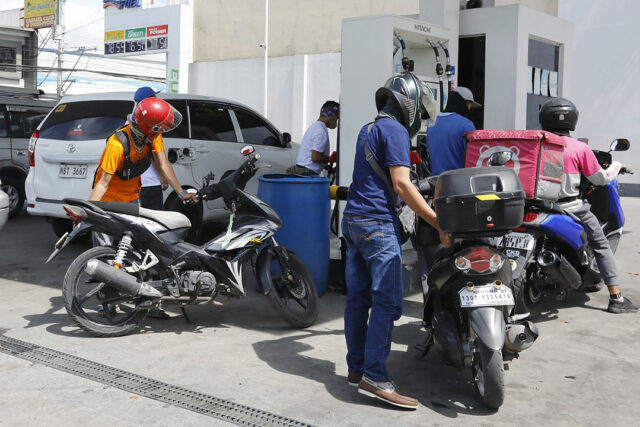
Senator says amending law for oil price transparency ‘may take time’  

PHILIPPINE STAR/ WALTER BOLLOZOS

THE OUTGOING chair of the Senate energy committee on Wednesday said it may take timeto amend the Oil Deregulation Law to include provisions that will make oil prices more transparent through unbundling of costs.  

The solution to amend the Oil Deregulation Law is not an immediate solution (to rising oil prices), it is a long-term solution,Senator Sherwin T. Gatchalian told the media in a briefing.  

Changes in the law should ensure “transparency in terms of pricing, volume of oil companies,” said the senator, “but we also have to respect theirproprietary secrets and business transactions because many of their contracts are proprietary in nature.” 

During the committees consultative meeting with oil industry stakeholders on Tuesday, the Energy department said mechanisms should be set up under Republic Act 8479 or the Downstream Oil Industry Deregulation Act to determine real costs of fuel.  

The industry take is 19% these include all other items that the oil companies have been adding on to the pump prices, thats what we would want to inquire on,Energy Undersecretary Gerardo Erguiza, Jr. said at the hearing. 

To have proper safeguards, the government will have to receive information on the price of an oil company’s cargo, the date it was received and the costs of their inventory, Mr. Gatchalian said.  

With such mechanisms, the government can prevent abuses in times of abnormal international pricing,” he added.  

As an immediate solution to the continuing oil price hike, the senator proposed an expansion of the cash aid program at P3,000 monthly for jeepneys drivers and P1,000 monthly for tricycle drivers over the next five months.    

He said this will cost about P4 billion, which is lower than the P150 billion in potential income loss for the government if the excise tax is lifted.   

We can also expand the Libreng Sakay (free ride) program of the government, so those who stop plying their routes or plying the roads can be contracted by (the) government to serve the riding public,he said. Alyssa Nicole O. Tan 

P11B worth of seized illegal drugs destroyed 

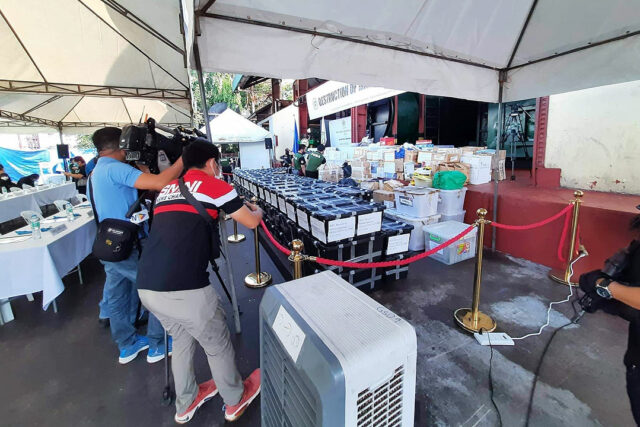
NBI

LAW enforcers have destroyed P11 billion worth of illegal drugs seized during an operation in March, according to the National Bureau of Investigation (NBI).   

In a statement on Wednesday, NBI Officer-in-Charge Eric B. Distor said the destruction of what is considered as the biggest drug haul in the country’s history took place on June 2 in Trece Martirez, Cavite.   

“NBI Chemists participated in placing the dangerous drugs inside the pyrolysis machine while other forensics officers were allowed to take photos and oversee the destruction,” Mr. Distor said.  

The NBI, Philippine Drug Enforcement Agency, and local police in Infanta, Quezon seized the crystal methamphetamine, locally known as shabu, and led to the arrest of 10 suspects during an operation on March 15. 

The Department of the Interior and Local Government (DILG) previously reported that law enforcers seized P13.2 billion worth of illegal drugs from 1,794 raids from March 6 to 19 alone. 

DILG added that 61 suspects surrendered, 2,471 were arrested, and two were killed in those anti-drug operations. 

Justice Secretary Menardo I. Guevarra earlier said President Rodrigo R. Duterte’s war on illegal drugs was largely successful despite “excesses” committed by rogue cops. 

“People now feel safer in the streets even at night due to the visible reduction in drug pushing incidents,he told an online forum last week. In that aspect, the campaign against drugs was fairly successful.”  

Philippine prosecutors have filed charges in court against law enforcers in four cases and were planning to probe 250 more of what could have been wrongful deaths in Mr. Dutertes war on drugs, Mr. Gueverra told the United Nations Human Rights Council in February.  

We are very much aware of these excesses,he told the forum. We have a drug war committee that really investigates reports of abuse or use of unnecessary force by law enforcement agents.”  

The Philippine Human Rights Commission said the Duterte government had encouraged a culture of impunity by hindering independent inquiries and by failing to prosecute erring cops involved in the governments anti-drug campaign. John Victor D. Ordoñez 

Incoming lawmaker Tulfo vows support to more digitized courts

SUPREME COURT PIO

AN INCOMING senator on Wednesday vowed to support the goal of setting up more digitized courts to increase efficiency in the countrys legal system.   

I am open to working with the Supreme Court and the court administrator on how to increase the efficiency of its work processes through digitization, computerization, and faster communication, while still maintaining proper administration of justice,Senator-elect Rafael T. Tulfo said in a statement.  

Mr. Tulfo took his oath of office on Wednesday before Supreme Court Senior Associate Justice Marvic M.V.F. Leonen.  

This is necessary and urgent so that the innocent and the reformable detainees can be released sooner rather than later by the tens of thousands,he said.  

The incoming senator said budgetary requirements should be provided since more online or video conferencing are needed not just at the courthouses or halls of justice, but also at the jails at the municipal, city, and provincial levels.”  

The Philippines has one of the highest jail occupancy rates in the world since outgoing President Rodrigo R. Dutertes drug war, according to Human Rights Watch.  

Data released early this year show a 114% congestion rate in national facilities run by the Bureau of Corrections.   

The Bureau of Jail Management and Penology, which is in charge of local detention centers, had an even higher congestion rate at 582%. More than 70% of those detained at BJMP facilities face drug-related cases. Alyssa Nicole O. Tan

Supreme Court affirms CoA disallowance of Panabo City council members’ travel expenses in 2012

PHILSTAR FILE PHOTO

THE SUPREME Court upheld a 2012 ruling of the Commission on Audit (CoA) that disallowed the travel expenses of the then sitting Panabo City councilors and vice mayor worth P1.4 million used for training programs held that year. 

In a 10-page resolution dated Feb. 15 and made public on June 20, the High Court said CoA did not abuse its discretion in disallowing the “irregular, excess, and illegal” expenditures. 

“The court finds the approving certifying officers solidarity liable to return the entire disallowed amount,” the tribunal said.   

“The court also finds merit in CoA’s argument that the petitioners’ (Panabo City council) failure to submit pertinent documents evidencing that the training programs were bona fide and the double expenses they incurred militate against their claim of good faith.”  

Under Philippine law, the vice mayor serves as presiding officer of the local council.    

The High Court ordered the petitioners to return the disallowed amounts they had received for the training programs.  

The petitioners said their attendance in the training program offered by the Philippine Councilors League-Legislative Academy in 2012 had a legal basis and they relied on “good faith” in the Department of the Interior and Local Government, which organized the training program.  

The Court noted that these were not sufficient grounds for an appeal that would warrant a reversal of CoA’s findings.  

“Without a doubt, the foregoing reflects the approving and certifying officers’ gross negligence of their duties and responsibilities as members of the Sangguniang Panlungsod (city council), who hold the important role of disbursing public funds,” it said. John Victor D. Ordoñez 

UK inflation soars to 40-year record of 9.1%

REUTERS

LONDON — Soaring food prices pushed British consumer price inflation to a 40-year high of 9.1% last month, the highest rate out of the Group of Seven (G7) countries and underlining the severity of the cost-of-living crunch.

The reading, up from 9.0% in April, matched the consensus of a Reuters poll of economists. Historical records from the Office for National Statistics show May’s inflation was the highest since March 1982 — and worse is likely to come.

Sterling, one of the worst performing currencies against the US dollar this year, fell below $1.22, down 0.6% on the day.

Some investors judge Britain to be at risk of both persistently high inflation and recession, reflecting its large imported energy bill and continuous Brexit troubles which could further hurt trade ties with the European Union.

“With the economic outlook so unclear, no one knows how high inflation could go, and how long it will continue for — making fiscal and monetary policy judgements particularly tough,” said Jack Leslie, senior economist at the Resolution Foundation think tank.

Earlier on Wednesday the Resolution Foundation said the cost-of-living hit for households had been compounded by Brexit, which had made Britain a more closed economy, with damaging long-term implications for productivity and wages.

Britain’s headline inflation rate in May was higher than in the United States, France, Germany and Italy. While Japan and Canada have yet to report consumer price data for May, neither are likely to come close.

The Bank of England said last week that inflation was likely to remain above 9% over the coming months before peaking at slightly above 11% in October, when regulated household energy bills are due to rise again.

The British government was doing all it could to combat a surge in prices, finance minister Rishi Sunak said after the data.

Prices for food and non-alcoholic drinks rose by 8.7% in annual terms in May — the biggest jump since March 2009 and making this category the biggest driver of annual inflation last month.

Overall consumer prices rose by 0.7% in monthly terms in May, the ONS said, a little more than the 0.6% consensus.

British factory-gate prices — a key determinant of prices later paid by consumers in shops — were 22.1% higher in May than a year earlier, the biggest increase since these records began in 1985, the ONS said. — Reuters

US to propose rule to limit nicotine levels in cigarettes

FREEPIK

THE BIDEN administration plans to propose a rule to establish a maximum nicotine level in cigarettes and other finished tobacco products in an attempt to make them less addictive, the White House Budget Office said Tuesday.

The rule, expected in May 2023, would be designed with the goal of making it easier for tobacco users to quit and help prevent youth from becoming regular smokers, according to a document released by the White House Budget Office.

The proposal comes as the Biden administration doubles down on fighting cancer-related deaths.

Earlier this year, the government announced plans to reduce the death rate from cancer by at least 50% over the next 25 years.

Nicotine is the addictive substance in tobacco. Tobacco products also contain several harmful chemicals, many of which could cause cancer.

Tobacco use costs nearly $300 billion a year in direct healthcare and lost productivity, according to the US Food and Drug Administration (FDA).

Cigarette smoking and exposure to tobacco smoke cause about 480,000 premature deaths each year in the United States. Health experts have long said it is the largest cause of preventable deaths.

More than 7,300 nonsmokers die each year from lung cancer caused by secondhand smoke, according to the US Centers for Disease Control and Prevention. The current smoking rate is 12.5% in the US for adults.

In April, the FDA issued a long-awaited proposal to ban menthol cigarettes and flavored cigars, seen as a major victory for anti-smoking advocates.

The news on the proposed rule was earlier reported by the Washington Post. — Reuters

G20 chair Indonesia to push for peace with Ukraine, Russia visits

REUTERS

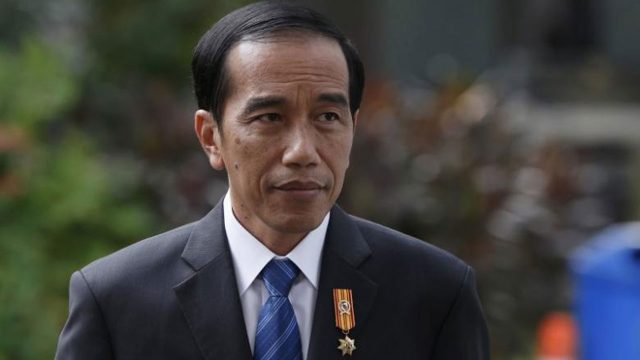
JAKARTA — Indonesian President and G20 chairman Joko Widodo will visit counterparts in Ukraine and Russia next week and press for a peaceful resolution to their conflict, his foreign minister said on Wednesday, the first such trip by an Asian leader.

The Ukraine war has overshadowed meetings of the Group of 20 (G20) major economies this year, with Indonesia struggling to unify its members while resisting pressure from Western states threatening to boycott a November leaders’ summit and pushing for Russia’s exclusion.

Foreign Minister Retno Marsudi said the visits by Jokowi, as the Indonesian president is known, to both Kyiv and Moscow would be conducted in a “not normal” situation.

“The president is showing compassion on the humanitarian crisis, will try to contribute to the food crisis caused by the war, and the impact felt on all countries, especially the developing and low-income ones,” she told a news conference. “And he’ll keep pushing for the spirit of peace.”

The months-long fighting in the region began in February with Russia’s invasion of Ukraine, which Moscow calls a “special military operation”.

The conflict has caused major disruption to supply chains, stoking a food and energy crisis that has seen inflation soar in many countries, some of which have imposed export curbs to ensure domestic supplies.

Jokowi will meet Ukrainian President Volodymyr Zelensky and his Russian counterpart Vladimir Putin, having previously invited both to attend the G20 summit on the island of Bali.

Ms. Retno did not elaborate on what Jokowi would raise at the talks, which would follow the G7 Summit in Germany and bilateral meetings with leaders of those countries and others.

Jokowi’s office did not immediately respond to a request for further details.

The president would discuss food security issues at those meetings in Germany, noting the global importance of Russia and Ukraine in terms of natural gas, oil, wheat and barley, Ms. Retno said.

“The situation is very complex right now. The continued war will have an impact on humanity including food, energy, and financial crises,” she said, adding as G20 chairman Jokowi had spoken to leaders of the United Nations, Germany, Turkey recently.

“We’ve decided not to use a ‘megaphone diplomacy’ so that big benefits for the world can be achieved,” she added. — Reuters

Crucial three weeks for DoH

PATRICK ASSALE AND FUSION MEDICAL ANIMATION-UNSPLASH

The recent rise in the number of COVID cases is a not-so-gentle reminder that the pandemic is far from over. While it may seem that almost everything is back to the way they were pre-pandemic, the fact of the matter is, COVID-19 continues to put people in hospitals and in graves. Along with the case count, the death count is also on the uptick.

OCTA Research forecasts COVID-19 cases to reach 1,000 per day by the end of this June or early July, noting that Metro Manila might hit the peak in infections in the first two weeks of next month. OCTA’s Guido David told media that those numbers would put the capital at “moderate risk,” up from its present low-risk category.

The Department of Health (DoH) said the country was seeing the start of another peak in COVID-19 cases, with infections almost doubling to a daily average of 436 cases last week from just 240 the previous week. But the healthcare utilization rate has not gone up significantly in the same period. Other than Metro Manila, infections are also on the rise in the Ilocos region, Cagayan Valley, Calabarzon, Mimaropa, Western Visayas, and Northern Mindanao.

More transmissible Omicron subvariants, increased mobility, and waning vaccine immunity are the main drivers of the surge, according to the DoH. The recent rise in the number of cases is the “start of the peak,” said Health Undersecretary Maria Rosario Vergeire, noting the “rapid and sharp increase” in infections. “This might be the start that cases will continuously rise in the next couple of weeks,” she told media.

The next three weeks will thus be crucial for the DoH. Other than what appears to be the start of another COVID surge, it is also within this period that transition will occur. Health Secretary Francisco Duque, along with several other senior Health officials, are expected to step down on June 30 as President-elect Ferdinand Marcos, Jr. and his Cabinet assume office. And this will occur with the DoH not enjoying the benefit of a longer transition.

To date, the President-elect is still to name his Health Secretary. While the Republic will not collapse because of this, public health in general would have been better served by an early transition at the Health department. Mr. Marcos had said he would complete his Cabinet before his inauguration on June 30. Meantime, he has also opted to serve as interim Agriculture Secretary.

“The shortlist is getting shorter, let me put it that way. If we started with 10 names, a dozen names, we are down to maybe three or two in each of those departments,” Mr. Marcos told the media when asked about his picks for other agencies such as the DoH and the Department of Foreign Affairs.

“We took it really department by department, and of course Health, not to say that the DoH is unimportant, but we’re coming around to that,” he added. “I wouldn’t be surprised if we have an appointee or a nominee within the next week or so. I really want to get as many of those done before the inauguration.”

As I wrote previously, by July 1, it will be the Marcos II Administration’s responsibility to keep track of COVID-19 and other pandemics that may affect the country. Sadly, the delay in the nomination or designation of a new Health Secretary also put off the planning of new ways, methods, approaches, and interventions to further improve and future-proof our pandemic management.

As I had noted, the transition period between administrations is a crucial period, more so for a country like the Philippines that is experiencing a public health crisis. And while Mr. Marcos, I am sure, considers the DoH a priority, his delayed action on the matter appears to indicate otherwise. In my opinion, there is real urgency in the appointment of a new Health Secretary.

Too many things will be left hanging by next week, including the existence of ad hoc groups like the National Task Force Against COVID-19 (NTF) and the National Vaccination Operations Center (NVOC). This is a matter of grave concern given that the DoH points to the slow uptake in booster shots as one of the drivers of the present COVID surge.

Up until a new DoH secretary is in place, and the final set of senior Health officials are in office, things will most likely move slowly at the Health department. I doubt very much if the new team can hit the ground running. Everybody will probably wait for direction and personnel changes before pushing any new initiative. Meantime, many things will be on autopilot, or on a holding pattern.

The saving grace is that the bureaucracy remains intact. Work will continue, with or without a new secretary. However, the opportunity was obviously lost to plan ahead had a new secretary been named and given more time to meet with outgoing officials prior to the June 30 handover. COVID is not a thing of the past, and more pandemics — perhaps even worse ones — may still come.

As we have seen previously, the COVID case count can go from bad to worse in just a matter of days. At this point, waiting until the last minute to name a new DoH chief may no longer make a big difference. It is just that I hate to think that as government restarts on July 1, then the same goes for pandemic management. Can we expect positive results from new people rethinking the problem right in the middle of a surge?


Marvin Tort is a former managing editor of BusinessWorld, and a former chairman of the Philippine Press Council

matort@yahoo.com

The fertility crisis started in Japan, but it won’t stay there

ALEXANDER KRIVITSKIY-UNSPLASH

THE WORLD has an obsession with Japan’s shrinking population. Each year, news that the country is a little bit smaller can reliably be called upon for column inches, which tend to examine it as a Japanese mystery — one of those inherently Oriental concepts that foreigners could not possibly penetrate, like wabi-sabi or the bushido code of samurai warriors.

The New York Times asked in 2012, “Without babies, can Japan survive?” The Atlantic wrote about “the mystery of why Japanese people are having so few babies.” To be fair, Japan talks about the population crisis as much as anyone, with one paper recently calling for the declaration of a “declining birth-rate state of emergency.”

The proposal has echoes of the “climate emergency” legislation passed by governments such as the UK to heighten awareness of global warming. But Japan is to the fertility crisis what low-lying Pacific Islands are to the environmental crisis: just an early signal of the same problems that are coming for everywhere else.

Japan first took serious notice of its declining births in 1989, in an event known as the “1.57 Shock” — the total fertility rate (TFR) that was recorded that year, less even than the 1.58 of 1966*, when couples avoided having kids due to superstition over an inauspicious event in the Chinese Zodiac.

Despite three decades of task forces, government support programs, and ministers in charge of the issue, little has changed. While the decline in the birth rate has been arrested, Japan has been able to do almost nothing to significantly raise it. A record low of 1.26 was recorded in 2005, which has risen to 1.3 in 2021 — and while that’s impacted by the pandemic, it hasn’t been above 1.5 in more than three decades.

Japan is often convinced that its economic malaise since the 1980s is the root of its ills, but that link seems less than clear. Births dropped all through the 1970s and ’80s, with the “1.57 Shock” coming at the peak of its economic might. If anything, there seems to be an inverse relationship between wealth and fertility: Okinawa, the country’s poorest region, consistently has the highest rate, with wealthy Tokyo the lowest. The experience of other countries also indicates differently, with rich Singapore at an even lower rate than Japan. Almost every country in Europe lies below the 2.1 level needed to maintain the population, with countries including Croatia, Portugal, and Greece all set to lose similar levels to Japan over the next three decades.

“Economic conditions are not so helpful in explaining persistent trends,” explains Mikko Myrskyla, director of the Rostock, Germany-based Max Planck Institute for Demographic Research. “Scientists are somewhat helpless in explaining what then drives the long-term change.”

It’s a variation on the Anna Karenina principle: All fertile societies are alike; each infertile society is infertile in its own way.

While Western media once tended to obsess over how little sex the Japanese might be having, the same phenomenon is now being observed across the globe. Are there other unique social conditions, perhaps? Seen through a western lens, some of Japan’s problems might seem obvious: A notorious culture of overtime work or waiting lists for kindergartens.

Yet many of these issues are no longer as chronic as they once were — and alleviating them has had little impact on fertility. Average overtime hours have halved in less than 10 years, according to one report. The number of kids on waiting lists for kindergartens has plunged, down nearly 80% in 2021 from 2017, even as the female labor participation rate has risen.

What about Japan’s low gender equality? If anything, women’s increasing role outside the home in recent decades is one factor contributing to the decline, enabling women to delay marriage or not marry at all, according to one report. Nearby Taiwan touts itself as the most gender-equal society in Asia, but has a TFR rate of just 1.08 — the worst in the world, according to one estimate.

“Japan may have its own idiosyncrasies, but given the very large number of countries with persistent low fertility, each reaching low fertility its own way, it would be difficult to single out something specific,” said Myrskyla. He points to European countries such as Italy, Germany, Finland, and Hungary, where gender norms and public support for working mothers vary wildly, but the TFR is consistently low.

Myrskyla suggests “adaptation” is a likely better policy response than Japan’s 30 years of trying to increase births — investing in education, keeping people in jobs for longer, and integrating women and immigrants to top up the workforce. In recent years, Japan’s policy mix has also gradually come to focus not on changing people’s minds about marriage or kids, but helping those who lack opportunities — holding events for rural communities to meet potential partners, or the recent addition to health insurance coverage of expensive IVF treatments.

Perhaps the one thing that unites countries with low TFR is that they tend to be wealthy, even if wealthy countries don’t necessarily have below-replacement levels. Although Japan frets about how rich it truly is, it’s still a very wealthy nation in per-capita GDP terms. Many are surprised to learn that the US has a persistently low fertility rate of just 1.66. A Japanese saying describes a problem that is someone else’s issue as a “fire on the other side of the river.” When it comes to population, Japan’s struggles are anything but.

*Worryingly, the next such year, known as hinoe-uma, will occur in 2026.

BLOOMBERG OPINION

Questions on sports ethics

MICK DE PAOLA-UNSPLASH

Several days ago, the controversial Saudi Public Investment Fund-financed LIV Golf Invitational Series crowned its first winner, 37-year-old South African Charl Schwartzel. Not (yet exactly) a prominent member of golf’s who’s who, Schwartzel however has one major title — the US 2011 Masters — under his belt. He was one of 17 players who were immediately suspended by the PGA Tour for participating in the unsanctioned tournament. Among the others were Sergio Garcia, Dustin Johnson, Graeme McDowell, Phil Mickelson, Ian Poulter, and Lee Westwood.

Why the suspensions? Why is the involvement of the Saudi Arabia sovereign wealth fund controversial? These questions should be viewed from various perspectives: the sport or the game itself, the players, the fans, the partners and sponsors, and ethical and moral issues.

The answer to the first question is found in the letter of PGA Tour Commissioner Jay Monahan, quoted by senior writer Dylan Dethier of Golf.com, a professional golf news network: “A release from (Monahan) came through as the pros were on their second holes on Thursday and Monahan didn’t mince words: The tour players in the LIV (pronounced like ‘give’) field were immediately suspended from participating in any PGA Tour events. The duration of their suspensions was not immediately clear, ‘These players have made their own choice for their own financial-based reasons. A list of suspended pros followed at the bottom of the letter.’”

The PGA Tour is the organizer of the main men’s professional golf tour in the United States and North America. The nonprofit organization was spun off in 1968 from the Professional Golfers Association of America which is comprised of club professionals (professional golfers based in certain clubs as golf directors or teaching pros). The PGA Tour recognizes wins and records from back to April 1916 when the Professional Golfers Association of America was formed. It organizes an almost weekly series of tournaments known as the PGA Tour, as well championships such as PGA Tour champions (for players ages 50 years and above) and the Korn Ferry Tour (a developmental tournament for professionals who have not yet qualified to play in the PGA Tour). It also organizes tours in Canada, Latin America, and interestingly, China, whose own human rights records will later be compared with Saudi Arabia, the backer of the LIV Invitational Series.

LIV was embroiled in controversy the moment it was announced that the Saudis would bankroll the $280-million world series with eye-popping prize money and appearance fees. It billed itself, according to writers Tarig Panja and Andrew Das, as “an opportunity to reinvigorate golf” through rich paydays, star players, and slick marketing. “Golf but louder” goes one of its slogans. For the generally genteel, and, at times, staid world of professional golf, the remarks were almost immediately met with some raised eyebrows, especially from the golf establishment. LIV is the Roman numeral for 54, the number of holes played in all LIV events and the score over 18 holes if one birdies every hole in a par 72 course.

LIV hopes to position itself as a “player-power focused alternative” to the PGA Tour, which has been the highest level of pro golf for nearly a century, according to Pamja and Das. One wonders however what “player-power focused alternative” means when all sports leagues and tournaments have that as their main objective and move heaven and earth to promote it — and actually do it — whether it is golf, basketball, volleyball, formula car racing, horse racing, track and field, swimming, or rugby. One thing is sure, however, the Saudis and other Gulf countries have found sport and tourism to be tools to show the rest of the world that one can live “normally” in these places despite strict dress codes, rules on public displays of affection, and other restrictions, and most specially their — as Phil Mickelson himself called it — “horrible human rights records.”

Some people have called it an attempt to “sportswash,” using sport to divert peoples’ attention from cases like the murder of journalist Adnan Khashoggi in 2018. In the case of Qatar, human rights and labor groups have decried abusive labor practices, especially in the construction of facilities for and related to the 2022 FIFA World Cup. So, we have Gulf countries now reaching out to the more mature, older and more established professionals by sponsoring and financing events like formula car racing, and golf events and series like LIV.

The LIV has not attracted the crème de la crème of golf at this time. Critics say that LIV is just a plain money grab. Tiger Woods, despite tempting offers that reportedly approximate a billion US dollars, has refused to take the bait and reminded everyone that he owes his success to the PGA Tour and will not forget that. That’s an exemplary act of gratitude.

Rory McIlroy has shunned the offers too.

The reason why only 17 out of LIV’s 48-man inaugural field were suspended from the PGA Tour was that only 17 LIV players are qualified for the PGA Tour in the first place. That 48-man field which teed off in shotgun fashion (players tee off simultaneously from different holes and tour the course in normal sequential fashion for the rest of the game) at Club Centurion included a 15-year-old Thai golfer.

No doubt the LIV is the richest tournament in golf history — the total purse in the June 9 event amounted to $25 million (P1.25 billion), with $20 million for the individual event and $5 million more to split in the team competition. The winner’s share is $4 million and the last place finished at each event is guaranteed $120,000 (P6 million). And there are appearance fees paid for simply being present. In comparison, Scottie Scheffler, winner of the 2022 US Masters Open of the United States Golf Association, won $2.7 million.

This early, one can say that LIV has a strong potential to create some kind of disorder and chaos in a sport which has been constantly creating innovations in rules, equipment, and which has aligned itself with development goals of sustainability and protecting the ecosystem. But coming close to its heels is the issue of sports fan ethics.

Per writer Joseh Sens: “Stick to sports! So goes the mantra of irritated fans who say they’d rather have their entertainment stripped of all the rest. The desire is understandable. And unrealistic. Sports have never been played out in isolation. Not the ancient-day Olympics. Not in the modern-day NFL.”

In an effort to give some clarity in what writer Sean Zak has called a chaotic week with LIV golf leaving professional golf in disarray, Zak calls on Don Helder, professor of social ethics at the University of Santa Clara in California and chief executive of the school’s Markkula Center for Applied Ethics to get Helder’s insights on sports-fan “rights” and “wrongs,” specifically with reference to LIV Golf and its Saudi financial backing. Asked about whether fans should mix sports with politics, Helder states, among other things, “…. as citizens we all have an ethical obligation to our community and to the world. Nothing is ‘only.’

“Sports is connected to power and politics, and we should be aware of these connections and their consequences. So, if you are a golf fan who is uneasy with LIV Golf’s funding, should you not watch? It depends, says Helder, on how seriously you take your ethical obligations. I do think that fans can vote with their eyeballs by not going to tournaments and not watching them, it’s a way to have a voice, of saying, ‘I can’t in good conscience support an event or a league that is sponsored by a regime that conducts itself in ways that are a violation of what I believe.’”

On the other hand, the PGA Tour has hosted events in China. Is there a meaningful ethical difference, Sens asks? And certainly there are many others asking.


Philip Ella Juico’s areas of interest include the protection and promotion of democracy, free markets, sustainable development, social responsibility and sports as a tool for social development. He obtained his doctorate in business at De La Salle University. Dr. Juico served as secretary of Agrarian Reform during the Corazon C. Aquino administration.


Get the picture?

FILTERGRADE-UNSPLASH

WITH THE RISE of social media and blogs as now the primary source of information and news (over 65%) for the public, photos have taken a significant amount of space. Who really wants to read text and long analysis (like this piece)? Even a 30-second TikTok, sometimes an elaborate joke with a punch line, has to be engaging enough not to be swiped left too soon.

Photographs, increasingly digital and internet-bound, are accepted as the best record that an event has taken place. This assumption drives the need to set up photo opportunities to publicize such mundane events like starting of the construction of a new condo with personalities in hard hats, with beribboned shovels at hand in the pretend act of digging the foundations of a 50-story edifice, or that ubiquitous “armpit shot” of winners, hands raised by declarers and declarees of an election contest.

These prearranged settings and body placements, as well as attire, are staged using cinematic art directing for, say, high-priced weddings. The old “firing squad” photos of a wedding couple with their entourage of parents and godparents are giving way to depictions of unrestrained revelry. Gravity-defying jumps and gawky arm flexing are immortalized. Even through the pandemic, quiet weddings with few guests tried to dress up the couple and pick such exotic locations as a volcanic eruption in the background. Photos are posted on social media before the ashfall.

Photo opportunities are not limited to people. Fancy homes of non-celebrities (somewhere in Makati) are posted by interior decorators to show off their stuff. These shots of colorful sofas and paintings hung against white walls are unadorned by people. Still, they provide a cache for the classier set.

The photo revolution has reached out to the ordinary folks. Jejune occasions like eating out with the family comes complete with photos of dishes before they are eaten (yes, even tempura); foreign trips with the Eiffel Tower in the background are sent to Viber groups (Just bonding with the family in Paris now that the restrictions have been lifted); declarations of a “special relationship” announced by celebrities with a photo of cuddling on a hammock fully clothed, eyes locked on each other — you got a booger up your nose, Dear.

By the time it comes out, a photo release (pictures with explanatory words sometimes unrelated to them) can announce an event that had taken place weeks before, and already widely known by the cognoscenti.

The photo op has now become a political tool that takes advantage of the short attention span (some say five seconds to get engagement) that has been induced by social media and its unlimited and varied offerings.

Is it any wonder that the candidate averse to interviews and debates during the campaign, and now the winner of that contest making it clear that those supposedly revealing encounters have been rendered irrelevant, has now continued to rely on art-directed photos to communicate his policies and priorities? (His wardrobe has been upgraded.)

Meetings with cabinet appointees and foreign dignitaries are photographed to show the leader at work already. Glitches (errata) with the wrong designations (No, he is no longer budget secretary) and even names are instantly corrected by the new designate for the communications office — please ignore the previous release.

There are some benefits for this brand of “photojournalism,” especially for a timid subject.

There is no need to answer any questions or explain the details of a meeting or even what was discussed. The photo of adult males around a table, curiously without any pieces of paper for notetaking in front of anyone, is enough to suggest men hard at work. They were surely asked to dress up for the occasion. And there will be several photos to choose from, before the drinks and pork rinds are served.

No questions need to be answered afterwards by any of the “participants.” Isn’t the photo enough to show the start of economic recovery?

Photos are also used by job applicants, showing proximity to the new leader, celebrating the victory party, with a bottle at hand. Is he going to be designated chief of GSIS? This release is by the applicant himself.

A picture is said to be worth a thousand words. But it’s the caption that defines a leader who accepts exposure… but not its risks.


Tony Samson is chairman and CEO of TOUCH xda

ar.samson@yahoo.com

Human interaction trumps technology in customer support

UNSPLASH

Filipino consumers still prefer human support even if automation is on the rise. According to a February 2022 Forrester Consulting study, human touchpoints in hybrid experiences are pivotal in improving customer experience (CX). 

The study, commissioned by omnichannel communications company Infobip, suggested a strong correlation in the value of human agent interactions when addressing highly emotional or complex cases.  

The top three customer service touchpoints preferred by Filipino consumers are human agents over the phone (42%), online live chat (33%), and social media (31%).  

Across all the markets surveyed, phone calls were also the top preferred interaction touchpoint in all support scenarios: from pre-sales to post-sales support, and all the way to feedback and complaints.  

Self-service touchpoints were deemed sufficient for less complex requests like delivery tracking.  

In terms of CX score, the Philippines at 3.9 sits between China (4.0) and Malaysia (3.8). Improving CX scores, the study found, correlates to an improvement in advocacy (82%), retention (80%), and spending (77%) for brands.  

“To cater to the unique demands in customer experience, business leaders need to find the right balance in combining the deployment of both digital and human touchpoints to improve the customer experience journey,” said Charist Montenegro, country manager of Infobip Philippines, in a press statement. “The right technologies are also needed to complement this hybrid strategy to be able to take full advantage of the benefits that excellent CX can bring to the business.”  

Forrester Consulting also found four personas among Filipino consumers that brands must tailor their CX strategies to: affluent hybrid shoppers (45%) who use digital and human channels interchangeably; reserved high-touch seekers (26%) who are inclined to human touchpoints; neutrals (17%) who remain hesitant to switch among touchpoints; and low-touch digital natives (12%) who opt for digital CX.   

The different interaction preferences across personas necessitates mapping customer journeys to determine where automation and human support are best placed.  

According to the study, self-serve experiences such as automated chatbot support are suited to low-touch digital natives. Affluent hybrid shoppers, meanwhile, require an omnichannel experience between human-assisted and digital touchpoints. — Patricia B. Mirasol


Redefining Human and Automated Engagement – How APAC Consumers Have Impacted The CX Agenda” is a custom study of 1,210 consumers across mainland China, Hong Kong, Indonesia, Japan, Malaysia, Philippines, Singapore, South Korea, Thailand, Taiwan, and Vietnam, to highlight the strategic components needed to build a hybrid CX. The study discovered the majority of those surveyed interacted with a financial service, retail, or telco service provider in the past 6 months for purchase and/or customer service and support.