Home Blog Page 5867

EJ Obiena dominates the Jump and Fly in Germany

EJ OBIENA — REUTERS FILE PHOTO

ASIAN pole-vaulter record-holder Ernest John “EJ” Obiena bounced back from a lethargic performance last time out by successfully defending the Jump and Fly in Hechingen, Germany on Sunday.

The 26-year-old Southeast Asian Games gold medalist cleared 5.80 meters to reign supreme in the annual event for the second straight year.

He bested China’s Huang Bokai and Germany’s Vincent Hobbie, who took the silver and bronze with a 5.50m and 5.10m, respectively.

While the triumph soothed the pain of a sixth-place finish in the Wanda Diamond League in Stockholm, Sweden on Friday, the recent performance was far from his career-high 5.93m he set in the Golden Roof Challenge in Innsbruck, Austria last year.

But Mr. Obiena gladly took the triumph as he hopes to bounce back from his disastrous effort in Stockholm.

The Tokyo Olympian also reigned supreme in this same meet held in Mossingen where he vaulted to 5.85m.

Next event for Mr. Obiena is the World Athletics Championships slated for July 15 to 24 in Eugene, Oregon in the United States. — Joey Villar

‘A small motor show every day’

Kia — PHOTO FROM AC MOTORS

AC Motors Centrale showcases all affiliated brands under one roof

AS THE ECONOMY continues to open amid a hopefully receding pandemic, AC Motors doubles down as it recently opened AC Motors Centrale in Bonifacio Global City.

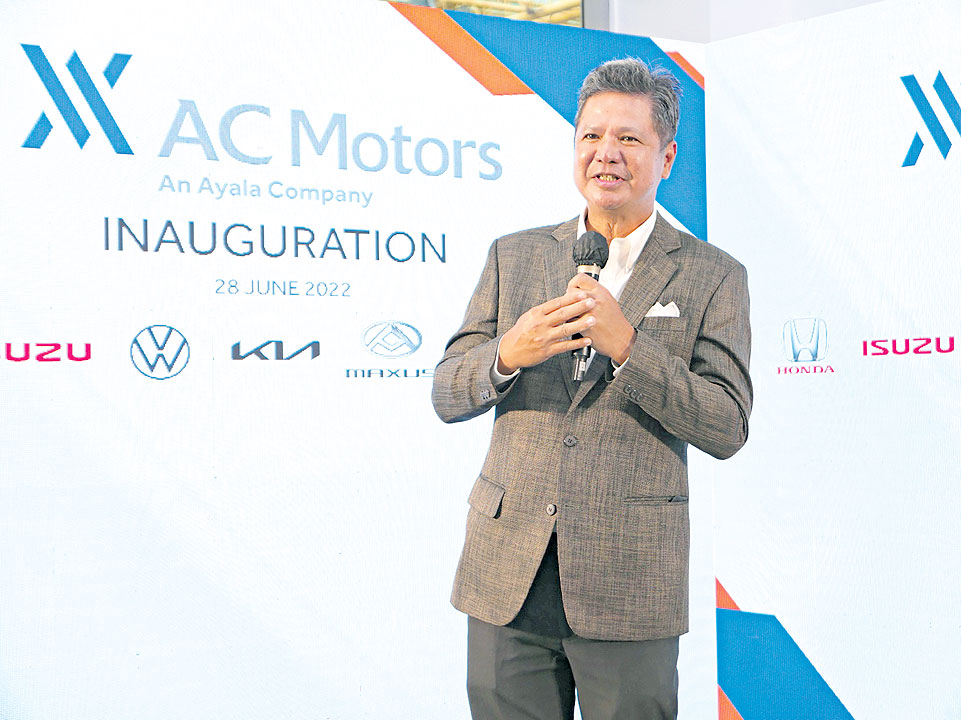
“Now, we can truly say, all roads lead to this one-of-a-kind venue in the center of one of the most coveted business addresses in the country. Indeed, no other place and time is fitting for this occasion. AC Industrials’ automobile and motorcycle distribution and retail businesses have been an integral part of the Ayala group for the last 30 years, enabling AC Motors to provide mobility solutions for the Filipino people,” said AC Industrials President and CEO Arthur “Art” Tan in his welcome speech at the venue. AC Motors is a “portfolio company of AC Industrials (ACI), Ayala Corp.’s holding and investment company for industrial technology, manufacturing, and vehicle distribution and retail interests.”

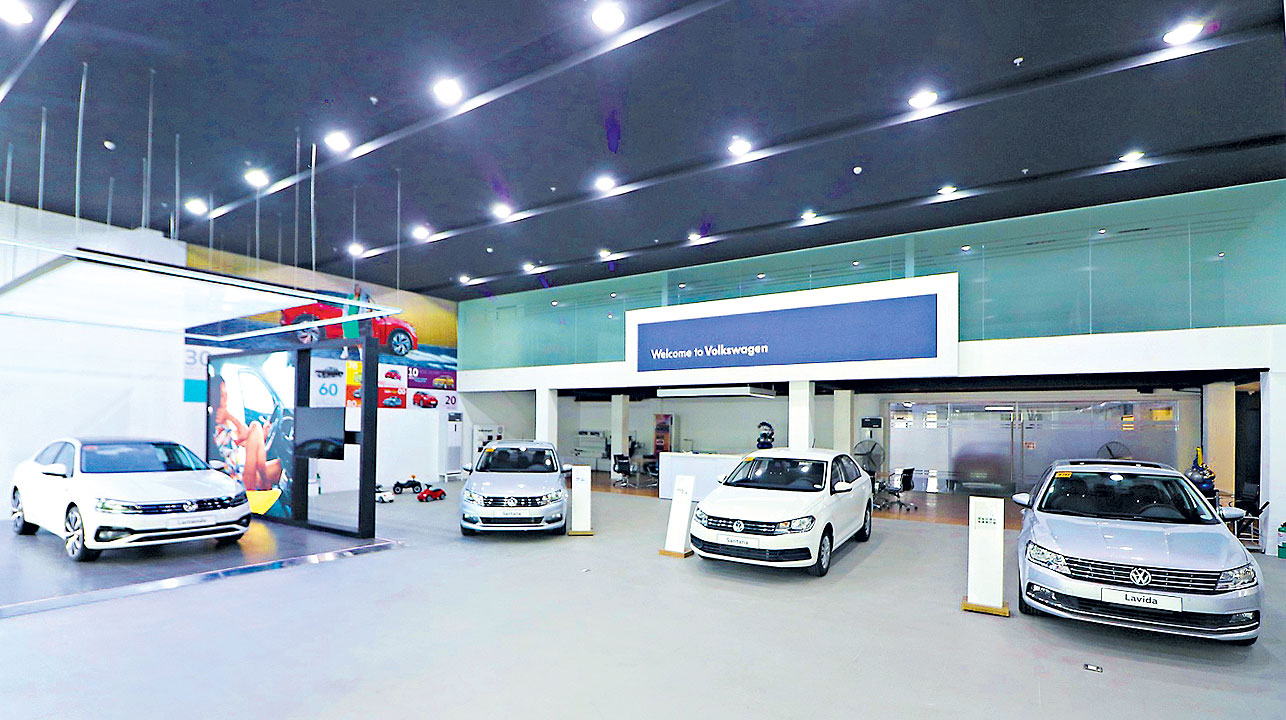
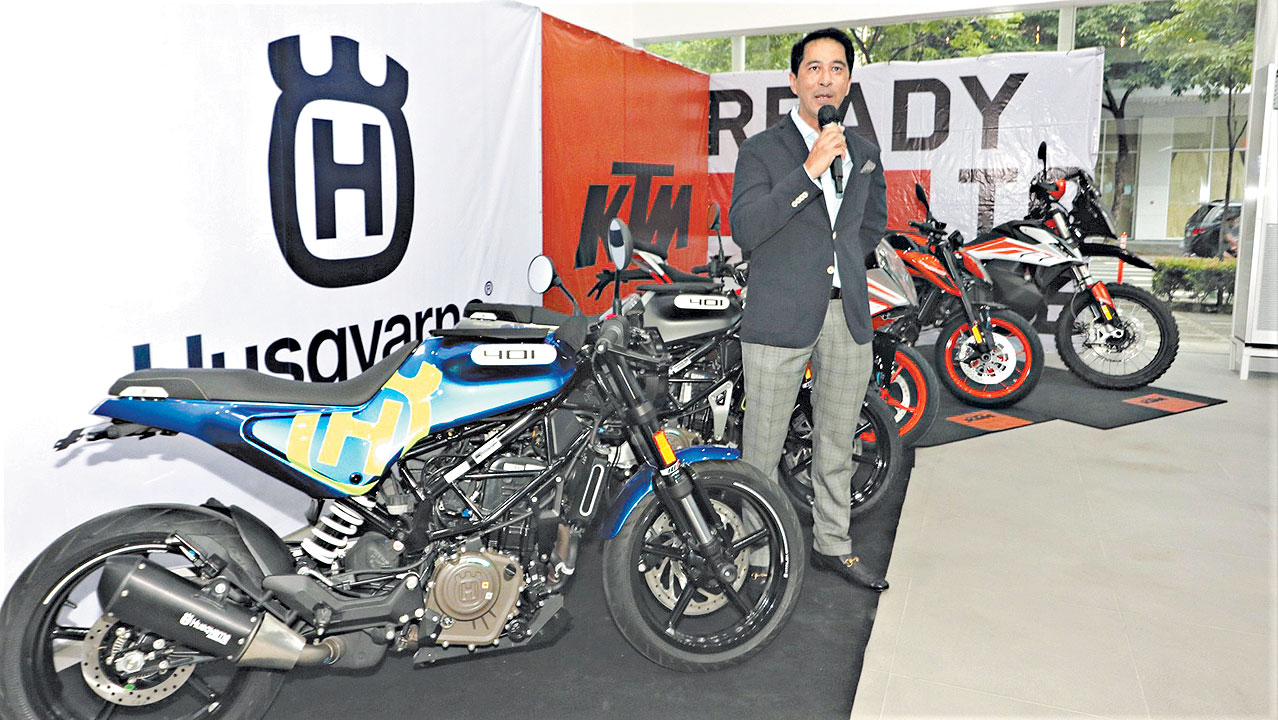
Rising on a 3,000-sq.m. sprawl at 932 28th street corner 9th Avenue, AC Motors Centrale showcases all the mobility brands overseen by, or associated with, the Ayala-led firm — namely Honda, Isuzu, Volkswagen, Kia, KTM, and Husqvarna. Another brand, Maxus, is conspicuously absent in deference to a nearby dealership.

Also speaking to attendees of the inauguration, AC Motors Automobile Group President Antonio “Toti” Zara III described the concept as a “small motor show every day” in the heart of the city. He expressed bullishness for the auto industry — noting that the sector has registered year-to-date growth of 11% versus the same period last year. Mr. Zara also reported that AC Motors has been “outpacing” the market average, while accounting for 4.8% of total industry sales across all its dealers and distributors. “It’s the best time to open Centrale,” he quipped.

Speaking to “Velocity” in an exclusive interview, the executive explained, “We will have our halo models and models of focus… the (displays) will always be changing.” The edifice is envisioned to showcase at least four vehicles per brand, and also houses the head office of AC Motors. Added Mr. Zara, “What sets AC Motors Centrale apart, aside from being able to house all our brands under a single roof, and giving customers the ability to choose the vehicle that best suits their needs from a wide range of models, is that we take this experience to the next level by offering AC Motors’ new used car program, AC Motors Trade+, which opens up a whole new world of enterprise and ownership opportunities for our customers.”

AC Motors Trade+ is clearly a calculated bid to realize an additional revenue stream for the company as well. The auction-based service — powered by the technology of established auto portal ZigWheels Philippines and the dealer market of second-hand car specialist Carmudi Philippines — streamlines the process of selling used cars for new buyers and existing owners into a “five-day turnaround time from inspection, to auction, and payment.” The facility is open to any brand of vehicle — even those outside the ambit of AC Motors.

In addition, AC Motors leverages the natural synergies it can access as part of the considerable girth of the Ayala Group. Aside from the AC Motors Fleet program, participants get to join the Ayala Rewards Circle and the Ayala Enterprise Circle for small and medium enterprises and large corporations.

This all stitches onto the bigger picture of seamless digitization that AC Motors is further building on as “one of the most digitized dealer networks.” The company has revealed that as much as 45% of current sales have been completed through its many online portals — providing a transparent, efficient experience for customers. All the brands featured in AC Motors Centrale have their own comfortable place in the facility’s footprint — with each niche executed and styled in consonance with the most current corporate image.

Also, it’s pretty apparent to the company that the future will not only be digital, but increasingly electric. Declared Mr. Tan, “AC Industrials is fully committed to support AC Motors as it plays a pivotal role entering the next stage of mobility — electrification. This venue will become a part of our sustainable electric vehicle ecosystem, allowing our customers to comfortably enjoy the EV (electric vehicle) models which we will soon be introducing.”

Among AC Motors’ own brands, Volkswagen and Kia in particular have been making a lot of noise in the EV space, and have been globally rolling out relevant models in this genre. Mr. Zara told “Velocity” that we can expect electric vehicles from AC Motors “maybe sooner than everyone expects.”

“The volume would not be much,” he clarified. “But we need to start somewhere, right? And Ayala is not only about electrification in mobility. The group has committed to being net-zero carbon by 2050. And how can we in AC Motors not contribute to this?”

The executive expressed excitement over Republic Act 11697 or the Electric Vehicle Industry Development Act (EVIDA) which lapsed into law last April. As reported in a BusinessWorld article by Bjorn Biel M. Beltran, the law “outlines the regulatory framework for the manufacturing and adoption of EVs, and includes quotas for their adoption by various industries such as cargo logistics, food delivery companies, tour agencies, and utilities providers.” This thus gives a significant push and impetus for more to go electric.

“Government is obviously moving toward promoting electrification… I would think we are ready. The pain had always been about range, but range of vehicles are becoming greater,” stated Mr. Zara. “We are also working with our chairman and CEO Art (Tan), who is working (with companies on charging stations).”

And, for sure, once these electric vehicles of AC Motors-distributed brands arrive, they will most likely be launched and on display at AC Motors Centrale.

It is, as that movie line goes, inevitable.

Analysts’ June 2022 inflation rate estimates

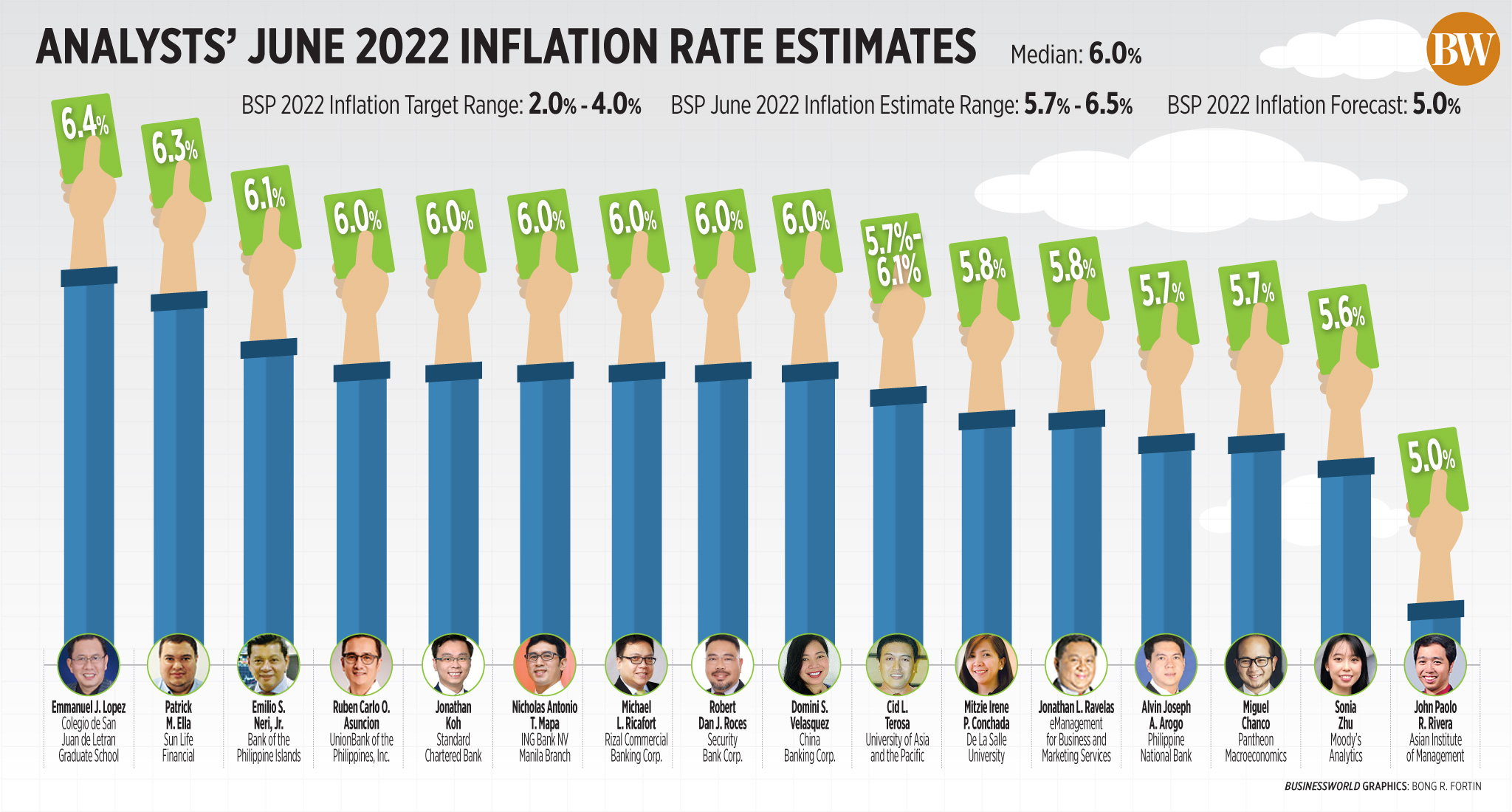
PHILIPPINE INFLATION probably hit 6% in June amid spiraling oil and food prices and higher electricity rates, according to a median estimate of 16 analysts in a BusinessWorld poll last week, boosting the case for bigger increases in key interest rates. Read the full story.

Analysts’ June 2022 inflation rate estimates

India’s monsoon rains cover entire country but are weaker

REUTERS

NEW DELHI — India’s annual monsoon covered the entire country on Saturday, six days earlier than usual, the state-run weather office said, but rain totals are 5% below average so far this season.

The monsoon, critical for farm output and economic growth in the world’s second-most populous country, arrived on the coast of the southern Kerala state on May 29, a couple of days ahead of usual, yet after a promising start the rains gradually tapered off, clocking an 8% deficit in June.

Last month’s patchy rains slowed the planting of rice, an essential summer crop.

India’s rice farmers have planted 4.3 million hectares with the grain so far this season, down 27% from the same period last year. 

The progress of the monsoon, which delivers about 70% of the country’s annual rainfall, is crucial for rice output and exports from India, the world’s biggest exporter of the grain.

Poor monsoon rains would further delay rice planting, stunt the crop and cut yields, leading to a drawdown in state inventories that would trigger export curbs to ensure sufficient supplies for the country’s 1.4 billion people.

India is likely to receive monsoon rainfall between 94% and 106% of the long-term average in July, the most crucial month for planting rice and a host of other summer crops such as corn, cotton, soybean and sugarcane, the India Meteorological Department had said on Friday.

The weather office defines average, or normal, rainfall as between 96% and 104% of a 50-year average of 87 cm (35 inches) for the entire four-month season beginning in June. Rain totals or between 90% and 96% are considered below average.

Bountiful monsoon rains in July would ease concerns about the output of summer crops, promising higher incomes in the countryside where most Indians live. As almost half of the country’s farmland lacks irrigation, Indian farmers depend on the monsoon.

The farm sector employs more than half of the country’s population and accounts for nearly 15% of India’s $2.7 trillion economy, Asia’s third-biggest. — Reuters

Peso may rebound vs dollar as expectations of faster inflation fuel BSP bets

BW FILE PHOTO

THE PESO may rebound versus the greenback this week on bets of more aggressive tightening by the Bangko Sentral ng Pilipinas (BSP) as headline inflation likely hit an over three-year high in June.

The local unit closed at P55.09 per dollar on Friday, losing 11.5 centavos from its P54.975 finish on Thursday, based on Bankers Association of the Philippines data.

This is the peso’s worst finish in more than 16 years, or since it closed at P55.26 a dollar on Oct. 25, 2005.

The local unit also weakened by 10.5 centavos from its P54.985 close a week earlier.

The peso declined anew on Friday amid recession concerns due to the US Federal Reserve’s hawkish stance, Rizal Commercial Banking Corp. Chief Economist Michael L. Ricafort said.

The Fed last month hiked benchmark rates by 75 basis points (bps) to temper rising prices. Markets are pricing in another 75-bp hike at the US central bank’s July meeting as several Fed officials have said they would support more aggressive hikes.

Fed Chair Jerome H. Powell told a US Congress hearing late last month that the US central bank is committed to bringing down inflation despite risks of a downturn, but said it is not trying to engineer a recession.

Weak data on foreign portfolio investments also caused the peso to decline, Mr. Ricafort said.

Foreign portfolio investments, also called “hot money” because of the ease by which these funds enter and leave an economy, yielded a net outflow of $270.42 million in May from the $1.36-billion net inflow seen the previous month, BSP data released on Friday showed.

For the first five months, net hot money inflows reached $1.07 billion, a turnaround from the $420.7-million net outflow seen in the same period last year. The BSP expects foreign portfolio investments to yield a net inflow of $4.5 billion for 2022.

For this week, expectations of an aggressive hike from the BSP at its meeting next month as headline inflation likely quickened further in June could provide support for the peso, UnionBank of the Philippines, Inc. Chief Economist Ruben Carlo O. Asuncion said in an e-mail.

BSP Governor Felipe M. Medalla last week said the central bank may consider a more aggressive rate hike at its Aug. 18 meeting if inflation keeps its upward momentum, but noted the decision will remain data dependent.

Early in June, ahead of the Fed’s decision to increase its rates by 75 bps at its own meeting that month, Mr. Medalla said he is not keen on raising borrowing costs by more than 25 bps per meeting.

The BSP on June 23 raised benchmark interest rates by 25 bps for a second straight meeting to cool rising prices. At that meeting, it raised its average inflation forecast for this year to 5% from 4.6% previously, well above its 2-4% target.

A BusinessWorld poll of 16 analysts last week yielded a median estimate of 6% for June inflation, within the 5.7-6.5% forecast given by the BSP last week.

If realized, this would be well above the BSP’s 2-4% target and 5% projection for the year.

In May, headline inflation was at 5.4%, fueled by rising food and transport costs.

The Philippine Statistics Authority will release its June consumer price index report on Tuesday, July 5.

Mr. Asuncion added that mixed data from out of the United States last week could also prop up the peso.

Disposable income inched lower, consumer spending decelerated, inflation remained hot and jobless claims inched higher, Reuters reported.

Consumer spending, which accounts for more than two-thirds of US economic activity, gained 0.2% in May, the smallest rise in five months.

Meanwhile, the personal consumption expenditures (PCE) price index rose by 0.6% last month after gaining 0.2% in April. In the 12 months through May, the PCE price index climbed by 6.3% after a similar gain in April. It was driven by higher prices for goods and services.

Excluding the volatile food and energy components, the PCE price index rose by 0.3% for the fourth straight month. The core PCE price index advanced 4.7% on a year-on-year basis in May, the smallest increase since last November, after rising by 4.9% in April.

The PCE price indexes are the Fed’s favored measures for its 2% inflation target.

For this week, Mr. Asuncion expects the peso to trade from P54.70 to P55.20 per dollar, while RCBC’s Mr. Ricafort gave a forecast range of P54.70 to P55.25. — K.B. Ta-asan with Reuters


CTA grants property leasing firm’s tax refund claim

THE Court of Tax Appeals (CTA) has granted the appeal of Basic Housing Solutions, Inc. to cancel and set aside its income tax liabilities for the year 2014 worth P21.41 million inclusive of interest.

In a 17-page decision on June 28 and made public on July 1, the CTA Special Second Division prohibited the commissioner of internal revenue (CIR) from collecting the company’s 2014 tax assessment.

“In this case, no letter of authority (LoA) was issued for the examination of petitioner’s (Basic Housing Solutions) books of accounts and other accounting records,” according to the ruling penned by CTA Associate Justice Marie A. Bacorro-Villena.

The petitioner is a domestic corporation engaged in the business of improving, developing, and leasing real estate properties.

The court noted that only a memorandum of the assignment (MoA) was issued by a revenue district officer to conduct an audit of the company’s books of accounting, which is not a valid substitute for an LoA.

It added that the MoA only gave notice and was not signed or issued by the CIR, which does not grant the assigned revenue officers authority to conduct the audit.

“However, a notice of the fact of reassignment and transfer of cases is one thing; proof of the existence of authority to conduct an examination and assessment is, another thing,” the court said, citing prior jurisprudence.

It ruled that the revenue officers assigned were not authorized to conduct the audit based on the absence of the LoA.

Under the country’s revenue code, only the CIR or his duly authorized representative may authorize an examination of a taxpayer’s tax liabilities. Revenue officers can only perform audits and assessments through a letter of authority issued by the CIR.

The CIR represented by Batangas Regional Director Maridur V. Rosario argued that the tax assessments were presumed correct and made in good faith and that the taxpayer has to prove otherwise.

“Well-entrenched are the principles that in the absence of such an authority, the assessment or examination is a nullity and a void assessment bears no fruit,” the tax court said.

“With the foregoing disquisition, due to the invalidity of the assessment against the petitioner, the court finds it unnecessary to tackle the other issues raised as their resolution could no longer change the outcome of the case.” — John Victor D. Ordoñez

Beauty from the Grecian Isles

A GREEK skincare brand which arrived in the Philippines during the pandemic distills the power of nature and gives back to it —  with the help of actress Nadine Lustre.

During an event in Makati on June 22, Bioten, a brand owned by Greek-headquartered Gr Sarantis SA (otherwise known as the Sarantis Group), showed off its lines, Bioten Skin Glow and Bioten Vitamin C.

Bioten Skin Glow consists of mousse cleanser (P299), a toner (P299), a serum (P799), a day cream (P699), and a night cream (P699). Skin Glow is made with 10 ingredients believed to brighten skin: niacinamide, Centella asiatica, Camelia japonica, matsutake mushroom, mulberry, paper mulberry, green tea, apple fruit, Rhus semialata extracts, and glucosamine. These are enhanced with Vitamin B3, well-known for strengthening the skin barrier and improving skin tone, as well as Vitamin C, a powerful antioxidant that helps decrease hyperpigmentation. It also has hyaluronic acid, Vitamin E, Pro-vitamin B5, and glycerin.

Bioten’s Vitamin C line’s star is in its name. This line consists of a day cream (P699) and a night cream (P699), both with 100% natural orange and lime extracts. Five percent of the anti-aging ampoules from the same line (P799) are composed of Vitamin C and a brightening amino acid. Each product has 90% ingredients of natural origin.

Vitamin C doesn’t always get its accolades in the skincare world. Loved by many for its brightening properties, it comes with the price of staying out of the sun because of the risk of skin photosensitivity. In an interview with BusinessWorld, Kelly Erripi, Head of Skincare Category – Group Marketing Division of Gr Sarantis SA said that we can stay in the sun despite being slathered with Vitamin C — depending on the type.

“This is the trick. Most Vitamin Cs are very economic. When you have this economic active ingredient, it causes oxidation in the formula. This oxidation is creating all this photosensitivity on your skin.” Ms. Erripi describes the Vitamin C that they use in their products as “stable” and of high quality. “This means it is encapsulated and does not oxidize in the formula. It gives you the chance to use it in the daylight, during summer. No patches, no dark spots created from the Vitamin C.”

On another note, the company is proud to have a minimum of 88% of naturally-derived products in each bottle (the bottles themselves are made from about 30% recycled glass, and are recyclable). “We as a brand have sustainable ingredients. We have very high naturality in our formulas. You will find more than 88% in every product,” said Ms. Erripi. “We don’t have so many chemicals in (it). [Although] we need to have some chemicals to make the formula stable.”

Since customers are becoming more discerning in their skincare choices, some question whether “natural” products always mean that they’re better.

She says, “Listen: naturals have been accused of being either not very well-performing or being a bit aggressive to your skin. What we are doing, we’re trying to balance things… they are taking the actual power of the active (ingredient). This is joining nature with technology.”

Eighty-eight, a number mentioned above, is important to the company — so much so that they have launched an environmental campaign in the Philippines centered on it.

With their Philippine distributor iFace, Inc., it has launched The Green and Honest by the Numbers campaign, which aims to raise funds to plant 88,000 trees to aid the 20-year reforestation project for the Aetas of Yangil, Zambales through For The Future and Make a Difference (MAD) Travel. The project aims to cultivate 3,000 hectares of Aeta ancestral domain.

Bioten’s brand ambassador in the Philippines, actress Nadine Lustre, made an incognito visit to the community in Yangil last April. “It doesn’t feel so genuine if I push for an advocacy that I’m not immersed in,” said the Gawad Urian Best Actress awardee (for starring in the film Never Not Love You). “To know that there are people who are willing to help without anything in return — nakakataba ng puso (it makes my heart swell).”

“I could just feel all the love in the area, and everyone loving each other,” she said.

In every country that Bioten enters, they create either social or environmental projects as part of their CSR efforts. As mentioned above, they also use sustainable materials and ingredients. Ms. Erripi talked about its significance within the company. “It’s important for us as a development team because what we wanted to do is something that we would also use and will also (pass on) to our children.”

“This is the good stuff.”

Bioten Skin Glow and Bioten Vitamin C are available at Watsons, The SM Store, and online on Amorfia and Lazada.

Each seedling for the The Green and Honest by the Numbers Campaign costs P50. To donate to the cause through Nadine Lustre visit https://donation.ph/FTF-88k. To learn more about the project, visit https://www.forthefutureph.com/88k-trees.    JL Garcia

Gilas women’s team shifts its focus on FIBA 3×3 Asia Cup

GILAS Pilipinas women’s team — FIBA

THERE will be no rest for the weary as the Gilas Pilipinas women’s team shifts its focus to 3×3 play next week for a nonstop development of its overall program.

Fresh from a podium finish in the International Basketball Federation (FIBA) Under 16 (U16) Women’s Asian Championship, the Nationals are already back in training to brace for the 2022 FIBA 3×3 Asia Cup in Singapore starting on Wednesday.

The Philippine cagebelles, under the watch of program director and head coach Pat Aquino, will leave on Tuesday as they still need to go through the qualifying phase to get in the main draw.

“FIBA 3×3 is next so we’re having continuous training to prepare for future competitions. Hopefully, we will have more tournaments soon to keep our competitive spirit and see the things we need to improve on,” Mr. Aquino told The STAR.

“I’m happy that we’re building the future of women’s basketball,” he added as Gilas is also in line for the 2022 FIBA U18 Women’s Asian Championship in India.

Led by veterans Afril Bernardino, Camille Clarin, Khate Castillo and Katrina Guytingco, the 13th-seeded Gilas will go up against No. 18 Jordan and Southeast Asian (SEA) Games gold medalist Thailand (No. 6) in the Qualifying Draw B.

It’s a golden chance for former SEA Games champion Gilas to avenge its dismal fourth-place finish in Hanoi, Vietnam last May and improve on its eighth-place finish in the last 3×3 Asia Cup held in Changsha, China in 2019.

This year’s 3×3 Asia Cup is the largest delegation in history amid the pandemic, featuring 53 teams (30 men’s, 23 women’s) from 30 countries across the continent.

Though it fell short from gaining a Division A promotion, Gilas last week resumed its youth program on a high note with a bronze medal in U16 as an early preparation for its future.

“I’m very proud. It’s a learning lesson for all. As time goes on, there will be more players and talents that will come in. Hopefully, it will lead to more success and a good future for the entire Philippine women’s basketball,” he added after Gilas girls’ return to U16 action after a decade. — John Bryan Ulanday

Mini Countryman: Dichotomous me

The new Mini Countryman is about eight inches longer than its predecessor, and is the biggest, roomiest, and most versatile model in the brand’s history. — PHOTO FROM MINI

The Countryman wants you to lend it your ears

FOR A LITTLE over four decades (from 1959 to 2000), the Mini was a triumph of interior packaging. Tiny on the outside, it stunned those who would venture inside its surprisingly spacious cabin. The design genius of Sir Alec Issigonis would become the template of all front-wheel drive cars when they became the norm in the ’80s.

Fast-forward to the present. It’s the age of crossovers and SUVs — a time when one of Toyota’s best-sellers is a big SUV and Ford’s top sellers (here and in the US) are humongous trucks.

What is an iconic small car manufacturer to do? Lend its ears and listen to the customers, that’s what.

And that’s precisely what Mini did when it unveiled its biggest-ever model 12 years ago. The aptly named Countryman literally crossed over to a new genre when it presented a compelling concept: A still relatively small car that retains the celebrated go-kart-like driving dynamics of a Mini while offering more generous interior capacity and improved go-anywhere capability, thanks to a higher ground clearance and the usual off-road protective body cladding.

Needless to say, the game-changing, segment-redefining new Mini was such that more than half-a-million Countrymans have since been sold worldwide. And now the latest edition of the Countryman goes even further in versatility, agility, and luxury.

Roughly eight inches longer than its predecessor, the latest Countryman is the biggest, roomiest, and most versatile model in the brand’s history. It boasts cool features like a touchscreen infotainment system for the signature huge 8.8-inch circular display in the center of the dash, a stunning Harman Kardon audio system, an electric tailgate with foot motion-operated opening and closing, customizable cabin ambient lighting, and even a fold-out sill cushion that doubles as a picnic bench for the coolest tailgate party.

The latest Countryman is 30mm wider and its wheelbase has been extended by 75mm, making it a true five-seater with a significantly bigger cargo space. Particularly genius are the rear seats. The seatback splits 40/20/40 while the bottom cushion, which can be moved forward and backward up to 13cm, is split 60/40. The cargo area has a 450-liter volume that can be expanded to 1,390 liters with the rear seats folded.

Style-wise, the Countryman is every inch a Mini, displaying most of the brand’s beloved design details but with a mud-proof, higher riding stance. This is arguably the first Mini that can function as a vehicle for one-car families.

The Mini Cooper S Countryman is powered by a 2.0-liter four-cylinder petrol engine (mated to an eight-speed Sport automatic) developing 192hp at 5,000rpm to 6,000rpm and 280Nm of torque from as low as 1,350rpm. It can accelerate from a standstill to 100kph in just 7.5 seconds and reach a 225kph top speed.

State-of-the-art Dynamic Damper Control is also available for the Countryman. Two program maps can be activated for the electronically controlled dampers via the optional Mini Driving Modes. A rotary switch at the base of the gear lever enables the driver to select between Mid, Sport, and Green modes. This adjusts the car’s responsiveness to the driver’s motions on the accelerator pedal and steering wheel, the quickness of the gearshifts, the operating mode of electrically powered comfort features and even the engine sound.

The standard Collision Warning with City Braking function can be extended to include the Driving Assistant system with camera-based Active Cruise Control, Pedestrian Warning with Initial Brake function, High Beam Assistant and Road Sign Detection. Park Distance Control, Rearview Camera, Parking Assistant and Head-Up Display are also optionally available.

The Mini Cooper S Countryman retails for P3.75 million and tops out at P4.85 million for the sensationally fast Mini John Cooper Works Countryman.

The Mini Countryman presents the ideal blend of exclusivity, technology, design, performance, and versatility to take on even the finest — and much more expensive — luxury European crossovers. It’s an overachiever in every sense of the word.

British farmers investing less, switching crops as soaring fertilizer costs upend business plans

REUTERS

LONDON — Stung by soaring fertilizer costs, many British farmers are cutting investment and making major changes to their crop plans, including by producing less wheat used in bread, a survey showed on Thursday.

One third of farmers have changed their crop plans in the past four months, with 90% of them blaming fertilizer costs, the results of a survey of 525 crop farmers by the National Farmers’ Union (NFU) showed.

“Costs are rising rapidly on farms across the country,” NFU President Minette Batters said. “It’s already having an impact on the food that we are producing as a nation as well as leading to a crisis of confidence among Britain’s farmers.”

Britain is facing its worst inflation in 40 years, pushing up prices of everything from food to furniture and contributing to a wave of worker strikes across industries where unions are arguing for better pay.

“The survey also indicates that farmers are beginning to switch from growing milling wheat for bread to feed wheat for animals, because it has a lower fertilizer requirement,” the NFU said. “These rising costs are denting farmers’ confidence to invest.”

The conflict in Ukraine has worsened inflation, spurring an increase in oil and gas prices and translating to higher prices at fuel pumps. Soaring costs have been a headache for British farmers for several months now, with many being forced to stop planting crops such as cucumbers, aubergines and tomatoes after a surge in natural gas prices.

Ms. Batters said more government investment and support was crucial in helping farmers tackle spiraling costs, noting fertilizer prices had doubled alongside increases in feed and fuel prices.

A separate NFU survey of 610 dairy farmers showed 7% of them believe they could stop producing milk by 2024, which could remove 840 producers from the industry. — Reuters

Romualdez refiles GUIDE bill

A LAWMAKER has refiled the bill seeking to allocate P10 billion to state-run banks to allow them to ramp up lending to small businesses affected by the pandemic.

House Bill 1, or the refiled version of the proposed Government Financial Institutions Unified Initiatives to Distressed Enterprises for Economic Recovery (GUIDE) Act, seeks to give state-run Land Bank of the Philippines (LANDBANK) and Development Bank of the Philippines (DBP) more funds to expand their loan programs for micro, small and medium enterprises (MSMEs) heavily affected by the pandemic.

Under the measure, LANDBANK and DBP would be given P7.5 billion and P2.5 billion, respectively, appropriated from the National Treasury, to boost their unified initiatives.

“The proposed legislative measure seeks to strengthen the capacity of the Land Bank of the Philippines and the Development Bank of the Philippines to provide the needed assistance to micro, small, and medium enterprises, and other strategically important companies,” Leyte Rep. Martin G. Romualdez, the presumptive House speaker, said in the bill.

“To this end, the government financial institutions are mandated to expand their credit programs in order to assist MSMEs to meet their liquidity needs,” he added. “In particular, the LBP and DBP are mandated to expand their credit and rediscounting facilities to affected MSMEs in the agriculture, infrastructure, manufacturing, and service industries.”

The bill was filed by former Rep. Junie E. Cua, who chaired the House Committee on Banks and Financial Intermediaries, in the 18th Congress. It was approved by the House, but failed to hurdle the Senate. This refiled bill is the version approved by the House.

The proposed law increases the capital stock of DBP to P100 billion from P35 billion, which can be hiked further via presidential approval.

The measure also authorizes LANDBANK and DBP to invest in or enter into a joint venture agreement with a special holding company to rehabilitate Strategically Important Companies (SICs).

SICs should be investee companies that have high economic returns or job generation potential in industries such as construction, education, food industry, healthcare, infrastructure, low-cost and socialized housing, manufacturing, power and energy, product distributor/retailer, services, tourism and hospitality, transportation and logistics, and water and sanitation.

The special holding company will be allowed to invest in equity, execute convertible loans or purchase convertible bonds or other securities in said SICs, as well as incorporate subsidiaries.

The private sector may be invited to invest in the special holding company. However, the state-run banks must maintain majority ownership of the special firm until they have recovered their investment.

“The special holding company is intended to be a major player in the financial and capital markets by providing aid to strategically important companies with solvency or liquidity issues brought about by COVID-19 pandemic,” the lawmaker said.

The holding firm will be governed by a board of directors headed by the Finance chief as chairperson.

The measure also grants some tax exemptions to the two government banks and the holding company. — Alyssa Nicole O. Tan

Manila Water: Desludge, protect waterways

MANILA Water Co., Inc. has renewed its call to its customers to avail of the water concessionaire’s desludging services to prevent the clogging of septic vaults.

Desludging will help protect waterways, creeks, and rivers from untreated septic tank overflow, the company added.

“It is important to do septic tank cleaning and siphoning every five to seven years to ensure that the wastewater collected from septic vaults will undergo proper treatment through Manila Water’s septage treatment plants before they are discharged back to creeks and waterways,” said Manila Water Corporate Communication Affairs Group Head Jeric T. Sevilla, Jr.

Manila Water said that barangays scheduled for this month will not be charged any additional fees to avail of the desludging services. It also added that customers will only need to coordinate with their respective barangay offices for their siphoning schedules.

Select residents from barangays from Manila, Marikina, San Juan, Mandaluyong, and Rizal, among others, would be able to avail of the septic tank cleaning this July.

“If not on the list, please verify the desludging schedule of your barangay by calling the Manila Water Consumer Desk Hotline 1627,” Mr. Sevilla said.

Prior to the desludging schedule, Manila Water will also be conducting a census or survey of each location to keep track of the residents’ desludging cycle.

It also advised customers to ensure that their septic tanks are already uncovered on the actual day of desludging to help expedite the siphoning process and to avail of the desludging service even if their septic tanks are not yet full.

On Friday, Manila Water shares declined by 0.72% or 12 centavos to finish at P16.60. — Luisa Maria Jacinta C. Jocson