Home Blog Page 5832

Denmark in shock as gunman kills three at Copenhagen shopping mall
FREEPIK

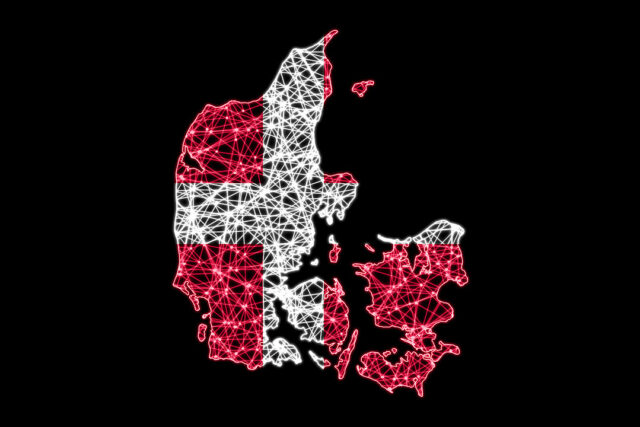
COPENHAGEN — Three people were killed and several more were wounded in a shooting at a shopping center in Copenhagen on Sunday, Danish police said, adding they had arrested a 22-year-old Danish man and charged him with manslaughter.

The attack rocked Denmark at the end of an otherwise joyful week, just after it hosted the first three stages of the Tour de France cycle race. The event had sent hundreds of thousands of cheering Danes into the streets across the country.

“Denmark was hit by a cruel attack on Sunday night. Several were killed. Even more wounded. Innocent families shopping or eating out. Children, adolescents and adults,” Prime Minister Mette Frederiksen said in a statement late on Sunday.

“Our beautiful and usually so safe capital was changed in a split second,” she said. “I want to encourage the Danes to stand together and support each other in this difficult time.”

Copenhagen police said armed officers were sent to Field’s mall in the capital late on Sunday afternoon after reports of a shooting, and had told people inside to stay put and await assistance. Local media footage showed groups of terrified shoppers running from the mall.

The suspect was apprehended at 5:48 p.m. local time (3:48 p.m. GMT), carrying a rifle and ammunition. Police launched a massive search operation throughout the local Zealand region early Sunday evening in search of any accomplices.

“We are going to have a large investigation and a massive operational presence in Copenhagen until we can say with certainty: He was alone,” Thomassen said.

The shooter had killed a man in his forties and two “young people,” a man and a woman, Thomassen said. Several more were wounded, three of whom were in critical condition.

The investigation so far has not pointed toward a racist motive or otherwise, but this could change, he said.

Copenhagen police will hold a press briefing Monday morning at 8 a.m. local time.

The capital’s main hospital, Rigshospitalet, had received a “small group of patients” for treatment, a spokesperson said early Sunday evening, and had called in extra doctors and nurses.

Danish tabloid BT published unverified video footage it said was shot by a witness to the attack, Mahdi Al-wazni, showing a man with a large rifle walking through the mall and swinging it around his shoulders.

“He seemed very aggressive and shouted different things,” Al-wazni told BT.

Footage published by tabloid Ekstra Bladet showed one person being carried by rescue workers into an ambulance on a stretcher.

“People first thought it was a thief… Then I suddenly hear shots and threw myself behind the counter inside the store,” an eyewitness, Rikke Levandovski, told broadcaster TV2.

“He is just shooting into the crowd, not up in the ceiling or into the floor,” she added.

The multi-storey shopping mall is located about 5 kilometers (3 miles) south of downtown Copenhagen.

“My friend and I… suddenly we hear shots. I hear about 10 shots and then run as fast as we can into a toilet. We squeeze into this tiny toilet where we are around 11 people,” another witness who gave her name as Isabella told public broadcaster DR.

The attack follows a deadly shooting in neighboring Norway last week, in which two people were killed by a lone shooter in the capital Oslo.

The terrorist threat against Denmark is currently assessed to be “serious,” with the biggest threat coming from “militant Islamism,” according to the latest report from the Danish Security and Intelligence Service.

The threat to Denmark from right-wing extremists is considered at a “general” level, which means there is capability and/or intent and possibly planning.

Denmark last saw a militant attack in 2015, when two people were killed and six police officers wounded when a lone gunman shot and killed a man outside a culture center hosting a debate on freedom of speech, and later killed a person outside a Jewish synagogue in central Copenhagen.

That gunman was killed in a shoot-out with police.

A concert due to be held by singer Harry Styles in Copenhagen on Sunday night not far from the shopping center was canceled, police said.

“Our thoughts and deepest sympathy are with the victims, their relatives and all those affected by the tragedy,” Denmark’s Queen Margrethe and the Crown Prince couple said in a statement.

An event in Southern Denmark to commemorate the end of the Tour de France stages, hosted by the Crown Prince and with Frederiksen in attendance, was also canceled.

The suspect will face preliminary questioning in front of a judge early on Monday.  Reuters

Video shows Ohio officers killed unarmed Black man

FREEPIK

AKRON, Ohio — Video released on Sunday showed eight police officers in Akron, Ohio, were involved in a shooting that killed an unarmed Black man whose body was found with some 60 gunshot wounds after he fled a traffic stop last week.

Police played multiple videos at a news conference, one of which they said shows a gunshot being fired from the car driven by Jayland Walker, 25. He fled in his car after officers attempted to pull him over for a minor traffic violation.

After a chase lasting several minutes, Mr. Walker jumped out of the car and ran away from police, the video showed. Police say it appears he was turning toward officers, who at the time believed he was armed. A gun was later recovered from his car.

The attorney for the Walker family, Bobby DiCello, told reporters on Sunday that he was “very concerned” about the police’s allegation that Mr. Walker had fired at officers from his car, and emphasized that there was no justification for his violent death.

“They want to turn him into a masked monster with a gun,” Mr. DiCello said. “I ask you, as he’s running away, what is reasonable? To gun him down? No, that’s not reasonable.”

Mr. DiCello urged the public to be peaceful in their protests of Mr. Walker’s killing, adding that it was the wish of Mr. Walker’s family to avoid more violence.

The shooting was the latest in a spate of killings of Black men and women by law enforcement in the United States that critics say are racist and unjustified, including the 2020 murder of George Floyd in Minneapolis that ignited global protests against police brutality and racial injustice.

On Sunday afternoon, the Akron NAACP led a peaceful protest at city hall. Hundreds of demonstrators marched in the streets of the city of some 200,000 people, waving “Black Lives Matter” flags and chanting “We are done dying!” and “Justice for Jayland!”

It was not clear how many bullets struck Mr. Walker, but the body camera video shows police firing scores of rounds at him.

The medical examiner is still determining how many of the 60 wounds were entrance versus exit wounds, Akron Police Chief Stephen Mylett said.

Mr. Mylett said officers had tried to administer first aid to Mr. Walker after he was shot, but he was pronounced dead on scene.

The eight officers directly involved in the shooting have been placed on paid administrative leave, Mr. Mylett said, and they have not made any individual statements.

Those officers said they had believed Mr. Walker was “moving into firing position” when he got out of his car, prompting them to react to him as a potential threat, Mr. Mylett said.

Pressed by reporters for evidence that Mr. Walker had fired a gun from his car, Mr. Mylett said police had returned to the area where they believe Mr. Walker had fired from his car after the incident and found a bullet casing “consistent with a firearm that Mr. Walker had in his vehicle.”

Police also pointed to what appears to be a flash of light on the driver’s side of Walker’s car in the video, which they said is a muzzle flash.

Ohio’s Bureau of Criminal Investigation is conducting a probe of the shooting and has not confirmed any of these details. — Reuters

Zelensky vows to regain Lysychansk after withdrawal of Ukrainian troops

UKRAINE’S PRESIDENT VOLODYMYR ZELENSKY — WWW.PRESIDENT.GOV.UA

KYIV — Ukraine’s President Volodymyr Zelensky on Sunday said Kyiv’s forces had withdrawn from Lysychansk in the eastern Donbas region after a grinding Russian assault, but vowed to regain control over the area with the help of long-range Western weapons.

Russia said its capture of the city of Lysychansk less than a week after taking neighboring Sievierdonetsk gave it full control of the eastern Luhansk region — a political win that meets a key Kremlin war goal. The battlefield focus now shifts to the neighboring Donetsk region, where Kyiv still controls swathes of territory.

“If the commanders of our army withdraw people from certain points at the front, where the enemy has the greatest advantage in firepower, and this also applies to Lysychansk, it means only one thing,” Zelensky said in his nightly video address.

“That we will return thanks to our tactics, thanks to the increase in the supply of modern weapons.”

Zelensky said Russia was concentrating its firepower on the Donbas front, but Ukraine would hit back with long-range weapons such as the US-supplied HIMARS rocket launchers.

“The fact that we protect the lives of our soldiers, our people, plays an equally important role. We will rebuild the walls, we will win back the land, and people must be protected above all else,” Zelensky said.

Since abandoning an assault on the capital Kyiv, Russia has concentrated its military operation on the industrial Donbas heartland that comprises the Luhansk and Donetsk regions, where Moscow-backed separatist proxies have been fighting Ukraine since 2014.

Russia says it is capturing Luhansk region in order to give it to the self-proclaimed Russian-backed Luhansk People’s Republic whose independence it recognized on the eve of the war.

Russian Defense Minister Sergei Shoigu informed President Vladimir Putin that Luhansk had been “liberated,” the defense ministry said, after Russia earlier said its forces had captured villages around Lysychansk and encircled the city.

Ukraine’s military command said its forces had been forced to retreat from the city.

“The continuation of the defense of the city would lead to fatal consequences. In order to preserve the lives of Ukrainian defenders, a decision was made to withdraw,” it said in a statement on social media.

Ukrainian officials, who say references to “liberating” Ukrainian territory are Russian propaganda, had reported intense artillery barrages on residential areas.

West of Lysychansk in Donetsk region, at least six people were killed when the Ukrainian city of Sloviansk was hit by powerful shelling from multiple rocket launchers on Sunday, local officials said.

COSTLY CAMPAIGN
Thousands of civilians have been killed and cities levelled since Russia invaded on Feb. 24, with Kyiv accusing Moscow of deliberately targeting civilians. Moscow denies this.

Russia says what it calls a “special military operation” in Ukraine aims to protect Russian speakers from nationalists. Ukraine and its Western allies say this is a baseless pretext for flagrant aggression that aims to seize territory.

While Russia would try to frame its advance in Luhansk as a significant moment in the war, it came at a high cost to Russia’s military, said Neil Melvin of the London-based think tank RUSI.

“Ukraine’s position was never that they could defend all of this. What they’ve been trying to do is to slow down the Russian assault and cause maximum damage, while they build up for a counteroffensive,” he said.

KHARKIV STRIKES
Zelensky said Russia had “brutally” struck Kharkiv, Kramatorsk and Sloviansk with rocket attacks, leaving six dead and 20 wounded in Sloviansk alone.

Russia’s defense ministry also said on Sunday it had struck the military infrastructure of Kharkiv, Ukraine’s second-largest city in the northeast, where a Reuters reporter said Ukrainian forces had been building fortifications after nightly shelling.

Outside a school in Kharkiv, some residents threw debris into a large crater created by an early morning rocket strike while others got help repairing damaged houses.

“The wife was lucky that she woke up early in the morning because the roof fell exactly where she had been sleeping,” one resident, Oleksii Mihulin, told Reuters.

About 70 km (44 miles) from Kharkiv on the Russian side of the border, Russia also reported explosions on Sunday in Belgorod, which it said killed at least three people and destroyed homes.

“The sound was so strong that I jumped up, I woke up, got very scared and started screaming,” a Belgorod resident told Reuters, adding the blasts occurred around 3 a.m. (12 a.m. GMT).

Moscow has accused Kyiv of numerous attacks on Belgorod and other areas bordering Ukraine. Kyiv has never claimed responsibility for any of these incidents.

MILITARY BASE HIT
Ukraine said its air force had flown some 15 sorties “in virtually all directions of hostilities,” destroying equipment and two ammunition depots.

In the Russian-occupied southern Ukrainian city of Melitopol, Ukrainian forces hit a military logistics base with more than 30 strikes on Sunday, the city’s exiled mayor Ivan Fedorov said. A Russian-installed official confirmed that strikes had hit the city.

Reuters could not independently verify the battlefield reports.

Ukraine has repeatedly appealed for an acceleration in weapons supplies from the West, saying its forces are heavily outgunned.

Speaking on a visit to Kyiv, Australian Prime Minister Anthony Albanese said his government would provide Ukraine with additional armored vehicles, as well as tightening sanctions against Russia.

German Chancellor Olaf Scholz told broadcaster ARD that Germany was discussing with its allies security guarantees for Ukraine after the war, though it was clear these would “not be the same as if someone were a member of NATO.” — Reuters

More heavy rains set to drench Sydney as thousands of residents are forced to flee

ROAD TRIP WITH RAJ-UNSPLASH

SYDNEY — Fresh evacuation orders were issued for tens of thousands of Sydney residents on Monday after relentless rains flooded several suburbs in Australia’s largest city, with officials warning of more wild weather to come.

An intense low-pressure system off Australia’s east coast is forecast to bring more heavy rain through Monday across New South Wales after several places in the state were hit with about a month’s rain over the weekend.

With about 30,000 residents in New South Wales state facing evacuation, frustration swelled in several suburbs in Sydney’s west after floods submerged homes, farms and bridges there, some for the third time this year.

“It’s just devastating. We are in disbelief,” Camden Mayor Theresa Fedeli said.

“Most of them have just come out of the last flood, getting their homes back in place, their businesses back in place and unfortunately we are saying it is happening again.”

An operation was underway to rescue 21 crew members from a cargo ship, which lost power south of Sydney and risked being swept ashore, local media reported.

“It has been a very difficult time for many months to have this flood event off the back of others, (it) makes it more challenging,” New South Wales Premier Dominic Perrottet said during a televised media briefing.

No loss of lives has been reported so far as officials urged people to leave their homes when ordered and avoid driving on flooded roads.

Tracey, a resident from flood-hit Windsor, said she can’t cope with the frequent floods.

“We are over it. We are so over it. This is a bit much for us,” she told ABC television after returning home to rescue some of her animals.

‘UNDER-PREPARED’
About 100 millimeters (4 inches) of rain could fall in the next 24 hours over a swath of more than 300km (186 miles) along the New South Wales coast from Newcastle to the south of Sydney, the Bureau of Meteorology said.

“We are expecting the rain to pick up again from this afternoon,” Jonathan How, BoM meteorologist said.

More than 200mm of rain have fallen over many areas, with some hit by as much as 350mm since Saturday.

Climate change is widely believed to be a contributing factor to the frequent severe weather events, the Climate Council said, adding Australia is “under-prepared.”

The wild weather could trigger flash floods and landslides, with river catchments already near full capacity after the La Niña phenomenon, typically associated with increased rainfall, dominated Australia’s east coast over the last two years.

Bad weather has delayed by 24 hours Monday’s scheduled launch of a NASA rocket from the Arnhem Space Centre in north Australia, operator Equatorial Launch Australia said.

Federal emergency management Minister Murray Watt has offered more troops and said on Monday the government had activated the satellite emergency management system to help with flood relief efforts. — Reuters

Uzbekistan reports casualties in unrest; opposition says at least 5 people killed

FREEPIK

ALMATY — Uzbekistan’s President Shavkat Mirziyoyev said on Sunday there were casualties among civilians and law enforcement officers after rare protests in the Central Asian country, and an exiled opposition politician said at least five people had been killed.

Separately, a local government official told an Uzbek news website that thousands of people have been hospitalized.

In a statement posted online, Mr. Mirziyoyev said rioters had carried out “destructive actions” in the city of Nukus, capital of the northwestern Karakalpakstan region, by throwing stones, starting fires and attacking police.

“Unfortunately there are victims among civilians and law enforcement officers,” he said. The statement did not specify the number and nature of the casualties.

Sultanbek Ziyayev, the head of the Ministry of Health of the Republic of Karakalpakstan, told news website Daryo.uz that hospitals in Nukus were full of patients who had been wounded when protesters clashed with security forces.

“Thousands of wounded have been hospitalized and are being treated,” he said, according to the website.

Photographs from Nukus published on Sunday by another news website, Kun.uz, showed street barricades, burned trucks and a heavy military presence including armored personnel carriers.

Videos shared on social media showed at least two severely wounded people being carried by their arms and legs. One was bleeding from the abdomen, while the other was screaming.

Another showed a young man crouching by an apparently lifeless body in the street, screaming “A man is dying” and then running for cover as shots rang out. Reuters could not immediately verify the authenticity of the videos.

An exiled opposition politician, Pulat Ahunov, told Reuters that, based on contacts with local sources and video evidence, at least five people had been killed. He said there were unconfirmed reports of dozens more dead.

Mr. Ahunov said people were unable to move around and obtain more information because of a state of emergency imposed by the authorities.

Uzbekistan is a tightly controlled former Soviet republic where the government clamps down hard on any form of dissent. It was the second outbreak of unrest in Central Asia this year, after Kazakhstan crushed mass protests in January and Russia and other former Soviet republics sent in troops to help the authorities restore order.

The protests in Uzbekistan were prompted by planned constitutional changes that would have stripped Karakalpakstan of its autonomous status. In an about-turn, the president dropped those plans on Saturday.

Mr. Ahunov, chairman of the opposition Berlik party, told Reuters from Sweden that he condemned the use of lethal force.

“The authorities, from the start, should have opted for dialogue and negotiations,” he said.

He said he feared the potential for the situation to escalate into an ethnic conflict between Uzbeks and Karakalpaks, a minority group with their own language. Authorities had called a public meeting for Tuesday to discuss the situation, he added.

Kazakhstan said it was concerned by the events in Uzbekistan and welcomed moves by the authorities to stabilize the situation.

Steve Swerdlow, Associate Professor of Human Rights at the University of Southern California and an expert on the region, said Uzbekistan should engage as transparently as possible in declaring casualties and the use of force and over the longer term look at what concerns were at the heart of the protests. — Reuters

Metrobank is the Best Domestic Private Bank in the country

Asiamoney recognizes Metropolitan Bank & Trust Co. (Metrobank) as the 2022 Best Domestic Private Bank in the Philippines.

According to Asiamoney, performance indicators noted for consideration include relative performance versus competitors, successes in achieving market share, coping with difficult or changing market conditions, among others.

The Bank’s Private Wealth team was established in 2016. Since then, the business has rapidly and successfully captured the attention of the Ultra High Net Worth (UHNW) segment in the Philippines. Through Private Wealth, customers are able to have access to the entire product suite of the Metrobank Group

“Metrobank’s ability to meet the needs of wealthy clients in an agile and smart manner went a long way during the worst volatility in the past year. It also helped Metrobank stay miles ahead of peers,” says Asiamoney Editor Rashmi Kumar.

Kumar also cites specific performance highlights. Metrobank Private Wealth’s assets under management and client base grew by a compounded 30% and 23%, respectively, since 2016; and this surge was bolstered with the growth of the Bank’s strength from six relationship managers to twenty by end-2022. “These show that Metrobank is serious about its wealth management ambitions. This makes it Asiamoney’s winner of the Best Domestic Private Bank in the Philippines for 2022,” Kumar adds.

Private Wealth aims for a consistent alignment of its service delivery platform to the Bank’s culture of delighting the customer: particularly one that produces solutions that address the high expectations of the UHNW segment. While this award clearly validates the effectivity of the Bank’s current product suite, operating structure, culture of accountability and teamwork, and committed action, the team will continue to work on unearthing its clients’ needs, developing product options, channel capabilities and service processes that will cater to clients’ requirements.

“We are honored to be named the Best Domestic Private Bank in the Philippines. This award is a validation of our focus and commitment to our UHNW client base. Wealth management and preservation for the ultra-high-net-worth is a challenging task which goes beyond financial management. More importantly, it involves the perpetuation of the family legacy. This is why it is equally important to ensure the general well-being of family members across different stages of life. There’s a lot more work to be done on this front. Our goal at Metrobank Private Wealth is to be our clients’ most trusted financial advisor and to develop a relationship with them that will span generations,” said Lizette Perez, Senior Vice President and Head of Metrobank Private Wealth.

For more information on Metrobank and its Private Wealth Division, please visit https://www.metrobank.com.ph/invest/wealth-management.


Spotlight is BusinessWorld’s sponsored section that allows advertisers to amplify their brand and connect with BusinessWorld’s audience by enabling them to publish their stories directly on the BusinessWorld Web site. For more information, send an email to online@bworldonline.com.

Join us on Viber to get more updates from BusinessWorld: https://bit.ly/3hv6bLA.

Investors brace for pivotal July after dismal first half

 – The U.S. stock market is reeling from its worst first half of any year since 1970, with investors girding for a series of potential flashpoints in July that may set Wall Street’s course for the coming months.

Second-quarter corporate earnings, hotly anticipated U.S. inflation data and the Federal Reserve’s monetary policy meeting are among potentially pivotal events after the S&P 500 fell 20.6% in the initial six months of 2022. Read full story

For now, the mood on Wall Street is grim. Bonds, which investors count on to offset stock declines, have tumbled alongside equities, with the ICE BofA Treasury Index .MERG0Q0 on pace for its worst year in the index’s history. Some 90% of respondents in a recent Deutsche Bank survey expected a U.S. recession by the end of 2023.

The key factor behind the turmoil in markets is the Fed, which has been rapidly tightening monetary policy to fight the highest inflation in decades following almost two years of emergency measures that helped buoy stocks and stoke growth. Read full story

“We could really use just slightly less bad news in July,” said Eric Kuby, chief investment officer at North Star Investment Management. “Hopefully, it could turn the back half of 2022 in a more favorable light.”

History, however, “does not offer very encouraging news” for those hoping the bleak first half will be followed by a bounce in the latter part the year, wrote CFRA chief investment strategist Sam Stovall.

Of the 10 worst starts to the year for the S&P 500 since World War Two, the index has posted gains in the second six months of the year only half the time, rising an average of 2.3%, Stovall said in a recent report.

On the data front, reports on employment and inflation will give investors a snapshot of the economy after 150 basis points of rate increases already delivered by the Fed.

A disappointing jobs report next Friday could exacerbate concerns of a potential recession. The following week brings data on U.S. consumer prices, after a hotter-than-expected report last month triggered a selloff in stocks and prompted the Fed to deliver a hefty 75 basis point rate increase in June. Read full story

There has been recent evidence of waning growth. Data on Friday showed U.S. manufacturing activity falling to a two-year low in June, following a report earlier in the week that showed that June consumer confidence at its lowest in 16 months. Read full story

“The key question is, what will roll over first: will it be inflation or growth?” said Angelo Kourkafas, an investment strategist at Edward Jones.

Second-quarter earnings start arriving in force the week of July 11indicating whether companies can keep living up to estimates despite surging inflation and growth worries.

Analysts expect quarterly earnings to grow by 5.6% from a year ago, revised down slightly from early April’s estimate for 6.8% growth, according to Refinitiv IBES.

If companies “can just match or maybe hurdle over lower expectations, I think that will be a positive tailwind for stock prices,” said Anthony Saglimbene, global market strategist at Ameriprise.

Strategists at Goldman Sachs are less sanguine, warning that consensus margin forecasts suggest earnings estimates are “likely too optimistic” and margins for the median S&P 500 company will likely decline next year “whether or not the economy falls into recession.”

“While investors are focused on the possibility of recession, the equity market does not appear to be fully reflecting the downside risks to earnings,” Goldman said in a note this week.

July’s data should factor into the Fed’s actions at its next meeting on July 26-27, when it is broadly expected to raise rates by another 75 basis points.

Some investors predict slowing growth will prompt the Fed to eventually soften its stance sooner than policymakers project. But analysts at Capital Economics disagreed, writing on Friday that such a rapid reversal would be inconsistent with the central bank’s behavior in recent decades. Read full story

As a result, “we don’t expect US equities and Treasuries to fare well in the second half,” they said. – Reuters

Canada’s emergency rooms bear the brunt of a ‘perfect storm’

STOCK PHOTO | Image by Paul Brennan from Pixabay

 – Health authorities across Canada have cut the hours of hospital emergency departments and urgent care clinics in recent weeks, a move that in some cases may extend through the summer, due to a surge in patients and staff shortages.

The situation, clinicians say, is tied to a resurgence of viral infections such as COVID-19 among adults and children and a push by others to seek care delayed by the pandemic, and exacerbated by the high number of healthcare workers who are sick or burned out.

The strain has led to scenes of clogged hospital hallways and overflowing clinic waiting rooms, hours-long waits for inpatient care and occupancy rates of more than 100% at children’s hospitals. It also has rekindled debate about systemic problems in the government-funded healthcare system.

On Thursday, the Perth and Smiths Falls District Hospital in eastern Ontario announced that its emergency department in Perth would be closed from Saturday to Thursday due to a COVID-19 outbreak affecting its staffing.

“It’s like the four horsemen of the apocalypse all descending on us in health care at once,” said Alan Drummond, a family and emergency physician based in the town, which is home to about 6,000 people.

Drummond, who spoke with Reuters before the closure was announced, sees patients waiting 20 hours to be admitted, a situation that can lead to a deterioration in their condition or even medical errors. He blames the situation on years of inadequate funding of hospital beds and community care.

While hospitals in small towns and cities in Canada do sometimes reduce their hours, it is rarer for regional health hubs to do so.

Ontario’s health ministry would not say how many hospitals in the province, Canada’s most populous, are affected by partial or temporary closures, but said it has taken measures to address the issue, including retaining nurses and other healthcare workers.

“Sometimes hospitals must make the difficult decision to close their emergency departments temporarily so that operations can continue throughout the rest of the hospital,” a ministry spokesperson said.

Hospitals in Quebec, the country’s second-largest province, New Brunswick and Manitoba also have partially shut departments or temporarily cut hours for anywhere from a couple of weeks to a number of months, according to statements from the hospitals.

In Kingston, Ontario, the Hotel Dieu Hospital’s Urgent Care Clinic reduced its hours over the Canada Day long weekend. A spokesperson for the Kingston Health Science Centre described the move, which began on Friday, as a planned one-time reduction, but added it was expected that “staffing shortages and the current surge in patient volumes will continue throughout the summer.”

Children have been hard hit by the healthcare crunch as youngsters with no prior exposure to a number of viruses succumbed to illness during the spring as many people abandoned face masks used to prevent the spread of COVID-19.

The Children’s Hospital of Eastern Ontario in Ottawa, the nation’s capital, ran at between 110% and 120% capacity for weeks in May and early June. Occupancy was a record high for the month of May, a spokesperson said.

Low staffing and surging patient loads is “kind of like that perfect storm,” said Katharine Smart, a pediatrician who is the president of the Canadian Medical Association.


FUNDING DEBATE

Canada has the fourth-lowest number of funded acute care beds per capita among countries in the Organization for Economic Cooperation and Development, according to the OECD, and the Commonwealth Fund ranked Canada’s health system second-last among 11 rich countries.

Some blame underfunding of the healthcare system dating back to the 1990s, when Canada’s federal government cut spending to get the country’s deficit under control.

Others, such as the right-leaning Fraser Institute, say the government-funded system itself is the root cause of the problems, suggesting moving toward a privately-paid model.

Canada may have little time to waste.

Rami Rahal, a vice president at the Canadian Partnership Against Cancer, said there is a danger that cancer illness and deaths could worsen in the country due to lengthy periods in which screening was skipped or delayed and treatment postponed.

“We can’t hire our way out of this crisis,” he said. “We have to find innovative ways of delivering care.” – Reuters

Kyoto’s love-hate relationship with tourists endures as yen weakens

STOCK PHOTO | Image by KokiHanada from Pixabay

 – Poring over the ledger at her more than 230-year-old liquor shop in Kyoto, Yasuko Fujii has mixed feelings about the return of foreign tourists who would crowd the streets of Japan’s ancient capital before the pandemic – and buy lots of whisky and wine.

Her ambivalence reflects a broader uncertainty in Japan about welcoming tourist hordes amid fears they could trigger a resurgence in COVID-19 cases, even though a weak yen would be a big draw for tourists and a boon for local businesses.

“From a business standpoint, we want foreign tourists to come,” the 79-year-old Ms. Fujii said. “But from an emotional standpoint, we want customers from Japan.”

Millions of tourists from China, South Korea and Southeast Asia used to throng the Nishiki market where Ms. Fujii’s shop is located before curbs set in two years ago. Locals often felt overwhelmed and many stopped coming, she said.

Japan’s opening up to mass tourism over the last decade brought an economic boost – a record 32 million tourists visited in 2019 and spent some $38 billion – but that also led to complaints of shoddy behavior at sites such as Kyoto’s temples.

Known for its narrow streets of tea houses and “ryokan” inns, Kyoto has been both badly hit and deeply relieved by the absence of foreign tourists, locals say.

With the yen JPY= at its weakest in more the two decades and a revival in global travel, Kyoto’s hard-hit hotels and traditional sweet shops should have been bracing for a tourism surge. Instead, only some visitors have trickled in as Japan is allowing a small number of tourists to enter the country after easing curbs in June. Read full story

Prime Minister Fumio Kishida, whose ruling party is expected to win an upper house election on July 10, is seen sticking to a gradual easing of measures after he won public support for keeping borders shut last year. He would face a backlash if visitors sparked fresh COVID cases.

While the weak yen is a boon for tourists – a round-trip ticket to Kyoto from Tokyo by bullet train costs the equivalent of $196 now, versus $244 at the height of the tourist boom three years ago – it is a headache for the government as it drives up fuel and electricity prices.


‘PROPER HOSPITALITY’

At Sengyo Kimura, a fresh fish shop in Nishiki market in business since 1620, Kaoru Kimura, 68, says she wants tourists to return, just not so many of them.

The family-run shop was flooded with visitors before the pandemic. Knowing the Kimuras would not accept tips, visitors often left tokens of gratitude: a Canadian flag pin, paper cutting from China, Russian perfume and Hawaiian nuts.

“The issue is not about foreign tourists but rather our capacity to accommodate customers,” she said. “If too many come we aren’t able to show them proper hospitality.”

The number of hotels that shut down nationwide rose to a five-year high in 2021 and the local tourism industry in Kyoto has been badly hit, according to research firm Teikoku Databank.

“The damage is quite significant,” said Teikoku analyst Keisuke Noda. Demand has dried up for businesses like rental kimono shops, aimed mostly at foreigners.

Across the street from Hakuba, an antiques store founded 40 years ago, fleets of buses used to bring tourists to the Daitokuji Temple complex.

Now the massive parking lot stands empty.

“Kyoto is a tourist city and without foreign tourists we’re really in trouble,” said Hiroshi Fujie, the 70-year-old director of Hakuba, adding he was not sure if the store could survive a third year without foreign tourists.

For Ms. Fujii, the liquor shop owner, business is back to 60-70% of pre-pandemic levels thanks to Japanese tourists.

Roughly 5.17 million people stayed in Kyoto hotels and guest houses last year, almost all of them Japanese, government data shows. That compared to about 13.2 million in 2019, when both foreigners and Japanese stayed.

Back at the fish shop, workers in rubber boots and aprons were cutting up salmon and tuna, which they arranged carefully alongside clams and oysters at the store front.

Ms. Kimura said she still wanted people from “all walks of life” to try their fish. “The queue, though, is a nightmare”. – Reuters

Nervous staff and no bankers: Western firms struggle to exit Russia

 – For foreign companies still working out what to do with their stranded Russian assets, President Vladimir Putin’s seizure of a major oil and gas project is a powerful warning: Move fast or else.

Companies have been wrestling with how to exit in ways that limit the financial impact, do not put employees at risk and, in some cases, offer the opportunity to return in future.

Finnish coffee boss Rolf Ladau was one of the early movers.

When Western governments started slapping sanctions on Russia following its invasion of Ukraine in late February, the CEO of Paulig realized the coffee roasting business there was no longer viable.

Coffee wasn’t on sanctions lists, but it was almost impossible to get beans into Russia as freight companies stopped shipping to and from the country. Paying in roubles was getting harder.

Two weeks into the conflict, Mr. Ladau decided Paulig would leave, and two months later it did what usually takes as long as a year – find a suitable buyer and seal a deal. In May, Paulig sold its Russian business to private Indian investor Vikas Soi.

More than a thousand Western companies have joined a corporate exodus from Russia – unprecedented in its scale and speed – as they scramble to comply with sanctions and amid threats of retaliation from the Kremlin.

But Paulig is one of a relatively small number that have sold assets or handed over the keys to local managers. A Reuters tally shows fewer than 40, including McDonald’s MCD.N, Societe Generale SOGN.PA and Renault RENA.PA, have announced deals.

Interviews with half a dozen executives at companies who have divested assets show the complexity and uncertainty of selling at speed and hefty discounts – and why it may be taking many so long.

The obstacles are huge: confusion has swirled over what the Kremlin would allow foreign companies to do; staff are nervous after government threats of retaliation; sanctions have limited the pool of buyers and there is little time to check them out; sales prices have been steeply discounted; and negotiations are being done virtually because fears of reprisals make it too risky to visit Russia in person.

With Moscow preparing a new law that is expected to come into force soon allowing it to take control of the local businesses of Western companies that decide to leave, the stakes are getting higher.

“If you haven’t started the process already or if you still have doubts about it, then it’s going to get harder,” Mr. Ladau told Reuters, speaking before Putin’s swoop on the Sakhalin oil and gas project.

Russia has no interest in letting foreign companies out of the market easily.”


NO BLUEPRINT

Many Western firms have run into problems trying to leave.

Burger King halted corporate support for its Russia outlets in March, but the fast-food chain’s roughly 800 restaurants are still open. Lawyers say part of the problem is the complexity of its joint venture-style franchise agreement. Read full story

UniCredit CRDI.MI has disposed of some assets via swaps but has had to widen the search for potential buyers to countries such as India, Turkey and China. Read full story

Four months in, there’s little sign companies have found a blueprint for extricating themselves.

Renault sold its share of a lucrative joint venture to the Russian state for a rouble; McDonald’s handed over 800 branches to a Siberian businessman for a symbolic sum; both have agreed buyback clauses.

SocGen sold its Rosbank unit to Interros Capital, a firm linked to Russian oligarch Vladimir Potanin.

Many have given the keys to local managers. Almost all have booked hefty writedowns totaling tens of billions of dollars.

Mr. Ladau decided against a buyback clause.

“The moral-ethical issues are so serious that we have no room to return to Russia,” he said.

Experts say it will be tough for new owners in an increasingly isolated Russia without access to Western goods. The cost of everything from food to energy is soaring and the economy has plunged into recession.

Still, the departures have provided an unexpected windfall to firms and entrepreneurs in Russia and countries outside of sanctions, as they snap up prized assets for a bargain.


NO BANKERS

One aspect of the exodus highlights its unusual nature: the absence of bankers who would normally play a key role in deals.

Sources say banks have steered clear due to concerns about breaking sanctions.

Instead, companies are relying on lawyers in Russia and international consultants with knowledge of the country to find and vet suitors – making sure they are legitimate, not on sanctions lists and have the financial credentials.

Privately-owned Finnish food company Fazer signed a deal as early as April, selling its Russian bakery business to Moscow-based rival Kolomenskij Bakery and Confectionery Holding.

The speed belies the complications.

At first, Russia threatened to ban exits of listed foreign companies. When the company asked for clarification, its local legal advisers said it could have been a mistake.

The rules could change at any time.

“So everyone was in a terrible hurry,” said Sebastian Jagerhorn, head of legal affairs and compliance.

Lara Saulo, who runs the bakery business, said even advisers in Russia gave conflicting advice along the way.

Putin’s swoop on Sakhalin on Thursday was clearer.

“Soon they’ll retaliate, not just with gas, but in other ways,” said a senior executive whose company is struggling to get out. – Reuters

Macau launches more COVID testing as infections soar

STOCK PHOTO | Image by Kon Zografos from Pixabay

 – Macau kicked off a new round of city-wide COVID-19 testing on Monday for its more than 600,000 residents, as officials raced to contain a spiraling number of cases in the worst outbreak to hit the world’s biggest gambling hub since the pandemic began.

Coronavirus testing for all residents will take place three times this week across the city, with people also required to take rapid antigen tests in-between.

The move comes as the former Portuguese colony reported 90 new cases on Sunday, taking the total number of infections to 784 since the middle of June. More than 11,000 people are in quarantine.

While Macau, a Chinese special administrative region, has not introduced a full scale lockdown seen in mainland Chinese cities like Shanghai, the city is already largely closed.

All non-essential government services are shut, schools, parks, sports and entertainment facilities are closed and restaurants can only provide takeaway.

Casinos are allowed to remain open but most staff have been asked to stay home, in line with instructions to the city’s residents. The government said it would not shut casinos to protect jobs.

The stringent measures come after Macau has been largely COVID-free since an outbreak in October 2021.

Macau adheres to China’s “zero-COVID” policy which aims to eradicate all outbreaks, at just about any cost, running counter to a global trend of trying to co-exist with the virus.

Macau‘s cases are still far below daily infections in other places, including neighboring Hong Kong where cases have jumped to more than 2,000 a day this month.

However, it only has one public hospital, whose services are already stretched on a daily basis. The territory has an open border with mainland China, with many residents living and working in the adjoining city of Zhuhai. – Reuters

[B-SIDE Podcast] SuperWorld: Understanding virtual real estate and ‘live-to-earn’

Follow us on Spotify BusinessWorld B-Side

Hrish Lotlikar, co-founder and chief executive officer of SuperWorld, explains how an alternative imagined world inspired by the mobile game Pokémon GO allows individuals to own a piece of the virtual world, the metaverse, through the blockchain technology. They can sell and trade their virtual plots of land, with each plot represented as a non-fungible token or NFT.

People are “excited and galvanized about the opportunity to create, discover, and monetize anything anywhere in the real world,”  Mr. Lotlikar told BusinessWorld senior reporter Arjay L. Balinbin on the sidelines of the South Summit 2022, a global business summit in Madrid co-organized by the IE University.

 Live-to-earn is the idea behind SuperWorld, a virtual world in augmented reality, digitally mapped over the Earth. When a person buys an NFT in SuperWorld, it is converted into real life utility, paving the way for a new business model.

“We’ve sold NFTs that when you buy an NFT, you get access to a luxury club in New York and Miami.

“Instead of selling luxury lifetime memberships in the normal way, they sell it as an NFT, and buyers have the ability to resell this digital asset. The club gets money every time that’s resold so they created a new business model for themselves,” Mr. Lotlikar said.

Virtual real estate matters today because people’s lives are going much more digital.

“You are definitely doing more Zoom calls. You are probably watching more movies on Netflix. You are doing more online activities. Maybe you’ve started getting into crypto. People have become more digital,” Mr. Lotlikar said.

Recorded remotely in June 2022. Produced by Earl R. Lagundino and Sam L. Marcelo.

Related story: SuperWorld sees opportunities for virtual real estate in PHL

Follow us on Spotify BusinessWorld B-Side