Home Blog Page 5819

Ghana confirms its first outbreak of highly infectious Marburg virus

WIKIPEDIA

DAKAR — Ghana has officially confirmed two cases of the Marburg virus, a highly infectious disease similar to Ebola, its health service said on Sunday, after two people who later died tested positive for the virus earlier this month.

Tests conducted in Ghana came back positive on July 10, but the results had to be verified by a laboratory in Senegal for the cases to be considered confirmed, according to the World Health Organization (WHO).

“Further testing at the Institute Pasteur in Dakar, Senegal has corroborated the results,” Ghana Health Service (GHS) said in a statement.

GHS is working to reduce any risk of the virus spreading, including the isolation of all identified contacts, none of whom have developed any symptoms so far, it said.

This is only the second outbreak of Marburg in West Africa. The first ever case of the virus in the region was detected last year in Guinea, with no further cases identified.

“(Ghanaian) health authorities have responded swiftly, getting a head start preparing for a possible outbreak. This is good because without immediate and decisive action, Marburg can easily get out of hand,” said Matshidiso Moeti, WHO Regional Director for Africa.

The two patients in southern Ghana’s Ashanti region both had symptoms including diarrhea, fever, nausea and vomiting, before dying in hospital, the WHO said.

There have been a dozen major Marburg outbreaks since 1967, mostly in southern and eastern Africa. Fatality rates have varied from 24% to 88% in past outbreaks depending on the virus strain and case management, according to the WHO.

It is transmitted to people from fruit bats and spreads among humans through direct contact with the bodily fluids of infected people, surfaces and materials, the WHO says. — Reuters

North Korea says it is nearing end of COVID crisis

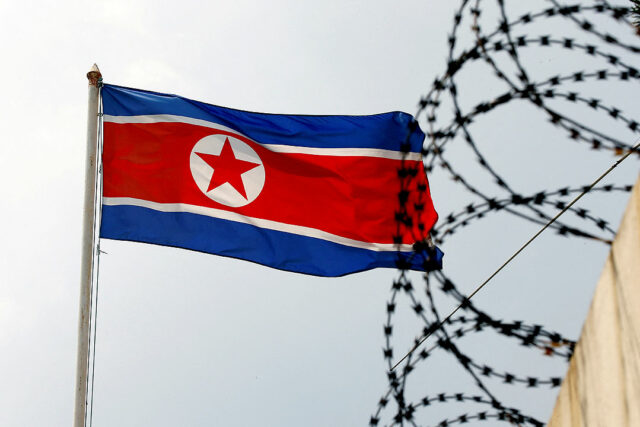
A North Korea flag flutters next to concertina wire at the North Korean embassy in Kuala Lumpur, Malaysia March 9, 2017. — REUTERS/EDGAR SU/FILE PHOTO

SEOUL  — North Korea is on the path to “finally defuse” a crisis stemming from its first acknowledged outbreak of COVID-19, the state news agency said on Monday, while Asian neighbors battle a fresh wave of infections driven by Omicron subvariants.

The North says 99.98% of its 4.77 million fever patients since late April have fully recovered, but due to an apparent lack of testing, it has not released any figures of those that proved positive.

“The anti-epidemic campaign is improved to finally defuse the crisis completely,” KCNA said. It added that the North had reported 310 more people with fever symptoms.

The World Health Organization (WHO) has cast doubts on North Korea’s claims, saying last month it believed the situation was getting worse, not better, amid an absence of independent data.

The North’s declaration could be a prelude to restoring trade long hampered by the pandemic, one analyst said.

“Under the current trend, North Korea could announce in less than a month that its COVID-19 crisis is over and that could be a prelude to resuming cross-border trade,” said Cheong Seong-chang, director of the Sejong Institute’s North Korea studies center in South Korea.

Analysts say the authoritarian North has used the pandemic to tighten already strict social controls. Pyongyang blamed its outbreak on “alien things” near its border with the South, urging its people to avoid anything that comes from outside.

Daily new cases of fever in North Korea reported by KCNA have been declining since the reclusive country first acknowledged in mid-May that it was battling an outbreak of COVID-19.

Lacking a public vaccination effort, the North said it was running intensive medical checks nationwide, with daily PCR tests on water collected in borderline areas among the measures.

The North also said it has been developing new methods to better detect the virus and its variants, as well as other infectious diseases, such as monkeypox.

North Korea’s claim of “anti-epidemic stability” comes as other Asian countries grapple with a new wave of infections. China reported 691 new cases for Saturday with locally transmitted infections at a peak since May 23.

In the neighboring South, daily COVID infections jumped on Tuesday above 40,000 for the first time in two months, with authorities and experts predicting hundreds of thousands of new cases in coming weeks.

Japan also warned that a new wave of infections appeared to be spreading rapidly, as Prime Minister Fumio Kishida called for special care ahead of school summer vacations.

Tokyo’s 16,878 new cases on Wednesday were the highest since February, while the nationwide tally rose above 90,000, in a recent surge of infections to levels unseen since early this year. — Reuters

Scorching heat expected to resume baking China

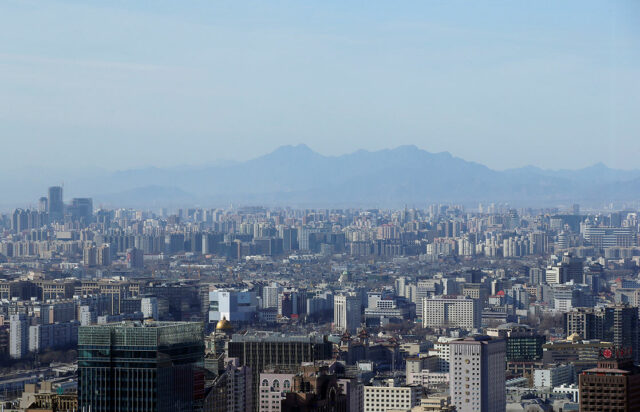
A GENERAL VIEW shows Beijing’s skyline on a sunny day in this file photo. — REUTERS

BEIJING — Searing summer heat waves are expected to return this week across large parts of China, lasting through late August, the state weather forecaster said, despite brief interludes of seasonal rain.

Temperatures from 39 degrees Celsius to 42 degrees Celsius are expected in the southern region after July 20, including the provinces of Jiangxi, Zhejiang and Fujian, the China Meterological Administration said on Sunday.

Despite some weekend respite for provinces such as Hebei, Hunan, Hubei, Guizhou and Jiangxi, maximum temperatures elsewhere are expected to hover over 37 degrees Celsius (98.6°F).

The sweltering heat will last from July 16 to Aug. 24 nationwide for an “extended period” of 40 days, up from the usual 30, the forecaster said on its website.

The so-called “sanfu”, or “three periods of laying low” during China’s summer refers to three annual 10-day stretches between July and August when temperatures and humidity peak.

But this year, the second phase is expected to run for 20 days from July 26 to Aug. 14, the forecaster said.

China has broiled in average temperatures of about 35 degrees Celsius (95°F) for the past two weeks, bringing buckled roads and more hospital visits because of heat stroke, sparking discussion on social media.

Heat waves have gripped several nations as raging forest fires sweep parts of Europe. Temperatures on the US west and southeast coasts have regularly hit 40 degrees Celsius to 45 degrees Celsius for several days.

On Monday, the Hong Kong observatory again warned of very hot weather in the global financial hub.

Chinese forecasters said the number of cities with high temperatures has gradually increased over the past 30 years. Many experts blame persistent high temperatures on global climate change. — Reuters

Pacific island nations, united, demand climate action as China, US woo

PACIFIC ISLANDS FORUM/FORUMSEC.ORG

SUVA — Pacific island nations, courted by China and the United States, put the superpowers on notice, telling the world’s two biggest carbon emitters to take more action on climate change while pledging unity in the face of a growing geopolitical contest.

Leaders at a four-day summit of the Pacific Islands Forum, meeting in Fiji’s capital Suva, bristled at a Chinese attempt to split some of the nations off into a trade and security agreement, while Washington pledged more financial and diplomatic engagement.

The exclusive economic zones of the 17 forum members span 30 million square km (10 million square miles) of ocean — providing half the world’s tuna, the most-eaten fish. The nations are also feeling some of the severest effects of climate change as rising seas inundate lower-lying areas.

At the summit that ended on Thursday, leaders adopted language several members have used in declaring a climate emergency, saying this was supported not only by science but by people’s daily lives in the Pacific.

A communique, yet to be released, shows the nations focussed on the next United Nations climate conference, COP27. They will push for a doubling of climate finance to flow from big emitters to developing nations within two years, money they say is needed to adapt to rising sea levels and worsening storms.

The communique, seen by Reuters, also calls for meaningful progress at COP27 on financing for the “loss and damage” to vulnerable societies that cannot adapt and will need to relocate communities — a battle lost at last year’s global climate talks.

“What matters most to us is we secure bold commitments from all countries at COP27 to phase out coal and other fossil fuels and step up finance to the most vulnerable nations and advance causes like ‘loss and damage’ that matter dearly to the most at-risk island communities,” Fiji’s President Frank Bainimarama told reporters.

Tuvalu’s Foreign Minister Simon Kofe, who literally made waves at the last global climate conference by standing knee-deep in seawater to show what his country faces, told Reuters: “There is technology available to protect the islands and raise the islands and that is what we are seeking. It is very costly.”

As the Pacific summit was ending, Australian coal-mining stocks soared on expectations China could resume imports after a two-year political dispute halted coal shipments to the world’s biggest coal burner from its second-biggest exporter.

In contrast to the market’s bullishness, leaders in the forum’s thatched-roof headquarters discussed how to deal with the statehood of people whose nation has sunk in rising seas, or rights to fishing grounds defined by their distance from a landmass that may disappear.

The communique cites an urgent need for assistance on debt vulnerability and the rising cost of food amid the pandemic and Russia’s invasion of Ukraine.

In a video address to the forum, US Vice-President Kamala Harris pledged to triple funding to Pacific islands over a decade under a fisheries treaty, and open more embassies.

Pacific leaders at times showed irritation at the global focus on the contest between the Washington and Beijing over their region.

Australia, in tune, said less about security and pledged greater support for the climate change agenda of its neighbors, although maritime surveillance announcements to protect sustainable fishing hinted at its core anxiety.

“It’s harder for countries that are responsible for most of the illegal fishing then to argue they are going to support the region to stop illegal fishing,” Australia’s Pacific Minister Pat Conroy said in an interview, referring to China.

Australian officials privately say they do not want security choices in the region driven by economic ties to China, and although Pacific islands are sophisticated actors, they need funding support because many have historical debts to Beijing.

Fiji, for example, has taken no loans from China since 2012 but continues to service export-import bank loans for Chinese infrastructure projects that will cost the government FJ$40 million ($18 million) this year, budget documents show.

Australian Strategic Policy Institute analyst Michael Shoebridge said Beijing has a record of “splintering regionalism,” drawing a parallel between its recent Pacific diplomacy and a platform it created a decade ago to engage with European countries and bypass the European Union.

Some leaders said in interviews that China provided economic opportunities that small island economies could not ignore, although they agreed to work through the forum to stay unified in their response to great power competition, particularly on security, after disquiet that Beijing struck a security deal in April with the Solomon Islands.

The forum’s secretary-general openly criticized China’s bid to have around half the forum members sign a deal on trade and security in May that would exclude members with ties to Taiwan and exclude Australia and New Zealand. Leaders at the summit said it had been rushed without consultation.

China’s embassy in Fiji responded on Twitter on Saturday, saying Beijing had prepared and presented the outcome document to Pacific islands a month ahead of a meeting of foreign ministers. Beijing has created a new platform for cooperation with Pacific island countries through an annual meeting with its foreign minister, it said. — Reuters

A renewable source for a sustainable building

Solar panels to power JEG Tower in Cebu by end-July

In a more pressing call to mitigate the impact of climate change, businesses are facing an added responsibility to make sure that their operations and outputs lessen — if not totally remove — greenhouse gas emissions, especially carbon emissions.

Real estate commercial and residential developer JEG Development Corporation (JDC) has been doing its share by integrating sustainability features in JEG Tower @ One Acacia, its flagship high-rise commercial tower in Cebu City.

The latest of these features will be solar panels, which are set to be installed by the end of this month, making JEG Tower the first commercial development in the city to use solar energy.

The installation of the panels is made possible by a 20-year power purchase agreement with Vivant Corp. subsidiary COREnergy for a zero cash-out solar photovoltaics (PV) plant.

JEG Tower @ One Acacia is set to utilize a 40 kilowatt-peak (kWp) solar PV system from over 100 pieces of polycrystalline PV modules installed on the crown of the 22-storey office and retail building.

The solar PV system will be able to supply electricity to fully or partially power the building’s lower ground floor up to the 6th floor. Tomas Tan, JEG Realty General Manager, further explained how the panels will power the tower.

“The building will be utilizing solar power to pump water from the cistern tank to the water tank above the roof deck, run all the electrical systems in the main lobby including the turnstiles, run the systems in the fire command center, run back of the house systems and/or the building manager’s office,” Mr. Tan detailed in a statement, adding that the building will use the generated energy in real time, requiring no electric storage.

“No batteries or net metering system is required since the power generated by the solar PV system will be immediately used to run the building,” he added.

For Marko Sarmiento, JEG Development Corporation and JEG Realty President, using renewable energy like solar to power JEG Tower is an opportunity worth taking.

“It is an important milestone for our company since it makes us the first developer in Cebu to have a solar roof deck installation on a high-rise office building. It is also consistent with our vision to be innovators in the industry,” Mr. Sarmiento said in another statement.

Sourcing out solar energy used to be a challenge, Mr. Sarmiento continued. Still, with suppliers like COREnergy, the developer can now fulfill its commitment to using a safer, environment-friendly energy option more affordably.

“Anything we can power through a sustainable source is a great benefit for a building. Beyond energy consumption, this further emphasizes the efficiency of our energy model and ultimately helps us lower carbon footprint,” JDC’s Brand Manager Ayla Gomez added.

Prior to installing solar panels, JEG Tower has energy-efficient features, including a recycling space for a materials recovery facility and a dedicated 20% of the estate to green spaces, among them a green rooftop that provides restoration of habitats that will support local flora and fauna.

Going above sustainability standards, JEG Tower ensures ozone protection by using R-410A, a hydrofluorocarbon refrigerant in air conditioning applications that does not contribute to ozone depletion. The tower also implemented an erosion and sedimentation control plan during construction.

For these earlier features, JEG Tower was recognized by esteemed bodies. The development was named the Best Commercial Green Development at the 8th PropertyGuru Philippines Property Awards in 2020. The following year, it achieved a LEED Gold Certification from the US Green Building Council.


Spotlight is BusinessWorld’s sponsored section that allows advertisers to amplify their brand and connect with BusinessWorld’s audience by enabling them to publish their stories directly on the BusinessWorld Web site. For more information, send an email to online@bworldonline.com.

Join us on Viber to get more updates from BusinessWorld: https://bit.ly/3hv6bLA

JEG Tower @ One Acacia: Premium green building in the heart of Cebu CBD

People have been using tons of the world’s resources to build the future for centuries now. As buildings are a key component of developed and thriving cities, the construction sector is one of the most important areas of intervention that can provide opportunities to limit environmental impact and contribute to sustainability.

In Cebu City, Philippines, as one of the frontrunners of sustainability, JEG Development Corp. (JDC) creates a more livable and greener safe spaces that revolutionize the way Filipinos visualize future living.

To perpetrate its promise of advocating holistic well-being in the country, the homegrown real estate company conceptualized and built JEG Tower @ One Acacia, an award-winning premium green building in the heart of Cebu Central Business District (CBD).

Even before COVID-19 struck, JDC already exhibited its ability to create safe and sustainable world-class living spaces through JEG Tower. Anchoring on the work-life balance concept, this 22-storey premium office and commercial building was designed to uplift the physical and mental health of its tenants and occupants.

Designed with sustainability and sophistication in mind, JEG Tower stands out in the Cebu City skyline with its green roof and garden that highlights the abundance of endemic flora species in the province.

Being named as the country’s Best Green Commercial Development in 2020 and LEED Pre-certified Silver by the US Green Building Council (USGBC), JDC quantifies how much difference a green building like JEG Tower can contribute to the community.

Underscoring the triple bottom line of sustainability — People, Planet, and Profit — JEG Tower invests in technology and observes measures that improve energy efficiency, water efficiency, waste management, and environmental protection during construction and beyond.

In addressing greenhouse gases and minimizing the negative impacts on ozone depletion by reducing the amount of energy required for building operations, the tower utilizes high-efficiency variable refrigerant flow (VRF) air conditioning systems, Low-E glass on the building’s interiors, LED lighting throughout all buildings, variable speed motors and pump, and white roofs to reduce the heat load.

Based on the results of Barone International energy models, and in comparison, to non-green commercial structures, savings in electricity consumption and water usage in JEG Tower can be up to 23% and 54% respectively.

While most buildings rely on municipal potable water sources, this tower has a rainwater collection system that utilizes rainwater for plumbing and irrigation of the building’s green spaces. This technology safeguards the cycle of withdrawing resources from natural bodies of water for future generations to enjoy.

As early in the construction stage, JEG Tower displayed best sustainable practices as it implemented an erosion and sedimentation control plan as well as a program to divert construction and demolition debris back to the manufacturing process and appropriate reclamation sites. The tower also has a dedicated area to collect and recover waste materials, making it easier for tenants to manage their waste and reduce the environmental impacts of consumerism.

Now, in a worldwide drive to build a healthy post-pandemic workplace, JEG Tower utilizes Fresh Air System for optimal indoor air quality that can capture air particles for better filtration, less dust, and elimination of other airborne contaminants. It also has integrated contactless smart technology in all office floors and common areas like automatic sliding doors, Destination-Oriented Assignment System (DOAS) elevators, and motion-sensor bathroom fixtures.

Being the second most populated urban area of the Philippines, Cebu City serves as the economic center in Visayas and the biggest outside the country’s capital. Without further contributing to the negative impacts of commercial spaces in the city, JEG Tower @ One Acacia offers additional Grade A office spaces in the CBD through its green roofs that are aesthetic, safe, and future-proof.

To learn more about JEG Tower @ One Acacia, call Alexa Abella via (+63) 917-825-6884.

For listing inquiries and more information, contact KMC Savills at (+63) 28403-5519 or e-mail to info@kmcmaggroup.com.


Spotlight is BusinessWorld’s sponsored section that allows advertisers to amplify their brand and connect with BusinessWorld’s audience by enabling them to publish their stories directly on the BusinessWorld Web site. For more information, send an email to online@bworldonline.com.

Join us on Viber to get more updates from BusinessWorld: https://bit.ly/3hv6bLA

Ukraine president sacks security chief, cites hundreds of treason cases

President of Ukraine Volodymyr Zelenskyy/Flickr

KYIV — Ukraine’s President Volodymyr Zelenskyy sacked the head of the country’s domestic security service and state prosecutor, citing hundreds of cases of alleged treason and collaboration with Russia, as Moscow appeared set to step up military operations. 

Mr. Zelenskyy said more than 60 officials from the SBU security service and prosecutor’s office were working against Ukraine in Russian-occupied territories, and 651 treason and collaboration cases had been opened against law enforcement officials. 

The sackings on Sunday of Ivan Bakanov, head of the security service, and Prosecutor General Iryna Venediktova, who led efforts to prosecute Russian war crimes, and the sheer number of treason cases reveals the huge challenge of Russian infiltration as Kyiv battles Moscow in what it says is a fight for survival. 

“Such an array of crimes against the foundations of the national security of the state … pose very serious questions to the relevant leaders,” Mr. Zelenskyy said. “Each of these questions will receive a proper answer. 

In his nightly speech to the nation, Mr. Zelenskyy noted the recent arrest on suspicion of treason of the SBU’s former head overseeing the region of Crimea, the peninsula annexed by Russia in 2014 that Kyiv and the West still view as Ukrainian land. 

Mr. Zelenskyy said he had fired the top security official at the start of the invasion, a decision he said had now been shown to be justified. 

“Sufficient evidence has been collected to report this person on suspicion of treason. All his criminal activities are documented,” he said. 

3,000 CRUISE MISSILES 

After failing to capture the capital Kyiv early in the invasion, Russian forces using a campaign of devastating bombing now control large swaths of Ukraine’s south and east, where pro-Russian separatists already control territory. 

Mr. Zelenskyy said Russia had used more than 3,000 cruise missiles to date and it was “impossible to count” the number of artillery and other strikes so far. 

But Western deliveries of long-range arms are beginning to help Ukraine on the battlefield, with Kyiv citing a string of successful strikes carried out on 30 Russian logistics and ammunitions hubs, using several multiple launch rocket systems recently supplied by the West. 

The strikes are causing havoc with Russian supply lines and have significantly reduced Russia’s offensive capability, according to Ukraine’s defense ministry. 

Ukrainian officials say the new US-made High Mobility Artillery Rocket Systems (HIMARS) they began receiving last month allow them to reach targets in Crimea, which was annexed by Russia in 2014, and other areas occupied by Russia. 

“Good morning from HIMARS,” Andriy Yermak, chief of staff to Ukraine’s president, wrote on Telegram on Sunday alongside a video showing a large explosion which he said was another destroyed Russian ammunition depot in southern Ukraine. 

RUSSIA INTENSIFIES OPERATIONS 

Russian Defense Minister Sergei Shoigu on Saturday ordered military units to intensify operations to prevent Ukrainian strikes on areas held by Russia, according to a statement from the ministry. 

Ukrainian military intelligence later reported shelling along the entire frontline and what it said was preparation for the next stage of the Russian offensive. 

The Ukrainian military said Russia appeared to be regrouping units for an offensive toward Sloviansk, a symbolically important city held by Ukraine in the eastern region of Donetsk. 

The British defense ministry said on Sunday that Russia was also reinforcing defenses across areas it occupies in southern Ukraine after pressure from Ukrainian forces and pledges from Ukrainian leaders to drive Russia out. 

Russian President Vladimir Putin launched his invasion on Feb. 24 calling it a “special military operation” to demilitarize its neighbor and rid it of dangerous nationalists. 

Kyiv and the West say it was an imperialist land grab and attempt to reconquer a country that broke free of Moscow’s rule with the break-up of the Soviet Union in 1991. 

The biggest conflict in Europe since World War Two has killed more than 5,000 people, forced more than 6 million to flee Ukraine and left 8 million internally displaced, says the United Nations. 

Ukraine and the West say Russian forces are targeting civilians and been involved in war crimes, charges Moscow rejects. — Reuters

‘Climate change affects everyone’: Europe battles wildfires in intense heat

Global warming - STOCK IMAGE

JERTE, Spain — Authorities across southern Europe battled on Sunday to control huge wildfires in countries including Spain, Greece, and France, with hundreds of deaths blamed on soaring temperatures that scientists say are consistent with climate change.

In Spain, helicopters dropped water on the flames as heat above 40 Celsius and often mountainous terrain made the job harder for firefighters.

Shocked residents watching thick plumes of smoke rising above the central western Jerte valley said the heat was making their previously green and cool home more like Spain’s semi-arid south.

“Climate change affects everyone,” said resident Miguel Angel Tamayo.

A study published in June in the journal Environmental Research: Climate concluded it was highly probable that climate change was making heatwaves worse.

More than 1,000 deaths have been attributed to the nearly week-long heatwave in Portugal and Spain so far. Temperatures in Spain have reached as high as 45.7°C.

Spain’s weather agency issued temperature warnings for Sunday, with highs of 42°C forecast in Aragon, Navarra and La Rioja, in the north. It said the heatwave would end on Monday, but warned temperatures would remain “abnormally high.”

Fires were raging in several other regions including Castille and Leon in central Spain and Galicia in the north on Sunday afternoon. Firefighters stabilized a blaze in Mijas, in Malaga province, and said evacuated people could return home.

British pensioners William and Ellen McCurdy had fled for safety with other evacuees in a local sport center from their home on Saturday as the fire approached.

“It was very fast …. I didn’t take it too seriously. I thought they had it under control and I was quite surprised when it seemed to be moving in our direction,” William, 68, told Reuters.

In France, wildfires have now spread over 11,000 hectares in the southwestern region of Gironde, and more than 14,000 people have been evacuated, regional authorities said on Sunday afternoon.

More than 1,200 firefighters were trying to control the blazes, the authorities said in a statement.

France issued red alerts, the highest possible, for several regions, with residents urged “to be extremely vigilant.”

In Italy, where smaller fires have blazed in recent days, forecasters expect temperatures above 40°C in several regions in coming days.

Similar temperatures were recorded in Portugal on Sunday and are forecast in Britain on Monday and Tuesday, in what would top its previous official record of 38.7°C set in Cambridge in 2019.

Britain’s national weather forecaster issued its first red “extreme heat” warning for parts of England. Rail passengers were advised to only travel if absolutely necessary and to expect widespread delays and cancellations.

DROUGHT IN PORTUGAL

Around 1,000 firefighters tried to control 13 forest and rural fires in the center and north of Portugal, the largest being near the northern city of Chaves.

Portugal’s Health Ministry said late on Saturday that in the last seven days 659 people died due to the heatwave, most of them elderly. It said the weekly peak of 440 deaths was on Thursday, when temperatures exceeded 40°C in several regions and 47°C at a meteorological station in the district of Vizeu in the center of the country.

By Saturday, there were 360 heat-related deaths in Spain, according to figures from the Carlos III Health Institute.

Portugal was grappling with extreme drought even before the recent heatwave, according to data from the national meteorological institute. Some 96% of the mainland was already suffering severe or extreme drought at the end of June.

Emergency and Civil Protection Authority Commander Andre Fernandes urged people to take care not to ignite new fires in such bone-dry conditions.

In Greece the fire brigade said on Saturday 71 blazes had broken out within a 24-hour period. — Guillermo Martinez/Reuters

Boeing says ‘lessons learned’ from costly Air Force One deal

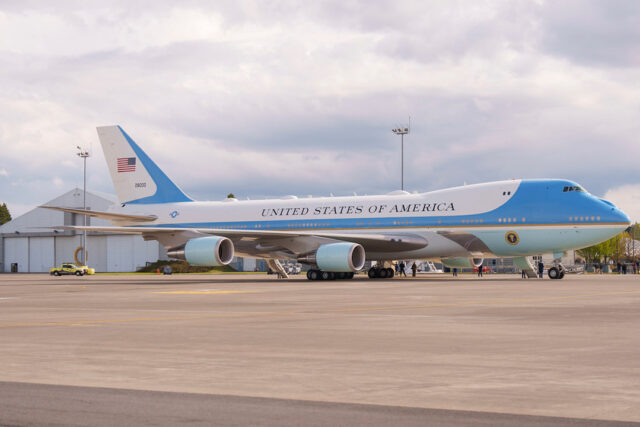
Air Force One sits on the tarmac at Portland International Airport in Portland, Oregon, on April 21.
— Official White House Photo by Adam Schultz

LONDON — Boeing’s defense chief said on Sunday it had learned lessons from a contract to supply the US presidency with new Air Force One aircraft, which has cost the planemaker almost $1 billion in charges and is up to three years behind schedule.

Ted Colbert did not give details of learnings, but said they had contributed to a new schedule for the two planes that has seen deliveries pushed back to 2026 and 2027.

“The lessons learned are important to us and we’re applying them going forward,” Mr. Colbert told reporters at a briefing ahead of the Farnborough air show. “We’ve made changes to the program. We’ve made changes to the way we work on the program.”

“These are challenging programs and you learn as you go along and you adapt as you have to,” he added.

In April, Boeing recorded a $660 million charge after taking a $318-million one in April 2021 on the program “largely due to COVID-19 impacts and performance issues at a key supplier.”

Asked if Boeing could recoup those cost overruns, Mr. Colbert said: “If we can find a way to, we will.”

Boeing received a $3.9 billion contract in 2018 for two 747-8 aircraft to be delivered starting in 2024.

In December 2016, then US President-elect Donald J. Trump secured a promise from then Boeing Chief Executive Officer Dennis Muilenburg that the cost of replacing Air Force One would not exceed $4 billion. Mr. Trump had earlier urged the government to cancel buying Boeing’s new Air Force One, saying it was “ridiculous” and too expensive.

Boeing CEO Dave Calhoun said in April the deal was problematic.

“Air Force One — I’m just going to call a very unique moment, a very unique negotiation, a very unique set of risks that Boeing probably shouldn’t have taken,” Mr. Calhoun said. “But we are where we are, and we’re going to deliver great airplanes. And we’re going to recognize the costs associated with it.”

The Boeing 747-8s are designed to be an airborne White House able to fly in worst-case security scenarios, such as nuclear war, and are modified with military avionics, advanced communications and a self-defense system. — David Shepardson/Reuters

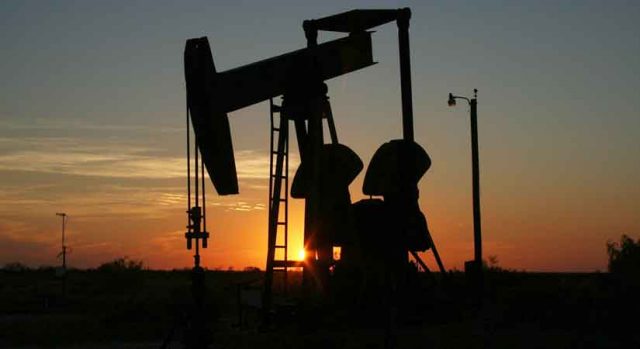
Top US energy envoy expects further steps from OPEC producers on supplies

PIXABAY

WASHINGTON — Major crude oil producers have spare capacity and are likely to boost supplies following President Joseph R. Biden, Jr.’s visit to the Middle East, a senior US energy envoy said on Sunday.

Speaking on CBS’ Face the Nation, Amos Hochstein, senior US State Department adviser for energy security, said: “Based on what we heard on the trip, I’m pretty confident that we’ll see a few more steps in the coming weeks.”

Mr. Hochstein did not say which country or countries would boost production or by how much.

“It’s not just about Saudi … We met with the GCC, and with Saudi Arabia. I’m not going to go into how much spare capacity there is in Saudi Arabia and in UAE (the United Arab Emirates) and Kuwait etc. But there is additional spare capacity. There is room for increased production,” he said.

GCC stands for Gulf Cooperation Council and includes Bahrain, Kuwait, Oman, Qatar, Saudi Arabia and the United Arab Emirates.

Mr. Biden visited Saudi Arabia on Friday as part of his first trip to the Middle East as US president, hoping to strike a deal on oil production to help drive down gasoline prices. A rise in US gasoline prices to more than 40-year highs is fueling inflation and pummeling his ratings in opinion polls.

But he has not secured a clear assurance on an oil production increase.

Saudi Arabia’s foreign minister said a US-Arab summit on Saturday did not discuss oil. He said that OPEC+ would continue to assess market conditions and do what is necessary. OPEC+, which also includes Russia, meets next on Aug. 3.

Oil prices rocketed to their highest levels since 2008, climbing above $139 a barrel in March, after the United States and Europe imposed sanctions on Russia over its invasion of Ukraine, which Moscow calls a “special military operation.” Prices have slipped since then.

Mr. Hochstein also said he expected to see U.S. gasoline prices to fall further towards $4 a gallon, after exceeding $5 a gallon earlier this year for the first time in history. — Humeyra Pamuk/Reuters

[B-SIDE Podcast] Keeping the peace in the PHL

Follow us on Spotify BusinessWorld B-Side

Peace in the Philippines improved in the last four years, moving up the country’s position to 128th out of 168 territories in the global peace index, according to the Institute for Economics and Peace (IEP).

The improvements were driven by four factors, including the reduction of violent demonstrations, political instability, terrorism and deaths from internal conflict.

In this B-Side episode, IEP founder and executive chairman Steve Killelea talks to BusinessWorld reporter Alyssa Nicole O. Tan about the ways in which the Marcos administration can “manage future instabilities culminating from unexpected global events such as pandemics or civil unrest.”

“Obviously, a government policy around positive peace is important,” he said.

TAKEAWAYS

Despite improved peacefulness in the Philippines, peace in the region slightly deteriorated.

“If we’re looking at Asia overall, 10 countries deteriorated and nine improved, it’s slightly less peaceful than it was in the last year, so all in all, the Philippines has still outscored the other countries in the region,” Mr. Killelea said.

Despite improvement, the country remains the third least peaceful country in the region for the second consecutive year. 

“Although it has seen improvements in the homicide rate, the Philippines is still quite high. It also has the number of different militants, some Islamic in nature, that are fighting with the state and those situations have improved somewhat, but according to global standards and particularly in the region, it’s still fairly high,” he said.

“Violent crime, it’s still reasonably high for the region as well, so you’ve got a number of internal conflicts running in parts of the country,” he added.

Peaceful countries enjoy stronger economic environments.

Positive peace, drawn from a well-functioning government, strong business environment, acceptance of people’s rights, equitable distribution of resources, among other positive factors, leads to several benefits.

The Philippines, for example, has 2% per annum higher gross domestic product growth rates than countries that are deteriorating in positive peace, Mr. Killelea said. 

“We simply find that the inflation rates are lower, the interest rates are lower. In fact, the inflation rates are four times less volatile in countries improving in positive peace compared to those which are deteriorating.”

“Foreign direct investments higher — twice as high. Debt ratings tend to improve overtime, whereas in countries deteriorating in positive peace, they deteriorate as well,” he added.

“When we look at positive peace, we also find the countries in which are better in positive peace have better mentions in well-being and happiness, better performance on ecological performance, and much better in a whole range of developments as well so therefore in many ways we use positive peace to describe an environment in which human potential can flourish,” the IEP executive chairman said.

The new administration should focus on enhancing the everyday life of ordinary Filipinos.

According to Mr. Killelea, President Ferdinand “Bongbong” R. Marcos, Jr., has to address corruption, violent crime, and homicide.

Based on the results of IEP’s research, prosperous countries are more peaceful: people are less inclined to fight or resort to violence to try and make ends meet.

The Philippines must balance its relationships with the two superpowers. 

“It’s unlikely in the next couple of years that we see a full stage conflict between the US and China, I don’t think either country sees it in its interest, but whether China keeps being aggressive towards the claims in the territory in the South China Sea will have a lot to do on how the relationships between the Philippines and China will develop over the next decade,” Mr. Killelea said.

“Certainly, the US is going to place more emphasis on the Asia-Pacific over the next decade, we can see that over the last few years, that will come in the form of economic support and the form of a stronger military presence also,” he added.

“The last thing you want to see is conflict or violence, breakout in the Indo-Pacific region,” the IEP founder said.

A data-driven plan is necessary to prepare the country for incoming global challenges.

“I think what the government needs to do is to create a special task force that will look at emerging threats to both the Philippine economy and the security situation,” Mr. Killelea said.

He noted the need for a “whole-of-government policy” to look at where emerging threats come from and create plans to counter them and their after-effects as they arise.

“We don’t know whether they’re going to occur or not, but having a strategic insight and doing the planning around them is not necessarily expensive. If the eventualities do turn out, they manifest and start to become real, then at least the plans are in place,” he said.

For the next two years, economic management will be key, he added. There will be a need for aggressive management of inflation, while food security will remain critical.

“There’s a need to address the needs of the most vulnerable, particularly the very poor. The government will have to address food for the most vulnerable within Philippine society,” Mr. Killelea said. “It will go a long way to improving the peace, and it will also improve the appearance of the government in the eyes of the average Filipino.”

Recorded remotely July 2022. Produced by Earl R. Lagundino and Sam L. Marcelo.

Follow us on Spotify BusinessWorld B-Side

Transformational leadership: Fostering growth through people

Business transformation is far from easy. The merits of digital transformation have been evident long before the outbreak of the COVID-19 pandemic, and yet many companies essentially still had to be forced by the ensuing crisis to start the process.

“A substantive and irreversible shift in an organization’s identity, value system, and capabilities requires three difficult acts: Developing a deeper sense of purpose that guides strategic decisions and shapes the workplace culture, repositioning the core business, and creating new sources of growth,” Harvard Business Review (HBR) wrote in an article.

Furthermore, HBR pointed to the requirement of upgrading infrastructure, workflows, and tools to allow for digital changes such as online commerce and remote work. “The growth and diversification of digital platforms like Amazon, Alibaba, and Stripe raises important strategic questions about where and how to compete. Difficult economic conditions (low consumer demand in particular) challenge the viability of some business models,” the Harvard publication added.

Successfully guiding a company through such fundamental changes demands more from its leaders than simply fulfilling a company’s immediate interests. Transformational leadership, a concept that gained popularity in the 1970s and 1980s, is more about creating a vision to guide the change through influence, inspiration, and executing that vision alongside a team in shared purpose.

Michigan State University (MSU) cited James MacGregor Burns, a political science and leadership researcher, who in the 1970s defined the actions of transformational leadership as “when one or more persons engage with others in such a way that leaders and followers raise one another to higher levels of motivation and morality”.

“Equal parts visionary, mentor and source of inspiration, these leaders create a culture of innovation and positive change that leads to successful business outcomes. Transformational leaders do this by creating a distinctive culture within the organizations and teams that they lead,” MSU wrote in an article.

While the term can bring to mind conventional image of a strong, energetic, charismatic and passionate leaders, MSU clarified that transformational leadership goes beyond personality to drive a cultural and visionary change within an organization.

“While these may be the types of leaders who automatically come to mind, the characteristics of a transformational leader go much deeper and shouldn’t be thought of as innate personality traits or types. Becoming a transformational leader is about developing behaviors, strategies and actions, all grounded in leadership theory,” MSU wrote.

What defines a transformational leader?

The list of demands facing businesses today from all stakeholders grows longer each year. As current events unfold and consumers, employees, and investors alike begin to grow more conscientious of social, economic, and environmental issues, they are starting to expect more organizations to do their part to address those concerns.

Leaders whose organizations are undergoing transformation today, HBR noted, need to be in tune with such demands in order to give them a more complex context in which to execute major structural change (such as acquisitions, disposals, partnerships, and organizational redesign), widespread deployment of new technologies, considerable effort, and cultural change.

“Employees, customers, and investors also expect organizations to play a more prominent role in tackling other systemic issues, such as climate change and social inequality — while also making a profit. Employees, many of whom will have experienced trauma, loneliness, and burnout, expect to use smarter, more flexible working practices and to work for leaders who are effective, authentic, and compassionate,” HBR wrote.

“Transformations are often, but not always, initiated and led by the ‘center’: the board and the CEO and their direct reports and supporting functions. At first, they reach out to customers, partners, and employees on the front line to understand their needs, frustrations, and problems in order to work out what needs to be addressed,” HBR pointed out.

Once they complete their diagnosis, these leaders often retreat to the center, staying there until they are called to action once more. This should not be the case under a transformational leader, as they should keep their fingers on the pulse of their organization at all times.

The transformational leader thinks beyond the status quo and challenges conventional approaches to the issues most relevant to the organization, and inspires others to do the same. MSU stated that one of the key transformational leadership traits is the ability to transmit a sense of the larger culture to the individual, giving employees a feeling of ownership in company goals and independence in the workplace.

“Transformational leaders do not dictate ideas from a bubble and then leave it to employees to carry them out. They are concerned with the professional development of employees and foster positive relationships with them. This involves keeping lines of communication open, attending to the individual needs of employees, mentoring them and recognizing each person’s unique contributions,” MSU wrote.

“You can often identify a transformational leader by the trust, respect and admiration others feel for them. Transformational leaders do not micromanage. They lead by communicating a clear vision and creating a workplace where seasoned employees are trusted to make decisions in their assigned areas. All employees are encouraged to think creatively to find new solutions to longstanding challenges.”

Transformational leaders in this sense should serve as the organization’s role models as a kind of ‘idealized influence’ that inspires ethical and socially desirable behavior, maintaining a dedication to work goals and exhibiting enthusiasm about company strategy. Most importantly, the followers of a transformational leader do this not merely because it is good for the company, but because they trust that it is good for their team and for them as individuals.

This is also the main difference between transformational leadership and visionary leadership. Many would conflate the two as both kinds of leaders look for new possibilities for the future of an organization, team or product and help others to conceptualize and inspire others to find their own solutions. However, MSU noted that the difference between these leadership styles “lies in a true transformational leader’s ability to inspire the development of new ideas”.

“Even if the vision is not their own, transformational leaders can nurture it toward reality,” MSU added. — Bjorn Biel M. Beltran