
Home Blog Page 5795

Greatness of spirit

LARM RMAH-UNSPLASH

“To nurture a better tomorrow, we need to strengthen the child protection in our country.” — Dr. Bernadette J. Madrid, Ramon Magsaysay Laureate 2022.

The 14th annual Ako Para Sa Bata (APSB) conference opened at the Magsaysay Center with an inspiring lecture by Dr. Madrid, the champion for child protection.

Present onstage were panelists and speakers: Emily Abrera, Trustee of the Ramon Magsaysay Awards Foundation; Mariella S. Castillo, MD, Consuelo Foundation Managing Director; Dr. Shantha Sinha, 2003 Ramon Magsaysay Awardee, India (who participated via Zoom); Patricia Lim Ah Ken, Chief of Child Protection, UNICEF Philippines; Stella G. Manalo, MD, Conference Chair, APSB; Carmencita D. Padilla, MD, Chancellor UP Manila. And Integrated Bar of the Philippines representatives who signed a memorandum of agreement (MOA) with the Child Protection Network (CPN).

“[There are] certain formal and informal structures, functions and capacities that have been assembled to prevent and respond to violence, abuse, neglect, and exploitation of children. A child protection system is to be comprised of the following components:

“Human resources, finance, laws and policies, governance, monitoring and data collection as well as protection and response services and care management.

“It also includes different actors — children, families, those working at sub-national or national level and those working internationally. Most important are the relationships and interactions between and among these components and these actors within the system. It is the outcomes of these interactions that comprise the system.” (UNICEF 2021)

The Philippine National Baseline Study on Violence against Children (CWC, 2016) reveals that 80% of Filipino children have experienced violence. Physical, emotional abuse and bullying affect three out of five children. Sexual violence: one out of five children.

“Beyond the numbers, this is about the needless suffering of our children. A moral disgrace and the consequences are borne by this generation and the next,” Dr. Madrid remarked.

“I will share with you the lessons we have learned the past 25 years — my personal experiences as a pediatrician and Head of the Child Protection Unit at the Philippine General Hospital (CPU-PGH) of the University of the Philippines Manila and as Executive Director of the Child Protection Network Foundation, that led to the strengthening of the child protection system.

“Child protection does not really have a concrete identity for government such as health, education, justice….

“In a developing country like the Philippines there will always be competing priorities because there are not enough resources even for basic needs.

“We identified the Department of Health as the best fit because it already has the personnel for a multidisciplinary team of doctors, social workers and mental health providers. Health is the gateway for so many victims of violence. It is a natural entry point for receiving care, especially for those who are ready to disclose abuse. It has the capacity for both intervention and prevention work and data collection…”

The Department of Health Order in the establishment of Women and Children Protection Units (WCPUs) in all government hospitals is a major achievement.

Dr. Madrid enumerated additional challenges:

1. “Convincing the health sector, including the Department of Health, that violence against women and children is a public health concern.

2. “Making sure that the WCPUs is an adaptive general response mechanism to violence against women and children.

3. “Expansion of the team to include legal service”

At the conference, the memorandum of agreement with the IBP was signed by CPN’s Executive Director Dr. Bernadette J. Madrid, Katrina Legarda, National Director of the National Network of WCPUs, and IBP’s Marienne M. Ibadlit, National Director on Gender and Development, and Myline Urmenita-Palisoc, Deputy Director on National Center for Legal Aid.

4. “Mental Health Gap. Our patients need a spectrum of mental health services from acute to long term. More abused adolescents are at high risk for suicide (during the pandemic.) Telepsychiatry is a strategy.”

She mentioned the development services for all children and adults regardless of gender. What about the boys? LGBTQI +?

There is a need to strengthen the children and women protection workforce, from social service to health, to legal, to education. Training programs now include doctors, social workers, police, the judiciary and the barangay.

“Multidisciplinary training is important because we all must learn how to work together.”

Trainers should have the expertise and specialized training based on Clinical Practice guidelines and peer-review that is being institutionalized.

“Convincing the Education sector that in order to learn, children need to be protected from violence. Our experience shows that so many children drop out of school or do poorly in school because of violence that they have experienced at home or in school.”

Based on research, globally, the potential loss in human capital wealth due to violence in school is $11 trillion for 2019.

There are changing norms and practices.

“We found that the messenger is as important as the message,” she emphasized.

There is a carefully designed competency and skills-based training to sensitize our family judges and personnel handling child witnesses and victims of abuse.

Violence against children can be prevented. INSPIRE (WHO, 2016) are evidence-based prevention and response interventions that are scientifically evaluated. “Masayang Pamilya” is a controlled study Filipino adaptation of the Parenting for Lifelong Health Program. It showed reduced child maltreatment, emotional abuse and neglect in families.

Dr. Madrid shared her personal thoughts.

“It has been 25 years. System strengthening takes a long time…. We are in the frontlines. Witnessing what is happening with our children… and what they experience when they go through the system. We feel their pain. That is what guides us in all that we do.

“It is also about relationships… We would never have made a difference without all the partnerships. The support that was unstintingly given by people who do not even want to be known. We are members of a community that protects all children and hold each other’s hands when it is needed. I take this opportunity to thank you.

“We all know that we serve a purpose greater than ourselves.”

It took a foreigner who came here when he was a young man to start all of this. His name is David Bradley. After 25 years, he is still with us. He leads the CPN Foundation board that works quietly and effectively.

“Greatness of spirit comes in many forms. I consider myself blessed to experience it every day. Our children deserve nothing less.”

Warm congratulations, Dr. Bernadette J. Madrid and CPN.

Happy 25th Anniversary to CPU-PGH!

The “Ako Para Sa Bata” conference meetings, with the theme “The Beginning, the Building and the Institution in the Philippines,” are being held every Thursday until Nov. 24 at 10-11:30 a.m. via Zoom and Face Book Live. Registration is free. Register online at bit.ly/akoparasabata2022. Follow @AkoParaSaBataConference on FB for updates and announcements.


Maria Victoria Rufino is an artist, writer and businesswoman. She is president and executive producer of Maverick Productions.

mavrufino@gmail.com

Time for a Philippine pivot away from China

BW FILE PHOTO

The deal with having lived long enough is it opens one beyond mere book learning. Take Martial Law of the 1970s, of which 75% of the Philippine population were born only after it was lifted (with a further 10% merely toddlers or in grade school when it was imposed). If that 85%’s knowledge of that era is exclusively based on biased material, then erroneous homogenous thinking is the result. Which makes the vociferous discarding of the experiences, benign or not, of those that actually went through those years utter foolishness.

LIVED EXPERIENCE
This should encourage us to ponder about something those already living and aware in the 1980s instinctively know: Forgotten now is the fact that around 40 years ago almost everybody concluded that the Japanese, beaten in World War II, were set to take over the world via global commerce. Tons of books, even movies (most famously Rising Sun, starring Sean Connery and Wesley Snipes, based on a book by Michael Crichton), either celebrated or were trepidatious over Japan’s “inevitable” hegemony.

But the inevitable did not happen, certain flaws within its economic system, exacerbated by a speculative asset price bubble, did Japan’s ambitions in.

CHINA CRISIS?
Which brings us to China, everybody’s acknowledged supposed next superpower, poised to take sole global leadership and wrest power away from the United States sometime halfway this century. And yet, it may surprise many to know that the Middle Kingdom’s presented condition is actually far more illusory than Japan’s was then.

Certain fundamental and inherent flaws within the Chinese system, either political or relatedly so, highlighted in recent times by floods and droughts, as well as a stupendously unwise and incompetent (not to mention tyrannical) lockdown zero-COVID policy, led the country to suffer from “energy shortages, disrupted river-based logistics, hit industrial production, and lowered agricultural yields” (“Mounting Problems Threaten to Dampen Xi’s Congress Victory,” The Diplomat, September 2022).

Yet, that is not even China’s worse problem. For a country that touted having a population of 1.3 to 1.4 billion: “A newly released revision of the United Nations Population Division’s demographic projections estimates that by the end of this century, China will no longer be the most populous country in the world. Perhaps even more surprising, according to the UN’s newest projections, China will be almost exactly half the size of India, which is expected to have 1.53 billion people, by 2100. To those who object that 2100 is too far off to be of practical relevance, by 2050, India, with 1.67 billion people, will already have around 300 million more people than China” (“A Shrinking China Can’t Overtake America,” Foreign Policy, July 2022). The foregoing is assuming China has not inflated its population numbers, which it most likely has. By some estimates, it would be lucky to have even a population of 700 million by the middle of this century.

Thus, the “unexpectedly rapid aging is slowing China’s economy, reducing revenues, and increasing government debt, with provinces cutting civil servants’ wages and infrastructure investment this year. Clearly, the population base that supported China’s strategic expansion is gone” (“Leaked Data Show China’s Population Is Shrinking Fast,” Project Syndicate, July 2022).

For context, the Philippine average age is 25.7 (with Filipinos under 30 constituting 57% of the population, those under 50 about 90%). China’s average age is 38.42 (with only around 35% under the age of 30).

A country which has just a little over half of its people under 45, the impact on its productivity, hence economy, is enormous — on it depends much needed “resources for global diplomacy, influence-building, and military investment will soon come under tremendous pressure from the need to fund more prosaic but inescapably necessary things, such as much more robust social security, national health insurance, and retirement systems.” Needless to say, that vanished due to China’s prolonged one-child, later two-child, policy.

FUEL, FOOD, AND THE MILITARY
Consideration must be given to the thought that a diminished or humbled China could make it an erratically dangerous player on the world stage. Yet that may not necessarily be the case: for one, its industries and resources heavily depend on the global trading system, which tilts toward and is regulated practically by the United States. It is highly dependent on foreign oil (China is the world’s biggest importer, putting its energy needs at the mercy of Saudi Arabia, Russia, and Iraq; and even the US, one of its fastest growing import markets) and imported food (China is the largest importer of agricultural products, particularly from the EU and US).

What of the vaunted Chinese military? To that a four-word response: Russia’s difficulty versus Ukraine. Unlike the Philippine military (and definitely the US’), for example, which has been in a state of constant conflict participation, the Chinese military, despite its vaunted resources (now threatened by a threatened economy), is basically untested. And isolated from the rest of the world’s security arrangements.

A GOOD TIME FOR A PHILIPPINE PIVOT
All the foregoing presents an opportunity (and necessity) to recalibrate Philippine foreign policy, to turn it away from its over-reliance on China, and thus make it truly independent. Nevertheless, foreign policy is merely an extension of the domestic, and thus the following possible directions:

• Revive the ROTC for college-level youth but supplemented by mandatory military service requirement (one or two years) akin to that of Singapore and which could (like Singapore) apply to the 20-35 age group, plus another program for those older and up to 50 years of age.

• Refashion a defense posture taking advantage of the fact that our territory is made up of separate and disparate islands and that those islands are then divided internally by numerous rivers, lakes, hills, caves, and other land features. The point therefore is to organize our defense forces to work with a national command, if available, but capable of quickly and readily adapting to independent guerilla efforts on a per region or district basis. Essentially, the policy is attrition.

To facilitate this, our Self-Reliant Defense Posture (SRDP) program should be calibrated around this policy, with armament and transportation manufacturing and purchases reflecting the type of defense planning advocated here: producible en masse, mobile, easily hidden, and interchangeable.

• For such SRDP, the Departments of National Defense (DND), and Trade and Industry can work on developing local industries for that purpose. One huge consideration is the sourcing and storing of fuel and minerals used as raw materials for whatever equipment is necessary for a credible defense effort.

• The DND could work with the Department of Information and Communications Technology to develop a group that will focus on defensive and offensive computer expertise and technology.

• The Philippine Competition Commission could increase emphasis on monitoring and regulating foreign ownership in industries vital to national security.

• The National Food Authority should emphasize stockpiling of food and other related resources, viewed to include readiness in food supplies in case there is indeed a need to shift to a highly prolonged defense effort (or even natural calamities).

There is also the need to cooperate with our traditional allies in the protection of maritime commerce, for which additional security arrangements, as well as greater engagement in international trade, would be critical.

A huge opening and opportunity are available for the Philippines, conditioned however on the ability to harness its human and natural resources ably and with dignity. And assuming, of course, we can accurately identify what our national interests truly are.


Jemy Gatdula is a senior fellow of the Philippine Council for Foreign Relations and a Philippine Judicial Academy law lecturer for constitutional philosophy and jurisprudence

www.facebook.com/jigatdula/

Twitter @jemygatdula

Taiwan sees more Chinese intimidation in Xi’s next term 

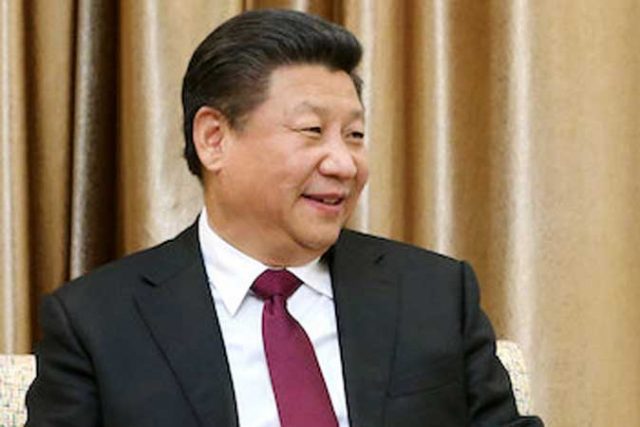
Chinese President Xi Jinping. — WIKIPEDIA.ORG

TAIPEI — Taiwan expects China to increase its coercion and intimidation to achieve its goal of bringing the island under Beijing’s control once President Xi Jinping assumes a third term in office, a senior Taiwanese minister said on Thursday.

Beijing’s once-in-five years leadership reshuffle is set for the Communist Party congress that starts Oct. 16, where Mr. Xi is poised to break with precedent and secure a third leadership term.

China views democratically governed Taiwan as its own territory and has ramped up military and political pressure to assert sovereignty claims, including staging war games near the island in August after US House Speaker Nancy Pelosi visited Taipei.

Speaking to lawmakers, Chiu Tai-san, the head of Taiwan’s China-policy making Mainland Affairs Council, said Mr. Xi will further consolidate his power at the party congress.

“Following that, the strength of the Chinese Communist Party will gradually expand, along with the continuous emphasis on promoting the reunification process in its development strategy,” Mr. Chiu said.

“We believe that the Beijing authorities’ work on Taiwan has entered the stage of strengthening the practice of the so-called ‘anti-independence and promoting reunification’,” he added

China will do this by using “coercion and intimidation”, “grey zone” activities and international law to “interfere with and hinder Taiwan’s interaction and cooperation with the international community to achieve its goals towards Taiwan,” Mr. Chiu said.

Speaking at a parallel session in parliament, Taiwan’s National Security Bureau Director-General Chen Ming-tong said Mr. Xi was using Taiwan as a way to stay in power.

“It has been his position that the Taiwan issue can’t be passed onto the next generations anymore, so he’s using the Taiwan issue as an excuse to extend his term,” Mr. Chen said.

“As a result, he can’t just do nothing about Taiwan. However, if he settles the Taiwan issue then he has no excuse for another term.”

As a result, Mr. Chen said, Taiwan must make preparations to make China “pay a great price” for attacking the island, including consequences for its economy and foreign relations.

China has never renounced the use of force to bring Taiwan under its control, but has also pledged to work for peaceful “reunification” with Taiwan under a “one country, two systems” model.

All mainstream Taiwanese political parties have rejected that proposal and it has almost no public support, according to opinion polls.

China’s Taiwan Affairs Office did not answer calls seeking comment. The country is in the middle of a weeklong national holiday.

China refuses to speak to Taiwan President Tsai Ing-wen, re-elected by a landslide in 2020 on a promise to stand up to Beijing, believing she is a separatist. Ms. Tsai has repeatedly offered talks based on parity and mutual respect. — Reuters

Plenty of ‘fire’ but less ‘fury’ as tensions with North Korea rise again

REUTERS

SEOUL/WASHINGTON — Between long-range missile launches and the looming prospect of new nuclear tests, this year has seen North Korea return to weapons activities not seen since the days of “fire and fury” in 2017.

A key difference: despite the “fire” from North Korea this time around, there has been far less concerted international “fury.”

Analysts say the international response comes down to a number of factors, including US President Joseph R. Biden’s low-key approach, a fracturing in cooperation between the United States and China and Russia, and a lack of agreement on the thorny question of how to change Pyongyang’s behavior.

“While there’s still pretty broad political condemnation of North Korea’s continued testing, there is neither agreement about how to respond to it nor the political will among the big powers to work together,” said Jenny Town, director of the US-based 38 North project.

North Korea paused its long-range missile launches and nuclear testing during its engagement with then-US President Donald Trump, but those talks fell apart. This year, Pyongyang resumed firing its largest missiles and appears poised to detonate a nuclear device for the first time in five years.

Last month leader Kim Jong Un said an updated nuclear policy law means that denuclearization talks will never be an option.

That means more sanctions are unlikely to dissuade North Korea from pursuing its banned weapons programs, Ms. Town said.

“They have imposed costs on North Korea for their continued WMD development — but it seems a cost North Korea is willing to pay and can find partners who will work with them,” she said.

FEW SIMPLE OPTIONS
In May, China and Russia vetoed a US-led push to impose more United Nations sanctions on North Korea over its renewed missile launches, publicly splitting the U.N. Security Council (UNSC) for the first time since it started punishing Pyongyang in 2006.

This week Beijing and Moscow opposed a US effort to even hold a public UNSC meeting on the latest launches, with Russia’s envoy calling more sanctions “a dead end.” The United States accused those countries of providing North Korea with “blanket protection.”

That has left the United States and its partners to impose new unilateral sanctions, and resume major displays of military force, including deploying an aircraft carrier and staging missile drills.

Mr. Biden’s aides have condemned the launches, but the president rarely raises the issue publicly.

Much of what Washington was doing in 2017 bears a close resemblance to the steps it is taking now: assurances to allies, displays of military capability, and warnings to North Korea, among other measures, said Evans Revere, a former US diplomat.

“The problem, of course, is that the threat is now growing,” he said. “This tells me that it is now necessary for the US and its allies to lift their game.”

Stephen Biegun, a top North Korea negotiator under Trump, said Pyongyang is unlikely to respond to the Biden administration’s call for negotiations without preconditions, and in fact “hate” that kind of open-ended offer.

“They want an offer sheet. They don’t want a negotiation,” he said. “They want to know what the Biden administration is going to give them.”

Analysts say Mr. Biden’s muted responses may lower the chances of an inadvertent war, but some worry that North Korea feels emboldened.

“The situation is better and worse than 2017: better because we don’t have a president who might want to try a limited preventive strike that could escalate quickly; worse because Kim Jong Un clearly thinks he has wide latitude to test and build up his diverse and increasingly capable nuclear weapons and missiles,” said Patrick Cronin of the Hudson Institute. — Reuters

Soaring egg prices force French food industry to change recipes

PHILIPPINE STAR/ WALTER BOLLOZOS

PARIS — A more than doubling in egg prices in France due to soaring feed and energy costs and a lack of supplies after the worst ever bird flu crisis has prompted some food companies to lower output or change recipes, egg producers said on Wednesday.

Both the European Union (EU) and the United States have experienced one of their worst bird flu crises ever this year with tens of millions of poultry culled in each region.

In turn world egg production, which hit 1,500 billion in 2021, was expected to fall for the first time in history this year, following a 4.6% drop in the United States, a 3% decline in the EU and an 8% slump in France, the bloc’s largest egg producer, French industry group CNPO said.

“We are in a situation that has never been seen before. In previous crises we used to turn to imports, notably from the United States, but this year the situation is bad everywhere,” CNPO deputy chairman Loic Coulombel said.

The drop comes at a time of strong consumer demand for eggs, seen as a cheap protein source at a time of soaring inflation.

“Unable to pass the price rise some companies have already started changing recipes or have halted production lines,” Mr. Coulombel said. “You need a lot of eggs to make cakes or egg pasta.”

A change in recipe could be switching types of eggs, reducing the volume used or, more rarely, exchanging them for alternatives such as pea or milk proteins.

Prices of eggs in French supermarkets have risen about 15%-20% since the start of the year, following a law that indexes food prices in supermarkets to producers’ animal feed costs.

But industry egg prices on the French spot market, which are also linked to supply and demand, were trading at 2.2 euros ($2.2) a kilogram on Wednesday, more than double their price at the start of the year and about 65% above their average price at this time of the year, Mr. Coulombel said.

They were likely to surpass a record 2.3 euros/kg before the end of 2022 due to growing demand at year-end but would still remain well below U.S. spot prices for standard eggs, now at 4.24 euros/kg, he said. — Reuters

Rash of child deaths in Gambia linked to cough syrups made in India — WHO

VECTORPOUCH-FREEPIK

THE DEATHS of dozens of young children in Gambia from acute kidney injuries may be linked to contaminated cough and cold syrups made by an Indian drug manufacturer, the World Health Organization (WHO) said on Wednesday.

The findings, announced by WHO Director-General Tedros Adhanom Ghebreyesus, followed tests on several medicinal syrups that were suspected of causing 66 child deaths in the tiny West African country.

Mr. Tedros told reporters that the U.N. agency was conducting an investigation with Indian regulators and the company that made the syrups, New Delhi-based Maiden Pharmaceuticals Ltd.

Maiden Pharma declined to comment, while calls and messages to the Drugs Controller General of India went unanswered. India’s health ministry did not respond to a request for comment.

The WHO issued a medical product alert on Wednesday asking regulators to remove Maiden Pharma goods from the market.

The products may have been distributed elsewhere through informal markets, but had so far been identified only in Gambia, the WHO said in its alert.

The alert covers four products: Promethazine Oral Solution, Kofexmalin Baby Cough Syrup, Makoff Baby Cough Syrup and Magrip N Cold Syrup.

Lab analysis confirmed “unacceptable” amounts of diethylene glycol and ethylene glycol, which can be toxic and lead to acute kidney injury, the WHO said.

Medical officers in Gambia raised the alarm in July, after dozens of children began falling ill with kidney problems. The deaths confounded medics before a pattern emerged: dozens of patients younger than five fell ill three to five days after taking a locally sold paracetamol syrup.

Gambia’s director of health services, Mustapha Bittaye, said similar problems have been detected in other syrups but that the ministry is awaiting confirmation of the results.

He said the number of deaths has tapered off in recent weeks and that the sale of products made by Maiden Pharmaceuticals was banned. However, until recently, some of the syrups were still being sold in private clinics and in hospitals, he said.

Gambia’s Medicines Control Agency sent a letter on Tuesday to health professionals ordering them to stop selling any of the products listed by WHO.

Maiden Pharmaceuticals manufactures medicines at its facilities in India, which it then sells domestically as well as exporting them to countries in Asia, Africa and Latin America, according to its website. — Reuters

GM Eugene Torre inducted into the World Chess Hall of Fame

ASIA’s First Grandmaster Eugene Torre — PSC

FOR trailblazing Asian chess for almost half a century, Filipino Grandmaster (GM) Eugenio Torre was aptly carved a special place where all legends like him truly belonged — the World Chess Hall of Fame (WCHOF).

After a long delay, Mr. Torre, 70, was officially inducted into the WCHOF in an unforgettable ceremony attended by no less than Philippine-born American Wesley So at the St. Louis Aquarium at Union Station in Missouri Wednesday.

Accompanied by wife Maria Lina, Mr. Torre received the plaque bearing his image and biography.

His notable games and highlights will also be featured in a digital interactive gallery.

Mr. Torre was actually named into the Hall along with Hungarian Judit Polgar and Poland-born Argentine Miguel Najdorf last year but it was only now that his name was indelibly etched forever as one of the sport’s greatest alongside world champions Bobby Fischer, Garry Kasparov and Anatoly Karpov among others.

It was made more exceptional that Mr. Torre was the first Asian to receive such honor.

Among Mr. Torre’s multitude of accomplishments, emerging the first GM in Asia, first to defeat a reigning world champion in Mr. Karpov and first to reach the Candidates stage of the World Championship were the most unforgettable.

“Thankful and honored to be an inspiration not just to Filipinos and Asians, but also to the whole world,” said Mr. Torre. — Joey Villar

Converge FiberXers try to succeed where Hong Kong’s Dragons early victims failed

CONVERGE (1-1) tries to succeed where Bay Area’s early victims failed. — PBA MEDIA

Games Today
(Smart Araneta Coliseum)
3 p.m. — Terrafirma vs Meralco
5:45 p.m. — Bay Area vs Converge

AFTER debuting with a 46-point blowout, guest team Bay Area Dragons had to dig deep to hurdle a tight match on a buzzer-beating triple then pull through with a come-from-behind caper from 16 down to make it 3-0.

And with local rivals itching and seriously plotting to bring them down, the Dragons of Hong Kong brace for a rougher road ahead in the PBA Commissioner’s Cup.

Up next for the co-leaders is Converge (1-1), which tries to succeed where Bay Area’s early victims Blackwater (133-87), NorthPort (105-104) and Phoenix (101-91) previously failed at.

The Dragons stake their spotless record at 5:45 p.m. today at the Smart Araneta Coliseum.

Also taking the Big Dome’s floor are Meralco (0-2) and Terrafirma (0-3) in a 3 p.m. tiff pitting teams scrambling for breakthrough in the mid-season conference.

The matchup with Converge actually ushers in a tough stretch for Brian Goorjian’s Dragons, who face off with top contender Barangay Ginebra and titleholder San Miguel Beer afterwards.

“The competition so far has been tough. I think the guys understand now and are starting to know what we have to do in order to win and that’s important heading to the top teams,” said Mr. Goorjian.

Explosive 6-foot-2 import Myles Powell, the leader in scoring (36.7 points per game) and steals (3.0 per outing) this conference, looks to power the Dragons to 4-0 and solo first before giving way to the 6-foot-10 Andrew Nicholson in their next four games.

“Same approach I had the last three games. I know coach wants us to be successful. Since I’ve got here, I’ve listened to him and my game has been taking steps forward so I’ll continue to do that,” said Mr. Powell.

Per setup with the PBA, Bay Area will field Mr. Powell in their first four games then suit up second import Mr. Nicholson in the succeeding four. By its ninth match, the team will choose who between the two will play the remainder of the campaign.

Out to foil Mr. Powell’s plan is Quincy Miller, who is intent to bring Converge back on track after its 109-105 loss to Magnolia and into a share of fourth with Rain or Shine and NorthPort at 2-1. In Aldin Ayo’s FiberXers, the Dragons can expect a hard-nosed opponent that puts premium on defense and a high-octane game.

Meanwhile, the Bolts seek to climb out of one of its worst starts in conferences with imports. But they will carry it out minus key player Chris Newsome (calf), who missed a good portion of Meralco’s 101-95 overtime heartbreaker to NorthPort last Friday and sat out the 99-91 setback to Ginebra last Sunday.

“Hopefully, this week of preparations will help us adjust to the loss of Chris Newsome who will be out for at least three games,” said Meralco mentor Norman Black, challenging import Johnny O’Bryant (30.5 markers, 19 boards and 4.5 dimes) and the healthy locals to step up some more.

The Dyip are staying upbeat in a bid to break not only a three-game conference slide but also a longer 19-game skid overall.

CHOT REYES
Notes: TNT coach Chot Reyes faces a possible fine for his outburst in the aftermath of the Tropang Giga’s tournament-opening defeat to Magnolia, 94-92, last Wednesday. A fuming Mr. Reyes confronted the referees and technical officials for what he perceived as a wrongly-called foul on Calvin Oftana that led to Paul Lee’s dagger free throws. League rules prohibit players and coaches from approaching the officials’ table and slap an automatic fine on violators.

Kai Sotto and Adelaide 36ers gun for upset of OKC Thunder

BUOYED by a historic win against the Phoenix Suns, Kai Sotto and the Adelaide 36ers shoot for another upset against Oklahoma City (OKC) Thunder in a bid to sweep their NBL X NBA Tour at the Paycom Center.

Game time is at 7:30 a.m. (Manila time) with the Australian ball club featuring the 7-foot-3 Filipino sensation seeking a perfect ending to its American trip after a giant 134-124 stunner over the Suns earlier this week.

Standing on the 36ers’ way is a familiar player in sophomore Thunder Josh Giddey, who played for Adelaide before being the sixth pick of OKC in the 2021 NBA Rookie Draft.

Mr. Giddey, 19, has been warming up for his anticipated tough duel against his former team with impressive campaign so far in OKC’s preseason games against the Denver Nuggets and the Oklahoma City Thunder.

The versatile guard nearly dropped a 14-point, 12-rebound, 9-assist triple-double in OKC’s 112-101 win over Denver. He then put up 13 points, three rebounds and two assists in the Thunder’s narrow 98-96 loss against the Mavericks.

But the 36ers are up for the challenge with Craig Randall and Robert Franks leading the way after erupting for 35 and 32 points, respectively, against the Suns featuring the Big 3 of Chris Paul, Devin Booker and Deandre Ayton.

Mr. Sotto, the 7-foot-3 wunderkind, is expected to deliver as well after his efficient 11-point outing against Phoenix in only 18 minutes of play.

The 36ers last time out became the first overseas ball club to beat an NBA team since Turkey’s Fenerbahce bested the Brooklyn Nets in 2015.

Adelaide will troop back to Australia after the NBL X NBA Tour to formally begin its regular season campaign next Thursday against Tasmania. — John Bryan Ulanday

Eala defeats Hewitt, progresses to round two

ALEX Eala banked on a dominant clincher to shrug off home bet Dalayna Hewitt, 6-1, 2-6, 6-0, and progress to the second round of the elite W80 Rancho Santa Fe yesterday in California.

The Filipina wunderkind needed two hours and 25 minutes to best her American counterpart, whom she forced to 19 errors especially in a 6-0 blanking in the third set that spelled the difference in the tough opening-round win.

Ms. Eala, the WTA No. 281, has Canada’s Katherine Sebov next in a crucial tiff today, needing a big win to barge into the quarterfinals of her first $80,000 tournament in a promising career.

The 17-year-old ace previously ruled the qualifying draw with a sweep of Latvia’s Deniza Marcinkeva, 6-1, 6-3, and American Alana Smith, 6-0, 6-0, to make it to the main competition featuring some of the Top-200 players.

Winner of the US Open junior championships in New York last month, Ms. Eala is out in California to capture her third pro title in her return to the women’s circuit.

She won her first two titles in the 2021 W15 Manacor in Spain and 2022 W25 Chiang Rai in Thailand. — John Bryan Ulanday

Most Valuable Player

Superstar Aaron Judge was understandably not in the lineup as the Yankees faced the Rangers yesterday. After all, the Bombers had already secured the top spot in the American League East; there was no longer any sense for them to go for 100 wins, never mind if it would have been their 22nd since they set up shop in 1903. More importantly, he had already claimed his targeted 62nd home run in their previous outing; with what an inordinate number of quarters believe to be the “real” Major League Baseball record secure, there was no sense for him to risk injury in the regular-season finale.

Indeed, Judge needed the break. Prior to yesterday’s set-to, he had played a whopping 55 straight games, and not simply because he wanted to move past Bronx legend Roger Maris’ home run mark. The Yankees needed him to suit up, if for no other reason than to turn their fortunes around; after starting their 2022 campaign with flourish, they appeared to lose their footing in August. To argue that they found their way anew on the strength of his exertions would be to understate the obvious. His consistency righted the ship and, moving forward, provides them with no small measure of optimism.

Considering the singular achievement, it bears noting that Judge bet on himself — heavily — prior to the start of the season. He turned down a seven-year, $213.5-million contract extension from the Yankees, firmly believing his skill set to be worth far more. And, as things have turned out, he stands to cash in on his gamble. He’s the prohibitive favorite to claim the league Most Valuable Player award, and on tap for a whopping payday aligned with his status as the best of the best.

Significantly, the Yankees won’t be starting their postseason until early next week, and the high Judge has provided will enable them to get their rest with smiles on their faces. Depending on the result of the Wild Card series, they’ll be facing either the Guardians or the Rays. They’re better than both, so they’re not likely to sweat the uncertainty, especially with their slugger on hand. No matter what happens in the playoffs, however, they’ll be sure to do all they can to keep him in the fold for the medium term.


Anthony L. Cuaycong has been writing Courtside since BusinessWorld introduced a Sports section in 1994. He is a consultant on strategic planning, operations and Human Resources management, corporate communications, and business development.

Amazon Prime Video plans to launch PHL content, mobile subscription in 2023

By Brontë H. Lacsamana, Reporter

PRIME VIDEO, the global streaming service of Amazon.com, Inc., is prioritizing expansion to Southeast Asia this 2022 by investing in original content in the region and localizing the platform to specific markets, including the Philippines. 

“We think there’s plenty of room for streaming services to come in and make a difference. We really just started our local marketing here in August, but it seems we’re off to a good start,” said Josh McIvor, director of international expansion at Prime Video, at a media event in September.  

“Philippines is a very important market for us,” he said, adding that there are plans for a cheaper, mobile subscription version of the platform to be launched by next year. 

Prime Video is working on partnerships so that the service can be distributed through local mobile operators and device manufacturers. 

Meanwhile, global shows like The Rings of Power and The Boys have proven popular in the country, though original content will be a major part of localization. 

“We’ve already reached 175 million global subscribers, but the next 175 million will come from international audiences, APAC being a crucial market,” said Mr. McIvor. 

Erika North, head of Asia-Pacific originals at Amazon Studios, said that there are three categories of content on the platform: scripted TV, unscripted TV, and film.  

“We want to be able to offer breadth and, when we think about what Prime Video can offer as a service globally, it’s content across multiple categories,” she said. 

“Imagine if we can create something that resonated not just here at home but globally. It would be one of our ambitions to put the Philippines on the global stage.” 

Comedy Island: Philippines, which is in production, will be the first local scripted series on the service, according to Quark B. Henares, head of Amazon Originals in the Philippines. Details on the release date and cast will come in the next few months. 

“Three or four movies will also be coming in soon,” he said. “The licensing team is really on it and excited to bring Filipino content to the platform.” 

Ms. North added that Prime Video is really eyeing to help local creators and producers create a new chapter for their productions and open the door to new creative talent.