Home Blog Page 578

PHL manufacturers need to move up the value chain
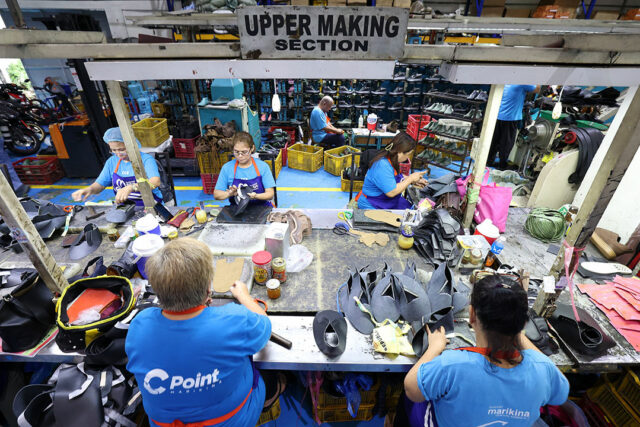
Workers assemble footwear at a manufacturing facility in Marikina City, July 9. — PHILIPPINE STAR/MIGUEL DE GUZMAN

PHILIPPINE MANUFACTURERS should go up the value chain to produce more globally competitive export products and cater to the country’s growing domestic base amid global disruptions, according to industry stakeholders.

Federation of Philippine Industries President John Reinier H. Dizon said that recent global shocks revealed the country’s import dependency for some products.

“I think a couple of years ago, everyone can still remember when the pandemic hit us all. And for me, the key learning there is it actually exposed our risk that we are dependent on the global supply chain,” he said at the BusinessWorld Forecast 2026 on Tuesday.

Mr. Dizon recalled that during the pandemic the Philippines had to manufacture basic items such as face masks. “Then over time we were able to actually develop local industries to support those things,” he added.

In the last 25 years, he said that the Philippines opened its borders to Association of Southeast Asian Nations (ASEAN) members and forged bilateral agreements with several countries.

“Now, there are pros and cons to such free trade, and there is nothing wrong with free trade. It obviously helps companies and individuals procure cheaper products… but many other countries have placed more safeguards vis-a-vis the Philippines,” Mr. Dizon said.

“The Philippines was maybe a little bit more aggressive, and in hindsight, as a consequence, several industries actually faltered,” he added.

Within ASEAN, he said that the Philippines recorded the biggest trade deficit at P54 billion in 2024.

“Now, if we compare that with the likes of Vietnam, they actually had a trade surplus of P28 billion; Thailand’s trade surplus of P6 billion; Malaysia, a trade surplus of P20 billion; and Indonesia, a trade deficit, but at a much more manageable level, at P15 billion,” he said.

To address this, Mr. Dizon said that there should be more support for Filipino products.

“It’s not a silver bullet, but let’s patronize our local products, food, consumer goods, etc. Because it’s always easy to import, it’s cheaper. But make no mistake, it has dire consequences and multiplier effects,” he said.

“We need to revive manufacturing and production in our country,” he added.

Semiconductor and Electronics Industries in the Philippines Foundation, Inc. (SEIPI) President Danilo C. Lachica said that the goal is to maintain the country’s competitive advantage.

“Definitely, we want to maintain whatever limited competitive advantage that we have. But if you look at the challenges, and I’m not just talking about the export industry but even local industries, there’s a whole slew of challenges, both external and internal,” he said.

Domestically, Mr. Lachica said that the Philippines is facing several issues including prop osed legislated wage hikes, field audits by the Bureau of Internal Revenue, and corruption.

“For the electronics industry to be able to catch up, we need to look at moving up the value chain in terms of technology, improving our talent and infrastructure,” he said.

For the semiconductor and electronics industry, Mr. Lachica said that the country needs to build its own wafer fabrication plant to move up the value chain.

“This is what we need to grow — our own integrated circuit design industry. This is what we need to get the Philippines on the map for front-end semiconductor manufacturing,” he said.

Mr. Lachica said it is very important that the Philippines should plan for the long term amid the changing geopolitical landscape and trade policies.

“We cannot be paralyzed by what we hear. We just have to make the most intelligent decisions based on the information, whether it’s investment or the market. We certainly have to minimize dependence on certain markets,” he said. 

“But I think what we all should be doing really is from the private sector, we need to work closely with the government and academe to put forward initiatives and programs to the best interest of the Philippines,” he added.

Meanwhile, Victor Andres C. Manhit, president of think tank Stratbase ADR Institute, said the Philippines does not have to be an export-oriented country, as it has a strong consumer base.

Household consumption, which accounts for around 70% of Philippine gross domestic product, has been a driver of growth.

Instead, Mr. Manhit said the country should focus on capacitating its people, which is key to sustaining growth momentum.

“We focus on building the capacity of our young people. They can consume. They can be hired in more strategic manufacturing industries, part of the global supply chain, continue to grow the business process outsourcing industry, and develop the creative industry,” he added.

Mr. Manhit said giving incentives to export-oriented enterprises and not to domestic enterprises was a “mistake policy-wise.” 

Aside from thinking long term or beyond political timelines, he said that there is a need to invest in the country’s strong sectors.

“Let’s start to think long term and invest in those strengths that we have, build on the capacity of our local industries, look at the consumers as a potential source of growth, and always think about how important we are in geopolitics,” he added. — Justine Irish D. Tabile


Ayala Land raises P4 billion from block sale of AREIT ahead of asset infusion

AYALALAND.COM.PH

By Beatriz Marie D. Cruz, Reporter

AYALA LAND, INC. raised P4.19 billion from a block sale of 100 million shares in its real estate investment trust AREIT, Inc., as it prepares to inject mall properties into the trust.

The shares were sold at P41.90 each through a placement managed by UBS AG Singapore Branch, BPI Capital Corp. and Maybank Securities Pte. Ltd., the listed Philippine developer said in a stock exchange filing on Wednesday.

The offering was made to buyers both outside and within the US. The transaction was exempt from registration requirements under the Securities Regulation Code and was not registered with the Securities and Exchange Commission. Proceeds are set to be settled on Nov. 28.

“The block sale helps raise the public float of AREIT in anticipation of the upcoming infusion of Ayala Center Cebu and Ayala Malls Feliz,” Juan Paolo E. Colet, managing director at China Bank Capital Corp., said in a Viber message. “It also enables Ayala Land to recycle capital into new projects to sustain growth.”

AREIT plans to expand its assets under management by P19.5 billion through a property-for-share swap with Ayala Land and its wholly owned unit Summerhill Commercial Ventures Corp.

Under the deal, the sponsor will contribute Ayala Center Cebu in Cebu Business Park and Ayala Malls Feliz in Pasig, boosting AREIT’s managed assets to P158 billion.

The combined gross leasable area of the two properties is 375,000 square meters (sq.m.), lifting AREIT’s total area to 4.7 million sq.m. The swap will let Ayala Land and Summerhill subscribe to 441.13 million primary common shares of AREIT.

Shares of Ayala Land fell 0.94% to P21 each at the close of trading at the Philippine Stock Exchange, while AREIT ended at P42.15, down 3.44%, reflecting broader market volatility amid the block sale.

The transaction positions AREIT to broaden its investor base ahead of its asset infusion while giving Ayala Land additional capital flexibility to fund its pipeline of commercial projects.

PXP eyes long-term gains from exploration contracts — MVP

PXPENERGY.COM.PH

UPSTREAM OIL and gas company PXP Energy Corp. is bracing for an extended and capital-intensive exploration phase following the award of three new petroleum service contracts, Chairman Manuel V. Pangilinan (MVP) said.

The exploration is “a long process and probably quite complicated,” he told reporters on Nov. 24. “It’s a long-term process, so we have to be patient… Many years [lie ahead] for PXP.”

The Philippine company plans to invest “several million dollars” into the technical work required under the contracts, which cover two Sulu Sea blocks — Service Contract (SC) 80 and SC 81 — and SC 86, which encompasses the Octon Block in northwest Palawan.

Mr. Pangilinan earlier said these projects would expand their exploration presence in the Sulu Sea — an area with a proven exploration history and promising untapped potential — and strengthen PXP’s position in the highly prolific Northwest Palawan basin.

The company has pledged to conduct thorough technical studies and maintain prudent operations across its portfolio, while also targeting long-term opportunities in the South China Sea, where maritime disputes with China have delayed development.

PXP’s focus on exploration comes amid financial pressures. In the third quarter, the company posted a net loss of P16.1 million, wider than P7.6 million a year earlier, as lower crude prices, reduced sales from Galoc liftings, higher interest expenses and foreign exchange losses weighed on results.

Consolidated operating revenues fell 21.9% to P21.9 million, mainly due to lower crude prices and a reduced volume of barrels lifted.

Despite the short-term financial drag, Mr. Pangilinan has cited the strategic importance of the Sulu Sea and Palawan blocks for PXP’s long-term growth. The company is preparing to commence exploration activities, which include geological surveys, technical assessments, and other preparatory work, in line with commitments to the Philippine government. — Sheldeen Joy Talavera

PSE elects two new directors to board

BW FILE PHOTO

THE Philippine Stock Exchange (PSE) on Wednesday elected Cecile L. Ang as its nonbroker director representing investors, and Jaime J. Bautista as an independent director following recent resignations from both posts.

Ms. Ang, daughter of San Miguel Corp. Chairman Ramon S. Ang, was nominated by the San Miguel Corp. Retirement Plan. She will fill the vacancy left by Ferdinand K. Constantino, who stepped down effective Nov. 27, the bourse said in a disclosure.

She will assume the role on the PSE board held by Mr. Constantino, who served on the Audit and Related Party Transactions Committee and the Corporate Governance Committee.

In the same board meeting, the PSE appointed Mr. Bautista as an independent director, replacing Andrew Jerome T. Gan, who resigned on Nov. 5. Mr. Bautista is a former Transportation secretary and was president and chief operating officer at Philippine Airlines, Inc.

The appointments follow established procedures under the PSE’s corporate governance framework, which mandates board representation for investors and independent directors to safeguard stakeholder interests. — Alexandria Grace C. Magno

Golden ABC plans 50-80 stores next year across six brands

FACEBOOK.COM/PENSHOPPE

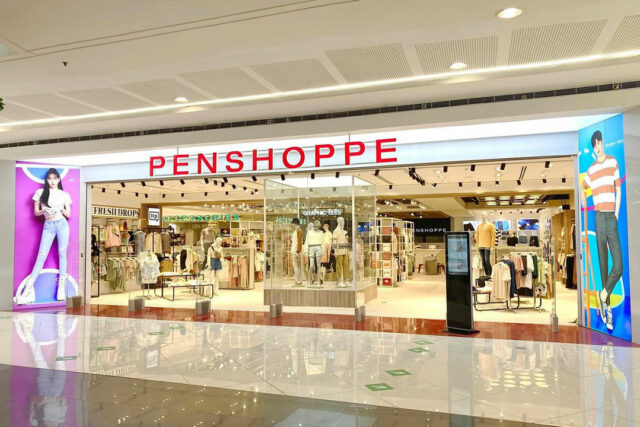
PHILIPPINE FASHION retailer Golden ABC, Inc. plans to open 50 to 80 stores next year across its six brands, reflecting confidence in the retail sector and Filipino consumers despite expectations of tempered demand during the Christmas season.

“Of course, we continue to be hopeful,” Chief Executive Officer Alice T. Liu told reporters on Monday. “Filipinos are generally optimistic. In business, you can never pause; you have to continue growing. If you don’t grow, you regress.”

The expansion will span Penshoppe, OXGN, Forme, Memo, Regatta, and BOCU, with the company requiring slightly over P100 million in capital to support store openings, depending on mall developments. Golden ABC is set to close 2025 with more than 1,000 stores nationwide.

Ms. Liu said the company is taking an agile approach to align with mall openings and market conditions. “We need to be able to position well with them… and react depending on circumstances.”

Despite its optimism for growth, Golden ABC expects a more cautious holiday shopping season this year. Ms. Liu said consumers might spend more consciously, although Filipinos “never really cancel Christmas.”

Retailers have seen early signs of holiday spending as government bonuses were released in mid-November. “There’s money in the bank… We just need to lift the mood so people feel there is something to celebrate,” she said.

The planned expansion comes amid broader optimism for the Philippine retail industry, even as economists note potential headwinds from cautious consumer sentiment. Golden ABC’s strategy to expand its footprint reflects a bet on sustained domestic demand, particularly among younger shoppers. — Justin Irish D. Tabile

EastWest to increase tech spend

PHILIPPINE STAR/DEEJAE DUMLAO

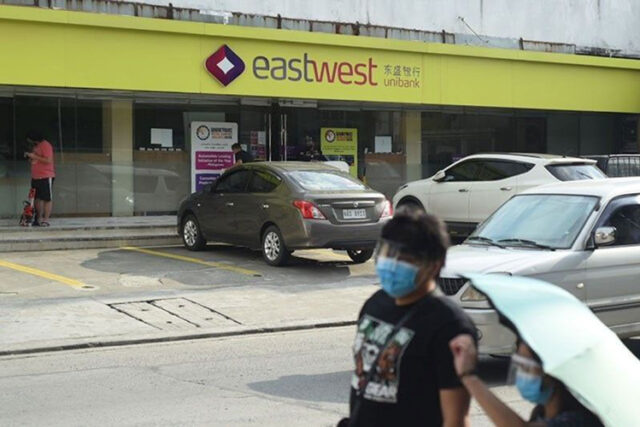
EAST WEST Banking Corp. (EastWest Bank) plans to gradually increase its spending on technology next year to expand its online capabilities and improve its services.

“We’re getting more and more aggressive on our tech spending… We need to get investment in terms of people, but also for us to then apply the things that we’re learning into the infrastructure, the ecosystem that we have. So, we’ll continue to invest,” EastWest Bank Chief Executive Officer Jerry G. Ngo told BusinessWorld on the sidelines of an event late on Tuesday.

He said tech investments currently make up about 9-10% of EastWest Bank’s total expenses, which he noted is lower than others in the industry as they want to keep their spending sustainable.

“There are some banks who are spending more, but it’s not about just the amount of money that you’re going to spend — it should be about how you architect your technology. How do you ensure that you’re not overspending every time? It’s easy to spend but the most important thing is to sustain them at the right appropriate level, and then you’re making sure that you’re deliberate in what you’re trying to achieve.”

These investments are expected to improve the bank’s cost-to-income ratio in the long term, he said.

“I think it will have to be gradually higher and higher as we go along. But we will also find performance and efficiency gains from others, and then what we’re going to hope to do is to increase transaction volume so that unit cost comes down, so we benefit. Our people are upgrading themselves in terms of capability, so our systems become bigger in capability. Our clients benefit from efficiency as well as bigger, better features. But from economies of scale, our unit cost comes down. So, the volume keeps coming in and then hopefully we can pass also the cost, and so on,” he said.

For next year, Mr. Ngo said the bank is also preparing to be one of the first banks to be able to offer Apple Pay once it enters the Philippine market following its recent integration of Google Pay through Google Wallet.

“What we are doing right now is to encourage our clients to make us the card on file. Because at some point, you will see that a lot of the digital payments will go through this,” he said.

However, near-field communication (NFC) payments could still take some time to gain traction, Mr. Ngo said.

“The only challenge with NFC is normally, this will not be very big amounts in the first instances. People will probably start with small amounts first, and we’re trying to encourage that also. But what we hope is that it will be sticky. We want you to use us for many different things — for your wallet, for your payments, for your investments, for everything. So, that’s what we’re hoping for — it’s to deepen that relationship.”

The bank will also be slowly rolling virtual equivalents for its existing cards to let clients increase or reduce limits for each card online, as well as having the transactions on the app to deter scam attempts.

EastWest Bank will also launch a wallet for its debit cards where clients can operate their investment accounts. It will also roll out a vault unlock program by the end of this year where clients can allocate an amount to a physical vault that cannot be accessed digitally.

FOODPANDA CREDIT CARD
Meanwhile, as part of its push to continue growing its consumer segment, EastWest Bank on Wednesday partnered with Foodpanda to launch a cobranded credit card to tap the food delivery platform’s customer base.

“We are very excited to launch the EastWest Foodpanda Visa Credit Card. We’re positioning it as the ultimate foodie card. It’s something that can give people one of the highest, if not the highest, cashback programs,” Mr. Ngo said.

The bank plans to make the card’s cashback features available for dine-out through Foodpanda’s partner merchants, he added.

The EastWest Foodpanda Visa Card offers up to 10% cashback on orders worth up to P4,000 or cashback worth P400, after which orders will continue to earn 3%. It also gives 1% cashback on all international spend and 0.3% on local transactions.

The card has a total monthly cashback of P1,000 to be credited weekly to the user’s pandapay wallet. The annual fee is also waived for every new cardholder in the first year.

EastWest Bank’s net income climbed by 14% year on year to P6.6 billion in the first nine months on higher revenues from its core businesses.

Its shares slipped by two centavos or 0.17% to close at P11.52 each on Wednesday. — Aaron Michael C. Sy

Raslag, Singapore partner near close on Philippine wind JV

RASLAG.COM.PH

By Sheldeen Joy Talavera, Reporter

RENEWABLE ENERGY developer Raslag Corp. and Singapore-based Verdant Philippines Alpha Pte. Ltd. are poised to finalize a joint venture (JV) to acquire a controlling stake in PHESI Holdings Corp., following approval from the Philippine Competition Commission (PCC).

“Raslag and Verdant can finally close the deal, so we are working on closing hopefully within the year,” Raslag President Robert Gerard B. Nepomuceno said in a Viber message on Wednesday.

The PCC cleared the proposed acquisition last month, citing no competition concerns due to the lack of horizontal overlaps or vertical relationships among the partners and the acquired entity.

The regulator noted that “the presence of larger competitors and a fragmented supply landscape serve as sufficient competitive constraints on the parties’ operations post-transaction.”

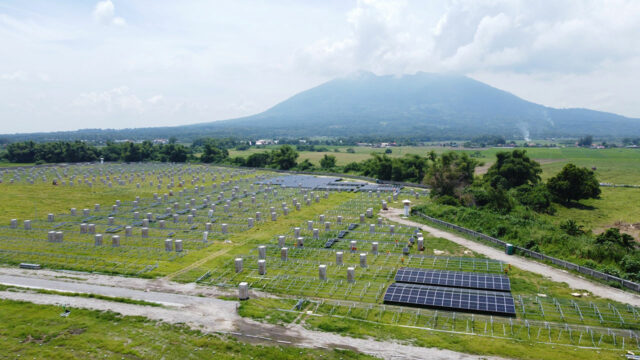
Under the joint venture, Raslag will hold 60% and Verdant 40% of PHESI. The target controls Philippine Hybrid Energy Systems, Inc., which develops wind energy projects, including the 16-megawatt (MW) Puerto Galera Wind Power Project and a 10-MW Phase 2 expansion.

PHESI also operates a 7.3-MW battery energy storage system designed to store wind-generated electricity for release as needed.

“There’s room for expansion of another 10 MW, so we are exploring the opportunity, especially with Mindanao now connected to the Luzon grid,” Mr. Nepomuceno said.

The transaction marks Verdant’s entry into the Philippine renewable energy market, while allowing Raslag to diversify beyond solar into wind power.

Raslag develops, owns and operates utility-scale solar plants and plans to expand its total renewable energy capacity to at least 1,000 MW by 2035.

The deal, once closed, would be Raslag’s first project outside solar and is part of a broader strategy to tap emerging renewable segments in the Philippines, which is seeking to boost clean energy capacity amid growing demand and decarbonization goals.

BDO raises $500M from dollar bonds

BW FILE PHOTO

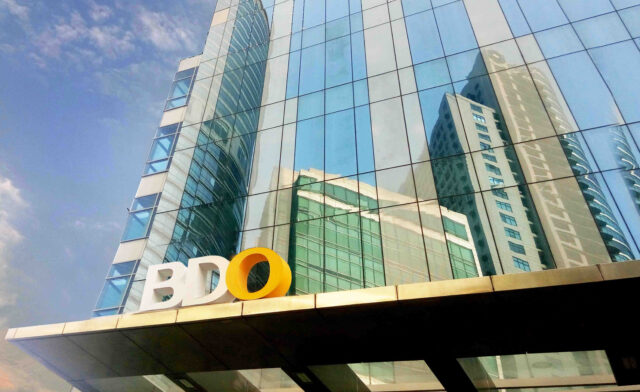
BDO UNIBANK, Inc. has raised $500 million from its sale of five-year dollar-denominated bonds that marked its return to the offshore debt market after over three years as it saw strong demand, it said on Wednesday.

The offering was more than 3.2 times oversubscribed, with tenders for the fixed-rate senior notes reaching about $1.6 billion, the Sy-led bank said in a disclosure to the stock exchange.

This followed a series of investor calls that started on Monday.

The notes were priced at a coupon rate of 4.375%, and the transaction is scheduled to be settled on Dec. 3.

They will be issued out of BDO’s medium-term note program.

“The Senior Notes issue is part of BDO’s liability management initiatives to tap longer-term funding sources to support BDO’s lending operations and for general corporate purposes,” the bank said.

BDO said the notes are expected to be rated “Baa2” by Moody’s Ratings, which matches its issuer rating.

Standard Chartered Bank was the sole global coordinator for the transaction. It also acted as a joint bookrunner and joint lead manager along with MUFG and Wells Fargo Securities.

BDO tapped the offshore debt market in May 2022, raising $100 million from the issuance of seven-year blue bonds through an investment from the International Finance Corp. This marked the first private sector blue bond issuance in Southeast Asia.

The bank’s attributable net income rose 6.1% year on year to P22.47 billion in the third quarter, bringing its nine-month profit to P63.09 billion, 4.07% higher than a year earlier.

BDO shares rose by P1.80 or 1.39% to close at P131.50 apiece on Wednesday. — Aaron Michael C. Sy

Acciona eyes 2-GW RE pipeline in PHL

STOCK PHOTO | Image by Pixabay from Pexels

SPANISH renewable energy developer Acciona Energía is moving to expand its footprint in Southeast Asia with more than two gigawatts (GW) of renewable energy (RE) projects, including wind and solar farms in the Philippines.

The company has reorganized its regional partnerships to focus on key markets, with the Philippines now at the center of its expansion plans, it said in an e-mailed statement on Tuesday.

Among the upcoming projects are the 101-megawatt (MW) Kalayaan 2 wind farm in Laguna province and the 180-MW Daanbantayan solar plant in Cebu.

Both got 20-year power supply contracts under the government’s recent green energy auction, giving investors long-term revenue visibility. The projects are valued at P10.85 billion and P7.5 billion, respectively, and are expected to begin operations next year.

“The award gives long-term certainty for the energy these projects will produce, supporting the Philippines in reaching its renewable energy targets while delivering clean, reliable power to consumers,” Acciona said.

In August, Acciona and its partner The Blue Circle reorganized their Southeast Asian operations. Acciona will focus on the Philippines, Thailand and Vietnam, while The Blue Circle will operate independently in Sri Lanka, Malaysia and Cambodia.

Acciona has been active in the Philippines since 2016, mainly through its water and infrastructure divisions, delivering projects such as the Cebu-Cordova Link Expressway and the Putatan II and Laguna Lake water treatment plants.

The company is a unit of Acciona S.A., which operates 15.1 GW of renewable energy across 24 countries. The Philippine projects form part of its broader strategy to strengthen its position in the region and tap into growing demand for renewable energy amid the country’s push for decarbonization. — Sheldeen Joy Talavera

BSP to release monthly consumer, business expectations surveys

BANGKO SENTRAL ng Pilipinas Deputy Governor Zeno Ronald R. Abenoja — BANGKO SENTRAL NG PILIPINAS

THE BANGKO SENTRAL ng Pilipinas (BSP) is looking to release monthly versions of its consumer and business expectations surveys starting next year as part of efforts to improve its understanding of the Philippine economy and its inflation forecasting.

The BSP plans to release the monthly versions of its consumer expectations survey (CES) and business expectations survey (BES) by mid-2026, BSP Deputy Governor Zeno Ronald R. Abenoja said during a central banking symposium held on Monday in Panglao, Bohol.

These will be released on top of the existing quarterly versions of these surveys and will contain limited information and a smaller sample size.

’Yung monthly siyempre, mas konti lang. ’Yung quarterly, mas marami sa consumer expectations survey (The monthly survey will have limited content (but) the quarterly consumer expectations survey will have more),” he told reporters on the sidelines of the event.

The CES analyzes consumers’ economic outlook to determine the country’s future economic conditions, and the BES gauges business sentiment and prospects. The CES usually surveys about 5,000 households in the Philippines through random sampling, while the BES draws a random sample from a list of Top 7,000 Corporations ranked based on total assets in 2017 from the Bureau van Dijk database.

“Why are expectations important for central banks, for policymakers in general? First, expectations of households influence spending decisions,” he said during the symposium.

He added that households’ expectations of consumer prices would help guide the central bank’s inflation forecast by identifying trends.

“It affects the wage negotiation. It affects the setting of prices by businesses. So, when inflation expectations are high relative to, say, the market, then that could induce inflation over the near to medium term,” he said. “So, this is something that we are trying to understand, trying to manage what we call the anchoring of inflation expectations relative to the target.”

Meanwhile, the BSP is also working on a strategic survey with the Social Weather Stations (SWS) to ask consumers about their inflation expectations based on different possible scenarios, which will serve as a forward-looking guidance, Mr. Abenoja said.    

“This survey does not only ask what people think about inflation moving forward, but we ask that if the situation changes, what will be your expectations? What will be your behavior moving forward?” he said. “So, it’s a more forward-looking type of survey on inflation. And we are also trying to improve on our communication strategy.”

Mr. Abenoja noted that the SWS is now reviewing the CES and the proposed strategic survey.

He said the updated surveys will explore new relationships such as the impact of regional wages on inflation expectations dynamics.

“So, we continue to expand this great agenda on expectations moving forward, not only for consumers but also for businesses.” — Katherine K. Chan

Who needs birthday cake when you have a basket of dumplings?

Din Tai Fung celebrates 10 years in the Philippines

DIN TAI FUNG celebrates 10 years in the Philippines this month through a special Birthday Basket featuring mainstays and one-off dumplings through the years.

While starting out as a cooking oil shop in the 1950s in Taiwan, the brand converted into a xiaolongbao (soup dumpling) shop in the 1970s. The brand has grown considerably since: think 179 shops in 15 countries. To this day, lines snake around the original, making the decision to bring it here in 2015 by The Moment Group a feat in itself.

The Moment Group, founded in 2012, is behind homegrown brands like Manam, Ooma, 8Cuts, Mo’ Cookies, and Moment Catering. Din Tai Fung is the only foreign brand in their portfolio.

During a dinner on Nov. 18 at their branch in Uptown Parade, BusinessWorld got a taste of the Birthday Basket, which included Pork, Pork Xiaolongbao with Nomad Caviar, Chili Crab and Shrimp Xiaolongbao, Pork and Truffle Xiaolongbao, Foie Gras and Chicken Xiaolongbao, Prawn Tom Yum, Pork Kurobuta Ramen, Scallop and Prawn Laksa, Wagyu Pho, and Wagyu Mala Xiaolongbao. If you can, try to get extra helpings of the Foie Gras and Chicken dumpling — it’s one of the most perfect servings of soup you’ll ever try.

Abba Napa, Moment Group co-founder, talked to BusinessWorld about the “moment” (pun intended) they decided to bring Din Tai Fung here. She and her co-founders, Eliza Antonino and Jon Syjuco, listed down restaurant concepts from abroad that they admired and wanted to bring to the Philippines: all of their lists contained Taiwan’s Din Tai Fung. “I think it’s really a brand we respect and admire as restaurateurs. It’s already almost a century old. It has lines all over the world. It’s completely consistent, it’s commercially successful, it’s critically acclaimed.”

In the 10 years since the first Din Tai Fung opened in SM Megamall, the brand has expanded to nine branches around the country, with a 10th coming up this quarter at SM City Clark. They opened an outlet in Cebu earlier this year.

“If you look at what we do, we really like to create brands that are evergreen,” she told BusinessWorld. In a later e-mail, she said, “We’ve always been intentional about building an evergreen portfolio — concepts that feel current but remain timeless. For us, it’s never about chasing trends; it’s about creating dishes and flavors that hold their relevance and stay craveable year after year,” making this the case for Din Tai Fung.

THE MOMENT’S MOMENT
When they first opened Cue Modern Barbecue in 2012, then Manam in 2013, the Filipino dining scene was on the edge of change. Now, the Philippines has its own Michelin Guide — with the added bonus that its flagship branch, Manam at the Triangle, has been included in the Bib Gourmand selection. From standing on the edge, there’s an acknowledgment that The Moment Group’s restaurants are helping shape the current and still-evolving dining scene.

“I don’t know about that,” said Ms. Napa when this was suggested to her. “I don’t think we’ve ever looked at it that way.”

But, “I think we’ve always created restaurants thinking about the Filipino diner, wherever they are: what can we create that can make them happy today?”

Just last year, they opened a spinoff of Manam, its first abroad, through a restaurant in Singapore called hayop. It’s a little bit different, with cocktails and excellent wine, but it’s basically the same flavors. She told us that more than half of hayop’s clientele aren’t Filipino: “That was really our goal. To get foreigners to come and discover Filipino food through this restaurant.”

In November, hayop was added, along with five other restaurants, to Michelin Guide Singapore’s “Singapore selection.”

Going abroad seems to be the next step for the restaurant group: “Filipino flavors, and Filipino cuisine, is really happening,” said Ms. Napa. “We’re really very excited to bring our brand of Filipino cooking and our brand of Filipino hospitality through Manam to different countries around the world where there are large communities of Filipinos. That’s our dream, and that’s what we hope to do in the coming years.” — Joseph L. Garcia

DHL Summit adds 45 EVs to boost PHL fleet

An artist’s rendering of DHL’s planned logistics hub in Sta. Rosa, Laguna. — COURTESY OF DHL

DHL SUMMIT Solutions, Inc., has added 45 electric vehicles (EV) and prime movers to its fleet, strengthening last-mile delivery operations and advancing sustainability initiatives.

The rollout — 23 EVs and 22 prime movers — supports DHL Group’s global target to electrify about two-thirds of its first- and last-mile fleet by 2030 and achieve net-zero greenhouse gas emissions by 2050.

“Our collaboration reflects JG Summit’s commitment to building a logistics network that is both efficient and environmentally responsible,” Chief Resource Officer Alan Surposa said in a statement on Wednesday. “By investing in EVs and advanced technologies, we are helping shape a cleaner, smarter future for the Philippines.”

DHL Summit is a joint venture between JG Summit Holdings and DHL Supply Chain. Established in 2019, the company provides domestic transportation, logistics, warehousing and distribution services.

The new vehicles not only cut carbon emissions but also allow operations during cargo truck-van hours in major city centers, giving the company a strategic advantage, DHL said.

It is also expanding its digital capabilities through the Connected Control Tower Systems, which centralizes management, automates processes from order to delivery, and optimizes supply chain flows.

“This milestone reflects our strong partnership with JG Summit and our shared ambition to build a cleaner, more efficient transport network for the Philippines,” DHL Supply Chain Southeast Asia CEO Edwin Wong said in the statement. — Ashley Erika O. Jose