Home Blog Page 5744

Duterte’s chief  drug war enforcer to shun ICC probe

SENATOR RONALD "BATO" DELA ROSA FACEBOOK PAGE

By Alyssa Nicole O. Tan and John Victor D. Ordoñez, Reporters

FORMER President Rodrigo R. Duterte’s police chief on Monday said he would not cooperate with an International Criminal Court (ICC) probe of the Philippine government’s deadly war on drugs, saying he would rather get tried by a local court.

“We have our own criminal justice system that is working and functioning,” Ronald M. Dela Rosa, who is now a senator, said in a statement. “We do not need their interference into our domestic affairs.”

The Hague-based international court on July 14 gave the Philippines until Sept. 8 to comment on the ICC Office of the Prosecutor’s request to resume the investigation into alleged crimes against humanity by Mr. Duterte and his officials. It also allowed victims to make written submissions through their lawyers.

ICC prosecutors Karim Ahmed Khan and Colin Black were given until Sept. 22 to reply to the government’s response.

Mr. Dela Rosa separately told the ABS-CBN News Channel the ICC probe is an insult to the Philippine judicial system.

“You want to grill me in my own fire,” he said in Filipino. “I’m the No. 2 accused. Why would I agree to be under the ICC jurisdiction when we have our own Supreme Court that can try us if we really have done something wrong? They don’t know the problems of our country.”

The lawmaker, who enforced the state’s anti-illegal drug campaign as Mr. Duterte’s police chief, has said allowing the ICC probe is a “total infringement of our sovereignty.”

Neophyte Senator Robinhood Ferdinand “Robin” C. Padilla in a statement called the ICC probe foreign interference.

Last month, the Office of the Prosecutor sought to reopen the probe into Mr. Duterte’s anti-illegal drug campaign months after it was halted upon the Philippine government’s request.

In a 53-page request to the ICC pre-trial chamber, Mr. Khan said the Philippines had failed to show it investigated crimes related to the campaign.

He said the chamber should issue an order on an “expedited basis.” It should “receive any further observations it considers appropriate from victims and the government of the Philippines,” he added.

Senator Maria Lourdes Nancy S. Binay said the investigation should be allowed for transparency’s sake. “In the interest of transparency, if there really isn’t anything, then just let them tire of searching [for evidence],” she told reporters.

“Let us follow the legal process, and if the ICC really doesn’t have a personality, that is something maybe the Department of Justice can decide,” she said in mixed English and Filipino.

‘WEIGHING OPTIONS’
Senator Aquilino Martin L. Pimentel III, the presumptive minority leader, said the Hague-based tribunal should be allowed to decide autonomously as an independent international organization.

He advised the ICC to “decide once and for all on what you want to do so the Philippines can also react properly. We cannot react to a nonfinal decision by an outsider.”

“Let’s react to a final decision and action,” he said, adding that for now, the country should focus on problems such as poverty, a looming food crisis and rising energy costs, education and spiraling national debt.

The ICC suspended its investigation of the drug war in November as the Justice department and other agencies started looking at 52 cases involving policemen.

DOJ had only brought five of the 52 cases involving about 150 police officers to court since it started its own investigation in 2021.

Meanwhile, Solicitor General Menardo I. Guevarra said his office was weighing its options on how to deal with the ICC probe.

“The Office of the Solicitor General is considering several options, such as challenging the jurisdiction of the ICC/admissibility of the case, or continuing to leave our lines of communication with the ICC open,” he told reporters in a Viber message.

“We shall decide on our final course of action after consultations with the Department of Foreign Affairs, Department of Justice, international law experts and the Office of the President.”

Mr. Guevarra said he intends to consult with President Ferdinand R. Marcos, Jr. about the potential resumption of the ICC investigation.

The ICC, which tries people charged with genocide, crimes against humanity, war crimes and aggression, was also set to probe vigilante-style killings in Davao City when Mr. Duterte was still its vice mayor and mayor.

Mr. Duterte canceled the Philippines’ membership in the international tribunal in 2018.

Data from the Philippine government released in June 2021 showed that at least 6,117 suspected drug dealers had been killed in police operations as of April 2021. Human rights groups estimate that as many as 30,000 suspects died.


Bulatlat says NTC order blocking website is illegal

SCREENGRAB OF BULATLAT FACEBOOK PAGE

NEWS website Bulatlat.com on Monday said a government order to block 26 websites allegedly linked to communist and terrorist organizations violated its right to due process and freedom of the press.

The National Telecommunications Commission (NTC) failed to hear and determine questions of fact when it ordered local internet service providers to block the sites, Bulatlat said in an 11-page memorandum submitted to a Quezon City trial court.

Last week, the trial court denied Bulatlat’s plea to stop the telecommunication regulator from blocking its website after it found that it could still be accessed by its readers.

Bulatlat.com can still be accessed using a virtual private network (VPN).

Last month, the country’s telecommunication regulator issued an order to block 26 websites supposedly “affiliated to and are supporting” the Communist Party of the Philippines, New People’s Army and the National Democratic Front. The directive was issued upon the request of former National Security Adviser Hermogenes C. Esperon, Jr.

The Anti-Terrorism Council has labeled these as terrorist groups.

Global rights watchdog Human Rights Watch earlier called on civil society and the international community to “publicly condemn this latest attempt to suppress freedom of expression in the Philippines.” — John Victor D. Ordoñez

Agri dep’t considering price ceiling for sugar

THE DEPARTMENT of Agriculture (DA) said Monday it is now studying the possibility of a suggested retail price (SRP) scheme for sugar, as the price of the commodity continues to rise.

“We have set a stakeholders meeting to discuss it. It will start with a small group of stakeholders and eventually, we will also ask the Sugar Regulatory Administration,” Agriculture Undersecretary Kristine Y. Evangelista told reporters after department officials met with President and Agriculture Secretary Ferdinand R. Marcos, Jr.

“(To) come up with an SRP, based on the process, there should be a consultation,” she said.

The average retail price of refined sugar in wet markets was P87.50 per kilo as of July 8, according to the Department of Agriculture. The price was as high as P90 in some markets.

The average price of raw sugar in wet markets, meanwhile, was P66.86 per kilo.

The DA report on sugar prices has yet to be updated, but consumers have been reporting that prices have hit P100.

The United Sugar Producers Federation has blamed the rising prices on “manipulation and hoarding,” noting that the supply of sugar is ample.

Mr. Marcos has promised to boost domestic food production and limit imports as much as possible.

Ms. Evangelista said the President also called for a “thorough assessment” of the DA’s programs with a view towards planning for measures “increasing production and making agricultural commodities affordable.”

“We have to see which (of the DA’s programs) actually work, which one has to be tweaked and which one needs further consultation with the stakeholders,” she said.

Ms. Evangelista said the officials at the meeting also reported on the market for vegetables and livestock.

“We didn’t concentrate on one commodity,” she said. “If we’re talking about food security, that does not involve only rice.”

STUNTED
Fast-food chains have reported shortages in their chicken products because the raw materials available do not meet their size and quality standards.

Ms. Evangelista said the supply of chicken is ample, noting that the restaurants’ concerns center on quality because the chicken available is  “stunted.”

This month, United Broiler Raisers’ Association president Elias Jose Inciong said chickens for public consumption were not meeting the weight standards set by the market.

He blamed the weight issue on the low quality of feed. “When you compare it to past years, the condition of chickens is very poor, precisely because the raw materials for feed (are) of relatively low quality,” he told ONE News PH. 

Ms. Evangelista said the DA will seek to identify optimal production areas for goods in high demand and ensure that “products are sold at a good price.”

During the meeting, the President also asked DA officials to come up with a masterplan for farm-to-market (FMR) roads, the Palace said in a statement late Monday.

The masterplan, which will be presented to economic managers, will include regional maps detailing the exact locations of the of the FMRs to be constructed.

The Palace said Mr. Marcos also asked the DA to include funding sources, payment terms, and timeframes in the masterplan.

“The President also wants official development assistance-funded (ODA) projects to be constructed in priority areas identified by the government,” according to the statement.

For government-funded FMR projects, Mr. Marcos said that the DA and the Department of Public Works and Highways (DPWH) should take charge implementation, the Palace said. Kyle Aristophere T. Atienza

PHL touts capital markets route to finance greening of economy

FINANCE SECRETARY Benjamin E. Diokno said that the government intends to make its economy greener in part using resources raised by its sustainable financing program.

Speaking to the Group of Twenty (G20) gathering as a guest of host country Indonesia, Mr. Diokno said that apart from climate bonds, it hopes to fund its efforts with new taxes and aid from the international community.

“In this regard, we have assembled a group of Filipino experts to engage climate-vulnerable communities and prepare them to execute localized action plans,” Mr. Diokno told G20 finance ministers and central bank governors Saturday.

The G20 accounts for 80% of global gross domestic product (GDP).

Philippine officials, including Mr. Diokno’s predecessor and President Ferdinand R. Marcos, Jr. himself, have taken the position that the Philippines bears a disproportionate burden from climate change, while the industrialized countries responsible for much of it have not, putting them on the hook at least morally for funding climate mitigation.

Mr. Diokno told the forum that the government is seeking to mobilize climate finance through the so-called Green Force, which is led by the Department of Finance (DoF) along with the Bangko Sentral ng Pilipinas (BSP).

“This interagency task force was established to synergize public and private investment in green projects and mainstream climate change through the financial sector,” Mr. Diokno said.

Under the Philippines’ Sustainable Finance Framework, the government “recently issued its first-ever sustainability global bonds worth $1 billion, and sustainability samurai bonds worth $600 million. Both transactions were met with strong demand despite volatility in the global markets,” Mr. Diokno told the G20.

The Philippines also debuted Environmental, Social, and Governance (ESG) Global Bonds in March, with 25-year Global Bonds offered at P1 billion.

Overall, “the Philippines successfully tapped the international capital markets with the country’s offering of $2.25-billion triple tranche 5-year, 10.5-year, and 25-year Global Bonds. The transaction was the first triple tranche USD offering from the Philippines,” a press release from the DoF said.

In April, the Philippines also issued its first Association of Southeast Asian Nations’ (ASEAN) Sustainability bond transaction in the Samurai bond market.

The Philippines successfully returned to the Samurai market with its 70.1-billion-yen ($600 million) offering of five-year, seven-year, 10-year, and 20-year sustainability bonds, the proceeds of which will support Environmental, Social, and Governance (ESG) projects, the DoF said.

At the G20 forum, Mr. Diokno reiterated his intention to tax activities which impact the environment.

“We are supporting the passage of a bill that would either regulate or tax the use of single-use plastics to cut pollution and adopt more sustainable practices. We are also considering the imposition of a carbon tax,” he said.

A P20 excise tax per kilogram of single-use plastics was part of the previous government’s fiscal consolidation plan, although it had been targeted for rollout in 2023.

Meanwhile, a tax on carbon emissions was also contemplated in the third package of the same fiscal consolidation plan.

“The Philippines is one of the countries at highest risk for climate-related disasters. We are thus determined to be a world leader in this fight against the crisis,” Mr. Diokno said.

PARTNERSHIP WITH ADB
Mr. Diokno also expressed the Philippines’ willingness to work with the international community on climate-related matters, citing an ongoing partnership with the Asian Development Bank (ADB).

“We will deal with the impact of climate change while bringing down energy costs through developing clean and renewable energy sources, such as hydro, geothermal, wind, and solar power. We will work together with the international community, such as our ongoing partnership with the ADB, to quicken our transition from coal to clean energy,” Mr. Diokno told the G20.

Aside from the Philippines, the ADB has also partnered with Indonesia in implementing the Energy Transition Mechanism (ETM) project, which was launched in October.

It aims to accelerate the transition of Southeast Asia from coal to green energy.

In addition, “the ADB just extended to the Philippines its first-ever climate change policy-based financing worth $250 million, making the country one of the pioneers in climate policy development financing,” Mr. Diokno said, referring to the Climate Change Action Program, Subprogram 1 (CCAP1).

“It will support the Philippines in implementing its national climate policies, including its Nationally Determined Contribution (NDC), which aims to peak greenhouse gas (GHG) emissions by 2030, and scale up climate adaptation, mitigation, and disaster resilience,” the ADB said.

“It focuses on sectors that are of national priority for climate action, targeting adaptation in highly vulnerable sectors (agriculture, natural resources, and environment), and mitigation in emissions-intensive sectors (energy and transport),” it added.

In April 2021, the government committed to reducing greenhouse gas emissions by 75% by 2030 when then President Rodrigo R. Duterte approved the Philippines’ first NDC. — Diego Gabriel C. Robles

British chamber calls on PHL to ratify RCEP trade agreement

THE BRITISH Chamber of Commerce Philippines (BCCP) said Monday that it supports Philippine ratification of the Regional Comprehensive Economic Partnership (RCEP) trade deal, saying it will enhance the Philippines as an investment destination.  

Chris Nelson, BCCP executive director, said on BusinessWorld Live on One News Channel that British investors are looking forward to the Philippines signing on to RCEP.

“We consider (RCEP) to be a very important development. The reason for that is… we see the Philippines not only as an important market for investors and doing business, but also as a gateway to Southeast Asia,” Mr. Nelson said.

“I think this is the time (to be a part of RCEP). The only three countries (that have not ratified are) is the Philippines, Indonesia, and Myanmar. The opportunity is now,” he added.

RCEP started coming into force on Jan. 1 in the various member countries. The trade deal will involve Australia, China, Japan, South Korea, New Zealand and the 10 members of the Association of Southeast Asian Nations (ASEAN). It is touted as the world’s largest trade deal, accounting for about 30% of global gross domestic product (GDP).

The Philippine Senate was unable to finalize its ratification during the 18th Congress after some senators expressed concerns over the lack of protections for the agriculture sector.

President Ferdinand R. Marcos, Jr. needs to endorse the trade deal to the Senate when the 19th Congress opens on July 25.

Former President Rodrigo R. Duterte signed the trade deal on Sept. 2.

According to Mr. Nelson, British investors are looking for further liberalization in the Philippines, which can be supported by joining RCEP.

“We’re looking to see the continued liberalization of the economy and hoping (that) one of the points being mentioned is (RCEP) ratification,” Mr. Nelson said.

Mr. Nelson said that there is much interest in the Philippines among British investors.

“What we need to continue to do is highlight opportunities. We want to meet companies, (and) come here, and look at the Philippines as a base and further (expand) into Southeast Asia,” Mr. Nelson said.

Trade Secretary Alfredo E. Pascual has said that the DTI will continue to push for the RCEP’s ratification, along with other free trade agreements (FTAs).

“With only 10 FTAs, the Philippines has the least number of FTAs among the ASEAN six countries. Singapore signed 27 FTAs, Malaysia 17, Thailand 15, Indonesia 15, and Vietnam 15. These agreements will diversify the country’s exports in terms of products and services and country destinations and enhance the country’s attractiveness to foreign investments,” Mr. Pascual said.  

“Without these FTAs and RCEP, the Philippines would not be an attractive location for such types of export-oriented enterprises,” he added. — Revin Mikhael D. Ochave

PHL resumes shallot exports to Indonesia

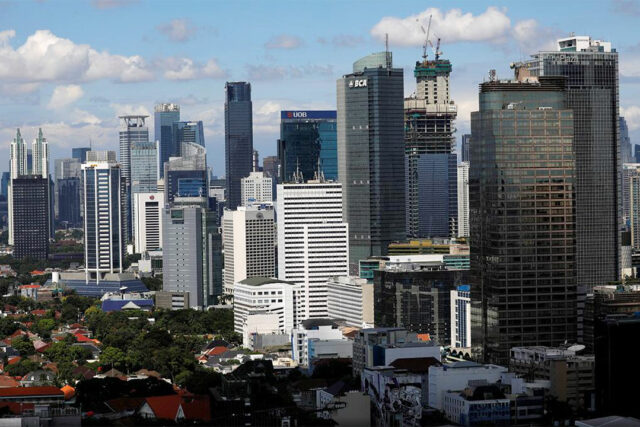
REUTERS

THE Philippines resumed exporting shallots to Indonesia after the trade was disrupted in 2015 in a dispute over Indonesian pest-free certification requirements.

The Department of Trade and Industry (DTI) said in a statement issued on July 12 that the Philippine Trade and Investment Center (PTIC) in Jakarta reported the resumption of the trade, which was secured in partnership with the Philippine Agriculture Attaché in Bangkok.

According to the DTI, Philippine exporter Sparkle Corp. sent 130 metric tons (MT) of shallots to Indonesia this month.

“On June 8, 2022, (the) Indonesian Minister of Agriculture issued an import permit valid for six months to CV Barokah Agri Indo for 300 MT of shallots from the Philippines. As of July 8, 2022, Sparkle Corp., a Philippine exporter, shipped a total of 130 MT of the commodity to Indonesia,” the DTI said.

Asked to comment, Jakarta-based PTIC Commercial Attachè Jeremiah C. Reyes told BusinessWorld via Viber that the trade was disrupted after Jakarta insisted on pest-free certification for shallot-producing provinces.

“Indonesia (required that) our identified shallot-producing provinces (be certified as pest-free) and compliant with good agricultural practices,” Mr. Reyes said.

“We negotiated that together with the Department of Agriculture (DA) and this year, Indonesia finally issued the permits for us to resume exports,” he added.

According to the DTI, Indonesia was the Philippines’ eighth-largest trading partner in 2021.

“This development signals opportunity for Philippine exporters to cater to the strong demand for shallots in Indonesia,” the DTI said. — Revin Mikhael D. Ochave 

PHL, Germany collaborating on climate policy

PHILIPPINE STAR/ MICHAEL VARCAS

The Philippines and Germany are collaborating to develop policies that will promote science-based climate planning, according to the Philippine Climate Change Commission (CCC).

“The relationship between Germany and the Philippines remains strong and positive. We are already working on many fronts (including) exchanges and sharing of experience towards increased climate change capacities,” CCC Secretary Robert E.A. Borje said.

“We hope to count on Germany as a strong partner in this particular endeavor for climate justice and equity, bound not just by our shared goals for a more sustainable future, but by our shared understanding that no nation is safe from the climate crisis until all nations are,” CCC Commissioner Rachel Anne S. Herrera added.

The CCC and counterparts from other countries recently met with German officials, research institutes, and universities to discuss German approaches to reducing carbon emissions and its goal of achieving carbon neutrality by 2050.

According to the CCC, Germany has set itself a target of reducing greenhouse gases by 80% by 2045, with renewable energy and energy efficiency keeping its economy competitive as the world decarbonizes.

“As a country most vulnerable to climate change, the Philippines can learn a great deal from Germany in a wide range of fields from transitioning from fossil fuels to renewable energy, energy efficiency, climate adaptation such as through flood protection, disaster risk reduction, and sustainability,”  the commission said. — Luisa Maria Jacinta C. Jocson

NEA says 72% of power co-ops receive top AAA rating

PHILSTAR FILE PHOTO

The National Electrification Administration (NEA) said 72% of the 121 electric cooperatives (EC) it oversees received the top AAA rating for financial, regulatory, and operational soundness in the agency’s 2021 EC Overall Performance Assessment.

The NEA said nine ECs were rated AA, five ECs A, seven ECs B, six ECs C and seven ECs D.

It said that the assessment “aims to measure the ECs’ financial, institutional and technical performance, thus determining credit worthiness, level of development, protection, empowerment and satisfaction of member-consumer-owners, and to promote accountability and responsibility in ECs’ compliance and fiduciary obligations.”

Emmanuel P. Juaneza, NEA administrator, said Iloilo Electric Cooperative III (ILECO Ill) among on-grid co-ops and Siargao Electric Cooperative (SIARELCO) in the off-grid category were deemed the top performers in the 2021 assessment.

Regions VI, VIII and CARAGA were also recognized for sustained excellent performance with all their ECs consistently rated AAA.

Region Ill was deemed the most improved region with all of its 14 ECs rated AAA for the first time.

NEA said from 2019, the number of ECs classified as mega-large increased to 79 from 72 while ECs classified as extra large fell to 22 from 28. Large ECs declinedto 14 from 17.

ECs classifid as medium and small were unchanged at two and four, respectively.

NEA said the performance assessment for 2020 was delayed due to the pandemic. — Justine Irish D. Tabile

Double trouble: Double taxation issues and MAP

Did you know that the sentence “I never said he stole my money.” can have seven different meanings depending on which word is emphasized when read out loud? When “I” is accentuated, you’re implying that someone else must have said it. Emphasizing “never” suggests you never said it. Putting the stress on “said” implies that you might have never spoken it out loud, but you might have hinted it. Highlighting “he” means you’re actually referring to a different person. When emphasizing “stole”, then perhaps the money was merely borrowed and not stolen. Accentuating “my” suggests the stolen money isn’t actually yours, and by giving distinction to “money,” a different object may have been stolen.

That’s just an example of how a simple sentence can be interpreted in various ways, especially when only viewed in writing. As a matter of fact, misunderstandings have sparked multiple conflicts in history, from lovers’ quarrels, to the alleged misunderstanding that led to the atomic bombing of Hiroshima, which was said to stem from the mistranslation of a Japanese message towards the end of the war, when the Allies were trying to gauge the possibility that Tokyo might be willing to give up the fight. Such misinterpretations are also a common occurrence when deciphering the tax rules. This is especially prominent in cases involving cross-border taxation laid out in Double Taxation Agreements (DTAs), more commonly known as tax treaties.

A tax treaty is a bilateral agreement entered into by two countries to resolve any issues that may arise when the same income is taxed by two or more different jurisdictions. This scenario is called “double taxation.” To resolve disputes arising from differences or difficulties in the interpretation or application of the tax treaty, parties to the treaty typically sign up for a Mutual Agreement Procedure (MAP) .

The Bureau of Internal Revenue (BIR) recently issued Revenue Regulations (RR) No. 10-2022, which lays out the guidelines and procedures for requesting MAP assistance in the Philippines. This opens an alternative remedy for taxpayers facing double taxation, whose current available courses of actions are only to litigate such case in court or to file an administrative appeal.

Below are the salient provisions of the regulations.

Typical scenarios requiring MAP

The following are some typical examples of taxation not in accordance with a tax convention that would necessitate MAP assistance:

1. The withholding tax rate imposed on an item of income earned by a domestic corporation is beyond the maximum rate fixed under the tax treaty.

2. A taxpayer deemed resident of the Philippines is also deemed a resident of another contracting country based on its domestic laws.

3. A resident citizen or domestic corporation is taxed in the other country on business profits or income from independent services, despite not having a permanent establishment in that country under the tax treaty.

4. A resident citizen or domestic corporation has been or will be subject to taxation not in accordance with the provisions of the applicable tax treaty regarding the amount of profit attributable to the permanent establishment or fixed base.

5. A taxpayer is uncertain whether the convention covers a specific item of income or is unsure of the characterization or classification of the item related to a cross-border issue.

6. A taxpayer is subject to additional tax in one country because of a transfer pricing adjustment to the price of goods or services transferred to or from a related party in the other country.

Composition of the MAP Team

The Commissioner of Internal Revenue (CIR) is designated as the Competent Authority for the Philippines (Philippine CA).  Meanwhile, the Rulings and MAP section of the International Tax Affairs Division (ITAD) is considered the MAP Office undertaking the analysis and resolution of MAP cases.

Initiating a MAP request

A taxpayer may, prior to making a formal request for MAP assistance, request a pre-filing consultation. If the Chief of ITAD believes that the issues may be resolved through MAP, he is to advise the taxpayer to submit a formal request for MAP assistance.

The taxpayer must submit a written MAP request to the MAP Office manually or electronically via encrypted mail. The request must contain the minimum information and documentation specified in the Regulations in order to become valid. Such information and documents include the tax treaty articles not being correctly applied, the taxpayer’s interpretation thereof, analysis of the issues involved, and the Final Assessment Notice (FAN), rulings or any equivalent document issued by the Philippine or foreign tax authority which contains the action that results in double taxation, among others.

The receipt of a valid MAP request determines the commencement date of the MAP process. Taxpayers must ensure that they submit the MAP request within the time frame specified in the applicable DTA. In cases where the DTA does not provide a time limit, the MAP request must be submitted within three years from the first notification of the action resulting in taxation not in accordance with the provisions of the DTA, such as from the date of the FAN or a ruling denying the claim for treaty benefit.

Resolution of a MAP Case

The following are the possible outcomes of the MAP process:

a. Access to MAP is denied (i.e., not an admissible request or denied for any other reasons);

b. Objection is not justified;

c. Objection is resolved via domestic remedy;

d. Unilateral relief will be granted;

e. Competent authority agreement for full or partial elimination of double taxation;

f. Competent authority agreement stating that there is no taxation not in accordance with the tax treaty;

g. No competent authority agreement is reached including agreement to disagree; and

h. Any other outcome.

The MAP cases are estimated to be resolved within a period of 24 months from the receipt of the request.

Implementation of MAP agreements

If the taxpayer confirms in writing the acceptance of the mutual agreement, the Philippine CA must give effect to such mutual agreement and ensure its implementation without delay.

In cases where a refund is due to the taxpayer, the taxpayer should begin the process of obtaining the refund following the procedures prescribed under existing revenue issuances.

Interaction with domestic remedies

MAP assistance may be requested irrespective of the remedies provided by the domestic laws of the Philippines. Thus, a taxpayer can request MAP assistance from the Philippine CA even in situations where there are pending judicial or administrative appeals and even where a decision, ruling or final assessment has already been rendered by the competent officials of the BIR.

However, court decisions cannot be overruled through MAP. Hence, once a taxpayer’s liability has been finally determined by the court, the BIR is bound by the decision and may no longer provide further relief through MAP.

The question now arises — is the newly implemented MAP enough to address double taxation issues? Navigating the jungle of tax rules is indeed challenging. Disputes regarding the interpretation of such laws are inevitable, but just like any other conflict outside the world of taxation, it will all boil down to the eagerness of both parties to collaborate and reach a mutual agreement. Hopefully, taxpayers and the BIR will be able to achieve such compromises.

Let’s Talk Tax is a weekly newspaper column of P&A Grant Thornton that aims to keep the public informed of various developments in taxation. This article is not intended to be a substitute for competent professional advice.


Patrick Manuel R. Olarte is a senior-in charge of the Tax Advisory & Compliance division of P&A Grant Thornton, the Philippine member firm of Grant Thornton International Ltd.

pagrantthornton@ph.gt.com

Yankees clobber Red Sox again; Sale breaks finger

MATT Carpenter drove in three runs, Gerrit Cole struck out 12 in seven effective innings on Sunday afternoon and the New York Yankees cruised to a 13-2 rout of the visiting Boston Red Sox, who lost left-hander Chris Sale to a fractured left pinky finger.

Tim Locastro went 3-for-5 with a two-run homer and two stolen bases as the Yankees cruised to a second straight blowout after dropping five of their previous six games. New York ended the first half with a team record 64 victories before the All-Star break.

Carpenter hit an RBI groundout in New York’s three-run first and then added a two-run double in an eight-run fourth. Carpenter drove in 10 runs in the final two games of the first half and has 34 RBIs in 31 games since joining the Yankees on May 26.

Cole (9-2) allowed a two-run homer to rookie Jeter Downs among four hits in seven innings. He struck out Rafael Devers twice after allowing two homers to the slugger July 7 at Boston.

Aaron Hicks also drove in a pair of runs, including an RBI single that injured Sale (0-1). Sale was injured when he attempted to field Hicks’ liner with his pitching hand and the ball caromed into right field, allowing Gleyber Torres to score New York’s third run.

DJ LeMahieu and Aaron Judge added RBI singles to start the eight-run fourth. Judge finished the first half with 33 homers in 89 games to match Roger Maris’ team record for homers before the All-Star break.

Isiah Kiner-Falefa added a sacrifice fly and the Yankees also scored on a throwing error by Devers at third. Joey Gallo contributed a two-run homer in the seventh after entering the game as a defensive replacement.

Sale allowed three runs and two hits in two-thirds of an inning. He was making his second start since returning from a fractured rib.

The Red Sox lost for the sixth time in seven games and finished the first half with 14 losses in their final 20 games. — Reuters

Manchester United agrees 67-million-euro deal to sign Ajax defender Martinez

MANCHESTER, England — Manchester United has agreed a deal with Ajax Amsterdam to sign defender Lisandro Martinez for an initial fee of €57.37 million ($57.87 million), with €10 million of potential add-ons included, both clubs confirmed on Sunday.

The deal is subject to a medical examination and a visa being granted, with completion expected in the coming days.

The length of the contract was not announced, but a source with knowledge of the agreement told Reuters that Martinez would sign a five-year deal with the Premier League club, with an option for a further 12 months included.

The 24-year-old, who can also play in midfield, will be manager Erik ten Hag’s third signing following the arrivals of Dutch left back Tyrell Malacia and Denmark midfielder Christian Eriksen.

Ten Hag coached Martinez for three seasons at Ajax after the player moved to the Netherlands from Argentine side Defensa y Justicia in May 2019. Martinez made 118 appearances for the Dutch club.

A new defender was seen as priority for United after their struggles at the back last season. They conceded 57 goals last term, the most among the Premier League’s top six and 31 more than champions Manchester City.

The deal comes too late for Martinez to join up with his United teammates on their pre-season tour in Australia. They open the new league campaign at home to Brighton & Hove Albion on Aug. 7. — Reuters

Five-star Sweden advances to quarters as set pieces sink Portugal

LEIGH, England — Sweden finished their women’s European Championship group campaign with a statement 5-0 drubbing of Portugal on Sunday to top Group C ahead of the Netherlands and advance to the quarterfinals.

Sweden, who will meet the runner-up of Group D in the last-eight, topped the group on goal difference after the Netherlands beat Switzerland 4-1 to join them on seven points.

The Scandinavian side needed just a draw to advance but they showed signs of peaking at the right time and were ruthless when presented with opportunities to score, with the first four goals all coming from set pieces.

“It feels really good to have a good game with a lot of goals and that we are top of the group,” Sweden’s Nathalie Bjorn said.

“We know that we are good offensively and today, we showed that we should not be counted out. We have only just started.”

Filippa Angeldal scored twice in the opening half, first pouncing on a weak clearance from a corner to guide the ball into the net before the unmarked midfielder curled home a first-time effort from the edge of the box after a short free kick.

Goalkeeper Patricia Morais made a couple of decent saves to keep Portugal in the game but Sweden were relentless.

Another corner just before half time had Portugal defender Carole Costa turn the ball into her own net under pressure from Sweden’s Amanda Ilestedt.

Sweden continued to dominate proceedings after the break and a penalty for a handball in the box allowed Kosovare Asllani to score from the spot past a diving Morais who guessed the right way.

Another effort from a well-worked free kick was ruled out by VAR for offside, but Sweden finally scored from open play when Stina Blackstenius finished a flowing move in injury time by curling her shot into the top corner. — Reuters