Home Blog Page 5620

Museums proposed for inclusion in ‘tourism circuits’

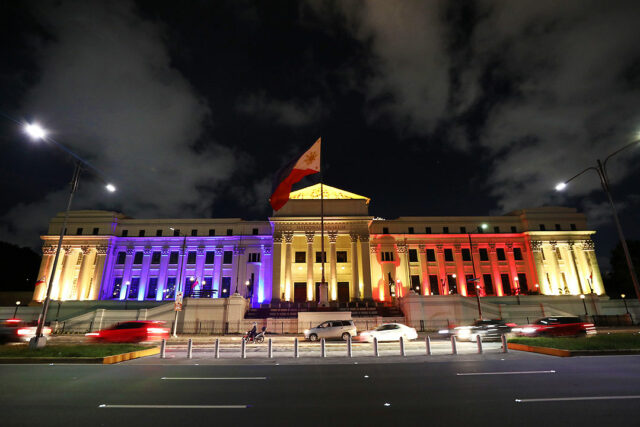
PHILIPPINE STAR/ MIGUEL DE GUZMAN

THE Department of Tourism (DoT) is proposing to include museums in “tourism circuits” that it is seeking to promote in a bid to attract more visitor traffic.   

Tourism Secretary Maria Esperanza Christina G. Frasco offered the DoT’s assistance to the National Museum of the Philippines (NMP) in the marketing and promotion of museums, as well as the establishment of tourism circuits that include museums.

Tourism circuits are clusters of visitor attractions.

“All of your efforts deserve to be highlighted and the general public needs to really know about all the activities, because giving the general public access to all of these worthwhile endeavors would also benefit both the museum and the public in general, in that we are able to provide mainstream access to all that the museums have to offer,” Ms. Frasco said during the third quarter Board of Trustees meeting of the NMP in Manila on Wednesday.

Ms. Frasco said that the DoT supports the projects of the NMP.

The NMP is an arm of the Department of Education.

Ms. Frasco said that the NMP can boost marketing and promotion of its museums under its management by reaching out to local government units (LGUs), part of an ongoing DoT initiative to seek out relatively unpromoted attractions. 

“I hope to have a similar effort done for the National Museum because I will be very interested to explore how we can assist in increasing engagement for its endeavors,” Ms. Frasco said.

The NMP’s board of trustees consists of the Tourism Secretary, the Education Secretary, the Tourism Committee Chair of the House of Representatives and the Senate, the Chairperson of the National Commission for Culture and the Arts, the Director-General of the National Museum, and eight representatives of the private sector in the National Museum Board. — Revin Mikhael D. Ochave

ADB finds learning crisis worse for females, poor in Asia-Pacific

PHILIPPINE STAR/ MICHAEL VARCAS

THE Asian Development Bank (ADB) said school closures during the pandemic worsened student progression and future livelihoods, particularly for poor students and girls, in the Asia-Pacific region.

“School closures are winding down after over two years but their damage could be long lasting. Closures worsened a learning crisis that existed before the pandemic. In 2019, 57% of children in middle- and low-income countries couldn’t read a simple text by age 10, and the World Bank projects that number has since jumped to 70%,” said Milan Thomas, an economist from the ADB.

Basically, “students learned less than they would have had schools stayed physically open,” he added during an ADB webinar on Thursday. “The measured losses in learning are several months’ worth of schooling, even in the most advanced economies.”

The ADB said that projected losses are 28% higher for girls than for boys and 47% higher for the poorest students compared to the richest students.

“Poor students and girls were especially hard hit by school closures, and that’s because those two groups had less access to remote instruction during the pandemic, as well as a greater tendency to be pulled out of school in response to economic hardship,” Mr. Thomas said.

He also said that there were over 250 million out of school youth before the pandemic, a problem which was further exacerbated by the crisis.

“There are no official estimates of the current number but we know that number has increased, and unfortunately substantially so in some countries,” Mr. Thomas said.

“In developing Asia, the projected losses are equivalent to about half a year of learning-adjusted schooling, and this foregone learning will hurt student’s ability to earn income as adults,” he added.

The lost lifetime earnings of these students were conservatively projected at $3.2 trillion or 13% of developing Asia’s gross domestic product in 2020.

The Philippines was among the last countries to reopen schools physically after a global coronavirus pandemic was declared in 2020.

Estimates by the National Economic and Development Authority indicate that a year of school closures cost about P10.8 trillion in productivity and wage losses over the next 40 years.

Nonetheless, the ADB’s impact evaluations have shown “that interventions have been able to mitigate learning losses in some developing country contexts.”

For a recovery strategy, ADB proposed periodic student assessments and continuous teacher training.

“A key first step after schools safely reopen is to test students to determine how much knowledge was lost or forgone and at what level to restart instruction, after which attention should focus on regularly tracking the progress of learning,” according to an accompanying ADB report.

More concrete measures involve consolidating the curriculum, extending instruction time, and targeting instruction to customized smaller groups within a classroom.

“Teaching based on the student’s level, with the help of teaching assistants, tutors, or education technology (edtech), is crucial for learning recovery, as it has proven effective in improving learning outcomes,” the ADB report added.

However, this is an uphill battle as only 25% of countries surveyed by the United Nations Children’s Fund had a solid learning recovery plan.

“That lack of planning will make it harder to close the gap for developing countries,” Mr. Thomas said.

Recently, President Ferdinand R. Marcos, Jr. ordered the Department of Education to allow blended learning in some areas of the country, rejecting the agency’s plan to return to full face-to-face classes starting November. — Diego Gabriel C. Robles

Senate resolution seeks review of parts of 1987 Constitution impeding growth

PHILIPPINE STAR/ ERNIE PENAREDONDO

A SENATOR has filed a resolution proposing to direct the Senate Constitutional Amendments and Revision of Codes Committee to conduct a review of the 1987 Constitution, particularly of provisions deemed detrimental to economic growth.

“The 1987 Constitution provides for economic provisions that impede our economic growth because of its restrictions on foreign equity in the exploration, development, and utilization of natural resources, public utilities, build-operate-transfer projects, operation of deep-sea commercial vessels… (as well as) foreigners owning land, equity in mass media and the practice of professions,” Senator Robinhood Ferdinand C. Padilla said in Senate Resolution 6.

“These constitutional prohibitions put our country at a disadvantage in competing with neighboring countries in terms of the growing global marketplace of opportunities, unequal access to free trade agreements, and lack of access to foreign capital; hence, there is a compelling need to reform the economic provisions of the 1987 Constitution by removing restrictive provisions that disrupt our sustained economic progress,” he added.

Mr. Padilla said economic growth has been “largely centralized” in the capital city and neighboring regions, and called for a study on federalism that devolves policy-making to governments closer to each Filipino.

Federal government, he added, will decentralize immense government power and address political and economic inequality, ensure fair access to goods and services, and correct the uneven distribution of government resources.

Meanwhile, a shift to a parliamentary system may provide political stability that would prevent unconstitutional decisions such as coups or “mob rule.”

In a separate resolution, the senator also urged President Ferdinand R. Marcos, Jr. to resume bilateral talks with China on cooperation in oil and gas development in the South China Sea.

In Senate Resolution 9, he said the Philippines requires a long-term strategy to resolve its oil dependency on foreign suppliers, which has proved detrimental after oil prices rose sharply with the Russian invasion of Ukraine.

Mr. Padilla said the new administration has the opportunity to resume bilateral talks with China without abandoning sovereign rights over disputed territory.

“In view of the gains attained from the MoU (Memorandum of Understanding) where the GRP (Philippines) and PRC (China) cooperated on the terms provided therein on the gas and oil development in the West Philippine Sea, the new administration can further explore these common interests of cooperation to resolve the country’s oil dependency from foreign countries,” he added in the resolution.

The previous government terminated oil and gas exploration agreements between the Philippines and China after the failure of attempts to resolve their differences.

“The President had spoken,” former Foreign Affairs Secretary Teodoro L. Locsin, Jr. said, referring to former President Rodrigo R. Duterte. “I carried out his instructions to the letter: Oil and gas discussions are terminated completely.”

“Nothing is pending; everything is over,” he added. “Three years on and we have not achieved our objective of developing oil and gas resources so critical for the Philippines — but not at the price of sovereignty; not even a particle of it.”

The South China Sea is subject to overlapping territorial claims involving China, Brunei, Malaysia, the Philippines, Taiwan and Vietnam. Each year, trillions of dollars of trade flow through the sea, which is also rich in fish and gas.

Mr. Marcos has said Mr. Duterte’s nonconfrontational stance with China was “the right way.” He has also said he will pursue an independent foreign policy.

Mr. Padilla also filed Senate Bill 229 which seeks to suspend excise taxes on unleaded premium gas, regular gas and diesel, to address the effects of rising oil prices.

If passed, the measure, which seeks to amend Section 148 of the National Internal Revenue Code, will automatically suspend the excise tax for these products once the Mean of Platts Singapore quote on benchmark Dubai crude tops $80 per barrel for three months. — Alyssa Nicole O. Tan

Lawmakers watching Marcos economic game plan

PHILIPPINE STAR/KRIZ JOHN ROSALES

By Alyssa Nicole O. Tan, Reporter

LAWMAKERS are watching how President Ferdinand R. Marcos, Jr. plans to steer a virus-stricken economy amid prices that are spiraling out of control.

Mr. Marcos, who won the May 9 election by a landslide, will deliver his first address to Congress on July 25.

“How to improve government services when it comes to health and education, how to create jobs — those are what our countrymen want to hear in President Bongbong Marcos’ upcoming state of the nation address,” Senator Juan Edgardo “Sonny” M. Angara said in a statement on Thursday.

Industries that have been hit hard by a coronavirus pandemic in the past two years would need all the help that they could get from the government, he added.

Senator Mary Grace S. Poe-Llamanzares said she expects “concrete, comprehensive and impactful solutions” from the president.

“Providing economic opportunities should be at the core of our comprehensive infrastructure plan, marked by crucial, high-impact projects that are thoroughly planned and carried out without delays and wastage,” she said in a separate statement.

“Efficient implementation of projects will propel economic activities and allow our people to thrive in these hard times,” she added.

Ms. Poe said she is looking forward to improved digital connectivity and e-governance, better crop output and for major transportation projects to be completed.

Senator Loren B. Legarda said she wanted to hear Mr. Marcos speak about his priority programs and economic and fiscal reforms as he plans to deal with rising joblessness, food security, health and education.

“The state of the nation address has always been the preamble of every new administration,” she said in a statement. “I am looking forward to hearing President Marcos’ specific plans on the country’s pandemic recovery and transition to a better normal. I hope that it is ​​one that is aligned and attuned to the climate path.”

Ms. Legarda also said she wanted to hear him speak about how the government will tame inflation amid rising global fuel prices, and how he will handle the country’s sea dispute with China.

She likewise expects the president to talk about how to deal with the country’s record debt and how he plans to solve the learning crisis after schools were shut by lockdowns in the past two years.

Senator Emmanuel Joel J. Villanueva said he wants to hear about the president’s plans for the country’s workers and foreign policy

“Our relations with other countries are important, especially in terms of international trade and security,” he said in mixed English and Filipino. “It is also important for our overseas Filipino workers to hear about this, especially at the beginning of the operation of the Department of Migrant Workers.”

Senator Ana Theresia “Risa” N. Hontiveros-Baraquel said Mr. Marcos should say how he plans to solve the food crisis, rising oil prices, climate change and energy resources.

She is also waiting for the details of his economic transformation agenda, the safe return to schools and infrastructure development.

Albay Rep. Jose Maria Clemente S. Salceda expects the president to prioritize agricultural revolution, citing a goal to boost the export value of high-value agricultural products to $20 billion by the end of his term, achieving global competitiveness in corn and fulfilling his campaign promise of bringing down the price of rice to P20 a kilo.

He said Mr. Marcos would probably have a decisive response on inflation during his address. “We need a broad range of presidential powers to act in the areas where we have some control,” Mr. Salceda said, citing price gouging, logistics and middleman costs, second-round impacts and the effects of rising prices on the poor.

The congressman also expects to hear more about jobs, support to small businesses, commitment to technological resiliency, sustainability, the recovery of the education sector and fiscal prudence.

Party-list Rep. Bernadette Herrera-Dy, wanted to hear the president speak about rebuilding the economy, addressing inflation and improving internet connectivity.

“We expect the president to unveil a roadmap to help the country recover from the impacts of COVID-19 for the next six years or so,” she said in a statement.

Ms. Dy said the government should continue to help households and businesses, particularly micro, small and medium enterprises, until the coronavirus is contained.

“Although the economy has recovered somewhat in the first quarter of this year, millions of Filipinos who lost their jobs remain unemployed, the economy is operating far below its capacity and the recovery appears to be stalling,” she said.

House of Representatives Secretary-General Mark Llandro Mendoza on Wednesday said as much as 80% of 1,360 invitees have confirmed their attendance to Mr. Marcos’ first address.

Pampanga Rep. Gloria Macapagal-Arroyo, former President Joseph E. Estrada and Vice President Sara Duterte-Carpio will attend the event at the House, while ex-President Rodrigo R. Duterte and former Vice President Maria Leonor “Leni” G. Robredo have yet to send their response.

Filipinos in New York warned of rising hate crimes

GUIDO COPPA-UNSPLASH

THE PHILIPPINE Consulate General in New York has told Filipinos to remain vigilant amid a citywide jump in major crimes, according to a post it made on Facebook.

The latest statistics released by the city’s police department showed a 37% increase in major crimes in New York.

“Kababayans are reminded to be situationally aware at all times when outside their residences and to take the necessary precautions to avoid becoming a victim of crime,” the consulate general said in the statement.

It also said grand theft cases had risen by 49% this year, car theft by 46%, robbery by 39% and burglary by 33%.

“Kababayans taking mass transport are also reminded to remain vigilant as transit crimes have also increased by 55.5% compared with last year,” the consulate general said.

Foreign Affairs Assistant Secretary for Migrant Workers’ Affairs Paul Raymund P. Cortes has said that in documented cases, victims who were in the subway did not even realize that they were being yelled at and told to “go back home to your own Asian country.”

Some, he added, have become traumatized. The consulate helps victims by providing them with “psychosocial help or therapy” after experiencing an attack.

In March, at least three Filipino seniors were beaten, with one to the point of unconsciousness, and the other hit more than a hundred times by the perpetrator. They also got robbed.

Hate crimes have also increased by 13% across New York.

At least 41 Filipinos in the city have been victimized since 2021. The latest was an assault against an 18-year-old Filipino tourist near the Philippine Center in Manhattan last week. — Alyssa Nicole O. Tan

DoJ, DILG partner in seeking to decongest jails

PHILIPPINE STAR/ MIGUEL DE GUZMAN

JUSTICE Secretary Jesus Crispin C. Remulla and Interior Secretary Benjamin C. Abalos, Jr. on Thursday said their agencies are working together to address congestion in the country’s jails.

At a joint press conference streamed live on Facebook, Mr. Remulla said he had asked President Ferdinand R. Marcos, Jr. to appoint an assistant secretary for digital infrastructure to handle the digitalization of jail records.

“It is the only way to make things visible online to have more prisoners processed,” he said. “Decongestion is a matter of looking at each prisoner as a person, not a number.”

The agencies plan to coordinate with the Department of Information and Communications Technology to streamline the digitalization of jail records, Mr. Abalos told the briefing.

He added that he plans to ask heads of local governments to donate plots of land to the Bureau of Jail Management and Penology (BJMP) so it can build more jail facilities. Philippine jails are overcrowded by almost five times.

BJMP, under the Interior department’s supervision, detains inmates with jail sentences of up to three years. The  Bureau of Corrections under the Department of Justice (DoJ) handles inmates with sentences exceeding three years.

Mr. Remulla said there are 17,000 inmates in the national penitentiary in Muntinlupa City, which was designed to house 6,000 inmates.

BJMP Director Allan S. Iral told the same briefing court hearings of inmates should be fast-tracked to help decongest the country’s jails.

Meanwhile, Mr. Abalos said he plans to reassess the qualifications of police officers conducting anti-drug operations.

He added  that the Interior department would implement more training programs and seminars on criminal law to determine qualified law enforcement personnel.

Only 21% or 62,000 of 291,000 drug cases filed have led to convictions, he said, citing police data from 2016 to 2022. — John Victor D. Ordoñez

Former anti-drug official tapped as acting Customs chief 

PHILSTAR FILE PHOTO

PRESIDENT Ferdinand “Bongbong” R. Marcos Jr. has tapped Yogi Filemon Ruiz, a former anti-drug official, to temporarily head the Bureau of Customs (BoC), according to the Presidential Palace. 

Mr. Ruiz was sworn in as acting BoC commissioner by President Ferdinand R. Marcos, Jr. on Wednesday, Malacañang said in a statement on Thursday. 

Before joining BoC in 2017, Mr. Ruiz headed a regional office of the Philippine Drug Enforcement Agency.  

The Customs bureau is among the Philippine agencies considered among the most corrupt.   

Mr. Marcos, 64, said last month that he would only go after those people who will be involved in corrupt activities under his term. Let’s forget the past.”  

Meanwhile, Mr. Marcos re-appointed veteran diplomat Philippe J. Lhuillier as the Philippinesenvoy to Spain.  

In a tweet on Wednesday, the President said he administered the oath-taking of Mr. Lhuillier.  

From 1990 to 2010, Mr. Lhuillier served as the countrys ambassador to Italy. Kyle Aristophere T. Atienza 

Private sector presses gov’t for green light to use P1.3B worth of expiring vaccines  

PHILIPPINE STAR/ MICHAEL VARCAS

PRIVATE companies are facing a wastage of P1.3 billion worth of vaccines against coronavirus that are expiring by the end of the month, according to a business leader.   

The private sector has appealed to the government to allow them to use the expiring vaccines as second COVID-19 booster shots for their workers.  

The possible losses worth more than P1.3 billion were only incurred by the private sector and do not yet reflect the vaccines donated to the government,said Jose Maria A. Concepcion III, a member of the President Ferdinand R. Marcos, Jr. Private Sector Advisory Council.  

As of writing, there were 623,680 AstraZeneca vaccines and 864,700 Moderna vaccines in private sector warehouses, Mr. Concepcion said.  

Each AstraZeneca jab is estimated to cost at least US$5 each, while Moderna shots were bought for US$26.83 for each dose,he said.   

The vaccines were purchased by the private sector through a tripartite agreement with manufacturers and the government as the country struggled to procure vaccines amid the pandemic.    

Under the agreement, half of the vaccines acquired by businesses were shared with the government.   

We have to learn from this. I think what really contributed was the lack of clear rules on the vaccines: who is allowed to take the vaccines, and the ability of some bodies to move swiftly with science and the reality on the ground,said Mr. Concepcion, who advised the previous administration on entrepreneurial concerns.   

Mr. Concepcion is among those appealing to the government to allow workers as young as 50 years to receive a second booster shot.    

The lack of urgency with some bodies is still affecting the whole vaccine rollout. This shouldn’t be the case as we move forward,he said.   

The private sector has already proven that it is willing to get vaccinated. There is no need for mandates when it comes to the private sector.”  

Mr. Concepcion said the return of in-person classes and the vulnerability of the workforce should also be considered by the government in vaccine deployment. Pandemic response should not be business-as-usual.” 

The private sector has been asking the government to lower the minimum age requirement for a second booster shot to 50 years instead of 60. 

Currently, only seniors and health workers may get a second top-up shot. 

Mr. Concepcion has been lobbying for reforms in the Health departments Health Technology Assessment Council, which he said has failed to accelerate the governments booster program.  

He earlier cited a slight delay in the administration of the first booster shot, which was first rolled out in the country in November.  

More than 71.4 million people had been fully vaccinated against the coronavirus as of July 19. More than 1.1 million people have received their second booster shot 

Experts earlier warned that waning immunity against the coronavirus among Filipinos and increased movement could trigger small wavesof infections.  

BARMM 
Meanwhile, vaccination rate against coronavirus in the Bangsamoro Autonomous Region in Muslim Mindanao (BARMM) in southern Philippines remained the lowest in the country at 39.73%, according to data from the Ministry of Health as of July 16.  

Fully vaccinated individuals, or those who have received two doses or one of a single-dose brand, were more than 1.38 million out of the 3.48 million eligible population.   

Those with booster shots were only 138,832 individuals.  

The Philippine government has set a target nationwide coverage of at least 70%.     

Health Undersecretary Maria Rosario Vergeire, currently the departments officer-in-charge secretary, was in the region on Thursday to assure the BARMM government of continued support on health issues.   

Let me express my gratitude to the Department of Health delegation. We are quite aware that in BARMM, the challenge is still very much high as far as vaccination is concerned,Bangsamoro Chief Minister Ahod Ebrahim said in a statement. 

HIGHER TARGETS
Ms. Vergeire said the current administration is soon launching a campaign for higher coronavirus vaccination targets.   

She said under the Pinaslakasprogram, the national government aims to innoculate 90% of senior citizens nationwide with primary series and at least 50% of the eligible population.  

In May, the BARMM Ministry of Health set up 71 additional sites for a targeted vaccination campaign to ramp up coverage.   

Health Officer-in-Charge Minister Zulqarneyn M. Abas had said that the regions low coverage rate is mainly due to hesitancy.  Our top enemy in the low vaccination roll out in our region is the high vaccination hesitancy of the public,he said.     

Health ministry Director General Amirel S. Usman also said then that while the region had been recording low coronavirus disease 2019 (COVID-19) cases and was at relatively low risk,a higher vaccination rate would help mitigate potential future outbreaks.    

Active COVID-19 cases in the BARMM as of July 20 remained low at 12 out of the 19,847 recorded since the start of the pandemic. Of the total, 19,142 recovered while 693 died.   

Basilan province had the highest number of active cases at 7, while Maguindanao province and Cotabato City had two each, and Lanao del Sur had one. Kyle Aristophere T. Atienza and Marifi S. Jara 

BCDA pitches New Clark City for ecotourism investments 

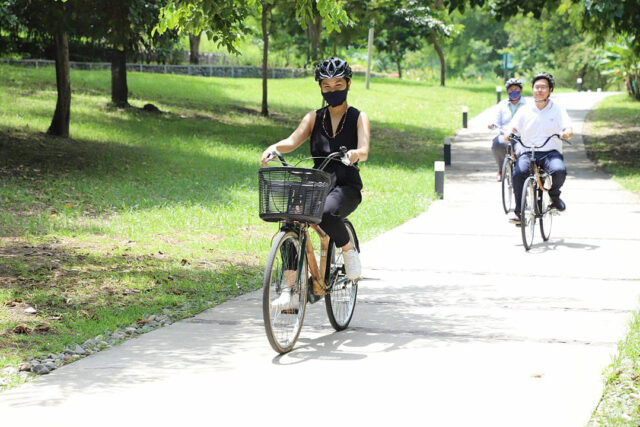
THE RIVER Park in New Clark City has a path for walking and cycling along the Cutcut River. — THE BCDA GROUP 

THE BASES Conversion and Development Authority (BCDA) is positioning New Clark City as an ecotourism destination, with 9,450 hectares open for development to investors, the government-owned corporation said.    

BCDA is always open to tourism investments in New Clark City. Given its strategic location, rich biodiversity and vast open spaces, it is the perfect place for eco-theme parks and ecotourism projects, BCDA Senior Vice President for Conversion and Development Joshua M. Bingcang said during a recent investment promotion event.  

The Central Luzon Tourism Investment Summit and Business Exchange was attended by 36 investors and agencies from the Philippines, Singapore, China, Japan and South Korea, BCDA said in a statement on Thursday.   

New Clark City, located in Tarlac which is about 110 kilometers north of the capital Manila, is masterplanned as a green and smart urban center with 40% of the area for buildings and 60% allocated to open spaces, forests, and parks.  

The complex already has its River Park, a 4.5-hectare area that features a 1.4-kilometer walkway along the Cutcut River. There are also plans to develop the 44.8-hectare Central Park at the heart of the city, which will be one of the largest public parks in the country once completed, BCDA said.   

It is also home to an athletics center first used during the 2019 Southeast Asian Games. 

Mr. Bingcang also said they are continuously pursuing locators for mixed-use projects, retail, and food and beverage establishments.  

The New Clark City is linked to the Clark International Airport at the Clark Freeport Zone via an access road that is expected to be completed before the end of the year.  

BCDA said New Clark City will also become more accessible upon the completion of the North-South Commuter Railway. There are also plans to develop a public transportation system within the complex as locators and residents increase, it said.  

We are already getting there. Weve accomplished much of the infrastructure development,Mr. Bingcang said. MSJ 

Japan turns over water system, tech-voc center in South Cotabato 

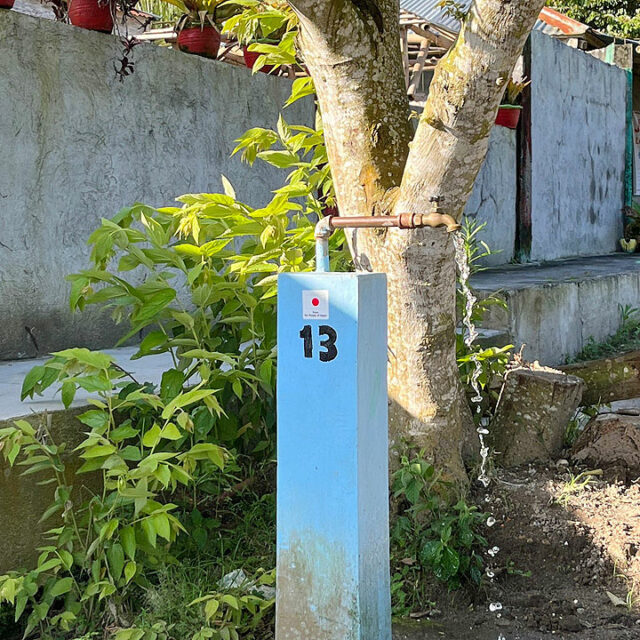
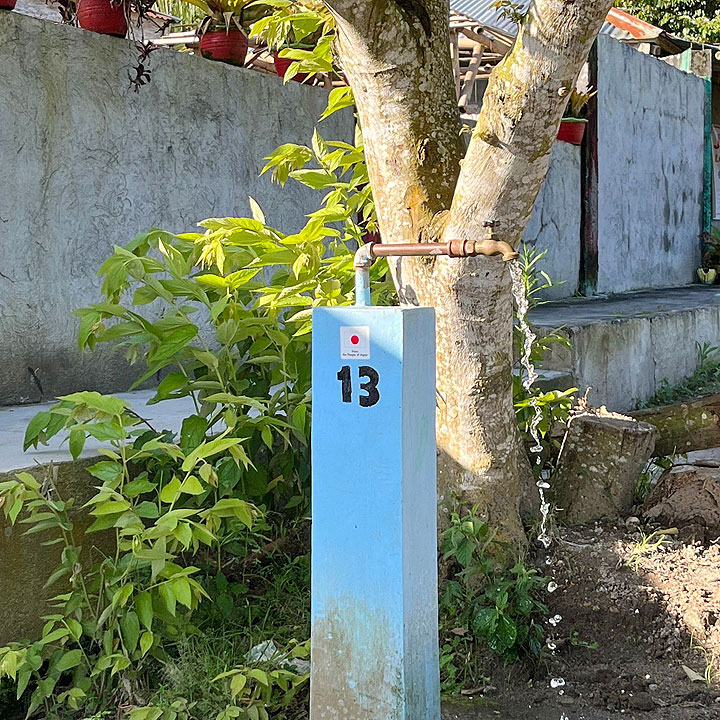
JAPANESE EMBASSY IN THE PHILIPPINES

THE JAPANESE government has turned over water supply projects in a remote village in South Cotabato province in southern Philippines, the Japanese Embassy said on Thursday. 

The P4-million project set up three communal faucet systems in Barangay Kablon in the town of Tupi, which had one of the lowest rates of access to safe potable water in the province. 

Japanese Consul-General Ishikawa Yoshihisa said during the handover ceremony that with the new water sources, residents will now be free from worries of contracting water-borne diseases and the physical burden of fetching water from long distances. 

Mr. Ishikawa also led the formal opening of a Japan-funded P4.3-million technical-vocational training facility that will be run by the municipal government of Tampakan, another town in South Cotabato.    

The new building expands the local governments tech-voc training center that was built in 2011.      

Approved in 2018, both projects are part of Japans official development assistance programs to support peace and development in Mindanao under the Japan-Bangsamoro Initiatives for Reconstruction and Development. Alyssa Nicole O. Tan 

Senate bill on zero hunger refiled 

PHILSTAR FILE PHOTO

A SENATOR has refiled a bill that mandates the government to ensure zero hunger in the Philippines within 10 years after the effectivity of the law amid threats of a global food crisis. 

Under Senate Bill 30, otherwise known as the Right to Adequate Food Act, the incidence of hunger in the country should be a quarter less than the level recorded at the time of its passage within 2.5 years. It should be reduced by another 25% after five years; another 25% after 7.5 years; until it reaches 0% after 10 years.  

Under the bill, hunger refers to a condition in which people do not get enough to eat that provides the necessary nutrients for a fully productive, active and healthy living due to the unavailability and inaccessibility of food.  

The global food supply shortage that affects us today is beyond our control because it is dictated by global market forces,Senator Ramon B. Revilla, Jr. said in a statement on Thursday. “But if we increase the local production of agricultural goods, we will become more self-reliant and maintain affordable food prices.”  

In June, former Agriculture Secretary William D. Dar warned about the impending food crisis brought about by the global food supply shortage, which is expected to become more evident by end-2022.   

Should the bill pass into law, the state must ensure that land devoted to food production is increased to 50% of all prime agricultural land in every region within 10 years.   

The proposed measure also requires the government to create a framework that will eliminate hunger in an organized strategic manner. A Commission on the Right to Adequate Food will also be established.    

Violators of the law may be imprisoned for a maximum of six years and fined with up to P500,000.  

In the 2020 State of Food Security and Nutrition in the World Report, the Philippines had the highest number of food-insecure people in the Southeast Asian region from 2017 to 2019 with 59 million Filipinos suffering from moderate to severe lack of consistent access to food. Moreover, 15.4 million were considered to be undernourished. Alyssa Nicole O. Tan 

QC gov’t denies Bayan’s request to rally at Batasan Road during SONA 

BAYAN FACEBOOK PAGE
BAYAN FACEBOOK PAGE

THE QUEZON City local government denied on Thursday progressive group Bagong Alyansang Makabayan’s (Bayan) request to hold a protest along Batasan Road during President Ferdinand R. Marcos, Jr.’s first State of the Nation (SONA) Address on July 25. 

In a July 19 letter addressed to Bayan Secretary General Renato M. Reyes, the Quezon City Department of Public Order and Safety (DPOS) said Batasan Road, which is within the citys jurisdiction, is not a designated freedom park for rallies and mass gatherings.  

It added that a rally would cause traffic congestion for motorists in the area.  

“The denial by the Quezon City DPOS of our application for a rally permit violates the law and our constitutional rights,” Bayan said in a statement. “The denial is arbitrary and follows the fascist imposition of the police. It is patently wrong.”  

The House of Representatives complex where the SONA will be held is located along Batasan Road. 

The Philippine National Police (PNP) earlier said it would deploy over 21,000 police officers for the SONA.  

PNP Spokesperson Jean S. Fajardo told a press briefing on Wednesday that violent protesters will be temporarily detained in a bus from the Bureau of Jail Management and Penology.  

The PNP had listed the Quezon Memorial Circle, the Commission on Human Rights compound, and the University of the Philippines campus as designated areas for protest activities. The entire Commonwealth Avenue, which is linked to Batasan Road, was also declared a no-rally zone.  

In a separate statement, farmers group Kilusang Magbubukid ng Pilipinas (KMP) said the denial of a permit to rally violates the group’s right to peaceful assembly and freedom of expression. 

“Our lives and our future are at stake here,” said Rafael V. Mariano, chairperson emeritus of KMP and former Agriculture chief. 

“What right does the DPOS or the Philippine National Police have to prevent any peaceful assembly?” he added. John Victor D. Ordoñez