Home Blog Page 5595

Opportunities to upskill auditing

In the new normal, industries and organizations have been embracing several transformations that were either caused or accelerated by the coronavirus pandemic, such as digital transformation and sustainability. The auditing industry continues to grapple with these changes, especially in terms of getting the right talent, yet opportunities are within their reach.

According to a recent survey by technological research and consulting firm Gartner, Inc., attracting talent with nontraditional skills is found to be the top challenge for audit leaders or chief audit executives (CAEs), represented by 57% of the respondents.

Related challenges cited by over half of audit leaders surveyed as important to solve in the next 12 months include: making the leap to more advanced analytics applications (e.g., continuous monitoring, automation and artificial intelligence) (56%); inadequate assurance over cybersecurity (53%); IT auditing practices not keeping pace with the need to audit new technologies and IT risks (53%); and measuring the impact of higher-value activities our team performs (51%).

“Top challenges for audit leaders reflect the increasing need for their audit teams to provide assurance over rapidly evolving technologies and expanded digital transformation initiatives,” Gartner’s report noted.

This difficulty in attracting talent to internal audit is even seen as a major factor driving many of the other top challenging facing audit leaders.

“[M]any audit leaders also expressed lower confidence in their team’s ability to audit evolving areas, such as cybersecurity, ESG (environmental, social, and governance standard) and talent risks in the broader organization, and increase the department’s use of data analytics and technology,” the report read. “These areas often require specialized skills audit teams are trying to attract or effectively upskilling existing talent, which also presents its own challenges.”

Such findings mirror what was explored by the Internal Audit Foundation (IAF) of the Institute of Internal Auditors, in collaboration with professional services firm Deloitte, in a research report published last year that assessed internal audit competency.

The report highlighted that while internal auditors are confirmed to have strong competence in core knowledge areas, a critical need is sought for them to have an additional focus on the use of innovative technologies.

“Business strategy and technology strategy are converging. Today, many business models could not exist without digital technologies, such as cloud-based platforms, automation, machine learning, advanced analytics, and blockchain,” read the report. “Despite the criticality of these technologies, many auditors do not believe they have the skills needed to provide effective assurance and advisory services in these areas.”

These seen gaps, nonetheless, can be considered as opportunities for auditors moving forward.

“This unique point in time offers internal auditors an opportunity to articulate the value they could add to their organizations if adequately enabled by relevant transformative technology and upskilling opportunities,” Mike Schor, risk & financial advisory partner at Deloitte, was quoted as saying in a comment to the report’s findings.

Opportunities amid risks

In an annual perspective of its internal audit specialists, Deloitte identified key risks and opportunities that it believes internal auditors should consider in their audit plans this year.

Among the numerous considerations, Deloitte agrees that adopting the ESG standard is imminent in several major economies, and so internal audit should not delay in tackling the issue, “as the stakes are simply too high, with pressure exerted by regulators, investors, customers, third-party affiliates, and society at large.”

A challenge internal audit (IA) functions just starting on their ESG journey should brace for is identifying responsible parties within the organization, the firm noted.

“Oftentimes, we find the CFO (chief financial officer) pointing to investor relations, who look to HR (human resource), which passes the buck to legal, who redirects to marketing. Effective coordination among these groups and a focal point of responsibility will be critical to progress,” Deloitte wrote in the report.

Deloitte also recommends initiating training as needed to fill knowledge gaps, both within IA and throughout the organization at large.

“Invest in resources with the right experience and skillset to understand, recognize, and assess ESG risks. Consider creating ESG-dedicated position(s) within internal audit to allow for specialized expertise and increased focus,” Deloitte added.

IA functions are also encouraged to get involved with organizations as they embark on automation in order to realize business value.

“Start by helping management find a balance between risk taking and risk appetite. Connect early in the process, when strategic decisions about automation are first being made. Ideally, the relationship will include both advisory and assurance elements — helping the organization realize [return of investment] and then providing assurance services for its automation deployment,” Deloitte explained.

“Simultaneously, adapt your audit plan to the new environment,” the firm added. “Risk assess new capabilities (impacted business processes, ways of working, and new enabling technologies) across key risk domains, such as financial, operational, regulatory, technology, and strategic, and then prioritize based on impact and vulnerability criteria.”

Regarding cybersecurity, CAEs are advised to pay particular attention to leveraging the “cyber cloud skills” of auditors as the cloud bring a concurrent set of risks while enhancing the ability to quickly leverage new capabilities such as AI, machine learning, blockchain, and data lakes.

“Consider approaches such as a risk-based “assurance by design” cloud migration strategy; take advantage of native cloud services; and embed security and engage in a multi-cloud strategy. For IT IA, cloud assurance will be a multi-year journey — not one audit and done,” Deloitte advised. — Adrian Paul B. Conoza
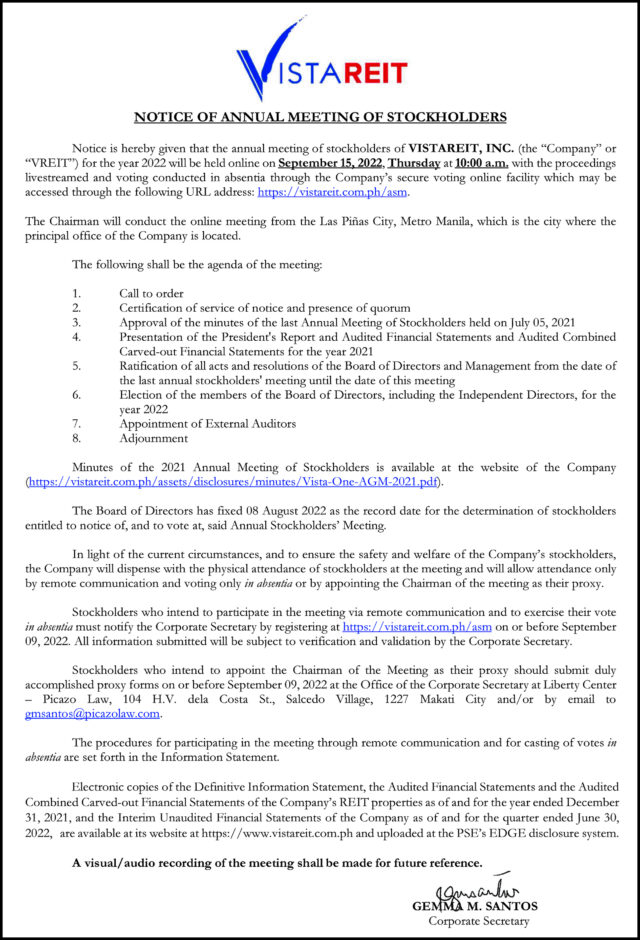

VistaREIT, Inc. to hold annual stockholders’ meeting on Sept. 15


Spotlight is BusinessWorld’s sponsored section that allows advertisers to amplify their brand and connect with BusinessWorld’s audience by enabling them to publish their stories directly on the BusinessWorld Web site. For more information, send an email to online@bworldonline.com.

Join us on Viber to get more updates from BusinessWorld: https://bit.ly/3hv6bLA.

Gov’t drafts rules on digital payments

Bureau of Internal Revenue (BIR) staff check the income tax returns submitted by individuals and business owners at the BIR Office in Intramuros, Manila, April 18, 2022. — PHILIPPINE STAR/ RUSSELL A. PALMA

GOVERNMENT AGENCIES may be given six months to less than three years to transition to digital disbursement and collection, according to the draft rules on the government’s adoption of digital payments.

The Finance department, along with other government agencies, drafted the implementing rules and regulations (IRR) of Executive Order (EO) No. 170, which mandates the adoption of digital payments for government disbursements and collections.

Under the draft rules, all covered agencies will have to fully implement digital disbursements within six months of the effectivity date.

“For the implementation of digital collections, a tiered transition period not exceeding three (3) years shall apply,” the rules stated.

The transition period would depend on the agency’s operational readiness and capability.

If the covered agency is already offering a digital mode of collecting payments through a gateway system or a collection agreement with financial institutions, it should implement digital disbursements within one year from the effectivity date of the IRR.

The transition period for an agency not yet offering digital collection will be more than one year, but less than three years.

The payments digitalization team of the covered agencies will be required to submit a transition plan that includes timelines to fully implement digital payments, strategies for capacity development, and key performance indicators and targets.

“The transition plan shall be officially transmitted by the head of agency to the TWG (technical working group), through the Secretariat, within 60 days after the effectivity of this IRR,” the draft rules stated.

The draft rules also proposed the creation of a TWG on the adoption of digital payments, composed of representatives from the departments of Finance and Budget and Management, Bureau of the Treasury, Bureau of Internal Revenue, and the Government Procurement Policy Board Technical Support Office.

The TWG will determine which agencies are capable of adopting digital payments within a shorter or longer period.

“The transition plan will be used as part of the basis for monitoring compliance of the Covered Agencies. Whenever necessary, the TWG may recommend adjustments in the transition plan in line with the requirements and objectives of EO No. 170,” the draft rules stated.

The IRR of EO No. 170 is in line with the government’s effort to develop an inclusive digital financial ecosystem.

Stakeholders are given until Aug. 24 to give their feedback on the draft rules.

In May, then-President Rodrigo R. Duterte signed the EO No. 170 to ensure “safe and efficient” digital disbursement, including distribution of financial assistance and payment of salaries, wages and allowances to employees. — KBT

New SRA board expected to work closely with stakeholders

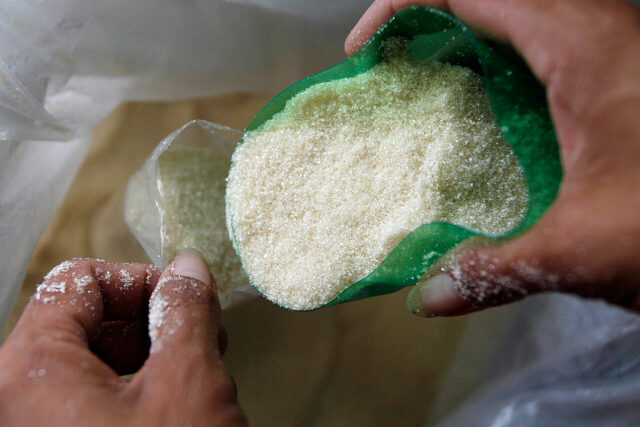
A MAN repacks sugar in packets at a public market in Taguig City, Aug. 27, 2008. — REUTERS/CHERYL RAVELO

By Kyle Aristophere T. Atienza, Reporter

INDUSTRY PLAYERS expect the Sugar Regulatory Administration (SRA) to improve its coordination with stakeholders and ensure the protection of local producers after President Ferdinand R. Marcos, Jr. appointed new officials.

“The recent appointments by President Marcos give us hope that we will have a better SRA that will truly work for and be there for the industry stakeholders,” United Sugar Producers Federation President Manuel R. Lamata said in a Viber message.

The appointments were recommended by Negros Oriental Vice-Governor Jeffrey Ferrer, Mr. Lamata said.

Negros Oriental is one of the Philippines’ largest sugar producers.

Mr. Lamata said the SRA’s regulations should undergo thorough consultation to come up with a “collective and cohesive win-win solution that is fair to all stakeholders and for the consumers especially.”

He emphasized that sugar importation should be a “last remedy” to address a supply shortage.

“SRA must do a balancing act between the producers, the consumers, the millers, and industrial users to ensure that no sector takes advantage of the others,” Mr. Lamata said.

Mr. Marcos on Saturday named three new officials of the Sugar Regulatory Board (SRB), including David John Thaddeus P. Alba as SRA acting administrator.

Mr. Alba replaced Hermenegildo R. Serafica, who resigned along with other board officials after the agency approved an order allowing the importation of 300,000 metric tons (MT) of sugar, which Mr. Marcos’ office considered as “illegal” or “unauthorized.”

Other appointees named by Mr. Marcos, who chairs the sugar board as Agriculture chief, are Pablo Luis S. Azcona, who will represent sugar planters, and Mitzi V. Mangwag, who will represent sugar millers.

“We do have to rethink the SRA. It has not been very effective in its role of local industry development,” Albay Representative and House Ways and Means Committee Chair Jose Ma. Clemente S. Salceda said in a Viber message.

“Low utilization rates of the Sugarcane Industry Development Act (SIDA) and the Tax Reform for Acceleration and Inclusion (TRAIN) law funds have hounded that agency,” he added, calling SRA a “failed agency.”

The TRAIN law raised excise taxes on petroleum products and sugar-sweetened beverages (SSB). Under the law, a significant portion of taxes from SSB should be allocated to the sugar industry. 

Mr. Salceda said there should be “a more technical panel” headed by the Department of Agriculture and composed of planters, millers, industrial users, consumer groups “to deliberate on whether we need to import sugar and how much.” 

The panel should also include a representative from the Bangko Sentral ng Pilipinas “for inflation targeting” and the National Economic and Development Authority (NEDA) to assess “economic impacts,” Mr. Salceda said.

George T. Barcelon, president of the Philippine Chamber of Commerce and Industry, hopes that the Department of Trade and Industry (DTI) will play a more crucial role in ensuring that sugar supply is adequate and prices remain low.

“The SRA should also work with the DTI. We hope to see the active role of the DTI. It should be on top of sugar price increases,” Mr. Barcelon said by telephone. “Businesses need affordable sugar.”

LIBERALIZATION
Meanwhile, Mr. Salceda warned against plans to allow importation of sugar without any government regulation, saying it “will definitely hurt farms — especially in this time of high fertilizer, fuel, and labor prices.”

“As I warned before, we have to be circumspect about the liberalization of the sugar sector. The sugar production sector is among the most labor-intensive sectors in the agriculture sector, needing 1.4 workers per hectare on average compared to 0.6 worker for rice, and 0.7 for the whole sector,” he said, adding the benefits are not clear.

The government has intensified its crackdown on market players allegedly hoarding sugar, making surprise inspections in some warehouses since last week.

On Saturday night, Mr. Marcos’ office announced the seizure of at least 60,000 bags of sugar in a series of inspections in different warehouses in Bulacan.

Customs personnel used their visitorial power to inspect four warehouses in Guiguinto, Bulacan late Saturday afternoon, Press Secretary Trixie Cruz-Angeles said in a news release.

She said authorities found imported sugar from Thailand at 50 kilograms per sack. Authorities also learned that the import permit used for the Thai sugar “was the allocation for Sugar Order No. 3 issued last February by the SRB,” she added.

Before the inspection in Bulacan, personnel of the Subic Port customs have also seized 140,000 bags of imported sugar from Thailand equivalent to 7,000 MT.

“The huge volume of sugar discovered by authorities in the various inspected warehouses in Luzon has led Malacañang to conclude that the sugar shortage is artificial, brought about by the hoarding of sugar traders who want to rake-in huge profits from the sudden spike in sugar prices.”

Mr. Marcos, Senate President Juan Miguel F. Zubiri, and sugar stakeholders recently reached a consensus to import 150,000 MT of sugar.

Philippines plans $3-4 billion foreign bond sales this year

REUTERS

THE PHILIPPINES plans to raise a further $3 billion to $4 billion from foreign bond sales this year, according to a person familiar with the matter.

The amount is based on the borrowing program for 2022, the person said on Friday, asking not to be identified because the matter isn’t public.

The Philippines is stepping up its fundraising with a local-currency bond sale aimed at retail investors set to begin this month, a debt offering that may also raise billions of dollars.

While bond sales in emerging markets have dried up in the past few months, few nations have entered the market, with Mexico raising $2.2 billion from a dollar bond offering earlier this month.         

Philippine dollar bonds due 2032 were indicated 0.1 centavo higher at P115.58 per dollar on Friday. President Ferdinand R. Marcos, Jr. plans a record spending spree to boost the nation’s recovery from the pandemic.

The Philippines last sold dollar bonds in March, raising $2.25 billion. The nation also raised $500 million in a yen bond sale in April. — Bloomberg

Shipping industry backs bill seeking devolution of PPA’s regulatory functions

REUTERS

THE PHILIPPINE Liner Shipping Association (PLSA) has expressed support for a proposed measure that seeks to strip the Philippine Ports Authority (PPA) of its regulatory functions.

“In principle, we support the devolution of the regulatory functions of PPA,” PLSA President Mark Matthew F. Parco told BusinessWorld in a recent phone interview.

The current setup of PPA, an attached agency of the Department of Transportation (DoTr), allows it to function as a “for-profit company” and as a regulator of the industry at the same time, Mr. Parco said.

“It makes sense that the regulatory power is not with the port corporation,” he added.

A legislator recently refiled a bill seeking to reorganize the PPA by separating its regulatory and commercial functions.

Bagong Henerasyon Party-list Rep. Bernadette Herrera-Dy filed on July 6 House Bill No. 1400, which aims to convert the agency into Philippine Ports Corp. (Philports) and transfer its regulatory functions to the Maritime Industry Authority (MARINA).

“Through the years, the port users, including domestic shippers, exporters, and importers, have complained of low service levels, inefficient port operations and ever-increasing port charges,” Ms. Herrera-Dy said in the bill’s explanatory note.

“They claim that the high cost of transport serves as an efficient barrier to increased trade (both local and foreign) and undermines the country’s competitiveness,” she added.

The PPA was established by Presidential Decree (PD) No. 505, which was subsequently amended by P.D. No. 857 in 1975. It is tasked with facilitating the implementation of an integrated program for the planning, development, financing, operation and maintenance of ports or port districts for the entire country.

The agency has yet to respond to a request for comment as of press time.

The bill seeks to reform the administration of ports by separating PPA’s regulatory, commercial and development functions. It aims to “avoid the conflict of interest arising from regulatory agencies vested in both regulatory and development or commercial functions.”

“Under no circumstances should a regulatory agency benefit from its own regulation and/or use its own regulatory powers to protect itself from competition at the expense of public interest,” the bill stated.

Under the bill, PPA will be converted into Philports to handle development, management and operation of public ports. Philports will collect port fees and dues approved by MARINA, which will fund port development, modernization, and expansion, among others.

Separation of PPA’s functions is one of the recommendations made by the Organization for Economic Co-operation and Development (OECD) in its 2020 competition assessment review for the logistics sector in the Philippines.

The OECD said the Philippines should enact a measure to “ensure the separation of PPA’s functions, avoid conflicts of interest, and ensure that PPA is incentivized to develop, modernize and expand its ports.”

“Establishing the regulator with a degree of independence (both from those it regulates and from government) can provide greater confidence and trust that regulatory decisions are made with integrity,” it said. “A high level of integrity improves outcomes of the regulatory decisions.”

The OECD said regulators should not be given conflicting or competing functions or goals.

“The assignment of potentially conflicting functions to any regulator should only occur if there is a clear public benefit in combining these functions and the risks of conflict can be managed effectively.”

Meanwhile, Mr. Parco welcomed Transportation Secretary Jaime J. Bautista’s plans to improve ports and cut the cost of shipping and travel.

Shipping companies have raised their freight charges by an average of 25% starting March.

The PPA also said last month that it was already looking into reducing port costs by reviewing fees.

In the first half, the PPA reported that passengers using its facilities surged by 144% with the resumption of domestic tourism, trade, and regular travel activity.

Passenger volume for the first half of 2022 rose to 26.053 million, from 10.692 million a year earlier. Meanwhile, cargo throughput for the period fell by 1.46% year on year to 125.485 million metric tons. — Arjay L. Balinbin

BusinessWorld bags top Philippine Quill award

BUSINESSWORLD Publishing Corp. received the top award at the Philippine Quill Awards for its flagship economic forum, which went virtual for the first time in 2020.

“BusinessWorld Virtual Economic Forum (BVEF): Forecasts 2021: Reboot. Rethink. Reshape” was given the Top Award in the Communication Skills division of the 19th Philippine Quill Awards, besting other four top contenders and 148 excellence awardees.

The BVEF is one of the groundbreaking projects that BusinessWorld launched during the coronavirus disease 2019 (COVID-19) pandemic.

Over 60 international and local experts gathered in November 2020 for the two-day virtual forum, which tackled the most urgent issues faced by the Philippine business community.

Keynote speakers included Børge Brende, president of the World Economic Forum; Bernardo Mariano, Jr., chief digital and information officer of the World Health Organization; Ndiamé Diop, country director for Brunei, Malaysia, Philippines and Thailand of the World Bank; and Kelly Bird, country director of the Asian Development Bank.

Around 1,200 attended the forum, with 40% comprising C-level executives and department heads. It also attracted 33 sponsors and partners.

The BVEF, now with four editions, has become a valuable asset for BusinessWorld, allowing the company to stand out in the industry.

The Philippine Quill is the country’s most prestigious awards program in the field of business communication.

Lufthansa Technik eyeing Bulacan, Cavite expansion

COMPANY HANDOUT

LUFTHANSA Technik Philippines, Inc. (LTP) is eyeing to expand outside the National Capital Region (NCR), with new airports to be built in Cavite and Bulacan as potential locations for its aircraft maintenance, repair and overhaul (MRO) services hubs, the company’s chief executive officer said.

“In the Philippines, in Luzon, besides NAIA (Ninoy Aquino International Airport), [there is] currently only Clark,” LTP President and Chief Executive Officer Elmar Lutter told reporters on Friday on the sidelines of the formal opening of the company’s new hangar in Pasay City.

“But you know, two more airport projects are being contemplated, Bulacan and Sangley ports, and we are observing what is happening,” he added.

LTP, a joint venture of Germany’s Lufthansa Technik AG and Lucio C. Tan-led MacroAsia Corp., inaugurated on Friday its Hangar 1A, a 9,000-square-meter facility in Pasay City, after nearly two years of delay caused by the pandemic.

In terms of capacity, Hangar 1A adds three lines to the existing seven base maintenance lines in NCR, according to the company. It adds 20% to LTP’s capacity and allows it to employ at least 275 more personnel.

The new facility is designed to provide base maintenance for various commercial aircraft of short- to long-range capacities, including Airbus jets A320, A330, A380, and the Boeing 777.

“The Philippines is an excellent place for aviation with Asia’s oldest airline, Philippine Airlines, its tradition, infrastructure, and the depth and the breadth of its talent pool. Resilience has been invented here,” Mr. Lutter said.

LTP provides aircraft MRO services at various airports in the country, including NAIA, Mactan-Cebu International Airport, Kalibo International Airport, and Puerto Princesa Airport, among others.

“We are optimistic to soon further grow our business again,” Mr. Lutter noted. “We have reached our limits here at NAIA.”

“We will seek discussions with possible partners and explore possibilities in the Philippines and beyond with the end in mind to add affordable high-quality MRO to our region and deliver safety and reliability to our customers,” he added.

In April, MacroAsia said LTP’s maintenance volumes are expected to reach pre-pandemic levels this year.

“Foreign airline clients that have opted to delay their heavy maintenance programs in the midst of the pandemic starting 2020 have been recalling their stowed planes into service,” the company said in its annual report.

“The line maintenance business, which is essentially airport-flight driven will follow the airport volume growth in NAIA, Cebu, Clark, and Davao where LTP operates,” it noted. — Arjay L. Balinbin

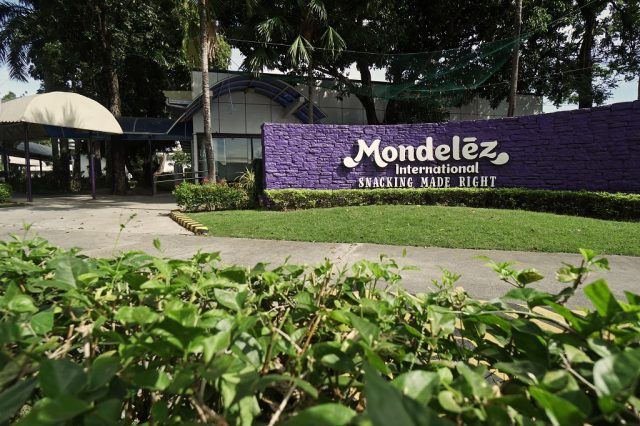
Mondelez posts growth, cites economic reopening, spending

BW FILE PHOTO

FOOD manufacturer Mondelez Philippines, Inc. has posted growth on the back of more sales and on the opening up of the Philippine economy.

Aleli H. Arcilla, Mondelez Philippines vice president and managing director, said on the sidelines of a media briefing in Quezon City last week that the company has benefited from increasing consumption.

“We’re actually seeing some growth already. There is a lot of pick-up from our products. We are recovering from last year. The business has rebounded from last year and we are seeing that it is following the market growth,” Ms. Arcilla said.

“As we experience the opening up of the economy, there is more consumption, more influx of income as many Filipinos are becoming employed. We are seeing consumption go up,” she added.

Further, Ms. Arcilla mentioned that the sales of some of the company’s products have already reached pre-pandemic figures due to stronger demand.

“In some of the categories or the products that we have, they have already reached pre-pandemic levels, we’re hitting pre-pandemic levels already. These products include beverages like Tang and our biscuits since it is back to school,” Ms. Arcilla said.

Moving forward, Ms. Arcilla mentioned that Mondelez Philippines is planning to introduce new products that will bolster its current offerings. She declined to give details on the upcoming products.

“We will be coming up with new products that we will be introducing either on the premium side or on the mainstream side. We will be working on it in the coming months,” Ms. Arcilla said.

The company also disclosed that its items are not as affected by the current tight supply and soaring prices of sugar in the country.

“For Mondelez, we’re not as affected as the other beverage companies and even the other fast-moving consumer goods [that] use a lot of sugar and are dependent on imports. We are less impacted by the sugar shortage right now,” Ms. Arcilla said.

“The products that require sugar are manufactured outside of the Philippines. The sugar shortage does not necessarily impact us because we have the supply for our products based in other plants in other countries. We get our products as finished goods already,” she added.

Some of the brands sold by Mondelez Philippines include Tang drink mix, Cadbury chocolate, Chips Ahoy cookies, Cheez Whiz bread spread, and Toblerone chocolate. — Revin Mikhael D. Ochave

Hyundai rising

Familiar stalwarts: The refreshed Santa Fe (left) stands beside the all-new Tucson. — PHOTO BY KAP MACEDA AGUILA

New vehicles and clear priorities are expected to restore the auto brand’s prominence

BACK IN JUNE, representatives of Hyundai Motor Philippines (HMPH) first met with select members of the media to announce that the company was taking control of the passenger car portfolio of Hyundai in the country from longtime distributor group, Hyundai Asia Resources, Inc. (HARI), which had overseen the growth of the brand since 2001. HMPH assumes responsibility for Hyundai’s passenger car models, while HARI retains the trucks and buses of the South Korean marque.

Last Wednesday, HMPH made it public by staging a launch activity at Okada — first with the media at lunchtime, then bank partners in the evening.

The message is clear: Hyundai is back.

Just to underscore its resurrection in the country where it was once the third best-selling auto brand, Hyundai presented three all-new models (the Creta, Tucson, and Staria) and a refreshed nameplate (Santa Fe).

“This marks a major turning point for the car company, (which) aims to continue strengthening the brand while also renewing customers’ enthusiasm in its lineup of offerings,” HMPH said in a release.

The all-new, 4.3-meter-long second-generation Creta is positioned as a “premium B-segment SUV,” boasting the brand’s so-called “Sensuous Sportiness” design language. Powered by a 1.5-liter Smartstream gasoline engine mated with an improved CVT (the base model has a six-speed manual), the Creta is said to offer a “smoother and fuel-efficient ride without compromising power output.” It outputs 115ps and 144Nm. HMPH boasts that the Creta has the most number of active safety features in its segment. It has LED daytime running lamps and rear combination lamps, 17-inch alloy wheels, and sporty bumpers.

Three variants are available, with the following prices: 1.5 GL 6MT (P998,000), 1.5 GL IVT (P1.17 million), and 1.5 GLS IVT (P1.332 million). The 1.5 GL IVT in “limited-red” edition retails for P1.323 million.

The much-awaited Starex successor, the futuristic-looking Staria, is now here in the country as well. It is headlined by a “lounge” concept, with a lower beltline and taller vehicle height — contributing to “a sense of openness.” The range-topping seven-seater variant gets premium design elements, smart sliding doors, a smart power tailgate, dual sunroofs, and a cache of active safety features. Meanwhile, the 11-seater commuter variant and a three-seater cargo variant boast twin swinging doors.

Four Staria variants are available: the 2.2 CRDi 6MT Cargo (P1.56 million), 2.2 CRDi 6MT Commuter (P1.85 million), 2.2 CRDi GLS+ 8AT (P2.32 million), and 2.2 CRDi Premium+ 8AT (P2.93 million).

Finally, two familiar nameplates round out the four-model juggernaut from HMPH. The all-new Tucson, the first SUV to bear the aforementioned “Sensuous Sportiness” design aesthetic, now gets an eye-catching front fascia with the Parametric Jewel Pattern Grille and unique side character lines. Stretching 4.6 meters long and with a wheelbase of 2.7 meters, the Tucson offers extra legroom. Buyers can choose between the diesel-powered variant (2.0 CRDi GLS+ 8AT) priced at P1.84 million or the gas-sipper (2.0 GLS 6AT), costing P1.57 million. The Smartstream D2.0 engine generates 186ps and 416Nm, while the Smartstream G2.0 submits 156ps and 192Nm.

The Santa Fe now gets T-shaped DRLs that create a unique light signature. These complement the cascading grille and front bumper which make the vehicle’s face look wider. Under the hood is a Smartstream 2.2 Diesel engine paired to eight-speed wet DCT, a first in Hyundai’s SUVs. Only one trim is offered, the 2.2 CRDi GLS 8DCT, priced at P2.42 million.

Aside from these, the refreshed portfolio of Hyundai will feature the flagship Palisade three-row SUV and the H100 workhorse.

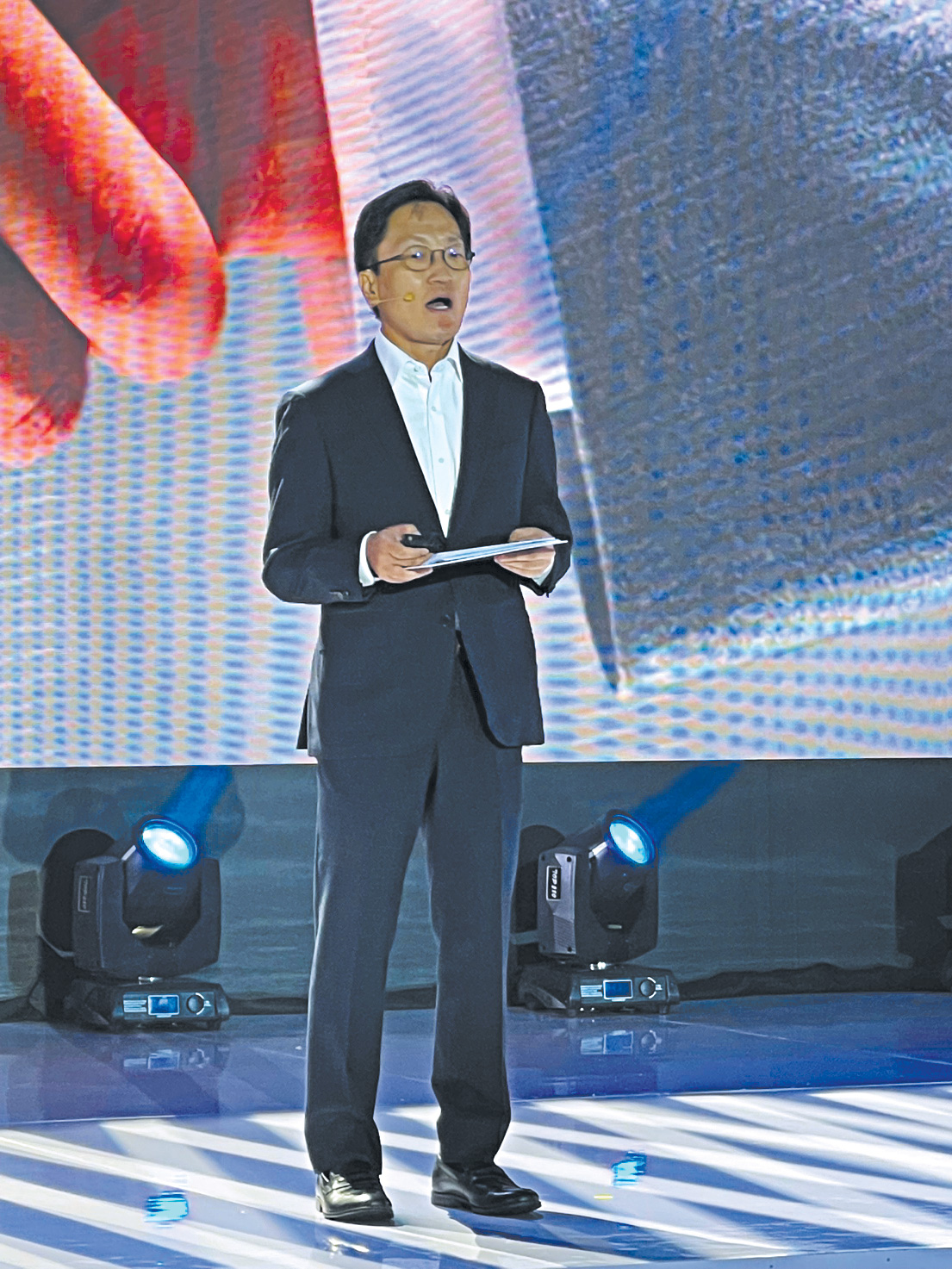
At the helm of HMPH is the affable Lee Dong Wook, a longtime Hyundai hand with international stints in India and Malaysia. Perhaps more importantly, he has been exposed to, and been responsible for, Asia-Pacific markets.

The company explained that the key to restoring the brand’s prominence is “a nationwide service campaign and warranty program that aims to highlight the brand’s improved after-sales.” HMPH also intends to enhance the reach of the dealership network by growing the number outlets from 38 to 45 by 2023.

Additionally, Hyundai Live is slated for launch next month. “This is a two-way communication with our customers using the website as our online showroom that will provide information to meet (their) needs,” added Mr. Lee.

Before the end of the year, HMPH is set to grow its portfolio even further with the anticipated launch of the Stargazer MPV (which, along with the Creta, is manufactured in Indonesia) — expected to battle in the segment where the Mitsubishi Xpander and Toyota Avanza are. Also being studied is the launch of the Ioniq 5 full EV, and the Santa Fe Hybrid (See our Q&A with Mr. Lee).

To be scratched from the lineup are the Accent, Reina, Kona, and even the Venue.

HMPH is making sweeping changes inside and out — openly declaring that it is moving from the Association of Vehicle Importers and Distributors, Inc. (AVID) to the Chamber of Automotive Manufacturers of the Philippines, Inc. (CAMPI). “There are a lot of benefits in joining CAMPI and for us to join them at this opportune time would give us a huge boost. There is so much excitement and interest in what we will do next and we can’t wait to show everyone once again what Hyundai Motor is all about,” underscored Mr. Lee.

The executive had revealed in June, “Dealers would say ‘I don’t have any cars for display in my showroom. So many customers visit our showroom, and the customer (would ask) when can I buy our Hyundai cars? I gave a promise to our dealer principals like this: My first role is to fill up our cars in your showroom display, then customers will visit (so) they can enjoy and see the choices. We will move forward.”

Fast forward, it seems.

Petron targets to spend up to P15B annually in next 3 years

BW FILE PHOTO

PETRON Corp. is targeting to spend up to P15 billion annually for the expansion of its operations until 2025, a company official said last week.

“The company is programming to spend between P10 [billion and] P15 billion on [an] annual basis for the next three years,” said Albertito S. Sarte, vice president and deputy chief finance officer of Petron, during a virtual press briefing last week.

He said that the amount will be spent in the Philippines and Malaysia, with a sharing of 70% and 30%, respectively.

“A good bulk of this will be allocated for the service station expansion in both countries because we see that as our growth strategy, to be able to sell more and reach more customers in the future,” he added.

Petron, the country’s largest oil refining company, has a refining capacity of 268,000 barrels per day, producing a full range of fuels and petrochemicals.

It operates about 40 terminals in the region and has around 2,800 service stations where it retails gasoline and diesel, the company previously said.

“We are planning to add more stations but probably at a more cautious tone,” Mr. Sarte said.

Mr. Sarte also said that the company is looking to expand its logistical capabilities and expanding its storage facilities for both countries.

Meanwhile, Erich Y. Pe Lim, manager and investor relations officer at Petron, said that the company is also targeting to further reduce its carbon footprint by 2025.

“We have actually been able to reduce our carbon emissions by 3% in 2021. We are looking at reducing it further to 12% by 2025,” he said.

Mr. Pe Lim said that Petron was able to reduce its carbon emissions through various initiatives such as reconfigurations, improving its operations in the refinery, and replacing of thermal power plants with steam generating facilities. — Ashley Erika O. Jose

Peso may drop further vs dollar on hawkish Fed

BW FILE PHOTO

THE PESO may continue to depreciate against the dollar this week as market players anticipate the US Federal Reserve’s policy direction in bringing inflation within target at their annual global central bankers’ conference on Friday.

The local unit closed at P55.93 on Friday, weakening by 4.2 centavos from its P55.888 finish on Thursday, data from the Bankers Association of the Philippines showed.

The peso also depreciated by 32 centavos from its P55.61-per-dollar close a week ago.

Dollars exchanged inched down to $889.6 million on Friday from $939.3 million on Thursday.

The peso declined on Friday as investors priced in hawkish signals from the US Federal Reserve, Rizal Commercial Banking Corp. Chief Economist Michael L. Ricafort said in a Viber message.

On Thursday, St. Louis Fed President James B. Bullard said he was leaning towards a third straight 75-basis-point (bp) increase on their Sept. 20-21 policy review.

“I don’t really see why you want to drag out interest rate increases into next year,” Mr. Bullard said in an interview with the Wall Street Journal.

Mr. Bullard also said he would like to get the US central bank’s benchmark overnight interest rate to a target range of 3.75% to 4% by end-2022. The Fed’s policy rate is currently 2.25%-2.50%.

Moreover, San Francisco Fed President Mary C. Daly said hiking rates by either 50 or 75 bps would be a “reasonable” way to get borrowing costs to “a little bit above” 3% by the end of this year.

In an interview with CNN International, Ms. Daly said the exact pace would depend on US employment data and August inflation.

The peso also weakened as the country’s balance of payments (BoP) position was at a deficit in July, Mr. Ricafort said.

The country’s BoP position stood at a $1.82-billion deficit last month, a turnaround from the $642-million surplus last year. This is the widest deficit posted in 17 months or since $2.019 billion in February 2021.

The July deficit is also higher than the $1.574-billion gap in June. In the first seven months of the year, the BoP deficit widened to $4.920 billion, from the $1.297 billion deficit in the same period in 2021.

The BSP expects the country’s BoP to yield a deficit of $6.3 billion this year or equivalent to -1.5% of gross domestic product.

For this week, the dollar may strengthen as investors may try to get a better read on the Fed’s likely policy actions in the coming months, said UnionBank of the Philippines, Inc. Chief Economist Ruben Carlo O. Asuncion.

Fed Chairman Jerome H. Powell will give a highly anticipated speech on the economic outlook at the annual Atlanta Fed’s Jackson Hole Economic Symposium.

Additionally, the market will factor in China’s macro developments, including the geopolitical tension over Taiwan, according to Mr. Asuncion.

Back home, Mr. Asuncion said investors will be on the lookout for the Philippine central bank’s policy direction that would continue to support the peso.

The Bangko Sentral ng Pilipinas (BSP) raised its benchmark interest rate on Thursday and signaled it has room to further hike rates as it battles inflation.

The Monetary Board increased the overnight reverse repurchase rate by 50 bps to 3.75%, as expected by 13 out of 18 analysts in a BusinessWorld poll.

The rates on the overnight deposit and lending facilities were also increased to 3.25% and 4.25%, respectively.

Inflation rose by 6.4% year on year in July, the fastest in nearly four years, and exceeded the central bank’s 2-4% target band for a fourth straight month. The average inflation rate in the first seven months is 4.7%, still below the BSP’s full-year revised forecast of 5.4%.

For this week, Mr. Ricafort expects the peso to move within the P55.60 to P56.10 levels, while Mr. Asuncion gave a wider forecast range of P55.60 to P56.20 per dollar. -— Keisha B. Ta-asan with Reuters