Home Blog Page 5594

Taiwan proposes large rise in defense spending amid China tensions
REUTERS

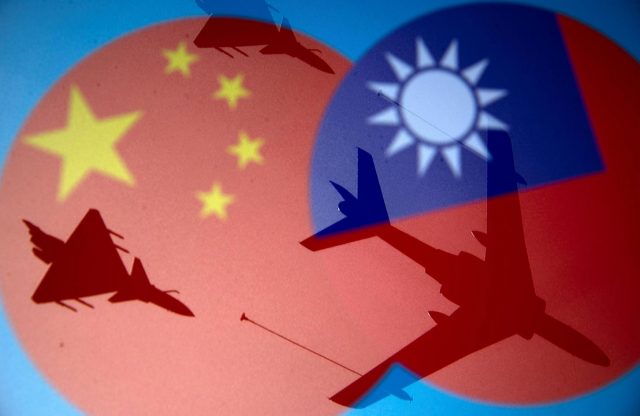
TAIPEI — Taiwan proposed $19 billion in defense spending for next year on Thursday, a double-digit increase on 2022 that includes funds for new fighter jets, weeks after China staged large-scale war games around the island it views as its sovereign territory.

China carried out its largest-ever military exercises around the democratically governed island after a visit this month by US House Speaker Nancy Pelosi. The trip infuriated Beijing, which saw it as an attempt by Washington to interfere in China’s internal affairs.

The overall proposed defense budget by President Tsai Ing-wen’s Cabinet sets a 13.9% year-on-year increase to a record T$586.3 billion ($19.41 billion).

That includes an additional T$108.3 billion in spending for fighter jets and other equipment, as well as other “special funds” for the defense ministry. A statement from the Directorate-General of Budget, Accounting and Statistics did not provide a break down specifics on where the money would go.

The planned defense spending, which is a record high and must be approved by parliament, marks the island’s sixth consecutive year of growth in defense spending since 2017.

The double-digit rise on 2022 marks a sharp increase compared with the island’s defense spending growth in recent years; yearly growth has been below 4% since 2017.

Statistics department minister Chu Tzer-ming said the increase in defense spending will mainly go to operational costs.

“We always give safety and national security the top priority… that’s why (the budget for) operational costs rise greatly,” Mr. Chu said, pointing to costs such as fuel and maintenance for aircraft and ships dispatched to counter Chinese military activities near Taiwan.

Excluding the extra budget for military equipment and funds, proposed defense spending represents a 12.9% year-on-year increase, compared with a 20.8% increase in the overall government budget proposed for next year.

That proposed spending accounts for 14.6% of the government’s total spending for next year and is the fourth-largest spending segment, after social welfare and combined spending on education, science and culture, and economic development.

The island last year announced an extra defense budget of $8.69 billion by 2026, which came on top of its yearly military spending, mostly on naval weapons, including missiles and warships.

In March, China said it would spend 7.1% more on defense this year, setting the spending figure at 1.45 trillion yuan ($211.62 billion), though many experts suspect that is not the true figure, an assertion the government disputes.

China has been continuing its military activities near Taiwan, though on a reduced scale.

Live-fire drills will take place in a coastal part of China’s Fujian province on Friday and Saturday, just north of the tiny Taiwan-controlled Wuchiu islands in the Taiwan Strait, Fujian authorities said on Wednesday, announcing a no-sail zone.

Ms. Tsai has made modernizing the armed forces — well-armed but dwarfed by China’s — a priority.

China is spending on advanced equipment, including stealthy fighters and aircraft carriers, which Taiwan is trying to counter by putting more effort into weapons such as missiles that can strike far into its giant neighbor’s territory.

China has not ruled out using force to bring the island under its control. Taiwan rejects Beijing’s sovereignty claims, saying that the People’s Republic of China has never ruled the island and that only Taiwan’s people can decide their future.

Meeting visiting Japanese academics at her office on Thursday, Ms. Tsai reiterated that the determination to protect their sovereignty, freedom and democracy would not change “due to pressure or threats”.

“At the same time, as a responsible member of the international community, Taiwan will not provoke incidents nor escalate conflicts,” Ms. Tsai said, in comments made live on her social media pages. — Reuters

Canada on track to exceed lofty 2022 immigration target

A PERSON stands in front of a Canadian flag in Montreal, Quebec, Canada, Sept. 20, 2022. — REUTERS

CANADA is on track to exceed its immigration goal of granting permanent residency to more than 430,000 people in 2022, Immigration Minister Sean Fraser said on Wednesday.

Fraser, speaking to reporters in Vancouver, also announced a plan to hire up to 1,250 workers to tackle a record high number of immigration applicants.

Canada, which depends on immigration to drive its economy and support an aging population, has been ramping up annual immigration and has a goal of adding 451,000 permanent residents in 2024.

Prime Minister Justin Trudeau’s government has relied on immigration to boost the Canadian economy since coming to power in 2015, setting an annual target of about 1% of the country’s population.

Official data released earlier this year showed Canada’s population rose to 37 million people in 2021, up 5.2% from 2016, driven mostly by immigration.

By end of July this year, Canada had added more than 275,000 permanent residents, Mr. Fraser said on Wednesday.

“This puts us well on track to exceed our goal of 431,000 permanent residents over the course of this year,” Mr. Fraser said.

With tighter border measures due to the coronavirus pandemic last year, Canada focused efforts on temporary residents already in the country to achieve a target of granting 401,000 foreigners’ permanent residency.

Canada had also processed some 3.73 million temporary residency applications by July, compared with 2.97 million applications during the same period a year ago.

“What we’re seeing right now is a record number of cases come in for applications and record productivity. But still the demand is exceeding our processing capacity for the time being,” Mr. Fraser said.

Mr. Fraser said about 54% of applications were considered in backlog, and the new hires would help to process them and reduce wait times for fresh applicants. — Reuters

As Ukraine war drags on, Russia is a tale of two economies

A GIRL WALKS on the square near the Moscow International Business Center, with a Soviet-era skyscraper seen in the background, in Moscow, Russia, Aug. 12. — REUTERS

IZHEVSK, Russia — Russia’s record employment signals a surprisingly smooth decoupling from the West. Its rapid replacement of McDonald’s and Starbucks says business as usual. Yet pressures are building inside its economic machine.

Six months into the Ukraine conflict, the strategies and struggles of Russia’s biggest automaker offers an insight into the contrasting fortunes of a country striving to withstand what Vladimir Putin calls an economic “blitzkrieg” by the West.

Avtovaz restarted production of its Lada brand this summer after it was halted in March in the face of Western sanctions, supply shortages and the loss of its French partner Renault. It has not formally laid off any of its 42,000 workers.

Nonetheless, the company’s feeling the heat, and it’s shrinking.

The bulk of the 3,200 workers at its factory in the industrial city of Izhevsk — where car production has not resumed — have been furloughed since March, with the company paying two-thirds of their wages, although some staff have been given temporary work around the factory on reduced hours.

This month, the automaker offered all Izhevsk workers one-off payments to quit as it looks to focus more production on its primary plant in Togliatti, 600 km away.

“It’s a choice between bad and terrible,” said Alexander Knyazev, referring to the dilemma over whether to take a 200,000 ruble ($3,400) severance payment or stay in his job in the Izhevsk’s stamped body parts workshop.

Last week he chose to walk away from the factory, which had paid him over 45,000 rubles per month.

“They don’t need so many technicians anymore.”

Asked how many workers had chosen to accept the severance, Avtovaz told Reuters it would disclose the final number after this month, adding that those workers on reduced hours would go back to a five-day week at the plant from Aug. 29.

The company did not elaborate on its plans for Izhevsk, though it said earlier this month it remained committed to the plant, which it said would be retooled to make the first Russian-made electric car, the Lada e-Largus, and would retain service and support functions.

“In the current situation of sanctions pressure and a growing number of variables, we are taking comprehensive measures to maintain employment,” Avtovaz President Maxim Sokolov said at the time.

Ruben Enkipolov, a professor of economics at Moscow’s New Economic School, said the auto sector’s struggles were being masked by “hidden unemployment”, where workers were not laid off but instead placed on indefinite furlough.

He said he expected unemployment to rise towards the end of the year, when he said it would likely become clear that sanctions were unlikely to be lifted in the near future.

“In Russia, economic crises don’t tend to produce mass unemployment because of the specifics of the Russian labor market like the furlough practice,” Enkipolov said.

The Russian economy ministry declined to comment for this article. This month, Economy Minister Maxim Reshetnikov dismissed any talk of a dramatic rise in joblessness, which official data pegged at a record low of 3.9% in June.

“I think that in autumn, we will move away from these record low numbers but let’s not over dramatize, the situation is under control,” he told a conference in Yekaterinburg.

In another sign of official optimism, amid high oil prices and popular policies to cushion the impact of inflation, latest government forecasts indicate the depth of Russia’s economic contraction will be less severe than previously feared this year.

SYMBOL OF SUCCESS
Autos is not the only Russian industry taking a hit from the showdown with the West.

In total, 236,000 Russian workers were either on furlough or reduced hours as of the end of July, according to Deputy Prime Minister Tatiana Golikova. They are not part of officially 3 million people registered as unemployed in Russia.

About half of all air traffic controllers, or 14,000 people, have been furloughed or put on part-time work, for example. Several foreign companies leaving Russia, from Swedish furniture giant Ikea to Spanish fashion chain Zara, have also furloughed staff.

Yet the auto sector has suffered more than most, with passenger car output dropping 62% in the first half of the year versus the same stretch in 2021, according to the state statistics agency.

Global carmakers including Volkswagen, Nissan, Hyundai Stellantis, Mitusubshi and Volvo, suspended their Russian operations and furloughed workers on the statutory two-thirds pay after Moscow launched its military campaign in Ukraine on Feb. 24.

That foreign exodus put more than 14,000 Russian auto workers on leave, according to a Reuters review of the industry.

The future of many of these workers is looking precarious as the conflict continues, a steep reversal for an industry that’s been a symbol of Russian success for decades, attracting foreign players and becoming one of the country’s largest employers.

An auto slump could have far-reaching economic consequences; the industry employed around 400,000 people in 2020, with around 10 times as many workers depending indirectly on the sector, according to government data.

JOBS AT KALASHNIKOV
Avtovaz has sought to adapt since Western sanctions severed Russia from many global supply chains and export markets, launching a series of simplified models with fewer hard-to-source foreign components.

In June, the company began production of a new, stripped-down Lada Granta, which comes without features such as remote keyless control or air conditioning, which rely on imported components.

Nevertheless, sales volumes have fallen by 63% in the first seven months of the year, to 85,000 vehicles, with production of the Lada Vesta, Lada X-Ray and Lada Largus models halted altogether, according to Avtovaz data.

In some places such as Izhevsk, other sectors may be picking up the slack.

Knyazev, who quit Avtovaz in Izhevsk, hopes to get a job at gunmaker Kalashnikov’s factory in the city, the capital of the Udmurtia region, about 1,300 km east of Moscow. Though even then, he said, he would likely be paid a lower wage than at the carmaker.

More than 100 former Avtovaz employees have already been hired by Kalashnikov, according to Tatyana Churakova, deputy prime minister of Udmurtia.

“We are working to do everything possible to arrange for all the employees who may leave the car plant to transfer to our other plants,” Churakova told Reuters.

‘NO ONE KNOWS ANYTHING’
Despite such efforts, half a year after launched its Russia’s “special military operation”, many people in this industrial city are contemplating an uncertain economic future.

Sergei, 58, a manager at the Avtovaz Izhevsk plant who declined to provide his last name, said he himself had decided not to take the severance payment.

“They don’t kick anyone out, whoever wants to stay stays. Many do want to stay,” he said at the factory’s exit gate. “No one knows anything at the moment. No big decisions have been made yet. Everyone is waiting.”

Avtovaz has said it plans to restart production of the Lada Vesta – halted at Izhevsk – at its main assembly plant in Togliatti in spring next year. It did not specify how it plans to secure supplies of parts currently unavailable from abroad due to the sanctions. — Reuters

Bryant widow awarded $16M over crash pics

ALEXANDRA WALT -FLKICKER

LOS ANGELES — The widow of the late basketball star Kobe Bryant was awarded $16 million by a jury on Wednesday over the sharing of photos of human remains at the helicopter crash site where her husband, their 13-year-old daughter Gianna and seven others were killed in 2020, according to multiple media reports.

Vanessa Bryant had sued Los Angeles County, alleging invasion of privacy, after accusing members of the Los Angeles County sheriff’s and fire departments of sharing gruesome images of the crash in unofficial settings, including to patrons in a bar.

Chris Chester, whose wife Sarah, 45, and daughter, Payton, 13, were among those killed in the crash and who joined Bryant’s lawsuit, was awarded $15 million, bringing the total jury award to $31 million.

Ms. Bryant, who was in the Los Angeles federal courtroom when the verdict was read out after an 11-day trial, clasped her face in her hands and wept. She and her attorney declined to speak to reporters as they left the courthouse.

Kobe Bryant, his daughter Gianna and seven other people died in the crash in Calabasas, Calif., on Jan. 26, 2020.

Vanessa Bryant has also filed lawsuits against the helicopter charter company and the deceased pilot’s estate.

The county already agreed to pay $2.5 million to settle a similar case brought by families of others who died in the crash.

Kobe Bryant was 41 when he died. The Los Angeles Lakers great and 18-time All-Star won five NBA championships and was elected to the Hall of Fame in 2020. — Reuters

Franchising platform sees signs of ‘revenge business’ among OFWs 

EASYFRANCHISE.COM

There are signs of “revenge business” on Easy Franchise, an online franchising platform. “We’re seeing a resurgence of people getting franchises,” said cofounder Rene “RJ” A. Ledesma, Jr.  

“A lot of OFWs (overseas Filipino workers) are investing and putting up franchises in their home provinces because many of them have contracts they know will expire in the future,” he told BusinessWorld in an Aug. 23 email. OFWs are reinvesting now so that their businesses will be operational by the time they get back home, he added.   

Essential services like water refilling stations and laundromats received the most interest. 

Easy Franchise is hosting a franchise sale on Aug. 28. Similar to double-digit sales days such as 10/10, 11/11, and 12/12, the event offers promos and discounts exclusive to the platform 

“Promos are already up to give people time to make a decision,” he said.  

Participating brands include Mister Donut, Cha Tuk Chak, H20 MineralPlus, Samgyup Express, Cycle House, and Lavada. 

Prior to the pandemic, the franchising industry contributed 7.8% to the country’s gross domestic product, according to the Philippine Franchise Association. — Patricia B. Mirasol

A coup of their own

FILIP ANDREJEVIC-UNSPLASH

The Philippines has had enough of the political crises triggered by the half-a-dozen attempted coup d’états against the Corazon Aquino administration (1986-1992) to last a lifetime.

But the next coup that should worry pro-democracy Filipinos will not be in this country — at least not yet. Some commentators are saying it is already happening — and in a most unlikely place: in the United States of America, which over the past 76 years has engineered “regime change” and instigated coups of its own against a number of governments in Asia, Africa, and Latin America.

None of the foreign groups the US despises so much but a home-grown one is the source of the threat. No longer the same party of which Abraham Lincoln, who abolished slavery in 1865, was a leading member, the Republican Party (GOP — shorthand for Grand Old Party) of former President Donald Trump, said Washington Post columnist George Will, is “an insurgency,” and a “neo-fascist” organization, according to Massachusetts Institute of Technology (MIT) Emeritus Professor Noam Chomsky. It is in the middle of a campaign to seize total power by 2024, when Trump is likely to run for a second term.

Social critic Chomsky has described the campaign Trump and his allies are orchestrating as “a soft coup” intent on a Trump victory in 2024 regardless of whether he gets the necessary number of votes or not. The conspirators are concentrating on winning this year’s Nov. 8 midterm elections for Congresspersons and governors who would then appoint state officials who can be relied on to disenfranchise likely anti-Trump voters and manipulate the numbers so Trump can again be President.

They are making sure that their candidates in November do not only believe that the 2020 elections Trump lost to Joseph Biden were fraudulent, but are also diehard Trumpists. Trump endorsed for the GOP primary elections (which decide who will be its candidates in the midterm elections) only those party members who fit that category, while fulminating against the few Republicans who have dared challenge his claim that he won the 2020 Presidential elections.

One of the most prominent of the latter is Wyoming Representative Liz Cheney, the daughter of Richard Cheney, who was US Vice-President from 2001 to 2009. A conservative like her father, Cheney has a voting record in the House of Representatives of supporting Trump, but was among the 10 Republicans who voted with the Democrats to impeach him a few days before the end of his term in January 2021 for “inciting an insurrection” to prevent the official declaration of Joseph Biden as the 46th President of the United States. She is also the Vice-Chair of the bipartisan January 6th House Committee investigating the violent attempt on that date to keep Trump in power.

Her refusal to support Trump’s claims that he won a second term in 2020 and her constant warning to the US public of the threat to democracy posed by Trump and his fact-resistant, neo-fascist, and white supremacist supporters cost her seat in Congress. She is still the lone Wyoming Representative, but only until the end of the year, because she lost the GOP primary elections last week to a supporter of Trump’s “big lie” about the 2020 elections.

In testimony to the continuing hold of Trump on the GOP, most of those he supported won or are likely to win the party’s primaries. They will face Democratic Party candidates in the midterm elections, which are likely to result in the GOP’s regaining control of Congress, or at least the House of Representatives. Trump’s base among non-college graduate white workers is still intact, while Biden’s approval rating is at an abysmally low 41%. A GOP win this November would help Trump recapture the White House in 2024.

The January 6th 2021 attack by an armed mob of Trump supporters on the US Congress, in which the lives of its members and that of Vice-President Mike Pence were imperiled, and some police officers killed and injured, was encouraged by Trump.

It was a coup attempt that tried to prevent the peaceful transfer of power, say analysts, and if it had succeeded it would have undermined the rule of law and the US Constitution. Some observers have gone even farther: they look at that incident as an attack on US democracy, which they say is “hanging by a thread” because of Trump and company’s continuing efforts to return to power at whatever cost.

Trump is facing a veritable legion of legal problems, ranging from allegations of tax fraud to unlawfully keeping in his Florida home classified documents vital to US national security. But those cases are likely to take some time to resolve, and could very well be dismissed should he succeed — through fair means or foul — in getting a second term, because the President is immune from suits arising from the performance of their official duties. Hence Trump’s focus on laying the groundwork now to assure his victory in 2024.

Whatever happens in the US will eventually have an impact on much of the world including the Philippines. But whether it is the Democrats or the Republicans who are in power does not make much of a difference in US foreign policy. That policy is primarily focused on preventing the rise of any other power that could challenge its global hegemony, part of which demands that countries such as the Philippines remain in its sphere of influence.

Despite the Democrats’ supposedly more enlightened perspectives, in furtherance of US strategic interests another Congressional delegation visited Taiwan only 17 days after the visit there of House Speaker Nancy Pelosi. Both contradict the “One China” principle enshrined in the 1972 Zhou Enlai/ Richard Nixon Shanghai Communique. Contrary to the supposed centrality of human rights in his foreign policy, Biden himself visited Saudi Arabia a month ago despite the apparent involvement of some of its highest officials in the 2018 murder of journalist Jamal Kashoggi in the Saudi consulate in Istanbul, Turkey.

But as starkly demonstrative of the arrogance of power as those acts are, so can it be claimed that the seizure of power by a blatantly authoritarian, anti-immigrant, and racist regime could lead to, say, even harsher restrictions on immigration to the US as well as the further encouragement of hate crimes against people of color.

An even more aggressive US policy that could lead to a devastating war with China over the Taiwan question and/or the West Philippine Sea issue is also possible under such a regime. So is diminished support for global initiatives to address climate change — Trump and his minions think global warming is a hoax— as well as even less attention to the human rights record of authoritarian regimes while increasing military aid for them as long as they support the US against its Russian and Chinese rivals.

Like any coup in the less developed countries of the Third World, a coup in the US, even a “soft” one, would also be solely focused on advancing and defending the interests of its instigators and of the wing of the power elite it installs in power. The rest of the world would hardly matter.

But what is happening in the domestic politics of the United States has been largely unremarked in these isles and elsewhere. The next two years may prove that parochial indifference problematic, even catastrophic, for the Philippines and for much of the globe.


Luis V. Teodoro is on Facebook and Twitter (@luisteodoro).

www.luisteodoro.com

Najib: a case of being first

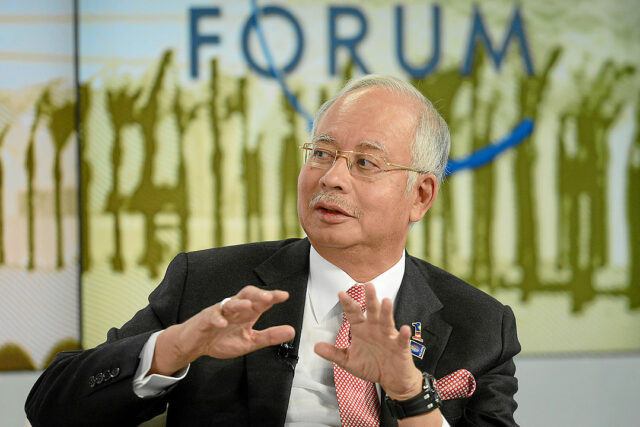
Najib Razak — WORLD ECONOMIC FORUM/WIKIPEDIA

I got a close look at Dato’ Sri Haji Mohammad Najib bin Tun Haji Abdul Razak, Malaysia’s 6th prime minister, in one of those official functions of Malaysia’s government led by then Prime Minister (PM) Dato’ Seri Dr. Mahathir bin Mohamad, its 4th and then 7th head of state. From 1992-94, we served as research head of the Southeast Asian Central Banks (Seacen) Research and Training Center based in Kuala Lumpur. We could only be impressed by what we thought was a very orderly succession of leaders in Malaysia.

From the first PM, Tunku Abdul Rahman, to the 4th PM, Mahathir, the succession was straightforward. The successors were their deputies who were appointed to various ministries for well-rounded exposure to state governance. Being under a parliamentary system, the legislators were responsible for the execution of the national vision.

At that time, the fast-rising Dato’ Seri Anwar bin Ibrahim, then finance minister and deputy PM, was widely considered Mahathir’s heir apparent.

But Mahathir and Anwar fell out on political succession, a shock to the otherwise sedate politics in this charming monarchial country of 13 states and three federal territories. Mahathir stripped Anwar of all his posts in 1998 and in the following year he was jailed for alleged sodomy and corruption. Emerging as the opposition leader, he was released five years later when his conviction was reversed by the High Court. Anwar was imprisoned again, and while detained rejoined Mahathir’s new coalition and helped in Mahathir’s 2018 victory. He received a royal pardon, his ticket to run again for Parliament.

What motivated Mahathir’s return to politics was his successors in Tun Abdullah bin Ahmad Badawi and Najib as Malaysia’s 5th and 6th leaders. Badawi was a loyal Mahathir follower but his leadership was tainted with alleged corruption, cronyism and poor performance in curbing it. Mass support of the ruling party was dwindling. In addition, he was openly biased towards Malaysia as an Islamic state. Chinese and Indian Malaysians believe that the country is a secular state that transcends religion.

In the case of Najib, he served as minister of defense twice, education minister during the Asian Financial Crisis, and finance minister during the Global Financial Crisis. As Badawi’s deputy, Najib succeeded him as the 6th PM from 2009-2018. His paternal provenance is unquestionable. The son of Abdul Razak, Malaysia’s 2nd PM, founding father of ruling coalition Barisian Nasional and pioneer of the Malaysian New Economic Policy, Najib had what it takes to succeed and continue his father’s legacy of integrity and leadership.

But Najib blew it.

In 2018, Malaysian police raided Najib and his wife Rosmah’s homes as part of the investigation of Malaysia’s sovereign wealth fund 1Malaysian Development Berhad’s (1MDB) financial scandal. They recovered 284 boxes containing luxury handbags and 72 bags overflowing with jewelry, cash, watches, and other valuables. Najib was subsequently convicted in July 2020 on seven counts converging on the transfer of public funds to his own private bank account. He was sentenced to serve 12 years and fined nearly $47 million. Najib appealed to delay serving his sentence.

But justice in Malaysia is fast and furious. A few days ago, after just two years, the High Court finally denied Najib’s appeal as he continued to deny any wrongdoing. It was obvious the Court did not give weight to, one, his defense that the fund transfer came from the Saudi royal family’s donation, and, two, he was misled by alleged fugitive financier Jho Low. The Court ruled that Najib’s appeal as “devoid of any merits,” claiming that the defense was internally inconsistent and failed to raise reasonable doubt.

The tell-tale signs have been undeniable.

Najib co-founded 1MDB in 2009 after assuming the PM post. Aside from those found in his homes, Najib was also reported to have acquired a Picasso painting, a jet, a superyacht, and hotels. The US lawsuit also claimed that 1MDB funds were used to finance a 2013 Hollywood film The Wolf of Wall Street.

Thus, as early as 2015, six years into his leadership of Malaysia, Najib was already reported in social media as a multibillionaire in ringgit. He became one of Forbes’ 50 richest in Malaysia.

Tracing bank transfers from various sources, including a private Swiss bank in Singapore and a finance corporation based in the British Virgin Islands, The Wall Street Journal and Sarawak Report documented them with actual bank account numbers. The trouble was that these fund transfers ended up allegedly in Najib’s own account at a private bank in Kuala Lumpur.

And yes, the ultimate source: 1MDB! Originally formed to “drive strategic initiatives for long-term economic development” of Malaysia, it is a public limited company engaged in energy, tourism, real estate, and agri-business. Beyond that, 1MDB was exposed to big-ticket, high-profile projects.

At the same time that those funds were allegedly funneled into Najib’s account, 1MDB had raised suspicion that it was also engaged in money laundering, fraud, and theft. No less than the US Justice department claimed that some $3.5 billion was stolen from the state-owned fund, later escalated to $4.5 billion.

What is intriguing is that 1MDB must have covered these fund transfers also from loans reaching $7.8 billion, later adjusted to $12 billion. This is one of the problems with a state-owned wealth fund. It is normally authorized to receive capital infusion from the government and to borrow to beef up its funds. It cuts both ways: it sucks money from the budget and bloats the state’s liabilities for private gains.

But even without a wealth fund, the same malfeasance could be committed. The government undertakes big infrastructure projects funded from the budget, and more often than not, these are supplemented by large borrowing. If bribery, kickbacks, or commissions are involved, the proceeds could ultimately accumulate in the bank accounts of the public official.

People in the know suspected that the 1MDB scandal could not have happened without the collusion of some international investment banks. As BBC reported three years ago, Goldman Sachs “helped raise $6.5 billion for the Malaysian development fund, advising on three bond offerings in 2012 and 2013.”

Malaysian prosecutors also alleged the embezzlement of some $2.7 billion for bribery and purchase of luxury goods. This was later confirmed when the Goldman lead banker pleaded guilty in US court of participating in bribery and money laundering. This was the basis for Malaysia’s attorney general to charge the investment bank with dishonest appropriation of the sovereign wealth fund.

This specific case is just one of Najib’s first five trials. There are other charges that he would have to face involving the disposition of 1MDB funds as well as allegations of audit tampering. Prosecution of these cases would take time because Najib has pleaded not guilty.

To answer the question in the minds of many, the prospects for a reversal of the conviction are almost impossible, Anwar commented in a recent CNBC interview. He must know because his own previous conviction never stood a chance. Anwar also suggested a possible clemency from the Malaysian king, the Yang di-Pertuan Agong. But this route must be ruled out because the “financial impact of the 1MDB scandal” is just too consequential.

With his conviction, Najib chalks up a couple of firsts in the political history of Malaysia. He is the first PM to have been convicted and jailed for a criminal offense namely, corruption, abuse of power and money laundering. Political connections in Malaysia may still work but in this prominent case, Anwar warned that Najib should be prepared. “Prison … is tough, particularly compared to Najib’s lifestyle of seven-star hotels.”

Najib, as a convicted offender, is also the first PM to be prohibited from running for public office again. He is definitely disqualified as a candidate for Malaysia’s next general election in September next year. No one could argue that his four decades as a member of Parliament should count for something. He should have added to the illustrious legacy of his father as a public servant, rather than tarnishing it.

Through all the drama, the Philippines is challenged by the Malaysian justice system by proving its independence from politics, that Malaysia adheres to the rule of law. Based on media reports, many Malaysians “really wanted Najib to go to jail.” One can therefore claim that the biggest winner is the Malaysian people.

Writing a footnote about Najib’s “firsts” experience will be tricky. It will depend on those whom he will be leaving behind as he serves time in Kajang prison. As someone said, in life we pursue not conclusions but beginnings.


Diwa C. Guinigundo is the former deputy governor for the Monetary and Economics Sector, the Bangko Sentral ng Pilipinas (BSP). He served the BSP for 41 years. In 2001-2003, he was alternate executive director at the International Monetary Fund in Washington, DC. He is the senior pastor of the Fullness of Christ International Ministries in Mandaluyong.

People need to get back to the office

PETR MAGERA-UNSPLASH

Writer Malcolm Gladwell found himself an outlier when he commented on the need for people to get back to working in the office. Of course, in today’s world of the easily offended, such incredibly ordinary, commonsensical statement generated a ton of outrage.

Speaking to Steven Bartlett, host of the podcast Diary of a CEO, Gladwell pointed out that while “it’s a hassle to come into the office, but if you’re just sitting in your pajamas in your bedroom, is that the work life you want to live? Don’t you want to feel part of something?”

The problem is that “people in positions of leadership [are failing] to explain this effectively to their employees.” Hence, Gladwell laments, “as we face the battle that all organizations are facing now in getting people back into the office, it’s really hard to explain this core psychological truth, which is we want you to have a feeling of belonging and to feel necessary.”

Of course, it didn’t help that Gladwell has publicly professed his preference for working at home and his aversion to office desks. In a 2020 article for the Wall Street Journal, he admitted that most of his writing was done in coffee shops.

But that is neither here nor there: Gladwell is a writer and writing is oftentimes a solitary business. For most people, however, working in an office is just simply the better way.

Professional business consultant Liz Campbell wrote of “Four reasons why the office environment is still key to employees” (July 2021):

1. You can benefit from the culture of your organization — It is also much easier to create a culture of support and personal development when you have employees of all levels in the same space. An office space is often at the heart of your business culture.

2. It helps to maintain a healthy work-life balance — Even if you love your job, it’s not healthy to feel like you’re working during every waking hour.

3. The quality of your workplace is assured — For many, the office also offers an escape from distractions. Home-based working can often mean having to contend with spontaneous interruptions, whether that’s pets, children, or deliveries arriving at your door.

4. It’s easier to build relationships — Being in the office allows employees to connect with people they may not interact with daily. These spontaneous conversations over coffee or while passing in a corridor are hugely valuable. These moments can provide people with context about the business, sounding board advice, new ideas, collaboration opportunities.

Another important benefit of working in the office, according to workplace consultant Ashley Skinner (“Why your people still need the office,” February 2022), is that mentoring becomes much more effective: “In the office, managers can more easily spot the visual cues for when an employee needs that little bit of extra support. Bringing employees together in the workplace is also key to creating something called ‘osmosis learning.’ The 70-20-10 rule posits that 70% of learning happens through experience, 20% comes from observing colleagues and friends, and only the final 10% is down to formal training.

“Our survey throws weight behind these findings. When asked to rank the reasons they’d like to return to the office, ‘learning from others’ and ‘career progression’ were two of the top three answers. Exposure to senior staff is undoubtedly a key factor in supporting career development.”

The Gensler Research Institute’s 2020 US Work From Home Survey found employees feeling a deeper sense of isolation when working from home. Asked what are the top reasons workers want to come to the office: “Three out of four respondents said the people. When asked to rank the most important factors for wanting to come into the office, meetings with colleagues, socializing with people, and impromptu face-to-face interaction were the top three answers.”

Finally, and this reason may be the least popular but undoubtedly the most significant, is that people shouldn’t let themselves be too comfortable. Columbia law professor Tim Wu writes of “The tyranny of convenience” (February 2018): “We err in presuming convenience is always good, for it has a complex relationship with other ideals that we hold dear. Though understood and promoted as an instrument of liberation, convenience has a dark side. With its promise of smooth, effortless efficiency, it threatens to erase the sort of struggles and challenges that help give meaning to life. Created to free us, it can become a constraint on what we are willing to do, and thus in a subtle way it can enslave us.”

Doubtless rising transportation costs presents a problem but an even bigger problem is complete loss of income when one’s employment is closed due to lessened productivity. The simple fact is: working from home is not a viable long-term arrangement.

Like students that clearly need to go back to the classroom, those working need to go back to the office.


Jemy Gatdula is a senior fellow of the Philippine Council for Foreign Relations and a Philippine Judicial Academy law lecturer for constitutional philosophy and jurisprudence

www.facebook.com/jigatdula/

Twitter @jemygatdula

Quiet Quitters are looking in the wrong place for meaningful work

OLIVER SCHWENDENER-UNSPLASH

IF YOU EXPECT your job to give your life meaning, you’re setting yourself up for failure. There was a time when a job was just an economic transaction: Someone paid you for your labor and that enabled you to live and support your family. But for a variety of reasons, many workers today expect more. They want purpose and meaning from their work. And if they don’t find it, some are leaving jobs, or just putting in minimal effort for their paycheck.

This is a costly mistake, though I understand why it’s tempting. I love my job and find it incredibly rewarding. I wish the same for everyone else. But I didn’t always find my work especially meaningful. Job satisfaction doesn’t come easy; it’s something you achieve over time as you gain skills and status in your field.

My best advice to you if you’re looking for a job is to just go for the money — or the chance to learn something new, or the work-life balance you need — and steer clear of any employer that touts a mission or promises to give your life purpose. Such promises lead to disappointment, more than anything. If that sounds craven, then the better solution is to adjust your definition of what you find meaningful.

Employers have been forced to compete for workers as recent labor shortages grew more intense. To help their recruiting, several consulting firms surveyed workers to find out what they’re looking for in a job. And those surveys show it’s not about the money; workers today are looking for more meaning. One survey found workers would take a 23% pay cut for a job they find meaningful.

There are a lot of different ways people define “meaning” in their jobs, but a popular answer is work that serves a higher purpose. It’s not surprising that the need is most pronounced in young people, some of whom have begun to brag on social media about “quietly quitting” — which is to say, shirking on jobs they don’t deem worthy of additional effort. Outgoing Whole Foods CEO John Mackey recently complained that younger people weren’t working as hard because they’re demanding meaningful jobs before they’ve earned them.

That perceived “lack of meaning” isn’t because the current younger generation is more idealistic than its predecessors, but because early-career jobs involve lots of grunt work that often feels pointless. Developing skills can be an unpleasant process, full of boring tasks that are needed to gain mastery, and with inevitable failures that feel frustrating and humiliating at times. It’s hard to find meaning while you’re endlessly slugging back coffee or staying up nights obsessing about the font on someone else’s PowerPoint presentation. But this is how you learn skills like customer service, time management, and negotiating workplace culture.

So early jobs are not that different. What may have changed is the expectation that every job is supposed to be meaningful in a particular save-the-world way.

Those new expectations are a reflection of a world that has changed, especially recently. Working from home means less time kibitzing with colleagues, which leaves more time to question what the point of it all is. Work also feels less meaningful if you don’t feel like part of a team because you don’t see yourself helping your coworkers. A tight labor market also means people can be a little fussier about what job they choose to do.

There are also bigger cultural shifts that have been brewing for decades. MBAs don’t want to be Gordon Gekko anymore, they want to be Bill Gates (at least, during his philanthropy stage). Many tech firms promise workers a mission to make the world a better place, and that sounds compelling. And all over the country, many people are less connected to their communities or churches, and now their job has to fill that void.

This is not just economically inefficient; jobs with lofty missions and promises of spiritual fulfillment often lead to frustration. In reality, a big part of job satisfaction comes from feeling like there is a path for advancement. That’s one reason the military (where keeping up morale is especially critical) has such rigid and clear paths forward. If you work at a company where the mission is earning a profit, the metrics to advance are clear.

When the mission is fuzzier, advancement becomes more arbitrary, and that can be a morale killer. Take the online shoe store Zappos, which once promised to provide purpose — to be the kind of place you’d even work for free. Eventually the culture became toxic because employees didn’t have a sense of what success meant or what they needed to do to advance.

Consider this: While McKinsey’s survey found workers want to find meaning in their jobs, the industry with one of the highest rates of attrition is non-profits.

Employers need to make hard choices to stay in business. That may mean working with a customer who doesn’t fit your moral standards, or avoiding contentious political issues. It may mean moving some jobs abroad where labor is cheaper. These choices are understandable when the mission is profit. But if the mission is making the world a better place, every employee will have different ideas of what’s acceptable (especially if you take less money and are working very long hours in service of this mission). Then, it’s hard not to take everything personally, which leads to a much more toxic culture.

Most of us spend a large share of our lives at work. It’s important to feel a sense of purpose and to be motivated by what we do. But what few people will tell you is that meaning doesn’t come from a mission to change the world. People feel valuable when they can apply their skills to solve problems. Sometimes that satisfaction come from solving the world’s big problems, but more often it’s conquering the little ones. People who report high levels of job satisfaction often aren’t working at cool startups or NGOs — you’ll find them at all kinds of jobs, like truck driving.  They do their jobs well, apply their skills and are paid accordingly — it’s not complicated.

All jobs are meaningful. If someone pays you to do something it has value. And if a desire for a job with a big mission that will give your life meaning prevents you from working hard or staying in a job long enough to develop skills, you will not only earn less money, you will never find what you are looking for.

BLOOMBERG OPINION

1 in 4 Filipino households own bikes — SWS

GREENPEACE/JILSON TIU

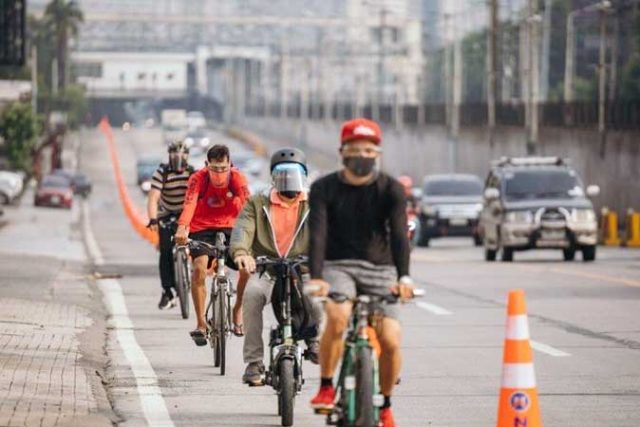
About one in four Filipino households nationwide owned bikes as of April 2022, according to a Social Weather Stations (SWS) survey — up from one in five in May 2021.  

The “Bicycle Ownership, Usage, and Attitudes of Filipino Household Heads on Cycling as Transportation” survey also found that there were more bicycle owners than car owners nationwide. The ratio of bike-to-car owners was 5:1 in the National Capital Region (NCR), 4:1 in areas in Luzon outside Mega Manila, 2:1 in Visayas, and 3:1 in Mindanao.  

According to the survey, three out of 10 households are cycling households, or households that have at least one household member who uses a bike for either essential or recreational activities.  

Cycling households rose to 7.3 million in April 2022 from 6.2 million in May 2021 while non-cycling households decreased to 18.2 million from 19 million in the same period. 

“If you ask me, this is good news,” said Christian Michael C. Entoma, a senior survey specialist at SWS, at an Aug. 24 event. “[This means] more household members are using bikes.”  

Cycling households can further be broken down into those that own bicycles (23% or an estimated 5.8 million) and those that use borrowed bicycles (6% or an estimated 1.5 million). Both groups did essential and recreational activities at a 1:1 ratio.  

Essential activities include grocery store runs and going to and from work. Recreational activities include sightseeing and exercising. 

Three of out four (or 75%) of household heads, moreover, agreed with the statement “cycling is just as effective as other types of transportation in going to different places.” Meanwhile, 80% or four out of five agreed with the statement that “more people will use bicycles as transportation if the roads will be safer for them.”  

Philippine roads now obey the “law of the jungle,” which allows cars to bully cyclists and pedestrians alike, according to Mr. Entoma. “Dadaanin sa laki [Might makes right],” he said. 

According to Robert Y. Siy, Jr., co-convenor of Move As One Coalition, which advocates for inclusive public transportation in the Philippines, the survey is a “loud and clear” message to policymakers. 

“Very often the mindset is that the road is for the car, and any residual space is for pedestrians and cyclists,” he said. “We need to make the argument that our roads need to be democratized… [The survey] is an evidence-based argument for why we need safer spaces for cycling.”  

“I hope we can use this to convince budget managers to spend more for cycling infrastructure,” he added.  

The Department of Public Works and Highways has rolled out 1,778 kilometers of bike lanes in the Philippines, according to the Move as One Coalition policy research team

The SWS survey was conducted between April 19 and 27 and had a sample size of 1,440. — Patricia B. Mirasol

Taiwan to deploy drone defense systems after rock-throwing video emerges

CHESS PIECES are seen in front of displayed China and Taiwan’s flags in this illustration taken Jan. 25, 2022. — REUTERS
REUTERS

TAIPEI — Taiwan will next year begin deploying drone defense systems on its offshore islands, the defense ministry said, after footage emerged of Taiwanese soldiers throwing stones at a Chinese drone that buzzed a guard post near China’s coast. 

Taiwan has complained of repeated Chinese drone incursions near its offshore islands as part of China’s war games and drills after US House Speaker Nancy Pelosi’s visit to Taipei this month, which infuriated Beijing. 

China claims democratically governed Taiwan as its own territory, despite the strong objections of the government in Taipei. 

The brief video clip, circulated first on Chinese social media before being picked up by Taiwanese media, shows two soldiers throwing stones at a drone that got near their guard post. 

In a statement late Wednesday, the defense command of Kinmen, a group of Taiwan-controlled islands that sit opposite China’s Xiamen and Quanzhou cities, said the incident occurred on Aug. 16 on Erdan islet, and confirmed the soldiers had thrown stones to see off what it called a civilian drone. 

Taiwan’s defense ministry said in a separate statement that starting next year it will deploy anti-drone systems, which will first be placed on the smaller islands. 

“Officers and soldiers at all levels will continue to implement vigilance in accordance with the principle of “not escalating conflicts or causing disputes,” it added. 

China has not commented on the footage, which has received millions of views on Chinese social media with users making fun of it. 

It has also triggered heated discussion in Taiwan, with some social media users calling the incident a “humiliation” for the island’s armed forces and urging the defense ministry to step up its countermeasures to the increasingly frequent drone incursions. 

The Kinmen defense command said the footage was another example of China’s “cognitive warfare” against Taiwan and an attempt to “denigrate” its armed forces. 

Wang Ting-yu, a senior lawmaker of Taiwan’s ruling Democratic Progressive Party, described the incident as “very serious” and questioned why Taiwan’s defense ministry did not respond to the incursion. 

“The drone was flying on top of our soldiers on guard but there’s zero response,” he said. “If you just let them come and go freely, this was negligence of duty.” 

Taiwan has controlled Kinmen, along with the Matsu islands further up China’s coast, since the defeated Republic of China government fled to Taipei after losing a civil war with Mao Zedong’s Communists in 1949. 

At its closest point, Chinese-controlled territory is only a few hundred meters from Kinmen. — Reuters

Outsourcing Philippines: A game changer for startups and SMEs

PHOTO COURTESY OF PITON GLOBAL

For entrepreneurs, launching a startup or running a small or medium-size enterprise (SME) can be the attainment of a dream. But once the many challenges associated with operating and growing that business set in, the dream might morph into a nightmare.

“The harsh reality is that no matter how much experience and business acumen a person brings to the table, the time-consuming problems and persistent issues can seem insurmountable,” says Ralf Ellspermann, CEO of PITON-Global, a leading mid-sized outsourcing provider in the Philippines.

To complicate matters, owners of SMEs are facing the challenge of maximizing operating efficiencies, hiring and retaining staff during the Great Resignation, and the pressures of reducing costs and turning a profit, especially when investors and shareholders demand a solid return on their investment.

But of all the challenges facing a young business, poor cash flow, insufficient capital, and high operating cost are the three that can easily take a company down. In fact, more than a third of SMEs that don’t survive cite insufficient cash flow as the main reason.

To avoid falling into a money pit, many companies cut costs by outsourcing their contact center requirements overseas. And to best do this, American companies of all sizes turn to the call center outsourcing capital of the world, the Philippines.

Companies must provide round-the-clock, omnichannel customer service and technical support to compete in today’s digitally driven, customer-centric business environment. An excellent customer experience is often the only distinction between brands in a fiercely competitive business landscape.

Outsourcing to the Philippines assures customers that assistance is available whenever they need it. Setting up an in-house contact center can be an expensive venture. Agent salaries and benefits alone add up quickly. Factor in leased office space, software and hardware, employee training, and resources like phone systems and office supplies, and setting up an in-house operation is just not economically feasible for most startups and SMEs.

Since the costs of call centers in the Philippines can be 40-50% lower than those in the US, outsourcing customer support to the Philippines is a logical cost-cutting solution for American companies.

In just 20 years, the Philippines has eclipsed India to become the go-to country for call center outsourcing. It is now the world’s largest contact center outsourcing destination, with over 800 call centers employing up to 1.3 million Filipinos. The outsourcing industry generates more than US$28 billion in annual revenues, which accounts for 8% of the country’s GDP.

The call center outsourcing industry in the Philippines offers startups and SMEs many advantages over operating an in-house facility or outsourcing to onshore providers. A young, skilled, and highly educated workforce, access to cutting-edge technology and world-class infrastructure, and a substantial English-speaking population are highly valued attributes prized by American companies.

Most importantly, by outsourcing to the Philippines, US companies can cut their labor costs by a whopping 60%. Whereas an American call center agent can earn up to US$30,000 a year, the same worker in the Philippines earns an annual salary of US$12,000.

Additionally, the cost of front- and back-office support in the Philippines can be 40-50% lower than in the US. Outsourcing operations to the Philippines can significantly reduce operating costs for start-ups and SMEs, savings that can be funneled into other business growth strategies such as product diversification and expansion, market penetration, and extending an online footprint.

Outsourcing to the Philippines provides startups and SMEs a quick, affordable, and proven way to scale up successfully, grow service capacities, and set themselves up for long-term success. “While outsourcing to the Philippines can’t solve all the pain points facing new businesses, the savings from reduced labor costs alone make it a game changer and, in many ways, a lifesaver for small companies struggling to survive,” says Ellspermann.


Spotlight is BusinessWorld’s sponsored section that allows advertisers to amplify their brand and connect with BusinessWorld’s audience by enabling them to publish their stories directly on the BusinessWorld Web site. For more information, send an email to online@bworldonline.com.

Join us on Viber to get more updates from BusinessWorld: https://bit.ly/3hv6bLA.