Home Blog Page 5580

Peso slides to record low, boosting case for bigger hikes

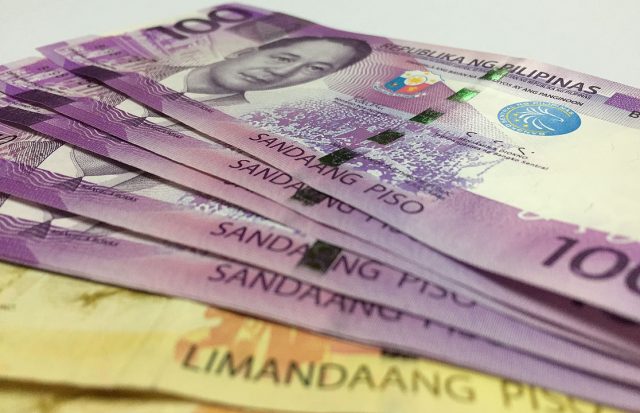
The peso tumbled to a record low, boosting pressure on the central bank to raise interest rates more aggressively to stem the slide.

The currency on Friday weakened beyond its previous all-time low set in 2004 after surging imports widened the trade deficit to an all-time high in June. The peso has also come under pressure due to the increasing divergence between the hawkish Federal Reserve and a local central bank that has signaled it may slow the pace of interest-rate hikes.

“We see the peso facing further weakness as imports increase, while exports are dragged down by weakening Chinese demand, widening the trade deficit,” said Trinh Nguyen, a senior economist at Natixis SA in Hong Kong. “A hawkish Federal Reserve also puts pressure on the peso, which means the central bank has to respond with jumbo hikes to arrest the slide.”

The peso slid as much as 0.9% to a record 56.90 per dollar, extending this year’s decline to 10%. The currency is the third worst performer in Asia in 2022, after the yen and South Korean won.

The peso may weaken to 57 per dollar by year-end, Natixis’ Ms. Nguyen said.

The benchmark Philippine stock index rose 0.8%, though the gauge is still heading for a weekly decline of 1.7%.

The Philippine central bank may slow the pace of tightening after a series of interest-rate hikes have likely contained inflation, Governor Felipe M. Medalla said in August. Policy makers are more likely to deliver one or two 25 basis point increase for the rest of the year, he told reporters. That was after the Bangko Sentral ng Pilipinas raised its benchmark by 50 basis points on Aug. 18.

Mr. Medalla is scheduled to speak at a Reuters event on Friday.

Emerging-market currencies are weakening across the board as Fed interest-rate hikes bolster the dollar, spurring central banks to drain hundreds of billions of dollars from their reserves to slow the declines. Philippine stock outflows are also adding to pressure on the peso, as overseas investors have sold a net $1 billion of local equities this year. — Bloomberg

Putin denies Gorbachev a state funeral and will stay away

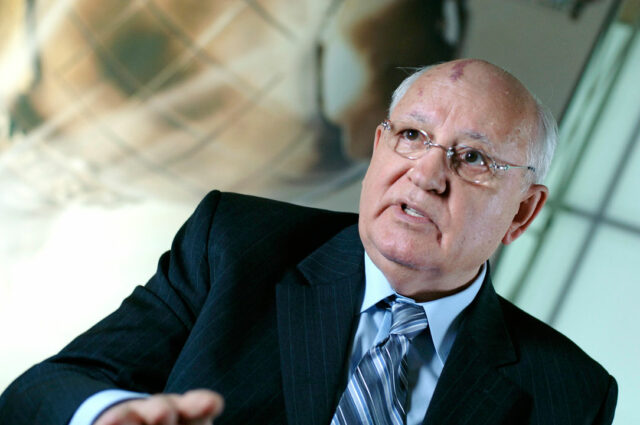
Former Soviet Union President Mikhail Gorbachev in May 2008. — European Parliament/Pietro Naj-Oleari

Russian President Vladimir Putin is to miss the funeral of the last Soviet leader, Mikhail Gorbachev, denying the man who failed to prevent the collapse of the Soviet empire the full state honors granted to Boris Yeltsin.

Gorbachev, idolized in the West for allowing eastern Europe to escape Soviet communist control but unloved at home for the chaos that his “perestroika” reforms unleashed, will be buried on Saturday after a public ceremony in Moscow’s Hall of Columns.

The grand hall, within sight of the Kremlin, hosted the funerals of Soviet leaders Vladimir Lenin, Josef Stalin and Leonid Brezhnev. Gorbachev will be given a military guard of honor — but his funeral will not be a state one.

State television on Thursday showed Mr. Putin solemnly placing red roses beside Gorbachev’s coffin — left open as is traditional in Russia — in Moscow’s Central Clinical Hospital, where he died on Tuesday aged 91.

Mr. Putin made a sign of the cross in Russian Orthodox fashion before briefly touching the edge of the coffin.

“Unfortunately, the president’s work schedule will not allow him to do this on Sept. 3, so he decided to do it today,” Kremlin spokesman Dmitry Peskov told reporters.

He said Gorbachev’s ceremony would have “elements” of a state funeral, and that the state was helping to organize it.

Nevertheless, it will be a marked contrast to the funeral of Yeltsin, who was instrumental in sidelining Gorbachev as the Soviet Union fell apart and hand-picked Mr. Putin, a career KGB intelligence officer, as the man most suited to succeed him.

When Yeltsin died in 2007, Mr. Putin declared a national day of mourning and, alongside world leaders, attended a grand state funeral in Moscow’s Cathedral of Christ the Saviour.

Russia’s intervention in Ukraine appears aimed at reversing at least in part the collapse of the Soviet Union that Gorbachev failed to prevent in 1991.

Gorbachev’s decision to let the countries of the post-war Soviet communist bloc go their own way, and East and West Germany to reunify, helped to trigger nationalist movements within the 15 Soviet republics that he was powerless to quell.

Five years after taking power in 2000, Mr. Putin called the breakup of the Soviet Union “the greatest geopolitical catastrophe of the 20th century”.

It took Mr. Putin more than 15 hours after Gorbachev’s death to publish a restrained message of condolence that said Gorbachev had had a “huge impact on the course of world history” and “deeply understood that reforms were necessary” to tackle the problems of the Soviet Union in the 1980s.

Gorbachev’s foundation said the funeral would begin at 12 noon (0900 GMT), not 10 a.m. (0700 GMT) as previously announced. — Reuters

Twitter will roll out long-awaited edit button to paid subscribers

AKSHAR DAVE-UNSPLASH

Twitter Inc. will launch a widely requested edit button for its paid subscribers in the coming weeks, the social media company said Thursday.

For years, Twitter users have demanded the ability to edit their tweets after publishing in order to fix errors like typos. Those requests have led to jokes online that Twitter would rather introduce any other product, such as newsletters, before giving users their top-requested feature.

Subscribers who pay $4.99 per month for Twitter Blue will soon be able to edit their tweets “a few times” within 30 minutes of publication, Twitter said in a blog post.

Nearly every other social media platform, including Meta Platform’s Facebook and Instagram, Reddit, and Pinterest, have for years offered features allowing users to edit posts.

The San Francisco-based company is embroiled in a legal fight with billionaire Elon Musk, who is trying to back out of a $44-billion agreement to buy Twitter.

In April, on the same day that Musk disclosed a 9% stake in Twitter, he tweeted a poll asking his millions of followers whether they wanted an edit button. Over 70% said yes.

Twitter and its observers have debated whether allowing tweets to be edited could lead to harmful effects, such as the spread of misinformation.

Edited tweets will have an icon and timestamp to display when the post was last edited. Users will be able to click on the label of an edited tweet to view the edit history and previous versions of the post.

Twitter has experimented with versions of an edit button. Subscribers of Twitter Blue, the company’s paid subscription product, currently have access to a feature that holds tweets for up to one minute, allowing users to review the tweet and “undo” it before the post is published.

Asked if the edit button would eventually be available for all Twitter users, a spokeswoman said Twitter was testing the feature to “anticipate what might happen if we bring it to everyone.” — Reuters

Converge said to weigh $1B unit deal

CONVERGE ICT SOLUTIONS INC./YOUTUBE

Converge ICT Solutions Inc. is considering selling a stake in its infrastructure platform, according to people familiar with the matter, a move that would help the Philippine fiber provider raise cash to invest across the group.

Co-founded and led by entrepreneur Dennis Anthony H. Uy, Converge has been holding talks with prospective advisers as it weighs a deal that would bring a minority investor into its networks platform, the people said, asking not to be identified because the matter is private. A transaction could help raise about $1 billion depending on the final size and structure, and draw interest from other firms in the industry and investment funds, the people said.

Shares in Converge climbed as much as 4.3%, their largest increase in more than two weeks, valuing the company at about $2.3 billion.

The company offers fixed broadband services for residential, enterprise and wholesale customers, counting more than 560,000 kilometers of fiber assets and a network reaching more than 13.5 million homes in the Philippines as of the end of June, according to a recent press release. It also offers integrated data-center and network solutions. Private-equity firm Warburg Pincus held a minority stake in Converge until earlier this year.

Converge’s revenue growth may slow to 25%–30% in 2022 from 69.2% last year as consumers return to schools and offices, and as inflation damps demand, Chief Operations Officer Jesus Romero said in August.

Considerations are at a preliminary stage, no final decisions have been made and Converge could still decide against pursuing a deal, the people said.

While management regularly reviews opportunities to maximize shareholder value, no decision has been made on any such transaction, Converge’s Investor Relations Director Owen Kieffer Ocampo said in response to a Bloomberg News query.

Digital infrastructure assets in Southeast Asia are drawing increasing investor interest. Globe Telecom Inc. in the Philippines last month agreed to sell two portfolios of towers to a KKR & Co.-backed company and a Stonepeak joint venture for about $1.3 billion. In Malaysia, DigitalBridge Group Inc. and Equinix Inc. have been shortlisted into a final round of talks for the data center business of Time Dotcom Bhd., Bloomberg News has reported. — Bloomberg

SM Supermalls cooks up an #AweSMFOODTRIP Grand Food Fest 

Exciting deals and events await you at SM Supermalls’ Grand Food Fest this September!

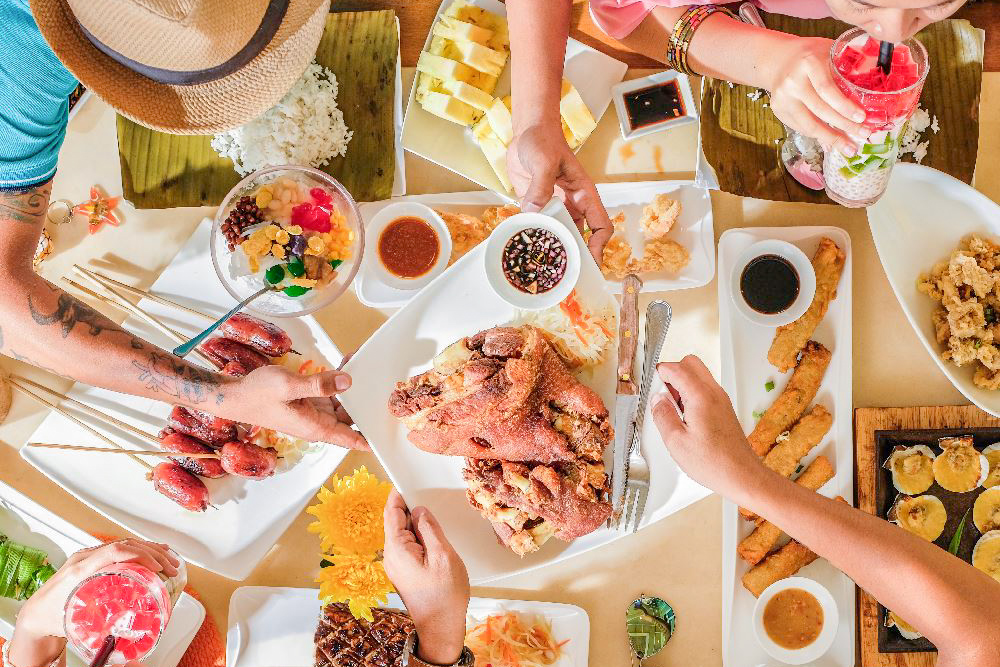
Feast on an #AweSMFOODTRIPatSM where you can get your hands on enticing food promos from 6,000 food tenants and delightful dining areas in 79 SM malls nationwide.

Here are deals that await you at the Food Fest from September 1 to 30, 2022:

Indulge in group meals with friends at a discounted price

Stock on your fave snacks, bread, and sweets because on the first and third week of September, discounted prices await you! Plus, you can invite your friends and savor a meal together during the Super Sale on Group Meals happening on the second and fourth week of the month.

Photo courtesy of Kuya J Facebook Page

Let’s go on a picnic!

We’re sure you miss going on picnics but worry not because at SM, you can dine in style at the indoor picnic park! Fill your tummies and hearts with delectable items and spend quality time with your family over your favorite food! 

Photo courtesy of Hukad – Golden Cowrie Facebook Page

Bon apPETit!

Say ‘happy tummy’ for your furry friends with the Dog Food Buffet Party at Paw Park where they can munch on an array of different treats. Your little friends may also strut their stuff wearing food-themed costumes during the Pet Costume Contest on September 16, 17, 18, 23, 24 and 25.

Photo courtesy of I Cha Bingsu Dessert Cafe

Hop on the biggest and grandest SM Giant Food Fair

From September 23 to 25, loyal shoppers can feast big time at the Giant Food Fair. Savor some of the local regional delicacies in one place and visit the booths for more surprises. Also, witness local chefs and cooks from all over the country compete with their larger-than-life dishes at the Super-Size Food Display. 

What are you waiting for? Check out an SM mall near you because big discounts, satisfying meal combos, exciting buy-one-get-one deals, freebies, and surprises will be up for grabs! Of course, enhanced safety protocols and social distancing measures are strictly observed to help ensure your well-being as you enjoy your favorites without any worries. 

For more information about SM Supermalls’ Grand Food Fest, visit www.smsupermalls.com


Spotlight is BusinessWorld’s sponsored section that allows advertisers to amplify their brand and connect with BusinessWorld’s audience by enabling them to publish their stories directly on the BusinessWorld Web site. For more information, send an email to online@bworldonline.com.

Join us on Viber to get more updates from BusinessWorld: https://bit.ly/3hv6bLA.

BSP hikes rural banks’ required capital

BW FILE PHOTO

THE BANGKO SENTRAL ng Pilipinas (BSP) raised the minimum capital requirement for rural banks to at least P50 million, as it seeks to further strengthen the local banking industry.

BSP Circular No. 1151 amends the minimum capitalization of rural banks as part of the Rural Bank Strengthening Program (RBSP).

“The RBSP was developed to enhance the operations, capacity, and competitiveness of rural banks. It is anchored on the principle that a safe and sound bank is well-capitalized,” BSP Governor Felipe M. Medalla said in the circular, which was signed on Aug. 24.

The circular, which amends Section 121 of the Manual of Regulations for Banks (MORB), sets the minimum capitalization at P50 million for rural banks with a head office and up to five branches, regardless of location.

Rural banks with six to 10 branches will be required to have a minimum capital of P120 million, while those with more than 10 branches should have capital of at least P200 million.

Branch-lite units of rural banks are not included in the number of branches.

Under previous regulations, rural banks and cooperatives must have a minimum capital of P10 million to P200 million, depending on the location and number of branches.

According to the new BSP circular, rural banks that comply with the new capital levels need to submit to the central bank a certification within 10 banking days from the date of effectivity of the circular.

Lenders with capital levels below the new minimum capital requirements can refer to available options under the RBSP, and submit the capital buildup plan within six months to the BSP.

Rural lenders will be given five years to comply with the new rules.

“A strong capital base enables rural banks to enhance their risk management systems, upgrade resources and manage operational costs, meet prudential standards, and accelerate digital transformation,” Mr. Medalla said.

However, rural banks have previously raised concern over the across-the-board hike in minimum capital, as well as the compliance period.

Mr. Medalla in June said hiking rural banks’ minimum capital requirements is “necessary” to protect depositors and ensure a healthy financial system.

ING Bank N.V. Manila Senior Economist Nicholas Antonio T. Mapa in a Viber message said the BSP may need to ensure that rural banks are able to comply with the new rules, and “if not, be afforded adequate transition to potential merger to achieve new capital requirements.”

“Rural banks are the lifeblood of the economies outside the metropolis and must also be viewed as a strategic partner in the economy’s recovery,” Mr. Mapa added. — Keisha B. Ta-asan

Manufacturing activity improves in August

REUTERS

By Diego Gabriel C. Robles

THE PHILIPPINES’ manufacturing sector continued to expand for a seventh straight month in August, as production stabilized with a softer contraction in new orders, S&P Global said on Thursday.

The S&P Global Philippines Manufacturing Purchasing Managers’ Index (PMI) reading stood at 51.2 in August, improving from the six-month low of 50.8 in July.

“August PMI data signaled an improvement in operating conditions across the Philippines manufacturing sector,” Maryam Baluch, economist at S&P Global Market Intelligence, said in a statement.

Manufacturing Purchasing Managers’ Index (PMI) of select ASEAN economies, August 2022

A PMI reading above 50 denotes improvement in operating conditions compared with the preceding month, while a reading below 50 signals deterioration.

The headline PMI measures manufacturing conditions through the weighted average of five indices: new orders (30%), output (25%), employment (20%), suppliers’ delivery times (15%) and stocks of purchases (10%).

Among its Southeast Asian neighbors, the Philippines’ PMI reading was in the middle of the pack, lagging Thailand (53.7) and Indonesia (51.7) but better than Malaysia (50.3) and Myanmar (46.5).

S&P Global noted that Philippine manufacturing firms showed growth for the seventh month in a row in August, although the uptick was lower than the average.

Last month’s data “suggested some relief as the seasonally adjusted output index stabilized after contracting for the first time in six months during July,” it added.

The pace of contraction in new orders eased in August, with companies posting a slight drop in overall client demand.

S&P Global said overall sales were dragged by the sharp decline in new export orders, “as foreign customer demand fell at the steepest rate since January.”

This prompted manufacturers to slash purchasing activities, marking the first cut in input buying since January.

Manufacturing firms also ramped up hiring in August, with the pace of job creation the quickest since June 2017.

“Strong gains in workforce numbers helped boost the latest headline PMI figure during August. Firms hired additional staff for the fourth consecutive month as firms hoped for expansion in production in the coming months,” S&P Global said.

Stocks of raw materials and semi-finished items expanded at their softest pace since October 2021, and easing for the fourth month in a row.

“However, growing downside risks to growth challenge the sector. Already we have seen output failing to expand during the latest survey period, and factory orders falling for the second consecutive month. Furthermore, price pressures remained persistently high,” Ms. Baluch said.

She said there are concerns that persistent inflation, supply chain disruption, the peso depreciation and rising rates “will squeeze demand as clients’ disposable income will take a hit.”

S&P Global also noted there were more supply chain disruptions in August, due to shipment delays and port congestion.

“While the Filipino economy showed strong growth post-COVID, the following months will challenge momentum, with the PMI data already recording softer output expectations for the year ahead,” Ms. Baluch said.

According to S&P Global, manufacturing firms are optimistic about an expansion in output in the next 12 months, but the level of confidence was the second lowest in the last seven months.

Rizal Commercial Banking Corp. Chief Economist Michael L. Ricafort cited the further reopening of the economy, specifically the resumption of face-to-face classes and foreign and domestic tourism, as a factor in the improvement of the PMI in August.

“Near record high exports and imports data in recent months also supported increased manufacturing activities. A continued pickup in foreign direct investments in recent months, among pre-pandemic highs, also supported increased production,” Mr. Ricafort said in a Viber message.

Downside risks facing the sector include higher inflation, rising interest rates, the risk of a recession in the United States, the lockdowns in China, and the Russia-Ukraine conflict, he said.

UnionBank of the Philippines, Inc. Chief Economist Ruben Carlo O. Asuncion said that the August reading is good news, as he expected a PMI of 49.8 which indicates contraction.

“We think that the external headwinds are bigger downside risks for the local economy in the medium term. Nevertheless, we are watching recovery of local demand and supply-side factors that is continuing to impact domestic price levels,” Mr. Asuncion said in a Viber message.

Inflation quickened to 6.4% in July, the fourth consecutive month it exceeded the central bank’s 2-4% target band. The seven-month average stood at 4.7%, reflecting the impact of soaring transport, fuel, and food expenses.

The Bangko Sentral ng Pilipinas has already increased borrowing costs by 175 basis points since May as it seeks to bring inflation back within target.

ABS-CBN, TV5 terminate landmark partnership deal

BW FILE PHOTO

By Arjay L. Balinbin, Senior Reporter

ABS-CBN CORP. and TV5 Network, Inc. of the Pangilinan group’s MediaQuest Holdings, Inc. on Thursday said they have “mutually agreed” to terminate their landmark investment deal, after some lawmakers raised questions over its legality.

The two media companies signed a memorandum of agreement on Aug. 31 to scrap the investment deal they signed on Aug. 10, ABS-CBN told the stock exchange on Thursday.

“The parties confirmed that they have not implemented any of the transactions covered by the investment agreement,” ABS-CBN said, without giving a reason for the termination.

Under the deal, ABS-CBN was supposed to acquire 34.99% of TV5 for P2.16 billion. The former expected that its investment in TV5 would “open significant opportunities for revenue enhancement, cost efficiencies, and various synergies.”

At the same time, the Lopez-led network and MediaQuest terminated the deal between their subsidiaries, in which Cignal Cable Corp. would acquire a minority 38.88% stake in Sky Cable Corp. for P2.86 billion. 

Last week, the two companies said they paused the closing preparations for their partnership to address concerns regarding the deal.

They were referring to the issues raised by some lawmakers and the National Telecommunications Commission (NTC).   

Three resolutions were filed at the House of Representatives seeking an investigation into the ABS-CBN-TV5 deal.

Among the issues raised was the ownership of TV5. Sagip party-list Rep. Rodante D. Marcoleta has claimed that it is owned by a foreign national.

According to the PLDT group’s statement in 2013, “all of the trustees, as well as beneficiaries, of the PLDT Beneficial Trust Fund are Filipino citizens.”

NTC Commissioner Gamaliel A. Cordoba said during a House briefing on ABS-CBN’s investment agreement with TV5 on Aug. 24 that the two media companies should first obtain clearances from the regulator.

“The commercial agreements together with such clearances should be submitted by the franchise grantee to the NTC prior to consummation,” he said.

‘CASUALTY OF POLITICS’
Lawyer and political analyst Michael Henry Ll. Yusingco said the investment agreement between ABS-CBN and TV5 “was not defective.”

“None of the creditors or debtors of the parties have raised any concern or complaint about it. Hence, it’s hard not to see the cancellation of the agreement as the casualty of power politics,” he said in an e-mailed reply to questions.

“Whatever positive outcomes they could have hoped for, such as more jobs for Filipinos, better quality shows, and wider media reach, would not compensate for the hassle and stress political intervention brings,” he added.

For her part, Maria Ela L. Atienza, a political science professor at the University of the Philippines-Diliman, said in a Facebook Messenger chat that the decision to terminate the transactions was “surprising.”

“This is also troubling in the sense that we cannot count on business stakeholders to honor or to commit to partnerships and agreements,” she added.

She said that ABS-CBN is free to enter into other partnerships. “It has a deeper talent pool and viewers than TV5 and being fully digital can partner with international entities,” she added.

Ms. Atienza said it may be possible that recent questions raised by Mr. Marcoleta and other lawmakers had affected the deal.

“In any case, [it is] the public, especially in rural areas where ABS-CBN used to have stations, that continues to lose access to timely information relevant in daily lives and even survival with the absence of a franchise for ABS-CBN… As a business, ABS-CBN has more options for its survival,” Ms. Atienza said.

Terry L. Ridon, a public investment analyst and convenor of think tank InfraWatch PH, said in a separate phone message: “This had everything to do with politics, as the same actors who opposed the ABS-CBN franchise are the same actors questioning the terminated deal.”

“This bodes ill for the governance climate in the country.”

For Mr. Yusingco, an even “worrisome” impact of the deal termination is that it “taints the business environment of the country, particularly in the eyes of foreign investors.”

He said the decision confirms fears “that political intervention and influence trumps the rule of law.”

“We already suffer from a reputation of having a weak legal regime for the enforcement of contracts, so for foreign investors to witness the capitulation of two media giants can only make them less inclined to invest in the country,” he added.

For Mr. Ridon, the fate of ABS-CBN and TV5 transactions serves as a “warning to businesses.”

“This is not the governance climate that the country needs today, particularly at this time of great economic difficulty. With this development, investors looking at the Philippines as a prospective investment destination will might as well bring their funds to other emerging economies with a better governance outlook,” he said.

ABS-CBN was forced to stop its broadcast operations in May 2020 after former President Rodrigo R. Duterte’s allies in Congress denied its franchise renewal application.

Hastings Holdings, Inc., a unit of PLDT Beneficial Trust Fund subsidiary MediaQuest Holdings, Inc., has a majority stake in BusinessWorld through the Philippine Star Group, which it controls.

FIRB says extension of WFH scheme lacks legal basis

BW FILE PHOTO

THE PHILIPPINE Economic Zone Authority’s (PEZA) decision to extend the work-from-home (WFH) arrangement for Information Technology and Business Processing Management (IT-BPM) firms does not have any legal basis, according to the Fiscal Incentives Review Board (FIRB).

“To date, the current and effective resolution issued by the FIRB states that the WFH arrangement for the IT-BPM companies within the ecozones is only until Sept. 12, 2022,” Finance Assistant Secretary and FIRB Secretariat Head Juvy C. Danofrata said in a statement released by the Department of Finance (DoF).

In a position paper submitted to Finance Secretary Benjamin E. Diokno, the FIRB Secretariat said PEZA’s decision “lacks legal basis.

Ms. Danofrata said the Corporate Recovery and Tax Incentives for Enterprises (CREATE) Act, as well as existing FIRB resolutions, do not give investment promotion agencies (IPAs) such as the PEZA the power to unilaterally approve WFH arrangements.

Under FIRB Resolution No. 017-22, registered IT-BPO firms are allowed to have a 70% on-site and 30% WFH arrangement, while still enjoying fiscal incentives guaranteed by the CREATE Act for ecozones, but only until Sept. 12.

Ms. Danofrata said that any extension requires the approval of the FIRB, which will issue a resolution.

The resolution should comply with CREATE’s implementing rules, which require the extension of the state of calamity or a declaration by the President of an exceptional circumstance such as the coronavirus disease 2019 (COVID-19) pandemic.

Ms. Danofrata said that the FIRB is working with the Board of Investments (BoI) to come up with options to allow a WFH setup for IT-BPM firms in economic zones.

The issue will be discussed at the FIRB’s next meeting in mid-September, she added.

Last week, PEZA Officer-in-Charge and Deputy Director-General for Policy and Planning Tereso O. Panga said the WFH extension for IT-BPM enterprises until March 2023 has been “approved in principle” but pending “further clarification” from the DoF and the Board of Investments (BoI).

IT-BPO industry stakeholders such as the IT and Business Process Association of the Philippines have been pushing for the WFH arrangement while keeping their tax incentives, citing benefits to employees and productivity.

Meanwhile, the FIRB recently adopted a new set of guidelines for the submission of reports by IPAs, and approved the rationalization of guidelines on fees collected by IPAs.

The FIRB reduced the number of reports to be submitted by IPAs to eight, from the current 10.

“This initiative of the FIRB to harmonize the fees set by the IPAs relating to the business enterprises’ application and availment of tax incentives ensures uniformity and promotes equity, which in turn serves the best interest of our stakeholders and potential investors,” Mr. Diokno said.

The FIRB will consult with the IPAs in the fourth quarter, with guidelines such as the final rates set to be released before yearend.

The FIRB is chaired by the DoF, along with the Department of Trade and Industry, and also includes the Office of the President-Executive Secretary, the Department of Budget and Management, and the National Economic and Development Authority. — D.G.C.Robles

RFM allots P1.2B to expand milk, growing segments

FOOD and beverage firm RFM Corp. approved a P1.2-billion capital expenditure (capex) budget to expand the production capacities of its milk segment and institutional businesses.

Jose Ma. A. Concepcion III, chief executive officer of RFM, said in a press release on Thursday that “this P1.2-billion capex approval is one of the biggest set of capex since the purchase of the Royal pasta brand in 2014.”

“[T]his capex is expected to support the double-digit growth of our Selecta Milk offerings as well as support the growing consumer and institutional businesses that are expected to double in five years,” he added.

The company’s board of directors also approved a cash dividend of P200 million or almost P0.06 per share.

“The investment into more production capacity for milk and other high growth segments will support RFM’s sales growth momentum even as there are uncertainties in the global economy at present,” Mr. Concepcion said.

He also said the company’s ice cream joint venture will be expanded to meet volume growth over the long term.

RFM is the maker of Selecta Milk, Royal, and Fiesta pasta and sauces and White King mixes, flour, and bread. It is also a 50% owner of the Unilever RFM Ice Cream joint venture that sells Selecta, Cornetto, and Magnum brands.

Mr. Concepcion said that on top of cash dividends, the company also plans to use its excess cash to fund the capex over the next 15 months.

The latest payout brings RFM’s total cash dividends to P854 million or 65% of the company’s net income last year, with a total of more than P0.25 apiece.

“This has a dividend yield of 6.5% at the P3.9 per share prevailing stock price,” the company said.

The record date of the cash dividends is on Sept. 15 while its payment date is on Oct. 11.

Revenues of the company climbed by 17.4% in the second quarter to P4.57 billion and by 17.1% in the first half to P8.47 billion, which the company attributed to its ice cream, milk, and institutional businesses.

Mr. Concepcion said that “our strategy of focusing on our core strengths and brands has yielded good topline and bottom line growth over the past years and we are deploying the extra cash that we have accumulated to further feed into that growth of our core growth drivers.”

RFM recorded an attributable net income of P355 million in the second quarter, down 3.5% from P368 million a year ago, but its first-half attributable profit of P687 million was just slightly lower than last year’s P688 million.

“We have been carefully passing on the cost of higher inputs and also tightening on expenses to manage our margins,” Mr. Concepcion said.

On the stock exchange on Thursday, RFM shares declined by P0.04 centavos or 1.03% to P3.85 apiece. — Justine Irish D. Tabile

Jo Koy’s Easter Sunday and the visibility of Filipinos in Hollywood

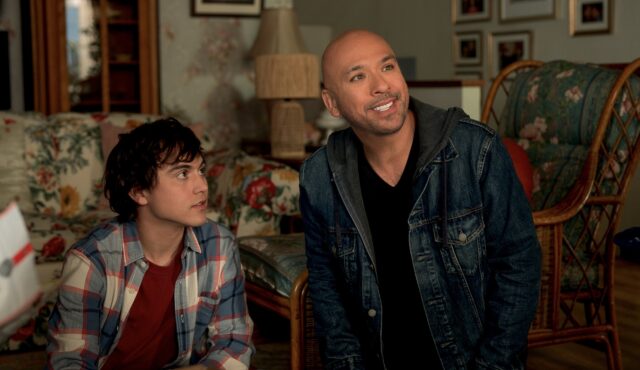
BRANDON WARDELL and Jo Koy in Easter Sunday

RECONNECTING with family, getting tangled in an unusual situation, and referencing Pinoy culture, all happen in the film Easter Sunday, which features a nearly all-Filipino American cast.

That makes it unusual as Filipinos can be considered the “invisible” minority in the US, blending in so well that they are nearly unnoticed even though, with an estimated population of 3.4 million, Filipino Americans are the third largest ethnic minority group in the US.

Filipino American actors are rarely seen playing their own ethnicity on television or films, as two of the film’s cast members told media. Speaking of her role in Easter Sunday, Tia Carrere told the San Francisco Chronicle recently, “I love that I got to finally play Filipino, because I’ve played Chinese, Japanese, Vietnamese, all these different ethnic backgrounds. I finally get to play Filipino…” A big-name star, Lou Diamond Philips has only played a Filipino American three times: in the 1991 film Ambition (he wrote the script himself), in the TV show Prodigal Son (he requested his character be changed from Latino to Filipino American), and now in Easter Sunday. As he told Esquire in an interview: “This will be one of the first representative films of the Filipino diaspora in America, with a largely Filipino cast, and that’s how long it’s taken since I wrote Ambition.”

The man behind Easter Sunday is Filipino-American stand-up comedian Jo Koy (real name: Joseph Glenn Herbert, Sr.)., who moved to the United States as a child with his family. He began as a stand-up comic in 1989, performing at a Las Vegas coffee house in 1994. In 2017, the comedian had 11 sold-out shows at The Neal S. Blaisdell Concert Hall in Honolulu (selling 23,000 tickets). This led to comedy specials on Netflix: Live from Seattle in 2017, Comin’ in Hot in 2018, then a variety special, In His Elements, in 2020. The comedy specials led to Easter Sunday after Steven Spielberg saw Comin’ in Hot.

The 51-year-old stand-up comic got a call from Amblin Entertainment Inc., Spielberg’s entertainment company. “We pitched this movie and the first thing that we thought of was not only was [there going to be] a theatrical release but a global release and it’s [going to be] in the Philippines in a theater,” the comic said at a press conference at S Maison’s Director’s Club in Pasay City on Aug. 30.

“The whole reason [that Spielberg was] involved was because of the standup. He related to the stories that I was talking about onstage. So, now he just wanted to make a movie and get that out to everybody,” he said.

In Easter Sunday, the comic plays a struggling actor and comedian, Joe, who drives his son to a weekend reunion with his family. While reconnecting with his mother and other relatives, Joe ignores his son’s concerns and becomes preoccupied with attempts to save his opportunity for a big break on television while saving the day for his cousin at the same time. The film includes scenarios based on the stand-up comic’s experiences and his comedy shows.

“The reason I picked Easter Sunday is that was the holiday that everybody was there,” he said. “That’s when the chaos happened. That’s when the talent show happened, and the karaoke happened.”

The film is directed by Jay Chandrasekhar and written by Ken Cheng.

“I told my stories, as many stories as I could. And they wrote that into the into the movie,” he said.

Aside from Jo Koy, Tia Carrere, and Lou Diamond Phillips, the movie’s cast includes Jimmy Yang, Eva Noblezada, Lydia Gaston, and Eugene Cordero.

THE STRUGGLE FOR OPPORTUNITIES
“There are no such thing as offers especially when you’re not the majority color,” the comedian told the Philippine press. “If you’re Filipino, there are no offers, so you’ve got to create an idea and you’ve got to come up with a pitch and figure out a story that they’re willing to back and then it still has to make sense because it’s a business.”

He has had his share of rejections.

He recalled that his Netflix Original Comedy Special Live from Seattle was turned down eight times and he was told that the story was “too specific.”

“When you hear that in Hollywood, you replace the word ‘specific’ with ‘racism.’ Because what does ‘specific’ mean? That doesn’t make sense,” he said.

“They turned it down like eight times and kept saying ‘no’ to me,” he said, adding that he resorted to funding and shooting the project himself.

“Netflix called my team and said ‘Hey, we’ve heard Jo Koy trying to shoot the special. We just want you to know that we don’t want it’…That’s the pressure I had. The only person who we wanted to sell it to was saying ‘no’ already before I even shot it,” he said.

“I paid for that special and I sold it to Netflix and if that didn’t happen then Steven Spielberg would have never seen the second one,” he said.

He was given the green light to shoot the sequel, Comin’ in Hot  but he also ended up digging into his own pocket.

“I shot it in Hawaii, and it was too expensive. And they told me not to shoot in Hawaii. But I had to shoot in Hawaii,” he said.

ON FILIPINO VISIBILITY
As a comedian, he said that the Filipino diaspora is free to talk about Filipino culture responsibly despite living overseas.

“There’s a belief system that everybody has. We all have the right to say what we want to say, but we also have to be careful with our words. Not everybody’s opinions are right also. I also do believe that [we have to] be very responsible with your words, and those specific platforms,” he said.

As for the future, he said he plans to produce more shows.

“I want to also have my hand not only in front of the camera behind the camera…” he said. “I don’t want to just open doors for Filipinos, I want to open doors for everyone.”

Jo Koy was in Manila for his show Funny is Funny, held at the SM MOA Arena on Aug. 31 — his second show in Manila following Just Kidding in 2020.

Easter Sunday, distributed by Universal Pictures, is opening in Philippine theaters this weekend.  — Michelle Anne P. Soliman

NGCP seeks regulatory nod for nearly P13-B projects

BW FILE PHOTO

THE National Grid Corp. of the Philippines (NGCP) is seeking regulatory approval for P12.9 billion as capital expenditure (capex) for transmission line projects until 2025.

NGCP said in its application with the Energy Regulatory Commission (ERC) that the bulk of the capital spending or P10.47 billion is for the Barotac Viejo-Unidos 230-kilovolt (kV) transmission line project with an estimated implementation period of two years and five months.

An estimated P1.12 billion was allotted for the Banga 138-kV substation project, which NGCP said aims to prevent overloading while providing possible connection to the Nabas substation and Panitan-Nabas 69-kV line. The project is expected to be built in two years and 11 months.

NGCP also said that the project will address the under-voltage along the Panitan-Nabas transmission line and provide a possible connection point to future power plants and load customers.

The company has estimated a cost of P908.31 million for the Tabango-Biliran transmission line project, which has an estimated implementation period of three years and five months. The project aims to avoid power interruption in Northern Leyte and Biliran Island, improve system reliability, and avoid low-voltage problems.

Meanwhile, the Visayas mobile capacitor bank project has an estimated cost of P403.25 million for a completion period of about a year. The project is expected to address the under-voltage issue in various substations during normal and N-1 contingency or the ability of the grid to withstand a major system disturbance.

NGCP also said that the project would improve the reactive power reserve and voltage support as well as prevent load curtailment in the area.

NGCP’s capex needs the approval of the ERC, as mandated by Republic Act No. 9136 or the Electric Power Industry Reform Act (EPIRA), which directs the transmission operator to seek prior regulatory nod for any expansion plan or improvement of its facilities.

The privately owned company is tasked to construct, install, finance, improve, expand, rehabilitate and repair the nationwide power transmission system and the electricity grid. — Ashley Erika O. Jose