Home Blog Page 5541

Japan’s TDK hard drive equipment project worth P2.5B approved by FIRB

THE Fiscal Incentives Review Board (FIRB) on Tuesday approved the tax incentives application of TDK Philippines Corp. for a P2.5-billion manufacturing project, the Department of Finance (DoF) said.

TDK proposes to make microwave-assisted magnetic recording sliders, industrial equipment used in hard drive manufacturing.

The approval of the application for fiscal incentives “is a boost to our semiconductor and electronics industry, which largely contributes to the Philippine economy,” Finance Assistant Secretary and FIRB Secretariat Head Juvy C. Danofrata said in a statement.

Ms. Danofrata said that the project is classified as an export activity and falls within the activities qualified for incentives under the Strategic Investment Priority Plan.

The TDK project is also the first Philippine Economic Zone Authority-endorsed application approved by the FIRB.

According to the DoF, the project was granted an income tax holiday, special corporate income tax, duty exemption on the import of capital equipment, raw materials, spare parts, and accessories, as well as a value-added tax (VAT) exemption on imports, and VAT zero-rating on local purchases.

Finance Secretary Benjamin E. Diokno said that the performance commitments of registered business enterprises will be monitored by the investment promotion agency and the FIRB.

“We want to make sure that all these fiscal incentives we grant to registered business enterprises indeed will result in substantial benefits to our economy,” he added.

Finance Undersecretary and FIRB Technical Committee chairperson Cielo D. Magno said this month that the FIRB is evaluating the application process for tax incentives.

She said that the agency is working on making companies ramp up mitigation measures for their compliance violations instead of penalizing them later on.

The FIRB must clear investment incentives on projects larger than P1 billion. — Luisa Maria Jacinta C. Jocson

LGUs apply to borrow P20.2 billion in first half

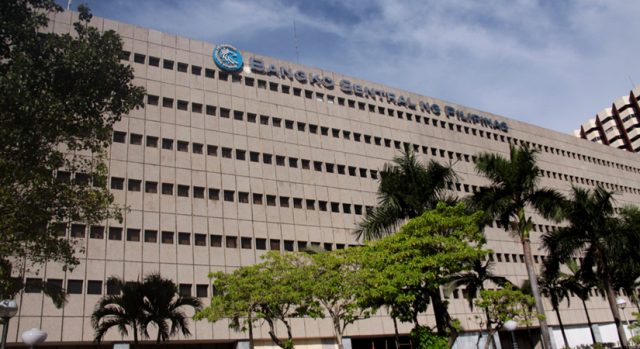
THE Bangko Sentral ng Pilipinas (BSP) said local government units (LGUs) proposed to borrow P20.2 billion in the first half, mostly for infrastructure projects.

The totals were tallied from applications to the Monetary Board (MB), which must review all LGU borrowing proposals, the BSP said in a statement on Tuesday. The MB received 107 proposals to borrow from LGUs, down from 193 requests worth P55.7 billion a year earlier.

The central bank also said 120 projects worth P25.8 billion were issued a Monetary Board opinion (MBO). Of these, 98 covered requests from the first half and 22 were from the second half of 2021.   

All LGUs are required to obtain an MBO on the impact of their domestic borrowing plans.

“The requests for MB opinion came from six provinces (P2.4 billion), 12 cities (P8.7 billion), 84 municipalities (P9.1 billion), and five barangays (P41.1 million),” the BSP said.

According to the central bank, 66% of the loans were to fund infrastructure projects, including public markets, roads and bridges, multi-purpose buildings, commercial centers, healthcare facilities, school buildings, transport terminals, and others.

The BSP also said loans for heavy equipment and rescue or service vehicles accounted for 23.6% of the total.

Meanwhile, 9.7% of the financing applications covered commercial lot and site development, 0.3% was for loan refinancing and 0.3% for construction of pandemic isolation facilities.

“The need for issuance of prior opinion of the MB on the proposed borrowings of government entities, including LGUs, is mandated by law under Section 123 of Republic Act (RA) No. 7653, otherwise known as the New Central Bank Act of 1993, as amended by RA No. 11211,” the central bank said. 

Under RA 11211 or the New Central Bank Act, proposed borrowing by government entities and LGUs require the MB to render an opinion on the possible impact on government finances.

“It enables the BSP to monitor trends in public sector debt and assess its impact on the monetary sector and external payments position of the economy,” the BSP said. — Keisha B. Ta-asan

Health-rating labels for packaged food proposed

A woman buys food items at a supermarket in Quezon City, March 4, 2022. — PHILIPPINE STAR/ MICHAEL VARCAS

A LABELING law that would rate the health benefits of packaged food has been proposed as a measure in the House of Representatives.

House Bill 1139, filed by Isabela Rep. Faustino A. Dy, proposes a star rating system for packaged food products as an amendment to Republic Act No. 7394 or the Consumer Act of the Philippines.

“Most consumers don’t really take time to read what’s in the packaging and a lot of the terms are very technical,” Mr. Dy said at a hearing of the House committee on trade and industry. 

At the hearing, a packaged-food industry representative called for more research into the labeling proposal.

Denya J. Uy-Anastacio of Nestlé Philippines said studies are needed “to know the consumer’s use and understanding of food labels and (to) evaluate what kind of labeling is most effective in realizing the public health goal of the bill.”

Meneses D. Pareja, a representative from the market vendors industry, called the system potentially discriminatory to low-rated products.

“If your product is labeled one or two stars only, you could lose against a three or five-star product,” according to Mr. Pareja, president of the vendors association at the Zapote Las Piñas Public Market.

Mr. Pareja also asked if the labels would affect product prices.

A technical working group has been created to discuss amendments to the bill. Rizal Rep. Emigdio P. Tanjuatco III will serve as its chairman. — Beatriz Marie D. Cruz

PHL signs tourism agreements with Saudi Arabia

REUTERS

THE PHILIPPINES signed agreements with Saudi Arabia which are expected to enhance two-way visitor traffic between the two countries, the Department of Tourism (DoT) said.

In a statement on Tuesday, the DoT said Secretary Ma. Esperanza Christina G. Frasco sealed the agreements in a meeting with the Saudi Vice Minister of Tourism, Princess Haifa Al Saud.

The two met at the recent 22nd World Travel and Tourism Council Global Summit.

According to the DoT, Saudi Arabia agreed to help establish a Philippine tour guide service with Arabic-speaking guides. It is also pursuing initiatives to expand pilgrimage tourism, increase direct flights, and compile an investor directory.

The DoT added that the Philippines will offer hospitality and human capital development to Saudi tourism frontliners.  

Ms. Frasco said that Saudi Arabia was the top source of visitors from the Middle East before the pandemic, with 43,748 arrivals in 2019. Currently, visitor arrivals from Saudi Arabia number 9,424, counting from when the Philippines reopened its borders in February.  

“We see great potential in ushering in more arrivals into the Philippines… At the same time, the development and relationship is mutual considering that there are over 800,000 Filipinos in Saudi Arabia,” Ms. Frasco said.

“I am very interested in furthering this relationship,” she added.

She highlighted the need for more “Philippines tourism exposure in Saudi Arabia, direct flights to other key gateways in the Philippines to and from Saudi Arabia, and the organization of familiarization trips for the tour and travel operators, among others,” the DoT said. — Revin Mikhael D. Ochave

IRR for creative industries law signed

TOPDRAWANIMATION.COM

THE implementing rules and regulations (IRR) of Republic Act No. 11904 or the Philippine Creative Industries Development Act (PCIDA) have been signed, the Department of Trade and Industry (DTI) said.  

In a statement on Tuesday, the DTI said that Trade Secretary Alfredo E. Pascual signed the IRR last month. A copy of the rules was distributed to the media on Tuesday.

“The promulgation of the PCIDA-IRR is set to advance the country’s efforts in effectively executing the PCIDA towards enabling the creative industries to be a key driver of the post-pandemic economic recovery,” Mr. Pascual said.

“The IRR will promote a better work environment and livelihood for creative workers, improve education and access to financial support, develop industry data and statistics for policymakers, and harness other innovation efforts to help workers and firms in the creative economy,” he added.  

The IRR governs the operations of the Creative Industry Development Fund, a special account in the general fund of the National Treasury. The fund will support research and development, trade and investment promotion, human resource development in the industry, and the welfare of creative workers.

“The fund shall be sourced from the loans, contributions, grants, bequests, gifts, and donations, whether from local and foreign sources…The fund shall also involve a revolving mechanism to recover costs and other such features to increase its long-term sustainability,” according to the IRR.

The IRR also sets out the process for establishing the Philippine Creative Cities Network program.

The PCIDA lapsed into law on July 28.

The law will be implemented by the Philippine Creative Industries Development Council, chaired by the Trade Secretary. Other council members include secretaries of the Departments of Education, Science and Technology, Tourism, and Interior and Local Government, as well as the head of the National Economic and Development Authority.

Also on the council are the Chairmen of the Commission of Higher Education and National Commission for Culture and the Arts; as well as the Director General of the Intellectual Property Office of the Philippines, and private sector representatives. — Revin Mikhael D. Ochave

Croatia advances in quarterfinal as Japan crumbles in shootout

AFTER all their hard work in topping a difficult group and matching the Croatians for 120 minutes, Japan crumbled in the shootout with only Takuma Asano converting his penalty. — REUTERS

Five-time champion Brazil routs South Korea, 4-1

AL WAKRAH, Qatar — Goalkeeper Dominik Livakovic saved three spot-kicks as Croatia beat Japan 3-1 in a penalty shootout to reach the World Cup quarterfinals for the third time after an enthralling 120-minute contest finished deadlocked at 1-1 on Monday.

Takumi Minamino, Kaoru Mitoma and Maya Yoshida were all denied by Livakovic before Mario Pasalic coolly sent Japan keeper Shuichi Gonda the wrong way to set up a last-eight date for the Croatians with Brazil or South Korea on Friday.

Three times in the knockout rounds in Russia four years ago Croatia came from behind to advance after extra time before losing to France in the final.

They once again showed their resilience and patience by coming from a goal down to tame a lively Japan team who had beaten Germany and Spain in the group stage.

Daizen Maeda opened the scoring for Japan in the 43rd minute and Ivan Perisic headed the equalizer 10 minutes after the break but the teams could not be separated over the remainder of the game.

For Japan, this was the fourth time they suffered heartache in the last-16 after losing to Turkey in 2002, exiting on penalties against Paraguay in 2010 and giving up a 2-0 lead to lose to a stoppage-time goal against Belgium four years ago.

After all their hard work in topping a difficult group and matching the Croatians for 120 minutes, Japan crumbled in the shootout with only Takuma Asano converting his penalty.

Nikola Vlasic and Marcelo Brozovic put Croatia 2-0 ahead and even though Marko Livaja hit the post with his spot-kick, Pasalic was able to seal the deal with the fourth penalty.

CROATIAN PHYSICALITY
The game was more open than anyone had reason to expect, with Croatia ratcheting up the physicality to gradually take control of midfield and Japan trying to hit them on the break.

Perisic was put through on goal in the eighth minute but Gonda pushed away his shot and Bruno Petkovic also had a one-on-one, only to tap an attempted pass tamely through the Japanese goalkeeper’s legs.

Japan showed far more adventure than they had in the first half of their group matches and Shogo Taniguchi, Daichi Kamada and Maeda all had chances to open the scoring before the latter broke the deadlock in the 43rd minute.

Doan took the ball from a short corner and curled it into the box where Bruno Petkovic deflected it back across the six-yard area under close attention from Yoshida and Maeda pounced to tuck it into the net.

The equalizer came 12 minutes later with a cross from the same flank, Dejan Lovren lofting a beauty into the box and Perisic getting in front of his marker to head the ball powerfully into the bottom right corner of Gonda’s goal.

That brought Japan out of their shells and Wataru Endo was soon firing in a long-range effort which Livakovic tipped over the bar.

Luka Modric had a sweetly struck shot from range turned over by Gonda in the 63rd minute and substitute Ante Budimir steered header wide of the post.

Gonda again had to be at his best to keep out a rocket of a shot from Perisic in the 77th minute, while at the other end Japan continued their raids but without carving out any clear-cut chances.

Extra time was more ragged although a thrilling run and piledriver of a shot from Japan substitute Kaoru Mitoma brought a fine save out of Livakovic just before the break.

BRAZIL SMASHES KOREA 4-1
An irrepressible, irresistible Brazil lit up the night sky on Monday with one of the performances of the World Cup to shred South Korea 4-1 and set up a quarterfinal clash with Croatia.

The Brazilians brought a beach soccer swagger to the iconic Stadium 974 with a display that simply overwhelmed the Koreans, and likely struck fear into potential opponents.

“We’re dreaming of the title, of course,” Brazilian talisman Neymar said. “Today was the fourth game, there are three left. We’re very focused on getting that title.”

Having failed to score in the first half of any match so far this tournament, five-times champions Brazil corrected that with four goals before the break, to end the match as any meaningful contest early on.

They took only seven minutes to breach the Korean defense for the first time.

Raphinha sliced through the red wall — leaving several of its bricks flailing on the ground — and, when his cross eluded the closely-marked Neymar, Vinicius Jr was at the far post to gently lift the ball over scrambling defenders and the desperately reaching goalkeeper.

If the Koreans were winded by that early blow, worse was to come. Five minutes later Richarlison was hauled down in the penalty box and the referee instantly pointed to the spot.

Up stepped Neymar for a game of cat-and-mouse with Kim Seung-gyu. The Korean stood to the far right of his goal. Neymar waited, smiling. Finally, he trotted towards the ball in his faltering run-up and left the wrong-footed keeper sitting in the middle of his goal as he stroked the ball home for his 76th Brazil goal — one shy of the great Pele’s international haul.

That Brazil went in only 4-0 up was as much to do with their profligacy as anything the Koreans could muster in terms of defense.

With their elaborate goal celebrations, the Brazilians had done more dancing than defending in the opening 45 minutes and the second half followed a similar pattern, with goalkeeper Kim single-handedly denying Brazil another hatful of goals. — Reuters

UAAP S85 Final Four kicks off today at the Smart Araneta Coliseum

SECOND-SEEDED UP will take on No. 3 NU. — PHILIPPINE STAR/ RUSSELL PALMA

Games On Wednesday
(Smart Araneta Coliseum)
Women’s Finals Game 1
11 a.m. — NU vs DLSU
Men’s Final Four
2 p.m. — UP vs NU
6 p.m. — ADMU vs AdU

AND then there were four.

Reigning champion University of the Philippines (UP), Ateneo de Manila University (ADMU), National University (NU) and Adamson University (AdU) — after surviving a wild elimination round — figure in an explosive slugfest as the UAAP Season 85 men’s basketball tournament unwraps the highly-anticipated Final Four at the Smart Araneta Coliseum today (Dec.7).

Hostilities fire off at 2 p.m. starting with the title defense of second-seeded UP against No. 3 NU in the battle of well-rested squads after qualifying to the semifinals as early as last week.

At 6 p.m., top-ranked and former three-time champion Ateneo looks to shore up its redemption tour albeit against a high-morale Adamson side coming off a big knockout win against fancied De La Salle to bag the last Final Four ticket.

Ateneo and UP sport twice-to-beat incentives as the top seeds with a quick win in just one game setting the stage for their finals rematch after an iconic battle in Season 84 last summer. But NU and Adamson are out to spoil that party.

The Bulldogs had shown that capability in the first round after handing UP’s first loss by then while the Soaring Falcons are beaming with confidence and momentum after their close duel against the Blue Eagles followed by a spirited 80-76 do-or-die win versus the Green Archers to barge into the semis.

“We haven’t beaten Ateneo this season. We know how tough they are but nothing is impossible in this world. We have that mentality that you know, nothing is impossible,” said coach Nash Racela as Adamson likewise foiled an Ateneo-De La Salle semis showdown.

Prior to the men’s Final Four, it’s dynasty versus destiny as six-time reigning champion NU and De La Salle open their best-of-three finals duel for the women’s basketball crown at 11 a.m.

“It’s an opportunity for us to really see where our program is. It’s an opportunity to make history,” said mentor Cholo Villanueva after De La Salle’s 74-69 win over University of Santo Tomas in the do-or-die semis to arrange a date with NU.

De La Salle was the last team to beat NU in the UAAP finals in 2013 before the latter’s long reign. This season, the Lady Archers were also the culprit in ending the Lady Bulldogs’ 108-game win streak in almost a decade. — John Bryan Ulanday

World Cup top 10 finish for Blu Boys

THE BLU BOYS may have missed the bus to the Super Round of the recently concluded men’s softball World Cup, but they gave the country a reason to celebrate with their Top 10 finish.

Without a win in their first five games, featuring a close 0-1 setback to eventual third placer United States, and then bowing, 1-3, to Cuba, the CebuanaLhuillier-backed Blu Boys posted back-to-back victories later on, shutting down higher-ranked Denmark, 8-0, before blanking South Africa, 4-0, for a respectable finish.

Denmark is ranked 10th, while South Africa is at 11th.

The Philippines was the lowest-ranked qualifier at 21st among the 12 teams that played in the competition and its performance should improve its ranking.

Canada and Australia will contest the championship, with the USA finishing off defending champion Argentina, 2-0, for third place.

“Our participation here was a good opportunity for the boys to test themselves against the world’s best teams. I am very elated with their performance particularly their games against Denmark and South Africa. A Top 10 finish in a team sport in any world competition is always something to be proud of,” said ASAPHIL president Jean Henri Lhuillier, the long-time backer of softball in the country.

“Hats off to the boys for giving it their best and to ASAPHIL for making it happen. I want to make special mention of our pitcher Leo Barredo, he played at par with the top pitchers in the world,” Mr. Lhuillier said.

Team Smart Omega CODM visas OK’d in time for world championship

SMART Omega Call of Duty: Mobile (CODM) team finally got their visa application approved Dec. 5, in time for the CODM World Championships in North Carolina, USA slated Dec. 15-18, 2022.

Last July 2022, House Bill 01285 or “An Act Declaring the Month of October of every year as ‘National Esports Month’ and for other purposes” was also filed in the Congress to support the continuously growing esports scene in the country where Smart Omega has already made its mark with competitive professional teams in CODM, Mobile Legends: Bang Bang, DOTA 2, and Hyperfront.

The real Davis

Heading into the 2022-23 campaign, the knock on 2012 first overall pick Anthony Davis was that he couldn’t stay on the court with consistency. He possessed otherworldly talent that all and sundry could see whenever he suited up, but when, and if, he could suit up was another matter altogether. His brittle body often got in the way of his greatness, causing him to miss a whopping 215 contests in 10 seasons. Which was why not a few quarters have questioned his capacity to take over the reins in the face of Lakers top dog LeBron James’ advancing age and dwindling efficiency.

For a while there, it appeared as if Davis would prove critics right. Right off the bat for the Lakers’ current campaign, he appeared timid and slow, and, worse, ineffective. And with the purple and gold struggling to squeeze every last ounce of competitive juice off their uneven roster, his inability to stand out, let alone dominate, discounted their chances to win. James was clearly on the wane, and yet he appeared to have no drive to institute a changing of the guard.

Admittedly, Davis strove to be available for every match. Given his injury history, it was a testament to the conditioning work he did in the offseason that he had to be sidelined only once in the Lakers’ first 11 outings. Still, he looked relatively listless, not quite submissive but definitely deferential. It was not what longtime habitues of the pro scene — and not what even James — envisioned for him. Something, anything, had to change, and not simply because he needed to prove he deserves every penny of his $37.98-million contract for the season.

The good news is that the real Davis seems to have had the impetus to show up, and how. For some fortunate reason, he found cause to accept his alpha status when James went down with a groin injury 11 games in. Over the next five stops, he showed his brilliance on both ends of the floor; he put up monster numbers on offense even while erasing countless mistakes of the Lakers on defense. And, if nothing else, his excellent run as the go-to guy in the lineup gave him the confidence to keep being so even with his more illustrious teammate back on board.

At this point, it’s evident that where the Lakers will end up depends on Davis. James may be on the way to making history as the National Basketball Association’s top career scorer, but its relevance will increase significantly with collective success. And that success is being fueled in large measure by his singular feats. Considering the way he’s playing, there is no better marquee name. It has taken a decade for him to reach his potential, but the wait looks to be worthwhile.


Anthony L. Cuaycong has been writing Courtside since BusinessWorld introduced a Sports section in 1994. He is a consultant on strategic planning, operations and human resources management, corporate communications, and business development.

Drone strikes show Putin his homeland isn’t safe

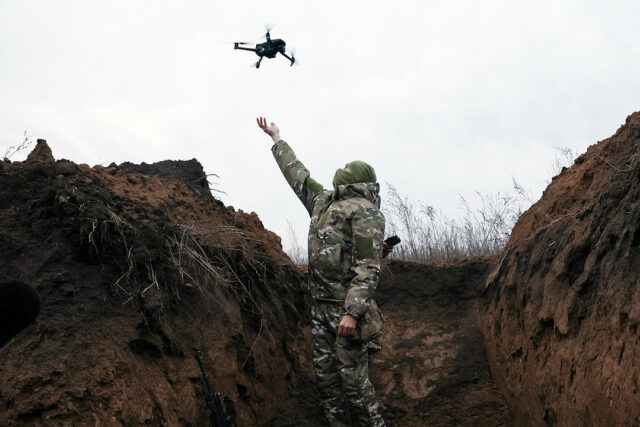
“GHOST,” 24, a soldier with the 58th Independent Motorized Infantry Brigade of the Ukrainian Army, catches a drone while testing it so it can be used nearby, as Russia’s invasion of Ukraine continues, Nov. 25. — REUTERS

REPORTS of significant attacks against two Russian air bases are a new and dangerous twist in the Ukraine war. One of the explosions was at the Engels-1 air base in the Saratov region, the other at Dyagilevo in the Ryazan area — both hundreds of miles inside the Russia-Ukraine border. Several Russians were reportedly killed or wounded, and at least two aircraft damaged. Moscow immediately blamed Ukraine for the strikes, which appear to have been conducted using unmanned aerial vehicles.

While the Kyiv government hasn’t openly taken credit, it hasn’t denied culpability. One adviser to President Volodymyr Zelenskiy tweeted: “If something is launched into other countries’ airspace, sooner or later unknown flying objects will return to departure point.” Hardly cryptic.

The strikes occurred against an important tactical backdrop: an escalating Russian bombing campaign against Ukraine’s critical infrastructure. As his ground game continues to falter, Russian President Vladimir Putin has taken to the air to punish the civilian population. It is the latest in a series of Russian war crimes, coming just as winter descends and electricity and heat become matters of life and death.

Assuming Ukraine launched the drone strikes against what are legitimate military targets, albeit over 300 miles into Russia, what are the implications for the overall conflict? Should we worry about serious escalation?

Having watched the Ukrainians suffer for months from murders, rapes, indiscriminate bombing of civilian residences, and attacks on electricity, water, and nuclear power plants, it is increasingly hard to counsel them to simply sit back and take what Putin wants to dish out.

The Ukrainians are mad as hell and not going to take it anymore — not while they have the ability to reach out and touch Russian military targets.

Leaders in Kyiv are going to try to maintain a minimal level of deniability about strikes within Russian territory, but there’s little doubt they will conduct them. From their perspective, there is little to lose. Russia is already on a full war footing, and short of using nuclear weapons (a line even Putin would hesitate to cross) the Kremlin really doesn’t have additional combat cards to play.

These strikes may have been calibrated to serve simply as a demonstration of Ukrainian capability. Going ahead, Kyiv can go bigger, but will be careful to strike only purely military targets, maintaining the high ground over Russia in terms of international law. Unless Putin stands down from the air war (highly unlikely) his homeland will be under attack.

Western backers will try to restrain the Ukrainians from launching larger-scale attacks, hoping to reduce the risk of the conflict spiraling further and drawing in the North Atlantic Treaty Organization (NATO) directly. NATO will try to mollify the Ukrainians by offering more and better surface-to-air missiles to defend their cities, and may seriously consider supplying combat aircraft.

If the Ukrainians are given tools to truly “close the skies” over their nation, they might be more amenable to refraining from long-range attacks. But as things stand, Ukraine has every right to respond against targets inside Russia. Doing so with unmanned vehicles is a prudent path. Unless the West is willing to protect Ukrainians from a terror campaign from the sky, we should get out of their way.

On the other side, these attacks will likely harden the Russian military’s resolve and provide Putin with the talking points he wants for the Russian population: Ukraine is attacking us! But more than nine months into his brutal war, his approval rating at home is suffering and his international support dwindling. Sanctions are biting the economy, and price caps on Russian oil went into effect on Monday. Europe is holding together well in the face of Russian energy blackmail.

Much like the famous air raid on Tokyo by US Colonel Jimmy Dolittle in the early days of World War II, the drone attacks show a weakness in a supposedly invulnerable home front. It may help ordinary Russians to see the mounting costs of what might best be termed “the war of Putin’s ego.”

BLOOMBERG OPINION

The Philippines and the European Union: Embarking on the same journey

MARKUS SPISKE-UNSPLASH

The COVID-19 pandemic dealt a blow to the Philippine economy and exposed many gaps and weaknesses in our system that had been present for some time.

Today, almost three years after the imposition of the first lockdowns, and as we try to recover from this crisis, we find that the traditional ways in which we did business and understood business growth models have changed drastically. So, if we are to recover fast and achieve sustainable development, we need to make our economy more resilient to future shocks and other uncertainties.

A big part of the effort to become resilient is to position the Philippines as a highly progressive and viable market in the international stage — and this we can do through accessibility for trade and investment, environmental sustainability, adaptive labor market, and improved quality of life.

It’s a daunting task but one that can be achieved through a multi-stakeholder, whole-of-society approach where the government partners with the private sector and civil society.

Our friends from the European Union (EU) recently gave us some encouraging words that the Philippine economy could achieve this feat — that in fact, we have made steps in the right direction, and that we only need to continue making the right policy decisions in order to accelerate what we have begun.

During the second day of the Pilipinas Conference, organized by the Stratbase ADR Institute and held on Nov. 21 and 22, members of the EU community shared their insights on how the Philippines is doing in the area of global trade and investment, specifically in efforts to open the economy and attract investments in particular sectors. The panel discussion called “Balancing Recovery with Progressive Development through Global Cooperation” occasioned a conversation on how to strengthen the partnership between the Philippines and the EU.

In his keynote speech for the session, Luc Véron, the European Union Ambassador to the Philippines, emphasized that open, rules-based trade and investment is crucial to achieving sustainable economic recovery because it generates growth and, consequently, jobs. Collaboration between and among countries is important, he said.

“Beyond legislation and beyond economic agreements, global challenges can only be addressed through international cooperation — we have to embark on the same journey. This is the only way to achieve sustainable transformation of our economies and create a better life for us and future generations,” he said.

Part of the sustainable future he envisions is tackling climate change, especially since the Philippines is one of the countries that are most vulnerable to its effects. Mr. Véron said he welcomed the revision of the Implementing Rules and Regulations of the Renewable Energy Act that now allows 100% participation of foreign investors in the sector.

Chris Humphrey, Executive Director of the EU-ASEAN Business Council, said that the Philippines has a dynamic and growing economy with a lot of positives — its people, natural resources, and geographical location. “It is unlocking the potential of all these great things that you have which could be the key to getting more trade and investments coming in.”

He spoke with candor as he said our trade and performance has been steady — “generally improving but far from spectacular. And spectacular is where you want to get to.”

He also sees the environment as key. “Unfortunately, you are a nation very prone to climate change issues. Improving life and accelerating work in these areas have the potential to attract more investments, particularly from Europe. These will create employment and conditions that allow for further investments in other sectors.”

Lars Wittig, President of the European Chamber of Commerce of the Philippines, meanwhile said that the Public Service Act is where they see the most groundbreaking reform made in several decades. “That was really a major change and also a shift in the whole approach and embracing of foreign investments and trade and local cooperation.”

Philipp Dupuis, Head of Trade and Economic Affairs of the Delegation of the European Union to the Philippines, pointed out an imbalance in the structure of Philippine exports to the EU — “Eighty-two percent of Philippine exports are electronics, in particular semiconductors, 16% in agriculture. There is little diversification,” he said.

“And even though the EU GSP+ offers tariff freedom for 66% of the tariff lines, only a few tariff lines are actually used by Philippine exporters. There is potential here. Or an opportunity.”

Mr. Dupuis also pointed out several issues that are central to achieving growth: sustainability, the environment, climate, human rights, labor rights, and good governance. European businesses are becoming increasingly interested in the Philippines, he said, and there is a lot of potential that has yet to be untapped.

For many decades, our country has nurtured a deep and lasting partnership with the EU. The insights of the members of the EU community have great strategic value, especially as we ponder the best steps we should take to achieve recovery and sustainable growth after the ravages of the pandemic. We at the Stratbase ADR Institute look forward to an even stronger collaboration with the EU in our bid to make our economy not only dynamic and robust, but resilient to external shocks, as well.


Victor Andres “Dindo” C. Manhit is the president of the Stratbase ADR Institute.